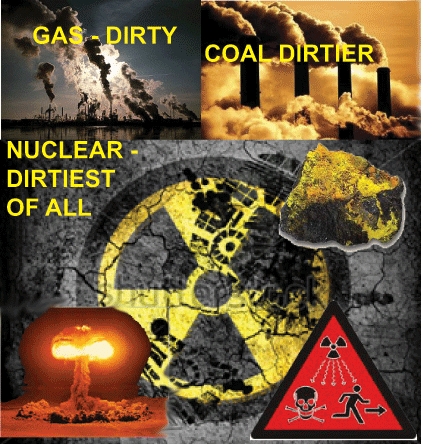
Greg Chapman Submission – Nuclear power is dirty and its fallout lasts forever.
Submission no 66. To Senate Estimates Committee against Environment and Other Legislation Amendment (Removing Nuclear Energy Prohibitions) Bill 2022
How many times do we have to remind ultra-conservative politicians that Australia doesn’t
need or want nuclear power stations or nuclear powered war machines?
Australia has more than enough sustainable renewable energy without having to resort to
dangerous and world-shattering atomic energy.
I live near Darwin River Dam – the water supply for Darwin. On the other side of the Dam is
Rum Jungle Uranium site. It is still radioactive after hundreds of millions of dollars of
remediation since it closed in 1971. Darwin Dam water is tested daily before it reaches city
taps. My bore water is never tested. Over 17,000 people down here have untested water
bores. I’ve had friends who died from unexplained cancers. This is the legacy of being
colonised by the UK and US for their militaries to make nuclear weapons.
Australia has several nuclear bomb testing sites still giving off high levels of radioactivity
because of our unequal ‘alliances’ with the UK and US.
Why does it seem to be that these ultra-conservatives want to make us part of the nuclear
industry and lobby for ‘clean’ nuclear energy when Australian governments make
arrangements with the UK/US to buy nuclear submarines and house B52s with nuclear
weapon capabilities?
Nuclear power is not clean or sustainable. It’s dirty and its fallout lasts forever.
Let’s say we agree to have nuclear energy. We would need to:
Consult fairly, openly and accountably with individuals and communities likely to be
affected;
Arrange constantly assessed assurance and insurance agreements locally, nationally
and internationally – including jurisdictional arrangements between the
Commonwealth and states/territories;
Provide occupational health and safety to a yet to be trained Australian workforce and
educate workers and their families on the dangers of reactor workers taking work
home;
Australia can’t depend on overseas workers to fill highly sophisticated scientific and
technical officer jobs. After 40 years of educational neglect, we can’t rely on other
countries to supply such employment skills and needs;
Have highly secure sites for nuclear facilities;
Allocate huge amounts of water for cooling and preventing meltdown;
Connect power infrastructure to the grid without jeopardising other energy
infrastructure;
Provide extremely safe transport for nuclear materials with warnings and signs
everywhere possible on the transport vehicles and roads used;
Safely decommission reactors – also requiring a huge, well-trained workforce and a
huge and well-trained public service to oversee this;
Be able to do what no other nuclear nation has yet done: safely manage and store
nuclear waste for thousands of years, and
Reassure our non-nuclear neighbours
Australia has colonised and ignored the basic needs and communal responsibilities of our
first nation people – as well as making war on other nations not toeing our white, mainstream
liberal dream of private, individual ownership. Can we really be trusted to use nuclear energy
for the social good of the world? How do we reconcile commissioning volatile reactor
stations in a highly unpredictable atmosphere of climate change? Will another Chenobyl help
us achieve a circular economy and zero waste in the near future – or ever?
Where we even put these monsters? Not in my backyard – that’s for sure! https://www.aph.gov.au/Parliamentary_Business/Committees/Senate/Environment_and_Communications/Nuclearprohibitions/Submission
Judy Schneider Submission – keep Australia’s nuclear bans, use renewables, including tidal energy

Environment and Other Legislation Amendment (Removing Nuclear Energy Prohibitions) Bill 2022
Submission 70
I wish to make a submission re lifting the ban on creating energy from nuclear sources.
Fortunately, we have not had a long history of nuclear production or disasters.
The ban on nuclear energy production was a great step forward in making Australia safe from impacts of another disaster.
Sure, we need more renewable energy resources and speed up our transition to less climate destroying fossil fuels. Some countries use biomass energy, but that creates pollution too.
Why don’t we use water – “our home is girt by sea”.
Tidal energy is a renewable energy powered by the natural rise and fall of ocean tides and currents. Some of these technologies include turbines and paddles. Tidal energy is produced by the surge of ocean waters during the rise and fall of tides. Tidal energy is a renewable source of energy.
Of course, such tidal plants would need to be constructed away from marine migration areas.
Australia has had problems in the past, e.g. Maralinga and where to dispose of https://www.aph.gov.au/Parliamentary_Business/Committees/Senate/Environment_and_Communications/Nuclearprohibitions/Submission
Jessica Wysser- Submission to Senate – Nuclear power a dangerous distraction from real climate action
To SenateCommittee on Environment and Other Legislation Amendment (Removing Nuclear Energy Prohibitions) Bill 2022 Submission 65
The ban on nuclear power in Australia must remain in place. I support the ban and ask the Senate
Standing Committees to support the continuation of this ban. I am concerned that further nuclear promotion risks delaying the action Australia needs to address the challenges, and maximise the opportunities, of meaningful climate action.
Nuclear power plants are vulnerable to threats which are being exacerbated by climate
change. These include dwindling and warming water sources, sea-level rise, storm damage,
drought, and jelly-fish swarms. Nuclear engineer David Lochbaum states: “You need to solve
global warming for nuclear plants to survive.” Australia does not want or need a nuclear
reactor under these conditions as the country is already affected by climate change and we
can see that it is progressively worsening.
Nuclear power programs have provided cover for numerous weapons programs and an
expansion of nuclear power would worsen the situation. Former US Vice President Al Gore
neatly summarised the problem: “For eight years in the White House, every weaponsproliferation problem we dealt with was connected to a civilian reactor program.
And if we ever got to the point where we wanted to use nuclear reactors to back out a lot of coal … then
we’d have to put them in so many places we’d run that proliferation risk right off the
reasonability scale.”
Nuclear reactors are pre-deployed military or terrorist targets. The
current situation in Ukraine illustrates the risks: electricity supply necessary for reactor
cooling has been repeatedly disrupted by military strikes, posing serious risks of nuclear core
meltdowns. Prior to Russia’s recent attack on Ukraine, there have been numerous military
attacks on nuclear plants. Examples include Israel’s destruction of a research reactor in Iraq in
1981; the United States’ destruction of two smaller research reactors in Iraq in 1991;
attempted military strikes by Iraq and Iran on each other’s nuclear facilities during the 1980 –
88 war; Iraq’s attempted missile strikes on Israel’s nuclear facilities in 1991; and Israel’s
bombing of a suspected nuclear reactor in Syria in 2007.
Having a nuclear reactor opens the country up to the possibility of making Australia a target. Australians would never want or desire this.
Australia needs effective climate action now but nuclear power would slow the transition to a
low-carbon economy. It would increase electricity costs and unnecessarily introduce the
challenges and risks associated with high-level nuclear waste management and the potential
for catastrophic accidents, with profound intergenerational implications for Australians.
Nuclear power is dangerous, expensive, slow and unwanted. Our energy future is renewable
not radioactive.
Thank you for this opportunity to comment.
For the only planet we have https://www.aph.gov.au/Parliamentary_Business/Committees/Senate/Environment_and_Communications/Nuclearprohibitions/Submission
The AUKUS nuclear deal “stinks” – former environment minister Peter Garret
Former Labor environment minister Peter Garrett has lashed the Aukus
nuclear submarine deal, calling the former Coalition administration’s
decision “the most costly and risky action ever taken by any Australian
government” and saying Anthony Albanese’s decision to back it was a
departure from established ALP policy.
The Midnight Oil frontman and longtime nuclear disarmament activist claimed the $368 billion deal
“stinks”, suggesting the money could be better spent and raising
concerns about how Australia will dispose of nuclear waste from the boats.
Guardian 17th March 2023
Aukus nuclear submarine deal will be ‘too big to fail’, Richard Marles says
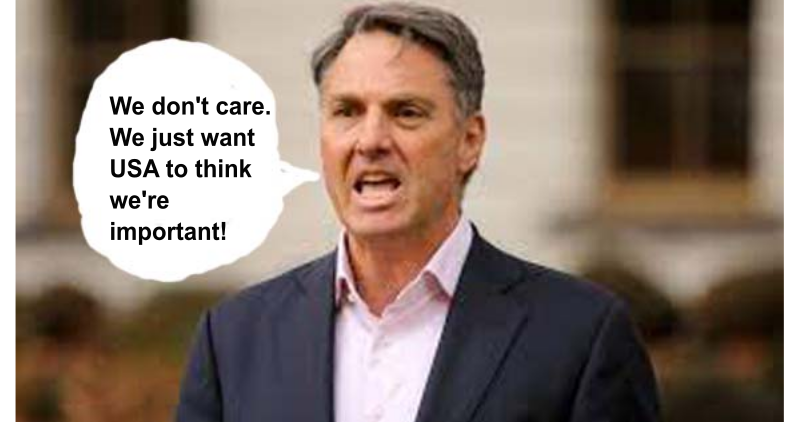
Australia’s defence minister plays down concerns multi-decade plan could be vulnerable to political changes in the US and UK
Daniel Hurst, Guardian, 17 Mar 23
Australia’s nuclear-powered submarine deal with the US and the UK will rapidly become “too big to fail”, the deputy prime minister has said.
Richard Marles made the comment in an interview with Guardian Australia’s politics podcast, pushing back at the idea the multidecade Aukus plan could be vulnerable to political changes in both the US and the UK.
He also predicted that broader diplomatic efforts to stabilise the relationship between Australia and China would “continue largely unaffected by what has been announced during the course of this week”.
As the minister for defence, Marles has been at the centre of the Aukus planning. He said he had felt the “gravity” and “responsibility” of this week’s announcement of sweeping, staged plans that involve Australian spending of up to $368bn by the mid-2050s.
One point of contention has been the Australian promise to provide $3bn in funding over the next four years to subsidise the submarine production base in the other two countries, mostly the US, and what guarantees there were that the US would actually proceed with selling three to five Virginia-class submarines to Australia in the 2030s.
Asked what contracts or agreements sat underneath the high-level political commitment announced in San Diego this week, Marles said the project was “a shared endeavour of the three countries”.
“There is going to be a legal underpinning to this … and there is going to need to be a treaty-level document between our three countries, so there is a whole lot of legality which will be worked through,” Marles said.
“But in so many ways this transcends that [given] the sheer size of the decision to share this capability with Australia. And having taken the step of doing that, which we’ve done, puts all three countries in a position where it’s too big for it to fail on the part of any of those countries.”
Marles said all three countries were “deeply committed to each other’s success in this project” and that was what gave him “a sense of assurance that this is going to play out in the way that we want it to play out”.
“This must work for the US, this must work for the UK, as much as it must work for Australia,” he said……………….
Marles also addressed questions about whether the submarines could become obsolete, given that an Australian National University report, Transparent Oceans?, found that scientific and technological advancements predicted oceans were “likely” or “very likely” to become transparent by the 2050s.
“Just as there is a lot of effort going into illuminating the seas, there is a lot of effort going into creating more stealth around a submarine,” Marles said……………………..
The International Campaign to Abolish Nuclear Weapons said this week that the best way for Australia to reassure the region about the submarine plan would be to sign and ratify the UN Treaty on the Prohibition of Nuclear Weapons.
It is Labor party policy to do so, but only “after taking account” of several factors, including the need for an effective verification and enforcement architecture and work to achieve universal support from other nations. The nuclear weapons states including the US have opposed the treaty, arguing it is out of step with the current security environment.
Marles said Australia wanted “a world where there are no nuclear weapons”, and had sent observers to the first meeting in Vienna last year………… https://www.theguardian.com/australia-news/2023/mar/17/aukus-nuclear-submarine-deal-will-be-too-big-to-fail-richard-marles-says?CMP=share_btn_tw
Labor Premiers’ dispute over location for AUKUS nuclear wastes, – but planned Kimba waste dump is”now dead in the water”?

Mr Wilkins told ABC Radio Adelaide that the proposed Kimba nuclear waste dump no longer made sense, and that any future site to store submarine reactor spent fuel should also accept waste that would have gone to Kimba.
“The proposed Kimba nuclear waste dump must now be dead in the water,” he said
Nuclear waste divisions intensify between Labor premiers over AUKUS submarine deal
ABC, 18 Mar 23
South Australia’s premier has hit back at suggestions from Labor counterparts that his state should take nuclear waste from the future AUKUS fleet, saying the decision on where the waste goes should be based on the “nation’s interests”…………….
Divisions within Labor ranks over AUKUS — including over its $368 billion cost, and its strategic aims and consequences — have become increasingly apparent since Paul Keating’s blistering attack on what he described as the “worst international decision” by a Labor government since conscription.
While Prime Minister Anthony Albanese yesterday rebuked Mr Keating, Labor premiers have since voiced opposition to accepting nuclear waste from the AUKUS subs in their states.
Victorian Premier Daniel Andrews said yesterday it was not “unreasonable” to suggest that, since South Australia is gaining jobs, it should also accept the spent fuel rods when the submarines reach the end of their service.
“I think the waste can go where all the jobs are going,” he said.
West Australian Premier Mark McGowan voiced similar sentiment, suggesting South Australia take on a nuclear waste facility.
But while Mr Malinauskas said that the possibility of SA taking waste could not be ruled out, he rejected Mr Andrews’s claim that SA had a responsibility to take the waste because it was taking the jobs.
“No, because that implies that somehow that this isn’t a national endeavour,” he said……………………
Conservation Council of SA chief executive Craig Wilkins said discussion of a “short-term political stoush between state premiers” overlooked the major challenges involved in storing nuclear waste.
“We’re talking about waste that needs to be kept safe from humans for tens of thousands of years, basically beyond our civilisation, so this needs to be an incredibly well-considered decision,” he said.
“[There] needs to be a multi-billion-dollar project to house the waste.”
Mr Wilkins told ABC Radio Adelaide that the proposed Kimba nuclear waste dump no longer made sense, and that any future site to store submarine reactor spent fuel should also accept waste that would have gone to Kimba.
“The proposed Kimba nuclear waste dump must now be dead in the water,” he said………………………. https://www.abc.net.au/news/2023-03-17/sa-premier-hits-back-at-nuclear-waste-claims/102109026
Deborah Pergolotti – Submission to Senate refutes Senator Canavan’s introductory speech.

Re Environment and Other Legislation Amendment (Removing Nuclear Energy Prohibitions) Bill 2022
Submission 56
Senator Canavan and sponsors to the following bill:
Environment and Other Legislation Amendment (Removing Nuclear Energy Prohibitions) Bill 2022
Firstly, I need to confirm this is a personal communication and not on behalf of any organisation.
On the one hand, I need to congratulate you for recognising that this current overwhelming push for
renewables is ill-conceived, problematic, and will only hurt Australia’s future as well as worsen the situation
for biodiversity losses
On the other hand, nuclear power is NOT a desirable alternative to head towards. I would like to address
some of the components in the bill’s introductory speech by Senator Canavan. The statements in italics are
taken from the Senator’s speech.
“Of the 20 richest nations in the world only three do not have nuclear power: Australia, Saudi Arabia and
Italy. Saudi Arabia is building a nuclear power station and Italy gets much of its imported electricity from
France, where three quarters of the electricity is produced by nuclear.”
Italy has a very good reason for not building nuclear power: they have a major fault line running up the
center of the country (and the Saudi’s should be cautious as well since they are sitting on top of a subduction
zone). Anyone who builds a nuclear facility close to an active fault line is negligent, reckless or at minimum
ignorant. This will become very apparent in the US once their Cascadia, San Andreas and New Madrid fault
zones next adjust (expected soon) as they have built dozens of plants in fault zones.
“Nuclear plants are generally characterised by large capacity and output, high capital cost, and long
construction times, but relatively low operating costs and almost zero emissions to air from their operation.”
Unless there is an accident and then they pose a threat to all living things downwind for hundreds of years.
‘Accidents’ can be defined in many ways such as human error, seismic activity, tsunami’s (Fukushima),
design flaws (Chernobyl), poor maintenance issues (Three Mile Island), the modern scourge of hackers – or
the provocations of a hostile actor (such as what nearly happened in Ukraine at the Zaporizhzhia facility). In
our current hostile world where we are very close to a full-blown third world war, any country with a nuclear
power plant becomes an easy target for any aggressor who doesn’t even need to possess nuclear weapons of
their own. All they need a is a simple device directed at a plant and a major disaster results. Perhaps nuclear
might have been a reasonable option back in the 60’s but the current hostile and deceptive actors ‘running
things’ now makes nuclear a huge liability. Australia has been smart to avoid this scenario thus far,
regardless of the uranium resources we possess.
“Nuclear energy is used to produce electricity in 31 countries from some 450 nuclear reactors, providing
around 10 per cent of global electricity. Many nations are building new nuclear power plants because they
provide reliable, emission free power.”
There is a misguided focus on emissions but the focus is on the WRONG emissions. Carbon is not the
enemy and is needed by all vegetation on the planet. So focusing on nuclear as way to reduce emissions is
irrelevant. This fixation on carbon driven by deleterious wealthy influences overseas that Australia should
NOT be paying attention to is only meant to transfer wealth – not save the planet (you can tax carbon but you
can’t tax the cold or solar output). I recognise that at least some of you have come to acknowledge that the
‘health crisis’ thrust upon us the past two years was a planned deception. Rest assured this AGW is another
distraction and will result not only in wealth transfer but the diminishing of Australia to that of a ‘banana
republic’. Coal has its problems but the emissions that need to be controlled from coal are the dusts and heavy metals that are dispursed such as mercury and arsenic. Are you aware that bioaccumulative fish from
around the supposedly ‘clean’ waters of Qld’s barrier reef are loaded with mercury which would have come
from power plants further down the coast? Until the poor performance problems of renewables can be
solved (if ever), we are safer sticking with coal and focusing our efforts into filtering out the heavy metals
from their exhausts. At least if some foreign actor decides to target them, the plant will be damaged but it
won’t be spreading clouds of radiation throughout the southern hemisphere. (Please note I have not argued
about gas – this is not our saviour either with its high levels of methane leaching, explosive nature and
induced seismicity – refer to current quake swarm in Texas.) While the demand for electricity just continues
to skyrocket (insert electric cars here), we can’t be eliminating the only generators that will produce enough
to satisfy an ever increasing demand.
“Nuclear power is safe.”
Only when all conditions with the facility are perfect and no outside factors interfere with its operation. It
doesn’t take all that much to turn it from stable to meltdown. The more complicated the system, the easier it
is to make it fail. The Three Mile Island meltdown was caused by a faulty relief valve. The explosion of the
NASA Challenger mission was caused by a faulty O-ring (a little ring of rubber on a cylinder).
“Nuclear does less damage to the natural environment than other energy options. Wind energy takes up 250
times more land than nuclear power and solar takes up 150 times more land.”
I agree that renewables should NOT be rolled out until the problems they create are fixed. There seems to be
no due diligence being included in the rush to deliberately de-energise our power generation. But incidents
with nuclear radiation can be unfixable. We have not yet invented a means of removing radiation from the
atmosphere.
Also, what you have left out of your speech is the disposal issue. Where is all this radioactive waste
supposed to be disposed of and how is it to be contained so that unforseen factors (earthquakes, hostile
attacks) don’t disturb it? You have focused on the operation only of a nuclear power plant but not the
consequences of accidents and disposal of waste. These need to be part of the evaluation and due diligence.
“The ARPANS Act regulates activities undertaken by Commonwealth entities affecting radiation, to ensure
that the health and safety of people, and the environment, are protected from the harmful effects of
radiation.”
The only way any authority in this country can protect the people and environment from radiation that would
result from a ‘disturbance’ to the plant is to not have nuclear power at all. https://www.aph.gov.au/Parliamentary_Business/Committees/Senate/Environment_and_Communications/Nuclearprohibitions/Submissions
Paul Keating savages AUKUS nuclear submarine deal as Labor’s worst since conscription in World War 1

ABC, By political correspondent Brett Worthington. 15 Mar 23,
Former prime minister Paul Keating has taken aim at Australia’s AUKUS nuclear-powered submarine deal with the United States and the United Kingdom, calling it the “worst international decision” by a Labor government since conscription in World War I.
Key points:
- The AUKUS deal will see Australia spend up to $368 billion to acquire nuclear-powered submarines
- Mr Keating has dubbed it one of the worst deals in history
- He insists Australia should draw closer to China than to the United States and the United Kingdom
The former Labor leader also offered a scathing assessment of the government’s most senior politicians, including Prime Minister Anthony Albanese, Defence Minister Richard Marles, and Foreign Affairs Minister Penny Wong, dubbing Mr Marles and Senator Wong “seriously unwise ministers”.
“This week, Anthony Albanese screwed into place the last shackle in the long chain the United States has laid out to contain China,” Mr Keating said in a written statement issued before he addressed the National Press Club on Wednesday.
“No mealy-mouthed talk of ‘stabilisation’ in our China relationship or resort to softer or polite language will disguise from the Chinese the extent and intent of our commitment to United States’s strategic hegemony in East Asia with all its deadly portents.
“History will be the judge of this project in the end. But I want my name clearly recorded among those who say it is a mistake. Who believes that, despite its enormous cost, it does not offer a solution to the challenge of great power competition in the region or to the security of the Australian people and its continent.”
Mr Keating has been critical of the AUKUS defence pact since it was first struck between the three nations 18 months ago.
Mr Albanese met with US President Joe Biden and UK Prime Minister Rishi Sunak in California earlier this week, where they finalised a deal for Australia to buy and build nuclear-powered submarines, costing up to $368 billion over three decades.
Australia will eventually build British-designed nuclear-powered submarines with American combat systems.
Before that happens, Australia will buy at least three US nuclear-powered submarines early next decade — boats that might be second-hand and need US Congressional approval.
The Coalition has endorsed the deal.
“For $360 billion, we’re going to get eight submarines. It must be the worst deal in all history,” Mr Keating said………………………………
Mr Keating dismissed China’s growing military as posing a threat to Australia.
“Let me say this: China has not threatened us,” he said.
Mr Keating, who said he spoke for both Labor politicians and grassroots members who felt they could not speak out, said nothing short of a Chinese naval fleet heading for Australia should be considered a threat.
“We wouldn’t need submarines to sink an armada, an armada of Chinese boats and troop ships,” he told the press club. “We’d just do it with planes and missiles.”……………….. https://www.abc.net.au/news/2023-03-15/paul-keating-anthony-albanese-penny-wong-aukus-nuclear-china/102098142
Susanne Godden – submission to Senate – the principle of “First do no harm”means – don’t produce toxic nuclear waste.

I urge you to leave the ban in
place.
First do no harm”.
There is no safe way to dispose of radioactive waste material as it remains radioactive for up to 100,000 years!
nuclear power is dangerous, expensive and will be too slow to make the
massive rapid changes necessary to deal with the heating climate emergency.
By Susanne Godden 12 December 2022
I am a concerned citizen from Western Australia, writing in defence of the existing ban on
nuclear power in Australia.
The reasons for my current view are:
“First do no harm”.
o There is no safe way to dispose of radioactive waste material as it remains radioactive for up to 100,000 years! The idea of barrels under the ocean, which must corrode after (at most) decades, is laughable. The only attempt at burial deep underground in America failed, with low-level radiationaffec ting people above ground.
o There is an unacceptable risk of accident on-site or during transfer from mine
to port.
o There is an assumption that Australia has lots of remote vacant land to mine uranium from, build nuclear plants on and dispose of unwanted waste, but this fails to consider indigenous people who live on country and retain deep spiritual ties to their ancestral homeland.
o We have limited ability to track nuclear materials. They could be used to make weapons in other countries that may not be our allies. Let’s aim for peace.
o Any nuclear facility could make Australia a military target.
o Please consider the legacies of Hiroshima & Nagasaki 1945, Three Mile Island
1979, Chernobyl 1986 and Fukushima 2011.
Renewable energy is faster and cheaper
o According to global scientists it is necessary to reduce greenhouse gas
emissions urgently to prevent climate catastrophe.
o Nuclear power infrastructure would take decades to create.
o We have vast quantities of sun and wind to tap into, NOW.
o It does not make sense to start changing our laws to allow nuclear power,
then spend decades building infrastructure, when there is a cheaper and
faster alternative available. The small modular reactors that have been
suggested are not commercially available.
o Workers in the coal and gas industries can be transitioned to renewable
energy jobs for the future; they don’t need jobs in a nuclear industry which
would cause more problems overall.
Unpopular
o Nuclear power is unpopular with most Australians.
In summary, nuclear power is dangerous, expensive and will be too slow to make the
massive rapid changes necessary to deal with the heating climate emergency.
I understand there is currently an energy crisis due to the war in Ukraine and increasing
energy prices, especially on the east coast of Australia, but I urge you to leave the ban in
place. Instead, we can reserve some energy supplies for locals once existing contracts end
and invest in renewable energy backed by battery technology. energy https://www.aph.gov.au/Parliamentary_Business/Committees/Senate/Environment_and_Communications/Nuclearprohibitions/Submissions
Nuclear is the ‘most expensive form of electricity available to humans’: Plibersek
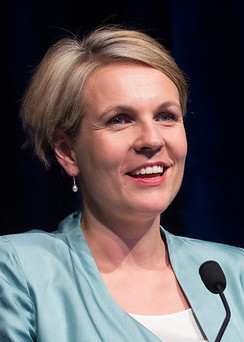
Environment Minister Tanya Plibersek says nuclear energy is the most expensive form of electricity “available to humans”.
“It would take years, potentially decades, to have a domestic nuclear energy arrangement,” Ms Plibersek told Sky News Australia.
“I don’t think anybody wants to live next door to a nuclear reactor.”
$200billion nuclear submarine deal could cost the average Australian taxpayer about $13,000.
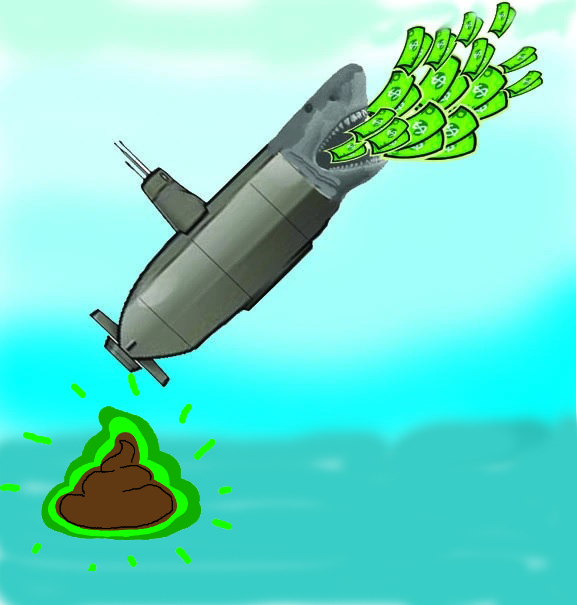
A $200billion nuclear submarine deal could cost the average Australian
taxpayer about $13,000. This is effectively the equivalent of every
Australian buying a new small car – an astonishing outlay on just a handful
of boats. But experts say the deal – despite the extraordinary price tag –
could be worth every cent.
Daily Mail 13th March 2023
Andrew Williams. Submission to Senate – Small Nuclear Reactors and Wastes – th elephant in the room
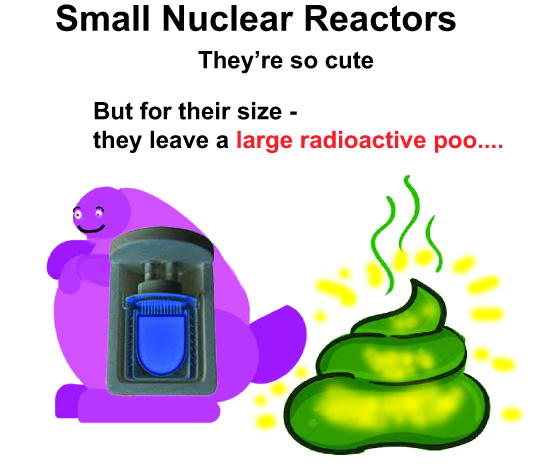
Submission 48 to Environment and Other Legislation Amendment (Removing Nuclear Energy Prohibitions) Bill 2022
There are many reasons why nuclear power is unlawful in Australia. Most are not new, and just as
relevant as they always have been.
I do understand that the current push by the nuclear industry of Small Modular Reactors sounds
appealing. Distributed ‘baseload’ power with a number of reactors producing no greenhouse gas
emissions (unlike coal and gas). However, digging only slightly below the surface reveals
insurmountable problems and dangers.
- Nuclear Waste is quite frankly the elephant in the room. It is building up all over the world, a
burden for future generations who have not had a say or benefited from its production. This itself is
a major ethical issue. The intermediate level waste currently intended to be imposed against the
South Australian law on a small and now divided farming community (Kimba) must be kept safe
from people and the environment for a minimum of 10,000 years. Some radionuclides present in
high level waste from nuclear power plants require containment for over 100,000 years. This needs
to be acknowledged. It is constantly downplayed by the nuclear industry. (Any plan for a reactor
build must have this ‘back end’ cost factored in). I would like to make a brief comment on the way
the current plan for Australia’s relatively small amount of radioactive waste has played out since
any proposed SMR waste would likely end up at the planned NRWMF at Kimba. The process has
been manipulative and divisive (to put it politely). It has involved deliberate lies and bribery. It has
deliberately trampled on the rights of First Nations people. A proper process to honestly and
respectfully address the waste issue would be a pre-requisite for the consideration of nuclear power
in Australia. - SMRs require at least 7 years to build (effectively stalling action on climate change) and require
large taxpayer subsidies, whereas renewables can be up and running in 6 months. Furthermore, they
have not been tried and tested in the US. - As much as denial is attempted by some, there is an inextricable link between domestic nuclear
energy production and the production of plutonium for nuclear weapons. This is a long and deep
subject, but this short summary is correct. Australia has its own history on this, which will be
familiar to some on this committee. - The mining and processing of the uranium required to fuel the nuclear reactors produces
radioactive tailings and presents a radioactivity hazard to the miners. Workers in nuclear power
plants also experience radioactive risks, especially those involved in loading the fuel and handling
the ‘spent’ fuel, which sits in cooling ponds for 7 years and is itself (along with the reactor) a
potential radioactive threat (loss of electricity necessary for the cooling ponds results in
uncontrolled atmospheric radioactive release, a real threat in the invasion of Ukraine).
These and other important reasons are why nuclear power should remain prohibited in Australia.
The reasons for its current prohibition have not gone away, they have grown stronger. https://www.aph.gov.au/Parliamentary_Business/Committees/Senate/Environment_and_Communications/Nuclearprohibitions/Submissions
Porky pies and half-truths from our USA- captured Prime Minister Albanese.

Today’s significant AUKUS announcement about Australia’s acquisition of nuclear-powered submarines provides significant, long-term strategic benefits for all three countries……..a transformational moment for our nation [Ed. it sure does! – transformed to a colony of USA’s military-industrial-complex]
…. provides significant, long-term strategic benefits [?] for all three countries……… our ability to be sovereign [?] ready.
……creating around 20,000 direct jobs [a very dubious claim – ?jobs for Americans and British military experts]
……… Businesses right across the country in every state and territory will have the opportunity to contribute to and benefit from these opportunities. [ a totally unlikely unrealistic claim, backed by no data]
…….. Importantly, the SSNs will be an Australian sovereign capability [is he joking or is he stupid?] … https://www.theguardian.com/world/2023/mar/13/aukus-australian-submarine-nuclear-loophole-proliferation-fears
Albanese and the subs: a looming “Goat Rodeo”

one American commentator has already labelled the tripartite AUKUS project a looming “Goat Rodeo”. For which Google provided the following explanation : “a slang term for something going totally, unbelievably, disastrously wrong, and there’s nothing left to do but to sit back and watch the trainwreck. In other words, a goat rodeo is a chaotic situation, fiasco, or, more vulgarly, a s…show.”
Australia will have absolutely no sovereignty over the USN submarines
Pearls and Irritations, By Mack WilliamsMar 13, 2023
Details of the proposed AUKUS submarine deal to be announced next week in San Diego are leaking out all around the world. It seems that it will be much more complicated and expensive than intended at the outset of the path to the Holy Grail of an “optimal” solution. Already there are ominous signs that the three countries cannot even harmonise their rush into PR to launch the program.
Reflecting the reaction of a growing number of gobsmacked Australians to the extraordinary explosion of rumoured detail of the tripartite project, one American commentator has already labelled the tripartite AUKUS project a looming “Goat Rodeo”. For which Google provided the following explanation : “a slang term for something going totally, unbelievably, disastrously wrong, and there’s nothing left to do but to sit back and watch the trainwreck. In other words, a goat rodeo is a chaotic situation, fiasco, or, more vulgarly, a s…show.”
The claimed details of the project have been well covered in the media but what do they mean?
Sovereignty
A word in which Prime Minister Albanese has come to place great faith – and avoid others like “dependency” which has been expunged from the discussions. In a TV interview in India, Albanese has asserted that “Australia will retain, absolutely, our sovereignty — absolute sovereignty, 100 per cent. it is very important [for] Australia, as a sovereign nation state — and that’s something that’s respected by all of our partners as well.” It is arrant nonsense to claim “absolute” sovereignty when our geostrategic interests have become so enmeshed with those of the US – and have been for some time.
Let us not forget how we needed the US to weigh in with Indonesia before we launched the East Timor operation. Or more recently when Julia Gillard folded to US pressure for the rotational deployment of US Marines and greater USAF use of airfields in Northern Australia and our Defence force posture plans in return for a visit by President Obama. And so this has developed over subsequent years with embedment of senior Australian defence officers in the US IndoPacific Command in Hawaii and elsewhere, our increasing dependence on the US dominated Five Eyes intelligence network (despite some of its failures) and, of course, our ready participation in the disastrous US controlled “coalitions of the willing “ in Afghanistan and Iraq. And the conga line of US service and Pentagon chiefs which has graced our shores in the past year with their megaphones proffering “advice” on Australian strategic policy and defence procurement . Imagine if any other foreign country had done this in Australia with the DSR and submarine project underway !
Even without that background to just how “absolute” our sovereignty has not been, the details of the project definitely take this a significant step further. It is here where the spin from the US and Australia has already diverged. Defence Minister Marles has the temerity today to posit that there will not be any submarine “capability” gap because the Collins class subs are still very much in operation and will be around as we wait for the first of the new submarines to become operational.
(The Collins class, of course, does not have anything like the operational capability or weapons system of the new submarines).
But the US leaks have argued that the capability gap will be covered by US nuclear powered submarines expanding their current operations by regular visits in our region to Stirling in WA. The USN has long been keen to establish some homeporting arrangements there for its nuclear powered submarines and aircraft carriers. US media are also reporting that the early US Virginia class submarines to be delivered would be under US command with that gradually phasing out to mixed crews before eventually being run by the Australians. So Australia will have absolutely no sovereignty over the USN submarines in the first 15 years or so – and probably only very limited consultation with the Americans about their operations – which naturally are always so tightly held. For the following 10 years or so the command and control lines will be at best messy until the second set of submarines emerge. The British will want part of that action! So Albanese could well end up being the one with the credibility gap! As another US commentator has rightly pointed out that will be for politicians years down the track to sort!
Where will they be built?
Another key question on which there is some diverging spin. In keeping with his overall political strategy, Albanese has presented the deal so far as being a major plank in his efforts to boost manufacturing and R&D in Australia (and help argue the case for the huge budget damage the submarines alone will do). From the US side the push has been to emphasise how big a contribution the construction ( seemingly of all 5 or so) will be to US manufacturing and shipbuilding in particular. Some of the leaks have pointed out that very significant Australian funding will be required to US shipbuilders to expand their capacity to manufacture the Australian submarines. There has also been some persistently strong arguments in the US that the deal will exert too much pressure on US industry’s capacity.
A recent article in Foreign Policy summarised these concerns :
“But is it going to work? That’s been the major question all along through phase one of AUKUS, which has been beset by sticky U.S. export control and intelligence-sharing rules that have depth-charged key features of submarine design. First, the United States has to expand its own shipyard output to send five nuclear-powered submarines to Australia as well as make sure Congress is on board. Second, even if all goes to plan, the land Down Under will be operating a Frankenstein-like Navy with nuclear subs from two different countries, a potential nightmare for training and spare parts—and presumably, and most importantly, reactor maintenance and little details like that.”
Then there is the British spin. It seems clear from Prime Minister Sunak’s exuberant reaction to the leaks that they have probably received more out of the deal than they might have expected. No doubt BaE (in which the UK Government has a major interest and which also has bought out ASC in Adelaide) which runs the Astute class construction program in Barrow has been a major player in what appears to have been a relatively recent improvement in their prospects. This is also what Peter Dutton’s curious intervention would suggest as the Astute track record has been littered with failures, delays and cost overruns. ……………..
How much will it all cost?
Without confirmed details this cannot be estimated. But there is a consensus that it will well exceed not only the original French submarine but go well beyond.
Is the Virginia class submarine the best answer ?
In his rush to announce his preference for the Virginia class submarine over a new British design, Dutton placed weight on it being a simpler solution given that it was a proven design. But as I pointed out earlier this year in these columns (Nuclear submarines: from “optimal” to “the best they can get”) the Virginia has been the subject of detailed criticism from the Congressional Research Service and the GAO over its maintenance problems.
“Just last December the US Congressional Research Service issued a very detailed report (Navy Virginia (SSN-774) Class Attack Submarine Procurement: Background and Issues for Congress) outlining the significant delays in SSN repair and maintenance. It contains frequent references to serious concern expressed by a range of US Admirals with command responsibility for submarines. There have been similar criticisms from the GAO in recent years about the poor performance on SSN maintenance reducing significantly the already deficient number of SSN’s the USN can deploy.” https://johnmenadue.com/albanese-and-the-subs-the-goat-rodeo/—
Benjamin Cronshaw Submission – nuclear power a bad choice – would delay real climate action
No. 46 Submission to the Inquiry into the Removal of Nuclear Prohibition
(Federal)
I note that this Bill seeks to remove the federal prohibition on nuclear installations in Australia.
There are also state prohibitions that would also need to be removed for any nuclear installations
to proceed in a state, but removing the federal prohibition would be a step towards promoting the
nuclear industry in Australia.
My main point would be – regardless of the potential benefits and potential of nuclear industry in
Australia, which would need to be considered against the costs, risks and community sentiment –
that it is a distraction from the urgent action that needs to happen now.
Nuclear energy would conservatively take some 15-20 years to become operational. In the
meantime, there would be tremendous public debate and opposition (whether nuclear energy can
be determined to be safe, and arguably it could, public sentiment is still tough and perhaps
insurmountable hurdle). Moreover, there would be immense costs in the construction of any
nuclear installations, likely requiring much government support. For all that, there is the potential
for something coming online perhaps in 2040 or later. Liberal governments have flirted with the
idea of nuclear energy off and on for decades. Perhaps if they really committed to it back under
John Howard and had a successful push for it, nuclear power would be coming online soon or be
an option. However, the time has passed on nuclear energy being a realistic option.
While I would usually applaud long-term visionary thinking from members of Parliament,
looking at starting up nuclear activities seems like a far off plan that can do little to address the
challenges that we are facing – including the need to have a speedy transition to a low-emissions
economy now. Where countries already have an established nuclear industry, it provides an
important source of energy & will be a key part of their transition to a Net Zero economy. Once
constructed, nuclear energy can operate with very few emissions. However, for a country without an established nuclear energy industry, such as Australia, it is not something that can be
constructed simply.
Renewable energy is the cheapest, and fastest to build, source of new energy. With battery
storage and transmission lines, renewable energy will be poised to assume an increasingly
prominent role in the energy makeup in Australia. The decarbonisation of the energy sector will
require a variety of strategies and technologies and creative solutions. However, renewable
energy will clearly be key (and arguably largely sufficient) to transitioning to a more affordable
and sustainable energy system. As economist Ross Garnaut writes, “I now have no doubt that
intermittent renewables could meet 100 per cent of Australia’s electricity requirements by the
2030s, with high degrees of security and reliability, and at wholesale prices much lower than
experienced in Australia over the past half-dozen.”1 I note that there is a concurrent Inquiry into
Australia’s Transition to a Green Energy Superpower, which provides a good (and more
relevant) window into the opportunities Australia can take up for our energy future.
My key point is that is where our focus should be, on supporting low-cost and sustainable green
energy technologies that we have now, such as solar and wind, rather than being distracted by
big academic debates about the potential (and unlikely) viability of nuclear energy. https://www.aph.gov.au/Parliamentary_Business/Committees/Senate/Environment_and_Communications/Nuclearprohibitions/Submissions
1 This month

of the week – Australians for War Powers Reform (AWPR)
To see nuclear-related stories in greater depth and intensity
 Antinuclear