Australia’s Science Minister Melissa Price closer to the Liberal Opposition than to Labor, as she backs small nuclear reactors to beat climate change,
Cain Andrews, Broome Advertiser13 November 2022
https://thewest.com.au/news/broome-advertiser/melissa-price-backs-nuclear-option-at-kimberley-economic-forum–c-8830423?utm_source=csp&utm_medium=portal&utm_campaign=Isentia&token=I%2B8Lt5WlhmDNscyeuxIQVQFzxLQ5%2B1qpkHjt6nRSfUzPC3SzvTQhzcbYGKkZDsSmzHZw4gVfNhHWTYBPdyPXwA%3D%3D
Durack MP Melissa Price called for Australia to adopt nuclear power to tackle climate change.
Speaking at the Kimberley Economic Forum on November 10, Ms Price said that the Coalition failed to effectively communicate its climate policy heading into the election, and the Opposition was now calling for an “informed and honest debate” on how nuclear technologies can be part of Australia’s decarbonisation mix over the next four years.
Echoing Federal Opposition Leader Peter Dutton, Ms Price cited new reactor technologies, Australia’s large uranium deposits and the potential to lower power prices as key factors in the Coalition’s advocacy for nuclear energy.
“Australians are hungry for affordable, reliable and secure sources of power that emit zero emissions,” Ms Price said.
“And while renewables play a huge part in painting this picture, it’s at times when the wind is not blowing and the sun’s not shining, that nuclear could play its part.
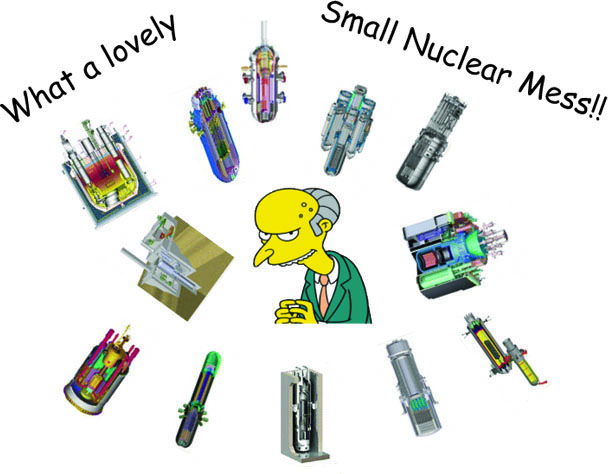
“In fact, there’s over 70 designs of small modular reactors that are currently in development or construction in 18 separate countries.”
Despite her comments, one of Australia’s leading scientific agencies, the Commonwealth Scientific and Industrial Research Organisation , still views nuclear power as a non-starter, even with new reactor technologies.
A CSIRO report released in June found there was “no prospect” of nuclear small modular reactors being introduced to Australia in the next decade given the technology’s “commercial immaturity and high cost”.
It also found renewables such as solar and wind remained the “cheapest new-build electricity generation option in Australia”.
The Australian nuclear lobby is at it again. Nine right-wing rural senators push to change the laws on nuclear activities
Senator Matt Canavan has a chequered history when it comes to his attitudes and statements on energy and resources
Sept 2021 Canavan cold on the push for nuclear power – and talked up the prospects of coal exports. “Obviously, if we can’t find a long-term solution for that level of waste it’s pretty hard to fathom that we could go beyond that for the production of nuclear energy that does produce a larger amount and more waste of a higher category to manage.”
Augus 31 21 Canavan tweeted called on Australia to boycott Glasgow, labelling the conference a “sham”
August 28 21 – lead the charge in his party’s anti-science war, with the CSIRO a main target
August 11 21 “Myself and Member for Flynn, Ken O’Dowd, we’re happy to have a nuclear power station in our backyard.”
Canavan was called out, in March 21 for his inaccurate hype about small nuclear reactors
.
“On 27 October 2022 the Senate referred the Environment and Other Legislation Amendment (Removing Nuclear Energy Prohibitions) Bill 2022 to the Environment and Communications Legislation Committee for inquiry and report by 31 March 2023.
The close date for submissions is 12 December 2022.
About this inquiry:
The bill would amend the Australian Radiation Protection and Nuclear Safety Act 1998 to remove the prohibition on the construction or operation of certain nuclear installations; and Environment Protection and Biodiversity Conservation Act 1999 to remove the prohibition on the Minister for Environment and Water declaring, approving or considering actions relating to the construction or operation of certain nuclear installations. https://www.aph.gov.au/Parliamentary_Business/Committees/Senate/Environment_and_Communications/Nuclearprohibitions?fbclid=IwAR1ZJyT5tShsXWXm9q2XGv4aHPnN7r_gj6V1VNNNmET3YAfCQWG7RSJ21bQ
The leader is this push is Senator Matt Canavan, Strangely, Canavan resigned from the task of being in charge of the nuclear waste dump program, in order to pursue his own politcal ambitions in a spill in the National Party.
Others include Jacinta Yangapi Nampijinpa Price– Country Liberal Party, (Northern Territory)
David Julian Fawcett – Liberal Party, (SA), Alex Antic – Liberal (SA) David Van -Liberal Party (Victoria), Ross Cadel – National Party (NSW), Gerard Rennick – Liberal National Party ( Queensland)
·Note from Kazzi Jai – at Fight to stop a nuclear waste dump in South Australia
I’ll get back to you on this, but judging by last Thursday’s Senate Estimates, it sounds like there is again a push for nuclear energy by vested interests….Seems people like Matt Canavan – the Senator who RESIGNED from being Minister in charge of the dump SO THAT HE COULD PURSUE HIS OWN POLITICAL AMBITIONS in a spill in the Nats….and now crows about putting SCIENCE into these debates AND NOT POLITICS – absolutely LAUGHABLE….anyway he OPENED the Global Uranium Conference 2022 last week
AND he was in my opinion disruptive in the Senate Estimates sitting, interjecting when Minister Ayres was answering a question FROM A DIFFERENT SENATOR! Matt Canavan was given A LOT OF LATTITUDE in my opinion from the Seat…..GIVEN ALSO THAT BOTH HOUSES OF PARLIAMENT ARE NOT RULED BY THE COALITION! Seems OLD HABITS die hard!
Rather than an endlessly reheated nuclear debate, politicians should be powered by the evidence

[Liberal Coalition opposition leader Peter] Dutton was mostly dismissive of batteries in his budget reply, and implied small modular nuclear reactors (SMRs) – a commercially unproven technology that has been repeatedly delayed and more expensive than promised – could be the answer that ensures cheap energy.
No evidence has been presented to suggest Small Modular Nuclear Reactors are needed to meet demand in Australia, given the country’s wealth of renewable options. Never mind that no independent evidence has been offered to suggest it could compete on price.
Guardian Adam Morton, 31 Oct 22, A renewable-dominated system is comfortably the cheapest form of power generation, according to research.
We should be wary of simple declarations about the increasingly rapid transformation of the electricity grid.
The government has been given a sharp reminder of this after leaning too heavily on pre-election modelling that suggested its policies to boost renewable energy could lead to a $275 cut in bills by 2025. You never know when a Vladimir Putin-shaped villain might disrupt international fossil fuel markets, wreck your assumptions and leave you accused of breaking an election pledge.
Peter Dutton doesn’t have this excuse. The most generous thing that can be said about his foray into the debate over electricity last week is that he might want to get a broader range of advice.
Giving his budget reply speech, the opposition leader said the Coalition wanted more renewable energy, but it just wasn’t possible yet, and it was a mistake for the government to allow ageing and expensive fossil fuel power to be phased out now.
More specifically: “The technology doesn’t yet exist at the scale that is needed to store renewable energy for electricity to be reliable at night, or during peak periods. That is just the scientific reality.”
To put it mildly, this is not the consensus opinion of experts in the field.
David Osmond, a Canberra-based engineer with the global energy developer Windlab, is among those with a markedly different, evidence-based take. For more than a year, he has been posting weekly results from a live simulation tracking what would happen in Australia’s main electricity grid if it relied primarily on renewable energy.
Using a live stream of electricity data from Opennem, he adjusted inputs to see what would happen if there was enough wind and solar energy to supply 60% and 45% of demand respectively. He added enough short-term storage, likely to be in the form of batteries, to supply average demand for five hours.
The results are encouraging. They suggest close to 100% of demand – 98.9% over a 61-week period – could be delivered by solar and wind backed by existing hydro power and the five hours of storage. Nearly 90% of demand was met directly by renewable energy and 10% had to pass through storage. Achieving it would require a major expansion of transmission, as proposed by Labor under its Rewiring the Nation policy………………………………………………………
Plenty of other studies have reached similar conclusions. The big one is the Australian Energy Market Operator’s integrated system plan, a roadmap for the optimal future grid that was released in June. It backed an accelerated build of available technology to reach 83% of renewable generation by 2030, 96% by 2040 and 98% by 2050 as the best, most likely option.
Presented with this evidence, Dutton and the Coalition continue to opt for none of the above.
They appear to have joined a small band, including many in the usual right-wing media echo chambers, convinced that the evidence presented is wrong. Dutton was mostly dismissive of batteries in his budget reply, and implied small modular nuclear reactors (SMRs) – a commercially unproven technology that has been repeatedly delayed and more expensive than promised – could be the answer that ensures cheap energy.
No evidence has been presented to suggest SMRs are needed to meet demand in Australia, given the country’s wealth of renewable options. Never mind that no independent evidence has been offered to suggest it could compete on price.
If SMRs prove economically viable and safe elsewhere there is nothing to stop Australia considering their use, perhaps at remote off-grid industrial sites. It will be a good thing if they are viable, given not every country has ample alternatives to fossil fuels. But they are not designed to do the job needed here – to turn on occasionally and fill gaps in a system running on cheaper, renewable energy.
Rather than an endlessly reheated debate about nuclear – the Coalition is holding another review, so expect plenty more of this – Australians would be better served if its politicians had a close look at a major report last week by the International Energy Agency.
For the first time, the IEA forecast that fossil fuel use across the globe would peak in the next few years as Russia’s invasion of Ukraine accelerated a shift to clean fuels. It found existing policies would soon lead to coal use falling and demand for gas would plateau by the end of the decade. The declines will be much faster if, as expected, climate action continues to ramp up.
Australia has one of the world’s largest fossil fuel export industries. It is supporting massive developments expected to last until late into the century as though nothing much is going to change.
The significant climate impact of these developments is still routinely overlooked by the major parties on the grounds the gas and coal are burned overseas, and therefore somehow not Australia’s problem. But what about the economic and social impact of their potentially rapid decline?
Now there’s an issue truly worthy of more parliamentary debate and action. https://www.theguardian.com/environment/2022/oct/30/rather-than-an-endlessly-reheated-nuclear-debate-politicians-should-be-powered-by-the-evidence
Government Confirms No Nuclear for Australia, At Least Any Time Soon

https://www.gizmodo.com.au/2022/10/australia-nuclear-energy/ Asha Barbaschow, October 31, 2022 “……………………………… Addressing Senate Estimates on Friday, representatives from the Department of Prime Minister and Cabinet put this to bed.
Summarising the government’s position, the department’s acting deputy secretary for the economy, industry and G20, James Chisholm, said the cheapest form of new energy for investment is renewable energy. We’ve got too much sun and wind to not make the most of it.
That is because it has zero marginal cost,” he said.
“By that I mean there’s a cost associated with building it, seeking approval for it and its initial construction, but once that happens it doesn’t have the same costs associated with it that traditional base-load generation, whether it’s coal-fired or nuclear, has.”
There are a lot of costs associated with those forms of energy, with the CSIRO forecasting that small nuclear modular reactors would have a levelized cost of energy of between $136 and $326 per megawatt hour in 2030. Whereas the levelized cost of energy such as renewable energy is a lot lower.
“It would be estimated to cost between something like $53 to $82 per megawatt hour,” Chisolm explained.
“Really importantly, that includes firming costs.
“Often what happens is people look at these figures and say, ‘Yes, but with renewables you’re not factoring in firming and integration costs.’ But the CSIRO work does factor that in. According to CSIRO, and this is consistent with other analyses, it comes in way cheaper. And that flows through to bills.”
Although this report was published a few months ago, Chisholm said as time goes on, that cost comparison becomes more stark.
“We’re seeing it play out in other markets. If you look at those markets where nuclear power is a significant proportion of the generation mix, nuclear is experiencing the same challenges that coal-fired generation has experienced, simply because of how high the cost is. When it comes to competitive markets for energy, it is difficult for those forms of energy to compete with renewables, particularly for firmed renewables,” he said.
Well, there you have it.
‘Small but important step’: Australia’s shift on treaty banning nuclear weapons applauded

Australia abstained from voting on the UN treaty banning nuclear weapons for the first time in five years. Previously, the country had opposed the treaty.
SBS News 29 Oct 22,
Anti-nuclear campaigners welcomed the shift in the Australian government’s position on a UN treaty banning the proliferation of nuclear weapons.
Australia was among 14 nations to abstain from voting. There were 43 nations who voted against the UN resolution co-sponsored by New Zealand, Indonesia, Malaysia and Ireland. A total of 124 nations voted in favour of the motion.

The Australian branch of the International Campaign to Abolish Nuclear Weapons (ICAN) described the move as “a small but important step forward”.
“ICAN looks forward to a formal decision by the Albanese government to sign and ratify the TPNW (the treaty) – in line with its pre-election pledge,” the group said.
The overwhelming majority of Australians support joining this treaty, and progress towards disarmament is more urgent than ever.”
ICAN said it was encouraging to see that the majority of nations stood united on the risks of nuclear war, particularly “in light of the war in Ukraine”.
It ends years of Canberra siding with the United States by actions on the treaty to ban the deadly weapons and comes as Australia looks to nuclear submarines to boost its navy…………………………………
Australia also recently faced criticism from nuclear powers for joining a Pacific push to help deal with the consequences of nuclear testing.
New Zealand, a signatory to the nuclear weapons ban, has previously pushed for Australia to join.
A total of 93 countries have signed the treaty, including 68 nations that have formally ratified it. https://www.sbs.com.au/news/article/small-but-important-step-australias-shift-on-treaty-banning-nuclear-weapons-applauded/j3cz2yr7l
Flaps up and blinkers on: politicians happy with the unknown unknowns of fighting war
the system had “failed utterly” when former prime minister John Howard “alone decided and authorised ADF lethal force elements to be joined with the US-led coalition invasion of Iraq … preceding the public announcement on March 18, 2003, only to be followed by the bombing of Iraq in the early hours of the following morning.
“Howard’s decision has since been revealed to have been based on false and misleading intelligence. History has also revealed serious defects in the decision to commit Australian forces to war in Vietnam, to Afghanistan, to Syria not to mention other secret clandestine intelligence collection operations in the post-WW2 period,”
Michael West Media by Zacharias Szumer | Oct 27, 2022,
When it comes to the powers vested in politicians to send Australians into foreign conflicts, the major parties stand by the cliche: if it ain’t broke don’t fix it. But the system is broken, as war reform advocates have told Zacharias Szumer.
For advocates of war powers reform, Labor’s recently announced Inquiry into International Armed Conflict Decision Making hasn’t got off to a promising start. The defence minister and defence subcommittee deputy chair have already come out against parliamentary approval for overseas military deployments, the desired reform that advocates are seeking.
The Minister of Defence, Richard Marles, has said he is “firmly of the view” that the current system is “appropriate and should not be disturbed”. In a letter referring the Inquiry into International Armed Conflict Decision Making to the Joint Standing Committee on Foreign Affairs, Defence and Trade, Marles said the current arrangements “enable the duly elected government of the day to act expeditiously on matters of utmost national importance in the interests of the safety and security of our nation and its people.”
Greens senator Jordon Steele-John, the party’s spokesperson for foreign affairs, peace and nuclear disarmament, told MWM that “Marles’ comments reflect a Labor Party that is self-conflicted. We see Richard Marles endorsing the current system, meanwhile many members of the Labor caucus are pushing for an inquiry.”
Labor MPs Julian Hill and Josh Wilson put forward the resolution at the last ALP conference that got the inquiry added to the party’s policy platform. The defence subcommittee, which is handling the inquiry, is chaired by Hill and also includes Wilson. However, the subcommittee doesn’t feature anyone from the Greens, who have long championed requiring parliamentary approval before overseas deployment of troops.
Liberal MP Andrew Wallace, the deputy chair of the defence subcommittee, recently told the Guardian that he was “surprised that the Labor Party is even contemplating” a change to a system that had “stood us in good stead for many many years.”
“The executive has got to be given the power to govern the country and particularly in relation to national security issues. I don’t care whether it’s Labor or Liberal – they can’t be hamstrung by the parliament,” he added.
Steele-John said that it was “sad to see Andrew Wallace and the Liberals so adamantly opposed to an inquiry on this matter, but transparency, investigating and making decisions based on that investigation are not the attributes of the party that thought invading Iraq was a good idea.”
Greens senator David Shoebridge, the party’s spokesperson for defence and veterans’ affairs, echoed Steele-John’s sentiments. “This is a disturbingly accurate insight into the attitude of the Coalition and many in Labor – they don’t want parliamentary democracy to get in the way of their ‘parties of government’ club. Imagine letting government be ‘hamstrung by parliament’,” the senator tweeted earlier in October.
“Seeing a democratically elected politician so readily reject oversight by parliament on “national security” issues should worry us all. Democracy is not optional in times of crisis or when the drumbeats of war start,” Shoebridge added.
Steele-John also questioned Marles and Wallace coming out against reform so soon after the inquiry was announced. “I hope to see all political parties and MPs approach this committee in good faith,” he said. “The ability for all MPs and parties to scrutinise the decision of ADF deployment will add a level of transparency and accountability designed to avoid repeating the catastrophic mistakes the executive government has made in the last 20 years,” he said.
Beyond the halls of parliament
Peter Hayes, a former RAAF group captain and Vietnam War veteran, told MWM that he was “disappointed” by Marles’ statement, which he said “seemed to pressure the Inquiry rather than to await with an open mind its conclusions and recommendations.”
“The inquiry could have accepted submissions from the Defence Department and others without any need for Minister Marles to make his personal views public,” said Hayes, who has also previously served as Director of Information Warfare at Australia’s Air Command Headquarters.
Hayes also took issue with Wallace’s argument that the current system had “stood us in good stead for many many years”, saying that the system had “failed utterly” when former prime minister John Howard “alone decided and authorised ADF lethal force elements to be joined with the US-led coalition invasion of Iraq … preceding the public announcement on March 18, 2003, only to be followed by the bombing of Iraq in the early hours of the following morning.”
“Howard’s decision has since been revealed to have been based on false and misleading intelligence. History has also revealed serious defects in the decision to commit Australian forces to war in Vietnam, to Afghanistan, to Syria not to mention other secret clandestine intelligence collection operations in the post-WW2 period,” Hayes added………………………………….
if the aim is to minimise threats against Australia or its citizens, Fernandes does not believe the system has kept us in “good stead”:
In Afghanistan, the real objective was to show Australia’s relevance to the United States. We stayed because of US domestic politics rather than the military situation on the ground. After the Taliban’s comeback in 2008, the Obama administration did not want to be attacked in domestic elections for being unable to defeat the Taliban. And we can see the results – in 2001, Islamic terrorists were based in Kabul, Kandahar, Jalalabad and a few pockets of rural Afghanistan. Twenty years later, the Taliban is back in power, and US wars – enabled by the intelligence facility at Pine Gap – have resulted in a massive expansion of terrorist activity across the globe.
Fernandes’ book Island Off the Coast of Asia contains a proposal for a new system under which the Australian parliament would have greater control over military deployments. He will reportedly be making a submission to the inquiry based on this proposal.
Public submissions to the inquiry are open until November 18. https://michaelwest.com.au/flaps-up-and-blinkers-on-politicians-happy-with-the-unknown-unknowns-of-fighting-war/
Rex Patrick: has the Australian Senate lost its mojo?
Michael West Media, by Rex Patrick | Oct 25, 2022, “Powerful” or “piss-weak”? The Senate has greater powers than a royal commission yet in recent years its authority has declined amid refusals by the likes of the Defence Department, the Tax Commissioner and the government itself to cooperate with Senate orders. Former senator Rex Patrick on responsible government. ……………………….
Accountability in the Australian parliament
Both houses of parliament are empowered under Section 49 and Section 50 of the constitution to conduct oversight of government and to throw the light of publicity on its acts.
The powers are significant allowing MPs and senators to ask questions of ministers (as occurs at question time and through questions on notice) and to inquire, compel witnesses, order the production of documents and to deal with contempt. The strict powers of each house of the federal parliament are greater than those of a royal commission…………………………………………….
the appetite for dealing with contempt by the Houses has died, rendering the inquiry power impotent. Exercising a power when it shouldn’t be is inappropriate, but so too is not exercising the power when it should.
Yes minister, no senator
Of course, the House of Representatives doesn’t conduct government oversight. The powers of the houses are exercised through a vote of the majority of its members and the government, by definition, controls the house. It can suppress information or inquiries which are to its disadvantage, sometimes by refusing to supply information, sometimes by using its numbers to stop inquiries altogether.
It is the Senate that is the grand inquest of the nation. Or at least it should be. But it isn’t. It fails dismally.
The Senate seems satisfied with answers to question on notice that are both untimely and unsatisfactory. Most senators seem to just accept non-answers from officials at Senate estimates or politically infected and erroneous answers.
All too often, orders for the production of documents have been met with contempt, with the government trumping up untested and often bogus public interest immunity claims. In those cases where the Senate arguments are strong for the documents to be produced, the Senate does nothing except weaken itself.
Across my time in and around the Senate I witnessed contempt after contempt.
- On November 17, 2014, the Senate ordered the production of an economic modelling report into the impact of the future submarine project on the Australian economy. The Senate was refused access to it. I later obtained it using Freedom of Information (FOI) laws.
- On October 9, 2016, the Senate ordered the production of the French submarine design and mobilisation contract. The Senate was refused access to it. I later obtained it using FOI.
- On September 4, 2017, the Senate ordered the production of the Future Frigates. It had been given to overseas shipbuilders, but the Senate was refused access to it. I later obtained it under Freedom of Information laws.
- On November 16, 2017, the Senate ordered the production of information relating to Murray-Darling strategic water purchases. The government withheld crucial valuation information which, wait for it, was later released to me under FOI.
……………………………………. No privileges, thanks
The privileges committee, often erroneously characterised by the media as “very powerful”, is impotent. It’s made up of senators, who thanks to their weakness and partisan loyalties, are a disgrace compared to their British counterparts who have for centuries battled to ensure Parliament is supreme over the executive.
The committee’s two most recent reports say it all.
For two years the Department of Defence withheld documents from the Senate’s economics reference committee’s inquiry into naval shipbuilding. It unquestionably interfered with the progress of the committee’s inquiry, but the privileges committee failed to find this was a contempt. It’s finding weakened the Senate. Once can expect the government to do more of the same in the future……………………………..
Mojo lost
We often hear people call for a royal commission to get to the bottom of something. This is a strange call for two reasons.
Firstly, a royal commission is established by letters patent issued by the governor-general on the advice of government. Royal commissions are always for investigations in which the government is interested, not the people.
Secondly, the Senate has greater powers than a royal commission.
eople either subconsciously or consciously turn away from the Senate because they know it is weak. They know it has lost its mojo. And governments and bureaucrats know this better than anyone. So, it’s a vicious cycle in which the authority and power of the Senate continues to decline.
Its weakness is not the fault of the government and it’s not the fault of the Senate staff who do their best to support inquiries. It is exclusively the fault of senators.
The powers of the Senate have been established by convention. Unexercised, those conventions will turn into points of interest for historians. That would be a tragedy, because securing accountability of government is the very essence of responsible government. https://michaelwest.com.au/rex-patrick-has-the-australian-senate-lost-its-mojo/
No Nuclear Waste Dump in SA” Motion passed South Australia Labor Conference Sat 22 Oct 2022

Federal ALP should start to act in accordance with the SA Labor State Conference “No Nuclear Waste Dump in SA” Motion passed Sat 22 Oct 2022
Motion full text:
TITLE: No Nuclear Waste Dump in South Australia
In 2020 the former Liberal Federal Government announced that a Nuclear Waste Facility would be established in Napandee, outside the town of Kimba, South Australia. This decision was made without prior community consultation and was met with mixed reception.
In response to criticisms of the consultation process the previous Liberal government gauged community support for the project with a survey. This survey was only available to ratepayers and all other community members were excluded. This meant that renters, transient people and most egregiously Native Title holders were excluded from even this meagre attempt at consultation. There is a strong concern that the facility would negatively impact the health of the surrounding environment, farming areas and the nearby human populations. The paltry consultative process has done little to assuage these concerns.
The Barngarla People have openly expressed their concern towards the facility and are currently fighting a legal battle to have this project abandoned on the basis of the poor planning and consultative processes. Despite the ongoing legal case the earthworks for this project have been approved and are set to go ahead regardless of the outcome. SA Labor Caucus supports a veto right for the Barngarla community on this facility.
This aligns with the UN Declaration on the Rights of Indigenous Peoples, stating that no storage or disposal of hazardous materials shall take place in the lands or territories of Indigenous Peoples without their free, prior and informed consent. More recently Premier Peter Malinauskas reaffirmed that the South Australian Labor party strongly opposes this facility and still supports the right of the Barngarla people to have veto powers. This sentiment is consistent with the current Federal Labor government’s commitment to reconciliation. Continuing with this project, including anciliary earthworks outside of current legal injunctions, despite the opposition of the Barngarla people undermines efforts toward reconciliation.
Motion: Therefore – SA Labor calls on the Federal Labor government to listen to the Barngarla people and ensure their voices are heard.
Just like the Liberal Party, the Australian Labor Party appoints a pro-nuclear stooge (Madeleine King) as Resources Minister.
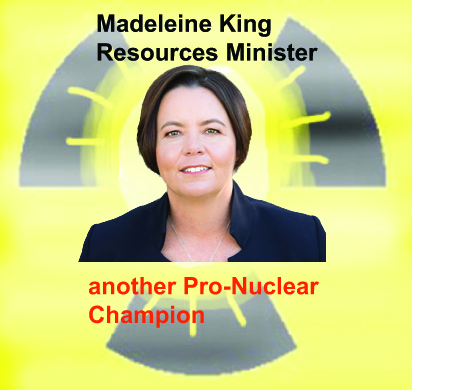
New Resources Minister backs Kimba nuke dump, https://vanguard-cpaml.blogspot.com/2022/06/new-resources-minister-backs-kimba-nuke.html?fbclid=IwAR0KRK5heMT8KlqDSY7WetXJhJrwMTqeMDwaLrzET6p-SQYA29j87DAp03Q by Nick G, June 6, 2022
The ALP’s new Resources Minister Madeline King has wasted no time in showing her support for the proposed nuclear waste dump at Napandee, near Kimba on Eyre Peninsula.
In response to an appeal to herself and PM Albanese from the disenfranchised and ignored Barngarla traditional owners, King has today stated that the nuclear waste dump was “a step forward” in the management of nuclear waste.
Background
Napandee was one of three sites proposed by the former Coalition government for the storage of intermediate and low-level nuclear waste. Two, including Napandee, were at Kimba, whilst a third was at Wallerberdina in the Flinders Ranges.
The operation of any of the three sites in SA was illegal under SA law.
Under state legislation introduced by the Olsen Liberals and strengthened by Rann Labor, it is illegal to operate a nuclear waste facility in SA or to import or transport nuclear waste in SA.
The legislation is quite clear and states:
8—Prohibition against construction or operation of nuclear waste storage facility. A person must not construct or operate a nuclear waste storage facility. Maximum penalty: In the case of a natural person—$500 000 or imprisonment for 10 years. In the case of a body corporate—$5 000 000.
9—Prohibition against importation or transportation of nuclear waste for delivery to nuclear waste storage facility. A person must not— (a) bring nuclear waste into the State; or (b) transport nuclear waste within the State, for delivery to a nuclear waste storage facility in the State. Maximum penalty: In the case of a natural person—$500 000 or imprisonment for 10 years. In the case of a body corporate—$5 000 000.
This legislation came about largely through the actions of the Kupa Piti Kungka Tjuta (the Anangu women of Coober Pedy) who led a campaign against a 1998 Howard Government proposal for a nuclear waste dump in SA.
In 2004, following Howard’s conceding defeat on the issue, three of those women, Eileen Kampakuta Brown, Ivy Makinti Stewart and Angelina Wonga issued a statement that began: “People said that you can’t win against the Government. Just a few women. We just kept talking and telling them to get their ears out of their pockets and listen. We never said we were going to give up. Government has big money to buy their way out but we never gave up…money doesn’t win.”
In 2016, SA Labor Premier Jay Weatherill set up a Royal Commission into SA’s nuclear energy future which included a proposal for a dump for high level overseas nuclear waste. Massive protests were held and a “citizen’s jury” effectively knocked all talk of nuclear waste dumps on the head.
The resurrected SA site proposals were met with further protests. The Adnyamathanha peoples led opposition to the Wallaberdina site and were successful in winning the vote in a community consultation of people in the Flinders Ranges.
The initial Kimba sites were rejected by former Minister Josh Frydenberg in 2016 due to a lack of broad community support; however in 2017 his replacement Matt Canavan revived the proposal and accepted Napandee as the site for the dump.
Barngarla Pushed Aside
Approval for the Kimba site required broad community support through a community consultation. In preparation for a local vote, millions of dollars of federal funds were poured into Kimba for “social and economic development” during the consultation process. Community facilities were upgraded, footpaths and gutters put in, and the town generally given a face lift.
No definition of “broad community support” exists in legislation, but Canavan mentioned a figure of “around 65%”. Kimba Council defined those eligible to vote as ratepayers living within a prescribed area and excluded the Barngarla native title holders on the grounds that they lived in other towns on Eyra Peninsula.
The Barngarla appealed to the Federal Court which upheld the Council’s decision on the grounds that the Barngarla would be “too difficult to identify”. A vote was held, resulting in a 61.5% vote for the dump with a majority of 70 in favour.
The Barngarla commissioned the Australian Election Company to poll people identified as Barngarla by the Barngarla Determination Aboriginal Corporation and identified 209 eligible voters. There were no votes for the dump, and 89 against it.
Had those 89 Barngarla votes been included in the Kimba Council “consultation”, the outcome would have been a “no” vote carried by a small majority.
Labor Opposition facilitates Napandee declaration
In Opposition, Labor had the opportunity to block the declaration of the Kimba site. However, Madeline King did a deal with the Coalition in June 2019 that allowed new Resource Minister Keith Pitt to declare Napandee as the site for the dump. Under the original federal legislation, an aggrieved party to the declaration had no right of judicial appeal. King negotiated to provide the appeal right and withdrew Labor opposition to the declaration despite saying that Labor would not pass the bill unless traditional owners were comfortable with it.
They clearly were not, and neither did they have the resources to properly fund a judicial appeal, although that process has now begun in the Federal Court.
Who is Madeline King?
Madeline King is a right-wing Labor politician with close ties to the mining industry and pro-US lobbyists.
She is a commercial lawyer who immediately prior to entering parliament was the chief operating officer of the Perth USAsia Centre, a think tank based at the University of Western Australia.
King was a ministerial adviser to federal Labor MP Gary Gray from 2011 to 2012. Gray had been National Secretary of the ALP from 1993 to 2000, but resigned to take up a position with fossil fuel giant Woodside Petroleum. As its Director of Corporate Affairs, he was an executive at the time when, in 2004, Foreign Affairs Minister Alexander Downer ordered the bugging of the East Timorese government during negotiations aimed at depriving the island nation of desperately needed revenue from underwater gas deposits. Gray was part of the Woodside negotiating team.
In 2007, Gray contested the WA seat of Brand and became part of Rudd’s Labor team. He retired in 2016 to take up a position with Mineral Resources, but was appointed Australian Ambassador to Ireland by Scott Morrison in 2020 in what some people have said was a move to prevent him having to testify in the case against Bernard Collaery and possibly incriminating Downer under cross-examination.
King’s employment as advisor to Gray has made her no stranger to the interplay between the corporate world and the benefits that accrue to Labor politicians who do their bidding.
No need for a Kimba dump
Opponents of the Kimba dump point out that much of the low-level waste (some of which needs to be stored for up to 300 years) is already safely stored at Woomera in SA. Some of it is stored at facilities at which it is produced. Medical nuclear waste accounts for only around 1% of the total and is short-lived and decays quite safely at the hospitals and treatment centres at which it is generated.
Intermediate level waste is generated at Lucas Heights in Sydney. Its decay time is far longer and needs to be kept from contact with humans for 10,000 years. A 2020 federal parliament inquiry confirmed that ANSTO, the operator of Lucas heights, has the ability to manage its waste onsite for “decades to come”. Ultimately, it will need to be stored in an underground repository. The government says this will take decades while the federal nuclear regulator says it could take a century to identify and construct.
If intermediate level waste is transported the 1700 kilometres from Lucas Heights to Kimba, it will be stored there as a temporary measure, in drums above the ground, pending its removal at some future stage to a permanent underground facility.
It therefore makes no sense to move these drums of intermediate level waste across the continent when there is storage capacity at Lucas Heights. Kimba is a temporary solution to a non-problem.
The issue of nuclear waste storage is one that must be referred to nation-wide community consultation. It is not a matter to be placed on the shoulders of this or that “remote” community to decided. We are all involved and we should all decide.
SA Unions made their position clear on March 15 when they unanimously supported a motion standing with the traditional owners. SA Unions Secretary Dale Beasley said “South Australian unions are completely united in their support of the Barngarla Traditional Owners and their opposition to the proposed nuclear waste site at Kimba”.
Let’s make this year’s Hiroshima Day (August 6) a day for concerted action against nuclear energy, nuclear waste dumps and nuclear-powered submarines.
Let’s keep alive the spirit of the Kupa Piti Kungka Tjuta.
The previous Liberal government lied about its Kimba nuclear waste dump plan, but be wary of the new Labor government, too.

I strongly suggest that particularly the Barngarla but the general Kimba community should be extremely cautious of the so- called support by Malinauskas and Maher for the opposition to the waste facility at Kimba as their demands for the nuclear powered submarine fleet to be built or just based in South Australia will generate significant volumes of nuclear waste which will need Kimba its storage and disposal.
Peter Remta, 17 October, While Minister Madeleine King began with great promise as a knowledgable and realistic minister for resources unlike her ministerial predecessor I have been singularly disappointed by her comments in various media outlets including in particular the Saturday’s edition of The Guardian
To say that she is allowing the Barngarla litigation to run its course is ludicrous and none of what she says can in any way justify the continued planning for the facility at Kimba
In view of this I have arranged for the ARTEMIS peer review service of IAEA to undertake a comparative study of the Kimba proposal to other suggested facilities.
What is more they will undoubtedly embarrass the government by showing up its ignorance and incompetence in the realm of nuclear waste which has previously been disguised by a barrage of
disingenuous comments and information.
I am aware that one person of interest in this review is to be Pitt as the former minister since he has shown to have little if any real knowledge of nuclear issues but was happy to disseminate incorrect and even untrue information for presumably his self importance.
However in the meantime it is necessary to ensure that the federal government will grant unfettered entry to Australia for both the ARTEMIS team and the UNHRC special rapporteurs since they have already been stopped on two occasions
Finally I strongly suggest that particularly the Barngarla but the general Kimba community should be extremely cautious of the so- called support by Malinauskas and Maher for the opposition to the waste facility at Kimba as their demands for the nuclear powered submarine fleet to be built or just based in South Australia will generate significant volumes of nuclear waste which will need Kimba its storage and disposal.
Perhaps someone should question him and Maher about their reluctance for an intervention by the State in such a significant national and international issue.
Friends of the Earth call on Madeleine King, Minister for Resources to overturn the declaration on Kimba nuclear waste site.

The Hon Madeleine King MP
Minister for Resources
Dear Ms King
Kimba Nuclear Waste Dump
We are writing in regard to the proposed construction of a National Radioactive Waste Management Facility (nuclear waste dump) at Napandee, near Kimba in South Australia. Napandee was declared on 26 November 2021 by Liberal National Party MP Keith Pitt, then Minister for Resources and Water, as the chosen site for the permanent disposal of low level radioactive waste (LLW) and temporary storage of intermediate level radioactive waste (ILW).
We urge you to overturn the declaration of this site by the previous government.
1. First Nations Voice to Parliament
We were greatly encouraged when Prime Minister Albanese, in his election night speech, embraced the Uluru Statement from the Heart, including its call for a First Nations Voice to Parliament enshrined in the constitution. A voice to parliament would enable Aboriginal and Torres Strait Islander people to provide advice to the parliament on policies and projects that impact their lives. The clear advice from the Barngarla people, the Traditional Owners of the area, is that they don’t want it. The Barngarla people were excluded from a community ballot conducted by the Kimba District Council in November 2019, so they conducted their own independent poll. Not a single Traditional Owner voted in favour of the dump.
We wish to lend our support to the Barngarla people’s call for their voices to be heard and for the nuclear waste dump proposal to be cancelled. We note that the Premier of South Australia Peter Malinauskas recently reiterated SA Labor policy that Traditional Owners should have a right of veto over nuclear projects. South Australia has a law prohibiting the establishment of nuclear waste storage facilities in this state (Nuclear Waste Storage Facility (Prohibition) Act 2000), which, while not binding on the Commonwealth, should be respected.
2. Process
While a majority of those who were actually allowed to vote in the Kimba community ballot supported the dump, a substantial minority opposed it and the proposal has divided the community. Furthermore, besides the Barngarla people, significant other affected communities have not been consulted. A facility that would involve transportation of radioactive waste to the storage and disposal site should involve consultation with all communities along the transport route and with the wider public. No such consultation has occurred. In fact, transport of repatriated reprocessed intermediate level waste was excluded from the March 2022 Environment Protection and Biodiversity Conservation Act referral.
3. Better alternatives
In a submission last year to a public consultation about the National Radioactive Waste Management Facility (NRWMF), Friends of the Earth Australia stated (1):
‘Moving LLILW [Long-Lived Intermediate-Level Waste] to an above-ground ‘interim’ store adjacent to a repository for lower-level wastes makes no sense given that much of the waste is currently located at ANSTO’s Lucas Heights site, which is properly secured and home to much of Australia’s nuclear expertise. ANSTO also enjoys considerably higher access to nuclear monitoring, security, waste management expertise and emergency response capacity than any other site in the nation.’
and
‘Successive governments have assumed that a shallow, remote repository is the best solution for low-level radioactive waste (LLW). That assumption needs to be tested as no federal government has attempted to demonstrate the net benefit of a remote repository. Measured by radioactivity, a large majority of LLW is stored at ANSTO’s Lucas Heights site; measured by volume, ANSTO manages about half the total volume. ANSTO expects to continue to operate at the Lucas Heights site for many decades into the future and it is by no means clear that a remote repository is preferable to ongoing storage at Lucas Heights, especially given the continuing uncertainty around the long-term future management options for LLILW.’
The Australian Radioactive Waste Agency’s National Inventory of Radioactive Waste released on 6th Sept 2022 shows that ANSTO is the predominant source of existing and future radioactive waste to be disposed and stored at Kimba.
When asked if ANSTO could continue to manage its own waste, Dr Ron Cameron (ANSTO) said, ‘ANSTO is capable of handling and storing wastes for long periods of time. There is no difficulty with that. I think we’ve been doing it for many years. We have the capability and technology to do so.’ (2) More recently, CEO of Australian Radiation Protection and Nuclear Safety Agency (ARPANSA), Dr Carl Magnus Larsson, confirmed that ‘Waste can be safely stored at Lucas Heights for decades to come.’ (3)
In light of the above circumstances, you should not feel under any obligation to honour the decision of the previous government. The sooner you cancel this project, the better.
Yours sincerely,
Philip White 12 October 2022
On behalf of Friends of the Earth Adelaide
adelaide.office@foe.org.au
1. Friends of the Earth Australia, ‘NRWMF public consultation: Published response: Submission re Proposed Nomination of Napandee (Kimba, SA) for a National Nuclear Waste Dump and Store’, 22 October 2021:
https://app.converlens.com/industry/nrwmf/survey/view/30
2. ARPANSA forum, Adelaide, 26 February 2004:
http://web.archive.org/web/20040610143043/http://www.arpansa.gov.au/reposit/nrwr.htm#forum
3. Hansard, Parliament of Australia, Economics Legislation Committee, 30/06/2020:
https://www.aph.gov.au/Parliamentary_Business/Hansard/Hansard_Display?bid=committees/commsen/3ae991cf-74a3-4f9e-9f5c-fbc6fccebdf2/&sid=0000
Nuclear Power: the Right’s giant red herring
https://johnmenadue.com/nuclear-power-the-rights-giant-red-herring/?fbclid=IwAR2QLkHEc5nz2. By Ralph Evans, Oct 5, 2022
Politicians of the Right keep suggesting Australia should build nuclear power stations. Why? They are slow to build, very expensive and potentially risky, and we have far better alternatives. Their aim is to divide and to wedge. We should treat it as a giant red herring.
Why do politicians on the Right keep bringing up nuclear power?
Eric Abetz used to do it at every opportunity, before he lost his senate seat and (bizarrely) reappeared as head of the Monarchist movement.
Early this month Peter Dutton said in a speech to the Minerals Council that Australia needs “a frank debate” about nuclear power and that it presents “a wonderful opportunity to add value” to our uranium resources.
Many readers will have seen an interview by David Speers with a barely coherent Barnaby Joyce on Insiders. Twice, with no prompting, Joyce brought up the idea of small modular nuclear reactors. Speers commented wryly that these are not something people are talking about at the checkout in IGA.
The latest pro-nuclear voice is Matt Canavan, the Queensland senator who loves to dress up as a coal miner, replete with face covered in coal dust. Canavan announced in a tweet this week that he would join a group of senators proposing repeal of the current law banning nuclear power in Australia. He said “It is time to join the rest of the world and treat nuclear energy as a safe and effective option”.
This is just nonsense, babble. Nuclear power is a non-starter in Australia today. Nobody is champing at the bit to invest billions in nuclear, as they are in solar, wind, storage and hydrogen. So why is the Right carrying on about it?
We were bound to hear more of this when CPAC met in Sydney last weekend. CPAC is a conclave of deplorables, an American franchise.
Even if its economics were better, nuclear power would take far too long to build to contribute to our urgent need to reduce emissions. There is no way we could see nuclear power on-line here before the later 2030s, at the earliest. First, Parliaments (state and federal) would have to repeal the ban. Then governments would have to set up a strong regulatory regime, which is not a simple thing. Next, in the unlikely event that somebody were to step forward to propose a plant, there would be a long process of argument about sites and environmental approval. Who wants one of these in their neighbourhood? Last, construction and testing could easily take a decade or more, based on American and European examples.
Barnaby’s small modular reactors are an intriguing idea, but they don’t exist yet. The first, being built by US start-up Nuscale Power, is due to be complete in 2028 or 2029. It will take years after that to establish whether these smaller reactors have the lower costs and faster construction their proponents hope for.
CSIRO and the Australian Energy Market Operator published their 2021-22 edition of their annual Gencost report in July. They concluded (once again) that an integrated mix of solar and wind power and storage offers the lowest-cost new-build means of supplying the Australian market with electricity. The report saw no prospect of small modular nuclear reactors operating here in this decade. It said their cost could possibly come down in the future, but this would depend on successful deployment overseas.
Stories abound of delays and cost overruns with nuclear power. Britain’s Hinkley Point C station was first estimated to cost £4 billion. It is now over a decade late and expected to come in at £22-3 billion. Do we seriously want to get into this, when a renewable network can be built far more quickly and in smaller pieces?
The safety record of nuclear power is generally good. But when accidents occur they can be very big indeed. Naturally, they can prompt widespread community opposition. The Chernobyl disaster in Ukraine led to strong opposition to nuclear power in Germany and a plan to exit nuclear power. Fukushima led the government of Japan to mothball many existing nuclear stations. The total cost of the Fukushima clean-up may be as high as US$1 trillion. We have no need to take this kind of risk in Australia.
So why do the politicians of the Right keep talking up nuclear power? No doubt, some want to attract attention to themselves or to ingratiate themselves with interest groups like the Minerals Council. In addition, I suspect, they aim to sow confusion and to drive wedges into the community.
Nuclear power is a great subject for an old bore to bang on about in a pub or at a barbecue. It is easily linked to other hardy perennials, like the Bradfield Plan to pump water from coastal Queensland rivers like the Burdekin over the Great Divide to irrigate the inland. This has been demonstrated time and again to be uneconomic, but its advocates go on about it like a dog with a bone.
Nuclear power for Australia is nothing more than a giant red herring and should be treated as such.
Coalition nuclear power bill “dead on arrival,” but somehow the debate lives on.

Australia’s atomic culture warriors are now focused on promoting ‘advanced’ nuclear power and small modular reactors. A new report debunks – yet again – the propaganda. The post Coalition nuclear power bill “dead on arrival,” but somehow the debate lives on appeared first on RenewEconomy.
Coalition nuclear power bill “dead on arrival,” but somehow the debate lives on — RenewEconomy
RenewEconomy, Dr. Jim Green 5 October 2022, Australia’s nuclear power debate refuses to die. The phenomenon was neatly summarised by Bernard Keane in Crikey in August:
“Nuclear power has to be the single most boring and ossified ritual in Australian public policy. Someone on the right will call for a “debate” on nuclear power. Critics will point out that nuclear power is ludicrously expensive, takes decades to build, and is prone to multi-hundred per cent cost blowouts.
“The right will then invoke, reflexively, small modular reactors, which aren’t operating anywhere in the world despite having been promised for 30 years. Someone else will then ask which electorate the proponents propose to put a reactor in. Rinse, repeat.”
As repetitive as the debate has become, there are interesting contributions from time to time.
Dr Ziggy Switkowski led the Howard government’s nuclear review in 2006 and was arguably Australia’s most prominent champion of nuclear power.
But, to his credit, Switkowski has been following the dramatic cost reductions of renewables and the equally dramatic cost escalations of nuclear power. In 2019, Dr. Switkowski dropped an atomic bombshell, stating that “the window for gigawatt-scale nuclear has closed” with renewables winning on economic grounds.
Former NSW Premier Bob Carr is another former supporter who has been swayed by the facts. Carr noted in The Australian last November that “nuclear is lumbering, subject to breakdowns and cripplingly expensive” and that “the contrast with the surge to renewables is stark.”
Conservative commentator Paul Kelly poured cold water on the Coalition’s nuclear crusaders in The Australian last November.
Kelly’s column pointed to the “popular pull of renewables” and their falling costs. He noted that “nuclear plant construction remains poor in advanced OECD nations, the main reason being not safety but its weak business case”.
Kelly also questioned the rhetoric around small modular reactors given that “none has so far been built in developed nations”.
On the politics, Kelly wrote that
“The populist conservatives have form. Before the 2019 poll, they campaigned on the mad idea that Morrison follow Donald Trump and quit the Paris Agreement. Now they campaign on the equally mad but more dangerous idea that he seek to split the country by running on nuclear power… As for those conservatives who say Morrison’s job is to fight Labor, the answer is simple. His job is to beat Labor. That’s hard enough now; vesting the Coalition with an unnecessary ideological crusade that will crash and burn only means he would have no chance.“
Some Coalition MPs seem incapable of understanding the politics. On September 28, nine ultra-conservative Coalition Senators introduced a private members bill to Parliament calling for the repeal of Howard-era legislation banning nuclear power.
But the Liberal and National senators don’t even have the support of their own parties, so their private members bill was dead on arrival.
Matt Canavan was among the group of nine Senators. He claims to oppose policies that will drive up power prices but supports nuclear power even though he has himself noted that it would increase power bills.
Perhaps he should read Paul Kelly’s column in The Australian. And he should read the work of CSIRO and the Australian Energy Market Operator which dispels any notion that nuclear power is economically viable in Australia.
“Advanced” nuclear power
A 2019 federal parliamentary Environment and Energy Committee inquiry was controlled by Coalition MPs who were, in principle, exceedingly enthusiastic about nuclear power.
However the Committee’s report argued that the government should retain legal bans prohibiting the development of conventional, large nuclear power reactors. Committee chair Ted O’Brien said “Australia should say a definite ‘no’ to old nuclear technologies”.
The Committee’s report called for a partial repeal of legal bans to permit the development of “new and emerging nuclear technologies” including small modular reactors, but that was quickly ruled out by the Morrison government.
Nonetheless, propaganda about ‘advanced’ nuclear power persists and the Australian Conservation Foundation has released a new briefing paper debunking that propaganda……………………………………………….
Australia’s energy future is renewable, not radioactive
The pursuit of SMRs or ‘advanced’ nuclear power in Australia would be expensive and protracted. The South Australian Nuclear Fuel Cycle Royal Commission stated in its 2016 report:
“Advanced fast reactors and other innovative reactor designs are unlikely to be feasible or viable in the foreseeable future. The development of such a first-of-a-kind project in South Australia would have high commercial and technical risk. Although prototype and demonstration reactors are operating, there is no licensed, commercially proven design. Development to that point would require substantial capital investment.”
The federal Department of Industry, Science, Energy and Resources expects 69 percent renewable supply to the National Electricity Market by 2030. The Albanese Government’s target is 82 percent renewable supply to the National Electricity Market by 2030.
State and territory governments (including Liberal/Coalition governments) are focused on the renewables transition. Tasmania leads the pack thanks to its hydro resources. South Australia is another pace-setter: wind and solar supply 64 percent of local power generation and SA could reach its target of net 100 percent renewables within a few years.
The pursuit of nuclear power would slow the transition to a low-carbon economy. It would increase electricity costs. It would unnecessarily introduce challenges and risks associated with high-level nuclear waste management and the potential for catastrophic accidents.
The pursuit of nuclear power in Australia makes no sense whatsoever. Australia’s energy future is renewable, not radioactive. https://reneweconomy.com.au/coalition-nuclear-power-bill-dead-on-arrival-but-somehow-the-debate-lives-on/—
Dr. Jim Green is the national nuclear campaigner with Friends of the Earth Australia and co-author of the ACF’s briefing paper, ‘Wrong reaction: Why ‘next-generation’ nuclear is not a credible energy solution’.
Matt Canavan and 8 Coalition Senators aim to overturn Australia’s ban on nuclear power

Bill introduced to remove nuclear energy ban in Australia
Small Caps, By Louis Allen, October 3, 2022 “………… nine coalition senators moved to introduce a Private Senators Bill, arguing nuclear power is one of the safest forms of energy and will play a vital role in achieving the nation’s emission targets moving forward.
Nationals senator Matt Canavan said the “mood is shifting” on nuclear energy,………………
Senator Canavan said the appetite for nuclear energy has grown since the government signed on to buy nuclear-powered submarines.
“People realised, given the geopolitical situation we faced, whatever hang-ups we had on nuclear energy, we needed them in our submarines,” he said.
Not everyone was in favour of the move – with federal energy minister Chris Bowen saying it was the most expensive form of power Australia could invest in.
Mr Bowen said industry groups suggested Australia would need about 80 nuclear plants to produce the electricity it needed.
“That is one (for) every second MP. Put your hand up if you would like one,” he said.
…………………….. Senator Canavan said Australia must … support nuclear energy as an energy means of the future. “The world is turning back to nuclear power and there are game changing developments in small modular reactor technology.”
“With the world’s largest uranium reserves, Australia cannot afford to be left out of global nuclear progress,” he said.
Coalition senator David Fawcett has backed senator Canavan’s claims, saying he believed nuclear power was the best option for the long term…………………..
Senator Jacinta Price said Australia needs to fully support nuclear power to achieve its ambitious emission goals and targets.
“If we truly as a nation want the cleanest and most reliable energy source there is available, then nuclear power is the logical option,” she said. https://smallcaps.com.au/bill-introduced-remove-nuclear-energy-ban-australia/
War Powers Reform: those in favour say aye … or maybe “no comment”
by Alison Broinowski | Oct 2, 2022 , https://michaelwest.com.au/war-powers-reform-those-in-favour-say-aye-or-maybe-no-comment/
True to its word, the Albanese government has announced an inquiry into War Powers. Dr Alison Broinowski looks at the politics and the players, and the chances of reform so the decision to take Australians to war requires a vote of Parliament, rather than a one-man-call.
Dr Alison Broinowski AM is President of Australians for War Powers Reform (AWPR).
After a decade of public efforts to get politicians to concentrate on changing how Australia goes to war, the Albanese government has now responded by taking the first step.
The announcement on 30 September of a Parliamentary inquiry reflects the concerns of groups across Australia that we might slide into another disastrous conflict – this time in our region. Those welcoming it are 83% of Australians who want Parliament to vote before we go to war. Many see this opportunity for reform as potentially putting Australia ahead of similar democracies.
While many nations have constitutions requiring democratic scrutiny of decisions for war, Australia is not among them. Nor are Canada or New Zealand. The UK has conventions instead, and British efforts to legislate the war powers have failed. In the US, efforts to reform of the War Powers Act of 1973 have repeatedly been defeated.
Western Australian MP Josh Wilson wants research done by the Parliamentary Library to update inquiry members on how other democracies respond to governments’ war proposals.
Yes, no, and no comment
Leading proponents of Australia’s inquiry are the ALP’s Julian Hill, who will chair it, and Josh Wilson. They stress that the outcome will be a matter of compromise, reflecting the composition of the Defence sub-committee of the Joint Standing Committee on Foreign Affairs, Defence, and Trade.
But the fact that it has been referred to the Committee by Defence Minister Richard Marles is encouraging for those who fear that Australia could slide into another war as disastrous as Vietnam, Afghanistan, and Iraq.
Neither Marles nor Prime Minister Albanese has publicly supported reform of the war powers. Nor have many of their party colleagues, who either defer to their views or have no comment. Among Labor politicians who support reform, many are not members of the sub-committee conducting the inquiry.
Michael West Media (MWM) began surveying politicians last year about their response to the question ‘Should the PM have the sole call to take Australians to war?’. Almost all the Greens responded ‘No’, and all the Nationals ‘Yes’. Many others, ALP and Liberals alike, had no comment, or echoed their defence spokespeople or ministers. Others again favoured reform, but with certain conditions, mainly concerned with what Australia would do in an emergency.
Interestingly, three of the four MPs who had actually served favoured reform.
But since the election, numerous respondents to the MWM survey are no longer in Parliament, and we now have a new cohort of Independents, most of whom campaigned on platforms of accountability and climate change, rather than talking about foreign affairs and defence.
Australians for War Powers Reform (AWPR) points to the connection between these two important issues and military operations, which are highly polluting and unaccountable. Independents Andrew Wilkie, Zali Steggall, and Zoe Daniel understand the need to subject war-making to the same democratic process.
Daniel, a former ABC correspondent, is among the 23 members of the Defence sub-committee which will conduct the inquiry. They include a balance of party affiliations and opinions. ALP Chair Julian Hill has as his Deputy, Andrew Wallace from the LNP. Members vehemently opposed to reform of the war powers, each for their own reasons, include Liberal Senators Jim Molan and David Van. Others responded to MWM’s surveys and AWPR’s inquiries with no comment. Some have not responded to requests for interviews.
Two contrasting responses stand out. Labor MP Alicia Payne said clearly that she wanted a Parliamentary inquiry and supported the government’s initiative. “I recognise that in some instances the executive government may need to make such decisions as a matter of urgency, however, such urgent decisions should still be subject to parliamentary scrutiny”. Ms Payne is not a member of the sub-committee.
On the other hand, Senator Ralph Babet, of the United Australia Party, told MWM that “A clear distinction should be made between war powers and matters of defence … A multi-partisan view of hope exists for future global peace and stability, within the halls of Parliament”. Senator Babet is a member of the sub-committee, which may hear from him what this means.
Not all the members of the sub-committee have made their views about war powers reform known to MWM or AWPR. A rough assessment shows that a majority didn’t reply or had no comments. The proceedings promise to be interesting. But the results are critically important, influencing as they will Australia’s position in March 2023.
That’s when the 18-month consultation process ends for AUKUS, the Defence Strategic Review reports, and the 20th anniversary of Australia’s invasion of Iraq occurs. Reform of the war powers has never been more urgently needed.
1 This month

of the week – Australians for War Powers Reform (AWPR)
To see nuclear-related stories in greater depth and intensity
 Antinuclear