Australian Nuclear Technology and Science Organisation, (ANSTO), jumps on the bushfire propaganda bandwagon
Today, 15 January, there was a ’round table” meeting, (I think in Canberra) of “top scientists” on the urgent need to develop new bushfire adaptation and mitigation techniques.
And guess who’s at the top of the list in these TOP SCIENTISTS ON CLIMATE CHANGE. Why, none other than The Australian Nuclear Technology and Science Organisation, (ANSTO)
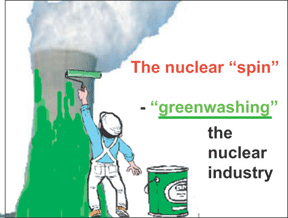
Of course, ANSTO is prominent in promoting the lie that nuclear power is the solution to climate change. They’ve put in submissions to parliamentary inquiries, You can bet that they’ve got one in now, to the Victorian Inquiry (submissions close 28 February.) One must admire the timing of the nuclear lobby’s manipulations, and the speed with which they are jumping on the bushfire-fix bandwagon.
Coalition right wing unhappy, as moderate Liberals seize on PM Morrison’s comments about cutting emissions.
 Coalition MPs split over Scott Morrison’s apparent shift on climate policy, Moderate Liberals seize on PM’s comments to argue the government will do more to cut emissions but conservatives push back, Guardian Sarah Martin 13 Jan 2020 Chief political correspondent Moderate Liberals have seized on Scott Morrison’s apparent shift on climate change policy to argue the government will do more to cut emissions, as some conservatives push back against any “symbolism” that could damage the economy.
In a sign of the challenge facing the prime minister as he seeks to “evolve” climate change policy, government MPs have split over the prime minister’s comments on the weekend that the Coalition wanted to reduce emissions “even further” than current commitments.
While saying Australia’s 2030 emission reduction targets remain government policy, Morrison said he wanted to do “better” and would only rely on the use of carryover credits from the Kyoto protocol if needed.
Australia is the only country relying on carryover credits to meet its Paris 2030 target of 26% to 28% of 2005 levels by 2030, which critics say do not represent the cuts required to limit global warming to as close to 1.5C as possible.
Katie Allen, the Liberal MP for the Victorian seat of Higgins, welcomed Morrison’s remarks, telling her constituents that she would be a “strong voice” in the party room for stronger action on climate change…….
The self-styled modern Liberal MP Tim Wilson also endorsed Morrison’s comments, saying the commitment at the last election to “cut emissions, but not jobs” was a baseline for action.
“The prime minister has rightly identified there’ll be more evolution of policy to cut emissions, but not jobs, and I look forward to contributing to that important evolution,” Wilson told Guardian Australia.
Dave Sharma, the MP for Malcolm Turnbull’s former seat of Wentworth, said he was “pleased to hear” Morrison’s comments on the importance of responding to climate change and promoted the government’s plan to “continue to evolve our policies with a view to reducing our emissions further”…..
But as moderates welcomed the shift, conservative MPs were warning against a change in policy.
The Queensland Nationals MP Llew O’Brien told the Courier Mail that if Australia went beyond its current commitments, it would be “pure symbolism at the expense of the economy”.
The former Nationals leader Barnaby Joyce also issued a thinly veiled warning that the government risked a backlash in the bush if it moved to ramp up emission reduction targets……..
The divide comes as Morrison insists the role of climate change is “not in dispute” within his ranks, despite several MPs denying the role of a warmer planet as an underlying cause of the severe bushfire season.
The Nationals MP George Christensen was the latest to promote his view that climate change was not a factor, telling his supporters on Facebook that climate change is not “a bogey man who can go around lighting bushfires”…..
The Liberal MP Craig Kelly last week caused a storm of controversy after appearing on UK television to argue that there was “no link” between climate change and Australia’s drought.
Following the appearance, Morrison told his MPs that backbenchers should not do any international media interviews. https://www.theguardian.com/australia-news/2020/jan/13/coalition-mps-split-over-scott-morrisons-apparent-shift-on-climate-policy
Australia can have zero emissions and still profit from minerals, says Ross Garnaut
 Australia can have zero emissions and still profit from minerals, says Ross Garnaut, ABC NEWS BREAKFAST BY PATRICK WOOD 13 Jan 2020 Australia could have avoided the scale of the devastating bushfires, Professor Ross Garnaut has said as he warned the situation would continue to worsen if there wasn’t global action on climate change, something he said didn’t have to come at the expense of the economy.Key points: Australia can have zero emissions and still profit from minerals, says Ross Garnaut, ABC NEWS BREAKFAST BY PATRICK WOOD 13 Jan 2020 Australia could have avoided the scale of the devastating bushfires, Professor Ross Garnaut has said as he warned the situation would continue to worsen if there wasn’t global action on climate change, something he said didn’t have to come at the expense of the economy.Key points:
The economist said he “strongly endorsed” Prime Minister Scott Morrison’s focus on reducing emissions without damaging the economy, and believed Australian industries could still reap the benefits of the country’s mineral resources in a zero-emissions world. As this bushfire season has claimed lives and thousands of homes, Professor Garnaut has become a focus on the debate around climate change and the Government’s response.That is because in 2008 he conducted a widescale review into the impact of climate change on Australia and its economy, and came to a conclusion: the nation would face a more frequent and intense fire season by 2020. As that prediction comes to pass, the Prime Minister is facing renewed scrutiny on the Government’s climate change policy and whether it will change due to the fires……..
Professor Garnaut said the bushfire crisis could have been avoided if Australia, as part of a global effort, had “done a lot more much earlier”. “The tragedy has been building over a long time,” he said. “Things will continue to get worse … until the world has zero net emissions of greenhouse gases.” In this zero-emissions world, Professor Garnaut argued Australia could be a world leader by processing its minerals locally using renewable energy. “I think the point about avoiding cuts to the economy is a sound one,” he said in response to the Prime Minister’s interview. “The way you make steel in a zero-emissions economy is using renewable energy to make hydrogen, to make steel, instead of using coal.
The way you make aluminium in a zero-emissions world economy is to use renewable energy to turn bauxite and aluminium oxide into aluminium metal. “Australia is by far the biggest exporter of aluminium ores and iron ores, [and] when the world is producing aluminium and iron without emissions, we’ll be the place that’s done. So it will be positive for the economy. “So I strongly endorse the Prime Minister’s focus on getting to zero emissions without damaging our economy. It can do us a lot of good.” Carbon pricing ‘faster and cheaper’The question of how Australia reduces its emissions is still up for debate. He said policies would continue to evolve but did not outline specific plans. Professor Garnaut said putting a price on carbon was a good option, but one he acknowledged was not going to happen with the current Government. “We would have got to low emissions much more cheaply if we’d had an economy-wide carbon price, but you can get there without a carbon price,” he said. “For the time being we have to make progress without a carbon price. We can do that. “We would make faster and cheaper progress later on if later we adopted a carbon price.”He said the current fires could also prompt a shift in the way the country tackled climate change. “My reading of the complex electoral arithmetic of the last election is that on balance the electorate was favouring stronger action on climate change,” he said. “Not in every place. The coal-producing areas in the Hunter Valley and up the Queensland coast were very nervous. “We have to show those communities that there are alternatives … [that] those places can do very well in the zero-emissions economy of the future. “But we’ve actually got to develop the programs that have them doing very well.” https://mobile.abc.net.au/news/2020-01-13/ross-garnaut-on-bushfires-scott-morrison-climate-change/11861846 |
|
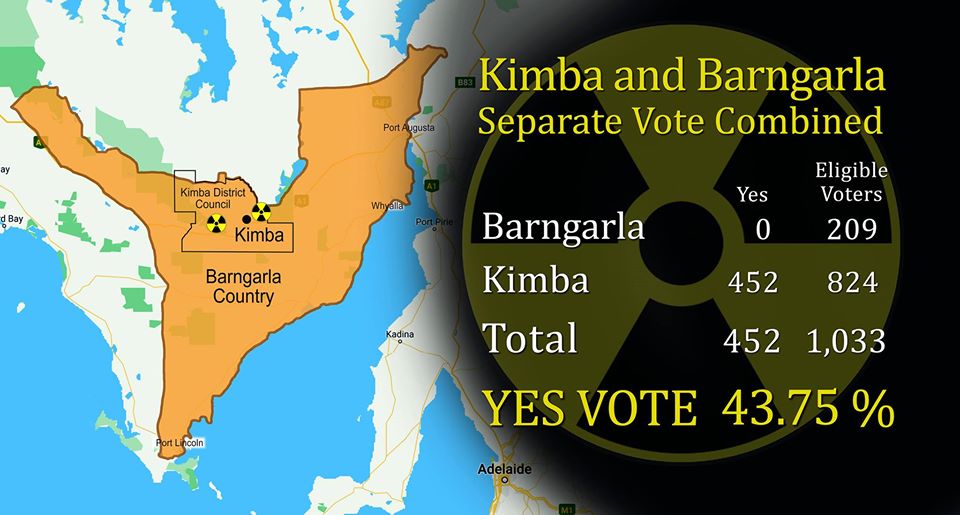
When traditional Aboriginal owners are included in the vote, support for Kimba nuclear waste dump drops to 43%
“Barngarla Speak Out” : vimeo.com/382855709
“SAVE SA Farmland – Kimba, Eyre Peninsula” : vimeo.com/381938156
Dramatic drop in P.M. Scott Morrison’s popularity, over his climate stance
|
Appearing on Insiders on Sunday morning, Mr Morrison said it was his “intention to meet and beat” Australia’s 2030 commitment to cut emissions 26 to 28 per cent on 2005 levels. And he left the door slightly ajar to cut more emissions if needed.
It’s a small but significant step considering just weeks ago Mr Morrison said he saw no need to change his climate policies. In another move to show it is helping the environment, the Morrison government will on Monday announce it is pledging $50 million to help protect wildlife and fauna impacted by bushfires. Could it signal that the bushfire disaster has finally woken the government up to do more to acknowledge and fight manmade climate change? Experts aren’t holding their breath. And now the polls indicate the PM has some work to do to persuade voters amid fury over Mr Morrison’s bushfire response. The latest Newspoll figures show Mr Morrison’s approval rating has plunged and Labor leader Anthony Albanese is now the preferred leader. Mr Albanese leads the Liberal leader 43 to 39 per cent, according to the survey results released on Sunday night. Labor is in front 51-49 on a two-party-preferred basis in the poll conducted for The Australian, a significant turnaround from early December when results showed the coalition led 52-48. Support for the Greens rose one point to 12 per cent, while One Nation lost ground, falling one point to four per cent. Meanwhile, scientists say Mr Morrison’s mea culpa on his holiday and hint on climate policy shift are nowhere near the strong response needed to show the government is going to commit to any meaningful change in their climate response. Lesley Hughes, a professor of biology at Macquarie University and a climate councillor at the Climate Council of Australia, said the government’s targets are so “weak” that it means little when the PM promises to meet or beat them. “It’s like saying I want a 20 per cent pass rate on my exam. So we met those targets because they were so low,” Professor Hughes told The New Daily. Meeting the 2030 Paris targets would rely heavily on including emissions reductions from the previous international agreement, the Kyoto protocol. “The best analogy I’ve heard – and it’s not mine – but it’s like saying I got a really good mark on my kindergarten colouring test and I want to use that to pass my university test now,” Professor Hughes said. On top of the targets being criticised as too low, the UN reported last year that Australia was not even on track to meet them. “There has been no improvement in Australia’s climate policy since 2017 and emission levels for 2030 are projected to be well above the target,” the report found. Central to the government’s climate plan is the Emissions Reduction Fund, which was allocated an additional $2 billion to purchase about 100 million tonnes of emissions from businesses between 2021 and 2030. While the framework of the ERF has been praised, the OECD said in a 2019 report it would need to be scaled up to meet the Paris targets. Australia is part of a growing cohort of G20 countries that are falling short. This will have dire consequences for our environment and economy, Professor Hughes said. If we do meet our 26 per cent reduction, it is not enough if you multiply that on a global scale to stop us from getting to three degrees of warming,” she said. “This fire season has been with just one degree of warming. Just imagine three times – what that means. That’s what we’re talking about.” Coal: Australia’s kingOpposition leader Anthony Albanese has said the government is “refusing to act” on climate change, but he has also backed coal exports……. https://thenewdaily.com.au/news/national/2020/01/13/scott-morrison-insiders-climate-change/ |
|
Thousands protest in Sydney and other cities, against govt inaction on climate change
Protesters chanted, “Hey hey, ho ho ScoMo has got to go” as speakers climbed Town Hall’s side steps, and later moved on to “The liar from the shire, the country is on fire”.
She was given a move-on order by police while protesting outside Kirribilli House last September. Her hope is that Friday’s protest will create change……….
Protests also took place in other Australian capital cities. https://www.smh.com.au/environment/climate-change/sydney-cbd-climate-protest-attracts-thousands-20200110-p53qhq.html?promote_channel=edmail&mbnr=MTM2NDAwMjM&eid=email:nnn-13omn655-ret_newsl-membereng:nnn-04%2F11%2F2013-news_pm-dom-news-nnn-smh-u&campaign_code=13INO009&et_bid=292
The $billions cost of Australia’s climate disasters
Australia’s bushfires to cost billions as climate risks rise Climate Home News 07/01/2020, Australian government announces national bushfire recovery fund, as cost of natural disasters expected to rise in coming years, By Chloé Farand
Bushfires ravaging Australia are expected to cost billions of dollars in recovery efforts and the nation’s bills for tackling natural disasters risk soaring in coming decades with worsening climate change.
Record-breaking temperatures and severe droughts have fuelled the fires which have burnt millions of hectares across the country. At least 24 people and hundreds of thousands of animals have been killed.
Data from the Australian government Bureau of Meteorology shows December’s mean temperature was 3.21C warmer than the average for the month. Ed Hawkins, a professor of climate science at the University of Reading, said the country’s mean December temperature had warmed about 1.4 times faster than the global annual average temperature over the past century.
But pro-coal Prime Minister Scott Morrison has denied the link between climate change and the unprecedented intensity of bushfires across the country, describing it as “misconstrued”.
The costs of wildfires is difficult to estimate due to the indirect costs such as the destruction of wildlife and the environment, damage to public health and harm to tourism.
Swiss Re, one of the world’s largest insurance companies, found direct economic losses only represent a fraction of the true economic impact, which can span years.
Across the world, the economic cost of wildfire has increased in recent decades. In 2017, direct economic losses from wildfires amounted to $21bn worldwide – up from $6bn in 2016, according to Swiss Re
The costs of wildfires is difficult to estimate due to the indirect costs such as the destruction of wildlife and the environment, damage to public health and harm to tourism.
Swiss Re, one of the world’s largest insurance companies, found direct economic losses only represent a fraction of the true economic impact, which can span years.
Across the world, the economic cost of wildfire has increased in recent decades. In 2017, direct economic losses from wildfires amounted to $21bn worldwide – up from $6bn in 2016, according to Swiss Re. https://www.climatechangenews.com/2020/01/07/australias-bushfires-cost-billions-climate-risks-rise/
Independent Australia on the Coalition’s toxic denial of climate change
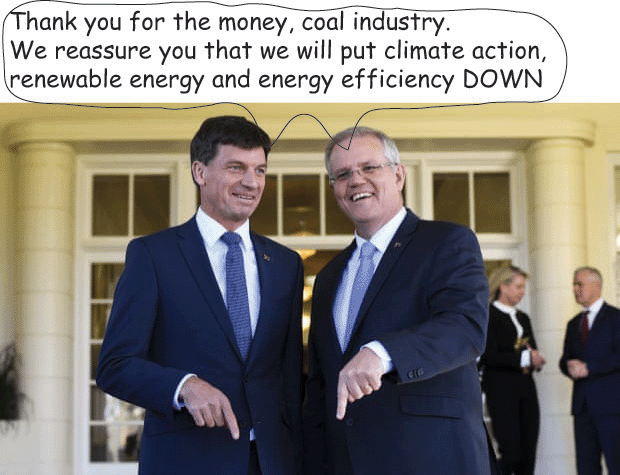 The Coalition’s toxic denial of climate change is destroying us, Independent Australia, By Lyn Bender | 10 January 2020 It was our government’s denial of climate change that has brought so much destruction upon our country, writes Lyn Bender.
AS AUSTRALIA MOURNS enormous losses and experiences the dread and terror of this ferocious summer, the culture of denial attempts to assert itself in this new landscape. The professional denialists continue to promote their toxic climate lies.
Prime Minister Scott Morrison is their klutz villain who seeks to deceive, as the climate reveals its fury.
Perhaps this is the time that we may at last defeat toxic denial. …..
Scott Morrison does not seem to accept the science of the times. If he understands the science, then his response to our climate crisis is homicidal.
Morrison wants to continue to consummate his love affair with coal, even though it means the destruction of our nation and the planet.
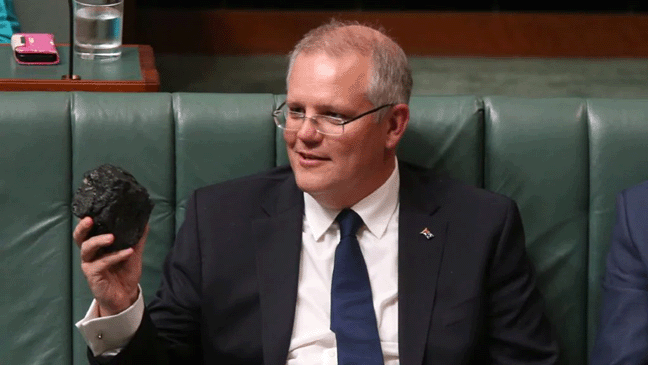
In May 2019, enough voters were in denial of the urgency of climate change to facilitate the election of a climate-denying government. Morrison showed us what he was made of when he fondled a lump of coal in the House of Representatives. It had been lacquered into cleanliness.
“Don’t be afraid, don’t be scared,” he mocked. “This is coal,” Morrison bellowed. He laughed as his sycophantic frontbenchers handled the gleaming black lump with glee.
Optimism is not the same as pretending in the face of evidence to the contrary that all will be well. That kind of optimism exists in the realm of charlatans or fools.
Morrison had a Happy New Year’s Eve party and photoshoot with the cricket team. “Life, as usual, continues” was the message. As people died, houses burned, ecosystems and millions of native animals are incinerated, the Prime Minister was having his summer of beach and cricket. It was like a crass tourism promotion.
This is the bizarre game that the denialist team has been playing for many years. As the planet hotted up and the science grew more insistent of our need to act, the denial team was in full throat. As the birds were silenced, the usual suspects became more shrill in their squawking.
There are too many to name but here are a few of those seated at the have-a-sham table:
- Alan Jones;
- Ray Hadley;
- Steven Price;
- Peter Gleeson;
- Peta Credlin;
- Chris Kenny;
- Andrew Bolt;
- Terry McCrann;
- Rupert Murdoch;
- Ian Plimer, as reported on Media Watch; and
- the Institute of Public Affairs, a pseudo think tank that promotes denial in the interests of its mining founders.
The Government is staffed by saboteurs of climate action. Angus Taylor, the Minister for Energy and Emissions Reductions, has voiced opposition to the U.N. climate processes. Australia, along with Brazil and Saudi Arabia, pushed for a very disappointing outcome at the recent Climate Summit at Madrid. Angus’s performance was slammed by climate scientist Will Steffen. Former Deputy Prime Minister Barnaby Joyce is awaiting divine intervention for the drought, rather than government intervention. As the former Drought Envoy, Joyce failed to produce a single report. https://independentaustralia.net/politics/politics-display/the-coalitions-toxic-denial-of-climate-change-is-destroying-us,13477
Climate change Australia, and the bizarre state of our national political conversation
it apparently isn’t OK to simply say that clearly the climate has changed (even to say that without saying because it’s due to, you know, climate change).
It’s hard not to listen to these interviews [with Scott Morrison] though, and get the sense that he is rattling off an alibi; that he remains on the defensive.
|
|
In the face of a bushfire catastrophe, our national conversation is still run by politics https://www.abc.net.au/news/2020-01-11/australia-bushfire-crisis-just-dont-mention-climate-change/11857590b By Laura Tingle The Eyre Highway reopened on Friday after being closed for 12 days because of bushfires.You might not have driven on the Eyre Highway. But if you want to take the long route north via Kununurra, it is the only sealed highway linking eastern Australia with Western Australia.
The Kings Highway is expected to be closed for most of January. That’s the highway that links Canberra with the south coast. Parts of that road are said to have just melted down the steep sides of Clyde Mountain in fires that have burnt virtually all of the bush from Braidwood to Batemans Bay. Many communities across the country have been told to boil their drinking water because of contamination linked to bushfires — either by ash, such as in Tenterfield, or by the mixing of water supplies during firefighting, as has happened on the NSW south coast. And that’s the case for the communities that have not simply just run out of water. There are concerns that Sydney’s water supply could be severely affected in months to come if the ash from huge areas of burnt out bush around Warragamba Dam, which provides 80 per cent of Sydney’s water, runs into the dam after heavy rainfall. The bizarre state of our national conversationIt’s hard to take pictures of closed highways, or compromised water supplies. But these examples give just some idea of the knock-on effects of fires like those we have seen this catastrophic summer. Continue reading |
Australia stuck in the climate spiral – producing pollution, burning from pollution
|
Australia Will Lose to Climate Change https://www.theatlantic.com/science/archive/2020/01/australia-caught-climate-spiral/604423/ Even as the country fights bushfires, it can’t stop dumping planet-warming pollution into the atmosphere.
ROBINSON MEYER
JANUARY 4, 2020 .Australia is caught in a climate spiral. For the past few decades, the arid and affluent country of 25 million has padded out its economy—otherwise dominated by sandy beaches and a bustling service sector—by selling coal to the world. As the East Asian economies have grown, Australia has been all too happy to keep their lights on. Exporting food, fiber, and minerals to Asia has helped Australia achieve three decades of nearly relentless growth: Oz has not had a technical recession, defined as two successive quarters of economic contraction, since July 1991. But now Australia is buckling under the conditions that its fossil fuels have helped bring about. Perhaps the two biggest kinds of climate calamity happening today have begun to afflict the continent.
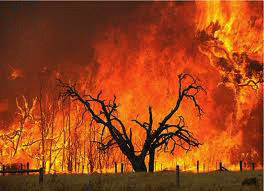
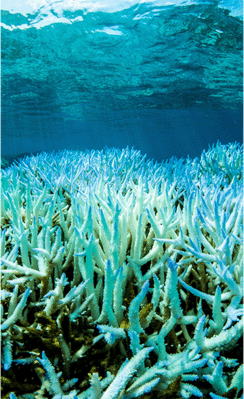
Meeting such a goal will require a revolution in the global energy system—and, above all, a rapid abandonment of coal burning. But there’s the rub. Australia is the world’s second-largest exporter of coal power, and it has avoided recession for the past 27 years in part by selling coal. Though polls report that most Australians are concerned about climate change, the country’s government has so far been unable to pass pretty much any climate policy. In fact, one of its recent political crises—the ousting of Prime Minister Malcolm Turnbull in the summer of 2018—was prompted by Turnbull’s attempt to pass an energy bill that included In fact, it is unprecedented. This season’s fires have incinerated more than 1,500 homes and have killed at least 23 people, Prime Minister Morrison said on Saturday.* There were at least twice as many fires in New South Wales in 2019 as there were in any other year this century, according to an analysis by The New York Times. Climate change likely intensified the ongoing epidemic: Hotter and drier weather makes wildfires more common, and climate change is increasing the likelihood of both in Australia. Last year was both the hottest and driest year on record in the country. Perhaps more than any other wealthy nation on Earth, Australia is at risk from the dangers of climate change. It has spent most of the 21st century in a historic drought. Its tropical oceans are more endangered than any other biome by climate change. Its people are clustered along the temperate and tropical coasts, where rising seas threaten major cities. Those same bands of livable land are the places either now burning or at heightened risk of bushfire in the future. Faced with such geographical challenges, Australia’s people might rally to reverse these dangers. Instead, they have elected leaders with other priorities. Australia will continue to burn, and its coral will continue to die. Perhaps this episode will prompt the more pro-carbon members of Australia’s Parliament to accede to some climate policy. Or perhaps Prime Minister Morrison will distract from any link between the disaster and climate change, as President Donald Trump did when he inexplicably blamed California’s 2018 blazes on the state’s failure to rake forest floors. Perhaps blazes will push Australia’s politics in an even more besieged and retrograde direction, empowering politicians like Morrison to fight any change at all. And so maybe Australia will find itself stuck in the climate spiral, clinging ever more tightly to coal as its towns and cities choke on the ash of a burning world.
|
|
|
Independent MP Zali Steggall calls on modern Liberals to support her proposed climate change bill
 Zali Steggall urges ‘modern Liberals’ to support her proposed climate change bill: independent MP plans a ‘people-powered’ public campaign for a conscience vote similar to the one for same-sex marriage, Sarah Martin Chief political correspondent, Wed 8 Jan 2020 The independent MP Zali Steggall is calling on self-styled “modern Liberals” to support legislation to establish a new climate change framework, warning them to ignore the views of their constituents “at their peril”.
Steggall, who toppled Tony Abbott in the Sydney seat of Warringah at the May 2019 election, largely on a platform of climate change action, is finalising draft legislation for a “national climate change framework” that sets out a roadmap for Australia to transition to a decarbonised economy.
The legislation is modelled on the UK’s Climate Change Act, passed in 2008, and mirrors framework laws in place in New Zealand and Ireland. Germany and Fiji are considering similar draft legislation.
Steggall aims to begin consultation on the draft bill later this month, and wants to introduce legislation in March, backed by a public campaign calling for a conscience vote in parliament.
Steggall would not reveal full details of the planned public campaign, but said she hoped it would be a similar “people-powered” movement to the same-sex marriage campaign that successfully galvanised support for a yes vote.
Steggall has already begun talking to other independents about the legislation.
Malcolm Turnbull blasts government’s ‘right-wing’ over energy policy sabotage
Former Prime Minister Malcolm Turnbull has blasted the “right wing” of the Morrison federal government for bringing down his signature energy policy, calling for it to be “reinstated now”.
On Monday, a Twitter user challenged Mr Turnbull for only “calling for coherent energy policies now [he’s] out of government”
The former PM responded by defending his proposed National Energy Guarantee (NEG), which faced opposition in government ranks and was later ditched.
“The National Energy Guarantee was a coherent integration of climate and energy policy,” he tweeted.
“It was sabotaged by the right-wing of the Coalition and their supporters in the media and coal lobby and finally abandoned by Morrison Government. It should be reinstated now.”
The policy was intended to deal with rising energy prices as well as cutting emissions.
Mr Turnbull was later dumped as the leader and his successor Scott Morrison announced the NEG “is dead”…… https://www.sbs.com.au/news/malcolm-turnbull-blasts-government-s-right-wing-over-energy-policy-sabotage
Liberal former Foreign Minister Julie Bishop calls for Australia to show leadership on climate change
Julie Bishop says Australia must show leadership on climate change, SMH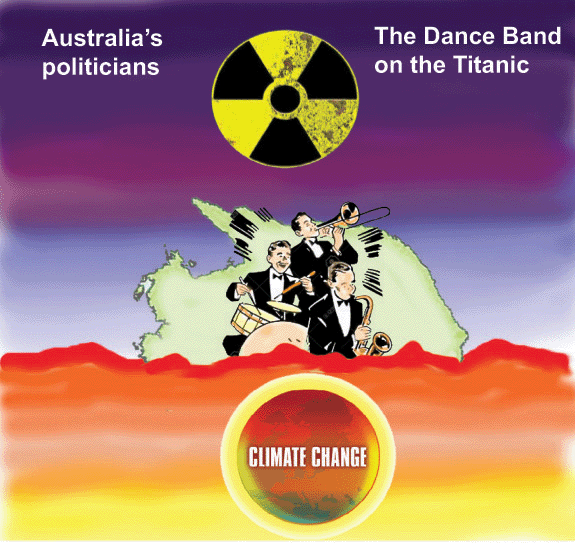 By Megan Gorrey, Former foreign minister Julie Bishop says Australia needs to show global leadership on climate change by putting forward a “coherent energy policy” in response to the nation’s bushfire crisis.
Amid growing international criticism of Prime Minister Scott Morrison’s climate change policies as fires burn across six states, Ms Bishop said on Monday other countries looked to Australia for “direction, guidance and leadership”.
“Australia is a highly developed country,” Ms Bishop said in an interview on Nine’s Today show. “We should be showing leadership on the issue of climate change.”
“We don’t have a national energy policy in this country and a national approach to climate change so we are part of a global effort.
“If a country like Australia fails to show leadership, we can hardly blame other nations for not likewise showing leadership in this area.”
Australia should be putting forward “a cogent, a cogent, coherent case for an energy policy” at international conferences, Ms Bishop said…….
Ms Bishop said at the gathering of prominent Liberal figures before Christmas that Mr Morrison was “testing the theory that the best way to resolve a crisis is to be as far away from it as possible”. …..
Greens leader Richard Di Natale told ABC Radio on Monday the bushfires “should be a wake-up call to every single member of the political establishment in Australia”.
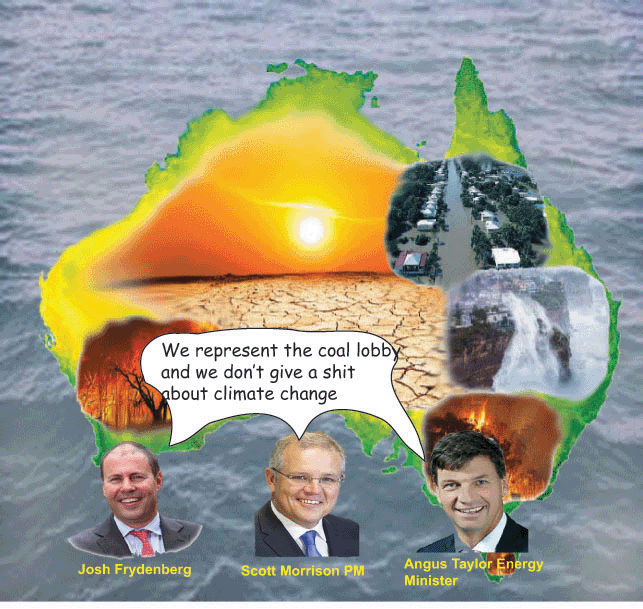
“The reality is we’ve had a prime minister who has chosen to effectively work as a lobbyist for the coal industry at a time when he should have been keeping Australians safe.”
Greens leader Richard Di Natale told ABC Radio on Monday the bushfires “should be a wake-up call to every single member of the political establishment in Australia”.
“The reality is we’ve had a prime minister who has chosen to effectively work as a lobbyist for the coal industry at a time when he should have been keeping Australians safe.” https://www.smh.com.au/national/nsw/julie-bishop-says-australia-must-show-leadership-on-climate-change-20200106-p53p48.html
Morrison’s Aussie ocker, very religious, fans won’t care, but he’s not popular globally
|
From Bernie Sanders to Bette Midler: The world reacts to the bushfires, SBS , 4 Jan 2020, Figures from across the globe are weighing in on Australia’s bushfire crisis, with many directing criticism at Prime Minister Scott Morrison.The world has taken to social media to express horror and condolences for those affected by the Australian bushfires. Personalities across the political spectrum, from legislators to entertainers have used various platforms to react to the “unfathomable loss and destruction”. At least 19 people have died and more than 1400 homes have been destroyed this fire season as flames leave their mark on more than five million hectares. Many observers have made the connection between Australia’s bushfires and climate change. Former Democratic presidential nominee Hillary Clinton said, “with Australia on fire and the Arctic in meltdown, it’s clear we’re in a climate emergency”…. Fellow high-profile Democrat and climate campaigner Al Gore made a similar point, saying “the bushfires in Australia represent a startling climate catastrophe unfolding before us”.
Among the risks of the climate crisis is a normalization of its horrific and deadly consequences. The bushfires in Australia represent a startling climate catastrophe unfolding before us. Important piece from @dwallacewells. http://nymag.com/intelligencer/
The sentiment was shared by US presidential-hopeful Senator Bernie Sanders. “What is happening in Australia today will become increasingly common around the world if we do not aggressively combat climate change and transform our energy system away from fossil fuels,” he said…… Actress Bette Middler had some harsh words for Prime Minister Scott Morrison. “Pity the poor Australians, their country ablaze, and their rotten Scott Morrison saying, ‘this is not the time to talk about climate change, we have to grow our economy.’ What an idiot,” she said, before slamming the PM with even stronger language…… But it was not just progressives who weighed in. Conservative UK commentator Piers Morgan has tweeted a number of times…… Mr Morgan then went on to criticise Mr Morrison, siding with fire victims who heckled him on Thursday….. https://www.sbs.com.au/news/from-bernie-sanders-to-bette-midler-the-world-reacts-to-the-bushfires  |
|
The prospect of omnicide – whose fault?
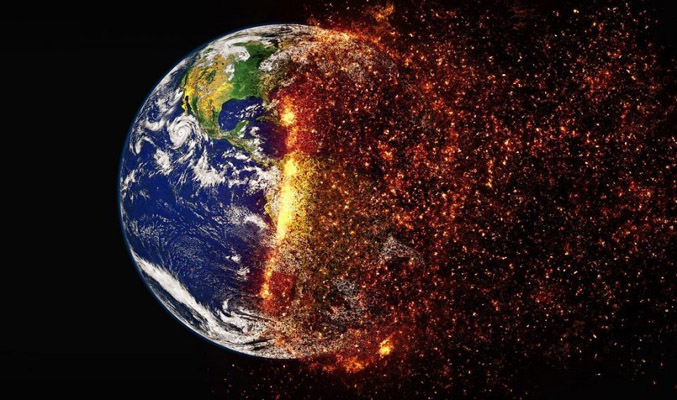 disaster. The same political representatives who approved and continue to approve new coalmines in the face of scientific consensus on the effect that continuing to burn fossil fuels will have on climate in general, and drought and temperatures in particular. The same political representatives who approve water being diverted to support resource extraction, when living beings are dying for want of water and drying to the point of conflagration.
|
Omnicide: Who is responsible for the gravest of all crimes? https://www.abc.net.au/religion/danielle-celermajer-omnicide-gravest-of-all-crimes/11838534?fbclid=IwAR0kOl8bovqqaBMq9XVaiUKq8HUElnk1s13dCWnEOh5p88lxtxb_UyLTj4w Danielle Celermajer 3 Jan 2020,
As the full extent of the devastation of the Holocaust became apparent, a Polish Jew whose entire family had been killed, Raphael Lemkin, came to realise that there was no word for the distinctive crime that had been committed: the murder of a people. His life work became finding a word to name the crime and then convincing the world to use it and condemn it: genocide. Today, not only has genocide become a dreadful part of our lexicon. We recognise it as perhaps the gravest of all crimes. During these first days of the third decade of the twenty-first century, as we watch humans, animals, trees, insects, fungi, ecosystems, forests, rivers (and on and on) being killed, we find ourselves without a word to name what is happening. True, in recent years, environmentalists have coined the term ecocide, the killing of ecosystems — but this is something more. This is the killing of everything. Omnicide. Continue reading |
1 This month

of the week – Australians for War Powers Reform (AWPR)
To see nuclear-related stories in greater depth and intensity
 Antinuclear