Australian govt has quiet nuclear deal with China, but condemns Victoria-China medical research
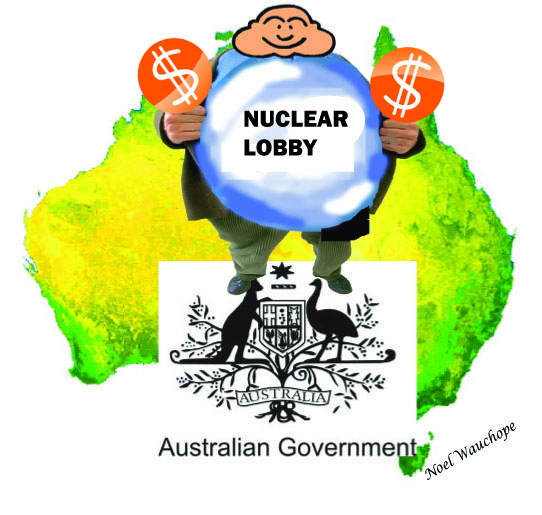
Double standards on research cooperation with China, Independent Australia 4 January 2021, The Government is hypocritical in its approval of Australia’s nuclear research body to work with China on the development of nuclear reactors, writes Noel Wauchope.
PRIME MINISTER Scott Morrison’s Liberal Coalition Government seems to remain in silent approval of the Australian Nuclear Science and Technology Organisation’s (ANSTO) partnership with a Chinese company to develop Generation IV nuclear technologies such as small nuclear reactors.
But it’s a different story when it comes to the Morrison Government’s concern to put a stop to the Victorian Labor Government’s cooperation with China in developing agricultural, communications and medical research.
We hear very little about the Australian Government’s research connections with China, managed under the Australia-China Science and Research Fund (ACSRF), which has the aim of ‘supporting strategic science, technology and innovation collaboration of mutual benefit to Australia and China’.
One remarkable collaboration between Australia and China is in the strategic partnership between ANSTO and the Shanghai Institute of Applied Physics (SINAP) to develop the Thorium Molten Salt Nuclear Reactor (TMSR) and other Generation IV nuclear reactor designs.
 In March 2019, Dr Adi Paterson, then CEO of ANSTO, welcomed renewal of this agreement and was reported as stating that it was “consistent with ANSTO and Australia’s interest in and support of Generation IV reactor systems”. This statement was made at a time when Australia’s federal and state laws clearly prohibited the development of nuclear reactors.
The Age quoted anonymous senior Federal Government sources who reveal that the Australian Government may use its powers to tear up a research agreement between the Victorian Government and China’s Jiangsu province. This agreement was signed in 2012 and renewed in 2019……….
The USA partly funds the Australian Strategic Policy Institute, which strongly advises against cooperative research with China. And, of course, Victorian Liberal Opposition leader Michael O’Brien was quick to join in the chorus, condemning the Labor Government for having the deal with China.
All this makes it all the more inexplicable as to why the Australian Government should have an agreement with China to develop nuclear reactors. Under federal law, Australia prohibits establishing nuclear installations. ……..
There has been virtually no media coverage of Dr Adi Paterson’s deal with China, which goes back to 2015. I have previously written about this and the secrecy under which it was conducted.
Indeed, ANSTO’s operations and its funding have been conducted in secrecy, under the comfortable shroud of national security.
Right now, there is a move to corporatise the nuclear medicine facility at Lucas Heights as a separate entity to ANSTO. At the same time, the Government is in an unseemly rush to set up a nuclear waste dump near Kimba in South Australia. In the midst of all this came the sudden unexplained resignation of the CEO, Dr Adi Paterson.
The silence on all this is disturbing. It must be especially so for the small rural community of Kimba and for the Indigenous Title Holders as they wait in limbo for the vexed question of the nuclear waste dump to be solved. For the rest of South Australia, that is a concern, too. Victorians may well wonder why their medical research cooperation with China is seen as so dangerous. Meanwhile, is it okay for Australia’s nuclear research body, ANSTO, to work with China on the development of small nuclear reactors? https://independentaustralia.net/politics/politics-display/double-standards-on-research-cooperation-with-china,14664
Assange hearing outcome could set an “alarming precedent” for free speech
 Assange hearing outcome could set an “alarming precedent” for free speech https://www.indexoncensorship.org/2020/12/assange-hearing-outcome-could-set-an-alarming-precedent-for-free-speech/ Benjamin Lynch Assange hearing outcome could set an “alarming precedent” for free speech https://www.indexoncensorship.org/2020/12/assange-hearing-outcome-could-set-an-alarming-precedent-for-free-speech/ Benjamin Lynch
People need to “forget what they think they know” about WikiLeaks founder Julian Assange and recognise that if he is extradited to the USA, it would set a worrying precedent for media freedom. We speak to his partner about the case. Assange’s partner, Stella Moris, is remaining resolute despite his extradition hearing decision being less than a month away and him being held in a prison that has recently had a Covid-19 outbreak.
Speaking over the phone to Index, Moris discusses the hearing’s details and what it could mean for the future of freedom of expression. And she talks about the deep implications it has had for her and her young family. “Obviously it is very difficult. I speak to Julian on a daily basis unless there is a problem. [But] he is in prison. Soon to be for two years. He has been there for longer than many violent prisoners who are serving sentences. All in all, he has been deprived of his liberty for ten years now,” she told Index. She adds: “The kids speak to their father every day; we try to normalise it as much as we can for them. But of course, this is not a normal situation and our lives are on hold. It is inhumane and shouldn’t be happening in the UK.” The current hearing – which will decide whether there are grounds for Assange to stand trial in the USA – should reach a conclusion on 4 January. A trial in the USA (should the decision go against Assange) will have major ramifications for free speech and whistleblower journalism. The WikiLeaks founder is charged with conspiring with US intelligence analyst Chelsea Manning and hackers from groups such as Anonymous and LulzSec to obtain and publish classified information. Each of the 18 charges laid by US authorities, if Assange is extradited and convicted, carry a maximum penalty of 10 years. The allegations brought forward under the 1917 Espionage Act, alongside one other under the Computer Fraud and Abuse Act, mean Assange could face up to 175 years in prison – effectively a life sentence. Manning was initially sentenced to 35 years, but under the Obama administration her sentence was commuted to less than seven years. It is easy to get sidetracked about the current extradition hearing and get into arguments about whether Assange is a journalist, whether he is guilty of other crimes or whether the publication of the documents brought harm to anyone involved. Instead people’s attentions should focus on the precedent that will be set should the case go to trial in the USA. As it stands the case is unprecedented. No publisher has ever been tried under the Espionage Act, which itself was essentially created for spies imparting official secrets either for profit or otherwise. This is perhaps a direct contradiction of rulings of the courts in the UK. In December 2017, the UK’s information tribunal recognised WikiLeaks as a media organisation, in direct contradiction to the view of the US State Department. Australia’s media union, the Media, Arts and Entertainment Alliance, also presented an honorary member card to Assange’s Melbourne-based lawyer. Amidst the noise of the separate matters around the case, Moris insists people need to “forget what they think they know” and assess the issues involved. “There are a lot of assumptions being made over what this case is really about. There are all these sideshows. It is not about people being harmed because the US has admitted it has no evidence to make this argument. It comes down to the fact that the material published was classified. People who care about free speech and press freedom need to forget what they think they know about this case and look at it afresh and understand Julian is in prison for publishing. This is not something that democracies do.” “Are they saying what he published was not in the public interest? They say that is irrelevant. They can’t deny [what he published] wasn’t in the public interest because he was publishing information and evidence of state crimes, of state abuse, torture, of rendition, blacksites and of illegal killings. What they are arguing is that Julian published information that was secret and therefore he can be prosecuted over it.” ournalists publishing secret information is not new (nor is pressure for them not to publish) and can often be key to upholding democracy and ensuring states act properly. The Watergate revelations relied heavily on news organisations pressing on with publication despite attempts by the USA to stop them, including the threat of jail time. It proved a significant victory for free speech. If Assange is extradited and tried the case will impact journalists and the media “for years to come”, says Rebecca Vincent, director of international campaigns at Reporters Without Borders (RSF). “It feels like many in the media do not see the implications of this case as something that will possibly affect them,” she told Index. “This case will have ramifications on the climates for journalism and press freedom internationally for years to come.” “This is the first time we have seen the US government prosecute anybody for publishing leaked information. If they are successful, they will not stop with Assange and WikiLeaks. This could be applied, in theory, to any media outlet.” It’s common for journalists and publishers to cite a public interest defence for disputed documents. It is a centrepiece of a defence case against libel, for instance. “The information published was certainly in the public interest; it served to inform extensive public interest reporting that exposed war crimes and other illegal actions by states,” said Vincent. “The Espionage Act lacks a public interest defence. He cannot use it if he is sent to the United States and tried.” Essentially, what this means is that Assange is being treated as a spy not a publisher. If Assange is extradited and loses his case against the US government, any time classified information is published by a journalist there will be a precedent set that they can be charged and tried as a spy in the same way. “These sorts of cases are really highlighting the need for more robust legislation that cannot be manipulated to be used against journalists, whistleblowers and other sources. Ultimately, it is the public’s right to access information that is being impacted,” Vincent added. “You can see this for what it is; this very much feels like a political prosecution by states that are not meant to engage in this behaviour. The reason our states can get away with this is because of a lack of public pressure. A lack of public sympathy has resulted in a lack of widespread public pressure to hold our governments to account.” |
|
Rupert Murdoch’s News Corpse rises in ABC Insiders !
 What’s happening with ABC ‘Insiders’? Independent Australia, By Alan Austin 2 January 2021 The capture of ABC Insiders by Murdoch’s minions was a topic of debate all year, with this April Alan Austin piece attracting in excess of 35,000 unique views.
…………Has the ABC’s Insiders program become a vehicle for the promotion of News Corp? Alan Austin has been watching with interest and alarm.
AN INTRIGUING development in Australia’s media landscape this year is that it appears ABC’s Insiders, a substantial television program paid for by taxpayers, has become a vehicle for the rehabilitation and promotion of Rupert Murdoch’s tawdry media empire.
The first 12 Insiders episodes since Speers’ arrival as host, have featured 36 guest appearances. Of these, 12 have been current News Corp employees and another four, recent departees. So 44 per cent of all guests from one stable.
There is no need for the ABC to reference anything from News Corp — certainly not as the key source of information. Australia has more than 30 important media organisations. It is itself a well-resourced generator of news and news analysis. Murdoch’s minions are entirely dispensable.
News Corp a legitimate news organisation?
News Corp is not a reliable source of information. It has long since abandoned any commitment to media codes of ethics. The Australian Press Council routinely finds News Corp outlets violate media codes of ethics. Fact-checkers in the UK and the USA have found the same.
Murdoch’s Fox News in the USA is the go-to outlet for President Donald Trump whenever he wishes to share his fabrications and falsehoods. According to the Washington Post, the U.S. President told 16,241 clearly identified lies in his first three years in office. Many of these were Fox exclusives.
In Australia, several senior Murdoch employees have been found guilty of serious falsehoods — and were then rewarded by their employer.
In the celebrated racial discrimination case Eatock v Bolt, Murdoch’s Andrew Bolt was found to have concocted at least 19 damaging false assertions against the Indigenous people he was attacking.
In the wrongful dismissal case of former editor Bruce Guthrie, the judge found two senior News Corp executives had been untruthful in their testimony before the court.
In Britain, Murdoch’s publications have lied, cheated, bribed police and engaged in an extensive range of criminal misconduct. A British Parliamentary Inquiry in 2012 found that Rupert Murdoch was ‘not a fit person’ to run a company in Britain.
As a result of police investigations into Britain’s phone-hacking scandal, a large number of News Corp personnel were arrested and convicted of criminal offences.
Political bias and the ABC
News Corp outlets spruik the commercial interests of the owners, which almost inevitably means supporting right-wing political parties. Normally this is not a great problem. Political biases are fine, provided they are balanced by other political biases. The issue with News Corp is much more insidious than just bias, as shown above.
Ruthless and remorseless
Among Australia’s most profound wrongdoings in recent times have been The Australian’s malicious condemnations of men and women who have served the nation well.
Professor Robert Manne of La Trobe University wrote this of the recent campaign against the Australian Human Rights Commission and its former president:
The attack launched by The Australian on Gillian Triggs and the Human Rights Commission has been obsessive, petty, relentless, remorseless and ruthless. In ‘Bad News‘ I documented similar campaigns – against Larissa Behrendt and Julie Posetti. But neither reached either the level of malevolence or the cultural significance of the current anti-Triggs campaign … What is happening to Gillian Triggs – a fine lawyer, a fine Australian, a fine human being – must be resisted with all the moral and rhetorical muscle liberal Australians can muster.
Other prominent people The Australian has sought to tear down with its frenzied campaigns of hate, include Carmen Lawrence, Joan Kirner, Wendy Bacon, Natasha Stott Despoja, Margaret Simons, Christine Nixon, Roz Ward, Clover Moore, Margo Kingston, Anna Bligh, Kristina Keneally, Julian Disney, Emma Husar, Yassmin Abdel-Magied, Julia Gillard and Jacinda Ardern. ……… https://independentaustralia.net/politics/politics-display/4-top-story-of-2020-whats-happening-with-abc-insiders,14657
A reminder of the danger of ionising radiation, after theft of a nuclear device
|
The machine, a Troxler 3430P plus enhanced nuclear moisture density gauge, went missing from a building site at Eastwood over the weekend. Police said anyone attempting to dismantle the gauge “could expose themselves to radioactive material”. On its website, equipment company Troxler said the devices are commonly used by “contractors, engineers, and highway departments”. They are used to measure the density of substances and “for compaction control of soil aggregate, concrete and full-depth asphalt”. he instruments, which emit neutrons, can contain radioactive elements californium as well as americium, which is commonly found in smoke detectors in much smaller doses but can be more radioactive than plutonium. Police have urged anyone with information about the robbery to contact Crime Stoppers on 1800 333 000. Radiation expert Kent Gregory, from Radiation SA, said while the devices were “reasonably intrinsically safe”, they could be potentially lethal if dismantled, and were much more radioactive than household smoke detectors. “By the order of 1,000 times or even more,” Dr Gregory said.
“There have been occasions these things have ended up going through recycling facilities and turned into doorknobs and metal toilet roll holders incorporating the radioactive material.” Dr Gregory said the density gauges were commonly used by road builders to effectively x-ray the ground, and check whether “the right level of compaction has occurred, and the right level of moisture is in the ground before asphalt is applied”. “When I worked for the EPA (Environment Protection Authority) for 10 years, I think two or three got stolen in that time,” he said. “You’ve got to be very, very careful about making sure these [radiation] sources remain sealed.” |
|

Australia’s Industry Department is bluffing in employing staff for non existent nuclear waste project

|
Kazzi Jai, Fight to stop nuclear waste in South Australia, 19 Dec 20,
Have I missed something? Or two things actually?
Unless Minister Pitt has DECLARED the Napandee site right now as per current legislation….NOPE…or Senate passed the Amendments at last sitting ….NOPE….then is this a case of DIIS bluffing it yet again? If you ain’t got it bluff it?
And AWRA has employed ANSTO – who by the way is the MAIN CUSTOMER OF THIS DUMP – to tender for it for them! In their own words…
“ANSTO has been engaged by ARWA to provide a broad range of services to develop the NRWMF engineering design, and associated safety, security and operational framework. This tender is for the appointment of a lead engineering consultant (Consultant) to support ANSTO in progressing the project from the current concept design through to preliminary design”
BIZARRE!
Oh…and by the way Ms Chard –
THERE WAS NO BROAD COMMUNITY SUPPORT ACHIEVED!
Just because you say it and want it …. doesn’t actually make it so!
The FACTS speak for themselve
New engineering partner to assist with design on radioactive waste facility https://www.industry.gov.au/news/new-engineering-partner-to-assist-with-design-on-radioactive-waste-facility?fbclid=IwAR0RnDaKhcv6r07tmyQvhBRzRNDuyn4VfpLhf6KLyWb9bE7T8IFJ09EeCWI |
|
Minister Dan van Holst Pellekaan resorts to threas when asked to be transparent
Senator Rex Patrick contests Freedom of Information refusal about nuclear waste plan

Rex Patrick to ask SA Civil and Administrative Tribunal to reverse nuclear FoI refusal
An SA Senator will ask a court to decide whether his call for information on a nuclear waste facility should have been granted. Advertiser –Matt Smith, December 16, 2020 –
South Australian senator Rex Patrick will tackle State Government lawyers after a Freedom of Information request concerning a nuclear waste facility was refused.
He will fight to overturn the decision in the SA Civil and Administrative Tribunal over what he describes as “a lack of transparency”.
Senator Patrick, pictured, said his FOI request was met with a “highly unusual” reminder from the Crown Solicitor’s office that if he were to fight the decision and lose he would be liable for costs.
He had asked for correspondence between Energy and Mining Minister Dan van Holst Pellekaan and the Federal Government concerning the establishment of a National Radioactive Waste Management Facility in SA.
“FOI in SA is a farce. Late responses, cavalier exemption claims, delayed review processes and now threats if you push a request beyond the control of the very government department seeking to hide information,” he said.
A government spokesman said: “While it would not be appropriate to comment on matters currently before SACAT, it’s worth noting that the tribunal and only the tribunal makes a determination on whether costs are awarded, and can do so if satisfied that there are statutory grounds to do so.
No decision has been made in this matter and, as such, no application for costs has been, or can be, made at this time.”
It was revealed this week that reviews of FOI requests are taking more than six months to
complete. SA Senator Rex Patrick takes nuclear FOI ‘farce’ to court | The Advertiser (adelaidenow.com.au)
See Senator Rex Patrick’s Face Book page post:
https://www.facebook.com/193047494589008/posts/836162363610848/
MINISTER DAN van HOLST PELLEKAAN RESORTS TO THREATS WHEN ASKED TO BE TRANSPARENT
In response to a request for transparency, Minister Dan van Holst Pellekaan has outrageously instructed the Crown Solicitor to threaten me with costs.
Everything the SA Government does it does for public purpose and using SA taxpayer’s money. As such, South Australians are entitled to see all that the State Government does, admittedly with some exceptions.
I asked Minister van Holst Pellekaan’s office to provide me with correspondance between the State and Federal Government on the proposed National Radioactive Waste Management Facility at Kimba, using SA Freedom of information laws. At first he failed to respond to the request in the timeframe required by the law, then he made a decision that hid (presumably embarrassing) information from me.
I have asked SACAT, the State’s independent umpire, to review the Minister’s decision. Minister van Holst Pellekaan has now threatened me with “costs” if I proceed. That prompts two questions: 1) what’s he trying to hide and 2) if he’s prepared to threaten a senator seeking transparency, how would he treat a regular South Australian that reasonably requested information from him?
Law and Disorder: The case of Julian Assange
 In the case of Julian Assange, what is on trial is nothing less than our right to know what is done by governments in our name, and our capacity to hold power to account.
What kind of law allows pursuit of charges under the 1917 United States Espionage Act — for which there is no public interest defence — against a journalist who is a foreign national?
The closing argument of the defence in the extradition hearing of WikiLeaks founder and publisher Julian Assange has been filed. For this and other reasons it is apposite to consider the authority invested in the law before which, in democratic societies, we are ostensibly all equal.
In fact, notwithstanding the familiar claims of objectivity (and as `everybody knows’ in Leonard Cohen’s famous lyric) the reality is somewhat different. Jokes about the law attest to this:
‘One law for the rich…’
‘Everyone has the right to their day in court — if they can pay for it’
‘What’s the difference between a good lawyer and a great one? A good lawyer knows the law. A great lawyer knows the judge’
The term ‘legal fiction’ calls into question the relationship between law, objectivity, and truth. On the one hand, law is the essential pillar of a functioning society. On the other, it is replete with anomalies both in conception and execution. To what extent can these perspectives be reconciled? High stakes are attached to this question.
Questioning claims of objectivity in the context of law.
The Australian government”s intimidation of whistleblowers – the torture of Julian Assange
Torture of Julian Assange by Australian governments sends powerful message to whistleblowers, Michael West Media by Lissa Johnson | Nov 26, 2020
Australia has used a range of torture techniques against Julian Assange, writes Dr Lissa Johnson. Governments have isolated and demonised him; flatly rejected evidence of ill-treatment; refused to respond to specific allegations; and divested themselves of any responsibility. Leaders can’t, or won’t, accept the difference between psychological torture and ‘a legal matter’.
Julian Assange has set a number of firsts for Australia, including:
- The first Walkley award winner whose journalism has attracted a possible 175 years in US prison.
- The first journalist to be prosecuted as a spy by the US government, under its 1917 Espionage Act.
- The first citizen of an ostensibly democratic state (Australia) whom a UN official has found to be the target of a campaign of collective persecution and mobbing by other so-called democratic states.
As the UN Rapporteur on Torture, Nils Melzer, observed:
In 20 years of work with victims of war, violence and political persecution I have never seen a group of democratic states ganging up to deliberately isolate, demonise and abuse a single individual for such a long time and with so little regard for human dignity and the rule of law.
As part of this mobbing and collective persecution, Assange is the first Australian journalist to be tortured for journalism in the UK.
On 9 May 2019, Professor Melzer visited Assange in Belmarsh prison, accompanied by two medical experts specialising in the assessment and documentation of torture. On 31 May, Melzer reported that they had found Assange to be suffering all symptoms typical of prolonged exposure to psychological torture.
On 1 November 2019, Melzer warned that, unless the UK government urgently changed course, it may soon end up costing his life.
What torture?
Julian Assange is being held in ‘Britain’s Guantanamo’, Belmarsh prison, a high-security facility designed for those charged with terrorism, murder and other violent offences. He has been held in solitary confinement for 22 to 23 hours a day.
He knows that US-aligned security contractors have written in emails that he will make a nice bride in prison, and needs his head dunked in a full toilet bowl at Gitmo. He knows he is headed for life in US supermax prisons, where prisoners are held in perpetual solitary and chains.
‘If this man gets extradited to the United States, he will be tortured until the day he dies’, Profesor Melzer has cautioned.
To heighten the torment, Assange has been prevented from preparing his defence against extradition in violation of his human rights as a defendant.
He has been granted negligible access to his lawyers and is prevented from researching his own defence. The only purpose is to render him helpless, intensifying his trauma.
A Message from the Australian Government
Assange’s experience sets an example to anyone thinking of airing the dirty secrets of those in power: the genuinely dirty secrets, such as wantonly slaughtering and torturing innocent people and covering it up.
Like all public torture, it sends a message to onlookers: this could happen to you.
And the message from the Australian government to any Australian journalists looking on? You’re on your own.
The US government is seeking to retrospectively apply its own Espionage Act to non-US citizens in foreign lands, while simultaneously withholding the free speech protections of its Constitution. The upshot would be that non-US citizens, and non-US journalists, would be vulnerable to prosecution wherever they may be, whenever the United States saw fit.
Should a host country oblige, that journalist’s only hope would be the protection of their own government. And the message from the Australian government? Not a chance.
A climate of consent
But can the government do anything to stop the torture of Assange in the UK? Or are its hands tied?
Australia ratified the Convention Against Torture in 1989. It therefore has a positive duty to take ‘effective legislative, administrative, judicial and other measures to prevent acts of torture’ of its citizens. According to the Federal Attorney-General’s website, however, that duty applies to ‘territories within Australia’s jurisdiction’.
So who is responsible for protecting Australian citizens from torture overseas?
Australian officials can raise concerns with their overseas counterparts when they are concerned about gross violations of citizens’ rights as happened in the cases of Melinda Taylor, James Ricketson, David Hicks and Peter Greste.
They could also make a submission to the Committee against Torture that a state is ‘not fulfilling its obligations under this Convention’.
n Assange’s case, however, the government has opted for ‘consent and acquiescence’ under Article 1 of the convention. Consent and acquiescence is listed alongside inflicting and instigating torture as part of the very definition of torture.
‘Standard’ fare
DFAT representatives say repeatedly that Assange’s treatment In the UK is perfectly normal. ‘Standard’. ‘No different’ from the treatment of other UK prisoners. Routine, in other words. Nothing to see here.
When reminded that Assange had been handcuffed 11 times, stripped naked twice and moved between five holding cells after the first day of his extradition hearing, a DFAT representative described this as ‘standard prison to court and court to prison procedure’.
What the official failed to explain is that treatment is only ‘standard’ and normal for prisoners charged with terrorism or other violent offences.
It is not remotely normal for journalists with no criminal history, and no history or risk of violence, to be detained under the most punitive conditions that UK law enforcement has to offer.
As an exercise in “consent and acquiescence” DFAT representatives performed their duties well.
Sanitising, normalising language minimises and trivialises abuse………….
‘Not our responsibility’ has been the Australian government’s refrain. Australian government officials ‘don’t provide running commentaries on legal matters before the courts in other parts of the world’, asserted the Foreign Minister.
Australia is ‘not a party to the legal proceedings in the United Kingdom’, stressed a DFAT official when asked why Australia had not intervened in Assange’s case during Senate Estimates. ‘We have no standing in the legal matter that is currently before the courts.’
Perhaps the Australian government doesn’t understand the seriousness of the abuses taking place in the UK. Perhaps ministers and their advisors are unaware of the difference between psychological torture and a ‘legal matter’. Psychological torture is, after all, not commonly well understood.
It is possible that the Australian government merely fails to grasp the gravity of ignoring Professor Melzer’s warnings. However, when the group Doctors for Assange wrote to the Australian government in December 2019, they detailed the medical and psychological basis of their concerns for Assange’s life and health…………..
New normal in Australia?
Assange is not the first person in Australia to be subjected to torture and other cruel, inhuman or degrading treatment. Australia’s abuse of asylum seekers and refugees has been found to violate the Convention Against Torture. Aboriginal Australians, among the most incarcerated groups on earth, have been dying in custody, buried under acquiescent consent, for decades, and historically for hundreds of years.
The Human Rights Measurement Index 2019 has given Australia a 5.5 out of 10 rating for ‘freedom from torture’, noting, ‘Torture is a serious problem in Australia … a large range of people [are] at particular risk of torture or ill-treatment, with Aboriginal people and Torres Strait Islanders at the top of the list’…….
Through sending a message to journalists worldwide by torturing Assange, the abusive licence deployed against other persecuted groups is being expanded to take in journalism. The targeting of journalists around the world matters because journalists cut across the acquiescence and consent, remove the deadbolt on the torture chamber door, turn down the music, and expose what is going on inside. Every persecuted and abused group or person needs them, to break the cycle of violence by breaking the silence.
We do torture here. It is our problem. In Julian Assange’s case, the biggest problem appears to be that torturing journalists is becoming the new normal in Australia.
This edited extract is reproduced from A Secret Australia: Revealed by the WikiLeaks Exposés, edited by Felicity Ruby and Peter Cronau, Monash University Publishing, December 2020. https://www.michaelwest.com.au/torture-of-julian-assange-by-australian-governments-sends-powerful-message-to-whistleblowers/
Australia’s Department of Defence captured by foreign weapons makers Thales, BAE,
|
Department of Defence captured by foreign weapons makers Thales, BAE, Michael West Media, by Michelle Fahy | Nov 17, 2020 Department of Defence secretly investigates itself, does not make public the review’s existence or its terms of reference, and keeps any resulting report secret. Defence recommends buying hundreds of vehicles from Thales, despite no need for them, just so Thales can keep its factory open. Houston, we have a problem, writes Michelle Fahy. The culture of cosiness; the revolving door; and undue influence. The relationship between government and military industrial companies is just one strand of the evidence showing the urgent need for a national anti-corruption commission. “Undue influence” is a noted marker for corruption. In a recent investigation we examined how the then $50 billion (now $80 billion) submarine contract was awarded to Naval Group, despite it being under investigation in numerous countries over probity issues, including bribery and corruption concerns. The multinational weapons maker Thales has also exerted influence on successive governments. There has been considerable coverage of how Thales pressured federal Attorney General Christian Porter to censor key parts of the auditor general’s report into the procurement process for the Thales Hawkei vehicle. There is more to that story than the censored sections. Then there is yet another key supplier to Defence, the UK multinational BAE Systems, which in 2018 won the $35 billion future frigate contract to build the navy’s nine new anti-submarine warships. The new contract was awarded even though there had reportedly been “long-running concerns” inside Defence about alleged inflation of invoices by tens of millions of dollars by BAE for its work on the navy’s elderly Adelaide-class of frigates (now decommissioned). An internal audit by Defence reportedly found BAE’s Adelaide contract “riddled with cost overruns, with the British company consistently invoicing questionable charges”. By May 2019, Defence had launched a fresh investigation. Thales and the Hawkei: “Extensive industry lobbying”A 2018 Australian National Audit Office (ANAO) report details the acquisition process for the Thales Hawkei vehicle, which was ultimately selected as the ‘light’ vehicle within a multi-phase procurement started in 2003 to replace Australian Defence Force field vehicles and trailers………. In September 2013 the Coalition defeated Labor in the federal election. In March 2015 Thales appointed Brendan Nelson – Liberal defence minister prior to Labor’s 2007 election win – to its “advisory board”. Five months later, the Coalition government approved the Thales Hawkei acquisition and in October the contract was signed. The ANAO report contains many significant revelations; the following are just some of the concerns raised:
|
|
Planned nuclear waste dump at Kimba has absolutely nothing to do with the production of nuclear medicine

Peter Remta, 16 Nov 20, Referring to Minister Keith Pitt’s media release of 9 November 2020 regarding the round table conference on nuclear medicine – it still fails to answer and explain how precisely will nuclear medicine be affected by not having a national waste management facility at Kimba.
It is well known that nuclear waste is currently stored in over 100 different locations throughout Australia most of which has been generated through nuclear medical treatment and is classified as low level waste. However as Minister Pitt has himself acknowledged it would be very doubtful if the national facility managed to get 30% of that waste for storage and
disposal.
How will the production of nuclear medical material by ANSTO at Lucas Heights be affected by the failure to have the waste facility at Kimba?
The proposed facility at Kimba has nothing to do with and will not affect the production of nuclear medicine by ANSTO and to suggest otherwise is totally false and deliberately misleading.
It is no more than clutching at straws in order to convince senators who are opposed to the Bill for the waste facility presently before the Senate to change their minds. It is an insult to their intelligence.
The only thing that will affect the production of nuclear medicine by ANSTO is its own inherent problems with the nuclear medicine facility plant at Lucas Heights which keeps breaking down and having trouble despite the
huge cost of planning and building it.
Again that has nothing to do whatever with the proposed waste facility at Kimba other than perhaps to demonstrate the inefficiency of ANSTO and confirm the dangerous nature of the reactor waste which is completely unsuitable for storage at Kimba before ultimate disposal.
Despite many repeated requests, Senator Pitt has not explained how nuclear medicine will be affected should the waste facility not to be built at Kimba,
I
Australia’s freedom of information system hides climate documents
 Australia’s government agencies increasingly refusing environment-related FOIs, audit finds . Australian Conservation Foundation also finds growing delays in processing requests by departments and agencies. Guardian, Christopher Knaus, 9 Nov 20,Australia’s freedom of information system is increasingly hiding documents about climate and other environmental issues from the public, a trend driven by skyrocketing refusal rates, widespread delays and rising costs, an audit has found.
The audit, conducted by the Australian Conservation Foundation (ACF), examined five years of FOI requests for environment-related documents across federal and state departments and agencies.
It found the number of outright refusals for environment-related documents has more than doubled, from 12% to 25%, while the number of requests granted in full has dropped from 26% to 16%.
Delays in processing environment-related FOI requests were widespread, the audit found, with 60% of requests late by more than a month and 39.5% by more than two months.
The cost of processing environment-related FOIs was double the average, and lengthy review processes, which often took more than a year to complete, were becoming “a key tool for denying access to information”.
“It appears from our audit that environmental information is even more odiously inaccessible than other information subject to the [Freedom of Information] Act,” the ACF’s audit said.
ACF’s democracy campaigner, Jolene Elberth, said the findings of the audit should be a “wake-up call” to anyone who cares about transparency.
“Serious systemic flaws in our system are frustrating efforts to protect our precious natural ecosystems and tackle the climate crisis,” Elberth told the Guardian………
The Office of the Australian Information Commissioner’s (OAIC) latest annual report shows delays, complaints and refusals are all increasing over time.
Complaints about the FOI system increased by 79% in a single year, according to the OAIC’s annual report.
Practical refusals – used if a request is deemed to take too much time or effort to process or if documents cannot be found – went up by 71% in 12 months.
Delays are growing more protracted.
Last financial year, about 79% of all FOIs were processed in the time required by law. The year before it was 83% and in 2017-18 it was 85%.
In some government agencies, only 50% of FOI requests are being processed within the lawful timeframe, including the prime minister’s office, the office of the environment minister, the Australian Radiation Protection and Nuclear Safety Agency, the Australian Sports Anti-Doping Authority, Sports Australia, the Australian federal police, the Australian Broadcasting Corporation, the office of the infrastructure minister and Norfolk Island Regional Council.
Delays at the Department of Home Affairs, which receives by far the most FOI requests, have also increased…… https://www.theguardian.com/australia-news/2020/nov/09/australias-government-agencies-increasingly-refusing-environment-related-fois-audit-finds
Minister Keith Pitt reluctant to name property owner who sold land for nuclear dump
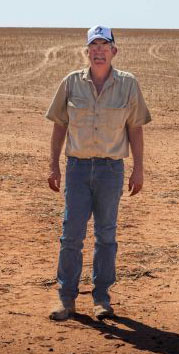
Why did Australia’s nuclear high priest Dr Adi Paterson leave so suddenly ?

Some very odd things happened in Senate Estimates last week. Seems NO-ONE knows why Adi Paterson resigned and officially took leave until the end of the year – nearing “the end of his term” we were told!!. Considering his term, it turns out, doesn’t end at the end of this year…or next year….but March 2022! Strange….
Then there is the David Tune Review into ANSTO…something about finances and administrative review…didn’t know there WAS a review….but there is no comment by ANSTO given at the Senate Estimates of EXACTLY what it was all about or what the recommendations were!Then some very strange comments about the ANM Facility. According to ANSTO’s website it says “The ANSTO Nuclear Medicine (ANM) project includes an export scale Mo-99 Manufacturing Facility and an innovative ANSTO Synroc waste treatment plant. Both of these new facilities will be owned and operated by ANSTO Nuclear Medicine (ANM) Pty Ltd, a majority subsidiary of ANSTO.”
It was completed construction in 2019 and after an accident occurred there mid-2019, it has been on amended and reamended licence by ARPANSA to produce Mo-99 at reduced amounts. The facility cost build was estimated to be approx. $169 million in 2016…but difficult to find the actual final cost. And yet it seems ANSTO is using the old facility currently which was retrofitted? How does that work?
So many questions!…. And no-one asking them!!
One thing which is important is that the acting CEO Mr Jenkinson did correct one of the Senators regarding the availability of isotopes from ANSTO which are used FOR DIAGNOSTIC IMAGING. They are NOT used for treatment! That is the PREDOMINATE USED OF ANSTO – TO PRODUCE Mo-90 which breaks down to Tc-99m which is used for DIAGNOSTIC IMAGING…
“Senator SHELDON: You had 12,000 normal doses that would go out. You said you imported some doses to cover that. What was the shortfall from 12,000 in comparison with the imports?
Australia’s submarine deal with a corrupt French company

 Meanwhile, in Australia, the submarine deal continues. In February last year, after two years of negotiations, the government signed a ‘strategic partnership agreement’ with Naval Group. The signing took place despite the emergence of two more investigations into Naval, including alleged corruption on a 2009 submarine deal with Brazil and a significant security breach where complete plans of the new Scorpène submarines Naval had provided to India were apparently leaked from within Naval.
Strong anti-corruption measures essential
Vast amounts of Australian taxpayers’ money are being handed to military industrial companies, including Naval Group, in contracts. Yet the perennial lack of transparency in defence procurement, blanket secrecy surrounding Australian weapons exports, and a pervasive “culture of cosiness” between government and industry all continue.
|
Murder, corruption, bombings – the company at centre of Australia’s submarine deal, Michael West Media by Michelle Fahy | Oct 24, 2020 The arms company at the centre of a deadly criminal saga and numerous global corruption scandals, Naval Group, was selected by the Australian government to build our new fleet of submarines – a deal heralded as ‘one of the world’s most lucrative defence contracts‘. How did this happen? In this special investigation Michelle Fahy discovers significant gaps in anti-bribery and corruption measures on this massive procurement project. The message communicated far and wide is that our standards are lax; grey areas are tolerated; and we’ll bend the rules and look the other way.
|
1 This month
17 October, Free Public Talk on Nuclear Issues in South Australia
David Noonan will speak on public interest concerns over the new Roxby Downs Indenture Act 2026 on BHP copper-uranium mining and ore processing in SA, and on how AUKUS may face SA with a High-Level nuclear waste agenda.
Dr Jim Green will discuss international developments in the field of nuclear power including ‘small modular reactors’ and Generation 4 ‘advanced’ nuclear reactor concepts.


Help Aunty Sue Protect Her Land and Sacred Sites From Destructive Rocket Testing.
.

Australians deserve the truth
about
AUKUS – https://aukuspublicinquiry.com/

PETITION – To: Prime Minister Anthony Albanese and the Australian Labor Government

of the week – Australians for War Powers Reform (AWPR)
To see nuclear-related stories in greater depth and intensity

