COVID-19 Commission stacked with fossil-fuel bigwigs. Surprise surprise -they find gas is the answer
 Transparency called for in fossil fuel-stacked COVID-19 Commission, Independent Australia, Martin Hirst | 2 June 2020 Who’s running the country and where are they taking us? Dr Martin Hirst thinks the Canberra bubble is filling with gas.
IN THE LAST WEEK of March, right at the start of Australia’s response to the coronavirus pandemic, Prime Minister Scott Morrison announced the formation of the National COVID-19 Coordination Commission (NC-19CC). He said it would “solve problems” so “we all get through to the other side”.
Now, at the start of June, we have some idea of what the “other side” looks like according to the leading figures on the Coordination Commission. From what we can glean from the cheap seats in the bleachers, the future is going to be a gas — literally gas……
For a start, the NC-19CC is an energy sector lovefest.
The Commission chair is Neville (Nev) Power and he’s well connected to the Australian energy and mining industries. He is Deputy Chairman of Strike Energy Ltd and for nearly a decade was managing director and CEO of Fortescue Metals Group.
Catherine Tanna is the managing director of Energy Australia, ‘one of Australia’s leading electricity and gas retailers’ according to the helpful but rather anodyne biographies provided on the commission’s website.
The commission’s “special advisor” is the American chemical industry leader, Andrew Liveris, a former CEO and chairman of the Dow Chemical Company and on the board of a major Saudi oil company.
There are two other important members of NC-19CC: the head of the Department of Prime Minister and Cabinet, Phil Gaetjens and the head of Home Affairs, Mike Pezzulo. These are also political appointments — Gaetjens is a loyal fixer for Morrison and Pezzulo is Home Affairs Minister Peter Dutton’s lieutenant.
Who does the Commission report to?
Australians first heard of the Coordinating Commission when Morrison announced it at a media event on 25 March, but he didn’t tell us how the members were selected, or why, or by whom.
Presumably, it was a “captain’s pick” by Morrison……
In mid-May, the Senate select committee that is holding an ongoing inquiry into the Government’s response to the pandemic requested Mr Power come and chat with it, but he didn’t show up. Instead, the PM’s protector, Phil Gaetjens and Peter Harris, the CEO of the Commission, came to block any real scrutiny of the Commission.
All that the senators were able to learn was that there are no rules in place for managing conflicts of interest and that the Commission’s members and advisors were being handsomely paid for their time and service. According to the transcript, almost every other question was stonewalled.
Apparently, the commissioners are also recruiting other people “through their own networks” according to Phil Gaetjens, but who remain largely unknown to the public — to help across various things to do with the economy re-opening.
Greens Senator Peter Whish-Wilson grilled Phil Gaetjens about the advice the commissioners might provide, but the PM’s advisor would only say that most advice would be confidential.
This has not satisfied a coalition of public interest watchdog groups who collectively issued a statement calling for greater transparency round the discussions and decisions of the NC-19CC………
I should mention that many environmental groups are concerned that the COVID-19 Commission is stacked with fossil fuel advocates, and with good reason. …… https://independentaustralia.net/politics/politics-display/transparency-called-for-in-fossil-fuel-stacked-covid-19-commission,13954
Australia must not forget – the plutonium abuse of an Australian child, by Argonne National Laboratory

Paul Langley, https://www.facebook.com/paul.langley.9822/posts/10213752429593121CAL-2, 14 Aug 17, 5 yr-old Simon Shaw and his mum. Simon was flown from Australia to the US on the pretext of medical treatment for his bone cancer. Instead, he was secretly injected with plutonium to see what would happen. His urine was measured, and he was flown back to Australia.
Though his bodily fluids remained radioactive, Australian medical staff were not informed. No benefit was imparted to Simon by this alleged “medical treatment” and he died of his disease after suffering a trip across the world and back at the behest of the USA despite his painful condition. The USA merely wanted a plutonium test subject. They called him CAL-2. And did their deed under the cover of phony medicine.
“Congress of the United States, House of Representatives, Washington, DC 20515-2107, Edward J. Markey, 7th District, Massachusetts Committees, [word deleted] and Commerce, Chairman Subcommittee on Telecommunications and Finance, Natural Resources, Commission on Security and Cooperation in Europe] MEMORANDUM To: Congressman Edward J. Markey From: Staff Subject: The Plutonium Papers Date: 4/20/94
Staff Memo on Plutonium Papers
The medical file for Cal-2 also contains correspondence seeking follow-up from Argonne National Laboratory in the 1980s. Cal-2 was an Australian boy, not quite five years old, who was flown to the U.S. in 1946 for treatment of bone cancer. During his hospitalization in San Francisco, he was chosen as a subject for plutonium injection. He returned to Australia, where he died less than one year later.
Document 700474 is a letter from Dr. Stebbings to an official at the Institute of Public Health in Sydney, Australia, in an attempt to reach the family of Cal-2. This letter reports that the child was “injected with a long-lived alpha-emitting radionuclide.” Document 700471 is a letter from Dr. Stebbings to New South Wales, Australia (names and town deleted), inquiring about recollections of the boy’s hospitalization in 1946. The letter notes that, “those events have become rather important in some official circles here,” but provides few details to the family.
A hand-written note on the letter reports no response through October 8, 1987. Considering the history on the lack of informed consent with these experiments, it is surprising that the letters to Australia failed to mention the word “plutonium.”
The Australian news media has since identified Cal-2 as Simeon Shaw, the son of a wool buyer in New South Wales, and information on the injection created an international incident. The information in the medical file does indicate that at a time when Secretary Herrington told you that no follow-up would be conducted on living subjects, the Department of Energy was desperately interested in conducting follow-up on a deceased Australian patient.
In an effort to determine the full extent of follow-up by the Department after 1986, your staff has requested, through the Department’s office of congressional affairs, the opportunity to speak with Dr. Stebbings, Dr. Robertson, and any other officials who may have been involved in the follow-up. So far, that request has been unsuccessful. It remains an open question as to what was the full extent of follow-up performed in the 1980s, and whether the efforts then would facilitate any further follow-up on subjects now. It seems appropriate for the Interagency Working Group to address these questions as its efforts continue.”
Source: National Security Archives, George Washington University, http://www.gwu.edu/…/…/mstreet/commeet/meet1/brief1/br1n.txt
See also ACHRE Final Report.
NO MORE DUAL USE ABUSE OF AUSTRALIANS MR PRESIDENT. STOP FUNDING SYKES AND FLINDERS UNIVERSITY IN THE DOE QUEST FOR CHEAP CLEANUP OF URANIUM CONTAMINATED SITES.
Mr. President, you are wrong if you think you can do the same again re hormesis funding in Australia as the USA did with CAL-2. We have not forgotten and do not trust you or your paid agents in Australian universities such as Flinders.
Covert-19: Government stacks Covid Commission with oil and gas mates
Covert-19: Government stacks Covid Commission with oil and gas mates, cosy deals follow, Michael West Media, by | May 13, 2020
The Government is quietly blowing away years of environmental protections under cover of Covid. Its Covid Commission (NCCC) is stacked with executives from the gas and mining lobbies in what is turning out to be a bonanza for multinationals and yet another destructive blow to Australia’s efforts to curb global warming. Sandi Keane investigates.
His declaration in Parliament, “This is coal; don’t be scared”, came back to haunt Prime Minister Scott Morrison when summer’s catastrophic wildfires brought global media attention over his handling of the crisis and Australia’s response to climate change.
Fast forward from bushfires to COVID-19 and his reputation has reversed thanks to the handling of the virus. Yet, while the attention of the nation has been drawn to the daily COVID-19 count and embracing the digital world of schooling, working and socialising from home, the fossil fuel industry – with help from the Morrison Government – has quietly seized the opportunity to entrench its power and profits.
A report from environmental advocacy group 350 Australia has detailed 36 individual policy changes or requests for project-specific support — all under cover of COVID-19. SEE THE EXCELLENT TABLE ON THE ORIGINAL
-
Tax cuts and other financial concessions = 💸
-
Slashing environmental or other corporate regulation = ✄
-
Fast-track project approvals = ✅
-
Delay or rollback of climate and renewables policies = 🔥
-
Attacks on charities and right to protest = 🚫
-
Undermining local communities and workers rights =
The findings are shocking. While we’ve been in a deep funk, as of May 7, 69% of demands from the fossil fuel sector have already been enacted or agreed to by the Government. Concessions and sweetheart deals include 14 requests to slash important environmental or corporate regulations, 11 requests for tax cuts and financial concessions, and 12 instances of requests to fast-track project assessment.
Lucy Manne, CEO of 350 Australia, called it out:
“It is rank opportunism for the fossil fuel lobby to call for slashing of corporate taxes and important environmental protections under the cover of COVID-19.”
Taking a cue from Howard’s love-in with the mining industry when alone among the rest of the developed world, he took key mining lobbyists to Kyoto rather than climate scientists, Morrison awarded key positions in the PM’s office to former mining executives and lobbyists. It, therefore, comes as no surprise that the National COVID-19 Co-ordination Committee (NCCC) has been:
COVID-19 National Co-ordination Committee’s links to fossil fuels
The NCCC was set up on March 25 with no terms of reference, no register of conflicts of interest with even less divulged about its financial resources. So let’s look at what 350 Australia has dug up on its links to fossil fuels.
Its six-strong Executive Board of Directors is supported by the Secretaries of the Department of the Prime Minister and Cabinet, Philip Gaetjens, and Home Affairs Mike Pezzullo. Gaetjens was intimately involved with the controversial community grants pre-Election. NCCC’s role is described as two-fold … “to help minimise and mitigate the impact of COVID-19 on jobs and businesses and to facilitate the fastest recovery possible once the virus has passed.”
Here are the key players:………https://www.michaelwest.com.au/covert-19-government-stacks-covid-commission-with-oil-and-gas-mates-cosy-deals-follow/
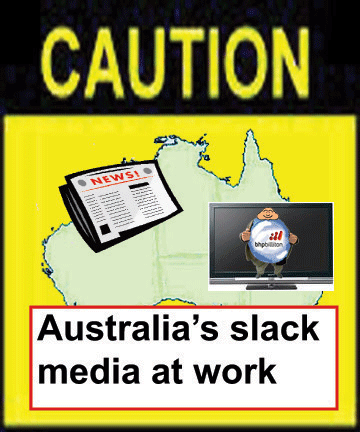
Australian media is not doing its job to expose power and corruption
|
What lies beneath must be resurfaced — or the media is not doing its job to expose power and corruption
And yesterday, the government released a discussion paper proposing that the declining role of gas in Australia’s energy production and manufacturing sectors instead be significantly expanded, which would also directly benefit Santos. In between, the government’s COVID economic recovery panel, chaired by another energy company executive, also urged that gas be used as part of Australia’s economic recovery. Both ideas would require massive government subsidies for gas companies like Santos. As a result Santos has had a good week. Last Friday, the company saw its share price close at $4.60. Yesterday it closed at $5.29, a 15% rise compared to just 3% on the ASX 200. This represents a handy return on investment. Santos is the country’s second-biggest fossil fuel industry political donor after Clive Palmer, having given over $1 million to the Coalition in the last decade. It has a rich history of exchanging staff with Coalition governments…… [In the media coverage] The story was treated as an energy or climate policy story, rather than one about corruption and power……. When even good, experienced journalists fail to give a full account of the fossil fuel companies working to not merely stymie climate action but to turn climate policies to their financial advantage, it points to a serious problem in our media — an inability to explore how surface events reflect underlying structures of power in Australia. And it results in a normalisation of corruption. Why do we instinctively see corruption if Trump does something, but if the government here does exactly the same thing, it’s written up seriously as an energy policy story, with the government and business on one side of a serious debate and “green groups” on the other? We see through the words a figure like Trump uses to disguise their corruption; here, the same words are taken at face value, and debated as serious contributions to policy…… Turnbull at least spoke and wrote about the role of fossil fuel interests and News Corp (which he correctly described as a foreign political party, rather than what it purports to be, an Australian media company) ….. Despite the woeful level of transparency around influence-peddling, there is considerable information available about the financial and personal links between key stakeholders and policymakers across federal politics.
At the ABC, Stephen Long is one of the few mainstream media journalists who sees his “investigative” role as extending to the structures of power rather than simply the surface. Paul Karp of The Guardian is also attuned to the tendency of donors to benefit from political parties. But they are, sadly, exceptions. We’ve seen before what happens when the media ignores the underlying reasons for decisions by policymakers. For years, the extensive donations by the major banks to the Liberal Party, and the revolving door between the executive suites of banks and the ranks of both ministerial staff and ministers themselves, was ignored by the media. The donations and revolving doors operated for both political parties, but the Liberals had — and have — by far the deepest and richest links with the banks. But the role of these financial and personal links in the Liberals’ long-running protection of the banks from regulation, and their constant attacks on industry superannuation funds, received little attention……. Australia’s political system is corrupted. Corrupted not merely or even particularly in the NSW Labor way of bags of cash and dodgy deals for mates, but systemically, institutionally corrupt, a pervasive soft corruption in which the powerful use money and lobbying to influence policymakers and get favourable policies, indeed, as we’ve seen this week, often get to craft policy themselves. All it takes to understand and explain that is to look beneath the surface. Is the Australian media holding policymakers to account? Let us know your thoughts by writing to letters@crikey.com.au. Please include your full name to be considered for publication in Crikey’s Your Say column. https://www.crikey.com.au/2020/05/22/political-reporters-not-doing-their-job-power-corruption/ |
|
The false economics promised by the government’s National Radioactive Waste Management plan
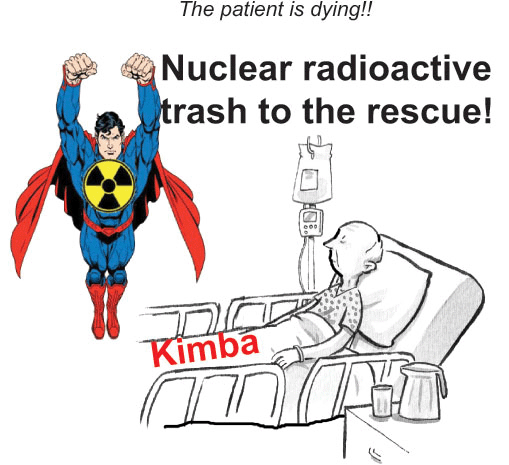
on all proper assessments and studies it is quite clear that the suggested benefits will not become a reality and in fact may lead to a deterioration in the value of the farming lands and residential properties at Kimba due the presence of the nuclear waste facility.
the government is doing no more than attempting to create a false economy which regrettably is being seized on by some members of the Kimba community as the misconceived salvation of its present depressed rural conditions which are actually common to the rest of Australia.
This is an extract from Peter Remta – submission to Senate Committee on National Radioactive Waste Management Amendment (Site Specification, Community Fund and Other Measures) Bill 2020 [Provisions] Submission 65
“………FINANCIAL GRANTS
The government has made significant financial grants to Kimba and also previously Hawker to gain community approval for its proposals. While it is a little difficult to ascertain the exact amounts of the grants the list of
recipients indicates that many of them were for rather nebulous and unnecessary purposes with little support or justification. In December 2018 the government first mentioned a so called community purposes
grant of $31million but failed to provide full details of the grant and its application.
Eventually it was explained that this grant would be a community development package to build economic capacity skills and resilience within those communities and to help realise the economic benefits of hosting the facility.
The three components of the package were:
(a) $8 million for community skills and development
(b) $3 million from the government’s Indigenous Advancement Strategy to support economic opportunities for the local Aboriginal community
(c) $20 million as a community fund to contribute towards a range of community focused projects including sustainable health services agricultural research and development and enhancements to local infrastructure such as roads and telecommunications
Even if component (a) were excluded the remaining applications of money should be part of the normal expenditure by the federal and state governments and be completely unrelated to and independent of the community’s acceptance of the facility.
In fact the local Aboriginal community considers that the moneys from the Advancement Strategy would be available to it in any event under previous arrangements.
Yet at the Senate estimates hearing on 21 February 2019 Manager Chard of the so called national radioactive waste management taskforce stated on behalf of the Department that the community development package of $31 million (she referred to it as $30 million) was being “enshrined” in legislation because this was requested by the community.
She also said that fund – being presumably the component of $20 million of the total package – was “not dependent on the legislation change” since it was envisaged that a fund would be established to support the community when the existing legislation was “conceived” in 2012 even though there had never been any public release or mention of the package and its value until December 2018.
ECONOMIC BENEFITS
The government has constantly promoted the notion and claimed that the establishment of the facility will lead to significant economic benefits for the Kimba region and its community.
The argument espoused and promoted by the government is that Kimba is a dying agricultural area with no future prospects of revival and consequently the establishment of the facility will provide significant increased employment and other infrastructure benefits ensuring its future for an even quoted figure of 300 years. The economic prospects for Kimba would also be augmented and improved by the intended grants from the government already described as the community development package.
However on all proper assessments and studies it is quite clear that the suggested benefits will not become a reality and in fact may lead to a deterioration in the value of the farming lands and residential properties at Kimba due the presence of the nuclear waste facility.
Based on proper and considered financial advice it seems that the government is doing no more than attempting to create a false economy which regrettably is being seized on by some members of the Kimba community as the misconceived salvation of its present depressed rural conditions which are actually common to the rest of Australia.
This is a completely wishful but unrealistic perception since it has already been shown by other examples that the facility would in a normal commercial sense need less than 10 workers unlike the government’s constantly quoted figure of 45 workers. Moreover the construction of the facility at Kimba will probably be carried out by already qualified and well experienced contractors from outside of Kimba and their presence during the building stage will add little to the local community……….”
National Coordination COVID-19 Commission – a fossil fuel mates’ rort of staggering proportions.
 Coalition’s COVID-19 Commission: Another reason for a Federal ICAC Now! Independent Australia By Ross Jones | 25 May 2020 Just how much slush do you reckon is going to wash around the Coalition’s so-called National Coordination COVID-19 Commission? Coalition’s COVID-19 Commission: Another reason for a Federal ICAC Now! Independent Australia By Ross Jones | 25 May 2020 Just how much slush do you reckon is going to wash around the Coalition’s so-called National Coordination COVID-19 Commission?
It is brutally evident that, much like birds in a Hitchcock movie, masses of spivs are preening their flight feathers, readying themselves for a terrifying assault on Australia’s fragile environment to line their own – and others’ – already luxurious nests. This is going to be a mates’ rort of staggering proportions. There are a lot of approaches Australia could take to emerge from the COVID-19 problem a better place. Certainly, Australia is awash with economic problems — high unemployment, battered production capabilities, smashed asset values and a looming surplus of exports are just the start. As you would expect, the Morrison Government eschewed any sensible approaches to these problems, like rebooting manufacturing to set the country up for efficient, long-term solutions, which would enable us to contribute to global attempts to slow climate change while boosting levels of meaningful employment. Instead, the Coalition wants to unleash the dogs of destruction, just to make sure no other generation of Australians has anywhere near the opportunity this lot of privileged elitists has enjoyed. Once fracked and drilled, that land – our children’s land – will be rendered useless. Destroyed. Why are they doing this? Money. Lots of it. Greed, bribes, backhanders and sly winks will ensure the brown paper bags – or Cayman Island cupboards – are nice and plump for all the abusers of our long-term well-being to jam their porky little mitts into. This is exactly why we need an empowered Federal ICAC and that is exactly the reason IA is proposing the formation of a new Australian political party to be named — Federal ICAC Now (FIN). A Federal ICAC won’t stop all the malfeasance but it could put a fair-sized dent in it. Also, it would be great to have a few senators in the House whose focus is on corruption detection and prevention. The next half-senate election, when the term of those elected in 2016 expires, can be held as early as 7 August 2021 but must be held by 30 June 2022. Before the election, and especially in the last months leading up to the big event a registered FIN party would have a presence alerting voters to the issues. At the election, the above-the-line party might just have a chance. A previous IA article floated the idea of FIN and asked readers if they would be willing to join such a party………. https://independentaustralia.net/politics/politics-display/coalitions-covid-19-commission-another-reason-for-a-federal-icac-now,13928 |
|
The torture that awaits Julian Assange in the US.
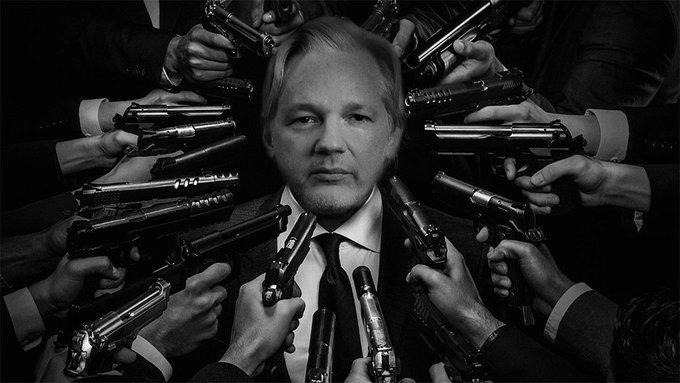 From the frying pan into the fire. The torture that awaits Julian Assange in the US.https://www.thecanary.co/uk/analysis/2020/05/10/from-the-frying-pan-into-the-fire-the-torture-that-awaits-julian-assange-in-the-us/
Tom Coburg 10th May 2020 WikiLeaks founder Julian Assange is currently held in Belmarsh prison awaiting hearings that could see him extradited to the US to face prosecution for alleged espionage-related offences.
Award-winning US journalist Chris Hedges described the torture that would await Assange in the US prison system, adding “they will attempt to psychologically destroy him”. If extradited, Assange would likely be detained in accordance with ‘Special Administrative Measures’ (SAMs). One report equates this to a regime of sensory deprivation and social isolation that may amount to torture.
Journalists speak out
US journalist Chris Hedges spoke about the treatment Assange is likely to receive in the US. He argues that the US authorities will “psychologically destroy him” and that conditions imposed could see him turned into a ‘zombie’ to face life without parole:
Australian journalist John Pilger agrees:
If Julian is extradited to the US, a darkness awaits him. He’ll be subjected to a prison regime called special administrative measures… He will be placed in a cage in the bowels of a supermax prison, a hellhole. He will be cut off from all contact with the rest of humanity.
From the frying pan…
Assange is already in a precarious position, alongside all other UK prisoners. Belmarsh is a high-security Category A facility and, as with all other prisons in the UK, inmates there are at risk to infection from coronavirus (Covid-19).
On 28 April, the BBC reported that there were “1,783 “possible/probable” cases of coronavirus – on top of 304 confirmed infections across jails in England and Wales”. Also that there were “75 different “custodial institutions”, with 35 inmates treated in hospital and 15 deaths”.
Vaughan Smith, who stood bail for Assange, reported that the virus was “ripping through” Belmarsh:
We know of two Covid-19 deaths in Belmarsh so far, though the Department of Justice have admitted to only one death. Julian told me that there have been more and that the virus is ripping through the prison.
Assange has a known chronic lung condition, which could lead to death should he become infected with coronavirus. Assange’s lawyers requested he is released on bail to avoid succumbing to the virus, but that request was rejected.
As for the psychological effects of segregation, a European Committee for the Prevention of Torture and Inhuman or Degrading Treatment or Punishment report argued that it can “can have an extremely damaging effect on the mental, somatic and social health of those concerned”.
…and into the fire
It’s likely that Assange will be placed under SAMs if he is extradited to the US. The Darkest Corner, a report authored by the Allard K. Lowenstein International Human Rights Clinic and The Center for Constitutional Rights, describes how SAMs work.
In its summary, the report explains that:
SAMs are the darkest corner of the U.S. federal prison system, combining the brutality and isolation of maximum security units with additional restrictions that deny individuals almost any connection to the human world. Those restrictions include gag orders on prisoners, their family members, and their attorneys, effectively shielding this extreme use of government power from public view.
It continues:
SAMs deny prisoners the narrow avenues of indirect communication – through sink drains or air vents – available to prisoners in solitary confinement. They prohibit social contact with anyone except for a few immediate family members, and heavily regulate even those contacts. And they further prohibit prisoners from connecting to the social world via current media and news, limiting prisoners’ access to information to outdated, government-approved materials. Even a prisoner’s communications with his lawyer – which are supposed to be protected by attorney-client privilege – can be subject to monitoring by the FBI.
It ominously adds that: “Many prisoners remain under these conditions indefinitely, for years or in some cases even decades”. Moreover, these conditions can be used as a weapon to force a prisoner to plead guilty:
In numerous cases, the Attorney General recommends lifting SAMs after the defendant pleads guilty. This practice erodes defendants’ presumption of innocence and serves as a tool to coerce them into cooperating with the government and pleading guilty.
The report provides further details on how SAMs incorporate sensory deprivation and social isolation measures that “may amount to torture”. Also, it argues that the SAMs regime contravenes both US and international laws.
ECHR article 3
Should the UK courts agree to extradite Assange, he could face months, if not decades, of psychological torture. However, Article 3 of the European Court of Human Rights states clearly: “No one shall be subjected to torture or to inhuman or degrading treatment or punishment”. Under that article, the US extradition request should be rejected by the UK courts.
For a publisher to be subjected to such a nightmare scenario would be intolerable.
Assange unwell, stuck in solitary confinement while court hearing delayed till September
In his fight against extradition to the US, where he faces 175 years in prison and being subjected to harsh conditions under “Special Administrative Measures”, Assange is rendered defenseless. He is in effective solitary confinement, being psychologically tortured inside London’s maximum-security prison. With the British government’s refusal to release him temporarily into home detention, despite his deteriorating health and weak lung condition developed as consequences of long detention, Assange is now put at risk of contracting coronavirus. This threatens his life.
Now, as the world stands still and becomes silent in our collective self-quarantine, Assange’s words spoken years ago in defense of a free internet call for our attention from behind the walls of Belmarsh prison:
“Nuclear war, climate change or global pandemics are existential threats that we can work through with discussion and thought. Discourse is humanity’s immune system for existential threats. Diseases that infect the immune system are usually fatal. In this case, at a planetary scale.”
Assange’s US extradition, Threat to Future of Internet and Democracy, CounterPunch by NOZOMI HAYASE 8 May 20 On Monday May 4, the British Court decided that the extradition hearing for WikiLeaks publisher Julian Assange, scheduled for May 18, would be moved to September. This four month delay was made after Assange’s defense lawyer argued the difficulty of his receiving a fair hearing due to restrictions posed by the Covid-19 lockdown. Monday’s hearing at Westminster Magistrates’ Court proceeded without enabling the phone link for press and observers waiting on the line, and without Assange who was not well enough to appear via videolink.
Sunday May 3rd marked World Press Freedom Day. As people around the globe celebrated with online debates and workshops, Assange was being held on remand in London’s Belmarsh prison for publishing classified documents which exposed US war crimes in Iraq and Afghanistan. On this day, annually observed by the United Nations to remind the governments of the importance of free press, Amnesty International renewed its call for the US to drop the charges against this imprisoned journalist.
The US case to extradite Assange is one of the most important press freedom cases of this century. The indictment against him under the Espionage Act is an unprecedented attack on journalism. This is a war on free speech that has escalated in recent years turning the Internet into a battleground.
Privatized censorship Continue reading
Institute of Public Affairs (IPA) continues attacks on ABC
 Surprise! Surprise! IPA continues attacks on ABC https://www.abcfriends.org.au/ipa_continue_attacks_on_abc
Latest news from ABC Friends , Margaret Reynolds, President ABC Friends National, 28 February 2020 The Institute of Public Affairs has (IPA) commissioned a survey by global firm Dynata to continue its campaign against the ABC and public broadcasting in Australia.
Yes, this is the same IPA which tries to influence the Liberal Party to privatise the ABC!
Guess the results: less than a third of Australians agreed that the ABC was out of touch with ordinary Australians.
So, all you extraordinary Australians who value the ABC may like to phone, text, write or visit the IPA to record why you value the essential services the ABC provides.
Website: ipa.org.au/contact-us
Email: ipa@ipa.org.au
Phone: (03) 9600 4744
Next time the IPA commissions a survey they may like to consider a poll on how many Australians value the IPAs contribution to Australian public policy debate!
Australian govt’s devious ploy to further dispossess the Bangarla Aboriginal people
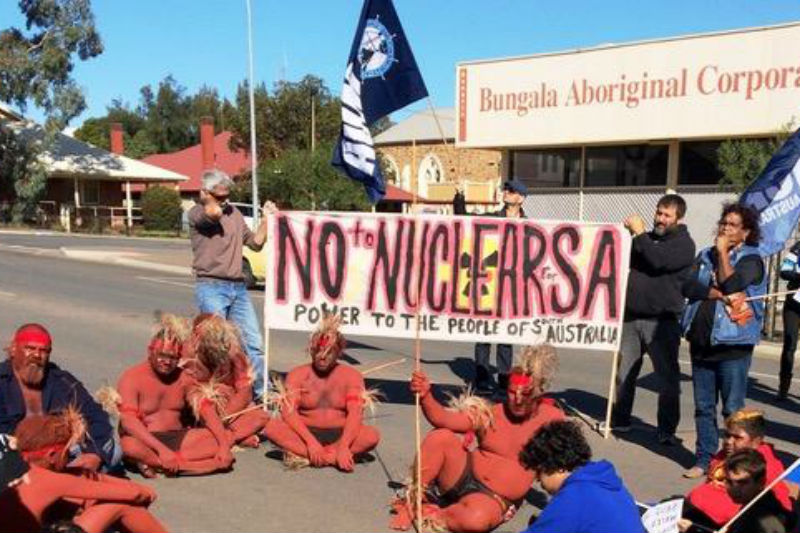
First Nations communities continue to be left behind, Eureka Street, Michele Madigan -22 Apr 20 “………..As well as their own real fears for their health in the COVID-19 pandemic as documented in their recent submission (number 25) to the Senate Standing Economics Legislation Committee of Inquiry the Barngarla peoples of South Australia’s Eyre Peninisula are being forced to counter attempts to further their dispossession in new schemes by federal government. The Barngarla Determination Aboriginal Committee (BDAC) plead with the federal government to delay the current procedures so that the public hearings regarding the site of the federal nuclear waste facility in the Kimba region may take place ‘on Country’ rather than by teleconference, which would greatly disadvantage their cause.
Even more seriously, the BDAC submission (among others) denounces the purposeful strategy by the Resources Minister in refusing to make a formal declaration. Instead, the Minister made ‘a policy decision’ in naming the chosen site of Napandee, having ‘presented it as a declaration’.
BDAC points out, ‘The Government is now seeking to legislate directly, as an indirect but very effective means to prevent judicial oversight.’ That is, the Minister is seeking to change the current legislation of the National Radioactive Waste Management Act so that Parliament itself will ‘select’ Napandee as the site and thereby stopping any judicial oversight of anything untoward in the long administrative process to date.
As the BDAC submission summarises, ‘This is highly concerning to the Barngarla people as it should be to all Australians.’
In the last few days, the federal Parliamentary Joint Committee on Human Rights has written a report critical of the treatment of Barngarla Traditional Owners. It is a unanimous report, endorsed by Coalition members of the Committee.
And there we have it. As Aboriginal communities still await the needed funding to ensure their survival during this pandemic, the wheels of another government ministry are confidently seeking to further dispossess and disempower by such proposed legislation. Shameful indeed.
Michele Madigan is a Sister of St Joseph who has spent the past 38 years working with Aboriginal people in remote areas of SA, in Adelaide and in country SA. Her work has included advocacy and support for senior Aboriginal women of Coober Pedy in their campaign against the proposed national radioactive dump. https://www.eurekastreet.com.au/article/first-nations-communities-continue-to-be-left-behind?utm_medium=email&utm_campaign=Eureka%20Street%20Daily%20-%20Wednesday%2022%20April%202020&utm_content=Eureka%20Street%20Daily%20-%20Wednesda
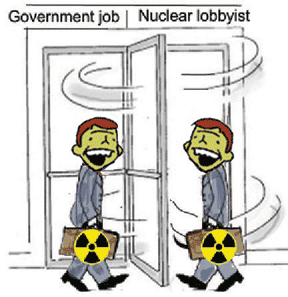
Another revolving door- Air Chief Marshal (ret’d) Mark Binskin AC straight into BAE warships maker
 Air Chief Marshal (ret’d) Mark Binskin AC
MILITARY INDUSTRY REVOLVING DOOR. Michael West Media
In June 2018, Mark Binskin was Chief of the Defence Force when BAE Systems Australia was awarded the $35 billion Future Frigate contract, the largest surface warship program in Australia’s history. The following month Binskin retired. He has since been appointed in a non-executive director role with BAE Systems. The contract for the $1.2 billion upgrade of the Jindalee Operational Radar Network was also awarded to BAE in the final months of Binskin’s tenure…… https://www.michaelwest.com.au/air-chief-marshal-mark-binskin-ac-retd/
Australia’s political revolving door between military industry and government – Reynolds and Reith
Senator the Hon Linda Reynolds CSC
MILITARY INDUSTRY REVOLVING DOOR, MichaelWest.com 15 Apr 20
The “spruiker-in-chief” of defence industry has been involved with promoting military industry interests since the late 1980s when she co-founded the WA Defence Industry Council. Reynolds combined a career in the army reserves with political staffing roles for the Liberals, and a stint with industry giant Raytheon, before becoming a senator for WA in 2014. From 2 March 2019, she served as Minister for Defence Industry before being promoted to Defence Minister on 29 May 2019…….. https://www.michaelwest.com.au/linda-reynolds/
The Hon Peter Reith AM
MILITARY INDUSTRY REVOLVING DOOR
Former Howard government defence minister Peter Reith created a storm of protest when he quit politics and started work within a day or two for Tenix Defence (now BAE Systems Australia) as a consultant on government relations. Tenix Defence was Australia’s largest military industry corporation and a significant contractor to the department over which Reith had just had oversight. ……..more https://www.michaelwest.com.au/peter-reith/ …… https://www.michaelwest.com.au/linda-reynolds/
Nuclear front group Energy Policy Institute joins with NuScam to promote Small Nuclear Reactors to Australia

A top Trump administration official has urged Australia to join the US in researching and building small “modular” nuclear reactors.Suzanne Jaworowski, chief of staff and senior adviser at the US Department of Energy, said about 45 companies in the US were working on small modular reactors and one could be built in Australia by the mid-2020s
“You could have up to 12 reactor modules each producing 60MW, even more reliably than coal and gas,” she told The Weekend Australian, recommending business and government work with NuScale Power, which is building an SMR in Idaho.
“They are at a point where they could work with a country like Australia,” she said.
Australia’s prohibition on nuclear energy, in force since the late 1990s, was “unfortunate”, she said. The growing push for zero emissions by mid-century could only be achieved with nuclear power, on current technology……
A federal inquiry into nuclear power suggested a partial reversal of the 1998 legislative ban on nuclear energy late last year. In NSW, state One Nation leader Mark Latham and state Nationals leader John Barilaro are pushing to dump a similar state ban.
Ms Jaworowski, who had to cancel a planned trip to Australia this year because of the coronavirus, said nuclear energy faced a “perception problem”. …… Ms Jaworowski said nuclear energy in the US could be supplied from small modular reactors at about $55 a MwH, “which is very competitive with other forms of energy”.
Liddell coal power station in NSW, with 2000MW capacity, is scheduled to close in 2023. The federal government, which has said lifting the nuclear ban would require bipartisan support, is putting together a “technology road map” to ensure large cuts in carbon emissions by 2050.
Ms Jaworowski said nuclear energy in the US could be supplied from small modular reactors at about $55 a MwH, “which is very competitive with other forms of energy”.
The Energy Policy Institute said the US, Russia and China were in a three-way contest to dominate the global nuclear generation market with SMRs. “The nuclear competition will be good for Australia because we need greater energy security than we’ve got at present,” institute executive director Robert Pritchard said. https://www.theaustralian.com.au/world/us-urges-australia-to-consider-nuclear/news-story/f555996beccc347f6b57bb9d1c126f77
Australian government manipulates the National Radioactive Waste Management Act so as to prevent an Appeal
 Govt accused of legal appeal block, Whyalla News , Louis Mayfield , 11 Mar 20, Govt accused of legal appeal block, Whyalla News , Louis Mayfield , 11 Mar 20,
A South Australian Senator has accused the government of stonewalling any attempts to launch a legal appeal against their legislation for a National Radioactive Waste Management Facility (NRWMF) at Napandee. According to a letter from Resources Minister Keith Pitt to Centre Alliance Senator Rex Patrick, the government has not formalised the decision to make Napandee the location for the facility under the National Radioactive Waste Management Act 2012. Senator Patrick said this was a deliberate move by the government to avoid the legislation being challenged legally. “The whole motive behind getting the Parliament to make an Act that selects the site is that what Parliament does is not reviewable by the courts unless someone thinks it’s unconstitutional,” he said. “The pathway they’re taking this down denies anyone the ability to seek judicial review into whether or not they have achieved broad community support. “We know the Barngarla people are clearly opposed, we also know there are some neighbours who are opposed as well. “It’s important that people need to be made aware that no decision has been made, only an assessment.” Legislation for the NRWMF is now before a Senate Inquiry, with Resoures Minister Keith Pitt saying the government had self-referred the bill…. Both Senator Patrick and Greens Senator Sarah Hanson-Young are calling for a public hearing to be held in Whyalla regarding the legislation. The Senate Economics Committee are now taking submissions from the public. https://www.whyallanewsonline.com.au/story/6673978/govt-accused-of-legal-appeal-block/?fbclid=IwAR3GEn2HgTDReXDl2Qhp9pkDFk6H7NMonpjmIxg2IC6_pTDObtu5SZIAxxA |
|
|
ANSTO Senior Nuclear Officer Admits Admits ANSTO reclassifies High Level Wastes as Intermediate Level.

Note the wastes in question – vitrified – at the top of the list above
Kim Mavromatis No Nuclear Waste Dump Anywhere in South Australia  shared a link. ANSTO Senior Nuclear Officer Admits Admits – France classifies waste from reprocessed Spent Nuclear Fuel as High Level Nuclear Waste – and when the waste gets shipped back to Aust it is reclassified as Intermediate.
1 This month
Chernobyl: The Lost Tapes – A good documentary on Chernobyl on SBS available On Demand for the next 3 weeks– https://www.sbs.com.au/ondemand/tv-program/chernobyl-the-lost-tapes/2352741955560
15 April – Zoom –Nuclear Power is Not the Solution
Apr 15, 2026 01:00 AM in Canberra, Melbourne, Sydney

Join the International Physicians for the Prevention of Nuclear War (IPPNW) on Tuesday, April 14th for a timely webinar exploring the risks associated with nuclear power and challenging the myth that it offers a simple, safe, carbon-free solution to the climate crisis

21 April Webinar: No Nuclear Weapons in Australia
Start: 2026-04-21 18:00:00 UTC Canberra, Melbourne, Sydney (GMT+10:00)
End: 2026-04-21 19:30:00 UTC Canberra, Melbourne, Sydney (GMT+10:00)
Event Type: Virtual
A virtual link will be communicated before the event.
Host Contact Info: australia@icanw.org

of the week – Australians for War Powers Reform (AWPR)
To see nuclear-related stories in greater depth and intensity
 Antinuclear