Assange Extradition Case Moves Forward While The CIA Covers Its Tracks

CAITLIN JOHNSTONE, APR 17, 2024 https://www.caitlinjohnst.one/p/assange-extradition-case-moves-forward?utm_source=post-email-title&publication_id=82124&post_id=143660864&utm_campaign=email-post-title&isFreemail=true&r=1ise1&triedRedirect=true&utm_medium=email
So they’re really doing it. The Biden administration is really ignoring Australia’s request to end the case against Julian Assange, and they’re proceeding with their campaign to extradite a journalist for telling the truth about US war crimes.
In order to move the extradition case forward, per a British high court ruling US prosecutors needed to provide “assurances” that the US would not seek the death penalty and would not deprive Assange of his human right to free speech because of his nationality. The US provided the assurance against the death penalty (which they’d previously opposed doing), and for the free speech assurance they said only that Assange will be able to “raise and seek to rely upon” US First Amendment rights, adding, “A decision as to the applicability of the First Amendment is exclusively within the purview of the U.S. Courts.”
Which is basically just saying “I mean, you’re welcome to TRY to have free speech protections?”
At the same time, CIA Director William Burns has filed a State Secrets Privilege demand to withhold information in a lawsuit against the agency by four American journalists and attorneys who were spied on during their visits to Assange at the Ecuadorian embassy in London. State secrets privilege is a US evidentiary rule designed to prevent courts from revealing state secrets during civil litigation; the CIA began invoking it with the Assange lawsuit earlier this year.
Burns argues:
“I am asserting the state secrets and statutory privileges in this case as I have determined that either admitting or denying that CIA has information implicated by the remaining allegations in the Amended Complaint reasonably could be expected to cause serious — and in some cases, exceptionally grave — damage to the national security of the United States. After deliberation and personal consideration, I have determined that the complete factual bases for my privilege assertions cannot be set forth on the public record without confirming or denying whether CIA has information relating to this matter and therefore risking the very harm to U.S. national security that I seek to protect.”
Which is obviously a load of horse shit. As Assange himself tweeted in 2017, “The overwhelming majority of information is classified to protect political security, not national security.” Burns isn’t worried about damaging “the national security of the United States,” he’s worried about the potential political fallout from information about the CIA spying on American lawyers and journalists while visiting a journalist who was being actively targeted by the legal arm of the US government.
Political security is also why the US is working to punish Julian Assange for publishing inconvenient facts about US war crimes. The Pentagon already acknowledged years ago that the Chelsea Manning leaks for which Assange is being prosecuted didn’t get anyone killed and had no strategic impact on US war efforts, so plainly this isn’t about national security. It’s just politically damaging for the criminality of the US government to be made public for all to see.
They’re just squeezing and squeezing this man as hard as they can for as long as they can get away with to keep him silent and make an example of him to show what happens when journalists reveal unauthorized information about the empire. Just like Gaza, the persecution of Julian Assange makes a lie of everything the US and its western allies claim to stand for, and reveals the cruel face of tyranny beneath the mask of liberal democracy.
Secret Agreements: The Australian-Israel Defence Memorandum of Understanding

Elbit Systems, Israel’s notorious drone manufacturer and creator of the Hermes 450 aerial device responsible for this month’s killing of seven World Central Kitchen aid workers including the Australian national, Lalzawmi “Zomi” Frankcom, was rewarded with a A$917 million contract. Business, even over bodies, exerts a corrupting force.
Binoy Kampmark, 14 Apr 24, https://theaimn.com/secret-agreements-the-australian-israel-defence-memorandum-of-understanding/
While the Australian government continues to pirouette with shallow constancy on the issue of Israel’s war in Gaza, making vacuous utterances on Palestinian statehood even as it denies supplying the Israeli Defense Forces (IDF) with weapons (spare parts, it would seem, are a different, footnoted matter), efforts made to unearth details of the defence relationship between the countries have so far come to naught.
The brief on Australian-Israel relations published by the Department of Trade and Foreign Affairs is deplorably skimpy, noting that both countries have, since 2017, “expanded cooperation on national security, defence and cyber security.” Since 2018, we are told that annual talks have been conducted between defence officials, while Australia appointed, in early 2018, a resident Defence Attaché to the embassy in Tel Aviv. What is conspicuously absent are details of the Memorandum of Understanding on defence cooperation both countries signed in 2017.
A little bit of scrapping around reveals that 2017 was something of a critical year, a true bumper return. The Australia-Israel Defence Industry Cooperation Joint Working Group was created that October. A following Australian Defence media release notes the group’s intention: “to strengthen ties between Australia and Israel, explore defence industry and innovation opportunities, identify export opportunities, and support our industries to cooperate in the development of innovative technologies for shared capability challenges.”
The intentions of the group were well borne out. Defence contracts followed with sweet indulgence: the February 2018 contract between Israel-based Rafael Advanced Defence Systems with Australia’s Bisalloy Steels worth A$900,000; an August 2018 joint venture between the Australian defence engineering company Varley Group and Rafael, behind such “leading weapons systems” as “the Spike LR2 anti-tank guided missile”; and the Electro Optic Systems-Elbit Systems agreement from 2019 responsible for developing “a modular medium-calibre turret that can be configured for a range of platforms, including lightweight reconnaissance and heavy fighting vehicles.”
In February this year, Elbit Systems, Israel’s notorious drone manufacturer and creator of the Hermes 450 aerial device responsible for this month’s killing of seven World Central Kitchen aid workers including the Australian national, Lalzawmi “Zomi” Frankcom, was rewarded with a A$917 million contract. Business, even over bodies, exerts a corrupting force.
In a heartbeat after the outbreak of the latest Gaza War last October, the Australian Greens filed a Freedom of Information (FOI) request seeking a copy of the barely mentioned MOU. After a period of three months, the Australian Defence Department reached the boring conclusion that the application should be rejected. It fell, the argument went, within the category of exemptions so treasured by secretive bureaucrats keen to make sure the “freedom” in FOI is kept spare and bare.
What follows is repulsive to intellect and denigrating to morality. “The document within the scope of this request,” went the letter from the Defence Department, “contains information which, if released, could reasonably be expected to damage the international relations of the Commonwealth.” The MOU “contains information communicated to Australia by a foreign government and its officials under the expectation that it would not be disclosed.” Releasing “such information could harm Australia’s international standing and reputation.”
A telling, and troubling role was played by Israel in the process. With characteristic, jellied spinelessness, Australian defence officials notified Israel of the FOI request in December 2023. In February, the Netanyahu government responded with its views, of which we can only speculate. The Greens were duly informed by the Australian Information Commissioner (OAIC) that the relevant decision maker in Defence “will consider the foreign government’s consultation response to make an informed and robust decision.” With such words, a negative response was nigh predictable.
Greens Senator David Shoebridge, in responding to the decision, was adamant that, “There is no place for secret arms treaties and secret arms deals between countries.” Furthermore, there was “no place for giving other countries veto power over what the Australian government tells the public about our government defence and arms deals.” The case is even more pressing given allegations of war crimes, crimes against humanity and genocide taking place in the Gaza strip.
This regrettable episode retains a certain familiar repulsiveness. Unfortunately for devotees of open government, a fraught term if ever there was one, Australia’s FOI regime remains stringently archaic and pathologically secretive.
Decision makers are given directions to frustrate, not aid applications to reveal information, notably on sensitive topics such as security, defence and international relations. Spurious notions about damage to international relations are advanced to ensure secrecy and the muzzling of debate. The OAIC has also shown itself to be lamentably weak, tardy and inefficient in reviewing applications. In March 2023, it was revealed that almost 600 unresolved FOI cases had bottled up over the course of three years.
The latest refusal from the Defence Department to disclose the Israel-Australian MOU to members of Parliament, a decision reached after discussions with a foreign power (that fact is staggering and disheartening in of itself), betrays much doubletalk regarding defence ties between Canberra, the IDF, and the Israeli government. More than that, it confirms that those in Canberra are being steered by other interests, longing for the approval of foreign eyes and foreign interests.
The cost of needless secrecy on nuclear. What’s the scam?
The Defence Department and the ADF should keep secrets important to protect our national security. But that doesn’t mean everything they do should be secret. Rex Patrick
by Rex Patrick | Apr 11, 2024 https://michaelwest.com.au/whats-the-scam-with-nuclear-secrecy/
It’s been 395 days since I made the FOI request, 336 days since the Department of Defence said “no,” and 231 days since lawyers started their billing clocks to try to defend Defence’s secrecy addiction in the Administrative Appeals Tribunal (AAT).
The topic of the FOI request is one that goes to elements of the AUKUS program that relate to:
nuclear regulation, stewardship and safety, the management of operations nuclear waste, reactor decommissioning, and the management of nuclear waste.
Refuse everything
Their “refuse everything” approach is even more inexplicable, noting that Defence knows it has to build a social licence to operate nuclear reactors. ANSTO actually instructed them on this during the Morrison study into AUKUS.
Today, the government will hand over some of the secret documents that they now concede aren’t actually secret. That means the poor taxpayer will foot the bill for the AAT’s resources (because I’ll get my $1000 AAT application fee back) in addition to the lawyers’ fees.
The taxpayer’s cost-to-date is not known. Senator Jacqui Lambie has asked Defence for them through Senate processes.
“I’m willing, based on past experience, to wager the legal fees alone will be north of $50K.”
All because of an anti-transparency culture inside the Defence establishment. A culture that is especially acute inside AUKUS, where all information must, in their view, be contained within the valence shell.
AUKUS: Red flag for arms industry corruption

There has been almost no public commentary about the likely influence of the arms industry in the secretive AUKUS deal.
MICHELLE FAHY, MAR 22, 2024, https://undueinfluence.substack.com/p/aukus-red-flag-for-arms-industry?utm_source=post-email-title&publication_id=297295&post_id=142851171&utm_campaign=email-post-title&isFreemail=true&r=1ise1&triedRedirect=true&utm_medium=email
The arms trade is known for being one of the most corrupt of all legal international trades.
UK research shows that this corruption drives and distorts arms procurement decisions. Arms purchases that were not previously being considered can suddenly appear on the agenda.
Before delving into AUKUS, an egregious distortion in Australian defence procurement, I’ll briefly revisit the original French submarine contract.
The research shows that submarines, in particular, are a procurement area where a very high proportion of the small overall number of deals involve major corruption.
French multinational Naval Group had been wrangling with Malcolm Turnbull’s government for almost two years trying to get the formal contract signed.
In August 2018, Scott Morrison became PM.
Soon after, Naval Group hired David Gazard, well-connected lobbyist, former Liberal candidate, and close friend of Scott Morrison, to help them get the deal over the line.
Within months, the Morrison government had signed the contract.
In early 2019, the ABC reported, ‘Naval Group confirmed the arrangement but did not disclose how much Mr Gazard’s company was being paid for its lobbying services’.
Mr Gazard’s company, DPG Advisory Solutions, declined to comment to the ABC about its role. I sent similar questions to Mr Gazard this week and received no response by deadline.
At the time Australia put Naval Group on the shortlist, the company was under investigation for corruption in three other arms deals: two for submarines (Pakistan and Malaysia) and one for frigates (Taiwan). The Abbott government would have known this.
These were not minor corruption cases: all involved murder.
French authorities commenced another corruption investigation into Naval Group (submarines; Brazil) in late 2016, after Australia had awarded Naval Group the deal, but before we signed the contract.
How did the Abbott, Turnbull and Morrison governments shortlist, select, and then sign a contract with a company being investigated in four separate corruption cases?
Murder, corruption, bombings – the company at centre of Australia’s submarine deal
Naval Group was selected by the Australian government to build its new fleet of submarines while at the centre of a deadly criminal saga and numerous global corruption scandals. How did this happen? MICHELLE FAHY, OCT 24, 2020
AUKUS submarines
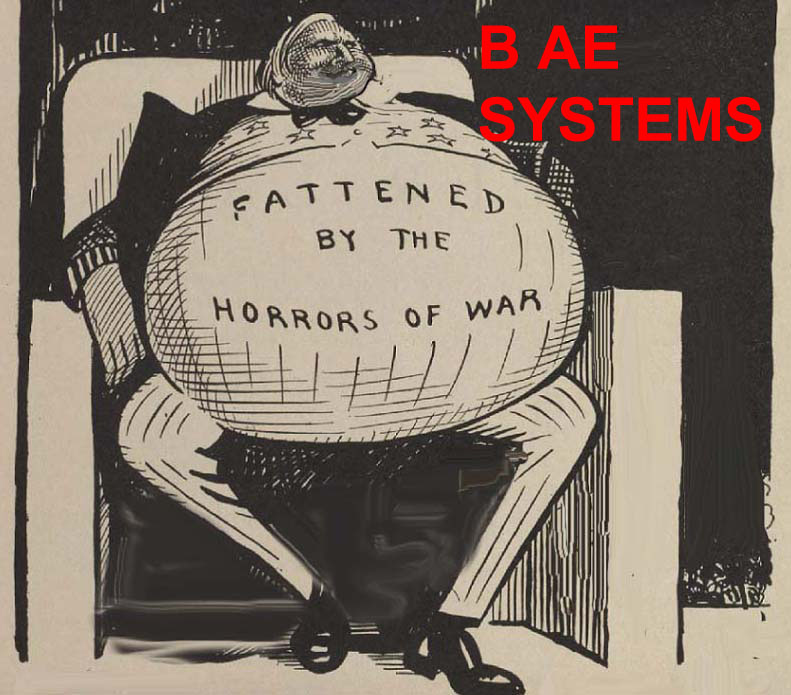
BAE Systems Australia is Defence’s largest contractor and has been for six of the past eight years.
BAE Systems is set to be a significant beneficiary of AUKUS.
Six months ago, the UK Government awarded the company a £3.95 billion (A$7.5 billion) contract for the detailed design phase of the AUKUS submarines.
On Friday, Defence Minister Richard Marles announced that Australia will send $4.6 billion (£2.4 billion) to the UK. Australia’s money will contribute to BAE’s detailed design phase of the AUKUS submarines and will also help clear bottlenecks in the Rolls Royce nuclear reactor production line.
This $4.6 billion expenditure is in addition to the $3 billion of Australian money already committed to support US naval shipyards.
The UK’s current submarine programs (managed by BAE) are running well behind schedule raising questions about whether BAE can deliver on the AUKUS agreement.
BAE Systems also provides perhaps the best-known example of systematic high-level arms industry corruption.
Britain’s series of arms deals with Saudi Arabia was, and remains, its biggest ever arms deal. It earned BAE Systems at least £43 billion in revenue between 1985 and 2007, with further deals still ongoing. The deal included £6 billion pounds in ‘commissions’ (bribes), paid to the Saudis.
In addition, during the 1990s and 2000s, in ‘a deliberate choice that came from the top’, BAE Systems maintained a shell company registered in the Cayman Islands called Red Diamond Trading. This vehicle channelled hundreds of millions of pounds of bribes around the globe to key decision makers in a succession of arms deals.
The Guardian’s BAE Files contain 15 years of reporting on this subject.
Sinking billions: Undergunned and overpriced. Missing records, billions in over-runs, conflicts of interest, and flawed ships. How the Defence Department’s new frigates project is a boondoggle for a British weapons-maker. MICHELLE FAHY, JUL 03, 2023
It has also been revealed that BAE Systems was given the Hunter class frigate contract despite ‘long-running concerns’ inside Defence about BAE’s alleged inflation of invoices by tens of millions of dollars on the earlier Adelaide class of frigates.
Detailed allegations of fraud in the Adelaide-class contracts, including by Thales Australia, were published in three separate articles by The Weekend Australian in May 2019.
A Defence internal audit had reportedly found that BAE’s contract was ‘riddled with cost overruns, with the British company consistently invoicing questionable charges’.
Defence launched a second investigation.
18 months later, I asked Defence about the outcome of its second investigation. This was their response:
An independent internal review of this matter found no evidence of inappropriate excess charges by BAE and Thales. The investigation did find some minor administrative issues which have been subsequently addressed through additional training. This training is now part of the normal cycle and is routinely refreshed.
The ‘independent’ review was conducted in secret by an existing defence contractor. His report was not made public.
Defence said ‘no evidence’ was found of inappropriate excess charges. Yet the allegations were apparently so serious they were referred to Defence’s assistant secretary of fraud control who then referred several matters to the Independent Assurance Business Analysis and Reform Branch of Defence.
Recently, I have been collaborating with UK colleagues trying to uncover more about the Adelaide-class contracts. Freedom of Information requests have been lodged. Defence has blocked them, refusing to release a single page.
An appeal was submitted, Defence blocked that too. We have now appealed to the Information Commissioner.
If this was merely ‘a minor administrative issue’ that has been resolved by ‘additional training’, why the aggressive blocking of any release of information through FoI?
Undue influence and the revolving door
I will finish by outlining a mini case study of undue influence and the revolving door – that of former CEO of BAE Systems Australia, Jim McDowell.
I am not implying any illegality on the part of Mr McDowell. I am simply laying out an array of his government appointments – not all of them – to highlight the extensive influence that just one person can have.
Jim McDowell had a 17-year career with BAE Systems including a decade as its chief executive in Australia, then two years running its lucrative Saudi Arabian business. He resigned from BAE in Saudi Arabia in December 2013.
In 2014, McDowell was appointed by the Coalition to a four-person panel undertaking the First Principles Review of Defence. This Review recommended sweeping reforms to the Defence Department, including its procurement processes, which have largely benefited major arms companies.
In 2015, the Coalition appointed McDowell to a 4-person expert advisory panel overseeing the tender process for the original submarine contract. When he announced McDowell as being part of this panel, Defence Minister Kevin Andrews didn’t mention McDowell’s long history with BAE Systems, which had ended only 18 months earlier. It was highly relevant, as BAE designs and manufactures Britain’s submarines.
In late 2016, then-defence industry minister Christopher Pyne hired McDowell as his adviser to develop the Naval Shipbuilding Plan. The appointment was not announced publicly. At that time, McDowell was also on the board of Australian shipbuilder Austal.
Under the shipbuilding plan, Austal subsequently won a contract to build six more Cape-class patrol boats while BAE Systems won the biggest prize, the Hunter-class frigate contract.
After the frigate deal was announced, South Australian premier Steve Marshall hired McDowell to head his Department of Premier and Cabinet. SA was the state that gained most from the shipbuilding plan.
In 2020, McDowell left the South Australian public service to become CEO of Nova Systems, a key defence contractor.
Last year, McDowell moved back through the revolving door into a senior role with the Defence Department. He is now Deputy Secretary for Naval Shipbuilding and Sustainment, reporting directly to defence secretary Greg Moriarty.
When appointed, McDowell said his new role was an opportunity he couldn’t turn down because it ‘provides the ability for me to shape the future of Australia’s shipbuilding and sustainment’.
In my view, McDowell’s long list of sensitive senior appointments should not have been possible. He cannot be the only person in the country qualified to undertake each of these roles.
This was a brief discussion of some aspects of the undue influence of the arms industry in Australia. I raise these issues in this AUKUS context because there has been almost no public commentary about the likely influence of the arms industry in the AUKUS deal.
This is an edited and updated version of a speech given on 12.3.24 at the Independent & Peaceful Australia Network (IPAN) forum, ‘AUKUS and Military Escalation: Who Pays and Who Benefits?’. The other speakers were Allan Behm, Dr Sue Wareham and Professor Hugh White. Speeches can be viewed here.
Murder, corruption, bombings – the company at centre of Australia’s submarine deal

|
Murder, corruption, bombings – the company at centre of Australia’s submarine deal Michael West Media by Michelle Fahy | Oct 24, 2020 The arms company at the centre of a deadly criminal saga and numerous global corruption scandals, Naval Group, was selected by the Australian government to build our new fleet of submarines – a deal heralded as ‘one of the world’s most lucrative defence contracts‘. How did this happen? In this special investigation Michelle Fahy discovers significant gaps in anti-bribery and corruption measures on this massive procurement project. The message communicated far and wide is that our standards are lax; grey areas are tolerated; and we’ll bend the rules and look the other way.…………In June this year, 18 years later, a Paris court secured the first convictions in the case. Six men were found guilty of charges involving kickbacks on deals signed in 1994 for the sale of submarines to Pakistan and frigates to Saudi Arabia. They include three former French government officials and the former head of the International Division of Naval Group.
Investigations into arms trade corruption take years, often more than a decade, due to multiple countries being involved, layers of offshore shell companies hiding the money trail, and the senior people implicated. Court cases and convictions are rare. The Karachi Affair resonates in Australia today because despite this high-profile and deadly criminal saga – and two other corruption scandals, in Taiwan and Malaysia, which also involved murder – the company at the centre of all three, Naval Group, was still selected by the Australian government in 2016 to build our new fleet of submarines. A deal heralded as “one of the world’s most lucrative defence contracts”. Naval Group is 62.25% owned by the French government and 35% by French multinational Thales (a global top 10 weapons-maker). The French case continues. In January, the former French prime minister Edouard Balladur and his defence minister will stand trial. It is alleged the kickbacks helped fund the PM’s failed 1995 presidential bid. Both men deny any wrongdoing. Meanwhile, in Australia, the submarine deal continues. In February last year, after two years of negotiations, the government signed a ‘strategic partnership agreement’ with Naval Group. The signing took place despite the emergence of two more investigations into Naval, including alleged corruption on a 2009 submarine deal with Brazil and a significant security breach where complete plans of the new Scorpène submarines Naval had provided to India were apparently leaked from within Naval. ………………….Strong anti-corruption measures essentialVast amounts of Australian taxpayers’ money are being handed to military industrial companies, including Naval Group, in contracts. Yet the perennial lack of transparency in defence procurement, blanket secrecy surrounding Australian weapons exports, and a pervasive “culture of cosiness” between government and industry all continue. “Big money attracts greedy people and firms,” wrote a 31-year veteran of financial crime investigation for the Australian Federal Police, Christopher Douglas, in 2018. “New defence programs… also attract foreign intelligence interest.” This is already occurring in Australia, and Douglas says there will be more than one country spying. He says there is a “symbiotic relationship” between successful intelligence gathering operations and corruption. The corruption risk has only compounded since 2018. In June, the federal government further increased its projected military spend, from $195 billion to $270 billion. Tufts University in America researches arms trade corruption. It says there is an assumption by governments, barely questioned in defence and security circles, “that maintaining an advanced domestic arms industry is an unquestioned good, and essential to national security and influence. In all too many cases, this goal has therefore been placed above anti-corruption objectives.” (Emphasis added.) In Australia, developing a domestic arms industry is being accorded a high priority, but this should be accompanied by an increase in anti-corruption protections. The facts show nothing could be further from the truth. ‘Perfect bribe vehicles’Many of the world’s corrupt arms deals involve submarines. “They are perfect bribe vehicles,” says Tufts University, because “submarines are hugely expensive, and not many countries actually need them.” Australia is in a minority of countries that can argue it needs submarines. But do we need to spend quite so much money? Of the options available, the government selected the most risky one: the largest, most expensive, never-before-built, and thus completely untested, option. Chris Douglas, now director of Malkara Consulting, has written a report questioning Australia’s anti-corruption due diligence on the Future Submarine program. He has since used Freedom of Information requests to try to find out more about Defence’s anti-corruption framework in the program and has uncovered what appear to be significant gaps, discussed below. The international standard for anti-bribery measures is ISO 37001. It was introduced in 2016. Anyone serious about managing bribery and corruption requires a system that meets this international standard. ‘Come-from-behind victory’It was called “a remarkable come-from-behind victory” for DCNS, as Naval Group was then known, as it beat the respected German bid and former prime minister Tony Abbott’s favoured Japanese bid, to win Australia’s huge submarine contract in April 2016. How did DCNS do it? A history of the procurement is here, but we’ll probably never know the telling background details……………
Quite the opposite. Costello told the ABC’s Lateline, “The probity of me working for DCNS was checked and agreed with the government and all stakeholders in the program.” Costello didn’t elaborate on – or the ABC didn’t air – who in “government” signed off on it, nor who “all” the stakeholders were…………… Well-connected intermediaryIt was revealed in February 2019 that Naval Group had “recently” hired David Gazard to help “improve a rocky relationship with the Defence Department and to secure a crucial Strategic Partnering Agreement (SPA)”. A Liberal Party insider, David Gazard is well connected with the highest levels of the party. He was an adviser to John Howard, Peter Costello and Tony Abbott, in the lobbying business with Peter Costello for a time, and is also reportedly a member of prime minister Scott Morrison’s inner circle. In the 2010 federal election, Gazard stood for the Liberals in Eden-Monaro. After two years of negotiations marked by tension and sometimes bad-tempered wrangling, in December 2018 the government announced that negotiations had concluded. In February 2019, the ‘contract of the century’ was signed. Gazard and Naval Group declined to provide details on his role or the amount his lobbying firm, ECG Advisory Solutions, was paid. Sole FoI document suppressedEarly this year, Chris Douglas lodged an FoI request with Defence about anti-corruption measures on the submarine program. He asked for: …….[documents about anti-corruption measures]……. Douglas submitted another more general request to find out what, if any, ABC planning Defence had done. One document was identified, which Defence said was prepared by EY as part of its comprehensive advisory role (discussed above) and which included opinions and recommendations regarding the business affairs of Naval Group. As the document mentioned ‘third parties’, Defence said it needed to consult with them before it could be released. Douglas outlined his concern that entities involved in corruption often hid their activities and identities by claiming information was commercially sensitive. Nevertheless, Defence consulted the third parties. On 8 May, Defence told Douglas it was declining his request to release the document. Among other things, it said it had consulted EY, which had advised that the document was a very specific aspect of its comprehensive advisory role which, if read out of context, would not be in the public interest and could reasonably be expected to harm the professional reputation of EY. Defence also said it was “aware of allegations in connection with then-DCNS. In relation to these allegations, there have been no formal adverse findings against Naval Group.” (Emphasis added.) A month after this correspondence, the Paris court recorded the conviction against a former senior executive of then-DCN, now Naval Group, on charges relating to the kickback scandal. As noted earlier, given the paucity of cases to ever reach court in this industry, it is alarming that the Defence Department seems to require a “formal adverse finding” before it will give weight to corruption concerns. When it comes to managing corruption risk, is the Defence Department saying it is content to set the lowest possible bar for its contractors to clear? Government collusionThere is no better example of the collusion between governments and industry to ensure arms trade corruption cases rarely make it to court than the UK’s protection of BAE Systems, as described by Tufts University:…… If the multinational, majority French-government-owned Naval Group’s business and professional affairs are such that they would or could be adversely affected by the release of a risk assessment document evaluating its suitability to undertake the largest defence procurement program in Australian history, we might wonder, why was it selected? https://www.michaelwest.com.au/murder-corruption-bombings-the-company-at-centre-of-australias-submarine-deal/ |
|
CSIRO chief warns against ‘disparaging science’ after Peter Dutton criticises nuclear energy costings

Douglas Hilton says he will ‘staunchly defend’ scientists as opposition leader repeats incorrect claim that CSIRO report does not accurately represent cost of renewables
Guardian, Paul Karp and Graham Readfearn,15 Mar 24
Australia’s science agency, CSIRO, has rejected Peter Dutton’s claim its estimates of the cost of renewables are unreliable.
CSIRO chief executive, Douglas Hilton, has warned that maintaining trust “requires our political leaders to resist the temptation to disparage science”, rejecting Dutton’s comments about its GenCost report.
But the opposition leader has doubled down, repeating his incorrect claim on Friday that the report does not properly cost renewables and transmission required to integrate them into the grid.
On Tuesday, Dutton claimed the annual CSIRO report that had included estimates of costs for small modular reactors – which are not yet available commercially – was “discredited” because it “doesn’t take into account some of the transmission costs, the costs around subsidies for the renewables”.
Despite Dutton’s claim, the most recent GenCost report does include the cost of integrating renewables such as solar and wind into the electricity grid. That is, it includes the cost of building new transmission lines and energy storage such as batteries.
On Friday Hilton said that he would “staunchly defend our scientists and our organisation against unfounded criticism”.
“The GenCost report is updated each year and provides the very best estimates for the cost of future new-build electricity generation in Australia,” he said in a statement………………………………
Hilton insisted that “CSIRO’s scientists and engineers can be relied on by the community to work creatively, assiduously and with integrity”.
On Friday Dutton doubled down on the comments, despite the rebuke, telling Channel Nine his point was “we need to compare apples with apples”.
“And at the moment that report … doesn’t take into consideration all of the costs around renewables,” he claimed, repeating his original error…………………………………………
The climate change and energy minister, Chris Bowen, has repeatedly rebuffed Dutton’s nuclear push, citing cost – including an estimate from the energy department that replacing fossil fuels with nuclear could cost $387bn.
Bowen has accused the Coalition of using “the rightwing playbook of 2023 – populism, polarisation and post-truth politics” in making false claims about the potential for nuclear power in Australia. https://www.theguardian.com/australia-news/2024/mar/15/csiro-peter-dutton-gencost-report-nuclear-energy-renewables-cost
Silencing the Voice: the fossil-fuelled Atlas Network’s Campaign against Constitutional Recognition of Indigenous Australia
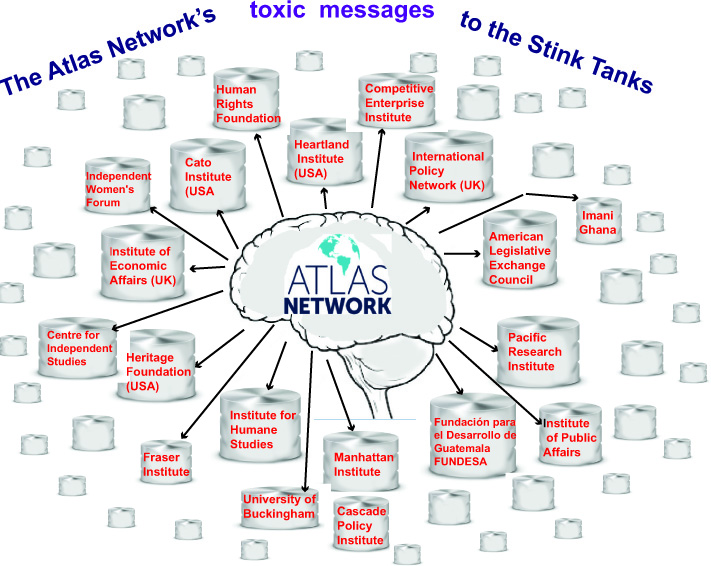
Jeremy Walker, University of Technology Sydney,Sep 30, 2023
Abstract
Australians will soon vote in a referendum to recognise Indigenous Australia in its 1901 Constitution and establish a First Nations Voice to Parliament. A year ago, polling suggested the referendum proposal of the 2017 National Constitutional Convention and its Uluru Statement from the Heart enjoyed 60% support. Since lead anti-Voice campaign organisation Advance Australia began its media offensive, the Yes vote has declined to 40%. This article argues the No campaign is being conducted on behalf of fossil-fuel corporations and their allies, whose efforts to mislead the public on life-and-death matters reach back over half a century. Coordinated across the Australian branches of the little-known Atlas Network, a global infrastructure of 500+ ‘think-tanks’ including the Centre for Independent Studies, the Institute of Public Affairs and LibertyWorks, I demonstrate that the No campaign shares the aims and methods of the longstanding Atlas disinformation campaign against climate policy. Opposition to long-overdue constitutional recognition for Indigenous Australians can be traced to fears the Voice might strengthen the capacity of Indigenous communities and Australia’s parliamentary democracy to rein in the polluting industries driving us toward climate and ecological collapse.
Article Details
Issue Vol 15 No 2 (2023)
More serious governance failures in Defence contracting
The pattern of poor governance by Defence has been further exposed following disturbing revelations in yet another contract.
MICHELLE FAHY, DEC 23, 2023 https://undueinfluence.substack.com/p/more-serious-governance-failures?utm_source=post-email-title&publication_id=297295&post_id=140001297&utm_campaign=email-post-title&isFreemail=true&r=1ise1&utm_medium=email
It was revealed this week that Defence Department officials congratulated themselves for not recording minutes of a critical meeting in which the work of consultants it had hired was being checked against the contract.
Incredibly, the failure to record minutes was noted as a positive in a post-implementation review of the project, with the only negative point listed being that the donuts arrived too early in the meeting.
This serious accountability failure is a breach of Defence’s contracting rules and the Commonwealth Procurement Rules, adherence to which is fundamental to good governance.
The failure to keep minutes of the key meeting means there’s no official record of who attended the meeting, in what capacity, and what contribution they made.
It was just one of a raft of irregularities found in a $100 million contract between the Defence Department and KPMG, which is part of the One Defence Data program, following a damning review by external consultants, Anchoram Consulting.
Some of the irregularities described in the review bear striking similarities to those found in Defence’s controversial Hunter Class frigate procurement from BAE Systems, Australia’s largest ever surface warship acquisition, which has been referred to the National Anti-Corruption Commission following a scathing report by the auditor general.
One of the grounds for the corruption referral was the absence of a number of important accountability documents, including minutes of key decision making meetings, related to the Hunter Class frigate procurement process. (Read full story on the $46 billion frigate procurement here and here.)
The Australian National Audit Office report on the frigates noted that the Defence Department was a serial offender when it came to deficient record-keeping. The auditors footnoted a comment from the Commissioner for Law Enforcement Integrity that a “lack of record keeping can create corruption vulnerabilities within an Agency”.
A lack of record keeping can create corruption vulnerabilities
Another revelation in the Anchoram review was that Defence had made “a six-figure payment” to KPMG “for work the government knew had not been delivered”.
Similarly, as the audit office revealed in May, during the frigate procurement process the Defence Department made milestone payments to BAE Systems even though BAE had missed the milestones.
Anchoram revealed that the KPMG project was plagued by a “lack of accountability” and “real and perceived conflicts of interest”. Core governance documents were not signed off and key requirements of KPMG’s contract were diluted from “mandatory” to “desirable”, sometimes in consultation with KPMG itself, despite Defence requirements stating explicitly that mandatory items cannot be changed.
Furthermore, Anchoram concluded that “the Commonwealth has a significant risk that it absolved [KPMG] from its commercial obligations and consequently transferred delivery risk from [KPMG] to the Commonwealth.”
The review said the Commonwealth’s ability to govern the One Defence Data program’s financials and ensure value for money had been “significantly compromised”.
Similarly, with the frigate procurement process, Defence sidelined the central procurement rule of achieving value for money. Numerous conflicts of interest and revolving door appointments, including the secretive involvement in the frigate tender evaluation process of people formerly employed by BAE Systems (as I reported exclusively in July) prefigure the serious governance issues exposed by Anchoram in Defence’s cosy arrangement with KPMG.
The Anchoram Consulting report, dated April 2022, has been released publicly this week following an order from independent senator David Pocock to the Defence Department.
Meanwhile, the Parliamentary Joint Committee of Public Accounts and Audit is conducting an inquiry into Defence’s frigate procurement process.
Labor MP Julian Hill, the chair of the committee, has stated: ‘It does feel like someone has back-engineered a decision and gone, “we want to go with BAE”…’.
The Anchoram Consulting report on the One Defence Data program can be downloaded here.
Fine print bombshell – share information which “undermines trust in government”, face jail

by Rex Patrick | Nov 21, 2023 https://michaelwest.com.au/government-review-of-secrecy-provisions-an-assault-on-democracy/?utm_source=newsletter&utm_medium=email&utm_term=2023-11-23&utm_campaign=Michael+West+Media+Weekly+Update
The Government has released its ‘Review into Secrecy Provisions’ whose fine print contains the greatest assault on democracy and accountability in many years, writes Rex Patrick.
Secrecy is woven into the fabric of the Australian Government. There are eleven general secrecy offences in the criminal code, 295 non-disclosure duties in 102 laws that attract criminal liability, and 569 specific secrecy offences in 183 laws.
A rationalisation and a review of secrecy laws was long overdue.
But buried in this review is a bombshell. Carried out by the Attorney-General’s Department, the review report makes a key recommendation that disclosure of information that could cause a loss of trust in Government should be criminalised.
Paragraph 146 states:
“… disclosure of information that harms the effective working of Government undermines the Australian community’s trust in government and the ability of Commonwealth departments and agencies to deliver policies and programs. It is appropriate that conduct which causes or is likely to cause prejudice to the effective working of government be covered [by secrecy provisions enforceable under the criminal code]”
The national security bureaucrats’ view seems to be that secrecy is essential to ensure trust in government!
The infamous character of Sir Humphrey Appleby in the Yes Minister TV show would be so proud.
If implemented, this recommendation would raise for public servants a criminal penalty for anything embarrassing, anything that might put a question in the way of policy information or even any wrongdoing by officials to the extent that revealing such might undermine confidence in government.
Review origins
The review stemmed from a report of the Parliamentary Joint Committee on Intelligence and Security looking into the 2019 ABC and the Smethurst media raids.
The review was intended to be the first step in a process that would ensure that these laws protect and are consistent with essential public interests, including the public interest in transparency in government decision-making, parliamentary scrutiny and accountability, and effective media investigations and reporting.
The recommendation of the Review that the Government create a new sweeping secrecy offence is quite at odds with the original objectives of this exercise, and is indeed quite contrary to proper principles of transparency, scrutiny and accountability of government.
While the review recommends the repeal of some redundant and outdated secrecy offences and non-disclosure duties, this very modest wind back of secrecy will be completely submerged by the development of “a new general secrecy offence” for inclusion in the Criminal Code Act 1995.
Protecting the leaders
To be clear, public servants already have a duty not to disclose information unless they are authorised to do so, or they are required/permitted to disclose it by law.
But it’s one thing to say that public servants should operate in a ‘privacy of government’ environment, it’s completely another thing to say that everything they discuss or write about is confidential and they should go to jail if they reveal anything.
Under the current ‘privacy of government’ arrangements, we are supposed to let the government quietly get on with business overseen by Parliament, the Auditor-General, the Ombudsman, the National Anti-Corruption Commission (NACC) and law enforcement, the Freedom of Information Regime and whistleblower protection.
This all sounds good; except the Parliament is very weak on oversight, the Auditor-General and Ombudsman are underfunded, the NACC operates in complete secrecy, the FOI regime is totally broken and whistleblower protections are simply non-existent.
Secrecy overreach
But even if the accountability of government systems did work, the Secrecy Review’s recommendation is overreach. It just re-enforces a culture of secrecy inside government that is already in need of a secrecy exorcism.
The much better view is that of former Sir Anthony Mason, AC KBE GBM KC in the High Court Case of Commonwealth v John Fairfax & Sons Ltd (“Defence Papers case“) [1980], before he was Chief Justice, when he said:
“It is unacceptable in our democratic society that there should be a restraint on the publication of information relating to government when the only vice of that information is that it enables the public to discuss, review and criticize government action.
His judicial pronouncement trumps the bureaucratic authors of a review that presses a recommendation that aims to protect senior leadership and ministers from embarrassment and the exposure of incompetence using the threat of criminal punishment. But his views only last until new laws are passed.
A captured Attorney General
The next question, of course, is whether the Attorney-General and the Government will act on this recommendation and remain beholden to his national security bureaucrats?
If his past record of betraying whistleblowers and his refusal to pursue Freedom of Information reforms is any guide, there aren’t any grounds for optimism.
Proceeding down this path would deal a great blow to democratic accountability and public interest journalism.
Proceeding down this path would deal a great blow to democratic accountability and public interest journalism.
It would embed the already harmful secrecy culture that exists across a vast expanse of government activity and could also blow a hole in Australia’s already weak and failing FOI regime.
But does the Government and the Attorney General want a political fight over a move towards excessive and unjustified secrecy? We will have to see, but if they do go down this path it’s a fight they’re sure to get.
Mapping the revolving door between government and the weapons industry
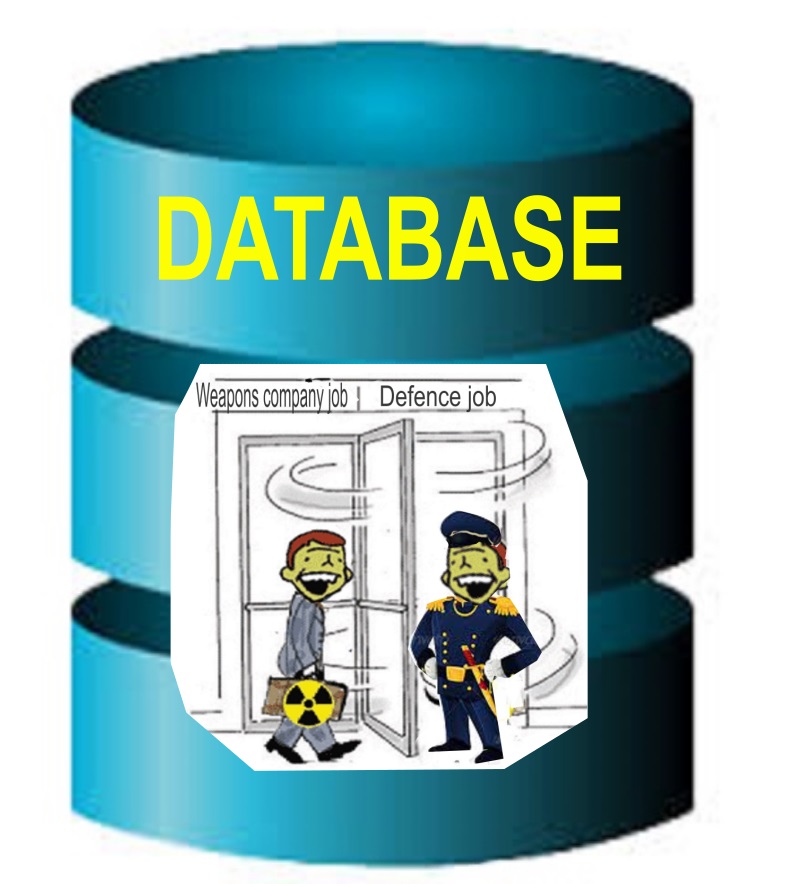
Undue Influence revolving door database progresses
MICHELLE FAHY, Undue Influence Substack, NOV 4, 2023
Some 80 per cent of the United States’ four star generals and admirals go on to work for US weapons-making companies, it was revealed last month. US arms industry expert William Hartung also noted that with the Pentagon’s budget soaring towards US$1 trillion a year, and security challenges posed by Russia and China front and centre, an independent assessment of the best path ahead for the US was vital.
Yet, he said, “more often than not, special interests override the national interest in decisions on how much to spend on the Pentagon, and how those funds should be allocated”.
Hartung’s revelations were made possible by US research tracking the revolving door between the US government and the weapons industry.
In Australia, the defence budget is also rising. At the same time, transparency and accountability from our politicians and the Defence Department continues to decline.
The US research has reinforced the importance of the Australian revolving door database that I am creating, in collaboration with a research assistant and a technical specialist. This project was made possible by a grant from the Jan de Voogd Peace Fund.
Revolving door a feature in major defence procurement in Australia
My two-part investigative feature, first published by Declassified Australia in July, put the spotlight on the revolving door between the Australian government and the world’s sixth largest arms manufacturer, BAE Systems. It also contributed to a referral to the National Anti-Corruption Commission (NACC).
The investigation revealed close links between government and industry – information that will be included in the revolving door database – and provided a rare insight into the Australian revolving door in action. It exposed how the government gave former senior BAE insiders influential behind-the-scenes roles before and during a tender process that BAE went on to win. Few of these senior roles were publicly acknowledged by the government.
The procurement of the Hunter class frigates, now at $46 billion (and rising), is Australia’s second largest ever defence acquisition. The Greens’ defence spokesman David Shoebridge made the referral to the NACC.
Database progress to date
The revolving door database has been funded by the Jan de Voogd Peace Fund (administered by the NSW Quakers). The project is being auspiced by the Medical Association for Prevention of War.
The database architecture is now complete following a detailed and complex development process which enables arms company contract data to be extracted from the government’s public databases. The website will aggregate hundreds of contract values into a single annual figure for each major arms corporation, updated daily. With major multinational arms makers having up to 20 or more relevant subsidiaries, it is vital to be able to combine the total value, and this is what the database will do.
The names of people who have occupied 60 senior military, political and defence-related positions back to the year 2000 have been compiled. We will now investigate the existence of subsequent arms-related private sector positions.
How you can help
- Send information on revolving door appointments
Email us at undueinfluence@protonmail.com with information about revolving door appointments that have occurred since 2000 between the defence-related public sector and the arms industry (in either direction). - Fund our ongoing investigative work
While much of my focus in the coming months will be on the revolving door database, I am determined to continue my investigative research and writing as there is much more to be revealed. If you are able to upgrade [on Substack] from a free to a paid subscription to Undue Influence, it would be greatly appreciated. The grant funds are exclusively for work on the database and our regular investigative research and writing continues to rely heavily on reader subscriptions…………………..
https://undueinfluence.substack.com/p/mapping-the-revolving-door-database-progress?utm_source=post-email-title&publication_id=297295&post_id=138509639&utm_campaign=email-post-title&isFreemail=true&r=1ise1&utm_medium=email
Defence continues its blanket secrecy on weapons exports
Mapping the revolving door between government and the weapons industry
Undue Influence revolving door database progresses
Undue Influence Substack, MICHELLE FAHY, NOV 4, 2023
Australia has approved 322 military or dual-use permits to Israel over the past six years, according to new figures the government provided last week in response to questions on notice from Greens Senator David Shoebridge. The period covered was January 2017 to March 2023.
Defence has previously admitted that it favours secrecy over transparency and accountability regarding its decisions on weapons exports.
As I reported in 2021, Defence elevates the protection of ‘commercially sensitive’ information and ‘opportunities for Australian companies’ above fundamental democratic principles of transparency and accountability.
The recent reports show that Defence Department secrecy around weapons exports has not improved with the change in government.
Australia is obliged under international law to ensure weapons exports are not used to commit human rights violations, but Defence’s ongoing secrecy means the public has no idea what the Department has approved for export in our name.
“Australia has a legal duty under the UN Arms Trade Treaty, which Australia actively promoted when it was a UN Security Council member, to ensure that weapons are not used to commit human rights violations,” says former United Nations legal expert and Australian government minister Melissa Parke, who now leads the International Campaign to Abolish Nuclear Weapons (ICAN). “Under the treaty, there must also be fully transparent public reporting about arms exports.”
Senator Shoebridge, the Greens’ defence spokesperson, said Australia had “one of the most secretive and unaccountable weapons export systems in the world”, given that it doesn’t break down the exact items exported.
Furthermore, Defence’s disclosure of the number of permits it has approved is a statistical veneer of limited value. Consider: one permit can cover multiple shipments or shipments to multiple countries. One permit can also cover multiple quantities, types and models of weapons or other items, whether physical or ‘intangible’ (electronic). In addition, as Defence freely admits, not all permits it approves proceed to export and delivery. Knowing the number of approved permits is therefore meaningless.
The ethical consequences of Defence’s policy of protecting the commercial interests of Australian weapons companies can be readily understood given the current war between Israel and Hamas: Australia is likely to have contributed towards the indiscriminate killing of innocent people in Gaza.
“Australia’s actions in approving arms exports to countries that are known to be committing serious violations of human rights, and its failure to be transparent about this, are inconsistent with its obligations under international law,” says Parke. “Having signed up to … these international laws, the Australian government can’t just cherry pick what aspects it’s going to abide by, especially when it … lectures other countries, such as China and Russia, about the importance of the international rule of law.” https://undueinfluence.substack.com/p/mapping-the-revolving-door-database-progress?utm_source=post-email-title&publication_id=297295&post_id=138509639&utm_campaign=email-post-title&isFreemail=true&r=1ise1&utm_medium=email
Jacqui Lambie’s nuclear response to secret flights for submarine project
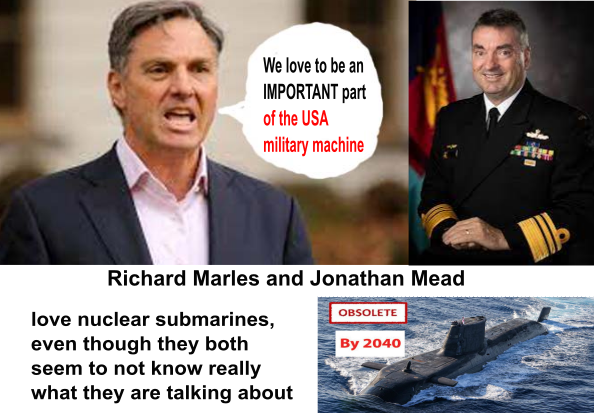
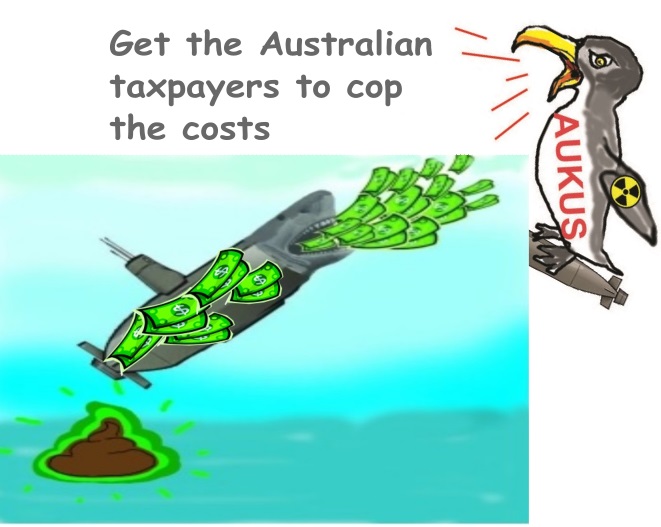
Independent Senator Jacqui Lambie has slammed the decision to slug taxpayers $630,000 a month in “secret” travel costs.
Samantha Maiden, news.com.au 7 Oct 23
Independent Senator Jacqui Lambie has slammed the decision to slug taxpayers $630,000 a month in “secret” travel costs for bureaucrats working on Australia’s nuclear submarine project.
Despite the fact that the first submarine won’t be delivered to Australia under the deal until 2040, new documents reveal scheme has already blown up $15 million in travel costs alone in two years.
But bizarrely, the Defence Department has redacted the commercial airline departure times “for security reasons” suggesting it might reveal patterns of travel and put bureaucrats lives and safety at risk…………………………………………………………
It’s the same reason the defence department is refusing to reveal details of Defence Minister Richard Marles’ VIP flights suggesting it could put his safety in danger.
Australia plans to acquire a total of eight nuclear powered submarines (SSNs) under the $368bn deal.
But at least three of the subs and up to five of the eight will be Virginia-class submarines it will buy from the United States.
New data revealed under freedom of information laws reveal that Vice Admiral Jonathan Dallas Mead, the navy’s nuclear-powered submarine taskforce chief, has spent $197,000 on 8 overseas trips alone.
That’s contributing to the $15 million in global travel costs, a figure that adds up to $633,000 per month.
Defence representatives travelled to the United States and United Kingdom, and our AUKUS partners travelled to Australia, as part of the 18-month consultation period.
“Fifteen million bucks is a shocking amount to spend on travel, that‘s a bill of $633,000 a month for the Australian tax payer,” Senator Lambie said.
Defence personnel don’t get frequent flyer points – but do get status points.
“Admiral Mead alone has spent $197,000 on eight overseas trips, I bet his status points are looking good,” she said.
“It‘s not a submarine – it’s a gravy boat! And why all this secrecy?
“The government says the flights have been redacted because it‘s a national security matter, what a load of rubbish, these flights are in the past, there’s no national security issue.”
“Australia seems to be footing most of the bill for the AUKUS submarines, what is the UK and the US paying?.”
“This government campaigned on transparency and yet they are failing Australians when it comes to public scrutiny.“
Senator Lambie asked the Department of Defence how much had actually been spent out of the $300 million that was allocated to the task force in the financial year of 2022-23.
In response, the department confirmed that Defence representatives travelled to the United States and United Kingdom, and AUKUS partners travelled to Australia, as part of the 18-month consultation period.
The total expenditure for the Nuclear Powered Submarine Taskforce over the 18-month consultation period (16 September 2021 to 31 March 2023) was $139.2m.
A breakdown of class of travel is not held…….. https://www.news.com.au/national/politics/jacqui-lambies-nuclear-response-to-secret-flights-for-submarine-project/news-story/0bb81fa011f5c3128e9caa7361a7ef2d
Nuclear-Powered Fixations: The Trump-Pratt Disclosures
The speed with which AUKUS was entered into by the Scott Morrison government in September 2021, an agreement which also brought no demurral or any murmurs of dissent from the then Labour opposition of Anthony Albanese, had a rank smell to it. For one thing, it has seen Australia further trapped in an insidious game of military competition being waged against China at the behest of US interests, militarising the country and mortgaging the budget to the tune of $368 billion over the course of two decades.
October 7, 2023. by: Dr Binoy Kampmark https://theaimn.com/nuclear-powered-fixations-the-trump-pratt-disclosures/—
In April 2021, the Australian billionaire Anthony Pratt had a meeting with Donald Trump at his Mar-a-Lago club. According to an ABC News report, “Pratt told Trump he believed Australia should start buying its submarines from the United States, to which an excited Trump – ‘leaning’ towards Pratt as if to be discreet – then told Pratt two pieces of information about US submarines: the supposed exact number of nuclear warheads they routinely carry, and exactly how close they supposedly can get to a Russian submarine without being detected
The report, citing “sources familiar with the matter,” goes on to mention that Pratt “allegedly shared the information with scores of others, including more than a dozen foreign officials, several of his own employees, and a handful of journalists.” The net, in other words, proved rather large, with emails and conversations taking place on the subject with three former Australian prime ministers, 10 Australian officials, 11 of Pratt’s employees and six journalists.
The revelation has emerged as part of an ongoing investigation by special counsel Jack Smith into Trump’s retention of classified documents on leaving the White House. Some of the documents, hoarded at Mar-a-Lago, covered US military matters, nuclear weapons, and spy satellites
What is buried in the latest spray and foam of the Trump disclosures to Pratt is whether that encounter had any bearing on the broader strategic thinking in Canberra and its links to the US military industrial complex. The AUKUS security agreement between the United States, the United Kingdom and Australia contemplates the transfer of at least three US nuclear powered Virginia class boats, along with the construction of a specific co-designed nuclear-powered boat for the Royal Australian Navy (RAN). Did Pratt’s enthusiasm for US nuclear submarines percolate through to other officials, think-tankers and courtiers working for Washington’s interests?
Former Australian Prime Ministers Paul Keating and Tony Abbott have told the Australian Financial Review that Pratt never raised the issue of purchasing US nuclear submarines with them. Who, then, were the other prime ministers who received Pratt’s gobbets of wisdom? Surely Scott Morrison must figure, given his role in brokering the AUKUS agreement.
The ABC News report does acknowledge that a number of Australian officials who featured in the Pratt disclosures were “involved in then-ongoing negotiations with the Biden administration over a deal for Australia to purchase a number of nuclear-powered attack submarines from the United States.”
A number of Australian commentators have tried to minimise the significance of the Trump-Pratt encounter, thereby revealing visible smoke plumes. “We’ve had submariners serve on US nuclear submarines for years,” stated former Australian ambassador to the US Joe Hockey. “I find it hard to believe that in a conversation between Anthony Pratt and Donald Trump, anything of great significance was discussed that would have an impact on the national security of either Australia or the United States.”
Former Australian Defence Department official Peter Jennings, who also served as executive director of the US-funded and parochially pro-Washington think-tank, the Australian Strategic Policy Institute, for over a decade, saw little reason to be concerned about the content of the disclosures. Most of the material on US submarines was already in the public domain. His concern, rather, was with Trump’s cavalier approach to national security information. “It’s just the 1000th example of why Trump is unfit to be president,” he tut-tutted. Jennings, along with the other members of the paid-up Washington consensus in combating Beijing, is no doubt losing sleep about Trump redux. Were Trump to return to the White House, all bets about Australia getting its nuclear-powered submarines are off.
The speed with which AUKUS was entered into by the Scott Morrison government in September 2021, an agreement which also brought no demurral or any murmurs of dissent from the then Labour opposition of Anthony Albanese, had a rank smell to it. For one thing, it has seen Australia further trapped in an insidious game of military competition being waged against China at the behest of US interests, militarising the country and mortgaging the budget to the tune of $368 billion over the course of two decades.
AUKUS also brought with it the abrupt termination of Canberra’s contract with the French Naval Group to construct twelve diesel-electric attack submarines for the RAN. This proved to be a disastrous affair for Australian diplomacy, savaging French-Australian relations and also advertising, to the region, the abject repudiation of Australian sovereignty.
While it should be stressed that Pratt faces no charges of illegality or impropriety, nor features in the 40 charges Smith is levelling against Trump, the Mar-a-Lago meeting with a former US president may prove critical in identifying a nexus with Canberra’s irrational interest in US-nuclear powered technology and the point at which that fascination ended the last vestiges of Australian independence.
Trump blabbed nuclear submarine secrets to Australian billionaire member of Mar-a-Lago club, report claims
Andrew Feinberg, Fri, October 6, 2023 https://www.yahoo.com/news/trump-blabbed-nuclear-sub-secrets-211203147.html?guccounter=1
Former president Donald Trump allegedly revealed highly classified information about American nuclear-powered submarines to a wealthy Australian who regularly paid large sums to one of his companies, according to a report from ABC News.
Mr Trump reportedly disclosed the extremely sensitive information to a billionaire member of his Mar-a-Lago social club, which is housed at the location where he allegedly hoarded hundreds of classified documents for more than a year after his term as president — and his authorisation to possess such documents — had come to an end.
Citing sources familiar with the matter, ABC reported that the Aussie high-roller in question allegedly shared the information about US nuclear-powered submarines with “scores” of other people not authorised to have it, including “more than a dozen foreign officials” and journalists of unknown nationality.
Department of Justice investigators working under the supervision of Special Counsel Jack Smith learned of the potential breach as they were investigating Mr Trump’s alleged unlawful retention of national defence information.
Both prosecutors and special agents with the Federal Bureau of Investigation have reportedly spoken to the Mar-a-Lago member, packaging magnate Anthony Pratt, on at least two occasions this year.
Mr Pratt reportedly told investigators that the ex-president told him two pieces of information about the submarines: How many nuclear warheads are carried by American Ohio class ballistic missile submarines, and how close to such vessels a Russian submarine must get to detect them.
Both of those figures are among the US Navy’s most closely guarded secrets. But sources reportedly told ABC that Mr Pratt described what Mr Trump had said to at least 45 other people, including 10 Australian officials and a trio of former prime ministers.
‘Unbelievable’: Defence spends $8.5m on consultants for AUKUS nuclear regulator
Greens defence spokesperson Senator David Shoebridge said: “It’s genuinely unbelievable that in the middle of a national scandal about outsourcing core government functions to the big four consultants, Defence has gifted an $8.5 million contract to one of them to design a new national nuclear regulator.
“It was always wrong to have Defence in control of its own regulator for the AUKUS nuclear submarines, and now we can see how they have hand-picked a pro-nuclear consultant to design the whole thing.”
SMH, Matthew Knott, August 21, 2023
One of the big four consultancy firms will receive almost $8.5 million in taxpayers’ money over the next year to help design a new agency to monitor safety issues associated with Australia’s acquisition of nuclear-powered submarines under the AUKUS pact.
The Defence Department contract with EY, also known as Ernst & Young, comes amid a growing debate about the federal public service’s reliance on advice from external consultants for tasks that would previously have been performed in-house.
The Albanese government announced in March that it would create a new agency, known as the Australian Nuclear-Powered Submarine Safety Regulator, to “regulate the unique circumstances associated with nuclear safety and radiological protection across the lifecycle of Australia’s nuclear-powered submarine enterprise”.
The regulator, which will sit within the Defence Department, will also monitor infrastructure and facilities associated with the AUKUS pact such as the yet-to-be determined east coast submarine base.
Prime Minister Anthony Albanese stared down concerns from Labor’s Left faction about AUKUS, including about nuclear safety and the risks of nuclear proliferation, at the party’s national conference on the weekend.
Earlier this month the Defence Department revealed that it had awarded a 12-month contract to EY worth $8.4 million to advise on the design of a future nuclear regulatory agency.
Greens defence spokesperson Senator David Shoebridge said: “It’s genuinely unbelievable that in the middle of a national scandal about outsourcing core government functions to the big four consultants, Defence has gifted an $8.5 million contract to one of them to design a new national nuclear regulator.
“It was always wrong to have Defence in control of its own regulator for the AUKUS nuclear submarines, and now we can see how they have hand-picked a pro-nuclear consultant to design the whole thing.”
Shoebridge said he was troubled by EY’s deep connections to nuclear companies including US firm NuScale Power Corporation and China General Nuclear Power Co, as well as its role as the longstanding auditor for Japan’s Tokyo Electric Power Company, which operated the now decommissioned Fukushima power plant.
“This contract needs to be torn up and then this core duty of government, designing a nuclear oversight agency, needs to be done by government, not by a hired gun from the big four,” Shoebridge said………………………………………………………………………………………..
EY declined to respond to questions about the contract.
During a Senate appearance in July EY Oceania chief executive David Larocca distanced the firm from rival PwC, which is under fire for leaking confidential government information to its clients.
Shoebridge said the nuclear safety regulator should sit inside a separate department – such as the Department of Climate Change, Energy, the Environment and Water – rather than Defence to ensure it could provide independent oversight of the AUKUS submarine program.
…………………………… The government has been widely expected to name Port Kembla, in the Illawarra region of NSW, as the east coast base for Australia’s fleet of nuclear-powered submarines, but the idea has attracted a backlash from residents and unions.
The government has said it will store nuclear waste from the AUKUS submarines on defence land. Woomera in remote South Australia is seen as the most likely location. https://www.smh.com.au/politics/federal/unbelievable-defence-spends-8-5m-on-consultants-for-aukus-nuclear-regulator-20230820-p5dxxo.html
1 This month
17 October, Free Public Talk on Nuclear Issues in South Australia
David Noonan will speak on public interest concerns over the new Roxby Downs Indenture Act 2026 on BHP copper-uranium mining and ore processing in SA, and on how AUKUS may face SA with a High-Level nuclear waste agenda.
Dr Jim Green will discuss international developments in the field of nuclear power including ‘small modular reactors’ and Generation 4 ‘advanced’ nuclear reactor concepts.


Help Aunty Sue Protect Her Land and Sacred Sites From Destructive Rocket Testing.
.

Australians deserve the truth
about
AUKUS – https://aukuspublicinquiry.com/

PETITION – To: Prime Minister Anthony Albanese and the Australian Labor Government

of the week – Australians for War Powers Reform (AWPR)
To see nuclear-related stories in greater depth and intensity

