The message is clear: you should assume that Jewish Australians support Zionism. And if you criticise Zionism, you may be targeting Jewish identity itself.
Jillian Segal, the government’s Special Envoy to Combat Antisemitism, has proposed a sweeping agenda that would fundamentally alter how Australian universities operate. Her plan includes “university report cards” grading campuses on their efforts to combat hate speech, the power to withhold public funding from researchers or programs deemed insufficiently compliant, and ultimately, a judicial inquiry into campus antisemitism if universities fail to meet her standards by 2026.
On its face, this sounds reasonable. Who could oppose tackling antisemitism?
But the devil, as always, lives in the definitions. And the definition being advanced is not about protecting Jewish students from genuine prejudice – it is about shielding a foreign government from criticism, erasing Palestinian suffering, and creating an “authorising environment” where dissent becomes punishable.
This is not about safety. This is about control. This is about shaping what can be thought, said, and taught in Australian universities. And the people driving this agenda are not neutral arbiters of academic freedom – they are political actors with a very specific agenda.
Let’s examine what’s actually happening.
Part I: The Segal Agenda – What It Really Does
Jillian Segal’s 20-page report, Plan to Combat Antisemitism released in July 2025, proposed a series of measures that have been quietly implemented over the following months.
“… adoption of an appropriate definition of antisemitism, their delivery of training to staff, the accessibility and fairness of complaints processes, and governance responses to activities that may incite discrimination.”
The key phrase is “appropriate definition.” Which definition? The government has endorsed the Universities Australia definition, which critics argue is so broad and ambiguous that it can be used to brand almost any criticism of Israel as antisemitic.
Funding Threats
The government plans to empower the higher education regulator, Teqsa, to impose “significant financial penalties” on universities that fail to manage antisemitism to its satisfaction. Segal’s original proposal went further, recommending that funding could be withdrawn from individual researchers, centres, or programs where antisemitic behaviour is “left unchecked.”
The Task Force
A new Antisemitism Education Task Force has been established, led by David Gonski – the same David Gonski whose name is now synonymous with the school funding reforms that Victoria has systematically failed to implement. The task force includes Segal, Universities Australia chair Carolyn Evans, and representatives from Teqsa and other bodies.
The Monash Initiative
The Monash Initiative for Rapid Research into Antisemitism (MIRRA) has been funded to provide training programs on “recognising antisemitism” to staff and leaders of universities across Australia. Its director, Associate Professor David Slucki, was one of the authors of the Universities Australia definition of antisemitism.
Part II: The Definition Problem – When Criticism Becomes Hate
Here is the central issue: what counts as antisemitism under these new frameworks?
The Universities Australia definition acknowledges that “it can be antisemitic to make assumptions about what Jewish individuals think.” Yet it simultaneously deems it necessary to state that “for most … Jewish Australians, Zionism is a core part of their Jewish identity.”
The message is clear: you should assume that Jewish Australians support Zionism. And if you criticise Zionism, you may be targeting Jewish identity itself.
This is not a protection against racism. It is a political test.
When pressed on whether slogans like “From the river to the sea, Palestine will be free” should be considered antisemitic, Slucki was unable to give a clear answer. The ambiguity is the point. It allows institutions to police speech without clear guidelines, to punish based on “vibes” rather than evidence.
Greg Craven, the constitutional lawyer appointed to lead the report card initiative, has been even blunter: “Every time you see a chanting, vicious protest on a university campus, it’s telling you that anti-Semitism’s all right.”
Every protest. Every chant. All presumed vicious, all presumed antisemitic, unless proven otherwise.
This is not a framework for justice. It is a framework for suppression.
Part III: The Subjective Turn – When “Feeling” Trumps Fact
Perhaps most concerning is the shift toward subjective definitions of harm.
In MIRRA’s report on antisemitism in the cultural sector, the authors explicitly dispense with objective definitions. One participant argues that “if someone…feels that [something] has happened to them, then that has happened to them.” The report’s authors concur, stating that “illustrative examples demonstrating the impact of recent incidents … may be more effective than definitions that emphasise intention.”
Under this framework, any encounter with pro-Palestinian speech can be experienced as antisemitic. The report explicitly cites “we support solidarity with Gaza” as an example of an opinion that was experienced as antisemitic.
This is the logic of the “trauma-informed” university, weaponised against political dissent. If your speech causes me distress, you are responsible for that distress – regardless of your intentions, regardless of the content’s legitimacy, regardless of whether I have any right to be free from political disagreement.
The Australian Federation of Islamic Councils has condemned this approach in the strongest terms:
“These decisions are not about antisemitism, they are about silencing. They are not about cohesion, they are about control. When governments begin to punish solidarity and redefine dissent as hate, they do not protect democracy, they dismantle it.”
Part IV: The Gonski Contradiction – Funding Schools While Policing Thought
A couple of weeks ago, Canadian Prime Minister Mark Carney highlighted the need for “naming reality”. Accordingly, we have to “name” the wishful thinking that is AUKUS. While it is clear Australia needs a credible submarine capability, the AUKUS plan is neither credible nor capable of meeting Australia’s defence needs. The Australian Defence Force has correctly described this as a high-risk project – with no Plan B.
It is highly questionable whether a few nuclear-powered submarines (SSNs) will be effective in defending Australia: too big for our northern waters, too few, difficult to man, unreliable and potentially obsolete by 2050, if not before. But not to worry – they will probably never come.
It is very unlikely, under the AUKUS Pillar I agreement, that the US will sell us three to five Virginia-class nuclear-powered submarines, given US legislation, ongoing US shipyard sustainment difficulties and major build delays.
The US legislation is very clear. The AUKUS Submarine Transfer Authorization Act, Code 10431, says that the transfer of Virginia-class submarines to Australia “will not degrade the United States undersea capabilities”.
To meet its own needs, the US must build two Virginia-class SSNs per year. To supply Australia, it must build at a rate of 2.33 annually; the current rate is 1.13 and has proved very resistant to increasing, despite major increases in funding (by $US9 billion since 2018). Australia’s $US3.3 billion contribution is not enough. In addition, the US is now prioritising construction of the much larger Columbia submarines, making increased production rates of Virginia-class submarines even less likely.
Operational availability is also a problem, though seldom mentioned. Rear Admiral Jonathan Rucker, the program executive officer for Attack submarines, noted that with the “Virginia- class of Attack submarines suffering from maintenance woes and low operational availability, the US Navy is working to ensure its next Attack submarine is easier to sustain”. This makes it even less likely the US can spare submarines. Even if they do – how available will they be? Indeed, during a conflict, would we even get spare parts if US subs needed them too?
How many times does Australia need to be told this a very long shot? Last year, the US Navy’s Chief of Operations Admiral Daryl Caudle testified that there are “no magic beans” to boosting the US’ shipbuilding capacity. UK submarine building is even more behind, but that is another story.
Elbridge Colby, the US under-secretary of defence for policy, said in 2024 that “it would be crazy for the United States to give away its single most important asset for a conflict with China over Taiwan when it doesn’t have enough already … money is not the only issue – it’s also time, limits on our workforce, so both sides of this vitally important alliance need to look reality in the face.”
From our partners Late last year, his Pentagon review of AUKUS was reportedly significantly modified by the president’s office before Trump declared AUKUS was “full steam ahead”.
The US Congressional Research Service in October 2024 proposed that Australia did not receive any US SSNs but focused on other defence capabilities. It noted that “there is little indication that, prior to announcing the AUKUS Pillar I project … an analysis of alternatives or equivalent rigorous comparative analysis was conducted to examine whether Pillar I would be a more cost-effective way to spend defence resources”.
So why is the US keen to go ahead with this? The benefits for it are obvious. Much more important than the (non-refundable) billions of dollars is having a new base at Garden Island and a new maintenance shipyard at Henderson in WA. Even better, the AUKUS agreement locks us into US war-fighting plans for the next 40 years. Decisions when Australia goes to war will be made in DC, not in Canberra.
Current US missile and warhead developments mean Virginia-class subs (in reality US- operated subs) will probably carry nuclear missiles by the early 2030s. The initial assurance that they would not be nuclear-armed has vanished, just as the initial assurance we would not end up with the weapons-grade nuclear waste has vanished.
Fuel for these subs requires serious enrichment technology, significantly weakening nuclear non-proliferation norms. Japan, South Korea, Iran and Turkey are now interested in this technology. Also, which lucky community will host the high-level nuclear waste?
‘High probability of failure’: Former top official’s dire AUKUS warning
By hosting these submarines (and nuclear-capable B-52 bombers in the Northern Territory), we not only lose sovereignty but also become a target ourselves. These submarines are too big to defend Australia’s northern waters, and there will be too few of them – if any – toprovide meaningful defence. Advances in underwater detection technology will probably render them obsolete by 2050, if not before.
Finally, the massive cost of these submarines will cannibalise spending on other more effective defence weaponry. It will also limit funds available for health, education and other critical social needs. Austerity in the UK has severely damaged the NHS, once a source of national pride. Don’t think it can’t happen here. AUKUS Pillar II and the UK submarines are also extremely problematic, but that needs another article.
We must have a public independent review of AUKUS. We need to consider alternatives that are more cost-effective and in our national interest. Sovereignty matters. Defence secrecy is no excuse, and wishful thinking is very poor strategy. It is time to stop gaslighting the public.
Dr Margaret Beavis is the vice president of the Medical Association for Prevention of War.
Defence Connect, 19 December 2025, By: Stephen Kuper
H&B Defence and Curtin University have announced a new partnership to deliver Australia’s first nuclear fundamentals training course led by experts from the United Kingdom and the United States with direct experience in nuclear-powered submarines.
The two-day micro-credential course will begin in March 2026 and will be offered several times each year. It is designed to boost Western Australia’s technical readiness as the state prepares to support the sustainment of nuclear-powered submarines under the AUKUS partnership.
Aimed at engineers, technicians, project managers and defence industry support staff, the course will provide a foundational understanding of naval nuclear propulsion.
Topics will include the fundamentals of naval nuclear engineering, the history and development of US and UK naval nuclear programs, quality assurance and risk-management frameworks, and the safety, regulatory and compliance requirements associated with nuclear-powered submarine sustainment.
Participants will gain practical insight into the standards, culture and discipline required to operate safely and effectively in a nuclear-regulated environment, skills that are expected to be in growing demand as Australia develops its sovereign capability in this area.
Accredited as a Curtin University micro-credential, the course will be delivered by H&B Defence’s international team of certified nuclear professionals.
The instructors draw on the global experience of parent companies HII in the United States and Babcock in the United Kingdom, bringing more than 160 years of combined, real-world experience in nuclear engineering, operations, safety and regulatory compliance.
AUKUS is a hugely expensive Defence project facing considerable and, many argue, insurmountable hurdles. But does Defence have a Plan B? Rex Patrick reveals a crack in Defence PR’s high tensile pressure hull steel.
There has to be an AUKUS Plan B, surely. So MWM FOI’ed the Australian Submarine Agency (ASA) to find out.
Hit ‘em with your Talking Points.
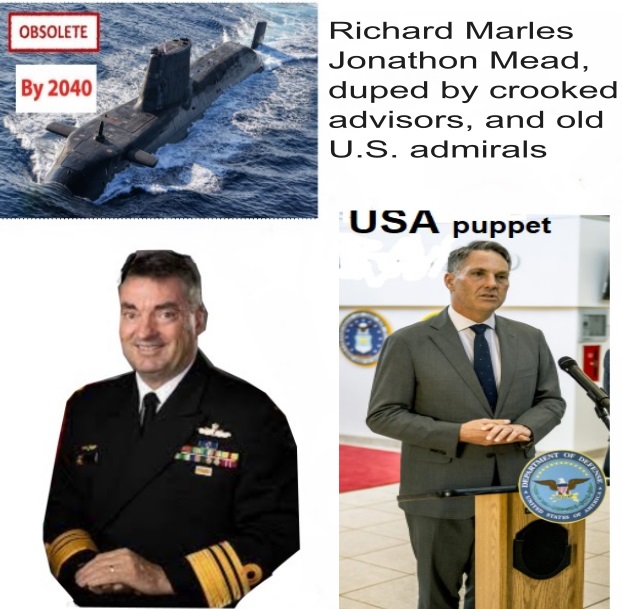
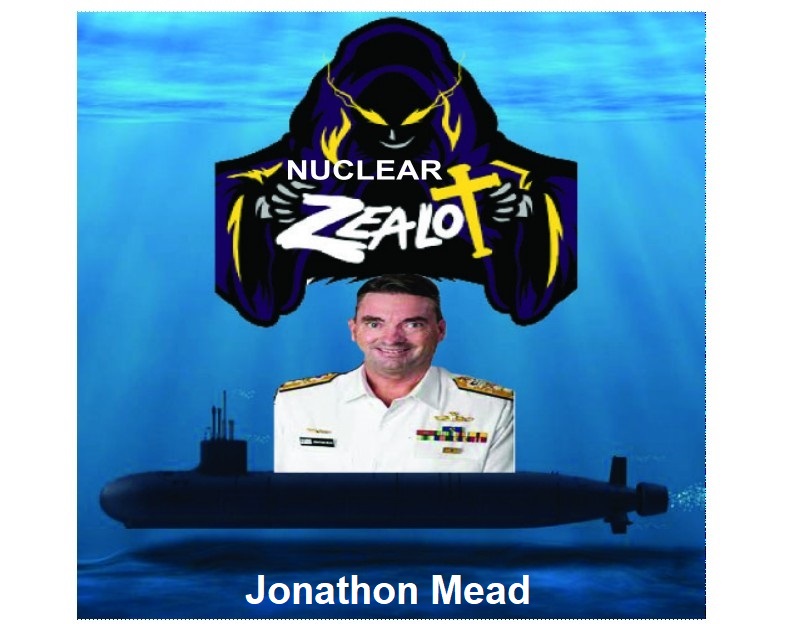
In response, the ASA partially released one document showing ‘talking points’ that had been given to the Project lead, Vice Admiral Jonathon Mead, in case he was asked about the US’s AUKUS review.
At first glance, MWM thought that the ASA’s back-up plan to defend the Nation was to
“roll out some talking points to fire at an approaching enemy.“
roll out some talking points to fire at an approaching enemy.
But a closer look revealed more.
A Crack in the Submarine Pressure Hull
The talking points weren’t the only documents.
Despite the public bravado, the FOI decision shows that there is some discussion going on behind the scenes.
There were three more documents that met the terms of MWM’s request. The decision letter reveals that the Government has been discussing with our AUKUS partners, and internally, on what to do if it all goes to hell in a nuclear handbasket.
Self-confidence Bluster Exposed
The ASA has claimed the documents are sensitive (something we’ll push back on with an appeal), and so we can’t see the exact details of what’s being said.
But we know there are conversations taking place.
“That’s a good thing.“
1×1515
1:36 / 2:23
Listen to this story
2 min
AUKUS is a hugely expensive Defence project facing considerable and, many argue, insurmountable hurdles. But does Defence have a Plan B? Rex Patrick reveals a crack in Defence PR’s high tensile pressure hull steel.
There has to be an AUKUS Plan B, surely. So MWM FOI’ed the Australian Submarine Agency (ASA) to find out.
FOI Asking about a Plan B
Hit ‘em with your Talking Points.
In response, the ASA partially released one document showing ‘talking points’ that had been given to the Project lead, Vice Admiral Jonathon Mead, in case he was asked about the US’s AUKUS review.
US AUKUS Review talking Points (Source: Defence)
At first glance, MWM thought that the ASA’s back-up plan to defend the Nation was to
roll out some talking points to fire at an approaching enemy.
But a closer look revealed more.
A Crack in the Submarine Pressure Hull
The talking points weren’t the only documents.
Despite the public bravado, the FOI decision shows that there is some discussion going on behind the scenes.
More Documents about Plan B (Source: Defence)
There were three more documents that met the terms of MWM’s request. The decision letter reveals that the Government has been discussing with our AUKUS partners, and internally, on what to do if it all goes to hell in a nuclear handbasket.
Plan B Talk Going On (Source: Defence)
Self-confidence Bluster Exposed
The ASA has claimed the documents are sensitive (something we’ll push back on with an appeal), and so we can’t see the exact details of what’s being said.
But we know there are conversations taking place.
That’s a good thing.
Greens Senator David Shoebridge, commenting on the FOI decision, said, “Labor has managed to combine two of their worst behaviours in one go here, using exemptions in FOI to refuse to release documents while secretly doubling down on a plan B for AUKUS. I don’t think treating the Australian public like mushrooms is a viable long-term political strategy for Albanese”.
It’s Senate Estimates this coming week. The Coalition is a unity cheer squad with Labor when it comes to AUKUS, so we won’t see them probing hard on a Plan B. Hopefully, Shoebridge will squeeze some more out of Defence, at least until MWM’s FOI appeal is finalised.
For now, at least, we now know the ASA’s public AUKUS bluster is a deception. They’re not so confident after all.
Rex Patrick
Rex Patrick is a former Senator for South Australia and, earlier, a submariner in the armed forces. Best known as an anti-corruption and transparency crusader, Rex is also known as the “Transparency Warrior.”
The crowd broke into laughter as the audience was invited to attend a planned “fun day” to learn more about nuclear.
“This event really highlighted the deep level of community concern and opposition to AUKUS … The officials did all they could to avoid answering the hard questions,” -WA Greens MLC Sophie McNeill
The agency in charge of arming the nation with nuclear submarines has sought to earn the trust of residents in Perth’s south by holding a community information session.
The event drew protesters opposed to the AUKUS pact and a local defence hub being used to maintain nuclear submarines.
The Australian Submarine Agency assured event attendees about nuclear’s safety and Australia’s sovereignty, but many people seemed unconvinced.
Rigour, precision and safety, safety, safety — these are the values of the “nuclear mindset” the agency in charge of arming the nation with nuclear submarines has urged Australians to adopt.
The Australian Submarine Agency (ASA) has taken its self-described first steps towards earning the trust of the public.
A line-up of uniformed naval officers and delegates travelled to Western Australia to front the City of Fremantle’s community on Thursday night.
The meeting was touted as an “information session”, but a protest outside the town hall just before it started gave an early indication of how the night would go.
Nuclear fun day
The agency’s AUKUS advocate, Paul Myler, leaned on the US and UK’s seven decades of nuclear experience to assure the crowd of its safety credentials.
“We don’t get to automatically rely on that reputation. We have to earn that part, that legacy, and build our trust with our communities — and that’s what we’re starting here,” he said.
But the delegates made it clear they were not there to pitch AUKUS.
“That decision has been made by a succession of Australian governments,” the crowd was told in a preamble before the floor was opened to questions.
The crowd broke into laughter as the audience was invited to attend a planned “fun day” to learn more about nuclear.
WA Greens MLC Sophie McNeill, who attended the session, said it was alarming how removed the government was from the communities on the doorsteps of AUKUS.
“This event really highlighted the deep level of community concern and opposition to AUKUS … The officials did all they could to avoid answering the hard questions,” she said.
“It felt like an episode of Utopia.”
S for safety and sovereignty
Safety and sovereignty were the hot topics being thrown at the ASA.
One local questioned the record of Australia’s AUKUS partners on nuclear, citing the UK’s weapons testing in the 1950s which has left nuclear contamination at the Monte Bello Islands off WA’s coast and at Maralinga and Emu Field in South Australia.
“Nuclear weapons and nuclear testing are a completely separate issue … Australia’s position on that is very, very clear,” the crowd was told in response.
“We are not, and will not be, a nuclear weapon state.”
The agency also returned with its own S-word, stewardship, which it said described the “responsible planning, operation, application and management of nuclear material”.
Part of that stewardship includes planning for how nuclear waste will be managed.
In short, low-level nuclear waste will be temporarily stored at the HMAS Stirling naval base on Garden Island.
“The technical solutions can keep that waste safe for many years, decades I believe as a contingency, [but] we do expect the waste to be able to be moved much sooner,” a spokesperson said.
There are no plans as of yet for where high-level nuclear waste and spent nuclear fuel will be stored long term or disposed of. However,ASA said it would not be required until at least 2050.
The public also queried who would have command of Australia’s nuclear-powered submarines once they were built.
“I get asked a lot of hard questions. That one has a simple answer,” ASA director-general Vice Admiral Jonathan Mead said.
“Australian sovereignty, Australian officers, the Australian government — no other answer.”
Murmurs in the crowd indicated they were not convinced.
Protected or pawns
The room filled with claps and cheers when one local questioned the true intentions of AUKUS and labelled it an “appalling waste” of taxpayer dollars.
“We are being used as pawns to line up in a war against China, and it’s just not acceptable,” the resident said.
Mr Myler insisted it was about defence, and said developing Australia’s “strike capability” was key to protecting the nation.
“I can’t convince you, but I can only give you my own insight,” the AUKUS advocate said.
“Australian defence staff and Australian diplomatic staff and Australian government staff fight every day. Our sovereignty is absolutely at the core of everything we do.”
“They [Rio Tinto] paid no penalty, and then we found out that the maximum penalty for dropping [the capsule] in WA is only a thousand dollars,” they said.
Mr Myler offered a contrary view, describing the response to the missing capsule as impressive.
“It proved that West Australians had their act together, knew how to do this, knew how to respond, and the whole ecosystem coordinated and got that solved,” he said.
Mr Myler went on to say the “nuclear mindset” put the agency at a level “well above where private sector industry is”.
Australian Nuclear Science and Technology Organisation (ANSTO) social licence adviser Cassandra Casey noted Australia’s nuclear experience with research and nuclear medicines at a facility in Engadine, in New South Wales.
“The community, which is also my community, has grown up around ANSTO, and today the nearest homes in Engadine are just 820 metres … from that facility,” she said.
The information session began with an introduction about ASA earning the nation’s trust. The reaction of attendees indicated few minds were changed, something Mr Myler acknowledged.
“We all understand the risks around some nuclear programs. We have to do a lot more to build confidence in our nuclear program,” he said.
Does the Intergovernmental Panel on Climate Change (IPCC) claim that nuclear power is necessary for decarbonisation? No, but that has not stopped the Liberal-National Party (LNP) Coalition from claiming the IPCC tells them that to decrease emissions we must increase nuclear power.
The IPCC gathers scenarios and presents projections but in fact does not prescribe any one path to emissions reductions. All rhetoric about just following the science or any pretending that there is a linear relation from science to policy only serve to obscure the choices not being made transparent.
We should thus unpack the Coalition’s use of the IPCC and shine a light on some of the choices being made by banking on nuclear power for emissions reductions.
Energy policy on TV
On Sunday, host of ABC TV’s Insiders program, David Speers, interviewed Bridget McKenzie, the shadow transport minister for the Coalition, asking “is there anything you would do to bring down emissions in the next 10 years?”
“I’ll tell you what we are going to do to bring down emissions. We are going to do what the IPCC has said we should do to bring down emissions, and that’s increase nuclear power generation across the globe. We are hoping to open our first one in close to a decade, and in the meantime, we are going to bring on gas, a lower emissions fuel than coal,” McKenzie said.
Speers failed to interrogate this claim. The IPCC does not single out nuclear power as the kind of prime mitigation pathway that would warrant the Coalition to conclude that opting for nuclear power is what the IPCC says politicians “should” do.
Maybe impartiality as non-partisanship, balance or non-interference explains the lack of questioning, but journalism has for some time been more confrontational, with the credibility of the interview judged by the degree of probing questions.
Indeed the ABC editorial standards stipulate that “there are few things more important to factual content making at the ABC than the interview”, because interviews are where “we tease out matters of accuracy.” If the issue is “contentious or controversial”, then ABC general rules suggest “it is often necessary to take a ‘devil’s advocate’ approach” and ask the “awkward questions”.
Speers could have thus queried the robustness of McKenzie’s claim by asking whether the IPCC in fact claims nuclear power is necessary for decarbonisation? Or what degree of confidence the IPCC expresses in a nuclear pathway to emissions mitigation? Or does the IPCC in fact recommend nuclear power?
Unfortunately, absent further clarification, we are left alone to reconstruct the Coalition reasoning, and what follows is an attempt to do so.
The IPCC in 2018: presence but barriers
The Coalition claims their choice of nuclear power for emissions reduction is derived from what the IPCC says they should do. Yet in doing so the Coalition cherry-picks from the IPCC what features of the nuclear power option to emphasize. Specifically, raw presence over actual barriers.
To spot the Coalition choice to ignore barriers, return Speers could have thus queried the robustness of McKenzie’s claim by asking whether the IPCC in fact claims nuclear power is necessary for decarbonisation? Or what degree of confidence the IPCC expresses in a nuclear pathway to emissions mitigation? Or does the IPCC in fact recommend nuclear power?
Unfortunately, absent further clarification, we are left alone to reconstruct the Coalition reasoning, and what follows is an attempt to do so.
The full report is 630 pages long and you can access html view and pdf downloads of chapters here. But the barriers included the risks of weapons proliferation, ongoing obstacles to waste disposal, connections between nuclear installations and health hazards, compounding of water scarcity problems, high and/or uncertain costs, and deployment rate constrained by lack of social acceptability
………………………………………………..The IPCC in 2022: nuclear is a tiny sliver in the pathways
………………………………………Like what we saw in the pro-nuclear response to the IPCC Global Warming of 1.5°C report of 2018, the mere presence of nuclear power in IPCC WG3 mitigation scenarios and pathways in the 2022 report is made to carry the burden of implying the IPCC recommends nuclear power as a plausible route to ambitious emissions reductions.
The effect is to hide the choices the Coalition is making……………….
On the one hand, it is simply a mistake to interpret IPCC scenarios and illustrative pathways as recommending or implying the necessity or even high plausibility of nuclear power as a front line emissions mitigation option. If there were a lesson to be drawn from the IPCC reports, it is that renewables are projected to play that front line emissions reduction role.
But set aside any prosecuting of which technological option the IPCC work paints in the best light. Relying on mere presence in IPCC scenarios and pathways to ground “what the IPCC has said we should do” is ultimately a tactic to avoid public discussion about the challenges with and barriers to deploying nuclear power in any quest to decarbonise.
Darrin Durant is Associate Professor in Science & Technology Studies at the University of Melbourne
The Coalition has been plugging its nuclear modelling over the course of the election campaign — but was the advice actually as independent as it claims?
The Coalition’s much-vaunted nuclear modelling was — despite Opposition Leader Peter Dutton’s insistence it was “independent” analysis — created by a pro-nuclear think tank that has a cosy relationship with Nuclear for Australia, a lobby group with its own links to the Liberal Party.
Frontier Economics was the economic advisory firm responsible for the Coalition’s nuclear modelling and projected that the policy would cost an estimated $331 billion and involve the commissioning of seven nuclear reactors.
While Dutton said that Frontier “refused to take any money” when asked to model the plan by the Coalition, and Frontier in the report states that it was funded and directed solely by Frontier Economics, the issue of whether the work constitutes a “gift”, and the actual independence of the work, is still live.
In January this year, Frontier managing director Danny Price gave an extended interview to pro-nuclear lobby group Nuclear for Australia, where Frontier is described as a “non-partisan” and “pro-nuclear” organisation.
Nuclear for Australia has recently been reminded by the Australian Electoral Commission (AEC) of its legal obligations to authorise its electoral material after running thousands of dollars worth of online advertising in support of policies promoted by the Coalition. Teenage founder Will Shackel has previously denied that the Liberal Party is backing the group, despite a number of reported links to the organisation.
Crikey contacted the Coalition, Frontier Economics and the AEC about the status of the work as a gift and whether the work had been disclosed.
The AEC said it had nothing to add to the answers given in front of Senate estimates in late February, where Greens Senator for Queensland Larissa Waters raised the issue of whether the work constituted a donation to the Liberal Party’s campaign in the finance and public administration legislation committee.
“Disclosures for the 2024-25 financial year will be published in February,” a spokesperson for the commission said.
In estimates, Waters asked the acting electoral commissioner Jeff Pope whether the advice constituted an “in-kind” donation of the type normally required to be disclosed by political parties to the Electoral Commission.
Pope said that “subject to the circumstances, [the modelling] may well be a gift that needs to be disclosed at the appropriate time”, but stressed that it “really does depend on the circumstances, what the legal advice or advice is being procured for and who has obtained the advice”.
“A political party has to disclose all gifts,” he said.
Neither the Coalition nor Frontier Economics responded for comment.
The specifics of the modelling (in particular the assumptions it rests on) have been criticised since it was released in December 2024. However, the issue of the actual independence of the advice has not been raised, except by Senator Waters in front of Senate estimates.
Waters told Crikey she would be “very interested to know if the LNP has declared this modelling, from a firm with links to a pro-nuclear lobby, as an in-kind gift”.
“However, the lag in donation disclosure means we won’t know until next year.
A group called “Mums for Nuclear” has spent a lot of money on newspaper and online ads in the lead-up to the federal election, claiming that “Nuclear energy in the mix with renewables reduces cost by 25%“. I’ve investigated this claim and found it to be false. Hopefully, this will prompt all groups that have made unrealistic claims about nuclear affordability to take them back and spark a chain retraction.
“Mums for Nuclear” has made variants of this claim on multiple occasions, citing Frontier Economics as the source.
Here’s an example from March 6th:
“Nuclear in the mix alongside renewables reduces cost by 25%”
Another claim that sounds very similar but which is potentially very different depending on how it’s interpreted is:
“Nuclear energy reduces energy costs by at least 25%.”
I’m guessing they mean electricity, which is not the same as “energy”. Their source is the same — Frontier Economics.
The person who posted the above newspaper ad on unsocial media asked if the lobby group Nuclear for Australia, which is behind this supposed grassroots band of mums, should authorise it. Apparently, the Australian Electoral Commission was wondering the same thing because they had a chat with Mums for Nuclear.
I’m not going to concern myself with whether or not they’re correctly following election advertising law. I’m just going to fact check the claim itself — the one about nuclear energy reducing costs by 25%. But I do want people to be clear they are spending large amounts of money to spread their message and aren’t just a group of mums with a Facebook page.
My Verdict: False
First off, I should tell you I’m not Doctor Who. Due to this personal shortcoming, it’s not possible for me to make absolute statements about events that haven’t yet come to pass. I’m unable to say with absolute certainty that building nuclear power stations in Australia won’t reduce costs because we’ve never tried it and been able to say, “Yep, that didn’t work”.
What I can do is say whether it’s reasonable to conclude that building nuclear power will lower costs: it absolutely is not.
The Frontier Economics Report
The source Mums for Nuclear give for their claims is a pair of reports by Frontier Economics, also used by the Coalition to cost its nuclear policies. It’s not exciting reading, so luckily there’s a Renew Economy article by Alan Rai that summarises a lot of the claims and debunks some. One key issue is that despite the mums claiming that nuclear in the mix “alongside renewables” reduces costs, these reports don’t actually factor in the true cost to the people responsible for much of Australia’s renewables output — owners of rooftop solar.
Nuclear Needs More Curtailment Of Rooftop Solar
The reports assume there’ll be no change in rooftop solar or home and business battery uptake, despite the assumption that nuclear power will often curtail renewables. Something that’s unrealistic if rooftop solar and batteries will often be shut down to benefit nuclear.
On page 15 of report 2, section 3.1, it says…
“It is important to note the modelling does not include any behind the meter supply or storage options. It’s assumed that this is likely to be roughly constant across the scenarios.”
This means they’ve assumed people will install the same amount of solar and battery capacity for their homes and businesses if nuclear energy is used. The reports rely on this occurring for Australia’s electricity demand to be met. But if people are often required to shut down their solar systems, and likely home batteries, it’s not reasonable to expect them to install just as much.
Nuclear could be ramped up and down as needed, but can’t do it economically. A nuclear power station operating at 50% capacity has almost identical costs to one run at 100%. This makes it a poor partner for solar. Because curtailing nuclear instead of solar would be awful for the economics of nuclear, every report in favour of nuclear power in Australia, including the Frontier Economics ones, assumes that renewables will be shut down, and not the other way around.
You Can’t Shut Down The Sun
Curtailing rooftop solar to favour nuclear won’t only be intolerable to many Australians — enforcing it will be next to impossible. The planned curtailing of solar doesn’t only involve preventing homes and businesses from exporting surplus solar power to the grid. It also requires maintaining demand for grid electricity by having rooftop solar shut down completely and stop supplying power to its home or business. Additionally, once there’s enough home and business battery storage — which there will be well before any nuclear power stations are built — it will also involve preventing batteries from supplying power at these times.
This will not only piss off people who have invested in solar and batteries, it will be almost impossible to enforce, as most with batteries could simply go off-grid at these times and remove the electricity demand that nuclear is relying on to control its costs. Without draconian enforcement that voters are unlikely to stand for, this curtailment won’t happen. As it will be worse in regions close to nuclear power stations, it gives locals an excellent reason to block their construction.
How often home solar and batteries would need to shut down depends on how much is installed before the first nuclear power plant becomes operational. But rooftop solar can already meet all demand at times in South Australia, and all other states are heading in that direction. Even if Frontier Economics is right and we’ll have nuclear power within 11 years, a massive amount of rooftop solar and home battery capacity will be installed in that time. Eleven years ago, rooftop solar supplied under o.1% of Australia’s electricity, while over the past 12 months it supplied 13.3%. This could easily more than double by the time 2036 rolls around. So for Frontier Economics’ figures to work, solar and potentially home batteries would need to be curtailed on most days.
I’m guessing they mean electricity, which is not the same as “energy”. Their source is the same — Frontier Economics
Extending Coal Power Is Costly
The Frontier Economics reports assume coal power stations will operate well past their currently planned retirements until nuclear is ready to replace them, but makes no allowances for the extra costs of keeping them going. Australia’s coal fleet is old and worn out and can’t be reasonably expected to keep going without additional spending on either refurbishment or extra firming from batteries/open cycle turbines. If these costs aren’t paid, we will simply pay in another way through random blackouts when coal power stations break down.
This alone is enough to reasonably conclude that the Mums for Nuclear statement is unlikely to be correct. But I also think it’s reasonable for me to keep going and point out other issues that push “unlikely” into “not bloody likely” and beyond.
Transmission Savings Likely Less
Depending on which of their two scenarios are considered, Frontier Economics says either 15% or 17% of the savings from using nuclear will come from reduced transmission costs. But some of the transmission lines counted as savings are already under construction, and because we’re unlikely to get money back for work done, this is likely to reduce savings. Renewables also aren’t the only reasons for increasing transmission capacity. Even if we had zero solar and wind generation, we’d still need additional long-distance transmission to deal with a growing population and increased demand, as well as to shore up existing interconnectors as they grow older and less reliable.
Only 11 Years To Build Nuclear
Frontier Economics assumes Australia’s first nuclear power station will be fully operational by 2036, which is less than 11 years away. Another will be completed the year after that, the next in a couple more years, and so on.
Given that Australia hasn’t even decided to build nuclear power stations yet, this assumption is almost, but not quite, completely unreasonable. Here are some examples of recent construction times in countries I consider reasonably comparable to Australia:
UK Hinkley Point C: Planning began in 2010 with approval in 2016. Construction began in 2017 with completion expected in 2025, but it’s still going and the earliest one of the two reactors will be operational is 2029 if there are no further delays. This would make it 19 years from the start of planning.
France Flamanville 3: Construction started in 2007 with planned completion in 2012, but it’s only entering normal operation this year. So France, a country with extensive nuclear experience, took 18 years to construct their latest reactor.
US Vogtle 3 & 4: Planning began in 2006 and construction in 2009. One reactor entered service in 2023 and the other in 2024, giving construction periods of 14 and 15 years.
Finland Olkiluoto 3: Construction started in 2005 and it entered operation in 2023, giving a construction period of 18 years.
So, reasonably comparable countries with experience in building nuclear capacity took around 13-18 years to construct their latest reactors. As we haven’t even entered the planning stage and have no experience with nuclear generation, it’s not reasonable to expect Australia’s first nuclear power station to be operating inside of 11 years.
While things went wrong with the construction of all the above reactors, we don’t have the ability to decide not to have things go wrong. If we had magic pixie dust we could sprinkle on large complex projects to make them go without a hitch, we would have used it on Snowy 2.0.
I’m happy to acknowledge it’s possible to build reactors faster than this. Americans, plus immigrants fleeing prosecution, built one in two months. But I’m willing to bet one million dollars we won’t have an operational nuclear power station in 2036.
Operating Costs Will Be Over 3c/kWh
On page 7 of report 2, Frontier Economics gives its assumption for the running costs of nuclear power:
“variable and non-capital fixed costs of $30 per megawatt-hour, including decommissioning costs.”
This is 3c per kWh, which is very low. The only place this figure could have come from that I can think of is if they took the United States’ best year for operations and maintenance, while leaving out a number of costs. It’s not reasonable to assume Australia, a country with no nuclear experience, will exceed the best results of the Americans, who took decades to reach their operating costs.
Nuclear Won’t Be Cheaper Than Overseas
It costs a lot of money to build nuclear power and Frontier Economics’ figure isn’t high enough. On page 7 of report 2, they give their assumptions for nuclear’s capital cost…
“Capital costs are $10,000 per kilowatt of capacity”
This means a 1 gigawatt nuclear power station would cost $10 billion in Australia. But countries I consider reasonably comparable to Australia, with existing nuclear industries, haven’t been able to build them that cheaply this century. Here are examples of overseas nuclear costs in today’s dollars:
UK Hinkley Point C: $94 billion for 3.26GW or around $28,800/kW.
France Flamanville 3: $25 billion for 1.6GW or around $15,600/kW
US Vogtle 3 & 4: $38 billion for 2.23GWor around $17,000/kW
Finland Olkiluoto 3: $21 billion for 1.6GW or around $13,100/kW
As you can see, they’re all considerably over $10,000 per kW.
In case you think the figures above are all bizarre aberrations and the next nuclear plants these countries build will be far cheaper, then I’ll point out the Sizewell C nuclear power station in the UK that has just begun construction and is the same design as Hinkley C, may cost around $83 billion. That’s $25,500 per kW. This is only 11% less than Hinkley Point C before even having a chance to rack up cost overruns.
If the capital costs are around $13,000 then even if all of Frontier Economics other assumptions are true, it would wipe out their predicted savings from lower transmission costs. Even if we can build nuclear here at the same cost Finland did, and everything else in the Frontier Economics reports turns out to be right, it would only likely increase electricity costs.
Nuclear Will Be Even More Expensive Here
The countries above all had experience with nuclear, and the new capacity was built at existing nuclear power sites. But because Australia does not have a nuclear power industry and will have to decide on and develop new nuclear sites, it will cost more here.
Another factor that will have a much larger effect is Australia’s high labour costs. While the US has us beat, on average we’re paid much more than the Brits, French, and Finns. This will unavoidably raise costs because Australian workers will demand Australian-level compensation. Also, bringing in foreign nationals to do the work while paying them less than Australians is not a realistic option. It’s exactly the sort of thing that results in industrial action.
What About Less Comparable Countries?
There are also countries I consider less comparable to Australia with nuclear industries. Three of them are:
South Korea
China
India
It’s difficult to work out exactly how much nuclear costs in these countries, but as all three still import large amounts of thermal coal from Australia, it’s clearly not cheap. I’d expect a much faster nuclear buildout for all three if it was saving them money.
What is clear is they’re building nuclear for less than in Europe or the US. But this doesn’t mean we can get them to build it for the same price here. Just because you can buy a curry for 50c from a street vendor in Bengaluru doesn’t mean you can get the same thing in Australia. The last time I bought a street curry in Adelaide it cost me $21.95. You won’t get Indian prices in Australia for anything with a significant labour component.
There’s No Reasonable Way Nuclear Will Reduce Costs
According to the Frontier Economics reports, many ducks have to be in a row for this statement by Mums for Nuclear…
“Nuclear energy in the mix with renewables reduces cost by 25%“
…to be correct.
I’m going to list all the duckies that will have to turn out in their favour and state whether or not I consider them reasonable:
Solar curtailed in favour of nuclear — not bloody likely
No extra cost for coal power extensions: not reasonable
Transmission cost savings: Not reasonable — any savings likely less than figures given.
Nuclear operational inside 11 years — just short of impossible
Nuclear non-capital costs of 3c/kWh — not going to happen, almost impossible
Nuclear capital costs of $10,000 — far from reasonable
That’s way too many ducks for a linear formation to be realistic. For this reason, I have no problem at all saying the Mums for Nuclear statement that there’s a 25% cost reduction from including nuclear in the mix is false. I will also say it’s not reasonable to expect any savings at all from building nuclear. It’s only likely to increase costs, no matter what your nuclear mum tells you.
For energy solutions that do actually slash your bills, take a look at our guides on solar panels and home battery storage instead.
Calls for commercial nuclear power in Australia have historically all featured the Liberal National Party (LNP) promising nuclear power but later quietly shelving such plans. With a looming federal election date, that pattern seems to have returned with the Coalition running silent on nuclear power, despite the election being only weeks away. Why?
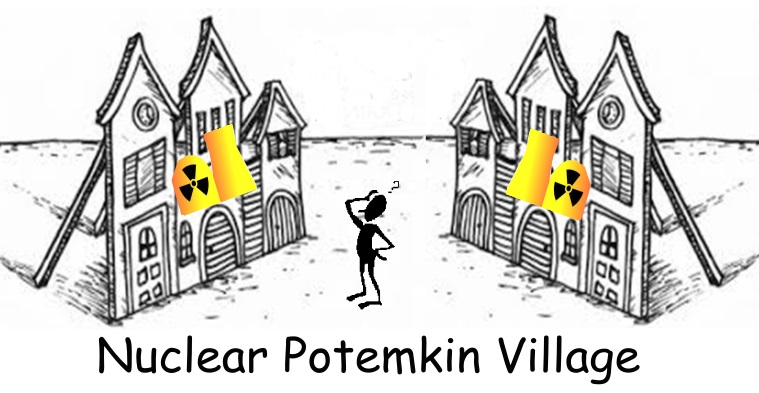
The Coalition’s policy is a bit like a Potemkin Village anyway—the fake villages said to be erected by Grigory Potemkin to impress Catherine the Great. Like them, the nuclear proposal is at best a facade, lacking essential content but acting to distract attention from division within the Coalition on emissions reductions.
Nuclear Potemkin villages
The Coalition has an electricity plan, but it is highly unlikely to actually involve nuclear reactors. The idea of nuclear reactors (large or small) with their low life-cycle emissions (at least compared to fossil fuels) provides a facade for misdirecting public attention. Behind the facade are continuing placeholders for fossil fuels, a stalling of renewables development, and a plan to keeping coal plants running as long as possible—probably switching to gas when those coal-fired power stations become technologically and economically unviable.
The long-promised Coalition nuclear plan was eventually outlined with minimal detail in June 2024 as seven reactor-site locations across New South Wales, Victoria, Queensland, South Australia and Western Australia, producing 14 gigawatt, or 38 per cent of electricity, with the first reactor supposedly coming on line by 2035–37. The claim was for an outcome ‘significantly’ cheaper than the Australian Labor Party (ALP) renewables plan. It invoked the myth of baseload power as the only route to grid reliability, and claimed it would ‘responsibly’ integrate with renewables.
On Friday 13 December 2024, when most news outlets would have already filed their stories, the Coalition released actual costings of their nuclear plan, using modelling by Frontier Economics. These costings were roundly criticized for sins of omission:
mass under-estimations of the cost of keeping coal-plants running, the amount of planned curtailment of renewables, how much transmission nuclear would need, and the implications of not meeting net zero commitments;
poor market-design assumptions, with the low projected cost ($263 billion less than the ALP renewables plan) being incompatible with lived experience of contemporary reactor costs. The claim of smooth renewables integration was undermined by Frontier’s own modelling suggesting solar would be curtailed to create room for nuclear;
obfuscation of emissions, including the issue that the Coalition plan would emit more than 1.7 billion extra tonnes of carbon dioxide up to 2050 compared to the ALP renewables plan;
assumptions about a contracted not expanded industrial manufacturing base (the Frontier scenario assumes 40 per cent less electricity use);
Economic analysts have confirmed that the Coalition nuclear plan rests on accounting tricks, hiding the true cost of nuclear, ignoring the cost of petrol and gas, neglecting the cost of replacing coal-fired power stations—which will otherwise be permitted to pollute for decades—and failing to cost the damage from those higher emissions.
Astroturfing nuclear support
There is a strategic vagueness in the Coalition’s nuclear plan, which replicates a key pattern in the history of nuclear power proposals in Australia: make promises, provide insufficient detail, then walk away (rinse and repeat so long as nuclear can pretend to be a climate policy). The vagueness is strategic because the lack of essential detail in the LNP nuclear plan encourages other social actors to read their ideas into the plan. It is a form of astroturfing where the proponents of an orchestrated message attempt to hide its actual sponsors but make it appear that it is supported by unsolicited grassroots individuals.
The Frontier EconomicsReport purports to compare the ALP’s renewables and LNP’s nuclear plans, yet in fact compares apples to oranges, based on quite different energy-demand scenarios. The ALP scenario costs more because it serves a much higher energy consumption projection. Despite it being three years since the nuclear policy was first suggested, we have been offered no idea of what the socio-political contours of a nuclear industry would look like in Australia.
There are constitutional questions. How would the LNP garner parliamentary support to overturn both federal and state bans on nuclear facilities or impose nuclear on states? There are waste disposal questions: what confidence can publics have that vastly increasing the stock of nuclear waste to be managed would succeed, given a history of failed repository siting at Kimba, Muckaty and Woomera and a legacy of Indigenous distrust of government sowed by atomic bomb testing and the extractive industries?
Only half-baked answers by a flood of interest groups attempt to fill the empty policy space. Thus, the Minerals Council of Australia (MCA) has engaged in disinformation in their support of nuclear power, attacking renewables seemingly because adopting nuclear would diminish investor confidence in renewables. Whereas the MCA engages in corporate and parliamentary lobbying, media networks such as The Australian and Sky News have populated the mainstream media with repackaged climate denial and delay talk: renewables are economic black holes, solar and wind are unreliable, and decarbonization transitions need to be managed (glacially).
Popup nuclear groups, including Nuclear for Climate and WePlanet (an offshoot of the UK fossil-fuel funded RePlanet) litter the online social media spaces with new denialism. Old denialism denied anthropogenic warming. New denialism, a ‘regime of obstruction’, throws sand in the gears of the decarbonization transition to keep fossil capital in the driving seat. The effects and urgency of climate mitigation are sidelined, disarming the objection that nuclear is too slow and piecemeal. Renewables-based climate solutions are discredited. These popup public groups reinvent the rationalist critique of environmentalism, deriding anti-nuclear critics as emotional. The scientism of the popup nuclear groups is palpable.
The astroturfing effect—creating a perception of broad public support where little exists—is in part explained by an effect discussed by the experimental psychologist F.C. Bartlett in his Remembering (1932). His argument was that the complexity of a response is a function of the complexity of the responding agents, not the stimulant. Audiences fill a simple message with missing meaning. With the LNP plan, plural, polarized publics have loaded up the vague nuclear proposal (closer to a meme than a policy) with meanings. The LNP simply prodded audiences with rhetoric about ‘renewables will not cut it’ and ‘we need reliable power’, then let the existing regime of obstruction interest-groups jump in. In this way, public support for nuclear is manufactured. It’s astroturfing, via experimental psychology and the politics of division.
The Coalition nuclear plan: A Claytons policy
The Australian Coalition government has repeatedly advanced nuclear as the solution to a problem, falling in love with nuclear publicly, and then ghosting it after a brief flirtation.
The John Gorton-led Coalition Government sought to build a reactor at Jervis Bay in 1969, but the idea floundered by 1971. The John Howard-led Coalition government introduced legislation in 1998 to ban nuclear facilities in Australia, ostensibly to secure support for a new research reactor at Lucas Heights but also reflecting bipartisan agreement that commercial nuclear power lacked political legitimacy in Australia.
Yet in 2006 the Howard government commissioned a task force to spruik the potential for commercial nuclear power. The Report, authored by Ziggy Switkowski and released in 2007, suggested Australia could start in 2020 to build twenty-five reactors that by 2050 would supply one-third of Australia’s electricity. However, by 2007 the Coalition again tried to run dead on nuclear power. Having announced reactor siting would be decided according to commercial decisions, community backlash saw the Coalition first backtrack by promising binding local plebiscites for any proposed location, then shelve any nuclear legislation until after the election. Howard lost his seat, and the Coalition did not raise nuclear again.
Until they did. The South Australian (SA) Liberals pushed for a nuclear power royal commission and the SA Labor Party obliged in 2016. In 2017 the New South Wales Liberals called for a debate on nuclear power. In 2019, the federal Liberals established a parliamentary commission to canvas what would be needed to introduce commercial nuclear power into Australia. In May 2022, Peter Dutton, then in government and (supposed) fan of nuclear power, stated that nuclear was ‘not on the table’, citing concerns to reduce costs rather than raise them. Yet in October 2022 the Liberals (now from opposition) introduced a bill to remove nuclear prohibitions.
What changed? One suggestion is to be found in a podcast that emerged in 2023, where the Coalition’s Minister Matt Canavan (who introduced the bill) admitted his colleagues were ‘not serious’ about nuclear power and only engaging with it ‘because it fixes a political issue for us’.
The Australian LNP has a plan for commercial nuclear power reactors in Australia that is a Claytons energy policy. Some may recall that Claytons was a non-alcoholic beverage, marketed in the 1970s and 1980s, and promoted as ‘the drink you have when you’re not having a drink’. To refer to ‘a Claytons’ means to refer to a shadow of the real thing, a substitute, an imitation. Nuclear power in Australia is the energy policy you have when you do not have a viable energy policy.
Australia’s Opposition Party is the prime example of this unfounded optimism. Liberal Coalition leader Peter Dutton is full of enthusiasm in his nuclear plan :
Our plan will deliver a net-zero electricity grid by 2050 and a strong and resilient economy. It will set our country up for decades to come. At the front of this next wave of growth will be those communities which host zero-emissions nuclear plants. Not only will local communities benefit from high paying, multi-generational jobs but communities will be empowered to maximise the benefits from hosting an asset of national importance .……….
A Federal Coalition Government will initially develop two establishment projects using either small modular reactors or modern larger plants such as the AP1000 or APR1400. They will start producing electricity by 2035 (with small modular reactors) or 2037 (if modern larger plants are found to be the best option).
Dutton and his chief nuclear spruiker, Ted O’Brien, gloss easily over concerns about costs, safety, water shortage, environmental effects, timing, and of comparisons with wind and solar power.
Ted O’Brien is indeed a master at this stuff. He looks just the right guy to be a reassuring expert to farmers, and rural communities. His background in marketing shows, with his perfect marketing style. Pleasant, affable, -even warm, calm and confident, O’Brien doesn’t need the detailed facts to interfere with his comfortable assertions about Australia’s wonderful nuclear energy future.
“because hand on heart that’s in our national interest It is the right thing to do I It is why othercountries all around the world are now introducing nuclear energy It’s in Australia’s interest …….We’ll always have to focus on what is right for Australia.
Australia is already behind the eight ball when it comes to zero-emission nuclear energy. The sooner we get going the betterIt has proven around the world to be the fastest way to decarbonise electricity grids.”
Australia, geographically remote from the countries that do have nuclear power, is vulnerable to this kind of “style over substance” persuasion.
If we look at the substance of what is going on in those countries, we find a very mixed bag indeed. The national governments of France, USA, UK, Canada, Japan, Russia, are all for new nuclear power – encouraging and subsidising big and (so far non-existent) small nuclear reactors. Not so much China, which is going allout for renewable energy.
The politicians might be backing nuclear power – but the economic realities tell a different story:
JAPAN. has a huge nuclear WASTE problem. And it’s not just the Fukushima continuing waste disaster. There is little enthusiasm in government or community for reviving the nuclear industry – TEPCO’s rehabilitation plan delays expose limits to nuke power reliance.
These are all nations that are stuck with existing nuclear reactors, many of them aging, and stuck with the very significant waste problem – which, by the way, doesn’t get a mention from the comforting Mr Ted O’Brien.
Australia’s Liberal-National Coalition has as its main policy, the setting up of a tax-payer funded nuclear industry. This is a breathtakingly bold step for a Liberal party, traditionally the champion of private enterprise, and sworn enemy of socialism.
The Coalition doesn’t seem to have much else in the way of policies. Their leader, Peter Dutton. is currently inclined to shut up a bit about nuclear. https://www.youtube.com/watch?v=12RE1WGl-VQ
It’s up to Ted O’Brien to work his marketing magic. He will probably be helped with his “style above substance” message, by well-funded groups like Advance and The Atlas Network.
Well, it worked in America. Voters, tired of all the bad stuff, turned away from facts and policy details, and voted for an entertaining charlatan. It could work in Australia, and would certainly be a triumph for the nice Mr O’Brien.
I am Heather Hoff, cofounder of Mothers For Nuclear, and nonprofit based in California, but with informal chapters or groups of mothers and mums around the country and around the world…………………….
Heather Hoff continues (extract)
We are separate and different from the recent organizing Mums for Nuclear under the umbrella of Nuclear for Australia. …………….. As for the mums in Australia, we have already shared some of their stories on our website, and now the same mothers are also speaking up on behalf of Nuclear for Australia.
Terry Mills says: 31 Mar 25
Heather thank you for your contribution.
In Australia we want answers on several fundamental points ranging from where waste will be dumped/stored ?
Is the exemplar for the SMR the Westinghouse model or if not is it a Chinese or Russian alternative (very important)?
What is the delivery/installation/commissioning time frame from time an order is placed ?
What is the fixed cost for acquisition/assembly/installation/commissioning (within ten percent)?
What is the energy output of the small modular reactor (SMR) under consideration : i.e. how many conventional dwellings would be fully serviced and what could an average householder (four persons) expect to pay for that energy over a 12 month period ?
Answers to some of these fundamental questions would certainly assist us in Australia as our politicians have been less than forthcoming.
ThankYou
Bert Hetebry says: 31 Mar 25
Heather, the only question I have is WHY?
Why when we have an abundance of solar power Why when we have an abundance of wind power Why when we have battery technology to store energy when wind and sun are not providing that power
Why when nuclear is so hellishly expensive to build Why when nuclear is not just expensive to build but seems to be too difficult to build in a timely manner Why when the waste produced becomes a time bomb for future environmental problems.
So yes, Heather, Why?
Roswell says:
Thank you for your comment, Heather. Much appreciated.
Terry speaks for the most of us: we do have questions.
Bert Hetebry says:
Our contributor Roswell has a wonderfully understated sense of humour, an Australian sense of humour which at times is layered with soft, gentle sarcasm.
As he so clearly points out, the mums and mothers he cites have a vested interest in promoting nuclear power.
Kathryn says:
I wonder if these foolish pro-nuclear women and the RWNJs (like that short-sighted political psychopath, Peter Dutton) have STOPPED and given any thought about what the hell our government is going to do with the MASSIVE amount of NUCLEAR WASTE nuclear energy inevitably produces?
Do they realise that nuclear waste is, in fact, RADIOACTIVE for THOUSANDS OF YEARS posing a REAL, perpetual danger and deadly health risk for future GENERATIONS of future Australians? Have they STOPPED – even for a minute – to consider WHERE an inhumane, racist and self-serving LNP regime are likely to DUMP not only the nuclear waste of Australian-generated nuclear power but, likely, to import nuclear waste from other nations (such as America, the UK and/or other European nations) in order to make a “fast buck” at OUR expense?
No doubt, the likes of Dutton et al will consider it quite OK to dump toxic waste in what THEY consider to be “remote” areas of the outback trying to convince themselves (and anyone who will listen) that “nobody lives there” when, in fact, such areas are inhabited by communities of vulnerable indigenous aboriginals and remote farming communities!
Nuclear power = RADIOACTIVE NUCLEAR WASTE and, as such, will NEVER be a safe, acceptable alternative for our children, our grandchildren and our descendants! Australians live in the SUNNIEST continent on the planet. As such, the intensive further research and refinement of SOLAR POWER is the SENSIBLE choice because it can be accessed so easily, is inexpensive to process and, by far, the best, safest and cleanest form of energy available!
Canguro says: 30 Mar 2025
Unlikely to find any MUMS FOR NUCLEAR in Japan, in particular around such districts as Fukushima, Nagasaki, or Hiroshima, along with the Ukrainian mothers in proximity to Chernobyl, or moms close to the Three Mile Island in the USA, or indeed many other moms in the target areas of radiation fallout from a raft of similar incidents of varying severity and the associated human toll.
As Noel Wauchope’s essay implies, selling the sizzle is as equally important as the charred sausage; ironic doesn’t even begin to cover the potential horrors of human endeavour gone awry, as is so often the case and in particular in this instance of the allure of nuclear-fission based energy sources; tens of thousands of highly trained and knowledgeable engineers & technicians and still, things can and do go disastrously wrong.
Much to the distress of early implementers, Oppenheimer & Einstein for example, the lament was that the nuclear genie has well and truly been released and now mankind must find a way to manage this monstrous entity. The attraction persists, and the list of commercial nuclear reactors is extensive across many countries.
I guess the MUMS FOR NUCLEAR are acting out of self-interest as opposed to a detached rational assessment of the pros & cons of nuclear-derived energy for the general benefit of the wider population, given the range of non-potentially lethal options within the renewables sector. Do they hold hen’s parties, where they sit around fondling lumps of uranium or radium… lights out and enjoy the glow?
If you’re a middle aged female with an interest in solar power, nuclear campaigners want you.
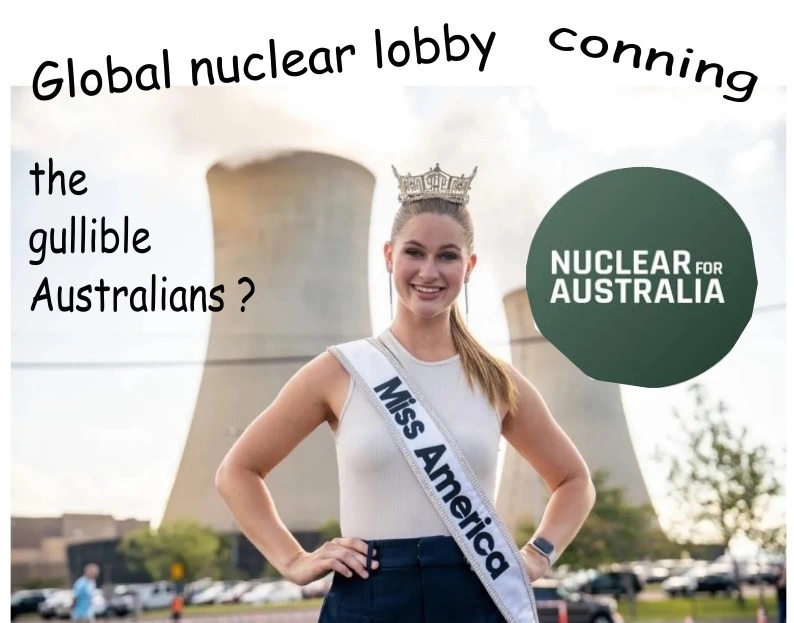
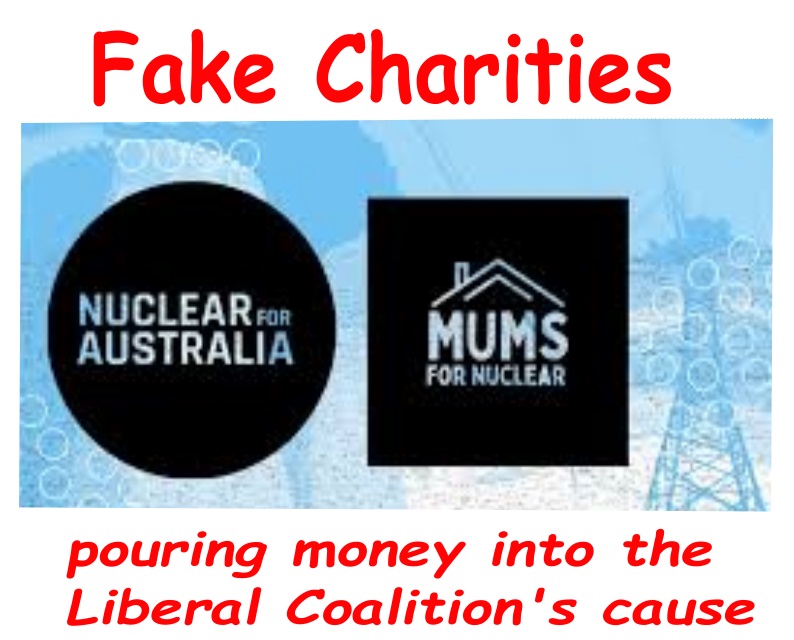
In the week 15th to the 21st of March, Nuclear for Australia and its offshoot astroturfing group, Mums For Nuclear, spent a combined $89,233 on Meta ads, according to online political database WhoTargets.Me.
Mums for Nuclear targets mothers with claims that nuclear power will reduce power bills and is essential to a “clean energy future for our children”. The ads claim “We’re not activists or lobbyists, but we know nuclear is our future”. Nuclear for Australia, which is backed by mogul Dick Smith, is the contact email address on the account.
Download the browser extension at WhoTargets.Me to see if you’re being targeted by political advertisers
While men and women saw the ad, around 18% of the budget was spent targeting women only. The group is also running print ads and issued a media release.………………..
Belinda Noble, founder of climate communications group, Comms Declare said, “Targeting mums with false promises of cheap power bills and climate solutions is as manipulative as it is cynical. The CSIRO has confirmed that only renewables can provide the cuts in climate pollution that we need this decade.”
I’ve only just discovered “Mums for Nuclear” – and they sound just so lovely. They are an Australian offshoot of “Mothers for Nuclear”, which is a very lovely global organisation, full of joy and delight in nature, and of course – all are lovely ladies with lovely children. Here’s a sample of their philosophy:
“I personally went from a fear of nuclear to understanding how many of my assumptions about it were astonishingly far from the truth. The more I read, the more I realized that we direly need more nuclear power to help solve some of the greatest threats to the environment and humanity, including mitigation of climate change, protection of natural resources, reductions in air pollution, and lifting people from poverty. I joined Mothers for Nuclear because I want to help leave a better world for our children.”
That was written by Iida Ruishalme – A Finnish mother, and one of nine women featured on the Mothers for Nuclear website She works as a science writer, and by the way, is the only one who is not directly involved with the nuclear industry. Most of the others are nuclear engineers.
Anyway, the website is beautiful – and it’s easy to come away from it with enthusiasm for nuclear power.
Those nine women represent the USA, Finland, Germany, and the UK. You don’t learn how many members the organisation has, nor where it gets its funding.
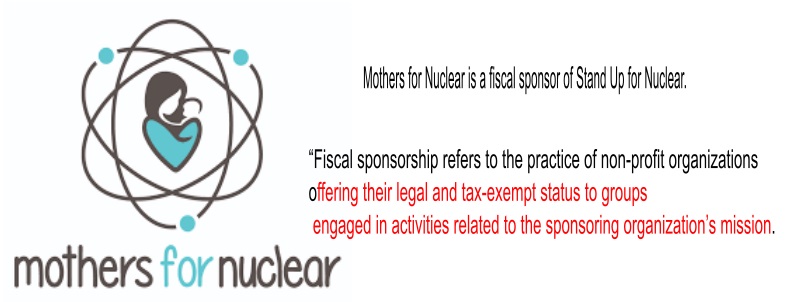
“In 2022 Mothers for Nuclear became a fiscal sponsor of Stand Up for Nuclear. Stand Up for Nuclear is the world’s 1st global initiative that fights for the protection and expansion of nuclear energy. We are long-term partners who have worked together on multiple campaigns including in California, Europe, Kenya, and many others.”
“Fiscal sponsorship refers to the practice of non-profit organizations offering their legal and tax-exempt status to groups – typically projects – engaged in activities related to the sponsoring organization’s mission. It typically involves a fee-based contractual arrangement between a project and an established non-profit.”
Mmmmm – sounds as though Mothers for Nuclear is a real help to the nuclear industry, and quite useful to its own members. Though I don’t for a moment doubt their sincerity.
Now we come to the new – and what a timely newness – Australian version – the more relaxed sounding “Mums for Nuclear“. It has joined the “charity” nuclear front group Nuclear for Australia.
Once again, I’ve found it hard to discover just how many members are in Mums for Nuclear. And also – where it gets its funding.
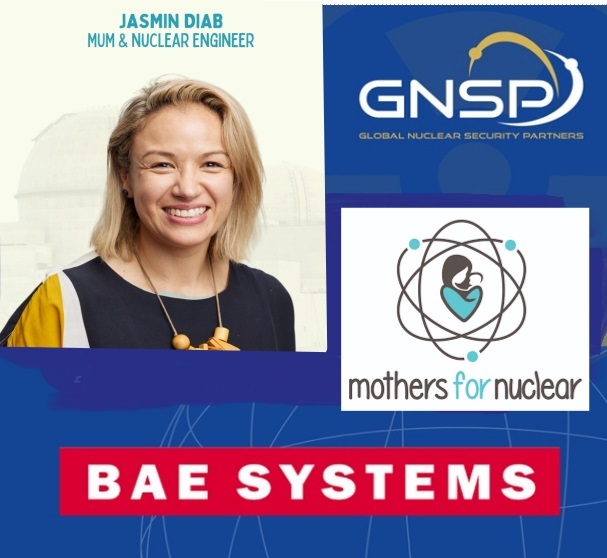
I have found one member, Jasmin Diab, who is the face of the outfit, but doesn’t call herself a CEO or anything formal like that: “Hi, I’m Jaz! I’m a mum of one human and two dogs.”
However, Jaz does have another role, which is quite a bit more formal.
“We work with partners, clients and relevant authorities to ensure that novel technology is secure. Across SMR, AMR and fusion we work to make sure that projects, programmes, processes and products are protected and commercially viable.”
“Our clients include: the UK Department for Energy Security and Net Zero; the UK Ministry of Defence; UK National Nuclear Laboratory; the Canadian Nuclear Waste Management Organistion; the Ukrainian Government and nuclear industry; Magnox; Babcock International; BAE Submarines; University of Bristol; University of Manchester and SMR developers. We’ve worked with the armed police capability of the Ministry of Defence Police, Civil Nuclear Constabulary and US teams in protecting nuclear material and developing doctrine, and with the infrastructure police of some Middle Eastern Governments.”
I don’t doubt that Jasmin Diab is sincere, and that she is a good mum to one human and two dogs. And she can provide for them well, with that good job with GNSP. I’m not sure that her message will go down that well with Australian women. A recent national survey shows that Australian women are strongly opposed to nuclear energy and are most concerned any consideration of the controversial power source will delay the switch to renewables.
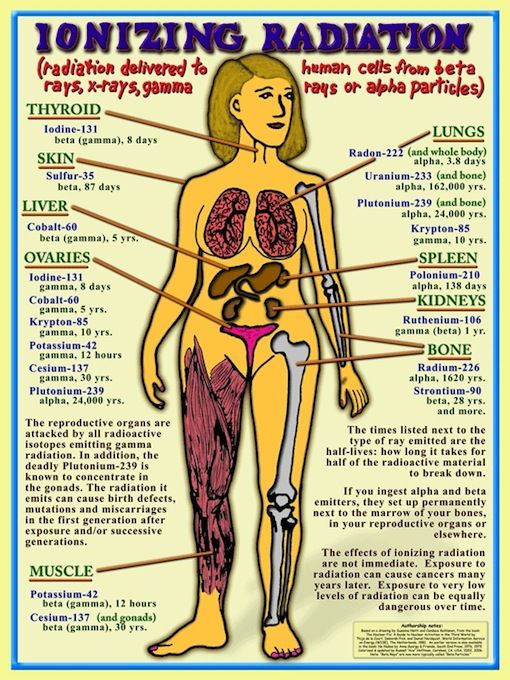
The Mums for Nuclear groups seem curiously uninterested in the fact that women, and children, are significantly more vulnerable to illness from nuclear radiation than men are.






 Antinuclear