Australian media mindlessly regurgitates nuclear lobby spin about medical wastes
 Misconceptions about radioactive medical isotopes, http://www.onlineopinion.com.au/view.asp?article=19251 , By Noel Wauchope -29 August 2017
Australians get their information about medical isotopes straight from The Australian Nuclear Science and Technology Organisation(ANSTO) via handouts faithfully retailed via the mainstream media. Some recent examples of media coverage:
- from the ABC, 19/08/17 ‘Nuclear medicine production in Australia at risk if dump site can’t be found, industry head says‘ and Australians get their information about medical isotopes straight from The Australian Nuclear Science and Technology Organisation(ANSTO) via handouts faithfully retailed via the mainstream media. Some recent examples of media coverage:
- Eyre Peninsula Tribune 02/08/17 ‘Kimba landowners visit Lucas Heights nuclear facility’.
The message is straightforward and goes like this:
The purpose of the Opal nuclear reactor at Lucas Heights is to make medical radioisotopes to treat cancer. Australia needs a national radioactive waste dump in rural South Australia, thousands of miles away from Lucas Heights, to dispose of the low-level medical radioactive wastes produced. And this will be a bonanza for the lucky rural community of Kimba.
Is this story true?
No. It is misleading on a number of counts.
First of all, a nuclear reactor is not essential for making medical isotopes. The IAEA lists 39 countries that use cyclotrons to produce them. That includes Australia, which has them not only at Lucas Heights itself, but also at hospitals in Victoria, New South Wales, Queensland, and Western Australia.
From the invention of the cyclotron (1931) , and discovery of artificial radioactivity (1934), non nuclear particle accelerators were used to produce them. Globally, particle accelerators produced the vast majority of radioisotopes with medical applications until the 1950s. Radioisotopes of medical interest began to be produced as a byproduct of nuclear weapons reactors during World War II. After the atomic bombing of Hiroshima and Nagasaki in 1945, the USA Atomic Energy Commission (AEC)’s main mission was promoting the military use of nuclear material, but “giving atomic energy a peaceful, civilian image” was also part of it. In1948 the AEC took over, and isotopes for biomedical research, cancer diagnostics and therapy were made in nuclear reactors and even became free of charge.
Australia was a bit slow to jump on the medical isotopes bandwagon. The Lucas Heights nuclear reactor began its life in 1958 as the start of a plan for nuclear weapons for Australia.Then it was promoted as research for nuclear power, and later as for making medical radiopharmaceuticals. Lucas Heights and ANSTO itself are very much part of the nuclear lobby’s plan to promote the entire nuclear industry in Australia.
Australia does not need a national radioactive waste dump for medical wastes. Nearly all medical radioactive wastes are very short-lived – a matter of days, or even hours. There is no need to transport them across the continent. Australia does have a problem with higher level wastes: Spent reactor fuel sent to France, USA and UK for processing must be returned. This is the type of waste that needs deep and very secure disposal. That is sure to be the underlying purpose of the South Australian waste dump plan.
The planned national radioactive waste dump will not benefit the local community. Yes, there will be bribes – so far, not much – a $2 million Community Benefit Package to fund local projects, but I’m sure that the Feds will come with better than that. Jobs, no doubt. However, the underlying problem remains. The community is being asked to accept a temporary nuclear waste dump, which is to be set up long before any permanent dump is set up, if it ever is. Kimba, the proposed dump site, is likely to suffer the fate of so many sad sites in America –stuck with “stranded wastes” of radioactive trash. Think what that would do to Kimba’s environment and reputation as an agricultural area.The nuclear lobby has argued persuasively that the Lucas Heights area has held nuclear wastes for decades. However, the Lucas Heights residents did not grasp the implications when the nuclear reactor was set up. They do now – that’s why they want the wastes sent far away.
The global nuclear lobby is fighting a losing battle. The industry has always struggled to win over public opinion. In Australia, the industry’s “foot in the door” is the Opal reactor at Lucas Heights. Following the South Australian Nuclear Fuel Cycle Royal Commission’s failed attempt last year, to introduce radioactive waste importing, the next sortie is to use Lucas Heights to get a national nuclear waste dump happening. To justify this, the argument put forward is the medical argument.
In the slick salesmanship from ANSTO and the nuclear lobby in general, they don’t mind a few lies and half truths,. For example, they’ll say ” The most important isotope technetium-99m can be made only with nuclear reactors” – conveniently forgetting that Canadian researchers achieved this with a cyclotron in 2015.
They’ll say that cyclotrons are too expensive to set up, conveniently forgetting that the Lucas Heights 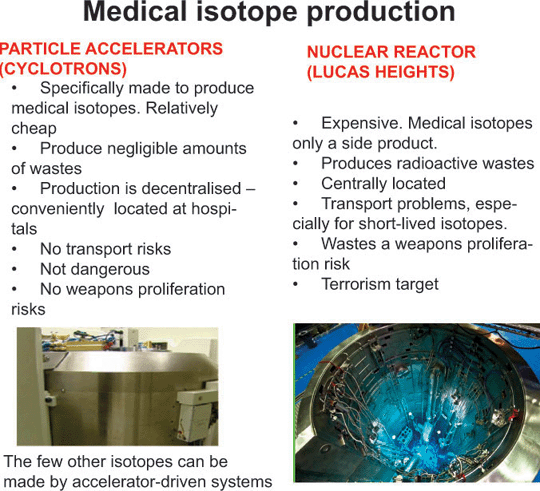 nuclear reactor was set up at tax-payer expense, and that tax-payer will have to fund its waste management virtually for eternity.
They’ll ignore the facts that cyclotrons produce negligible wastes. As most medical radioisotopes have very short half lives – it makes sense to produce them in a decentralised way – in cyclotrons close to the hospitals where they will be used. The transport of isotopes from cyclotrons is much less of a problem, than from the centralised nuclear reactor.
The nuclear reactor produces radioactive wastes suitable for use as nuclear weapons fuel – and present a safety problem, with the reactor itself also a target for terrorism. Cyclotrons do not have these risks, and this need for huge, and expensive security measures.
Canada, having abandoned nuclear reactor production of medical isotopes, is now leading the way in their production and export without use of a nuclear reactor. ANSTO’s boast of a future thriving export industry in isotopes is sounding hollow.
We should bear in mind that medical radioisotopes are used 80% for diagnosis, and only 20% for actual treatment of cancer. They are an additional means of diagnosis, but not the only means.
We should also be mindful that radioactive isotopes in medicine carry a small increased risk of cancer for the patient, staff, and sometimes the patient’s family.
Therefore our enthusiasm for nuclear medicine should be tempered with an understanding of its limitations and risks, both at the individual patient level, and in the broader context of nuclear fission and its health and environmental dangers.
Non nuclear production of medical radioisotopes st South Australian Health and Medical Research Institute
 85% of ANSTO Lucas Heights isotope production is for Technetium 99. This can also be made in a cyclotron by using electricity – which makes NO Intermediate Level Waste & NO long lived LLW – thereby negating a national radioactive dump facility
State’s most advanced clinical imaging centre, worth $13m, opens at SAHMRI http://www.adelaidenow.com.au/news/south-australia/states-most-advanced-clinical-imaging-centre-worth-13m-opens-at-sahmri/news-story/a20eb257edad98bb0597dd787aa6837b?nk=ba26857f63080120cbd5fc74c94d3959-1503458683, Brad Crouch, Medical Reporter, The Advertiser February 15, 2017 THE growing South Australian Health and Biomedical Precinct takes another step forward today with the opening of the most advanced clinical imaging centre in the state.
The $13 million Clinical and Research Imaging Centre at the South Australian Health and Medical Research Institute has been established in partnership with Dr Jones and Partners Medical Imaging.
Space on the ground level of the SAHMRI building on North Terrace has become a Dr Jones & Partners clinic, with dedicated time allocated to SAHMRI researchers for clinical research without compromising the scheduling of patient treatments.
State-of-the-art imaging equipment in the centre includes CT, MRI and PET/CT platforms.
Officials say the arrangement is moving SAHMRI in a new direction of commercialisation with industry partners to create a facility to benefit researchers with the aim of improving the treatment and diagnosis of patients. Continue reading
Lithium Australia – company seeks to recycle rare earths
Car industry revolution fuels Western Australia’s lithium boom, ABC News, By Kathryn Diss, 29 July 17
“……..’We can’t afford to keep throwing these things away’
Demand is also growing for other specialty minerals which go into building a battery, including graphite, cobalt, vanadium and nickel.
While the focus for most miners has been getting their lithium to market as quickly as possible, other players like Lithium Australia is targeting lower grade lithium and recycling of old batteries.
“Our focus has been developing processing technology to a large extent focusing on the materials people don’t want to process at the moment,” Lithium Australia managing director Adrian Griffin said.
“If you look at the industry, there’s more lithium that gets discharged to waste around the world than ever gets into the process supply chain.
“One of the things Australia really needs to look at is the recycling of waste battery materials.
“We can’t afford to keep throwing these things away: At the moment there’s about 8,000 tonnes a year of battery materials going to landfill and there’s only about 800 tonnes recycled.” http://www.abc.net.au/news/2017-07-29/car-industy-lithium-revolution-driving-next-mining-boom-in-wa/8748322
Western Australia’s boom in lithium mining
 Car industry revolution fuels Western Australia’s lithium boom, ABC News, By Kathryn Diss, 29 July 17, Electric cars are driving rapid mining investment in WA, with the state supplying most of the lithium needed to manufacture batteries worldwide.
Most electric vehicles (EVs) use lithium-ion batteries, the same technology which powers smartphones, tablets and laptops.
As car makers around the globe race to meet new EV targets, demand for batteries has driven lithium exports from WA as the state now produces more than half of the world’s supply.
Global leaders have been behind the push, with new European emissions legislation forcing car markers to increase their targets and France recently announcing it wanted to end the sale of petrol and diesel cars by 2040.
It joins similar targets set by India (2030) and Norway (2025).
The British Government is also set to ban the sale of petrol and diesel cars from 2040 as part of a plan to clean up air pollution.
Growth in demand ‘surprised most analysts’
Batteries to store household solar power, which would allow consumers to disconnect from the electricity grid, are also driving demand to a lesser extent.
“The speed at which demand has grown for lithium carbonate equivalent has surprised most analysts, ourselves included,” Katana Asset Management’s Romano Sala Tenna said.
“Up until a few months ago the conventional thinking was by about 2025, we would need about 330,000 tonnes per annum of lithium carbonate, [but] based on recent announcements from larger automobile manufacturers, we are now thinking we will need at least double that — about 600,000 tonnes per annum.”
While that may sound small compared to the 800 million tonnes the state’s iron ore industry exports each year, the activity in the sector is already creating thousands of new jobs and generating millions in royalties for the cash-strapped WA Government.
The Greenbushes mine in the state’s South West, which is part owned by China’s Tianqi Lithium and America’s Albemarle, is one of the world’s largest lithium producers and is undergoing an expansion to double production.
The mine has seen both boom and bust since starting out as a tin operation in 1888, but is now on the cusp of another upswing — laying claim to what was considered the world’s highest grade lithium deposit.
“It is the longest continuously running mine in Western Australia and it’s on its third product. It just seems to keep producing new life,” Tianqi Lithium general manager Phil Thick said.
“Lithium is obviously a game changer for that mine. It’s been significant as a tin and tantalum mine, but lithium value is substantial.”
The joint venture is also building what it claims to be the biggest lithium processing plant in the world in Kwinana south of Perth. The project will cost $400 million and create 500 construction jobs.
‘More than just a mini-boom’
Growth in the sector has been rapid.
In January, the state had just one mine producing lithium — it now has four and exports have jumped six-fold.
Business observer Tim Treadgold has witnessed big changes in WA’s mining landscape during his 40 years commentating on the sector.
“This is more than just a mini-boom, this is the real McCoy, we could go from one [mine] two years ago to eight by this time next year. It really has been quite remarkable what’s going on,” he said.
Activity in the sector is attracting big names including Chilean major Sociedad Química y Minera de Chile (SQM) which has inked a deal to bankroll a new deposit in the Goldfields with Kidman Resources.
It includes plans to build a $100 million refinery at either Bunbury, Perth or Kalgoorlie.
The deal was announced just days after Kidman won a Supreme Court battle against another miner to maintain control of the mine.
“The world has beaten a path to our door. The arrival of SQM was a real wakeup call that the world wants it and it’s coming here and it’s prepared to pay for it,” Mr Treadgold said……….http://www.abc.net.au/news/2017-07-29/car-industy-lithium-revolution-driving-next-mining-boom-in-wa/8748322
Labor politicians give half-hearted support to Generation IV Nuclear Energy Systems
 MPs Michael Danby, Josh Wilson , Susan Templeman and Senator Jenny
 McAllister support the recommendation that binding treaty action be taken to enable further collaboration in relation to international research and development of Generation IV Nuclear Energy Systems.
At the same time, they note Labor’s policy :
Pro nuclear shills bring nonsense promises about Generation IV nuclear reactors to Australia
There isn’t the slightest chance that SMRs will fulfil the ambition of making nuclear power “radically 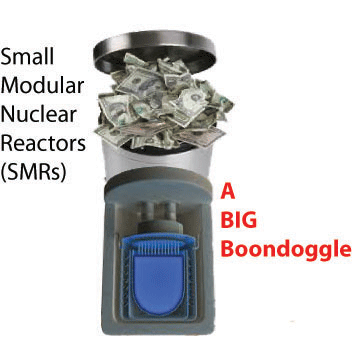 cheaper” unless and until a manufacturing supply chain is mass producing SMRs for a mass market.
As things stand, no country, company or utility has any intention of betting billions on building an SMR supply chain. In the absence of a mass supply chain, SMRs will be expensive curiosities.
 Ben Heard thinks Australia should take the lead building his preferred version of Generation IV fast neutron reactors.
So Australia ‒ a country with virtually no relevant expertise and even less experience ‒ should take the lead developing Generation IV reactors despite the fact that global nuclear industry giants face crippling debts and possible bankruptcy due to cost overruns building a handful of conventional reactors?
That proposition is beyond stupid and it was even rejected by the (stridently pro-nuclear) SA Nuclear Fuel Cycle Royal Commission last year.
New nuclear push digs deep into vault of alternative facts, Jim Green, 31 May 2017, RenewEconomy http://reneweconomy.com.au/new-nuclear-push-digs-deep-vault-alternative-facts-90295/
Australia’s nuclear energy debate reaches Peak Idiocy this week with the visit of Jessica Lovering from the U.S. Breakthrough Institute. Lovering has and will be speaking at public events alongside Australian university student Ben Heard.
 Both the Breakthrough Institute and Heard’s ‘Bright New World’ present
 themselves as progressive environment groups but they are single-issue, pro-nuclear lobby groups with little interest in broader environmental issues. Australia’s environment groups ‒ i.e. real environment groups ‒ are united in our opposition to nuclear power.
Real environment groups celebrate the spectacular growth of renewables and the spectacular cost reductions whereas pro-nuclear lobby groups, including Lovering’s Breakthrough Institute and Heard’s Bright New World, are on a never-ending campaign against renewables. Global renewable energy capacity has doubled over the past decade and current renewable capacity of 2,006 gigawatts (GW) is 5.1 times greater than nuclear power capacity of 392 GW (including idle reactors in Japan). Actual electricity generation from renewables (23.5% of global generation) is more than double that from nuclear power (10.7%) and the gap is widening every day.
Lovering’s opinion piece in The Australian on Monday fails to note that her speaking trip is sponsored by the Minerals Council of Australia. Likewise, Heard has also been paid as a uranium industry consultant.
Lovering brings a suitcase full of alternative facts to Australia. The most egregious is that the nuclear industry is in the middle of some sort of renaissance. Even her own institute contradicts this, Continue reading
Australian government about to secretly sign up to developing Generation IV nuclear reactors?
Should Australia invest funds and resources in developing Generation IV nuclear reactors? Online opinion,
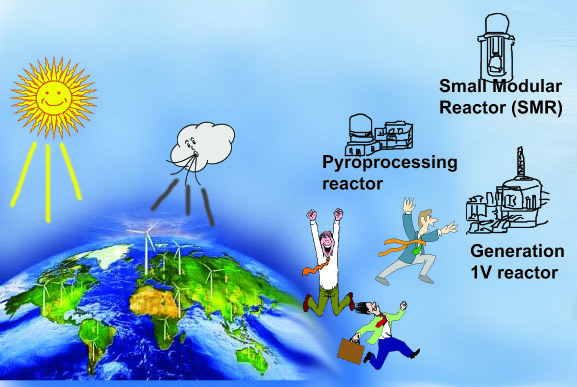
| By Noel Wauchope, 23 May 2017 Without any fanfare, with no media coverage, Australia’s Parliamentary Joint Standing Committee on Treaties (JSCOT) is presently considering Australia signing up to the International Framework for Generation IV Nuclear Energy Systems (GIF), which will commit this nation to take part in developing new nuclear reactors.Dr Adi Paterson, CEO of the Australia Nuclear Science and Technology Organisation, signed up to this GIF Framework last year. However, that does require confirmation by the Australian government. Hence there was the need for the JSCOT Committee to at least take a look at it, before the government completes the membership. Apparently there is no need for public discussion, or probably even Parliamentary discussion.
This Committee very quietly invited submissions, and very few were in the know about this. Now the received submissions have been published – at http://www.aph.gov.au/Parliamentary_Business/Committees/Joint/Treaties/NuclearEnergy/Submissions. Anyway, it looks as if ANSTO is the driving force behind this process, and judging by the submissions received, the nuclear lobby was in the know, even if the public was not. Fourteen submissions were received. Of these, eleven were strongly pro- nuclear, and three were opposed. The opposing submissions came from Friends of the Earth (FOE), (jointly with the Australian Conservation Foundation (ACF ), Medical Association For The Prevention of War (MAPW), and myself, (I came upon the Parliamentary website just by chance). In assessing these submissions, of course, I have to admit to bias on my part. Still, I think that any reader would find that there is one submission that stands out for clarity, and a detailed, factual discussion of the GIF plan. That is the one written by Jim Green and Dave Sweeney, for FOE and ACF. Green and Sweeney respond to assertions made in ANSTO’s National Interest Analysis. They question claims that the new reactors reduce weapons proliferation risks, are economic, efficient, and solve waste problems. They rebuke the claim of ANSTO that “a significant expansion in nuclear power production is underway “, listing the overall decline in nuclear power growth, with the exception of China. They discuss at length the very long time frame expected even by nuclear industry experts, before any Generation IV reactors could be commercially viable. They go on to discuss each of the six proposed new nuclear reactors, giving a detailed history of the attempts to develop each, and factual information that refutes those claims made by ANSTO. For all of their statements, Green and Sweeney provide evidence and references. The Medical Association for Prevention of War (MAPW)’s submission questions the government’s high subsidising of ANSTO, and points out the poor prospects for private investment in new nuclear power. It refutes the argument that Gen IV reactors would solve the nuclear waste problem, quoting analysis by the US National Academy of Sciences. They discuss the history of attempts to develop Gen IV nuclear reactors: ” a track record of repeated failure and massive cost”. They discuss the direct and indirect costs, and ANSTO’s secrecy about nuclear costs. Safety and reliability issues, and proliferation risks, are examined. They also point out that the recent Nuclear Fuel Cycle Royal Commission (NFCRC) was not supportive of new nuclear technology. The Commission proposed:
|
NO PUBLIC DISCUSSION! Australia’s Generation IV Nuclear Energy Accession
 Submission to: Inquiry: The Generation IV Nuclear Energy – Accession. by Noel Wauchope, 24 April 2017
First of all, I find it very strange that this agreement has been signed up to in advance, not by any elected representative of the Australian Parliament, but by Dr Adi Patterson CEO of the Australia Nuclear Science and Technology Organisation, apparently pre-empting the results of this Inquiry!
I find it disturbing that this Inquiry is being held without any public information or discussion. Are we to assume that the decision to join this “Charter” is being taken without prior public knowledge?
It is a pretty momentous decision. According to the World Nuclear Association the 2005 Framework agreement “formally commits them (signatories) to participate in the development of one or more Generation IV systems selected by GIF for further R&D.”
The Environment Protection and Biodiversity Conservation Act 1999 currently prohibits the development of nuclear power in Australia. Nuclear power cannot be approved under either the EPBC Act or the Australian Radiation Protection and Nuclear Safety Act 1998. These prohibitions are, as I understand it, supported by all major parties in Australia?
This would be an extraordinary step for Australia to take, especially in the light of the recent South Australian Nuclear Fuel Cycle Royal Commission (NFCRC) pro-nuclear Royal Commission, which, while recommending South Australia for an international nuclear waste dump, nevertheless stated that
“The recent conclusion of the Generation IV International Forum (GIF), which issued updated projections for fast reactor and innovative systems in January 2014, suggests the most advanced system will start a demonstration phase (which involves completing the detailed design of a prototype system and undertaking its licensing, construction and operation) in about 2021. The demonstration phase is expected to last at least 10 years and each system demonstrated will require funding of several billion US dollars. As a result, the earliest possible date for the commercial operation of fast reactor and other innovative reactor designs is 2031. This timeframe is subject to significant project, technical and funding risk. It extends by six years a similar assessment undertaken by GIF in 2002. This means that such designs could not realistically be ready for commercial deployment in South Australia or elsewhere before the late 2030s, and possibly later.”
This was hardly a ringing endorsement of Generation IV nuclear reactors.
The South Australian Citizens Jury, Community Consultations, numerous economists, and the S.A. Liberal Party all rejected that nuclear waste plan, as not economically viable. A huge amount of preparation was done by the NFCRC in investigating the phases of the nuclear Fuel Cycle (more accurately Chain) to arrive at their rather negative view of Generation IV nuclear reactors.
That makes it all the more extraordinary that the Australian government would be willing to sign up so quickly to ANSTO’s request that Australia put resources into these untested, and so far, non-existent nuclear technologies.
I hope that the Committee is aware of the present financial troubles of the giant nuclear corporations, such as AREVA, Toshiba, and Westinghouse Electric. Nuclear power is turning out to be a financial liability wherever it is not funded by the tax-payer, (as in China and Russia). (1)
The World Nuclear Association describes the Generation IV International Forum (GIF) as countries for whom nuclear energy is significant now or seen as vital in the future. Australia’s situation in no way fits these criteria.
Nuclear energy is not significant now in Australia, and even the NRCRC nuclear proponents do not see it as vital for Australia’s future. It is almost laughable, that right now, renewable energy systems are taking off in Australia – both as large solar and wind farms, and as a huge increase in small decentralised systems such as home and business solar panel installations.
That’s where Australia should be putting its resources of human energy, talent, and funding.
The claims made by the nuclear lobby, ANSTO and some politicians, notably Christopher Pyne and Julie Bishop, about Generation Iv nuclear reactors, do not stand up to scrutiny:
Non proliferation “- Furthering Australia’s non-proliferation and nuclear safety objectives.” The well-known claim that a “conventional” nuclear bomb cannot be made from these new types of reactor, might be true, to a certain extent. However, IFRs and other plutonium-based nuclear power concepts fail the WMD proliferation test, i.e. they can too easily be used to produce fissile material for nuclear weapons. The use of thorium as a nuclear fuel doesn’t solve the WMD proliferation problem. Irradiation of thorium (indirectly) produces uranium-233, a fissile material which can be used in nuclear weapons. These materials can be used to make a “dirty bomb” – irradiating a city or other target. They would require the same expensive security measures that apply with conventional nuclear reactors.
If the purpose in joining the GIF is to strengthen non-proliferation and safety – why is ANSTO the implementing agent not the Australia Safeguards and Non-Proliferation Office?
Solving nuclear waste problem? Claims that these new nuclear reactors will solve the problem of nuclear wastes are turning out to be spurious. For example, Nuclear energy startup Transatomic Power has backed away from bold claims for its advanced reactor technology after an informal review by MIT professors highlighted serious errors in the company’s calculations. (2) Even at the best of times, the “new nuclear” lobby admits that their Gen IV reactors will produce highly toxic radioactive wastes, requiring security for up to 300 years.
The Integral Fast Reactor is called “integral” because it would process used reactor fuel on-site, separating plutonium (a weapons explosive) and other long-lived radioactive isotopes from the used fuel, to be fed back into the reactor. It essentially converts long-lived waste into shorter lived waste. This waste would still remain dangerous for a minimum of 200 years (provided it is not contaminated with high level waste products), so we are still left with a waste problem that spans generations. (3)
Climate change. The claim that new nuclear power will solve climate change is spurious. This ignores life-cycle CO2 emissions
Nuclear energy is not zero carbon.
Emissions from nuclear will increase significantly over the next few decades as high grade ore is depleted, and increasing amounts of fossil fuels are required to access, mine and mill low-grade ore.
To stay below the 2 degrees of global warming that climate scientists widely agree is necessary to avert catastrophic consequences for humans and physical systems, we need to significantly reduce our emissions by 2050, and to do this we need to start this decade. Nuclear is a slow technology:
The “Generation IV” demonstration plants projected for 2030-2040 will be too late, and there is no guarantee the pilots will be successful.
Nuclear Economics. For “a time when significant expansion in nuclear power production is underway” – this is a laughable falsehood. In reality, nuclear power economics are in a state of crisis, most notably in America, but it is a world-wide slowdown. (4)
The vagueness of the Generation IV International Forum (GIF) agreement is a worry. Australia is to formally commit to participate in the development of one or more Generation IV systems selected by GIF for further R&D. Surely Australia is not going to sign up to this, without any detail on what kind of research, what kind of reactor, what amount of funding we would be committing to the GIF.
And all this without any public discussion!
- https://www.theguardian.com/business/2017/apr/11/toshiba-losses-uk-moorside-nuclear-plant-westinghouse
- https://www.technologyreview.com/s/603731/nuclear-energy- startup-transatomic-backtracks-on-key-promises/
- https://skeptoid.com/episodes/4555
- http://reneweconomy.com.au/nuclear-industry-crisis-29735/
ANSTO must be transparent on costs of its nuclear research: Generation IV nuclear reactors – high cost for little benefit
Here’s another fine submission to Australia’s Parliamentary Inquiry into Australia joining the Framework Agreement for Generation IV Nuclear Energy Systems . This one blows out of the water any idea that these so far non existent reactors could solve any nuclear waste problem, or be in any way economically viable. It also throws the spotlight on The Australian Nuclear Science and Technology Organisation (ANSTO). Just how much of tax-payers’ money is going to this secretive organisation?
 The latest reason for generation IV reactors centres on the unsolved problem of how to safely dispose of spent nuclear fuel. The proposition is that plutonium and other long lived transuranics in reactor fuel (that like plutonium also create a disposal problem) could be used up in so called “burner” reactors.
Analysis by the US National Academy of Sciences found this proposal to have such very high cost and so little benefit that it would take hundreds of years of recycling to reduce most of the global inventory.
Should ANSTO propose collaboration can occur without further cost to the taxpayer, then a funding review should be conducted to establish what research is already being done by ANSTO, at what cost, for what purpose and at whose behest. With an average loss of A$200 million annually, ANSTO should be able to provide disaggregated accounts for both transparency and accountability.
Generation IV Nuclear Energy – Accession Submission Medical Association for Prevention of War (MAPW) PO Box 1379, Carlton VIC 3053 Australia (03) 9023 195 m. 0431 475 465 e. eo@mapw.org.au w. http://www.mapw.org.au
Executive Summary
MAPW recommends strongly against Australia becoming a party to this agreement. There is no proposal for Australia to get a nuclear power program.
This framework agreement applies to technologies that are economically, socially, environmentally, and from a nuclear security perspective, very dubious. Generation IV reactors are an assortment of proposed technologies that have been put forward over the last 70 years, tried and failed.
ANSTO is already very heavily subsidised by the Australian government, and extending its operations into this research sphere will require further scientific effort, expertise and funding. This is highly inappropriate given the current major constraints on government spending, and the urgent need to focus research energies on realistic, financially viable and proven measures to contain emissions from electricity generation.
Collaboration would mean taxpayer subsidies would go to an industry which has already wasted many billions in public funds and resulted in major adverse legacies. No private industry is prepared to invest in this research without large government subsidies because none are prepared to lose so much money.
It is also clear that Australia has no policy to use these long promised and never commercially delivered reactors. Therefore any involvement just subsidises those who hope to use them. If Australia wishes to expand its nuclear expertise, then research into “non nuclear waste” generating technologies (such as those to produce medical isotopes) would be much more productive and also be of positive benefit to the Australian population.
Background
Objectives of GIF Framework Agreement Continue reading
Compelling argument against Australia joining the Framework Agreement for Generation IV Nuclear Energy Systems.
Today, I am taking the unusual step of publishing an entire submission. That’s because it is so good. The nuclear lobby pulled a swifty on Australians, by having government and media very quietly do what is sure to be a “rubber stamp” job on Australia joining up to the Framework Agreement for Generation IV Nuclear Energy Systems.
They allowed a very short time for submissions to the Parliamentary Inquiry. The nuke lobby must have been in the know, as they put in 11, whereas there were only 3, (one mine) critical of the plan.
Fortunately the critical ones contain compelling information. So, here, in full, is the:
 Submission from Friends of the Earth Australia and the Australian Conservation Foundation .
Contacts:
• Jim Green (Friends of the Earth, Australia) jim.green@foe.org.au, 0417 318 368
• Dave Sweeney (Australian Conservation Foundation) dave.sweeney@acf.org.au, 0408 317 812
Contents
1. Introduction and Response to National Interest Analysis
2. Generation IV Reactor Concepts ‒ Introduction
3. Decades Away
4. Purported Benefits
5. French Government’s IRSN Report
6. US Government Accountability Office Report
7. The Slow Death of Fast Reactors
8. Integral Fast Reactors
9. Thorium 10. Small Modular Reactors 11. Fusion Scientist Debunks Fusion
- INTRODUCTION AND RESPONSE TO NATIONAL INTEREST ANALYSIS Friends of the Earth Australia and the Australian Conservation Foundation welcome the opportunity to make a submission to this inquiry and would welcome the opportunity to appear before a hearing of the Committee.
The Committee will likely receive submissions promoting the construction of Generation IV reactors in Australia and it is therefore worth noting comments by the SA Nuclear Fuel Cycle Royal Commission in its May 2016 Final Report: “[A]dvanced fast reactors and other innovative reactor designs are unlikely to be feasible or viable in the foreseeable future. The development of such a first-of-a-kind project in South Australia would have high commercial and technical risk. Although prototype and demonstration reactors are operating, there is no licensed, commercially proven design. Development to that point would require substantial capital investment. Moreover, electricity generated from such reactors has not been demonstrated to be cost competitive with current light water reactor designs.”1
Here we provide brief responses to a number of comments in the National Interest Analysis (NIA).2
The NIA asserts that participation in the Generation IV International Forum (GIF) will further Australia’s non-proliferation and nuclear safety objectives. No evidence is supplied to justify the tenuous assertion. There is much else that Australia could do ‒ but is not doing ‒ that would demonstrably further non-proliferation objectives, e.g. a ban on reprocessing Australian Obligated Nuclear Materials (AONM); a reversal of the decision to permit uranium sales to countries that have not signed or ratified the NPT; or refusing uranium sales to countries that refuse to sign or ratify the Comprehensive Test Ban Treaty. There is much else that Australia could do ‒ but is not doing ‒ that would demonstrably further safety objectives, e.g. revisiting the decision to sell uranium to Ukraine in light of the ongoing conflict in that country, refusing to supply uranium to nuclear weapon states that are not fulfilling their NPT obligations, insisting that uranium customer countries establish a strong, independent regulatory regime (as opposed to the inadequate regulation in a number of customer countries, e.g. China, India, Russia, Ukraine and others).
Nuclear non-proliferation would also be far better realised by active Australian engagement in the current UN process around the development of a nuclear weapons ban treaty. Instead Australia has spurned this pivotally important initiative and is refusing to participate. If Australia is serious about its international standing, our representatives would be at the table in New York.
The NIA states that ongoing participation in GIF will help Australia maintain its permanent position on the IAEA’s 35-member Board of Governors. ANSTO routinely makes such arguments ‒ in support of the construction of the OPAL reactor, in support of the development of nuclear power in Australia, and now in support of Australian participation in GIF. Australia has held a permanent position on the IAEA’s Board of Governors for decades and there is no reason to believe that participation or non-participation in GIF will change that situation.
The NIA asserts that accession to the Agreement and participation in GIF will have important economic benefits. No evidence is supplied to justify that tenuous assertion. There are no demonstrated economic benefits from participation in GIF ‒ however there are clear costs.
The NIA states that the “costs of participation in the System Arrangements will be borne by ANSTO from existing funds.” ANSTO should be required to provide a detailed account of past expenditure relating to this Agreement and anticipated future expenditure.
The NIA states that ongoing participation in GIF “will improve the Australian Government’s awareness and understanding of nuclear energy developments throughout the region and around the world, and contribute to the ability of the Australian Nuclear Science and Technology Organisation (ANSTO) to continue to provide timely and comprehensive advice on nuclear issues.” Those arguments are tenuous, especially given that little about GIF is secret.
The NIA states that “Generation IV designs will use fuel more efficiently, reduce waste production, be economically competitive, and meet stringent standards of safety and proliferation resistance.” Those false claims are rebuked in later sections of this submission.
The NIA states that the success of Australia’s bid for membership of GIF was based in part on ANSTO’s “world-class capabilities and expertise” in the “development of nuclear safety cases.” ANSTO should be asked to justify that assertion. ANSTO could also be asked whether, based on its “world-class” expertise in nuclear safety, whether it considers it is appropriate for Australia to sell uranium to countries with demonstrably inadequate nuclear regulatory regimes, e.g. China, India, Russia, Ukraine and others.
The NIA asserts that “a significant expansion in nuclear power production is underway or under consideration by a number of countries, including several in the Asia Pacific region.” In fact:
- Globally, nuclear power has been stagnant for the past 20 years.
- For the foreseeable future, there is zero likelihood of a “significant” nuclear expansion of nuclear power and there will be an overall decline unless growth in China matches the decline elsewhere. Declines can be predicted with great confidence in North America, across all EU countries combined, in Japan, and in numerous other countries and regions ‒ and a very large majority of the world’s countries (about five out of six) are nuclear-free and plan to stay that way.
- No country in the Asia Pacific or South East Asia is seriously planning to introduce nuclear power. The only country that was seriously planning to introduce nuclear power in the region ‒ Vietnam ‒ abandoned those plans last year.
The NIA states that Australia’s participation in GIF falls within the existing functions of ANSTO under Section 5 of the Australian Nuclear Science and Technology Organisation Act 1987. The Joint Standing Committee on Treaties should assess whether Australia’s participation in GIF is consistent with legislation banning nuclear power in Australia (the EPBC and ARPANS Acts). 2.
2. GENERATION IV REACTOR CONCEPTS ‒ INTRODUCTION Continue reading
The continued push for Small Modular Nuclear Reactors in Australia
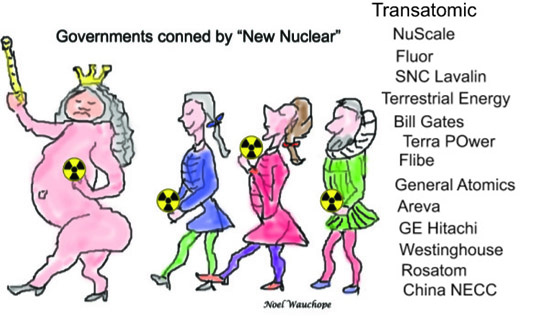 The Parliamentary Committee Inquiry on Australia joining the Framework Agreement for International Collaboration on Research and Development of Generation IV Nuclear Energy Systems has now published the submissions that it received.
As this Inquiry has been kept quite secret from the media and the public, it is not surprising that nearly all of the submissions have come from companies and individuals with either a very clear, or a vested, interest in the nuclear industry.
For the moment, I will just single out one that particularly interested me. This is from SMR Nuclear Technology Pty Ltd . They don’t actually have much to say about Small Modular Nuclear Reactors, but just go on to fulsome praise of Generation IV nuclear reactors in general, and of ANSTO.:
“…….SMR Nuclear Technology Pty Ltd is an independent Australian specialist consultancy established to advise on the siting, development and operation of safe nuclear power generation technologies, principally Small Modular Reactors (SMRs). Two of SMR-NT’s directors were senior managers at ANSTO and have a good understanding of the facilities and capabilities of ANSTO…..
SMR Nuclear Technology Pty Ltd most warmly supports Australia acceding to the Framework Agreement for International Collaboration on Research and Development of Generation IV Nuclear Energy Systems as extended by the Agreement extending the Framework Agreement for International Collaboration on Research and Development of Generation IV Nuclear Energy Systems” more http://www.aph.gov.au/Parliamentary_Business/Committees/Joint/Treaties/NuclearEnergy/Submissions
SMR Nuclear Technologies sounds pretty much like ANSTO in disguise.
They dropped a little hint of what ANSTO is up to, in their previous, (rather weak and contradictory) submission to the Nuclear Fuel Cycle Royal Commission, in which they stated: “Thorium is now being revisited, particularly in China. Australia (ANSTO) is assisting with this work” – http://nuclearrc.sa.gov.au/app/uploads/2016/03/SMR-Nuclear-Technology-Pty-Ltd-30-07-2015.pdf
We didn’t know that the Australian tax-payer was funding thorium nuclear reactor development in China, did we?
Australia keen to get involved in nuclear fusion research?
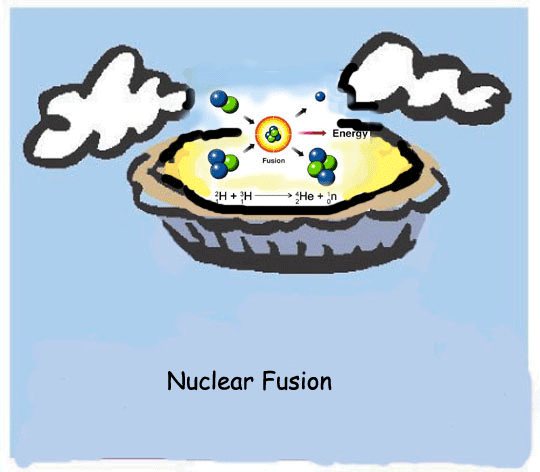 ANU partner with China on nuclear fusion technology for power supply, The Age, Georgina Connery , 5 May 17, ANU has handed over the keys to its $35 million nuclear fusion stellarator as part of a technology exchange with China aimed at creating a new viable base-load power source by 2050.
Many nations, scrambling to find a solution to the energy crisis, view nuclear fusion as a sustainable solution…….ANU Australian Plasma Fusion Research Facility director Dr Cormac Corr said a memorandum of understanding signed with University of South China in April underpinned the exchange…..
In September 2016, Australia became the first non-member state to enter a formal collaborative agreement with ITER – set to be the world’s largest Tokamak fusion reactor and the first to create net power.
China, the European Union, India, Korea, Russia, Japan and the United States are jointly funding the construction of the $30 billion nuclear fusion demonstration facility in France.
Australia is trying to position itself as a major player in the ITER project by providing the technology to see volatile plasma, which is otherwise invisible when it reaches temperatures of 150 million degrees inside the reactor…..
ANU professor John Howard and fellow fusion science experts are lobbying, through the Australian Nuclear Science and Technology Organisation, for a $30 million federal program over the next three decades to further plasma fusion capabilities.
“We want to get an instrument that Australia owns on ITER in prime core space, so we are not relegated to a side show,” Professor Howard said…..
Research conducted at the ANU facility would feed into Australia’s materials and monitoring advice to the ITER project…..http://www.theage.com.au/act-news/anu-partner-with-china-on-nuclear-fusion-technology-for-power-supply-20170505-gvz7qc.html
Parliamentary Committee considering if Australia should be involved in making Generation IV nuclear reactors
The gift of the ‘GIF’: Generation IV International Forum, Independent Australia, 19 April 2017 The Turnbull Government has quietly signed Australia up to the GIF Framework Agreement for the development of Gen IV nuclear reactors and is currently conducting a Parliamentary Inquiry of which most of us are unaware, writes Noel Wauchope.
YOU HAVE probably never heard of the “GIF”.
I hadn’t, until just this week when by chance, I heard of the Parliament Inquiry into the Framework Agreement for International Collaboration on Research and Development of Generation IV Nuclear Energy Systems.
The Committee consists of nine Liberal MPs, six Labor and one Green.
That inquiry is being held now and the Committee calls, or more correctly, whispers, for submissions by 28 April 2017.
It is all about the GIF — Generation IV International Forum. The Australian Government signed up to this, in 2016, without any public discussion.
What is The Generation IV International Forum (GIF)?
An international collection of 14 countries: Argentina, Brazil, Canada, France, Japan, South Korea, South Africa, the UK and the USA (original charter members, 2005); Switzerland, Euratom, China, Russia and Australia (signed later).
The World Nuclear Association describes the collection as countries for whom:
‘ … nuclear energy is significant now and also seen as vital for the future’.
What is the 2005 Framework Agreement AKA “the charter”?
According to the World Nuclear Association the 2005 Framework Agreement:
‘ … formally commits them [signatories] to participate in the development of one or more Generation IV systems selected by GIF for further R&D.’
Australia signed the charter on 22 June 2016 represented by Dr Adi Patterson, COE of the Australia Nuclear Science and Technology Organisation (ANSTO). — pending this Joint Standing Committee on Treaties review. ANSTO is to be the implementing agent.
When the Australian Government quietly signed up to the GIF, it made no commitment to any particular action towards developing new nuclear reactors. Other countries – including Japan, Canada, France, South Korea – have committed to working on particular types of Generation IV reactors. Australia might be expected to not only fully sign up as a member of the charter but perhaps also to provide funding and resources to develop one or more types.
Australia’s signing of the GIF
Media reports indicate Australia made a bid, or approach, to join GIF. The active seeking out of such an agreement that is at odds with public opinion, at odds with the current government’s policy position on nuclear power and is inconsistent with Australian laws, which prohibit the use of this technology, is astounding…….
ANSTO makes a number of questionable assumptions about Australia joining in developing new nuclear reactors. For example, ANSTO claims that it would ‘further Australia’s non-proliferation and nuclear safety objectives’, and ‘further strengthen our claim as the most advanced nuclear country in SEAP’ and will position Australia to develop Generation IV reactors.
There are so many questions about — one hardly knows where to start:…….https://independentaustralia.net/politics/politics-display/the-gift-of-the-gif-generation-iv-international-forum,10215#.WPbL2mlNX7g.twitter
Bid for rare earths mining and processing in Australia

Is there any awareness in Australia of the dangers of toxic radioactive trash from rare earths mining and processing?
Next mining boom in Australia will be driven by tech metals for renewable energy and technologies ABC Rural By Babs McHugh, 17 Apr 17 The Australian mining industry is on the verge of a new mining boom based around so-called tech metals.
And as the race cranks up across the nation to find new deposits of rare earths and other metals, industry itself is calling for the development of a value-adding component……
The tech metals complex is made up of rare earths and other minerals and metals that are used in what is referred to as the new economy. They are essential to making high technology componentry such as mobile phones, solar cells and autonomous vehicles.They are also used to make the different kinds of batteries needed to store power from renewable sources, and new types of lightweight engines to replace traditional combustion engines……..
Rare earth hunters also want local value-adding industry There are 17 rare earth elements on the periodic table, falling into the heavy rare earths or light rare earths depending on their atomic weight.
Up until recently, all rare earths were mined and exported from China, which has had a stranglehold on the industry and its pricing. Given their global importance, the race is well and truly on to find more rare earth deposits, and Australia is a favoured hunting ground.
“They’re actually quite ubiquitous in the Earth’s crust,” Arafura Resources managing director Gavin Lockyer said.”Why they’re associated with the term rare is the fact that it’s rare to find them in an economically recoverable quantity.”
Australia the perfect place for processing Arafura Resources has done that with its Nolans Bore project 135 kilometres north-west of Alice Springs in the Northern Territory.The find is considered significant, featuring a 56-million-tonne deposit with a 40-year mine life. It is full of neodymium and praseodymium, which is used to make magnets, the bulk of which are now sourced from China.
“We really think there’s much more value-add to be had by doing downstream processing, and Australia is the perfect place to do that. “We’ve got an existing regulatory environment that covers things like water usage, environmental aspects, air pollutants, transport and disposal. “There’s already a well-established regime and bureaucracy in place to regulate that, and we think it’s better to do that at the mine site where it all happens, rather than trying to do it offshore and making it somebody else’s problem……http://www.abc.net.au/news/2017-04-17/next-mining-boom-in-australia-is-tech-metals/8443172
Australian government about to secretly sign up to participate in developing new nuclear reactors
Under the radar: Parliamentary Committee preparing for Australia to sign up to more participation in developing new nuclear reactors
Inquiry Homepage: Submissions close 28 th April 2017 Inquiry Homepage: http://www.aph.gov.au/Parliamentary_Business/Committees/Joint/Treaties/NuclearEnergy
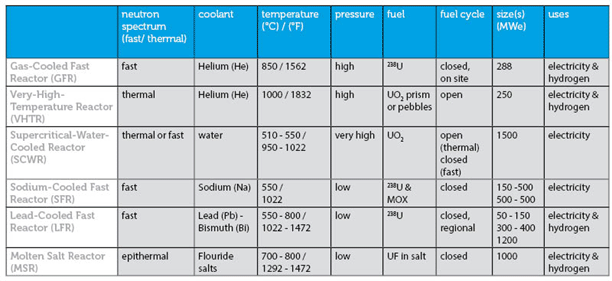
Governments policy position on nuclear power and is inconsistent with Australian laws which prohibit the use of this technology is astounding.
 What the Gov’t said in 2016 in relation to joining GIF: Christopher Pyne, said:
“Australia’s invitation to join this important global project marks an exciting opportunity to be at the forefront of global innovation in the nuclear industry.” He added, “Inclusion in the GIF further strengthens Australia’s position as a nation that has the research muscle to deliver innovations on the global stage. It reinforces the governments 1 $billion National Innovation and Science Agenda, encouraging our best and brightest researchers to collaborate with international experts.”
 Julie Bishop said in relation to joining GIF
1 This month

4 November – Will AUKUS keep us safe – at what cost?
the Commissioners of the AUKUS Public Inquiry present their findings at the National Press Club of Australia in Canberra. iview.abc.net.au/show/national-press-club-address
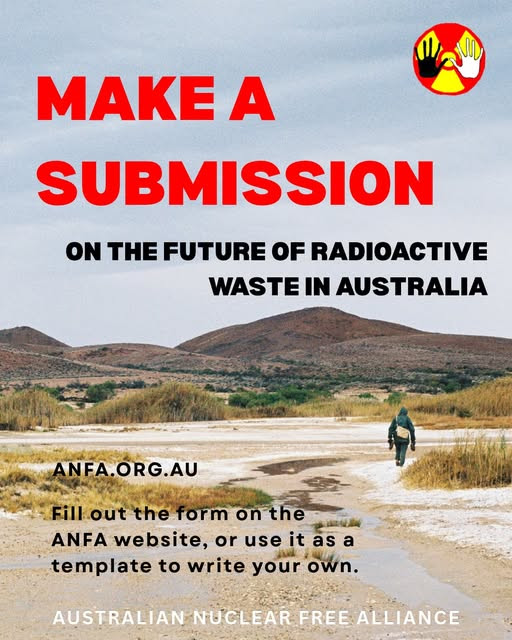
Submissions to the federal government’s new draft framework close on the 13th November 2026.
Australians deserve the truth
about
AUKUS – https://aukuspublicinquiry.com/

PETITION – To: Prime Minister Anthony Albanese and the Australian Labor Government

of the week – Australians for War Powers Reform (AWPR)
To see nuclear-related stories in greater depth and intensity

