The people and environment of SA, WA and NT must be protected from Federal imposed storage of AUKUS High-Level nuclear waste:
Through AUKUS, federal Labor are ‘normalising’ and legitimising High-Level nuclear waste.
The public has a right to full disclosure in an informed debate ahead of AUKUS nuclear
decisions. Silence by political leaders paves a path for an AUKUS nuclear dump agenda.
Brief by David Noonan Independent Environment Campaigner, 06 March 2026, https://nuclear.foe.org.au/wp-content/uploads/Noonan-AUKUS-nuclear-wastes-target-SA-WA-and-NT-March-2026.pdf
Summary
- Federal Labor has broken its commitment to announce a process for AUKUS waste storage
- Through AUKUS, federal Labor are ‘normalising’ and legitimising High-Level nuclear waste
- Minister Marles wants to put a flag on US Navy High-Level nuclear wastes and ‘call it our own’
- Aboriginal People have a Right to Free, Prior and Informed Consent over AUKUS wastes
- SA Premier to let ‘national security interests’ decide the location for AUKUS nuclear waste
- Scenario: AUKUS nuclear waste to ship into Whyalla Port to go north to the Woomera Area
The Australian public have a Right to Say No to undemocratic new federal Labor powers to
impose AUKUS High-Level nuclear waste, effectively by decree, across SA, WA and the NT.
AUKUS Regulation 111 (02 Oct 2025) overrides protections in our existing State and Territory
laws, and specifically names and prescribes SA and WA laws that prohibit High-Level nuclear
waste storage. These draconian federal powers lack social licence and are an affront to civil
society, they damage public trust in governance and are an ongoing threat to Aboriginal People’s
rights and cultural responsibility to protect their country.
The Objects of the SA Nuclear Waste Storage (Prohibition) Act 2000 set out what is at stake:
“To protect the health, safety and welfare of the people of South Australia, and the
environment in which they live” by prohibiting certain nuclear waste storage facilities.
Community now face federal imposition of untenable and illegal AUKUS nuclear waste storage,
see “The lethal legacy of Aukus nuclear submarines will remain for millennia – and there’s no
plan to deal with it” (The Guardian, 10 August 2025, Interview with Prof Ian Lowe).
Federal Labor has broken its commitment to announce a process for AUKUS waste storage:
AUKUS Minister Richard Marles MP made a commitment to announce a process to identify a
site to dispose of AUKUS nuclear wastes by early 2024. The failure by Defence to set out any
process – other than to take up powers to impose nuclear wastes by decree – is unacceptable.
‘Transparency warrior’ Rex Patrick has brought to light: “A Brief on how to choose a location for
AUKUS nuclear waste was provided to Defence Minister Richard Marles in Dec 2023”, see
“Submarine boasts, yet nuclear waste dumps submersed in secrecy” (MWM, 16 Feb 2026).
The public has a Right to Know what regions across SA, WA and the NT are being targeted for
storage of AUKUS nuclear wastes. The secretive ongoing Defence review “to identify potential
nuclear waste disposal sites” (ABC News March 2023) and the Brief must be made public.
The Woomera Area was reported to be a ‘favoured location’ for storage and disposal of nuclear
sub wastes back in August 2023, see “Woomera looms as national nuclear waste dump site
including for AUKUS submarine high-level waste afr.com. WA, Qld and Vic political leaders
rejected a High-Level nuclear waste disposal site in their States in 2023. WA has suggested the
Woomera Prohibited Area in SA: “would be one obvious location within the Defence estate,
however, we will await the outcomes of the federal review” (SMH 15 March 2023).
Through AUKUS, federal Labor are ‘normalising’ and legitimising High-Level nuclear waste.
Aspiring International nuclear waste dumpers Tellus Holdings Ltd that operates the Sandy
Ridge waste repository in WA has partnered with Amentum UK to expand the Chandler Project
in the NT. Amentum provides services to Pine Gap and was involved in the “Waste Isolation
Pilot Plant” – the only nuclear geological repository in the US. In a Jan 2026 submission to a
federal Inquiry Tellus offered to first take AUKUS & International Low-Level waste at Chandler.
The public has a right to full disclosure in an informed debate ahead of AUKUS nuclear
decisions. Silence by political leaders paves a path for an AUKUS nuclear dump agenda.
Min Marles wants to put a flag on US Navy High-Level nuclear wastes and ‘call it our own’:
AUKUS Minister Marles aims Australia take on second-hand US Virginia Class nuclear powered
subs in the early 2030’s loaded with US origin military High-Level nuclear fuel waste accrued in
up to a dozen years of US Navy operations of US ‘High Enriched Uranium’ nuclear reactors.

Swapping an Australian flag onto this US military nuclear reactor waste places an untenable ‘for
ever’ burden on future Australian generations to have to try to isolate these US nuclear wastes.
Aboriginal People have a Right to Free, Prior and Informed Consent over AUKUS wastes:
Q: Will our political leaders commit to respect and comply with Aboriginal People’s human
rights, set out in the United Nations Declaration on the Rights of Indigenous Peoples Article 29
(UNDRIP 2007), to “Free, Prior and Informed Consent” over storage of hazardous materials on
their lands. AUKUS nuclear wastes absolutely are hazardous materials! Traditional Owners
across SA, WA and the NT have repeatedly had to Say No to the imposition of nuclear wastes.
The SA Premier was called on to declare his position back in Dec and has so far not responded.
SA Premier to let ‘national security interests’ decide the location for AUKUS nuclear waste:
Premier Peter Malinauskas MP has said AUKUS nuclear waste should go to a ‘remote’ location in
the “national security interest”, see “Site for high-level nuclear waste dump under AUKUS deal
must be in national interest, SA premier says” (ABC News 15 March 2023).
The Premier’s “Office for AUKUS” (Letter, 07 Oct 2025) claims “safe and secure disposal” for
High-Level nuclear waste, including spent fuel, produced when N-subs are decommissioned.
The Office expresses no concerns over globally unprecedented High-Level nuclear waste
disposal, declines to reveal what is underway and yet expects “community acceptance”:
“Determining suitable locations and methods for safe and secure disposal will take
time, but Australia will do so in a manner that sets the highest standards … and which
builds community acceptance for a disposal solution.”
Ahead of the SA Election the Premier has been called on to answer the Q: Will you accept or
reject federal imposed storage of AUKUS nuclear waste in SA? so far there is no response.
REPORTER: Is a high-level nuclear waste dump the price that South Australia will have to pay
for the jobs that go to the state? (Minister Marles Press Conference 14 March 2023)
MARLES: Well, as I indicated there will be a process that we will determine within the next 12
months for how the site will be identified. You’ve made a leap there, which we’re not going to
make for some time. It will be a while before a site is ultimately identified.
SA is left in the dark, without a say, as an ongoing target for an AUKUS nuclear waste dump
Scenario: AUKUS nuclear waste to ship into Whyalla Port to go north to the Woomera Area
The Woomera Area is expected to be a target on a federal regional short list for an AUKUS
nuclear dump site and Whyalla Port to be on a likely AUKUS nuclear waste transport route.
Rex Patrick has set out an array of potential locations and types of AUKUS nuclear waste
facilities across Australia, see “AUKUS waste in perpetuity” (MWM, 22 July 2025).
For further information: see Friends of the Earth https://nuclear.foe.org.au/nuclear-subs/
Submarine boasts, yet nuclear waste dumps submersed in secrecy.

Albanese and Marles clearly don’t think they’ll be around in politics when the radioactive mess hits the fan. For them, that’s a future Government’s problem to solve.e.
by Rex Patrick | Feb 16, 2026 , https://michaelwest.com.au/submarine-boasts-yet-nuclear-waste-dumps-submersed-in-secrecy/
As the SA Premier basks in the campaign glory of a $3.9 billion downpayment on shipyard for nuclear subs, the Federal Government is kicking the nuclear waste can down the road. Rex Patrick reports.
Meanwhile, two senior government officials have told the Administrative Review Tribunal that the public they serve need to be kept in the dark on plans to deal with civil and AUKUS nuclear waste.
For over 40 years, Australian governments of various flavours have been trying, and failing, to work out what to do with the nation’s growing medical and industrial nuclear waste. That problem has become harder as the need to deal with AUKUS’s high-level reactor waste has been added to the task.
Australia’s 3,700m3 of low-level and 1,300m3 of intermediate-level radioactive waste is stored in over 100 locations nationwide, including at hospitals, science facilities and at universities.
Since July 2023, when the Federal Court set aside the decision of the Morrison Government to locate a civil National Radioactive Waste Management Facility at Kimba, there’s been radio silence from Prime Minister Albanese’s Government on what the next steps will be.
There has been a similar silence about the plans for AUKUS high-level waste, despite the Government already having a plan for selecting a dump site.
Narrative control
As MWM tried to use Freedom of Information (FOI) laws to squeeze some information from the Government about on what’s going on, what was instead revealed was a conscious plan to keep the public in the dark.
In order to try to keep everything secret the CEO of the Australian Radioactive Waste Agency (ARWA), Mr Sam Usher, give evidence to the Tribunal explaining the dangers of letting what he described as a “nuclear illiterate” Australian public know what’s going on. The Government’s remedy to public illiteracy, it seems, is to keep the public illiterate.
In an 18th-century approach to winning over the public, he affirmed in an affidavit that
“The release of information (requested by MWM) in these circumstances does not align with current messaging or status on (redacted) – which heavily relies on public approval – could negatively impact trust, and the building and sustaining of the social license that ARWA and the Australian Government will need to deliver (redacted).”
And indeed, CEO Usher asked the Tribunal to keep that statement secret. MWM challenged the secrecy, and the Tribunal ordered the statement to be released; trust and social licence, all to be obtained from the public by narrative control.
Thou shalt not debate!
Alex Kelton, Deputy Director General of Strategy at the Australian Submarine Agency, gave similar evidence. The public should not know – it’s too dangerous for government.
Kelton testified that transparency would cause the diversion of Government resources “by inviting [public] discussion about early contemplative thinking on a matter which Australia does not have a long-standing policy position”.
Transparency would, she said:
“provide signalling about the advice to Government which may result in commentary“
“that places pressure on government to rule in or out particular options, ideas or strategies, or effectively forecloses approaches to issues, by reason of adverse public sentiment that is not fully informed and which it is premature for the government to engage publicly on until it has done further work to develop its view of the options and the position.”
The Australian Government has never run a successful program to obtain social licence for a nuclear waste facility. A fact that flows from that is that Deputy Director General Kelton has no experience in such an endeavour either. She was the Chief of Staff to Defence Minister Linda Reynolds, so she does have political experience.
“Important or urgent?“
The argument adopted by Usher and Kelton on behalf of the Government is that there will be a public consultation, but until that occurs, nothing should be made public.
The evidence in the Administrative Review Tribunal paints a disturbing picture.
In the middle of Usher’s evidence was a sentence with unusual quotation marks around the words “important” and “urgent”.
21.9. Managing radioactive waste that is “important” but rarely “urgent”, considering the long lead times involved
Redacted evidence from Kelton, which the Government was later forced to reveal the gist of under challenge from MWM, explained that the Government was sitting on its hands, not doing anything. A brief on how to choose a location for AUKUS nuclear waste was provided to Defence Minister Richard Marles in December 2023, and nothing has happened.
Under cross examination it was clear that Usher was frustrated by the Government’s failure to deal with an “important” issue with the necessary “urgency”,.
No consultation
MWM was at pains to point out to the Tribunal that there is no legal requirement for the Government to conduct consultation. Section 10 of the Australian Naval Nuclear Power Safety Act allows the Defence Minister to issue a regulation declaring any site in Australia as a nuclear facility for the purposes of AUKUS.
No consultation is required, and any future Government, faced with delays caused by inaction by today’s Government, can just announce a site – and in those circumstances, the Government is asking for no information to be released under FOI.
“Any place in Australia is on the cards.”
Kelton also put in her affidavit that (this) Government has announced the AUKUS nuclear waste site will be on current or Defence land.
However, during cross-examination, Kelton conceded that any location in Australia can be selected and then turned into Defence land by way of compulsory acquisition. She confirmed that all the Defence Minister’s announcement means is that whatever land is used, it will be a “Commonwealth Facility”.
Along with an announcement that any decision on a future nuclear submarine will now not be made until the 2030’s, it is clear that from the Administrative Review Tribunal proceedings that, against the advice of the ARWA, the Government are not interested in advancing work on a future high-level radioactive waste dump. Again, starting from scratch, that project might take at least a decade, probably longer, but Marles and Albanese appear to have no interest in getting things underway.
Living in the moment
Marles gets to jump on a private jet and head to Washington to meet with Secretary of War Pete Hegseth. He gets to strut around and talk tough on Defence. Meanwhile, Albanese clings to AUKUS like a political lifebuoy, hoping to avoid a hostile social media post from President Trump and any suggestion Labor is “soft on defence”.
But in a gross act of maladministration, they’re avoiding the tough political decisions needed now if AUKUS nuclear waste, and indeed all our other radioactive waste, is to be properly tackled.
Albanese and Marles clearly don’t think they’ll be around in politics when the radioactive mess hits the fan. For them, that’s a future Government’s problem to solve.
Rex Patrick
Rex Patrick is a former Senator for South Australia and, earlier, a submariner in the armed forces. Best known as an anti-corruption and transparency crusader, Rex is also known as the “Transparency Warrior.”
The people and environment of South Australia must be protected from Federal imposed storage of AUKUS High-Level nuclear waste:
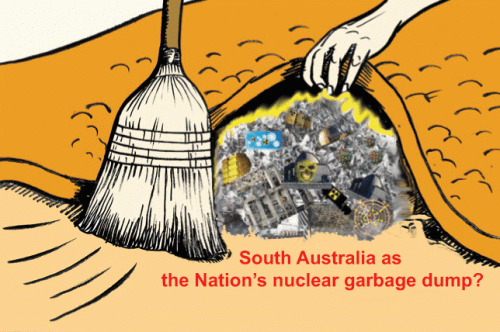
by David Noonan Independent Environment Campaigner 10 Nov 2025.
South Australians have a Right to Say No to undemocratic Federal imposed storage of AUKUS
High Level nuclear waste in our State. All Federal MPs & Senators from SA, Members of the SA
Parliament and candidates for the SA State Election on 21st March should declare their position:
Q: Will you accept or reject Federal imposed storage of AUKUS nuclear waste in SA?
The Federal Government quietly took up new AUKUS Regulations (2 Oct) as powers to impose
AUKUS wastes by override of State laws that prohibit nuclear waste storage in SA, NT and WA.
AUKUS Regulation 111 “State and Territory laws that do not apply in relation to a regulated
activity” names and prescribes our SA Nuclear Waste Storage (Prohibition) Act 2000. The
Objects of this key SA Law set out what is at stake: “To protect the health, safety and welfare
of the people of SA, and the environment in which they live” from nuclear waste storage.
Federal Labor’s draconian powers to compromise public health, safety and welfare protections
in SA Law, lacks social licence, are an affront to civil society, and damages trust in governance.
This is also a threat to Indigenous People with a cultural responsibility to protect their country.
Community expects our State Labor Government to give a clear State Election commitment to
protect SA from the risks and impacts of untenable and illegal AUKUS High Level nuclear waste
storage, see “The lethal legacy of Aukus nuclear submarines will remain for millennia – and
there’s no plan to deal with it” (The Guardian, 10 August 2025, interview with Prof Ian Lowe).
Labor has a further key leadership test ahead of our Election: to commit to support Indigenous
People’s human rights, set out in the United Nations Declaration on the Rights of Indigenous
Peoples Article 29 (UNDRIP 2007), to “Free, Prior and Informed Consent” over storage of
hazardous materials on their lands. AUKUS wastes absolutely are hazardous materials!
a Question for Premier Peter Malinauskas: Will you respect and support Indigenous Peoples
Rights to Say No to Federal siting of AUKUS nuclear waste storage on their country in SA?
Call for full disclosure on a N-waste siting process after Labor breaks its commitment:
The public has a Right to Know what regions are being targeted for storage of High-Level
nuclear wastes. A secretive ongoing Defence review “to identify potential nuclear waste
disposal sites” (ABC News March 2023) must be made public ahead of the SA State Election.
AUKUS Minister Marles has broken his commitment to announce a process by early 2024 to
identify a site to dispose of AUKUS High-Level nuclear wastes. The failure by Defence to set out
any process – other than to take up powers to impose nuclear wastes – is unacceptable.
REPORTER: Is a high-level nuclear waste dump the price that South Australia will have to pay
for the jobs that go to the state? (Minister Marles Press Conference 14 March 2023)
MARLES: Well, as I indicated there will be a process that we will determine within the next 12
months for how the site will be identified. You’ve made a leap there, which we’re not going to
make for some time. It will be a while before a site is ultimately identified. But we will within the
next 12 months establish a process for how we walk down that path.
It is now over 4 years since Federal Labor agreed with Morrison’s AUKUS nuclear sub agenda.
SA Labor to let ‘national security interests’ decide siting for AUKUS nuclear waste?
National press reported the Woomera Area to be a ‘favoured location’ for storage and disposal
of nuclear sub wastes back in August 2023 (“Woomera looms as national nuclear waste dump
site including for AUKUS submarine high-level waste afr.com). WA, Qld and Vic political leaders
have rejected a High-Level nuclear waste disposal site in their States, with WA suggesting the
Woomera Prohibited Area in SA: “would be one obvious location within the Defence estate,
however, we will await the outcomes of the federal review” (SMH 15 March 2023).
Premier Malinauskas has so far only said AUKUS nuclear waste should go to a ‘remote’ location
in the “national security interest” (see “Site for high-level nuclear waste dump under AUKUS
deal must be in national interest, SA premier says” ABC News 15 March 2023).
The Premier’s “Office for AUKUS” (Letter, 7 Oct 2025) accepts “safe and secure disposal” of
High-Level nuclear waste, including spent fuel, produced when subs are decommissioned. The
Office says no decision has been made on a location but declines to reveal what is underway,
expresses no concerns over unprecedented nuclear waste storage or ‘social license’, and
expects “community acceptance” (in SA?) for a nuclear ‘disposal solution’:
“I can confirm that no decision has been made on a location within Australia for the
disposal of intermediate, or high-level radioactive waste from nuclear-powered
submarines. Determining suitable locations and methods for safe and secure disposal
will take time, but Australia will do so in a manner that sets the highest standards … and
which builds community acceptance for a disposal solution.”
SA is left in the dark, without a say, as an ongoing target for an AUKUS nuclear waste dump.
AUKUS is to store US origin nuclear wastes from 2nd hand Virginia Class subs in Australia:
AUKUS aims Australia take on second-hand US Virginia Class nuclear powered subs in the early
2030’s loaded with up to a dozen years of US origin military High-Level nuclear waste and fissile
Atomic-Bomb fuel accrued in operations of US Navy High Enriched Uranium nuclear reactors.
Swapping an Australian flag onto this US military nuclear reactor waste places an untenable ‘for
ever’ burden on all future generations to have to cope these US nuclear wastes.
Scenario: an AUKUS nuclear dump imposed on SA, High-Level military waste shipped into
Whyalla Port to go north, nuclear subs to be ‘decommissioned’ at Osborne Port Adelaide.
Whyalla Port is back on a nuclear waste target range. How else could AUKUS nuclear waste get
to a storage site in north SA? The Woomera Area is expected to be on a regional short list for an
AUKUS dump, requiring nuclear waste transport routes across SA. Port Adelaide community has
a Right to Say No to nuclear decommissioning plans for expanded Osborne submarine yards.
SA politicians must protect SA and rule out both an untenable AUKUS nuclear dump and
decommissioning nuclear subs and nuclear reactors at Osborne or else-where in SA.
SA must respect Traditional Owners Human Rights to Say No to imposition of nuclear wastes.
The SA public have Rights to full disclosure and for politicians to have to declare their positions,
We need an informed public debate ahead of our State Election. Silence by our political leaders, while a path is paved toward nuclear decisions, makes a nuclear waste dump future more likely.
Info: see Rex Patrick & “AUKUS waste in perpetuity”, and David Noonan in Pearls and Irritations
The people and environment of South Australia must be protected from Federal imposed storage of AUKUS High-Level nuclear waste
Brief by David Noonan Independent Environment Campaigner 10 Nov 2025. https://nuclear.foe.org.au/wp-content/uploads/Noonan-AUKUS-nuclear-wastes-target-SA-Briefer-9-Nov-2025.pdf
South Australians have a Right to Say No to undemocratic Federal imposed storage of AUKUS
High Level nuclear waste in our State. All Federal MPs & Senators from SA, Members of the SA
Parliament and candidates for the SA State Election on 21st March should declare their position:
Q: Will you accept or reject Federal imposed storage of AUKUS nuclear waste in SA?
The Federal Government quietly took up new AUKUS Regulations (2 Oct) as powers to impose
AUKUS wastes by override of State laws that prohibit nuclear waste storage in SA, NT and WA.
AUKUS Regulation 111 “State and Territory laws that do not apply in relation to a regulated
activity” names and prescribes our SA Nuclear Waste Storage (Prohibition) Act 2000. The
Objects of this key SA Law set out what is at stake: “To protect the health, safety and welfare
of the people of SA, and the environment in which they live” from nuclear waste storage.
Federal Labor’s draconian powers to compromise public health, safety and welfare protections. n SA Law, lacks social licence, are an affront to civil society, and damages trust in governance.
This is also a threat to Indigenous People with a cultural responsibility to protect their country.
Community expects our State Labor Government to give a clear State Election commitment to
protect SA from the risks and impacts of untenable and illegal AUKUS High Level nuclear waste
storage, see “The lethal legacy of Aukus nuclear submarines will remain for millennia – and
there’s no plan to deal with it” (The Guardian, 10 August 2025, interview with Prof Ian Lowe).
Labor has a further key leadership test ahead of our Election: to commit to support Indigenous
People’s human rights, set out in the United Nations Declaration on the Rights of Indigenous
Peoples Article 29 (UNDRIP 2007), to “Free, Prior and Informed Consent” over storage of
hazardous materials on their lands. AUKUS wastes absolutely are hazardous materials!
a Question for Premier Peter Malinauskas: Will you respect and support Indigenous Peoples
Rights to Say No to Federal siting of AUKUS nuclear waste storage on their country in SA?
Call for full disclosure on a N-waste siting process after Labor breaks its commitment:
The public has a Right to Know what regions are being targeted for storage of High-Level
nuclear wastes. A secretive ongoing Defence review “to identify potential nuclear waste
disposal sites” (ABC News March 2023) must be made public ahead of the SA State Election.
AUKUS Minister Marles has broken his commitment to announce a process by early 2024 to
identify a site to dispose of AUKUS High-Level nuclear wastes. The failure by Defence to set out
any process – other than to take up powers to impose nuclear wastes – is unacceptable.
REPORTER: Is a high-level nuclear waste dump the price that South Australia will have to pay
for the jobs that go to the state? (Minister Marles Press Conference 14 March 2023)
MARLES: Well, as I indicated there will be a process that we will determine within the next 12
months for how the site will be identified. You’ve made a leap there, which we’re not going to
make for some time. It will be a while before a site is ultimately identified. But we will within the
next 12 months establish a process for how we walk down that path.
It is now over 4 years since Federal Labor agreed with Morrison’s AUKUS nuclear sub agenda.
SA Labor to let ‘national security interests’ decide siting for AUKUS nuclear waste?
National press reported the Woomera Area to be a ‘favoured location’ for storage and disposal
of nuclear sub wastes back in August 2023 (“Woomera looms as national nuclear waste dump
site including for AUKUS submarine high-level waste afr.com). WA, Qld and Vic political leaders
have rejected a High-Level nuclear waste disposal site in their States, with WA suggesting the
Woomera Prohibited Area in SA: “would be one obvious location within the Defence estate,
however, we will await the outcomes of the federal review” (SMH 15 March 2023).
Premier Malinauskas has so far only said AUKUS nuclear waste should go to a ‘remote’ location
in the “national security interest” (see “Site for high-level nuclear waste dump under AUKUS
deal must be in national interest, SA premier says” ABC News 15 March 2023).
The Premier’s “Office for AUKUS” (Letter, 7 Oct 2025) accepts “safe and secure disposal” of
High-Level nuclear waste, including spent fuel, produced when subs are decommissioned. The
Office says no decision has been made on a location but declines to reveal what is underway,
expresses no concerns over unprecedented nuclear waste storage or‘social license’, and
expects “community acceptance” (in SA?) for a nuclear ‘disposal solution’:
“I can confirm that no decision has been made on a location within Australia for the
disposal of intermediate, or high-level radioactive waste from nuclear-powered
submarines. Determining suitable locations and methods for safe and secure disposal
will take time, but Australia will do so in a manner that sets the highest standards … and
which builds community acceptance for a disposal solution.”
SA is left in the dark, without a say, as an ongoing target for an AUKUS nuclear waste dump.
AUKUS is to store US origin nuclear wastes from 2nd hand Virginia Class subs in Australia:
AUKUS aims Australia take on second-hand US Virginia Class nuclear powered subs in the early
2030’s loaded with up to a dozen years of US origin military High-Level nuclear waste and fissile
Atomic-Bomb fuel accrued in operations of US Navy High Enriched Uranium nuclear reactors.
Swapping an Australian flag onto this US military nuclear reactor waste places an untenable ‘for
ever’ burden on all future generations to have to cope these US nuclear wastes.
Scenario: an AUKUS nuclear dump imposed on SA, High-Level military waste shipped into
Whyalla Port to go north, nuclear subs to be ‘decommissioned’ at Osborne Port Adelaide.
Whyalla Port is back on a nuclear waste target range. How else could AUKUS nuclear waste get
to a storage site in north SA? The Woomera Area is expected to be on a regional short list for an
AUKUS dump, requiring nuclear waste transport routes across SA. Port Adelaide community has
a Right to Say No to nuclear decommissioning plans for expanded Osborne submarine yards.
SA politicians must protect SA and rule out both an untenable AUKUS nuclear dump and
decommissioning nuclear subs and nuclear reactors at Osborne or else-where in SA.
SA must respect Traditional Owners Human Rights to Say No to imposition of nuclear wastes.
The SA public have Rights to full disclosure and for politicians to have to declare their positions,
We need an informed public debate ahead of our State Election. Silence by our political leaders,
while a path is paved toward nuclear decisions, makes a nuclear waste dump future more likely.
Info: see Rex Patrick & “AUKUS waste in perpetuity”, and David Noonan in Pearls and Irritations.
The lethal legacy of Aukus nuclear submarines will remain for millennia – and there’s no plan to deal with it
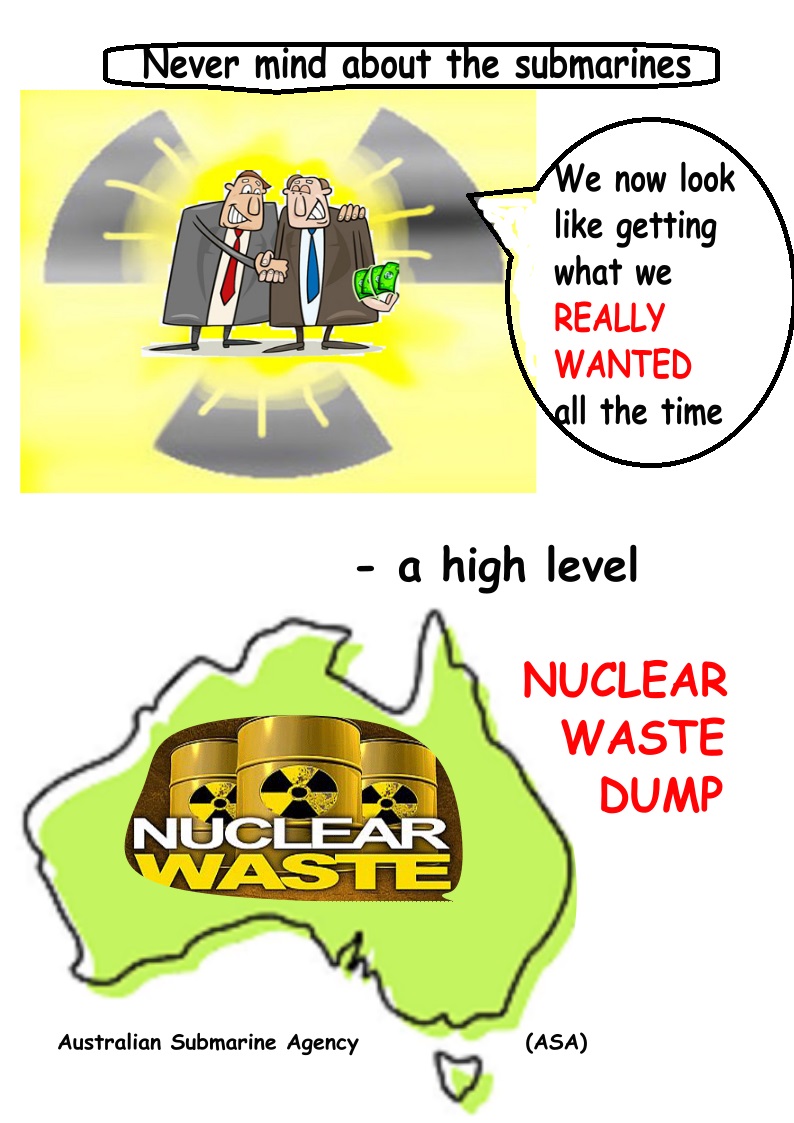
Ben Doherty, 10 Aug 25, https://www.theguardian.com/world/2025/aug/10/the-lethal-legacy-of-aukus-nuclear-submarines-will-remain-for-millennia-and-theres-no-plan-to-deal-with-it
“None of the leaders who announced Aukus are in power any more,” he tells the Guardian. “One hundred thousand years from now, who knows what the world looks like, but Australia, whatever is here then, will still be dealing with the consequences of that high-level waste.”
Australia’s future nuclear submarines will produce highly radioactive waste, and allies in the UK and the US still don’t have a safe place to store their own.
In the cold deep waters of Rosyth Harbour lie the dormant hulks of Britain’s decommissioned nuclear submarines.
One of the shells lashed to the dock here is HMS Dreadnought, Britain’s first nuclear-powered submarine. It was commissioned in 1963, retired in 1980, and has spent decades longer tied to a harbour than it ever did in service. The spent nuclear fuel removed from its reactor remains in temporary storage.
For decades the UK has sought a solution to the nuclear waste its fleet of submarines generates. After decades of fruitless search there are “ongoing discussions” but still no place for radioactive waste to be permanently stored.
Similarly, in the US – the naval superpower which controls a vast landmass and which has run nuclear submarines since the 1950s – there is still no permanent storage for its submarines’ nuclear waste.
More than a hundred decommissioned radioactive reactors sit in an open-air pit in Washington state, on a former plutonium production site the state’s government describes as “one of the most contaminated nuclear sites in the world”.
This is what becomes of nuclear-powered submarines at the end of their comparatively short life.
A nuclear-powered submarine can expect a working life of three decades: the spent fuel of a submarine powered by highly enriched uranium can remain dangerously radioactive for millennia. Finland is building an underground waste repository to be sealed for 100,000 years.
For Australia’s proposed nuclear-powered submarine fleet there is, at present, nowhere for that radioactive spent fuel to go. As a non-nuclear country – and a party to the non-proliferation treaty – Australia has no history of, and no capacity for, managing high-level nuclear waste.
But Australia is not alone: there is no operational site anywhere on Earth for the permanent storage of high-level nuclear waste.
‘Australia shall be responsible … ’
Documents released under freedom of information laws show that, beginning in the 2050s, each of Australia’s decommissioned Aukus submarines will generate both intermediate- and high-level radioactive waste: a reactor compartment and components “roughly the size of a four-wheel drive”; and spent nuclear fuel “roughly the size of a small hatchback”.
The Australian Submarine Agency says the exact amount of high-level waste Australia will be responsible for is “classified”.
Because Australia’s submarines will run on highly enriched uranium (as opposed to low enriched uranium – which can power a submarine but cannot be used in a warhead) the waste left behind is not only toxic for millennia, it is a significant proliferation risk: highly enriched uranium can be used to make weapons.
The eight nuclear-powered submarines proposed for Australia’s navy will require roughly four tonnes of highly enriched uranium to fuel their sealed reactor units: enough for about 160 nuclear warheads on some estimates.
The spent fuel will require military-grade security to safeguard it.
The problems raised by Australia’s critics of Aukus are legion: the agreement’s $368bn cost; the lopsided nature of the pact in favour of the US; sclerotic rates of shipbuilding in the US and the UK, raising concerns that Australia’s nuclear submarines might never arrive; the loss of Australian sovereignty over those boats if they do arrive; the potential obsolescence of submarine warfare; and whether Aukus could make Australia a target in an Indo-Pacific conflict.
All are grave concerns for a middle power whose security is now more tightly bound by Aukus to an increasingly unreliable “great and powerful friend”.
But the most intractable concern is what will happen to the nuclear waste.
It is a problem that will outlive the concept of Australia as a nation-state, that will extend millennia beyond the comprehension of anybody reading these words, that will still be a problem when Australia no longer exists.
And it cannot be exported.
The Aukus agreement expressly states that dealing with the submarines’ nuclear waste is solely Australia’s responsibility.
“Australia shall be responsible for the management, disposition, storage, and disposal of any spent nuclear fuel and radioactive waste … including radioactive waste generated through submarine operations, maintenance, decommissioning, and disposal,” Article IV, subclause D of the treaty states.
As well, should anything go wrong, at any point, with Australia’s nuclear submarines, the risk is all on Australia.
Australia shall indemnify … the United States and the United Kingdom against any liability, loss, costs, damage or injury … resulting from Nuclear Risks connected with the design, manufacture, assembly, transfer, or utilization of any Material or Equipment, including Naval Nuclear Propulsion Plants,” subclause E states.
“‘Nuclear Risks’,” the treaty states, “means those risks attributable to the radioactive, toxic, explosive, or other hazardous properties of material.”
‘Decide and defend’
An emeritus professor at Griffith University’s school of environment and science, Ian Lowe, tells Guardian Australia that the government’s regime for storing low-level nuclear waste is a “shambles”. He says the government’s “decide and defend” model for choosing a permanent waste storage site has consistently failed.
“You currently have radioactive waste from Lucas Heights, from Fishermans Bend, and from nuclear medicine and research all around Australia, just stored in cupboards and filing cabinets and temporary sheds,” Lowe says.
“The commonwealth government has made three attempts to establish a national facility – it’s a repository if you’re in favour of it, it’s a waste dump if you’re opposed – and on every occasion there’s been local opposition, particularly opposition from Indigenous landowners, and on each of those three occasions … the proposal has collapsed.”
Most of Australia’s low-level and intermediate nuclear waste – much of it short-lived medical waste – is stored at the Australian Nuclear Science and Technology Organisation facility in Lucas Heights in outer Sydney. Lowe says the nuclear safety regulator, ARPANSA, does a commendable job in protecting the public but the facility was never intended to be permanent.
Australia has been searching for a permanent site for nuclear waste for nearly three decades.
Its approach – derided by Lowe as “decide and defend”: where government chooses a place to put radioactive waste and then defends the decision against community opposition – has failed in Woomera, in central South Australia, in the late 1990s, then Muckaty station in the Northern Territory, then on farmland near Kimba, again in SA.
The federal court ruled against the Kimba plan in 2023, after a challenge from the traditional owners, the Barngarla people, who had been excluded from consultation.
Lowe, the author of Long Half-Life: The Nuclear Industry in Australia, says the complexities and risks of storing high-level nuclear waste from a submarine are factors greater than the low- and intermediate-level waste Australia now manages.
“The waste from nuclear submarines is much nastier and much more intractable,” he says. “And because they use weapons-grade highly enriched uranium there is the greater security issue of needing to make sure that not only do you need to protect against that waste irradiating people and the environment, you must also ensure that malevolent actors, who have in mind a malicious use of highly enriched uranium, can’t get their hands on it.”
Australia’s decision to use highly enriched uranium to power its submarines, as opposed to low enriched uranium (reactors would need refuelling each decade), is a “classic case of kicking the can down the road and creating a problem for future generations”, Lowe argues.
“In the short term, it’s better to have highly enriched uranium and a sealed reactor that you never need to maintain during the life of the submarine. But at the end of the life of the submarine, you have a much more serious problem.”
The high-level nuclear waste from Australia’s submarines will be hazardous for “hundreds of thousands of years,” Lowe says.
“There are arguments about whether it’s 300,000 or 500,000 or 700,000 years, but we’re talking a period at least as long as humans have existed as an identifiably separate species. The time horizon for political decision makers is typically four or five years: the time horizon of what we’re talking about is four or five hundred thousand years, so there’s an obvious disconnect.”
Inside ‘Trench 94’
The US and the UK have run nuclear-powered (and nuclear-armed) submarines for decades.
In the UK, 23 nuclear submarines have been decommissioned, none have been dismantled, 10 remained nuclear-fuelled. Most are sitting in water in docks in Scotland and on England’s south-west coast.
The first submarine to be disposed of – the cold war-era HMS Swiftsure was retired from service in 1992 – will be finally dismantled in 2026. Keeping decommissioned nuclear subs afloat and secure costs the UK upwards of £30m a year.
There is still no site for permanent storage of their radioactive waste: there has been “progress and ongoing discussions”, the defence minister, Lord Coaker, told the House of Lords last year, but still no site.
The UK has about 700,000 cubic metres of toxic waste, roughly the volume of 6,000 doubledecker buses. Much of it is stored at Sellafield in Cumbria, a site described by the Office for Nuclear Regulation says as “one of the most complex and hazardous nuclear sites in the world”.
In the US, contaminated reactors from more than 100 retired submarines are stored in “Trench 94” – a massive open pit at the Hanford nuclear site in Washington state. Spent nuclear fuel is also sent to the Idaho National Laboratory and sites in South Carolina and Colorado. Hanford is designed to last 300 years but the site has a chequered history of pollution and radiation leaks. Washington state describes it as “one of the most contaminated nuclear sites in the world”.
Finland is the first country to devise a permanent solution. It is building an underground facility 450 metres below ground, buried in the bedrock of the island of Olkiluoto.
The Onkalo – Finnish for cave or cavity – facility has taken more than 40 years to build (the site was chosen by government in 1983) and has cost €1bn. It is now undergoing trials.
‘A Trojan horse’
In March 2023 Australia’s defence minister, Richard Marles, said high-level nuclear waste would be stored on “defence land, current or future”, raising the prospect that a site could be identified and then declared “defence land”. A process for establishing a site would be publicly revealed “within 12 months”, he said. That process has not been announced nor a site identified.
Australia will require a site for high-level nuclear waste from the “early 2050s”, according to the Australian Submarine Agency. Senate estimates heard last year that there have been no costings committed for the storage of spent fuel. And preparing a site for storing high-level radioactive waste for millennia will take decades.
Guardian Australia sent a series of questions to Marles’ office about the delayed process for selecting a site. A spokesperson for the Australian Submarine Agency responded, saying: “The government is committed to the highest levels of nuclear stewardship, including the safe and secure disposal of waste.
“As the Government has said, the disposal of high-level radioactive waste won’t be required until the 2050s, when Australia’s first nuclear-powered submarine is expected to be decommissioned.”
The spokesperson confirmed that Australia would be responsible for all of the spent nuclear fuel and radioactive waste generated from the Aukus submarines: it would not have responsibility for intermediate- or high-level radioactive waste – including spent fuel – from the US, UK or any other country. No permanent storage site had been identified for low-level radioactive waste, which would include waste from foreign submarines.
The government has consistently said it will engage extensively with industry, nuclear experts and affected communities to build a social licence for a permanent storage site.
But Dave Sweeney of the Australian Conservation Foundation says he has seen little evidence of genuine effort to build social licence.
The leaders who signed the Aukus deal – and those who continue to support it – have failed to comprehend the consequences beyond their political careers, he says.
“None of the leaders who announced Aukus are in power any more,” he tells the Guardian. “One hundred thousand years from now, who knows what the world looks like, but Australia, whatever is here then, will still be dealing with the consequences of that high-level waste.”
Sweeney says the “opacity” of the decision-making around the Aukus agreement itself is compounded by fears that the deal could be only the beginning of a nuclear industry expansion in Australia.
“We see this as a Trojan horse to expanding, facilitating, empowering the nuclear industry, emboldening the nuclear industry everywhere,” he says. “It is creepy, controversial, costly, contaminating, and leading to vastly decreased security and options for regional and global peace.”
Beyond the astronomical cost of the submarine deal, its the true burden would be borne by innumerable future generations.
“We are talking thousands and thousands of years: it is an invisible pervasive pollutant and contaminant and the only thing that gets rid of it is time. And with the whole Aukus deal, that’s what we’re running out of.”
Federal Labor is taking up powers to impose AUKUS N-sub nuclear wastes on communities across SA, WA and the NT:
Democratic Rights and Public Safety are compromised by AUKUS Regulations Section.105, an untenable override of State & Territory laws that prohibit nuclear waste storage.
Public Submission by Mr David Noonan B.Sc., M.Env.St, -to AUKUS ‘Australian Naval Nuclear Power Safety Regulations – public consultation’ 12 July 2025 https://nuclear.foe.org.au/wp-content/uploads/Noonan-AUKUS-N-sub-regulations-to-override-SA-laws-July-2025.pdf
Contents:
Overview p2
The public has a ‘Right to Know’ who is targeted for storage of High-Level nuclear wastes 3
Indigenous People have a UN recognised Human Right to Say No to nuclear wastes 4
Regulations Section 105 overrides SA, NT and WA prohibitions on nuclear waste storage 5
Port Adelaide Enfield Council opposes AUKUS N-sub waste storage at Osborne 6
Premier Rann passed Laws that prohibits the storage of nuclear reactor waste at Osborne 7
Recommendations, in public interest disclosures required by Defence 8
As to my Relevant Background 9
Re: Democratic Rights and Public Safety are compromised by AUKUS Regulations Sec.105,
an untenable override of State & Territory laws that prohibit nuclear waste storage.
An array of key Public Interests are at stake across SA, NT and WA as a consequence of draft
AUKUS Australian Naval Nuclear Power Safety Regulations 2025 and in particular Section
105 State and Territory laws that do not apply in relation to a regulated activity.
I provide public input along with Recommendations as disclosures required by Defence (p.8) on
public interest matters pertaining to the Regulations, some of my relevant background to these
issues as a long-term environment, nuclear and public interest campaigner is cited (p.9).
Integrity, transparency, and accountability are key to public confidence in governance in
Australia. The AUKUS nuclear submarine (N-sub) agenda repeatedly fails these standards. The
AUKUS Regulations are the pointed end of an unfolding federal Labor agenda to take up powers
to impose unwelcome and illegal AUKUS N-sub nuclear wastes on our communities. AUKUS
Regulations Section 105 further undermines public confidence and trust in government.
The public has a ‘Right to Know’ who is targeted for storage of High-Level N-sub nuclear wastes.
Over three years into AUKUS: Why is there still not even an announced N-waste siting process?
An uncosted liability in AUKUS N-sub nuclear wastes is being imposed on all future generations
through the Regulations Section 105 over-ride of State and Territory Radiation Safety and
nuclear waste related laws. As a consequence, communities across SA, the NT and WA face a
future as primary targets for a federal imposed AUKUS High-Level nuclear waste storage site.
Community health and nuclear safety regards AUKUS N-subs is to be taken over by a nonindependent military nuclear regulator, set in ‘conflict of interest’ reporting to the Defence
Minister – to replace the independent civilian ARPANS Agency that reports to Health Minister.
Nuclear risks to community safety warrant full transparency, accountability and public interest
disclosures. The storage of N-sub so called ‘Low Level’ radioactive wastes at Osborne has been
rejected by the Port Adelaide Enfield Council (12 Nov 2024, p.213-218). It is an illegal act under
the SA Nuclear Waste Storage (Prohibition) Act 2000 as amended by Labor Premier Mike Rann.
These AUKUS Regulations are to override SA Law and to override the will of the people in SA.
The AUKUS Regulations place the Safety, Health and Welfare, and democratic Rights and
Interests of targeted Australian communities and Indigenous People at risk and unacceptably
compromise’s the protection of the Environment in which they live. The Regulations specifically
fail to recognise and respect Indigenous People’s UN recognised Human Right to Say No to
imposition of hazardous materials, re AUKUS N-sub nuclear wastes, on their lands.
Defence should realise civil society across SA, NT and WA will actively oppose an unacceptable
imposition of intractable nuclear wastes in Australia, what-ever the source. High-Level nuclear
waste is a dangerous and undemocratic imposition on all future generations.
The untenable state of AUKUS N-sub nuclear waste issues demonstrates why an AUKUS
military nuclear regulator can-not be trusted to protect the public interest.
The public has a ‘Right to Know’ who is targeted for storage of High-Level nuclear wastes:
Minister Richard Marles MP has still not made a promised ‘announcement’, said to be by early
2024, on a process to manage High-Level nuclear waste and to site a waste disposal facility, he
saying “obviously that facility will be remote from populations” (ABC News 15 March 2023).
Best safety practice requires a storage site to be identified before acquisition or generation of
High-Level nuclear wastes. AUKUS requires a site before purchase of a N-sub in early 2030’s.
The national press (11 August 2023) reports the Woomera rocket range is understood to be a
‘favoured location’ for storage and disposal of nuclear sub wastes (“Woomera looms as
national nuclear waste dump site including for AUKUS submarine high-level waste afr.com).
Political leaders in WA, Qld and Vic have already rejected a High-Level nuclear waste disposal
site. SA’s Premier has so far only said it should go to a ‘remote’ location in the national interest.
A ‘Review’ of the Woomera Prohibited Area was announced by Minister Marles MP: “to ensure it
remains fit for purpose and meets Australia’s national security requirements” – to read also as
AUKUS requirements. Public input to that Review has opposed an AUKUS N-waste storage.
Federal Labor can-not claim to have a ‘social license’ for Defence to operate on AUKUS in SA,
NT and WA while failing to inform affected communities of the AUKUS nuclear risks, the
cultural, environmental & socio-economic impacts they face in siting for nuclear waste storage.
The public and Traditional Owners have rights to full disclosure of nuclear risks and impacts in
advance of this flawed Regulatory process that assumes a right to impose High-Level nuclear
waste storage in SA, NT or WA through override of democratic laws prohibiting such wastes.
Nuclear wastes are a threat to the democratic rights of a people to decide their own future.
Storage of nuclear wastes is known to compromise the Safety and Welfare of the people of SA,
that is why it is prohibited by the SA Nuclear Waste Storage (Prohibition) Act 2000. The Objects
of this Act set out the fundamental public interests that are at stake:
“The Objects of this Act are to protect the health, safety and welfare of the people of
South Australia and to protect the environment in which they live by prohibiting the
establishment of certain nuclear waste storage facilities in this State.“
This Defence regulatory process must declare in advance whether or not Defence will commit
to comply with the United Nations Declaration on the Rights of Indigenous Peoples Article 29
provision of Indigenous People’s Rights to “Free, Prior and Informed Consent” over storage or
disposal of hazardous materials, including nuclear wastes, on their lands.
I refer this Defence process to consider “The Politics of Nuclear Waste Disposal: Lessons
from Australia”, a Report by Dr Jim Green and Dimity Hawkins AM, Published by the Asia-Pacific
Leadership Network (January 2024). Labor’s AUKUS agenda is failing to learn these lessons.
There is an onus on this Defence regulatory process to see that it doesn’t add to a sad history of
nuclear disrespect for Indigenous Human Rights and Interests across SA, the NT and WA.
Indigenous People have a UN recognised Human Right to Say No to nuclear wastes:
Traditional owners Human Right to Say No to imposition of nuclear wastes must be respected.
The AUKUS N-sub agenda triggers the United Nations Declaration on the Rights of Indigenous
Peoples (UNDRIP, adopted by United Nations, Sept 2007) in Indigenous People’s Article 29
Rights to “Free, Prior and Informed Consent” over storage or disposal of hazardous materials
on their lands. AUKUS N-sub nuclear wastes absolutely are ‘hazardous materials’.
These Regulations should be framed in accordance with the Recommendations of the Federal
Inquiry Report (Nov 2023) into the UN Declaration on the Rights of Indigenous Peoples and
respect Chair of the Inquiry, Indigenous Labor Senator Patrick Dodson’s clear views, stating
“the Commonwealth Government ensure its approach to developing legislation and
policy on matters relating to Aboriginal and Torres Strait Islander people be consistent
with the Articles outlined in the UNDRIP”.
It is concerning Labor has so far failed to act on key Rec. No.6 of that UNDRIP Inquiry, stating:
“The Committee recommends that the Human Rights (Parliamentary Scrutiny) Act 2011
(Cth) be amended to include the UNDRIP in the definition of ‘human rights’, so that it be
formally considered when scrutinising legislation.”
Transparency is a minimum public interest standard to expect from a Federal Government.
The intensions of the Labor Federal Government AUKUS N-sub agenda, and of the Regulations in governing N-sub wastes, must be made clear: does Labor support or intend to override the
Rights of Indigenous Australians under the UNDRIP Article 29 to “Free, Prior and Informed
Consent” – as a Human Right to Say No – over Storage of AUKUS N-sub wastes on their lands?
Issues of Indigenous Rights verses imposition of AUKUS N-sub wastes have been repeatedly
raised without response. For instance, my public input to the 2023 Defence Review and to an
Inquiry into the AUKUS Bill that led to these Regulations called for needed transparency:
Defence should become transparent over proposed Navy High-Level nuclear waste
disposal, policy, siting process, rights and legal issues. Defence should commit to
respect and to comply with the United Nations Declaration on the Rights of Indigenous
Peoples Article 29 provision of Indigenous People’s rights to “Free, Prior and Informed
Consent” over storage or disposal of hazardous materials on their lands.
The Labor Federal Government has long standing questions to answer, see “AUKUS nuclear
waste dump must be subject to Indigenous veto” (by Michelle Fahy, May 2023):
“Bipartisan secrecy and Defence’s poor record with Indigenous groups at Woomera are
red flags for consultations over an AUKUS nuclear waste dump. Human rights experts
say government must establish an Indigenous veto right.”
The draft AUKUS Regulations unacceptably disregard Indigenous Peoples UN recognised
Right to Say No to the imposed storage of AUKUS N-sub nuclear waste on their land.
Regulations Section 105 overrides SA, NT and WA prohibitions on nuclear waste storage:
Federal Labor is taking powers to impose AUKUS nuclear waste on SA, or on the NT, or on WA.
The Australian Naval Nuclear Power Safety Regulations 2025 sets out Section 105 State and
Territory laws that do not apply in relation to a regulated activity to override State & Ter Laws.
The Draft Explanatory Statement (DOCX, 145.38 KB (p.73) explains Section 105 as (extract):
Subsection 105(1) prescribes, for the purposes of section 135 of the Act, the
subsections of the provision which prescribes the laws of States and Territories that do
not apply in relation to a regulated activity. …
Subsection 105(3) provides that any provision of any other State or Territory law that
regulates nuclear activities is prescribed and do not apply in relation to a regulated
activity. This means that the laws prescribed in subsection 105(2) are expressly
excluded and do not apply in relation to regulated activities; and that any parts of any
other laws of States or Territories that also regulate nuclear activities do not apply to
regulated activities, as defined by the Act.
The note under subsection 105(3) clarifies that such provision of a law includes
provisions regulating the disposal of nuclear waste, the handling or storage of nuclear
material or material contaminated with radiation, or the design, construction, operation,
decommissioning or disposal of nuclear facilities.
Subsection 105(4) clarifies that subsection 105(3) does not apply to a provision of a law
that is predominately for the purposes of regulating work or occupational health and
safety, or protecting the environment.
The Parliamentary Report “Current prohibitions on nuclear activities in Australia: a quick
guide” (May 2024) provides an overview of current prohibitions on nuclear activities under SA,
NT and WA laws that protect community from the risks and impacts of nuclear wastes:
The Nuclear Waste Transport, Storage and Disposal (Prohibition) Act 2004 (NT) prohibits the
construction and operation of nuclear waste storage facilities, as well as the transportation of
nuclear waste for storage at a nuclear waste storage facility in the NT (Sec.6 & 7). Nuclear waste
is defined as including waste material from nuclear plants or the conditioning or reprocessing of
spent nuclear fuel (Sec.2). …
The Nuclear Waste Storage Facility (Prohibition) Act 2000 (SA) prohibits the construction or
operation of a nuclear waste storage facility, and the import to SA or transport within SA of
nuclear waste for delivery to a nuclear waste storage facility (Sec.8 & 9).
The Nuclear Waste Storage Facility (Prohibition) Act prohibits the SA Government from
expending public funds to encourage or finance the construction or operation of nuclear waste
storage facilities (Sec.13). The Act would also require the SA Parliament to hold an inquiry into
the proposed construction or operation of a nuclear waste storage facility in SA authorised
under a Commonwealth law (Sec.14). …
The Nuclear Waste Storage and Transportation (Prohibition) Act 1999 (WA) also prohibits the
storage, disposal or transportation in Western Australia of certain nuclear waste, including
waste from a nuclear plant or nuclear weapons (Sec.7 & 7 A, nuclear waste is defined in Sec.3).
Port Adelaide Enfield Council opposes AUKUS N-sub waste storage at Osborne:
Federal and State Labor Governments failed to engage the Port Adelaide Enfield Council (PAE)
on their plan for decades of ongoing storage of AUKUS N-sub nuclear reactor radioactive
wastes at Osborne, see Minutes of an PAE Ordinary Council Meeting 12 Nov 2024 (p.5-6).
11.1 Questions on Notice – Cr. den Hartog – Nuclear Waste Storage
Question 1. Has there been any correspondence or other communication between
Council staff and or any elected member(s) and the Federal or State Government or
Federal or State Government department regarding a dedicated nuclear waste facility at
Osborne under the AUKUS Law?
Answer To the best of our knowledge there has been no correspondence or
communication of this specific nature.
… Question 3. If a nuclear waste facility is established at Osborne, what is the
legislative responsibility of the Council regarding community safety and well-being?
Answer Given the regulations under the Bill have yet to be publicly released, it is still
unclear what legislative responsibilities under the new legislation would rest with
council, if any.
However, councils are charged with many aspects of the health, safety and well-being
of people under existing legislation. The Local Government Act, Public and
Environmental Health Act and Environment Protection Act are examples of legislation
that prescribe Council’s role and responsibilities about community safety and wellbeing. Local Government’s legislated powers in areas related to nuclear power weapons and defence are limited, but under existing legislation councils can advocate on issues relevant to their communities needs and concerns. This is one of the central premises of the draft PAE Decision Making Framework for AUKUS, which is being considered as part of tonight’s Council agenda.
Commendably, PAE decided to advocate on their communities needs & concerns over AUKUS
and decided to oppose storage of low-level radioactive waste at Osborne, see the PAE Council
Recommendations passed at the Ordinary Council Meeting – 12 Nov 2024 (Agenda p.213-218):
Recommendations:
The nuclear safety component of AUKUS in particular demands community
engagement. It is therefore recommended that Council write to the relevant local State
and Federal MPs and Ministers advising them of Council’s
- position that any applications for licencing for the management, storage or disposal of
radioactive waste ‘facilities’ and ‘activities’ at the AUKUS operations at the Osborne
Naval Shipyard should be subject to full community engagement; and, - opposition to the permanent storage or disposal of low-level radioactive waste and,
any temporary or permanent storage or disposal of medium and high-level radioactive
waste in the AUKUS facilities at Osborne Naval Shipyard. (p.217-218)
However, the AUKUS Regulations disrespects PAE’s opposition by taking up powers to
impose radioactive waste storage at Osborne regardless of the will of the local community.
Premier Rann passed Laws that prohibits the storage of nuclear reactor waste at Osborne:
Hon Mike Rann AC CNZM, Premier of SA from March 2002 through to 2011, passed Labor
amendments to expand public interest protections in nuclear reactor waste prohibitions in SA.
Federal Labor’s intended decades of storage of AUKUS N-sub reactor radioactive wastes at
Osborne, promoted by current SA Labor State Government, is illegal – against the Law – in SA.
Following years of silence and secrecy from federal and state Labor over the illegality of their
plans for N-sub waste storage at Osborne, the AUKUS Regulations 2025 are to override our legal
protections in SA and take up powers to impose N-sub waste storage at Osborne by decree.
AUKUS Minister Richard Marles, Defence, local federal MP the Hon Mark Butler the Minister for
Health (also responsible for the ARPANS Agency) and local state MP the Hon Susan Close the
Minister for Environment & Water and Deputy Premier in SA, should explain this to community.
They all have an onus to explain the legal context and consequences of passage of the AUKUS
Regulations 2025 in a federal override of long-standing public interest protections in SA Law.
In 2000 the SA Liberal Premier John Olsen showed leadership in legislating to prohibit the
import, transport, storage and disposal of ‘nuclear waste’ derived from nuclear reactor
operations, using a definition prohibiting High-Level and Intermediate Level radioactive wastes.
This was a response to PM Howard targeting SA for storage of ANSTO nuclear fuel wastes.
This SA Law, the will of the Parliament and the people, still stands and applies to legally prohibit
the storage of AUKUS N-sub nuclear reactor High-Level and Intermediate Level wastes that
Minister Marles may seek to target SA with, with a reported focus on the Woomera Area.
In 2002 the incoming SA Labor Premier Mike Rann showed leadership in legislating to expand
the range of prohibitions on ‘nuclear waste’ derived from nuclear reactor operations to also
cover ‘Low Level’ radioactive wastes (that can require isolation for up to 300 years).
Storage of N-sub nuclear reactor ‘Low Level’ radioactive wastes at Osborne is illegal in SA Law.
Minister Marles AUKUS Regulations 2025 Section 105 is intended to override and set aside
these key public interest SA Laws passed under the leadership of Liberal & Labor Premiers.
In the near term, Minister Marles wants to use the proposed draft AUKUS Regulations 2025 to
impose storage of so called ‘Low Level’ radioactive waste at Osborne, and in the long-term
Minister Marles wants the option to impose storage of AUKUS High-Level wastes onto SA.
Q: where is the political leadership today from the State Labor Government in response to this?
It is undemocratic of a Federal Labor Government to seek to override State and Territory laws,
that protect the Health, Safety and Welfare of the People and the Environment in which they
live, so as to impose the hazards, risks and impacts in storage of AUKUS N-sub nuclear wastes.
Recommendation:
The undemocratic AUKUS Regulations “Section 105 (3) State and Territory laws that do not
apply in relation to a regulated activity” that is intended to take up powers to impose N-sub
nuclear reactor wastes which are currently illegal in SA, in the NT, and in WA, must be
withdrawn by the AUKUS Minister Richard Marles MP and by Defence.
Recommendations:
Recommendations by David Noonan comprise public interest disclosures that are required by Defence for an informed, transparent and accountable process on AUKUS Regulations 2025.
1. Civil Society faces federal imposition of untenable AUKUS N-sub nuclear waste storage.
Defence must respect affected Australian communities and Indigenous People’s ‘Right to Know’ the nuclear risks they face in imposed AUKUS nuclear waste storage facilities:
1.1 Defence must declare its intention to over-ride the SA Nuclear Waste Storage (Prohibition) Act 2000 to impose AUKUS N-sub reactor nuclear waste storage at Osborne, Port Adelaide.
1.2 Defence must publicly disclose which Australian regions and Indigenous Peoples are currently under consideration for imposed siting and compulsory land acquisition for an AUKUS High-Level nuclear waste storage, and which – if any – existing Defence lands are included in the regional short list that is currently being prepared across SA, the NT and WA.
1.3 Defence must become accountable over the future and fate of the Woomera Area, understood in national media to be a ‘favoured location’ for storage and disposal of AUKUS Nsub nuclear waste (“Woomera looms as national nuclear waste dump site including for AUKUS submarine high-level waste afr.com AFR 11 August 2023).
1.4 Defence must declare its reserved right to override the SA Nuclear Waste Storage (Prohibition) Act 2000 through powers in the Australian Naval Nuclear Power Safety Act 2024 Section.135 “Operation of State and Territory laws” to impose an AUKUS nuclear waste dump on outback lands and unwilling community in SA, by decree through these AUKUS Regulations.
2. Indigenous People have a UN recognised Human Right to Say No to nuclear wastes.
Defence should respect the clear views of Indigenous Labor Senator Patrick Dodson and act to make the AUKUS Regulations consistent with the Recommendations of a Federal Inquiry Report (Nov 2023) into the UN Declaration on the Rights of Indigenous Peoples, stating:
“the Commonwealth Government ensure its approach to developing legislation and policy on matters relating to Aboriginal and Torres Strait Islander people be consistent with the Articles outlined in the UNDRIP”.
2.1 Defence must provide a clear disclosure as to whether or not they will commit to respect and comply with the United Nations Declaration on the Rights of Indigenous Peoples Article 29 provision of Indigenous Peoples Rights to “Free, Prior and Informed Consent”, as a Right to Say No, over storage or disposal of hazardous materials on their lands – in this case AUKUS HighLevel & Intermediate Level nuclear waste storage.
3. The undemocratic AUKUS Regulations “Section 105 (3) State and Territory laws that do not apply in relation to a regulated activity” that is intended to take up powers to impose Nsub nuclear reactor wastes which are currently illegal in SA, in the NT, and in WA, must be withdrawn by the AUKUS Minister Richard Marles MP and by Defence.
As to my Relevant Background:
In 30 years’ experience scrutinising environment & nuclear public interest issues and providing
public input and Recommendations on nuclear waste matters pertinent to these Regulations:
US military waste contractor with flawed safety record backing Australian N-waste dump
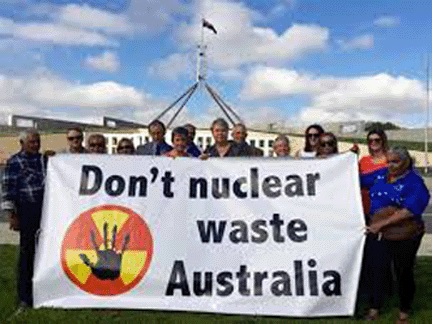
Declassified Australia can report that over a 10-year period from 2012 to 2022, during which Amentum managed the WIPP facility, multiple highly hazardous incidents occurred.
Amidst allegations of “gross mismanagement”, the dangerous incidents at the WIPP facility cost US taxpayers at least US$2 billion, and caused a three-year closure of the nuclear waste plant while redesign, repair, and remediation efforts were undertaken.
Jorgen Doyle, June 7, 2025 https://johnmenadue.com/post/2025/06/us-military-waste-contractor-with-flawed-safety-record-backing-australian-n-waste-dump/
A US military mega-contractor assisting an Australian company to develop a proposal for a nuclear waste dump in Central Australia has a flawed safety record in handling nuclear waste storage.
A DECLASSIFIED AUSTRALIA SPECIAL INVESTIGATION
In Alice Springs, Central Arrernte Country, the giant American military contractor, Amentum Holdings, is responsible for the day-to-day running of facilities for the secretive US-Australian Pine Gap satellite surveillance base. Now it’s involved in developing a proposed nuclear waste dump in Central Australia.
Declassified Australia can reveal that Amentum’s Alice Springs-based workforce of 400 people provides a myriad of support services to keep the ever-expanding base functioning, including infrastructure management, facilities operations, and maintenance services.
The proposal for the low-level nuclear waste dump comes as the Australian Government is seeking ways to manage and ultimately dispose of high-level nuclear waste from nuclear reactors in the proposed AUKUS submarines, as well as from other defence-related nuclear and hazardous waste, including visiting US and UK nuclear-powered submarines and warships.
As Declassified Australia exclusively reports, despite Amentum having a problematic record of nuclear waste management overseas, it is now involved in the nuclear waste disposal business in Australia.
Proposed Chandler waste facility
Amentum has been contracted to advise Australian hazardous waste company, Tellus Holdings, on the Chandler nuclear waste dump in Central Australia.
The Chandler nuclear waste dump is proposed to be constructed within a salt formation on Southern Arrernte country, 15km from the Aboriginal community of Titjikala and 120km south of Alice Springs.
The Northern Territory Environmental Protection Authority’s assessment report for the Chandler dump describes the project components as including construction of an underground salt mine at a depth of up to 860 metres, permanent hazardous waste disposal vaults within mined-out salt caverns, temporary above-ground storage facilities for hazardous waste, and associated infrastructure like haul roads, access roads, and salt stockpiles.
In August 2024, Tellus announced that the company had contracted Amentum to conduct a Strategic Review of the project to assess timelines, feasibility and potential international waste streams to be disposed of at the facility.
Sydney-based Tellus Holdings was founded in 2009 and describes its mission as “providing advance[d] end-to-end solutions for managing the world’s most challenging hazardous materials”. The company operates Australia’s first geological repository for low-level nuclear waste which started in 2021 at Sandy Ridge, 240km northwest of Kalgoorlie.
When Tellus’ American-born chief executive Nate Smith, a former attorney at powerful Wall Street law firm Sullivan & Cromwell, was interviewed on ABC Radio last August, he cited the proximity of Amentum’s workforce based in Alice Springs as a strong reason for selecting Amentum to carry out the strategic review of the proposed nuclear waste dump.
Declassified Australia can exclusively reveal that at an NT Defence Week presentation held in Alice Springs in May 2024, an Amentum speaker stated that the company is contracted directly by the US Government, and “employs roughly 400 people” providing services to the Pine Gap base.
According to an attendee at the event, the speaker said Amentum provides the operation services and maintenance of facilities, utilities management, renovation, security, environmental health and safety, catering, and housing services.
The company regularly posts ads for the employment of new contractors to provide services like cleaning, gardening and even swimming pool repair. On some days, the speaker said, there have been as many as 200 contractors for Amentum working on site at the spy base, 15km south of Alice Springs.
Amentum and the US military
Based in Virginia, Amentum is one of the US’s largest military contractors. The company employs 53,000 people across 80 countries, and provides services as diverse as chemical and biological weapons decommissioning, US army helicopter training, to running the Nevada Bombing Range and the Kennedy Space Centre.
As well as supporting the US’s most important satellite surveillance base outside the US at Pine Gap, Amentum also works extensively in managing and maintaining US military facilities, primarily in West Asia and sub-Saharan Africa.
The company operates in Bahrain, Jordan, Kuwait, Saudi Arabia, Qatar and the United Arab Emirates, where it provides operations and maintenance services on US military installations.
In Iraq, it manages and maintains US air force bases; and has previously operated in Afghanistan, where it maintained helicopters for the Afghan Air Force, and serviced airfields and trained Afghan police, until US forces evacuated the country.
In Somalia, Amentum is assisting in the construction of six new military bases, while in Ethiopia it is working to “enhance biosafety and biosecurity” at a vaccine lab and training facility.
Amentum is also involved more directly in training armed militias and military forces. In western Africa, the company operates in Benin, where it trains the country’s armed forces for “counter-terrorism” operations.
However, Amentum’s activities have been subject to controversy, even by the standards of a global military contractor.
Amentum is providing training to three of Libya’s armed groups as part of attempts to unify major armed factions in Tripoli to “counter Russian influence” within the country and across the African continent.
The company is currently defending a case before a US court on charges of human trafficking in Kuwait, through its predecessor companies AECOM and DynCorp. The companies allegedly participated in abusive practices against 29 interpreters working under US Army contracts during the US-led invasion of Iraq, “Operation Iraqi Freedom”. The abusive practices included forced labour under threat of deportation and arrest.
Amentum’s nuclear activities
In addition to its military contracts, Amentum has been working to support the development of nuclear reactors and facilities across a number of countries.
In the UK, Amentum has recently been selected as project manager for the proposed Sizewell C nuclear power plant on the Suffolk coast.
In South Africa, the company is working on extending the life of the country’s only nuclear reactor by 20 years. In the Netherlands, Amentum has been commissioned to undertake technical feasibility studies for two proposed new nuclear reactors.
It is on the American continent that Amentum’s reputation for managing nuclear facilities has suffered serious blows.
In 2012, Amentum formed the Nuclear Waste Partnership, a limited liability company, with BWX Technologies, in order to bid on a US Department of Energy contract to operate and manage a US nuclear weapons waste disposal facility in New Mexico, known as the Waste Isolation Pilot Plant.
Amentum’s experience managing the WIPP nuclear weapons waste disposal facility is cited as one of the reasons Tellus selected Amentum as its partner to carry out the strategic review of the planned Chandler project.
However, Declassified Australia can report that over a 10-year period from 2012 to 2022, during which Amentum managed the WIPP facility, multiple highly hazardous incidents occurred.
The incidents, described by an expert on the WIPP as a “horrific comedy of errors”, transformed a facility once regarded as “the flagship of the [US] Energy Department” into an object of serious concern.
Amidst allegations of “gross mismanagement”, the dangerous incidents at the WIPP facility cost US taxpayers at least US$2 billion, and caused a three-year closure of the nuclear waste plant while redesign, repair, and remediation efforts were undertaken.
Nuclear weapons waste disposal
The WIPP is, like Tellus’ proposed Chandler Project in Central Australia, located within a salt formation. Salt formations are generally considered ideal for the storage of nuclear waste because of their geological stability, capacity to dissipate heat generated by waste, low permeability to water and gasses, and self-sealing properties.
The WIPP site is massive. Its underground footprint currently includes 10 excavated “panels”, each consisting of seven rooms, totalling 100 acres. An 11th panel is under construction, and the US Department of Energy intends to expand the site to eventually consist of nineteen panels.
The facility has received more than 14,000 shipments of military nuclear waste since becoming operational in 1999. Its 800-strong workforce transfers transuranic waste received in drums to storage rooms 655 metres underground for permanent disposal.
The WIPP facility exclusively receives waste from the US’s nuclear weapons program, including tonnes of excess plutonium. Waste originating from 22 Department of Energy facilities, including the infamous Los Alamos National Laboratory (birthplace of the atomic bomb) is transferred to the WIPP facility for long-term storage.
There are proposals for the WIPP to take waste now classified as “high-level” once that waste has been ‘reclassified’ as transuranic (non-uranium) waste. This would pave the way for its storage at WIPP.
“Reclassification of nuclear waste could make disposal simpler and cheaper” is the breezy conclusion of one such proposal written by the editorial staff of Nature journal.
The site is legislated to receive 175,564 cubic metres of waste, and as of 2021, had reached 56.7% of its capacity.
Originally slated to begin closure in 2024, expansion plans and permit modifications have led nuclear watchdog groups to warn that what was only intended as a pilot plant is morphing into “Forever WIPP”.
The US Department of Energy itself now admits that “ final facility closure could begin no earlier than 2083”.
Faulty design and handling at the Waste Isolation Pilot Plant
On 5 February 2014, less than 18 months into the Nuclear Waste Partnership’s management of the WIPP site, a truck caught fire within the facility, and six workers were hospitalised with smoke inhalation.
A subcontractor under the Nuclear Waste Partnership subsequently sued the company for “gross mismanagement of a major construction contract” involving reconstruction of an underground air-monitoring system that failed during the truck fire.
The subcontractor alleged that the Nuclear Waste Partnership, run by Amentum and BWX Technologies, “was such a disorganised project manager that it caused repeated delays and cost overruns, resulting in multiple breaches of contract”.
The subcontractor claimed that NWP “used faulty designs that caused chronic problems and forced crews to redo large and expensive parts of the project”.
The faulty problems cited by the subcontractor included “a flawed design in hollow-roof panels requir[ing] an extensive redesign that dragged on for almost a year and at times forced work to shut down in other areas”.
Further, “[t]he building’s foundation had to be redesigned, requiring crews to move underground pipes they had already installed; and [a] defective design plagu[ed] the building’s control system”.
Less than a fortnight after the truck fire, on 14 February 2014, a barrel containing americium, plutonium, nitrate salts and organic kitty litter ruptured at the facility.
The rupture quickly spread contaminants “through about one-third of the underground caverns and tunnels, up the exhaust shaft, and into the outside environment”, exposing 22 workers at the WIPP facility to low levels of radioactive contamination.
Following the incident, the site was shuttered for three years. Clean-up efforts cost US$640 million, and a further US$600 million in operational costs were accrued during the years 2014-2017 while the site was being remediated and not accepting new waste.
In addition, the US Government paid US$74 million to New Mexico to settle permit violations involving the radiation release and the truck fire two weeks earlier.
Once costs associated with temporarily storing the nuclear waste that had been destined for WIPP are taken into account ( “hotel costs”, including the weekly inspection of more than 24,000 barrels of nuclear waste for leaks), the long-term cost of the incidents to US taxpayers is likely in excess of US$2 billion.
The WIPP site finally reopened in 2017 after three years of remediation efforts. The installation of a new ventilation system to replace the previous one contaminated in the incident of February 14, 2014 cost an additional US$486 million, and was only completed in March 2025.
A safety analysis conducted prior to the WIPP facility becoming operational reassured regulators that the likely frequency of accidents involving the release of radioactive material at the facility would be once every 200,000 years.
However the two serious incidents of February 2014, resulting in a three-year closure of the WIPP facility, occurred just 15 years into the site’s operation.
The US Department of Energy faced years of pressure from nuclear watchdog groups to end the Amentum and BWX partnership responsible for running the WIPP from 2012.
The Department finally decided not to renew Amentum and BWX partnership’s decade-long contract managing the WIPP nuclear weapons waste disposal facility. They exited in 2022.
The proposed Australian project
Back in Central Australia, Amentum’s strategic review of the Chandler Project is due to be completed soon.
Neither Tellus nor Amentum responded to a series of questions put to them about aspects of the nuclear waste dump project.
With Tellus eager to push on, the massive international nuclear waste dump proposed for Southern Arrernte country 120km south of Alice Springs could commence as early as 2028.
Toxic threat: New Greenpeace report outlines unacceptable risk of nuclear waste in Australia

| SYDNEY, Thursday 24 April 2025 — A new report from Greenpeace Australia Pacific has shown the Coalition’s nuclear plan could produce 14 billion Coke cans’ worth of radioactive waste a year, warning it is a matter of when, not if, a nuclear waste accident could occur in Australia. |
| Released in the lead-up to the 39th anniversary of the Chernobyl nuclear disaster, the report, ‘Toxic threat: The danger of nuclear waste in Australia’ shows that the Coalition has grossly understated the volume of dangerous waste its nuclear plan will produce — 14 billion times more than the ‘single coke can’ for a small modular reactor touted by Peter Dutton.The report also outlines the unacceptable risk this waste poses to Australian communities, and warns Australia’s long history of nuclear waste management failures point to a very high likelihood of future nuclear disaster. |
Joe Rafalowicz, Head of Climate and Energy at Greenpeace Australia Pacific, said: “Peter Dutton’s nuclear plan is a dangerous and expensive disaster waiting to happen. From Chernobyl to Fukushima, the devastation of nuclear disasters is a risk that Australia cannot afford to, and doesn’t need to, take.
“Australians don’t need the equivalent of 14 billion Coke cans of radioactive nuclear waste every year. The Coalition has not offered a credible plan for how it will manage nuclear waste safely, nor how it will fund this multibillion dollar effort.
“Australia’s unenviable track record of mismanaging even low-level nuclear waste, as well as a history of radioactive incidents in the US, UK and EU, reveals how complex it is to manage nuclear waste safely. Multiplying that challenge many times over by building a fleet of nuclear reactors could have devastating consequences for communities and ecosystems.
“International examples show that accidents, natural disasters, and other waste management failures occur with alarming regularity. A nuclear waste accident could lead to mass casualties, long-term health impacts, and the contamination of groundwater, farmland, and ecosystems for millennia. The clean-up bill from an incident would be astronomical, costing billions of dollars.
“Australia doesn’t need nuclear energy, which is just a smokescreen to prolong the use of climate-wrecking coal and gas for decades. We are almost halfway to powering the nation with clean, affordable wind and solar, and should be supercharging efforts to get to 100% renewables backed by storage.
“The Coalition has not asked communities like Collie, Latrobe Valley and the Hunter Valley for their consent to build nuclear reactors and waste dumps in their backyards, but the upcoming Federal Election is a chance for voters to have a say in Australia’s energy future. Peter Dutton’s nuclear plan is too dangerous to proceed, and Australians should strongly reject the idea of nuclear energy here.” https://www.greenpeace.org.au/static/planet4-australiapacific-stateless/2025/04/23ab6ee2-toxic-threat-greenpeace-australia-pacific-report.pdf
No walk in the park for nuclear reactors at life’s end
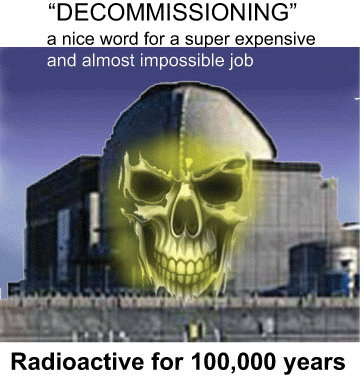
Canberra Times, By Poppy Johnston, April 20 2025
It may feel far, far away but the energy sources getting hooked up to the grid today will eventually need to be put out to pasture.
Decommissioning is a major undertaking for any industrial facility yet for nuclear power plants – on the table under the federal coalition’s alternative pathway to net zero – Australia’s lack of experience raises a host of unknowns.
Walking through the process of dismantling a nuclear power plant, Australian National University energy transition expert Ken Baldwin says the first step is removing the used radioactive fuel and coolant to be stored safely elsewhere.
Next is dismantling the rest of the plant, with some of the components surrounding the reactor made slightly radioactive during a lifetime of operation.
That radioactivity is “relatively short-lived” compared to the human lifespan-defying decay rates of more potent nuclear waste.
“Often what happens is the nuclear plant might be left in a safe state with the fuel and the coolant removed for a number of years to allow that radioactivity to decay,” Professor Baldwin tells AAP.
After that time has lapsed, work begins on removing what’s left.
Globally, the 2024 World Nuclear Industry Status Report has 213 closed power reactors on its count and 23 fully decommissioned.
Dismantling reactors takes 20 years, on average.
Retiring nuclear plants is a “horses for courses” proposition, Prof Baldwin says, with costs and timelines dependent on the type of facility, decommissioning plans and regulations.
A rule of thumb is 10-15 per cent of the total capital cost of the facility, equivalent to somewhere between $780 million and $3 billion for a standard 1 gigawatt nuclear plant, and adding roughly five per cent to electricity bills.
End-of-life costs are covered in a variety of ways, including putting aside funds before the plant is built………………….
For the United Kingdom’s 3260MW Hinkley Point C, developers were required to set aside 7.2 billion pounds, or almost 15 billion Australian dollars, for clean-up in 2016.
However the agency noted there was uncertainty about the actual bill and taxpayers could be on the hook if the cap was exceeded.
The threat of higher-than-expected decommissioning costs was raised by mining billionaire and green steel and renewables proponent Andrew Forrest at a business breakfast in Perth earlier in the month.
“You see France spending $60 billion to bring up two gigawatts but they’re not talking about the 14 nuclear power plants they’re having to completely take down and try and return to the environment,” he said.
“I go to the best engineers in the world and they’ve got no idea what that’s going to cost.”
Opposition leader Peter Dutton highlighted the costs of dismantling wind turbines when asked for clarity on his plan for decommissioning the seven nuclear power plants his party plans to build if it wins the federal election………………………………… https://www.canberratimes.com.au/story/8946374/no-walk-in-the-park-for-nuclear-reactors-at-lifes-end/
International ‘nuclear tombs’ are being built, but how do we warn future generations of what’s inside?
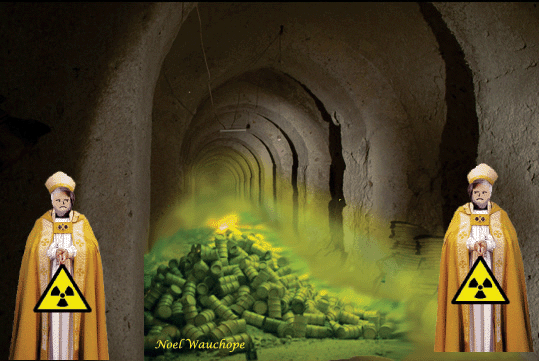
in November 2024, Adelaide residents said they were “blindsided” when federal parliament legislation allowed for nuclear waste to be stored and disposed of at a shipping yard in Osborne — 25 kilometres north-west of the CBD and seaside suburbs.
The plans are part of the $368 billion AUKUS project, which will involve building nuclear submarines in South Australia, and include a commitment from the federal government that it would secure storage for nuclear waste produced.
By Megan Macdonald for Future Tense, 20 Mar 25, https://www.abc.net.au/news/2025-03-20/nuclear-tombs-overseas-offer-warning-for-future-generations/105024144
Earth is no spring chicken.
In fact, based on scientific dating, it’s considered to be 4.5 billion years old.
Coincidentally, that’s also how long depleted uranium (a by-product of the process of enriching uranium for use in nuclear power reactors and weapons) remains dangerous.
And so, as the idea of using nuclear energy as an alternative power source dominates headlines, the safe storage of toxic waste produced by nuclear power and how we warn future generations about its dangers is being considered.
Dr Shastra Deo, a nuclear semiotics expert and author at the University of Queensland, tells ABC Radio National’s Future Tense this is a quandary at the centre of nuclear semiotics.
“Nuclear semiotics is obsessed with this idea of creating a sign to warn us about the dangers of nuclear waste into deep time … The main timeline we’re working with is 10,000 years, but that’s frankly not enough to keep us safe,” she says.
Nuclear on the mind
In June 2024, in response to Australia’s cost-of-living crisis and an upcoming federal election, Opposition Leader Peter Dutton announced his proposal for nuclear power in Australia.
Promising zero emissions and lower power prices, the announcement named seven locations for the nuclear power plants across Australia, which would be built next to existing infrastructure.
These included Mount Piper Power Station in New South Wales, Loy Yang Power Stations in Victoria and Tarong Power Station in Queensland.
While the announcement didn’t include a plan for how the toxic waste produced from nuclear power would be managed, it did state that a community engagement process would occur alongside “a comprehensive site study including detailed technical and economic assessments”.
Mr Dutton’s announcement added that currently, “32 countries [are] operating zero-emissions nuclear plants. Another 50 countries are looking to do so”.
Yet, while nuclear energy is a source of power for many countries, the question of what to do about the highly toxic waste that nuclear energy produces is not settled.
Toxic tension
The rolling hills of France’s Champagne region are known for their green landscapes and quaint villages.
But nearly 500 meters beneath the small village of Bure, France, large tomb-like chambers are being constructed by France’s national radioactive waste agency, Andra, so that they can demonstrate their suitability for building a geological disposal facility (GDF).
GDFs are built to store intermediate to high-level nuclear waste safely for thousands of years.
Andra’s chambers are part of a huge international engineering effort to build giant underground nuclear tombs for waste storage across the United Kingdom (UK) and Europe
Finland was the first country to build a deep GDF to store spent nuclear fuel for 100,000 years, and initial testing has already begun.
Mark Piesing, a UK-based freelance journalist, reported on the European and UK GDF plans last year.
He says GDFs take many years to get approved and built, and their long-term success relies on decades of future political stability.
“The security of them depends on the continuation of governments and states as we know it … If there is a political upheaval, if there [are] revolutions, if climate change brings about social chaos, then the security of these installations will be compromised,” he says.
Mr Piesing visited the Andra testing facility in Bure, France, and he describes the scale of the proposed GDF as “quite awe-inspiring”.
“The scale of it … you could imagine the pharaohs building something similar, the workers working for years,” he says.
While impressive, the construction and plans for GDFs across Europe haven’t been without controversy.
The Andra project underneath Bure, France (with a population of only 82 residents) has sparked protests — some violent — from anti-nuclear activists over the company’s plans to build a GDF for nuclear storage.
In Sweden, the Swedish Nuclear Fuel and Waste Management Company commenced test drilling across the country in the 1980s to find suitable locations for potential nuclear waste storage, a move that didn’t go down well.
“The Swedish authorities perhaps didn’t consult the community enough. So this caused protests in a number of locations where they’re trying to do their test drilling,” Mr Piesing said.
And here in Australia, proposed sites for storage of toxic nuclear waste have also received backlash.
Where would we store nuclear waste in Australia?
The storage of nuclear waste has been a long-held issue of national contention, particularly in South Australia.
In 2023, the Barngarla traditional owners of SA’s Eyre Peninsula won a legal challenge to stop the federal government from building a nuclear waste facility near Kimba.
The plans were to store low and intermediate-level radioactive waste at the proposed facility.
Then, in November 2024, Adelaide residents said they were “blindsided” when federal parliament legislation allowed for nuclear waste to be stored and disposed of at a shipping yard in Osborne — 25 kilometres north-west of the CBD and seaside suburbs.
The plans are part of the $368 billion AUKUS project, which will involve building nuclear submarines in South Australia, and include a commitment from the federal government that it would secure storage for nuclear waste produced.
Ted O’Brien, Shadow Minister for Climate Change and Energy, tells the ABC that the Coalition has a long-term plan for nuclear waste storage if it wins the upcoming election.
“Spent fuel from nuclear power plants will be temporarily stored on-site before being transported to a permanent waste repository, where spent fuel from our AUKUS nuclear submarines will also be stored,” he says.
Mr O’Brien says the permanent site’s location is a matter for the federal government.
The location of the permanent site under the AUKUS deal has not been addressed since late last year by the federal government.
However in January it was revealed by former senator Rex Patrick that documents obtained via Freedom of Information (FOI) show South Australia’s Defence Industries Minister met with a defence company in the UK for the “specific purpose of being briefed” on the dismantling of nuclear reactors and the waste associated with them.
“[The government is] yet to clarify the location … It is now Labor’s responsibility for identifying a long-term waste repository,” Mr O’Brien says.
“We stand ready to cooperate constructively.”.
A warning for generations to come
While the future for Australia’s nuclear waste remains unclear, Dr Shastra Deo says we can look back at history to inform the need for warnings surrounding toxic waste storage for future generations.
“You see the [Egyptian] pyramids and they’re very intriguing to us … There was a warning message on them from one of the pharaoh’s viziers that said, ‘If you intrude on my tomb, I will curse you and you will die,’ — and we went in anyway,” he explains.
“We’re curious people. That’s what humanity is … we want to find out what’s in these spaces.
n Ms Deo’s field of nuclear semiotics, several ideas have been raised to warn future generations of the dangers of toxic waste stored below ground.
These include hostile architecture (an urban design strategy that uses elements of a built environment to purposefully guide behaviour of humans), the use of symbols and an “atomic priesthood” of knowledge keepers.
Rounding out the list is the “black hole” which, as Ms Deo explains, would involve “putting granite over the area and the sun would heat it up to a point where you just couldn’t walk across it”.
Ms Deo says the ongoing challenge lies in the length of time these warnings are required, which can be hundreds of thousands of years.
“How can we create a message that will last this long? Already you can kind of see the impossibility in that.”
Ms Deo says that regardless of the challenges, we must consider our accountability to those who come after us.
“We need to send a message to ourselves about this technology and how we’re going to move forward with it — and how we’re going to store it.”
It’s a question that we’ve yet to answer.
The “Great Era of Nuclear Decommissioning” begins – well, sort of, even in Australia

https://theaimn.net/the-great-era-of-nuclear-decommissioning-begins-well-sort-of-even-in-australia/ 20 Mar 25
Nuclear is big news for Australia. For the coming election, the federal Opposition party – the Liberal-National Coalition, has as its major, indeed, pretty much its only, policy – to establish the nuclear power industry at 7 sites across the continent. At the same time, a Liberal group has sprung up – Liberals Against Nuclear, vowing to ditch that policy.
Meanwhile the AUKUS plan, (beloved of both major parties) to buy super-expensive nuclear submarines, has run into problems, and is at risk of being ditched.
Also now, on March 4th the Australian Nuclear Science and Technology Organisation (ANSTO) announces that it is embarking on a major decommissioning project , getting into the wonderful new Era of Nuclear Decommissioning. This Era was predicted by The Ecologist, back in 2019, but only now is it reported to be getting underway.
Japan, one of the top nuclear nations, has just announced the first dismantling of a commercial nuclear reactor – ‘signifying that the so-called “great era of decommissioning” has begun in earnest in Japan.’ They have another 59 to go (10 cleared for operation, 23 described as “operable” , and 26 shut-down ones).
So what indeed is the “great era of decommissioning”? What does “decommissioning” actually mean?
According to the European Union – “ It involves all activities starting from the shutdown of the facility and the removal of all nuclear material right down to the environmental restoration of the site. The whole process is complex and typically takes 20 to 30 years to complete.“
So, in Japan, they really mean business – “dismantling of the reactor, which began on March 17, is considered the main part of the decommissioning work“
In Australia -not so much. It means that ANSTO, a few weeks ago, got a licence from the Australian Radiation Protection and Nuclear Safety Agency (ARPANSA), to begin Phase A, Stage 1, and is now beginning to remove peripheral equipment from the the 67 year old Hifar nuclear reactor, now 18 years out of action. More Phases and Stages to go.
Both the Japanese and Australian news items give short shrift to that final problem – nowhere to put the radioactive remains. ANSTO’s at pains to stress how small an amount it is “be managed and stored safely onsite at Lucas Heights” . The Japanese article concludes “While Japan has entered an era of decommissioning, decommissioning plans continue to be postponed due to the lack of a finalized waste disposal site.”
The World Nuclear Association goes into much detail on the decommissioning of 700 nuclear reactors, but only a few of these have been completely dismantled, and still no way of permanently disposing of their radioactive remains.
Meanwhile the International Atomic Energy Agency, and the governments of the most powerful nations are all complacently touting the need for new nuclear reactors. Australian authorities, keen to stress Australia’s nuclear know-how are joining in this happy disregard of the importance of dangerous radioactive trash.
That famous old Australian character “blind Freddy” would immediately know that this is an unreasonable and immoral attitude.
The “era of nuclear decommissioning” is not really underway at all. If it were happening, there’d be no more hype about new nuclear. I fear that the sad reality is that the men in charge realise that nuclear decommissioning is just too expensive, too fraught with problems “best to just leave it alone, until we are comfortably superannuated out, or dead. “
Nuclear waste. AUKUS agency’s reckless indifference
Last Friday, government solicitors acting for the Australian Submarine Agency sent me a warning against publishing some embarrassing information about their conduct.
Neither I (Rex Patrick) nor Michael West Media will be subject to their bullying, however.
The Australian Submarine Agency deals with high-level Defence secrets and fissile material, yet it has been caught ignoring security obligations while threatening Rex Patrick, who reports on their conduct.
by Rex Patrick | Feb 3, 2025, https://michaelwest.com.au/aukus-agency-reckless-on-nuclear-waste/
Last Friday, government solicitors acting for the Australian Submarine Agency sent me a warning against publishing some embarrassing information about their conduct.
Neither I nor MWM will be subject to their bullying, however.
The Australian Government has undertaken to accept responsibility for the spent nuclear fuel from our planned AUKUS submarines. This is no light undertaking. It’s more than a lifetime obligation; indeed,
it’s an obligation that will last tens of thousands of years.
The Government has announced that this high-level radioactive waste will be stored on Defence land.
As reported in MWM, in February 2023, the Australian Submarine Agency awarded a contract for nearly $400K to former Defence Department Deputy Secretary Steve Grzeskowiak to find a suitable Defence location
The very expensive irony that lurked behind this contract was the fact that Grzeskowiak had, when he was inside Defence, looked for a location on Defence land to store low-level radioactive waste and had been unable to find a suitable site.
According to Grzeskowiak, there wasn’t a single spot anywhere across the vast Defence estate that was suitable for storing low-level radioactive material. Yet he was now the go-to person who would, through some miraculous divination, find the Australian Submarine Agency a location across the very same territory.
Document request
In December 2023, I requested Mr Grzeskowiak’s report under our Freedom of Information laws. I was refused access on the basis the report was a Cabinet document.
But here’s the interesting thing. I knew that the report had been being worked on by multiple agencies, so I requested related documents from the Australian Nuclear Science and Technology Organisation (ANSTO), the Australian Radiation Protection and Nuclear Safety Agency (ARPANSA), Geoscience Australia (GA), the Department of Industry, Science and Resources (DISR) and the Department of Prime Minister and Cabinet (PM&C).
What those documents showed me was the report was not, at least until after I made my FOI request, developed on the Government’s CabNet+ system.
I’m now in a legal fight at the Administrative Review Tribunal, pressing my case for the report to be made public.
The Cabinet Handbook, the bible for Cabinet’s processes, makes it crystal clear that cabinet documents must be prepared on a special CabNet+ system.
The protective security framework of the Government also commands that Cabinet documents are stored on CabNet+.
Despite this, the Australian Submarine Agency didn’t do that.
Why? I can’t publish their evidence in the proceeding until the matter has been heard in the Tribunal, but what I can say is that it’s a case of reckless indifference to the rules.
It begs the question, will the Australian Submarine Agency also play fast and loose with the rules in relation to our highly classified data or our allies’ highly classified data?
“The Australian Submarine Agency is under a great deal of pressure to “get the job done”.
There are unquestionably a lot of unrealistic expectations coming down from the top. Will they follow the rules when it comes to nuclear safety, or will they bend and break the rules when they find it expedient to meet a politically driven objective?
Legal arguments
In their legal submissions, the Australian Government asserts: “The fact that the document was not created within the ‘CabNet’ system is not indicative one way or the other as to the intention of the authors.”
Actually, the rules of Cabinet are very strict. A document must meet two tests to qualify as a cabinet document 1) it must have been bought into existence for the dominant purpose of submission for consideration by the Cabinet, and 2) it must have been submitted to Cabinet.
I am satisfied it meets the second test but not the first.
To meet the first test the Government has to present objective evidence to the Tribunal that a minister so commissioned the document for consideration by Cabinet.
“They have not done so.”
And the fact that the document, in breach of the rules, just floated around on a government network not authorised to hold Cabinet documents for months on end will work against the Australian Submarine Agency in the end.
Hypocrisy
In response to insistence from Prime Minister Anthony Albanese that Peter Dutton should disclose the intended location of seven nuclear power stations, the Opposition Leader did so.
But Albanese is refusing to be transparent about the intended location of a high-level radioactive waste dump. His government wants to block public debate for as long as possible and then present people with a fait accompli.
It’s yet to be seen whether the Government will win on its claim that the report I’m after is a Cabinet document. But in the end, if it were determined that the report is that, there would still be nothing to stop Albanese from being true to his past rhetoric about the importance of government transparency and releasing the report to inform public debate.
“Australians have a right to know. The fact that the Prime Minister hasn’t already done this says a lot.”
For me, given that the Government has cautioned me against publishing details that reveal security incompetence inside the Australian Submarine Agency, I’ll wait for the knock on the door from the Federal Police. I’m not going to be intimidated.
There’s a vital democratic principle to be defended – the right to publish embarrassing information about government. The only way to protect that right, especially in the face of Government bullying, is to publish.
Briefing paper from UK trip shows nuclear waste discussions held, as location for AUKUS submarine waste remains undecided
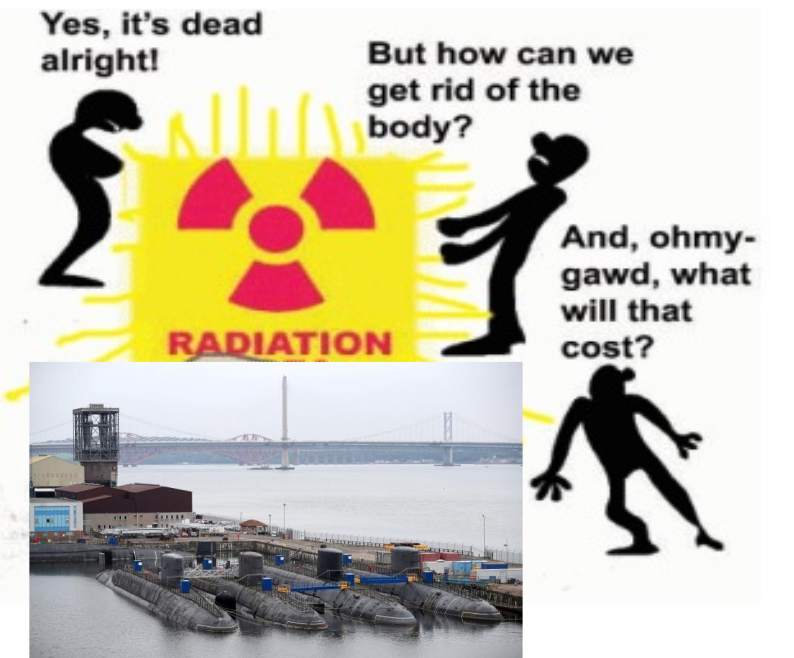
ABC News, Stateline, Leah MacLennan, 31 Jan 25
In short:
Former senator Rex Patrick says documents show SA’s Defence Industries Minister met with a defence company in the UK for the “specific purpose of being briefed” on the dismantling of nuclear reactors and the waste associated.
Mr Mullighan says those topics were not the “focus” of the discussions.
What’s next?
Legislation passed last year allowing nuclear waste to be stored at Osborne, but the government says a location for any high-level waste storage is still to be decided.
A former senator has sounded the alarm over documents he says point to government discussions about the defueling and dismantling of nuclear submarines at South Australia’s Osborne shipyards.
Rex Patrick was a Navy submariner, entered the Senate as a replacement for Nick Xenophon, and is now running for the Senate again as a Jacqui Lambie Network candidate.
He has obtained documents through freedom of information (FOI) that show South Australia’s Treasurer and Defence Industries Minister Stephen Mullighan met with defence company Babcock during a visit to the United Kingdom late last year.
“What the FOI shows is that the Treasurer Mr Mullighan met with Babcock for the specific purpose of being briefed on the dismantling of nuclear reactors and waste associated with those nuclear reactors,” Mr Patrick said.
The documents include a briefing paper for the meeting, which said the objective of the visit was to “discuss Babcock’s approach to nuclear powered submarine sustainment, defueling and disposal … seek information on Babcock’s experience in radioactive waste management/nuclear decommissioning,” and “discuss Babcock’s approach to nuclear powered submarine social license”.
Mr Patrick said the documents show the government was exploring the idea of dismantling the submarines’ nuclear reactors at Osborne.
He has called for more transparency and discussion with the public about what is being planned for the site under the AUKUS agreement.
“I’ve been looking at AUKUS and issues of nuclear waste for about three years and what I’ve found is that you really have to pull teeth to get access to information about this sort of stuff,” Mr Patrick said.
“Any decisions being made about this are not decisions that just affect this term of government or the next, they are decisions that will affect South Australians for tens of thousands of years.”…………………………………………………………………………………………………………………………………………………
Decommissioning still decades away
Australia’s first nuclear submarine will not arrive until the early 2030s, when the US plans to sell the government three Virginia Class boats.
The Virginia Class have a life span of more than 30 years, meaning their defueling and decommissioning is still decades away.
Rex Patrick argues that does not mean decisions can be delayed, because signing up to AUKUS is also signing up to a nuclear industry and dealing with the waste they will ultimately produce.
“Decisions around high-level nuclear waste are decisions that last for generations upon generations,” Mr Patrick said.
“They are not decisions that should simply be made and presented as a fait accompli by a government.”……………………………………………………………………..
Federal laws mean nuclear waste can be stored at Osborne
In October last year, legislation passed federal parliament that will allow for the storage and disposal of nuclear waste at Osborne.
The law does not define what level of waste can be stored there, but the federal government has given assurances that it will only be low-level waste.
Those assurances are not enough to allay concerns from the local community group that has branded itself ‘Port Adelaide Community Opposing Aukus’.
“One of our major concerns is that waste will be literally transported down Victoria Road, which alongside of it is a residential area,” group member Eileen Darley said.
“We’re going to be a docking point, or a gateway if you like, to some as yet unknown permanent nuclear dump somewhere.”………………………………………………
Major delays to UK decommissioning
The United Kingdom has had a fleet of nuclear submarines since the 1960s, but has faced multiple challenges decommissioning and disposing of boats that are out of service.
More than 20 decommissioned submarines are awaiting disposal at dockyards in Scotland and England, with half still waiting to be defueled.
The oldest, HMS Swiftsure, left service in 1992 and Babcock is now working with authorities to dismantle it, with an aim to be finished by the end of next year.
Overall it is a program that will cost billions of pounds. https://www.abc.net.au/news/2025-01-31/documents-show-nuclear-waste-discussions-aukus-submarines/104874852
The $80 billion question buried in Dutton’s nuclear power plan.

“Companies can go bust, but the nuclear waste is still going to be there. It has to be owned by the government.”
Two elements of the opposition’s nuclear plan are not included in the costings – waste management and public liability for disasters.
Mike Foley, January 3, 2025 , https://www.theage.com.au/politics/federal/the-80-billion-question-buried-in-dutton-s-nuclear-power-plan-20241218-p5kzg9.html
Decommissioning any plants built under the Coalition’s nuclear energy plan could cost more than $80 billion, and taxpayers would have to foot the bill.
Opposition Leader Peter Dutton’s planned seven nuclear plants, with a likely 14 large-scale reactors, would be publicly owned, so taxpayers would be liable for clean-up costs from the radioactive sites and any accidents during operation.
Last month, Britain’s National Audit Office found that the bill to clean up its old nuclear sites, which date back to the 1940s, would be $260 billion.
About $200 billion of this is to decommission Britain’s original Sellafield site for weapons and energy generation, with contaminated buildings and radioactive waste.
Another $48 billion is to decommission eight other nuclear sites, which now range from 36 to 48 years old, at a cost of $6 billion each. They are set to be handed back by a private operator to the government for decommissioning from 2028.
University of NSW energy researcher Mark Diesendorf said international experience showed the cost of decommissioning a nuclear reactor could be roughly in line with its construction cost, which the Coalition has said would be about $9 billion a reactor in Australia.
“For a rough approximation, you’re looking at probably the equivalent of the construction cost,” Diesendorf said.
If the Coalition’s plan to build 14 nuclear reactors by the mid-2040s is realised, the decommissioning bill would be roughly $82 billion to $125 billion in today’s dollars.
Private firm Frontier Economics produced costings of the opposition’s plan that included decommissioning in an overall $331 billion bill to build 14 gigawatts of nuclear generation. However, it is unclear what price was attached to clean-up and whether it is plausible, given Frontier has declined to release the assumptions it used.
Frontier said the government’s policy to boost renewables to nearly 100 per cent of electricity generation by 2050 would cost $595 billion – a figure the federal government has rejected. Labor says nuclear is the most expensive form of new energy generation.
Opposition energy spokesman Ted O’Brien said the Coalition’s plan was cheaper than the government’s renewable energy goals.
“Unlike the Coalition, Labor refuses to calculate the full cost of its plan, such as the decommissioning costs of massive offshore wind projects in the six zones it has identified off the Australian coast,” O’Brien said.
Griffith University Emeritus Professor Ian Lowe said Diesendorf’s assumption that decommissioning a large-scale reactor would cost the same as building it was “sensible”.
“The World Nuclear Association has information about the 25 reactors that have been decommissioned, and the figures vary enormously,” Lowe said.
“The figure of about $6 billion per reactor sounds about the average figure, assuming that there are no complications.”
The opposition has said its nuclear reactors would operate for 80 years, and University of NSW Associate Professor Edward Obbard, a nuclear materials engineer, said it made “perfect sense” for a country to hold the liability for nuclear decommissioning, given the cost and timescale required.
“I don’t think there’s any alternative to the state being responsible for decommissioning a nuclear power program,” Obbard said.
“Companies can go bust, but the nuclear waste is still going to be there. It has to be owned by the government.”
The government could choose to isolate an old nuclear reactor once it reaches its end of life, and leave it alone for several decades until the radioactivity had reduced, he said.
Two elements of the opposition’s nuclear plan are not included in the costings – waste management and public liability for disasters.
Diesendorf and Lowe said public liability in the unlikely event of a nuclear accident could run into the hundreds of billions of dollars, given the $290 billion clean-up bill from Japan’s 2011 Fukushima nuclear disaster.
Canada’s nuclear waste organisation joins forces with the Australian Radioactive Waste Agency
World Nuclear News, November 25, 2024
Canada’s Nuclear Waste Management Organization said it recently signed a
new co-operation agreement with the Australian Radioactive Waste Agency
at a ceremony in the Australian Parliament in Canberra. The NWMO and
ARWA will collaborate on a range of issues related to the safe
management of radioactive waste, including the important topic of
reconciliation with Indigenous peoples.
The NWMO said it was honored to
learn from the experiences of Aboriginal Australians and Torres Strait
Islanders during the visit and it “looks forward to a relationship of
partnership and knowledge-sharing”.
1 This month

of the week – Australians for War Powers Reform (AWPR)
To see nuclear-related stories in greater depth and intensity
 Antinuclear