Aboriginal group votes against nuclear dump, but government department warns that they cannot veto it
 Barngarla ballot shows “no support” for facility https://www.eyretribune.com.au/story/6503108/barngarla-ballot-shows-no-support-for-facility/?fbclid=IwAR1RVmemtqtKZXMRSYPUS85sTAmPayhMAFzTL4b-uCB2YLHVA5FZL80fW8E, Rachel McDonald 20 Nov 19,
The Barngarla Determination Aboriginal Corporation (BDAC) have announced the result of a separate ballot on the two proposed Kimba sites for the National Radioactive Waste Management Facility (NRWMF).
The BDAC recently conducted a confidential postal ballot of its members through independent ballot agent Australian Election Company, asking voters the same question posed to residents of the Kimba District Council area in a ballot which concluded earlier this month.
The Kimba district ballot returned a 61.58 per cent ‘yes’ vote and 38.42% ‘no’ vote.
Of 209 eligible voters in the BDAC ballot, all Barngarla native title holders, 83 valid ‘no’ votes were counted, with zero yes votes returned.
“This unanimous “No” vote demonstrates that there is absolutely no support at all within the Barngarla community for the NRWMF,” the board said in a statement.
The BDAC has written to resources minister Matt Canavan advising him of the result.
“BDAC has requested that given the first people for the area unanimously have voted against the proposed facility that the minister should immediately determine that there is not broad community support for the project,” the board said.
“In light of this total rejection of the NRWMF by the Barngarla people, it is BDAC’s responsibility to continue to give voice to the profound concerns Barngarla traditional owners have regarding the NRWMF, and to take whatever steps are necessary to oppose the NRWMF being located on Barngarla Country.”
A spokesperson for the Department of Industry, Innovation and Science said the ballot would be considered alongside other consultation.
“We will consider the results of the Barngarla’s own ballot alongside the ballot of people who live in Kimba, as well as submissions received, neighbour and business surveys, and direct feedback including at our drop-in offices over several years.
“The department has said on numerous occasions that the facility will only be delivered alongside a community that broadly supports it, that no single metric or number will determine the level of support, and that no one group or individual will have a right to veto the facility.“
The spokesperson said the minister and the department had been working closely with relevant Indigenous representative groups throughout the consultation process and had previously offered to finance a ballot.
“Those conversations are in some instances ongoing.
“With respect to heritage, while native title on both of the Kimba sites has been extinguished, expert heritage consultants were engaged by the department to conduct an independent desktop assessment of Aboriginal cultural heritage, and confirmed no registered heritage sites in or surrounding them.”
Community submissions on the proposed facility will remain open until December 12.
Kimba and Flinders Ranges communities do not know what nuclear wastes they are getting, and for how many decades
 Dump in decades, The Advertiser, GREG BANNON, Quorn, 19 Nov 19, REGARDING the National Radioactive Waste Management Facility, taskforce manager Sam Chard wrote a separate facility “will be found for the permanent disposal of intermediate level waste, but that’s a few decades off” (“Nuclear assurance”, The Advertiser, 16/11/19).
Temporary storage of intermediate-level waste is a major reason why some in the communities of Kimba and the Flinders Ranges are objecting so strongly to this proposal.
The Federal Industry Department acknowledges this material will need to be disposed of for 10,000 years to be considered safe. After four decades a disposal site has not been established and now we are being told it is still “a few decades off”.
The Department acknowledges that intermediate-level waste is the most toxic nuclear waste in Australia. We have asked for, but have received no guarantees, that this material will not end up being stranded at whichever site is chosen at the end of this ballot process. Why should these communities be expected to accept all of Australia’s nuclear waste, on behalf of all Australians, when they don’t know what they are signing up for?
Flood risk at proposed nuclear dump site at Wallerberdina.
 Barb Walker shared a post. Flinders Local Action Group Fight To Stop Nuclear Waste Dump In Flinders Ranges SA, 18 Nov 19
Last Thursday five members of FLAG met with James Rusk from AECOM, and Johnathon from DIIS to voice our concerns regarding the flood threat from the Hookina Creek to the proposed dump site at Wallerberdina.
James admitted that flood waters could cover the site up to a meter deep in a rare Possible Maximum Flood event, and that this could be easily mitigated by raising the surface area of the 40 hectare site by approximately one metre.
To put this in perspective: This would require the the mining of approximately 600,000 tonnes of top soil from a borrow pit close to the site,
the carting of 26,400 semi tipper loads and the spreading and compaction of this fill to a metre deep over the entire site. Huge amounts of water of would also be needed for the costruction.
The resulting massive desecration of the proposed area, containing many sites of cultural significance to the Adnyamathanha women was not perceived by either James or Johnathon to be a problem. – Bob. https://www.facebook.com/groups/941313402573199/
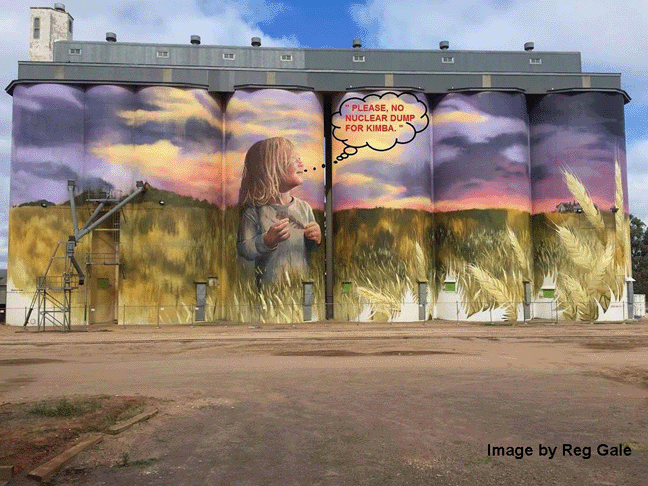
With 40% opposed to Kimba nuclear waste dump, is this “consensus”
|
What counts as consensus within a community? Stock Journal
15 Nov 2019 The results are back in from the AEC ballot, gauging opinion for a potential radioactive waste facility within the Kimba community.As with the original issue, the two sides of the debate are differing on if the results showing 61.58 per cent of the population would support the site proves consensus.
Third-generation Buckleboo farmer and No Radioactive Waste on Agricultural Land in Kimba or SA chair Peter Woolford said the ballot results were not surprising, but did show there was a considerable amount of opposition to the waste facility. “You can’t have 40pc opposed and say you’ve got clear support,” he said. “That’s nearly every second person in the street.”….. https://www.stockjournal.com.au/story/6495102/what-counts-as-consensus-within-a-community/?cs=4894&fbclid=IwAR0IEQ8Rwwq9vZ302Q30286nqpXmH9uwa–P28yTXoNHh6d9jZQbDZjlRuA |
|
A duplicitous letter from Sam Chard, General Manager, Radioactive Waste Taskforce
 What a duplicitous letter from Sam Chard!
Nuclear assurance, by SAM CHARD, NRWMF taskforce general manager
I WRITE in response to the letter from Michele Madigan (“Nuclear vote”, The Advertiser, 11/11/19).
The National Radioactive Waste Management Facility will be for the permanent disposal of low-level waste, and temporary storage of intermediate-level waste.
A separate facility, likely a deeply geological one, will be found for the permanent disposal of the intermediate-level waste, but that’s a few decades off.
The transport of waste will be conducted safely, and examples in France and the UK demonstrate such a facility can coexist with a clean, green image and a successful export industry.
In the recent Kimba community ballot, more than 61 per cent of local residents supported hosting the facility, and now a ballot is under way for residents near Wallerberdina Station.
Traditional owner, neighbour, and business consultation is also being undertaken, and anyone else with an interest can make a submission
Australian Government report states that Lucas Heights spent nuclear fuel rods (for Kimba dump?) are High Level Wastes
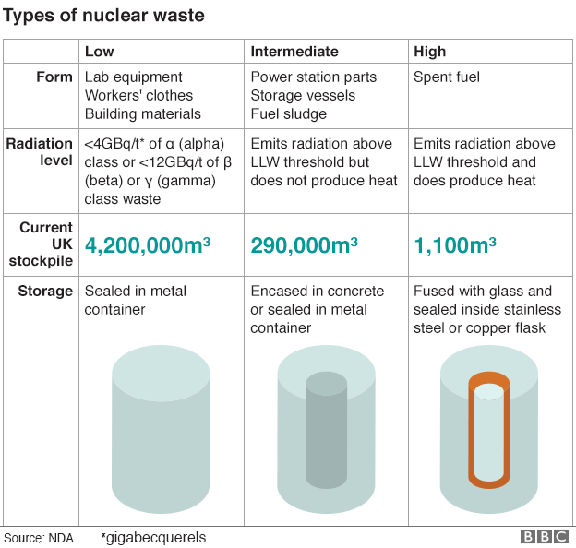
This is an extract from a government report from1993.
The report calls the nuclear fuel rods from the decommissioned Hifar reactor High Level waste.
This would be dumped in the Flinders or Kimba.
Stop the lies, stop the dump.
“The report of the Research Reactor Review examines, among many other things, the issue of the management of spent fuel rods from the HIFAR reactor, which had been accumulating at Lucas Heights since 1963. The Report says:
The spent fuel rods at Lucas Heights can only sensibly be treated as high level waste.
The pretence that spent fuel rods constitute an asset must stop’ (p. 216)
waste. … The pretence that spent fuel rods constitute an asset must stop.”
(McKinnon Review, Principal Conclusions p.xxiii, July 1993)
Federal Govt to decide on new radioactive waste storage facility next year
|
Federal Govt to decide on new radioactive waste storage facility next year, https://www.abc.net.au/radionational/programs/breakfast/federal-govt-to-decide-on-new-radioactive-waste-storage-facility/11706852?fbclid=IwAR0Ux4kgvx9WnXGWBNrmuAOxsLZEYDfanXY69yT7-ZRIbGIB009IAab5NPY Australia’s 40-year search for a site for a national radioactive waste storage facility could be coming to an end.The Federal Government says it’ll make a final decision early in the New Year on three sites under consideration in South Australia.
This week ballot papers are being sent to residents of Hawker in the Flinders Ranges to gauge local support. It follows a recent vote of the Kimba community on the Eyre Peninsula, which showed a majority in favour. Guests: Jeff Baldock, Kimba landholder and member, Working for Kimba’s Future group Producer: Cathy Van Extel |
|
The vote of one town shouldn’t be the views of all people in South Australia.
Kimba’s pro nuclear advocates seem unaware of the facts about medical radioactive wastes
 Jillian Marsh No Nuclear Waste Dump Anywhere in South Australia, 12 Nov 19, hi Andrew Baldock perhaps you are not aware that waste from nuclear medicine is deemed safe enough to dispose of in council waste depots – it does not need to be located in a high level waste facility as being proposed by Fed Govt. The reason they need a ‘remote location’ is about housing high level dangerous and long-lived waste. and it will be shipped in from hundreds of kilometres away, risking not only contamination of the actual site of the dump, but also the transport routes used to ship waste. this is a national issue that requires a national discussion. https://www.facebook.com/groups/1314655315214929/
Australia’s National Radioactive Waste Management Taskforce disingenuous about medical nuclear wastes
Tim Bickmore No Nuclear Waste Dump Anywhere in South Australia 11 Nov 19, The Taskforce broadcasts minimal information about the type, amount, & location of facility bound radioactive wastes; including that % which SPECIFICALLY RESULTS FROM ACTUAL AUSTRALIAN MEDICAL USAGE.According to ANSTO Waste Projects & Strategic Planning Manager Kapila Fernando in 2017:
“ANSTO holds about 50 per cent of the radioactive waste in Australia, and 85 per cent of the waste ‘stream’ is directly associated with this nuclear medicine manufacturing program – including the fuel used to power the reactor, the machines used in medicine production, and the gloves and gowns used in the manufacture or administration processes – the cycle to produce radionuclides produces nuclear medical waste.”When questioned by (then) Senator Scott Ludlam (Senate Economics Legislation Committee Session May 2017); ANSTO CEO Adi Paterson informed us that in the 2016 financial year 80% of ANSTO’s diagnostic medical isotope production consisted of Molybdenum 99. Of which only 28% was used in Australia whilst 72% was exported.
.
Let’s do the medical waste maths: – (50% x 85%) = 42.5 % of the national radioactive waste inventory results from medical isotope production. Currently (72% x 80%) = 57.6% of that results from Mo99 exports: which in future will triple, but at 2016 stood at (57.6% x 42.5%) = 24.5% of the total.
Therefore, only 18% (42.5%-24.5%) results from actual national use of medical isotopes: & not all of the 18% requires containment in the proposed facility.
PS ANSTO will not tell us the cost for producing OS exports vs economic return ~ but there is a very high probability (bordering on certainty) that the taxpayer is heavily subsidising OS usage…more https://www.facebook.com/groups/1314655315214929/
NUCLEAR WASTE DEBATE DIVIDING COMMUNITIES
 NUCLEAR WASTE DEBATE DIVIDING COMMUNITIES Fight To Stop Nuclear Waste Dump In Flinders Ranges SA The Transcontinental November 06, 2019, My name is Ken McKenzie. The Flinders Ranges and Port Augusta have always been my home. I now reside in Flinders House in Quorn.
I wish to say that the radioactive waste dump being proposed for our region is going to be very dangerous for all of us and for generations to come if it is allowed to go ahead.
This is something for all South Australians both black and white to be involved in as it will have an effect one way or another on every one of us.
The area where they want to put this dump is on my tribal land. My ancestors are buried here.
The area also holds a huge connection to our women as this is their land overall. The government do not listen when we say we don’t want it.
The earthquakes and flooding stories told to me in our language goes back into time itself.
This is not the place for a radioactive waste dump. If the Lord doesn’t come down in the next few years, this is going to be a threat to all of us and our future generations to come.
I am also very concerned for people over at Kimba who are going thru the same grief that’s happening to us and my family over here.
The money the government are throwing at us, trying to get us to forfeit our land is insulting and disrespectful to us all.
They have divided my family and our communities, and now we hear that without the much more dangerous intermediate radioactive waste being dumped here as well, that there is hardly any value to the community for putting it here.
Why didn’t they tell the communities all this in the first place. We didn’t want it four years ago and we certainly don’t want it now.
This whole process needs to be scrapped and the government needs to look at a new way to get people to ever trust them again.
False promises of lots of permanent jobs – from National Radioactive Waste Management agency
 Greg Bannon Fight To Stop Nuclear Waste Dump In Flinders Ranges SA, 11 Nov 19.
 -
- Rio Tinto operates driverless trains, hauling 28,000 tonnes of iron ore at a time.
- 3D laser scanning technology can separate humans from potentially dangerous operations, confined areas and boring or repetitive work.
- Remote cameras and sensors operate 24/7, recording and storing everything.

Australian Government propaganda promoting nuclear waste dump to a rural community

Another pack of 15 glossy brochures arrived in our mail last week. Only one was new, all the rest were sent last year.
• How many people actually read them all cover to cover last year?
• How many just had a quick flick through, looked at a few photos and read a few lines?
• What did people do with the first lot?
• What happens with this lot – stack them on the bookshelf next to the others?
Those who support the dump don’t need to read them because they don’t need any more convincing.
Those who don’t support the dump don’t need to read them again because nothing has changed. The site was geologically and culturally unsuitable last year. That hasn’t changed.
So why send all this stuff again? Is it good use of tax payers’ money when the whole of the east coast is burning and the country is in the grip of potentially the worst drought in recorded history?
What do these brochures cost to compile, print and produce, in colour and on highest quality paper?
Imagine the benefit to our region if all these publishing resources had been directed at promoting our magnificent Flinders Ranges? Of course, a campaign like that would cost millions!
This dump has been a con job from the start and no one knows where the finish line is – the judge makes the rules!
Matt Canavan and ANSTO lying to Kimba community about true level of planned nuclear waste
|
Susan Craig Fight To Stop Nuclear Waste Dump In Flinders Ranges SA
Visual Storyteller 9 Nov 19
Resources Minister Matt Canavan refers to Intermediate Level Waste as “medial waste.” This is a lie. How can communities make informed decisions based on misinformation? (Extract from The Advertiser November 8. Page 5) Zac Eagle The reprocessed, vitrified waste returned from Europe is classified High Level in every country except Australia. Kazzi Jai Honestly, if it is so safe, safe, safe…..then why are they treking it over 1500 kms plus away from Lucas Heights which produces over 90% of Australias nuclear waste? And the determination of the best place for this waste is by an individual nominating their own land? For an all-above-ground dump? The cheapest way to deal with all of this waste! Not the best….but the cheapest! This is how desperate the Feds are to rid themselves of this waste! Not the most scientific and geological stable site, not the least flood prone or least earthquake prone site…..but by a landowner nomination….. And then dividing a small rural community – whether Kimba or Hawker – and feeding them half -truths and bribing these little struggling communities with bribe money into accepting this waste which remains dangerous for hundreds of years, and the compulsory tag-a-long intermediate level waste for thousands of years! And saying that it is an industry! When is radioactive landfill for Lucas Heights an industry? It is simply a licence for Lucas Heights to generate as much waste as they like, and have no responsibility for it, since it is shafted over onto South Australia and becomes SOLELY South Australia’s liability and problem! Disgraceful! Anton Thony since when is medical waste intermediate level waste? https://www.facebook.com/groups/941313402573199/ |
|
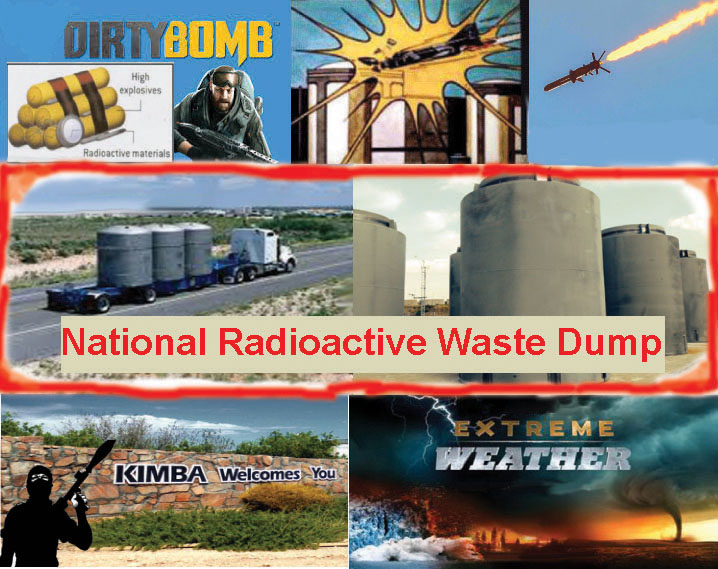
Hardly “broad support” as 40% of Kimba locals reject nuclear waste dump
|
More than 60 per cent of Kimba locals support nuclear waste dump in their region https://www.abc.net.au/news/2019-11-07/majority-of-kimba-residents-support-nuclear-waste-facility/11680774
By Casey Briggs A clear majority of Kimba residents have voted in favour of a nuclear waste dump being built in their region.
Key points
Federal Resources Minister Matthew Canavan has released the results of a month-long indicative postal ballot, confirming 61.6 per cent of the 734 ballot papers were in favour of the dump. The non-binding ballot — which was conducted by the Australian Electoral Commission — was a key factor in the Federal Government’s decision on where to build the facility, but native titleholders have challenged the validity of the process. Two sites near Kimba, halfway between Australia’s east and west coast, were shortlisted as possible locations for the country’s first national nuclear waste facility. A third site in Hawker, near the Flinders Ranges, was also shortlisted, and a vote of that town’s residents will begin next week. The proposal would see the Kimba site storing Australia’s low- to medium-level radioactive waste, which is currently housed at more than 100 sites, including the Lucas Heights nuclear reactor in Sydney. The Federal Government said it would pay up to four times the value of the property on which it chooses to build the facility. Mr Canavan said the result showed a “clear level of support” for the proposal.
But No Radioactive Waste on Agricultural Land in Kimba or SA Committee spokeswoman Kellie Hunt said the result showed the community was still divided. “Minister Canavan has always promised that the National Radioactive Waste Facility would not be sited where broad community support did not exist, and with nearly 40 per cent of residents saying no, this clearly cannot be proven in Kimba,” she said. She said the Government had wasted “unacceptable amounts of time, money and recourses attempting to coerce our community into accepting this facility”. “The stress his flawed and divisive process has caused is clearly evident in our once-cohesive town,” she said. 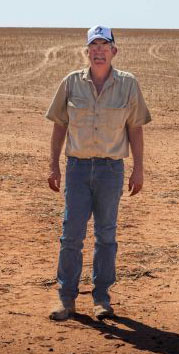 Local resident volunteers property Local resident volunteers property
Landowner Jeff Baldock volunteered his property as a potential location for the facility.”This is a way that we can hopefully get a new industry into town that doesn’t rely on rainfall,” he said. Kimba resident Audrey Lienert is opposed to the nuclear dump, and said the issue had divided the town.
“The 45 people they talk about coming to work here, they’re not going to buy the houses, they’re only going to be working to dig the holes.” On the other side of the debate, Kerri Cliff said the benefits to the community were “obvious”. “Whichever side people are sitting on, I think the vote has been something we’ve wanted all along,” she said. “Whether it gets us the actual facility, we’ll have to wait and see.” Native titleholders run separate ballotOnly local residents were permitted to vote in the ballot, infuriating the region’s native titleholders, the Barngarla people. The Barngarla people lost a court battle to stop the vote, but vowed to appeal to the Federal Court. “The decision will also affect all of Barngarla’s rights over their native title land whether they are for or against it,” a spokesperson for the Barngarla Determination Aboriginal Corporation said in a statement. The Barngarla people said they had also run their own vote through an independent company, and wanted the results included in the official vote.
“This means, that if the total number of people in the Kimba and BDAC ballots vote no, then we will seek to enforce this result legally.” |
|
1 This month
7 April – WEBINAR – Australia and the Doomsday Clock – Preventing nuclear war through NoFirstUse and other policies
Online | Tuesday April 7, 4:00-5:30pm, Australian Eastern Time / 8:00-9:30am Central Europe Time
– Access the registration link
15 April – Zoom –Nuclear Power is Not the Solution
Apr 15, 2026 01:00 AM in Canberra, Melbourne, Sydney

Join the International Physicians for the Prevention of Nuclear War (IPPNW) on Tuesday, April 14th for a timely webinar exploring the risks associated with nuclear power and challenging the myth that it offers a simple, safe, carbon-free solution to the climate crisis

21 April Webinar: No Nuclear Weapons in Australia
Start: 2026-04-21 18:00:00 UTC Canberra, Melbourne, Sydney (GMT+10:00)
End: 2026-04-21 19:30:00 UTC Canberra, Melbourne, Sydney (GMT+10:00)
Event Type: Virtual
A virtual link will be communicated before the event.
Host Contact Info: australia@icanw.org

of the week – Australians for War Powers Reform (AWPR)
To see nuclear-related stories in greater depth and intensity
 Antinuclear