Nuclear submarines deal an exercise in futility and should be sunk
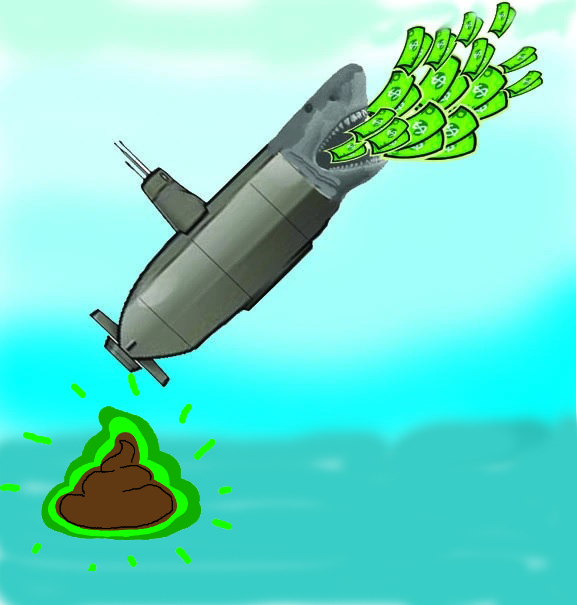
This decision – conceived in secrecy, born in controversy, and destined to become the hallmark of futility – will damage Australia for generations to come.
https://www.theage.com.au/politics/federal/nuclear-subs-deal-an-exercise-in-futility-and-should-be-sunk-20230117-p5cd3y.html David Livingstone Former diplomat 18 Jan 23,
The decision for Australia to acquire nuclear-powered submarines has taken on a life of its own, divorced from disciplined considerations such as cost, effectiveness, and alternatives. At best, the decision is ill-considered. At worst, it’s Treasury-busting lunacy.
Former head of the Australian Strategic Policy Institute Peter Jennings has claimed that Australia’s purchase of the subs – eight in total at an estimated cost of an additional $20 billion per year, out to about 2050 – is necessary to “deter” China. That’s a big call in a number of ways.
In particular, what would the submarines deter China from doing? Is it to deter China from attacking Australia? There is no evidence that China even dreams of such a misadventure.
Australia is thousands of kilometres from China, and its approaches are characterised by maritime choke points and potential killing zones. That’s thousands of kilometres where its forces would be exposed to attack; thousands of kilometres of stretched supply lines requiring enormous and sophisticated logistics.
We have seen Russia’s logistical challenges in conducting a land war just across its border, logistical failures have been a key reason for Russia’s military underachievement. The challenge for China in attacking Australia would dwarf anything Russia has experienced in Ukraine.
China would clearly fail in any attempt at a meaningful maritime assault on Australia. And that outcome is within Australia’s existing military capabilities, including the conventionally powered Collins class submarines. With the acquisition of advanced missiles and drones, Australia will be even more secure.
So, what are nuclear-powered submarines supposed to deter China from doing? The answer, apparently, is to prevent China from attacking Taiwan.
But where in the universe of rational thought is Australia’s acquisition of fewer than 10 submarines over the next two or three decades meaningful in China’s equation about attacking Taiwan? By even generous estimates, the first boats are years away. The full complement of eight could be several decades away. And then what is the actual impact of the new additions to the fleet?
Operationally, you can expect that only one-third of the nuclear-powered submarines would be actively deployed at one time. That is likely to be about three submarines, somewhere closer to the turn of the mid-century than today. Is that really the defining regional capability that will keep China in check?
To think it might be is to cringe at the folly of the idea. To say it out loud is to invite ridicule.
Has Australia suddenly and mistakenly taken on the mantle of the “indispensable country”? Does Taiwan’s future hang on Australia’s purchase of a few eye-wateringly expensive submarines?
The balance of submarines that Australia’s acquisition is claimed to upend so dramatically as to “deter” China includes: China, up to 79 submarines; the US, 68 submarines; Japan, about 20 (and growing); and South Korea, about 20. And that does not include Taiwan’s submarines, or those of the self-proclaimed Indo-Pacific power, the UK. That is well over 100 for Australia’s friends, and they are generally of better quality than the Chinese subs.
Moreover, the US and Japan are taking significant and meaningful steps to increase their capacity to defend Taiwan. Foremost among them is the restructuring of US Marines to counter a Chinese maritime threat, and deploying to islands close to Taiwan.
And Japan, long constrained by its non-aggression constitution, will double its defence spending over the next five years. That is a massive increase for a country that already has one of the largest and best equipped maritime forces in the world.
If this brief review of some of the characteristics of the military balance affecting China’s calculations about attacking Taiwan indicates that Australia’s purchase of nuclear-powered submarines is insignificant, it is because that is precisely what it is. Militarily meaningless. Now and into the future.
It is Australia’s version of Don Quixote jousting with windmill sails.
But this folly would come at a ridiculous cost. Projections of $170 billion are likely well off the mark, with the potential for double that cost.
The opportunity cost foregone would include the acquisition of more meaningful defence capabilities, including smart sea mines that lie undetected in strategic approaches, only activating in times of conflict and only targeting enemy vessels; off-the-shelf conventional submarines; long-range missiles and rockets; more fighter aircraft to dominate the sea-air gap between Australia and Indonesia; aerial and maritime drones.
And with the amount saved there would be money to retire national debt, build and adequately equip and staff schools and hospitals, and rebuild Australia’s failing national transport infrastructure. Greater national security would be achieved through investing in a better Australia than in throwing vast amounts of national wealth at the chimera of security through acquiring nuclear-powered submarines.
But there is one aspect on which both proponents and opponents of the acquisition of nuclear-powered submarines agree. The purchase will deeply integrate Australia’s Defence Force with the US to the point where Australia’s participation in a conflict between the US and China would be automatic.
The only difference is that the proponents cite it as a benefit to be celebrated, while opponents rail against the derogation of one of the most important elements of Australia’s national sovereignty – the decision to commit Australia to war.
This decision – conceived in secrecy, born in controversy, and destined to become the hallmark of futility – will damage Australia for generations to come.
Living With Our Expensive AUKUS Nuclear Submarines
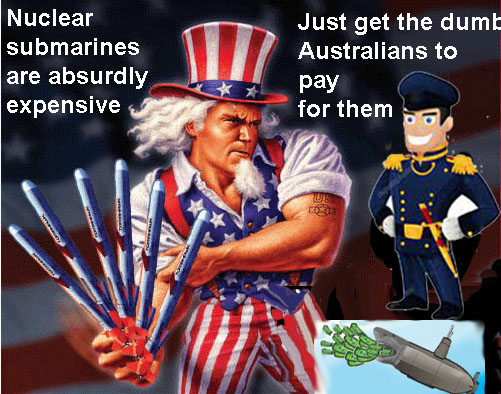
More public discussion of this complex issue might assist in modifying the worst excesses of the AUKUS deal with its enormous financial consequences and more dependency on those powerful friends abroad which have been such a feature of the federal LNP’s foreign policies for decades past.
Will we all continue to live with those dark AUKUS nuclear submarines? Australian Independent Media, By Denis Bright 13 Jan 23,
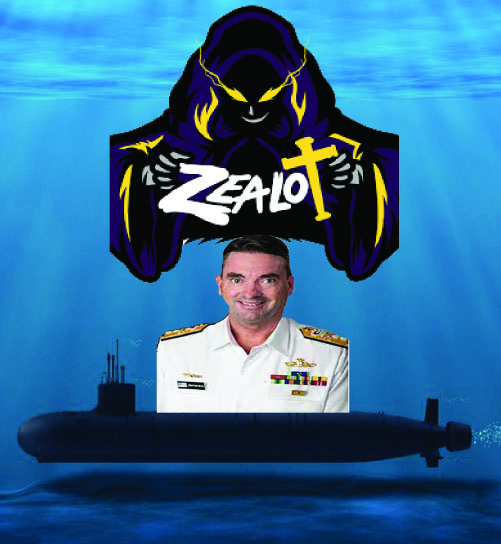
The Christmas edition of The Australian (24-25 December 2022) released a quote from the head of Australia’s nuclear task force Vice Admiral Jonathan Mead. It described the AUKUS submarines as the gold standard of our new security blanket. Spies worldwide wanted to know so much more as the consultative processes surrounding the details were always in the hands of political, military and intel insiders. The wider public would always be left with future payments to cover the financial costs and fall-out from lost trading and investment opportunities between Australia and China.
Writing in The Guardian (8 June 2022), Daniel Hurst estimated that the still undefined AUKUS deal would be an additional $90 billion over the French diesel-powered submarines negotiated by the Turnbull Government.
Yet, Australians seemed to welcome the dark submarines which had a popularity rating of 62 per cent despite an acknowledgment that the deal would inflame relations with China and our future commercial ties according to Katherine Murphy of The Guardian (28 September 2021).
The Albanese Government has already made a goodwill payment to France of $835 million for our breach of contract over the cancelled submarine deal (ABC News 11 June 2022). These costs will fade into insignificance when the full costs of the AUKUS Submarine deal evolve.
The French Government tried hard to promote its contribution to the US Global Alliance after gaining its contract with the Turnbull Government for the sale of the diesel-powered submarines to Australia. French Navy Rubis-class nuclear powered submarine (SSN) Emeraude and Loire-Class support & assistance vessel (BSAM type) Seine reached RAN Fleet Base West in Perth on 9 November 2020 (Naval News 10 November 2020). Prior to the maintenance and logistics visit, Australian Defence Force elements, including the Frigate HMAS Anzac, and Collins-class submarine HMAS Sheean and a P-8A Poseidon aircraft exercised with the French Navy units off the coast of Fremantle.
The ageing nuclear submarine Emeraude was commissioned in 1988. Ten crew members were killed in an accidental explosion off Toulon, France in 1994. Reporters from Vingt Heures (Channel 2 in Paris) were invited on board to film the missiles on the attack class submarine after its triumphal return after a six-month voyage to Australia, the South China Sea and the Taiwan Straits in early 2021. Naval News in Paris were unable to comply with my request for a detailed map of the navigation route which was flicked across the television screen by reports from Vingt Heures. Were the French vessels welcomed into the naval installations at the US installation on Diego Garcia on their merry jaunt from the Red Sea to Western Australia I wondered?
Up north in the South China Sea, both China and Taiwan of course have rival claims over specific islands and reefs across the South China Sea, so the Emeraude had to be on guard as it moved in stealth mode through troubled waters.
Perhaps more commercial globalization is the only recipe for the new wave of security fears about an emergent China. While China remains dependent on mineral and energy resources from Africa, the Middle East, Australia and energy rich Indonesia for its national economy, it can hardly cut off its supply network with shipping embargoes as claimed by advocates of Freedom of Navigation. The AUKUS submarine deal did not canvass such issues and were to be a trump card in giving a khaki hue to the federal LNP’s plans to win the 2022 election for Scott Morrison. Having won the election, the Albanese government was soon caught up in positive political spin that was deemed to come with the AUKUS deal which required no background briefings to balance references to gold standard security advantages for Australia.
It was a bit late for the Chinese Embassy’s goodwill event on 10 January 2023, to change the tide of Australian public opinion (ABC News, 10 January 2023):
The ambassador made both remarks during a wide-ranging and largely upbeat press conference in Canberra held to mark the New Year.
He declared relations between China and Australia had reached a period of “stability”, saying the Chinese Year of the Rabbit offered an opportunity to “jump over obstacles” that had emerged in recent times.
But there are still deep doubts in Canberra about China’s trajectory and the limits to the rapprochement in the wake of high-level meetings between Prime Minister Anthony Albanese and President Xi Jinping, as well as Foreign Minister Penny Wong and her then-Chinese counterpart Wang Yi in Beijing.
Jumping over obstacles to goodwill demands a cooling of tensions over access to the South China Sea, ironclad guarantees about the special status of Hong Kong and an end to saber-rattling over Taiwan which is largely integrated into the economy of China in trade and capital flows. Ambassador Xiao Qian of the Chinese Embassy in Canberra proposed a similar lifeline for Australia to minimize the costs of the AUKUS submarine deal (The Guardian 10 January 2023)………………………………………….
Taiwan still retains some island outposts in the South China Sea including the island of Taiping where the military airport is indeed the main feature of the entire island as covered in the Italian-based PIME AsiaNews (12 March 2022)…………
The ASEAN Forum opposes the return of great power rivalry between nuclear weapons states in the region. Writing in The Interpreter (13 September 2022), Melissa Conley Tyler noted the reservations from regional leaders about the AUKUS submarine deal:
When Australia, the United Kingdom and the United States announced the AUKUS trilateral security cooperation agreement a year ago, it didn’t get a uniformly positive reception in Southeast Asia.
Indonesia’s Ministry of Foreign Affairs said it was “deeply concerned” over an arms race in the region. Malaysia expressed concerns at multiple levels, with both the prime minister and foreign minister raising concerns that it could “potentially spark tension among the world superpowers and aggravate aggression between them in the region”. Malaysia’s Minister for Defence Hishammuddin Hussein went as far as saying he would consult with Beijing on its views on AUKUS.
With commitment to the AUKUS deal still at a consultative stage, favourable guarantees from China might yet modify those gun-ho commitments from the Morrison Government to the re-militarization of our region.
Former Prime Minister Malcolm Turnbull has also revived concerns over the AUKUS submarine deal as covered by Ellen Ransley (news.com.au 9 January 2023):……………………….
More public discussion of this complex issue might assist in modifying the worst excesses of the AUKUS deal with its enormous financial consequences and more dependency on those powerful friends abroad which have been such a feature of the federal LNP’s foreign policies for decades past.
This nostalgia for a return to Cold War solutions will hardly bring progress in reducing regional tensions. While waiting for the arrival of the AUKUS submarines, China continues with its development of land and sea based nuclear weapons. Perhaps some eleventh-hour deals are still possible to reduce future tensions, but change is difficult because of bipartisan agreement in Australia on this issue which seems to have strong electoral support in the absence of public discussion on the economic consequences….. more https://theaimn.com/living-with-our-expensive-aukus-nuclear-submarines/
Brian Toohey -on Australia’s new arms race
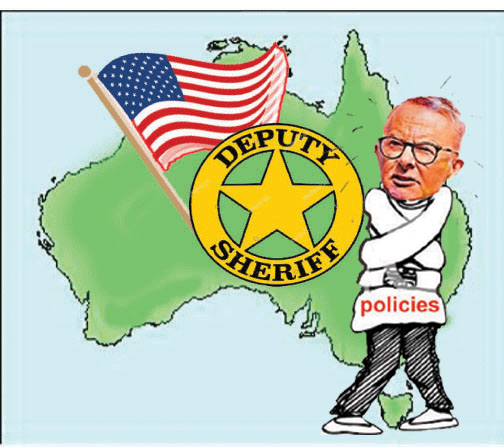
At the same time as the Australian government is trying to improve relations with China, it is greatly increasing spending on offensive weapons for a potential war with China – without adhering to any published treaty explaining the ground rules.
The Saturday Paper, 14 Jan 23
Australia has now joined the United States in refusing to discuss the ANZUS Treaty, let alone claim it is the foundation of Australia’s security. What was once seen as a virtue is now considered a drawback.
The perceived trouble is that the treaty bans the aggressive use of military force – something the US and Australia both use. Consequently, statements released during the Australia–US ministerial meetings on defence and foreign policy in early December did not mention ANZUS or its constraints. Instead, they refer favourably to the “rules-based international order” in which the US, not the United Nations, makes the rules.
In his subsequent comments on the need to build Australia’s military forces and welcome more American forces, Prime Minister Anthony Albanese made no reference to ANZUS. This is part of a trend in which Australian leaders cannot bring themselves to criticise recent harmful US breaches of the international rules on trade and investment.
Article 1 of the 1951 ANZUS Treaty requires the parties to “refrain in their international relations from the threat or the use of force in any manner inconsistent with the purposes of the United Nations”. Aggression is clearly inconsistent with the Charter of the UN, which states, “All members shall refrain from the threat or use of force.”
Labor’s then External Affairs minister, Bert “Doc” Evatt, played a significant role in establishing the UN in 1945 and served as its president from 1948-49. Initially, Labor gave enthusiastic support to ANZUS’s prohibition on aggression. No longer. The preferred “rules-based international order” doesn’t ban aggression, except presumably for countries such as Russia and China. Unlike with the ANZUS Treaty, no text of the new rules or the AUKUS pact is available.
Albanese won’t explain why he wants a large and hugely expensive arms build-up. In a media interview published on December 19, all he said was that we need to spend a lot more on defence because the need for new capabilities is so great. He did not explain why. He refuses to nominate a potential enemy. He merely says we need to spend more on our military to “promote peace and security in the region”.
Participating in an arms race is not necessarily the same as promoting peace. Yet Albanese refuses to invest in arms control measures – unlike the Hawke–Keating governments……………….
Albanese takes for granted that there’s no need to explain where the threat comes from – although the implication is, of course, China……………………
Perhaps China will start a major war within a few years. No one knows. Alternatively, it may put renewed stress on its policy of living in “Confucian harmony” with its neighbours.
Albanese lacks an informed grip on defence issues.
In the interview quoted above, he stated Australia must become more self-reliant in its defence, apparently unaware this is not possible because the US won’t give Australia the computer codes needed to operate American weapons systems and sensors. Nor will it show Australian technicians how to repair or modify any classified components.
This will get worse because of Albanese’s determination to buy eight American attack nuclear submarines for the Australian Navy. Because of the submarines’ extreme complexity, Australia won’t be able to operate them on its own. It may even have to let the US borrow them under the new “interchangeability” policy announced by Defence Minister Richard Marles………………………
Unlike noisy nuclear subs, the latest conventional ones are much cheaper and can operate silently for three or more weeks. ……………
There is no indication Albanese has warned the Americans not to use their forces in Australia for military aggression, in breach of the ANZUS Treaty and UN bans. Similar considerations apply to electronic intelligence facilities in Australia, which play a crucial role in war fighting…………………………
………successive governments have integrated Australian forces so tightly with their American allies – in the planning, training, doctrine, logistics and communications process – that the nation may find itself plunged into a devastating war between the US and China without parliament having the ultimate say after full consideration of the issues…………………..
At the same time as the Australian government is trying to improve relations with China, it is greatly increasing spending on offensive weapons for a potential war with China – without adhering to any published treaty explaining the ground rules.
…………………… Australia wants to deploy nuclear submarines close to China, so they can fire missiles into the Chinese mainland. Little thought appears to have been given to how fiercely China could retaliate…………………………….more https://www.thesaturdaypaper.com.au/opinion/topic/2023/01/14/australias-new-arms-race
Australia’s nuclear submarine plan – a source of disagreement in US Congress

Who is going to build our nuclear submarines? Financial Review 13 Jan23.……………………………………………………………. At the heart of the problem is this simple fact: according to current projections, the US needs to turn out two submarines a year, but only around 1.3 per year are coming out of its naval shipyards.
The deficit in shipyard capacity is a problem that affects maintenance and refits as well as new boat construction. Last year, Rear Admiral Doug Perry, director of undersea warfare requirements in the US Navy, admitted that of America’s 50 attack submarines, “18 were either in maintenance or waiting to go in maintenance”. That figure should be closer to 10.
‘Zero-sum game’
In the words of senators Reed and Inhofe, “what was initially touted as a ‘do no harm’ opportunity to support Australia and the United Kingdom and build long-term competitive advantages for the US and its Pacific allies, may be turning into a zero-sum game for scarce, highly advanced US SSNs”.
Reed and Inhofe will have been briefed in detail by US officials, and presumably those classified briefings led them to conclude that the projected additional demand from the AUKUS program would come at the expense of America’s own military preparedness.
…………………………….. the back-and-forth [in the USA regarding Austrsalian submarines] shows that wider congressional commitment could be put under strain if the program comes to be seen as improving Australian capability while stretching the US to breaking point.
Australia’s contribution to AUKUS should be a next generation conventional submarine

By Kym Bergmann, 08/01/2023 https://asiapacificdefencereporter.com/australias-contribution-to-aukus-should-be-a-next-generation-conventional-submarine/
Sherlock Holmes teaches us that when all possible explanations have been eliminated, the only remaining answer – no matter how improbable – must be correct. As prospects are diminishing that Australia will be able to receive a nuclear-powered submarine before the 2050s, policy makers are faced with two choices: do nothing, or fast track something that will add significantly to the undersea warfare capabilities of the three AUKUS partners.
The latest development is that two US Senators – one serving and one just retired – Democratic Chair of the Senate Armed Services Committee Jack Reed and his Republican predecessor Senator James Inhofe, have warned that the US does not have the capacity to build submarines for Australia. Previously, Australian officials have dismissed any negative commentary about the nuclear submarine plan as “noise”, but this is getting hard to ignore.
Maybe the report by the nuclear-powered submarine task force due in March will prove the critics wrong, but unless it comes up with a concrete schedule with dates, legally enforceable commitments and so on, Australia needs to have a Plan B. A document that emphasises intentions, good will, more discussions, dialog, harmonising requirements, committees, and further investigations gets us nowhere.
Even the most vocal critics of conventional submarine technology concede that they nevertheless retain some performance advantages, such as in complex, shallow water littoral environments. They are also comparatively cheaper to build and – depending on their size and complexity – a nation can acquire at least three conventional submarines for every nuclear-powered boat.
A new generation fleet of Australian conventional submarines could see some of them permanently based in Guam – or even Japan – making an important contribution to USN-led coalition operations in areas such as the South China Sea. Some could also travel to the UK, though what contribution they could make to joint security from there is unclear, but the gesture might be politically worthwhile.
A commitment to actually doing something to help ourselves would also go over well in Washington. US figures are reportedly surprised and disappointed at the supine position of Australia, which seems to believe a solution for our defence needs will be handed to us on a platter. Why should Australia expect the US to solve our submarine problems for us? First and foremost, this a challenge to be met by the sovereign Australian government and not offshore it like some sort of strategic help line.
The quickest solution for Australia would be to forget about the Collins Life of Type Extension due to start in 2026 and fast track the local construction of the South Korean KSS-III Batch 2 design – now owned by Hanwha – which could see boats in the water from 2030. These are long-range conventional submarines that achieve a very low indiscretion rate by using lithium-ion batteries and other advanced technologies that were never part of the cancelled Attack class program. Their endurance could be further expanded by building a resupply base on Christmas Island – surrounded by deep water and easy to protect – that would give them an extra 25% time on station.
Another option would be a Next Generation Collins class – a larger version of the Swedish A26 submarine, similar to the one favoured to be chosen by the Netherlands to meet their need for a long-range oceanic submarine. A Third Generation Collins in the 2050s could be nuclear-powered, with the involvement of both the US and the UK. That’s called long term planning and is probably closer to the spirit of AUKUS because it would contribute to sovereign capability.
For all the boosters of nuclear-powered submarines, we say this: unless Australia has a highly skilled construction base, we will be condemned to forever seeking to buy them from the US or the UK – and, as we are witnessing, the chances of that ever happening are receding. As those two nations learned from the Sea Wolf and Astute programs, without a continuous submarine construction program, the loss of skills can be catastrophic.
The only sure way to guarantee that Australia will be able to build nuclear powered submarines – other than the reactors themselves – is to be able to transition from building large, advanced conventional submarines to something with a different propulsion system. Put simply: those arguing that an interim submarine is too inconvenient are condemning to death the idea of the local build of a nuclear-powered boat. We will need a skilled, experienced, existing workforce, existing program management and existing local supply chains.
The only sure way to guarantee that Australia will be able to build nuclear powered submarines – other than the reactors themselves – is to be able to transition from building large, advanced conventional submarines to something with a different propulsion system. Put simply: those arguing that an interim submarine is too inconvenient are condemning to death the idea of the local build of a nuclear-powered boat. We will need a skilled, experienced, existing workforce, existing program management and existing local supply chains.
Dear US Congress, thank you for saving Australia from itself
by Rex Patrick | Jan 7, 2023 https://michaelwest.com.au/dear-us-congress-thank-you-for-saving-australia-from-itself/
Is “bad news” out of US Congress about an AUKUS nuclear submarine deal a blessing in disguise? Former submariner and senator Rex Patrick says US politicians, though acting in the interests of the US, may save Australia from itself, and $170 billion too.
We are concerned that what was initially touted as a ‘do no harm’ opportunity to support Australia and the United Kingdom and build long-term competitive advantages for the US and its Pacific allies, may be turning into a zero-sum game for scarce, highly advanced U. SSNs,” wrote the Democrat and Republican heads of the Senate Armed Services Committee.
“Over the past year, we have grown more concerned about the state of the US submarine industrial base as well as its ability to support the desired AUKUS SSN [Nuclear Submarine] end state”.
“We believe current conditions require a sober assessment of the facts to avoid stressing the US submarine industrial base to the breaking point.”
These two Senators have nailed it.
Scotty’s greatest marketing moment
The AUKUS submarine was a ‘brain fart’ of Prime Minister Scott Morrison who was facing disquiet within the Liberal Party ranks (I know; as a Senator and submariner, they were raising the issue with me) over the French designed Attack Class replacement submarine program.
It was an idea supported by a Defence Department which had, in the 12 years since the future submarine project had been initiated, spent five billion taxpayer dollars delivering no submarine, and more than $8.5 billon on other failed projects.
On the morning of September 16, 2021, Morrison stood up in a stage-managed announcement staring US President Biden, then UK Prime Minister Boris Johnson and Morrison. Apart from the fact that President Biden didn’t know Morrison’s name, it was Morrison’s greatest ‘Scotty from Marketing’ moment.
While waving a big and distracting nuclear submarine hand to the camera, his other hand was behind his back silently putting a death to the French submarine program, something that would very shortly after cause a diplomatic rift between Australia and France.
Then opposition leader, Anthony Albanese, was given a briefing on AUKUS and the new submarine plans just 24 hours prior to the announcement. In the face of the oncoming election, Albanese made the political call to give the announcement Labor’s full support. Indeed, pursuing a ‘small target’ political strategy, Labor was embarrassingly desperate to avoid a fight about national security.
Not good for Australia
It was only after the dust had settled that the right questions started to be asked; simple questions like how much, when and where?
The cost soon emerged. The French submarine program has taken an expensive $50 billion submarine program and blown out to an unaffordable $90 billion. The AUKUS submarine was to invoke a cost ‘chain reaction’, coming in at a bankrupting $170 billion. We were jumping out of the financial frying pan and into the fire.
2040 what?
The commissioning date soon emerged. 2040! Noting the rationale for the switch from a French to an AUKUS program was the rising geo-political tension in our regions, the AUKUS submarine was to be delivered even later that the French solution. In an environment where Defence itself had warned our defence procurement warning time had been reduced to less than 10 year, it made no sense to embark on a program that delivers a first capability in 20 years.
Then the build discussions started. The nuclear submarine was not to be built in Australia, rather the US. We were going to sell out Australia industry, and in particular our hard-won competent submarine sustainment industry. We were going simply export $170B, most of the jobs and a sovereign capability the taxpayer had spent billions developing.
Not good for the US either
And the US Congress is now coming to the realisation that the AUKUS program will not be good for the US either.
Supporting Australia’s submarine program will put even more pressure on the US submarine industry trying to build 12 new Columbia Class ballistic missile submarines and meet the demands of supplying the US Navy with its own Virginia Class submarines.
This is not surprising. The US Congressional Research Service has been issuing reports for the better part of a decade that highlight the growing pressures on and limited capacity of the two American submarine construction facilities. The industrial capacity problem is already acute.
The old Los Angeles Class submarines are retiring faster that the Virginias can be brought online.
Now the Senate Armed Services Committee has finally realised what would be involved in supporting the AUKUS submarine.
Please help pal!
Not having built or operated nuclear submarines before, and as the only country in the world that would be operating nuclear submarines without an established nuclear power industry, Australia’s dependency on the US would be significant. Training, shipbuilding, operating and maintaining a nuclear submarine, nuclear safety … we would need a lot of help with all of it.
We are talking about nuclear reactors. The US can’t half commit to this. AUKUS nuclear submarines will be a considerable distraction to the entire US submarine enterprise at a time when they don’t need distraction.
But the public concerns of the senators only tell half the story.
China conflict looms, before the subs arrive
Conflict between the US and China is more likely to occur in the next decade, than in the 2040’s when a first AUKUS nuclear submarine would be fully operational.
A decision by the US to support an AUKUS nuclear submarine would be a decision resigning their close Asia-Pacific ally to the operating of ageing Collins class submarines in the very period a high-end submarine partnering capability was needed most.
Stupid and stupider, but political momentum
The whole AUKUS nuclear submarine thing has a political momentum about it which will bring about national security downsides for both countries.
As indicated above, the Labor Party leadership signed up to this massive project on 24 hours’ notice and little information. Now, completely captured by the ‘Department of Largely Failed Procurement and No Accountability’, Albanese, Defence Minister Richard Marles and Defence Industry Minister Pat Conroy have been supplied with a full barrel of naval Kool Aide, and they’re chugging it down.
Cold hard analysis, such as that being conducted by the US Congress, might be the only thing that saves Australia from itself.
Australia to buy long-range HIMARS missile system from United States – at unknown cost (? 2 $billion)
ABC, By defence correspondent Andrew Greene, 5 Jan 2023
Australia’s Army will have an unprecedented long-range strike capability with the purchase of the US-made High Mobility Artillery Rocket (HIMARS) system, which Ukraine has praised for its devastating effectiveness against invading Russian forces.
Key points:
- Defence officials say the use of HIMARS in Ukraine against Russia confirms why it’s needed
- Labor says the overall cost of the missiles is over one billion dollars
- Defence Industry Minister Pat Conroy says it “isn’t useful” to disclose the full cost to “potential adversaries”
The Albanese government has finalised a deal to buy 20 of the truck-mounted rocket launchers by 2026, while signing another deal to acquire the Norwegian-made Naval Strike Missiles (NSM) for Australian warships next year.
Precise costs of the purchases are being kept secret for security reasons, but the government has confirmed to the ABC the overall figure is “between one and two billion dollars”.
Defence Industry Minister Pat Conroy said during an October visit to the United States he held “productive discussions” with the Army and Lockheed Martin on how Australia could start producing the rockets used in HIMARS.
On New Year’s Day, a Ukrainian strike using the US-donated HIMARS system killed dozens, possibly even hundreds of Russian soldiers in the Donetsk region……………………………….
Congress was first notified of a possible sale of the Lockheed Martin-produced HIMARS to Australia seven months ago, while the NSM purchase was flagged by the Morrison government in April last year………………..
Labor says the HIMARS and NSM purchases will together cost over $1 billion, but Mr Conroy says precise details are being kept deliberately hidden.
“We won’t be disclosing the total cost of the two announcements,” he told the ABC.
“The two combined costs is between one and two billion dollars, the reason that we’re not disclosing the specific amount is that gives information to potential adversaries which isn’t useful beaming out there.”
In its notice to Congress in May, the US Defence Security Cooperation Agency estimated the cost of 20 HIMARS and associated munitions and equipment at US$385 million ($561 million). https://www.abc.net.au/news/2023-01-05/australia-america-himars-missile-system/101827334
 | |||
| |||
How Defence chiefs committed Australian special forces to the US drug war in Afghanistan
by Stuart McCarthy | Jan 6, 2023 https://michaelwest.com.au/how-defence-chiefs-committed-australian-special-forces-to-the-us-drug-war-in-afghanistan/
What is the accountability of Australia’s military top brass in alleged war crimes in Afghanistan? Stuart McCarthy, a veteran of two tours in Afghanistan, looks at the case of former defence minister Stephen Smith who has just been appointed High Commissioner in London.
“The DEA people were having troubles getting their own country to support them, and they had these Australians saying yes. They were very appreciative.”
Special Operations Task Group Plans Officer Greg Barton, quoted in Ben McKelvey, The Commando, 2017.
The Albanese government’s appointment of former foreign affairs and defence minister Stephen Smith back into public office as the next High Commissioner to the UK is merely another example of a political mate landing this plum overseas posting.
Much in the way of Kevin Rudd’s appointment as Australia’s ambassador to the US, or the Liberal government’s appointments of Joe Hockey and Arthur Sinodinos before Rudd. That these are all “jobs for the boys” is no reflection on competence or their expertise. There would be few less qualified than Kevin Rudd or Stephen Smith for their respective positions.
Yet, if Australia’s alleged war crimes in Afghanistan are ever heard at The Hague, or even tested in a bona fide war crimes commission in Australia, there will be political ramifications.
The Wong choice
Smith’s appointment at the completion of his Defence Strategic Review early next year reflects “the eminence of Australia’s relationship with the UK,” announced foreign affairs minister Penny Wong on 30 September. Not much to see here.
Not much to see at all, until we consider Smith’s connection to the alleged war crimes by Australian special forces in Afghanistan, and the possibility that senior defence officials might have to answer charges of command responsibility in the International Criminal Court (ICC).
Australia’s military commitment to Afghanistan was at its peak in 2010 when Stephen Smith became Minister for Defence. Critical of the lack of a coherent strategy and having derided European troop contributing countries for “organising folk dancing festivals,” in 2009 Prime Minister Kevin Rudd had increased our Afghanistan troop presence from 1100 to 1550.
Part of a NATO “surge,” the intention was to build the country’s fledgling democratic institutions while defeating a growing Taliban insurgency.
The Narco State
One of the wicked problems in dealing with both the insurgency and endemic Afghan government corruption at the time was the country’s decline into a nascent narco-state. So lucrative was the opium trade and so pervasive the corruption that in 2009 the estimated export value of opiates produced in Afghanistan amounted a third of the country’s GDP.
[ABC News YouTube video – Mark Willacy 21 Oct 2020 story on allegations of Afghan detainee murdered during 2 Cdo Regt/DEA counter-narcotics raid in Helmand province, mid-2012]
Coinciding with the NATO surge was a switch in the counter-narcotics component of the nation building strategy from eradicating opium poppy crops to interdicting the financial “nexus” between the drug trade and the insurgency.
Poppy eradication had proven not only unsuccessful but counter-productive. The prerequisite stable security situation, alternative livelihoods, functioning law enforcement and judicial systems, would take a decade or more to establish. Worse, destroying the only viable cash crop in most parts of the country was a surefire way to push impoverished farmers into the ranks of the rural insurgency.
In the minds of its proponents, a “counter-nexus” campaign targeted at the Taliban-aligned drug lords thus came into play as a silver bullet that could win the war. This despite the fact that no such endeavour has ever succeeded, anywhere, in the context of an ongoing war.
While the folly of fighting a drug war amid an escalating insurgency precluded most of the International Security Assistance Force (ISAF) armies from directly supporting this US Drug Enforcement Administration (DEA)-led campaign, the main question was actually one of legality.
How legal was it?
Targeting an active participant in hostilities with lethal force is perfectly legitimate under the internationally accepted laws of armed conflict (LOAC), but extra-judicial killing of crime suspects is questionable at best. Summary execution is certainly illegal under Australian law.
Concerns about rewriting the rules of engagement (ROE) to target Afghan drug producers and facilities under the legal auspices of international armed conflict had been raised at the highest levels in ISAF. In a classified letter to NATO high command leaked to Der Spiegel in 2009, ISAF commander U.S. General David McKiernan wrote that this would:
“… seriously undermine the commitment ISAF has made to the Afghan people and the international community … to restrain our use of force and avoid civilian casualties to the greatest degree predictable.”
Hence in 2010 the DEA mandarins in Kabul had a problem. To prosecute their counter-nexus drug war in the opium heartland of Helmand province they needed a willing contingent of well-trained special operators. When even the US military wouldn’t provide this, they looked further afield and found the commando component of the Australian Special Operations Task Group (SOTG) in nearby Uruzgan province.
[ABC News YouTube video – Mark Willacy 21 Sep 2022 story on allegations seven civilians were killed during 2 Cdo Regt/DEA counter-narcotics raid at Qarabagh, Oct 2012]
On a visit to Uruzgan soon after he was shuffled from Foreign Affairs to Defence in September 2010 – making way for Rudd in the new Gillard cabinet – Smith was approached by officers from the 2nd Commando Regiment. The commandos had developed a counter-nexus joint operating concept with their DEA colleagues, but encountered “every kind of obstacle” in seeking approval through the chain of command.
According to one account, when the commanding officer briefed Smith in person during his visit:
“From the beginning, [the minister] saw the logic in the proposal and was just as keen to get the idea underway as [we] were.”
With Smith’s direct approval, over the next two years the commandos undertook dozens of DEA-led drug raids in southern Afghanistan, principally in Helmand. These were tactically successful, as one of the commandos explains in Ben McKelvey’s 2017 book The Commando:
“They were instant gratification missions. You go in there at night, fuck up a bunch of shit, blow up drugs, ruin some bad dude’s week … you were basically Batman.”
A decade later, reports of exactly the civilian casualties McKiernan anticipated in 2009 are emerging in the Australian media. A US Marine Corps helicopter crewman has alleged that an Australian commando executed a detainee during a mid-2012 raid in Helmand.
In another incident in Helmand later that year, local Afghans and “Defence sources” have alleged that seven civilians were killed, including six who were “under the control” of Australian commandos.
At least two of the incidents from the DEA-led counter-nexus raids are now reportedly under criminal investigation by the Office of the Special Investigator, newly established by the federal government amid the national outcry which followed the publication of the Brereton Report in 2020.
One of the Brereton inquiry’s questionable findings was that accountability for the crimes identified in his report does not extend to higher Australian commanders “because they did not have a sufficient degree of command and control” over SOTG.
In reality, the decisions to commit the commandos to the DEA-led counter-nexus campaign, and the national rules of engagement governing the use of force and prevention of civilian casualties during those raids, were made by senior Australian officials.
Like the 2012 SAS raids in Sola and Darwan villages, the paper trail for these counter-nexus raids goes all the way up to Stephen Smith. There is arguably a potential case here for recklessness or negligence, supporting charges of higher command responsibility under Article 28 of the Rome Statute – although his story makes no imputations as to Smith’s culpability.
Nevertheless, these incidents might not have happened without Smith’s personal approval of SOTG’s participation in the DEA’s ill-fated, legally questionable, “instant gratification” campaign to “fuck up a bunch of shit” like Batman in Helmand.
Scott Morrison’s booby trap: Buying US nuclear submarines is a huge mistake.
https://www.unz.com/mwhitney/tucker-gets-it-putin-doesnt-want-american-missiles-on-his-borde Clinton Fernandes. Academic and former intelligence officer. 28 Dec 22,
Submarines are in the news a lot these days. Nuclear-powered ones especially.
There is no doubt that submarines are an essential defence capability for a maritime nation like Australia. They raise the stakes for any adversary contemplating hostile action against us. Submarines are expensive, but countermeasures against them are much more expensive. They allow the government to act at a time of its choosing and under any realistic threat scenario.
Australia’s defence interests would be better served by conventionally powered submarines, not nuclear-powered ones. Air-independent propulsion (AIP) submarines are a proven technology. They go as deep as nuclear-powered submarines and can lurk in an area for months. They convert chemical energy into electric power at high efficiencies, and can go for up to three weeks without having to surface to recharge their batteries, a process known as “snorkelling”. Their hydrogen fuel cells and Stirling engines are much quieter than nuclear-powered submarines, which have large meshing gears between their steam turbines and propellers and must also keep their reactor cooling pumps running
AIP submarines are lighter as well. They are better at shallow water operations. They are considerably cheaper than nuclear-powered boats, meaning many more could be purchased, with more local maintenance jobs throughout the life of the boats.
Japan, South Korea and Singapore use air-independent propulsion submarines, as do Norway, Sweden, Germany, Spain, Portugal and Italy. So does Israel, a nuclear-capable state.
As former submariner and senator Rex Patrick has argued, Australia could have 20 modern, off-the-shelf submarines built in Australia and enhanced by Australian industry, for $30 billion. By contrast, the eight nuclear-powered boats may cost as much as $171 billion. Conventional submarines would free up funds so that Australia can acquire more fighter jets, a $40 billion industry resilience package, a national shipping fleet, long-range rockets and other artillery systems, utility helicopters, shoulder-fired anti-aircraft missiles, and more.
As the weeks and months pass by, the mirage of Australian nuclear-powered submarines will stay as alluring as ever, and as out of reach as ever, with the Labor government persisting, however absurd and expensive this theatre becomes.
They don’t seem to understand that Scott Morrison booby-trapped the defence self-reliance of this country. Some submarines will eventually be located in Australia, with Australian flags and personnel, but they’re essentially US boats operated in the US’s great power interests. We’re paying for them to set up part of their current and future fleet in Australia.
Nuclear-powered submarines create another problem. When the nuclear-armed states signed the Nuclear Non-Proliferation Treaty, they insisted on exempting fissile materials used in nuclear-powered ships and submarines from inspection by the International Atomic Energy Agency (IAEA). They wanted to preserve the secrets of their naval reactor designs.
The US and Britain’s submarines operate reactors that use 93.5 per cent-enriched uranium as fuel. The US Navy’s reactors currently use about 100 nuclear bombs’ worth of highly enriched uranium every year, more than all the world’s other reactors’ production combined. Civilian reactors typically use 3 to 5 per cent-enriched uranium as fuel. (The French Suffren-class submarine runs on fuel enriched below 6 per cent).
Australia will become the first non-nuclear-armed state to acquire nuclear-powered submarines, and these will require the same high-grade uranium as the rest of the US fleet. Australia will have to work with the IAEA to figure out how to account for the fissile material without disclosing secret naval reactor design information. Iran, Brazil, South Korea and other countries could use the Australian precedent to develop or acquire nuclear-powered vessels too, enjoying similar exemptions from IAEA inspection.
There are powerful arguments for Australia to modernise its submarine fleet. Conventionally powered submarines make the most sense on grounds of performance, defence relevance, cost and non-proliferation.
Professor Clinton Fernandes part of the University of NSW’s Future Operations Research Group which analyses the threats, risks and opportunities that military forces will face in the future. He is a former intelligence officer in the Australian army.
Dumb Ways to Buy: Defence “shambles” unveiled – former submariner and senator Rex Patrick.
massive over-investment in one project with a delivery date close to two decades away. This will unquestionably jeopardise our national security.
Sadly, Defence Minister Richard Marles is out of his depth and drinking the Defence Department’s Kool Aid.
Michael West Media by Rex Patrick | Dec 18, 2022
“The AUKUS nuclear submarine project will bleed the Australian Defence Force white”, topping the billions in Defence spending waste each year. And there’s no one watching anymore, reports former serviceman and senator Rex Patrick.
Anyone with kids will know the song, ‘Dumb Ways to Die’.
Set fire to your hair
Poke a stick at a grizzly bear
Eat medicine that’s out of date
Use your private parts as piranha bait
Dumb ways to die
So many dumb ways to die
With 300 million views, it’s the world’s most shared Public Service Announcement. Launched in November 2012 by Metro Trains Melbourne to promote rail safety, it went viral through YouTube, quickly being shared all over social media.
Like many parents, I’ve suffered relentless annoying renditions of the song courtesy of my two, otherwise wonderful, daughters.
But that suffering is nothing like the suffering inflicted on Australian taxpayers and our national security by the Department of Defence as it has repeatedly bungled major Defence procurements. I’m not a songwriter, but what follows are all the elements needed for someone more creative than I to write a Defence procurement ‘Dumb Ways to Buy’ jingle.
Costly failure after failure
Defence procurement is a shambles and national expenditure disgrace. Project after project blows out in cost and schedule, with some projects being cancelled all together.
Every year the Auditor-General releases a Major Projects Report into Defence’s major projects. The most recent report covered 21 projects worth $58 billion dollars. Across those 21 projects, there had been $18.5 billion in cost increases – that’s 18,500 million dollars for those that can’t easily grapple with the large amounts of money with which Defence plays.
Across those 21 projects the schedule slippage was 405 months – 34 years. A number of projects, excluding the future submarine project for the moment, have either been binned or did not meet capability requirements. They are:…………………………………
That’s eight and a half billion dollars of taxpayers’ money just thrown away. That’s eight billion dollars of new capability our brave front-line Defence Force members don’t have.
What’s worse, there’s no-one watching Defence anymore. The Labor Party aren’t too interested in shining a light on Defence’s failures now they’re in Government. And the Liberal Party, having just left Government, are to blame for many of the programs. They’re happy to stay silent too.
And that leads us to the Future Submarine Program. It’s been in the news a bit last week after the United States offered, without any detail, to plug the capability gap that will be left by a first nuclear submarine only being delivered until in 2040 – the gap that the Rudd/Gillard/Rudd and Abbott/Turnbull/Morrison governments all pledged wouldn’t happen.
The Future Submarine project is the quintessential example of how not to buy a capability for the Australian Defence Force. Let’s examine that purchasing disaster.
Dumb ways to buy – delay the start
Sensibly, the future submarine project was first stood up in 2009. The plan was to work through the purchase options and commence construction of the first futures submarine in 2016, with the first boat hitting the water well before 2025, when the first of the ageing Collins Class submarines was due to retire.
Dumb ways to buy – pick partners using their views of themselves
In February 2015, the Government commenced a Competitive Evaluation Process, not to select a submarine, but to select an international partner to design and build our future submarines. The taxpayers forked out $8 million to each of France’s Naval Group, Germany’s TKMS and Japanese Industry: $24 million to listen to each potential partner tell Defence how good they thought they were.
At the time I was writing extensively on submarines for a Defence magazine. My business experience made me take a different approach to Defence. I jumped on a plane and went to talk to other navies, not about their submarines, but about their experience with their French and German suppliers.
The Chileans had had a good experience with the French. So too had the Portuguese…….
We proceeded to select the French as a partner, in taboo circumstances, where we didn’t have a comprehensively articulated contract.
After the partnership selection, Defence spent two and a half years trying to put in place a Strategic Partnering Agreement with the French, an agreement that was originally schedule to take 13 months; a first sign of trouble…………..
Dumb ways to buy – sign before you know what you’re buying
………… But that’s exactly what Defence did. Unsurprisingly, they copped severe criticism from the Auditor-General in his 2017 first program audit………..
Dumb ways to buy – risk it up………………………………………………….
Underlying this is the embarrassing fact that Defence employs Admirals, Generals and Air Marshals and senior Defence bureaucrats, with very little practical knowledge of project risk, to make procurement recommendations to Cabinet members who have no knowledge of project risk………………………………………………
Dumb ways to buy – switch to a costlier solution
When Prime Minister Scott Morrison announced on September 16, 2021 that the Government was walking away from the French solution, he did so with great fanfare and gusto, announcing we were purchasing a nuclear-powered submarine solution. He made no mention of cost, or schedule. Irresponsibly, those details were not known at the time.
And then opposition leader Anthony Albanese irresponsibly signed up to the solution with 24 hours’ notice, principally because he and his shadow ministry were politically too scared to have a fight about Defence policy in the countdown to the 2022 federal election.
Our political leaders would have us think that we are special because the US has agreed to share its nuclear technology with us. But that’s simply incorrect………….
t’s like we’re hunting for the most expensive and best football team, but planning for it to arrive after the grand final has been played.
The AUKUS nuclear submarine program will bleed the Australian Defence Force white. The opportunity costs are huge in terms of other capabilities, for the Air Force, for the Army and indeed for the Navy, that won’t be affordable because of massive over-investment in one project with a delivery date close to two decades away. This will unquestionably jeopardise our national security. Sadly, Defence Minister Richard Marles is out of his depth and drinking the Defence Department’s Kool Aid.
The War Memorial plays along with Lockheed Martin

https://johnmenadue.com/the-war-memorial-plays-along-with-lockheed-martin/ By David Stephens, Dec 13, 2022
Senator David Shoebridge, a new Green from New South Wales, tabled a document in Senate Estimates on 8 November which showed just how keen the Australian War Memorial has been to oblige its corporate donors.
The donor here was Lockheed Martin, in 2020 the world’s largest arms manufacturer by value of sales ($US58.2 billion), but which picks up “corporate responsibility” brownie points by donating small change to the Memorial ($727,000 from 2013-14 to 2019-20: Question on Notice No. 42, 2019-20 Supplementary Estimates, Foreign Affairs, Defence and Trade Committee).
Formally, the document (dated 2018) the Senator waved around was Lockheed Martin’s, obtained from the Memorial under FOI. Signed by the Memorial’s representative, it enables Lockheed Martin to say it is not making donations to a government body to influence its arms contracts with the Australian government – which are worth squillions. (Lockheed is competing, for example, with Northrop Grumman at present for a contract worth $2.7 billion, and that’s just one of many.)
As the Senator said, “The purpose of having this limitation on behalf of Lockheed Martin is so that Lockheed Martin is not seen to be making financial contributions to governments, or any agency or association associated with a government, that it’s also selling weapons to. It’s an integrity measure.”
What the Memorial’s officer signed was an “international contributions compliance certification form” – provided by Lockheed Martin – that said:
[t]he Recipient Organisation [the Memorial] is not an agency, organisation, association, or instrumentality of the Australian government, any political party in Australia or a public international organisation, and is not otherwise owned, in whole or in part, or controlled by the Australian government or any Australian political party or government official, or an official of a public international organisation. [Spelling slightly revised from the Hansard to match the original.]
There was more in the form about not using Lockheed’s donated money to “improperly influence” Australian officials or obtain an “improper advantage”.
Senator Shoebridge asked War Memorial Director Anderson to admit that the statement signed off by the Memorial officer was “plainly wrong”, in that the Memorial clearly was “an agency, organisation, association or instrumentality of the Australian government”. The Director pointed out instead that the Memorial had inserted words (in red, indeed) in the form: “The Memorial is a statutory authority of the Australian government, with an independent governing council”.
The Department of Finance two page “Flipchart of PGPA Act [Public Governance, Performance and Accountability Act 2013] Commonwealth entities and companies”, dated 15 November 2022, shows lots of statutory authorities, but the term “statutory authority” simply means “an Australian Government body established through legislation for a public purpose“. It is not defined in the relevant current legislation, the PGPA Act, which is written in terms of “Commonwealth entities” and divides all except 17 of the 190 entities listed into “corporate” or “non-corporate”. (The other 17 are companies under the Corporations Act.)
The Flipchart classifies the Memorial as a “Corporate Commonwealth entity”, one of 72 in that category. The category also includes the Australian National University, the ABC, the National Gallery, the National Library, and the National Museum, each of them with its own Act and similar words about the powers and functions of their governing Boards or Councils as are found in the Australian War Memorial Act 1980.
In essence, the Memorial representative who signed the form – and Director Anderson at Estimates – were using the generic but legally meaningless category “statutory authority” as a fig leaf to cover the Memorial’s paving the way for Lockheed. The fact that the Memorial can be called a statutory authority does not mean it is not at the same time a “Commonwealth entity” as on the PGPA Flipchart or, in Lockheed’s terms, “an agency, organisation, association or instrumentality of the Australian government”.
What fibs bureaucrats have to tell to cadge a dribble of funds out of donors. To complete the story, though, we need to mention that other evidence we have seen, dated 4 October 2022, is a letter where a Memorial officer admits (to someone not Lockheed but in reference to this case), “The ongoing relationship the Memorial has with Lockheed Martin would lead a reasonable person to understand the Memorial is funded by and a part of the Australian Government”.
So, what the Memorial says depends upon to whom it is writing – sometimes it’s not Australian, sometimes it is. By the way, Kim Beazley, newly elected and appointed as the Chair of the War Memorial Council, former Defence Minister, former Ambassador to the United States, former Governor of Western Australia and promoter of its defence industries, was also from 2016 to 2018 a member of the Board of Lockheed Martin Australia. Another example of what has been called “the military-industrial-commemorative complex” or simply “the revolving door”.
Undue influence of the arms industry
Michelle Fahy, IPAN National Conference, 23 November 2022
Undue influence of the arms industry in Australia
Most stories I do end up being about two things: transparency and accountability. More accurately, the lack thereof, in this industry.
Today I’ll give you a snapshot of the intersection between the arms industry and the Australian government – the power and influence on one hand, and the secrecy and lack of accountability on the other. It’s hard to do simply and in a short space of time, so I have chosen a particular example from my work so far – as a case study which typifies how it works – to shine a spotlight on the undue influence of this industry. It’s by no means the only example, but it’s a really good one for illustrating how this industry can manipulate and control government decision-making to undermine the public interest to serve its own private interests. We know a fair bit about this one thanks to the Australian National Audit Office and its report.
This undermining of the public interest to serve private interests, when it becomes entrenched, is called state capture. The World Bank describes it like this: “State capture is the exercise of power by private actors — through control over resources, threat of violence, or other forms of influence — to shape policies or implementation in service of their narrow interest.”
First, a bit of context showing how the arms industry here fits in with the global arms industry.
You don’t need to read the chart. The simple point I’m making is the number of names in red – on both sides.

At left is a list of the top 15 global arms manufacturers. At right is a list of the top 15 contractors to Defence in Australia. The names in red are those that appear in both lists – showing a large amount of crossover. This is not surprising, but it’s useful to get a visual sense of the overlap.
The left column shows where those foreign companies rank globally. All of Australia’s 11 foreign-owned top defence contractors are global top 40-ish companies (KBR = 43rd), seven of them are in the global top 15.
I’m making this point, using the top 15 in particular, because the Australian Strategic Policy Institute (ASPI) did a study in 2017 that found, on average, in the 20 years to 2015, the top 15 contractors in Australia took 91% of the revenue.
Along with this quick look at the extensive presence of the global arms industry here, I’ll mention a 2020 report from SIPRI (the respected Stockholm International Peace Research Institute which tracks global arms sales and military expenditure). The report is called Mapping the international presence of the world’s largest arms companies.
The report took the world’s top 15 arms manufacturers and systematically investigated how many subsidiaries and joint ventures they had dotted around the globe. To be included, the subsidiaries had to be involved in arms production and military services activities and they had to be selling their products or services to military clients. They couldn’t just be sales or marketing shopfronts, or shell companies: those types of entities were excluded.
SIPRI found 400 subsidiaries of these 15 companies spread across at least 49 countries. They are mostly in countries that have two features:
1. the country is a large arms importer
2. it’s trying to establish a local arms industry.
Makes sense, right? You can see why a foreign arms-maker would move in.
And – you guessed it – Australia ticks both those boxes. Australia is currently the world’s 4th largest arms importer, and we are one of America’s biggest clients. In the five years from 2016-20 Australia was the United States’ second biggest arms customer, after Saudi Arabia. Even before that, we have been a top 5 US arms industry customer for a long time. It’s worth bearing that in mind when the US calls us its very good friend.
We are also BAE Systems’ (UK) fourth largest market. After the Turnbull government announced its massive planned spend on weaponry, BAE’s director of international markets said in 2017: “We are really in … exciting times in the Australian market. The government procurement plans are hugely ambitious. There aren’t too many countries who have that scale of defence procurement ambition in the next 15 years.”
And that was before AUKUS came along!
This is the Australian summary from SIPRI’s report:
1. Australia is now the largest military manufacturing hub outside the two major hubs of North America and Western Europe.
2. Australia ranks second in the world for the number of foreign subsidiaries of the top 15: we have 38 subsidiaries of those 15 companies here. The UK has most with 56, Saudi Arabia is third with 24.
So, that sets the scene. It’s obvious there’s a significant presence in Australia of the topmost echelons of the global arms industry: a lot of power and influence.
The Thales Hawkei vehicle procurement is a strong example of undue influence. How the company came from nowhere to win this $1.3 billion contract is a complex and highly political story that beggars belief, frankly. It contains many elements of undue influence that pop up across other procurements, yet here they are all in one story, so it’s a great example.
It also shows, starkly, how industry bent both sides of politics to its will – that’s state capture……………………………………
The Thales Hawkei vehicle procurement is a strong example of undue influence. How the company came from nowhere to win this $1.3 billion contract is a complex and highly political story that beggars belief, frankly. It contains many elements of undue influence that pop up across other procurements, yet here they are all in one story, so it’s a great example.
It also shows, starkly, how industry bent both sides of politics to its will – that’s state capture.
So – there you have it – it’s a big story and a great example of the undue influence of the arms industry in Australia, bending both political parties to its will, against the public interest, which fits in with the World Bank’s definition of state capture – not as the only example of course. If you Google “Confronting State Capture” you will see the report I contributed to, which includes this story and a lot of other examples, alongside similar material from the fossil fuels industry. It was published earlier this year by the Australian Democracy Network.
Further reading: my November 2020 series (Part 1 and Part 2) contains additional disturbing details about the Thales Hawkei procurement. https://undueinfluence.substack.com/p/speech-undue-influence-of-the-arms?utm_source=post-email-title&publication_id=297295&post_id=89729647&isFreemail=true&utm_medium=email
War veterans call for Parliamentary vote on going to war, but most politicians OK with Prime Minister’s power to alone make that decision
Reform, say vets who know the horrors of war, yet most politicians say status quo
Michael West Media, by Zacharias Szumer | Dec 9, 2022
The senate hearing on War Powers Reform starts today. Of the over 100 submissions made to the government’s “Inquiry into international armed conflict decision making”, the most compelling come from Australian veterans themselves. Zacharias Szumer reports.
As far as can be surmised from the submissions, those who have experienced the horrors of war generally support war powers reform. However, some veterans in parliament remain opponents of major changes to the status quo.
Two Vietnam War veterans have called for further democratisation of the way Australia goes to war, saying that the “poor decisions and dire unintended consequences” of Australia’s involvement in foreign wars have led to “many veterans suffering moral injury” and a wider “loss of faith in the integrity of Government”. In their submission to the inquiry, John Phillips and Noel Turnbull state:
“Australia’s involvement in Vietnam, Iraq and Afghanistan was based on justifications which were expedient politically rather than militarily necessary” and in all three conflicts “the commitment, loss of life, ongoing costs and economic and social impacts far outweighed any perceived benefits.”
All commitments were the result of a Prime Minister alone making a decision – a captain’s call in effect – without proper reflection, debate or analysis of consequences,” say Phillips and Turnbull, who were both deployed to Vietnam. Turnbull was conscripted and served as an artillery officer and Phillips was a career infantry officer.
The two veterans said that “the direct and indirect impacts of moral injury on veterans are ultimately a significant cause of veterans’ mental health”, which had led to the “the enormous cost of treating and supporting veterans and their families”. This moral injury, Phillips and Turnbull write, had led to “profound feelings of guilt or shame —and in some cases a profound sense of betrayal and anger…” among some veterans.
They join other former servicemen and MPs Rex Patrick, Andrew Wilkie and Bob Katter in calling for reform to war powers, where one person decides to take Australians to war.
Phillips and Turnbull recommend that a parliamentary vote on military deployments should be required, with limited powers remaining “with the Prime Minister and the Executive only in national emergencies where there is a direct threat to Australia”. According to the two, there hasn’t been any direct threat to the nation in any of the wars we have been involved in since the Korean War in the early 1950s.
Other veterans have also made submissions to the inquiry supporting war powers reform. Richard Jones, who served 20 years in the Royal Australian Navy, writes:
“Those sent to war, and their loved ones, should be able to do so in the knowledge that this action has the backing of the majority of the Parliament, and that there are clear political and diplomatic goals.”
……… A submission made by Retired Major Cameron Leckie similarly argues that “Australia’s long-term best interests are best served by a legislative requirement for both houses of the Parliament to vote on the decision to commit to armed conflict overseas prior to any deployment of troops.”
…….. People who went to Iraq are still suffering the ill-effects of that and will probably continue to do so for the rest of their lives, so at the very least the parliament should be making those decisions,” said Leckie in a recent radio interview.
Other veterans support reform
Leckie’s name was among 158 other veterans who signed an open letter to the parliament on ANZAC Day this year, urging politicians to “change Australian law so that our armed forces cannot be sent to an overseas conflict without the approval of our parliament.”
………That letter also had the backing of former Navy Admiral Chris Barrie, who served as Defence Force Chief between 1998 and 2002. Barrie recently reiterated his support on ABC radio, saying that he supports “the basic notion of having the parliament decide to send Australian troops to a war or conflict in other countries.”
………………………………….. Parliamentary veterans divided
Three other servicemen and current or former federal parliamentarians—Bob Katter, Rex Patrick and Andrew Wilkie—are also supportive of a greater role for the parliament. Wilkie, who served in the ADF for 21 years, has also made a submission to the inquiry, reiterating his support for war powers reform.
However, some veterans in the parliament are staunchly opposed to parliamentary war powers. They include Liberal party Senators Jim Molan, Linda Reynolds and David Fawcett, who are all members of the defence subcommittee handling the Inquiry into international armed conflict decision making…………………………..more https://michaelwest.com.au/reform-say-vets-who-know-the-horrors-of-war-yet-most-politicians-say-status-quo/
Nuclear submarines will be ‘massively expensive’ – (even Australia’s right-wing is waking up to this!)
Nuclear submarines will be ‘massively expensive’ https://www.skynews.com.au/opinion/peta-credlin/nuclear-submarines-will-be-massively-expensive/video/0cd71d146d5b824255a40e9a2ce6c56b
Former ASPI Executive Director Peter Jennings says Australia’s nuclear submarines will be “massively expensive”.
“I’ve said for the whole thing including training and bases and weapons, as well as the submarine itself, think of about one per cent of gross national product, so something like AU$20 billion a year forever,” he told Sky News host Peta Credlin.
Parking Lot B-52: does the escalation of US troops and installations make Australia a bigger target?
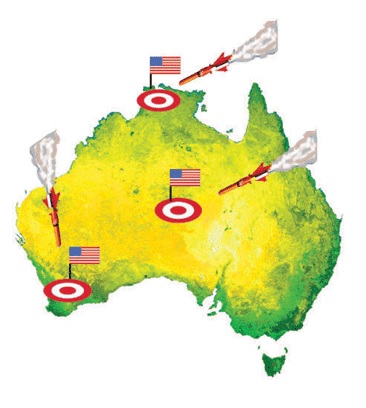
we are particularly concerned about what’s going on now and the speed with what’s going on now. As well as about how little we know or are being told.”
Then there is the matter of what is a base, when is a base a base, and whether Australian authorities are kept in the dark about what their US allies are doing.
“If our objective is to be a deputy sheriff to the US, as the 51st state of the Union, then eight nuclear submarines is the answer.”
Michael West Media, by Callum Foote | Dec 5, 2022
The Department of Defence is refusing to confirm how many American troops are stationed in Australia, who pays for it, or even why. The rising deployment of troops and B-52 bombers however, and Pine Gap, make Australia a target in event of war between China and the US. Callum Foote reports.
The Department of Defence has refused to reply to inquiries into how many US military personnel are currently stationed in Australia. It’s not just soldiers, it’s weapons too.
An ABC Four Corners investigation recently revealed that the US is preparing to develop the Tindal air base near Katherine, 320kms south of Darwin, to host up to six nuclear-capable B-52 bombers. Today it was revealed the US is trying to sell Australia the latest American bomber, the B-21 Raider, and rotate the aircraft through Australia.
Experts fear that the stockpiling of US weaponry in the Northern Territory would make Australia a target in the event of war between China and the US.
Despite the escalating presence of US troops and military hardware on Australian soil however, the Department of Defence has refused to reply to inquiries into how many US military personnel are currently stationed in Australia. Refused to reply full-stop.
We don’t even know who is funding it.
And as Chinese satellites could pick up the deployment of troops and US military installations, the secrecy is unwarranted.
B-52s here for the long haul
According to independent think tank Lowy Institute, B-52s have been deployed in the Northern Territory since at least the 1970s and military personnel training regularly in Australia since 2005.
The federal government has yet been unclear about the purpose of the deployment of the bombers in Australia. However, experts believe that the rising tensions between China and the US in the South China Sea is cause for alarm.
Alison Broinowski, the president of Australians for War Powers Reform, an anti-war advocacy group, says her network is concerned about the rising militarisation of the Northern Territory.
“We’re all very concerned about this,’’ Broinowski told MWM. ‘’It’s not new of course – the signs of it being planned go back for years. But we are particularly concerned about what’s going on now and the speed with what’s going on now. As well as about how little we know or are being told.”
Broinowski is a former diplomat, academic and author. A significant amount of her opposition to the militarisation of the NT comes down to secrecy.
“The very fact that it was undertaken in secret and would remain secret were it not for revelations from journalists we still wouldn’t know because they are doing this in secret,’’ Broinowski said.
Political commentator and former diplomat Bruce Haigh suspects the oft-cited number of 2500 rotating US troops stationed in Australia doesn’t paint the full picture.
“They give the official figure at 2500 and say that they rotate but I understood that those troops are becoming more permanent.”
To the purpose of the thousands of US marines stationed in Darwin, Haigh says, officially, it’s for joint training exercises with the Australian Defence Force but we don’t know”.
“A lot of money being spent on upgrading these bases hasn’t yet gone through the parliamentary committee system so we don’t know where in the Defence budget this money is coming from.”
Between Pine Gap, Tindal Air Force Base and thousands of US marines deployed in Darwin the exact figure is unknown. The US also has access to almost all Australian military bases with US naval personnel also coming in and out of the Stirling Naval Base in Fremantle, according to Haigh.
Then there is the matter of what is a base, when is a base a base, and whether Australian authorities are kept in the dark about what their US allies are doing.
Broinowski says the government has little oversight of many of the facilities that the US has interested in “although we call them Australia joint facilities they are for all intents and purposes American bases. About which our government knows as little as it used to know in the olden days about Pine Gap”……………………………
According to former submariner and senator, Rex Patrick, government is captured by the Defence Department which is in turn captured by the US. The post-AUKUS treaty decision to jettison the French submarine deal and agree to a bigger program to buy submarines from the US or UK reflects an Australian subsidy for the struggling submarine industries in those countries.
“If our objective is to be a deputy sheriff to the US, as the 51st state of the Union, then eight nuclear submarines is the answer. “If our objective is ‘‘defence of Australia’’, with the ability to forward deploy boats to operating bases in Singapore, Malaysia, Guam or Japan, in support of our allies and friends, then 20 AIP boats is the answer.” https://michaelwest.com.au/b-52s-in-australia-unknown-american-troops/
1 This month

of the week – Australians for War Powers Reform (AWPR)
To see nuclear-related stories in greater depth and intensity
 Antinuclear