Hard-Wired for Corruption -The arms trade and Australia’s lax monitoring regimes
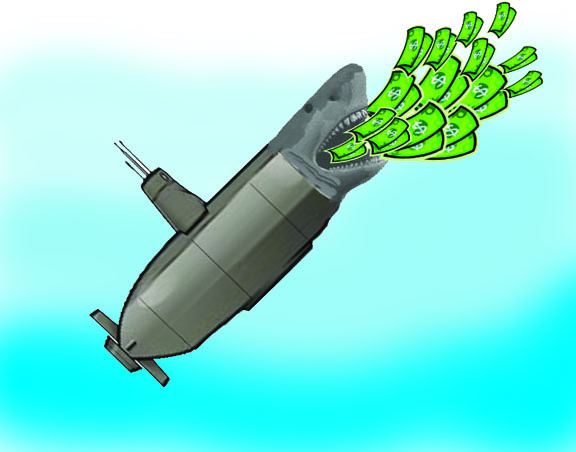
Chris Douglas concludes that from an anti-bribery/corruption risk perspective, Naval Group should not have been put on the shortlist for the Future Submarines program, let alone selected to partner with Australia to build the submarines. The ‘contract of the century’ was mired in unacceptable risk from the outset due to Defence’s poor risk-management processes and non-existent specific anti-bribery/corruption measures. A formal inquiry is needed both to examine how this deeply flawed decision was reached and to help prevent the situation recurring in future major defence procurement projects.
‘In the arms business, it’s always a time of war’, wrote Roeber. Without war, there is no revenue, no profit, no growth. Countries with established arms manufacturing industries therefore have a perpetual economic driver towards conflict and warfare.
To give just one example, there is no visibility around what or how much weaponry Australia has exported to Saudi Arabia or the United Arab Emirates during the years of the Yemen war.
https://undueinfluence.substack.com/p/hard-wired-for-corruption?utm_source=substack&utm_medium=email Michelle Fahy 1 Aug 22, The international arms trade, worth around US$200 billion a year, represents less than 1 per cent of world trade yet is said to account for about 40 per cent of its corruption. While estimates vary, there is little dispute amongst long-term arms industry researchers that it is the most corrupt industry on the planet. Indeed, it is said to be hard-wired for corruption.
The World Peace Foundation (WPF), housed at Tufts University in America, produces extensive research on the global arms trade, including a compendium of corrupt arms deals. It says that ‘Corruption within the industry is often treated in terms of isolated incidents, when it is, in fact, representative of the business model for the industry’.
This finding is supported by research for Transparency International’s (TI) Government Defence Integrity (GDI) index, which assesses the quality of controls for managing corruption risk in defence and security institutions. The GDI shows that 86 per cent of global arms exports between 2016 and 2020 originated from countries at moderate to very high risk of corruption in their defence sectors, while 49 per cent of global arms imports went to countries at high to critical risk of defence corruption. Australia is rated as a moderate corruption risk in the GDI, with two key areas of concern being the lack of transparency in defence procurement and weak anti-corruption safeguards on military operations.
The legal trade in arms has long been known for its susceptibility to corruption. This is due to the high value and complexity of arms deals, the close association between the arms industry and political power, and the secrecy claimed necessary for national security, all of which shield arms-related activities from scrutiny. As arms industry expert Joe Roeber pointed out, ‘Defence goods are complex and each contract contains a mix of special requirements. Comparison is remarkably difficult and effective monitoring by public watchdogs is all but impossible. An unknowable price can be manipulated to accommodate any amount of covert payments’. Further, there are very few major arms deals on offer globally each year—usually less than 10 in the range of tens of billions each meaning competition is intense—while only a small number of people make the decision on what to buy…
‘In the arms business, it’s always a time of war’, wrote Roeber. Without war, there is no revenue, no profit, no growth. Countries with established arms manufacturing industries therefore have a perpetual economic driver towards conflict and warfare.
For example, in the month leading up to Russia’s invasion of Ukraine, and just days after a horrific attack in Yemen by the Saudi-led coalition using a Raytheon missile that killed 90 people and injured 200, Raytheon’s CEO told investors that global tensions represented ‘opportunities for international sales’, and that he expected to ‘see some benefit’ from ‘the tensions in Eastern Europe [and] in the South China Sea’. Meanwhile, Just Security has noted that the ‘well-documented risks of corruption in the arms industry and the potential for profiteering from an arms race in the Ukraine war’ are risk factors embedded in the massive flow of lethal weaponry from the West into Ukraine…
Blanket secrecy
All countries justify secrecy around arms-related activity with claims of protecting ‘national security’. The Australian government, for example, imposes a high level of secrecy over its arms procurement, sustainment and export deals, with politicians and the Department of Defence resisting demands for greater transparency…
Australia also relies on ‘commercial-in-confidence’ justifications to protect arms industry interests. This, in combination with national security claims, has led to almost blanket secrecy around Australia’s arms exports. To give just one example, there is no visibility around what or how much weaponry Australia has exported to Saudi Arabia or the United Arab Emirates during the years of the Yemen war. The government has only released information about the number of export permits it has approved or declined (by March 2021 Australian approvals to these two nations topped 100). However, permit numbers are not useful, as not all permit approvals translate into actual exports, and permits can cover numerous types of equipment, small or large quantities, extend for varying time periods, and even cover multiple destinations.
This is significant because the decades-long UK Campaign Against the Arms Trade has amassed a ‘mountain of evidence of corruption in arms sales to Saudi’ showing that bribery is central to the Saudi government’s approach to arms deals. Andrew Feinstein, author of the exhaustively researched 600-page book The Shadow World: Inside the Global Arms Trade, told ABC radio in 2018 that he had never seen a Saudi arms deal that didn’t involve ‘massive amounts’ of corruption, and that the percentage of a Saudi contract paid in bribes could be up to ‘about 35 per cent of the contract price’. The United Arab Emirates is also known for its secrecy, corruption, and money laundering links.
Australia’s decreasing commitment to anti-corruption measures
Australia’s extraordinary current spending on military capability—$270 billion in a decade, on top of the usual defence budget—means the domestic arms industry is awash with cash. At the same time, the public’s limited ability to scrutinise this spending has been eroded further by a defence minister, Peter Dutton, who has restricted Defence’s engagement with the media. The combination of record sums of money and little scrutiny provides fertile ground for corruption.
Australia’s performance on anti-corruption measures has nose-dived in recent years:
- It recorded its worst ever score on a global anti-corruption index in 2022, dropping four points (from 77 to 73) and falling to 18th place. Australia has now dropped 12 points in a decade, from a high of 7th (85 points) in 2012.
- Its membership status at the Open Government Partnership risks being put under review because it has ‘acted contrary to the OGP process’ and failed to submit its latest national action plan.
- Its negligible attempts to investigate and prosecute cases of foreign bribery have been criticised by the Working Group for the OECD’s Anti-Bribery Convention (it expressed concern over ‘the continued low level of foreign bribery enforcement… given the size of Australia’s economy and the high-risk regions and sectors in which its companies operate’ and ‘its long-standing challenges in attributing wrongdoing to corporate entities’).
- It has been named an ‘international laggard’ in expanding anti-money-laundering laws in line with recommendations by the G7’s Financial Action Task Force, one of only three countries, alongside Haiti and Madagascar, to have failed to do so. Australia now risks being put on a grey list of countries that don’t meet international money-laundering standards. (Australia has been resisting anti-money-laundering regulation for fifteen years.)
- A dedicated federal anti-corruption body still has not been established…
Red flags
‘The biggest corruption risk in an arms deal is a company’s decision to pay bribes to secure the deal’, says Sam Perlo-Freeman, former Program Manager for Global Arms and Corruption, World Peace Foundation, Tufts University. Decisions to pay significant bribes are made at a company’s highest levels, and while no amount of technical anti-corruption measures will eliminate high-level corrupt behaviour, strong whistleblower protection mechanisms can increase the probability of exposure. Other anti-corruption measures are also important, particularly at lower levels where zealous company employees might be tempted to cut corners to advance their careers. However, such technical measures do not tackle the underlying political and economic drivers of high-level corruption in the arms industry, where winning large deals is necessary for corporate survival and price is not the primary concern. As Joe Roeber noted incisively, bribery in this context ‘is not just a simple add-on to the procurement process, but distorts the decisions. What would the equilibrium level of trade be without the stimulus of corruption?’ …
No evidence has emerged of…extensive corrupt practices in Australia, but there are regular red flags of possible arms industry corruption. Chris Douglas, a 31-year veteran of financial crime investigation for the Australian Federal Police, who now runs his own consultancy, is an Australian expert in anti-bribery and corruption measures. He says that such compliance programs are a necessary component of good corporate and public governance—essential for preventing corruption in the defence industry. Although he has lodged numerous Freedom of Information requests (FOIs) with the Defence Department about anti-bribery/corruption measures on major procurements, he says, ‘I have not detected an ABC [anti-bribery/corruption] program being used in any of the major defence projects I have examined’.
Douglas says that the Department of Defence ‘has not caught up with modern corporate management practices’ and has no understanding of how to use anti-bribery/corruption risk-based assessments to manage the significant risks posed by bribery and corruption in its projects, particularly major ones. As he puts it: ‘That any department would not undertake an ABC risk assessment when such large sums of money are involved, in an industry that is rated high for corrupt behaviour, speaks volumes about a poor culture within that department’.
Repeated cost blowouts and delays are just two of the red flags for corruption that are regularly found in Australian defence procurement and sustainment projects. The cost of these to the public is substantial.
While there are numerous examples of red flag projects, here are just three.
Naval Group—submarine contract
This contract was abandoned with the arrival of AUKUS, but the original deal with Naval Group requires a public inquiry to examine the full extent of the process by which the internationally lucrative ‘contract of the century’ was awarded. The need for an inquiry has been amplified given the shock shredding of Defence’s largest ever contract, a decision which made international news and may yet cost Australia billions.
Continue readingAustralia urged to prove it is a safe nuclear custodian as Aukus comes under scrutiny at UN.

Non-nuclear state Australia’s handling of nuclear-powered submarines will have to be ‘impeccable’, Australia Institute says
https://www.theguardian.com/australia-news/2022/aug/01/australia-urged-to-prove-it-is-a-safe-nuclear-custodian-as-aukus-comes-under-scrutiny-at-un Tory Shepherd, Mon 1 Aug 2022
Australia needs to step up in the fight to stop nuclear conflict, and to prove to the world it is a safe nuclear custodian, a new report argues.
The report by the Australia Institute comes ahead of a major global conference that starts on Monday in New York, where Australia’s Aukus submarine deal will come under scrutiny.
The report argues it is time to revive the UN non-proliferation treaty, which was struck after the Cuban missile crisis and in the midst of the cold war, and aims to stop the spread of nuclear weapons and to achieve complete disarmament.
Allan Behm, the Australia Institute’s director of international and security affairs, said the treaty was “in trouble”. It was not just the “nuclear pariah states” and the nuclear threats from the Russian president, Vladimir Putin, in the context of the war in Ukraine, he said, but also the threat of a domino effect if the mainstream nuclear powers see no option but to follow other countries in nuclear expansion.
Australia should “play a truly constructive role in highly uncertain times”, Behm argued, and work with other countries on “verifiable disarmament”.
Separately, the UN has set up a taskforce to ensure Australia’s plan to buy nuclear powered submarines from either the US or the UK will not breach the treaty.
Aukus was formed in part to counter China’s rise in the region, and China has been fiercely critical of it. Now, two thinktanks linked to the Chinese government have accused Australia of harbouring a desire for nuclear weapons, and declared Aukus will trigger a nuclear arms race and violate the treaty because it will likely use weapons-grade uranium to power the boats.
A Dangerous Conspiracy: The nuclear proliferation risk of the nuclear-powered submarines collaboration in the context of Aukus was released by the China Arms Control and Disarmament Association and the China Institute of Nuclear Industry Strategy.
“The Aukus nuclear-powered submarines collaboration is a serious violation of the object and purpose of the NPT, sets a dangerous precedent for the illegal transfer of weapons-grade nuclear materials from nuclear-weapon states to a non-nuclear-weapon state, and thus constitutes a blatant act of nuclear proliferation,” the report states.
China will attend the UN’s Tenth Review Conference of the Parties to the Treaty on the Non-Proliferation of Nuclear Weapons alongside a 16-strong Australian delegation.
In disrupted times, with the treaty under pressure, a shoring up of the rules-based order is needed to avoid chaos, Behm said.
“This is nowhere truer than in the domain of nuclear arms control and disarmament, where the existential threat of humanity’s nuclear annihilation runs in parallel with the threats from global warming and pandemics,” he said.
“And in the case of nuclear disarmament and global warming, the major treaty that underpins global efforts has been undermined by the constant shift of the ‘middle ground’ away from high aspiration towards the lowest common denominator as key players erode the substance of earlier agreements.”
Australia is a non-nuclear state, but will acquire a fleet of submarines with nuclear reactors on board. The very nature of a reactor on a military vehicle makes it harder to monitor. The monitoring of all nuclear assets is critical to ensure enriched uranium is not diverted to weapons manufacturing.
If Australia gets the green light, other nations could use that precedent to argue for their own hard-to-monitor nuclear reactors (Iran already has).
This is why Australia’s handling of the situation will have to be “impeccable”, Behm said.
Australia has to let its diplomats function effectively and set policy targets to “regain the momentum on arms control and disarmament diplomacy that Australia displayed in previous decades”, he said.
“If it proceeds, Australia’s decision to acquire nuclear-powered submarines under the auspices of the [Aukus] will require impeccable non-proliferation credentials on Australia’s part.”
Australia can help work towards disarmament via the comprehensive test ban treaty (which bans all nuclear weapons testing), a fissile material cut-off treaty (to reduce national stockpiles of enriched uranium or plutonium), a no first use declaration (don’t be first to pull the trigger) and negotiations to reduce arsenals and delivery systems.
Sixteen Australian officials will take part in the treaty conference, led by the Labor senator Tim Ayres. Australia’s arms control and counter-proliferation ambassador, Ian Biggs, will also be there, and it is understood that the test ban and fissile material treaties will be priorities.
“Australia’s delegation to the Tenth Review Conference of the Parties to the Treaty on the Non-Proliferation of Nuclear Weapons (NPT) will work over the four weeks of the meeting to address pressing nuclear proliferation challenges and advocate for practical steps towards nuclear disarmament,” a spokesperson from the Department of Foreign Affairs and Trade said.
French navy warns AUKUS nuclear submarine plan will be ‘much more difficult’ for Australia
By defence correspondent Andrew Greene. 29 July 22,
One of France’s most senior defence figures is warning Australia that acquiring nuclear submarines will be “much more difficult” than the now scrapped plan to build a new fleet of conventionally powered boats.
Key points:
- French military chief Nicolas Vaujour was in Sydney for talks with Australian and US military leaders at the high-powered defence conference
- Vice Admiral Vaujour says he was “surprised” at Australia’s decision to obtain nuclear-powered submarines
- France proposed the two countries organise joint naval training drills
As both nations look to reset relations following the diplomatic fallout from last year’s AUKUS announcement, the French military’s Chief of Operations of the Joint Staff is signalling a “new era” of cooperation involving more naval exercises and cooperation.
Vice Admiral Nicolas Vaujour has travelled to Sydney for talks with Australian Defence Force Chief General Angus Campbell and other military leaders at the high-powered Indo-Pacific Chiefs of Defence (CHODs) Conference………………………………
Fleet of nuclear submarines will be sent by Britain to Australia as a threat to China

- Britain is to send a fleet of nuclear submarines to Australia port of Perth
- Deployment is seen as a warning to China in the Asia-Pacific region
- Move is part of AUKUS (Australia, UK and United States) security alliance
https://www.dailymail.co.uk/news/article-11037405/Fleet-nuclear-submarines-sent-Britain-Australia-warning-China.html By DEFENCE EDITOR FOR THE DAILY MAIL, 22 July 2022,
Britain is to send a fleet of nuclear submarines to the Pacific in a decisive move to thwart Chinese aggression in the region.
The dramatic decision could see UK subs based in Australia until 2040, operating within striking distance of China.
Admiral Sir Tony Radakin, the head of the Armed Forces, will agree the arrangement at a naval conference in Sydney next week. Assigning submarines to patrol the South China Sea will be Britain’s most assertive move yet against Beijing.
According to reports in Australia, Royal Navy submarines would be based at Perth on the country’s western coast and Australian submariners would be incorporated into British crews to improve their skills.
Basing the Royal Navy boats thousands of miles from UK shores is part of the AUKUS (Australia, United Kingdom and United States) security alliance.
AUKUS was set up last year primarily to confront Chinese military expansionism in the Indo-Pacific. Australia has become embroiled in a trade war and diplomatic stand-off with China. The deepening of defence ties with the UK is likely to cause further outrage with the Communist regime, which is vehemently opposed to AUKUS.
The Royal Navy declined to say last night how many of its submarines could be relocated to Australia, as all operational details surrounding Britain’s sub-surface fleet are classified.
The ‘Pacific tilt’ was signalled last year as part of the MoD’s Integrated Review.
The review set the target for the UK to become ‘the European partner with the broadest and most integrated presence in the Indo-Pacific’.
But given that China possesses the world’s biggest navy, some questioned the merits of such a deployment, arguing Britain’s boats would be massively outnumbered and outgunned.
Last night the MoD said: ‘It is UK policy that we do not comment on matters relating to submarine activity or operations.’
Ask Fuzzy: Will Australia’s nuclear-propelled attack submarines require weapons grade fuel?

https://www.canberratimes.com.au/story/7828219/will-australias-nuclear-propelled-attack-submarines-require-weapons-grade-fuel/ By Richard Broinowski, July 24 2022
Both Britain’s Astute and US Virginia boats use highly enriched weapons-grade uranium fuel in their reactor cells.
The fuel cells last as long as the submarines – about 30 years. The submarines don’t need refuelling during that time. These cells also allow the submarines to remain underwater indefinitely, only restricted by the endurance of their crews, which in turn depends on the amount of food they can carry.
The international nuclear non-proliferation regime could be compromised if other nuclear threshold countries, encouraged by Australia’s nuclear moves, acquire their own nuclear-propelled submarines. In fact, Brazil is already doing so. The bomb-grade uranium fuel could be clandestinely extracted from submarine cores to make nuclear weapons.
Some such countries could be encouraged to arm their nuclear-powered subs with nuclear weapons.
Australians living along our coastline (the majority) would be very uncomfortable if they had to host nuclear submarine bases in their electorates.
Given that Australia has no permanent storage for even low-level uranium waste, the government would find it extremely difficult to find even temporary locations for storing highly toxic and extremely long-lasting spent nuclear reactor cores.
While it is claimed that Virginia or Astute class attack submarines are far superior in speed and quietness to conventionally powered boats, this is untrue.
Most European navies, as well as those of Japan and South Korea, have quieter and nearly as fast conventionally powered submarines. They employ auxiliary air independent propulsion systems that extend their underwater endurance to 21 days or more.
Without the pumps needed to keep reactors cool on nuclear subs, they are much quieter; they are also much cheaper. Australia could purchase or build five or more such boats for the price of one Virginia or Astute boat.
We should not expect early delivery of our subs if the Americans or British are to build them, or even only their nuclear reactors.
We should have purchased Japanese Sohryu class submarines when we had the chance.
Australia would not retain sovereignty over American or British-acquired submarines. It does not have the technology to build its own nuclear propulsion units, and will be heavily reliant on either the British or (more likely) American technology.
This will bind the Navy even more closely to US strategic planning in the Pacific, especially in its plans to confront China.
Both countries are flat out building their own fast attack submarines. It is very doubtful either country would be prepared to make space on their assembly lines to accommodate early delivery of submarines for Australia.
- Richard Broinowski AO is the author of Fact or Fission: the truth about Australia’s nuclear ambitions.
Listen to the Fuzzy Logic Science Show at 11am Sundays on 2XX 98.3FM.
Send your questions to AskFuzzy@Zoho.com Twitter@FuzzyLogicSci
Nonsense to say ‘Australia needs nuclear submarines to defend itself’: Australian scholar
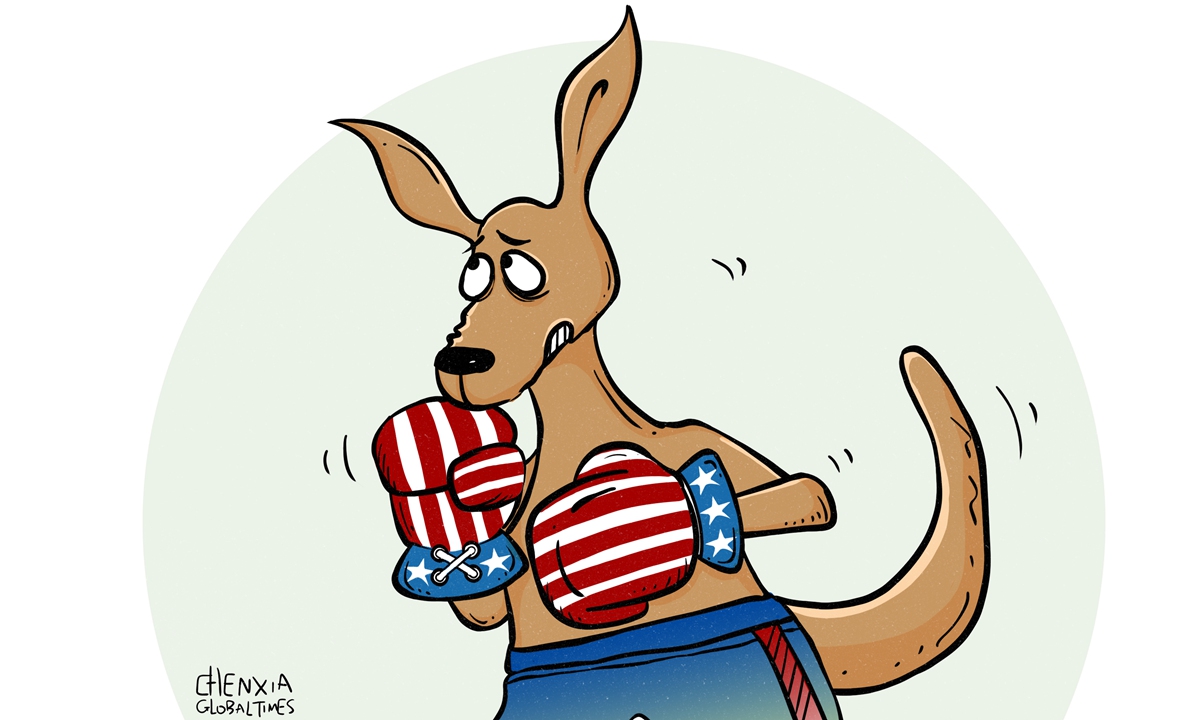
Global Times 24 July 22,
After the Albanese government took office in Australia, there have been discussions about a possible reset of China-Australia ties. Global Times (GT) reporter Yan Yuzhu talked to Professor David Goodman (Goodman), director of the China Studies Centre at the University of Sydney, about his opinions on the reason why there has been hostility in Australia toward China and possible changes in the new government regarding the China policies……………………………..
Goodman:
I think this government is definitely more inclined to deal with sensible diplomacy with China than standing up in public and telling China why it is wrong. That’s a good thing, because talk is always preferable to war.
Penny Wong is a great foreign minister, as she is listening to people and doing things. She has put a whole new working party in place to see how we can more positively deal with our foreign policy. …………………..
A lot of nonsense is talked such as “Australia needs to have nuclear submarines to defend itself.” It doesn’t work, and there are many opinion influencers who agree with me that this is really not healthy.
Of course, we don’t want to be attacked by anyone, but when you think about what it would take China to physically attack Australia, including logistic and military challenges, it will be clear that China will not do so.
But a lot of the defense officials in the past government in Australia are thinking about what we would do as Australians if China “invaded” Taiwan. How crazy. Even people who are anti-China in the UK and the US have said that kind of argument is rubbish, because it is.
What I’d like to see in the bilateral relationship is that the trade ties could ease. The previous government made some statements and criticism about Chinese trade practices which led to bad trade relations between the two countries. I’d like to see them eased. And in my opinion, China has some severe economic problems ahead. It would be in China’s interests to solve them. ………………………………
About Australia’s hostility toward China, one of the reasons is that politicians outside China prefer a threat to exist so that they can use it to mobilize support for themselves. As a result, both China and Russia become the new fashionable threats.
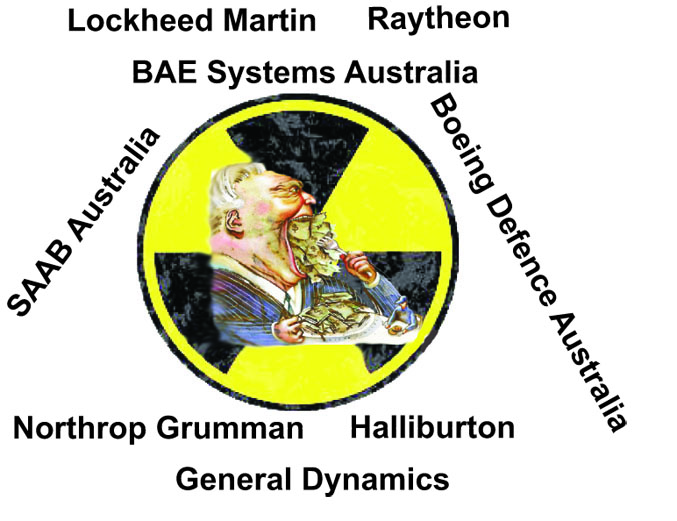
Besides, it is because of the US and European defense industries who fund one of Australia’s leading think tank that leads the charge against China.
Arms makers of course want there to be a China threat because they can sell more. It’s a logic of capitalism I’m afraid.
As to Australia’s stance toward the US, there is a debate going on in Australia as I mentioned before. I don’t know who the majority supports, but there is a sizable body of opinion that doesn’t think that America is the answer to all our problems. There’s also a lot of discussion in Australia about foreign interference and involvement in the local property market. https://www.globaltimes.cn/page/202207/1271242.shtml
Defence Minister Richard Marles is confident about AUKUS, nuclear submarines, and non-proliferation of nuclear weapons. Not everyone is so sure
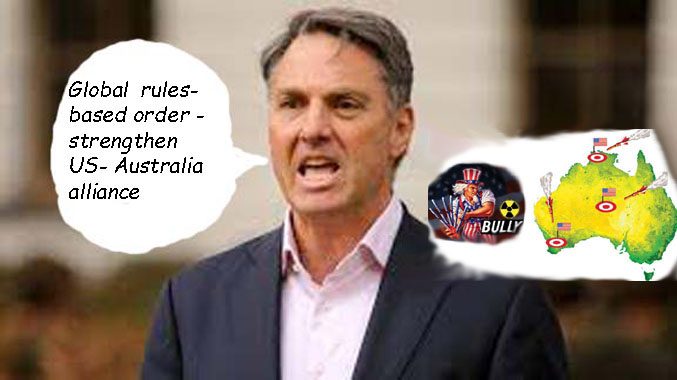
Australian National University emeritus professor of strategic studies Hugh White argues there are risks in making the AUKUS agreement at all.
In his new Quarterly Essay, Sleepwalk to War – Australia’s Unthinking Alliance with America, White warns it takes the alliance too far in the strategic contest with China.
Richard Marles on AUKUS nuclear safeguards , The Saturday Paper, By Karen Middleton. 23 Jul 22
” …………………………… “Non-proliferation was a condition of our support for AUKUS from the outset, when we were in opposition,” Marles says in an interview with The Saturday Paper, on his return from Washington, DC, this week.
While there, he discussed progress on the trilateral nuclear technology transfer agreement between Australia, Britain and the United States……..
The first non-nuclear country to seek nuclear-powered submarines, Australia will be required to sign a special International Atomic Energy Agency (IAEA) safeguards agreement. The document is likely to run to hundreds of pages, specifying in minute detail how the material will be handled – accounting for every gram – and with the tightest restrictions on its use. Amid some concern among international law specialists about exploiting existing treaty language around “peaceful use”, the wording will be designed to leave no wiggle room for more malign countries wanting to follow suit.
The greatest potential legal obstacles lie in the fact that the nuclear material is for use on a military platform. Australia’s lack of a nuclear power industry could be a reassurance, reducing the risk. Every aspect of the use and management of the enriched uranium – including in the event of an emergency – will need to be codified.
Marles says Labor’s party room will demand further assurances before consenting to move to the agreement’s next stage, which will involve the choice of future submarine design and how to resolve any capability gap in the meantime. He is confident the concerns can be addressed……………..
Navigating the non-proliferation safeguards with the IAEA is just one of the challenges for the new government in seeking to enact the monumental security agreement it has inherited.
Marles will not say if a Labor government would have taken the same decision as then prime minister Scott Morrison and his Defence minister Peter Dutton to dump the multibillion-dollar French contract for conventional submarines and switch to an American or British nuclear-powered option instead………………
“We have been supportive of the AUKUS agreement when it was announced, and we are supportive now.”
It’s clear that it wouldn’t have happened the same way, not least because of Labor’s volatile internal politics around nuclear energy.
In senior levels of the new government, there is a view that this is part of what motivated Morrison in pushing for the nuclear option to be sealed and announced with such haste. Some are convinced he believed it would wedge Labor on nuclear energy, an intergenerationally contentious issue within the party and particularly in Albanese’s Left faction.
……………….. in Labor’s upper ranks, suspicion about Morrison’s motivation raised further questions about the then prime minister’s attitude to national security.
Now in government, Labor is focused on bringing the wickedly complex submarine acquisition to completion and ensuring national security is not compromised any further along the way.
There’s a high pile of issues to be resolved before Australia has nuclear-powered submarines in the water. With the contract to buy up to 12 Attack-class submarines from France now scrapped in favour of the AUKUS agreement, the government has to decide whether to opt for the American Virginia-class boat or the British Astute-class alternative. While it hopes to get the first of whichever it chooses by the late 2030s, Marles has warned it could be the early 2040s.
That means filling the gap in the meantime.
With the existing six Collins-class submarines already extended from their initial retirement date of 2026 into the 2030s, there is a growing view in government that they will have to be extended again. What else may be required – in the form of some other possible stopgap purchase – is still unclear.
In an apparent bid to force Marles to clarify options, Peter Dutton wrote last month that he had planned to buy two American submarines to plug the capability gap. He said he had “formed a judgment that the Americans would have facilitated exactly that”.
The Saturday Paper understands that Dutton’s public commentary angered Britain, because of its presumption that Australia would choose the American option…………..
Just back from US consultations, Marles dismisses outright Dutton’s assertion about planning to buy two early American boats……………………
there are expensive decisions to be made with enormous consequences for Australia’s security.
By March next year, Marles wants to be able to announce which submarine he has chosen and when the first one will be in the water, quantify the capability gap and explain how it will be filled, outline the cost, describe industry arrangements for construction and detail the undertakings to be given to the IAEA to meet non-proliferation obligations. All this in the next eight months.
He has also vowed to produce a new force posture review in the wake of the 2020 Defence strategic update, which raised fresh questions about the strategic landscape in the region. …..
Delivering submarines makes AUKUS central to that. There is much debate on what else the agreement is meant to be and whether it makes Australia more or less dependent on the US.
In the AUKUS paperwork that has gone before the parliament so far, the submarine deal is described as its “first initiative”.
“AUKUS is about much more than submarines,” says Asia Society Australia executive director Richard Maude, who was foreign policy and security adviser to prime minister Julia Gillard and chief author of the 2017 Foreign Policy White Paper.
“AUKUS is a central platform for more co-operation and sharing of technologies that the Australian Defence Force wants.”
Maude says the issue is the nature of the submarines, not AUKUS. “The risk in AUKUS stems not from the agreement itself but from the decision to jump from a conventional to a nuclear-powered submarine.”
He points to concerning reports from the US that the Virginia-class submarine program’s production time line and costs are blowing out, raising further questions about delivery of an American boat.
“So, it’s not just our capability,” Maude says. “It’s our partner’s capability.”
Australian National University emeritus professor of strategic studies Hugh White argues there are risks in making the AUKUS agreement at all.
In his new Quarterly Essay, Sleepwalk to War – Australia’s Unthinking Alliance with America, White warns it takes the alliance too far in the strategic contest with China.
Maude says the issue is the nature of the submarines, not AUKUS. “The risk in AUKUS stems not from the agreement itself but from the decision to jump from a conventional to a nuclear-powered submarine.”
He points to concerning reports from the US that the Virginia-class submarine program’s production time line and costs are blowing out, raising further questions about delivery of an American boat.
“So, it’s not just our capability,” Maude says. “It’s our partner’s capability
Defence Minister Richard Marles downplays any broader binding role for AUKUS.
“AUKUS is not a security alliance. That’s not what it is,” he says. “Sharing capability and building technology – it doesn’t seek to be any more than that.”
Asked if it will mean an expansion of the US bases at Pine Gap or North West Cape, he would not comment…………………..
At the top of the decision pile for the “first initiative” is which submarine to buy. Neither the British nor the American version is exactly the right fit in size, crewing requirements or capability.
Whichever way they turn, the cost is horrendous at a time when the nation is a trillion dollars in debt…………………….
In Jakarta, there were assurances about respect, in the wake of Indonesian anger that it was not given an AUKUS heads-up. When AUKUS was announced last year, Indonesia said it intended at the next NPT review conference to seek to address what it calls the treaty’s “loophole” that would allow Australia to acquire nuclear-powered submarines. Dealing with nuclear weapons, proliferation and “peaceful use”, the NPT does not specifically go to the issue of nuclear-powered vessels. Rescheduled from January, the conference is in the US next month.
The new government has also had to reassure the nations of the Pacific.
At the recent Pacific Islands Forum, secretary-general Henry Puna, from Cook Islands, presented a report on the South Pacific nuclear treaty, known as the Treaty of Rarotonga, and “other nuclear issues”. The Saturday Paper asked the forum secretariat this week for a copy of the report but did not receive a response before time of press.
Ahead of the forum – and after a visit from Foreign Affairs Minister Penny Wong – Samoan Prime Minister Fiamē Naomi Mata’afa voiced the concerns of some Pacific countries that they were not consulted on AUKUS.
Dr Tess Newton Cain, project leader of the Pacific hub at Griffith University, says there is some unhappiness about a US pattern of using Australia as a diplomatic and defence conduit instead of approaching Pacific nations directly.
“Some of this reflects a belief in the US administration and the US policy community that a good way of understanding the Pacific is to listen to Australia and New Zealand,” Cain says. “From the Pacific side of things, that’s not necessarily how people would see it.”
Overlaying that, Pacific nations have a heightened sensitivity to nuclear matters. Having been the unhappy historical hosts of nuclear testing, they’ve had their own experience with the mushroom cloud. https://www.thesaturdaypaper.com.au/news/politics/2022/07/23/exclusive-richard-marles-aukus-nuclear-safeguards#mtr
Military chiefs to hold talks on basing UK nuclear submarines in Perth
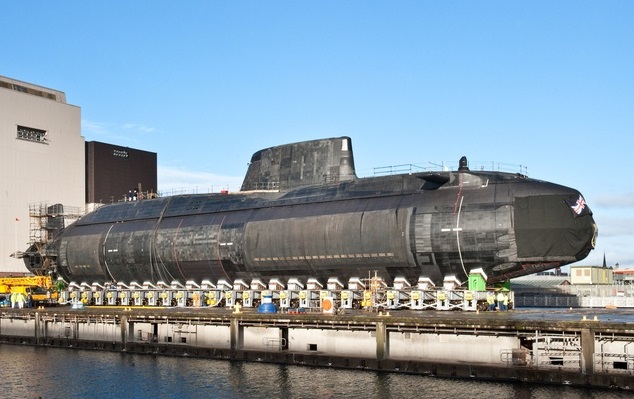
AFR Andrew Tillett, Political correspondent, Jul 20, 2022
The prospect of British submarines being based out of Perth with Australian sailors on board to undergo nuclear training will be advanced, with the head of the UK military to hold top-level talks with Australian officials next week.
The visit to Sydney and Canberra by UK Chief of the Defence Staff Tony Radakin comes as China sends fresh signals about a desire to improve ties with Australia. There have been further hints a ban on coal exports could soon end, although miners are yet to see any indications of that.
China’s foreign ministry also lauded Foreign Minister Penny Wong for advancing “positive elements” in her recent remarks on China.
A ministry spokesman welcomed Senator Wong downplaying the interpretation that her counterpart Wang Yi had issued four “demands” of Australia on how to improve relations at their groundbreaking meeting in Bali earlier this month.
While China has seized on Labor’s election as an opportunity to repair relations and the Albanese government has dialled down the rhetoric on Beijing, Canberra is still proceeding on the acquisition of nuclear-powered submarines from the UK and US under the AUKUS framework.
Admiral Radakin will meet a number of Australian officials, including recently reappointed Chief of the Defence Force Angus Campbell. In Sydney, he will attend the Indo-Pacific Chiefs of Defence conference and meet counterparts from South-East Asia and the south-west Pacific.
Plug for capability gap
Despite the war in Ukraine, sources said Admiral Radakin was “ambitious” about expanding the UK’s military presence in the Indo-Pacific and his visit was the first in a series by UK security officials and ministers to the region.
A key topic of talks with General Campbell and others will be how Britain can help Australia plug a potential capability gap between the retirement of the ageing Collins class submarines and arrival of the nuclear-powered boats, which Defence Minister Richard Marles says may not be delivered until the 2040s.
The Australian Financial Review understands this could involve the UK deploying its nuclear-powered submarines to Perth for operations in the region…………………………………………. https://www.afr.com/politics/federal/military-chiefs-to-hold-talks-on-basing-uk-nuclear-submarines-in-perth-20220720-p5b36w
Australia’s price tag for nuclear submarines could soar by $billions
AFR Andrew Tillett, Political correspondentJul 20, 2022
New US government reports warn that Australia could be saddled with billions of dollars of higher costs to build the most up-to-date nuclear submarines, and have cast fresh doubts on America’s defence industry being able to contribute to a speedy acquisition of boats.
Defence Minister Richard Marles wants to announce a preferred design and acquisition pathway in the first quarter of next year, but the Congressional Research Service said the US Navy’s Virginia class submarine program was suffering from construction delays and a maintenance backlog, curtailing the availability of boats already in service…………………………….. (subscribers only)
more https://www.afr.com/politics/federal/australia-s-price-tag-for-nuclear-submarines-could-soar-by-billions-20220719-p5b2p7
Global action urged to block AUKUS plan on transfer of nuclear materials

The submarine purchase, if realized, “will be the first time” after the Nuclear Non-Proliferation Treaty went into force in 1970 that nuclear weapon states transfer tons of weapons-grade nuclear materials to a non-nuclear-weapon state
The plan is high on the agenda of the 10th Review Conference of the Parties to the Treaty on the Non-Proliferation of Nuclear Weapons, which is scheduled to open in New York on Aug 1 http://global.chinadaily.com.cn/a/202207/21/WS62d898fda310fd2b29e6d83a.html By ZHANG YUNBI | CHINA DAILY | Updated: 2022-07-21,
A report written by leading Chinese nuclear security researchers urged the global community to use an upcoming global conference on nuclear nonproliferation to deter the collaboration of the United States and the United Kingdom to transfer weapons-grade nuclear materials through nuclear-powered submarines to Australia.
“The weapons-grade nuclear materials to be transferred to Australia by the two countries would be sufficient to build as many as 64 to 80 nuclear weapons,” said Zhao Xuelin, a leading engineer at the China Institute of Nuclear Industry Strategy.
Such a move would be in “serious violation” of the objectives and purpose of the nonproliferation treaty and would cause enormous harm, he said.
“Washington has been busy building up blocs and small circles like AUKUS to shore up its overwhelming advantage in military areas and secure its hegemony in the Asia-Pacific and the whole world,” said Liu Chong, director of the Institute of International Security of the China Institutes of Contemporary International Relations.
“Such moves have run counter to many countries’ need to seek common security. The trilateral bloc’s members seek their own security at the cost of the other countries, sabotaging global security,” he added.
Zhang Yan, president of the China Arms Control and Disarmament Association, noted that the AUKUS partnership is a new political and military alliance that serves the US’ “Indo-Pacific Strategy”, which aims to provoke regional confrontation and step up a geopolitical zero-sum game.
The submarine purchase, if realized, “will be the first time” after the Nuclear Non-Proliferation Treaty went into force in 1970 that nuclear weapon states transfer tons of weapons-grade nuclear materials to a non-nuclear-weapon state, Zhang said.
“The US, the UK and Australia should seriously respond to the concerns of the international community and earnestly fulfill their obligations under international law,” he added.
Pan Qilong, chairman of the China Institute of Nuclear Industry Strategy, said the AUKUS nuclear-powered submarine collaboration sets a dangerous example of illegal transfer of weapons-grade nuclear materials.
Such a “blatant act of nuclear proliferation” has triggered widespread concern and criticism from the international community, he added
The US, Britain and Australia should “stop taking double standards” and halt their collaboration on nuclear-powered submarines, said the research report issued on Wednesday in Beijing.
Two leading Chinese nuclear research agencies-the China Arms Control and Disarmament Association and the China Institute of Nuclear Industry Strategy-issued the report.
“The international community should take action to urge the AUKUS countries to revoke their wrong decision, and jointly safeguard the integrity, authority and effectiveness of the international nuclear nonproliferation regime,” the report said.
The research report is the first of its kind made by Chinese think tanks focused on the collaboration of the three nations, and it offers abundant evidence and data to prove how the AUKUS countries-Australia, the UK and the US-affect the international nuclear nonproliferation system and stir up the arms race, Foreign Ministry spokesman Wang Wenbin said on Wednesday.
The report is the latest proof that the international community’s concerns on AUKUS collaboration “are well-founded by facts”, he added.
Washington, London and Canberra built the AUKUS trilateral security partnership last year. That prompted anger within and outside the Asia-Pacific region as they announced a plan to allow Australia to purchase nuclear-powered submarines from the UK.
The plan is high on the agenda of the 10th Review Conference of the Parties to the Treaty on the Non-Proliferation of Nuclear Weapons, which is scheduled to open in New York on Aug 1.
The conference, a top-level global meeting that aims to prevent a nuclear arms race and checks on the status quo of nuclear materials around the world, has been delayed for two years due to the COVID-19 pandemic.
The consequences of a war between the US and China” – Kevin Rudd
The Hon. Kevin Rudd, president and CEO of Asia Society, served as Australia’s 26th Prime Minister from 2007 to 2010, then as Foreign Minister from 2010 to 2012, before returning as Prime Minister in 2013. He discusses major topics of his new book, “The Avoidable War: The Dangers of a Catastrophic Conflict between the US and Xi Jinping’s China” Rudd graduated from the Australian National University with honors in Chinese studies, and is fluent in Mandarin. He also studied at the National Taiwan Normal University in Taipei.
Australia ‘Punctures’ US-UK Nuclear Submarine Proposal Under AUKUS; Says Hi-Tech Arms Better Than Nuke Subs.

Eurasia Times. By Parth Satam, July 11, 2022
Australia’s new Defense Minister Richard Marles’ recent comment about “hi-tech arms” being “more important” than “nuclear submarines” while being in the US to meet his counterpart, Secretary of Defense Llyod Austin, presents a grim future for the Australia-United Kingdom-United States (AUKUS) pact.
This comes amidst Prime Minister Anthony Albanese’s government’s outreach to China, deployment and technical shortcomings with the USS Virginia-class nuclear submarines, and; oversight of the International Atomic Energy (IAEA) regarding the use of nuclear propulsion material some of the dampeners staring at Canberra.
Sky News Australia reported that this was Marles’ first since assuming office, making the statement a significant signal.
The AUKUS deal was announced on September 15 last year under then Prime Minister Scott Morrison in a secret agreement with Washington and London that envisages Australia acquiring at least eight nuclear submarines.
………… the deal’s biggest drawback is the monetary, operational, and technical challenges more than the political repercussions.
Nuclear Submarines Overrated?
The first submarine, which is probably a version of the US Virginia class attack, will not be operationally available until the early 2040s and the last vessel by 2060.
The extended timeline that will leave the Royal Australian Navy without serious undersea capability calls for a stopgap interim arrangement. It could be an improved version of the Swedish-origin Collins-class ship to bridge the looming capability gap.
The Virginia class has been afflicted with maintenance problems and, over the last 33 years, has only performed 15 six-monthly deployments. Conventionally powered submarines are now commonly equipped with air-independent propulsion (AIP), which makes them quieter than nuclear submarines.
The latter must keep their reactor cooling pumps going and use noisy giant meshing gears between the steam turbines and propellers.
Nuclear submarines can also be detected by their constant release of hot water by leaving wakes on the surface when running at high speeds. A section of naval strategists within the US has been making a case for a return to diesel-electric or AIP-powered boats, given the technological improvements that have enhanced their speed, submerged endurance, and diving depths.
Diesel-electrics and AIP SSKs like the Swedish Gotland class or the Indian Navy’s Russian origin Kilo-class have also ‘sank’ US carriers often in exercises. Worse, the nuclear propulsion of the Virginia-class is not suitable in the littoral, shallow waters of the South and East China Seas…..
Naval bases in the first island chain around China like Guam, Subic Bay, Singapore, and Okinawa already provide proximity making attributes like range and endurance irrelevant, making conventional submarines more suited for the task.
The cost of the project also dwarfs Australia’s financial wherewithal. Australia’s defense budget this financial year stood at $48.6 billion.
But the upgraded USS Virginia-class boat that the AUKUS pact promises would be $3.5 billion per unit alone. This doesn’t include the highly sophisticated infrastructure required to maintain the fleet, which will entail additional expenses and having to rely on UK and US support until the facilities are functioning.
While former Australian Prime Minister Scott Morrison had announced that the submarines would be built within the country, the construction of advanced nuclear-powered submarines involves steep learning curves, experience, and transfer of technology costs.
Morrison had announced that the hulls would be fabricated in Australia and then sent to the US to install nuclear propulsion and other components. Only time will tell what will be the order book at overburdened US shipyards like the General Dynamics Electric Boat then.
Nuclear Proliferation Safeguards
Lastly, possible run-ins with the International Atomic Energy Agency (IAEA), the UN’s nuclear watchdog, will likely trigger different diplomatic hurdles. The IAEA prohibits the transfer of fissile material for nuclear purposes, preventing the use of nuclear fuel from Australia’s civil nuclear power plants from diverting it for the nuclear submarines.
Australia may be exempted under Paragraph 14 of the standard pact with the IAEA that allows the transfer of nuclear material for “non-prescribed military activity” like nuclear weapons or explosive nuclear material. But that raises a question of a different standard for Iran, whose IAEA-approved civil nuclear program is heavily monitored and safeguarded.
When the new Australian Foreign Minister Penny Wong has to assure IAEA chief Rafael Grossi about Canberra’s “total commitment” to nuclear non-proliferation, it portends tough nuclear diplomacy. Australia is a signatory of the Nuclear Non-Proliferation Treaty (NPT) and the South Pacific Nuclear Free Zone Treaty (SPNFZT) https://eurasiantimes.com/australia-punctures-us-uk-nuclear-submarine-proposal-under-aukus/
Labor must reverse Morrison’s submarine bungle to protect nation
https://independentaustralia.net/politics/politics-display/labor-must-reverse-morrisons-submarine-bungle-to-serve-nation,16546 By Alan Austin | 11 July 2022,

There is a niche in the global submarine industry that Australia is well-placed to occupy, reports Alan Austin.
IT WOULD BE a bold move which only a visionary and courageous government could accomplish. Australia has the chance now to reimagine its status as a global naval manufacturer and exporter. The challenge is to build a smaller, faster, stealthier, stronger submarine than its rivals, which requires fewer crew and is cheaper to build and operate.
This can be achieved with a scaled-down version of one of the best submarines ever designed: the Collins class. Where was this built? In South Australia in the 1990s.
This “daughter-of-Collins”, as former Prime Minister Paul Keating dubbed it, offers multiple gains. It will replace the current ageing Collins class more quickly than other options, it will give Australia’s navy boats fit for purpose, it will generate export income and build a springboard for expansion into other high-tech manufacturing. It’s a win-win.
Australia lost its car manufacturing industry during the disastrous Tony Abbott period. Australia’s military procurement suffered badly throughout the later Coalition years due to ineptitude, lack of enterprise and corruption. New submarine construction will restore Australia’s heavy industry capability and recover – eventually – the treasure lost with all those Coalition failures.
The boat for middle-power countries
None of the submarines considered by the previous incompetent Coalition Government is right for Australia.
These were:
- Japan’s Soryu class diesel-electric, 84 meters long, speed of 20 knots submerged, 65 crew. The Abbott Government announced in 2014 that it was buying these but did not proceed;
- France’s Barracuda class nuclear attack submarine, 99.5 meters, speed of 25 knots, 60 crew. The Turnbull Government contracted to buy twelve in 2015. The Morrison Government welched on that deal in 2021, costing Australia its international reputation as an honourable trading partner, compromising Australia’s medium-term security, and losing taxpayers around five billion borrowed dollars with nothing to show for it;
- American Virginia class nuclear-powered fast-attack submarine, 115 metres, speed of 25 knots, 135 crew. Designed in the 1990s, first delivered in 2008;
- Britain’s Astute class, nuclear-powered attack submarine, 97 metres, speed of 30 knots, 98 crew. Designed in the 1990s, first launched in 2007.
Other options include Sweden’s Blekinge class diesel-electric, 66 metres; Germany’s U-36, diesel-electric, 57 meters; and India’s Kalvari class diesel-electric, 67.5 metres.
These compare with the current Australian Collins class, which is 77 metres, speed of 20 knots, crew 42, including six officers.
Assessing Australia’s needs
The new Australian sub should be around 60 metres, diesel-electric, speed 30 knots and operable with a crew of four officers and 25 sailors. This is based on the following needs:
- Given regional stability is steadily improving, Australia can ensure its defence with smarter decisions, more advanced technology, better regional collaboration and much lower expenditure;
- Australia’s immediate neighbours are Papua New Guinea, Timor-Leste, New Zealand, Indonesia and Malaysia. Nuclear submarines are not needed to patrol these waters and cannot access New Zealand ports under laws unlikely to change. Malaysia and Indonesia also have serious misgivings;
- The concept that Australia, population 26 million, could deploy nuclear attack class vessels in the South China Sea or beyond to engage militarily with China, population 1,439 million, is ludicrous. This seems to be the underpinning of the previous Government’s failed endeavours.
- The risk of China attacking Taiwan is limited. Even if it does, Australia has no treaties with Taiwan, and will not be involved;
- The risk of buying American nuclear submarines is that they will be operated and controlled by Americans and effectively just add to the U.S. fleet.
Historical precedent
Building the six Collins class submarines in Australia was an extraordinarily ambitious project. The challenge was to build faster, stealthier and more lethal boats than its successful predecessor, the Oberon class.
Prime Minister Bob Hawke delegated this task to Treasurer Paul Keating and Defence Minister Kim Beasley.
Keating recalled recently that “Kim always had the admiral’s hat on. I had the money and the guns”.
Construction began in 1990 and encountered multiple engineering problems, all of which were eventually overcome. The first boat was delivered in 1996, the sixth in 2003. These will now serve until the mid-2030s.
Military analysts Asianometry recently assessed them as:
‘… very capable, up to par with anything the United States has to offer … The Collins was a triumph.’
Australia can do this
ASC, the government-owned shipbuilders based in Osborne, South Australia, built the Collins vessels and has continual experience maintaining them. It has also successfully delivered three Hobart class destroyers and other vessels.
Home-built submarines superior to Collins are now possible because of advances since the 1990s in metallurgy, engine design, sonar technology and batteries. Weapons systems are also more compact.
Importantly, Australia is one of two major lithium mining countries. Lithium-ion batteries have double the storage capacity of lead-acid batteries. Australia becoming the world’s leading lithium battery producer will be a highly-profitable spin-off.
Can new Defence Minister Richard Marles pull this off? As Deputy PM, he had the choice of portfolios and chose defence. He has put his hand up. Let’s see what he delivers when he dons his admiral’s hat.
South Australia’s enthusiasm
The project has passionate support from the State Government.
Welcoming new Defence Minister Richard Marles to South Australia last week, Premier Peter Malinauskas said:
What the Deputy Prime Minister has been able to see firsthand today is the extraordinary capability that South Australia offers when it comes to shipbuilding. This has been something that is now in our blood here in South Australia. We are the home of the Collins-class submarine. We built the AWDs. We now see firsthand the work in terms of the delivery of the Hunter class.
What should we call this new class of submarines built in Australia? One option is to honour the last of the Coalition defence ministers, whose incompetence has inadvertently gifted the new Government with this shot at greatness.
So why not the Boofhead class? Or in honour of Keating, who remains an inspirational visionary in this area, maybe the Scumbag class?
Perhaps, to recognise the recent historic change of government, the Toto class? Or if the incoming Government succeeds with this ambitious project, as it should, then why not simply the Albo class?
Albanese’s extreme language against China is out of place now, and against Labor tradition
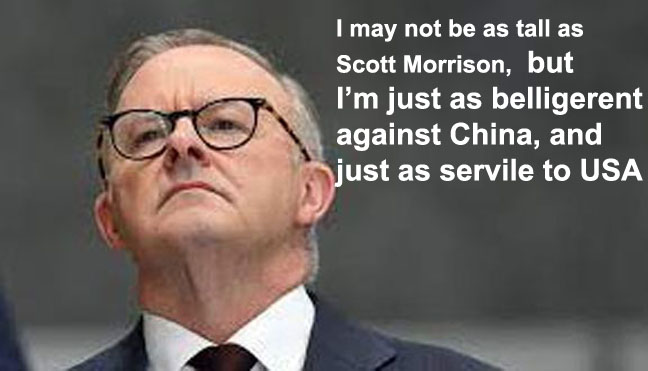
Even the hawkish former defence Minister Peter Dutton told National Press Club that he did not believe China wanted to occupy Australia. Why then do both sides of politics go out of their way to make an enemy of China. It is a recklessly provocative policy that could cause many Australians to die unnecessarily.
Albanese blasted China for not condemning Russia’s invasion of Ukraine but exempted India which did the same.
China has not been in major war since 1950. Nor has it killed anyone in the South China Sea or near Taiwan, where it is accused of behaving more aggressively. All major countries accept Taiwan is part of China.
What is Anthony Albanese up to! https://johnmenadue.com/what-is-anthony-albanese-up-to/ By Brian Toohey. Jul 6, 2022
Anthony Albanese has shown during his recent trip to Europe that he is a prime minister addicted to hyperbole and oblivious to how countries can change in unexpected ways.
He told NATO leaders China aimed to become the most powerful nation in the world and its strengthening relations with Moscow “posed a risk to all democratic nations”. It’s most unlikely all democratic countries will be at risk. For a start, Russia will be in no condition to go to war with any other country after its abhorrent decision to invade Ukraine. It could be bogged down for years in a guerrilla war. China faces a growing number of countries, including those in NATO, which are committed to containing its military and economic growth.
Albanese said in Europe that China is trying to “build up alliances to undermine what has historically been the Western Alliance in places like the Indo Pacific”. Historically, however, most Asian countries, including India and China, have been there a lot longer than the Western intruders are likely to last. The US may be the exceptional state. It annexed Hawaii in 1898 and made it an American state in 1959. But there is a plausible chance America will not remain a democracy in coming years. While nothing is certain, China may become a democracy sometime after a discredited President Xi is deposed or dies. If so, it is entirely feasible the public may elect a majority Communist government led by a moderate reformist. No one knows. Alternatively, the US may become an autocratic state with a feral Supreme Court while China remains an autocratic state with an unpopular and futile determination to achieve “Zero Covid”.
The story of other members of the Western alliance is one of momentous change. Britain took Hong Kong by force in 1842 as a base for peddling opium produced in India by the British East India Company. India won its independence from Britain in 1947 and Hong Kong was handed back to China in 1977. France had a cumulative 100 years as the colonial power in Indochina until booted out by the Viet Minh in 1953. However, it retained its colonial possessions in the Pacific Islands. Albanese told President Macron in Paris that France was an Indo Pacific power which could help contain China’s “growing ambitions” in the region.
Albanese told President Macron in Paris that France was an Indo Pacific power which could help contain China’s “growing ambitions” in the region.
Albanese blasted China for not condemning Russia’s invasion of Ukraine but exempted India which did the same. Labor’s Defence Minister Richard Marles earlier warmly praised India and said it is “central to Australia’s worldview and defence planning”. It also has a Hindu supremacist government that actively discriminates against Islamic members of the population.
While in Europe, Albanese falsely claimed that Australia always obeys the international rules. If it had, it would not have helped the US and the UK invade Iraq. The invasion killed or seriously injured large numbers of people and rendered even more homeless. It also allowed terrorist groups to operate in Iraq when none were present under Saddam Hussein. Albanese’s misleading assertion dishonours Labor’s leader at the time, Simon Crean, who opposed the invasion as a breach of the rules forbidding the use of military aggression in international relations.
Albanese caught the attention of his European audience when he complained that China had “economically coerced” Australia. A fuller picture would have acknowledged Australia officially took more than 100 anti-dumping complaints against China, despite usually frowning on such measures as potentially harming free trade. China eventually retaliated with tariffs and anti-dumping measures on some Australian exports to China. Albanese gives no sign that he understands China is not the only one who should back off.
China has not been in major war since 1950. Nor has it killed anyone in the South China Sea or near Taiwan, where it is accused of behaving more aggressively. All major countries accept Taiwan is part of China. Some of China’s opponents, including senior US Republican politicians, seem intent on goading it into using military force against Taiwan. Fortunately, Taiwanese leaders seem to understand that the island will not be attacked unless they declare independence. China could make this less likely by granting Taiwan a genuine status as autonomous region. One reason China won’t grant independence is this would make the island a convenient base to stage attacks against the mainland. Nevertheless, an experienced observer Geoff Raby says China won’t attack the island as this would involve the killing fellow ethnic Han Chinese which would be highly unpopular.
China makes claims to territorial waters in the South China Sea that other littoral countries also claim. The Pentagon acknowledges China withdrew six land claims to settle borders disputes. If it wants to be more accommodating, China could settle some of the extreme territorial sea claims that were originally made by the Communist Party’s political opponent, the Nationalist Party, before 1949. Taiwan also makes these claims. Ideally, China Sea could follow the Antarctic example and offer to turn South China Sea into a demilitarised zone beyond the 12 nautical mile offshore line.
There is no dispute that China is building up its armed forces. But its spending is no match for the US which is spends as much as the next nine countries together, including China. China has good reason to respond to a US military build up. In 2009, the US announced it had developed an Air/Sea Battle Plan for a war with China, to destroy much of its air and naval forces and blockade all its ports and maritime routes. The details have changed, but in 2011 the US also adopted a “pivot” to the Pacific with goal of deploying 60 per cent of its forces there. It is also actively engaged in building new bases on Pacific islands within striking distance of China while the Albanese government loudly opposes any hint that China might try to build naval base in the Pacific, or even in nearby Cambodia. US and Australian forces also constantly undertake surveillance missions close to China.
In these circumstances, it is vital to try to ease tensions on all sides to avoid what would be a terrible war. In the past, Labor would be among those urging support for new arms control agreements and expanding all channels for the potential combatants to talk. Ben Chifley, Bert Evatt, Gough Whitlam, Bill Hayden, Gareth Evans and Paul Keating all made significant efforts to actively promote peace. Anthony Albanese is supporting a large arms buildup, which is not the same thing.
Well before Albanese’s European trip, he stressed the Labor government would support the Coalition’s new security pact between Australia, the UK and the US (AUKUS). No one has given a convincing explanation for why we need AUKUS on top of the Australian New Zealand US (ANZUS) security treaty signed back in 1951.
The UK adds nothing of value. In 1968 the then Labour Prime Minister Harold Wilson announced that Britain would withdraw its military bases from “East of Aden”. This was a good policy reflecting the fact that Britain no longer ruled the waves. Wilson also refused to send British troops to the Vietnam war, partly because the country couldn’t afford it. Yet Britain retained its “special relationship” with the US. A subsequent government restored a military base in the Middle East, but now Boris Johnson, a disastrous prime minister, has given British military forces a role in confronting China in the Asia-Pacific.
Although the text of AUKUS has not been released, it states the US and UK are prepared to sell nuclear submarines to Australia. They would’ve done that without AUKUS. They would also have done so for other countries such as Japan, South Korea, Vietnam and Singapore, but they see more advantages in writing operating modern conventionally powered ones. NATO members without nuclear subs could buy them, but don’t because it doesn’t make military or financial sense. Yet Labor still wants buy eight nuclear subs, almost certainly from the US, so it can fire cruise missiles from nuclear submarines operating far from Australia into China. This is an extremely bad idea on both strategic and cost grounds. It will only provoke China which çan fire more missiles into Australia than Australia can fire into it. We could do more to defend Australia from closer to home with a mix of weapons at a much lower cost. Moreover when our nuclear submarine fires the first missile into China it will be detected and almost certainly sunk.
Plausible estimates put the cost of eight US nuclear submarines at $171 billion. (This is from a government that says it can’t afford to increase the miserable level of the New Start Allowance.) The risks of buying nuclear are on the upside, particularly as Australia wants to build them here.
The first submarine, probably a version of the US Virginia class attack ones, will not be operationally available until the early 2040s and the last by 2060. A leading US defence analyst Winslow Wheeler cautions that the Virginia class has maintenance problems and is not available for much of the time. He says that over 33 years they have only performed 15 six monthly deployments.
The former Senator Rex Patrick, an ex-submariner, says that conventionally powered submarines are now commonly equipped with air independent propulsion (AIP), which makes them quieter than nuclear submarines which have to keep their reactor cooling pumps going and use noisy big meshing gears between the steam turbines and propellers. Others point out that nuclear subs can be detected by their constant release of hot water; by leaving wakes on the surface when run at high speeds and by blue green lasers that will penetrate water by 2040.
Patrick says that figures given to the parliament show Australia could buy 20 modern off-the-shelf conventional submarines for $30 billion – not $171 billion for nuclear submarines that don’t meet our requirements.
Another downside of buying nuclear subs is that we would have to meet our obligations to declare any fissile material under our control to the International Atomic Energy Agency which acts on behalf of the Nuclear non-Proliferation Treaty (NPT). However, the US will refuse to give us the required information about the highly enriched, weapons grade uranium in the reactors.
A further problem is that several Pacific Island leaders don’t want Australia to buy nuclear submarines. Nor, as Foreign Minister Penny Wong discovered on her recent visit to Malaysia, do its leaders.
Australian public opinion does not unambiguously support Labor’s strategy. The latest Lowy Institute’s annual poll shows over 51 per cent believe Australia should remain neutral in a military conflict between China and the US.
Even the hawkish former defence Minister Peter Dutton told National Press Club that he did not believe China wanted to occupy Australia. Why then do both sides of politics go out of their way to make an enemy of China. It is a recklessly provocative policy that could cause many Australians to die unnecessarily.
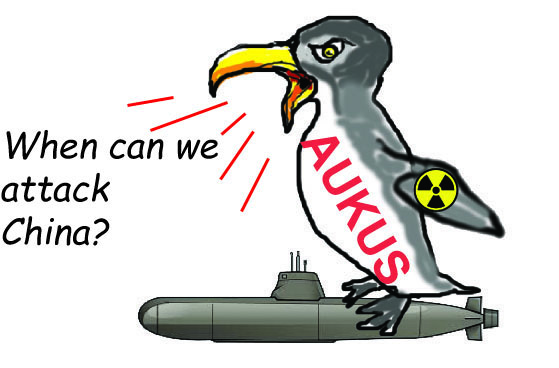
AUKUS submarines: Beasts of nuclear proliferation
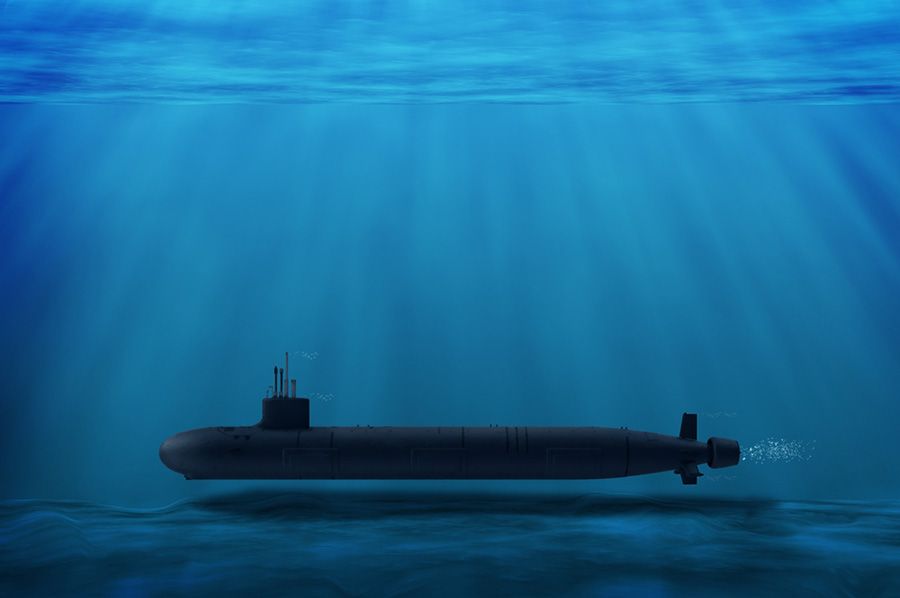
The AUKUS security partnership, announced last September by Australia, the United States and Britain, has muddied the pool of non-proliferation.
The precedent of permitting Australia to be the only non-nuclear weapons state with HEU-propelled technology is also seismic on another level.
For one thing, Article III of the NPT exempts naval reactors from nuclear safeguards, which threatens a pillar of the non-proliferation regime — limiting the production and use of highly enriched uranium (HEU) which can be used, in turn, to make nuclear weapons.
There will be nothing stopping China and Russia doing what the United States and Britain promise to do: proliferate naval reactor technology and long-range missiles with a nuclear capability.
https://www.greenleft.org.au/content/aukus-submarines-beasts-nuclear-proliferation Binoy Kampamrk, July 6, 2022, Issue 1352,
When faced with the option of acquiring nuclear technology, states have rarely refused. Since the splitting of the atom and the deployment of atomic weapons in war, the acquisition of a nuclear capacity has been a dream. Those who did acquire it, in turn, tried to restrict others from joining what has become, over the years, an exclusive club.
Members of this club engage in elaborate ceremonial claims that their nuclear weapons inventory will eventually be emptied. Non-nuclear weapons states allied to such powers go along with appearances, taking comfort that nuclear weapons states will offer them an umbrella of security.
This hypocrisy underlines such arrangements as the Treaty on the Non-Proliferation of Nuclear Weapons (NPT).
Central to the document is the discouragement of non-nuclear weapons states from weaponising nuclear technology, as long as members of the nuclear club pursue “good-faith” disarmament negotiations. While it is true to say that the NPT probably prevented a speedier, less infectious spread of the nuclear virus, it remains a constipated regime of imperfections that has only delayed proliferation.
Most tellingly of all, most non-nuclear weapon states have complied with their undertakings whereas nuclear weapons states have not: they have disregarded serious multilateral nuclear disarmament. Nor do they have an incentive to alter current arrangements, given that any changes to the NPT can only take place with the unanimous support of the three treaty depositories: Russia, Britain and the United States.
The NPT supporters pour scorn on alternative approaches to nuclear weapons, such as the Treaty on the Prohibition of Nuclear Weapons (TPNW), which held its first meeting of state parties in Vienna from June 21—23.
While the Anthony Albanese government sent Susan Templeman MP to the meeting as an observer, Canberra has remained consistently opposed to the TPNW as a threat to the accepted disarmament and NPT framework. Dated and spurious concepts, such as extended nuclear deterrence and the interoperability of Australian and US military systems, tend to be common justifications.
The AUKUS security partnership, announced last September by Australia, the United States and Britain, has muddied the pool of non-proliferation.
A central component of the agreement is a promise to share nuclear propulsion technology with Australia, thereby enabling it to acquire eight nuclear submarines, to supposedly be built in Adelaide.
While much of this is wishful thinking — Australia has no expertise in the field and will have to rely on expertise from the other two — the glaring problem with AUKUS is what it does to non-proliferation arrangements.
While former Prime Minister Scott Morrison said the agreement would comply with Australia’s own non-proliferation commitments, such confidence is misplaced.
For one thing, Article III of the NPT exempts naval reactors from nuclear safeguards, which threatens a pillar of the non-proliferation regime — limiting the production and use of highly enriched uranium (HEU) which can be used, in turn, to make nuclear weapons.
Non-proliferation experts have not been enthusiastic with the promised new Royal Australian Navy submarines. Daryl G Kimball, director of the Arms Control Association, noted the salient difference between deepening defence cooperation with allies on the one hand and proliferating “sensitive HEU nuclear propulsion tech in contravention of US and global nonpro principles”.
Hans Kristensen, director of the Nuclear Information Project at the Federation of American Scientists, greeted AUKUS with gloom when it was announced. Its provisions on nuclear technology would “further intensify the arms race in the region and the dynamics that fuel military competition”.
The International Atomic Energy Agency’s (IAEA) Director General Rafael Mariano Grossi is visiting Australia to discuss safeguards of nuclear material used for naval propulsion.
This is nothing short of problematic, given that IAEA inspectors are unable to inspect such material for extended periods of time when the vessel is at sea. Grossi described this process as “quite complex”, although he wants Australia to commit to non-proliferation alongside the acquisition of nuclear technology.
“There is a period of 18 months which was given by the three partners — the United States, United Kingdom and Australia — to define how the project is going to be implemented but, already we have started this interaction, this joint work of technical levels so that we can reconcile both things.”
Prior to Grossi’s visit, Foreign Minister Penny Wong reiterated Australia’s “longstanding” support of the “IAEA’s mission to harness the peaceful use of nuclear technology in areas like medicine, industrial processes and environmental monitoring, as well as upholding the international nuclear non-proliferation regime”.
The world Wong described is distinctly pre-AUKUS. Despite promises of “open and transparent engagement with the IAEA on nuclear safeguards”, the whinnying horse of proliferation has bolted from the stable. Assurances to avoid the future development of nuclear weapons capability in Australia or a national nuclear fuel cycle also ring hollow.
The precedent of permitting Australia to be the only non-nuclear weapons state with HEU-propelled technology is also seismic on another level.
There will be nothing stopping China and Russia doing what the United States and Britain promise to do: proliferate naval reactor technology and long-range missiles with a nuclear capability. [Dr Binoy Kampmark lectures at RMIT University.]
1 This month
17 October, Free Public Talk on Nuclear Issues in South Australia
David Noonan will speak on public interest concerns over the new Roxby Downs Indenture Act 2026 on BHP copper-uranium mining and ore processing in SA, and on how AUKUS may face SA with a High-Level nuclear waste agenda.
Dr Jim Green will discuss international developments in the field of nuclear power including ‘small modular reactors’ and Generation 4 ‘advanced’ nuclear reactor concepts.


Help Aunty Sue Protect Her Land and Sacred Sites From Destructive Rocket Testing.
.

Australians deserve the truth
about
AUKUS – https://aukuspublicinquiry.com/

PETITION – To: Prime Minister Anthony Albanese and the Australian Labor Government

of the week – Australians for War Powers Reform (AWPR)
To see nuclear-related stories in greater depth and intensity

