AUKUS nuclear submarine plan to be revealed by March 2023
ABC By defence correspondent Andrew Greene 29 June 22,
Key points:
- The Morrison government previously indicated a decision could be made this year
- The Labor government is also hoping to know soon if an interim submarine solution is needed
- Numerous defence figures have warned Australia is facing a capability gap because of ageing submarines…………………… https://www.abc.net.au/news/2022-06-29/richard-marles-defence-projects-submarines-aukus/101190876
A new era as Australia joins historic UN nuclear ban meeting
.
https://johnmenadue.com/australia-joins-historic-un-nuclear-ban-meeting/ By Tilman RuffJun 27, 2022,
This week in Vienna, Australia joined a landmark gathering of eighty-three governments to further implement and develop the treaty banning nuclear weapons.
In a stunning demonstration of resolve, goodwill and cooperation, with no shred or adversarial politics, the meeting adopted a realistic action plan that breaks new ground. It maps out collaborative programs of work led by different states in key areas of treaty obligations: promoting treaty membership and norms, complementarity with other nuclear treaties, disarmament processes including verification, and assisting victims and remediating (where possible) environments harmed by nuclear weapons use and testing. States also made a political declaration that is arguably the strongest and clearest rejection of nuclear weapons ever made by a multilateral gathering.
Five years ago, by a vote of 122 to 1 in the United Nations in New York, the first treaty to ban the worst weapons of mass destruction was born: the Treaty on the Prohibition of Nuclear Weapons (TPNW). For its role in bringing about the treaty, the Melbourne-born International Campaign to Abolish Nuclear Weapons (ICAN) became the first Australian-born entity to be awarded the Nobel Peace Prize. The treaty entered into legal force last year, and this week for the first time, governments gathered to discuss and decide how to promote and implement the treaty.
The Australian delegation to Vienna was led by NSW Labor MP Susan Templeman, federal member for Macquarie, who last year said Australia “can and should lead international efforts to rid the world of nuclear weapons”. She told the Blue Mountains Gazette this week: “It was great to be in Austria to observe the first Meeting of States Parties to the Treaty on the Prohibition of Nuclear Weapons (TPNW) on behalf of Australia. … Australia shares the ambition of TPNW states parties of a world free of nuclear weapons.”
The Vienna meeting from 21-23 June was the first intergovernmental gathering focused on addressing the threat of nuclear weapons since Russia’s invasion of Ukraine and multiple threats by President Vladimir Putin to use nuclear weapons. Other “nuclear-endorsing” states attending the meeting as observers included NATO members Germany, the Netherlands, Norway and Belgium. Sweden, Finland and Switzerland also joined.
Shamefully, the previous Australian government boycotted the negotiation of and opposed the TPNW, the first time Australia has ever boycotted multilateral disarmament negotiations. This stands in stark contrast to Australia under governments both Labor and Coalition having joined the treaties that ban biological and chemical weapons, landmines and cluster munitions.
In 2018, the ALP adopted unanimously a national policy platform commitment to sign and ratify the TPNW. It reaffirmed that policy at its national conference in 2021. Prime Minister Anthony Albanese is a long-term champion of nuclear disarmament and non-proliferation and moved the new policy in 2018. Over three-quarters of all members of the new government have personally backed the treaty. In this they have strong public support – opinion polls over recent years have consistently shown 70-80% of the public want Australia to join the TPNW – in the most recent poll 76% of those asked want Australia to join the nuclear weapon ban, with only 6% opposed (Ipsos, March 2022).
Fifty-five Australian former ambassadors and high commissioners this week released an open letter to PM Albanese urging him to sign and ratify the TPNW without delay.
The meeting in Vienna and a new more constructive era in Australia’s approach to nuclear disarmament and non-proliferation could not come at a more critical time. With Russia’s invasion of Ukraine accompanied by repeated threats to use nuclear weapons, the world faces the greatest evident danger of nuclear war since the Cuban missile crisis of 1962. Russia’s threats should shatter any misplaced sense of complacency or denial that somehow the risk of nuclear war is a faded relic of the past that no longer demands our urgent attention.
Russia’s threats have upended decades-old assumptions about security and deterrence, with Russia using nuclear weapons not to deter but to coerce and intimidate, and provide a cover for war crimes and gross violations of international law and human rights.
But as former UN secretary-general Ban Ki-moon said, “There are no right hands for the wrong weapons.” Every day that thousands of nuclear weapons remain launch-ready, two thousand of them ready to be launched within minutes, they remain the most acute existential threat to humanity and our planet. The leading scientists behind the Doomsday Clock have set it at 100 seconds to midnight, further forward than ever before. None of the nine states wielding nuclear weapons are disarming or negotiating for disarmament as they are obligated to do. To the contrary, all are engaged in upgrading and modernising their arsenals with new, more accurate, flexible and ‘usable’ weapons. Kinds of nuclear weapons the world has never seen before are being developed and deployed, including hypersonic missiles, nuclear-armed cruise missiles powered by nuclear reactors, and nuclear torpedos. And the number of usable weapons in military stockpiles is again increasing.
The International Campaign to Abolish Nuclear Weapons (ICAN) in a report released last week documented that last year the nine nuclear-armed countries spent US$82.4 billion (A$116 billion) on nuclear weapons – A$220,000 per minute – an inflation-adjusted increase of A$9.2 billion from 2020.
The day before the treaty meeting, the Australian delegation also joined a Conference on the Humanitarian Impacts of Nuclear Weapons hosted by Austria, which provided compelling updated evidence from scientists, emergency responders and other experts on the catastrophic consequences and growing risks of use of nuclear weapons.
The TPNW provides our best hope to control our worst weapons, and is currently the only bright light in an otherwise bleak and darkening nuclear landscape. Hopefully this early positive step will be promptly followed by the new government signing and working towards Australia ratifying the treaty, in line with its pre-election commitments.
TILMAN RUFF
Tilman Ruff AO is Co-President of International Physicians for the Prevention of Nuclear War (Nobel Peace Prize 1985); and co-founder and founding international and Australian Chair of the International Campaign to Abolish Nuclear Weapons (ICAN), awarded the 2017 Nobel Peace Prize, the first to an entity born in Australia.
“Truly historic” First Meeting of States Parties concludes! -UN Treaty on the Prohibition of Nuclear Weapons

ICAN Australia, 24 June 22, The first Meeting of States Parties to the UN Treaty on the Prohibition of Nuclear Weapons has just concluded in Vienna! To great applause, the meeting adopted a political declaration and an action plan to take the work of the treaty forward. Read them here.
There were 82 states in attendance, including the Australian Government attending as an observer, along with other nuclear-endorsing states Germany, Norway, Belgium and the Netherlands.
The Australian delegation participated constructively in the meeting, engaging with many delegations including the ICAN team in Vienna. Susan Templeman MP, head of the delegation, also made time to join our Nuclear Ban Hub online on Wednesday night.
At the conclusion of the meeting the Chair, Ambassador Alexander Kmentt, said:
“I think we’ve accomplished something truly historic…
We have a powerful and clear political declaration that we do not accept the nuclear status quo of the sword of Damocles above us…
The path is prepared and the real work starts, so let us continue to work in this spirit and show the world what kind of progress is possible.”
MP Susan Templeman represents Australia at landmark nuclear weapons ban treaty in Vienna

MP Susan Templeman represents Australia at landmark nuclear weapons ban treaty in Vienna ttps://www.bluemountainsgazette.com.au/story/7791272/mp-susan-templeman-represents-australia-at-landmark-nuclear-weapons-ban-treaty-in-vienna/Federal Member for Macquarie Susan Templeman has attended the first Meeting of State Parties to the Treaty on the Prohibition of Nuclear Weapons (TPNW).
Joining the conference as an observer, the Labor MP’s attendance was welcomed by the International Campaign to Abolish Nuclear Weapons (ICAN). A spokesperson said they see see it as “recognition the newly-elected federal government is willing to engage with this critical meeting as a step towards signature and ratification [of the treaty]”.
Held from June 21 to 23 in Vienna, Austria, Australia’s attendance as an observer will provide insights into how states parties intend to address serious questions about the treaty, including:
the adequacy of the TPNW’s verification and enforcement regime;- interaction with the Treaty on the Non-Proliferation of Nuclear Weapons (NPT), which the Australian Government considers to be the cornerstone of the international disarmament and non-proliferation regime;
- how states parties will work to achieve universal support, especially that of nuclear-weapon states.
“It was great to be in Austria to observe the first Meeting of States Parties to the Treaty on the Prohibition of Nuclear Weapons (TPNW) on behalf of Australia,” said Ms Templeman.
“Australia shares the ambition of TPNW states parties of a world free of nuclear weapons.”
Australia is not a party to the TPNW and Ms Templeman’s attendance as an observer does not represent a decision to join the treaty.
ICAN Australia campaigner Jemila Rushton, who is also in Vienna this week for the historic meeting, welcomed the Australian government’s decision to participate.
“We’re delighted that Australia will be officially represented at this important meeting. It’s a first step towards our country becoming a TPNW state party,” she said.
Australia will also attend the fourth Conference on the Humanitarian Impacts of Nuclear Weapons, hosted by Austria.
Nuclear test survivors’ plea for Australia to sign treaty, as they speak at UN meeting
ABC North and West SA / 21 June 22, By Bethanie Alderson Three generations of First Nations survivors of historic nuclear tests have told the United Nations that Australia must do more to address the devastating impact the tests have had on their families.
Key points:
- Three First Nations survivors of nuclear testing share their stories at a United Nations meeting
- They are calling on the Australian government to sign the Treaty on the Prohibition of Nuclear Weapons
- The survivors say they are facing intergenerational trauma from nuclear tests carried out in the 1950s in outback South Australia
The International Campaign to Abolish Nuclear Weapons (ICAN) invited survivors to address a conference in Vienna, more than 60 years after nuclear bombs were detonated in the South Australian outback.
Yankunytjatjara woman Karina Lester, Kokatha elder Sue Coleman-Haseldine and her granddaughter, Mia Haseldine, shared their experiences via video link from Port Augusta.
The women told the conference how the tests conducted by the British government at Maralinga and Emu Field in the 1950s had affected the health of successive generations of Aboriginal families from the region.
They called on the Australian government to sign the United Nations Treaty on the Prohibition of Nuclear Weapons, which came into force in January last year.
Intergenerational toll
Survivor June Lennon, who was in the audience, said she was only a week old when her father covered her with a tarp to protect her from a nuclear blast at Emu Field.
She told the ABC her family would continue to suffer physical and mental trauma from the testing for generations to come.
“Most of our grandchildren have got pretty bad eyesight, and we were born basically with epilepsy,” Ms Lennon said.
“It’s quite likely that I’m going to die because I’ve got bleeding from my kidneys.
“We want to live. We want our children to live after us. We’re losing them at really young ages now and some of that is mental health issues.”………………
‘We still eat the bush tucker’ in test zone
Ms Haseldine outlined gaps she believed the government needed to address to support the next generation of survivors, including a commitment to greater research and education with Aboriginal communities on the impact of the testing.
“If we can somehow link those scientists or researchers studying DNA into people that live on community, eat food from this community,” Ms Haseldine said.
“We still eat the bush tucker that’s out there where fallout probably landed.”
Last year, Australian researchers found that radioactive particles released during the nuclear tests remained highly reactive.
Second-generation survivor Karina Lester noted in her presentation the importance of language for Aboriginal communities who never gave consent to the testing.
Our mob were not informed of those tests that were about to take place on their traditional lands,” Ms Lester said.
“It’s important for information to be in traditional language so they know of the impacts it has on our bodies and our environment.”……………………………. https://www.abc.net.au/news/2022-06-20/nuclear-test-survivors-plea-for-australia-to-sign-treaty/101167332
Largest Ever US Naval War Drills in Pacific a Threat to Both Peace and Marine Life
Military posturing in the Asia-Pacific also risks nuclear war and the potential extinction of the human species. ANN WRIGHT, June 20, 2022. While the world’s attention is focused on the brutal Russia-Ukraine conflict, half-way around the world, in the Pacific Ocean, competition/confrontation of the U.S. and NATO toward China and North Korea is taking an increasingly military turn.
The US military’s Indo-Pacific command headquartered in Honolulu, Hawai’i, Rim of the Pacific or RIMPAC 2022, military war games, will have 38 ships from 26 countries, 4 submarines, 170 aircraft and 25,000 military personnel practicing naval war maneuvers in the Hawaiian waters from June 29-August 4, 2022. Additionally, ground units from 9 countries will come ashore on the islands of Hawai’i in amphibious landings.
Citizen Opposition to RIMPAC
Many citizens of the 26 RIMPAC countries do not agree with their country’s participation in the RIMPAC war games, calling them provocative and dangerous for the region.
The Pacific Peace Network, with members from countries/islands across the Pacific including Guåhan, Jeju Island, South Korea, Okinawa, Japan, Philippines, Northern Mariana Islands, Aotearoa (New Zealand), Australia, Hawai’i and the United States, demand that RIMPAC be cancelled, calling the naval armada “dangerous, provocative and destructive.”
The Network’s petition for cancellation of RIMPAC states that “RIMPAC dramatically contributes to the destruction of the ecology system and aggravation of the climate crisis in the Pacific region. RIMPAC war forces will blow up decommissioned ships with missiles endangering marine mammals such as humpback whales, dolphins and Hawaiian monk seals and polluting the ocean with contaminates from the vessels. Land forces will conduct ground assaults that will tear up beaches where green sea turtles come to breed.”
The petition rejects “the massive expenditure of funds on war-making when humanity is suffering from lack of food, water and other life-sustaining elements. Human security is not based on military war drills, but on care for the planet and its inhabitants.”
Other citizen groups in the Pacific region are adding their voices to the call to cancel RIMPAC.
In its statement about RIMPAC, the Hawaii-based Women’s Voices, Women Speak declared that “RIMPAC causes ecological devastation, colonial violence and gun worship. RIMPAC’s ship sinking, missile testing, and torpedo blasting have destroyed island ecosystems and disturbed sea creatures’ wellbeing. This convening of military personnel promotes toxic masculinity; sex trafficking and violence against local populations.”
In a June 14, 2022 opinion piece in the Honolulu Star Advertiser, the only state-wide newspaper in Hawai’i, three local activists with the Hawai’i Committee for Human Rights in the Philippines wrote: “We are one with the people of Hawaii in opposing the U.S.-led wars, for which Balikatan (US-Philippine ground war maneuvers) and RIMPAC are warmups. As it is, our governments bring together the people of Hawaii and the people of the Philippines to prepare for war, death and destruction.
Military posturing in the Asia-Pacific also risks nuclear war and the potential extinction of the human species. We must instead work toward global cooperation to address the threats of climate change and biodiversity loss; to build toward peace, life and coexistence.”
The citizen’s petition to Cancel RIMPAC has individual signatures and organizational endorsers from around the world.
NATO Is Becoming a Pacific Military Force
2022 RIMPAC includes military forces from Australia, Brunei, Canada, Chile, Colombia, Denmark, Ecuador, France, Germany, India, Indonesia, Israel, Japan, Malaysia, Mexico, Netherlands, New Zealand, Peru, the Republic of Korea, the Republic of the Philippines, Singapore, Sri Lanka, Thailand, Tonga, the United Kingdom and the United States.
40% of RIMPAC participants are either in NATO or have NATO ties. Six of the 26 RIMPAC countries are members of the North ATLANTIC Treaty Organization (NATO) –Canada, Denmark, France, Germany, the United Kingdom and the United States, while 4 other participating countries are Asia-Pacific “partners” of NATO-Australia, Japan, South Korea and New Zealand.
NATO military exercises throughout Europe, particularly on the border with Russia and the U.S. never-ending discussion about Ukraine’s possible membership in NATO (the door is never closed) were two major red lines the Russian government used to justify its war on Ukraine.
In the Pacific, NATO forces coming into the region greatly increase the tension with China and North Korea.
Marine Mammals Endangered by Military Operations
Military naval events both in practice and in war are dangerous for humans… and for marine mammals. The Russian-Ukrainian war is the most recent example. Scores of dolphins have turned up dead on the coasts of the Black Sea from that war.
Research scientists suggest that dolphins may be dying in Black Sea due to a large presence of Russian warships and Ukrainian responses to those ships disrupting the dolphins’ communication pattern. The “intense ship noise and low-frequency sonars” interfere with the dolphins’ main means of communication. Disruptive underwater noises may either have them end up losing their way in large fishing nets or around the Black Sea shores.”
According to a report by the UK Guardian, researchers believe that heightened noise pollution in the northern Black Sea caused by around 20 Russian navy vessels and ongoing military activities might have driven the dolphins south to the Turkish and Bulgarian coasts.
The Turkish Marine Research Foundation (TÜDAV) announced recently that more than 80 dolphins were found dead across the country’s western Black Sea coast, “an extraordinary increase” in the number of marine mammals found dead in a typical year. A recent video from the Black Sea documents some of the 80 dead dolphins.
Several studies in the past have confirmed that military sonars are harmful to marine life and many militaries have adopted mitigating measures to protect wildlife. Whales and dolphins have been killed in US military war exercises by sonar and bombs.
In March 2000, the US Navy admitted that its use of a high-intensity sonar system caused sixteen beaked and minke whales to be stranded on beaches in the Bahamas shortly after US Navy ships using high-intensity sonar had passed by. Six of the whales died and autopsies on the mammals revealed bleeding around the whales’ inner ears and in one instance in the brain.
Ten whales were pushed back into the sea but a decline in sightings of beaked whales led researchers working in the area to believe that many more may have died.
The Navy and the National Marine Fisheries Service (NMFS) launched a series of investigations with the interim synopsis of the reports concluding that the bleeding was caused by sound waves produced by the high-intensity sonar.
With almost twice as many military ships (38) arriving in the Hawaiian waters than the Russian navy has in the Black Sea (20), the dangerous effects of the RIMPAC war maneuvers on dolphins, whales and fishes will be substantial.
RIMPAC War Practice Increase Military Confrontation Instead of Dialogue
The effect of the RIMPAC military war exercises on international relations in the Pacific region may also have dangerous, intended or unintended, consequences that could put the region into ever increasing military confrontation instead of dialogue.
We need only look to the horrific loss of life and destruction of cities, farms and infrastructure in Ukraine to imagine what would happen should an incident, accident or purposeful, trigger military responses in Asia.
Major cities in Asia—Beijing, Shanghai, Hong Kong, Seoul, Tokyo, Pyongyang and Moscow—could be targeted and destroyed by ballistic missiles from the US and NATO.
In the United States-Honolulu, Hagatna-Guam, Washington, DC, New York, San Francisco, Los Angeles, San Diego, Seattle, Houston—could be targeted and destroyed by missiles from China, Russia and North Korea.
Cities in Europe—London, Paris, Rome, Madrid, Amsterdam—could be damaged or destroyed.
No More Wars For “Peace”
Military responses to perceived national security issues by any of the countries in the region whether it be North Korea, China, Russia or the United States will be disastrous for peoples over the entire planet.
We citizens must not let our governments continue confrontation instead of dialogue to resolve national security issues. The lives of people around the world are at stake. We must not let those who make money and political status out of war win…AGAIN…and start another horrific war for “peace.”
ICAN Australia welcomes government decision to attend the first Meeting of States Parties to the Treaty on the Prohibition of Nuclear Weapons as an observer
Gem Romuld, ICAN Australia, 20 June 22,
We are delighted to share the news that Australia will attend the first Meeting of States Parties to the Treaty on the Prohibition of Nuclear Weapons as an observer. We welcome the government’s decision to engage with this critical meeting as a step towards signature and ratification.
The federal member for Macquarie, Susan Templeman MP, will head up Australia’s delegation. Templeman stated to ICAN in 2022, “I’ve been personally committed to this for as long as I can remember”. We look forward to Australia playing a positive and productive role at this historic first meeting for the TPNW.
This morning we are excited to publicly release an open letter to Prime Minister Albanese calling on him to join the TPNW, signed by 55 former Australian Ambassadors and High Commissioners.
It says “we warmly welcome your pre-election commitment to sign and ratify the Treaty on the Prohibition of Nuclear Weapons (TPNW), which we regard as essential for bringing the current nuclear arms race to an end and for establishing the kind of truly representative multilateral framework that might be expected to usher in and support a new era of genuine disarmament.”
The letter’s signatories include former diplomatic representatives to the US, United Kingdom, China, Indonesia, Japan and the United Nations. Several are experts in the field of disarmament.
They expressed hope that under Mr Albanese’s leadership the goal of a nuclear-weapon-free world would be reinstated as “an Australian foreign policy priority” and Labor’s commitment to the TPNW would be “swiftly realised”.
Last night we hosted a special community meeting in Port Augusta before Mia Haseldine, Aunty Sue Coleman-Haseldine and Karina Lester (pictured below) crossed live to the Nuclear Ban Forum in Vienna. They shared their personal stories of the impacts of nuclear weapons testing in Australia and their perspectives on the TPNW and what it can do to assist survivors. It was a profound conversation, with a very clear call for Australia to join the treaty as a key step on the path to nuclear justice. The recording is coming soon, if you missed it.
Tonight the second Nuclear Ban Hub kicks off in Fremantle and online, all the registration details are here. For written analysis of each day this week, keep your eye on the Vienna Blog “Sacher-Torte: a slice of the nuclear ban action in Vienna” here!
No decision yet on choosing USA or UK nuclear submarines, but a USA Bill to train Australian submariners!
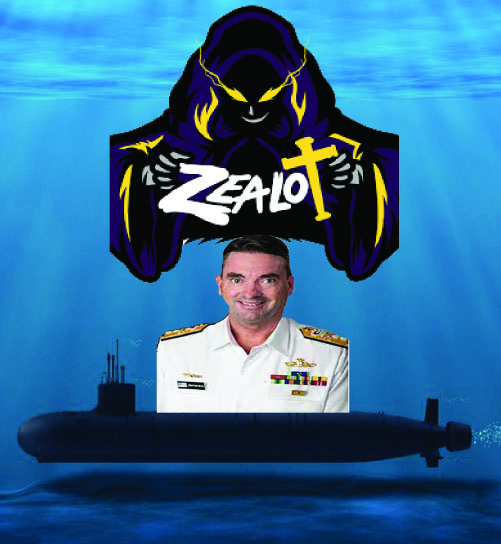
Ed. note: But Australian nuclear zealot Jonathon Mead (left) and nuclear enthusiast Peter Dutton are on the job, in lockstep with the Americans.
Booster For AUKUS: US Could Train Australian Navy On Its Nuclear Subs While Canberra Decides Between US, UK Submarines
Eurasian Times, By Sakshi Tiwari, June 18, 2022 The Australian nuclear submarine project, assisted by the US and the UK under the AUKUS agreement, has faced several controversies. Recently, the former Australian Defense Minister Peter Dutton made startling revelations about his government’s plan to buy American Virginia-class nuclear submarines.
Even though the claims enthused observers about a possible purchase by Australia, the officials have maintained that the decision has not been reached. Canberra is expected to choose between the US Virginia-class submarine or British Astute-class submarines.
In an all-new development, the US lawmakers have introduced a bill called ‘Australia-US Submarine Officer Pipeline Act’ to train Royal Australian Navy officers in the operation of nuclear submarines. The bill was moved into Congress even as doubts remain over the Virginia-class submarine purchase.
The ‘Australia-United States Submarine Officer Pipeline Act’ would allow Australian naval officers to begin training in the United States to operate and maintain nuclear-powered submarines before eventually commanding the future boats.
“The new bipartisan bill will establish a joint training pipeline between the US Navy and the Royal Australian Navy and enable the start of US-based training of Commanding Officers for Australia’s future fleet of nuclear-powered submarines under the AUKUS alliance,” the AUKUS working group said in a news release.
The bill requires the Secretary of Defense and Secretary of Energy to begin a training exchange in 2023 and continue it in subsequent years. It is the result of Congress’ AUKUS working group, formed in April to help develop the United States, United Kingdom, and Australia’s new cooperation.
In November 2021, Australia inked a nuclear submarine technology-sharing deal with the United States and the United Kingdom as part of the AUKUS defense agreement. Australia is only the second country after the United Kingdom to secure a transfer of nuclear propulsion technology from the US.
Currently, the AUKUS partners are pursuing an 18-month study period to assess the requirements of Canberra’s nuclear submarine project, as previously reported by EurAsian Times. In September 2021, it abandoned a deal with the Naval Group of France for diesel-electric submarines and signed the AUKUS pact in favor of nuclear submarines.
Training Before Manufacturing
Nuclear-powered submarines are more expensive, but they are quieter and harder to detect, and they can stay submerged longer since they don’t need to surface to refuel.
With Australia, the US plans to begin training a cadre of young officers now to be ready to command the country’s submarines when the time comes, noted Defense News.
“The AUKUS alliance is the most important national security partnership that America has entered into in decades,” Rep. Joe Courtney, D-Conn., said in a news release. “While [design] work is ongoing, it makes sense to open the US Navy’s nuclear training programs to Australia’s naval officers to acquire proficiency in the operation of nuclear submarines.”
The Chief of the Royal Australian Navy’s nuclear-powered submarine task force, Vice Admiral Jonathan Mead, previously told The Strategist that Australians co-crewing with American and British submarines are likely to be part of an interim submarine capability.
“To train personnel,” Mead said, “We could embed sailors and officers in a US or UK boat to the point where we may have a 50% UK or US crew and a 50% Australian crew.”
When the first submarine is launched in South Australia, the goal is to have the crew trained, the industrial base ready to maintain it, and the regulatory system set up. “We have exchange officers on board our submarines and ships all the time.”
Mead also toured training schools in the United Kingdom and the United States to assess their systems. Many crew members receive reactor training and study nuclear physics concepts, but they are not nuclear physicists.
“‘They’ve been given a six-month course, and then they go to sea and become competent and current on their tradecraft at sea in a submarine,’ he explained.
“So we need to set up a system supported by the US and UK to provide our people with reactor training. If you’re an engineer, you may be a nuclear physicist. If you’re working at the front end of the boat, you require some knowledge of the reactor in case there’s an emergency, but not to the same level.”
The sentiment in Australia, [i.e in Jonathon Mead] thus, seems to align with American plans to start training Australian sailors and Naval officers. However, the exact nature and specifics of the training module are not yet known……………………….
Australia does not have sufficient nuclear infrastructure or advanced industrial capacity to build nuclear submarines. The shortcomings in nuclear infrastructure have had many experts suggest purchasing subs from the two AUKUS partners or building Australian submarines overseas.
Building nuclear-powered submarines would cost Australia billions of dollars and years of infrastructure construction. However, for the project to become a reality and for Australia’s crew to operate nuclear subs perfectly, training is one of the top priorities for AUKUS.
Even though Australia sells some nuclear fuel and has a single nuclear reactor for scientific study, the country does not have a substantial civil or military nuclear program. To get a head start, Australia could first start training on American or British nuclear submarines or lease older retired American submarines until they can deploy their indigenous designs, according to a National Interest report.
The Urgency For AUKUS
Australia’s nuclear submarines are expected to be operational no sooner than the end of the next decade. Consequently, the former Defense Minister Dutton had indicated that his government wanted to purchase two US submarines “this decade” to avoid a gap in replacing the country’s outdated Collins-class submarine fleet, with another eight US submarines under development in South Australia as part of the project.
This plan, he claims, would have eliminated the need to wait until 2038 for the first submarines designed in the United States to be built in Australia. The Royal Australian Navy currently operates six diesel-electric guided-missile submarines.
……………… While a decision regarding purchasing a nuke sub from the UK or the US hangs in the balance, training to use a nuclear submarine could be an easier way forward…….. https://eurasiantimes.com/booster-for-aukus-us-to-train-australian-navy-on-its-nuclear-subs/
Australia’s Opposition Leader Dutton Says US Can Provide Two Nuclear Subs by 2030

- No confirmation of any such deal from US, despite claims
- US, UK are ‘incredibly willing partners’: opposition leader
- BySybilla Gross19 June 2022, Australian opposition leader Peter Dutton reiterated his earlier claims that the US could provide Australia with two nuclear submarines by 2030, without providing material evidence that such a deal would occur.
- Speaking on the national broadcaster’s “Insiders” program Sunday, Dutton said he had visited counterparts in Connecticut and “spoken with them there” about acquiring the equipment, even though the proposition has attracted skepticism, given there’s been no indication from the US that it agreed to enter a sale.
- The US is “very keen to see the reality in the Indo-Pacific addressed and so I think that they would pull out every stop to support Australia acquiring the capability as quickly as possible,” he said.
Australia joined an Indo-Pacific security partnership with the U.S. and U.K. in September last year, allowing it to acquire nuclear-powered submarines. The move sparked a rift with France, which said the agreement scuppers an earlier deal Australia made in 2016 with a French shipbuilder to build up to 12 submarines.
Dutton, the former defense minister, wrote earlier this month that he believed it possible to acquire “the first two submarines off the production line out of Connecticut” this decade as an alternative to waiting until 2038 for domestic manufacturing to produce the first Australian-made submarine.
When asked on Sunday what information he had based his claims on, Dutton said, “I’m not going into conversations, but I formed a judgment that we could acquire two submarines quickly and I think it’s necessary that we do so.”
The US and the UK are “incredibly willing partners,” he said.
The comments come as current Prime Minister Anthony Albanese prepares to depart for Europe later this month to attend a NATO meeting to discuss the war in Ukraine. The trip may also involve a visit to Paris to see President Emmanuel Macron, after Albanese said earlier in June he was looking forward to accepting an invitation from the French leader and that it was “absolutely vital” to reset the relationship between the two countries.
Australia yet to sign up to treaty banning nuclear weapons but will attend UN meeting as observer
With nuclear weapons states modernising, and in some cases increasing their arsenals instead of dismantling them, more states are becoming disenchanted with the nuclear non-proliferation treaty, and are lending their support to an outright ban.
Australia yet to sign up to treaty banning nuclear weapons but will attend UN meeting as observer
Anthony Albanese committed Labor to signing the treaty on the prohibition https://www.theguardian.com/australia-news/2022/jun/20/australia-yet-to-sign-up-to-treaty-banning-nuclear-weapons-but-will-attend-un-meeting-as-observer of nuclear weapons while in opposition Ben Doherty, Mon 20 Jun 2022
Australia will attend – as an observer – a UN meeting of countries that have outlawed nuclear weapons, parties to a treaty Anthony Albanese championed in opposition and committed Labor to ratifying in government.
Government backbencher Susan Templeman’s attendance at the meeting in Vienna on Tuesday comes as a group of 55 former Australian ambassadors and high commissioners have written an open letter to the prime minister urging the government to sign up to the treaty, which outright prohibits the development, testing, production and use of nuclear weapons.
We hope … that Labor’s commitment to the Treaty on the Prohibition of Nuclear Weapons will be swiftly realised. Making meaningful gains in eliminating the most destructive weapons ever invented is as crucial for Australia’s security as it is for the security of people everywhere,” said the letter, signed by the former diplomats including Stephen FitzGerald, John McCarthy, Neal Blewett and Natasha Stott Despoja.
The treaty on the prohibition of nuclear weapons (TPNW) came into force in January last year: it has been ratified by 62 states, though not by any nuclear weapons powers.
The former Coalition government consistently rejected the nuclear weapons ban treaty, saying it would not reduce nuclear arsenals or increase security and would undermine existing disarmament efforts.
But Anthony Albanese, now prime minister, has been a longstanding and public supporter of a Labor government signing and ratifying the new treaty.
At the 2018 ALP conference, he proposed the resolution that committed the party to sign and ratify the treaty in government.
“Nuclear disarmament is core business for any Labor government worth the name,” Albanese said. “Labor in government will sign and ratify the UN treaty on the prohibition of nuclear weapons.
“I don’t argue that this is easy. I don’t argue that it’s simple. But I do argue that it’s just.”
The motion was passed, and the ALP’s formal party platform states: “Labor in government will sign and ratify the ban treaty”, contingent on ensuring an effective verification and enforcement architecture, and the ban treaty’s compatibility with the existing nuclear non-proliferation treaty.
Templeman, the Labor member for Macquarie, will attend the UN meeting of states parties to the treaty as an observer only. Australia has neither signed nor ratified the TPNW: that position has not changed with the change of government.
The Guardian understands the new government wants to assess the adequacy of the TPNW’s verification and enforcement regime; its interaction with the treaty on the nuclear non-proliferation treaty (that Australia is a party to); and how countries that have joined the new treaty intend to attract universal support for the outright ban.
The government will need to be satisfied on those questions before it decides to sign and ratify the treaty.
The Australian-founded International Campaign to Abolish Nuclear Weapons, which won the Nobel Peace Prize in 2017 for its work on the TPNW, said the diplomats’ open letter “demonstrates the broad support for the treaty among Australia’s foreign policy establishment”.
“It was a mistake for the previous government to abstain from the negotiations on this crucial treaty,” Gem Romuld, Ican’s Australian director, said this week.
“But it isn’t too late to join – and we expect the new government to follow through with its promise to do so.”
The diplomats’ letter argued it is unacceptable that nearly 13,000 nuclear weapons remain in the world today, more than half a century after the nuclear non-proliferation treaty came into force.
“These weapons pose an existential threat to human life.
“That threat is again underlined now by Russia’s nuclear sabre-rattling over Ukraine and, more generally, by the abysmal state of relations between the United States and its two most powerful nuclear-armed rivals. Unless we chart a new course, nuclear weapons will almost certainly be used again, with predictably catastrophic consequences.”
The diplomats argued that, by becoming a state party to the ban treaty, Australia “can work with like-minded states to help avert such a calamity – and at the same time restore its reputation as a champion of multilateral disarmament”.
“In the course of our careers, we have seen first-hand what our country can achieve on the world stage and know that Australia is at its best when it pursues a principled foreign policy – one that advances the global common good. This is a sensible and overdue step. We urge you to take it without delay.”
The TPNW is international law – it came into effect for those states that have ratified it, in January 2021. But the efficacy of a ban treaty remains contested.
Without the participation of the states that actually possess nuclear weapons, critics argue it cannot succeed.
But proponents say a nuclear weapons ban will create moral suasion – in the vein of the cluster and landmine conventions – for nuclear weapons states to disarm, and establish an international norm prohibiting nuclear weapons’ development, possession and use.
Non-nuclear states have expressed increasing frustration with the current nuclear regime and the sclerotic movement towards disarmament.
With nuclear weapons states modernising, and in some cases increasing their arsenals instead of dismantling them, more states are becoming disenchanted with the nuclear non-proliferation treaty, and are lending their support to an outright ban.
Defence faces budget blowout with Aukus nuclear submarines to cost more than scrapped French project
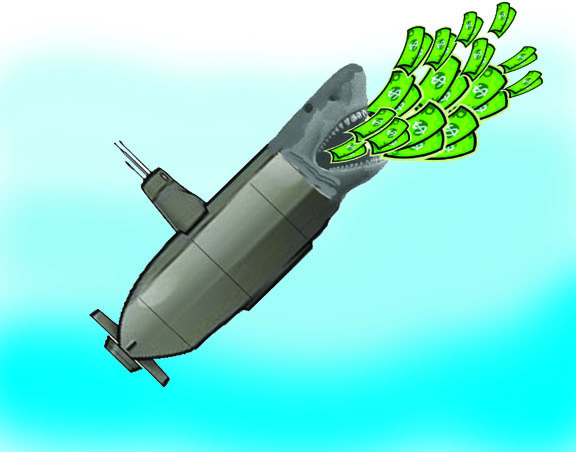
New analysis says ‘megaprojects’ often end up costing more than projected and predicts inflation will impact on defence budgets, Daniel Hurst Foreign affairs and defence correspondent https://www.theguardian.com/australia-news/2022/jun/08/defence-faces-budget-blowout-with-aukus-nuclear-submarines-to-cost-more-than-failed-french-project@danielhurstbne Wed 8 Jun 2022
The Albanese government faces the prospect of a blowout in defence spending, with analysts warning that the nuclear-powered submarines will cost “significantly more” than the cancelled $90bn French project.
A new report has also questioned whether the Australian defence force would be able to meet a target to increase the number of uniformed personnel by 20,000 over the next 20 years, given that it is averaging net annual growth of only 300.
Australia’s total defence funding stood at $48.6bn this financial year, or 2.11% of GDP.
That figure – which included the Department of Defence and the Australian Signals Directorate – worked out to be $133,191,781 a day, according to the Australian Strategic Policy Institute’s annual report on the defence budget.
The report’s author, senior analyst Dr Marcus Hellyer, said there was “no doubt that the ADF was getting better” but he also warned of risks inherent in an acquisition program built around “megaprojects”.
“Such projects take years or decades to design and deliver, while spending huge sums for little benefit in the short term,” Hellyer wrote.
“When they encounter problems, those problems are big.”
The report noted that the now-abandoned French Attack-class submarine program had “cost over $4bn and delivered nothing”, while the Hunter frigate program continued to experience delays “and won’t get a vessel into service for over a decade”.
It said even though the nuclear-powered submarine program envisaged under the Aukus deal had “the potential to deliver a huge step-up in undersea warfare capability”, it was “the mother of all megaprojects” with a risk profile to match.
Continue readingAustralia’s nuclear submarines and nuclear proliferation obligations – how many angels can dance on a periscope?
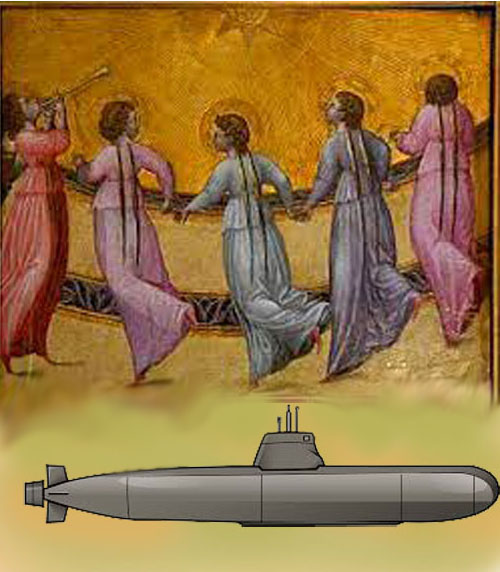
Ensuring the right safeguards are in place for Australia’s nuclear-powered submarines The Strategist, 30 May 2022, Anastasia Kapetas ”……………………………….. can the submarines be safeguarded? And do they actually need to be under the Treaty on the Non-Proliferation of Nuclear Weapons (NPT)?
As AUKUS was being negotiated, the Biden administration reportedly had serious concerns about the non-proliferation impacts of the deal, given that this would be the first time that a nuclear-weapon state has undertaken to transfer highly enriched uranium (HEU) to a non-nuclear-weapon state.
But experts on the NPT assured the US administration that everyone would meet their obligations under the treaty if Australia were barred from accessing the reactors inside its submarines.
So, the naval reactors would have to be sealed by the US or UK inside the submarine hulls before they came to Australia, remain sealed throughout the 30-year life of the submarine and be removed by the US or UK at the end of that life. That means if the submarines are to be built here, a section of the hull and reactor would need to be built in the US or UK and then moved to Australia. Or, if that is not feasible, then a reactor could possibly be imported into Australia, but with no Australian personnel having access to it at any time, something which would presumably need to be verified by the IAEA in some way that would also not give inspectors access to the reactor.
This means that, in theory, Australia’s naval reactors would not have to be safeguarded because the HEU contained in them would never be accessed by any country that is not a nuclear-weapon state.
Under the NPT, the five accredited nuclear-weapon states, China, Russia, the US, the UK and France, do not have to put their nuclear-weapons-related material under IAEA safeguards, although they all have voluntary safeguards agreements with the IAEA covering their civil nuclear programs.
The NPT doesn’t cover naval reactors. But because the deal involves the transfer of HEU to a non-nuclear-weapon state, Australia is not off the safeguards hook. Not safeguarding this would create a precedent for HEU transfer through naval reactors. So Australia needs not an exemption, as has sometimes been reported, but a new type of safeguard.
John Carlson, former director general of the Australian Safeguards and Non-Proliferation Office (ASNO), who currently advises non-proliferation bodies internationally, and has written extensively on the issue, says standard safeguards can’t apply here.
He gives two reasons. The first is that nuclear-weapon states like the US and UK don’t want to reveal secret information on fuel and rector design to IAEA inspectors.
The other issue is that under a standard IAEA safeguard, inspections must take place regularly. For the irradiated HEU in Australia’s submarines, that would require inspections every three months. But given the nature of submarine deployments, Australia wouldn’t be able to ensure that they would be in port to be inspected at the proper time.
But, says Carlson, ‘Australia has an obligation to demonstrate to the international community that we haven’t simply diverted the fuel, and used it to produce nuclear weapons. This is why we need to develop a verification arrangement with the supplier and the IAEA.’
While it wouldn’t be a standard safeguard, it must be ‘sufficient to demonstrate to the international community, in a credible way, that the fuel is still in the submarines at any point in time’.
But what might some kind of alternative verification mechanism look like?
Given that the naval rectors will be built into the hulls of Australia’s submarines, they could not be accessed without cutting into the hull…………….
| there’s one other scenario that an Australia-specific safeguard would have to cover. And that is in the event of an accident where Australia would need to gain access to the reactor.‘We could claim that that the reactor needed urgent attention, and this would actually be a way to get our hands on the fuel.’This would be a major undertaking. It would require Australia to be equipped with all the equipment necessary to handle the fuel safely, as well as help from the US or UK…………………. The final piece of the safeguard puzzle is the politics. The member states of the IAEA would need to be comfortable with creating a special safeguard for Australia…………….. Carlson thinks IAEA approval is likely, but it will need careful, steady diplomacy. https://www.aspistrategist.org.au/ensuring-the-right-safeguards-are-in-place-for-australias-nuclear-powered-submarines/ |
Australia’s weapons-buying binge from USA continues ..
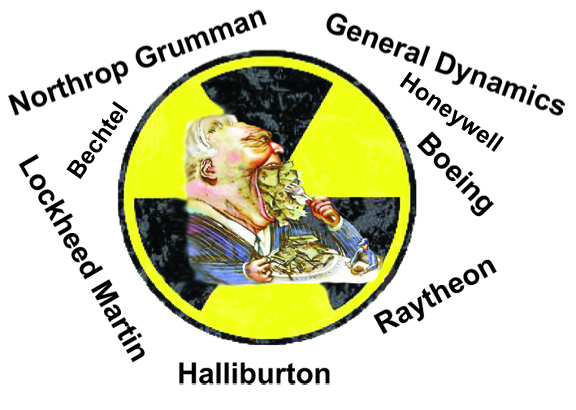
Australia Wins U.S. Approval to Buy Rocket Launchers
US News, By Reuters Wire Service Content • May 26, 2022, By Katharine Jackson and Mike Stone
WASHINGTON (Reuters) -The U.S. State Department has approved the sale of mobile rocket launchers to Australia, as the country seeks to boost its military presence in the Indo-Pacific region.
The U.S. approved several weapons sales worth as much as $3.1 billion to allies, the Pentagon said on Tuesday, including helicopters to Egypt and missiles to the Netherlands.
Australia has been boosting its defense spending over the past few years as China looks to step up its presence in the Indo-Pacific region. Last year, Australia entered into a deal to buy nuclear submarines from the United States and Britain………….. https://www.usnews.com/news/world/articles/2022-05-26/u-s-oks-potential-sale-of-himars-launchers-to-australia-pentagon-says?context=amp&fbclid=IwAR0V2PJAt2NWed8nKIFzwlN8Lt9d26CrLz_iqf5yCjUhkDisSUxOYm3pBCA
Australia’s new Prime Minister backs the UN Nuclear Weapons Ban Treaty
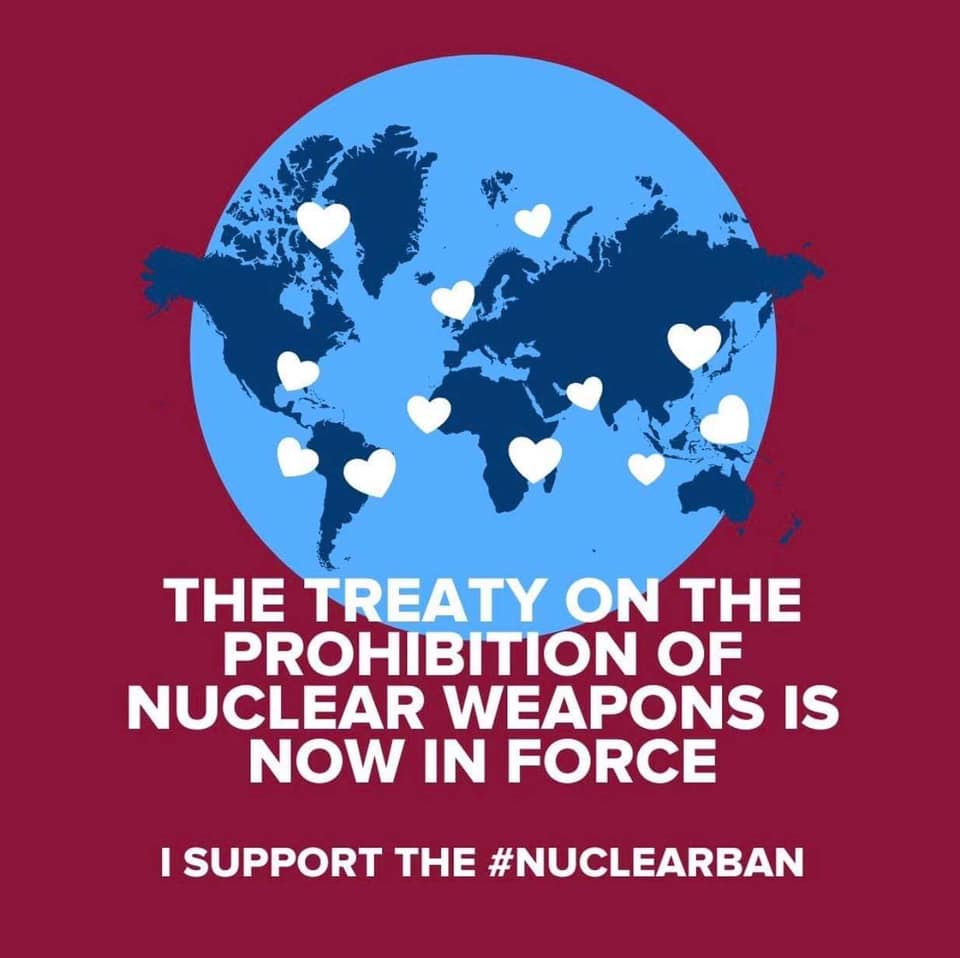
https://icanw.org.au/new-prime-minister-backs-the-ban/?fbclid=IwAR0PloEtGAvJE3z3fK3Lvb01JmlIbIJ2MXeAoT4KBjIBe3AMTGretVOISV8 24 May 22, The election of the Albanese Labor Government heralds a new era in Australia’s approach to nuclear disarmament and non-proliferation. While the previous government shunned the UN Treaty on the Prohibition of Nuclear Weapons, the Australian Labor Party has committed to sign and ratify it in government. Recent polling demonstrates ¾ of the Australian public support this action.
Prime Minister Anthony Albanese is a long-term champion of nuclear disarmament and non-proliferation, inspired by his late mentor Tom Uren, a former Labor Minister who witnessed the atomic bombing of Nagasaki as a prisoner of war. In proposing the resolution committing to the treaty in 2018, he said the new policy is “Labor at its best” and that “nuclear disarmament is core business for any Labor government worth its name”. In 2016 Albanese launched the Tom Uren Memorial Fund with ICAN, and has spoken out in support of the treaty in parliament, at public events and demonstrations since its negotiation in 2017.
A majority of the new government members have signed the ICAN Parliamentary Pledge to work for Australia to sign and ratify the Treaty. It has been backed by two dozen unions, including the national peak body, the Australian Council of Trade Unions. The Victorian, Tasmanian, Australian Capital Territory, South Australian, Northern Territory and Western Australian Labor branches, as well as over 50 local branches have passed motions declaring their support and calling upon Australia to join the ban without delay. Many have called for signature and ratification to be completed in the first term of the new government.
Following a decision of the Australian Parliament, signature and ratification of the Treaty on the Prohibition of Nuclear Weapons can now proceed under the Albanese Labor Government.
In addition to the incumbent signatories of the ICAN Parliamentary Pledge, we are delighted to welcome the following new parliamentarians that have committed to work for Australia to sign and ratify the Treaty on the Prohibition of Nuclear Weapons:
Boothby, SA Louise Miller-Frost, Labor
Bennelong, NSW Jerome Laxale, Labor
Chisholm, VIC Carina Garland, Labor
Cunningham, NSW Alison Byrnes, Labor
Goldstein, VIC Zoe Daniel, Independent
Higgins, VIC Dr Michelle Ananda-Rajah, Labor
Hunter, NSW Daniel Repacholi, Labor
Kooyong, VIC Dr Monique Ryan, Independent
North Sydney, NSW Kylea Tink, Independent
Pearce, WA Tracey Roberts, Labor
Robertson, NSW Gordon Reid, Labor
Wentworth, NSW Allegra Spender, Independent
ENATE, ACT David Pocock, Independent
SENATE, QLD Penny Allman-Payne, Greens
SENATE, NSW David Shoebridge, Greens
SENATE, SA Barbara Pocock, Greens
SENATE, VIC Linda White, Labor
AUKUS nuclear submarine fallout: double-dealing and deception came at a diplomatic cost

When this masthead’s then Europe correspondent Bevan Shields asked Macron if he thought Morrison had lied to him, the French leader replied: “I don’t think, I know.”
In the White House, everyone who’d worked on the deal felt let down by the Australians. Biden felt blindsided
AUKUS fallout: double-dealing and deception came at a diplomatic cost, Scott Morrison’s efforts by stealth to secure the AUKUS deal had global ramifications, with the French president enraged and the US president blindsided. SMH, By Peter Hartcher, MAY 15, 2022
While Scott Morrison was secretly pursuing the AUKUS deal with Washington and London, the French ambassador in Canberra was starting to fret. President Emmanuel Macron had charged him to act with “ambition” in expanding the relationship with Australia, yet Jean-Pierre Thebault was finding it impossible to get access to cabinet ministers except for fleeting handshakes and “how-do-you-dos” at cocktail parties.
Foreign Affairs Minister Marise Payne would not agree to see him, nor would then defence minister Linda Reynolds. Yet the nations were supposed to be strategic partners on a high-stakes, $90 billion “Future Submarine” project. As 2020 became 2021, Thebault was feeling stonewalled. What was going on?
Morrison was confidentially exploring the prospect of nuclear-propelled submarines with the US and Britain. Yet a Defence Department official says: “The PM was still telling us, ‘I’m not cancelling anything ……… The Defence Department handled the duality – or perhaps duplicity – of the two projects by setting up compartmentalised working groups.
One, led by former submarine skipper Rear-Admiral Greg Sammut, continued working with the French towards the delivery of 12 French “Shortfin Barracuda” subs.
Sammut had no knowledge of the other project, led by one-time clearance diver Rear-Admiral Jonathan Mead, who was pursuing the idea of nuclear-powered subs with the Americans and the British.
The two were kept in strict separation. Both reported to defence secretary Greg Moriarty and the Chief of the Defence Force, General Angus Campbell…………..
Morrison saw an opportunity. US President Joe Biden and British Prime Minister Boris Johnson would be at a G7 summit in the quaint English seaside resort of Carbis Bay in Cornwall in June. Australia, not a member of the G7, was invited as a guest, along with India and South Korea.
Morrison used the meeting of 10 democracies to highlight the China threat………..
Morrison organised a smaller meeting with Biden and Johnson to drive his submarine ambition. Biden and Johnson had been briefed.
Morrison pitched two ideas. One was the request for the two countries to help Australia get nuclear-propelled subs. The other was a wider project for the three nations to develop other, cutting-edge technologies crucial to future warfare, such as quantum computing, artificial intelligence and other undersea capabilities…..
Morrison wanted a commitment; he didn’t get it. Biden’s big concerns remained. He said that he needed to be satisfied that the three countries would meet their obligations under the Nuclear Non-Proliferation Treaty. He wanted more work done on this in the White House.
The British were keen to proceed. Johnson even told Morrison that the UK would be prepared to build nuclear-propelled subs for Australia….. Johnson also saw it as an opportunity for British industry.
Morrison started to think of a British sub – smaller than the American nuclear-powered subs (SSNs) – as the working model for Australia’s fleet………
But the nuclear-propulsion technology was American and veto power rested with Washington…………
After Carbis Bay, Morrison had a dinner date with Macron at the Elysee Palace in Paris. ……… he might have been honest, but not fully so…………….. He left open the prospect of walking away. Deliberately.
That gate was three months away. Morrison pushed hard to get the assurances Biden needed. He had a vital friend at court: Kurt Campbell, the White House’s Indo-Pacific Co-ordinator and the man the Lowy Institute’s head, Michael Fullilove, calls “Mr Australia in Washington”.
Agreement had to be reached between the three countries, but, just as importantly, within the US group. The director of the US Naval Nuclear Propulsion Program, Admiral Frank Caldwell, custodian of the late Hyman Rickover’s crown jewels, had to be thoroughly satisfied. It took four consecutive full-day sessions to complete the work.
The nuclear Navy, once committed, committed fully………
Each government sent a team of 15 to 20 people drawn from multiple agencies. They were told to set aside eight to 10 business days.
Secrecy was paramount. The naval officers, led by Mead in Australia’s case, were told to wear civilian clothes so as not to draw attention to themselves in the streets of Washington.
………..They met at the Pentagon in August………………
The delegations initially sat in national groups around the room, co-chaired by Campbell, Mead and Vanessa Nicholls, the British government’s Director General Nuclear.
One by one, Biden’s four big concerns were met. Experts on the Nuclear Non-Proliferation Treaty were consulted. They agreed that if the reactors on the submarines were run as sealed units, installed and later removed by the US or UK at the end of their 30-year life, then the treaty would not be breached. Australia may have use of, but not access to, the nuclear technology and materials. “The Australians will never have to handle any of this material, it can’t be lost or stolen,” a US official explained…………..
The second concern was China’s reaction. “We assessed with our intelligence community that blowback from China would be manageable,” says a White House official……..
Third was Australia’s capacity. There were questions about Australia’s ability to recruit, train and retain the talent needed to maintain SSNs. However, the Americans’ biggest reservations were over Australia’s finances and politics.
The US wanted to avoid being entangled in any local budgetary disasters. A preliminary guess at the price of acquiring the nuclear subs ranges from $116 billion to $171 billion, including anticipated inflation, according to the Australian Strategic Policy Institute. Incidental extras would include the $10 billion cost of a new subs base on the east coast, as flagged by Morrison in March. The cost of training, crewing, operating and maintaining the boats would not be small
………. Ultimately, Washington decided that Australia could manage the cost, but it was an act of faith in Australia’s future economic strength.
Of the hot potatoes tossed around by the US administration, Australia’s political commitment was the hottest of all. The Americans had tested their own political support. The White House confidentially consulted Trump-aligned Republican senators. They found them supportive, even enthusiastic.
But Biden’s people had reservations about Australia’s political stability. There were concerns about the Labor Party, about the churn of prime ministers in both parties in the last decade, and about the Coalition’s serial dumping of submarine agreements, first with Japan and now with France.
The cone of silence prevented direct US contact with Labor. They called on a National Security Council staffer who’d been posted to Australia, Edgard Kagan, for his view. He consulted the US embassy in Canberra and observed that the Australian government seemed confident that Labor would support such a deal when they were eventually informed.
The Americans could see that if Labor baulked, Morrison would use it as a wedge against opposition leader Anthony Albanese in the approach to an election, to frame him as weak on national security……………
That just left Paris. The White House had pressed the Australians on the need to consult closely with the French. To satisfy the Americans, Canberra went so far as to give the NSC a list of all dealings the Australian government had had with the French on the submarines.
In the end, France’s Naval Group gave Morrison no excuse for detonating the deal. It delivered all its contracted work on time. Australia’s Admiral “Greg Sammut reported that we’d received the report from the French and it met our requirements,” a department official said. “The reply was, ‘very good, the government will be advised’.”
……….. Macron felt set up nonetheless. Payne and new Defence Minister Peter Dutton had met their French counterparts just two weeks earlier and given no sign of what was to come. Admiral Morio de l’Isle had been in Canberra just a week earlier to make sure that Naval Group was delivering as agreed, and the Australians had certified that they were. It was scant comfort that Moriarty confirmed that “the program was terminated for convenience, not for fault”.
It was a harsh blow to French pride and to Macron personally. He felt the US had connived with Australia against France. He withdrew his ambassadors from both countries in protest. When this masthead’s then Europe correspondent Bevan Shields asked Macron if he thought Morrison had lied to him, the French leader replied: “I don’t think, I know.”
In the White House, everyone who’d worked on the deal felt let down by the Australians. Biden felt blindsided. He mollified Macron. It was “clumsy, it was not done with a lot of grace,” Biden said. “I was under the impression that France had been informed long before that the [French] deal was not going through.”
Macron relented with the Americans. Morrison could not bring himself to show remorse. Macron has not yet forgiven him……. https://www.smh.com.au/national/aukus-fallout-double-dealing-and-deception-came-at-a-diplomatic-cost-20220513-p5al95.html
1 This month
17 October, Free Public Talk on Nuclear Issues in South Australia
David Noonan will speak on public interest concerns over the new Roxby Downs Indenture Act 2026 on BHP copper-uranium mining and ore processing in SA, and on how AUKUS may face SA with a High-Level nuclear waste agenda.
Dr Jim Green will discuss international developments in the field of nuclear power including ‘small modular reactors’ and Generation 4 ‘advanced’ nuclear reactor concepts.


Help Aunty Sue Protect Her Land and Sacred Sites From Destructive Rocket Testing.
.

Australians deserve the truth
about
AUKUS – https://aukuspublicinquiry.com/

PETITION – To: Prime Minister Anthony Albanese and the Australian Labor Government

of the week – Australians for War Powers Reform (AWPR)
To see nuclear-related stories in greater depth and intensity

