Radioactive: Inside the top-secret AUKUS nuclear submarines deal
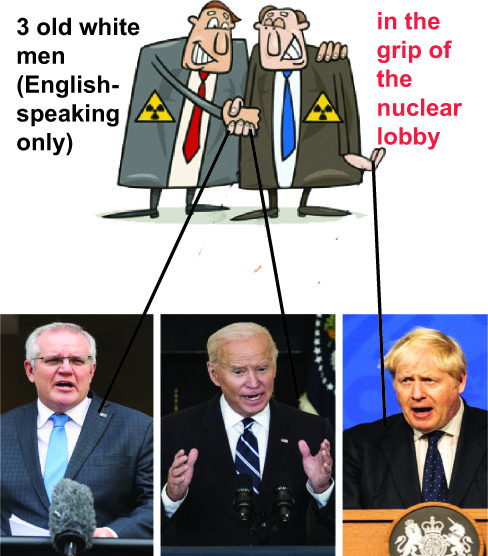
A nuclear subs deal would lock Australia more tightly into the US bloc.
. Shearer managed to sidestep the Russian roulette of Australia’s vaccine rollout with the help of doctors at the Department of Foreign Affairs and Trade.……….
My sources didn’t put it quite this bluntly, but everyone in the room understood that this was about Australia acquiring the power to pose a direct threat to China’s forces and the Chinese mainland.
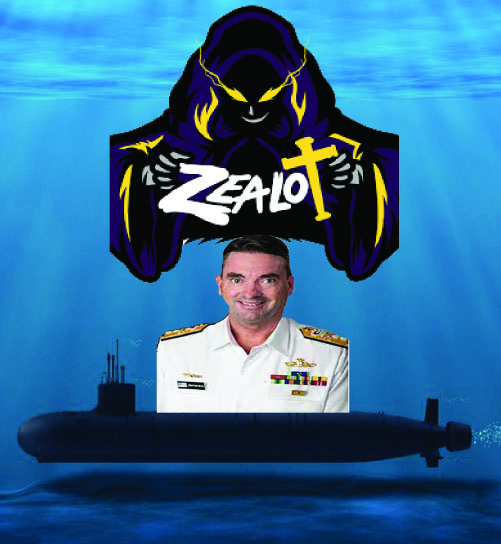
Campbell made a crucial choice by appointing Rear Admiral Jonathan Mead…...
…
Secret meetings and subterfuge over many months shored up Australia’s “40-year fantasy” of a mighty nuclear marriage with the US and the UK.
SMH, By Peter Hartcher MAY 14, 2022 When Joe Biden was first briefed on Australia’s request for nuclear-powered submarines, he did not say “yes”. He was cautious, even sceptical. Among his doubts was whether Australia was up to it………….
The Australians were asking for the crown jewels in the national security vault. one of America’s remaining decisive advantages over China. The US had shared its nuclear sub secrets with only one nation, Britain, in 1958. Much had changed since.
The transformational power of nuclear-propelled subs is that they could allow Australia to pose a direct threat to the Chinese mainland. For the first time. It had come to that.
With unlimited range because they never need to refuel, and with vertical launch tubes for firing missiles, a nuclear-propelled submarine could stand off China’s coast and threaten it with cruise missiles.
Australia’s existing fleet of submarines, the six diesel-powered Collins class, is equipped with torpedo tubes only. Which means it can fire torpedoes at targets in the water but not missiles at targets on land.
But it had been a 40-year fantasy of Australian governments to get American nuclear propulsion. Canberra had been turned down every time. Indeed, no earlier request had even reached the president’s desk. The US Nuclear Navy, guardians of the technology, had ruled it out of the question.
Now the Australian appeal had the president’s full attention. The briefing paper in front of him ran through the positives and negatives of such an arrangement –it did not contain a recommendation.
On the positive side of the ledger, the top consideration was that it would help counter China. The People’s Liberation Army Navy has the advantage over the US in warfighting on and above the ocean. Arming an ally with nuclear-powered subs would help blunt China’s edge.
Nuclear-propelled submarines “are fast, they have stamina, they bring a whole spectrum of weapons, and if you are China, how are Australian and US forces working together?” poses the former chief of US Naval Operations, retired Admiral Jonathan Greenert.
“You don’t know their sovereign decisions. Your imagination is your biggest nightmare – what could they be doing? They can reposition fast, 25 knots [46km/h] for a full day. If an adversary says, ‘I’ve got a detection of a nuclear sub’, great – when? Two days ago. Then you draw a circle on the map and see where it might be. It’s a big circle.”
The US today has 68 submarines, all nuclear-powered. China has an estimated 76 subs, of which 12 are nuclear-powered. But the US fleet is shrinking as it retires older subs faster than it can build new ones. China’s nuclear-powered fleet is expanding. The AUKUS agreement aims to help Australia acquire eight.
Second, it would cement the alliance with Australia. Just a few years earlier, many in the US foreign policy community including Campbell had tipped Australia to be the ally most vulnerable to China’s influence, that it would “flip” and align with Beijing.
Instead, Australia had “set an incredibly powerful example” for the world in standing up to China, as Secretary of State Antony Blinken said in an interview this year. A nuclear subs deal would lock Australia more tightly into the US bloc.
Third, it would help the US to deter China’s expansion through the Indo-Pacific. It would signal US commitment to the region and to US allies, reassuring other Indo-Pacific nations who might be doubting American staying power. “The president said, ‘this could be quite powerful’,” according to an official who was present.
But on the other side of the ledger, Biden himself raised four big concerns with the Australian request. First was nuclear proliferation. Since the deal with Britain in 1958, Washington, London and Canberra, among others, had signed the Nuclear Non-Proliferation Treaty. If we give the Australians this technology, won’t we be in breach of the treaty, Biden wanted to know?
Second was the response from China. How will Beijing react if we agree to this? Will it provoke Xi Jinping into accelerating his own naval build-up, into getting more aggressive?
Third was Australia’s capability. Would the Australian political system be capable of bipartisan commitment for the decades required? Is Australian politics stable enough? Could Australia afford the price tag?
Fourth, would the US Nuclear Navy be prepared to deliver? This had been the obstacle to every other Australian inquiry. This elite priesthood is the guardian of the fast, stealthy, underwater Doomsday machines that are America’s last line of defence.
America’s nuclear warfighting is structured on a “triad” – ground-based, airborne and undersea forces. The ground-based and airborne forces are the most vulnerable to enemy attack. But even if these are destroyed in a surprise first strike by an enemy, its nuclear-powered, nuclear-armed subs are designed to survive, undetected in the dark depths, to deliver annihilation to the enemy. By guaranteeing “second strike” capability, they deter any adversary from even thinking about launching a first.
Australia was not asking for nuclear weapons; it was content to arm its subs with conventional missiles. And Canberra was not so much concerned about nuclear Armageddon. Australia has entrusted that responsibility to the US, sheltering under America’s nuclear “umbrella”. Australia was feeling threatened by China and wanted the capacity to threaten it in return.
As the discussion around the White House table unfolded last year, other concerns emerged. The group included Secretary of State Blinken, Defence Secretary Lloyd Austin, National Security Adviser Jake Sullivan, and the chairman of the Joint Chiefs, General Mark Milley.
What if we attempt this three-way agreement with Australia and Britain and it fails? The credibility of all three nations would be damaged. Have the Australians consulted fully with the French about their contract? Do we risk alienating one ally to gratify another?
The meeting broke up without a decision and with big questions needing to be answered. In the meantime, Australia had a contract with Paris – and French President Emmanuel Macron was deeply invested in it………..
In France, national pride and national honour were engaged, not to mention French economics – it was the biggest defence export contract France had signed, and the biggest Australian acquisition. The contract value was $50 billion but adjustments for inflation and extras took the total deal to at least $90 billion.
………………………………… Towards the end of 2019, Morrison started to ask his closest advisers about fallback options, including nuclear-propelled ones. They told him of the joyless history of Australian requests for nuclear propulsion and that the likelihood of getting the technology from the US or Britain was “very, very low”. And they warned him that Australia would need a civil nuclear industry. Without one, it couldn’t maintain the nuclear reactors that drive the boats. On March 19, 2020, two months after the Audit Office report, the prime minister took the first formal step towards exploring contingencies.
……. Secretly, he asked the secretary of the Defence Department, Greg Moriarty, for a discussion paper about all the options, including nuclear-propelled ones. He had the result within a fortnight……
Morrison decided to take the next step regardless. In May, 2020, he asked Moriarty and the military co-leader of the Defence Department, Chief of the Defence Force, General Angus Campbell, to form a small, expert group to see whether it was feasible for Australia to acquire and operate nuclear-powered subs. The top-secret exercise was led by the Chief of Navy, Vice Admiral Michael Noonan.
It came back with the conclusion that it was potentially feasible, but on two conditions. One, it was only possible with the help of the US, Britain or both. This was the only way Australia could operate nuclear-powered subs without setting up a civil nuclear industry to support them.
America and Britain use highly enriched, weapons-grade uranium to run their subs’ reactors. That means the reactors don’t need refuelling for the life of the boat itself, some 30 years.
Two, the same consideration ruled out the French nuclear-propelled sub, the big Barracudas Macron had launched so proudly, as an option. The French use low-enriched uranium, meaning their reactors need to be refuelled every decade or so in a lengthy process called full-cycle docking. This would keep the Australian fleet permanently dependent on Paris.
Moriarty’s opinion was that this would not be a sovereign Australian capability. Unless Australia started its own civil nuclear industry to refuel and maintain the reactors, something which Morrison would not countenance.
Tantalised, Morrison immediately asked Defence to contact the Pentagon to test its assumptions. Through a series of secure video conferences between the Pentagon and Defence’s headquarters on Russell Hill, the US Navy gave a guarded endorsement, summarised by an Australian official: “There’s nothing in your thinking that’s completely implausible”. But there was no enthusiasm from the Americans and certainly no commitment to help.
For the prime minister, this was a “game changer” nonetheless, as he’s described it to colleagues. The revelation: It was possible to have a nuclear-powered attack submarine, or SSN as navies call it, without needing to service the reactor.
To now, Morrison had briefed only two members of his cabinet, Linda Reynolds and the Foreign Affairs Minister, Marise Payne. But now that he envisaged raising the idea with the American president and British Prime Minister Boris Johnson, he decided to widen the circle.
When he briefed Treasurer Josh Frydenberg, he met an enthusiastic response. He remarked that the politics in the three capitals of Washington, London and Canberra seemed to be in alignment. “You could never do this deal with (the former leader of British Labour) Jeremy Corbyn,” said Frydenberg. “When a gate like this opens, you go through it.”
But what of the multibillion-dollar cost of cancelling the French deal and the far greater cost of building SSNs? “Everything is affordable if it’s a priority,” was the treasurer’s attitude. “This is a priority.”
Morrison then took it to the National Security Committee of his cabinet. This is the overarching mechanism for co-ordinating defence and security and includes top officials and ministers responsible for defence, foreign affairs, home affairs and intelligence. It gave Morrison the green light to take it further. “It was a high level of secrecy because there was no guarantee we could pull it off,” Morrison told colleagues. He didn’t want to disrupt progress with the French toward a conventional sub in case he failed with the Anglo American nuclear option, and end up with neither.
Morrison kept it so tight that the PM’s personal permission was required before any official could be brought into the charmed circle, a top civil servant explained. “So if anything leaked, you knew you’d be personally accountable to the PM himself,” said the official.
…………. Australia then, and now, had no long-range strike capability whatsoever. None on land, none in the air force, none in the navy. The ADF was set up for counterinsurgency wars as part of a US alliance like those in Afghanistan and Iraq, and low-level conflict in the Pacific Islands like the missions in East Timor and the Solomons, but was unprepared for high-intensity warfighting with a capable nation state.
Reynolds tasked the Capability Enhancement Review with recommending the strike power Australia needed. One part was to be the nuclear subs project. Campbell made a crucial choice by appointing Rear Admiral Jonathan Mead………
Eventually, the moment arrived for Australia’s first approach to the Biden White House. ……
In May 2021, the moment came. The director-general of Australia’s peak intelligence assessment agency, the Office of National Intelligence, Andrew Shearer, was planning a routine visit to Washington to consult with his US counterparts. He’d been briefed on the nuclear subs project. Would you like me to broach it with the White House, he asked the prime minister? Morrison agreed. Shearer managed to sidestep the Russian roulette of Australia’s vaccine rollout with the help of doctors at the Department of Foreign Affairs and Trade………..
Shearer and Campbell had known each other for decades. He explained what Australia wanted. “As China’s capability advances, we need to have submarines capable of meeting it. We need to be able to operate without the risk of easy detection by the Chinese,” Shearer said, according to the participants.
………….. My sources didn’t put it quite this bluntly, but everyone in the room understood that this was about Australia acquiring the power to pose a direct threat to China’s forces and the Chinese mainland.
Sullivan and Campbell immediately were interested. Biden has described the US rivalry with China as “the competition for the 21st century”. With this request, Australia was choosing sides emphatically.
…………… Shearer emphasised that Australia had no intention of developing a civil nuclear industry or developing nuclear weapons. He said that Canberra was satisfied it could operate the subs while preserving Australia’s strong record on nuclear non-proliferation.
Sullivan and Campbell had lots of questions about Australian technological, personnel and financial capacity but the potential killer at this threshold meeting was Australian politics. “We asked lots of questions about politics,” said Campbell. “Would this be contentious? Would this hold?”
Bipartisan political commitment, Labor and Liberal, was a prerequisite, the Americans said. “This would be a military marriage. It would have to hold over decades.”
…………. when Shearer returned to Canberra he made clear to Morrison and his other colleagues that the White House had set political bipartisanship as a non-negotiable condition. “If Albo says ‘no’, the deal will be dead,” as Australia’s ambassador to Washington, Arthur Sinodinos, put it to colleagues.
…….. the prime minister decided not to brief Labor leader Anthony Albanese for five months. He briefed him on the day before the deal was to be announced in a three-way piece of theatre with Morrison, Prime Minister Johnson and President Biden. It was high stakes on a very tight deadline.
This is part one of a two-part series by Peter Hartcher examining the AUKUS deal. The series concludes on Sunday, May 15. https://www.smh.com.au/politics/federal/radioactive-inside-the-top-secret-aukus-subs-deal-20220510-p5ak7g.html
Dissecting Vice Admiral Jonathon Mead’s Nuclear submarine zealotry
Australia considering next-generation US and UK designs for nuclear submarines, The Strategist, 10 May 2022, Brendan Nicholson, Brendan Nicholson is executive editor of The Strategist. Australia is involved in complex negotiations to ensure that its plan to acquire eight nuclear-powered submarines doesn’t weaken the international non-proliferation regime.

Of course it will weaken the international nuclear non-proliferation regime. The fuel required for these submarines’ nuclear reactor is highly enriched uranium – at risk of being acquired by other countries. Of course others will want these types of nuclear submarines, once Australia is getting them
The chief of the Royal Australian Navy’s nuclear-powered submarine taskforce, Vice Admiral Jonathan Mead, tells The Strategist talks are underway with the International Atomic Energy Agency to ensure the project embraces such high safety standards that it sets a rigorous new benchmark under the Treaty on the Non-Proliferation Nuclear Weapons, or NPT.
The submarines are to be built in Australia under the AUKUS arrangement with the United States and United Kingdom.

Oh yeah.where does he get that from? Most bexperts are saying that they’ll be built in UK or USA
Australia is yet to choose a US or UK submarine, but reactors on both use highly enriched, or ‘weapons grade’, nuclear fuel that does not need to be replaced for the boat’s 30-year life. There’s concern that the use of this fuel could wreck the global non-proliferation machinery by opening the way for other nations to obtain it as a step towards manufacturing nuclear weapons………
To complete a defence project on this massive scale, says Mead, Australia must build ‘a nuclear mindset’……….
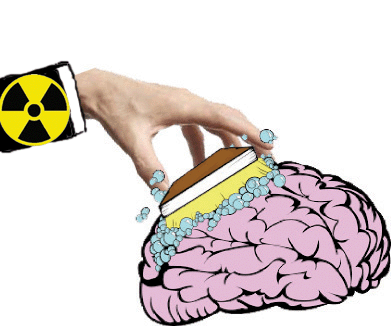
What is he talking about? Australians are not so stupid. So there’ll be a massive propaganda campaign? How’s he going to do iy?
Mead is aiming for the RAN to have its first submarine by the end of the next decade, but says he’s ‘seized by the strategic need to drag that date left as much as is safely possible’……..
He notes that an interim submarine capability is likely to include Australians co-crewing with American and British submariners, and other more advanced options.
Those options will not include another conventional submarine.
However, The Strategist understands that the navy may be offered a nuclear-powered boat to use through the 2030s—once Australia’s nuclear stewardship has been certified.
Mead says it’s too soon to say whether Australia will end up with US Virginia-class or British Astute-class vessels, but he concedes that new versions, the American SSNX and the British SSNR, will be in the mix.
‘We are doing deep-level analysis of all these options—maturity of the design, when are they going to start building it, what’s its affordability, how we’d do it—to present by the first quarter of 2023 an optimal path to the three governments. We then begin to deliver the submarine.’
‘To train personnel’, Mead says, ‘we could embed sailors and officers in a US or UK boat to the point where we may have a 50% UK or US crew and a 50% Australian crew.’ When the first submarine is launched in South Australia, the goal is to have the crew trained, the industrial base ready to maintain it and the regulatory system set up. ‘We have exchange officers on board our submarines and ships all the time.’……….
‘So we need to set up a system supported by the US and UK to provide our people with reactor training. If you’re the engineer, you may be a nuclear physicist. If you’re working at the front end of the boat, you require some knowledge of the reactor in case there’s an emergency, but not to the same level.
‘The commanding officer will require a very deep level. We are mapping out every person on the submarine and what type of nuclear training they require and how we deliver that.’
Succeeding in the submarine enterprise will take a major national effort, says Mead.
The decline in the number of science, technology, engineering and mathematics, or STEM, students in schools and universities will have to be arrested. The Australian Defence Force needs to attract individuals who see nuclear-propelled submarines as state of the art, as exciting, as something they want to work in for many years.
STEM education is a very good idea – Science Technology, Maths, Engineering – and should be encoursaged. But, at the same time, these nuclear zealots are down-grading biology history, social studies, ecology, the arts – all the humanities – equally, perhaps more than equally, necessary
……… ‘That will be the key to success. We need to harness Australia’s youth now so that they see a very clear and satisfying career path in the submarine program. I want to develop my own sovereign and independent system where I have someone at school right now. She could be 15 and wondering what to do. I tell her I want her to command submarine number one in 15 years. “You’ll need to do some STEM subjects and you’ll join our program and I’ll send you overseas. I’m going to send you to MIT, potentially, and then on a UK boat, then bring you back to Australia.” Or, “I want to prepare you to be a manager in the shipyard, an engineer or a naval architect looking after the reactor—or part of the regulatory system.”’
Mead needs thousands of specially trained people in the industrial base, navy workforce, broader ADF and crew from the sharp end of the submarine and the reactor through to safety regulation and monitoring and environmental protection and, ‘if we have a defect, an Australian company that’s nuclear certified and able to provide parts’.
He’s talking to universities that are developing courses ranging from doctoral and research degrees in nuclear physics down to graduate certificates or introductory courses on reactors.
His taskforce already numbers 226 specialists in areas ranging from engineering to international law and nuclear proliferation. Many have already been on global research trips. ‘I have people embedded from the Attorney-General’s Department and legal experts from the Solicitor-General, legal people from the navy and from the Department of Foreign Affairs and Trade, and we bring in other experts when needed.’
………………………………. To assess whether Australia could build these submarines without a civil nuclear industry, Defence sought advice from the US and UK. Because the reactors don’t need to be refuelled and come as a sealed unit, the strong advice was that a civil industry was not required to build and operate the submarines. Mead has sought advice from nuclear physicists and technicians at the Lucas Heights reactor near Sydney. ‘They’ve been dealing with nuclear waste for many years, so we talk to them as we look at our own solutions for nuclear waste”………………………………..

So, Vice Admiral Mead and co are going to solve the nuclear waste problem. Australia can do it? When highly qualified scientists across the world have not been able to?
Mead will take a big team to UK shipyards soon to map out a pathway to Australia’s new submarines.
Who’ll be on this team? Anyone with any common sense? Or just another pack of nuclear zealots?
I wake up every morning thinking I’ve got to find that optimal pathway, not just to the submarine itself, but what is the optimal workforce?’ says Mead. ‘What’s the best way to train these people over 20 years? How do we set Australian industry up for success?
The plan for that whole system must be provided to the three governments early next year so that the decision on the choice of submarine can be made. Then the process to build begins.
In the US and UK, Mead says he’s sensed an unwavering commitment from everyone he’s talked to, civil and military.
‘They see great strategic benefit in what we’re doing……. How we will develop a sovereign capability.’
What’s he talking about – ”a sovereign capability”? So Australia is to be a great world military power? This guy has delusions of grandeur
……………. He says the boats must be built in Australia to ensure Australia has a sovereign capability. That will make it much easier to sustain them …………… Could Australia then become a sustainment hub for US and UK submarines? Absolutely, says Mead. A US nuclear submarine visited Western Australia recently and a British Astute-class boat came last year. https://www.aspistrategist.org.au/australia-considering-next-generation-us-and-uk-designs-for-nuclear-submarines/
This black smoke rolling through the mulga’: almost 70 years on, it’s time to remember the atomic tests at Emu Field

The Convesation, Liz Tynan, Associate professor and co-ordinator of professional development GRS, James Cook University: May 4, 2022
The name Emu Field does not have the same resonance as Maralinga in Australian history. It is usually a footnote to the much larger atomic test site in South Australia. However, the weapons testing that took place in October 1953 at Emu Field, part of SA’s Woomera Prohibited Area, was at least as damaging as what came three years later at Maralinga.
The Emu Field tests, known as Operation Totem, were an uncontrolled experiment on human populations unleashing a particularly mysterious and dangerous phenomenon – known as “black mist” – which is still being debated.
Operation Totem involved two “mushroom cloud” tests, held 12 days apart, which sought to compare the differences in performance between varying proportions of isotopes of plutonium. The tests were not safe, despite assurances given at the time.
Between 1952 and 1957, Britain used three Australian sites to test 12 “mushroom cloud” bombs: the uninhabited Monte Bello Islands off the Western Australian coast and the two South Australian sites. (An associated program of tests of various weapons components and safety measures continued at Maralinga until 1963.)
The British government, with loyal but uncomprehending support from Australia under Liberal prime minister Robert Menzies, proceeded despite incomplete knowledge of atomic weapons effects or the sites’ meteorological and geographical conditions.
The British government, with loyal but uncomprehending support from Australia under Liberal prime minister Robert Menzies, proceeded despite incomplete knowledge of atomic weapons effects or the sites’ meteorological and geographical conditions.
The first British atomic test, Operation Hurricane, held in 1952, was a maritime test of a 25 kiloton atomic device detonated below the waterline in a ship anchored off part of the Monte Bello Islands.
Operation Totem was designed to test two much smaller devices – 9.1 and 7.1 kilotons respectively – by detonating them on steel towers in the desert.
At the time, Britain was in the process of commissioning a new reactor at Calder Hall in Cumbria (designed to make plutonium for both military and civilian uses) that would produce nuclear fuel containing more plutonium-240 than a previous reactor.
Totem was intended to test “austerity” weapons made from nuclear fuel eked out of this reactor. (Plutonium-240 can potentially make nuclear weapons unstable, in contrast to the fuel of choice for fission weapons, plutonium-239, which is more controllable.)
Totem was a “comparative” test. Its innermost technicalities are still kept secret by the British government.
A greasy black mist
The two tests at Emu Field were fired at 7am, on 15 October and 27 October.
The first test, Totem I, produced a mysterious, greasy “black mist” that rolled over Aboriginal communities around Wallatinna and Mintabie, 170 kilometres to the northeast of Emu Field. The black mist directly harmed Aṉangu people. Because no data was collected at the time, it is impossible to quantify precisely, however, the anecdotal evidence suggests death and sickness occured.
The British meteorologist, Ray Acaster, gave an account of the phenomenon, and its possible causes, in 2002:
The Black Mist was a process of mist or fog formation at or near the ground at various distances from the explosion point … Radioactive particles from the unusually high concentration in the explosion cloud falling into the mist or fog contributed to the condensation process … The radioactive particles in the mist or fog became moist and deposited as a black, sticky, and radioactive dust, particularly dangerous if taken into the body by ingestion or breathing.
The black mist was an horrific experience for all in its path. Survivors gathered at Wallatinna and Marla Bore in 1985 testified to the Royal Commission into the British Atomic Tests in Australia on its effect on individuals and communities.
Among those who testified was Lallie Lennon, who lived at Mintabie with her husband and children in 1953. After breakfast on 15 October they heard a deep rumble, followed by weird smoke that smelt of gunpowder and stuck to the trees. Lallie, her children and the others with her all got sick with diarrhoea, flu-like symptoms, rashes and sore eyes. Lallie’s skin problems were so severe, it looked like she had rolled in fire.
Another witness, the later tireless advocate for the survivors of the British atomic tests, Yami Lester, was a child at the time of Totem and lost his vision after the tests.
He recalled his experiences in testimony to the royal commission, and elsewhere. Interviewed by two London Observer journalists in a story republished in the Bulletin under the title “Forgotten victims of the ‘rolling black mist’”, he said:
I looked up south and saw this black smoke rolling through the mulga. It just came at us through the trees like a big, black mist. The old people started shouting ‘It’s a mamu’ (an evil spirit) … they dug holes in the sand dune and said ‘Get in here, you kids’. We got in and it rolled over and around us and went away.
Contaminated planes
The second test, Totem II, took place on October 27 in completely different meteorological conditions and did not produce a black mist. Its cloud rose quickly into the atmosphere and broke up soon after. However, radioactivity from both Totem I and Totem II travelled east across the continent, crossing the coast near Townsville.
Air force crews from both Britain and Australia flew into the atomic clouds. A British Canberra aircraft with three crew aboard entered the Totem I cloud just six minutes after detonation, far earlier than any of the other cloud sampling aircraft.
For a brief period the radioactivity to which they were exposed was off the scale. The aircraft was flown back to the UK, where it was found to carry extensive residual radioactive dust despite having been cleaned in Australia.
While air crew were exposed to contamination in flight, RAAF ground crew were worse affected, since they were largely unprotected and worked for hours on the contaminated planes. The risk to both air and ground crew was extensively examined by the Royal Commission.
One account by Group Captain David Colquhoun, head of RAAF operations at Emu Field, mentioned a gathering of crew in a hangar at Woomera, where a doctor ran a Geiger counter over those present.
As it reached the hip of one man, “the Geiger gave a very strong number of counts”. The young man then said he had a rag in his hip pocket he had used to wipe grease “off the union between the wing and the fuselage”. This rag was heavily contaminated.
Abrogating responsibility
After America’s McMahon Act of 1946 made it illegal for the US to work with other countries on atomic weaponry, a secret British Cabinet committee made the decision to conduct tests of a British bomb – but not on its own territory.
Britain explicitly abrogated all responsibility for those who lived near the Emu Fields site. Britain maintained through to the royal commission – and in years beyond – that it was not responsible for Aboriginal welfare in the face of atomic weapons tests.
The extent of the huge British atomic weapons testing program here is still largely unknown by Australians. The Australian government forced the British government to contribute to the cost of remediation of Maralinga in the mid-1990s, although Monte Bello and Emu Field were largely left untouched.
The story of Emu Field has been forgotten for nearly 70 years. Bringing it back into our national consciousness reminds us the costs of harmful political decisions are often not borne by the decision-makers but by the most powerless.
The author would like to thank Maralinga Tjarutja Council for allowing access to the Maralinga lands, including Emu Field.
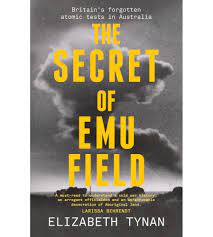
The Secret of Emu Field: Britain’s forgotten atomic tests in Australia, by Elizabeth Tynan, has just been published by NewSouth
Unions NSW opposes nuclear powered submarines and the AUKUS treaty.
Paul Keating ,Branch Secretary, Maritime Union of Australia, Sydney Branch, 26 Apr 22,
Unions NSW declares its total opposition to the reckless announcement by Scott Morrison that Australia would be developing nuclear-powered submarines as part of a military alliance with the US and UK.
At a time when Morrison should have been pursuing vaccination supplies and providing maximum support to our health system and millions of people in lockdown, he has been pursuing secret military deals. The deal will continue to escalate unnecessary conflict with China. Workers have already been impacted with seafarers stranded on coal ships and some trades shut down.
Extraordinary sums of money have been wasted with the previous submarine contract scrapped only five years after it was signed. That contract was worth $90 billion – nuclear submarines will cost much more.
Only six countries in the world have nuclear submarines, and they all have nuclear power stations. Advocates for nuclear power and nuclear weapons have been emboldened. The submarines will use highly enriched uranium ideal for nuclear weapons.
The Australian government has repeatedly tried to set up nuclear waste dumps on First Nations land. This will intensify that pressure.
The billions wasted on submarines should be spent on:
Building an Australian strategic shipping fleet in Adelaide that could operate in cabotage and international trades;
· Building renewable energy and offshore wind turbines to ensure we prevent global heating from exceeding 1.5°C;
· Raising Jobseeker payments to well above poverty levels;
· Pay increases for health workers and investments in our health systems;
· Pay increases for teachers and investments in public schools to make them covid-safe;
· Investing in firefighting capacity and ensuring we are ready for the next bushfire season.
Workers have no interest in war with China or any other country. Every effort should be made to pursue peaceful relations.
Unions NSW stands in solidarity with workers in all countries in opposing war and wasteful environmentally harmful military spending.
We pledge our opposition to oppose the development of nuclear submarines in Australia, and the development of any other nuclear industry.
Various groups oppose plan for nuclear submarine base – ”a military target” at Port Kembla, New South Wales
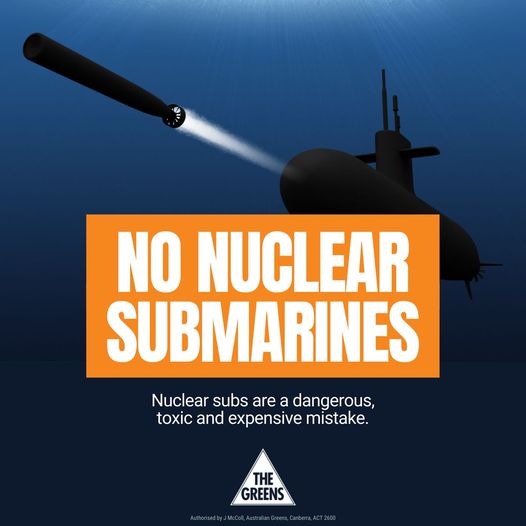
Planes, trains, automobiles … and nuclear subs: the local issues at play in the federal election
Guardian Stephanie Tran and Khaled Al Khawaldeh, Mon 2 May 2022
………….Submarine base in Port Kembla
Max, 26, works for a non-profit and lives in the electorate of Cunningham, held by retiring Labor MP Sharon Bird. He is worried about the prospect of a base being built in Port Kembla to house the future nuclear-powered submarines to be built under the Aukus agreement.
“This announcement was made with no consultation with the community, no proposal for consultation moving forward and a potential for my home to have a giant target on its back,” he said.
The Wollongong suburb, 100km south of Sydney, was flagged by the Coalition as the potential home of its new nuclear-powered submarine base. However, experts have raised concerns that the base could endanger the community by making it a military target, and some in the community are wary over the safety of the submarines’ nuclear reactors.
Alison Byrnes, the Labor candidate for Cunningham, said that if elected she would ensure that the community was consulted on the decision.
“I will make it a priority to seek a detailed briefing from the minister for defence on this plan, as well as Defence’s proposed assessment process,” she said.
The Liberal party emphasised the economic benefits of the project, but did not address the community concerns……..
Greens candidate Dylan Green said he did not want to see his community “getting caught up in a nuclear arms race”.
“Our government should be strengthening diplomatic ties with neighbouring states, not inviting conflict by investing in warships with primarily offensive capabilities,” he said.
Alexis Garnaut-Miller, from the Australian Citizens party, was “absolutely and resolutely opposed to this nonsensical proposal of building nuclear submarines or any development of nuclear submarine presence in Port Kembla”…… https://www.theguardian.com/australia-news/2022/may/02/planes-trains-automobiles-and-nuclear-subs-the-local-issues-at-play-in-the-federal-election
Call to dump nuclear, go hydrogen for submarines
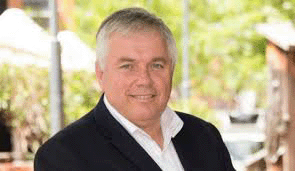
Australia cannot afford to allow Scott Morrison’s nuclear submarine plans to proceed, according to federal parliament’s only ex-submariner. 7 News, Marion Rae, 27 Apr 22,
Scott Morrison’s nuclear option for future Australian submarines is another budget disaster in the making, according to federal parliament’s only former submariner.
“We can’t afford to allow this bathtub admiral’s nuclear fantasy to go any further,” Independent senator Rex Patrick said on Tuesday.
The South Australian senator wants hydrogen fuel-cell submarines to be considered instead of the program he says will ruin Australia’s sovereign capability and deal a huge blow to his state’s defence industrial base.
New technology has allowed hydrogen fuel-cell powered submarines to become a viable non-nuclear option for endurance and silence, with some navies already operating or building with the new propulsion systems.
The senator said Australia needs a new submarine capability in the water in 2026, not 2040, and it should be built in Adelaide not contracted to foreign shipyards.
“I get that nuclear submarines are very capable. As a former submariner and having spent time at sea on the nuclear USS Santa Fe, I get it more than any other member of the federal parliament,” he said.
“But I also understand the capabilities of modern hydrogen fuel-cell submarines.”
He recommends a $20 billion spend on 20 highly capable submarines, rather than an estimated $171 billion on eight nuclear-powered vessels.
The previous $90 billion deal with a French company was scrapped last year in favour of nuclear-powered submarines as part of the AUKUS security pact, with a termination payment that could exceed $5.5 billion.
The Morrison government has already committed to building a new nuclear submarine base on Australia’s east coast, with the location to be announced after the election…………..
Senator Patrick said it was wrong to claim conventional submarines would not survive the modern operational environment, pointing to the fleets of Germany, Spain, Turkey, Greece, Sweden, Japan, South Korea, and Singapore.
“It doesn’t matter how good the pros of a nuclear submarine are – if it arrives too late, costs too much and undermines sovereign capability then it’s the wrong solution,” he said.
https://7news.com.au/business/call-to-dump-nuclear-go-hydrogen-for-subs-c-6580633?fbclid=IwAR2rf7smDYvCgEnSKGxjYp0rNFExJe0Vv8zd7tt8S9aN1Jkdk3_t9WW0rqY
Anzac Day and the conflict-loving neocons
https://independentaustralia.net/politics/politics-display/anzac-day-and-the-conflict-loving-neocons,16300, By David Donovan | 27 April 2022
This year’s Anzac Day has been politicised into a call-to-arms against China by our Coalition leaders. Founder and publisher Dave Donovan calls for war profiteers to be condemned.
ACCORDING TO one report, Defence Minister Peter Dutton’s opponent in Dickson, Labor candidate Ali France, is increasingly confident of deposing him from his marginal north Brisbane seat.
“It will be better than last time around,” she told Roman Mackinnon. “[I’m] definitely feeling hopeful we can kick him out.”
We can hope, but not too much. Because Dutton is the sort of former cop who looks as if he might have enjoyed a bit of kicking in his time ─ on the boot end, not as the ball.
On the day before Anzac Day, Dutton – out of what seems more a skull than a living head − honoured the grim sacrifice of generations of Australian military personnel, by preparing us all for more war. We need to “prepare for war” with China, said Peter Dutton,
It’s the oldest trick in the book: the khaki election. Beloved by conservatives like Dutton, whose reptile brains are ever ready for fight and flight. And it just might work for them again. Because Australia is a war-loving nation, with a people ever ready to send the cream of their youth to kill and be slaughtered in any scrap going down, anytime, anywhere, for any reason.
We love war so much, Remembrance Day in November is not enough for us, we need to relive the action again each year in April for what has truly become our national day. On 25 April, we take the day off for marches and parades, for drinking and gambling, all to recall our futile role in an ill-planned invasion of a distant land for a European empire. One that ended in disaster and defeat, but which has become some sort of macabre national death cult and celebration – yes, celebration, because that is what it is − of militarism and folly.
Of course, it’s not our fault, we Australians. It is how we have been taught. The death cult has been inculcated into us almost from the teat. It is an intrinsic part of our culture. I don’t need to tell you, knowledgeable reader, about the military-industrial complex or that war is a racket. Our National War Memorial in Canberra is sponsored by Lockheed Martin and Boeing.
You know that, like you know that it is good for business. And Australia is deeply invested in the war business. After Tony Abbott and Joe Hockey shooed the car industry from our shores in 2014, the Coalition’s only plan to maintain a heavy manufacturing base in this country is through the production of war materials: guns, rockets, tanks, troop carriers, shells and other such armaments.
They also, through normalising war, ensure there is always enough new meat to send to the slaughterhouse each time. A country that profits from war, surely, has a vested interest in perpetuating it.
Isn’t that something we should consider on Anzac Day each year, as we mourn our dead? That our Government does not really care about the tragedy and sacrifice of war, or the deaths of our children, but instead wants to make a buck out of it?
Scott Morrison cares so little for those he considers his lesser – the ones he would send to fight China – that he was seen on Monday, during the Dawn Service, texting on his phone. War is just a potential vote winner for him, as it is for the ghoulish Dutton.
Celebrate Anzac Day, certainly. Take to the streets and honour the dead. But do it with a sense of outrage. That we needlessly sacrificed so many of our brave sons and daughters. For nothing but the conquest of empire and the dreams of mortal power of our cold and psychopathic leaders.
Take to the street to condemn those who feel no pangs about sending our children off to die. Take to the streets on Anzac Day to condemn the warmongers and profiteers. Because there is no glory in war: just blood, and tears, and shit and death.
Nuclear submarines in an Adelaide shipyard – sitting ducks for a disastrous terrorist attack: conventional submarines – cheaper, safer
Impact of a missile strike on the SSN at Osborne, APRIL 26, 2022 BY AUSTRALIAN DEMOCRATS WHAT HAPPENS IF A LARGE ADVERSARY DECIDES TO BLOW UP THE PROPOSED NUCLEAR SUBMARINES (SSN) PRIOR TO LAUNCH BUT AFTER THE REACTOR IS INSTALLED?
Once launched nuclear submarines are a very powerful weapons with an indefinite range. They are very hard to find and destroy in open water and pose a major direct threat to an adversaries home territory.
In the unlikely event they were destroyed in the water the reactor should shut down and sink with the boat to the abyssal depths of the ocean. While the reactor may leak to some extent the pressure and cold water contain the problem.
However, prior to launch the submarine is a sitting duck, vulnerable to a wide range of submarine and land-launched precision missiles. The logical time to strike would be when the boats are almost complete but not launched.
Questions for the government
- What is the likely impact of a missile strike on a nuclear submarine in the shipyard?
- What modelling does the government have regarding the spread of radioactive material from the reactor if it was hit by a precision missile?
- How many years would Adelaide need to be evacuated for after a disaster?
- Given the government’s rhetoric, why would a large adversary not destroy our SSN before launch given the threat they pose?
- Having spent $20 billion on each boat over ten years, will the government be upset if the SSN are destroyed on the day of the launch?
Our Plan: 20 advanced conventional submarines
The Democrats advocate avoiding this problem by building advanced conventional submarines.
This would save about $80 billion, ten years, and Adelaide…… https://www.democrats.org.au/impact-of-a-strike-on-the-ssn-at-osborne/
UNEXPLAINED ORDNANCE: A MISSILE ON ABORIGINAL LAND AND A BREAKTHROUGH LEGAL COMPLAINT
ARENA ONLINE, MICHELLE FAHY, 21 APR 2022
A ground-breaking legal complaint has arisen after First Nation’s elders Andrew and Robert Starkey discovered an unexploded missile on their country. The brothers discovered the missile, manufactured by arms multinational Saab, in Lake Hart West, a registered Indigenous heritage site within the vast Woomera Prohibited Area. The Starkeys are Kokatha Badu (respected senior figures, or lore men) from the Western Desert region of South Australia who have devoted decades to protecting heritage sites on their land.
In a complaint to the OECD, the Starkeys alleged that Saab had breached OECD guidelines by failing to undertake or maintain ‘adequate human rights due diligence which could prevent their product from being used in human rights violations’, and which also resulted in a failure to ‘protect and preserve the integrity of [those] heritage sites’ for which the Starkeys have custodial responsibilities
Michelle Fahy, 4 Feb 2022
Australia hasn’t seen anything like this case before. In fact, in the world of OECD complaints, it’s a first.
The Starkey complaint has resulted in a precedent-setting initial assessment from the OECD that could have ramifications for multinational weapons companies. The OECD’s Australian contact point has decided that arms export permits granted by national governments do not provide weapons companies with immunity from responsibility for human rights violations resulting from the use of their products or services.
This decision overturns earlier OECD precedents set by other countries, including the United Kingdom and the United States, which allowed weapons companies to shelter behind arms export permits. The initial assessment in the Starkey complaint says that government-issued arms export permits on their own are insufficient protection, and that the OECD guidelines require global arms manufacturers to conduct ongoing due diligence on human rights issues. Manufacturers of weaponry used to commit war crimes against civilians in Yemen, for example, could now be exposed to similar complaints.
The Defence Department, which has long fobbed off the Starkeys’ heritage concerns, took a year to remove the missile. Andrew says they next tried to approach Saab—whose marketing tagline is ‘It’s a human right to feel safe’—but were again brushed off and referred back to Defence. The Starkeys then lodged their complaint with the OECD’s Australian National Contact Point (AusNCP) in September 2021.
The OECD Guidelines for Multinational Enterprises are a comprehensive code of responsible business conduct that governments have committed to promoting. Each country that chooses to adhere to the guidelines must establish a national contact point to promote and implement the guidelines. The complaints procedure is intended to provide a non-adversarial ‘forum for discussion’ to examine and resolve complaints against multinationals.
The OECD covers most of the world’s weapons makers— 80 of the top 100 arms corporations, according to an analysis of data compiled by the Stockholm International Peace Research Institute. These companies represented 80 per cent (US$425 billion) of the US$531 billion in sales by the top 100 in 2020. Saab, ranked thirty-sixth, had US$3.4 billion in sales in 2020.
Saab responded to the Starkeys’ complaint saying, amongst other things, that its supply of weaponry to Defence was subject to ‘strict export control laws’ aimed at preventing their use in harmful ways and that Swedish export controls ‘require human rights issues to be considered’. This rote argument is parroted across the arms industry and is one that Australia’s Defence Exports Controls Office relies on to justify its continued arms exports to nations engaged in serial human rights abuses, including Saudi Arabia, the United Arab Emirates, Israel and Indonesia.
‘No nation gets to pick and choose which laws to comply with, nor do they get to choose who will or will not be held accountable’, says the Starkeys’ international human rights lawyer John Podgorelec. ‘The international law has to be applied as evenly to the Saudi Yemen conflict as it would to the Russia Ukraine conflict.’
Weapons companies have long benefited from a myopic reliance on one-off export permit approvals. However, the extensive evidence of war crimes and the resultant catastrophe still unfolding in Yemen, fuelled in large part by US– and UK supplied weaponry, shows that the so-called strict permit approval system is an abject failure in protecting human rights.
The AusNCP’s initial assessment sounds a warning to the arms industry worldwide. The AusNCP has now offered its ‘good offices’ to facilitate a negotiated resolution between the Starkeys and Saab. The Starkeys are ready to negotiate. Whether the ‘good offices’ phase proceeds depends on Saab, which has so far said it will ‘review the findings, and continue to engage with the AusNCP, to determine any further required actions’.
Andrew Starkey is pleased with the result so far, but his relief is tempered with discontent. ‘The situation is so bad in Australia. The legislation is so weak that we needed to rely on international law to get justice.’
Dr John Pace, who is also advising the Starkeys, is a globally recognised expert in human rights law with more than fifty years’ experience, including at the United Nations. Pace says that the obligation for due diligence on human rights grounds never abandons the equipment. ‘It is an ongoing, responsive and changing process, not a one-off rubber stamp.’
Amnesty International has noted, in Human rights policies in the defence sector, that, ‘There is now a clear global consensus that companies have a responsibility to respect all human rights wherever they operate’. There is also increasing acceptance that good business practices in one area do not offset harm in another. Corporate behaviour must be globally consistent.
A significant factor influencing the handling of the Starkeys’ complaint is the web of conflicting interests in which Saab features strongly. Such conflicts were not disclosed to the Starkeys during the complaint process. It is this inconsistency in its corporate behaviour that has brought Saab undone. As Andrew says, ‘Defence seems more interested in protecting a Swedish company than in protecting Australian culture’………………………………………………………………
The due diligence guidelines are clear about avoiding adverse impacts on human rights and, in particular, the importance of engaging with Indigenous peoples who might be affected by the activities of the business. One adverse impact noted by the OECD in relation to human rights is ‘Failing to identify and appropriately engage with indigenous peoples where they are present and potentially impacted by the enterprise’s activities’.
The Starkeys are concerned that similar problems will recur. Says Andrew, ‘For us this is the same as the British atomic tests. We are the ones left to deal with the mess. They are erasing us one site at a time up there’.
| Christina Macpherson <christinamacpherson@gmail.com> | Apr 22, 2022, 9:02 PM (11 hours ago) |  | |
| to me |
Will Australia’s nuclear submarines end up being built overseas?
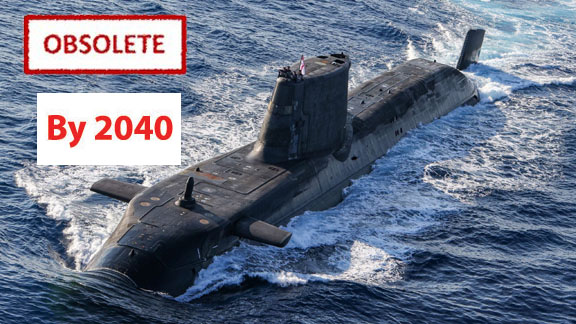
ABC, 7.30 / By Angelique Donnellan, 18 Apr 22, In 1938, wharfies at Port Kembla, south of Sydney refused to load smelted iron ore bound for military production in Japan for its war against China.
Key points:
Independent Senator Rex Patrick is concerned Australia’s nuclear submarines may end up being built overseas
Defence expert Clive Williams believes it would be cheaper to build the subs in the US or the UK
Port Kembla in NSW is being considered as a base for the nuclear submarines
Some locals, including Alexander Brown from Wollongong Against War and Nukes, says the peaceful legacy is reason for the town not to become a defence base for Australia’s new nuclear submarines.
“We’re a city of peace, and we’re a city of renewable and sustainable employment. We don’t want to turn into a defence industry town,” he told 7.30.
“If nuclear submarines are based here in Port Kembla, we’re looking at accident risks for us, for sea life, for the ecosystem that we all depend upon.”
Port Kembla is being considered as a potential $10 billion east coast nuclear submarine base location, along with Newcastle and Brisbane.
Debra Murphy from Illawarra Regional Development Australia said the town should embrace the opportunity.
Along with the base proposal, the historic AUKUS deal to deliver eight nuclear-powered submarines remains a work in progress during its initial 18-month consultation period…………
Defence Minister Peter Dutton wouldn’t be drawn on when the new nuclear submarines would be built and go into service, or the amount of construction work that would happen in Australia.
Under the previous French submarine deal, there was a public pledge to spend 60 per cent of the contract value in Australia………..
Concerns subs may be built overseas
South Australian Independent Senator and former submariner Rex Patrick said the language around a local build was too vague.
Every day, it looks more and more likely that this submarine will be built overseas,” Mr Patrick told 7.30.
“The government keeps squeezing on the schedule and that means that they have to reduce risk wherever they possibly can.
“The Australian Strategic Policy Institute has predicted that this project will cost about $170 billion. An overseas build is the exporting of $170 billion of taxpayers’ money and thousands of Australian jobs to foreign shipyards.”……………………..
Expert says subs should be built overseas
Defence researcher Clive Williams from Australian National University said considering the complexity of a nuclear submarine, taxpayers would get better value for money if the boats were constructed in the US or UK.
“I think building at Osborne in South Australia is fraught with danger and could well be another defence procurement disaster. I’m sure that it’ll wind up in cost overruns, changes to design, fiddling around with it, and so on,” he told 7.30.
“I think a much safer bet is to go with an overseas purchase.”………………………………
The government is pursuing the nuclear option after cancelling a contract last September with the French to build 12 diesel-electric submarines, a move that is likely to cost up to $5.5 billion in compensation to the companies involved, including Naval Group.
Mr Dutton said negotiations were ongoing and the settlement would be made public when finalised. https://www.abc.net.au/news/2022-04-19/australia-aukus-nuclear-submarines-building/100982778
Pine Gap’s role in China–US arms race makes Australia a target
Rakesh, April 15, 2022 https://community99.com/pine-gaps-role-in-the-arms-race-between-china-and-the-united-states-makes-australia-a-target/
Developments at the U.S.-Australian satellite intelligence base at Pine Gap near Alice Springs give the United States an unprecedented ability to detect Chinese spacecraft from space and potentially destroy them.
Previously, detection was mainly based on ground-based radars, which are no longer seen as suitable for identifying these spacecraft if they were weapons. China has said it has only tested new space vehicles.
As shown below, two different versions of the latest Pine Gap satellites can do this job together. The difficulty is how to further destabilize the nuclear balance between China and the United States in order to help maintain peace.
Last October, it was reported that China had tested a nuclear-capable highly maneuverable hypersonic glider after it was lifted into space by a missile. The nuclear warheads released from US intercontinental ballistic missiles are also manoeuvrable and independently targeted. But the United States sees a serious threat from these hypersonic vehicles that can drive at more than five times the speed of sound.
This development makes Australia more closely integrated with any American offensive in space, as well as with defensive capabilities. Yet there has been no political debate in Australia about the consequences of avoiding war. No senior politician is trying to create momentum to support a new arms control deal, as Presidents Richard Nixon and Leonid Brezhnev did in 1971, when the number of nuclear weapons escalated alarmingly, to more than 30,000 each.
The latest arms build-up is highlighted by a meeting in late March between Australian intelligence and military officials and senior US military officers at Pine Gap. Although the United States clearly considers Pine Gap to be crucial in fighting war in space, these military officers did not speak to the Australian media. Instead, they choose to talk to a London-based journalist Financial Times.
It is unclear whether the government intends to inform the Australian public about developments at Pine Gap. These have implications for Australia’s own security and its potential obligations under the outer space treaty, which limits the militarization of space without completely banning it. If Pine Gap was not already a Chinese nuclear target, it probably will be now.
That Financial Times reported the head of the U.S. Indo-Pacific Command, Admiral John Aquilino, said the United States wanted to integrate all elements of the U.S. military power with its allies. In this context, Aquilino said Australia has capabilities that make it an “extremely advanced partner”. He said increased visibility in space would help counter Chinese hypersonic weapons. “The ability to identify and track and defend against these hypersonics is really key.”
The head of the U.S. Space Command, General James Dickinson, was also interviewed for the play, saying Australia was a “critical partner” in efforts to improve space domain awareness and monitor Chinese space operations. He said, “This is the perfect place for many things to do.”
The deputy head of the U.S. Cyber Command, Lieutenant General Charles Moore, said digital convergence between the United States and Australia gives the Unit
Pine Gap’s own satellites also pick up signals from radars and weapon systems, such as ground-to-air missiles, anti-aircraft artillery, fighter jets, drones and spacecraft, along with other military and civilian communications. From Pine Gap, a huge amount of military data is fed into the American war machine in real time.ed States “the potential to conduct offensive operations.” He added that cooperation with allies created an “asymmetric advantage” over China, which lacks similar partnerships. One consequence is that China cannot gather near as much electronic intelligence from across the globe as the United States.
An idea of the growing importance of Pine Gaps for the United States is given by its extraordinary growth. Originally, it was a ground station for a single satellite to collect what is called signal intelligence as it orbited 36,000 kilometers above the Earth. There are now at least four much more powerful satellites connected to the base. Their antennas automatically intercept everything that is transmitted within their frequency range. This includes a large selection of electronic signals for intelligence analysis, including text messages, emails, phone calls and more. In addition, terrestrial antennas at Pine Gap and other Australian locations pick up a large amount of information transmitted via commercial satellites.
Pine Gap’s own satellites also pick up signals from radars and weapon systems, such as ground-to-air missiles, anti-aircraft artillery, fighter jets, drones and spacecraft, along with other military and civilian communications. From Pine Gap, a huge amount of military data is fed into the American war machine in real time.
Pine Gap operates in connection with similar interception satellites attached to a base at Menwith Hill in England. Their use to lead counterfeit drone strikes that have killed a large number of civilians has been much debated in England. The combined coverage of the two bases includes the former Soviet Union, China, Southeast Asia, East Asia, the Middle East, Eastern Europe, and the Atlantic landmass.
Pine Gap is also linked to infrared satellites, which are of great interest to Americans. Their original function, which is still important, is to provide early warning of the firing of nuclear-armed Russian or Chinese ballistic missiles. Added options now allow them to use their infrared telescopes to detect and track heat from spacecraft as well as from large and small missiles and military jets. Some satellites have very elliptical orbits that can go close to Earth instead of being 36,000 kilometers above Earth.
These satellites now provide highly coveted information about Chinese spacecraft, amplified by the data from the signal intelligence satellites. Taken together, this gives access to signals and infrared intelligence, and its location relative to China, Pine Gap plays a crucial role in the United States’ plans to fight wars in space. This capability will be enhanced by a new space-based detection and tracking system called Next Generation Overhead Persistent Infrared (Next-Gen OPIR).
On April 6, the leaders of the AUKUS pact – Boris Johnson, Scott Morrison and Joe Biden – announced that they would develop hypersonic missiles and subterranean robots after previously promising to supply Australia with nuclear submarines from around 2040.
These new missiles will also travel at more than five times the speed of sound, but are air-breathing unlike those designed for use in space. The United States and Australia had already developed hypersonic cruise missiles using ramjet engines.
No figures are available, but the cost of developing, building and testing very long-range missiles will be high. A large part of the test is expected to take place in Australia. The new missiles are also intended for use against Chinese targets.
Again, China can be expected to build more missiles with the ability to target Australian and US forces in the region. Separately, Secretary of Defense Peter Dutton announced that the Australian government will spend $ 3.5 billion on new missiles with a longer range of 900 kilometers for Australian ships and fighter jets.
The background to what is happening at Pine Gap illustrates how much more important the base is to the United States than any contribution Australia may have made by a pair of fighter jets or frigates to the United States’ integrated international force that was at a distance from China. At this stage, neither side of Australian policy seems willing to refuse participation in yet another US-led war that violates Australia’s obligations under both the UN Charter and Article 1 of the ANZUS Treaty. Both documents oblige Australia to reject the use of force in international relations, other than defensively.
Although rarely mentioned, Pine Gaps’ growing importance to the United States increases Australia’s leverage with the United States to refuse to contribute ships, aircraft and troops to an integrated military force should it violate international rules. It may be harder to dismiss some aspects of Pine Gap’s operations. But there are provisions in the ground rules that Australia only acts with “full knowledge and agreement” with what is happening. Australia does not have to agree.
A further question is how to revive arms control negotiations between Russia and the United States and include China. The two large ones have 1550 intercontinental warheads, but they also have smaller ones. According to the Pentagon, China had only about 100 intercontinental ballistic missiles by 2021 and about 200 smaller warheads. This gives China reasonable cause for concern that it does not have enough strategic warheads to be able to retaliate against a US first attack and thus perpetuate deterrence.
To overcome this, the Pentagon projects that China will have around 1,000 intercontinental warheads by 2030. All sides must reach a new agreement to make major cuts in the number of warheads if the chances of nuclear war are to be reduced.
Whether or not China develops hypersonic spacecraft, it is already committed to getting more traditional intercontinental ballistic missiles that can disperse maneuverable warheads. Restraint on all sides is necessary.
I asked the Secretary of State, Marise Payne, and her Labor counterpart, Penny Wong, if Australia could refuse to integrate with the United States and other forces if they considered a proposed deployment in violation of Article 1 of the ANZUS Treaty or the UN Charter. I also asked if Australia could withdraw its military assets from integrated US operations if there was a more urgent need for Australia to confront a local threat that was not of interest to the US. None of them responded before the print deadline.
This article was first published in the print edition of The Saturday Paper on April 16, 2022 as “Mind Pine Gap”.
Defence expert spills the beans – small nuclear reactors for Australia are all about militarism, not ”peaceful energy”
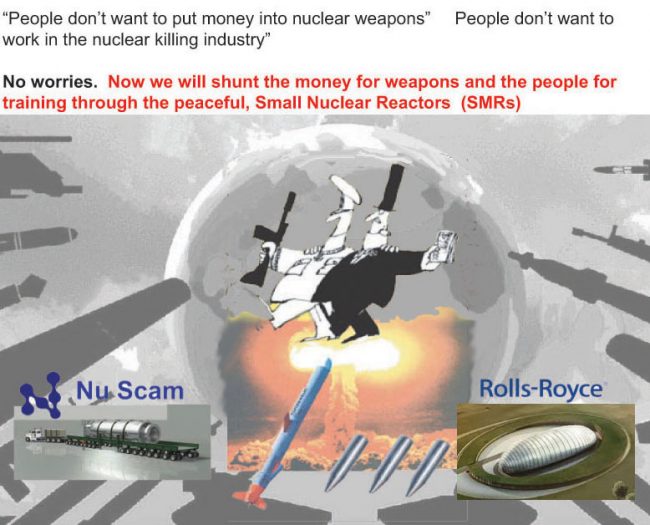
A Milestones Approach to introduction of small nuclear reactors in Australia, Defence Connect 13 Apr 22, Navy veteran and defence industry analyst Christopher Skinner examines whether the International Atomic Energy Agency (IAEA) Milestones Approach should be adopted in Australia in light of the AUKUS nuclear-powered submarine program.
Last Friday the Australian Nuclear Association (ANA) ran a very successful conference in the Aerial Centre of the University of Technology Sydney (UTS) which brought together members and interested people face-to-face for the first time in more than two years.
Significant information and viewpoints emerged, and among these, perhaps the most positive was the clear message from international expert on nuclear legal and regulatory matters Helen Cook that the International Atomic Energy Agency Milestones Approach for introduction of nuclear power, as proven in international use by many countries, is able to be progressed even within all the legislative constraints at federal and state level within Australia.
Passage through the full three phases takes 10 to 15 years which sounds realistic for Australia.
The IAEA Milestone Approach is very well explained in webpages, documents and videos all readily available from IAEA in several languages. This approach has three phases and the first of these, called the pre-project activities phase covers all 19 of listed nuclear infrastructure issues that Australia will face both for the AUKUS submarine acquisition program and any future consideration of small modular (nuclear) reactors (SMR) which unsurprisingly are remarkedly similar to nuclear attack submarine (SSN) reactors except for some additional criteria for military use, such as shock proofing and platform motion in six dimensions.
Applying the Pareto Principle, 80 per cent of the criteria for SSNs also apply to SMRs so why not progress those 80 per cent to save time later.
The suggestion was made that the IAEA Milestones Approach should be adopted right now for the AUKUS program with the expectation that most of the work could be applied to a future SMR program if and when that is approved as an optional carbon-free energy source to be included in Australia’s energy roadmap………….
It is encouraging that Defence has announced 300 scholarships for graduate and technical education in nuclear science, technology and engineering, and some of the recipients were attending the conference.
The AUKUS SSN program will be the largest technically complex program ever undertaken in Australia and it behoves all scientific, technical and engineering institutions to contribute to its success. Similarly for the workforce development institutions to create the courses and contribute to the more general knowledge of nuclear science, technology and engineering.
However there is still a level of fear and apprehension in the community about anything nuclear as was shown in the recent University of Queensland study report What would be required for nuclear energy plants to be operating in Australia from the 2030’s?, a timeframe not dissimilar to the AUKUS submarine program. At the end of the study, the team concluded there were only two main issues to be addressed to build public trust through:
- more detailed explanations of the processes involved over the entire nuclear fuel cycle to ensure safety, and long-term sustainability of radioactive waste; and
- greater assurance of the risks involved and especially the measures to be taken to minimise the risk of accidents and to mitigate the effects of such accidents when they did occur.
As the ANA conference clearly showed, there are parallel development paths being considered for SMRs and nuclear submarines for Australia, and there are many points of common interest that will benefit from a complementary approach.
The encouraging news from the conference was that the Australian Nuclear Science and Technology Organisation (ANSTO) is working closely with Defence’s Nuclear Powered Submarine Task Force in several working groups that were recently announced in the AUKUS progress report. https://www.defenceconnect.com.au/key-enablers/9855-a-milestone-approach-to-introduction-of-small-nuclear-reactors-in-australia
Nuclear risks, the war in Ukraine, and Australia’s significant contribution to these dangers
The war in Ukraine: Nuclear power, weapons and winter, Pearls and Irritations, By Jim Green, Apr 11, 2022,
Six weeks into Russia’s invasion of Ukraine, the death and destruction has been devastating. In addition, the targeting of nuclear power plants by Russia’s military has raised the spectre of a nuclear disaster.
The Russian military’s seizure of the Zaporizhzhia nuclear power plant ‒ at a time when at least one of the plant’s six reactors was operating ‒ was the most dangerous incident. The partial loss of power to the plant further raised the risk of a disaster.
To say that the seizure of the Zaporizhzhia plant was reckless would be an understatement. Dr. Edwin Lyman from the Union of Concerned Scientists summarised the risks:
“There are a number of events that could trigger a worst-case scenario involving a reactor core or spent fuel pool located in a war zone: An accidental ‒ or intentional ‒ strike could directly damage one or more reactors. An upstream dam failure could flood a reactor downstream. A fire could disable plant electrical systems. Personnel under duress could make serious mistakes. The bottom line: Any extended loss of power that interrupted cooling system operations that personnel could not contain has the potential to cause a Fukushima-like disaster.”
The Russian military also seized control of the Chernobyl nuclear plant, the site of the world’s worst nuclear accident. Workers were held hostage for 25 days. Off-site power was lost for five days, but generators supplied the necessary power to cool nuclear waste stores. It has been difficult to extinguish forest fires in the contaminated Chernobyl Exclusion Zone due to military conflict.
Several other nuclear facilities have been hit by Russian military strikes, including a nuclear research facility at the Kharkiv Institute of Physics and Technology, and two radioactive waste storage sites.
At the time of writing, there haven’t been any major radiation releases resulting from Russia’s invasion. But the risk remains, and the International Atomic Energy Agency’s (IAEA) Director General Rafael Grossi continues to express “grave concern” and to note that “an accident involving the nuclear facilities in Ukraine could have severe consequences for public health and the environment.”……………….
The risk of nuclear warfare is low, but it is not zero. It doesn’t help that NATO and Russian military doctrines allow for the use of tactical nuclear weapons to fend off defeat in a major conventional war. It doesn’t help that some missiles can carry either conventional weapons or nuclear weapons, increasing the risk of worst-case thinking and a precipitous over-reaction by the adversary.
And it doesn’t help that Putin’s statements have included threats to use nuclear weapons, or that a referendum in Belarus revoked the constitution’s nuclear-weapon-free pledge, or that Belarusian president Aleksander Lukashenko joined Putin to watch the Russian military carry out a nuclear weapons exercise, or that Lukashenko has said Belarus would be open to hosting Russian nuclear weapons.
Beatrice Fihn, executive director of the International Campaign to Abolish Nuclear Weapons, points to other concerns:
“Russia and Belarus are not alone in their aggressive and irresponsible posture either. The United States continues to exploit a questionable reading of the Treaty on the Non-Proliferation of Nuclear Weapons (NPT) that prevents states from ‘possessing’ nuclear weapons but allows them to host those weapons. Five European states currently host approximately 100 US nuclear weapons: Belgium, the Netherlands, Germany, Italy and Turkey.”
In a worst-case scenario, the direct impacts of nuclear warfare would be followed by catastrophic climatic impacts known as ‘nuclear winter’. Earth and paleoclimate scientist Andrew Glikson noted in a recent article:…………………….
The myth of the peaceful atom
Russia’s deliberate and accidental strikes on nuclear sites in Ukraine aren’t the first attacks on nuclear facilities by hostile nation-states……….
For decades, the nuclear industry and its supporters denied and trivialised the connections between ‘peaceful’ nuclear programs and weapons proliferation. But nuclear power has been in such a desperate state in recent years that the industry now acknowledges and even celebrates the connections between power and weapons. Those connections are said to justify greater taxpayer bailouts and subsidies for nuclear power programs in the UK, the US, France and elsewhere.
In the UK, Rolls-Royce is promoting small modular reactors (SMRs) on the grounds that “a civil nuclear UK SMR programme would relieve the Ministry of Defence of the burden of developing and retaining skills and capability”. French President Emmanuel Macron said in a 2020 speech that without nuclear power there would be no nuclear weapons, and without nuclear weapons there would be no nuclear power (“Sans nucléaire civil, pas de nucléaire militaire, sans nucléaire militaire, pas de nucléaire civil”). In the US, the Nuclear Energy Institute argues that a failure to provide further subsidies for nuclear power would “stunt development of the nation’s defense nuclear complex”…………………………..
Australia’s contribution to global nuclear risks
Australia has uranium export agreements with all of the ‘declared’ nuclear weapons states, all of them breaching their disarmament obligations under the Nuclear Non-Proliferation Treaty; countries with a history of weapons-related research based on their civil nuclear programs; countries that have not ratified the Comprehensive Test Ban Treaty; countries expanding their nuclear weapons capabilities; and undemocratic, secretive states with appalling human rights records.
Australia’s uranium export agreements with Russia and Ukraine were much of a muchness: federal parliament’s treaties committee issued strong warnings about the inadequacy of nuclear safeguards, the government of the day ignored those warnings, and no-one has any idea about the security or whereabouts of Australian uranium and its by-products in Russia or Ukraine.
Australian governments, and uranium companies operating in Australia, also contribute to global nuclear risks by exporting uranium to countries with lax safety standards and inadequate nuclear regulation. The most dramatic illustration of that problem is the fact that Australian uranium was in the poorly-managed, poorly-regulated Fukushima reactors during the explosions, meltdowns and fires in March 2011.
Ukraine provides another example. Even before the Russian invasion, Ukraine’s nuclear industry was corrupt, regulation was inadequate, and nuclear security measures left much room for improvement.
Australia also contributes to global nuclear risks because of the bipartisan support for the US alliance and ‘extended nuclear deterrence’. As a result, Australia routinely undermines global nuclear non-proliferation and disarmament initiatives. A case in point is Australia’s efforts to undermine the UN’s Treaty on the Prohibition of Nuclear Weapons, and the government’s refusal to sign or ratify the treaty.
And the Australian government’s pursuit of submarines powered by weapons-useable, highly-enriched uranium undermines global non-proliferation efforts. If it’s okay for Australia’s military to have access to weapons-useable nuclear material, then it’s okay for the world’s other 190-or-so countries to have access to weapons-useable nuclear material. What could possibly go wrong?
Detailed information on nuclear threats resulting from Russia’s invasion of Ukraine is posted at https://nuclear.foe.org.au/ukraine/
AUKUS in the hypersonic missile wonderland
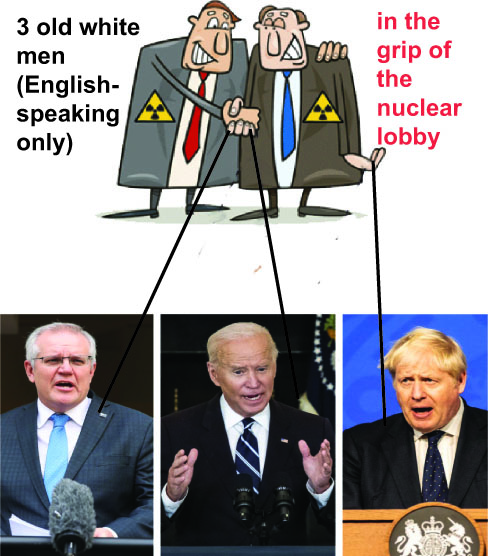
Pearls and Irritations By Binoy Kampmark, Apr 9, 2022,
As this idiotic, servile venture proceeds, Australian territory, sites and facilities will become every more attractive for assault in the fulness of time.
If further clues were needed as to why AUKUS, the security pact comprising the United States, the United Kingdom, and Australia, was created, the latest announcement on weapons would have given the game away. Australia, just as it became real estate to park British nuclear weapons experiments, is now looking promising as a site for hypersonic missile testing, development, and manufacture.
In a joint statement from US President Joe Biden, British Prime Minister Boris Johnson and Australian Prime Minister Scott Morrison, a commitment was made “to commence new trilateral cooperation on hypersonics and counter-hypersonics, and electronic warfare capabilities, as well as to expand information sharing and to deepen cooperation on defence innovation.”
To this can be added February efforts of officials from all three countries to, according to the ABC, scour Australia for sites best suited for the nascent nuclear-powered submarine program that seems all but pie in the sky. To date, the country has no infrastructure to speak of in this field, no skills that merit mention for the development of any such fleet, and a lack of clarity as to when the vessels might make it to sea. Nor is there any clear sign what model of submarine – UK or US – will be preferred…………………
The Morrison government is trying to leave the impression that this will eventually realise the dream of self-sufficiency, a notion repeatedly fed by such think tanks as the Australian Strategic Policy Institute. It describes this as “a major step in delivering a $1 billion Sovereign Guided Weapons and Explosive Ordnance Enterprise, officially announcing strategic partners Raytheon Australia and Lockheed Martin Australia.” The Prime Minister also sees such weapons as part of a broader Australia “strategic vision” dealing with long-range strike capabilities.
…………. As this idiotic, servile venture proceeds, Australian territory, sites and facilities will become every more attractive for assault in the fulness of time. That may well be quite a way off and, judging by any military ventures in Australia of this kind, we can hope that this will be more a case of decades rather than years. https://johnmenadue.com/aukus-in-the-hypersonic-missile-wonderland/
Defence Dept blocks access to advice on location choice for Australia’s nuclear submarines base
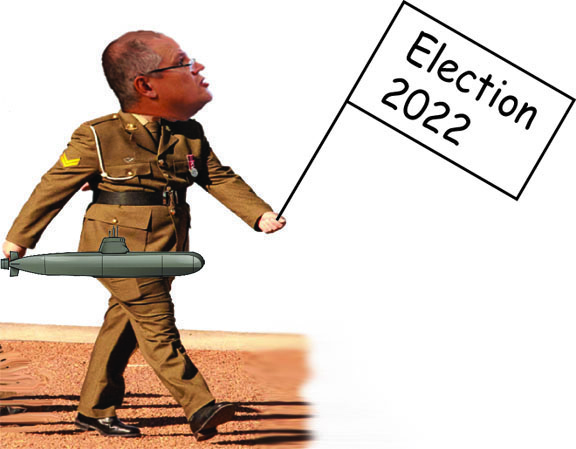
Labor’s defence spokesperson, Brendan O’Connor, questioned whether the government was “hiding their advice because the prime minister has made a political decision in shortlisting three east coast submarine bases”.
“Australians deserve to know if the government went through rigorous processes or if these bases have been chosen on a whim close to an election.”
“The timing of this announcement just before an election and the fact that it departs from the Navy’s previous analysis is quite inexplicable,” Patrick said.
Defence blocks access to advice on location choice for Australia’s nuclear submarines base https://www.theguardian.com/australia-news/2022/apr/09/defence-blocks-access-to-advice-on-location-choice-for-australias-nuclear-submarines-base
Labor demands government reveal how it shortlisted Brisbane, Newcastle and Port Kembla as potential sites for base Daniel Hurst Foreign affairs and defence correspondent, @danielhurstbne, Sat 9 Apr 2022
Voters will be kept in the dark on how Scott Morrison’s government selected three potential bases for Australia’s planned nuclear-powered submarines, after the advice was blocked from release.
With the prime minister preparing to formally call the election within days, Labor demanded the government reveal how it shortlisted the locations to prove the announcement was “not just a marketing ploy”.
Morrison named Brisbane, Newcastle and Wollongong’s Port Kembla as three contenders for a new eastern submarine base, and revealed Aukus-related infrastructure works would cost up to $10bn, in a keynote national security speech last month.
The government is expected to lock in one of these sites late next year, once further studies and negotiations are completed.
Morrison said the “three preferred locations” were identified “following significant work by Defence reviewing 19 potential sites”, although a minister later said it was the cabinet’s national security committee that had “narrowed it down to three”.
Guardian Australia applied to the Department of Defence under freedom of information laws seeking the site analysis. The request also covered any advice, briefings or submissions prepared for the defence minister, Peter Dutton, regarding the preferred locations.
Continue reading1 This month
17 October, Free Public Talk on Nuclear Issues in South Australia
David Noonan will speak on public interest concerns over the new Roxby Downs Indenture Act 2026 on BHP copper-uranium mining and ore processing in SA, and on how AUKUS may face SA with a High-Level nuclear waste agenda.
Dr Jim Green will discuss international developments in the field of nuclear power including ‘small modular reactors’ and Generation 4 ‘advanced’ nuclear reactor concepts.


Help Aunty Sue Protect Her Land and Sacred Sites From Destructive Rocket Testing.
.

Australians deserve the truth
about
AUKUS – https://aukuspublicinquiry.com/

PETITION – To: Prime Minister Anthony Albanese and the Australian Labor Government

of the week – Australians for War Powers Reform (AWPR)
To see nuclear-related stories in greater depth and intensity

