Former Prime Minister Paul Keating scathing about Australia’s planned nuclear submarine deal
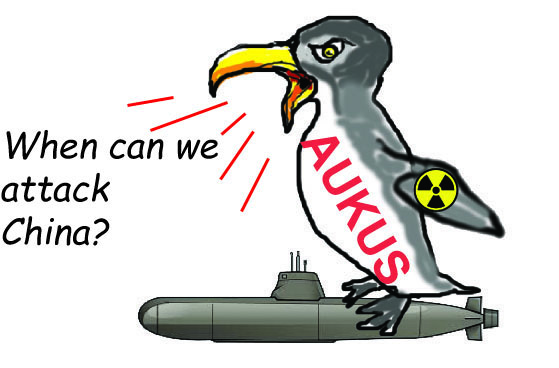
Mr Keating accused Mr Morrison of ‘wantonly leading Australia into a strategic dead end by its needless provocations against China’.
Australia’s eight nuclear subs by 2040 will be like ‘throwing toothpicks at a mountain’ when facing China, ex-PM declares in scathing pro-Beijing speech slamming Scott Morrison’s Covid origins probe. Daily Mail UK
- Australia cancelled a $90billion submarine contract with France in September
- Instead Scott Morrison has partnered with US and UK to obtain nuclear boats
- Former Prime Minister Paul Keating said they will be ‘very old’ when ready
- He also blasted Mr Morrison for offending China with call for Covid inquiry
By CHARLIE MOORE, POLITICAL REPORTER FOR DAILY MAIL AUSTRALIA 10 November 2021 In September, Mr Morrison cancelled a contract with France for 12 conventional submarines in favour of a new partnership with the US and UK known as AUKUS which will give Australia the technology to build nuclear boats for the first time.
But Mr Keating said they will take too long to arrive and pale in comparison to China’s navy which already has six nuclear-powered subs and more than 50 diesel-powered subs.
Mr Keating, who led Australia as a Labor Prime Minister between 1991 and 1996, said the eight US-style nuclear submarines would have no impact militarily.
‘These Virginia-class submarines were designed in the 1990s – by the time we have half a dozen of them it’ll be 2045 or 2050 – they’ll be 50 or 60 years old.
‘In other words, our new submarines will be old tech – it’ll be like buying an old 747.
‘And here we are, we’re going to wait 20 odd years to get the first one and 35 to 40 years to get the lot. For what will be then very old boats.’
Mr Keating said Australia was falling in line with the US strategy to use nuclear ‘hunter killer’ submarines to contain China.
‘The whole point of these hunter killer submarines is to round up the Chinese nuclear submarines and keep them in the shallow waters of the Chinese continental shelf before they get to the Mariana Trench and become invisible,’ he said.
‘To stop them having nuclear capability towards the United States.’
The 77-year-old insisted that China has no desire to expand its territory in the east and said Australia should be focussing on its own defence with conventional subs.
[Former Deputy Prime Minister] Kim Beazley and I built the Collins [class submarines]. I built the Anzac frigates, they were built for the defence of Australia. Their range was to stop any incoming vessels, military vessels against us,’ he said. ……….
Mr Keating accused Mr Morrison of ‘wantonly leading Australia into a strategic dead end by its needless provocations against China’.
Instead, he said Australia should show China respect for the way it has brought millions of people out of poverty with rapid economic growth over the past few decades.
‘I think what the Chinese want is the acknowledgement of validity of what they have done and what they have created,’ he said.
Mr Keating, who has frequently defended the Chinese Government, said Beijing does not represent a threat to Australia despite its military build up in the south and east china seas and its sweeping territorial claims in the region.
China does not represent a contiguous threat to Australia,’ he said, insisting it is not like the Soviet Union which wanted communism to spread across the world after the Second World War.
‘China is not about turning over the existing world order. It only wants to reform it, and it wants to reform it because of its only scale,’ he said.
‘It signed up to the World Trade Organisation, it signed up to the International Monetary Fund, it signed up to the World Bank, it signed up to the World Health Organisation.’……………… https://www.dailymail.co.uk/news/article-10184775/Paul-Keating-blasts-Australias-nuclear-submarines-pro-China-speech.html
Australia’s Foreign Minister off to South East Asian countries to try to soothe their worries about nuclear submarines
Australian foreign minister seeks to allay south-east Asia fears that nuclear submarines will stir up conflict
Marise Payne is visiting four countries in the region, including Malaysia and Indonesia, which have both raised concerns over Aukus deal, Guardian, Daniel Hurst Foreign affairs and defence correspondent Sat 6 Nov 2021 0 Australia’s foreign minister will attempt to reassure south-east Asian countries that the government’s plan for nuclear-powered submarines will “make us a more capable partner” and is not intended to stir up conflict.
Marise Payne flew out of Australia on Friday for a four-country trip that will include Malaysia and Indonesia – both of which have raised concerns the Aukus deal could add to a regional arms race and pose nuclear non-proliferation issues.
It is understood Payne will seek to reassure counterparts that Australia’s decision to acquire at least eight nuclear-propelled submarines is driven by a reassessment of its defence capability needs – not a change of Australia’s intentions in the region…………..
China is increasingly emphasising nuclear proliferation concerns as it condemns the “extremely irresponsible” Aukus arrangement.
Beijing also cited the increasingly messy diplomatic dispute between France and Australia, amid accusations the Morrison government failed to be upfront about its plans to dump the $90bn contract for 12 French-designed conventional submarines.
“I want to stress that the Aukus nuclear submarine cooperation is not just a diplomatic spat between a few countries, but a serious matter that will create risks of nuclear proliferation and undermine regional peace and stability,” a Chinese foreign ministry spokesperson, Wang Wenbin, said………………………… https://www.theguardian.com/australia-news/2021/nov/06/australian-foreign-minister-seeks-to-allay-south-east-asia-fears-that-nuclear-submarines-will-stir-up-conflict
China reprimands Australia on AUKUS and submarines that risk nuclear weapons proliferation, and make Australia target.
Chinese FM urges Australia to correct irresponsible moves, fulfill its nuclear non-proliferation obligations Global Times Nov 04, Chinese Foreign Ministry spokesperson Wang Wenbin on Thursday commented on Australia’s signing of the AUKUS deal with the US and the UK, saying it is an “extremely irresponsible” move that create risks and undermine regional peace and stability, urging Australia to abandon the Cold War mentality and fulfill its international nuclear non-proliferation obligations.
The French ambassador to Australia Jean-Pierre Thebault lashed out on Australian Prime Minister Scott Morrison on Wednesday over a scrapped $67 billion submarine deal previously signed between two countries. ….
Commenting on the French ambassador’s remarks on Australia, Wang noted that the AUKUS nuclear submarine cooperation is not just a diplomatic spat between a few countries, but a serious matter that will create risks of nuclear proliferation and undermine regional peace and stability.
“It is extremely irresponsible for the Australian government to ignore its international nuclear non-proliferation obligations and the serious concerns of regional countries and the international community in pursuit of its own interests,” Wang said……..
Chinese military experts warned that Australia’s signing of the deal will potentially make itself a target of a nuclear strike if a nuclear war breaks out even when Washington said it won’t arm Canberra with nuclear weapons, because it’s easy for the US to equip Australia with nuclear weapons and submarine-launched ballistic missiles when Australia has the submarines. https://www.globaltimes.cn/page/202111/1238189.shtml
Few realistic options for Defence to fill its submarine ‘capability gap’ before new nuclear fleet
Few realistic options for Defence to fill its submarine ‘capability gap’ before new nuclear fleet, ABC By defence correspondent Andrew Greene 4 Nov 21 In a blistering National Press Club address on Wednesday, France’s ambassador warned that Australia may have created a submarine capability gap of up to 20 years by cancelling the contentious $90 billion project with his nation.
Much of what Jean-Pierre Thebault said during his hour-long critique of the federal government is rigorously contested, but what is clear is that the navy faces a looming headache on how to replace its ageing Collins Class submarine fleet.
Acquiring nuclear submarines will take decades, and over the next year or so Defence is studying the numerous American
and British options available, as well as the various regulatory and workforce hurdles involved……………….
The scrapped French design was considered the best conventionally powered option, so now there are few options for the government if it wants to replace the operational capability provided by the ageing Collins Class submarines before nuclear-powered boats arrive.
Build, buy or borrow? None of the options are easy
Soon after the AUKUS bombshell was dropped in September, government ministers floated the prospect of Australia leasing submarines, but most military experts don’t believe this option is viable.
Very few nations have ever leased a submarine, and Australia’s AUKUS partners — the United States and United Kingdom — don’t appear to have any “spare” nuclear-powered boats lying around.
A similar option being discussed would be the forward deployment of one or two Virginia Class American submarines in Western Australia, or even the permanent basing of the US boats in Fremantle. ………………. https://www.abc.net.au/news/2021-11-04/few-realistic-options-to-fill-submarine-gap/100592100
Foreign Minister Marise Payne to visit South-East Asia to ease fears over AUKUS, submarine plan
Foreign Minister Marise Payne to visit South-East Asia to ease fears over AUKUS, submarine plan, ABC, By foreign affairs reporter Stephen Dziedzic, 3 Nov 21, Foreign Minister Marise Payne will conduct a major visit to South-East Asia in the coming days as the federal government moves to calm anxieties about Australia’s nuclear submarine program and bed down a new strategic partnership with peak regional body ASEAN.
Key points:
- Indonesia has raised concerns Australia’s submarine program could fuel an arms race in the region
- Chinese ministers and officials have been attempting to rally support for their stance
- Defence Minister Peter Dutton says nations are welcoming efforts to balance China’s military might
Senator Payne is expected to visit Indonesia, Malaysia, Cambodia and Vietnam on the trip.
Cambodia has just taken over the chairmanship of the Association of Southeast Asian Nations (ASEAN), while both Malaysia and Indonesia have sharply criticised Australia’s plan to build nuclear-powered submarines under the AUKUS technology pact with the United Kingdom and the United States.
The ABC has been told Indonesia’s President Joko Widodo “repeatedly and forcefully” raised concerns about the nuclear submarines program when Prime Minister Scott Morrison met virtually with ASEAN leaders last week, reiterating Indonesia’s concerns the program could fuel an arms race in South-East Asia…………………………. https://www.abc.net.au/news/2021-11-03/foreign-minister-marise-payne-in-se-asia-to-rally-aukus-support/100589452
No likelihood of Australian jobs in nuclear submarine construction, nor in big Pacific vessel
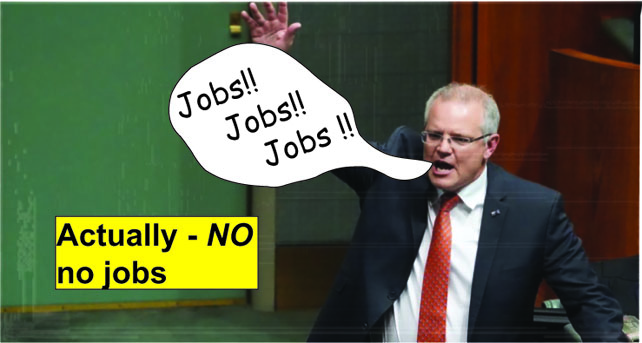
as the government comes under fire from Labor over hundreds of submarine construction jobs being at risk, Defence officials also revealed that a vessel intended to conduct disaster relief missions to the Pacific would now be built overseas instead of locally.
Hybrid nuclear submarine ‘unlikely’, navy chiefs say, AFR, Andrew Tillett
Political correspondentThe Royal Australian Navy has signalled it is unlikely to select a hybrid nuclear submarine design that combines British and American technology, in a significant concession to mitigate the risk of delays.
The head of the nuclear submarine taskforce, Vice-Admiral Jonathan Mead, told a Senate estimates hearing on Wednesday that Defence wanted to have at least one nuclear submarine before 2040 in a worst-case scenario and was looking to accelerate deliveries.
Officials also downplayed the possibility of leasing a submarine from the United States or the United Kingdom to avoid a capability gap with the ageing Collins class submarines, at a time China is rapidly shifting the balance in the Indo-Pacific with its military build-up.
But as the government comes under fire from Labor over hundreds of submarine construction jobs being at risk, Defence officials also revealed that a vessel intended to conduct disaster relief missions to the Pacific would now be built overseas instead of locally.
Among the mooted options are acquiring US-designed Virginia class submarines, the British Astute class, partnering with the UK on the design of its new attack submarines or a hybrid of the British and American boats.
| However, it is unclear what level of Australian content will be incorporated into the submarine despite the government’s intention to build them in Adelaide, nor whether it would be possible to use an American combat system in a UK-designed boat……….. As part of the Pacific Step-up announcement in 2018, the government said it would acquire a large-hulled support vessel for humanitarian missions in the south-west, but the committee heard the government had confirmed in recent months to buy the ship from overseas. “This is another Morrison government announcement not delivered,” Senator Wong said.Foreign Minister Marise Payne said a lack of capacity in Australian shipyards in Adelaide and Perth meant there was no room to build the new Pacific vessel…….“I don’t regard it as reneging on the commitment,” Senator Payne said. https://www.afr.com/politics/federal/hybrid-nuclear-submarine-unlikely-navy-chiefs-say-20211027-p593j3 |
Australia looking at existing design to ‘accelerate’ delivery of nuclear-powered submarines
Australia looking at existing design to ‘accelerate’ delivery of nuclear-powered submarines, SMH,
By Anthony Galloway 27 Oct 21,
Australia’s new fleet of nuclear-powered submarines would preferably be based on an existing design, Defence officials have revealed, as part of a plan to get the boats in the water before 2040 to avoid a massive gap in the nation’s maritime defences.
Prime Minister Scott Morrison announced last month it was dumping a $90 billion agreement with France to build conventionally powered submarines and would instead develop a nuclear-powered fleet with Britain and the United States under a new defence pact called AUKUS.
If it goes with an existing design, Australia would have to choose between the US’s Virginia-class submarines and Britain’s Astute-class boats. It is widely believed that Australia is more likely to develop a version of the Astute submarine because the British submarine is smaller and less expensive………….
Defence officials also revealed on Wednesday that a plan to build a new naval ship for the Pacific had been quietly dumped in favour of purchasing the vessel on the open market.
The Morrison government announced in 2018 that it would build a large, new naval ship that will cruise the South Pacific and help Australia’s neighbours deal with natural disasters.
But it was confirmed during the Senate estimates hearing that the government would instead purchase the ship to get into the water next year……….https://www.smh.com.au/politics/federal/accelerate-australia-looking-at-existing-design-to-build-nuclear-powered-submarines-20211027-p593ji.html
$6000 a day to one US advisor to Australia on getting nuclear submarines. How much to the 3 new ones?

American-dominated panel advising government on submarines as Defence eyes US and UK choices for nuclear fleet, By defence correspondent Andrew Greene, ABC, 25Oct 21.
Three senior American shipbuilding executives are being paid to advise Australia on submarines, but the defence department and government are refusing to say what their work involves or how much they are costing.
Key points:
- Defence is refusing to discuss the role or salaries of the American officials on the Submarine Advisory Committee
- Senators are expected to examine the work of the submarine committee during Senate Estimates hearings this week
- Industry insiders believe the submarine committee needs a British official given the UK’s role in AUKUS
Senators are this week expected to grill officials over the role of the Submarine Advisory Committee, which was formed by the Turnbull government in 2017, a year after a French company was selected for the now dumped $90 billion Attack-class program.
……… Over the next year and a half, the defence department’s Nuclear-Powered Submarine Task Force will work with Australia’s British and American AUKUS partners to identify the best way to acquire a fleet to replace the scrapped French project……. Retired Admiral Donald Kirkland, Jim Hughes and Donald McCormack are all veterans of the US shipbuilding sector and their current three-year appointments to the committee are due to end in May 2024.
Admiral Kirkland is the chairman of American company Huntington Ingalls Industries (HII), which builds US Virginia-class submarines, Mr Hughes has also worked for HII, and Mr McCormack is an executive director at the US military’s Naval Sea Systems Command.
Questions sent by the ABC to the defence department last week concerning how much Submarine Advisory Committee members are paid, and what interactions they now have with the Nuclear-Powered task force, remain unanswered.
While Defence is yet to respond to questions about remuneration, an 18-month contract from 2018 uncovered by the ABC, shows Admiral Kirkland was paid $675,000 for his advisory services.
Earlier this month, Vice Admiral Jonathan Mead confirmed his secretive “Capability Enhancement Review” completed ahead of the Morrison government’s nuclear submarine announcement had not worked with the advisory committee.
Jostling between British and American companies for Australia’s future nuclear-powered fleet is well underway with early debate emerging over whether a US Virginia-class or UK Astute-class submarine is the best base model
Defence industry insiders are now privately questioning whether the government will appoint any British experts to the Submarine Advisory Panel given the United Kingdom’s membership of AUKUS and the country’s extensive experience with nuclear boats.
Last month, it was revealed former US Navy Secretary Donald Winter was being paid $US6,000 a day as an advisor to the federal government on shipbuilding matters.Defence industry insiders are now privately questioning whether the government will appoint any British experts to the Submarine Advisory Panel given the United Kingdom’s membership of AUKUS and the country’s extensive experience with nuclear boats.
Last month, it was revealed former US Navy Secretary Donald Winter was being paid $US6,000 a day as an advisor to the federal government on shipbuilding matters. https://www.abc.net.au/news/2021-10-26/american-dominated-panel-advising-nuclear-submarine-fleet/100567052
ARPANSA admits that no safety assessment exists, for nuclear submarines in Adelaide
Following a search from ARPANSA’s senior scientist, the agency determined that such a planning or safety document “does not exist”.
No safety assessment for nuclear subs in Adelaide https://indaily.com.au/news/2021/10/22/no-safety-assessment-for-nuclear-subs-in-adelaide/
The federal government has not undertaken a safety assessment or planning study for the prospect of docking nuclear-powered submarines in Adelaide, according to documents obtained by independent senator Rex Patrick. Thomas Kelsall@Thomas_Kelsall
The Port Adelaide and Outer Harbour docks are set to be the building spot for at least eight nuclear-powered submarines under the terms of the new “AUKUS” trilateral security pact, announced by Prime Minister Scott Morrison in September.
But the controversial deal, which saw Australia scrap its $90 billion contract with France to build 12 diesel-powered boats, drew criticism from anti-nuclear activists and local residents concerned about the prospect of nuclear reactors in their suburbs.
No nuclear-powered warship has ever visited Port Adelaide or Outer Harbour.
Patrick, a former submariner and critic of the new subs deal, on September 21 filed a Freedom of Information request to the Australian Radiation Protection and Nuclear Safety Agency (ARPANSA) for “any documents that go to the planning or prospects of a nuclear vessel visiting Port Adelaide or Outer Harbour”.
ARPANSA is responsible for providing safety assessment to the Visiting Ships Panel (Nuclear) – an interdepartmental committee overseeing arrangements for visiting nuclear ships and associated safety requirement.
Following a search from ARPANSA’s senior scientist, the agency determined that such a planning or safety document “does not exist”.
“The ARPANSA Senior Scientist, who holds the responsibility for searching ARPANSA records of documents that go to the planning or prospects of a nuclear vessel, … has instructed me that ARPANSA, at this point in time, does not have a document specifically relating to the terms of your request,” ARPANSA FOI Officer John Templeton wrote to Patrick on Thursday.
A spokesperson for the agency confirmed to InDaily it has not been asked by the Defence Department to undertake a safety assessment or planning study of the site.
Patrick said the revelation shows that the Morrison’s Government’s nuclear submarines program is “a huge exercise in filling in the blanks”.
“One might have thought that some work would have been undertaken to consider Adelaide’s suitability for at least nuclear powered warship visits before the Prime Minister’s big announcement last month,” Patrick said.
“That is a task that ARPANSA undertakes on a regular basis in relation to other locations including HMAS Stirling, Fremantle, Darwin and Brisbane.
“While the safety assessments required for nuclear submarine construction and long-term berthing facilities would be a very complex undertaking, a port visit safety assessment of Port Adelaide and Outer Harbour would have been minimum due diligence before the Prime Minister promised his nuclear subs would be built in Adelaide.”
Patrick said the lack of safety assessment means Adelaide’s docks “could not currently host even a single-day visit by any nuclear powered submarine”.
“As is so often the case, Scott Morrison’s Government hasn’t done the basic preliminaries. It’s big on announcements, but fails conspicuously on due diligence and competent project management,” he said.
ARPANSA CEO Carl-Magnus Larsson told a parliamentary last week that the agency was briefed on the plan to shift from diesel to nuclear submarines around the beginning of July.
A spokesperson for ARPANSA said the agency “has not been asked to undertake a safety assessment and/or planning study on docking nuclear submarines in Port Adelaide or Outer Harbour”.
“ARPANSA will only undertake a radiological port assessment if Defence (Navy) determines that a nuclear-powered vessel can visit a specified port,” the spokesperson said.
“Neither Adelaide nor Outer Harbor have been subject to a visit of a nuclear-powered vessel.”
InDaily contacted the Department of Defence for comment.
Indonesia, Malaysia, and the Director General of the IAEA all anxious about Autralia’s planned nuclear submarines
We feel the heat’: Malaysia cool on Australian submarines, SMH, By Chris Barrett, October 21, 2021 Singapore: Australia’s attempts to ease south-east Asian anxiety about its submarine ambitions continue to fall short, with Malaysia deeply concerned despite acknowledging the difference between nuclear power and nuclear arms.
The Philippines, Singapore and Vietnam have welcomed the AUKUS pact between Australia, the United States and the United Kingdom, as well as Australia’s plans to enhance its military capability with varying degrees of enthusiasm. But Indonesia and Malaysia are fearful its acquisition of nuclear-propelled submarines will ramp up tension and trigger an arms build-up in the region.
It is a view not disputed by Rafael Grossi, the director general of the International Atomic Energy Agency, who on Wednesday said the prospect of other countries seeking to follow Australia and develop their own nuclear-powered submarines “cannot be excluded”.
The Morrison government has sought to address consternation in Jakarta and Kuala Lumpur by sending Vice Admiral David Johnston, the Vice Chief of the Defence Force, to the region for talks but two of Australia’s most important neighbours are unconvinced.
……….. . Saifuddin said nuclear power was “not something that will make Malaysians and I believe many ASEAN people comfortable”……… He said some ASEAN member nations would raise the issue with Australia, a dialogue partner of the regional bloc, when leaders convened for a three-day virtual summit next week.“During the next ASEAN [leaders meeting] there is the ASEAN-Australia summit. I believe some member states want to raise the issue with Australia during the summit,” he said.
“I don’t think it is useful to evaluate whether we are satisfied with [Australia’s] explanation. The issue is still there.“
…. He said Malaysia didn’t want to have to choose sides in the geopolitical rivalry between the US and China.
……. Grossi, the head of the IAEA, the United Nations nuclear watchdog, said Australia’s pursuit of a fleet of nuclear-powered submarines as a non-nuclear armed nation needed to be closely monitored. https://www.smh.com.au/world/asia/we-feel-the-heat-malaysia-cool-on-australian-submarines-20211020-p591o6.html
IAEA chief: Aukus could set precedent for pursuit of nuclear submarines
Guardian, Julian Borger 20 Oct 21, Special taskforce convened by IAEA to look into Aukus deal as Iran hints at fresh pursuit of its 2018 naval nuclear propulsion program
The head of the UN’s nuclear watchdog has said other states could follow Australia’s example and seek to build nuclear-powered submarines, raising serious proliferation and legal concerns.
Rafael Grossi, the director general of the International Atomic Energy Agency (IAEA) said during a visit to Washington that he had set up a special team to look into the nuclear safeguards and legal implications of the Aukus partnership announced last month, in which the US and UK will help Australia build a fleet of nuclear-powered submarines.
If the plan is carried through, it would be the first time a non-nuclear weapons state has acquired nuclear-powered submarines. It reflects a grey area in the 1968 Nuclear Non-Proliferation Treaty, which allows fissile material to be removed from IAEA safeguards for such purposes.
The procedures by which the agency would ensure that the fuel, removed from agency oversight, is not diverted to making nuclear weapons have yet to be worked out………..
Grossi said it “cannot be excluded” that other countries would use the Aukus precedent to pursue their own nuclear submarine plans.
Canada and South Korea have both contemplated building nuclear-powered submarines, which can stay underwater longer and are quieter than their conventional counterparts. Brazil too has an ongoing nuclear submarine project……….. https://www.theguardian.com/world/2021/oct/19/iaea-aukus-deal-nuclear-submarines
Concern in Association of Southeast Asian Nations about Australia’s nuclear submarines
Indonesia, Malaysia concerned about Australia’s nuclear subs. By NINIEK KARMINI , 18 Oct 21,
JAKARTA, Indonesia (AP) — The foreign ministers of Malaysia and Indonesia expressed concern Monday that Australia’s plan to obtain nuclear-powered submarines may increase the rivalry of major powers in Southeast Asia.
The U.S., Britain and Australia announced last month that they have formed a security alliance that will help equip Australia with nuclear-powered submarines. The alliance will reshape relations in the Indo-Pacific region and beyond……..
“This situation will certainly not benefit anyone,” Indonesian Foreign Minister Retno Marsudi said after meeting with her Malaysian counterpart, Saifuddin Abdullah, in Jakarta. “We both agreed that efforts to maintain a peaceful and stable region must continue and don’t want the current dynamics to cause tension in the arms race and also in power projection.”
The two ministers said at a joint news conference that they agreed to strengthen the unity and centrality of the Association of Southeast Asian Nations and urged all members of the bloc to contribute to the stability, security, peace and prosperity of the region and respect international law.
Saifuddin said having a near-neighbor build new nuclear-powered submarines could encourage other countries to come more frequently into Southeast Asian territory………………………..
ASEAN’s members are Brunei, Cambodia, Indonesia, Laos, Malaysia, Myanmar, the Philippines, Singapore, Thailand and Vietnam. Brunei is chair of the bloc this year.
ASEAN has formal partnerships with several countries including Australia, China, Canada, New Zealand, South Korea and Pakistan as well as the European Union.
Malaysia and Indonesia share many similarities in religion, language and culture. https://apnews.com/article/business-asia-australia-indonesia-global-trade-fbbf5b52e6822d01cdc11c8a5870ebb4
Australia’s nuclear submarines are looking more and more like a mirage.

NUCLEAR SUBMARINES LOOK MORE AND MORE LIKE A MIRAGE, AU Manufacturing, Analysis by Peter Roberts, 18 October 21,
Admiral Mead first implied (by wanting to take a question on notice) that he had no idea of schedule, then that the boats were to be in the water by the end of next decade.
Mead then implied he had no idea of whether advice on cost was given to the government, then that advice had been ‘provided by the department to government over many months’, and then that ‘our projected cost forward is that it will be significant and it will be more than Attack’.
The upshot is that Australia entered into a process that will lead to the expenditure of more than $90 billion with only the vaguest idea of how much they would cost or when they could be delivered.
The more time passes since the Prime Minister’s sudden cancelling of our order for French submarines in favour of US or British nuclear ones, the more obvious it is that Australia will never actually acquire them.
Not only that, the more time passes the more obvious it is that even if we did buy nuclear boats, they are unlikely to be built in Adelaide. Or if Adelaide, somehow, had some involvement there would be bugger all genuine Australian industrial content in the things.
This became clearer on Friday in the Senate economic references committee when South Australian Senator Rex Patrick – himself a former submariner – closely questioned the Royal Australian Navy Commander Admiral Jonathan Mead about the N-submarine decision.
As Patrick put it later: ‘Our Collins class subs will still be needed in 2050.
“By that time the last Collins boat, HMAS Rankin, will be unmaintainable and a steel coffin in combat.”
The lack of clarity from the Navy is mirrored by other evidence given – our nuclear science agency and regulator gave very few details on what their role will be in monitoring and regulating any new nuclear propelled submarines, according to Senator Kim Carr.
But it is the likely lack of science and industry involvement in this massive expenditure which is really worrying.
Defence media has been full of speculative stories about whether any submarines would be built in Adelaide, whether Australia might lease submarines from the US, and whether these might be second-hand submarines.
Who would crew and maintain these vessels, who would provide for basic safety given that N-reactors are supposedly going to be fitted to submarines in Adelaide, and whether they would be under Australia’s sovereign control remains a mystery since we will know nothing about the nuclear propulsion systems on board.
Australia acquiring N-submarines under these circumstances is about as useful as giving Borneo head-hunters a F-35 fighter jet………………. https://www.aumanufacturing.com.au/nuclear-submarines-look-more-and-more-like-a-mirage
Uncertain delivery date for nuclear submarines. Australia’s existing fleet still in use in 2050?
Nuclear submarines’ uncertain delivery date means ageing Collins class could be in use until , could be more than 50 years old by the time the Aukus deal delivers Australia’s nuclear fleet. Guardian, Daniel Hurst and Tory Shepherd
Fri 15 Oct 2021
Australia’s navy chief has left the door open to keeping some of the existing Collins-class submarines in the water until 2050, amid uncertainty about the exact schedule for acquiring new nuclear-propelled submarines.
The government is already planning to extend the life of the six Collins class submarines by 10 years, with the extensive refitting work set to cost between $3.5bn and $6bn.
But the navy chief, V-Adm Michael Noonan, indicated on Friday that a “potential” option was to refit them a second time to further extend their life.
Given the first Collins-class submarines were commissioned in the late 1990s, that option could see them used until they are about 50 years old…….
The South Australian senator Rex Patrick accused the government of being “extremely reckless” with national security amid the latest revelations…….
At a shipbuilding committee hearing on Friday – the first since the $90bn French deal was dumped – senators explored concerns about Australia facing a “capability gap” while it waited for the new submarines to be ready……….
Labor – which has backed the Aukus plan – said the evidence raised many questions for the government, including whether the Collins class submarines would be able to withstand multiple upgrades of this type.
Labor’s defence spokesperson, Brendan O’Connor, asked: “If enhanced submarine capability is critical to our national security, why would we still have 50-year-old Collins Class vessels in 2050?”……..
The Australian government has set up a taskforce, with 89 members and growing, whose job over the next year and a half is to work with the US and the UK on “identifying the optimal pathway to deliver at least eight nuclear-powered submarines for Australia”……..
It remains unclear precisely how much the Australian government will have to pay to settle contracts with France’s Naval Group and another defence contractor, Lockheed Martin………….. https://www.theguardian.com/world/2021/oct/15/nuclear-submarines-uncertain-delivery-date-means-ageing-collins-class-could-be-in-use-until-2050
AUKUS nuclear submarines deal must be abandoned
AUKUS nuclear submarines deal must be abandoned, Pearls and Irritations, By Brian TooheyOct 13, 2021
Australia doesn’t need nuclear powered submarines, especially given the Australia’s long-standing support for the world’s nuclear non-proliferation goals.
The White House failed to think beyond its Anglo-Saxon allies in London and Canberra when agreeing to sell Australia eight nuclear submarines.
The US’s north Asian allies Korea and Japan are much closer to China and more at risk, however slight. The Japan Times responded with a cool headed article spelling out the folly of the decision. It said the US, “has put at risk long-standing but fragile global pacts to prevent the proliferation of dangerous nuclear technologies”.
It also reported that US Navy ships “use about 100 nuclear bombs worth of Highly Enriched Uranium (HEU) each year”.
Although the US or the UK is supposed to build Australia eight nuclear-powered attack submarines under as new agreement called AUKUS, there is no realistic way this can occur without trashing Australia’s long-standing support for the world’s nuclear non-proliferation goals.
One of the key problems is the US Navy insists it is essential to use uranium enriched to 93 per cent to obtain the main fissile isotope of U-235, the same level as in nuclear weapons. It also insists it couldn’t switch to low levels of enrichment without greatly increasing the costs and size of the submarines as well as the construction time.
This means the US Navy will reject Malcolm Turnbull’s suggestion to get the French to supply non-weapons grade fuel. The British can’t help as they get their HEU fuel from the US. The enrichment to 93 per cent compares to around 40 per cent for Russian and Indian submarines. The French only enrich to 7.5 per cent, China to about 5 per cent and civilian power reactors to around 3.5 per cent. Anything less that 20 per cent is defined as low level enrichment.
The White House’s attitude has changed since the 1980s when the US blocked Canada’s attempts to buy nuclear submarines from the UK or France.
Nevertheless, some members of the US Congress and senior officials want the navy to shift to low enrichment to eliminate proliferation problems.
A nuclear problem
In a letter to The New York Times, former US undersecretary of state for arms control and international security Rose Gottemoeller said the proposal to share HEU-fuelled submarines with Australia “has blown apart 60 years of US policy” designed to minimise the use of HEU uranium.
“Such uranium makes nuclear bombs, and we never wanted it in the hands of non-nuclear-weapon states, no matter how squeaky clean,” she said.
Of the seven nuclear weapons states, five have nuclear submarines. Australia will be the first non-nuclear weapons state to get nuclear submarines. The understandable concern is that other allies will want similar treatment, expanding the risk that weapons grade uranium will be stolen or diverted.
In some interpretations, a loophole exempts naval nuclear reactors from the International Atomic Energy Agency’s anti-proliferation requirements.
But there are numerous other agreements that Australia might have to comply with if it stores HEU in its submarines.
In addition, the AUKUS agreement includes Australian access to other technologies, including Tomahawk long-range cruise missiles for the navy’s Hobart-class destroyers. Because the Tomahawk can be armed with nuclear or conventional explosives, this could make it difficult to comply with the Missile Technology and Control Regime which Australia has strongly backed.
Another hurdle stems from the Howard government’s passage of a parliamentary act in 1999 outlawing just about all nuclear activities, apart from mining and exporting uranium. If circumstances prevent the US from maintaining all the nuclear aspects of Australia’s future submarines, this might spark calls for the rapid construction of nuclear facilities here. But the necessary amendments to the 1999 act could be blocked in the Senate.
Prime Minister Scott Morrison can’t credibly commit Australia to never engaging in nuclear proliferation. In the 1960s, Liberal prime minister John Gorton took preliminary steps to develop Australia’s own nuclear weapons, explaining to the US secretary of state Dean Rusk that he did not trust the US to defend Australia if it had to use nuclear weapons. A prime minister sharing Gorton’s assessment could emerge at any time.
Perhaps the White House will overrule the navy after a protracted battle to ensure the new submarines use low enrichment uranium posing no proliferation problem.
Nuclear submarines are not essential
However, the deal would still make no sense for Australia.
Government sources are widely quoted as saying the cost of the new submarines will be well over $100 billion, yet the first one won’t be operational until after 2040 and the last until after 2060. By then, the submarines would be obsolete death traps, susceptible to detection and destruction by several existing and new technologies.
The time scale reinforces the entire air of unreality about acquiring these submarines, only a couple of which may be operationally available at any one time.
Some commentators suggest Australia must buy the submarines to help the US counter a Chinese threat to Taiwan.
But no one knows what will happen to China or the US in a radically uncertain future. By 2060, China may be the dominant country in Asia, it may have returned to its earlier policy of living in Confucian harmony with its neighbours………………..
 |
1 This month

of the week – Australians for War Powers Reform (AWPR)
To see nuclear-related stories in greater depth and intensity
 Antinuclear