Australian Parliament should urgently review the potentially dangerous AUKUS deal
 | |||
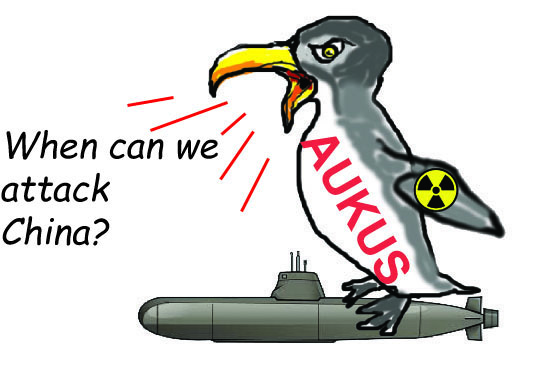
Australian Federal Parliament Should Urgently Review the Potentially Dangerous AUKUS Deal https://worldbeyondwar.org/australian-federal-parliament-should-urgently-review-the-potentially-dangerous-aukus-deal/
By Australians for War Powers Reform, November 17, 2021
On September 15 2021, with no public consultation, Australia entered into a trilateral security arrangement with Britain and the United States, known as the AUKUS Partnership. This is expected to become a Treaty in 2022.
At short notice, Australia cancelled its contract with France to purchase and build 12 submarines on 16 September 2021 and replaced it with an arrangement to buy eight nuclear submarines from either Britain or the United States or both. The first of these submarines is unlikely to be available until 2040 at the earliest, with major uncertainties in relation to cost, delivery schedule and the ability of Australia to support such a capability.
Australians for War Powers Reform sees the public announcement of AUKUS as a smokescreen for other undertakings between Australia and the United States, the details of which are vague but which have major implications for Australia’s security and Independence.
Australia said the United States had requested increased use of Australian defence facilities. The US would like to base more bomber and escort aircraft in the north of Australia, presumably at Tindale. The US wants to increase the number of marines deployed in Darwin, which would see numbers rise to around 6,000. The US wants greater home porting of its vessels in Darwin and Fremantle, including nuclear-powered and armed submarines.
Pine Gap is in the process of significantly expanding its listening and war directing capabilities.
Acquiescing to these requests or demands considerably undermines Australian sovereignty.
The US is likely to want oversight, amounting to control, of northern air space and shipping lanes.
If the US deploys Cold War tactics against China, for that is what this military build-up is all about, it is likely to conduct aggressive flight missions up to the edge of Chinese air space with nuclear armed bombers, just as it did against the USSR. The US will patrol shipping lanes with greater frequency and intensity, knowing it has secure home bases only a short distance away, protected by surface-to-surface and surface-to-air missiles which are soon to be installed.
Any one of these flights or naval patrols could trigger a warlike response directed against Australian and US defence facilities and other assets of strategic value, such as oil, fresh water and infrastructure, or a cyber-attack on Australian communications and infrastructure.
Australia could be at war before most Australian politicians are aware of what is happening. In such an event, Parliament will have no say on going to war nor on the conduct of hostilities. Australia will be on a war footing as soon as these arrangements are in place.
AUKUS will be detrimental to national security. The ADF will lose its capacity to act independently.
Australians for War Power Reform believes these arrangements should not come into force, and that AUKUS should not become a Treaty.
We deplore the lack of consultation with neighbours, friends and allies, particularly relating to the storage and home porting of nuclear weapons and other US arms, ammunition and materiel.
We deplore the hostile profile adopted against our recent friend and major trading partner China.
We deplore the activities of the Australian Strategic Policy Institute (ASPI), funded by foreign arms manufacturers and the US State Department, in blind-siding the Australian people with its advocacy for such a deleterious outcome.
US Ex military man says nuclear submarines could arrive sooner, wants USA to get tough on China, re Taiwan
Nuclear subs can arrive much earlier than 2040, US ex-commander says Australia should be able to acquire nuclear submarines much earlier than a mooted 2040 delivery date, easing fears of a capability gap, according to a former top US military commander with responsibility for the Indo-Pacific. AFR, Andrew TillettPolitical correspondent In an interview with The Australian Financial Review, retired admiral Harry Harris said the AUKUS agreement the Morrison government struck with the United States and United Kingdom to access nuclear technology “changes the regional balance” amid growing alarm over China…………
Time for clarity on Taiwan
Mr Harris said the US needed to harden its position of “strategic ambiguity” over the defending Taiwan from a Chinese invasion to one of “strategic clarity” that makes it explicit how America would react to a Chinese attack.
Currently the US is not obliged by treaty to defend Taiwan, but US laws allow for arms sales to help Taiwan’s self-defence, leaving open the question of whether America would come to its aid. https://www.afr.com/politics/federal/nuclear-subs-can-arrive-much-earlier-than-2040-us-ex-commander-says-20211114-p598rm
Australian-UK-US nuclear submarine deal makes the connection clear between civilian and military nuclear activities
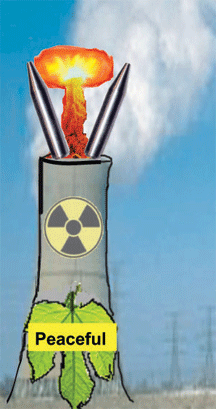
In failing fully to investigate this link between military nuclear and civil energy policy, the UK media have also missed more intimate connections. The senior Energy Ministry figure who negotiated the extraordinarily costly electricity contracts with France from the sole UK nuclear power plant currently under development went on to become the leading official in the Defence Ministry.
This same individual confirmed under questioning by Parliament that the nuclear submarine program is connected to civil nuclear policy. And it is this same person who is reported to have played a lead role in brokering the AUKUS deal.
In the United Kingdom, France, the United States, and Australia, policies in non-military, non-nuclear areas are often shaped by military nuclear interests. The AUKUS alliance is driven, in part, by a longstanding crisis in the nuclear submarine industry’s efforts to realize economies of scale.
In these countries, energy policy is steered towards risky, costly, delay-prone nuclear options rather than alternatives. In the process, policymakers impede progress on vital climate targets. Throughout, the public remains unaware. So, the gravest damage inflicted by hidden nuclear military interests is not their warping effects on non-military policy but on the health of democracy.
Australian-UK-US nuclear submarine deal exposes civilian-military links, https://thebulletin.org/2021/11/australian-uk-us-nuclear-submarine-deal-exposes-civilian-military-links/ Bulletin, By, Phil Johnstone | November 9, 2021 Andy Stirling Andy Stirling is Professor of Science and Technology Policy in the Science Policy Research Unit at Sussex University where he co-directs the ESRC. Phil Johnstone is a Senior Research Fellow at the Science Policy Research Unit at Sussex University. Phil has researched and published widely .
Under the AUKUS agreement, the United States and the United Kingdom plan to transfer nuclear submarine technologies to Australia. One international security scholar characterized the deal as “a terrible decision for the nonproliferation regime,” noting grave concerns for peace and security worldwide. Others have expressed concerns about “loopholes” surrounding nuclear submarine fissile materials, increased nuclear risks in the Pacific, and a potential acceleration of an arms race in the region. Still others doubt the purported efficacy of nuclear-propelled submarine designs.
Within national borders, nuclear activities often depend on expensive access to specific skills, supply chains, regulatory and design capabilities, educational and research institutions, and waste management and security infrastructures. These dependencies are especially strong in national struggles to build, maintain, and operate nuclear-propelled submarines. The AUKUS announcement overturned normally sacrosanct nuclear secrecy on these matters. It also raised bigger questions about energy policy, climate strategies, and democracy itself.
In democratic nuclear weapons states such as the United States, the United Kingdom, and France, shared civil-military nuclear industrial bases are largely—albeit indirectly—funded by electricity consumers. Colossal investments in new nuclear power are underwritten by anticipated revenues from future electricity sales. These investments flow through nuclear construction supply chains and outward to support military nuclear activities. In this way, crucial support is given to military infrastructures, outside of defense budgets and off the public books. But as civil nuclear power declines, this massive hidden funding flow may diminish, which presents problems for nuclear submarines whose costs are not only often prohibitive but escalating.
The AUKUS deal makes more sense when viewed in light of this crisis in the US, UK, and French national nuclear submarine industries. Spiralling civil nuclear construction delays, technological failures, bankruptcies, and fraud exercise little effect on government commitments to civil nuclear power, given pressure to underpin military capability. This is why these governments are failing to recognize the radical technology and market changes that render baseload power, according to industry, “outdated.” This is why policymakers so often neglect renewables and storage options that are outcompeting nuclear power. This is why some argue that nuclear power must persist as a “necessary part of the mix” in nuclear weapons states, despite diverse alternatives offering sufficient volumes of zero carbon power more quickly and cheaply than can nuclear.
Although well documented in the defense policy documents of existing and aspiring nuclear weapons states, these military drivers have been seriously neglected in discussions of energy and climate strategies. Recently however, some countries have begun to acknowledge the strong connections between civil and military nuclear capabilities.
In the United States, for instance, a report led by former energy secretary Ernest Moniz said in 2017 that “a strong domestic supply chain is needed to provide for nuclear Navy requirements. This supply chain has an inherent and very strong overlap with … commercial nuclear energy.” Since then, multiple high level reports have acknowledged that US military nuclear programs depend on a vibrant civil nuclear sector. “The connectivity of the civilian and military nuclear value chain—including shared equipment, services, and human capital—has created a mutually reinforcing feedback loop, wherein a robust civilian nuclear industry supports the nuclear elements of the national security establishment,” according to one study. Civil nuclear activities transfer an effective value of $26.1 billion dollars to the US military nuclear enterprise, according to this study.
In recent years, French press reports have hinted that dwindling civil nuclear power threatens national military nuclear capabilities. President Macron confirmed this when he said that “without civil nuclear power, there can be no military nuclear power.” Military drivers of civil nuclear activities are also acknowledged in more authoritarian nuclear states like Russia and China.
Australia possesses some of the most abundant and competitive renewable energy resources in the world. Yet the Australian nuclear lobby argues that acquiring military nuclear technology will benefit the claimed imperative to establish a civil nuclear industry. Prime Minister Scott Morrison asserted that he is not pushing for a civil nuclear power program, but other prominent voices disagree. Referring to submarine-derived small modular reactors, Australian politician and UK trade advisor Tony Abbott said that “if nuclear power is ok at sea, pretty soon it will be ok on land, too.” The Minerals Council for Australia claims that acquiring military nuclear technology is an “incredible opportunity” because it “connect[s] [Australia]… to the growing global nuclear power industry and its supply chains.”
Australian civil nuclear proponents welcome the aspirations of military nuclear proponents—and the reverse is also true. Australia’s military is concerned that a lack of a civil nuclear industry may pose difficulties for sustaining nuclear submarine competencies. Australian Navy Admiral Chris Barry pointed out that the absence of a civil nuclear industry left a “big gap” in the country’s ability to manage nuclear submarines. Some argue that a civil nuclear sector in Australia could provide the skills and expertise to enable military nuclear capability. Others are concerned that Australia will be the only country with nuclear submarines but no civilian nuclear industry. Military nuclear ambitions drive otherwise-inexplicable civil nuclear attachments.
In the United Kingdom, some worry about a post-imperial loss of a coveted “seat at the top table” of world affairs. Here again, nuclear submarine capabilities take center stage. Former prime minister Tony Blair worried that relinquishing nuclear capabilities would be “too big a downgrading of our status as a nation.” Meanwhile, detailed official energy policy analyses urged the government to set nuclear plans aside, given trends in renewables and related options. But shortly after a Defence Ministry report on submarine capabilities, Tony Blair swapped the open energy policy consultation for a quicker, covert process, after which the government proclaimed a “nuclear renaissance.”
The Royal Courts of Justice found reasoning for this policy insufficient, but Blair doubled down. “Nuclear power is back with a vengeance,” he said, invoking the name of the recently launched ballistic missile submarine, HMS Vengeance. He did not mention the military rationale. Since then, UK government white papers have failed to justify the country’s civil nuclear commitments—for instance by comparing nuclear costs with those of renewable alternatives. The commitment is taken for granted.
In the United Kingdom, the submarine industry’s openness about military pressures for civil nuclear power contrasts with energy policymakers’ silence. Now-declassified defense reports express grave worries that faltering civil nuclear programs undermine provision for essential military skills. Submarine-builder BAE Systems admits that funding for civil programs “masks” military costs. Naval reactor manufacturer Rolls Royce states that their expensive, government-funded efforts on ostensibly civilian small modular reactors can “relieve the burden” on Defence Ministry efforts to retain skills and capabilities for military programs. Numerous other government documents highlight synergies between civil and military nuclear skills. Yet when challenged, the UK Government denies that civil nuclear commitments influence military activities.
Boris Johnson emphasized that the AUKUS deal offers the United Kingdom “a new opportunity to strengthen Britain’s position as a science and technology superpower, and … could reduce the cost of the next generation of nuclear submarines for the Royal Navy.” Indeed, as discussed in this publication, the deal is “…likely to have particular significance for the UK’s nuclear program” because “the UK is struggling through a number of issues related to the revamping of its nuclear enterprise.” Despite government denials, Johnson’s statement confirms that the AUKUS deal is influenced by the same cost pressures and economies of scale associated with dogged maintenance of a shared civil-military industrial base.
In failing fully to investigate this link between military nuclear and civil energy policy, the UK media have also missed more intimate connections. The senior Energy Ministry figure who negotiated the extraordinarily costly electricity contracts with France from the sole UK nuclear power plant currently under development went on to become the leading official in the Defence Ministry. This same individual confirmed under questioning by Parliament that the nuclear submarine program is connected to civil nuclear policy. And it is this same person who is reported to have played a lead role in brokering the AUKUS deal.
In the United Kingdom, France, the United States, and Australia, policies in non-military, non-nuclear areas are often shaped by military nuclear interests. The AUKUS alliance is driven, in part, by a longstanding crisis in the nuclear submarine industry’s efforts to realize economies of scale. In these countries, energy policy is steered towards risky, costly, delay-prone nuclear options rather than alternatives. In the process, policymakers impede progress on vital climate targets. Throughout, the public remains unaware. So, the gravest damage inflicted by hidden nuclear military interests is not their warping effects on non-military policy but on the health of democracy.
Former Prime Minister Paul Keating scathing about Australia’s planned nuclear submarine deal
Mr Keating accused Mr Morrison of ‘wantonly leading Australia into a strategic dead end by its needless provocations against China’.
Australia’s eight nuclear subs by 2040 will be like ‘throwing toothpicks at a mountain’ when facing China, ex-PM declares in scathing pro-Beijing speech slamming Scott Morrison’s Covid origins probe. Daily Mail UK
- Australia cancelled a $90billion submarine contract with France in September
- Instead Scott Morrison has partnered with US and UK to obtain nuclear boats
- Former Prime Minister Paul Keating said they will be ‘very old’ when ready
- He also blasted Mr Morrison for offending China with call for Covid inquiry
By CHARLIE MOORE, POLITICAL REPORTER FOR DAILY MAIL AUSTRALIA 10 November 2021 In September, Mr Morrison cancelled a contract with France for 12 conventional submarines in favour of a new partnership with the US and UK known as AUKUS which will give Australia the technology to build nuclear boats for the first time.
But Mr Keating said they will take too long to arrive and pale in comparison to China’s navy which already has six nuclear-powered subs and more than 50 diesel-powered subs.
Mr Keating, who led Australia as a Labor Prime Minister between 1991 and 1996, said the eight US-style nuclear submarines would have no impact militarily.
‘These Virginia-class submarines were designed in the 1990s – by the time we have half a dozen of them it’ll be 2045 or 2050 – they’ll be 50 or 60 years old.
‘In other words, our new submarines will be old tech – it’ll be like buying an old 747.
‘And here we are, we’re going to wait 20 odd years to get the first one and 35 to 40 years to get the lot. For what will be then very old boats.’
Mr Keating said Australia was falling in line with the US strategy to use nuclear ‘hunter killer’ submarines to contain China.
‘The whole point of these hunter killer submarines is to round up the Chinese nuclear submarines and keep them in the shallow waters of the Chinese continental shelf before they get to the Mariana Trench and become invisible,’ he said.
‘To stop them having nuclear capability towards the United States.’
The 77-year-old insisted that China has no desire to expand its territory in the east and said Australia should be focussing on its own defence with conventional subs.
[Former Deputy Prime Minister] Kim Beazley and I built the Collins [class submarines]. I built the Anzac frigates, they were built for the defence of Australia. Their range was to stop any incoming vessels, military vessels against us,’ he said. ……….
Mr Keating accused Mr Morrison of ‘wantonly leading Australia into a strategic dead end by its needless provocations against China’.
Instead, he said Australia should show China respect for the way it has brought millions of people out of poverty with rapid economic growth over the past few decades.
‘I think what the Chinese want is the acknowledgement of validity of what they have done and what they have created,’ he said.
Mr Keating, who has frequently defended the Chinese Government, said Beijing does not represent a threat to Australia despite its military build up in the south and east china seas and its sweeping territorial claims in the region.
China does not represent a contiguous threat to Australia,’ he said, insisting it is not like the Soviet Union which wanted communism to spread across the world after the Second World War.
‘China is not about turning over the existing world order. It only wants to reform it, and it wants to reform it because of its only scale,’ he said.
‘It signed up to the World Trade Organisation, it signed up to the International Monetary Fund, it signed up to the World Bank, it signed up to the World Health Organisation.’……………… https://www.dailymail.co.uk/news/article-10184775/Paul-Keating-blasts-Australias-nuclear-submarines-pro-China-speech.html
Australia’s Foreign Minister off to South East Asian countries to try to soothe their worries about nuclear submarines
Australian foreign minister seeks to allay south-east Asia fears that nuclear submarines will stir up conflict
Marise Payne is visiting four countries in the region, including Malaysia and Indonesia, which have both raised concerns over Aukus deal, Guardian, Daniel Hurst Foreign affairs and defence correspondent Sat 6 Nov 2021 0 Australia’s foreign minister will attempt to reassure south-east Asian countries that the government’s plan for nuclear-powered submarines will “make us a more capable partner” and is not intended to stir up conflict.
Marise Payne flew out of Australia on Friday for a four-country trip that will include Malaysia and Indonesia – both of which have raised concerns the Aukus deal could add to a regional arms race and pose nuclear non-proliferation issues.
It is understood Payne will seek to reassure counterparts that Australia’s decision to acquire at least eight nuclear-propelled submarines is driven by a reassessment of its defence capability needs – not a change of Australia’s intentions in the region…………..
China is increasingly emphasising nuclear proliferation concerns as it condemns the “extremely irresponsible” Aukus arrangement.
Beijing also cited the increasingly messy diplomatic dispute between France and Australia, amid accusations the Morrison government failed to be upfront about its plans to dump the $90bn contract for 12 French-designed conventional submarines.
“I want to stress that the Aukus nuclear submarine cooperation is not just a diplomatic spat between a few countries, but a serious matter that will create risks of nuclear proliferation and undermine regional peace and stability,” a Chinese foreign ministry spokesperson, Wang Wenbin, said………………………… https://www.theguardian.com/australia-news/2021/nov/06/australian-foreign-minister-seeks-to-allay-south-east-asia-fears-that-nuclear-submarines-will-stir-up-conflict
China reprimands Australia on AUKUS and submarines that risk nuclear weapons proliferation, and make Australia target.
Chinese FM urges Australia to correct irresponsible moves, fulfill its nuclear non-proliferation obligations Global Times Nov 04, Chinese Foreign Ministry spokesperson Wang Wenbin on Thursday commented on Australia’s signing of the AUKUS deal with the US and the UK, saying it is an “extremely irresponsible” move that create risks and undermine regional peace and stability, urging Australia to abandon the Cold War mentality and fulfill its international nuclear non-proliferation obligations.
The French ambassador to Australia Jean-Pierre Thebault lashed out on Australian Prime Minister Scott Morrison on Wednesday over a scrapped $67 billion submarine deal previously signed between two countries. ….
Commenting on the French ambassador’s remarks on Australia, Wang noted that the AUKUS nuclear submarine cooperation is not just a diplomatic spat between a few countries, but a serious matter that will create risks of nuclear proliferation and undermine regional peace and stability.
“It is extremely irresponsible for the Australian government to ignore its international nuclear non-proliferation obligations and the serious concerns of regional countries and the international community in pursuit of its own interests,” Wang said……..
Chinese military experts warned that Australia’s signing of the deal will potentially make itself a target of a nuclear strike if a nuclear war breaks out even when Washington said it won’t arm Canberra with nuclear weapons, because it’s easy for the US to equip Australia with nuclear weapons and submarine-launched ballistic missiles when Australia has the submarines. https://www.globaltimes.cn/page/202111/1238189.shtml
Few realistic options for Defence to fill its submarine ‘capability gap’ before new nuclear fleet
Few realistic options for Defence to fill its submarine ‘capability gap’ before new nuclear fleet, ABC By defence correspondent Andrew Greene 4 Nov 21 In a blistering National Press Club address on Wednesday, France’s ambassador warned that Australia may have created a submarine capability gap of up to 20 years by cancelling the contentious $90 billion project with his nation.
Much of what Jean-Pierre Thebault said during his hour-long critique of the federal government is rigorously contested, but what is clear is that the navy faces a looming headache on how to replace its ageing Collins Class submarine fleet.
Acquiring nuclear submarines will take decades, and over the next year or so Defence is studying the numerous American
and British options available, as well as the various regulatory and workforce hurdles involved……………….
The scrapped French design was considered the best conventionally powered option, so now there are few options for the government if it wants to replace the operational capability provided by the ageing Collins Class submarines before nuclear-powered boats arrive.
Build, buy or borrow? None of the options are easy
Soon after the AUKUS bombshell was dropped in September, government ministers floated the prospect of Australia leasing submarines, but most military experts don’t believe this option is viable.
Very few nations have ever leased a submarine, and Australia’s AUKUS partners — the United States and United Kingdom — don’t appear to have any “spare” nuclear-powered boats lying around.
A similar option being discussed would be the forward deployment of one or two Virginia Class American submarines in Western Australia, or even the permanent basing of the US boats in Fremantle. ………………. https://www.abc.net.au/news/2021-11-04/few-realistic-options-to-fill-submarine-gap/100592100
Foreign Minister Marise Payne to visit South-East Asia to ease fears over AUKUS, submarine plan
Foreign Minister Marise Payne to visit South-East Asia to ease fears over AUKUS, submarine plan, ABC, By foreign affairs reporter Stephen Dziedzic, 3 Nov 21, Foreign Minister Marise Payne will conduct a major visit to South-East Asia in the coming days as the federal government moves to calm anxieties about Australia’s nuclear submarine program and bed down a new strategic partnership with peak regional body ASEAN.
Key points:
- Indonesia has raised concerns Australia’s submarine program could fuel an arms race in the region
- Chinese ministers and officials have been attempting to rally support for their stance
- Defence Minister Peter Dutton says nations are welcoming efforts to balance China’s military might
Senator Payne is expected to visit Indonesia, Malaysia, Cambodia and Vietnam on the trip.
Cambodia has just taken over the chairmanship of the Association of Southeast Asian Nations (ASEAN), while both Malaysia and Indonesia have sharply criticised Australia’s plan to build nuclear-powered submarines under the AUKUS technology pact with the United Kingdom and the United States.
The ABC has been told Indonesia’s President Joko Widodo “repeatedly and forcefully” raised concerns about the nuclear submarines program when Prime Minister Scott Morrison met virtually with ASEAN leaders last week, reiterating Indonesia’s concerns the program could fuel an arms race in South-East Asia…………………………. https://www.abc.net.au/news/2021-11-03/foreign-minister-marise-payne-in-se-asia-to-rally-aukus-support/100589452
No likelihood of Australian jobs in nuclear submarine construction, nor in big Pacific vessel
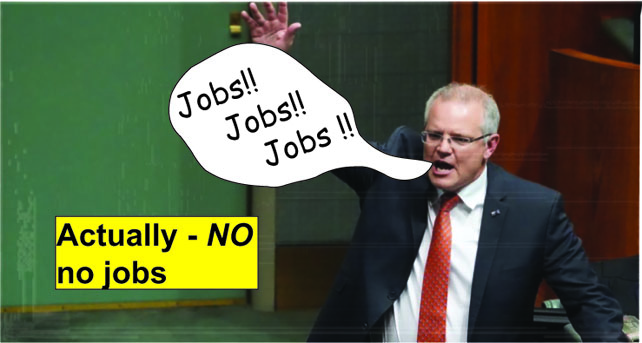
as the government comes under fire from Labor over hundreds of submarine construction jobs being at risk, Defence officials also revealed that a vessel intended to conduct disaster relief missions to the Pacific would now be built overseas instead of locally.
Hybrid nuclear submarine ‘unlikely’, navy chiefs say, AFR, Andrew Tillett
Political correspondentThe Royal Australian Navy has signalled it is unlikely to select a hybrid nuclear submarine design that combines British and American technology, in a significant concession to mitigate the risk of delays.
The head of the nuclear submarine taskforce, Vice-Admiral Jonathan Mead, told a Senate estimates hearing on Wednesday that Defence wanted to have at least one nuclear submarine before 2040 in a worst-case scenario and was looking to accelerate deliveries.
Officials also downplayed the possibility of leasing a submarine from the United States or the United Kingdom to avoid a capability gap with the ageing Collins class submarines, at a time China is rapidly shifting the balance in the Indo-Pacific with its military build-up.
But as the government comes under fire from Labor over hundreds of submarine construction jobs being at risk, Defence officials also revealed that a vessel intended to conduct disaster relief missions to the Pacific would now be built overseas instead of locally.
Among the mooted options are acquiring US-designed Virginia class submarines, the British Astute class, partnering with the UK on the design of its new attack submarines or a hybrid of the British and American boats.
| However, it is unclear what level of Australian content will be incorporated into the submarine despite the government’s intention to build them in Adelaide, nor whether it would be possible to use an American combat system in a UK-designed boat……….. As part of the Pacific Step-up announcement in 2018, the government said it would acquire a large-hulled support vessel for humanitarian missions in the south-west, but the committee heard the government had confirmed in recent months to buy the ship from overseas. “This is another Morrison government announcement not delivered,” Senator Wong said.Foreign Minister Marise Payne said a lack of capacity in Australian shipyards in Adelaide and Perth meant there was no room to build the new Pacific vessel…….“I don’t regard it as reneging on the commitment,” Senator Payne said. https://www.afr.com/politics/federal/hybrid-nuclear-submarine-unlikely-navy-chiefs-say-20211027-p593j3 |
Australia looking at existing design to ‘accelerate’ delivery of nuclear-powered submarines
Australia looking at existing design to ‘accelerate’ delivery of nuclear-powered submarines, SMH,
By Anthony Galloway 27 Oct 21,
Australia’s new fleet of nuclear-powered submarines would preferably be based on an existing design, Defence officials have revealed, as part of a plan to get the boats in the water before 2040 to avoid a massive gap in the nation’s maritime defences.
Prime Minister Scott Morrison announced last month it was dumping a $90 billion agreement with France to build conventionally powered submarines and would instead develop a nuclear-powered fleet with Britain and the United States under a new defence pact called AUKUS.
If it goes with an existing design, Australia would have to choose between the US’s Virginia-class submarines and Britain’s Astute-class boats. It is widely believed that Australia is more likely to develop a version of the Astute submarine because the British submarine is smaller and less expensive………….
Defence officials also revealed on Wednesday that a plan to build a new naval ship for the Pacific had been quietly dumped in favour of purchasing the vessel on the open market.
The Morrison government announced in 2018 that it would build a large, new naval ship that will cruise the South Pacific and help Australia’s neighbours deal with natural disasters.
But it was confirmed during the Senate estimates hearing that the government would instead purchase the ship to get into the water next year……….https://www.smh.com.au/politics/federal/accelerate-australia-looking-at-existing-design-to-build-nuclear-powered-submarines-20211027-p593ji.html
$6000 a day to one US advisor to Australia on getting nuclear submarines. How much to the 3 new ones?

American-dominated panel advising government on submarines as Defence eyes US and UK choices for nuclear fleet, By defence correspondent Andrew Greene, ABC, 25Oct 21.
Three senior American shipbuilding executives are being paid to advise Australia on submarines, but the defence department and government are refusing to say what their work involves or how much they are costing.
Key points:
- Defence is refusing to discuss the role or salaries of the American officials on the Submarine Advisory Committee
- Senators are expected to examine the work of the submarine committee during Senate Estimates hearings this week
- Industry insiders believe the submarine committee needs a British official given the UK’s role in AUKUS
Senators are this week expected to grill officials over the role of the Submarine Advisory Committee, which was formed by the Turnbull government in 2017, a year after a French company was selected for the now dumped $90 billion Attack-class program.
……… Over the next year and a half, the defence department’s Nuclear-Powered Submarine Task Force will work with Australia’s British and American AUKUS partners to identify the best way to acquire a fleet to replace the scrapped French project……. Retired Admiral Donald Kirkland, Jim Hughes and Donald McCormack are all veterans of the US shipbuilding sector and their current three-year appointments to the committee are due to end in May 2024.
Admiral Kirkland is the chairman of American company Huntington Ingalls Industries (HII), which builds US Virginia-class submarines, Mr Hughes has also worked for HII, and Mr McCormack is an executive director at the US military’s Naval Sea Systems Command.
Questions sent by the ABC to the defence department last week concerning how much Submarine Advisory Committee members are paid, and what interactions they now have with the Nuclear-Powered task force, remain unanswered.
While Defence is yet to respond to questions about remuneration, an 18-month contract from 2018 uncovered by the ABC, shows Admiral Kirkland was paid $675,000 for his advisory services.
Earlier this month, Vice Admiral Jonathan Mead confirmed his secretive “Capability Enhancement Review” completed ahead of the Morrison government’s nuclear submarine announcement had not worked with the advisory committee.
Jostling between British and American companies for Australia’s future nuclear-powered fleet is well underway with early debate emerging over whether a US Virginia-class or UK Astute-class submarine is the best base model
Defence industry insiders are now privately questioning whether the government will appoint any British experts to the Submarine Advisory Panel given the United Kingdom’s membership of AUKUS and the country’s extensive experience with nuclear boats.
Last month, it was revealed former US Navy Secretary Donald Winter was being paid $US6,000 a day as an advisor to the federal government on shipbuilding matters.Defence industry insiders are now privately questioning whether the government will appoint any British experts to the Submarine Advisory Panel given the United Kingdom’s membership of AUKUS and the country’s extensive experience with nuclear boats.
Last month, it was revealed former US Navy Secretary Donald Winter was being paid $US6,000 a day as an advisor to the federal government on shipbuilding matters. https://www.abc.net.au/news/2021-10-26/american-dominated-panel-advising-nuclear-submarine-fleet/100567052
ARPANSA admits that no safety assessment exists, for nuclear submarines in Adelaide
Following a search from ARPANSA’s senior scientist, the agency determined that such a planning or safety document “does not exist”.
No safety assessment for nuclear subs in Adelaide https://indaily.com.au/news/2021/10/22/no-safety-assessment-for-nuclear-subs-in-adelaide/
The federal government has not undertaken a safety assessment or planning study for the prospect of docking nuclear-powered submarines in Adelaide, according to documents obtained by independent senator Rex Patrick. Thomas Kelsall@Thomas_Kelsall
The Port Adelaide and Outer Harbour docks are set to be the building spot for at least eight nuclear-powered submarines under the terms of the new “AUKUS” trilateral security pact, announced by Prime Minister Scott Morrison in September.
But the controversial deal, which saw Australia scrap its $90 billion contract with France to build 12 diesel-powered boats, drew criticism from anti-nuclear activists and local residents concerned about the prospect of nuclear reactors in their suburbs.
No nuclear-powered warship has ever visited Port Adelaide or Outer Harbour.
Patrick, a former submariner and critic of the new subs deal, on September 21 filed a Freedom of Information request to the Australian Radiation Protection and Nuclear Safety Agency (ARPANSA) for “any documents that go to the planning or prospects of a nuclear vessel visiting Port Adelaide or Outer Harbour”.
ARPANSA is responsible for providing safety assessment to the Visiting Ships Panel (Nuclear) – an interdepartmental committee overseeing arrangements for visiting nuclear ships and associated safety requirement.
Following a search from ARPANSA’s senior scientist, the agency determined that such a planning or safety document “does not exist”.
“The ARPANSA Senior Scientist, who holds the responsibility for searching ARPANSA records of documents that go to the planning or prospects of a nuclear vessel, … has instructed me that ARPANSA, at this point in time, does not have a document specifically relating to the terms of your request,” ARPANSA FOI Officer John Templeton wrote to Patrick on Thursday.
A spokesperson for the agency confirmed to InDaily it has not been asked by the Defence Department to undertake a safety assessment or planning study of the site.
Patrick said the revelation shows that the Morrison’s Government’s nuclear submarines program is “a huge exercise in filling in the blanks”.
“One might have thought that some work would have been undertaken to consider Adelaide’s suitability for at least nuclear powered warship visits before the Prime Minister’s big announcement last month,” Patrick said.
“That is a task that ARPANSA undertakes on a regular basis in relation to other locations including HMAS Stirling, Fremantle, Darwin and Brisbane.
“While the safety assessments required for nuclear submarine construction and long-term berthing facilities would be a very complex undertaking, a port visit safety assessment of Port Adelaide and Outer Harbour would have been minimum due diligence before the Prime Minister promised his nuclear subs would be built in Adelaide.”
Patrick said the lack of safety assessment means Adelaide’s docks “could not currently host even a single-day visit by any nuclear powered submarine”.
“As is so often the case, Scott Morrison’s Government hasn’t done the basic preliminaries. It’s big on announcements, but fails conspicuously on due diligence and competent project management,” he said.
ARPANSA CEO Carl-Magnus Larsson told a parliamentary last week that the agency was briefed on the plan to shift from diesel to nuclear submarines around the beginning of July.
A spokesperson for ARPANSA said the agency “has not been asked to undertake a safety assessment and/or planning study on docking nuclear submarines in Port Adelaide or Outer Harbour”.
“ARPANSA will only undertake a radiological port assessment if Defence (Navy) determines that a nuclear-powered vessel can visit a specified port,” the spokesperson said.
“Neither Adelaide nor Outer Harbor have been subject to a visit of a nuclear-powered vessel.”
InDaily contacted the Department of Defence for comment.
Indonesia, Malaysia, and the Director General of the IAEA all anxious about Autralia’s planned nuclear submarines
We feel the heat’: Malaysia cool on Australian submarines, SMH, By Chris Barrett, October 21, 2021 Singapore: Australia’s attempts to ease south-east Asian anxiety about its submarine ambitions continue to fall short, with Malaysia deeply concerned despite acknowledging the difference between nuclear power and nuclear arms.
The Philippines, Singapore and Vietnam have welcomed the AUKUS pact between Australia, the United States and the United Kingdom, as well as Australia’s plans to enhance its military capability with varying degrees of enthusiasm. But Indonesia and Malaysia are fearful its acquisition of nuclear-propelled submarines will ramp up tension and trigger an arms build-up in the region.
It is a view not disputed by Rafael Grossi, the director general of the International Atomic Energy Agency, who on Wednesday said the prospect of other countries seeking to follow Australia and develop their own nuclear-powered submarines “cannot be excluded”.
The Morrison government has sought to address consternation in Jakarta and Kuala Lumpur by sending Vice Admiral David Johnston, the Vice Chief of the Defence Force, to the region for talks but two of Australia’s most important neighbours are unconvinced.
……….. . Saifuddin said nuclear power was “not something that will make Malaysians and I believe many ASEAN people comfortable”……… He said some ASEAN member nations would raise the issue with Australia, a dialogue partner of the regional bloc, when leaders convened for a three-day virtual summit next week.“During the next ASEAN [leaders meeting] there is the ASEAN-Australia summit. I believe some member states want to raise the issue with Australia during the summit,” he said.
“I don’t think it is useful to evaluate whether we are satisfied with [Australia’s] explanation. The issue is still there.“
…. He said Malaysia didn’t want to have to choose sides in the geopolitical rivalry between the US and China.
……. Grossi, the head of the IAEA, the United Nations nuclear watchdog, said Australia’s pursuit of a fleet of nuclear-powered submarines as a non-nuclear armed nation needed to be closely monitored. https://www.smh.com.au/world/asia/we-feel-the-heat-malaysia-cool-on-australian-submarines-20211020-p591o6.html
IAEA chief: Aukus could set precedent for pursuit of nuclear submarines
Guardian, Julian Borger 20 Oct 21, Special taskforce convened by IAEA to look into Aukus deal as Iran hints at fresh pursuit of its 2018 naval nuclear propulsion program
The head of the UN’s nuclear watchdog has said other states could follow Australia’s example and seek to build nuclear-powered submarines, raising serious proliferation and legal concerns.
Rafael Grossi, the director general of the International Atomic Energy Agency (IAEA) said during a visit to Washington that he had set up a special team to look into the nuclear safeguards and legal implications of the Aukus partnership announced last month, in which the US and UK will help Australia build a fleet of nuclear-powered submarines.
If the plan is carried through, it would be the first time a non-nuclear weapons state has acquired nuclear-powered submarines. It reflects a grey area in the 1968 Nuclear Non-Proliferation Treaty, which allows fissile material to be removed from IAEA safeguards for such purposes.
The procedures by which the agency would ensure that the fuel, removed from agency oversight, is not diverted to making nuclear weapons have yet to be worked out………..
Grossi said it “cannot be excluded” that other countries would use the Aukus precedent to pursue their own nuclear submarine plans.
Canada and South Korea have both contemplated building nuclear-powered submarines, which can stay underwater longer and are quieter than their conventional counterparts. Brazil too has an ongoing nuclear submarine project……….. https://www.theguardian.com/world/2021/oct/19/iaea-aukus-deal-nuclear-submarines
Concern in Association of Southeast Asian Nations about Australia’s nuclear submarines
Indonesia, Malaysia concerned about Australia’s nuclear subs. By NINIEK KARMINI , 18 Oct 21,
JAKARTA, Indonesia (AP) — The foreign ministers of Malaysia and Indonesia expressed concern Monday that Australia’s plan to obtain nuclear-powered submarines may increase the rivalry of major powers in Southeast Asia.
The U.S., Britain and Australia announced last month that they have formed a security alliance that will help equip Australia with nuclear-powered submarines. The alliance will reshape relations in the Indo-Pacific region and beyond……..
“This situation will certainly not benefit anyone,” Indonesian Foreign Minister Retno Marsudi said after meeting with her Malaysian counterpart, Saifuddin Abdullah, in Jakarta. “We both agreed that efforts to maintain a peaceful and stable region must continue and don’t want the current dynamics to cause tension in the arms race and also in power projection.”
The two ministers said at a joint news conference that they agreed to strengthen the unity and centrality of the Association of Southeast Asian Nations and urged all members of the bloc to contribute to the stability, security, peace and prosperity of the region and respect international law.
Saifuddin said having a near-neighbor build new nuclear-powered submarines could encourage other countries to come more frequently into Southeast Asian territory………………………..
ASEAN’s members are Brunei, Cambodia, Indonesia, Laos, Malaysia, Myanmar, the Philippines, Singapore, Thailand and Vietnam. Brunei is chair of the bloc this year.
ASEAN has formal partnerships with several countries including Australia, China, Canada, New Zealand, South Korea and Pakistan as well as the European Union.
Malaysia and Indonesia share many similarities in religion, language and culture. https://apnews.com/article/business-asia-australia-indonesia-global-trade-fbbf5b52e6822d01cdc11c8a5870ebb4
1 This month
17 October, Free Public Talk on Nuclear Issues in South Australia
David Noonan will speak on public interest concerns over the new Roxby Downs Indenture Act 2026 on BHP copper-uranium mining and ore processing in SA, and on how AUKUS may face SA with a High-Level nuclear waste agenda.
Dr Jim Green will discuss international developments in the field of nuclear power including ‘small modular reactors’ and Generation 4 ‘advanced’ nuclear reactor concepts.


Help Aunty Sue Protect Her Land and Sacred Sites From Destructive Rocket Testing.
.

Australians deserve the truth
about
AUKUS – https://aukuspublicinquiry.com/

PETITION – To: Prime Minister Anthony Albanese and the Australian Labor Government

of the week – Australians for War Powers Reform (AWPR)
To see nuclear-related stories in greater depth and intensity

