Nuclear weapons ban treaty: more than a symbolic victory
Nuclear weapons ban treaty: more than a symbolic victory, https://www.croakey.org/nuclear-weapons-ban-treaty-more-than-a-symbolic-victory/ Editor: Nicole MacKeeAuthor: Sue Warehamon: January 18, 2021
As the Treaty on the Prohibition of Nuclear Weapons (TPNW) comes into force later this week, Dr Sue Wareham of the Medical Association for Prevention of War outlines the local and global implications. And, she calls on the Federal Government to make an explicit declaration that nuclear weapons must never be used again under any circumstances.
Sue Wareham writes:
Here’s a good news story about health to kick off 2021. It’s not about vaccines (despite their critical importance), but about the only weapons that threaten all of us and the environment we depend on: nuclear weapons.
On Friday 22 January, the Treaty on the Prohibition of Nuclear Weapons (TPNW), or nuclear weapons ban treaty, will legally come into effect. From that date, nuclear weapons – and every aspect of their existence including their development, testing, production, transfer, use and even possession – will be illegal under international law.
This is a huge achievement, and celebrations will be held around the globe, including in Australia.
Health professionals push
The legal prohibition stemmed from the health and humanitarian impacts of the weapons. They incinerate cities, kill, maim, burn and irradiate humans by the million, and destroy just about everything that health professionals need in the event of disaster. Their use could well trigger a nuclear winter that reduces food crops to starvation levels. By any measure, that’s an unconscionable affront to the healing professions.
Similarly, the momentum that led to the ban treaty was driven by health and humanitarian organisations and practitioners, in collaboration with progressive governments.
The message of prevention, especially of catastrophes for which there would be little that health professionals could do in response, was key, and remains so.
 The ban treaty is an especially proud achievement for health professionals in Australia, where in 2007 the Medical Association for Prevention of War (MAPW) initiated the International Campaign to Abolish Nuclear Weapons (ICAN), which played a leading role in the achievement of the Treaty.
The ban treaty is far from a symbolic victory; the  are huge, even without all nations – including those with the weapons – yet coming on board.
Associated with illegality
Nuclear weapons and those nations that possess or promote them will now be associated with illegality, which provides strong political leverage with which to press for abolition of the weapons.
This has certainly been the experience with the prohibition by treaty of other unacceptable weapons systems such as chemical and biological weapons, landmines, and cluster bombs.
Pressure will be brought to bear on financial, academic and other institutions that receive funding from, or invest in, the companies that make the weapons, to dissociate themselves from the purveyors of illegal goods; this has already begun (see, for example, here, here, and here) and will increase.
This is not only morally and medically repugnant, but such implicit threats of nuclear terror will now be, as of 22 January, illegal under international law.
The ban treaty comes none too soon. The Bulletin of the Atomic Scientists warned in January 2020 of the undermining of “cooperative, science- and law-based approaches to managing the most urgent threats to humanity”, and that “civilisation-ending nuclear war – whether started by design, blunder, or simple miscommunication – is a genuine possibility”.
The risk of nuclear war was assessed as higher than it’s ever been. If any further evidence were needed of the perilous state in which humanity exists, we were reminded recently that the US nuclear arsenal can be launched by one person, the president, regardless of whether that person happens to be an unhinged narcissist.
Call for change
Australia’s policy must change. There must be an explicit declaration that nuclear weapons must never be used again under any circumstances. And there must be a commitment to the urgent abolition of these weapons as the only way to ensure this.
Preventive health demands nothing less, and the Treaty on the Prohibition of Nuclear Weapons is the only global initiative that is leading us towards these goals. Australia must sign and ratify it.
The nuclear weapons ban treaty is supported by peak Australian and global health bodies, including the Australian Medical Association, the World Medical Association, the Australian Nursing and Midwifery Federation, the International Council of Nurses, the Public Health Association of Australia, and the World Federation of Public Health Associations.
MAPW is calling on the Health Minister Greg Hunt to declare that:
- Nuclear weapons must never be used, under any circumstances; and
- It is a medical and public health imperative to prohibit and eliminate nuclear weapons.
Readers are encouraged to join the call; you can do so here. It will be delivered to the Minister on 22 January, the day the TPNW comes into force. It will also be sent to the Shadow Health Minister Chris Bowen. Pleasingly, ALP policy is to support the TPNW when in government; that commitment must remain solid.
Since the first – and, thus far, the only – use of nuclear weapons in war in 1945, health professionals have played leading roles in the quest for their elimination. This critically important role continues. We have the weight of medical authority, moral authority and now unequivocal legal authority with which to exert political pressure.
Dr Sue Wareham OAM is President of the Medical Association for Prevention of War, and board member, ICAN (the International Campaign to Abolish Nuclear Weapons) Australia.
How will Entry Into Force of the Nuclear Weapons Ban Treaty impact non weapons states parties, including Australia?
|
How will EIF impact non states parties, including Australia? https://icanw.org.au/wp-content/uploads/Australia-EIF-of-the-TPNW.pdf 16 Jan 21, While non states parties are not legally bound to the terms of the treaty, the norms set out and strengthened by the treaty can shape their behaviour and build pressure for them to join. The entry into force of the treaty puts Australia out of step with international law. While Australia has joined every other treaty that prohibits indiscriminate or inhumane weapons, the Nuclear Non-Proliferation Treaty and the South Pacific Nuclear Free Zone Treaty, it has not yet signed or ratified the ban on nuclear weapons. This position is contested by a growing nationwide movement and at all levels of government. The treaty reveals Australia’s complicity in the problem by including nuclear weapons in its defence posture.
****
As a country with a devastating history of nuclear testing, Australia will be obliged to take action as a state party to assist survivors of nuclear testing and take steps towards remediating contaminated environments. These obligations should be informed by and developed in collaboration with impacted First Nations people, nuclear test veterans, civil society, public health and other experts.
****
Entry into force of previous ban treaties has led to a substantial decrease in the production and deployment of prohibited weapons such as cluster munitions and landmines, both by states parties and non states parties. EIF will also impact the flow of funds to nuclear arms producing companies. Financial institutions often choose not to invest in “controversial weapons,” which are typically weapons prohibited by international law. The entry into force of the TPNW clearly puts nuclear weapons in this category and will likely trigger additional divestment, including by Australian banks and superannuation funds.
****
EIF of the treaty will further stigmatise nuclear weapons, including in Australia, by: Prompting further debate: more than 250 federal, state and territory parliamentarians have declared their support for the treaty and the federal Opposition, the Australian Labor Party, has committed to sign and ratify the treaty in government. Decision-makers will continue to be asked to engage with this new piece of international law.
****
Institutionalisation: entry into force will entrench the treaty’s place in the international legal architecture for nuclear weapons. It is already referenced in international fora as signatories and states parties proudly declare their commitment to nuclear disarmament.
****
Impacting alliances: all states parties in alliances with nuclear-armed states will be required to renounce the use of nuclear weapons on their behalf, and ensure they are not assisting with the use or threat of use of the weapons. Once a state party, Australia will need to cease any policy that countenances and supports the use of nuclear weapons. Other US allies, including New Zealand and Thailand, have already joined the treaty.
****
It will take years to build the necessary political will for some states to join the nuclear weapon ban treaty. Shifting nuclear weapons from a symbol of status to a liability of shame is slow, yet crucial, work. As the signatures and ratifications of the treaty continue beyond entry into force, non states parties will face increasing criticism from their citizens, international organisations and other states. Almost all of Australia’s neighbours in the Pacific and Southeast Asia support the treaty. It is only a matter of time before Australia joins the treaty and thereby becomes part of the solution to these abhorrent weapons.
|
|
Treaty – a step on the long path towards nuclear disarmament.
 Australia: The UN Treaty on the Prohibition of Nuclear Weapons: Corrs Australia: The UN Treaty on the Prohibition of Nuclear Weapons: Corrs  Human Rights Day event recap https://www.mondaq.com/australia/human-rights/1019602/the-un-treaty-on-the-prohibition-of-nuclear-weapons-corrs-human-rights-day-event-recap Human Rights Day event recap https://www.mondaq.com/australia/human-rights/1019602/the-un-treaty-on-the-prohibition-of-nuclear-weapons-corrs-human-rights-day-event-recap23 December 2020 Corrs Chambers Westgarth On 10 December 2020, Corrs marked Human Rights Day with an ‘In Conversation’ event focused on the UN Treaty on the Prohibition of Nuclear Weapons (Treaty).
The event brought together leading experts in the field of nuclear disarmament and the humanitarian impacts of a nuclear event, including;
Discussion between the panellists focused on the significance of the Treaty and how it may shape future obligations of states and corporates in connection with nuclear weapons and nuclear disarmament. The Treaty currently has 51 parties and 86 signatories and is set to enter into force on 22 January 2021, cementing a categorical ban on nuclear weapons, 75 years after their first use. Australia has yet to ratify the Treaty. A number of themes that emerged from the conversation are explored below. Why is this conversation so critical?The panellists agreed that the prohibition of nuclear weapons is perhaps more urgent now than ever before. In early 2020, the Doomsday Clock – which symbolises the gravest existential dangers facing humankind – was moved to 100 seconds to midnight, indicating that humankind was closer to the apocalypse than ever in history. This movement was attributed to the increased threats of nuclear war and the continued global failure to address climate change. The adjustment was described as indicative of ‘the most dangerous situation that humanity has ever faced’. This is unsurprising. Today, there remain around 13,500 nuclear weapons in the hands of only a few states. Many are in a high operational readiness, and have the ability to be rapidly deployed. It is well understood that the use of even a fraction of these weapons would result in unimaginable loss of human life and have long-term effects on human health, the environment and global food supplies. The World Health Organisation (WHO) has consistently found that all the world’s health resources would not be effective in responding to even a singlenuclear attack. A paradigm shiftThe Treaty was born out of a shift in focus from the assumed defence and international security benefits of nuclear weapons to the catastrophic humanitarian consequences they would incur. The Red Cross, ICAN and members of civil society played a vital role in shaping that discussion. Dr Durham noted that this shift in momentum began when then President of the ICRC Jakob Kellenberger addressed the Geneva Diplomatic Corp in the lead up to the Non Proliferation Treaty Review Conference in 2010, declaring that the debate on nuclear weapons must be guided not by ‘military doctrine and power politics’, but by ‘human beings, . the fundamental rules of international humanitarian law, and . the collective future of humanity’. The humanitarian focus of the discourse continued its momentum with a series of conferences convened to consider the humanitarian impact of nuclear weapons in Norway (2013), Mexico (2014) and Austria (2014). Dr Durham and Dr Ruff reflected on their respective involvement in these conferences, observing how they provided a platform to discuss the humanitarian consequences of nuclear weapon use at the international level, significantly shifting the debate and bringing to bear increased urgency in the need to ban nuclear weapons. Legal significance and relationship with other treatiesWhen the Treaty enters into force, it will be the first international legal instrument which makes nuclear weapons illegal, prohibiting their development, testing, production, acquisition, stockpiling, use, deployment or threat of use. The Treaty will also prohibit the provision of assistance to any state in the conduct of prohibited activities. It is notable that, even with all their destructive power, nuclear weapons are the last form of weapons of mass destruction to be prohibited. The Treaty will only bind those states which have formally signed and ratified it, which means that non-parties (such as Australia) do not have any formal obligations under the Treaty. Other nuclear weapons treaties, including the nearly universal Treaty on the Non-Proliferation of Nuclear Weapons (NPT) which has been in force since 1970, will continue as a cornerstone in the international legal framework governing nuclear weapons. In this regard, Dr Durham observed that the NPT and the Treaty are complimentary rather than conflicting in their shared aspiration to eliminate nuclear weapons. Legal ramifications for the commercial sectorFor businesses, the Treaty will begin a process of stigmatisation of companies that are involved in the production of nuclear weapons. It may also render their operations unlawful. Tara Gutman observed that the impact of the Treaty’s prohibitions is already being felt, noting that:
In addition, state parties to the Treaty are expected to make the manufacture of nuclear weapons or their components unlawful under domestic laws in their territories. How these matters impact the commercial sector in the coming years will be interesting to follow. What’s next?The panellists reminded us that the entry into force of the Treaty is but a step on what has been a long path towards nuclear disarmament. Other nuclear weapons treaties, including the nearly universal Treaty on the Non-Proliferation of Nuclear Weapons (NPT) which has been in force since 1970, will continue as a cornerstone in the international legal framework governing nuclear weapons. In this regard, Dr Durham observed that the NPT and the Treaty are complimentary rather than conflicting in their shared aspiration to eliminate nuclear weapons. Legal ramifications for the commercial sectorFor businesses, the Treaty will begin a process of stigmatisation of companies that are involved in the production of nuclear weapons. It may also render their operations unlawful. Tara Gutman observed that the impact of the Treaty’s prohibitions is already being felt, noting that:
In addition, state parties to the Treaty are expected to make the manufacture of nuclear weapons or their components unlawful under domestic laws in their territories. How these matters impact the commercial sector in the coming years will be interesting to follow. What’s next?The panellists reminded us that the entry into force of the Treaty is but a step on what has been a long path towards nuclear disarmament. |
|
Australia joins with USA to get hypersonic missiles
 Australia Teams Up With U.S. To Get Hypersonic Missiles For Its Super Hornets In Five Years Australia Teams Up With U.S. To Get Hypersonic Missiles For Its Super Hornets In Five Years
Plans call for the rapid prototyping of a new air-breathing long-range missile for the Royal Australian Air Force. The Drive, THOMAS NEWDICK. NOVEMBER 30, 2020 Australia is gearing up to start testing a new air-launched hypersonic missile “within months.” Details of the joint U.S.-Australian program are still emerging but point to a multi-million-dollar effort to develop an air-breathing, long-range missile that could ultimately be carried by a range of Royal Australian Air Force aircraft. The new weapon is due to be formally announced tomorrow and prototypes are being developed together with the United States under the Southern Cross Integrated Flight Research Experiment, or SCIFiRE. Hypersonic weapons are generally understood to be capable of flying at least five times the speed of sound, giving them faster response time for striking critical targets and making them much harder to defend against than their slower counterparts
The new weapon is due to be formally announced tomorrow and prototypes are being developed together with the United States under the Southern Cross Integrated Flight Research Experiment, or SCIFiRE. Hypersonic weapons are generally understood to be capable of flying at least five times the speed of sound, giving them faster response time for striking critical targets and making them much harder to defend against than their slower counterparts……
While Australia has apparently struck a new deal with the United States regarding SCIFiRE in the last few days, this program dates back as long as 15 years. It has included joint research on hypersonic scramjets, rocket motors, sensors, and advanced manufacturing materials.
In the past, The War Zone has examined previous U.S. and Australian hypersonic experiments, including the Hypersonic International Flight Research Experimentation (HiFIRE) program, which you can read more about here. A U.S. Air Force contract announcement as long ago as 2008 indicated that one of the aims of the HiFIRE program was to gather information that could be “applicable to the design of next-generation high-speed strike weapons.”……..
While the initial focus of the SCIFiRE work seems to be firmly on an air-launched missile for the RAAF, Australia is also looking to develop hypersonic weapons for launch from the ground or from warships, and it’s possible that a family of weapons may eventually be developed for different launch platform applications. …….. https://www.thedrive.com/the-war-zone/37875/australia-teams-up-with-u-s-to-get-hypersonic-missiles-for-its-super-hornets-in-five-years
|
|
Defence Minister Linda Reynolds announces hypersonic missiles for Australia

Australia to begin testing hypersonic missiles within months, The Age, By Anthony Galloway, December 1, 2020 Australia will begin testing hypersonic missiles that can travel at least five times the speed of sound within months under a new agreement with the United States to develop prototypes of the next-generation weapons…….
The Australian government will now begin talking with Australian industry about rolling out a range of technologies to bring the hypersonic missiles from the testing phase to the production line for the Royal Australian Air Force.
Defence will not reveal the estimated cost of developing the new hypersonic missiles but it is expected to run into billions of dollars. A total of $9.3 billion was earmarked in this year’s Force Structure Plan for high-speed long-range missile defences.
Under the plan, the hypersonic missiles would be carried by the RAAF’s existing arsenal of aircraft including the Growlers, Super Hornets, Joint Strike Fighters and Poseidon surveillance planes. The missiles could also be attached to unmanned aircraft such as the new Loyal Wingman drones.
The Australian Defence Minister said the experiments with the US would include demonstrations to show how the weapon performs in operational conditions, which would then inform future purchases.
“Developing this game-changing capability with the United States from an early stage is providing opportunities for Australian industry,” she said…..
Michael Kratsios, the Acting Under Secretary for Research and Engineering for the US’s Department of Defence, said the agreement was “essential to the future of hypersonic research and development, ensuring the US and our allies lead the world in the advancement of this transformational war-fighting capability”. ….. https://www.theage.com.au/politics/federal/australia-to-begin-testing-hypersonic-missiles-within-months-20201130-p56j5a.html
Australian taxpayers now splurging bigtime on weapons
 “Mind-boggling” waste revealed in the record rise in weapons spending, Michael West Media, by Brian Toohey | Nov 30, 2020 Australian governments and their defence leaders, with help from lobbyists, choose immensely complex, overpriced and overmanned weaponry. Wasteful spending has to end, writes Brian Toohey. “Mind-boggling” waste revealed in the record rise in weapons spending, Michael West Media, by Brian Toohey | Nov 30, 2020 Australian governments and their defence leaders, with help from lobbyists, choose immensely complex, overpriced and overmanned weaponry. Wasteful spending has to end, writes Brian Toohey.
With the blow-out in the budget expected to hit nearly $1 trillion by 2023-24 as a result of the pandemic, one would think the Federal Government would crack down on wasteful spending. But when it comes to defence spending, too much is never enough. Budget papers show defence funding will grow by a staggering 9.1% in real terms to $42.7 billion this current financial year. But much of the extra money will be wasted – yet again. There’s the official cost to build nine Hunter class frigates, which has gone from $30 billion in 2016 to $45.6 billion in 2020. Then there’s the army’s new Infantry Fighting Vehicles, estimated to cost a “mind-boggling” $18–27 billion. The mid-point estimate for the cost of each vehicle is $50 million………. But the worst financial and capability disaster is the building of 12 ludicrously expensive Attack class submarines. Changes to the unique French design are not finished; the first boat is unlikely to be operational until the late 2030s and the last until well after 2050; and they will be obsolete before delivery. The costs do not stop there. Because the existing Collins class is due to start retiring in 2026, these delays will create a capability gap that will have to be closed by spending $15 billion to $30 billion to keep subs going. The current plan is to integrate Australia’s new submarines with US submarines in the South China Sea where an accidental, or deliberate, incident could spark a full-scale war, unless all sides make a strenuous effort to ease tensions. Australia would be better off scrapping the $90 plus billion Attack class and getting a version of the advanced medium-sized submarines the Singapore Navy is buying from Germany, the world’s biggest maker of quality conventional submarines. https://www.michaelwest.com.au/mind-boggling-waste-revealed-in-the-record-rise-in-weapons-spending/ |
|
|
Australian children targetted for propaganda by the weapons industry
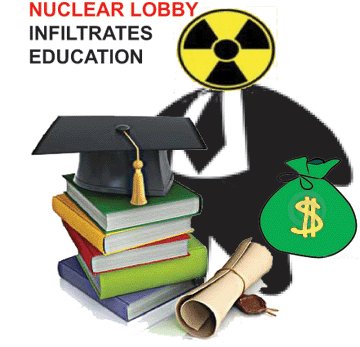 education https://www.michaelwest.com.au/reputation-laundering-weapons-companies-now-infiltrating-schools-to-promote-education/, by Michelle Fahy | Nov 27, 2020 A Lockheed missile blows up a bus full of Yemeni children; in Australia Lockheed Martin gains kudos by sponsoring the National Youth Science Forum. BAE Systems sponsors underprivileged kids in Australia while being complicit in the killing of thousands of needy children in Yemen. All you see in industry marketing pitches is euphemism, with nary a mention of the word “weapons”. Michelle Fahy reports.
The UK’s largest weapons-maker, BAE, is working inside Saudi Arabia supporting Saudi-United Arab Emirates military operations in Yemen, a war that has killed or injured tens of thousands of civilians, including thousands of children.
Meanwhile in Australia, BAE sponsors The Smith Family’s STEM education program for under-privileged children.
Flagrant hypocrisy? Welcome to the weapons business.
Then there’s Lockheed Martin, the world’s largest weapons-maker, also raking in billions from the Yemen war. A Lockheed missile blew up a bus full of Yemeni school children in 2018, killing at least 29 kids and injuring dozens more. Back in Australia, Lockheed was cultivating kudos with kids as major sponsor of the National Youth Science Forum, a registered charity.
US missile-making giant Raytheon also continues to supply the Saudi-UAE coalition, despite evidence of numerous attacks with Raytheon missiles that targeted and killed civilians, including children. No mention of that in Australia. Instead, Aussie school kids had fun hanging out with the young Australian snowboarding paralympian Raytheon hired to front the launch of its Maths Alive! STEM program.
The French company supplying Australia’s new submarines, Naval Group, is at the centre of multiple corruption scandals globally, some of which involved murder. That hasn’t stopped Naval promoting itself as a model future employer, with the help of Port Adelaide footy heroes, to 90,174 kids in 329 South Australian schools since 2017.
And let’s not forget the list of sponsors of the Australian War Memorial, Legacy, Invictus Games and Soldier On, which include numerous weapons-making corporations.
There’s a name for this cynical behaviour: reputation laundering. And nearly every weapons company is doing it.
Promoted as innovators
The world’s weapons producers have taken with gusto to promoting themselves as innovators in science, technology, engineering and maths (STEM). Military industry has adopted the STEM mantra to target children and young people as future employees, usually with the willing partnership of respected educational institutions. Many, if not most, Australian universities now have joint agreements, strategic partnerships or some other form of collaboration with the weapons industry.
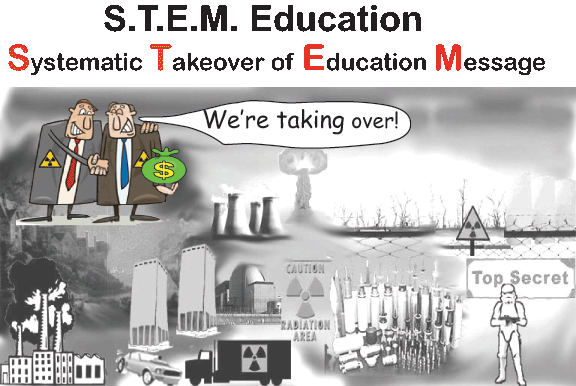
The sales pitch is, join us for an exciting and challenging high-tech career in science. This enthusiastic support of STEM serves two purposes: reputation laundering is one, the other is as a recruitment drive. STEM provides a socially acceptable way to promote the weapons industry to children, and parents, as a potential employer.
There’s nothing wrong with promoting STEM education, or seeking new employees. The issue is the way these companies are now targeting children as young as primary school age, with the full support of government. (eg. The MD of weapons-maker Saab Technologies is on the South Australian education board.) The problem is the spin and glamour applied to increased militarism, with pertinent information omitted from the marketing. Warfare isn’t mentioned, for starters.
There’s nothing about how the kids will use their STEM education to enhance the ‘lethality’ of their employer’s products. Or about a future where employees have eliminated the need for human involvement in the ‘kill chain’ by creating autonomous robotic devices to make those decisions. (This is not science fiction, these research and development programs are already under way.) Working on nuclear weapons isn’t discussed, either.
You won’t find the underlying arms manufacturing realities in the STEM marketing by weapons giants. In fact, you’ll be hard pressed to find the word “weapons” at all.
A world of euphemism
Instead, you’ll enter a world of euphemism: “high end technology company”, “leading systems integrator”, “security and aerospace company”, “defence technology and innovation company”. It’s also a fair bet you’re reading weapons company marketing if you see the phrase “solving complex problems”. Especially if there’s mention of working to make the world safer and more secure.
The following are a few examples of many in which multinational weapons corporations are co-opting organisations of good purpose in Australia.
BAE and The Smith Family
BAE operates inside Saudi Arabia, training Saudi pilots, maintaining Saudi’s BAE-supplied fighter jets, and supervising Saudi soldiers as they load bombs onto the planes. Indiscriminate bombing, a well-known feature of the Yemen war, has killed or injured tens of thousands of civilians, including children.
BAE has earned £15 billion from sales to the Saudis since 2015 when the Yemen war started. A BAE maintenance employee was quoted last year saying, “If we weren’t there, in 7 to 14 days there wouldn’t be a jet in the sky.”
BAE’s role in helping the Saudis prolong the world’s worst humanitarian crisis in Yemen has been pointed out more than once to The Smith Family since news broke of its sponsorship by BAE. Understandably, The Smith Family has responded defensively along the lines that critics are trying to steal an education from needy Australian children.
But what about the tens of thousands of needy children starved, maimed, and killed on the other side of the world? BAE Systems has given The Smith Family a mere $100,000 – about 0.3% of The Smith Family’s $36.3 million in non-government fundraising income.
Cheap reputational PR for a company that has gained tens of billions of dollars in defence contracts in Australia, while facilitating war crimes elsewhere.
Raytheon and Maths Alive!
Raytheon has marketed this program to children across America, the Middle East and Australia. Raytheon’s intention? To reach children at an early age and create a “healthy pipeline” from primary education, through secondary, to tertiary studies, to secure its future workforce.
The then Assistant Minister for Defence David Fawcett lent his support to the 2018 Australian launch of Maths Alive!, telling media: “I welcome the ongoing commitment by Raytheon to engage young Australians by helping them visualise what a career in science or engineering might look like.”
Lockheed Martin and National Youth Science Forum
The National Youth Science Forum was created by Rotary, which remains involved. The forum, now run by a board chaired by former senator Kate Lundy, has several programs, the flagship program being for Year 12 students interested in science.
Each year about 600 students complete the program, which exposes students to various career pathways in science. Since Lockheed started as major sponsor in 2015, students visit Lockheed Martin laboratories and speak with Lockheed staff as part of the program. (Watch a short video here from Lockheed’s website with some students.)
The National Youth Science Forum’s website does not mention Lockheed’s dominant influence as the world’s No. 1 weapons manufacturer or its significant role in producing nuclear weapons. Lockheed’s role in civil sectors is covered, however this work constitutes a minor aspect of its business. The most recent information from Stockholm International Peace Research says 88% of Lockheed’s revenue comes from arms sales.
Lockheed Martin and the Gallipoli Sponsorship Fund
This year Lockheed Martin became the first corporate partner of the Gallipoli Scholarship Fund. This partnership includes the new $120,000 Lockheed Martin Australia Bursary for the educational benefit of descendants of Australian veterans.
One of the aims of the Gallipoli Scholarship Fund is to contribute “to the future security of our nation and our national values of democracy, freedom, and the rule of law”.
Nuclear weapons will become illegal under international law in January 2021 when the new UN treaty prohibiting them comes into force. The world’s nine nuclear-armed countries haven’t signed it – nor their hangers-on, including Australia – so it won’t apply to them. But two-thirds of the world’s countries (including New Zealand) did vote to bring the treaty into being, banning the world’s worst weapons of mass destruction, and setting a new global norm.
Professor Ramesh Thakur, Director of the Centre for Nuclear Non-Proliferation and Disarmament at the Australian National University, has said, “The ban treaty embodies the collective moral revulsion of the international community.”
The awkward truth is that the Gallipoli Scholarship Fund’s new corporate partner, Lockheed Martin, is one of the largest nuclear-weapons-producing companies on the planet. Lockheed is all set to provide its 12 bursaries from now through to the end of 2023.
Such are the ethical dilemmas these weapons corporations create for organisations doing good work that are in need of funding.
Morally indefensible positions
Such sponsorships might appear less self-serving if weapons companies behaved consistently, and stopped supplying weapons to war criminals. Claiming they are just doing the bidding of the US or UK governments in supplying the Saudis, as these companies have, is not a morally defensible position, particularly in the face of evidence of ongoing war crimes in Yemen.
Similarly, claims that they are committed to serving the national interest might be more believable if they ceased bribing and scamming their way into the next arms deal, or concocting endless ways to extend and inflate government contracts and invoices for their own corporate financial benefit, blatantly siphoning funds from the public purse.
Research on the intergenerational impacts of Maralinga nuclear tests
 Research on the intergenerational impacts of Maralinga nuclear tests supported by Moran Awardhttps://www.science.org.au/news-and-events/news-and-media-releases/research-intergenerational-impacts-maralinga-nuclear-tests
Henrietta Byrne from the University of Adelaide. Photo: suppliedHenrietta Byrne from the University of Adelaide is the recipient of the Academy’s 2021 Moran Award for History of Science Research.
She receives the award for her proposal entitled ‘Legacies of exposure: Tracing scientific and Indigenous understandings of exposures from the Maralinga atomic testing (1956–84)’.
Ms Byrne will explore how Australian science has responded to the question of intergenerational impacts of environmental exposures on bodies over time, focused around the British atomic testing conducted in Maralinga, South Australia between 1956 and 1968.
The National Archives of Australia and the Australian Institute of Aboriginal and Torres Strait Islander Studies library, as well as interviews with leading anthropologists, will inform her research.
Her work will not only provide an important examination of scientific understandings of environmental exposure, but will also focus explicitly on the Indigenous aspects of this history.
Ms Byrne said that the award will allow her to study the relationships between Indigenous knowledges, settler colonial histories and science and technology studies.
“I’m honoured to have the support of the Australian Academy of Science to undertake this study. It is a great opportunity to engage with the archives in a way that highlights the experiences and ongoing activism of Aboriginal people whose land was exposed to radiation.”
This research is part of her broader PhD project in Anthropology and Gender Studies on environmental exposures and epigenetics in Indigenous Australian contexts.
The Moran Award for History of Science Research is worth up to $5000, and is aimed at postgraduate students and other researchers with expertise in the history of Australian science. Applications for the 2022 award will open in early 2021.
Australia’s Department of Defence captured by foreign weapons makers Thales, BAE,
|
Department of Defence captured by foreign weapons makers Thales, BAE, Michael West Media, by Michelle Fahy | Nov 17, 2020 Department of Defence secretly investigates itself, does not make public the review’s existence or its terms of reference, and keeps any resulting report secret. Defence recommends buying hundreds of vehicles from Thales, despite no need for them, just so Thales can keep its factory open. Houston, we have a problem, writes Michelle Fahy. The culture of cosiness; the revolving door; and undue influence. The relationship between government and military industrial companies is just one strand of the evidence showing the urgent need for a national anti-corruption commission. “Undue influence” is a noted marker for corruption. In a recent investigation we examined how the then $50 billion (now $80 billion) submarine contract was awarded to Naval Group, despite it being under investigation in numerous countries over probity issues, including bribery and corruption concerns. The multinational weapons maker Thales has also exerted influence on successive governments. There has been considerable coverage of how Thales pressured federal Attorney General Christian Porter to censor key parts of the auditor general’s report into the procurement process for the Thales Hawkei vehicle. There is more to that story than the censored sections. Then there is yet another key supplier to Defence, the UK multinational BAE Systems, which in 2018 won the $35 billion future frigate contract to build the navy’s nine new anti-submarine warships. The new contract was awarded even though there had reportedly been “long-running concerns” inside Defence about alleged inflation of invoices by tens of millions of dollars by BAE for its work on the navy’s elderly Adelaide-class of frigates (now decommissioned). An internal audit by Defence reportedly found BAE’s Adelaide contract “riddled with cost overruns, with the British company consistently invoicing questionable charges”. By May 2019, Defence had launched a fresh investigation. Thales and the Hawkei: “Extensive industry lobbying”A 2018 Australian National Audit Office (ANAO) report details the acquisition process for the Thales Hawkei vehicle, which was ultimately selected as the ‘light’ vehicle within a multi-phase procurement started in 2003 to replace Australian Defence Force field vehicles and trailers………. In September 2013 the Coalition defeated Labor in the federal election. In March 2015 Thales appointed Brendan Nelson – Liberal defence minister prior to Labor’s 2007 election win – to its “advisory board”. Five months later, the Coalition government approved the Thales Hawkei acquisition and in October the contract was signed. The ANAO report contains many significant revelations; the following are just some of the concerns raised:
|
|
Australian government ponders nuclear submarines
Why indeed! I would venture that there hasn’t been a detailed discussion of nuclear propulsion around the Australian cabinet table since the nuclear crisis in ANZUS in 1984, in which New Zealand cast away the alliance over the vastly improbable risk that a US warship might sneak a nuclear weapon into Auckland Harbour. I was closely involved in the defence white papers produced in 2000 and 2016 and had a ringside seat at the 2009 white paper. To my knowledge, nuclear propulsion wasn’t part of any formal cabinet consideration. The 2009 white paper quickly dismissed any interest—‘The Government has ruled out nuclear propulsion for these submarines’—at the same time as it stressed the importance of range and ‘prolonged covert patrols over the full distance of our strategic approaches and in operational areas’.
At a major maritime conference in 2019, the chief of navy, Vice Admiral Mike Noonan, tentatively ventured the thought that a slow build of 12 boats might allow nuclear propulsion to be considered at a later stage (‘A change in the propulsion system for the Attack-class submarines; it’s something that will no doubt be discussed over the next 30 years, bearing in mind that by the time we deliver No. 12 it will be 2055’), but the government quickly said that this wasn’t under consideration. In fact, there doesn’t appear to be a strong constituency for nuclear propulsion inside the navy, which is still culturally an organisation built around surface ships. The wider defence organisation has the Attack-class project to deliver, which is complex enough without adding a major new challenge to master nuclear propulsion.
Parliament is filled with many MPs on both sides of politics who will privately advocate for nuclear propulsion but publicly shy away from discussing the capability. The fear is that it isn’t possible to build a bipartisan consensus for nuclear propulsion in ways that prevent one side of politics rejecting the idea, leaving the other side with a potential political liability.
That was certainly the outcome of the 2019 House of Representatives Standing Committee on the Environment and Energy review of the future of nuclear technology in Australia. Government members of the committee recommended ‘adopting a strategic approach to the possibility of entering the nuclear energy industry’. This was countered with a Labor Party dissenting report claiming that ‘There is simply no case for wasting time and resources on a technology that is literally the slowest, most expensive, most dangerous, and least flexible form of new power generation.’
Nuclear propulsion for submarines wasn’t considered, but it’s clear at least in the short term that there’s no prospect for bipartisan cooperation on this issue………
The strategic ground is changing quickly under our feet, and those developments might, in future, force a more urgent government consideration of the submarine capability Australia needs. The 2016 white paper pointed to the need to keep the submarine capability under examination, stating that a review would be needed ‘in the late 2020s to consider whether the configuration of the submarines remains suitable or whether consideration of other specifications should commence’…….. https://www.aspistrategist.org.au/why-didnt-australia-consider-nuclear-propulsion-for-its-new-submarines/
315 nuclear bombs and ongoing suffering: the shameful history of nuclear testing in Australia and the Pacific
|
315 nuclear bombs and ongoing suffering: the shameful history of nuclear testing in Australia and the Pacific, https://theconversation.com/315-nuclear-bombs-and-ongoing-suffering-the-shameful-history-of-nuclear-testing-in-australia-and-the-pacific-148909, Tilman Ruff, Associate Professor, Education and Learning Unit, Nossal Institute for Global Health, School of Population and Global Health, University of Melbourne, Dimity Hawkins, PhD Candidate, Swinburne University of Technology
November 3, 2020 The Treaty on the Prohibition of Nuclear Weapons received its 50th ratification on October 24, and will therefore come into force in January 2021. A historic development, this new international law will ban the possession, development, testing, use and threat of use of nuclear weapons.Unfortunately the nuclear powers — the United Kingdom, France, the United States, Russia, China, Israel, India, Pakistan and North Korea — haven’t signed on to the treaty. As such, they are not immediately obliged to help victims and remediate contaminated environments, but others party to the treaty do have these obligations. The shifting norms around this will hopefully put ongoing pressure on nuclear testing countries to open records and to cooperate with accountability measures. For the people of the Pacific region, particularly those who bore the brunt of nuclear weapons testing during the 20th century, it will bring a new opportunity for their voices to be heard on the long-term costs of nuclear violence. The treaty is the first to enshrine enduring commitments to addressing their needs. From 1946, around 315 nuclear tests were carried out in the Pacific by the US, Britain and France. These nations’ largest ever nuclear tests took place on colonised lands and oceans, from Australia to the Marshall Islands, Kiribati to French Polynesia.
The impacts of these tests are still being felt today. All nuclear tests cause harm Studies of nuclear test workers and exposed nearby communities around the world consistently show adverse health effects, especially increased risks of cancer. The total number of global cancer deaths as a result of atmospheric nuclear test explosions has been estimated at between 2 million and 2.4 million, even though these studies used radiation risk estimates that are now dated and likely underestimated the risk. The number of additional non-fatal cancer cases caused by test explosions is similar. As confirmed in a large recent study of nuclear industry workers in France, the UK and US, the numbers of radiation-related deaths due to other diseases, such as heart attacks and strokes, is also likely to be similar. Britain conducted 12 nuclear test explosions in Australia between 1952 and 1957, and hundreds of minor trials of radioactive and toxic materials for bomb development up to 1963. These caused untold health problems for local Aboriginal people who were at the highest risk of radiation. Many of them were not properly evacuated, and some were not informed at all. We may never know the full impact of these explosions because in many cases, as the Royal Commission report on British Nuclear Tests in Australia found in 1985: “the resources allocated for Aboriginal welfare and safety were ludicrous, amounting to nothing more than a token gesture”. But we can listen to the survivors.
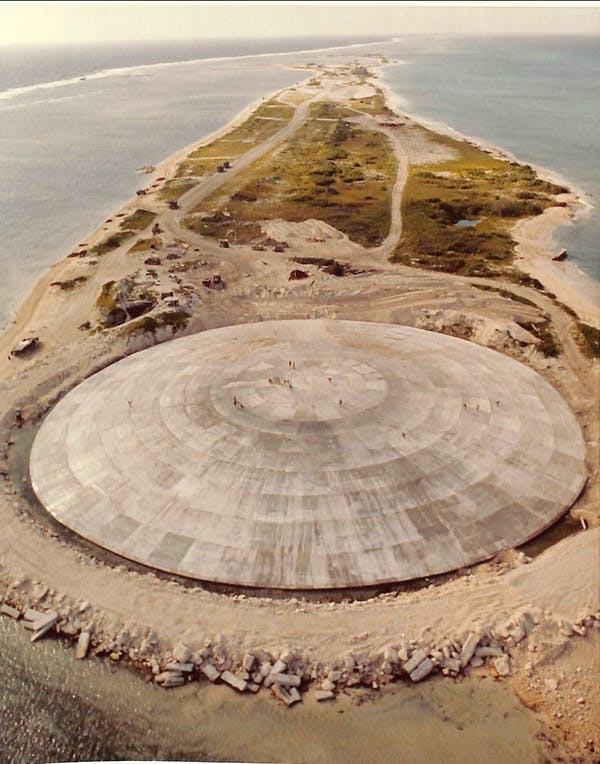
His daughter, Karina Lester, is an ambassador for the International Campaign to Abolish Nuclear Weapons in Australia, and continues to be driven by her family’s experience. She writes: For decades now my family have campaigned and spoken up against the harms of nuclear weapons because of their firsthand experience of the British nuclear tests […] Many Aboriginal people suffered from the British nuclear tests that took place in the 1950s and 1960s and many are still suffering from the impacts today. More than 16,000 Australian workers were also exposed. A key government-funded study belatedly followed these veterans over an 18-year period from 1982. Despite the difficulties of conducting a study decades later with incomplete data, it found they had 23% higher rates of cancer and 18% more deaths from cancers than the general population. An additional health impact in Pacific island countries is the toxic disease “ciguatera”, caused by certain microscopic plankton at the base of the marine food chain, which thrive on damaged coral. Their toxins concentrate up the food chain, especially in fish, and cause illness and occasional deaths in people who eat them. In the Marshall Islands, Kiritimati and French Polynesia, outbreaks of the disease among locals have been associated with coral damage caused by nuclear test explosions and the extensive military and shipping infrastructure supporting them. Pacific survivors of nuclear testing haven’t been focused solely on addressing their own considerable needs for justice and care; they’ve been powerful advocates that no one should suffer as they have ever again, and have worked tirelessly for the eradication of nuclear weapons. It’s no surprise independent Pacific island nations are strong supporters of the new treaty, accounting for ten of the first 50 ratifications. Negligence and little accountabilitySome nations that have undertaken nuclear tests have provided some care and compensation for their nuclear test workers; only the US has made some provisions for people exposed, though only for mainland US residents downwind of the Nevada Test Site. No testing nation has extended any such arrangement beyond its own shores to the colonised and minority peoples it put in harm’s way. Nor has any testing nation made fully publicly available its records of the history, conduct and effects of its nuclear tests on exposed populations and the environment. These nations have also been negligent by quickly abandoning former test sites. There has been inadequate clean-up and little or none of the long-term environmental monitoring needed to detect radioactive leakage from underground test sites into groundwater, soil and air. One example among many is the Runit concrete dome in the Marshall Islands, which holds nuclear waste from US testing in the 1940s and 50s. It’s increasingly inundated by rising sea levels, and is leaking radioactive material. The treaty provides a light in a dark time. It contains the only internationally agreed framework for all nations to verifiably eliminate nuclear weapons. It’s our fervent hope the treaty will mark the increasingly urgent beginning of the end of nuclear weapons. It is our determined expectation that our country will step up. Australia has not yet ratified the treaty, but the bitter legacy of nuclear testing across our country and region should spur us to join this new global effort. |
|

Superannuation funds are leaving investments on nuclear weapons
 Disarmament treaty drops bomb on super Disarmament treaty drops bomb on super funds investing in nuclear weapons, Michael West Media , by Margaret Beavis | Nov 2, 2020 Many superannuation funds exclude investment in “controversial weapons” but astoundingly this definition does not include nuclear weapons. However, this will change once the Nuclear Disarmament Treaty becomes international law, writes Dr Margaret Beavis. With two of the largest pension funds in the world already having divested, Australian funds are on notice. funds investing in nuclear weapons, Michael West Media , by Margaret Beavis | Nov 2, 2020 Many superannuation funds exclude investment in “controversial weapons” but astoundingly this definition does not include nuclear weapons. However, this will change once the Nuclear Disarmament Treaty becomes international law, writes Dr Margaret Beavis. With two of the largest pension funds in the world already having divested, Australian funds are on notice.
It would probably come as a surprise, and a disappointment, to most Australians to hear that some of their superannuation is invested in nuclear weapons. Especially given the strong community backing for nuclear disarmament, with two surveys in 2018 and 2020 (IPSOS) showing that between 71 and 79% of respondents supported Australia signing and ratifying the Treaty on the Prohibition of Nuclear Weapons. Yet the vast majority of superannuation funds have holdings in companies involved in the manufacture and maintenance of nuclear weapons. While many funds exclude investments in “controversial weapons”, astoundingly this definition often still allows nuclear weapons investment. But this is about to change. With the Treaty on the Prohibition of Nuclear Weapons (TPNW), which was endorsed by 122 countries at the United Nations in 2017, having just reached the milestone of 50 countries ratifying it, the treaty becomes international law in less than three months. Nuclear weapons, the worst of the weapons of mass destruction, will finally be on the same illegal footing as chemical and biological weapons. This means assistance of any sort, including financial assistance, towards nuclear weapons becomes illegal under international law. Only 26 companies support these weapons. Boeing, for example, the second largest weapons producer in the world, has contracts worth more than US$1.7 billion: building new nuclear weapons for the US, key components for the long-range nuclear Minuteman Intercontinental Ballistic Missiles system, sustaining the UK Trident II system and making tail-kit assemblies for the new B61 bombs. Divestment is accelerating. Globally, major investors are already ceasing their exposure to nuclear weapons activities. This includes two of the top five pension funds in the world, the Norwegian Government Pension Fund and ABP, which have divested from the 26 companies tied to nuclear weapons. Deutsche Bank and KBC are also divesting. In Japan, 16 banks (including three mega banks) have flagged ceasing investment in nuclear weapons companies. With accelerating divestment, the risks of holding nuclear weapons stocks increases. Superannuation funds in Australia are starting to consider the financial risks, reputational risks and ethical imperatives surrounding investments in nuclear weapons. Some, like Australian Ethical, Future Super and Bank Australia have already acted……… As with climate change, there is little point accumulating funds on behalf of the community if they contribute to the deaths of billions and a severely damaged future. Quit Nukes, an Australian-based campaign launched late last year, is working to get super fund portfolios out of the financing of nuclear weapons. The campaign members have met with senior executives at more than a dozen funds, the regulator APRA, several banks, index setters and a number of industry bodies. Blackrock, MSCI and other index setters have recognised the increasing demand from the public for ethical funds and have created products to suit. The full list of funds that have already acted is on the Quit Nukes website. Consumers are increasingly concerned about their funds being invested in destructive and unethical industries and super funds need to respond. https://www.michaelwest.com.au/disarmament-treaty-drops-bomb-on-super-funds-investing-in-nuclear-weapons/ |
|
|
International Campaign to Abolish Nuclear Weapons (ICAN)- from a tiny group to an International Treaty
 Nuclear weapons treaty backed by 50 nations to become international law https://independentaustralia.net/politics/politics-display/nuclear-weapons-treaty-backed-by-50-nations-to-become-international-law,14455
2020 HAS BEEN a very tough year with fires, pestilence and massive economic and human disruption but amid the difficulties, an Australian-born initiative is steadily growing global support and offers our shared planet its best way to get rid of its worst weapons.
In October 2017, the International Campaign to Abolish Nuclear Weapons (ICAN), an initiative born in Melbourne and adopted, adapted and applied around the world, was awarded the 2017 Nobel Peace Prize.
This was in recognition of its:
“…work to draw attention to the catastrophic humanitarian consequences of any use of nuclear weapons and for its ground-breaking efforts to achieve a treaty-based prohibition of such weapons.”
Fast forward to October 2020 and the Treaty on the Prohibition on Nuclear Weapons has just cleared a big hurdle. Despite strong pressure from the nuclear weapons states, especially the U.S., 50 nations have now ratified the ban treaty. It will enter into force and become part of international humanitarian law on 22 January 2021.
At a time when the threat of nuclear war is more explicit than it has been in decades, the ICAN story is timely and shows the power of both the individual and the idea. When ICAN started in 2007, its founders could have fitted in a minibus. Ten years later, there are over 500 ICAN groups and formal partners in more than 100 nations. And a treaty. Continue reading
Australia should stop selling uranium to nuclear weapon states and not sell uranium into unstable regions.

—
Michelle Fahy blows open the disgraceful collusion between Australian politicians and weapons industries
|
Sweeping policy changes by the Coalition, including bringing the military industry into the centre of defence planning and a 2018 strategy to catapult Australia into the world’s top 10 of weapons exporting nations, created a business bonanza in the military industry. The Turnbull government allocated $195 billion towards upgrading Australia’s military capability (since increased to $270 billion). Extraordinary amounts of money. When combined with the fundamental undeclared, and undealt with, conflicts of interest that have now become routine in Australia’s defence sector, the potential for corruption has increased markedly. Conflicts of interest have become entrenched because of the close integration of military industry interests with government policy. Corporate influence on government policy has been cultivated for years by a phenomenon at which the arms trade excels: the revolving door. This is how the revolving door works. Defence-related politicians and public officials and military personnel are regularly offered high-level, high-paying positions with weapons companies upon retirement. This provides a strong incentive for those in public service, with an eye to their future, to seek the best interests of these companies. Military industry executives in turn are welcomed into government as experts, consultants and employees. Legalised corruption of democracy? Corruption is defined as “the abuse of entrusted power for private gain, be it grand, petty, or political corruption” in the 2019 Australian research report, Governing for Integrity. The report says ‘undue influence’ is a marker for corruption, and that undue influence and the ‘revolving door’ are two key problems “eroding public confidence in parliamentarians and ministers, and weakening the fundamentals of democracy”. Take the case of former defence minister Christopher Pyne, who discussed his future with EY Defence while still in parliament, then nine days after leaving politics accepted a position with them. Pyne now also runs his own lobbying firm, lectures as an ‘industry professor’ at the University of South Australia, and is chair of the advisory board and investment committee of a new investment fund promoting high returns via investment in selected defence and cyber stocks. Pyne’s post-politics career made a mockery of the ministerial standards and lobbying rules and led to a senate inquiry, which included former foreign minister Julie Bishop, who only months after leaving parliament joined the board of multinational aid contractor Palladium. The revolving door yet again exposed the parliament’s unwillingness to manage risk factors for corruption, further eroding public confidence in the integrity of our political system. As noted by Transparency International Australia in its submission to the senate inquiry, it is quite the “culture of cosiness”. Although a particularly egregious case, Pyne isn’t the only former defence minister to have used the revolving door. The Liberals’ Peter Reith left his ministerial desk and popped up a few days later at Tenix, then Australia’s largest defence contractor. EY also secured the services of Labor’s Kim Beazley within a year of his political departure, along with former Labor defence minister Stephen Smith. Beazley joined the board of Lockheed Martin in between his public roles as US Ambassador and WA Governor. (The job description and the budget of the WA Governor has been expanded to enable Beazley to advocate for defence industry.) After a three-year association with EY, Smith has recently accepted directorships with cyber security companies ArchTIS and Sapien Cyber. Meanwhile, former Liberal David Johnston is being paid $3,000 a day for up to 180 days a year as the federal government’s chief weapons industry advocate, while sitting on the board of Saab Technologies (a significant contractor to the Defence Department). Brendan Nelson, a former Liberal party leader, defence minister and director of the Australian War Memorial, is now with Boeing (a multibillion-dollar contractor to Defence). Nelson’s move to Boeing was announced in January 2020, just a few weeks after his departure from the war memorial, a tenure that caused controversy given Nelson’s pursuit of sponsorship from arms manufacturers. (In Nelson’s final appearance at senate estimates in October 2019 he highlighted Boeing’s $1 million sponsorship of the memorial.) Nelson also raised eyebrows in March 2019 when his entry on the foreign influence transparency register revealed he had been on Thales Australia’s “advisory board” since March 2015. Thales is a global top 10 arms manufacturer, a multibillion-dollar contractor to Defence, and a sponsor of the war memorial. Then veterans affairs minister Michael Ronaldson approved Nelson’s extracurricular activity while noting the potential for conflict of interest. Nelson countered public concerns by saying he donated the fees he received to the war memorial. Current minister Linda Reynolds was briefly employed by missile-maker Raytheon in between military and political jobs in her pre-senate career. Politicians attract almost all the attention for using revolving door, but they aren’t the only ones using it. Privileged accessConsider the appointment to the Thales Australia board of former ASIO boss Duncan Lewis in February 2020, just five months after he left ASIO. The appointment attracted almost no attention. While the Sydney Morning Herald noted the appointment, no hard questions were asked and no analysis provided of Lewis’s swift move into an industry over which he had had oversight. Lewis had spent five years as ASIO’s Director-General, his final public role in a long career of public service that spanned the military (commander of special forces), the departments of the prime minister and cabinet and defence, as well as diplomatic roles (including as Australia’s ambassador to NATO)……… Weapons CEO moves into public serviceThe revolving door also ushers former weapons industry executives into public sector roles. Jim McDowell is a good example. After 17 years with BAE, the world’s sixth largest weapons-maker, including 10 years as chief executive of BAE Systems Australia, McDowell returned to Australia in December 2013 from his post in Saudia Arabia as the company’s chief executive and was immediately appointed to the board of the Australian Nuclear Science and Technology Organisation. He became ANSTO’s chair in August 2014. For the next four years while with ANSTO he also undertook numerous influential consulting roles with the Defence Department. (More details here.)…….. McDowell was chancellor of the University of South Australia (which has close links with military industry) and was on the board of numerous companies in the military industrial sector …… Part 2: There’s been plenty of talk about enhancing military capability but nothing about enhancing defence’s anti-corruption practices . https://www.michaelwest.com.au/culture-of-cosiness-colossal-conflicts-of-interest-in-defence-spending-blitz/ |
|

1 This month
17 October, Free Public Talk on Nuclear Issues in South Australia
David Noonan will speak on public interest concerns over the new Roxby Downs Indenture Act 2026 on BHP copper-uranium mining and ore processing in SA, and on how AUKUS may face SA with a High-Level nuclear waste agenda.
Dr Jim Green will discuss international developments in the field of nuclear power including ‘small modular reactors’ and Generation 4 ‘advanced’ nuclear reactor concepts.


Help Aunty Sue Protect Her Land and Sacred Sites From Destructive Rocket Testing.
.

Australians deserve the truth
about
AUKUS – https://aukuspublicinquiry.com/

PETITION – To: Prime Minister Anthony Albanese and the Australian Labor Government

of the week – Australians for War Powers Reform (AWPR)
To see nuclear-related stories in greater depth and intensity

