Lockheed Martin, Australian Government: joined at the hip
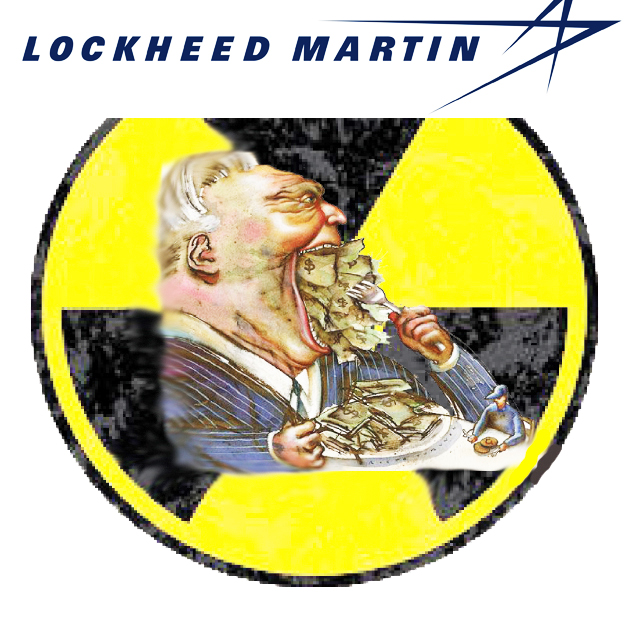
There is a remarkable “revolving door” of top people between Australian government and Defence Department roles and the world’s no 1 weapons-maker
MICHELLE FAHY, JUN 19, 2024
Global weapons giant Lockheed Martin – which has deleted from its website details about Australia’s key role in building F-35 fighter jets – has long had deep ties to the Australian government, investigations show.
Analysis shows a remarkable “revolving door” of people between top government and Defence Department roles and the world’s largest weapons-maker, whose F-35 fighter jets Israel is using to bomb Gaza.
The revolving door between government and corporations is well documented as a factor helping to undermine democracy.
In 2022, Lockheed Martin’s total global revenue was US$66 billion, with 90 per cent of it (US$59.4 billion) from the sale of arms.
Some of Australia’s most senior government officials, military officers, and Defence Department staff have been appointed to Lockheed Martin Australia’s board or have served as its chief executive or in other positions in recent years.
Constantly revolving door
Lockheed’s current CEO for Australia and New Zealand, retired Air Marshal Warren McDonald, officially joined the weapons maker’s ANZ leadership team as chief executive elect on July 1, 2021 having exited his 41-year career in the Royal Australian Air Force (RAAF) just seven months earlier. McDonald formally commenced as Lockheed’s local CEO in November 2021.
McDonald was deputy chief of the RAAF until mid-2017 when he was promoted into a new role as the Defence Force’s inaugural Chief of Joint Capabilities, a group comprising space, cyber and the defence networks tasked with preparing space and cyber power, and logistics capabilities, to serve the modern integrated defence force.
When later asked what had interested him about joining Lockheed Martin, McDonald said: “From all domains – space to the sea floor – Lockheed Martin has in its hands the combat capability of the Defence Force”…………………………………………………………………………more https://undueinfluence.substack.com/p/lockheed-martin-australian-government?utm_source=post-email-title&publication_id=297295&post_id=145632377&utm_campaign=email-post-title&isFreemail=true&r=ln98x&triedRedirect=true&utm_medium=email
Peter Dutton reveals seven sites for proposed nuclear power plants
By political reporter Tom Crowley and national regional affairs reporter Jane Norman, 19 June 24 https://www.abc.net.au/news/2024-06-19/dutton-reveals-seven-sites-for-proposed-nuclear-power-plants/103995310—
Peter Dutton has told his Coalition colleagues he will go to the next election promising to build seven nuclear power stations.
Mr Dutton will promise the first two sites can be operational between 2035 and 2037, several years earlier than the timeframe the CSIRO and other experts believe is feasible.
As had been previously flagged, the stations are all on retiring or retired coal sites.
The seven sites are:
- Tarong in Queensland, north-west of Brisbane
- Callide in Queensland, near Gladstone
- Liddel in NSW, in the Hunter Valley
- Mount Piper in NSW, near Lithgow
- Port Augusta in SA
- Loy Yang in Victoria, in the Latrobe Valley
- Muja in WA, near Collie
Five of the seven are in Coalition seats: Muja in Rick Wilson’s seat of O’Connor, Loy Yang in Darren Chester’s seat of Gippsland, Port Augusta in Rowan Ramsey’s seat of Grey, Callide in Colin Boyce’s seat of Flynn and Tarong in Nationals leader David Littleproud’s seat of Maranoa.
Mount Piper is in the seat of Calare, held by independent Andrew Gee who was elected as a Nationals MP in 2022 but quit the party.
Liddel is in only site in a Labor seat, the seat of Hunter, held by Labor’s Dan Repacholi.
Further details are expected later this morning, including about how much government funding would be required and whether the proposal is for large-scale nuclear reactors, small modular nuclear reactors, or a combination.
The Coalition had been promising a nuclear policy, including specific sites, for several months amid expert concerns over the cost and timeframe.
Last week, Mr Dutton also revealed the Coalition would campaign against the Labor government’s legislated target to reduce emissions by 43 per cent by 2030, and would not outline a 2030 emissions reduction target of its own before the election.
Coalition energy spokesperson Ted O’Brien and Nationals leader Mr Littleproud will address an energy conference held by The Australian today.
This morning, Treasurer Jim Chalmers will tell that conference the Coalition’s nuclear plan is “the dumbest policy ever put forward by a major party” and will seek to contrast the Coalition’s plan, likely to require significant public funding, with Labor’s plan to encourage private investment in renewables and gas.
Coalition set to announce long-awaited nuclear details

Jacob Shteyman June 19, 2024, https://www.aap.com.au/news/coalition-set-to-announce-long-awaited-nuclear-details/
Opposition Leader Peter Dutton is poised to announce his nuclear energy policy, including multiple proposed sites for power plants.
The Liberal leader plans to reveal the location of up to three sites for nuclear energy plants should the coalition win the next federal election, according to media reports.
Mr Dutton is set to hold a press conference on Wednesday alongside Nationals leader David Littleproud and deputy Liberal leader Sussan Ley.
His party’s MPs are expected to be briefed on the plans that morning.
Mr Dutton has said he will oppose Australia’s legally binding 2030 climate target, a 43 per cent emissions reduction on 2005 levels, if he is elected.
The coalition remains committed to reaching net-zero emissions by 2050, senior party members have said.
A report by the CSIRO found nuclear power plants wouldn’t be built at the earliest until 2040.
The latest report on the technology’s feasibility has found nuclear power is a “dangerous distraction” to Australia’s renewable energy transition because it would take too long and cost too much to build.
Even if nuclear restrictions were lifted tomorrow, it would still be at least 20 years before a reactor could be operational, the paper released by the Australian Conservation Foundation says.
By that time, all or nearly all Australia’s remaining coal-fired power plants will be closed, meaning carbon emissions-intensive fossil fuels will likely have to be prolonged.
Even ignoring the lead time required to establish a nuclear industry, it would be unable to compete financially with renewables and require taxpayer subsidies worth tens or hundreds of billions of dollars.
Another hurdle is convincing Australians nuclear poses no safety risk.
Major insurers, including AAMI, Allianz and NRMA, specifically exclude coverage to homes, cars or possessions from nuclear accidents.
“Proposals to introduce nuclear power to Australia make no sense,” concludes the report, which was led by anti-nuclear campaigner Jim Green and released on Wednesday.
The paper was written in response to a federal coalition plan to replace coal-fired power stations with nuclear, rather than relying on increased investment in renewable energy and storage to reach net zero.
Mr Dutton argues baseload nuclear is necessary to achieve the energy transition without sacrificing affordability or reliability.
“I want to make sure that we’ve got renewables in the system,” he told reporters on Tuesday.
“I’m happy for batteries, but we can’t pretend that batteries can provide the storage.
“We need to make sure that as we decarbonise and as the economy transitions, that we do it in a sensible way.”
The latest edition of the benchmark GenCost report, released by the CSIRO and Australian Energy Market Operator in May, found the cost of building a large-scale nuclear power plant would be at least $8.5 billion.
Dutton’s nuclear power plan – the grandkids can pay for it!
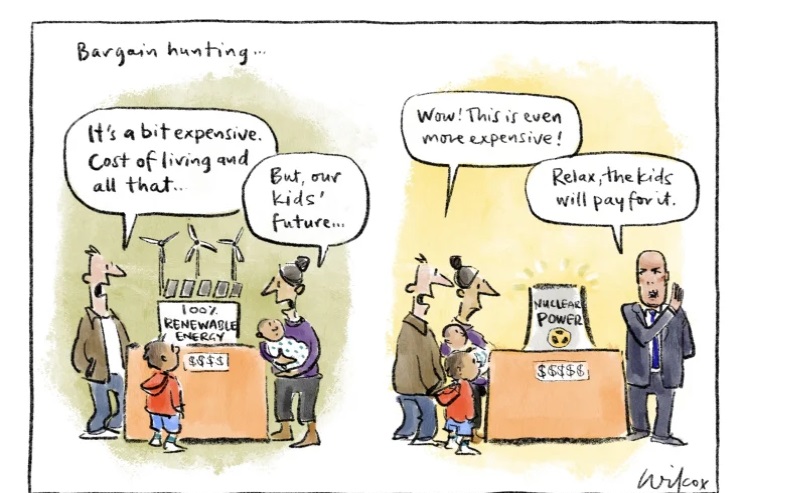
The Age’s cartoonist Cathy Wilcox sums it up!
‘Nuclear energy won’t stop cows from burping’: Peter Dutton needs a plan that goes beyond the electricity sector

By the way, I am amazed to read this quite conservative energy expert ACTUALLY TOUCHING UPON ENERGY EFFICIENCY! – “We should be making cuts to electricity now“
Everyone keeps bleating about renewables – but it is so rare for any “expert” to suggest reducing energy use, by energy efficiency – even though that would be the fastest and best way to combat climate change
Tony Wood, Program Director, Energy, Grattan Institute, The ConversationJune 17, 2024 ,
Opposition leader Peter Dutton’s talk of stepping back from Australia’s 2030 emissions targets has created confusion and concern on several fronts, and sparked vigorous political debate over our pathway to a carbon-free future.
Over the weekend, Dutton claimed Labor’s renewable energy commitment was behind steep electricity price hikes in recent years. His comments prompted a rebuke from Foreign Minister Penny Wong, who described the claims as “mind bogglingly absurd”. Meanwhile, Dutton’s suggestion of an energy policy shakeup, should the Coalition win government, has caused consternation in the business community.
Amid all this, several points need clarifying. For a start, Dutton’s claim that renewables are responsible for electricity price hikes is just plain wrong.
But more broadly, the debate misses a crucial point: the electricity sector is not the only contributor to Australia’s greenhouse gas problem. If Australia is to achieve net-zero emissions by 2050, the Coalition needs to stump up with a plan to decarbonise the entire economy.
…………………..First, let’s clarify that Labor’s policy has, in fact, taken gas and nuclear into account. It has rejected nuclear energy as a viable option, and says gas has an important role in the transition to renewable energy.
Labor does have a target for 82% renewables in our electricity mix by 2030. And it is true that electricity prices have markedly increased in recent years. But the two are not significantly related……………………………………………………………
Investors are nervous
Australia’s business community, including the coal and gas sector, has urged the Coalition not to scrap Australia’s 2030 emissions targets, fearing it would unleash a wave of investment uncertainty.
While the 2030 target is significant, more important to investors are the policies underpinning the target. Australian businesses are investing on the basis of several key Labor policies:
- the Capacity Investment Scheme, in which the government will underwrite the risk of investing in new renewable energy generation and storage
- the Safeguard Mechanism, involving rules to reduce greenhouse gas emissions from Australia’s polluting industrial sector
- Rewiring the Nation, to build the transmission network needed to deliver clean energy
- vehicle efficiency standards, which sets targets for CO₂ exhaust emissions for new light vehicles.
Industry needs policy certainty. Dutton has spent a lot of time talking about 2030 targets and nuclear energy. But the really important issue for investment is: what does he plan to do about the four policies above?
Electricity isn’t the only game in town
Dutton says he remains committed to the target of net-zero emisisons by 2050, which Australia signed up to under the Paris treaty. The Coalition intends to release its full climate policy before the next election; let’s hope it involves more than just a nuclear energy plan.
You can’t drive trucks on nuclear. Nuclear energy won’t stop cows burping and farting. You can’t run an ammonia plant on nuclear energy. Emissions from those sectors – transport, agriculture and heavy industry – have to be dealt with too. On these, the Coalition has been largely silent to date.
Time is of the essence here. The electricity sector represents the “low hanging fruit” of Australia’s decarbonisation effort – in other words, the transition to renewables is relatively easy and cheap. Stripping emissions from other sectors will cost more and take longer……………………………………………………………………………………………..
the 2030 target is so important. We should be making cuts to electricity now, while developing the technologies to reduce emissions in other sectors. We can’t leave all the heavy lifting until after 2030.
The road ahead
If the Coalition won power at the next election, and managed to meet the net-zero goal by 2050, there are consequences for kicking the can down the road.
Doing less on emissions reduction now means greenhouse gases accumulate in the atmosphere. That makes climate change worse now. Slowing down emissions reduction will affect all Australians – leading to more severe floods and fires, and more uninsurable properties……………………….. more https://theconversation.com/nuclear-energy-wont-stop-cows-from-burping-peter-dutton-needs-a-plan-that-goes-beyond-the-electricity-sector-232588
Coalition will announce as soon as Wednesday its nuclear power plans
AFR report … with no further detail:
The Coalition will announce as soon as Wednesday its nuclear power
plans, following the calling of a snap shadow cabinet meeting for
Tuesday night and a party room teleconference for 8.30am Wednesday.
Nuclear misinformation in Australia is Hail Mary policy by the Opposition
The Fifth Estate, DARRIN DURANT, Dr Darrin Durant is Senior Lecturer in Science and Technology Studies at the University of Melbourne.17 JUNE 2024
Having promised a nuclear power policy for several years, the Australian Liberal-National Party finally announced one: no reactors before 2040 and approving new gas and coal projects instead. At the same time, it is abandoning the emissions reduction target for 2030 (a 43 per cent cut compared with 2005 levels) and refusing to commit to details about nuclear projects until after the May 2025 election.
This is a Nuclear Hail Mary Policy: reduce emissions aspirations and hope a final play two decades from now will work out.
Most commentary has focused on what this nuclear Hail Mary implies for Australia’s commitment to the Paris Agreement. Some suggest the LNP plans to “rip up” the agreement. Others that the LNP plans to “breach the text and spirit” of the agreement.
Closest to the mark, I suggest, is that LNP is internally fractured and confused about both what its nuclear and emissions policy should be and how it should conduct itself regarding international agreements.
Opposition Leader Peter Dutton’s climate backtracking on Saturday, 8 May 2024, pushed from the news cycle a clear marker of the LNP’s policy vacuum on nuclear power, climate emissions and international. On 7 June, the LNP engaged in disinformation about regional cooperation on decarbonization.
The occasion for the LNP’s disinformation campaign was the signing by the Albanese Labor government of the Indo-Pacific Economic Framework (IPEF) Clean Economy Agreement. The IPEF was signed by Australia and 13 other nations on 6 June 2024.
Ted O’Brien MP (Shadow Minister for Climate Change and Energy in the LNP) claimed the ALP signing of the IPEF “exposes rank hypocrisy”, demonstrates a “lack of integrity”, and amounts to “treating Australians like mugs”.
None of the claims by O’Brien and the LNP are true. It is the LNP nuclear disinformation campaign that displays hypocrisy and duplicity and treats Australians like mugs.
The IPEF Clean Economy Agreement
The IPEF agreement aims to build regional economic cooperation across four pillars: trade, supply chains, clean energy, and tax. Australia joined IPEF on 23 May 2022, after the 21 May 2022 election in which Labor swept the LNP from power. Since then, eight rounds of negotiations between the member nations have taken place…………………………………………………………………………………………………..
Australian nuclear misinformation goes walkabout
Thus far, Coalition claims about nuclear prospects have been domestic doomsday claims about Australia’s fate if it does not “go nuclear”.
Yet the Coalition’s claims routinely hinge on misinformation: inflating estimations of transmission projects, over-playing the risk of load shedding, over-estimating G20 reliance on nuclear, exaggerating renewables-related land use, and inventing risks from windfarms (on and offshore).
While the international nuclear renaissance has been a farcical (short) history of massive cost and construction blowouts, the Coalition has sidelined those facts at home, leading to claims that Coalition nuclear plans are a delay tactic to perpetuate coal and gas………..
The IPEF stipulates that the Parties should:
“promote transparent licensing, siting, and permitting for clean energy and related generation, transmission, distribution, and storage projects in the electricity sector” (Sect 4, Point 2b)
Furthermore, for those parties supportive of nuclear, they should:
“ensure that sound policy and regulatory frameworks in nuclear safety and waste management are in place when considering the adoption of nuclear energy technologies” (Sect. 4, Point 7a).
The LNP has spent years spruiking nuclear power, yet the Australian public remains in the dark about those two important clauses in the IPEF agreement.
The LNP cannot be ‘transparent’ if it has provided no detail to the Australian public about licensing, siting and permitting. The LNP claims to be considering nuclear, yet where are any serious policy proposals regarding the regulatory frameworks for nuclear safety and nuclear waste?
Instead, the LNP treats citizens as incapable of spotting fabrications and omissions.
For instance, the O’Brien’s/LNP press release tells citizens they will find the IPEF “supporting small modular reactors (SMRs) in the Indo Pacific”. This is a fabrication: the negotiated text of the agreement never mentions SMRs. Similarly, the Coalition omits that the IPEF agreement strongly supports windfarms and energy efficiency, two key elements of the ALP’s Rewiring the Nation plan………….
Treating citizens like mugs
……………………………To be a mug is to be easily deceived. The LNP must assume citizens are mugs if it thinks Australian voters cannot spot the LNP’s misrepresentation of the IPEF agreement. No, Labor is not in contradiction for opposing domestic nuclear and signing the IPEF, because the IPEF favours clean energy in general and advocates for member nations to pursue their own pathway (which may or may not include nuclear power)
Yet even if tempted by the Coalition logic, just remember, the Coalition opposes most of what is supported in the IPEF agreement. The Coalition is not talking straight about either energy policy or international agreements, and voters should keep this in mind as the Coalition obfuscates important international agreements like the Paris Agreement. https://thefifthestate.com.au/columns/spinifex/nuclear-misinformation-in-australia-is-hail-mary-policy-by-the-opposition
AUKUS ‘JobGiver’: a non-recourse handout to overseas companies and workers
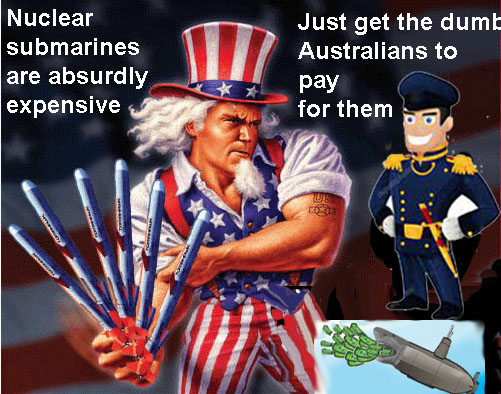
Pearls and Irritations, by Rex Patrick | Jun 17, 2024
The Morrison Government encountered Opposition scorn for failing to include claw-back provisions in its JobKeeper program. Yet the Albanese Government is making the same mistake with its ‘JobGiver’ submarines program. Rex Patrick reports…………………………………………………………..
The money sinkhole
On 13 March 2023, Prime Minister Albanese announced in San Diego that the AUKUS submarine program would cost a mind-blowing $368 billion. That’s $13,850 per man, woman, and child in Australia. And that’s not including the cost of managing the spent nuclear fuel for 100,000 years.
At the time he offset the cost issue with a ‘jobs at home’ pitch. “The program will create around 20,000 direct jobs over the next 30 years across industry, the Defence Force and the Australian Public Service including trades workers, operators, technicians, engineers, scientists, submariners and project managers.
In early September 2023, it was revealed that, as part of the program, Australians were to gift almost $4.7B in taxpayer’s money to grow the US submarine industrial base to enable the transfer of US Virginia attack-class submarines to the Royal Australian Navy.
Along with a similar contribution to the UK, ‘JobGiver’ was born.
JobGiver
Shortly after the announcement, I FOI’ed the Submarine Agency for “The agreement between Australia and the United States that goes to Australia making significant financial contributions into the Submarine Special Activities Account”.
I was concerned about the T’s and C’s. How would the money be spent? When would the money be paid to the US? Was there a clawback provision?
The request was answered with a big fat “access denied”.
Access denied (Source: FOI)
The FOI matter is on appeal, but Senator David Shoebridge has been inquiring into the details at Senate Estimates. In an exchange with Vice Admiral Jonathon Mead, the head of the Australian Submarine Agency, he unhelpfully refused to confirm that the $4.7B would be returned to Australia if the US decided not to provide the Virginia submarines in 2035.
Most likely, in other words, there is no clawback, just like ‘JobKeeper’.
A real risk of default
“the risk the US will not deliver a submarine to Australia is high”
Whilst the US Congress passed into law, via the 2024 National Defense Authorization Act, permission to transfer the first two of three to five Virginia class submarines to Australia, the approval contains a caveat.
Before any US submarine can be transferred to the Royal Australian Navy, the US President must certify to the Congress that he or she is of the view that the transfer is not inconsistent with US foreign policy and national security interests.
They’re ‘Humpty Dumpty’ words that will mean just what the President chooses them to mean – nothing more, nothing less. A future US President can kill the deal for subjective reasons at any time.
1×1515
4:05 / 5:25
1×1515
0:31 / 5:25
The Morrison Government encountered Opposition scorn for failing to include claw-back provisions in its JobKeeper program. Yet the Albanese Government is making the same mistake with its ‘JobGiver’ submarines program. Rex Patrick reports.
On 23 November 2021, then-opposition Treasurer Jim Chalmers rose in the House of Representatives and delivered a fiery speech on the performance of the Liberal Coalition Government.
When he spoke about managing the economy, Chalmers mentioned ‘JobKeeper and declared it the “defining example” of Coalition economic mismanagement.
“JobKeeper was a great idea,” he said. “Frydenberg, the butterfingers of Australian politics, got his hands on it and he turned a good program into a program that wasted tens of billions of dollars, and that’s why the Financial Review wrote an article headlined ‘Frydenberg fires JobKeeper missile at himself’. If you look at that piece in the Financial Review, I think the key conclusion is that they describe the current Treasurer as ‘lighter than helium’.”
He went on to describe the economy as a piece of software: “Wasting money is not a bug in this government; it is a feature of this government.”
Three months later, opposition leader Anthony Albanese weighed in, describing to the House a Treasurer who had “not put in place appropriate protections for taxpayers’ interests when it comes to the JobKeeper program, resulting in
over $20 billion going to companies that were increasing their profits.
And that leads us to ‘JobGiver’.
The money sinkhole
On 13 March 2023, Prime Minister Albanese announced in San Diego that the AUKUS submarine program would cost a mind-blowing $368 billion. That’s $13,850 per man, woman, and child in Australia. And that’s not including the cost of managing the spent nuclear fuel for 100,000 years.
At the time he offset the cost issue with a ‘jobs at home’ pitch. “The program will create around 20,000 direct jobs over the next 30 years across industry, the Defence Force and the Australian Public Service including trades workers, operators, technicians, engineers, scientists, submariners and project managers.
In early September 2023, it was revealed that, as part of the program, Australians were to gift almost $4.7B in taxpayer’s money to grow the US submarine industrial base to enable the transfer of US Virginia attack-class submarines to the Royal Australian Navy.
Along with a similar contribution to the UK, ‘JobGiver’ was born.
JobGiver
Shortly after the announcement, I FOI’ed the Submarine Agency for “The agreement between Australia and the United States that goes to Australia making significant financial contributions into the Submarine Special Activities Account”.
I was concerned about the T’s and C’s. How would the money be spent? When would the money be paid to the US? Was there a clawback provision?
The request was answered with a big fat “access denied”.

Access denied (Source: FOI)
The FOI matter is on appeal, but Senator David Shoebridge has been inquiring into the details at Senate Estimates. In an exchange with Vice Admiral Jonathon Mead, the head of the Australian Submarine Agency, he unhelpfully refused to confirm that the $4.7B would be returned to Australia if the US decided not to provide the Virginia submarines in 2035.
Most likely, in other words, there is no clawback, just like ‘JobKeeper’.
A real risk of default
The clawback matters, because
the risk the US will not deliver a submarine to Australia is high.
Whilst the US Congress passed into law, via the 2024 National Defense Authorization Act, permission to transfer the first two of three to five Virginia class submarines to Australia, the approval contains a caveat.
Before any US submarine can be transferred to the Royal Australian Navy, the US President must certify to the Congress that he or she is of the view that the transfer is not inconsistent with US foreign policy and national security interests.
They’re ‘Humpty Dumpty’ words that will mean just what the President chooses them to mean – nothing more, nothing less. A future US President can kill the deal for subjective reasons at any time.
But there’s a more objective threat. The US industrial base is not building enough submarines for its own needs, let alone ours. The magic build rate requirement for the US is 2.3 submarines per annum (to meet its attack and ballistic submarine needs, as well as Australia’s). Right now, the build rate is only 1.4, and with issues also plaguing their maintenance shipyards, there’s not a lot of optimism that it’s going to get anywhere near the 2.3 needed (apart from the blind optimism inside the Australian Submarine Agency and the Defence Minister Marles’ office).
But wait. there’s more.
Of course, there are also risks in the UK ‘JobGiver’ payment we will make, again without a claw back. They’re unlikely to walk away from us on account of the perilous state of their submarine industry,
“but they reliably deliver submarines that are late and over budget.”
The UK needs our money to assist them deal with their own moribund state. But their moribund state is exactly the reason they should not be our partner.
When fending off his ‘JobKeeper’ fiducial failure, Frydenberg was at least able to say that the wasted taxpayers largely went back into the Australian economy. Chalmers won’t be able to say that of the ‘JobGiver’ money that’s going to the US.
I say Chalmers, because Albanese’s unlikely to be around when the US say “sorry” to us. But there’s some chance that Chalmers will be Prime Minister in 2034/5. Whoever is shadow Treasurer at that time won’t be calling Chalmers ‘Helium Man’, like he labelled Frydenberg – rather it will be ‘Hydrogen Man’, on account of the fact that hydrogen is even lighter than helium. https://michaelwest.com.au/aukus-handout-to-companies-and-workers-elsewhere/
This week: countering the nuclear spin, and more

Some bits of good news: Humanity is making progress on reproductive rights. Scotland’s rainforest revival got a boost. Stork That Went Extinct in the UK 600 Years Ago is Spotted
in the English Skies: ‘It was a great sign’.
TOP STORIES
- Gaza has become a humanitarian catastrophe and Israel will have to answer tough questions – https://www.youtube.com/watch?v=CVfJnZAR5P4
- ‘I heard all of my friends’ last breath’: Testimonies from the Nuseirat massacre . When Israel Burned Refugees Alive, Establishment Media Called It a ‘Tragic Accident’.
- (This next one – Long but excellent! -) Putin Offers Reasonable Peace Terms to Ukraine; Zelenskiy Instantly Rejects Them; West Prepares for War.
- Are the prospects for Small Modular Reactors being exaggerated? Five key characteristics examined.
- Surging Renewables Push French Energy Prices Negative, Shutting Down Nuclear Plants.
From the archives. Nuclear power: molten salt reactors and sodium-cooled fast reactors make the radioactive waste problem WORSE
Climate. The ‘extraordinary’ record-breaking data that has climate experts baffled.
Noel’s notes. G7 – and the juggernaut to the destruction of Ukraine rolls on – to the delight of weapons companies. Atrocities upon atrocities – the Israelis have excelled themselves this time. UK and other mainstream media –oblivious of the suicidal danger of attacking Russia.
******************************************
AUSTRALIA.
- Why bet on a loser? Australia’s dangerous gamble on the USA. AUKUS ‘JobGiver’: a non-recourse handout to overseas companies and workers.
- Nuclear options: New research on SMRs raises questions over Australia’s energy debate. Dutton’s nuclear plan wouldn’t even meet net zero by 2050 target, report finds. Energy experts and investors say the Coalition’s nuclear plan is ‘virtually impossible’ without taxpayer funding. Who prepared Dutton’s report on nuclear power? Nationals seats to go nuclear. ABC boss Kim Williams launches stunning attack on Peter Dutton’s nuclear power plan – just days after Laura Tingle said Australia is ‘a racist country’. Dutton’s energy plan to cost $97 billion as we wait for nukes to lumber into action.
- Farmers who graze sheep under solar panels say it improves productivity. So why don’t we do it more?
- Why the AFR economics editor is wrong on GenCost, nuclear and “always on” power. Wind and solar power half the cost of coal and gas, one-third the cost of nuclear, says Lazard.
NUCLEAR ISSUES
| ATROCITIES. Israel committed crime of ‘extermination’ in Gaza, says UN investigation. GAZA HORROR: UN FINDS ISRAELI FORCES GUILTY OF SEXUAL ABUSE AND TORTURE. | ECONOMICS. Building Nuclear Power Is a Bridge Too Far for World’s Private Investors – ALSO AT https://nuclear-news.net/2024/06/06/1-b1-corporate-lobbying-heats-up-around-governments-nuclear-power-plans-despite-concerns-from-anti-nuclear-advocates/ EDUCATION. Nuclearisation of universities. |
| ENERGY. Nuclear power is ‘overblown’ as an energy source for data centers, power company CEO says | ENVIRONMENT. Radioactive Tritium from Monticello Reactor Leaked to the Mississippi River. Oceans. French-Chinese power plant could put 200m UK fish at risk. |
| ETHICS and RELIGION. U.S. Jewish Army Intel Officer Quits over Gaza, Says “Impossible” Not to See Echoes of Holocaust. Saving Gaza Is About More Than Saving Gaza. It’s Also About Saving Ourselves. | HEALTH. Radiation. LANL plans to release highly radioactive tritium to prevent explosions. Will it just release danger in the air? Guam’s fight for radiation exposure compensation ‘far from over’. |
| HISTORY. USING UKRAINE SINCE 1948 | INDIGENOUS. Chief Akagi requests public hearing to review any new governance arrangement for the Point Lepreau nuclear reactor on Peskotomuhkati homeland. Tensions with First Nations threaten to delay nuclear waste facility– ALSO AT https://nuclear-news.net/2024/06/17/1-a-tensions-with-first-nations-threaten-to-delay-nuclear-waste-facility/ |
| LEGAL. ‘Immense’ scale of Gaza killings amount to crime against humanity, UN inquiry says. Judges Named for Assange Appeal. | MEDIA. The day the West defined ‘success’ as a massacre of 270 Palestinians. | OPPOSITION to NUCLEAR . MSP’s claim of support for nuclear power in Highlands challenged, |
| POLITICS.Thousands Protest Gaza Genocide in ‘Red Line’ White House Rally. UK Labour and Conservatives commit to nuclear power in manifesto, Scottish Greens brand Labour’s commitment to nuclear weapons ‘obscene and immoral’. Keir Starmer’s policy on nuclear weapons. MP’s claim of support for nuclear power in Highlands challenged. California legislators break with Gov. Newsom over loan to keep state’s last nuclear plant running. | POLITICS INTERNATIONAL and DIPLOMACY.Ukraine is a ‘gold mine’ – US senator. UN Security Council. Biden makes 10-year security pact with Zelensky that includes sending F-16s to Ukraine. World leaders to gather in Swiss resort in attempt to forge Ukraine peace plan. Adopts Gaza Ceasefire Resolution. Biden’s Saudi Arabia Deal. The West has a 15-month opportunity for a new nuclear deal with Iran that precludes an Iranian Bomb. |
| PUBLIC OPINION. 94% of Americans want to end Ukraine war, but US rejects China peace deal, opposes talks with Russia. | SAFETY. Alarm over 174 security breaches at Clyde nuclear bases. | SECRETS and LIES. Top civil servant joins EDF after running department that struck nuclear deal. Ukrainian officials stole $490 million meant for military – MP. Uncle Sam cool with arming, training Neo-Nazi Azov Brigade in Ukraine |
| SPACE. EXPLORATION, WEAPONS. Radiation could pose challenge to putting people on Mars. SPACEX’S STARLINK MAY BE KEEPING THE OZONE FROM HEALING, RESEARCH FINDS. Unveiling Cosmic Secrets: Black Budget Tech and UFOs with Aerospace Expert Michael Schratt – https://www.youtube.com/watch?v=bOT0tPeQwzI | TECHNOLOGY. Nuclear Power Is Hard. Billionaire Bill Gates Wants to Make It Easier. Great British Nuclear Small Reactors competition timeline delayed for General Election, amid doubts on their viability- ALSO AT https://nuclear-news.net/2024/06/14/2-b1-great-british-nuclear-small-reactors-competition-timeline-delayed-for-general-election-amid-doubts-on-their-viability/ |
| URANIUM. Proliferation warnings over enriched nuclear fuel for advanced reactors. Gates-backed nuclear plant breaks ground without guarantee it’ll have fuel. From the Hiroshima bomb to Israel’s nuclear weapons, the path leads back to Congo’s uranium. | WASTES. Two small communities are competing to receive Canada’s inventory of nuclear waste: they can’t be sure what they’ll get |
WAR and CONFLICT.
- US Drone Flights Over Gaza Supported Israeli Operation That Killed Over 200 Palestinians in Nuseirat. Active-Duty US Service Members Issue Appeal to Congress to Stop Funding Genocide.
- Dennis Kucinich America Prepares for Global War and Restarts the Draft for 18-26 year olds.
- Propaganda vs. Pra Ukraine confirms deep strikes into Russia with Western weapons. NATO threats ignore ‘red lines’ in Ukraine. Macron Says France Working To ‘Finalize’ Plan To Send Troops to Ukraine. Russia broadens tactical nuclear weapons drills. Biden hits ‘new low’ in arming ‘pro-Nazi’ Azov.
- Will NATO member states individually or collectively go to war against Russia? Russia broadens tactical nuclear weapons drills. Biden hits ‘new low’ in arming ‘pro-Nazi’ Azov: US Congressman. Putin details Ukraine peace proposal. Why the West should take Russia’s nuclear threats more seriously..
WEAPONS and WEAPONS SALES.
Global spending on nuclear weapons up 13% in record rise. G7 Leaders Agree To Provide Ukraine With $50 Billion Using Frozen Russian Assets.
A majority of Iranians now favor possessing nuclear weapons. Their leaders take note.
Superficial coverage of Dutton’s nuclear policy does Australia a disservice
By Ernst Willheim, Jun 17, 2024, https://johnmenadue.com/superficial-coverage-of-duttons-nuclear-policy-does-australia-a-disservice/
Noel Turnbull correctly writes that media coverage of the federal opposition’s nuclear power proposal is superficial. There is a very wide range of as yet unanswered issues.
First, who will build and operate the proposed nuclear power stations.
Many years ago, when the Commonwealth proposed establishment of a nuclear power station, it settled on Jervis Bay because the ‘territories’ power in the Commonwealth Constitution gave the Commonwealth plenary power. The proposal was well advanced, and a large concrete platform was built, before the proposal was eventually abandoned because it proved to be uneconomic.
The opposition apparently contemplates location of nuclear power stations on the sites of disused coal fired power stations. Does the opposition believe the Commonwealth has constitutional power to establish and operate nuclear power stations in the States?
The States would of course have the constitutional power to establish nuclear power stations. Remember State electricity authorities used to be publicly owned before they were privatised. But has any of the States indicated any enthusiasm for establishing and operating nuclear power stations?
If the opposition doesn’t envisage either Commonwealth or State government involvement, do they envisage private enterprise.
There are many capable private operators around the world but I haven’t seen any evidence of private corporations clamouring for the right to build nuclear power stations in Australia. Could it be that the private sector understands that privately owned nuclear power stations in Australia would not be competitive, that is, they would not return a profit.
There remain a range of wider regulatory issues, who would be responsible for planning, oversight and safety. How would liability and insurance be handled. Would the opposition envisage that Australia should become a party to the Vienna Convention on Civil Liability for Nuclear Damage. What about safeguards. Would the opposition accept oversight by the International Atomic Energy Agency?
It is not clear that the opposition has addressed any of these issues.
Dutton’s energy plan to cost $97 billion as we wait for nukes to lumber into action

Australia facing a $97 billion bill for Peter Dutton’s energy policy — on generous assumptions, that is.
BERNARD KEANE, Crikey.com JUN 17, 2024
Peter Dutton’s nuclear-plus-coal energy plan will require nearly $100 billion in investment across new nuclear power plants, propping up existing coal-fired power plants and building ultra-efficient new ones, a conservative costing shows, with taxpayers set to bear a substantial amount, if not all, of the cost.
Crikey’s costing of the Coalition policy — which Dutton has steadfastly refused to release the details of — relies on the construction from scratch of six new nuclear power plants by 2040, to which Dutton has committed, the maintenance of a number of existing coal-fired power plants beyond their closure dates to 2040, and the construction of three new 1,000 MW coal-fired power plants to meet additional power demand and security of supply in the absence of further investment in renewables.
Based on either CSIRO costings from its most recent GenCost report or the cost of the NSW Labor government’s recent handout to Origin Energy to keep the Eraring coal-fired power plant operating beyond next year, the total cost to deliver Dutton’s vision would be $97 billion by 2040.
Nuclear power
The CSIRO concluded in its GenCost report that the construction of nuclear power stations in Australia would cost around $8.25 billion for a 1,000 MW plant built as a series of at least five new plants. However, it noted that construction of the first one — dubbed “First of a Kind (FOAK)” — would attract a large premium, noting “FOAK premiums of up to 100% cannot be ruled out.” Crikey has conservatively estimated only a 50% premium for the first nuclear power plant, bringing the total for six plants to $56.3 billion in current dollars.
However, we have also inflated the cost by an additional 26% to take account of persistent cost overruns that plague all of Australia’s major infrastructure projects. According to the Grattan Institute 2020 report on large project cost overruns, the average cost overrun for projects costing between $350 million and $1 billion between 2001 and 2020 was 26%. The average cost overrun of projects above $1 billion was even higher, at 30%, reflecting that “bigger projects tend to be more complex, so it’s not surprising that they are more prone to cost overruns. They also tend to overrun by more, in dollar terms, and often in percentage terms as well.” Crikey has conservatively chosen the lower overrun figure, for a total cost of $70.8 billion.
Moreover, we have not assumed that nuclear power stations suffer from the same delays as all other new nuclear power stations have suffered from, but assume they will all be operating by 2040 — an assumption bordering on the implausible but made to allay any doubt about the veracity of the costing.
Where will this money come from? There may be companies willing to undertake such a large-scale project stretching across one-and-a-half decades, despite the immense risk of a reversal of political fortunes for a Coalition government at any point in that 15-year construction process. Such private investment will require loan guarantees from the Commonwealth at best, and as the experience from the last nuclear reactor to be built in the United States shows, it will be very costly for consumers. At worst, taxpayers will have to foot the entire $70.8 billion.
Dutton’s energy plan to cost $97 billion as we wait for nukes to lumber into action
Australia facing a $97 billion bill for Peter Dutton’s energy policy — on generous assumptions, that is.
JUN 17, 2024
Share

Peter Dutton’s nuclear-plus-coal energy plan will require nearly $100 billion in investment across new nuclear power plants, propping up existing coal-fired power plants and building ultra-efficient new ones, a conservative costing shows, with taxpayers set to bear a substantial amount, if not all, of the cost.
Crikey’s costing of the Coalition policy — which Dutton has steadfastly refused to release the details of — relies on the construction from scratch of six new nuclear power plants by 2040, to which Dutton has committed, the maintenance of a number of existing coal-fired power plants beyond their closure dates to 2040, and the construction of three new 1,000 MW coal-fired power plants to meet additional power demand and security of supply in the absence of further investment in renewables.
Based on either CSIRO costings from its most recent GenCost report or the cost of the NSW Labor government’s recent handout to Origin Energy to keep the Eraring coal-fired power plant operating beyond next year, the total cost to deliver Dutton’s vision would be $97 billion by 2040.
Nuclear power
The CSIRO concluded in its GenCost report that the construction of nuclear power stations in Australia would cost around $8.25 billion for a 1,000 MW plant built as a series of at least five new plants. However, it noted that construction of the first one — dubbed “First of a Kind (FOAK)” — would attract a large premium, noting “FOAK premiums of up to 100% cannot be ruled out.” Crikey has conservatively estimated only a 50% premium for the first nuclear power plant, bringing the total for six plants to $56.3 billion in current dollars.Dutton’s nuclear nonsense catches up with him — while Labor keeps runningRead More
However, we have also inflated the cost by an additional 26% to take account of persistent cost overruns that plague all of Australia’s major infrastructure projects. According to the Grattan Institute 2020 report on large project cost overruns, the average cost overrun for projects costing between $350 million and $1 billion between 2001 and 2020 was 26%. The average cost overrun of projects above $1 billion was even higher, at 30%, reflecting that “bigger projects tend to be more complex, so it’s not surprising that they are more prone to cost overruns. They also tend to overrun by more, in dollar terms, and often in percentage terms as well.” Crikey has conservatively chosen the lower overrun figure, for a total cost of $70.8 billion.
Moreover, we have not assumed that nuclear power stations suffer from the same delays as all other new nuclear power stations have suffered from, but assume they will all be operating by 2040 — an assumption bordering on the implausible but made to allay any doubt about the veracity of the costing.
Where will this money come from? There may be companies willing to undertake such a large-scale project stretching across one-and-a-half decades, despite the immense risk of a reversal of political fortunes for a Coalition government at any point in that 15-year construction process. Such private investment will require loan guarantees from the Commonwealth at best, and as the experience from the last nuclear reactor to be built in the United States shows, it will be very costly for consumers. At worst, taxpayers will have to foot the entire $70.8 billion.
Keeping coal going
The Coalition has now admitted — as its abandonment even of Scott Morrison’s 26-28% emissions cut by 2030 shows (actually 26-28% was Tony Abbott’s target, so Dutton is proposing to be even worse than Abbott on emissions) — nuclear power plants won’t be ready until the 2040s, necessitating extending the lives of existing coal-fired power stations.
Crikey has used the Minns government’s handout to Origin Energy to keep the Eraring coal-fired power station operating for two extra years at $225 million a year as a template and estimated the cost, per megawatt, of keeping those coal-fired plants scheduled to close before 2040 going until that year. However, we have capped that spending at 10 years, assuming that coal-fired plants already at the end of their lives could not be extended beyond that date without massive extra investment. This “Coalkeeper” process would cost a comparatively modest $5.98 billion over 2025-40 in current dollars. Where will this money come from? It will be a direct subsidy from governments — presumably the Commonwealth — to fossil fuel companies.
Dutton’s energy plan to cost $97 billion as we wait for nukes to lumber into action
Australia facing a $97 billion bill for Peter Dutton’s energy policy — on generous assumptions, that is.
JUN 17, 2024
Share
Peter Dutton’s nuclear-plus-coal energy plan will require nearly $100 billion in investment across new nuclear power plants, propping up existing coal-fired power plants and building ultra-efficient new ones, a conservative costing shows, with taxpayers set to bear a substantial amount, if not all, of the cost.
Crikey’s costing of the Coalition policy — which Dutton has steadfastly refused to release the details of — relies on the construction from scratch of six new nuclear power plants by 2040, to which Dutton has committed, the maintenance of a number of existing coal-fired power plants beyond their closure dates to 2040, and the construction of three new 1,000 MW coal-fired power plants to meet additional power demand and security of supply in the absence of further investment in renewables.
Based on either CSIRO costings from its most recent GenCost report or the cost of the NSW Labor government’s recent handout to Origin Energy to keep the Eraring coal-fired power plant operating beyond next year, the total cost to deliver Dutton’s vision would be $97 billion by 2040.
Nuclear power
The CSIRO concluded in its GenCost report that the construction of nuclear power stations in Australia would cost around $8.25 billion for a 1,000 MW plant built as a series of at least five new plants. However, it noted that construction of the first one — dubbed “First of a Kind (FOAK)” — would attract a large premium, noting “FOAK premiums of up to 100% cannot be ruled out.” Crikey has conservatively estimated only a 50% premium for the first nuclear power plant, bringing the total for six plants to $56.3 billion in current dollars.Dutton’s nuclear nonsense catches up with him — while Labor keeps runningRead More
However, we have also inflated the cost by an additional 26% to take account of persistent cost overruns that plague all of Australia’s major infrastructure projects. According to the Grattan Institute 2020 report on large project cost overruns, the average cost overrun for projects costing between $350 million and $1 billion between 2001 and 2020 was 26%. The average cost overrun of projects above $1 billion was even higher, at 30%, reflecting that “bigger projects tend to be more complex, so it’s not surprising that they are more prone to cost overruns. They also tend to overrun by more, in dollar terms, and often in percentage terms as well.” Crikey has conservatively chosen the lower overrun figure, for a total cost of $70.8 billion.
Moreover, we have not assumed that nuclear power stations suffer from the same delays as all other new nuclear power stations have suffered from, but assume they will all be operating by 2040 — an assumption bordering on the implausible but made to allay any doubt about the veracity of the costing.
Where will this money come from? There may be companies willing to undertake such a large-scale project stretching across one-and-a-half decades, despite the immense risk of a reversal of political fortunes for a Coalition government at any point in that 15-year construction process. Such private investment will require loan guarantees from the Commonwealth at best, and as the experience from the last nuclear reactor to be built in the United States shows, it will be very costly for consumers. At worst, taxpayers will have to foot the entire $70.8 billion.
Keeping coal going…………….. https://www.crikey.com.au/2024/06/17/peter-dutton-energy-policy-nuclear-coal-renewables/
Key question Peter Dutton refuses to answer about his nuclear power plan

- Peter Dutton refused to answer question
- He was probed about nuclear power policy
By NCA NEWSWIRE and ELEANOR CAMPBELL FOR NCA NEWSWIRE, 16 June 2024 https://www.dailymail.co.uk/news/article-13534571/Key-question-Peter-Dutton-refuses-answer-nuclear-power-plan.html
Peter Dutton has again refused to reveal key details on the Coalition’s nuclear power policy, declaring he would consider announcing his alternative 2035 emissions reduction goal if the government released modelling on interim climate targets.
In a fiery interview on Sunday with Sky’s Sunday Agenda host Andrew Clennell, the federal Opposition Leader became defensive after being pressed to reveal the locations and costings of his six proposed nuclear power plants.
Mr Dutton said he would reveal the opposition’s energy plan within ‘weeks’ in March but again declined to spell out the full details of his vision for Australia’s energy transition.
‘What we’ve said, the sites that we’re looking at are only those sites where there’s an end-of-life coal-fired power stations,’ he told Sky on Sunday.
‘One of the main reasons is that people in those communities know that they’re going when coal goes and we have the ability to sustain heavy industry, we have the ability to keep the lights on.’
A recent report from peak scientific body CSIRO suggested that building a large-scale nuclear power plant in Australia would cost at least $8.5bn and take at least 15 years to deliver.
The Coalition has refused to confirm reports of the locations of up to seven proposed power sites, which according to speculation, include sites in two Liberal-held seats and four or five Nationals-held seats.
Potential sites include the Latrobe Valley and Anglesea in Victoria, the Hunter Valley in NSW, Collie in WA, Port Augusta in South Australia, and potentially a plant in the southwest Queensland electorate of Maranoa, held by Nationals leader David Littleproud.
When pressed on the locations of the sites, Mr Dutton responded: ‘We’ve said that we’re looking at between six and seven sites, and we’ll make an announcement at the time of our choosing, not of Labor’s choosing.’
When asked if a power plant would be placed on each of the unspecified sites, Mr Dutton did not answer directly, saying only that he would consider output and environmental impact.
The Opposition Leader was then asked if the plants would be government subsidised, and responded by saying all power sources, other than coal, receives funding.
‘We’ll make an announcement in due course, but I just make the point that wind and solar don’t work without government subsidy,’ he said.
Mr Dutton also came under scrutiny this week after revealing he would oppose a legislated 2030 carbon emissions target at the next election.
Asked directly if he would consider a 2035 interim reduction target, which would be legally required under the 2015 Paris agreement, the Liberal leader said he would ‘take advice’ from the treasury before changing climate legislation, citing concerns about the nation’s economic situation
‘I think we have a look at all of that information and if there were settings we need to change … it doesn’t mean exiting Paris or walking away from our clear commitment to be net zero by 2050,’ he said.
Mr Dutton was asked for a second time if he would set a 2035 target, but again spoke at length about cost of living pressures facing the country.
Trade Minister Don Farrell said Mr Dutton’s comments were ‘outrageous’ and argued watered down climate commitments would damage Australia’s standing with its international allies.
‘It’s beyond the pale to be perfectly honest,’ Mr Farrell said on Sunday.
‘We went to the last election committing to a 2030 target and despite what Mr Dutton might say, we’re on track to meet that target.’
Judges Named for Assange Appeal

By Joe Lauria / Consortium News June 14, 2024, https://consortiumnews.com/2024/06/14/judges-named-for-assange-appeal/
Consortium News will be back inside the courtroom in London July 9-10 to cover Julian Assange’s appeal against extradition
The judges in Julian Assange’s two-day appeal hearing on July 9-10 are the same who granted Assange a rare victory last month: his right to appeal the Home Office’s extradition order to the United States.
Justices Jeremy Johnson and Victoria Sharp granted Assange the right to appeal on only two of nine requested grounds, but they are significant:
1). his extradition was incompatible with his free speech rights enshrined in the European Convention on Human Rights; and 2.) that he might be prejudiced because of his nationality (not being given 1st Amendment protection as a non-American).
However the denial of his rights in an American courtroom would go beyond the First Amendment to all of his U.S. constitutional rights, according to the 2020 U.S. Supreme Court ruling in USAID v. Alliance for Open Society International Inc., which says that a non-U.S. citizen acting outside the U.S. has no constitutional protections at all.
The United States was unable to provide assurances that the European equivalent of his constitutional rights would be protected, required under British extradition law. That raises hopes for Assange in his appeal.
Assange has been imprisoned in London’s notorious Belmarsh Prison for more than five years on remand pending the outcome of his extradition. He has been charged in the United States for publishing classified documents that revealed prima facie evidence of U.S. state crimes.
CN has received an award and many accolades for our coverage of the Julian Assange case. We will be inside the courtroom and outside the Royal Courts of Justice in London for both days of the hearing, bringing you the latest news, analysis and commentary.
Nuclear options: New research on SMRs raises questions over Australia’s energy debate
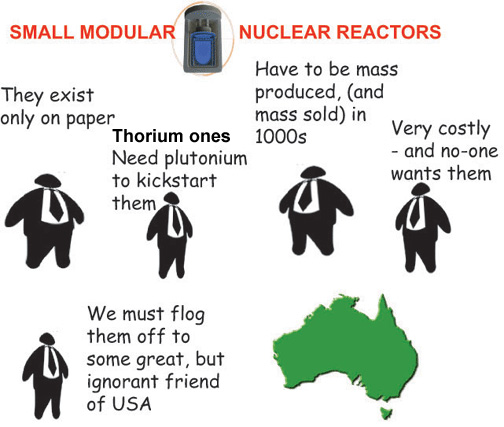
June 13, 2024, David Schlissel and Dennis Wamsted, https://ieefa.org/resources/nuclear-options-new-research-smrs-raises-questions-over-australias-energy-debate
Following the recent publication of CSIRO research showing that large-scale nuclear would be costly and slow to implement in Australia, a new report from IEEFA shows that similar challenges exist for small modular reactors (SMRs).
SMRs remain a relatively new, unproven technology that are too expensive, would take too long to build, and would present too many risks to play a significant role in Australia’s energy transition.
IEEFA’s research also raises questions over claims SMRs would be a complementary resource for electric grids dominated by renewables, as they are best placed to provide continuous generation with a high capacity factor.
Investing in SMRs would risk derailing the transition away from fossil fuels, potentially delaying it significantly. Policymakers, utilities and investors should embrace the reality that renewables, storage and DER offer the near-term solution to Australia’s energy transition.
After CSIRO released modelling in May showing that large-scale nuclear is highly costly and would take a long time to implement, some might conclude this puts the other nuclear option – small modular reactors (SMRs) – back on the table.
Well… perhaps not.
Nuclear power is now a debated topic in Australia, with the opposition Coalition flagging it as a cornerstone of its energy policy. Although details remain scarce, news reports suggest it may entail building nuclear reactors on the sites of decommissioned coal power stations. The Coalition was originally focused on installation of SMRs, but later changed focus to large-scale nuclear.
However, questions were raised on 22 May with the release of the 2023-24 annual GenCost report by Australia’s national science agency. For this year’s report, CSIRO included large-scale nuclear power for the first time. It concluded that large-scale nuclear would be more expensive than renewables, and would require at least 15 years to develop, including construction.
The opposition has disputed the report’s findings and asked CSIRO to rerun its modelling. However, given the numerous political, regulatory, financial and logistical challenges that nuclear generation projects routinely encounter, as well as the absence of any large-scale nuclear industry in Australia, it seems reasonable to assume that – at the very least – the timeline for such a plan would carry a high degree of uncertainty.
So, with the prospects for large-scale generation somewhat diminished, perhaps the focus may turn to SMRs. SMRs have long been touted to be quicker and cheaper to construct than we’ve seen previously with more conventional nuclear plants.
However, the Institute for Energy Economics and Financial Analysis (IEEFA) is this week releasing new research that suggests SMRs do not represent any more credible an option than large-scale nuclear plants. IEEFA’s report, SMRs: Still Too Expensive, Too Slow and Too Risky, reinforces previous research by IEEFA, showing that SMRs are too costly, they would take too long to build, and they would present too many risks to play a significant role in Australia’s energy transition away from fossil fuels.
The nuclear industry remains beset by frequent cost overruns and schedule delays, and SMRs have not been exempt from these problems. SMRs remain a relatively new, unproven technology. Drawing on the experiences of operating and proposed SMRs, our researchers found the reactors would continue to take much longer to build than their advocates claim, and at a much higher costs.
SMR construction cost estimates keep rising
SMRs in operation or under construction in China, Russia and Argentina have seen their costs increase three- to seven-fold since their original cost estimate. Cost estimates for US SMRs have also multiplied by between two and four in recent years. In addition to the cost issues, long delays have been the norm, not the exception, with projected schedules of three to four years at the start of construction stretching to 12-13 years.
The report also raises questions regarding claims that SMRs would be complementary resources for electric grids dominated by renewables – as is increasingly the case in Australia. SMRs are best placed to provide continuous generation with a high capacity factor. The less they run, the more their cost per megawatt-hour (MWh) increases. With a utilisation factor of 25%, the cost for an American SMR would be US$400/MWh, or about A$600/MWh.
Importantly, investing in SMRs would risk derailing the transition away from fossil fuels, potentially delaying it significantly. It would divert funding and resources away from the carbon-free alternative technologies like renewable energy generation and battery storage, the costs of which have plunged in recent years with further reductions to come.
These are technologies that can have a meaningful impact on Australia’s energy transition in the coming 10 years. IEEFA research has highlighted a wealth of opportunities to accelerate the transition through the likes of large-scale renewables and storage, distributed energy resources (DER), electrification of households, optimising large-scale energy storage, and smart demand-side measures. All of these are proven, low-cost options that are ready to be deployed now.
Policymakers, utilities and investors should embrace the reality that it is renewables, storage and DER, not SMRs, that offer the near-term solution to Australia’s energy transition.
1 This month
7 April – WEBINAR – Australia and the Doomsday Clock – Preventing nuclear war through NoFirstUse and other policies
Online | Tuesday April 7, 4:00-5:30pm, Australian Eastern Time / 8:00-9:30am Central Europe Time
– Access the registration link
15 April – Zoom –Nuclear Power is Not the Solution
Apr 15, 2026 01:00 AM in Canberra, Melbourne, Sydney

Join the International Physicians for the Prevention of Nuclear War (IPPNW) on Tuesday, April 14th for a timely webinar exploring the risks associated with nuclear power and challenging the myth that it offers a simple, safe, carbon-free solution to the climate crisis

of the week – Australians for War Powers Reform (AWPR)
To see nuclear-related stories in greater depth and intensity
 Antinuclear