The Coalition has turned its renewable energy denial into a nuclear roadmap to nowhere. It’s exhausting

Adam Morton, 20 Aug 24 https://www.theguardian.com/environment/commentisfree/article/2024/aug/20/coalition-peter-dutton-nuclear-power-policy-renewables-comment
The opposition has still produced nothing to back up its widely disputed claim that Australia could have an operational nuclear industry before the 2040s
Journalists are obsessed with the new. We cast around every day to tell audiences something they don’t know. That’s the job.
Sometimes, when we get it right, we reveal information that’s substantial and deserves exposure and scrutiny. Sometimes we aim for a different type of revelation – one that comes from picking apart and giving context to claims that are demonstrably not true, but have been repeated so often they have become a regurgitated part of public debate. This fact-checking role can feel repetitive and, frankly, exhausting. But it’s also part of the job.
It’s been a major part of reporting on the climate crisis and Australia’s policy response to it. Since the 1990s, we have seen facts twisted and corrupted until the truth has been muddied, and sometimes lost. Misinformation campaigns have colluded with spectacular political failures (see: the implosion of the last federal Labor government) to set back even modest attempts to start cutting Australia’s greenhouse gas pollution and prepare for a zero-emissions future.
The misinformation was once most often straight-up climate science denial. Over time that’s become less common from public figures, though it still exists. These days the arguments from those opposed to tackling rising emissions are more often renewable energy denial – the idea that you can’t run a modern economy on solar and wind backed by energy storage and other “firming” technology.
Attacks on renewable energy have escalated since the Albanese government was elected in May 2022 saying it would deliver 82% of national electricity demand from these sources by 2030. In reality, it just promised a step up from where the country was headed. Government agencies had already forecast the country would reach 68% renewable energy under the Morrison government, even though it had no serious climate policies and was trying to put the brakes on the solar and wind expansion. The reason? Coal plants were shutting and investors deemed solar and wind as the best options to replace them.
The pushback against renewables kicked into gear once federal and state governments started grappling with what it meant to move from a predominantly coal-based system to a grid dominated by sun and wind. That included underwriting new solar, wind and batteries and building the transmission connections needed to plug the new plants into the grid.
The on-ground anti-renewables movement is dispersed, often in regional areas, and connected through Facebook and other social media hothouses where facts mostly go to die. Not all of it is driven by renewable energy denial. There are people with heartfelt and legitimate concerns about what developments in their area will mean for nature and agricultural land. Clearly, not everywhere is suitable for a renewable energy project, particularly the case given the dire and deteriorating state of Australia’s unique fauna and flora.
But the movement has also been fanned by people with no interest in local concerns. Some are fringe dwellers who believe plans to tackle the climate crisis are part of a global conspiracy. Others are more cynical, and politically motivated.
In both camps, some are more energised by a fight against their perceived ideological enemies than the specifics of what they are opposing. This approach can be summarised as: if my idiot opponent likes it, it must be stupid and bad.
Which brings us to the claims that Australia needs nuclear energy because we can’t replace the wave of coal power exiting the system without it.
This argument falls comfortably into the not new, repetitive and, at times, exhausting category. In most cases it is underpinned by an apparent certainty that renewable energy just can’t do the job, and an out-of-hand dismissal of evidence that says otherwise.
Politically, nothing much has changed since June, when Peter Dutton and the Coalition climate change and energy spokesman, Ted O’Brien, announced seven sites where they say the opposition would build nuclear generators if it regained power. More detail had been expected before parliament returned last week, but none was released.
There are still no cost estimates. There has been nothing to back up the widely disputed claim that Australia could have an operational nuclear industry before the 2040s. There has been nothing to explain Dutton and O’Brien’s assertion that nuclear would lead to a “cheaper, cleaner and consistent” electricity grid. There has been no clear explanation of why they don’t agree with government agencies and the range of independent experts who have rejected their arguments.
On Sunday, the Nationals leader David Littleproud was challenged on the ABC’s Insiders about whether the Coalition planned to cap the amount of renewable energy coming into the system, as he had previously claimed. He replied there would “not necessarily” be a “hardline cap”, but the opposition would propose “market signals” to back nuclear energy and fossil-fuel gas, and this would limit investment in renewables.
Let’s consider what this actually suggests.
It says a Dutton government would take steps to slow viable electricity generation coming into the system while the system faces a cliff, with 90% of remaining coal plants forecast to have shut by 2035. It disregards the Australian Energy Market Operator’s blueprint for an optimal future power grid, the integrated system plan published under both the Coalition and Labor, that has found we could run the country on a more than 90% renewable energy grid.
It instead puts weight on a nuclear plan that would have to clear colossal political, logistical and social licence hurdles, and even then could deliver only a fraction of Australia’s electricity needs – much less than the 40% that already comes from renewables. It would not kick in until the coal fleet was gone. According to the CSIRO, it could cost $17bn just to get one generator in the ground.
Its also puts weight on gas-fired electricity. Gas is the most expensive fuel in the national grid, and gas power is mostly turned only on at times of high electricity demand. It is forecast to have a role into the future, but largely as a fast-starting gap-filler deployed in bursts and burned in relatively small amounts. This reflects not only its cost, but that gas is methane – a potent fossil fuel – and releases carbon dioxide when it is burned.
These are the facts of the issue. They don’t have the flash of the new, but while this remains the Coalition’s position they will be a central part of the story of the next election. We’re going to need to keep returning to them for a while yet.
Australian nuclear news headlines 19 – 26 August

Australian nuclear news headlines as they come in 19 – 26 August :
- Is the USA now considering withdrawal from AUKUS?
- Western world complicit in Gaza Hellfire attacks
- Civil Society faces imposition of an AUKUS military High Level nuclear waste dump.
- Australia offers U.S. a vast new military launchpad in China conflict.
- AUKUS 2.0: Albanese Drives It Like He Stole It, and Then Gives It Away to the US
- The anti-renewables groups pushing the nuclear option to rural Australia
- Nuclear industry front group? The Australian Strategic Policy Institute (ASPI) enthuses over nuclear-armed submarines’
- Earthquake damages buildings near site of proposed nuclear plant.
- Too big to fail? Who cares if there’s no accountability – the Nuclear Lie.
- The Coalition has turned its renewable energy denial into a nuclear roadmap to nowhere. It’s exhausting
- “Gas Trojan horse:” Coalition nuclear push slammed as fossil wedge aimed at renewables
“Gas Trojan horse:” Coalition nuclear push slammed as fossil wedge aimed at renewables
RENEW ECONOMY, Sophie Vorrath, Aug 19, 2024
The chair of Australia’s largest group of clean energy investors has described the federal Coalition’s push for nuclear power as a “gas Trojan horse,” and a political wedge intended to douse investment in renewables and prolong the use of fossil fuels.
John Martin, CEO of renewables developer Windlab and chair of the Clean Energy Investor Group, on Monday named wedge politics as one of biggest issues holding back the shift to renewables in Australia, describing the current industry status quo as “really, really challenging.”
“Australia is the land of wedges,” Martin told the 2024 Clean Energy Investor Conference in Melbourne.
“When I think of the whole nuclear debate, I don’t see that as really about nuclear. It’s a gas Trojan horse,” Martin told the conference.
“If you do any modeling, what will happen? The coal will go, nuclear will take forever, none of us are going to invest in renewables knowing we can’t compete against government-funded nuclear, [so that] big gap will be filled with gas. So there’s a wedge there that’s being aimed at us.”
Painting renewables as a natural enemy of the environment and wildlife is “another fantastic wedge strategy,” Martin says, that likewise threatens to derail progress on decarbonisation, while doing nothing to address the urgent need to reform Australia’s environment and biodiversity protection rules…………………………………………………………………………………………………………………………….. https://reneweconomy.com.au/gas-trojan-horse-coalition-nuclear-push-slammed-as-fossil-wedge-aimed-at-renewables/
Nuclear news -the other side of the stories this week.

Some bits of good news. UNICEF for every child – what we do.Baby beavers born in urban London for the first time in over 400 years. UK riots spark ‘love’ campaign for refugees
TOP STORIES.
Humanity on a knife’s edge.
The Price of the Sentinel Nuclear Weapons Program Keeps Going Up—But the True Costs Are Even Higher.
Amazon Vies for Nuclear-Powered Data Center .
From the archives. Radioactive waste danger at St Louis, USA – new film ‘Atomic Homefront’
Climate. How Close Are the Planet’s Climate Tipping Points? How climate change has pushed our oceans to the brink of catastrophe. When glaciers calve: Huge underwater tsunamis found at edge of Antarctica, likely affecting ice melt.
Mature trees offer hope in world of rising emissions.
Heat aggravated by carbon pollution killed 50,000 in Europe last year – study. Half a billion children live in areas with twice as many very hot days as in 1960s.
Noel’s notes. Low dose ionising radiation as a cause of illness and death.
AUSTRALIA. Resisting AUKUS: The Paul Keating Formula.
Australia blasted for new Aukus deal over nuclear waste fears – ‘blow to sovereignty’ . Albo’s Trojan Horse. Nuclear waste dump debate heating up over AUKUS, Coalition plans The West Report – https://www.youtube.com/watch?v=0JVfESp-A3Q Forced Posture: has Australia already ceded military control to the US? A whole lot more Australian nuclear news at https://antinuclear.net/2024/08/14/australian-nuclear-news-headlines-13-20-august/
NUCLEAR NEWS
ARTS and CULTURE. NFLA’s send ‘very best of luck’ to Peace Museum on reopening in historic Salts Mill.
ATROCITIES. The Fajr massacre: Every 70 kg bag of human remains is considered a martyr .
CLIMATE. EDF cuts nuclear production in reaction to soaring temperatures.
ECONOMICS. Sweden Considers Borrowing $28.5 Billion to Finance Nuclear. Sizewell C funding decision may not be made this year. The Nuclear Regulatory Commission’s Antiques Roadshow. German ministers told there’s no more money for Ukraine – media.
ENERGY. Data centers want to tap existing nuclear power. Is that good or bad? Tech Companies Are Racing to Harness Nuclear Power.
| ENVIRONMENT. Black bears to be evicted for nuclear waste site. | ETHICS and RELIGION. Thou Shalt Not Commit Genocide. Bloody Eschatology: Israel and the next Big War. Fans of peace call for nuclear-free Northeast Asia. | HEALTH. Radiation. Long-run exposure to low-dose radiation reduces cognitive performance.Concerns raised for health professionals exposed to radiation at work. |
| HISTORY. How NATO Went Rogue. | LEGAL. Nuclear site apologises after pleading guilty to cybersecurity failings | MEDIA. ‘The dumbest climate conversation of all time’: experts on the Musk-Trump interview. |
| OPPOSITION to NUCLEAR . Nuclear Free Local Authorities send message of solidarity to Canadian First Nations opposed to nuke dump. | PERSONAL STORIES Israel Is Holding Thousands of Palestinians Captive — Including Children. British Nuclear Test Medal. |
POLITICS.
- The two faces of Kamala Harris on Israeli genocide in Gaza. Gantz warns of a civil war in “Israel”.
- Ukraine’s plan to buy Russian-made nuclear reactors sparks uproar.
- Rebranded SNC-Lavalin seeks as much as $75M in taxpayer dollars to build more powerful Candu nuclear reactors.
- Revealed: UK ministers’ doubts over nuclear plant at Torness. Nuclear Free Local Authorities (NFLA) welcome developments to move forward to an early poll in Theddlethorpe.
- Peace Is Not On The Ballot In November https://www.youtube.com/watch?v=KqaPrRP5rZk Congressman Garamendi Asks “Why does America need nuclear weapons?” California legislators break with Gov. Newsom over loan to keep state’s last nuclear plant running.
- South Africa halts plans for nuclear power
POLITICS INTERNATIONAL and DIPLOMACY.
- Iran to Israel: Ceasefire in Gaza war, or retaliation for Haniyh murder will proceed. Iran’s future FM says nuclear deal broken, favors military-diplomatic path .
- China urges US, UK and Australia not to advance nuclear submarine cooperation.
- South Korea’s Yoon seeks dialogue with North, path to unification.
SAFETY.
- Map reveals nuclear fallout that would happen if Europe’s biggest plant explodes. IAEA warns of heightened security dangers facing Ukraine’s Zaporizhzhia Nuclear Power Plant. IAEA says safety at Ukraine’s Zaporizhzhia nuclear plant deteriorates.
- What Happens if Ukraine Seizes the Kursk Nuclear Power Plant?
- Incidents. Safety at Ukraine nuclear power plant deteriorating after blast, watchdog warns.
- Fukushima nuclear plant detects 25 tonnes of radioactive water leak. Latest leak accident in Fukushima ‘once again exposes management chaos of TEPCO’.
- Fire sparks Georgia nuclear plant alert, but officials say no safety threat as reactors unaffected
| SECRETS and LIES. 6 Billionaire Fortunes Bankrolling Project 2025. Top US Military Officials Won’t Say Whether the US had Advance Knowledge of Ukraine’s Invasion of Russia. | TECHNOLOGY. The end of Oppenheimer’s energy dream – modular reactors are supported by ideology alone. |
| WAR and CONFLICT. Israel Suddenly Has A Problem With Attacks On Population Centers. Should Ukraine capture a Russian nuclear power plant? NATO Countries Think Ukraine Won’t Be Able To Hold Territory in Russia’s Kursk. Nato fighter jets intercept Russian nuclear bombers. US deploys missile submarine to Middle East. China calls US ‘biggest nuclear threat to the world’. | WEAPONS AND WEAPONS SALES Journalists Demand Blinken Back Israel Arms Embargo. US approves new $20bn weapons sale to Israel A game plan for dealing with the costly Sentinel missile and future nuclear challenges. America prepares for a new nuclear-arms race. Iran planning to resume testing nuclear bomb detonators. Canada gives Ukraine green light to use its weapons in Russia. ’Balance of terror’: South Korea’s unthinkable ‘shift’. CNMI (Commonwealth of the Northern Marianas) group raises concern on Guam governor’s nuclear weapons storage stance. |
Gareth Evans: AUKUS is terrible for Australian national interests – but we’re probably stuck with it

as Paul Keating continues to put it so articulately, that we need to find our security in Asia, not from Asia.
The Conversation, Gareth Evans, Distinguished Honorary Professor, Australian National University, August 16, 2024
This is an edited extract of a presentation by Gareth Evans, Distinguished Honorary Professor at ANU and former Australian foreign minister, to the Academy of the Social Sciences in Australia Conference.
Politics played a significant part in the birth of AUKUS in Australia, and politics both here and in the United States will play a crucial role in determining whether it lives or dies. That is so at least for its core submarine component. The second pillar of the agreement, relating to technical cooperation on multiple new fronts, is both much less clear in its scope and less obviously politically fraught.
On the Australian side, partisan political opportunism was a factor in the initiation of the submarine deal, bipartisan political support was a condition of US agreement to it, and maintenance of that bipartisan support into the future presumably will be a precondition of its continuance, at least when it comes to highly sensitive elements like the handover of three Virginia class submarines.
On the American side, it was perception of US strategic advantage that drove Washington’s agreement to the deal, rather than any domestic political considerations. But strong cross-party support in Congress will remain necessary for its complete delivery. And, at the even more critical executive level, it cannot be assumed the deal is now Trump-proof.
It is only in the United Kingdom that we can reasonably regard domestic politics to be irrelevant to AUKUS’s future. The deal is so obviously a gift to the national Treasury, and has so little impact on national defence and security interests, that no one on any side of politics is ever likely to find it unpalatable.
In Australia, domestic politics have been a factor from the outset. While for the Morrison government the primary driver of the AUKUS decision was, no doubt, the ideological passion of senior Coalition ministers for all things American, it is hard to deny political opportunism came a close second.
Morrison was deeply conscious of the opportunity the deal presented to wedge the Labor opposition in the defence and security space, where the Labor Party has long been perceived, rightly or wrongly, as electorally vulnerable. That the nuclear dimension of the deal was bound to ruffle some feathers in Labor ranks was an added political attraction…………………………………………..
What I am now critical of, is that when Labor did come into office in May 2022, it is clear no such serious review of the whole AUKUS deal ever took place. Crucial questions were never seriously addressed; clearly articulated answers to them have never been given by the prime minister, defence minister or anyone else. The answers that are in fact emerging as further time passes are deeply troubling…………………………………..
……..there is zero certainty of the timely delivery of the eight AUKUS boats. We now know that both the US and UK have explicit opt-out rights. And even in the wholly unlikely event that everything falls smoothly into place in the whole vastly complex enterprise, we will be waiting 40 years for the last boat to arrive, posing real capability gap issues.
………………, the final fleet size – if its purpose really is the defence of Australia – appears hardly fit for that purpose. ………………..
…….the eye-watering cost of the AUKUS submarine program, up to $368 billion, will make it very difficult, short of a dramatic increase in the defence share of GDP, to acquire the other capabilities we will need if we are to have any kind of self-reliant capacity in meeting an invasion threat. Those capabilities include, in particular, state-of-the-art missiles, aircraft and drones, that are arguably even more critical than submarines for our defence in the event of such a crisis.
..the price now being demanded by the US for giving us access to its nuclear propulsion technology is extraordinarily high.
……… The notion that we will retain any kind of sovereign agency in determining how all these assets are used, should serious tensions erupt, is a joke in bad taste.
…….the purchase price we are now paying, for all its exorbitance, will never be enough to guarantee the absolute protective insurance that supporters of AUKUS think they are buying. ANZUS, it cannot be said too often, does not bind the US to defend us, even in the event of existential attack. And extended nuclear deterrence is as illusory for us as for ever other ally or partner believing itself to be sheltering under a US nuclear umbrella. The notion that the US would ever be prepared to run the risk of sacrificing Los Angeles for Tokyo or Seoul, let alone Perth, is and always has been nonsense.
We can rely on military support if the US sees it in its own national interest to offer it, but not otherwise.
…………………………………………………………………………………………………..as Paul Keating continues to put it so articulately, that we need to find our security in Asia, not from Asia.
Australia’s no-holds-barred embrace of AUKUS is more likely than not to prove one of the worst defence and foreign policy decisions our country has made, not only putting at profound risk our sovereign independence, but generating more risk than reward for the very national security it promises to protect. I cannot imagine this decision being made by any of the Hawke-Keating governments of which I was part. Times have changed. https://theconversation.com/gareth-evans-aukus-is-terrible-for-australian-national-interests-but-were-probably-stuck-with-it-236938
Nuclear waste dump debate heating up over AUKUS, Coalition plans
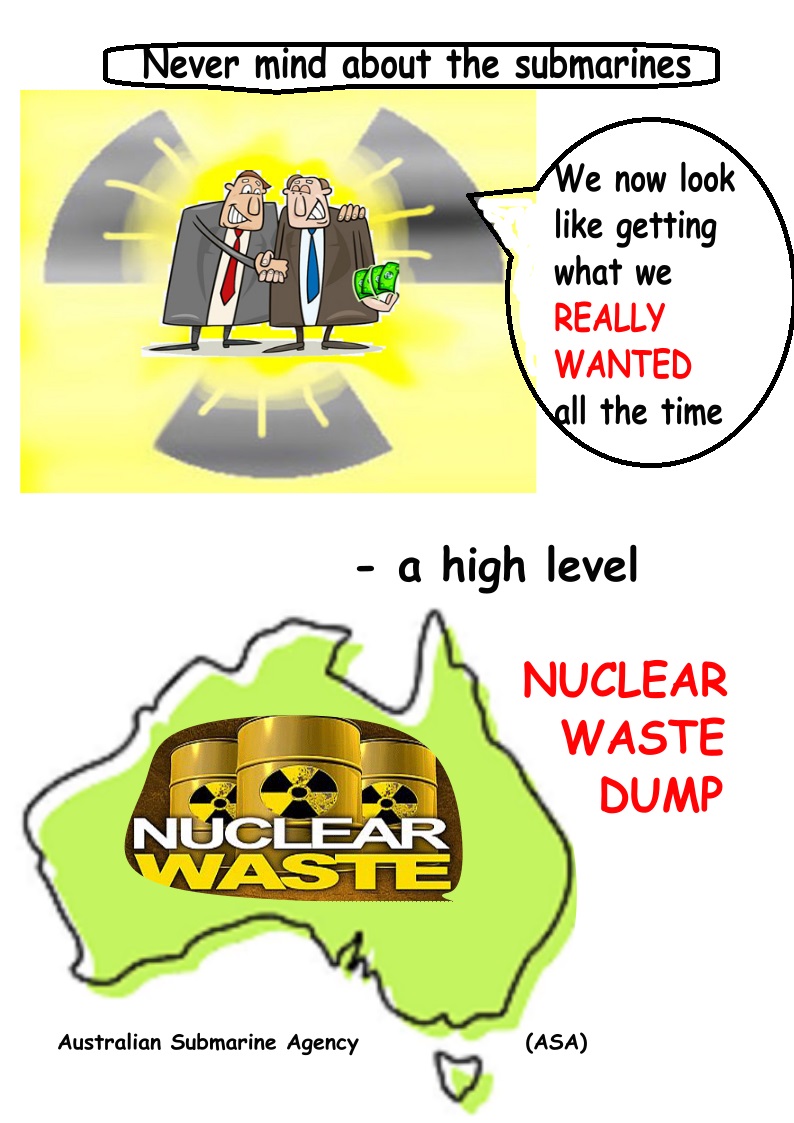
Australia’s AUKUS agreement with the US and Uk will pave the way for nuclear submarines – and nuclear waste. But some experts say the government has not learned the lessons of three past attempts to deal with that material.
protesters in the South Australian town of Port Augusta in 2018 were pushing back against a government proposal for a nuclear waste dump near the town of Kimba.
They took their fight all the way to the Federal Court, forcing Labor to ultimately abandon the plan.
But the issue of nuclear waste in Australia remains a controversial one.
Emeritus Professor Ian Lowe says that for now, much of Australia’s nuclear waste is stored near the nation’s only reactor at Lucas Heights in south-west Sydney, which is mostly used to make medicine, mining materials, and for research.
Low-level waste is also being stored in hundreds of cupboards, labs and hospitals nationally.
“Intermediate level waste is nastier. And it needs to be stored basically permanently for geological time, and it probably needs to be stored deep underground because the isotopes that are there can be harmful for thousands of years. At the moment, they’re in temporary storage at Lucas Heights near the research reactor. And the capacity there is okay for perhaps 10 years, but sooner or later we’re going to have to find a way of permanently disposing of the intermediate level waste. And that’s a more serious issue than the low level waste. It needs to be deep underground and it needs to be in a properly engineered storage site. And we’re talking big sums of money.”
That waste is safe and secure for now but the Australian Radioactive Waste Agency says this is not a sustainable solution long-term.
The government, opposition and Professor Lowe all agree.
“I mean, basically the temporary waste storage at Lucas Heights is just a very large shed with drums of radioactive waste.”
Australian Conservation Foundation campaigner Dave Sweeney says efforts to site a new nuclear dump have focused more on PR – and managing outrage.
“There has been 30 years of a divisive debate, of coercive attempts to impose radioactive waste, and there have been multiple fights at multiple sites, mainly in the Northern Territory and South Australia, where affected communities and particularly Aboriginal communities have been very very strident, strong and sustained in their opposition – and have defeated a proposal to put waste on their Country and the Canberra caravan has moved on.”
A spokesperson for Resources Minister Madeleine King has said the government is reflecting on lessons learned from past siting processes as it assesses options for safely disposing of nuclear waste.
But Dr Lowe says the government has not learned the lessons of history.
I think successive governments are just kicking the can down the road. If there is a plan, nobody knows about it.”
The debate is being revived because of the waste that will come from the on-board reactors of AUKUS subs.
This will be high-level waste – a more hazardous form Australia does not have right now.
The government plans to dispose of this weapons-grade waste on defence land – and Defence Minister Richard Marles says we have time to get it right.
“To be clear, we will not have to dispose of the first reactor from our nuclear-powered submarines until the 2050s. I want to assure the Parliament that there will be appropriate public consultation, particularly with First Nations communities to respect and protect cultural heritage. This will not be a matter of set and forget.”
In March last year Mr Marles told parliament the government would set out the process for selecting a site within 12 months, but 17 months on those details are yet to be announced.
Professor Lowe has criticised the bipartisan AUKUS agreement as being irresponsible without a waste management plan.
“I think if we’re being asked to approve nuclear power reactors or nuclear submarines, we’re entitled to see a clearly spelt out intellectually and morally and politically defensible solution for the problem that will inevitably be created. It’s just not responsible to create a problem saying, we hope future generations will figure out a way to deal with it.”
Campaigner Dave Sweeney opposes any high-level waste, but says we need to face up to the challenge of intermediate waste – although he doesn’t want to see the process rushed.
“I think we need to just every party take a breath, acknowledge that radioactive waste is in this country, acknowledge that it has been poorly managed to date, realise that we have because of hard efforts of contests from Aboriginal people and local communities, we have now won ourselves some breathing space with the interim storage of intermediate level waste securely at the ANSTO facility and use that time not to regroup in our trenches, but use that time to gather at the table and genuinely consider pathways forward.”
There appear to be some promising developments.
One company, called Tellus Holdings, has forged a new way forward for low-level waste, establishing a disposal site in West Australia – the first private firm ever licensed to do so.
CEO Nate Smith says the company has disposed of 6,000 cubic metres of radioactive material since its facility opened one-and-a-half-years ago – after ten years of consultation.
“With Kimba and others, I think government has announced the site, and then done engagement, and I think that puts people on the back foot. It all starts with trust. For us that was sitting down over cups of tea or going to the pub, it was sharing our vision of what we wanted to do and really understanding the community’s perspective but also their aspirations, and I think one of the biggest things we did that was in stark contrast to government is look we gave our Traditional Owners a veto right. For us, the whole concept from the start was, this is their land.”
Tellus Holdings will not accept intermediate or high-level waste, but Mr Smith says the company is eager to take on more low-level material, arguing this would free up space for interim storage at Lucas Heights.
“It would allow ANSTO and ARWA and others to focus on the real challenge right now, which is intermediate and high-level waste, because it’s coming with AUKUS and it’s already in existence from the Lucas Reactor.”
The Coalition’s plan for a nuclear power industry would also create more high-level waste if it goes ahead.
In a statement to SBS, the Opposition’s resources spokeswoman Susan McDonald said the Coalition anticipates that it would be stored on-site with the proposed nuclear power reactors and eventually disposed of permanently alongside the AUKUS material.
Professor Ian Lowe says the public deserves to know more.
“The one thing we know about nuclear reactors, they produce high level waste that has to be managed for geological time. And if we were to go ahead and build seven nuclear reactors by 2035, by 2036, we would be producing high level radioactive waste. So we really need to hear from the Coalition how they propose to resolve that problem.”
TODAY. Low dose ionising radiation as a cause of illness and death

It’s not fashionable to talk about low level radiation as causing illness. If it gets mentioned at all, well, we tentatively state low level radiation as linked with or associated with illness.
Nice and vague. We all know that you can’t respectably experiment on humans, to get absolute proof.
The nuclear lobby doesn’t mind admitting to the harmful effects of immediate high doses of ionising radiation. Those effects are so bad for the relatively few individuals that suffer them, – why it almost seems to prove that low doses are OK, (even good for you as the “hormesis” fans claim)! It’s easier to dwell on, and deplore the effects of high dose radiation on one person, which is, for some unknown reason, now the most popular topic on my nuclear-news website.

What is ignored, especially by the nuclear lobby, is the collective effect over time, of low level radiation. Nobody seems to have a figure for this. But there have been several thoroughly researched epidemiological studies, showing the harmful effects on exposed populations. The most recent was published in the British Medical Journal (BMJ Aug 16, 2023 accessible free of charge).
The thing is – people can get their head around the idea of one individual having a painful illness and death.
The less dramatic thought is – say for example – if 10 million people were exposed over time to low level radiation, and their risk of fatal cancer was increased from the normal risk of 5%, by another 8% (as the BMJ study showed) that would result in one million three hundred thousand fatal cancers.
When we pause to think about this less exciting information about slowly developing illness of great numbers of people – it’s pretty serious!
So this is the collective effect of low level radiation – that doesn’t get talked about.
One huge study recently has been based on dual research – i.e. on epidemiological research and experimentation on mice. This kind of study is similar to the work of Sir Richard Doll in the 1950s proving that cigarette-smoking causes cancer.
Now the corporate world prefers terms like “linked” and “associated with’ – terms that blur the reality of the scandals of environmental pollution and health. And there’s no bigger scandal than the pervasive lie that low level ionising radiation does not matter.
Chair of Nuclear for Australia denies that calling CO2 ‘plant food’ means he is a climate denier

Dr Adi Paterson’s statements are apparently at odds with the group’s official position, which says nuclear is needed to tackle the climate crisis
Graham Readfearn, 17 Aug 24, https://www.theguardian.com/environment/article/2024/aug/17/dr-adi-paterson-nuclear-for-australia-climate-change
The chair of a leading Australian nuclear advocacy group has called concerns that carbon dioxide emissions are driving a climate crisis an “irrational fear of a trace gas which is plant food” and has rejected links between worsening extreme weather and global heating.
Several statements from Dr Adi Paterson, reviewed by the Guardian, appear at odds with statements from the group he chairs, Nuclear for Australia, which is hosting a petition saying nuclear is needed to tackle an “energy and climate crisis”.
Nuclear for Australia was founded by 18-year-old Queensland nuclear advocate Will Shackel, who has said repeatedly he believes reactors are needed to fight “the climate crisis”.
Two climate science experts told the Guardian that Paterson’s statements were misguided and typical of climate science denial.
Paterson defended his statements, telling the Guardian he was “not a climate denier”. He described himself as “a climate realist” and an “expert on climate science”.
In May, Paterson, who resigned in 2020 as the chief executive of the government’s Australian Nuclear Science and Technology Organisation, suggested on LinkedIn that concerns about climate change were “an irrational fear of a trace gas which is plant food”. He has been a regular guest on right-wing media outlets since the Coalition earlier this year said it wanted to lift the ban on nuclear and build reactors in seven locations.
On his Facebook page, Paterson has said that “cold is more dangerous than warm” and described a leading scientist as a “climate creep”.
On LinkedIn, he said US space agency Nasa was “deliberately confusing public understanding by publishing ground surface temperatures”, saying the agency’s climate work “should be given to a credible independent group. Defund NASA!”
In April, Paterson told an audience at the Centre for Independent Studies that “you can’t make a correlation between extreme events and climate” and said “no matter what you believe about carbon dioxide – it is plant food”.
“Increasing carbon a little bit is not going to dramatically change the climate. The plants will grow better,” he said, saying the planet was in a period of low CO2.
Prof David Karoly, a councillor at the Climate Council and a respected atmospheric scientist who has been studying the affects of CO2 on the climate since the late 1980s, said Paterson’s statements were typical of those from climate science deniers.
He said while CO2 levels were currently low in comparison to other times in Earth’s history, they were higher than at any time since the emergence of homo sapiens.
“He is misguided,” Karoly said. “CO2 has led to increases in temperature extremes, extreme rainfall, sea level rise and increases in bushfires and fire weather. CO2 has already dramatically changed the climate.”
Dr John Cook, an expert on climate change misinformation at the University of Melbourne, said Paterson was “regurgitating arguments” across a range of “thoroughly debunked talking points”.
He said: “It’s inconsistent to argue that CO2 is a trace gas which can’t possibly make any difference but at the same time claim that CO2 is going to green the planet.”
Shackel did not respond to questions. In an interview with the Guardian, Paterson argued the UN’s climate change panel “has made it very clear” that it was “not possible at this point” to link extreme events to changes in the climate.
But the panel’s latest report said it was “an established fact that human-induced greenhouse gas emissions have led to an increased frequency and/or intensity of some weather and climate extremes”, with evidence for rising temperature extremes, extreme rainfall, droughts, tropical cyclones and more dangerous fire weather.
Paterson said he did think rising levels of CO2 were a problem and that fossil fuels needed to be limited “as soon as we can”. “It is a very, very serious problem but it is not a climate crisis,” he said.
He said he had been concerned about climate change for many years but said unduly worrying children over the issue was “a form of child abuse”, and “the chance of significant catastrophic events” occurring in the next 30 years “related to an increase of CO2 in the atmosphere in the southern hemisphere” was “small”.
Paterson added he was more concerned about the “ecocide” from building wind and solar farms” than about climate change.
When glaciers calve: Huge underwater tsunamis found at edge of Antarctica, likely affecting ice melt.
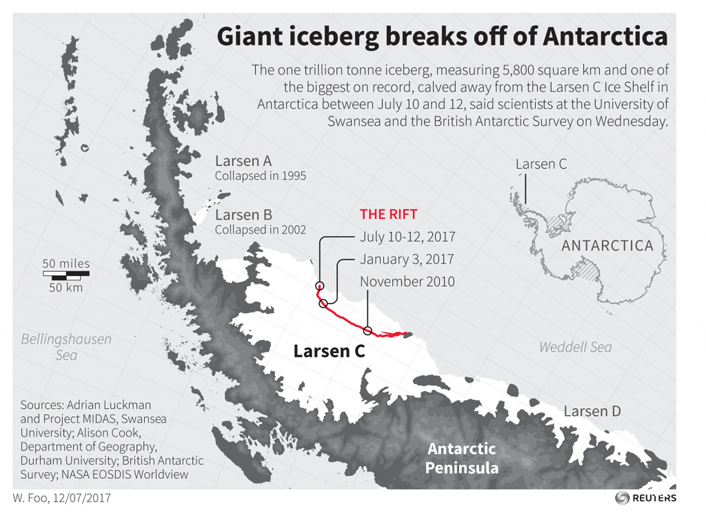
Bulletin, By Michael Meredith | July 15, 2024
Antarctica is huge, it affects pretty much every place and every living thing on our planet, and it is changing. This should be a concern for all of us, and yet we know troublingly little about some key aspects of the great white continent.
Despite its position in the far distant south, Antarctica is a vital component in the functioning of the planet. It is central to global ocean circulation, thus exerting a profound influence on the world’s climate (Figure 1 on original). The vast Southern Ocean that surrounds Antarctica absorbs huge quantities of heat and carbon dioxide from the atmosphere and distributes them around the rest of the world, thereby slowing the rate of global warming elsewhere. This “climate favor” has comes at a cost, however—the Southern Ocean is overheating and acidifying, with marked impacts on the marine ecosystem. The extra heat in the ocean is also melting the fringes of the Antarctic Ice Sheet, destabilizing its glaciers, and increasingly pushing up sea levels worldwide. The sea ice around Antarctica—formed in the fall and winter of the Southern Hemisphere, when the ocean surface freezes—has now reached record low extents, affecting the Earth’s energy budget and acting to further accelerate climate change.
All the information we have from Antarctica comes from sparse networks of sensors and equipment deployed directly, augmented with satellite measurements of the ice and ocean surface and computer simulations. While we know more about Antarctica and the Southern Ocean than ever before, it is still one of the least-well measured places on our planet, with some areas still remaining “data deserts.” We need to know more, so that we can better understand the causes of the changes happening here, how they will continue to change in future, and hence what the global impacts are likely to be.
One feature of the Southern Ocean that is often overlooked is how (and how strongly) it is mixed. This is a key process that redistributes heat, carbon, nutrients, plankton, and all other things in the sea, with profound consequences.
………………………………………glacier calving event had caused a sudden massive burst in the mixing of the ocean, stretching many kilometers from the ice front.
How did it do this? The data revealed that the glacier calving had triggered an underwater tsunami event. In essence, large waves (the height of a two-story house) were generated and moved rapidly away from the glacier, riding the interface between layers in the ocean that were tens of meters down. When these internal tsunami waves finally broke—like surface waves on a beach—they caused massive churn and mixing…………………………………………………………………………
This process—of glacier calving generating internal tsunamis and bursts of ocean mixing—is entirely absent from the computer models that are used to simulate our climate and ecosystem, hampering our ability to reliably project future changes. We need to know more about how this process works, how it will change, and what its consequences will be. ……. https://thebulletin.org/premium/2024-07/when-glaciers-calve-huge-underwater-tsunamis-found-at-edge-of-antarctica-likely-affecting-ice-melt/?utm_source=Newsletter&utm_medium=Email&utm_campaign=ThursdayNewsletter08152024&utm_content=ClimateChange_HugeUnderwaterTsunamis_07152024&utm_source=Newsletter&utm_medium=Email&utm_campaign=ThursdayNewsletter08152024&utm_content=ClimateChange_HugeUnderwaterTsunamis_07152024
UK Nuclear Free Local Authorities send message of solidarity to Canadian First Nations opposed to nuke dump

14th August 2024
Following the United Nations’ International Day of the World’s Indigenous Peoples (9 August), the UK/Ireland Nuclear Free Local Authorities have joined the Cumbrian campaign group, Lakes against Nuclear Dump (LAND) in sending a message of solidarity and support to the Canadian First Nations who have publicly declared their opposition to the development of an underground nuclear waste dump at Ignace, Ontario.
On July 15, the Anishinaabeg of Kabapikotawangag Resource Council (the “AKRC”), representing five tribal groups, published their Declaration of Opposition in which the Council states declared that the Deep Geological Repository proposed near Ignace ‘poses and unprecedented threat to the integrity, safety, and sanctity of Kabapikotawangag and its surrounding environments. It has the potential to compromise the health, welfare, and cultural heritage of our Anishinaabeg people.
As stewards of the lands and waters in our territory, we have not provided our free, prior, and informed consent. We have a duty to protect and safeguard Kabapikotawangag (also known as Lake of the Woods). We cannot let this type of project move forward.’
The Nuclear Waste Management Organisation was established by the Canadian nuclear industry to lead the effort to find a location for an underground nuclear waste repository. Its attempt to foist a nuclear waste dump on First Nation land near Ignace, in collaboration with provincial and local authorities, appears to contravene the legal obligations made originally by the British Government to the First Nations under Treaty 3 and the commitments made by the Canadian Government in signing the UN Declaration on the Rights of Indigenous People.
………………………………………………………………………………………..This represents another example of ‘nuclear colonialism’, in which militaries, the nuclear industry, and their supporters in government disproportionately locate their activities in lands traditionally occupied by Indigenous People, impacting their environment, health, culture and future. At the first and last of the nuclear cycle, from the mining of uranium to the disposal of radioactive waste, the lands of Indigenous people are seen as fair game by big business, whilst their land has also been seen as ideal for nuclear weapons testing by the major powers.
The NFLAs have participated in several online meetings with campaign groups in the UK and Canada which are opposed to nuclear waste dumps in their locality. We are delighted now to be in contact with the Canadian First Nations. https://www.nuclearpolicy.info/news/nflas-send-message-of-solidarity-to-canadian-first-nations-opposed-to-nuke-dump/
Transition ‘well under way’ as AGL rejects nuclear push
Illawarra Mercury, By Marion Rae, August 14 2024 –
AGL Energy has staked millions more on the clean energy transition as higher power prices and fewer outages generate stellar profit growth and spare cash.
Australia’s biggest emitter announced on Wednesday the $250 million acquisition of Firm Power and Terrain Solar, adding solar power and battery storage across all states.
Their combined projects, at 8.1 gigawatts, will add to renewable sources of electricity as coal-fired power plants close from coast to coast.
However, recent polls show that many Australians don’t believe the transition is feasible or on track for the national target of 82 per cent renewable energy by 2030.
“We’re investing back into the transition … it’s well underway,” AGL managing director Damien Nicks told AAP.
He said big batteries would ultimately assist renewable generation by responding to market demand in milliseconds, along with pumped hydro and other firming assets including fast-start gas.
“It is the most complex transition this country has seen but you’re right, community engagement through this time is going to be critical … whether that’s on our sites or outside of our sites,” Mr Nicks said.
“We’re also trying to utilise the infrastructure and grid that’s available to us today, whilst the transmission gets built out around the rest of the country – that’s incredibly important.”
But he dismissed the option of nuclear reactors, which the coalition has promised to build if it wins power in 2025.
“Nuclear is not part of our plans, nor our strategy … we cannot sit around and wait for nuclear,” Mr Nicks said.
“The rationale for that is both cost and time to get there.
“We need to find 12 gigawatts of renewable and firming assets by 2035.”
AGL earlier posted an underlying net profit of $812 million for the year to June 30, up 189 per cent, while underlying earnings rose 63 per cent to $2.22 billion.
Shares in AGL rose in the wake of the results, delivering paper gains for AGL’s major shareholder billionaire Mike Cannon-Brookes…………………………………………………. more https://www.illawarramercury.com.au/story/8729378/transition-well-under-way-as-agl-rejects-nuclear-push/
China urges US, UK and Australia not to advance nuclear submarine cooperation
By Reuters, August 14, 2024, https://www.reuters.com/world/china-urges-us-uk-australia-not-advance-nuclear-submarine-cooperation-2024-08-14/
BEIJING, China’s foreign ministry said on Wednesday the United States, Britain and Australia should not advance their nuclear submarine cooperation until the international community has reached a consensus on safeguards and other issues.
Australia, Britain and the United States have agreed to work to transfer a fleet of eight nuclear powered and conventionally armed submarines to Australia by 2050 under their AUKUS programme.
The foreign ministry spokesperson Lin Jian said the programme undermined efforts to maintain regional peace and security.
Forced Posture: has Australia already ceded military control to the US?
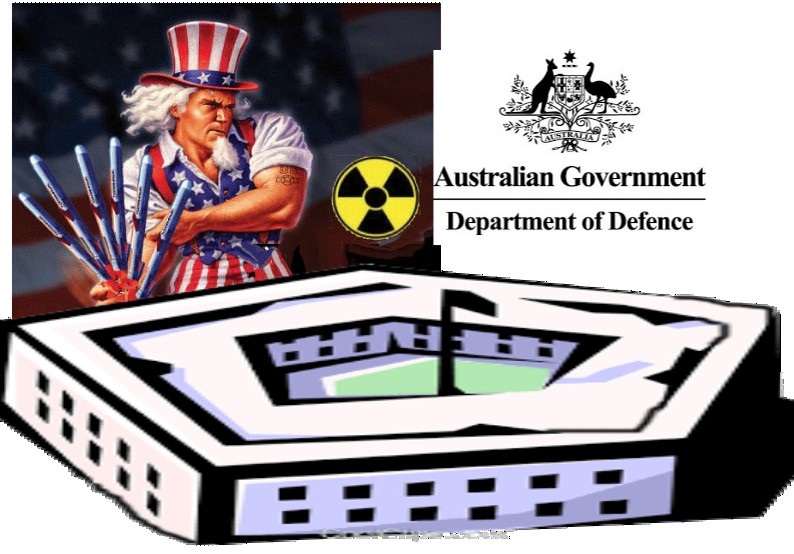
by Michelle Fahy Aug 13, 2024, https://michaelwest.com.au/forced-posture-has-australia-already-ceded-military-control-to-the-us/?utm_source=newsletter&utm_medium=email&utm_term=2024-08-15&utm_campaign=Michael+West+Media+Weekly+Update
The war of words between Defence Minister Richard Marles and Paul Keating belies how the US bid for military control of Australia has been underway for over a decade, supported by both the Coalition and Labor. Michelle Fahy and Elizabeth Minter explain the Force Posture Agreement.
The Albanese government has not explained the full picture in its rejection of Paul Keating’s concerns about Australia’s defence policy. The former Labor prime minister said on ABC’s 7:30 last Thursday that AUKUS was likely to turn Australia into the 51st state of the United States: “AUKUS is really about, in American terms, the military control of Australia.”
The next morning deputy prime minister Richard Marles claimed Keating’s remarks were “not a fair characterisation” and that Keating’s remarks were not news.
Unmentioned by either Keating or Marles was that America’s bid for military control of Australia has been under way for more than a decade, with the enthusiastic support of both Coalition and Labor governments. As we write this, the US is spending $630 million as part of an extensive militarisation of the Australian Top End to suit its purposes.
Furthermore, five days ago, after the annual Ausmin (Australia-US Ministerial Consultations) talks, it was announced that the US was planning more frequent deployments to Australia of long-range B-52 bombers, which can carry nuclear weapons.

When asked last year whether Australia would allow US aircraft operating out of Tindal air base in the Northern Territory to carry nuclear weapons, the response of Foreign Minister Penny Wong was simply: “We understand and respect the longstanding US policy of neither confirming or denying.”
Compare that stance with that of Malcolm Fraser’s government. As John Menadue explained in a recent podcast “The Americanisation of our public policy, media and national interest”, then prime minister Fraser stood up in Parliament and insisted that no US aircraft or ships carrying nuclear weapons could access Australian ports or operate over Australia without the permission of the Australian government.
As Menadue said: “This is our territory, this is our sovereignty, [yet today] we won’t even ask the Americans operating out of Tindal whether they’re carrying nuclear weapons.”
Unimpeded access for the US
A critical piece of evidence regarding Australia’s sellout is the little-known Force Posture Agreement (FPA) with the United States, which the Abbott Coalition government signed in 2014, building on agreements made with the US by the Gillard Labor government. Her government allowed up to 2,500 US marines to be stationed on a permanent rotation in Darwin, and increased the number of military aircraft that could fly in and out of the Top End and use Australia’s outback bombing ranges.
The FPA provides the legal basis for the extensive militarisation of Australia by the US. In short, it permits the US to prepare for, launch and control its own military operations from Australian territory: “United States Forces and United States Contractors shall have unimpeded access to and use of Agreed Facilities and Areas for activities undertaken in connection with this Agreement.”
Defence Minister Marles has been effusive in his support for the force posture agreement and the control the US has been given over Australian soil.
Just last week, he announced that: “American force posture now in Australia involves every domain: land, sea, air, cyber and space.” Yet the longstanding Outer Space Treaty, which each AUKUS ally has ratified, reserves outer space for purely peaceful purposes.
Two months after Labor won office in May 2022, Marles was in Washington DC announcing that Labor would “continue the ambitious trajectory of its force posture cooperation” with the US.
He added that Australia’s military engagement with the US military would “move beyond interoperability to interchangeability” and Australia would “ensure we have all the enablers in place to operate seamlessly together, at speed”.
While the FPA strongly supports America’s ability to wage war against China, politicians have not explained its significance to the Australian public. Moreover, public consultation on the FPA was virtually non-existent. The Northern Territory government was consulted, while other state and territory governments merely received advice about it.
Defence Minister Marles speaks of the “appreciation for the contribution that America is making to the stability and the peace of the Indo-Pacific region by its presence in Australia”, but numerous critics, including Sam Roggeveen, the director of the Lowy Institute’s international security program and a former Australian intelligence analyst, warn of the risks of bringing “US combat forces, and its military strategy to fight China, on to our shores”.
The FPA allows the following and much more:
- unimpeded access to our airfields and airport facilities for US combat aircraft and bombers;
- unimpeded access to our seaports for US naval vessels, including US nuclear submarines at HMAS Stirling in Western Australia;
- the construction of a US Air Force mission planning, intelligence and operations centre in Darwin as part of $630 million in American spending across the Top End over the next two years;
- the establishment, under US military control, of several storage facilities for aircraft fuel, spare parts and munitions, including 11 giant jet fuel storage tanks near Darwin’s main port, which “will allow the US to run large-scale exercises and operations from Northern Australia”.
AUKUS, in conjunction with the FPA, ensures that Australia’s navy, in particular, will be tightly integrated with the US navy for the purpose of fighting China, and that the two navies can operate as one from Australian ports and waters.
Handcuffed to the US
Australia’s high-tech major weapons systems also make us more reliant than ever on the United States. As respected veteran journalist Brian Toohey reported in 2020, “The US … denies Australia access to the computer source code essential to operate key electronic components in its ships, planes, missiles, sensors and so on.”
This includes the F-35 fighter jets, which both Foreign Minister Penny Wong and Defence Minister Marles have noted this year form the largest proportion of the Australian Air Force’s fast jet capacity.
The significant erosion of Australian sovereignty did not start with AUKUS. Australians were warned as far back as 2001 of the high costs of our dependence on the US by a Parliamentary Library research paper that stated: “It is almost literally true that Australia cannot go to war without the consent and support of the US.”
The paper also noted that the Australian Defence Force is critically dependent on US supply and support for the conduct of all its operations except those at the lowest level and of the shortest duration.
It is more than dependency though? Deputy Prime Minister Richard Marles boasts that “American force posture now in Australia involves every domain: land, sea, air, cyber and space” yet the Albanese government denies that Australia is turning into the 51st state of America.
Wake up Australia! We need what Britain’s got – a NUCLEAR FREE LOCAL AUTHORITIES!

Read the article below, if you can dredge through it all. It’s about the complexities of placing a nuclear waste dump.
Note the words used – the willingness of the community to accept it – a public referendum.

Australia cannot afford to leave our future in the hands of incompetent twits like these AUSMIN fools.
People like Defence Minister Richard Marles have the nerve to sign up to “undisclosed political commitments” , that involve us getting nuclear fuel wastes from submarines. No public information, discussion, consent……….
Now the unfortunate Brits have already got their burden of this toxic stuff. We don’t. This absurd plan to buy obsolete nuclear submarines looks like a cover for introducing foreign radioactive trash to Australia .
NFLA 13th Aug 2024
NFLAs welcome developments to move forward to an early poll in Theddlethorpe
The NFLAs have welcomed recent developments to move towards an early Test of Public Support of the proposal to bring a Geological Disposal Facility to Theddlethorpe in East Lincolnshire.
Nuclear Waste Services, a division of the taxpayer-funded Nuclear Decommissioning Authority, is seeking to identify a potential site for the GDF in West Cumbria or in Lincolnshire. The GDF would be the final repository for Britain’s legacy and future high-level radioactive waste. Most of this is currently in storage at Sellafield. Any final decision on the location of the nuclear waste dump would be based on two key factors – the suitability of the geology and the willingness of the community to accept it.
In Theddlethorpe, the shock revelation that the former Conoco gas terminal was being considered as a surface site generated an immediate public response. An opposition group, the Guardians of the East Coast, was soon formed and members now work with supportive elected Councillors to oppose the plan.
Amongst the Labour, Green and independent members elected in May 2023 on a platform of opposing the GDF, Theddlethorpe Councillor Travis Hesketh and Sutton on Sea Councillor Robert Watson have been active in championing the need for an early ballot to determine public support for the plan. The two Leaders of East Lindsey District Council and Lincolnshire County Council have already agreed to hold a poll in 2025, but at the last meeting of East Lindsey District Council, the two Councillors brought a further motion to commit the authority to back a local ballot within twelve months or otherwise withdraw from the process.
Under the government’s established procedures for determining public support for a GDF, Lincolnshire County Council and East Lindsey District Council are deemed to be ‘Relevant Principal Local Authorities’ with the right to decide when a ‘Test of Public Support’ should be held. However, the Community Partnership, which provides limited oversight to the process, determines the boundaries of the ‘Potential Host Community’, the geographic area within which the residents are eligible to participate in any test, and determines the nature of the ‘Test of Public Support’, which does not have to be a public referendum.
At the East Lindsey District Council meeting, the motion was carried, but with an amendment proposed by the Council Leader. Councillor Colin Leyland said he had now come round to supporting an earlier poll in principle, but with certain caveats; namely that the boundary of the ‘Potential Host Community’ be first defined and subject to Nuclear Waste Services being given an additional twelve months to provide more information to residents impacted by the proposal. Councillor Leyland indicated that, if after a year, no poll had been held and NWS engagement efforts remained unsatisfactory, he would recommend to his Executive that Council withdraw from the process. This would be subject to a review by the Council’s Overview Board.
After this amended motion was carried, the NFLA Secretary wrote to David Fannin, the newly elected Chair of the Theddlethorpe GDF Community Partnership, urging him to consider as his ‘urgent workstreams’ defining the Potential Host Community and preparing to hold a local referendum as a Test of Public Support.
The NFLAs have now received Mr Fannin’s response; in it the Community Partnership Chair said: ‘The Community Partnership will continue to press NWS (Nuclear Waste Services) to make this (open and transparent dialogue) a priority and produce information for the local community and supports the local authorities’ ambition for an early Test of Public Support. I can assure you that activities that lead to determining the Potential Host Community and preparing for the Test of Public Support are the top priority for the Community Partnership.’
In a second interesting development, newly elected Louth and Horncastle MP, Victoria Atkins, has invited her constituents to complete an online survey in which they are asked whether and when they would like to see a referendum on the GDF and who they would like to see invited to participate in such a ballot. Ms Atkins circulated a letter just before the General Election in which she made a welcome affirmation that she had ‘always argued for a swift conclusion to this and will support local residents in their quest for a prompt referendum’. In the preamble to her survey, Ms Atkins stated that ‘I will back the call for a public vote within the next 12 months if this is the will of the majority of constituents in Theddlethorpe’.
The NFLAs hope that as many Theddlethorpe residents will participate in the survey. We look forward to hearing the result and hope that it will reflect a local desire to hold a referendum within twelve months and limit participation to those local residents who are directly affected.
A letter was sent by the NFLA Secretary to Ms Atkins the day after the general election is which the MP was asked ‘to use (her) influence as the local MP to speak with your Conservative colleagues, the Leaders of East Lindsey District Council and Lincolnshire County Council, to urge the Leader of East Lindsey District Council to throw his support, and that of his Conservative Group, behind (the recent) motion and for the Leader of Lincolnshire County Council to indicate his support for its aspirations, either to hold a poll by 2025 or withdraw from the process’. The letter remains unanswered.
Ends://… For more information, contact NFLA Secretary Richard Outram by email at richard.outram@manchester.gov.uk or by telephone on 07583 097793
Australian nuclear news headlines 13 -20 August.

Headlines as they come in:
- Gareth Evans: AUKUS is terrible for Australian national interests – but we’re probably stuck with it.
- Nuclear waste dump debate heating up over AUKUS, Coalition plans
- Chair of Nuclear for Australia denies that calling CO2 ‘plant food’ means he is a climate denier
- Transition ‘well under way’ as AGL rejects nuclear push
- Forced Posture: has Australia already ceded military control to the US?
- Wake up Australia! We need what Britain’s got – a NUCLEAR FREE LOCAL AUTHORITIES!
- Albo’s Trojan Horse | The West Report – https://www.youtube.com/watch?v=0JVfESp-A3Q
- Resisting AUKUS: The Paul Keating Formula.
- Australia blasted for new Aukus deal over nuclear waste fears – ‘blow to sovereignty’.
- AUKUS revamped: Australia to indemnify US and UK against ‘any liability’ from nuclear risks
- China urges US, UK and Australia not to advance nuclear submarine cooperation
- 31 August Friends of the Earth Nuclear-Free Art Auction – (in person and online)
- Revamped AUKUS document reveals how US and UK can walk away from nuclear submarine deal
1 This month


Help Aunty Sue Protect Her Land and Sacred Sites From Destructive Rocket Testing.
.

Australians deserve the truth
about
AUKUS – https://aukuspublicinquiry.com/

PETITION – To: Prime Minister Anthony Albanese and the Australian Labor Government

of the week – Australians for War Powers Reform (AWPR)
To see nuclear-related stories in greater depth and intensity

