Australia: Opposition’s nuclear power plans open the door for nuclear weapons
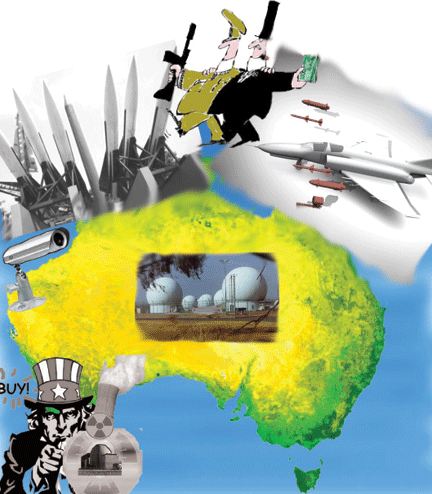
Barely mentioned is the potential of a nuclear power industry to provide a pathway for the development of nuclear weapons: first, by providing a large pool of nuclear scientists, engineers and technicians and, second, by creating the means to manufacture the fissionable material needed for a bomb. The latter would require further heavy investment in either a uranium enrichment plant or a plutonium reprocessing plant, or both.
Such a discussion has been underway largely behind closed doors in strategic and military circles for decades.
WSWS, Peter Symonds, 19 July 24
Federal opposition leader Peter Dutton’s announcement last month that the Liberal-National Coalition would build seven nuclear power plants seeks to overturn longstanding official opposition to nuclear energy, entrenched in state and federal law. Currently, Australia has just one nuclear reactor, operated by the Australian Nuclear Science and Technology Organisation (ANSTO) for research and the production of medical isotopes.
Dutton slammed Prime Minister Anthony Albanese’s Labor government for its reliance on renewables, claiming that nuclear power would provide cheap, reliable, environmentally-friendly energy for households and businesses. He dismissed problematic issues of nuclear waste and safety by pointing out that the Albanese government had already ditched Labor’s nuclear-free policy by embracing the acquisition of nuclear-powered attack submarines under the AUKUS pact with the UK and US.
In the ensuing wave of commentary on the nuclear power proposal, critics derided Dutton’s lack of detail, including costings, and pointed out that nuclear reactors would not be operational for at least a decade. Advocates of the profitable renewable industries touted solar and wind power as the cheap, clean, safe alternatives to nuclear power.
Barely mentioned is the potential of a nuclear power industry to provide a pathway for the development of nuclear weapons: first, by providing a large pool of nuclear scientists, engineers and technicians and, second, by creating the means to manufacture the fissionable material needed for a bomb. The latter would require further heavy investment in either a uranium enrichment plant or a plutonium reprocessing plant, or both.
Such a discussion has been underway largely behind closed doors in strategic and military circles for decades. Plans for an Australian atomic bomb were seriously considered in the 1950s and 1960s, with the 1968‒71 Coalition government of Prime Minister John Gorton taking the first steps in building a nuclear power reactor that provided a route to manufacturing a nuclear weapon.
In the midst of the Cold War, however, Washington was determined to maintain the effective monopoly of its massive nuclear arsenal and thus its use as a menacing threat or in war itself against the Soviet Union or any other potential rival. Under the guise of disarmament, the Nuclear Non-Proliferation Treaty (NPT) banned the manufacture of nuclear weapons except for the five countries with a known nuclear arsenal—the US, the Soviet Union, Britain, France and China—and effectively stymied the Australian project as well as most similar plans by other countries. Australia signed the NPT in 1971 and ratified it in 1973.
The global geopolitical landscape, however, has dramatically changed since the dissolution of the Soviet Union in 1991 and the end of the Cold War. Far from bringing global peace and prosperity, US imperialism has been waging war for the past three decades in a desperate attempt to maintain its global hegemony. Conflicts in the Middle East and Central Asia are now rapidly metastasizing into great power conflicts and world war involving nuclear-armed powers. The US and its NATO allies are already waging war against Russia in Ukraine and, in league with its Asian allies, including Australia, preparing for war against China.
In this context, as the danger of nuclear war looms larger, debate has reemerged in military circles over the building of an Australian atomic bomb. In his book How to Defend Australia, published in 2019, prominent strategic analyst Hugh White devoted an entire chapter to the question: “Does Australia need its own nuclear weapons to preserve its strategic independence in the decades ahead?”
The way White posed the question points to the central argument of the book as a whole—the necessity of Australian imperialism forging a foreign and military policy that does not rely on America’s waning power.
………………………………. In the Indo-Pacific, the US has been preparing for war with China, which Washington regards as the chief threat to its global domination. Far from leaving Australia isolated, the US is integrating the Australian military directly into its war plans against China—the AUKUS pact being the most obvious expression. This places the Australian population on the front lines of such a war.
White speaks for a minority in the ruling class that doubts the wisdom of being drawn into a catastrophic military conflict with Australia’s biggest trade partner. He and others argue for Australian imperialism to adopt a stance of heavily-armed neutrality. While not explicitly calling for an Australian nuclear weapon, White’s book certainly implied its necessity. Grossly inflating the threat posed by China, he argued that without the protection of the US, the only realistic means of countering such a threat is for Australia to have its own nuclear armaments.
……………………………………………………………………………………………………………………US imperialism is already, in reality, engaged in a war with nuclear-armed Russia in Ukraine and making advanced preparations for conflict with nuclear-armed China. The Australian military, including its bases, forms a vital component of the Pentagon’s strategy for fighting a nuclear war and, thus, a potential nuclear target. American nuclear submarines and nuclear-capable strategic bombers are being stationed in western and northern Australia. US spy and communications bases in Australia are indispensable to the US military’s global war plans. In other words, if US imperialism launches nuclear war, Australian imperialism is automatically involved……………………………………………………………………………………..more https://www.wsws.org/en/articles/2024/07/20/qxon-j20.html—
Agriculture ministers raise ‘serious’ concern over nuclear plans
Canberra Times, By Stephanie Gardiner, July 18 2024
Farmers deserve answers on how the federal coalition’s nuclear energy plan could impact food production, with Australia’s agriculture ministers joining forces to raise concern.
Ministers from every state and territory affected by the opposition’s nuclear proposal released a joint statement on Thursday, saying they had a duty to protect the future of the agriculture industry.
“We have serious concerns that this duty would be compromised by the federal opposition’s proposal for nuclear power in and around prime agricultural land,” it said.
Ministers from every state and territory affected by the opposition’s nuclear proposal released a joint statement on Thursday, saying they had a duty to protect the future of the agriculture industry.
“We have serious concerns that this duty would be compromised by the federal opposition’s proposal for nuclear power in and around prime agricultural land,” it said.
Opposition Leader Peter Dutton announced the nuclear strategy a month ago, flagging reactors at coal power station sites in NSW, Queensland, Victoria, South Australia and Western Australia.
More than 11,000 farms would be within an 80km radius of the seven earmarked sites, according to a analysis released by the federal government.
Under international standards, that radius is classified as an “ingestion exposure pathway” in which people may be left vulnerable to radiation through contaminated food, milk and water in the event of a nuclear accident.
US farmers in those zones are obliged to take on preventative measures during an emergency, such as providing livestock with separate feed and water, holding shipments and decontaminating produce.
Leaks have been detected in groundwater at 37 out of 54 nuclear sites in the US since 1979, though the radioactive material dissipates quickly and is rarely found outside reactor boundaries, according to a Nuclear Regulatory Commission report.
Australia’s agriculture ministers called on the coalition to explain to farmers how its nuclear vision would sit alongside the sector.
“”It’s about time the federal opposition provided some answers … about where the water will come from,” Agriculture Minister Murray Watt said ahead of a meeting of the group in Brisbane on Thursday.
“What would happen in the event of a nuclear accident? And what preparations (would) they be making to prepare for such an event?”
When Senator Watt made similar comments during an address to the Global Food Forum on Wednesday, Nationals leader David Littleproud accused Labor of scaremongering and hypocrisy………………….. more https://www.canberratimes.com.au/story/8699403/ag-ministers-raise-serious-concern-over-nuclear-plans/
TODAY. The cover-up of the danger of nuclear radiation and health, but who is speaking for our grandchildren?
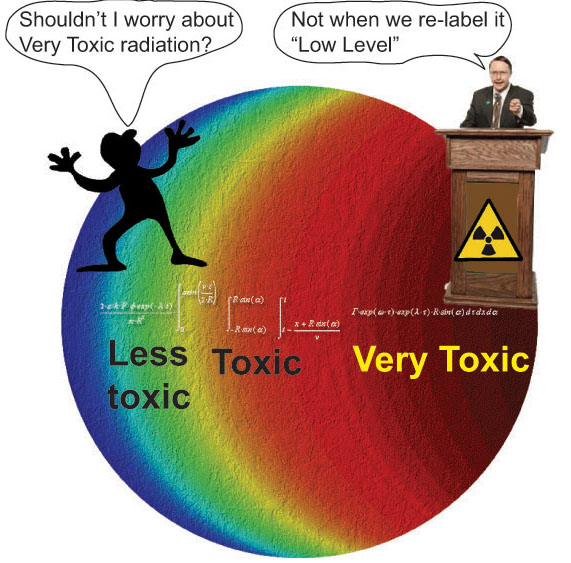
From the earliest days of Marie and Pierre Curie, the harm from ionising radiation was observed, but not fully acknowledged. And before long, it was enthusiastically used in medicine, as x-rays, and in the general world, in various forms, as an aid to health and beauty. When the “radium girls” who painted watch dials with the glow-in-the-dark, radium-based paint, became ill, they were diagnosed by company doctors as having poor diet, neuroses or even syphilis.
Accidents during the Manhattan Project showed the horror effects of high doses of radiation, – but with some military propaganda sleight-of-hand this seemed to be taken to show that “low level” radiation is fine.
Doctors and scientists of integrity, who researched the harm of nuclear radiation were harassed, ridiculed, and sidelined. Integrity was a career killer for DrJohn Gofman, Arthur Tamblin, Harold Knapp, Linus Pauling, Alice Stewart, Ernest Sternglass and Hermann Muller.
Despite the scientific report in 2007 – Biological Effects of Ionizing Radiation (BEIR) stating the danger, the nuclear lobby has been successful in obscuring the truth, and putting across a general acceptance that low dose radiation is well, OK, really.
Dr. Alice Stewart and , Dr. Rosalie Bertell showed the link between x-rays in the mothers and leukemia in their children – their results were similarly rubbished, (but medical authorities quietly curtailed the widespread use of x-rays)
Epidemiology and Statistics are boring stuff, I know. But population statistics of infant deaths and child cancers have shown the increased danger to embryos, infants and children living near nuclear facilities.
Sadly, health authorities have colluded in this cover-up. Public anxiety about ionising radiation is a threat to the thriving nuclear medicine industry. How much of nuclear medicine is absolutely necessary? How many CT scans and other radiological examinations are not really called for? It’s easier for medical professionals to just go along with the view that low level radiation is OK.
After all, amongst many thousands, if only a few thousand children die as a result of exposure to low level radiation – from nuclear reactors and other nuclear facilities, that’s OK isn’t it?
As world leaders enthuse over more nuclear power, and more nuclear “deterrents” , Dr. Gordon Edwards asks the question “Who is speaking for our grandchildren?”
(My inspiration for this short article came from Dr Dale Dewar’s Ionizing Radiation and Human Health .)
Nuclear power plan puts thousands of farms in “radiation alert zone”
ReNewEconomy, Stephanie Gardiner, Jul 18, 2024
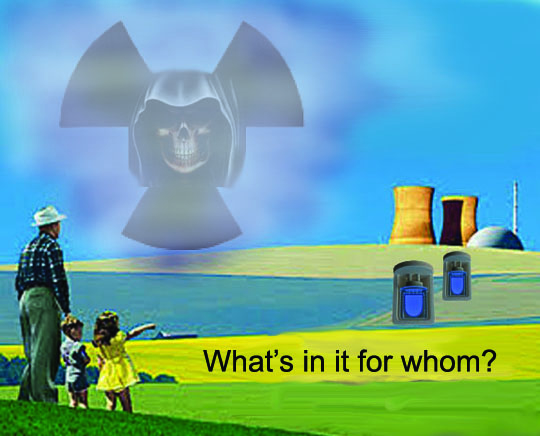
Nuclear energy threatens Australia’s food production with more than 11,000 farms near the opposition’s proposed reactor sites, the government says.
The farms are located within an 80km radius of the seven earmarked sites, according to a data analysis released by the federal government on Thursday morning.
Under international standards that radius is classified as an “ingestion exposure pathway” in which people may be exposed to radiation through contaminated food, milk and water after a nuclear leak.
US farmers in those zones must take on preventative measures in an emergency, such as providing livestock with separate feed and water, holding shipments and decontaminating produce.
“Based on international practice, farmers would need to take expensive steps during a nuclear leak and would need to inform their customers that they operate within the fallout zone,” Agriculture Minister Murray Watt said in a statement.
“It’s bizarre that the Nationals and Liberals are putting at risk our prime agricultural land like this, especially without the decency to explain it to farmers and consumers how they’d mitigate all the potential impacts.”
Senator Watt also told the Australian Global Food Forum on Wednesday that nuclear power needs more water than coal-fired energy and renewables.
“One issue not yet considered in the nuclear debate is the fact that nuclear energy production is a thirsty endeavour,” he told the industry crowd in Brisbane.
………………………………………..There would be more than 1000 affected farms close to each of the sites at Callide, Collie, Liddell and Mount Piper, 2400 near Tarong and 260 near Port Augusta, according to the government’s analysis.
Victoria’s La Trobe region would be the hardest hit with more than 4100 farms within the 80km radius.
Nuclear power will be on the agenda as the nation’s agriculture ministers meet in Queensland on Thursday…. https://reneweconomy.com.au/nuclear-power-plan-puts-thousands-of-farms-in-radiation-alert-zone/
HMAS Stirling nuclear waste management facility approval has Rockingham residents worried
By Daryna Zadvirna and David Weber, 19 July 24 https://www.abc.net.au/news/2024-07-19/nuclear-waste-facility-at-hmas-stirling-rockingham/104114228
In short:
Australia’s nuclear safety watchdog has approved a plan to prepare for a radioactive waste facility at HMAS Stirling naval base in Perth’s south, for waste from nuclear submarines.
But local residents are worried about the potential for nuclear accidents and the impact on the environment.
What’s next?
Approval to begin construction will now be sought, followed by licences for control and operation of the facility, which is expected to open in 2027.
Rockingham residents have expressed alarm at the prospect of a radioactive waste facility at HMAS Stirling naval base on Garden Island, following a decision by the nuclear safety watchdog to approve one.
The Australian Radiation Protection and Nuclear Safety Agency (ARPANSA) has given the green light to prepare a site for the facility, which will be a workshop for servicing and repairing the vessels, and will store waste from nuclear powered submarines.
The facility will also need separate approvals for construction and operation.
The facility, about five kilometres off the coast of Rockingham, which is 50 kilometres south of Perth’s CBD, would provide low-level waste management and maintenance support.
Can the Voices model help communities fight off nuclear reactors?
By Bianca Hall and Mike Foley, July 20, 2024
Coal communities across the country – facing the loss of industry, jobs and the social fabric that binds them together – are poised to transition from the fossil fuel that built their histories.
But what the future will look like in towns like Lithgow in NSW and Traralgon in Victoria’s Latrobe Valley is far less certain. Will they pivot to privately owned renewables, or have government-owned and funded nuclear reactor sites imposed on them by a future Coalition government?
Community groups in every site nominated by Peter Dutton as a potential future nuclear site have joined forces to offer their answer to his proposal: no.
Wendy Farmer is president of Voices of the Valley, a community group that formed in the Latrobe Valley after the Hazelwood coal mine fire in 2014, which burned for 45 days and caused health concerns for those living there amid the smoke.
Farmer united community groups from each area nominated for a nuclear plant to campaign together against the plans. Together, they’ve formed an alliance representing seven communities to fight against the proposal, reminiscent of the independent Voices movement that sent Cathy McGowan to federal parliament in 2013 and has since been replicated across the country.
Already, two people are preparing to nominate as independent candidates to take the fight to the next election.
“I’m really hoping that it will show communities that united, we can really make a change,” she says. “We can actually demand what we want as community. To me, it’s really important that we just aren’t dumped on and told ‘this is what’s good for you, and this is what’s going to happen’.”
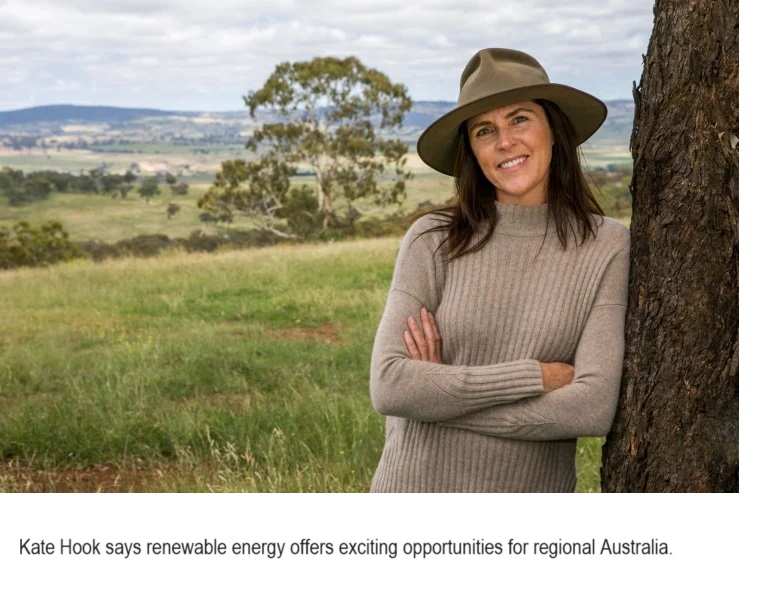
Kate Hook, who ran as an independent candidate in Calare in central western NSW in 2022, says she’s considering putting her hand up again at the next election against Nationals MP-turned-independent Andrew Gee.
Key to her candidacy, which she would run as a Voices-style campaign, is renewable energy and nuclear. “Is it a bunch of politicians who have just got together and said, ‘Here’s a talking point that will distract from renewable energy’?” she says.
“Because there is already something under way [the switch to renewables], which is an amazing opportunity for this region that we haven’t had in decades, and there’s a risk that that is squandered.”
AGL has announced its ambition to transform the sites of its coal-fired power stations in Victoria and NSW – the last of which is due to close in 2035 – into low-carbon energy “hubs” spanning renewable energy generation, big batteries and green tech manufacturing.
Meanwhile, Dutton in June nominated seven regional communities that he said would be home to nuclear reactors under a future Coalition government, at the sites of current or closing coal power plants.
They would be hosted at Lithgow and the Hunter Valley in NSW, Loy Yang in Victoria’s Latrobe Valley, Tarong and Callide in Queensland, Collie in Western Australia and Port Augusta in South Australia.
The announcement was made without consultation with the owners of the privately owned coal stations they would replace, according to several well-placed sources.
Unease about Dutton’s nuclear ambition isn’t limited to communities: local MPs are also wary of Dutton’s bid to build reactors on the sites of former coal-fired power plants.
Bathurst MP Paul Toole, who represents Lithgow in the NSW parliament for the Nationals, has criticised the lack of consultation by the federal opposition over the proposed takeover of the Mount Piper plant, about 20 kilometres north-west of Lithgow.
Rather than commit to the party line, he said he would back the community’s position. “I think the community feels as though they’ve been left in the dark,” Toole said last month. “The announcement lacks detail and raises more questions than answers. I’ll be backing the views of my community 100 per cent.”
Calare MP Andrew Gee, an independent who represents Lithgow in federal parliament, is also a sceptic of the opposition’s nuclear plans who has criticised lack of community consultation……………………………………………………………………………………..more https://www.theage.com.au/politics/federal/can-the-voices-model-help-communities-fight-off-nuclear-reactors-20240716-p5ju4o.html
Never Forget Julian Assange
SCHEERPOST, JULY 19, 2024
Although Julian Assange is free and home in his native Australia, his story and decade-long suffering at the hands of the U.S. government must never be forgotten for the sake of the survival of the First Amendment. In this episode of the Scheer Intelligence podcast, host Robert Scheer is joined by Kevin Gosztola, who runs The Dissenter newsletter and has been reporting on the Assange case and whistleblowers in the U.S. for more than a decade. Together, they underscore the significance of the Assange case and delve into the details explored in Gosztola’s recent book, “Guilty of Journalism.”
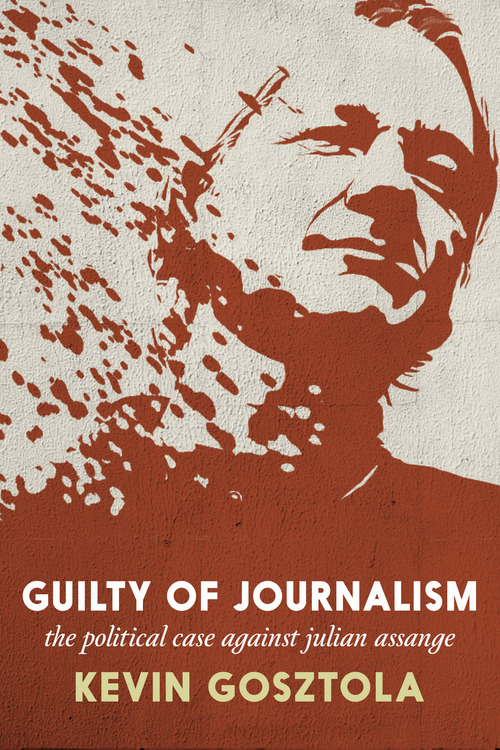
Gosztola makes clear one of the main points of the whole ordeal, which is the inconsistency in the U.S.’s interpretation of its own laws. “The First Amendment and the Espionage Act are in conflict in this country. You can’t reconcile the two, at least the way that the Justice Department wants to use the Espionage Act against people who aren’t even just U.S. citizens. They’re trying to apply U.S. law to international journalists,” Gosztola told Scheer.
The U.S. response to the internet age and the powerful journalistic revelations of Assange and WikiLeaks was to criminalize such actions, sending a clear message: anyone attempting to blow the whistle or expose the U.S. government’s crimes would face severe punishment, including the use of the Espionage Act, which could imprison someone for life.
“Unlike Daniel Ellsberg, [Chelsea] Manning didn’t have to sit there at a Xerox machine making copies. [She] just sent the copies of the documents to WikiLeaks, and then WikiLeaks had all these files that they could share with the world,” Gosztola said.
Despite the online journalism revolution, many in the media space still remained quiet throughout the Assange debacle both because of their ties to government officials and their lack of professional rigor. Gosztola posed several questions to them:
“Where were you? Why weren’t you doing the investigations to uncover these details? Why did this WikiLeaks organization come along and reveal these details about Afghanistan, the Iraq War, the nature of US foreign policy? Why do you accept that all of this information that was classified should be classified?”
TRANSCRIPT – ……………………………………………………………………………. , https://scheerpost.com/2024/07/19/never-forget-julian-assange/
Renewables caught in misinformation crossfire from Australia’s nuclear cheerleaders

Graham Readfearn, 18 July 24, https://www.theguardian.com/environment/article/2024/jul/18/renewables-caught-in-misinformation-crossfire-from-australias-nuclear-cheerleaders
Those pushing the nuclear option are making some questionable claims about the capacity of renewable energy.
Advocacy for the Coalition’s hopes to build nuclear power plants is increasingly coming with large side-orders of misinformation, not just on the speed or costs of nuclear but on renewables.
Dr Adi Paterson, the chair of the Nuclear for Australia advocacy group, has taken to attacking the credentials of CSIRO experts while going hyperbolic with his rhetoric.
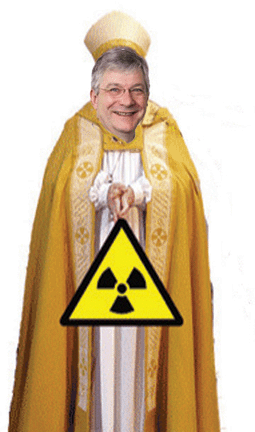
When Paterson told Sky News he thought the agency’s report on the costs of different electricity generation technologies was “a form of fascism” there was not a whisper of disapproval from the surrounding studio panel. Mussolini would be turning in his grave.
The definitely-not-fascist GenCost report has found electricity from nuclear would be far more expensive than solar and wind, taking into account the cost of extra transmission lines and technologies to connect, store and rerelease renewable power.
Paterson claimed on the Sky news show Outsiders that the GenCost report “looks at one reactor in Finland”. In fact, the report had based the cost of large-scale reactors in Australia on South Korea’s long-running nuclear program – one of the most successful in the world.
Entrepreneur Dick Smith, a patron of Nuclear for Australia, has also tried to claim CSIRO used a “worst-case scenario” for nuclear costs. One leading energy analyst has previously told Temperature Check the opposite was more likely the case.
Paterson, a former boss of the Australian Nuclear Science and Technology Organisation, said in any case, he wanted to see Australia consider 5MW micro-reactors (less than the size of a large wind turbine, suggesting Paterson would like to see Australia scattered with tiny nuclear reactors).
He then pointed to Bill Gates’ Terrapower company and its project in Wyoming (which has a much higher proposed generation capacity of 345 MW), saying it was currently licensed and “being built now”.
In fact, as Terrapower’s chief executive told CNBC a couple of months ago, the company has only just submitted its construction permit application to the US Nuclear Regulatory Commission and hopes to get approval in 2026. They are doing some construction at the site, but none of it relates to the nuclear aspects of the plant.
Two days out of five?
Paterson has claimed wind turbines only generate electricity “two days out of five” or “37% of the time”.
Dr Dylan McConnell, an energy systems analyst at UNSW, said this was a “misleading” characterisation of windfarm performance.
McConnell said the 37% figure referred to something called the capacity factor – that is, how much electricity is generated over a given period relative to a windfarm’s maximum capacity.
“It is equivalent to implying that windfarms run at 100% of capacity two days out of five, and zero capacity three days out of five. This is of course not at all how windfarms or renewable energy generation works,” he said.
“They infrequently run at 100% of capacity. The converse of this is that they are often running just at levels below their full rated output – which is even more true across the whole fleet.”
McConnell points to data showing over the past year windfarms contributed about 12% of the total generation across the national electricity market (everywhere except WA and the NT) and while he said there was “a lot of variability”, there were no days when windfarms failed to generate.
He said: “Saying they work ‘two days out of every five’ is misunderstanding or a misrepresentation of the contribution of wind to the power system.”
Free pass for renewables?
Conservative economist and contributor to the Australian and the Spectator, Judith Sloan, has penned several pieces in recent weeks favouring nuclear power while making questionable claims about renewables.
In the Spectator, Sloan wrote that state governments “have allowed renewable energy companies to avoid the normal approval processes, including environmental assessments”.
Firstly, renewables projects are subject to both state and federal environmental assessments.
The federal environment minister, Tanya Plibersek, has assessed and approved more than 50 renewables projects – often with conditions attached – under current environmental laws, and rejected one windfarm in north Queensland in May because of potential impacts on nature. (The previous environment minister, Sussan Ley, also rejected a windfarm in 2020.)
Marilyne Crestias, interim chief executive at the Clean Energy Investor Group, said it was “inaccurate” to say that projects avoided environmental assessments at state level.
“Each state and territory has its own set of laws governing environmental assessments for renewable energy projects.
For example, in New South Wales, large-scale renewable energy projects must undergo an environmental impact assessment (EIA) under the Environmental Planning and Assessment Act 1979. Similarly in Victoria, projects are assessed under the Planning and Environment Act 1987 for their environmental, social and economic impacts. And in Queensland, the Environmental Protection Act 1994 requires environmental impact statements (EIS) for significant projects, including renewable energy developments. These assessments ensure that renewable energy projects are developed responsibly and sustainably.”
Talking to Sky, Sloan has said: “One of the worst aspects of [the renewables rollout] is that these renewable investors have never entered into an undertaking that they will remediate the land.”
Crestias said this was a “misconception”, saying developers typically did have agreements that included remediating the land.
“These agreements often cover the entire lifecycle of the project, from development through decommissioning,” she said.
“For instance, planning permits for windfarms in Victoria require developers to submit a decommissioning and rehabilitation plan before construction begins.”
Dutton’s Quixotic Proposal: Nuclear Lunacy Down Under
July 18, 2024, Dr Binoy Kampmark, https://theaimn.com/duttons-quixotic-proposal-nuclear-lunacy-down-under/
Politics and facts are not necessarily good dinner companions. Both often stray from the same table, taking up with other, more suitable company. The Australian opposition leader, Peter Dutton, has never been discomforted by facts, preferring the chimera-like qualities demagoguery offers. His vision for Australia is admirably simple and simplistic.
In foreign policy, he supports US interventions in any theatre of the globe without question. Ditto such allies as Israel. To the distant north, the evil Yellow Horde is abominated. Domestically, matters are similarly one dimensional. Irregular boat arrivals are to be repelled with necessary cruelty. And then there is a near pathological hatred of renewable energy.
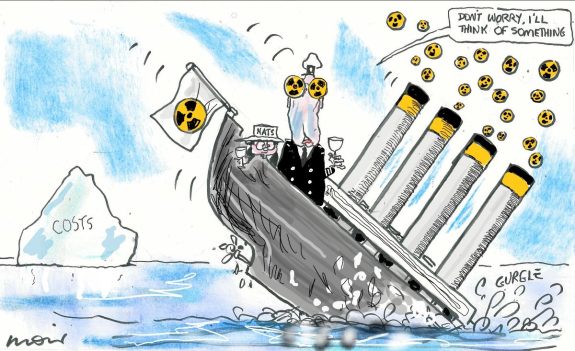
Needing to find some electoral distraction to improve the Liberal-National coalition’s chances of returning to office, Dutton has literally identified a nuclear option. Certainly, it is mischievous, throwing those wishing to invest in the problematic Australian energy market into a state of confusion. The business of renewables, as with any investment, is bound to also be shaken.
Last month, Dutton finally released some details of his nuclear vision. Seven nuclear projects are envisaged, using sites with currently working or shuttered coal fired power stations. These will be plants up to 1.4 gigawatts (GW) to be located at Loy Yang in Victoria, Liddell in NSW’s Hunter Valley and Mt. Piper near Lithgow, Tarong and Callide in Queensland. Small modular (SMR) reactors are planned for Port Augusta in South Australia and Muja near Collie in Western Australia.
The SMR gambit is particularly quixotic, given that they have yet to come to viable fruition. Besides, the entire reactor venture already faces glaring legal impediments, as nuclear power is prohibited by Commonwealth and state laws. (The ban on nuclear energy was, with sweet irony, legislated by the Howard Coalition government a quarter of a century ago.)
Already, the handicaps on the proposal are thick and onerous. Ian Lowe of Griffith University witheringly describes the proposal as “legally impossible, technically improbable, economically irrational and environmentally irresponsible.”
The greatest of all handicaps is the fact that Australian governments, despite tentatively flirting with the prospect of a civilian nuclear sector at points, have never convinced the citizenry about the merits of such power. The continuous failure of the Commonwealth to even identify a long-standing site for low-level radioactive waste for the country’s modest nuclear industry is a point in fact.
Aspects of the proposed program also go distinctly against the supposedly free market individualism so treasured by those on Dutton’s side of politics. If nuclear power were to become the fundamental means to decarbonise the Australian economy by 2050, it would entail crushing levels of debt and heavy government stewardship.
The extent of government involvement and ownership of the proposed nuclear infrastructure made The Age and Sydney Morning Herald search for a precedent. It seemed to have an element of “Soviet economics” to it, directly at odds with the Liberal Party’s own professed philosophy of “lean government that minimises interference in our daily lives; and maximises individual and private sector initiative.”
It would also further add to the already monstrous AUKUS obligations Australia has signed up to with the United States and United Kingdom, a sovereignty shredding exercise involving the transfer and construction of nuclear-powered submarines to Canberra costing upwards and above A$368 billion. The Smart Energy Council has been good enough to offer its own estimate: the seven nuclear plants and reactors would cost somewhere in the order of A$600 billion, securing a mere 3.7% of Australia’s energy share by 2050.
While draining the treasury of funds, the nuclear-in-Duttonland experiment would do little to alleviate energy costs. The CSIRO, Australia’s national science agency, along with the Australian Energy Market Operator (AEMO), have concluded that nuclear power in Australia would not be prudent in terms of cost relative to other sources of power. The obstacles noted in their 2023-4 report are impressively forbidding.
Australia, for instance, lacks existing nuclear power projects. “Therefore, although it is true that all technologies have extensive pre-construction development times, nuclear is unique in that it has an empty development pipeline in Australia.” Throw in the layers of legal, safety and security steps, any pioneering nuclear plant in Australia would be “significantly delayed”, rendering nuclear power’s role in achieving net zero emissions by 2050 a nonsense.
The Dutton plan is scratched of all empirical shape. Estimates are absent. Numbers, absent. Capacity, absent. Figures, if supplied, will be done immediately prior to the next election, or while in government. Such moves teeter on the edge of herculean stupidity and foolhardiness, at least in Australian conditions. The exercise is also, quite rightly, being seen as an attempt to stealthily retain coal fired stations while starving continued investment to the renewable sector.
Dutton’s junior partner, the Nationals, have also shown much candour on where they stand on renewable energy projects. Party leader David Littleproud nailed his colours to the mast on that subject early last year. By August 2023, he was explicitly calling for a “pause” to the roll out of wind and solar and transmission links, calling the Albanese government’s pursuit of their 82% renewables target a “reckless” one. His implicit suggestion: wait for the release of the nuclear genie.
The Coalition opposition’s nuclear tease continues the tendency in Australia to soil climate policy with the sods of cultural conflict. On any matter, Dutton would be happy to become a flat earther were there any votes in it. The problem here is that his proposal might, on some level, be disruptively attractive – in so far as the voters are concerned. With Labor dithering in office with the smallest of majorities, any disruption may be one too many.
By its very nature, the Commonwealth would have to take the reins of this venture, given that private investors will have no bar of it. Tom Dusevic, writing in the otherwise pro-Dutton outlet The Australian, put it thus: “There is no other way because private capital won’t go anywhere near this risky energy play, with huge upfront costs, very long lead times and the madness that has pervaded our energy transition to meet international obligations.”
Tribes and Environmentalists Press Arizona and Federal Officials to Stop Uranium Mining Near the Grand Canyon

This story covers protests about the dangers to people and the
environment from uranium mining in Arizona near the Grand Canyon.
Most Australians probably don’t know about the dangers to people and the environment from Australian uranium, what countries import it from Australia, or that Australian uranium was (is still?) in use at Fukushima.
More information about the dangers of uranium, and the bind
Australia is in by exporting it as the price of uranium ore rises, needs to be known to Australians.

Activists hope to shut down an existing mine within a new national monument and to prevent the transportation of uranium on state and federal roads across Navajo Nation lands.
Inside Climate News, By Noel Lyn Smith, July 17, 2024
PHOENIX—Members of environmental groups stood together in the lobby of the Arizona State Capitol Executive Tower late last month to deliver a petition to Arizona Gov. Katie Hobbs, requesting that she stop uranium mining activities near the Grand Canyon National Park.
The Sierra Club, Center for Biological Diversity, National Parks Conservation Association, Wild Arizona, Chispa Arizona and Haul No!, a group formed to fight the mining and transport of uranium, delivered a petition with more than 17,500 signatures to the governor.
They are seeking closure of the Pinyon Plain Mine, located less than 10 miles from the Grand Canyon. It is inside the Baaj Nwaavjo I’tah Kukveni—Ancestral Footprints of the Grand Canyon National Monument, which President Joe Biden established in August 2023. The removal of uranium ore from the mine started in late December.
Although the designation prohibits new mining claims and development, it allows prior claims with valid existing rights like Pinyon Plain to continue their operations. Energy Fuels Resources owns the mine, which is approximately 17 acres, and operates it on land managed by the U.S. Forest Service.
“This mine threatens to pollute the groundwater that feeds the seeps and springs in Grand Canyon, supporting plants, animals and people,” the petition states.
People can develop respiratory disease and toxicity in the kidneys due to uranium exposure, according to the federal Agency for Toxic Substances and Disease Registry. There are more than 500 abandoned uranium mines on the Navajo Nation, and the tribe continues to confront the ramifications of mining activities on tribal members and the environment. This includes advocating for federal money to clean up abandoned mines and compensation for former mine workers.
No one from Hobbs’ office met the group or accepted the written requests in person. Instead, the activists left the petition, the groups’ latest action attempting to get the Democratic governor’s attention, with the executive receptionist on the first floor. In January, the groups sent a letter to Hobbs urging her to revisit permits issued for Pinyon Plain Mine and seeking her help closing it. They said she has not responded to the letter.
A spokesperson with the governor’s office confirmed on July 11 that the petition was received…………………………………………………………………………..
Vania Guevara is the advocacy and political director with Chispa Arizona, a program under the League of Conservation Voters that is dedicated to increasing Latinx voices in policies that address climate change and the environment. Guevara said it is urgent for Hobbs to address uranium mining because it threatens the health and safety of Indigenous communities.
A dozen tribes have ancestral, ceremonial and traditional connections to the region, including the Havasupai Tribe, Hopi Tribe, Hualapai Tribe, Kaibab Band of Paiute Indians, Las Vegas Paiute Tribe, Moapa Band of Paiutes, Paiute Indian Tribe of Utah, Navajo Nation, San Juan Southern Paiute Tribe, Yavapai-Apache Nation, Pueblo of Zuni and the Colorado River Indian Tribes…………………………………. https://insideclimatenews.org/news/17072024/arizona-activists-press-officials-to-stop-uranium-mining-near-grand-canyon/
Nuclear awakening ‘a decade or two late’, says AER
Angela Macdonald-Smith, AFR, 17 July 24
Australia’s debate over nuclear power is coming “a decade or two late”, as the earliest the technology could start contributing to the system is about 2050, according to the chairwoman of the Australian Energy Regulator.
In what is thought to be her first public words about nuclear power since the Coalition’s launch of its nuclear power policy last month, Clare Savage said it would take at least 25 years to get through the political and regulatory hurdles to develop the industry, and to get the first reactors built – much longer than the opposition is targeting……………..(Subscribers only) https://www.afr.com/companies/energy/nuclear-awakening-a-decade-or-two-late-says-aer-20240716-p5ju8q
TODAY. Nuclear power -costs, wastes, etc, but what about the children?
Reading the Australian media, there’s miles of stuff about nuclear power. Apparently the T important factor is cost. Isn’t that dandy? So, if nuclear were were cheap, Australians would be rushing to get it? Oh wait, people worry about storing nuclear wastes – and that’s costly, too.
Because, you see, money’s the only thing that matters in the fucked up prevailing culture of profit and growth.
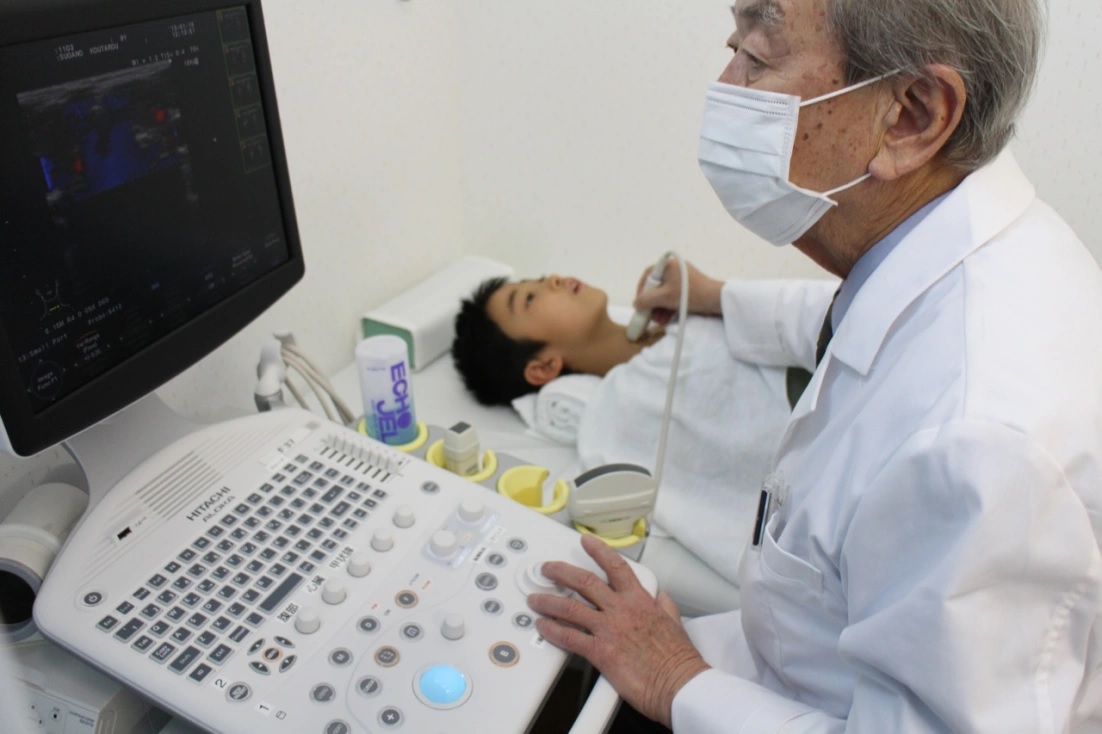
There was a time when people talked about safety risks, terrorism, weapons proliferation – heck, – even about the environment. Even health was discussed, – after all, ionising radiation from nuclear activities is the most well-established cause of cancer.
But now – if there’s ever a mention of ionising radiation and health – it is about the use of radiation in medicine – couched in language about how good it is, but not to over-use it (- a small acknowledgment of its danger)
The truth is, nuclear radiation has been shown in study after study to be a cause of cancer, and other illnesses. And that’s not just high doses oof radiation. It is low level radiation, affecting workers in the uranium-nuclear industries, and communities close to nuclear facilities.
And who are the most vulnerable people? Women, – and more vulnerable – are children, with girls the most vulnerable of all.
Sadly – the “regular” media is becoming ever more irrelevant. Even the threat of nuclear war gets barely a mention, as the media obsesses over narcissistic political personalities, rather than the big issues that matter to people worldwide.
The danger to human health from nuclear radiation now just doesn’t seem to matter any more. It is the awful truth that our children are the most at risk. But children’s health is a low priority,
Just as a matter of interest here – the most often-read articles on this website are those about radiation, and the next most often-read are those about children. So – people do care.
Acknowledging an important win – and the power of collective action

ACF 18 July 24
On July 18 last year law and justice converged when the Federal Court upheld the Barngarla people’s legal challenge to a Morrison government plan targeting South Australia’s Eyre Peninsula as a site for Australia’s first purpose built national radioactive waste facility.
“The Barngarla have opposed the radioactive waste dump at Kimba since it was first suggested. We have fought for 7 years, to be heard, to be seen and to be respected. We welcome this decision and expect that this will be the end of this threat to our country, heritage and culture. We, the Barngarla have always stood strong and believe that this decision is reflective of staying steadfast; it shows that if you have a voice and want it to be heard, never give up. Continue to be loud. Continue to use your voice. Don’t rely on others to speak for you. Speak up for what’s right. Truth telling is what led us today. We are proud.” – Barngarla community statement – July 2023
The Barngarla victory was a win for all – and an important reminder of the need for caution and responsibility on all things radioactive – especially against a backdrop of Aukus submarines and the Coalition’s domestic nuclear illusion.
BARNGARLA COURT WIN OVER NUCLEAR DUMP.

Jim Green, 18 July 23
Today, in a history making moment, The Federal Court of Australia through Her Honour Justice Charlesworth, handed down a decision which was favourable to the applicant the Barngarla Determination Aboriginal Corporation. This has resulted in the quashing of the decision to place the waste dump site at Napandee near Kimba.
“I am so happy for the women’s sites and dreaming on our country that are not in the firing line of a waste dump. I fought for all this time for my grandparents and for my future generations as well.” – Aunty Dawn Taylor, Barngarla Elder.
“This result today is about truth telling. The Barngarla fought for 21 years for Native Title rights over our lands, including Kimba and we weren’t going to stop fighting for this. We have always opposed a nuclear waste dump on our country and today is a big win for our community and elders.” – Jason Bilney, Chairperson Barngarla Determination Aboriginal Corporation.
“Every Australian, whether First Australians or more recent Australians have the right to independent scrutiny of Government. Today the Federal Court has set aside the declaration for the nuclear waste facility reinforcing how important these rights of independent review are. It has been a significant dispute which has created much pressure on Barngarla and their legal team they should be proud of their efforts to hold the government to account.” – Nick Llewellyn-Jones lawyer for Barngarla.
“The Barngarla have opposed the radioactive waste dump at Kimba since it was first suggested. We have fought for 7 years, to be heard, to be seen and to be respected. We welcome this decision and expect that this will be the end of this threat to our country, heritage and culture. We, the Barngarla have always stood strong and believe that this decision is reflective of staying steadfast; it shows that if you have a voice and want it to be heard, never give up. Continue to be loud. Continue to use your voice. Don’t rely on others to speak for you. Speak up for what’s right. Truth telling is what led us today. We are proud.” – The Barngarla People.
DUTTON’S RISKY NUCLEAR REACTOR PLAN THREATENS 12,000 FARMS
FOOD PRODUCTION ACROSS THE COUNTRY ON HIGH ALERT FROM DUTTON’S RISKY REACTOR PLAN
Agriculture Minister Murray Watt, 18 July 24
The fallout from Peter Dutton’s expensive and risky nuclear reactor announcement continues with new revelations that nearly 12,000 farms across Australia could be impacted.
The LNP’s announcement that nuclear reactors would be built at seven sites across the country could have serious implications for the agricultural sector.
The regions selected by Mr Dutton are major contributors to Australia’s food supply with significant cattle, milk, lamb, grain and vegetable production nearby.
Various states in the United States of America, including Illinois, California, Indiana, Maryland, Missouri and Florida set out detailed guidelines to be followed by farmers, processors and distributors within an 80-kilometere radius of nuclear reactors (known as the “ingestion zone”) to protect their food supply, in the event of a nuclear accident.
Analysis of ABS and local government data by the Parliamentary Library has found approximately 11,955 farms are located within an 80-kilometre radius of the Coalition’s selected sites.
Mr Dutton must urgently explain whether Australian farmers, processors and distributors within a similar ingestion zone will be forced to replicate the expensive actions recommended by American counterparts.
On top of this, leaks have occurred in recent years at nuclear reactors in the United States, Japan, India and Europe, in some cases contaminating agricultural land, crops and water sources.
Eating contaminated foods and drinking contaminated milk and water could have a harmful, long-term effect on the health of the wider community.
Mr Dutton needs to explain his plan to prevent such leaks, how he will manage them if they occur and how he would compensate affected farmers.
Agriculture Minister Murray Watt: –
“Peter Dutton’s risky nuclear plan is not only expensive, slow and unreliable, it also poses a threat to the agricultural industry.
“Based on international practice, farmers would need to take expensive steps during a nuclear leak and would need to inform their customers that they operate within the fallout zone.
“It’s bizarre that the Nationals and Liberals are putting at risk our prime agricultural land like this, especially without the decency to explain it to farmers and consumers how they’d mitigate all the potential impacts.”
BACKGROUND:
Parliamentary library analysis of farm businesses within the 80km ingestion zone of each proposed reactor.
- Collie (WA): Approximately 1,150 agricultural establishments. Major agricultural products include beef cattle, milk, lamb, barley, and carrots.
- Callide (Qld): Approximately 1,040 agricultural establishments. Major agricultural products include beef cattle, cotton, vegetables, wheat, and herbs.
- Hunter (NSW): Approximately 1,650 agricultural establishments. Major agricultural products include beef cattle, milk, chicken (meat), eggs, and hay.
- Latrobe Valley (VIC): Approximately 4,175 agricultural establishments. Major agricultural products include milk, beef cattle, vegetables, applies, and strawberries.
- Mt Piper (NSW): Approximately 1,280 agricultural establishments. Major agricultural products include beef cattle, cultivated turf, lamb, mushrooms, and other vegetables.
- Port Augusta (SA): Approximately 260 agricultural establishments. Major agricultural products include wheat, barley, lamb, wool, hay, and eggs.
- South Burnett/Darling Downs (Qld): Approximately 2,400 agricultural establishments. Major agricultural products include beef cattle, pork, sorghum, cotton, and milk
1 This month


Help Aunty Sue Protect Her Land and Sacred Sites From Destructive Rocket Testing.
.

Australians deserve the truth
about
AUKUS – https://aukuspublicinquiry.com/

PETITION – To: Prime Minister Anthony Albanese and the Australian Labor Government

of the week – Australians for War Powers Reform (AWPR)
To see nuclear-related stories in greater depth and intensity

