Release of fourth batch of Fukushima treated radioactive water begins

Japan Times, 28 Feb 24
The operator of the crippled Fukushima No. 1 nuclear power plant on Wednesday started releasing a fourth batch of treated radioactive water into the sea, in what will be the last discharge for the fiscal year ending March.
As in previous rounds, Tokyo Electric Power Company Holdings (Tepco) will discharge 7,800 metric tons of treated water over about 17 days, having confirmed that the radioactivity level of the latest batch of water meets the standards set by the government and the utility.
China, which opposes the water release, has banned Japanese seafood imports since the first discharge in late August. The two countries have engaged in informal discussions to resolve the matter, but no substantial progress has been made……………………….. more https://www.japantimes.co.jp/news/2024/02/28/japan/society/fukushima-radioactive-water-fourth-release/
Andrew Forrest attacks Coalition’s nuclear “bulldust” and betraying the bush
Rachel Williamson, Feb 26, 2024, https://reneweconomy.com.au/andrew-forrest-attacks-coalitions-nuclear-bulldust-and-betraying-the-bush/—
Mining billionaire and green energy evangelist Dr Andrew Forrest has come out swinging against the deepening support for nuclear, and the aversion to wind and solar power within the National and Liberal parties in the name of farmers.
Forrest called on the federal government to speed up the transition away from carbon-intensive industries via three “simple” policies, and called on the government-in-waiting to stop spreading misinformation about renewables.
In the last fortnight opposition leader Peter Dutton doubled down on his calls for small modular nuclear reactors to be put in small Australian towns, saying he’d put one on the former Alcoa mine and power station site in the coastal Victorian town of Anglesea, while energy spokesman Ted O’Brien would put one in the Latrobe Valley.
Nationals leader David Littleproud also wants to stop the rollout of large scale renewables in Australia because rural areas are “saturated” with them, and wants to limit the energy transition to residential rooftop solar and arrays on commercial buildings.
Forrest pooh-poohed their understanding of the economics of major projects, saying the Coalition proposals would leave Australia “destitute” because of the enormously cost of nuclear compared to wind and solar.
“I ask you who claim to represent the bush now to stop dividing us with the false hope that we can cling to fossil fuels forever,” Forrest said during a talk at the National Press Club.
” We can’t, so please stop betraying the bush. If we swallow this new lie that we should stop the rollout of green energy, and that nuclear energy will be a fairy godmother, we will be worse off again.
“These misinformed, unscientific, uneconomic plucked out of thin air, bulldust nuclear policies, [from] politicians masquerading as leaders, helps no one. Politicians who do whatever they can to discourage votes are just politicians, they are not political leaders.”
Forrest cited in particular the misinformation that Australian farmers will have to give up huge tracts of land to enable the green energy transition (a meme advanced by the Institute of Public Affairs and repeated by the likes or rival iron ore billionaire Gina Rinehart and the Coalition.
Forrest also announced a fund to help with wind and solar farm decommissioning and calling on the federal government to better regulate renewables developers to ensure they set aside money for that purpose.
It’s easy with three “simple” policies
Forrest wants to see a test for all major projects that explicitly considers climate impacts, for the country to lean into least cost, firmed renewables, and for the carbon levy proposed by Rod Sims and Ross Garnaut on fossil fuel imports and exports.
“We can circuit break the cost of living crisis, turn around unemployment and play our full part in decarbonizing at least to 6 per cent of global emissions through new green export industries,” he said.
“Australia can generate not one but many of its own Australian Aramcos with the right policy settings. We can achieve all these with three simple policies.”
An impact test would create a climate trigger for every project requiring government approval, making carbon emissions and global warming automatically part of any environmental assessment.
US president Biden has already taken some action in this vein by pausing LNG export projects pending an assessment of the impacts on climate change.
Forrest claimed that it is the US’ “forward thinking climate strategy” and not the enormous funding on offer under the inflation Reduction Act (IRA) that is why Fortescue is building a liquid green hydrogen project in Phoenix, Arizona.
The second policy recommendation, leaning into renewables, repeats calls to roll out renewables faster in order to bring down the cost of electricity for Australians, while the third demanded an end to the “free ride” of fossil fuel companies via a carbon levy.
“The multi decadal polluting companies have exploited vicious lobbying for approvals so they can crowd out green energy, so they can prevent Australians from having the choice between cheaper green energy, which would destroy their livelihoods,” Forrest said.
“Let’s be clear for the sake of the visionless, a carbon solutions levy is not a carbon tax… it would only be applied to the 100-odd fossil fuel extraction sites in Australia and to importers, who are stopping us making our own energy. The beauty of this levy is that it does not penalise everyday Australians.
“It only penalises that the perpetrators of this crisis, the fossil fuel industry… Existing gas projects will continue to operate, they’ll just have to pay the levy. They’ll just have to pay their way. That’ll be new.”
He even called out taxpayer support for miners to use imported diesel, naming his own company Fortescue as one beneficiary.
“Their lobby groups quickly hide behind the Australian farm to defend the diesel fuel rebate. But they know that the vast proportion of the money goes to big mining and fossil fuel companies, not Australia’s farmers or fishermen.
” The ridiculousness of the rich crying out for more fossil fuel subsidies while denying climate change will surely go down as one of the most perversely selfish behaviours in Australian history.”
Fossil fuel subsidies increased to a record-breaking $57.1 billion in 2023, up from the $55.3 billion forecast in the 2022 budget, according to a report by The Australia Institute last year.
The Fuel Tax Act which subsidises the consumption of diesel, has cost over $95 billion in tax foregone to the Australian economy, via the Fuel Tax Credit Scheme (FTCS), since it was legislated in 2006.
Andrew Forrest and Peter Dutton are on a collision course over Nuclear Power
National Times 26 Feb 24
Andrew ‘Twiggy’ Forrest labels Coalition push for nuclear energy ‘bulldust’ and a ‘new lie’ ( Paul Karp Chief political correspondent for The Guardian)
Mining billionaire says cost of nuclear will be four to five times that of renewables and opposition’s policy is ‘an excuse for doing nothing’
The mining billionaire Andrew “Twiggy” Forrest has labelled the Coalition’s push for nuclear energy “bulldust” and a “new lie” that would delay the clean energy transition and harm regional Australia.
The executive chair and founder of mining company Fortescue and the renewable energy investor Tattarang on Monday urged the opposition to stop advocating expensive and unfeasible alternatives to renewables.
The Coalition is yet to produce a costed energy policy, despite arguing to lift Australia’s ban on nuclear energy and recent comments from the Nationals leader, David Littleproud, that expanded rooftop solar could be rolled out instead of large-scale renewables.
The Liberals and Nationals have complained that large-scale renewables and transmission projects will ruin agricultural land, despite experts debunking the extent of this claimed impact.
Forrest told the National Press Club that “even the fossil fuel industry has taken responsibility” for global heating, and that “doing nothing” is not an option, with Australia to face tariffs from the European Union if it doesn’t reduce emissions.
Forrest told politicians who “claim to represent the bush” – a reference to the Nationals – to “stop dividing us with the false hope that we can cling to fossil fuels for ever … We can’t. So, please stop betraying the bush.”
“If we swallow this new lie that we should stop the rollout of green energy and that nuclear energy will be our fairy godmother, we will be worse off again,” he said.
Forrest said it was “hopeless” that politicians are asking Australians “to wait for new technology in 20 years’ time that may never happen”.
“It’s just an excuse for doing nothing. This is the straight admission that fossil fuels have to go, but their solutions risk leaving us destitute.”
According to energy department estimates for the Albanese government, replacing Australia’s coal power plants with nuclear would cost $387bn.
Forrest said he had “done the numbers” and nuclear will cost four to five times more than renewables, which can reduce emissions within a few years.
“A leader will remind the farming community offline that global warming is real and that all their customers are taking it very seriously,” he said.
“Instead of knocking a slow-moving, gracious wind turbine, try a nuclear power plant or a belching coal plant next door.
“The fact that we can feel climate change already despite the ocean soaking up most of out heat-generated emissions means Australia has finally run out of time.
“We get the next few years wrong and Australia’s economy and the rest of us cook. We get it right, and Australia enjoys decades of economic growth, full employment and reinvigoration of its natural environment.”
Forrest backed the proposal for a carbon solutions levy to raise $100bn, advanced by Ross Garnaut, a leading economist during the Hawke government, and Rod Sims, a former head of the competition watchdog.
Forrest also called for a green hydrogen tax credit to grow the industry, on top of the $2bn hydrogen head start fund, and a climate trigger to block approval of major projects if they contribute to global heating.
Forrest announced that Squadron, his renewable energy venture, will create an industry fund for decommissioning wind turbines so landowners can have “peace of mind” that the landscape will not be harmed if turbines are not renewed and extended.
Sarah Hanson-Young, the Greens environment spokesperson, said that “business leaders like Forrest can see that, for the sake of our environment and economy, we need to stop expanding fossil fuels”.
“Forrest backed the growing call for a climate trigger in environment law and I hope that Labor were listening.”
Earlier on Monday the shadow energy and climate change minister, Ted O’Brien, told reporters in Canberra there was “no doubt that the experts are advising us that one of the best places to locate zero-emissions nuclear reactors would be where coal plants are retired”.
O’Brien accused Labor of “steamrolling regional communities” to build renewables, but could not say what the Coalition would do if communities around existing coal power stations objected to nuclear power.
O’Brien was unable to say how much nuclear power would cost, responding that “a lot of questions that can only be answered once we release our policy”.
“We have been formulating an all-of-the-above [technologies], balanced policy for Australia’s future energy mix.”
No nuclear option for $275m green-manufacturing and innovation grants
Sam McKeith, Feb 26, 2024, https://reneweconomy.com.au/green-manufacturing-gets-275m-boost-with-launch-of-innovation-grant-scheme/
Grants from a NSW $275 million green manufacturing fund will not go towards nuclear projects as the state says the technology is not part of its plans to reach net-zero emissions.
Under the Net Zero Manufacturing Initiative program, announced on Monday, businesses can access grants for manufacture of renewable energy systems, low-carbon products and clean-technology innovation.
The program is part of the state’s legislated pledge to cut greenhouse gas emissions to 50 per cent of 2005 levels by 2030 and hit net zero by 2050.
But Climate Change Minister Penny Sharpe ruled out any grants going to projects such as the development of small modular nuclear reactors, despite a Newspoll on Monday showing two-thirds of younger Australians backed the technology.
“We’re looking at, even if you wanted to start today … a 14-year horizon to get it in the ground, which we don’t actually have,” she told reporters.
“The second point that I make is that nuclear energy is 350 per cent more expensive than renewables.”
Premier Chris Minns said the grants would bolster local manufacturing in the renewable and clean-technology industries, especially among small and medium-sized firms.
“The thing I like about this so much is that it enhances what is taking place in our research universities in the state as it currently stands,” he said.
The initiative will focus on lab-proven tech and the build of “market-ready products” ready to be scaled up and rolled out in NSW, the government says.
It comes as the state scrambles to replace ageing coal power stations with renewable energy to meet its emission targets, while also trying to keep a lid on power prices and maintain capacity.
The Cost of Nuclear War in Space

Putting a weapon into orbit is not just a military threat. It’s also a risk to the billions of dollars pouring into the space economy.
https://www.nytimes.com/2024/02/24/business/dealbook/the-cost-of-nuclear-war-in-space.html By Ephrat Livni and Vivienne Walt
Just before the Russian-Ukrainian war reached its two-year milestone today, U.S. intelligence agencies warned that Russia might aim a nuclear weapon at an unusual target: not any place on Earth, but satellites orbiting in space.
Putting a weapon into orbit is not just a military threat. It’s also a risk to the space economy — and the one on the ground. There is a little-known but fast-growing industry that insures satellites, but it doesn’t provide insurance against nuclear arms.
What’s at stake: hundreds of billions (and probably trillions) of dollars when including the services that rely on satellites, according to David Wade, an underwriter at the Atrium Space Insurance Consortium, which insures satellites for Lloyd’s.
Of more than 8,000 satellites in orbit, thousands belong to private companies, according to Orbiting Now, a site that compiles real-time satellite tracking data from NASA and other sources. The Russian weapon is said to be designed to target satellites in low Earth orbit, where most commercial satellites operate.
SpaceX’s Starlink dominates the space-based internet services industry, and Amazon also has big aspirations in space. But the sharp drop in launch costs in recent years — driven largely by SpaceX — has made entry possible for many smaller players, leading to a satellite-business frenzy that prompted the Federal Communications Commission to open a Space Bureau last year.
Wade estimated the total value of all insured satellites in orbit at $25 billion. That doesn’t include the revenue they generate. The Satellite Industry Association estimated revenues for nongovernmental satellite services at $113 billion in 2022.
Investment in the space economy is increasing quickly. Space activity could total $620 billion this year, according to the most recently available estimate. That’s up from $545 billion in 2022, according to an estimate from the Space Foundation, a nonprofit that promotes space education and enterprise.
Aspirations for the space economy include mining for rare minerals and water, tourism, communications, and data transfer infrastructure. On Thursday, a lunar lander from Intuitive Machines, traveling on a SpaceX rocket, became the first private craft to land on the moon, which some are hopeful leads to mining for water that could be used to make fuel for more distant industrial missions.
A space weapon would cast a pall across other businesses, too. Industries from agriculture to tech depend on satellites, and sectors like shipping, transport, banking and supply chain management rely on GPS, which uses satellites. The threat would also have “a depressive effect” on space company valuations broadly, said Donald Moore, C.E.O. of the Space Finance Corporation and a space policy lecturer at the University of Michigan Law School.
The new threat could also put a dent in the U.S. government’s plans to rely on private players just as the Department of Defense is expected to release details of a new strategy to integrate commercial satellites in national security, noted Brian Weeden, the chief program officer for the Secure World Foundation, a nonprofit that works on space policy.
Some are skeptical of the risk. The precise effects would depend on unknowns about the weapon, company contingency planning and other factors. “We could still communicate,” said Henry Hertzfeld, a space policy professor at George Washington University and former chief economist at NASA. “We still have some landlines,” he added, speaking from his office phone. And he doubts that Russia will introduce this menace, as it would also endanger its space activities. Notably, it would also violate an international space treaty.
But the risk is not covered by insurance. “Exclusions for acts of war, antisatellite devices and nuclear reaction, nuclear radiation or radioactive contamination (except for radiation naturally occurring in the space environment) are typically listed in a space insurance policy,” Wade said in an email.
The U.S. space model depends heavily on commercialization, noted Russell Sawyer, a space insurance broker at Lockton in London. The government has pushed risk out onto private companies, he said, and this trend could shift if this nuclear threat really is serious: “The government would be needed.” — Ephrat Livni
Biden administration restores Trump-rescinded policy on illegitimacy of Israeli settlements
BY MATTHEW LEE, February 24, 2024
WASHINGTON (AP) — The Biden administration on Friday restored a U.S. legal finding dating back nearly 50 years that Israeli settlements in the occupied Palestinian territories are “illegitimate” under international law.
Secretary of State Antony Blinken said the U.S. believes settlements are inconsistent with Israel’s obligations, reversing a determination made by his predecessor, Mike Pompeo, in the Biden administration’s latest shift away from the pro-Israel policies pursued by former President Donald Trump.
Blinken’s comments came in response to a reporter’s question about an announcement that Israel would build more than 3,300 new homes in West Bank settlements as a riposte to a fatal Palestinian shooting attack.
It wasn’t clear why Blinken chose this moment, more than three years into his tenure, to reverse Pompeo’s decision. But it came at a time of growing U.S.-Israeli tensions over the war in Gaza, with the latest settlement announcement only adding to the strain. It also came as the United Nations’ highest court, the International Court of Justice, is holding hearings into the legality of the Israeli occupation.
Biden administration officials did not cast Blinken’s comments as a reversal — but only because they claim Pompeo’s determination was never issued formally. Biden administration lawyers concluded Pompeo’s determination was merely his opinion and not legally binding, according to two administration officials who spoke on condition of anonymity to discuss private discussions.
But formally issued or not, Pompeo’s announcement in November 2019 was widely accepted as U.S. policy and had not been publicly repudiated until Blinken spoke on Friday.
Speaking in the Argentine capital of Buenos Aires, Blinken said the U.S. was “disappointed” to learn of the new settlement plan announced by Israel’s far-right firebrand finance minister, Bezalel Smotrich, after three Palestinian gunmen opened fire on cars near the Maale Adumim settlement, killing one Israeli and wounding five.
Blinken condemned the attack but said the U.S. is opposed to settlement expansion and made clear that Washington would once again abide by the Carter administration-era legal finding that determined settlements were not consistent with international law.
“It’s been longstanding U.S. policy under Republican and Democratic administrations alike that new settlements are counter-productive to reaching an enduring peace,” he said in his news conference with Argentine Foreign Minister Diana Mondino.
“They’re also inconsistent with international law. Our administration maintains a firm opposition to settlement expansion and in our judgment this only weakens, it doesn’t strengthen, Israel’s security,” Blinken said……………………………….. more https://apnews.com/article/israel-settlements-illegitimate-palestine-biden-rescind-law-0bed7cf5d6f98012193e9f5075eb719a
Shock Horror! Serious risk TO INVESTORS of nuclear war in space!

Are investors prepared for *checks notes* nuclear war in space? Space boom, meet actual boom
F.com Sinead O’Sullivan FEBRUARY 24 2024 Sinéad O’Sullivan is a former Senior Researcher at Harvard Business School’s Institute for Strategy and Competitiveness.
Imagine if a country launched a 1.4-megaton nuclear warhead into space and detonated it 400 kilometres above the Pacific Ocean, generating such a huge burst of electromagnetic energy that it resulted in an artificial aurora while disrupting electrical systems over land masses up to 1,500km away and destroying several satellites…………………………………..
This actually happened in 1962. And the actor, naturally, was the United States of America. In the early 1960’s, the United States conducted a series of nuclear tests in space, which were primarily aimed at studying the effects and potential military applications of deploying nuclear weapons in space. The explosion test, called Starfish Prime, was a high-altitude nuclear test conducted as a joint effort of the Atomic Energy Commission and the Defense Atomic Support Agency.
One of the test’s consequences was to catalyse Russian enthusiasm for some ground rules: the Outer Space Treaty was adopted by the United Nations General Assembly a few years later, in 1967……
Today, most people — including investors who have bet billions of dollars on SpaceX’s Starlink constellation — have probably not heard of Starfish Prime, and don’t worry much about the impact of mega-radiation war in space………………….
Regardless, what we do know is that any nuclear weapon in space would — along with a great number of other consequences — pose a huge risk to the $300bn of private capital invested into the space sector in the last decade………………..
It is unideal that there are currently no globally binding rules that protect investor interests and assets in space. Consider the $180bn valuation of SpaceX, which is largely credited to its Starlink satellite communications constellation. This constellation could disappear in the space of minutes with the use of a single nuclear anti-satellite weapon in space — Russian or otherwise. It is possible many investors have not considered that a single adversarial event could destroy value so quickly. …………………………………..
The Outer Space Treaty says that nations cannot militarise space, place weapons in space, or take ownership of any celestial space bodies. This makes it an established investor’s friend, not foe — especially if that investor is American.
It is overseen by the United Nations Committee on the Peaceful Uses of Outer Space (UN COPUOUS), but this body cannot legally mandate any nation to follow it. After all, in the jurisdiction of space, adherence is done via the complex mechanisms of diplomacy, something capital markets grossly lack……………….. https://www.ft.com/content/5a9c4477-6db9-4ea5-8ba2-7065f2370b02
Proponents of nuclear power are peddling hot air
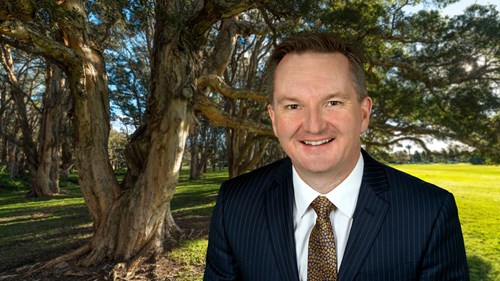
Chris Bowen, Minister for Climate Change and Energy, Australia
Chris Bowen, 24 February 2024. https://minister.dcceew.gov.au/bowen/media-releases/opinion-piece-proponents-nuclear-power-are-peddling-hot-air
Opponents of cleaner, cheaper renewables have used a particularly spectacular contortion of logic to claim the recent catastrophic storms in Victoria and the resulting power outages as evidence of the folly of acting on climate change and boosting renewables.
Predictably, nuclear energy advocates seized on the Victorian events and temporary power outage to re-energise their campaign for Australia to start a nuclear energy industry.
Let’s be clear upfront. Nuclear is not being pushed as a genuine alternative to renewables. It’s being used as a distraction and a delaying tactic.
It’s also quite the feat to assert that had it been nuclear rather than renewables, a coal-fired electricity generator in Victoria wouldn’t have shut itself down as protection against surges from storm-damaged transmission. It’s an even greater leap essentially to assert that a grid under the LNP would involve no distribution – given the vast majority of outages were caused by extreme damage to the distribution network – including from the half a million lightning strikes in eight hours.
Will nuclear powered electricity be transmitted by osmosis? By Bluetooth? By a vibe? Whether your energy comes from coal, nuclear, gas or renewables, if poles and wires are down, electricity won’t get where it needs to go.
The pro-nuclear argument is two-pronged. That the world has realised the perils of renewables and is experiencing a nuclear renaissance, and Australia is missing out.
And that nuclear is much cheaper than renewable energy, once upgrading and expanding the grid is factored in.
Both these arguments collapse faster than a tree in a lightning strike when exposed to the facts.
Global investment in renewable energy sources constitutes three quarters of all power generation investment.
Take just solar, for example. Last year, the world installed 440GW of renewable capacity. This is more than the world’s entire existing nuclear capacity built up through decades of investment. By early 2025, renewable energy will surpass coal as the planet’s largest source of energy, while coal, gas and nuclear will all shrink their market share.
Nuclear and coal combined, however, account for only 16 per cent of new global power investment. In 2005, electricity companies in the US pledged to build more than 30 reactors. Only four ever commenced construction. Two were abandoned due to massive cost and time delays.
The alleged boom in Small Modular Reactors is also a mirage. China and Russia are the only two countries to have installed them. The US has now abandoned its “flagship” commercial-scale pilot SMR (promised back in 2008), wearing 70 per cent cost blowouts without having started construction on a single reactor.
We know the Russian SMRs have extraordinarily low load factors and that nuclear waste from the SMR process is disproportionate to their output. The Chinese data is more opaque, but given SMRs generate about 300MW (compared to a coal-fired power station at 2000MW), we have no reason to believe there is anything approaching a serious contribution to China’s energy demand from their two units.
My shadow minister predicted that last year’s Dubai COP would be remembered as the “nuclear COP”. Not so much. Twenty three countries have pledged to triple nuclear energy by 2050, while 124 countries pledged to triple renewable energy investment within the next six years, before the nuclear dream even gets started.
Then there is cost. Contrary to myth, GenCost does include the cost of transmission and storage, and the CSIRO-AEMO GenCost conclusions about the chasm between nuclear and renewables costs could not be clearer.
But if you don’t want to accept eminent and independent practitioners at those organisations, then you can have a look at the Bulletin of Atomic Scientists, which estimates it will cost $US15 trillion to triple nuclear capacity. Or University College London, which recently found that “new nuclear capacity is only cost effective if ambitious cost and construction times are assumed”.
And if you don’t like University College London’s research, ask the merchant bank Lazard, which shows levelised cost of nuclear to be four times higher than utilityscale solar and wind.
Then look at how many nuclear projects are falling over because of cost and time overruns. The UK’s Hinkley C nuclear plant was promised to be “cooking Christmas turkeys by 2017”. It’s yet to warm a single drumstick, with latest costings at more than $86bn. Who in Australia does the opposition energy spokesman expect will be footing those kind of bills?
Like many things in the climate debate, the push for nuclear power has taken on a singular importance in the culture wars. It’s striking that a party that once prided itself on economic rationalism could embrace a frolic so spectacularly uneconomic. This is the triumph of culture wars over climate pragmatism in the alternative government.
The LNP has been promising to reveal the details of its long nuclear fairytales soon. It can’t come soon enough.
No plan for nuclear power in Australia will survive contact with reality. The Australian people deserve more than hot air to power their homes and businesses.
“Stop dividing us”: Andrew Forrest attacks pro-nuclear politicians

Rachel Williamson, https://reneweconomy.com.au/stop-dividing-us-andrew-forrest-attacks-pro-nuclear-politicians/
Mining billionaire and green energy evangelist Dr Andrew Forrest has come out swinging against the deepening support for nuclear, and the aversion to wind and solar power within the National and Liberal parties in the name of farmers.
Forrest called on the federal government to speed up the transition away from carbon-intensive industries via three “simple” policies, and called on the government-in-waiting to stop spreading misinformation about renewables.
In the last fortnight opposition leader Peter Dutton doubled down on his calls for small modular nuclear reactors to be put in small Australian towns, saying he’d put one on the former Alcoa mine and power station site in the coastal Victorian town of Anglesea, while energy spokesman Ted O’Brien would put one in the Latrobe Valley.
Nationals leader David Littleproud also wants to stop the rollout of large scale renewables in Australia because rural areas are “saturated” with them, and wants to limit the energy transition to residential rooftop solar and arrays on commercial buildings.
Forrest pooh-poohed their understanding of the economics of major projects, saying the Coalition proposals would leave Australia “destitute” because of the enormously cost of nuclear compared to wind and solar.
“I ask you who claim to represent the bush now to stop dividing us with the false hope that we can cling to fossil fuels forever,” Forrest said during a talk at the National Press Club.
” We can’t, so please stop betraying the bush. If we swallow this new lie that we should stop the rollout of green energy, and that nuclear energy will be a fairy godmother, we will be worse off again.
“These misinformed, unscientific, uneconomic plucked out of thin air, bulldust nuclear policies, [from] politicians masquerading as leaders, helps no one. Politicians who do whatever they can to discourage voters are just politicians, they are not political leaders.”
Forrest cited in particular the misinformation that Australian farmers will have to give up huge tracts of land to enable the green energy transition (a meme advanced by the Institute of Public Affairs and repeated by the likes or rival iron ore billionaire Gina Rinehart and the Coalition.
Forrest also announced a fund to help with wind and solar farm decommissioning and calling on the federal government to better regulate renewables developers to ensure they set aside money for that purpose.
It’s easy with three “simple” policies
Forrest wants to see a test for all major projects that explicitly considers climate impacts, for the country to lean into least cost, firmed renewables, and for the carbon levy proposed by Rod Sims and Ross Garnaut on fossil fuel imports and exports.
“We can circuit break the cost of living crisis, turn around unemployment and play our full part in decarbonizing at least to 6 per cent of global emissions through new green export industries,” he said.
“Australia can generate not one but many of its own Australian Aramcos with the right policy settings. We can achieve all these with three simple policies.
An impact test would create a climate trigger for every project requiring government approval, making carbon emissions and global warming automatically part of any environmental assessment.
US president Biden has already taken some action in this vein by pausing LNG export projects pending an assessment of the impacts on climate change.
Forrest claimed that it is the US’ “forward thinking climate strategy” and not the enormous funding on offer under the inflation Reduction Act (IRA) that is why Fortescue is building a liquid green hydrogen project in Phoenix, Arizona.
The second policy recommendation, leaning into renewables, repeats calls to roll out renewables faster in order to bring down the cost of electricity for Australians, while the third demanded an end to the “free ride” of fossil fuel companies via a carbon levy.
“The multi decadal polluting companies have exploited vicious lobbying for approvals so they can crowd out green energy, so they can prevent Australians from having the choice between cheaper green energy, which would destroy their livelihoods,” Forrest said.
“Let’s be clear for the sake of the visionless, a carbon solutions levy is not a carbon tax… it would only be applied to the 100-odd fossil fuel extraction sites in Australia and to importers, who are stopping us making our own energy. The beauty of this levy is that it does not penalise everyday Australians.
“It only penalises that the perpetrators of this crisis, the fossil fuel industry… Existing gas projects will continue to operate, they’ll just have to pay the levy. They’ll just have to pay their way. That’ll be new.”
He even called out taxpayer support for miners to use imported diesel, naming his own company Fortescue as one beneficiary.
“Their lobby groups quickly hide behind the Australian farm to defend the diesel fuel rebate. But they know that the vast proportion of the money goes to big mining and fossil fuel companies, not Australia’s farmers or fishermen.
” The ridiculousness of the rich crying out for more fossil fuel subsidies while denying climate change will surely go down as one of the most perversely selfish behaviours in Australian history.”
Fossil fuel subsidies increased to a record-breaking $57.1 billion in 2023, up from the $55.3 billion forecast in the 2022 budget, according to a report by The Australia Institute last year.
The Fuel Tax Act which subsidises the consumption of diesel, has cost over $95 billion in tax foregone to the Australian economy, via the Fuel Tax Credit Scheme (FTCS), since it was legislated in 2006.
The Victorian towns where Peter Dutton is considering going nuclear

Josh Gordon and Benjamin Preiss, February 25, 2024, https://www.theage.com.au/politics/victoria/the-victorian-towns-where-peter-dutton-is-considering-going-nuclear-20240223-p5f7a3.html
The Coalition is leaving the door open to building nuclear reactors in the Latrobe Valley and Anglesea using land from retired coal-fired power stations as a solution to Victoria’s energy troubles.
But locals warn there would be significant opposition to nuclear reactors being built in their towns, even if the huge legal hurdles to constructing and running them could be overcome.
With Victoria’s energy security under scrutiny after a wild storm earlier this month left hundreds of thousands of homes without power and triggered the shutdown of the state’s largest coal-fired generator, the federal opposition has confirmed it is now in the “advanced stages” of developing an energy policy. Nuclear is set to be a key part of the mix.
Opposition energy spokesman Ted O’Brien told The Age potential locations remained a “work-in-progress”, but he had been advised that “communities with experience hosting coal plants could be ideal potential hosts for zero-emissions nuclear plants”.
That leaves Victoria’s three remaining coal-fired power plants, plus the now decommissioned site of the Hazelwood mine and power station, as strongly preferred locations – with existing connections to the energy grid, and a ready-made workforce preparing for the end of coal-fired generation over the next 15 years.
“We have been very transparent about the fact we are considering zero-emissions nuclear energy as part of Australia’s future energy mix, and we will remain open about the details of our policy when it is announced,” O’Brien said.
The state opposition remains more cautious about the prospect of nuclear in the Latrobe Valley, but it too is not ruling out the idea. Asked about using retired coal-fired power stations as sites for nuclear energy, Opposition Leader John Pesutto said a commonsense approach was needed.
“But for any new industry to succeed it would first need detailed inquiries and thorough examination,” Pesutto told The Age. “It would also require bipartisan support, as this is crucial for investment certainty and to eliminate sovereign risk.”
Other sites in Victoria have also been flagged. Federal Opposition Leader Peter Dutton recently hinted at the possibility of a small modular reactor on the Surf Coast at Anglesea, on the site of Alcoa’s former mine and power station.
“It’s zero emissions, you can put it into an existing brownfield site, so when the coal-fired generation comes to an end, you can put the nuclear modular reactors into that facility,” Dutton said in September.
The argument for nuclear is that plugging into existing infrastructure would be significantly cheaper and would reduce the need for thousands of kilometres of new transmission lines needed to connect wind and solar energy dotted across the grid.
O’Brien has previously pointed to a September 2022 study for the US Department of Energy that found using the infrastructure of an existing coal plant could reduce a nuclear plant’s capital costs by up to 35 per cent. He suggested Australia should look to the US state of Wyoming, which is planning to replace its coal-fired generators with nuclear by about 2030.
But any move towards nuclear power in Victoria would likely encounter strong resistance from communities worried about safety, waste disposal and the cost.
Voices of the Valley president Wendy Farmer said nuclear power would face major opposition from communities worried about the risks.Farmer said residents in the Latrobe Valley had already suffered the consequences of the Hazelwood mine fire in 2014, which burned for 45 days and caused health concerns for those living amid the smoke.
“I would be surprised if there would be any enthusiasm for a reactor,” she said.
Deputy Mayor Mike Bodsworth, who represents the Anglesea ward, said residents were excited by the potential for renewable power generation at the former Alcoa site.
“But nobody I know has ever mentioned nuclear,” he said. “Knowing the general preferences of the local population, I doubt it would be supported.”
The Coalition has been talking up the potential to use small-scale modular reactors to generate power, and argue this, along with gas, will be a key part of Australia’s future energy mix to provide so-called base-load generation along with variable renewables.
In May last year, US company Westinghouse released plans for a small modular reactor. Reuters reported Westinghouse planned to begin building the reactor by 2030.
But many experts say this approach would be prohibitively expensive in Australia, particularly if forced to compete against lower-cost renewable wind and solar generators now being installed at a rapid rate across the country.
The CSIRO’s best guess is that in 2030 the capital cost of a small modular reactor will be $15,844 per kilowatt of electricity generated, compared to $1078 for solar and $1989 for wind.
That suggests replacing Victoria’s three remaining coal-fired plants, which combined to produce up to 4730 megawatts of electricity, with nuclear would involve a capital cost of about $74.9 billion, before even considering the ongoing running, maintenance and waste disposal costs.
The Coalition would also need to get the numbers in state parliament to repeal existing state and federal laws, including Victoria’s Nuclear Activities (Prohibitions) Act of 1983, which bans the construction and operation of nuclear facilities in Victoria.
Victorian Energy Minister Lily D’Ambrosio said nuclear energy was “toxic, risky, will take years to develop and [is] the most expensive form of energy there is”.
“Not only are the sites of our former coal plants privately owned, but there is currently no regulatory framework for approving a nuclear power plant in Australia, there are no nuclear waste storage sites in Australia, and no modular nuclear reactors have made it past the trial phase,” she said.
Federal Energy Minister Chris Bowen said claims of a boom in small modular reactors was a myth, and suggested Dutton should explain to the people around Gippsland why they should accommodate multiple reactors “for no good reason”.
“Anyone who has done their homework knows nuclear is not viable,” Bowen said. “The alleged boom in small modular reactors is a furphy. It’s striking that a party that once prided itself on economic rationalism could embrace a frolic so spectacularly uneconomic.”
In the US, a project run by NuScale Power to build the first commercial small modular reactor was scrapped last year because of soaring costs, leaving taxpayers facing a significant bill. Other projects promising commercially competitive nuclear energy have similarly failed to materialise.
Buried Nuclear Waste From the Cold War Could Resurface as Ice Sheets Melt

Decades after the U.S. buried nuclear waste abroad, climate change could unearth it.
By Anita Hofschneider, Grist, https://gizmodo.com/buried-nuclear-waste-from-the-cold-war-could-resurface-1851286777
Ariana Tibon was in college at the University of Hawaiʻi in 2017 when she saw the photo online: a black-and-white picture of a man holding a baby. The caption said: “Nelson Anjain getting his baby monitored on March 2, 1954, by an AEC RadSafe team member on Rongelap two days after ʻBravo.ʻ”
Tibon had never seen the man before. But she recognized the name as her great-grandfatherʻs. At the time, he was living on Rongelap in the Marshall Islands when the U.S. conducted Castle Bravo, the largest of 67 nuclear weapon tests there during the Cold War. The tests displaced and sickened Indigenous people, poisoned fish, upended traditional food practices, and wrought cancers and other negative health repercussions that continue to reverberate today.
A federal report by the Government Accountability Office published last month examines what’s left of that nuclear contamination, not only in the Pacific but also in Greenland and Spain. The authors conclude that climate change could disturb nuclear waste left in Greenland and the Marshall Islands. “Rising sea levels could spread contamination in RMI, and conflicting risk assessments cause residents to distrust radiological information from the U.S. Department of Energy,” the report says.
In Greenland, chemical pollution and radioactive liquid are frozen in ice sheets, left over from a nuclear power plant on a U.S. military research base where scientists studied the potential to install nuclear missiles. The report didn’t specify how or where nuclear contamination could migrate in the Pacific or Greenland, or what if any health risks that might pose to people living nearby. However, the authors did note that in Greenland, frozen waste could be exposed by 2100.
“The possibility to influence the environment is there, which could further affect the food chain and further affect the people living in the area as well,” said Hjalmar Dahl, president of Inuit Circumpolar Council Greenland. The country is about 90 percent Inuit. “I think it is important that the Greenland and U.S. governments have to communicate on this worrying issue and prepare what to do about it.”
The authors of the GAO study wrote that Greenland and Denmark haven’t proposed any cleanup plans, but also cited studies that say much of the nuclear waste has already decayed and will be diluted by melting ice. However, those studies do note that chemical waste such as polychlorinated biphenyls, man-made chemicals better known as PCBs that are carcinogenic, “may be the most consequential waste at Camp Century.”
The report summarizes disagreements between Marshall Islands officials and the U.S. Department of Energy regarding the risks posed by U.S. nuclear waste. The GAO recommends that the agency adopt a communications strategy for conveying information about the potential for pollution to the Marshallese people.
Nathan Anderson, a director at the Government Accountability Office, said that the United States’ responsibilities in the Marshall Islands “are defined by specific federal statutes and international agreements.” He noted that the government of the Marshall Islands previously agreed to settle claims related to damages from U.S. nuclear testing.
“It is the long-standing position of the U.S. government that, pursuant to that agreement, the Republic of the Marshall Islands bears full responsibility for its lands, including those used for the nuclear testing program.”
To Tibon, who is back home in the Marshall Islands and is currently chair of the National Nuclear Commission, the fact that the report’s only recommendation is a new communications strategy is mystifying. She’s not sure how that would help the Marshallese people.
“What we need now is action and implementation on environmental remediation. We don’t need a communication strategy,” she said. “If they know that it’s contaminated, why wasn’t the recommendation for next steps on environmental remediation, or what’s possible to return these lands to safe and habitable conditions for these communities?”
The Biden administration recently agreed to fund a new museum to commemorate those affected by nuclear testing as well as climate change initiatives in the Marshall Islands, but the initiatives have repeatedly failed to garner support from Congress, even though they’re part of an ongoing treaty with the Marshall Islands and a broader national security effort to shore up goodwill in the Pacific to counter China.
Fatal Flaws Undermine America’s Defense Industrial Base
Many elements of the traditional DIB have yet to adopt advanced manufacturing technologies, as they struggle to develop business cases for needed capital investment.
In other words, while adopting advanced manufacturing technologies would fulfill the purpose of the US Department of Defense, it is not profitable for private industry to do so.
Despite virtually all the problems the report identifies stemming from private industry’s disproportionate influence over the US DIB, the report never identifies private industry itself as a problem.
If private industry and its prioritization of profits is the central problem inhibiting the DIB from fulfilling its purpose, the obvious solution is nationalizing the DIB by replacing private industry with state-owned enterprises. This allows the government to prioritize purpose over profits. Yet in the United States and across Europe, the so-called “military industrial complex” has grown to such proportions that it is no longer subordinated to the government and national interests, but rather the government and national interests are subordinated to it.
US defense industrial strategy built on a flawed premise
Beyond private industry’s hold on the US DIB, the very premise the NDIS is built on is fundamentally flawed, deeply rooted in private industry’s profit-driven prioritization.
The report claims:
The purpose of this National Defense Industrial Strategy is to drive development of an industrial ecosystem that provides a sustained competitive advantage to the United States over its adversaries.
The notion of the United States perpetually expanding its wealth and power across the globe, unrivaled by its so-called “adversaries” is unrealistic.
China alone has a population 4-5 times greater than the US. China’s population is, in fact, larger than that of the G7 combined. China has a larger industrial base, economy, and education system than the US. China’s education system not only produces millions more graduates each year in essential fields like science, technology, and engineering than the US, the proportion of such graduates is higher in China than in the US.
China alone possesses the means to maintain a competitive advantage over the United States now and well into the foreseeable future. The US, attempting to draw up a strategy to maintain an advantage over China (not to mention over the rest of the world) regardless of these realities, borders on delusion.
Yet for 60 pages, US policymakers attempt to lay out a strategy to do just that.
Not just China, but also Russia
While China is repeatedly mentioned as America’s “pacing challenge,” the ongoing conflict in Ukraine is perhaps the most acute example of a shifting balance of global power.
Despite a combined population, GDP, and military budget many times greater than Russia’s, the collective West is incapable of matching Russian production of even relatively simple munitions like artillery shells, let alone more complex systems like tanks, aircraft, and precision-guided missiles.
While the US and its allies appear to have every conceivable advantage over Russia on paper, the collective West has organized itself as a profit-driven rather than purpose-driven society.
In Russia, the defense industry exists to serve national security. While one might believe this goes without saying, across the collective West, the defense industry, like all other industries in the West, exists solely to maximize profits.
To best serve national security, the defense industry is required to maintain substantial surge capacity – meaning additional, unused factory space, machines, and labor on standby if and when large surges in production are required in relatively short periods of time. Across the West, in order to maximize profits, surge capacity has been ruthlessly slashed, deemed economically inefficient. Only rare exceptions exist, such as US 155 mm artillery shell production.
While the West’s defense industry remains the most profitable on Earth, its ability to actually churn out arms and ammunition in the quantities and quality required for large-scale conflict is clearly compromised by its maximization of profits.
The result is evident today as the West struggles to expand production of arms and ammunition for its Ukrainian proxies.
The NDIS report would note:
Prior to the invasion, weapon procurements for some of the in-demand systems were driven by annual training requirements and ongoing combat operations. This modest demand, along with recent market dynamics, drove companies to divest excess capacity due to cost. This meant that any increased production requirements would require an increase in workforce hours in existing facilities—commonly referred to as “surge” capacity. These, in turn, were limited further by similar down-stream considerations of workforce, facility, and supply chain limitations.
Costs are most certainly a consideration across any defense industry, but costs cannot be the primary consideration.
A central element of Russia’s defense industry is Rostec, a massive state-owned enterprise under which hundreds of companies related to national industrial needs including defense are organized. Rostec is profitable. However, the industrial concerns organized under Rostec serve purposes related to Russia’s national interests first and foremost, be it national health, infrastructure or security.
Because Russia’s defense industry is purpose-driven, it produced military equipment because it was necessary, not because it was profitable. As a result, Russia possessed huge stockpiles of ammunition and equipment ahead of the Special Military Operation (SMO) in February 2022. In addition to this, Russia maintained large amounts of surge capacity enabling production rates of everything from artillery shells to armored vehicles to expand quickly over the past 2 years.
Only relatively recently have Western analysts acknowledged this.
Continue reading

“military industrial complex” has grown to such proportions that it is no longer subordinated to the government and national interests, but rather the government and national interests are subordinated to it.
the collective West has organized itself as a profit-driven rather than purpose-driven society………………………………across the collective West, the defense industry, like all other industries in the West, exists solely to maximize profits.
By Brian Berletic, Orinoco Tribune. February 24, 2024 https://popularresistance.org/fatal-flaws-undermine-americas-defense-industrial-base/
The first-ever US Department of Defense National Defense Industrial Strategy (NDIS) confirms what many analysts have concluded in regard to the unsustainable nature of Washington’s global-spanning foreign policy objectives and its defense industrial base’s (DIB) inability to achieve them.
The report lays out a multitude of problems plaguing the US DIB including a lack of surge capacity, inadequate workforce, off-shore downstream suppliers, as well as insufficient “demand signals” to motivate private industry partners to produce what’s needed, in the quantities needed, when it is needed.
In fact, the majority of the problems identified by the report involved private industry and its unwillingness to meet national security requirements because they were not profitable.
For example, the report attempts to explain why many companies across the US DIB lack advanced manufacturing capabilities, claiming:
Many elements of the traditional DIB have yet to adopt advanced manufacturing technologies, as they struggle to develop business cases for needed capital investment.
In other words, while adopting advanced manufacturing technologies would fulfill the purpose of the US Department of Defense, it is not profitable for private industry to do so.
Despite virtually all the problems the report identifies stemming from private industry’s disproportionate influence over the US DIB, the report never identifies private industry itself as a problem.
If private industry and its prioritization of profits is the central problem inhibiting the DIB from fulfilling its purpose, the obvious solution is nationalizing the DIB by replacing private industry with state-owned enterprises. This allows the government to prioritize purpose over profits. Yet in the United States and across Europe, the so-called “military industrial complex” has grown to such proportions that it is no longer subordinated to the government and national interests, but rather the government and national interests are subordinated to it.
US defense industrial strategy built on a flawed premise
Beyond private industry’s hold on the US DIB, the very premise the NDIS is built on is fundamentally flawed, deeply rooted in private industry’s profit-driven prioritization.
The report claims:
The purpose of this National Defense Industrial Strategy is to drive development of an industrial ecosystem that provides a sustained competitive advantage to the United States over its adversaries.
The notion of the United States perpetually expanding its wealth and power across the globe, unrivaled by its so-called “adversaries” is unrealistic.
China alone has a population 4-5 times greater than the US. China’s population is, in fact, larger than that of the G7 combined. China has a larger industrial base, economy, and education system than the US. China’s education system not only produces millions more graduates each year in essential fields like science, technology, and engineering than the US, the proportion of such graduates is higher in China than in the US.
China alone possesses the means to maintain a competitive advantage over the United States now and well into the foreseeable future. The US, attempting to draw up a strategy to maintain an advantage over China (not to mention over the rest of the world) regardless of these realities, borders on delusion.
Yet for 60 pages, US policymakers attempt to lay out a strategy to do just that.
Not just China, but also Russia
While China is repeatedly mentioned as America’s “pacing challenge,” the ongoing conflict in Ukraine is perhaps the most acute example of a shifting balance of global power.
Despite a combined population, GDP, and military budget many times greater than Russia’s, the collective West is incapable of matching Russian production of even relatively simple munitions like artillery shells, let alone more complex systems like tanks, aircraft, and precision-guided missiles.
While the US and its allies appear to have every conceivable advantage over Russia on paper, the collective West has organized itself as a profit-driven rather than purpose-driven society.
In Russia, the defense industry exists to serve national security. While one might believe this goes without saying, across the collective West, the defense industry, like all other industries in the West, exists solely to maximize profits.
To best serve national security, the defense industry is required to maintain substantial surge capacity – meaning additional, unused factory space, machines, and labor on standby if and when large surges in production are required in relatively short periods of time. Across the West, in order to maximize profits, surge capacity has been ruthlessly slashed, deemed economically inefficient. Only rare exceptions exist, such as US 155 mm artillery shell production.
While the West’s defense industry remains the most profitable on Earth, its ability to actually churn out arms and ammunition in the quantities and quality required for large-scale conflict is clearly compromised by its maximization of profits.
The result is evident today as the West struggles to expand production of arms and ammunition for its Ukrainian proxies.
The NDIS report would note:
Prior to the invasion, weapon procurements for some of the in-demand systems were driven by annual training requirements and ongoing combat operations. This modest demand, along with recent market dynamics, drove companies to divest excess capacity due to cost. This meant that any increased production requirements would require an increase in workforce hours in existing facilities—commonly referred to as “surge” capacity. These, in turn, were limited further by similar down-stream considerations of workforce, facility, and supply chain limitations.
Costs are most certainly a consideration across any defense industry, but costs cannot be the primary consideration.
A central element of Russia’s defense industry is Rostec, a massive state-owned enterprise under which hundreds of companies related to national industrial needs including defense are organized. Rostec is profitable. However, the industrial concerns organized under Rostec serve purposes related to Russia’s national interests first and foremost, be it national health, infrastructure or security.
Because Russia’s defense industry is purpose-driven, it produced military equipment because it was necessary, not because it was profitable. As a result, Russia possessed huge stockpiles of ammunition and equipment ahead of the Special Military Operation (SMO) in February 2022. In addition to this, Russia maintained large amounts of surge capacity enabling production rates of everything from artillery shells to armored vehicles to expand quickly over the past 2 years.
Only relatively recently have Western analysts acknowledged this.
Continue reading
Nuclear news – week to 26 February

A bit of good news: Success in protecting and restoring isolated island ecosystems
TOP STORIES. The Show Trial against Julian Assange. After years of avoiding extradition, Julian Assange’s appeal is likely his last chance. Here’s how it might unfold (and how we got here). Chris Hedges: Julian Assange’s Day in Court
Germany and nuclear weapons: A difficult history.
Fatal Flaws Undermine America’s Defense Industrial Base.
Environment. The Growing Environmental Footprint Of Generative AI
Climate. Antarctica sea ice reaches alarming low for third year in a row.
Nuclear. Same same – media promotion of small nuclear reactors, despite the economic realities. UK in turmoil over nuclear costs. Angst over the idea of nuclear war in space.
Noel’s notes. Alexei Navalny – the paradox of his legacy
AUSTRALIA Proponents of nuclear power are peddling hot air. Billionaire mining magnate Andrew Forrest lampoons Coalition’s nuclear push as ‘bulldust’. “Stop dividing us”: Andrew Forrest attacks pro-nuclear politicians. Nuclear Power Advocates Accused of Spreading Misinformation. The Victorian towns where Peter Dutton is considering going nuclear.
No nuclear option for $275m green-manufacturing grants. Australian defence: from self-reliance to subsidising US war with China. What comes after Rafah. Why Australia should ditch the AUKUS nuclear submarine and-pivot-to-pitstop-power (- a bit of dissent in the pro-nuclear camp) NUCLEAR ISSUES
| ECONOMICS. Utility EdF Writes Down $14B Loss on Delayed UK Nuclear Megaproject. Citizens Advice says Sizewell C costs should not be paid with energy bill hikes. Energy Costs UK : The Price Of Power-Nuclear Fandango. Private Financiers Pour Billions Into Nuclear Weapons Production. Most Japan fishing groups hit by China import ban in Fukushima row. | ENVIRONMENT. Hinkley Point C could kill 22 BILLION fish in the Severn estuary. Environment Agency and Natural England behind Hinkley Point wetland plan, says MP. HEALTH. Body Map – Nuclear Power. HISTORY. Rethinking Ukraine: Putin and the Mystery of National Identity |
John J Mearsheimer On behalf of Julian Assange. https://www.youtube.com/watch?v=gN_Shacd2Iw DAY ONE: Assange Timeline Exposes US Motives. Assange’s final appeal – Your man in the public gallery, part 2. Julian Assange Faces Final “Life or Death” Extradition Appeal. https://www.youtube.com/watch?v=XPfB2z-lotU
Japanese mafia boss conspired to traffic nuclear materials, says US. Justice Department Announces Nuclear Materials Trafficking Charges Against Japanese Yakuza Leader.
More indictments for Ohio nuclear crimes.
MEDIA. Ralph Nader: What the Mass Media Needs to Cover Re: Israel/Gaza Conflict.
OPPOSITION to NUCLEAR . Stop Sizewell C’s Response to Regulated Asset Base Licence Consultation.
POLITICS. Great British Nuclear seeks to buy EDF land for small modular reactor .
Victory: Nuclear Free Local Authorities welcome Council vote on South Holderness nuke dump plan.
House is heading toward “nuclear” war over Ukraine funding, one top House GOP leader says .
Nuclear route does Scotland no favours – Tommy Sheppard.
POLITICS INTERNATIONAL and DIPLOMACY. The odds of China using nuclear war to resolve the Taiwan issue.
SAFETY. UK lawmakers seek reassurances after nuclear missile test fails for second time. Minister urges TEPCO to ensure nuclear safety measures.
SECRETS and LIES. How British Intelligence Framed Julian Assange As Russian Agent.
SPACE. EXPLORATION, WEAPONS. U.S. Militarizes Space While Accusing Russia of Doing So. Touring South Korea to support opposition to US space warfare plans. Putin says Russia has no intention of putting nuclear weapons in space. Shock Horror! Serious risk TO INVESTORS of nuclear war in space!
SPINBUSTER. What’s fueling the commercial fusion hype?
TECHNOLOGY. Rolls-Royce will build first mini-nuclear reactor in Europe instead of UK, boss warns.
| WASTES. Decommissioning. The San Onofre Briefing: The Latest on SoCal’s Shut Down Nuclear Power Plant. https://www.youtube.com/watch?v=OGDwkokX1NA The War Over Burying Nuclear Waste in America’s Busiest Oil Field. Nuclear industry veterans warn some radioactive waste destined for Ontario disposal facility should not be accepted. | WAR and CONFLICT. Ukraine: how nuclear weapons continue to increase the risks, two years on. NATO says Kiev can use F-16 jets to strike targets ‘outside Ukraine‘, despite Russia’s warning. First 2 years of US proxy war against Russia finds both US and Ukraine in downward spiral. Netanyahu’s Post-War Plans for Gaza Call for Military Occupation ‘Without T |
The Show Trial against Julian Assange

If the US authorities succeed in convicting a journalist for exposing war crimes, this would have another serious consequence. In the future, it would become even more difficult and dangerous to expose the sordid reality of wars,
How US and British authorities are bending the law and undermining press freedom
FABIAN SCHEIDLER, FEB 24, 2024 ore https://fabianscheidler.substack.com/p/the-show-trial-against-julian-assange
“Those who tell the truth need a fast horse,” says an Armenian proverb. Or they need a society that protects the truth and its messengers. But this protection, which our democracies claim to offer, is in danger. As a journalist, Julian Assange has published hundreds of thousands of files documenting war crimes committed by the USA and its allies in Afghanistan, Iraq, Guantanamo and elsewhere. The authenticity of the documents is beyond question. However, none of the perpetrators have been brought to justice or convicted. In contrast, the messenger has been incarcerated in a high-security prison in London for five years with life-threatening health problems, having previously spent seven years locked up in the Ecuadorian embassy. He has been charged with no crime in the UK, in any EU country or in his home country of Australia. The only reason for his grueling deprivation of liberty is that the US government has initiated extradition proceedings accusing the journalist Assange of espionage, invoking a law dating back more than a hundred years to the First World War: the Espionage Act.
Never before has a journalist been charged under this law. The extradition process therefore sets a dangerous precedent. If it is successful, every journalist on Earth who exposes US war crimes would have to fear suffering the same fate as Assange. That would be the end of freedom of the press as we know it. Because it is based on the capacity to bring to light the dark sides of power without fear of punishment. Where this freedom is extinguished, it is not only the freedom of journalists that dies, but the freedom of us all: the freedom from the arbitrariness of power.
For this reason alone, this extradition process should never have been accepted by the courts in a functioning legal system. Julian Assange did not act as a spy in any way, but as a journalist and as such is subject to special protection. Incidentally, the key witness for the espionage charge was the notorious fraudster and convicted paedophile Sigurdur Ingi Thordarson, who admitted in 2021 that he had lied on behalf of the FBI and had been granted immunity from prosecution.
Let us imagine the case with reversed roles: Suppose an Australian journalist had published war crimes committed by the Russian military and intelligence services and sought protection in a Western European country. Would the courts seriously consider extradition proceedings to Moscow for espionage, especially if the key witness is a convicted criminal?
Assange is facing the absurd sentence of 175 years in the USA. It is to be feared that he will not survive the extremely harsh conditions in the notorious US prison system. For this reason, the London Magistrates’ Court initially halted his extradition in 2021. The US government then published a paper stating that Assange would not face solitary confinement. However, according to Amnesty International, this declaration is “not worth the paper it is written on”, as the non-binding diplomatic note reserves the right for the US government to change its position at any time. The Court of Appeal, however, found this paper sufficient to clear the way for extradition – a travesty of justice, as Amnesty noted.
The hearings, which took place on February 20 and 21 at the High Court in London and whose verdict is expected in March, are the last opportunity for Assange to obtain an appeal against this extradition decision. However, there is a high risk that the law will once again be turned on its head. As the investigative platform Declassified UK reports, one of the two judges, Jeremy Johnson, previously worked for the British secret service MI6, which is closely intertwined with the CIA and whose illegal activities came to public attention through the work of Julian Assange.
For Julian Assange, the trial itself has already become a punishment. Nils Melzer, the UN Special Rapporteur on Torture, concluded after detailed investigations that Assange had been subjected to systematic psychological torture for years. The fact that the US was prepared to go even further came to light in September of the same year: according to reports in the Guardian, senior intelligence officials, including the then head of the CIA and later Secretary of State Mike Pompeo, planned to kidnap and murder Assange in 2017.[v]
The background:
Wikileaks had published documents that year that became known as “Vault 7”. They show the CIA’s massive activities in the field of cyber warfare and prove how the secret service systematically and comprehensively intervenes in web browsers, IT systems in cars, smart TVs and smartphones, even when they are switched off. This was one of the most sensational revelations by Wikileaks since the leaks by Edward Snowden, who uncovered the massive illegal surveillance by the NSA. The CIA was not to forgive Assange for this coup and subsequently classified Wikileaks as a “non-state hostile intelligence service” – a momentous neologism that allowed journalists to be declared enemies of the state. After Pompeo became Secretary of State in 2018, the US government initiated the extradition proceedings. This move replaced Pompeo’s original kidnapping and killing plan, with the goal remaining the same: the destruction of an inconvenient journalist.
The revelations of whistleblowers such as Edward Snowden and Chelsea Manning and journalists such as Julian Assange have shown that in the shadow of the so-called war on terror, a vast parallel universe has emerged in recent decades that is obsessed with the illegal spying on its own citizens and the arbitrary imprisonment, torture and killing of political opponents. This world is largely beyond democratic control, indeed it is undermining the democratic order from within.
However, this development is not entirely new. In 1971, leaks revealed a secret FBI program for spying on, infiltrating and disrupting civil rights and anti-war movements, which became known as COINTELPRO. In the same year, the New York Times published the Pentagon Papers leaked by whistleblower Daniel Ellsberg, which showed that four successive US administrations had systematically lied to their citizens about the extent and motives of the Vietnam War and the massive war crimes committed by the US military. In 1974, Seymour Hersh revealed the CIA’s secret programs to assassinate foreign heads of state and the covert operation to spy on hundreds of thousands of opponents of the war, which ran under the code name “Operation CHAOS”. Driven by these reports, the US Congress convened in 1975 the Church Committee, which carried out a comprehensive review of the secret operations and led to greater parliamentary control of the services.
Julian Assange is part of this venerable journalistic tradition and has made a decisive contribution to its renewed flourishing. However, there is one important difference to the 1970s: Today, the most important investigative journalist of his generation is openly persecuted, criminalized and deprived of his freedom. When states declare the investigation of crimes to be a crime itself, society enters a dangerous downward spiral, at the end of which new forms of totalitarian rule can emerge. As early as 2012, Assange remarked, at the time with regard to the increasingly comprehensive surveillance technologies: “We have all the ingredients for a turnkey totalitarian state”.
If the US authorities succeed in convicting a journalist for exposing war crimes, this would have another serious consequence. In the future, it would become even more difficult and dangerous to expose the sordid reality of wars, especially those wars that Western governments like to sell as civilizing missions with the help of embedded journalists. If we do not learn the truth about these wars, it becomes much easier to wage them. Truth is the most important instrument of peace.
Julian Assange has not yet been extradited and sentenced. Over the years, a remarkable international movement has formed for his release and the defense of press freedom. Many parliamentarians around the world are also raising their voices. The Australian parliament, for example, supported by Prime Minister Anthony Albanese, passed a resolution by a large majority calling for Assange’s release. A group of over 80 members of the German parliament have joined in. However, the German government is still refusing to exert any serious pressure on Joe Biden’s government, which continues to persecute Assange. German Foreign Minister Annalena Baerbock, who as the Green Party’s candidate for chancellor had spoken out in favor of freeing Assange, has persistently avoided questions on the subject since joining the government. Her ministry has left questions from MPs about the case unanswered for months, only to then make elusive rhetorical excuses. The leading politicians of the governing German coalition, who like to loudly present themselves as the guardians of democracy and the rule of law, must finally take action in this case of political justice and unequivocally demand the release of Julian Assange before it is too late. However, this would require overcoming the cowering attitude towards the godfather in Washington and actually standing up for the much-vaunted values of democracy.
Billionaire mining magnate Andrew Forrest lampoons Coalition’s nuclear push as ‘bulldust’

A push by the Coalition to develop nuclear energy generation in Australia has been slammed by mining magnate Andrew “Twiggy” Forrest.
Jack Quail, February 26, 2024 – https://www.news.com.au/technology/environment/climate-change/billionaire-mining-magnate-andrew-forrest-lampoons-coalitions-nuclear-push-as-bulldust/news-story/048f9a45dbb31091a4ed313479922288
Billionaire mining magnate Andrew “Twiggy” Forrest has rubbished a push to develop a local nuclear energy industry, even as fresh polling showed growing voter support for the proposal.
Dr Forrest took a veiled swipe at the opposition over its soon-to-be-unveiled nuclear energy policy, saying its push was “misinformed”, would act to sustain coal and gas powered generation for another two decades, and ultimately would lead to higher power prices.
“If we swallow this new lie that we should stop the rollout of green energy and that nuclear energy will be our fairy godmother, we will be worse off again,” the chair of mining and green energy firm Fortescue told the National Press Club on Monday.
“These misinformed, unscientific, uneconomic, plucked-out-of-thin-air, bulldust nuclear policies of politicians – masquerading as leaders – help no one.”
Dr Forrest, who in 2023 ranked as Australia’s third richest person, made his billions mining iron ore but in more recent years has aggressively pursued investments in renewable energy technologies and fuel, particularly green hydrogen.
Claiming he was “agnostic” on nuclear energy, Dr Forrest said the economics of such a proposal did not stack up when compared with renewable generation.
“Who is going to pay their nuclear electricity bill when it is 4-5 times more expensive than the renewables next door, even ignoring the decade plus it takes to develop nuclear?” Dr Forrest asked.
“With wind and solar, you’re up and running, lowering electricity costs and eliminating pollution within one to three years.”
The Coalition is yet to release a costed nuclear energy policy but has committed to do so ahead of the next federal election, due by May 2025 at the latest.
A Newspoll released by The Australian on Monday revealed 55 per cent of Australians support the replacement of coal-fired power plants with small modular nuclear reactors.
However, such technology is still in development, is yet to prove commercially viable, and would not be deliverable until the mid-2030s at the earliest.
The Albanese government has similarly disparaged the Coalition’s nuclear push, and has retained a ban on nuclear power and banking.
In his address, Dr Forrest also advocated for a “renewable energy-led economy”, recommending the government establish a “climate trigger” to assess the impact of carbon pollution in granting environmental approvals, rapidly expand firmed renewable energy, and introduce a levy on carbon emissions extracted from mining or imported into Australia.
“If we make the right decisions today, it will deliver the most profound and enduring economic growth opportunities ever seen, particularly in regional Australia,” he said.
Calling out the diesel fuel rebate, which costs the federal budget billions annually, Dr Forrest said the subsidy towards mining and fossil fuel companies should be scrapped.
“Massive taxpayer-funded financial support for huge mining companies, including Fortescue, to use imported diesel is indefensible,” Dr Forrest said.
Last week, Fortescue – of which Dr Forrest and his family own a 33 per cent stake – reported a 41 per cent increase in its first-half profit, beating analysts’ estimates and bucking a growing trend of sliding profitability among other major mining firms.
1 This month.

Australians deserve the truth
about
AUKUS – https://aukuspublicinquiry.com/
30 July – WEBINAR (Free) – Is Nuclear Power the Solution to Climate Change? https://my.acaw.org.au/event/acaw-is-nuclear-power-the-solution-to-climate-change
18:30 – 19:45 ACST
19:00 – 20:15 AEST


PETITION – To: Prime Minister Anthony Albanese and the Australian Labor Government

of the week – Australians for War Powers Reform (AWPR)
To see nuclear-related stories in greater depth and intensity
 Antinuclear