Cold turkeys: The demise of nuclear power
Jim Green, Mar 12, 2024, https://reneweconomy.com.au/cold-turkeys-the-demise-of-nuclear-power-in-australias-aukus-partner-countries/
When announcing the AUKUS agreement in 2021, then Prime Minister (and secret energy minister) Scott Morrison said: “Let me be clear: Australia is not seeking to establish … a civil nuclear capability.” He also said that “a civil nuclear energy industry is not a requirement for us to go through the submarine program.”
However, Coalition Senators argued in a report last year that Australia’s “national security” would be put at risk by retaining federal legislation banning nuclear power and that the “decision to purchase nuclear submarines makes it imperative for Australia to drop its ban on nuclear energy.”
So, let’s see how nuclear power is faring in our AUKUS partners, the UK and the US.
This is a story about conventional, large reactors. All that needs to be said about ‘small modular reactors’ in the UK and the US is that none exist and none are under construction.
This is a story about conventional, large reactors. All that needs to be said about ‘small modular reactors’ in the UK and the US is that none exist and none are under construction.
The UK
The last power reactor start-up in the UK was 29 years ago — Sizewell B in 1995.
Over the past decade, several proposed new nuclear power plants have been abandoned (Moorside, Wylfa, Oldbury) and the only project to reach the construction stage is Hinkley Point C, comprising two French-designed EPR reactors.
In the late 2000s, the estimated construction cost for one EPR reactor in the UK was £2 billion (A$3.9 billion). When construction of two EPR reactors at Hinkley Point commenced in 2018 and 2019, the cost estimate for the two reactors was £19.6 billion.
The current cost estimate for the two reactors has ballooned to £46 billion (A$89 billion) or £23 billion (A$44.5 billion) per reactor. That is 11.5 times higher than the estimate in the late 2000s. Further cost overruns are certain. This is an example of the Golden Rule of Nuclear Economics: Add a Zero to Nuclear Industry Estimates.
The UK National Audit Office estimates that taxpayer subsidies for Hinkley Point — primarily in the form of a guaranteed payment of £92.50 (A$180) per megawatt-hour (2012 prices), indexed for inflation, for 35 years — could amount to £30 billion (A$58 billion) while other credible estimates put the figure as high as £48.3 billion (A$94 billion).
Delays
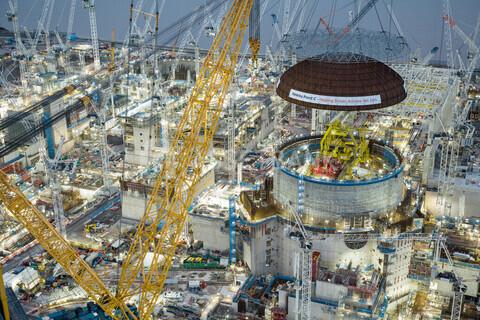
The delays associated with Hinkley Point have been as shocking as the cost overruns. In 2007, French utility EDF boasted that Britons would be using electricity from an EPR reactor at Hinkley Point to cook their Christmas turkeys in 2017. In 2008, the UK government said the reactors would be complete “well before 2020”.
But construction of the two reactors didn’t even begin until 2018 and 2019, respectively, at which time completion was expected in 2026. Now, completion is expected in 2030 or 2031.
Undoubtedly there will be further delays and if the reactors are completed, it will be more than a quarter of a century after the 2007 EDF boast that Britons would finally be using electricity from Hinkley Point to cook their Christmas turkeys.
Construction will take well over 10 years; planning and construction over 25 years. Yet in Australia, the Coalition argues that Australians could be cooking Christmas turkeys with nuclear power 10 years from now.
‘Something of a crisis’
Nuclear industry lobbyist Tim Yeo said in 2017 that the UK’s nuclear power program faced “something of a crisis”. The following year, Toshiba abandoned the planned Moorside nuclear power project near Sellafield despite generous offers of government support — a “crushing blow” according to Yeo.
Then in 2019, Hitachi abandoned the planned Wylfa reactor project in Wales after the estimated cost of the twin-reactor project had risen by 50 percent.
Hitachi abandoned the project despite an offer from the UK government to take a one-third equity stake in the project; to consider providing all of the required debt financing; and to consider providing a guarantee of a generous minimum payment per unit of electricity.
Long gone was the 2006 assertion from then UK industry secretary Alistair Darling that the private sector would have to “initiate, fund, construct and operate” nuclear power plants.
The UK Nuclear Free Local Authorities noted that Hitachi joined a growing list of companies and utilities backing out of the UK nuclear new-build program:
“Let’s not forget that Hitachi are not the first energy utility to come to the conclusion that new nuclear build in the UK is not a particularly viable prospect. The German utilities RWE Npower and E-on previously tried to develop the site before they sold it on Hitachi in order to protect their own vulnerable energy market share in the UK and Germany.
“British Gas owner Centrica pulled out of supporting Hinkley Point C, as did GDF Suez and Iberdrola at Moorside, before Toshiba almost collapsed after unwise new nuclear investments in the United States forced it to pull out of the Sellafield Moorside development just a couple of months ago.”
Sizewell C

The UK government hopes to progress the Sizewell C project in Suffolk, comprising two EPR reactors, and is once again offering very generous support including taking an equity stake in the project and using a ‘regulated asset base‘ model which foists financial risks onto taxpayers and could result in taxpayers paying billions for failed projects — as it has in the US.
If recent experience is any guide, the government will struggle to find corporations or utilities willing to invest in Sizewell regardless of generous government support.
(The same could be said for plans for small modular reactors or mid-sized reactors envisaged by Rolls-Royce — it is doubtful whether private finance can be secured despite generous taxpayer subsidies.)
Many reactors have been permanently shut down in the UK: the IAEA lists 36 such reactors. Since the Sizewell B reactor startup in 1995, there have been 24 permanent reactors shut-downs and zero startups.
Repeat: since the last reactor startup in the UK, there have been 24 shut-downs!
The capacity of the nine remaining reactors (5.9 gigawatts — GW) is less than half of the peak of 13 GW in the late 1990s. Nuclear power’s contribution to electricity supply has fallen from 22 percent in the early 2000s to 14.2 percent.
Meanwhile, the UK government reports that renewable power sources accounted for 44.5 percent of total UK generation in the third quarter of 2023, a higher share than fossil fuels and around three times more than nuclear’s share.
What to make of the conservative UK government’s goal of quadrupling nuclear capacity to 24 GW by 2050? It is deeply implausible. The facts speak for themselves. Two dozen reactor shutdowns and zero startups since 1995.
The Hinkley Point project has been extremely slow and extremely expensive. The Sizewell C project is uncertain. Other proposals — including proposals for small modular reactors — are even more uncertain and distant.
Unsurprisingly, the extraordinary cost overruns and delays associated with Hinkley Point have complicated plans to advance the proposed Sizewell C project.
In 2010, the UK government announced that Sizewell was one of the locations slated for new reactors. Fourteen years later, construction is some years away and it remains uncertain if the project will reach the construction stage. EDF and the UK government are seeking to raise a further £20 billion from new investors. All reasonable offers considered.
France

The Sizewell C project is equally complicated across the channel due to EDF’s massive debts and its plan to replace the EPR design with an EPR2 design, about which little is known except that safety will be sacrificed on the altar of economics. EDF’s debt as of early 2023 was €64.5 billion (A$107 billion) and it was fully nationalised later in 2023 due to its crushing debts.
In addition to its adventures across the channel, EDF has a “colossal maintenance and investment programme to fund” in France as the Financial Times noted in October 2021.
As in the UK, there has not been a single reactor startup in France since the last millennium. The only current reactor construction project is one EPR reactor under construction at Flamanville. The current cost estimate of €19.1 billion (A$31.6 billion) is nearly six times higher than the original estimate of €3.3 billion (A$5.5 billion).
Construction of the Flamanville reactor began in 2007 and it remains incomplete 17 years later. Planning plus construction have taken over a quarter of a century. Yet the Coalition argues that Australians could be cooking Christmas turkeys with nuclear power 10 years from now.
France’s nuclear industry was in its “worst situation ever“, a former EDF director said in 2016 — and the situation has worsened since then. Another former EDF director said in early 2024 that the French nuclear industry is “on a slow descent to hell” and he has “fierce doubts about EDF’s ability to build more reactors.”
The US

The V.C. Summer project in South Carolina (two AP1000 reactors) was abandoned in 2017 after the expenditure of around US$9 billion (A$13.6 billion). Construction began in 2013 and the project was abandoned in 2017.
The project was initially estimated to cost US$11.5 billion; when it was abandoned, the estimate was US$25 billion (A$38 billion).
Largely as a result of the V.C. Summer disaster, Westinghouse filed for bankruptcy in 2017 and its parent company Toshiba only avoided bankruptcy by selling its most profitable assets. Both companies decided that they would no longer take on the huge risks associated with reactor construction projects. A year earlier, Westinghouse said its goal was to win overseas orders for at least 45 AP1000 reactors by 2030.
Criminal investigations and prosecutions related to the V.C. Summer project are ongoing: the fiasco is known as the ‘nukegate’ scandal.
Vogtle

With the abandonment of the V.C. Summer project in South Carolina, the only remaining reactor construction project in the US was the Vogtle project in Georgia (two AP1000 reactors).
Construction of the Vogtle reactors began in 2013 and the expected completion dates of 2016 and 2017 were pushed back seven years to 2023 and 2024. In 2014, Westinghouse claimed a three-year construction schedule for AP1000 reactors but the Vogtle reactors took 10 and 11 years to complete.
The first licence application for the Vogtle project was submitted in 2006 so planning and construction took 17 years in addition to the time spent before the 2006 application.
The latest cost estimate for the Vogtle project is $34 billion (A$51 billion), more than twice the estimate when construction began (US$14–15.5 billion). The project only survived because of multi-billion-dollar taxpayer bailouts.
In 2006, Westinghouse said it could build an AP1000 reactor for as little as US$1.4 billion (A$2.1 billion) — 12 times lower than the latest Vogtle estimate of US$17 billion (A$25.5 billion) per reactor. Another example of the Golden Rule of Nuclear Economics: Add a Zero to Nuclear Industry Estimates.
Corruption scandals
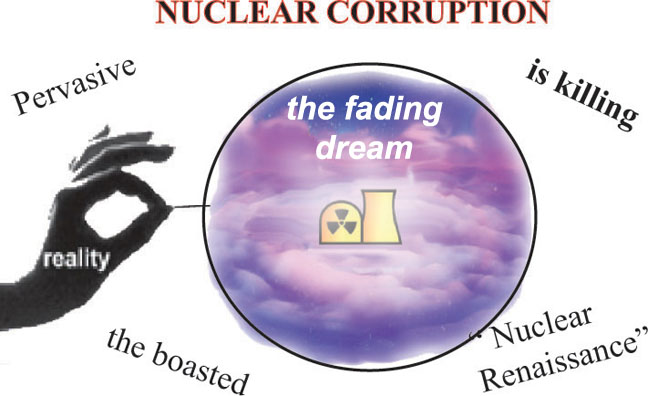
In 2005, the US Nuclear Energy Institute claimed that Westinghouse’s estimate of US$1,365 per kilowatt “has a solid analytical basis, has been peer-reviewed, and reflects a rigorous design, engineering and constructability assessment.”
In fact, the estimate was out by an order of magnitude and the Institute’s involvement in a raft of corruption scandals has been exposed. No doubt the Dutton Coalition would happily parrot whatever lies the Institute chose to feed them, and no doubt the Murdoch/Sky/AFR echo-chamber would happily amplify those lies.
During the ill-fated ‘nuclear renaissance’, the US Nuclear Regulatory Commission received applications to build 31 reactors, but only the Vogtle and V.C. Summer projects reached the construction stage and only the twin-reactor Vogtle project was completed. Two out of 31 ain’t bad. Well it is, actually.
Thirteen reactors have been permanently shut down since 2013 with many more closures in the pipeline. The US has one of the oldest reactor fleets in the world with a mean age of 42.1 years. The mean age of the 29 reactors closed worldwide from 2018‒2022 was 43.5 years.
Around 20 unprofitable, ageing reactors have been saved by nuclear bailout funding but their future is precarious. In addition to the V.C. Summer corruption scandal, nuclear bailout programs are mired in corruption scandals (see here, here, here and here and if you’re still not convinced see here, here, and here).
Dr. Jim Green is the national nuclear campaigner with Friends of the Earth Australia and a member of the Nuclear Consulting Group.
Coalition will seek a social licence for nuclear: Dutton

AFR, Phillip Coorey, 12 Mar 24
Communities will be consulted and “incentivised” to adopt nuclear power, Opposition Leader Peter Dutton says as he amplifies his case for the energy source to play a central role in Australia reducing its emissions.
Mr Dutton will also pledge to “ramp up” the domestic production of gas to help firm renewable energy, in his keynote speech to be delivered to The Australian Financial Review Business Summit on Tuesday.
He will also hint at an expansion of rooftop solar, as already flagged by Nationals leader David Littleproud, as an alternative to large-scale renewable energy projects and the thousands of kilometres of transmission infrastructure that those will require……………………….
In setting the scene for his nuclear announcement, Mr Dutton will outline three principles that will guide the policy.
“First and foremost, we want to get the highest yield of energy using the smallest amount of land,” he will say.
“We want to maximise the amount of energy we can obtain per square metre and minimise our environmental footprint.”
This will be achieved by putting reactors on or near the sites of old coal-fired power stations so they can use the existing transmission grid.
The second principle will involve seeking a “social licence” for the policy “by listening to and incentivising communities to adopt nuclear power”.
A third principle is that the Coalition will put people at the centre of our energy policy by making lower energy bills a key consideration.
Mr Dutton dared the government to lift the nuclear power moratorium and let the market decide.
‘Does not make sense’
But energy experts appearing at the Summit continued to cast doubt on the feasibility of the Coalition’s approach.
Carbon Market Institute chair Kerry Schott said she was technology neutral but nuclear “really does not make sense for Australia”.
“Nuclear by far, like daylight by far, [is] the most expensive,” she said.
“It really doesn’t make sense for Australia because we have so much renewable energy resources.”
She said firming wind and solar with hydro and “a little bit of gas” until hydrogen was commercially available was “by far the cheapest and easiest”.
She did, however, agree, that putting solar panels on every rooftop would alleviate the need for Labor’s thousands of kilometres of transmission infrastructure……………………………… https://www.afr.com/business-summit/coalition-will-seek-a-social-licence-for-nuclear-dutton-20240311-p5fbby
Dutton’s nuclear plan will require huge subsidies
AFR 12 Mar 24
So the two prongs of Peter Dutton’s energy plan are to adopt nuclear power and to ramp up production of gas? (“Coalition to seek ‘social licence’ for nuclear power,” March 11)
Well, we know which of the two prongs will actually happen, and it won’t be the nuclear one.
To go down the nuclear path would require massive government subsidies – not just in the construction phase, but over their entire life of the power stations.
This is what is happening in France, where nuclear supplies 70 per cent of the nation’s electricity, and in Ontario, where the figure is 59 per cent.
Otherwise, the government would have to set electricity prices at a level that would underwrite the power companies’ profitability – irrespective of whether those prices were competitive with other forms of energy.
Either way, nuclear is not viable in Australia – at least, not on economic grounds.
Ken Enderby, Concord, NSW
Coalition must consider nuclear cost
Peter Dutton’s nuclear ideas (“Coalition to seek ‘social licence’ for nuclear power,” March 11) fly in the face of evidence.
The cost to build, the huge subsidies, the intellectual capital required, the siting, the water use, the lead-up time for power generation, the cost to consumers, the decommissioning costs, the half-life of plutonium 239 – none of this will deter him. He will continue to juxtapose the idea of nuclear against the reality of renewables.
He and his party will continue to stymie, mock and disparage our transition efforts. The Coalition’s “all of the above” approach sounds open-minded but disguises the fact that “all” does not include the necessary all-out push for renewables.
Nuclear has no chance of getting us to where we need to be, either in terms of emissions or in developing our crucial renewables industries.
Fiona Colin, Malvern East, Victoria……………………. https://www.afr.com/policy/economy/dutton-s-nuclear-plan-will-require-huge-subsidies-20240311-p5fbhj
Canada, Sweden Restore UNRWA Funds as Report Accuses Israel of Torturing Agency Staff
“The work that UNWRA does cannot be overstated,” said Canadian lawmaker Salma Zahid. “It will save lives as we have seen the visuals of children dying of hunger in Gaza. The need for immediate aid is non-negotiable.”
JON QUEALLY, Mar 09, 2024 https://scheerpost.com/2024/03/09/canada-sweden-restore-unrwa-funds-as-report-accuses-israel-of-torturing-agency-staff/
The governments of Canada and Sweden have announced they will resume funding for the United Nation’s agency that provides humanitarian aide and protection to Palestinians living in Gaza and elsewhere—a move that other powerful nations, including Israel’s most powerful ally the United States, continue to refuse.
Calling the lack of humanitarian relief inside Gaza “catastrophic,” Canadian Minister of International Development Ahmed Hussen said Friday his nation would restore funding for the United Nations Relief and Works Agency for Palestine Refugees in the Near East (UNRWA) in order to help address the “dire” situation on the ground living.
Sweden made its announcement Saturday and said a $20 million disbursement would be made to help UNRWA regain its financial footing.
The restoration of funds follows weeks of global criticism and protest for the decision by many Western nations to withhold UNRWA funds after Israel claimed, without presenting evidence, that a few members of the agency—the largest employer in the Gaza Strip—had participated in the Hamas-led attacks of October 7.
As a result, UNRWA has said it’s ability to provide aid and services to Gaza—where over 100,000 people have been killed or wounded in five months of constant bombardment and blockade by the Israeli military—has been pushed to the “breaking point” as malnutrition and starvation has been documented among the displaced population of over 2 million people.
“Canada is resuming its funding to UNRWA so more can be done to respond to the urgent needs of Palestinian civilians,” Hussen said. “Canada will continue to take the allegations against some of UNRWA’s staff extremely seriously and we will remain closely engaged with UNRWA and the UN to pursue accountability and reforms.”
“I welcome Canada lifting the pause on funding for UNWRA,” said Canadian MP Salma Zahid, a member of the Liberal party representing Scarborough Centre in the House of Commons. “The work that UNWRA does cannot be overstated. It will save lives as we have seen the visuals of children dying of hunger in Gaza. The need for immediate aid is non-negotiable.”
Earlier this week, UNRWA Commissioner-General Philippe Lazzarini told a special meeting of the U.N. General Assembly the agency was “facing a deliberate and concerted campaign” by Israel “to undermine its operations, and ultimately end them.”
On Friday, Reutersreported on an internal UNRWA report that included testimony of employees who said they were tortured by Israeli officers while in detention to make false admissions about involvement in the October 7 attack.
U.S. Sells ‘Link 16’ Battlefield Communications System to Taiwan
22 February 2024
Taipei, February 22 (EFE).- The United States has approved the possible sale of an advanced military data link system upgrade to Taiwan, the first acquisition of this type following Taipei’s January election, the island’s government confirmed Thursday.
In a statement, Taiwan’s foreign ministry said it received formal notification from the US government about the possible sale of the Link-16 system to Taiwan for an estimated value of $75 million.
Link-16 is a standardized communications system used by the armed forces of the US and other countries to transmit and exchange real-time tactical data through the use of links between allied military network participants…………………………………….. https://efe.com/en/latest-news/2024-02-22/us-approves-possible-sale-of-advanced-military-data-link-system-to-taiwan/
This week in nuclear news

A vertical garden at Medellin’s City Hall.
Ralph Nader: Stop the Worsening Undercount of Palestinian Casualties in Gaza.
The horrors of nuclear weapons testing.
March 11 – reflecting on Fukushima.
********************************************
Climate. Climate change is warping the seasons. The world is not moving fast enough on climate change — social sciences can help explain why.Europe unprepared for rapidly growing climate risks, report finds.
Noel’s notes. The need for clear thinking on the Holocaust in Gaza. Oh for a bit of sanity and genuine leadership! Normalising the unthinkable – the 16th Annual Nuclear (so-called) Deterrence Summit.
AUSTRALIA.
- The Campaign to Free Assange: Reflections on ‘Night Falls’.
- Prime Minister of Australia, and Henchmen, Referred to International Criminal Court for Support of Gaza Genocide. Shock as Australian Prime Minister learns that he is not above international law.
- AUKUS: Are nuclear-powered submarines a good idea for Australia?
- Australia has had many significant inquiries into nuclear power, over the past 60 years.
- The Coalition wants nuclear power. Could it work – or would it be an economic and logistical disaster? Peter Dutton’s climate denial is morphing into a madcap nuclear fantasy. The ban should stay. Nuclear power: Peter Dutton changes gear in favour of big reactors not small modular ones. Peter Dutton’s nuclear implosion after Dunkley byelection loss. Tell him he’s dreaming’: Bowen rubbishes Coalition claim Australia could have nuclear power in a decade. Peter Dutton won’t back down on the Coalition’s desire to take its nuclear energy policy to the next election. Nuclear slow and expensive, renewables fast and cheap: Bowen slaps down Coalition “fantasy”. Dutton’s nuclear option would condemn us to pricey power and blackouts. Market has ‘made its decision’ about nuclear energy being too expensive. Coalition must come clean on how its nuclear vision would work.
- Coalition’s plan to go nuclear puts five regions on the table as favoured locations for nuclear reactors. MP says coalition ‘must’ explain plan for nuclear power near Anglesea on the Victorian Surf Coast. Top scientist explains nuclear process and risks: Sunshine Coast previously considered for facility. Talk of nuclear power plant sites ‘conjecture’, says Liberal MP amid internal division on Dutton’s policy. Western Australia’s Premier Cook goes nuclear on Dutton’s ‘simplistic, ridiculous’ power plan.
- Senior Western Australia Liberal calls for Australia to become nuclear weapons power.
- Australia nuclear facility installs massive rooftop solar system to save $2 million.
- Events. Peace! – No AUKUS, No War! Australia wide events and protest actions for Peace, end AUKUS, cancel nuclear submarines and mobilise against war 14 – 24 March
NUCLEAR ISSUES
| EMPLOYMENT. Fukushima fishers strive to recover catches amid water concerns. | ENVIRONMENT. Hinkley Point Responds to Environmental Concerns Over Bristol Channel Eel Populations. | ETHICS and RELIGION. Aiding Those We Kill: US Humanitarianism in Gaza. The West has set itself on a path of collective suicide — both moral and economic’ Oceans. Could Fukushima’s radioactive water pose lasting threat to humans and the environment? |
| HISTORY. The lesson from the criminal H Bomb Bravo “test”– Hibakusha remind us. Oppenheimer feared nuclear annihilation – and only a chance pause by a Soviet submariner kept it from happening in 1962 | MEDIA. New York Times: Nuclear Risks Have Not Gone Away.US Media and Factcheckers Fail to Note Israel’s Refutation of ‘Beheaded Babies’ Stories. ‘Mr Dutton is right’: Murdoch’s News Corp papers grant nuclear power glowing coverage. NewsGuard AI Censorship Targets People Who Read Primary Sources To Fact-Check The News. – (a pro-Trumpist article?- but probably true) | OPPOSITION to NUCLEAR . ‘It’ll be a shortlist of one!’ Villagers in England fear nuclear dump proposal. An Open Letter from Hollywood On Oppenheimer and Nuclear Weapons. Kenya. Senator Omtatah to take the Uyombo nuclear power plant war international. |
| POLITICS Australia’s Opposition party’s nuclear red herring is a betrayal of the Australian people . – also at https://antinuclear.net/2024/03/11/1-a-coalitions-nuclear-red-herring-is-a-betrayal-of-the-australian-people/ . Scottish National Party ministers to set out plans for removing nuclear weapons after independence. UK Labour versus Green. UK Budget: Government confirms £160m deal to acquire Hitachi nuclear sites. U.S. Congress about to fund revival of nuclear waste recycling to be led by private start-ups. | SAFETY. Greenpeace warns on danger of restarting Zaporizhzhia nuclear plant . Improvement notice served over storage of hazardous materials at Dounreay. ‘Sometimes I can’t sleep at night’: Adi Roche warns of nuclear risks of Ukraine conflict as she picks up peace award. Aberdeen shipping logistics company warned over nuclear transport safety failings.. | SPACE. EXPLORATION, WEAPONS. China outlines position on use of space resources. Russia says it is considering putting a nuclear power plant on the moon with China. Russia and China announce plan to build shared nuclear reactor on the moon by 2035, ‘without humans’. |
WEAPONS and WEAPONS SALES.
- The West’s over-involvement in Ukraine.
- F-35A aeroplanes officially certified to carry thermonuclear bomb. NATO bringing missiles closer to Russia – member state.
- Plutonium. Plutonium pit ‘panic’ threatens America’s nuclear ambitions. Does the US Need New Plutonium Pits?.
- Biden is building for Israel a super weapon to replace the Iron Dome.
- Coalition Kill Chain for the Pacific: Lessons from Ukraine. U.S. Sells ‘Link 16’ Battlefield Communications System to Taiwan – https://www.youtube.com/watch?v=SfF4In5Q99Q
WOMEN. Our International Women’s Day Heroine: Rosalie Bertell.
Tell him he’s dreaming’: Bowen rubbishes Coalition claim Australia could have nuclear power in a decade

Energy minister says average build time for a nuclear plant in US is 19 years and giving up on renewables would be a ‘massive economic own goal’
Josh Butler, 10 Mar 24, Guardian
The federal energy minister, Chris Bowen, has dismissed Coalition MP Ted O’Brien’s claim that Australia could develop a nuclear power industry within a decade, stating: “Tell him he’s dreaming.”
The mocking comment on Sunday came as the government continued to pour scorn on the opposition’s speculative alternative plan to renewable energy. O’Brien said the Coalition was in the “advanced stages” of finalising its policy, which is not expected to be unveiled for several weeks.
Bowen also told ABC TV that the government was open to amending its fuel
The federal energy minister, Chris Bowen, has dismissed Coalition MP Ted O’Brien’s claim that Australia could develop a nuclear power industry within a decade, stating: “Tell him he’s dreaming.”
The mocking comment on Sunday came as the government continued to pour scorn on the opposition’s speculative alternative plan to renewable energy. O’Brien said the Coalition was in the “advanced stages” of finalising its policy, which is not expected to be unveiled for several weeks.
Bowen also told ABC TV that the government was open to amending its fuel efficiency standards for motor vehicles while again denying claims from the Coalition and some manufacturers that it would increase car prices.
The Coalition’s push for nuclear energy in Australia has been derided by the government and experts. The opposition leader, Peter Dutton, has not specified where the potential nuclear facilities would be located, nor how much they could contribute to the nation’s energy mix.
Sky News reported on Sunday that a 2020 paper from the NSW chief scientist found a nuclear power industry would require tens of thousands of trained staff and at least two decades to become operational.
Responding to the report, O’Brien – the opposition’s energy spokesman – claimed the Coalition had received different advice.
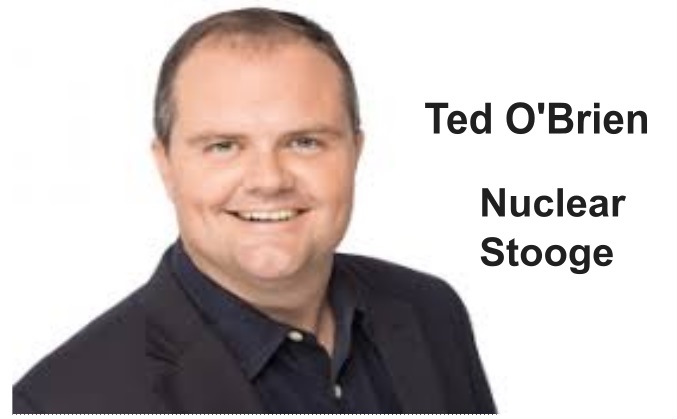
“The best experts around the world with whom we’ve been engaging are saying Australia could have nuclear up and running within a 10-year period,” O’Brien said.
O’Brien did not reveal which experts the Coalition had talked to. Guardian Australia asked his office for more information.
The shadow minister said nuclear could be part of a “balanced mix” of other power types and he criticised Labor for being “negative”.
Bowen was asked about O’Brien’s claim that nuclear could be developed in Australia within a decade.
“Tell him he’s dreaming,” Bowen said on the ABC’s Insiders program, referencing the Australian comedy movie The Castle. “I don’t know what experts he’s talking to.”
Bowen said the average build time for a nuclear plant in the US – a country he called “the nuclear leader of the world” – was 19 years.
“Ted O’Brien thinks he can do it in Australia in 10 with a standing start, no regulations, banned not only nationally but in the three most populous states,” Bowen said.
The minister rubbished arguments that Australia should scrap its ban on nuclear energy to allow private industry to investigate options, claiming that establishing a nuclear industry would require “eye-watering amounts of government taxpayer subsid[ies].”
“I’ve had no one knock on my door to say ‘I want to build a nuclear power plant in Australia’ but I had plenty of the world’s biggest renewables companies through my door,” Bowen said on Sunday.
“There’s a myth this is happening elsewhere in the world. It’s not. Australia has the best renewable resources in the world. It would be a massive economic own goal to give up utilising those resources and go down this nuclear fantasy.”
Beyond suggesting nuclear plants be built at former coal-powered facilities, the Coalition has not confirmed details of their policy – including costs, timeframes, how local opposition would be overcome and the amount of power to be generated.
Dutton could fill in some of the blanks in his budget reply speech in May. He is under pressure to announce details.
Coalition MPs have been agitating for the opposition leader to outline new policies they can spruik ahead of the federal election, which could be held this year…………. https://www.theguardian.com/australia-news/2024/mar/10/tell-him-hes-dreaming-bowen-rubbishes-coalition-claim-australia-could-have-nuclear-power-in-a-decade
Coalition’s nuclear red herring is a betrayal of the Australian people.
Coalition’s nuclear red herring is a betrayal of the Australian people
March 9, 2024 | Canberra Times
Tim Buckley, Annemarie Jonson
https://www.canberratimes.com.au/story/8547521/peter-duttons-nuclear-red-herring-is-a-coalition-betrayal-of-australians/
The sudden enthusiasm of the LNP for nuclear energy is another divisive, cynical and damaging ploy to ignite Climate Wars 2.0 and disrupt and delay Australia’s accelerating renewables transition on behalf of the fossil fuel cartel. The LNP’s climate and energy luddites burned a decade when they were in office. We can’t afford more of the same policy lunacy.
Policy confusion, disinformation and chaos around the nuclear furphy is exactly the solution if you are looking to destroy renewable energy investor confidence, deter investment, and set back our accelerating pathway to decarbonisation – the bedrock of our nation’s economic future. Investors need credible and stable policy and regulation.
The Coalition’s nuclear red herring, and its related threat to pull strategic public capital investment from utility-scale renewables, increases sovereign risk, and is a betrayal of the Australian people.
Nothing about nuclear power makes sense in Australia.
As former Chief Scientist Dr Alan Finkel has said, it would be 20 years or more before the first operation of small modular reactor (SMR) technology in Australia. We need to decarbonise our energy system and economy this critical decade to address the concurrent climate, energy and cost-of-living crises.
SMR technology is not commercial. There are no SMRs in operation outside of Russia and China. In November, the only SMR development in the US was terminated.
There are no private companies worldwide who can build and operate nuclear power plants without massive government underwriting, because they can’t get insurance.
Tokyo Electric Power Company went bankrupt overnight due to its Fukushima nuclear disaster, requiring a US$200 billion taxpayer bailout of the cleanup costs, which will still be being funded beyond 2050.
In promoting nuclear, the LNP is essentially calling for a massive multi-decade subsidy fest that would make the LNP’s Snowy 2.0 and NBN white elephants look like value for money by comparison. Where has the LNP’s staunch preference for free markets gone?
The LNP nuclear shills say they will soon announce sites for reactors. It is not clear in what universe they think they can secure social licence from impacted communities. Legal challenges and civic protest are inevitable.
How they propose to manage the financial cost of multi-centuries of waste storage and rehabilitation to mitigate risk remains a mystery. It is worth noting the unfunded £260 billion liability this decade UK taxpayers face for decommissioning its nuclear waste. Does the LNP suggest leaving this massive cost to future generations?
The economics simply don’t stack up. Firmed renewables are the cheapest form of energy. The cost of nuclear power generation is much higher than its low-cost clean energy alternatives.
But don’t take our word for it. The CSIRO and the Australian Energy Market Operator said in May 2023 that nuclear is “not an economically competitive solution in Australia”, and that we lack the “frameworks for its consideration and operation within the timeframe required.”
The 2022 World Nuclear Industry Status Report said that between 2009 and 2021, costs for solar declined from US$359 to US$36 per megawatt hour (MWh), a fall of 90 per cent, and for wind from US$135 to US$38 per MWh, a 72 per cent fall, while nuclear power costs rose from US$123 to US$167 per MWh, up 36 per cent in the same period.
Battery storage costs are falling double digits each year, and Goldman Sachs just forecast another 40 per cent decline by 2025. Massive ongoing deflation is a feature of renewables, nuclear is the opposite; massive ongoing inflation of costs, externalised onto the public (as highlighted by the World Nuclear News).
The Investor Group on Climate Change, representing investors with $30 trillion in assets, said there is no interest among investors in nuclear.
The IGCC notes nuclear has “project time blowouts of anything from seven to 15+ years and cost blowouts in the tens of billions, and lowest-cost technologies, renewables, batteries and so on, are available to deploy now”.
At last, we are seeing a huge influx of capital into Australia’s renewables transition, triggered by the enabling policy architecture of the Albanese federal government such as Energy Minister Chris Bowen’s federal Capacity Investment Scheme announced in late 2023. Our $3.6 trillion super industry has flagged this policy framework as key to crowding in private capital into renewables infrastructure.
Just last month Rio Tinto inked landmark world-scale 25-year power purchasing agreements worth billions that will underwrite the nation’s biggest yet wind and solar developments, powering the processing of its alumina and aluminium in central QLD with green energy.
The Investor Group on Climate Change, representing investors with $30 trillion in assets, said there is no interest among investors in nuclear.
The IGCC notes nuclear has “project time blowouts of anything from seven to 15+ years and cost blowouts in the tens of billions, and lowest-cost technologies, renewables, batteries and so on, are available to deploy now”.
At last, we are seeing a huge influx of capital into Australia’s renewables transition, triggered by the enabling policy architecture of the Albanese federal government such as Energy Minister Chris Bowen’s federal Capacity Investment Scheme announced in late 2023. Our $3.6 trillion super industry has flagged this policy framework as key to crowding in private capital into renewables infrastructure.
Just last month Rio Tinto inked landmark world-scale 25-year power purchasing agreements worth billions that will underwrite the nation’s biggest yet wind and solar developments, powering the processing of its alumina and aluminium in central QLD with green energy.
March 11 – reflecting on Fukushima

by Linda Pentz Gunter https://beyondnuclearinternational.org/2024/03/10/reflecting-on-fukushima/
The lesson learned should be an end to nuclear power. Japan is going in the opposite direction
On March 11 this year, and every year since 2011, we reflect on what happened on that day at the Fukushima-Daiichi nuclear power plant in Japan — and the impacts that continue. The never-ending tragedy.
The news cycle was 24/7 on the Fukushima nuclear disaster in March 2011. Gradually, the media lost interest. Fresh catastrophes — also human-caused — came to dominate the headlines.
The stories of ongoing harm, of physical and psychic pain, disease and death, displacement, family separation, and lawsuits dismissed or lost, are often told through the megaphones of desperate Japanese mothers, determined not to let such a fate befall another generation. They are the new Hibakusha, the Cassandras of Japan, sounding the warning but doomed to be disbelieved or ignored.
Because there will be another major nuclear disaster. And Japan, shockingly, is lining itself up to be a strong candidate. A country that has now experienced the second worst nuclear disaster of all time, and is heavily seismically active, is seeking not only to reopen its old reactors but to explore building new ones, including small modular reactors.
The only lesson from the Fukushima nuclear disaster that successive Japanese governments seem to have learned is how to minimize, cover-up and even dismiss and deny its devastating environmental and health effects.
It has done this by consistently whitewashing the Fukushima aftermath — holding the Summer Olympics (delayed a year only due to covid, not the unacceptable radiation levels); moving people back into still contaminated areas; ascribing the high thyroid cancer rates to increased testing; forbidding schools to teach children about the harms of radiation; and, of course, pouring radioactive water from the site into the Pacific Ocean so the unsightly waste water storage casks — a perpetual reminder of the continued build-up of radioactive water at the site — will vanish from view along with the bad PR.
Japan got another reminder of just what kind of gamble it is taking when a 7.6 magnitude earthquake struck the Noto Peninsula on January 1st of this year, not far from the Shika nuclear power plant. Buildings fell, 100,000 people were evacuated and tsunami warnings were posted. Conflicting stories emerged as to whether the Shika reactors, mercifully shut down at the time, had suffered lasting damage or whether there were radioactive spills. Area residents have demanded an investigation.
Catastrophe was averted because luck prevailed. Next time, it might not.
All of this should serve as a warning and not only to Japan of course. It doesn’t take an earthquake or a tsunami— or even a war as we are seeing in Ukraine whose reactors remain at perpetual risk —to cause a nuclear disaster. The safety margins are so fragile at nuclear power plants, that even something as minor as a falling tree limb could set an accident in motion if both offsite and then onsite power is lost to the reactors.
There was no war or earthquake or tsunami in Ukraine in 1986 when Chernobyl Unit 4 exploded. Nor in Pennsylvania in 1979 when the Three Mile Island Unit 2 reactor melted down. Nor in New Mexico later in 1979 when 90 million gallons of radioactive liquid and eleven hundred tons of solid mill waste burst from the Church Rock uranium mill tailings pond, permanently contaminating the Puerto River.
What was there, on each occasion, were human beings who made catastrophic mistakes with a highly dangerous, obsolete technology that even on a good day, causes harm to human health and on a bad one can leave a deadly, longlasting legacy as we have seen in Fukushima.
All of those human errors were preventable. And they still are — provided we remove the object of fallible human responsibility: inherently dangerous nuclear power plants.
The only worthy legacy of the Fukushima disaster, now 13 years on and still going, is to abandon the use of nuclear technology permanently.
Linda Pentz Gunter is the international specialist at Beyond Nuclear and writes for and edits Beyond Nuclear International. All opinions are her own.
Saying “Hamas Just Needs To Surrender” Is Saying “We’ll Kill Kids Until We Get What We Want”

“It’s heartbreaking,” added Biden, referring to the genocide that he himself is actively backing and could choose to end at any time.
CAITLIN JOHNSTONE, MAR 9, 2024
Of the many awful warmonger comments President Biden made in his State of the Union address Thursday night, arguably the worst was when he reiterated the US empire’s position that it is fine and good for the IDF to keep murdering Gazan civilians until Hamas bows to all of Israel’s demands.
Biden did this by lamenting the “heartbreaking” death and starvation of civilians in Gaza while in the same breath stating that Hamas could end all of this violence by laying down arms and surrendering those responsible for the October 7 attack.
“Israel has a right to go after Hamas,” Biden said. “Hamas ended this conflict by releasing the hostages, laying down arms — could end it by — by releasing the hostages, laying down arms, and surrendering those responsible for October 7th.”
“This war has taken a greater toll on innocent civilians than all previous wars in Gaza combined,” Biden went on to say. “More than 30,000 Palestinians have been killed, most of whom are not Hamas. Thousands and thousands of innocents — women and children. Girls and boys also orphaned. Nearly 2 million more Palestinians under bombardment or displacement. Homes destroyed, neighborhoods in rubble, cities in ruin. Families without food, water, medicine.”
“It’s heartbreaking,” added Biden, referring to the genocide that he himself is actively backing and could choose to end at any time.
(Democrats love babbling about how “heartbreaking” Gaza is. It’s their favorite thing to do. They love nothing more than to weep publicly over the death and starvation and unfathomable human suffering they themselves are directly responsible for, as though it’s some kind of natural disaster and not a US-backed genocide that is only happening because this Democrat-run administration actively facilitates it.)
We don’t talk enough about how horrifyingly evil it is that the actual, stated position of Israel and its immensely powerful allies is that all of the killing and starvation of Palestinian civilians in Gaza is entirely the fault of Hamas, because Hamas has not acquiesced to the military demands made by Israel. In effect, it is saying “We will kill thousands and thousands of children until you give us everything we want.”
I mean, imagine if Russia did that. Imagine if Putin started raining military explosives on parts of Ukraine known to be densely packed with children, and then saying the mass-scale child-killing will continue until Ukraine surrenders and that all of the child deaths are actually the fault of the Ukrainians because they still haven’t given Putin everything he wants.
I think we all know that if such a thing were to happen it would be the subject of worldwide condemnation, and justifiably so. Such a tactic is not meaningfully different from lining up children on their knees on the battlefield and shooting them one by one in the back of the head until the enemy unconditionally surrenders.
They’re not just doing this with airstrikes and bullets — they’re doing it with food as well. Aaron Maté has a new article out titled “The Biden doctrine in Gaza: bomb, starve, deceive” which picks apart statements from White House officials about the temporary pier this administration is planning to build on Gaza’s coast over the next several weeks, ostensibly to allow for the arrival of more aid into the enclave………………………………………………………………………………………………………………
Maté explains that Vice President Kamala Harris recently gave a speech in which she said Hamas needs to agree to a hostage deal in order to “get a significant amount of aid in,” which is the same as saying Israel and its allies will help starve Gazan civilians until Hamas capitulates to their demands.
“The very fact that the delivery of ‘a significant amount’ of aid is conditional on Hamas accepting Israeli demands underscores that Israel, with US backing, is using that aid as a tool of coercion,” Maté writes, noting that this directly contradicts Biden’s admonishment to Israeli leaders in his State of the Union address that “Humanitarian assistance cannot be a secondary consideration or a bargaining chip.”
Washington’s role in the mass murder of Palestinians in Gaza makes a lot more sense when you stop looking at it as a reluctant passive witness to Israel’s crimes and begin viewing it as an active participant. US officials will occasionally wag their fingers at the Netanyahu government and act like Israel’s worst atrocities are being carried out against the beneficent humanitarian wishes of the United States, but if you mentally mute all the narrative spin that’s being placed on this thing you just see a giant concentration camp packed full of children being murdered at mass scale by the most powerful empire that has ever existed. https://www.caitlinjohnst.one/p/saying-hamas-just-needs-to-surrender
Our International Women’s Day Heroine: Rosalie Bertell

ON BY MARIANNEWILDART, https://mariannewildart.wordpress.com/2024/03/08/our-international-womens-day-heroine-rosalie-bertell/
Rosalie Bertell, PhD (1929-2012), was a biometrist – a mathematician who analyzed risks to health from radiation and pollution. In this interview she mainly tells about her research on radiation and cancer, which led to restricting X-rays to diagnostic uses, revealed how above-ground nuclear testing had led to elevated breast cancer cohorts, and helped prevent the establishment of nuclear power plants in several communities.
http://www.radio4all.net/files/wingsradionews@gmail.com/WINGS-33-23CancerMath-28_58-128kbps.mp3
Rosalie Bertell was one of the first to raise concerns about military geoengineering and her book “Planet Earth – Latest Weapon of War” was re-published in 2020 as an updated version thanks to another heroine Dr. Claudia von Werlhof. The book’s first appearance in 2000 did not reach the international reader, because the publisher, The Women´s Press, London, went bankrupt and the book was available only in Canada (Black Rose 2001).

Dr Werlhof said “Rosalie and I, we met only once, in Bonn, Germany, in 2010 at the 30th Anniversary of the Right Livelihood Award, where she proposed to sign the following petition:
“It is morally reprehensible and an offense against humanity and the Earth to interfere with the normal function of the planetary system – to cause or enhance storms, hurricanes, tsunamis, monsoons, mud slides, draught, flooding, earth quakes or volcano eruptions”.
The 22 laureates present from different parts of the world, all of them signed it.
Meeting Rosalie Bertell in person was for me like meeting a very old friend. It is because I share with her the same motivation, feeling and thinking about our Mother Earth: the indignation and pain about her ongoing destruction, the immense love for her, and the necessity of a general planetary upheaval in support of Mother Earth. For this we need exactly what Rosalie Bertell embodied: a burning heart, a very clear mind and a ”planetary consciousness“ that knows about the Planet, our Mother Earth, as a huge living being, the ways she is endangered today, and the firm decision to fight for her life. What else? Mother Earth or Death!
This is what the reader of ”Planet Earth” should learn from its author. We need a world in which it is not necessary to write books like ”Planet Earth”, anymore!”
Peter Dutton’s nuclear implosion after Dunkley byelection loss

The Saturday Paper, 9 Mar 24 Paul Bongiorno
Anthony Albanese had a good week, thank you very much. His opponent, Peter Dutton, not so much. In fact, you could say the Dunkley byelection blew the opposition leader’s credibility out of the water and left him stranded for a reset.
Not that anyone who bothered to watch the byelection night on the news channels would get the impression from the Liberals they had fallen miserably short of stalling Albanese’s new year momentum. Nor did their performance demonstrate that their strategy was on target to recapture the outer suburban seats they need to offset the loss of 19 seats at the 2022 election………………………………………………………………………………………………………………………………………………………..
a lesson for Advance and Dutton is that winning an election is a very different challenge to disrupting a referendum……………………………………………………………………………………………….
We now have the framework for the Coalition’s “energy plan” – although whether this policy to build large-scale and yet to be commercially viable nuclear small modular reactors (SMRs) is a winner is questionable to say the least.
Albanese took time out from hosting the Association of Southeast Asian Nations (ASEAN) summit in Melbourne to say he looked forward to Dutton announcing the locations for nuclear reactors and where the financing would come from.
Dutton is in the same denial mode his colleagues showed in their reactions to the byelection loss. When he finally put up his head on Tuesday, the opposition leader ducked questions on who would pay for his nuclear “fantasy”, as Albanese calls it, and kept talking about a cheaper, firmer option. His spiel could only be viewed as unbelievable.
The GenCost report from the CSIRO and the Australian Energy Market Operator estimates by 2030 the cost of power from an SMR would be between $200 and $350 per megawatt hour, compared with between $60 and $100 per megawatt hour for wind and solar.
Treasurer Jim Chalmers said Dutton “is always on the hunt for cheap politics, not cheap electricity”.
It’s hard to see this as the winning reset the Liberals crave. https://www.thesaturdaypaper.com.au/comment/topic/2024/03/09/peter-duttons-nuclear-implosion#mtr
Ralph Nader: Stop the Worsening Undercount of Palestinian Casualties in Gaza

By Ralph Nader, March 5, 2024
Since the Hamas raid penetrated the multi-tiered Israeli border security on October 7, 2023 (an unexplained collapse of Israel’s defensive capabilities), 2.3 million utterly defenseless Palestinians in the tiny crowded Gaza enclave have been on the receiving end of over 65,000 bombs/missiles plus non-stop tank shelling and snipers.
The extreme right-wing Netanyahu regime has enforced its declared siege of, in its genocidal words, “no food, no water, no electricity, no fuel, no medicine.”
The relentless bombing has destroyed apartment buildings, marketplaces, refugee camps, hospitals, clinics, ambulances, bakeries, schools, mosques, churches, roads, electricity networks, critical water mains – just about everything.
The U.S.-equipped Israeli war machine has even uprooted agricultural fields, including thousands of olive trees on one farm, bulldozed many cemeteries and bombed civilians fleeing on Israeli orders, while obstructing the few trucks carrying humanitarian aid from Egypt.
With virtually no healthcare left, no medications, and infectious diseases spreading especially among infants, children, the infirm and the elderly, can anybody believe that the fatalities have just gone over 30,000? With five thousand babies born every month into the rubble, their mothers wounded and without food, healthcare, medicine and clean water for any of their children, severe skepticism about the Hamas Health Ministry’s official count is warranted.
Netanyahu and Hamas, which he helped over the years, have a common interest in lowballing the death/injury toll. But for different reasons. Hamas keeps the figures low to reduce being accused by its own people of not protecting them, and not building shelters. Hamas grossly underestimated the savage war crimes by the vengeful, occupying Israeli military superpower fully and unconditionally backed by the U.S. military superpower.
The Health Ministry is intentionally conservative, citing that its death toll came from reports only of named deceased by hospitals and morgues. But as the weeks turned into months, blasted, disabled hospitals and morgues cannot keep up with the bodies, or cannot count those slain laying on roadsides in allies and beneath building debris. Yet the Health Ministry remains conservative and the “official,” rising civilian fatality and injury count continues to be uncritically reported by both friend and foe of this devastating Israeli state terrorism.
It was especially astonishing to see the most progressive groups and writers routinely use the same Hamas Health Ministry figures as did the governments and outside groups backing the one-sided war on Gaza. All this despite predictions of a human catastrophe in the Gaza Strip almost every day since October 7, 2023, by arms of the United Nations, other besieged international relief agencies on the ground, eyewitness accounts by medical personnel, and many Israeli human rights groups and brave local journalists in that Strip, the geographic size of Philadelphia. (Unguided Western and Israeli reporters and journalists are not allowed to enter Gaza by the Israeli government.) (See the open letter titled, “Stop the Humanitarian Catastrophe” to President Biden on December 13, 2023, by 16 Israeli human rights groups that also appeared as a paid notice in the New York Times.)
Then came the December 29, 2023, opinion piece in The Guardian by the Chair of Global Public Health at the University of Edinburgh, Devi Sridhar. She predicted half a million deaths in 2024 if conditions continue unabated. (See her piece here: https://www.theguardian.com/commentisfree/2023/dec/29/health-organisations-disease-gaza-population-outbreaks-conflict).
In recent days, the situation has become more dire. In the March 2, 2024, Washington Post, reporter, Ishaan Tharoor writes: “The bulk of Gaza’s more than 2 million people face the prospect of famine — a state of affairs that constitutes the fastest decline in a population’s nutrition status ever recorded, according to aid workers. Children are starving at the fastest rate the world has ever known. Aid groups have been pointing to Israel restricting the flow of assistance into the territory as a major driver of the crisis. Some prominent Israeli officials openly champion stymying these transfers of aid.”
Tharoor quotes Jan Egeland, chief of the Norwegian Refugee Council: “We must be clear: civilians in Gaza are falling sick from hunger and thirst because of Israel’s entry restrictions.” “Life-saving supplies are being intentionally blocked, and women and children are paying the price.”
Martin Griffiths, the United Nations lead humanitarian officer, said “Life is draining out of Gaza at terrifying speed.”
U.N. Secretary-General António Guterres, according to the Post, warned of an “‘unknown number of people’ – believed to be in the tens of thousands – lying under the rubble of buildings brought down by Israeli strikes.”
Volker Turk, the U.N. high commissioner for human rights, said “All people in Gaza are at imminent risk of famine. Almost all are drinking salty and contaminated water. Health care across the territory is barely functioning.” “Just imagine what this means for the wounded, and people suffering infectious-disease outbreaks. …many are already believed to be starving.” UNICEF, the International Rescue Committee, the Palestinian Red Crescent, and Doctors Without Borders are all relating that the same catastrophic conditions are getting worse fast.
Yet, and get this, in this article, the Post still stuck with the “more than 30,000 people in Gaza have been killed since the ongoing war began.”
Just like the entire mass media, many governments, even the independent media and critics of the war would have us accept that between 98% and 99% of Gaza’s entire population has survived – albeit the sick, injured and more Palestinians about to die. This is lethally improbable!
From accounts of people on the ground, videos and photographs of deadly episode after episode, plus the resultant mortalities from blocking or smashing the crucial necessities of life, a more likely estimate, in my appraisal, is that at least 200,000 Palestinians must have perished by now and the toll is accelerating by the hour.
Imagine Americans, if this powerful U.S.-made weaponry was fired on the besieged, homeless, trapped people of Philadelphia, do you think that only 30,000 of that city’s 1.5 million people would have been killed?
Daily circumstantial evidence of the deliberate Israeli targeting of civilians and civilian infrastructures requires more reliable epidemiological estimates of casualties.
It matters greatly whether the aggregate toll so far, and counting, is three, four, five, six times more than the Health Ministry’s undercount. It matters for elevating the urgency for a permanent ceasefire, and direct and massive humanitarian aid by the U.S. and other countries, bypassing the sadistic cruelty against innocent families of the Israeli siege. It matters for the columnists and editorial writers who have been self-censoring themselves, with some, like the Post’s Charles Lane fictionally claiming that Israel’s military doesn’t “intentionally target civilians.” It matters for accountability under international law.
Above all, it lets weak Secretary of State Antony Blinken and duplicitous President Joe Biden be less servile when Netanyahu dismisses the low death toll by taunting them: what about Dresden, Hiroshima and Nagasaki?
As a percentage of the total population being killed, Gaza can expose the Israeli ruling racist extremists to a stronger rebuttal for ending U.S. co-belligerent complicity in this never-to-be-forgotten slaughter of mostly children and women. (The terrifying PTSD on civilians, especially children will continue for years.)
Respecting the more accurate casualty toll of Palestinian children, mothers and fathers presses harder for permanent ceasefires and the process of recovery and reparations for the survivors of their Holocaust.
Coalition must come clean on how its nuclear vision would work
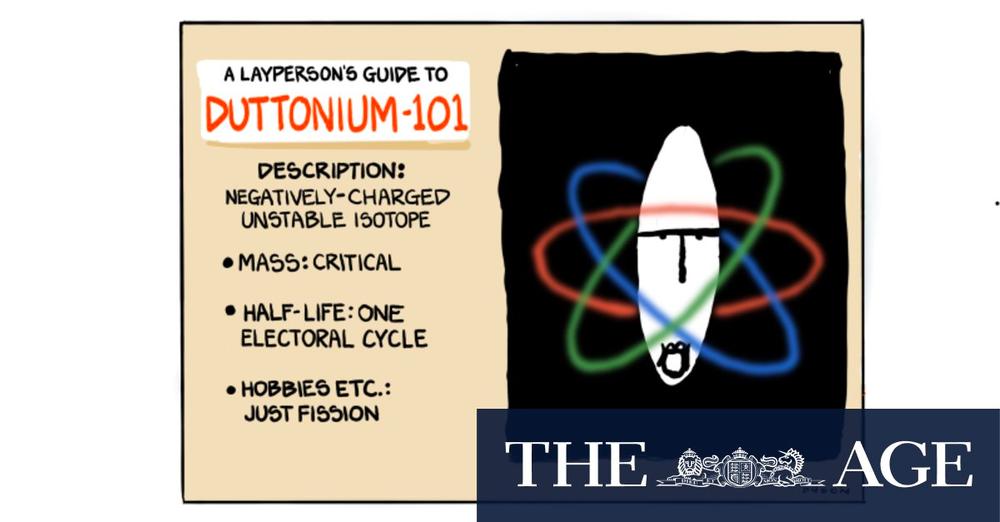
NUCLEAR QUESTIONS
Simon Holmes a Court is right, “Australia’s climate wars will not end until the Coalition chooses engineering and economics over ideology and idiocy”, (“Nuclear option scorns our natural advantage”, 7/3).
Shadow minister for climate change and energy, Ted O’Brien has said, “The world is embracing zero-emissions nuclear energy because it solves the energy trilemma of affordability, reliability and emissions reduction”.
Does the Coalition honestly believe, in the face of successive GenCost reports and overwhelming overseas experience, that nuclear would provide Australian consumers with cheaper-than-renewables electricity? What then of the huge government subsidies propping up nuclear, for instance the $4 billion for the failed US NuScale SMR experiment?
If we, as David Littleproud suggests, allowed “the marketplace to decide”, how much would Australians subsidise such ventures? How does the Coalition propose to create reliability in our energy grid with nuclear, when it would not be available until at least around 2040?
Finally, in what year does the Coalition propose reaching net zero emissions? Some in its ranks want to renege on our 2050 international commitments, so any commitment is sounding hollow.
The Coalition needs to come clean with the electorate.
Fiona Colin, Malvern East
Nuclear numbers don’t add up
Nuclear power plants take six to eight years to construct. They have an expected working life of 20 to 40 years, but decommissioning takes 20 to 30 years. The numbers just don’t stack up. However, the building and decommissioning phases would provide substantial employment opportunities.
Louise Zattelman, Box Hill
What does Dutton know that we don’t?
Peter Dutton must believe the nuclear option for the provision of power is a vote winner at the next federal election. This seems to fly in the face of public opinion, experts who claim it is not feasible, practical, proven or economical.
So what does he know that we don’t? An election is looming. It’s time for the Coalition to think of practical policies that at least give them a chance.
Bruce MacKenzie, South Kingsville
Buried Nuclear Waste May Soon Rise From the Grave

If we don’t get a handle on climate change soon, we may have a serious radioactive issue on our hands.
BY DARREN ORF MAR 07, 2024 https://www.popularmechanics.com/science/a60067341/gao-nuclear-waste-report/
- During the Cold War, the U.S. stashed nuclear waste—or accidentally dispersed it—in several sites around the world.
- The Government Accountability Office (GAO) recently released an update on three of those sites in Spain, Greenland, and the Marshall Islands.
- Two of those sites are currently under threat from climate change in the form of either melting ice or rising sea levels, which could eventually reveal these dump sites’ deadly contents.
During the Cold War, the U.S. and Soviet Union had the bright idea to irradiate the planet with nuclear bomb testing.
Of the 67 U.S. nuclear tests during this period, Castle Bravo—conducted on the Marshall Islands on March 1, 1954—was the biggest of them all. This denotation, along with all the others, came with an ecological and human toll on the surrounding area. And now, during the era of climate change, the specter of the most dangerous era of the nuclear age is haunting the world once again.
A new report by the Government Accountability Office (GOA) re-evaluated three sites around the world contaminated by U.S nuclear waste. One of these sites included Palomares, Spain—in 1966, a U.S. B-52G bomber carrying four thermonuclear bombs collided with a KC-135 tanker in the area. The collision didn’t cause the bombs to explode (you probably would’ve heard about that one time we accidentally bombed Spain) but it did disperse a lot of radioactive material. The report finds that the U.S. and Spain continue to monitor the contamination to this day.
However, the nuclear waste sites in Greenland and the Marshall Islands are currently a more direct threat to the world due to climate change. Entombed in ice under Greenland is roughly 47,000 gallons of radioactive waste produced by the Portable Mobile-2A (PM-2A) reactor, which powered the “city under the ice” known as the U.S. Camp Century base. Although the reactor was removed, the waste was left behind. Simply put, engineers at the time never thought it’d be exposed, but climate change—a term that wasn’t even coined yet when the base was built in 1960—is slowly melting the ice cap, which could reveal the radioactive waste hiding below.
“The scientists concluded that the contaminants should remain entombed in the ice at least through 2100,” the report reads. “The radioactive isotopes will continue to decay while entombed in the ice sheet and, as a result, will be less of a threat to human health the longer they remain locked in the ice.”
However, of most pressing concern is the nuclear waste currently impacting the Republic of the Marshall Islands. Runit Island houses a “nuclear coffin” that contains 110,000 cubic yards of radioactive contaminated soil and 6,000 cubic yards of contaminated debris, and it’s already been documented that rising sea levels are impacting this coffin. Nuclear radiation can also be measured at several atolls as well, including Bikini, Enewetak, Rongelap, and Utrik Atolls.
The U.S. Department of Energy and the RMI have disagreed over the impacts of the U.S.’s past nuclear testing on the people of this island, and the GOA believes that a new communication strategy could help alleviate mistrust—which isn’t exactly what the Marshallese people want to hear.
“What we need now is action and implementation on environmental remediation,” Ariana Tibon, chair of RMI’s National Nuclear Commission told the environmental website Grist. “If they know that it’s contaminated, why wasn’t the recommendation for next steps on environmental remediation?”
In other words, it’s time for the U.S. to stare down the ghosts of its nuclear past.
1 This month


Help Aunty Sue Protect Her Land and Sacred Sites From Destructive Rocket Testing.
.

Australians deserve the truth
about
AUKUS – https://aukuspublicinquiry.com/

PETITION – To: Prime Minister Anthony Albanese and the Australian Labor Government

of the week – Australians for War Powers Reform (AWPR)
To see nuclear-related stories in greater depth and intensity

