Nuclear Power: UK’s Financial Challenge Unveiled

the actual cost might reach as high as £10 billion per reactor, resulting in an astonishing cumulative expense for the decommissioning process. …
this substantial cost could ultimately fall on taxpayers, raising concerns about the financial burden on the public.
Dev X Noah Nguyen, November 21, 2023
The UK’s Commitment to Nuclear Power and Financial Challenges
The United Kingdom’s dedication to nuclear power is becoming a financially challenging commitment as the dismantling expenses for its nuclear generating facilities continue to escalate. These costs have been advantageous for businesses involved in the dismantling process but a noteworthy expenditure for UK taxpayers
Regardless of the substantial costs associated with the new nuclear reactors at Hinkley Site C and the rising price of clean-up initiatives, the nation’s government remains committed to nuclear technology. This unwavering commitment is driven by the belief that nuclear power is crucial for achieving the UK’s long-term energy security and climate change goals. However, critics argue that increased investment in renewable energy sources could provide similar benefits, without the high financial burden and safety concerns associated with nuclear power……………………………………………………
Concerns Regarding Decommissioning Costs and Life Expectancy of Reactors

Nearly all of the remaining functional reactors are scheduled for closure by 2028, except Sizewell B, anticipated to stay in operation until 2035. With a life expectancy of roughly 40 years—considerably shorter than the 60 to 80 years frequently claimed by the sector—questions emerge about the demolition costs for the existing 23 reactors and the two under construction at Hinkley Point C.
As these reactors reach the end of their life cycle, it is crucial to plan and allocate resources effectively for their dismantling and waste disposal. The cost of decommissioning and managing nuclear facilities can significantly impact the overall economic feasibility of the energy generated, emphasizing the need for accurate cost estimations and environmentally responsible strategies.
Projected Costs of Dismantling and Importance of Effective Management
By the end of 2022, the UK’s Nuclear Decommissioning Authority (NDA) projected a total dismantling cost of £149 billion. If this figure encompasses Hinkley Site C, it would equate to about £6 billion per reactor. This substantial financial investment highlights the importance of thoroughly managing the decommissioning process to ensure effective resource allocation. With the growing push towards renewable energy sources, proper management and safe dismantling of nuclear reactors have become increasingly significant for the country’s transition towards sustainable energy.
Higher Potential Costs and the Financial Burden on Taxpayers
However, Professor Stephen Thomas from the University of Greenwich’s energy policy department posits that the actual cost might reach as high as £10 billion per reactor, resulting in an astonishing cumulative expense for the decommissioning process. He further elaborates that this substantial cost could ultimately fall on taxpayers, raising concerns about the financial burden on the public. To mitigate such consequences, proper planning and establishing an adequate funding source must be undertaken for a feasible and efficient decommissioning process…………………………………………………………………………………….
What are the concerns regarding the decommissioning costs and life expectancy of nuclear reactors in the UK?
With functional reactors scheduled for closure and shorter life expectancies than often claimed, there are concerns about the demolition costs for the existing reactors and effective management of resources for dismantling and waste disposal. The cost of decommissioning can significantly impact the overall economic feasibility of nuclear-generated energy and necessitates accurate cost estimations and environmentally responsible strategies………….. https://www.devx.com/news/nuclear-power-uks-financial-challenge-unveiled/
White House Fears Pause In Fighting Will Let Journalists See What’s Been Happening In Gaza

Israel and Hamas have reportedly agreed to a four-day ceasefire which will entail the release of 50 hostages held by Hamas in exchange for 150 hostages held by Israeli forces.
In an article titled “Biden admin officials see proof their strategy is working in hostage deal,” Politico describes the deal as “the administration’s biggest diplomatic victory of the conflict” and reports that White House officials are calling it a “vindication” of Biden’s decision making. Which is an entirely inappropriate level of verbal fellatio for an achievement as minimal as not murdering children for a few days.
Tucked away many paragraphs into this report is a sentence which is getting a lot of attention on social media today saying that according to Politico’s sources there has been some resistance to the pause in fighting within the administration due to fears that it will allow journalists into Gaza to report on the devastation Israel has inflicted upon the enclave.
“And there was some concern in the administration about an unintended consequence of the pause: that it would allow journalists broader access to Gaza and the opportunity to further illuminate the devastation there and turn public opinion on Israel,” Politico reports.
In other words, the White House is worried that a brief pause in the Israeli massacre of civilians in Gaza will allow journalists to report the truth about the Israeli massacre of civilians in Gaza, because it will hurt the information interests of the US and Israel. They are worried that the public will become more aware of facts and truth.
Needless to say, if you’re standing on the right side of history you’re not typically worried about journalists reporting true facts about current events and thereby damaging public support for your agendas. But that is the side that the US and Israel have always stood on, which is why the US empire is currently imprisoning Julian Assange for doing good journalism on US war crimes and why Israel has a decades-long history of threatening and targeting journalists.
During Israel’s bombing campaign in Gaza in 2021 the IDF reportedly targeted more than 20 Palestinian press institutions in the enclave, as well as the tower hosting the international outlets AP and Al Jazeera. During this current onslaught Israel has been killing dozens of Palestinian journalists, sometimes by actively bombing their homes where they live with their families. The IDF’s campaign to wipe out inconvenient news reporters has resulted in the Committee to Protect Journalists calling this the deadliest conflict on record for journalists anywhere, ever.
Both the US and Israel have been attacking the press in this way because their governments understand that whoever controls the narrative controls the world. They understand that while power is controlling what happens, ultimate power is controlling what people think about what happens. Human consciousness is dominated by mental narratives, so if you can control society’s dominant narratives, you can control the humans.
This is why the powerful have been able to remain in power in our civilization — because they understand this, while we the public generally do not. That’s why they bombard us with nonstop mass media propaganda, that’s why they work to censor the internet, that’s why Julian Assange languishes in prison, that’s why Israel routinely murders journalists, and that’s why the White House is afraid of what will happen if worldwide news reporters are able to get their cameras into Gaza.
Lawsuit Against Alleged CIA Spying on Assange Visitors: A Rare Court Hearing
A federal judge pushed back when a government attorney refused to confirm or deny whether the CIA had engaged in warrantless surveillance.
SCHEERPOST, By Kevin Gosztola / The Dissenter, November 21, 2023
A United States court held an extraordinary hearing on November 16, where a judge carefully considered a lawsuit against the CIA and former CIA director Mike Pompeo for their alleged role in spying on American attorneys and journalists who visited WikiLeaks founder Julian Assange.
Judge John Koeltl of the Southern District of New York pushed back when Assistant U.S. Attorney Jean-David Barnea refused to confirm or deny that the CIA had targeted Americans without obtaining a warrant. He also invited attorneys for the Americans to update the lawsuit so that claims of privacy violations explicitly dealt with the government’s lack of a warrant.
In August 2022, four Americans sued the CIA and Pompeo: Margaret Ratner Kunstler, a civil rights activist and human rights attorney; Deborah Hrbek, a media lawyer who represented Assange or WikiLeaks; journalist John Goetz, who worked for Der Spiegel when the German media organization first partnered with WikiLeaks; and journalist Charles Glass, who wrote articles on Assange for The Intercept.
The lawsuit alleged that as visitors Glass, Goetz, Hrbek, and Kunstler were required to “surrender” their electronic devices to employees of a Spanish company called UC Global, which was contracted to provide security for the Ecuador embassy.
UC Global and the company’s director David Morales “copied the information stored on the devices” and shared the information with the CIA. The agency even had access to live video and audio feeds from cameras in the embassy………………………………………………………………………………………………
Though the court was open to reviewing arguments against the CIA, Koeltl seemed highly skeptical that the claim against Pompeo in his individual capacity would survive against the government.
In 1971, a U.S. Supreme Court case known as Bivens created a process for bringing cases against federal government officials for violating a person’s constitutional rights. Pompeo was sued under that doctrine. However, courts have been extremely reluctant to allow plaintiffs to pursue damages when a case may set a precedent or lead to a court intruding upon national security and foreign policy matters…………………………………………………………….
The CIA knew from their passports whether they were American citizens or not, and the agency still went ahead with targeted surveillance against them. https://scheerpost.com/2023/11/21/lawsuit-against-alleged-cia-spying-on-assange-visitors-a-rare-court-hearing/
TODAY. Nuclear lobby busting to control COP 28 – now their stooge John Kerry is touting the fantasy of nuclear fusion.

Yeah yeah – we all know that nuclear fusion is theoretically “carbon-emissions-free”
Great! BUT:
Time. “The reality is that fusion energy will not be viable at scale anytime within the next decade, a time frame over which carbon emissions must be reduced by 50% to avoid catastrophic warming of more than 1.5°C,” – climate expert Michael Mann
Energy. Nuclear fusion requires 100 times more energy to charge than the energy it ends up producing.
Cost. Requires highly expensive tritium and lithium.
Space. Current efforts have taken up a huge area – how much space would be needed to do fusion on a commercial scale?
Wastes. tritium is the radioactive form of hydrogen. Its little isotopes are great at permeating metals and finding ways to escape tight enclosures. Obviously, this will pose a significant problem for those who want to continuously breed tritium in a fusion reactor.
Weapons connection. Since first tried out in that monstrous Marshall Islands explosion, fusion has been intended as a tool of war. the American government is interested not in using fusion technology to power the energy grid, but in using it to further strengthen this country’s already massive arsenal of atomic weapons.
A new Palestinian state could never be free as long as its neighbor, Israel, possesses nuclear weapons.
The 2-State Solution’s Nuclear Option
SCHEERPOST, By Scott Ritter / Consortium News, November 20, 2023
“………………………………………………………………………………………………. the United States continues to provide diplomatic cover for Israel’s nuclear weapons, maintaining the fiction of ambiguity despite knowing full well Israel possesses a very robust nuclear arsenal. This posture is becoming more difficult to sustain, given the increasingly aggressive posture assumed by the Israeli government regarding its own policy of ambiguity.
In 2022, during a periodic review by the United Nations of the Non Proliferation Treaty (NPT) , then-Israeli Prime Minister Yair Lapid addressed the Israeli Atomic Energy Commission about Israel’s “defensive and offensive capabilities, and what is referred to in the foreign media as other capabilities. These other capabilities,” Lapid said, clearly alluding to Israel’s nuclear weapons, “keep us alive and will keep us alive as long as we and our children are here.”
As things stand, the threat posed by Israeli nuclear weapons to both regional and global security is as great today as at any time in Israeli history. With the potential of the current Palestinian-Israeli conflict expanding to include Hezbollah and perhaps Iran, Israel for the first time since 1973 faces a genuine existential threat — the kind of threat Israel’s nuclear weapons were built to deter.
An Israeli minister has already alluded to the attractiveness of using nuclear weapons against Hamas in Gaza. But the real threat comes from what happens if Iran is dragged into the war. Here, Israel’s much rumored “Samson Option” could come into play, where Israel uses its nuclear arsenal to destroy as many enemies as possible once the continued survival of Israel is at risk.
Given the present risk posed by Israel’s nuclear arsenal, it is essential that the current Palestinian-Israeli conflict be prevented from expanding. Once the conflict can be ended, the process must begin for a long-term solution that includes a free and independent Palestine. However, a new Palestinian state can never be free if its neighbor, Israel possesses nuclear weapons.
Operating with the understanding that the creation of a Palestinian state would coincide with a renewed push for normalization of relations between Israel and its Arab neighbors, the result vis-à-vis the security of Israel would be a much-improved situation that made Israel’s need for nuclear weapons moot.
South African Example
The question then becomes how Israel can be persuaded to voluntarily give up its nuclear weapons. Fortunately, there is an example from history.
Apartheid South Africa had embarked on a nuclear weapons program in the early 1970s. U.S. intelligence reports show that South Africa formally began its nuclear weapons program in 1973. By 1982, it had developed and built its first nuclear explosive device.
Seven years later, in 1989, South Africa had manufactured six functional nuclear bombs, each capable of delivering an explosive equivalent of 19 kilotons of TNT.
The South African nuclear weapons program mirrored that of the Israeli program in that it was conducted in great secrecy and designed to deter the threat posed by communist-supported black liberation movements operating all along the periphery of the South African nation.
In 1989, South Africa elected a new president, F. W. de Klerk, who quickly realized that the political winds were changing and that the country could very well, in the span of a few years, fall under the control of black nationalists led by Nelson Mandela.
To prevent that, De Klerk took the unprecedented decision to join the NPT as a non-nuclear state and open its nuclear program for inspection and dismantlement. South Africa joined the NPT in 1991; by 1994, all South Africa’s nuclear weapons had been dismantled under international supervision.
Once the Palestinian-Israeli war comes to an end, and if Israel begins negotiating in good faith about the possibility of a free and independent Palestinian state, the United States should lead an effort to get the Israeli government to follow the path taken by F. W. de Klerk by signing the NPT and working with the International Atomic Energy Agency to dismantle the totality of Israel’s nuclear arsenal.
Such a move should be non-negotiable — if the United States is serious about creating the conditions of a long and lasting peace between Israel and Palestine, then it should use all the leverage at its disposal to pressure Israel to voluntarily disarm itself of nuclear weapons.
This is the only viable path to peace between Israel and the Arab and Muslim world that surrounds it.
Nuclear Fusion Won’t Save the Climate But It Might Blow Up the World

the United States’ first full-scale hydrogen bomb was, in fact, a fission explosion that initiated a fusion reaction.
since first tried out in that monstrous Marshall Islands explosion, fusion has been intended as a tool of war. And sadly, so it remains,
Buried deep in the Lawrence Livermore National Laboratory’s website, the government comes clean about what these fusion experiments at the $3.5 billion National Ignition Facility (NIF) are really all about.
above – Edward Teller – inventor of the thermonuclear fusion bomb – (a man consumed by his fear and hatred of Russia)
they require 100 times more energy to charge than the energy they ended up producing.
Resilience, By Joshua Frank, originally published by TomDispatch 23 Jan 23
.”…………………. the New York Times and CNN alerted me that morning, at stake was a new technology that could potentially solve the worst dilemma humanity faces: climate change and the desperate overheating of our planet. Net-energy-gain fusion, a long-sought-after panacea for all that’s wrong with traditional nuclear-fission energy (read: accidents, radioactive waste), had finally been achieved at the Lawrence Livermore National Laboratory in California…………………..
…All in all, the reviews for fusion were positively glowing and it seemed to make instant sense. After all, what could possibly be wrong ……………..
The Big Catch
On a very basic level, fusion is the stuff of stars. Within the Earth’s sun, hydrogen combines with helium to create heat in the form of sunlight. Inside the walls of the Livermore Lab, this natural process was imitated by blasting 192 gigantic lasers into a tube the size of a baby’s toe. Inside that cylinder sat a “hydrogen-encased diamond.” When the laser shot through the small hole, it destroyed that diamond quicker than the blink of an eye. In doing so, it created a bunch of invisible x-rays that compressed a small pellet of deuterium and tritium, which scientists refer to as “heavy hydrogen.
“In a brief moment lasting less than 100 trillionths of a second, 2.05 megajoules of energy — roughly the equivalent of a pound of TNT — bombarded the hydrogen pellet,”explained New York Times reporter Kenneth Chang. “Out flowed a flood of neutron particles — the product of fusion — which carried about 3 megajoules of energy, a factor of 1.5 in energy gain.”
As with so many breakthroughs, there was a catch. First, 3 megajoules isn’t much energy. After all, it takes 360,000 megajoules to create 300 hours of light from a single 100-watt light bulb. So, Livermore’s fusion development isn’t going to electrify a single home, let alone a million homes, anytime soon. And there was another nagging issue with this little fusion creation as well: it took 300 megajoules to power up those 192 lasers. Simply put, at the moment, they require 100 times more energy to charge than the energy they ended up producing.
“The reality is that fusion energy will not be viable at scale anytime within the next decade, a time frame over which carbon emissions must be reduced by 50% to avoid catastrophic warming of more than 1.5°C,” – climate expert Michael Mann
Tritium Trials and Tribulations
The secretive and heavily secured National Ignition Facility where that test took place is the size of a sprawling sports arena. It could, in fact, hold three football fields. Which makes me wonder: how much space would be needed to do fusion on a commercial scale? No good answer is yet available. Then there’s the trouble with that isotope tritium needed to help along the fusion reaction. It’s not easy to come by and costs about as much as diamonds, around $30,000 per gram. Right now, even some of the bigwigs at the Department of Defense are worried that we’re running out of usable tritium.
…………”tritium, with a half-life of 12.3 years, exists naturally only in trace amounts in the upper atmosphere, the product of cosmic ray bombardment.” – writes Daniel Clery in Science.
…………………… the reactors themselves will have to be lined with a lot of lithium, itself an expensive chemical element at $71 a kilogram (copper, by contrast, is around $9.44 a kilogram), to allow the process to work correctly.
Then there’s also a commonly repeated misstatement that fusion doesn’t create significant radioactive waste, a haunting reality for the world’s current fleet of nuclear plants. True, plutonium, which can be used as fuel in atomic weapons, isn’t a natural byproduct of fusion, but tritium is the radioactive form of hydrogen. Its little isotopes are great at permeating metals and finding ways to escape tight enclosures. Obviously, this will pose a significant problem for those who want to continuously breed tritium in a fusion reactor. It also presents a concern for people worried about radioactivity making its way out of such facilities and into the environment.
“Cancer is the main risk from humans ingesting tritium. When tritium decays it spits out a low-energy electron (roughly 18,000 electron volts) that escapes and slams into DNA, a ribosome, or some other biologically important molecule,” David Biello explains in Scientific American. “And, unlike other radionuclides, tritium is usually part of water, so it ends up in all parts of the body and therefore can, in theory, promote any kind of cancer. But that also helps reduce the risk: any tritiated water is typically excreted in less than a month.”
If that sounds problematic, that’s because it is. This country’s above-ground atomic bomb testing in the 1950s and 1960s was responsible for most of the man-made tritium that’s lingering in the environment. And it will be at least 2046, 84 years after the last American atmospheric nuclear detonation in Nevada, before tritium there will no longer pose a problem for the area.
Of course, tritium also escapes from our existing nuclear reactors and is routinely found near such facilities where it occurs “naturally” during the fission process. In fact, after Illinois farmers discovered their wells had been contaminated by the nearby Braidwood nuclear plant, they successfully sued the site’s operator Exelon, which, in 2005, was caught discharging 6.2 million gallons of tritium-laden water into the soil.
In the United States, the Nuclear Regulatory Commission (NRC) allows the industry to monitor for tritium releases at nuclear sites; the industry is politely asked to alert the NRC in a “timely manner” if tritium is either intentionally or accidentally released. But a June 2011 report issued by the Government Accountability Office cast doubt on the NRC’s archaic system for assessing tritium discharges, suggesting that it’s anything but effective. (“Absent such an assessment, we continue to believe that NRC has no assurance that the Groundwater Protection Initiative will lead to prompt detection of underground piping system leaks as nuclear power plants age.”)
Consider all of this a way of saying that, if the NRC isn’t doing an adequate job of monitoring tritium leaks already occurring with regularity at the country’s nuclear plants, how the heck will it do a better job of tracking the stuff at fusion plants in the future? And as I suggest in my new book, Atomic Days: The Untold Story of the Most Toxic Place in America, the NRC is plain awful at just about everything it does.
Instruments of Death
All of that got me wondering: if tritium, vital for the fusion process, is radioactive, and if they aren’t going to be operating those lasers in time to put the brakes on climate change, what’s really going on here?
Maybe some clues lie (as is so often the case) in history. The initial idea for a fusion reaction was proposed by English physicist Arthur Eddington in 1920. More than 30 years later, on November 1, 1952, the first full-scale U.S. test of a thermonuclear device, “Operation Ivy,” took place in the Marshall Islands in the Pacific Ocean. It yielded a mushroom-cloud explosion from a fusion reaction equivalent in its power to 10.4 Megatons of TNT. That was 450 times more powerful than the atomic bomb the U.S. had dropped on the Japanese city of Nagasaki only seven years earlier to end World War II. It created an underwater crater 6,240 feet wide and 164 feet deep…………….
Nicknamed “Ivy Mike,” the bomb was a Teller-Ulam thermonuclear device, named after its creators Edward Teller and Stanislaw Ulam. It was also the United States’ first full-scale hydrogen bomb, an altogether different beast than the two awful nukes dropped on Japan in August 1945. Those bombs utilized fission in their cores to create massive explosions. But Ivy Mike gave a little insight into what was still possible for future weapons of annihilation.
The details of how the Teller-Ulam device works are still classified, but historian of science Alex Wellerstein explained the concept well in the New Yorker:
“The basic idea is, as far as we know, as follows. Take a fission weapon — call it the primary. Take a capsule of fusionable material, cover it with depleted uranium, and call it the secondary. Take both the primary and the secondary and put them inside a radiation case — a box made of very heavy materials. When the primary detonates, radiation flows out of it, filling the case with X rays. This process, which is known as radiation implosion, will, through one mechanism or another… compress the secondary to very high densities, inaugurating fusion reactions on a large scale. These fusion reactions will, in turn, let off neutrons of such a high energy that they can make the normally inert depleted uranium of the secondary’s casing undergo fission.”
Got it? Ivy Mike was, in fact, a fission explosion that initiated a fusion reaction. But ultimately, the science of how those instruments of death work isn’t all that important. The takeaway here is that, since first tried out in that monstrous Marshall Islands explosion, fusion has been intended as a tool of war. And sadly, so it remains, despite all the publicity about its possible use some distant day in relation to climate change. In truth, any fusion breakthroughs are potentially of critical importance not as a remedy for our warming climate but for a future apocalyptic world of war.
Despite all the fantastic media publicity, that’s how the U.S. government has always seen it and that’s why the latest fusion test to create “energy” was executed in the utmost secrecy at the Lawrence Livermore National Laboratory. One thing should be taken for granted: the American government is interested not in using fusion technology to power the energy grid, but in using it to further strengthen this country’s already massive arsenal of atomic weapons.
Consider it an irony, under the circumstances, but in its announcement about the success at Livermore — though this obviously wasn’t what made the headlines — the Department of Energy didn’t skirt around the issue of gains for future atomic weaponry. Jill Hruby, the department’s undersecretary for nuclear security, admitted that, in achieving a fusion ignition, researchers had “opened a new chapter in NNSA’s science-based Stockpile Stewardship Program.” (NNSA stands for the National Nuclear Security Administration.) That “chapter” Hruby was bragging about has a lot more to do with “modernizing” the country’s nuclear weapons capabilities than with using laser fusion to end our reliance on fossil fuels.
“Had we not pursued the hydrogen bomb,” Edward Teller once said, “there is a very real threat that we would now all be speaking Russian. I have no regrets.” Some attitudes die hard.
Buried deep in the Lawrence Livermore National Laboratory’s website, the government comes clean about what these fusion experiments at the $3.5 billion National Ignition Facility (NIF) are really all about:
NIF’s high energy density and inertial confinement fusion experiments, coupled with the increasingly sophisticated simulations available from some of the world’s most powerful supercomputers, increase our understanding of weapon physics, including the properties and survivability of weapons-relevant materials… The high rigor and multidisciplinary nature of NIF experiments play a key role in attracting, training, testing, and retaining new generations of skilled stockpile stewards who will continue the mission to protect America into the future.”
Yes, despite all the media attention to climate change, this is a rare yet intentional admission, surely meant to frighten officials in China and Russia. It leaves little doubt about what this fusion breakthrough means. It’s not about creating future clean energy and never has been. It’s about “protecting” the world’s greatest capitalist superpower. Competitors beware.
Sadly, fusion won’t save the Arctic from melting, but if we don’t put a stop to it, that breakthrough technology could someday melt us all. https://www.resilience.org/stories/2023-01-26/nuclear-fusion-wont-save-the-climate-but-it-might-blow-up-the-world/
Japan’s Fukushima plant completes third water release

Canberra Times By Mari Yamaguchi, November 20 2023 – Australian Associated Press
The release of a third batch of treated radioactive wastewater from Japan’s damaged Fukushima nuclear plant into the Pacific Ocean ended safely as planned, its operator says, as the country’s seafood producers continue to suffer from a Chinese import ban imposed after the discharges began.
Large amounts of radioactive wastewater have accumulated at the nuclear plant since it was damaged by a massive earthquake and tsunami in 2011.
It began discharging treated and diluted wastewater into the ocean on August 24 and finished releasing the third 7800-ton batch on Monday.
The process is expected to take decades.
The discharges have been strongly opposed by fishing groups and neighbouring countries including China, which banned all imports of Japanese seafood, badly hurting Japanese producers and exporters of scallops and other seafood……………………………………………………
Japan’s government has set up a relief fund to help find new markets for Japanese seafood, and the central and local governments have led campaigns to encourage Japanese consumers to eat more fish and support Fukushima seafood producers.
TEPCO is also providing compensation to the fisheries industry for “reputational damage” to its products caused by the wastewater release and said it has mailed application forms to 580 possible compensation seekers…………………………..
TEPCO and the government say the process is safe, but some scientists say the continuing release of water containing radionuclides from damaged reactors is unprecedented and should be monitored closely.
Monday’s completion of the release of the third batch of wastewater brings the total to 23,400 tons.
TEPCO plans a fourth release by the end of March 2024.
That would only empty about 10 of the approximately 1000 storage tanks at the Fukushima plant because of its continued production of wastewater, although officials say the pace of the discharges will pick up later.

The tanks currently hold more than 1.3 million tons of wastewater, most of which needs to be retreated to meet safety standards before release.
TEPCO and the government say discharging the water into the sea is unavoidable because the tanks need to be removed from the grounds of the plant so that it can be decommissioned. https://www.canberratimes.com.au/story/8430646/japans-fukushima-plant-completes-third-water-release/
A four-decade-old Pacific treaty was meant to preserve the ‘peaceful region’. Now experts say it’s being exploited
“We regret that the Aukus agreement … is escalating geopolitical tensions in our region and undermining Pacific-led nuclear-free regionalism,” says the Pacific Elders’ Voice,
the US and the UK will increase rotations of nuclear-powered submarines to Australia,
Pacific countries rushed to join the TPNW six years ago, reflecting their longstanding concerns about nuclear testing legacies. It’s the same regional sentiment that spurred the earlier Treaty of Rarotonga.
Daniel Hurst in Rarotonga
Nearly 40 years after the Treaty of Rarotonga came into force, the region is on edge about another rise in geopolitical tension
…………………………………………………………………………….heightened concerns permeated the region in the months leading up to the crucial meeting in the Cook Islands in August 1985 where leaders endorsed a nuclear-free zone.
Hawke, the Australian prime minister at the time, hailed the negotiations as a “dramatic success” that would send “a clear and unequivocal message to the world”, with the treaty leaving major powers in no doubt about the region’s desire to preserve “the South Pacific as the peaceful region which its name implies”.
But nearly 40 years after the Treaty of Rarotonga came into force, the region is on edge about another rise in geopolitical tensions – and critics say gaps in the treaty’s coverage are now being exploited.
“The treaty was really important to a lot of people, especially for grassroots activists,” says Talei Mangioni, a Fijian-Australian board member of the International Campaign to Abolish Nuclear Weapons Australia.
But it was quite watered down. And so even though we celebrate it today, what activists were saying in the 1980s and what progressive states like Papua New Guinea, Solomon Islands and Vanuatu were saying was that it wasn’t comprehensive enough.”
Mangioni, who researches the legacy of the Nuclear Free and Independent Pacific Movement, adds: “That’s what’s left us now with things like Aukus exploiting certain loopholes that have remained in the treaty.”
A hotbed of great-power competition?
When leaders met last week in the Cook Islands for the annual meeting of the Pacific Islands Forum (Pif), the Treaty of Rarotonga was once again on everyone’s lips.
The host of the summit, prime minister Mark Brown of the Cook Islands, argued the region “should rediscover and revisit our Rarotonga treaty to ensure that it reflects the concerns of Pacific countries today, and not just what occurred back in 1985”.
The treaty – signed on the 40th anniversary of the US atomic bombing of the Japanese city of Hiroshima – reflected “the deep concern of all forum members at the continuing nuclear arms race and the risk of nuclear war”.
Also known as the South Pacific Nuclear Free Zone Treaty, it designated a vast area from the west coast of Australia to Latin America where its parties must prevent the “stationing” (critics say this was always a deliberately ambiguous word) of nuclear weapons.
“The treaty prohibits the use, testing or stationing of nuclear explosive devices in the South Pacific,” the Cook Islands News explained on 7 August 1985.
“It does not prohibit countries from transporting nuclear devices through the zone nor does it prohibit nuclear-powered or equipped ships from calling in ports within the area.”
Today the parties to this treaty are Australia, Cook Islands, Fiji, Kiribati, Nauru, New Zealand, Niue, Papua New Guinea, Samoa, Solomon Islands, Tonga, Tuvalu and Vanuatu.
Once again, many of these nations are worried about the Pacific becoming a hotbed of great-power competition and the risk of that spiralling into conflict. Aukus feeds into some of those fears.
“We regret that the Aukus agreement … is escalating geopolitical tensions in our region and undermining Pacific-led nuclear-free regionalism,” says the Pacific Elders’ Voice, a group of former leaders whose members include Anote Tong, the ex-president of Kiribati.
The legality of a treaty – and the spirit of it
Under the Aukus plan, Australia will buy at least three Virginia class nuclear-powered submarines from the US in the 2030s, before Australian-built boats enter into service from the 2040s.
In the meantime, the US and the UK will increase rotations of nuclear-powered submarines to Australia, all aimed at deterring China from unilateral action against Taiwan or destabilising activities in the increasingly contested South China Sea.
One point of sensitivity is that it will be the first time a provision of the Nuclear Non-Proliferation Treaty regime has been used to transfer naval nuclear propulsion technology from a nuclear weapons state to a non-weapons state.
The Australian government has worked assiduously behind the scenes to reassure Pacific leaders on a key point about Aukus.
“Certainly when I was talking to people about it I would explain how it was consistent with the Treaty of Rarotonga,” says the Australian minister for the Pacific, Pat Conroy.
Donald Rothwell, a professor of international law at the Australian National University, concurs. The treaty, he notes, does not deal with nuclear-propelled submarines.
“My view is that Aukus is consistent with Australia’s Treaty of Rarotonga obligations,” Rothwell says.
“Pacific states may have concerns about the potential stationing of US and UK nuclear-armed warships in Australian ports under Aukus. The stationing of such vessels, as opposed to port visits, would be contrary to the treaty.”
The Australian prime minister, Anthony Albanese, sought to allay any Aukus-related concerns when he briefed Pacific leaders during the Pif meetings last week and appears to have held off any open rebellion.
Albanese insists the treaty remains “a good document” and “all of the arrangements that we’ve put in place have been consistent with that”.
But anti-nuclear campaigners point to the planned new aircraft parking apron at the Tindal base in the Northern Territory that will be able to accommodate up to six US B-52 bombers.
The US refuses to confirm or deny whether the aircraft on rotation would be nuclear-armed, in line with longstanding policy.
“We should delineate between a legalistic interpretation of the Treaty of Rarotonga and the spirit of it,” says Marco de Jong, a Pacific historian based in Aotearoa New Zealand.
“Pacific nations are growing increasingly frustrated at Australia’s reliance on loopholes and technicalities.”
Australia: the regional outlier
The Nobel prize-winning International Campaign to Abolish Nuclear Weapons says a good way for Australia to reassure the region about its long-term intentions would be to sign the newer Treaty on the Prohibition of Nuclear Weapons (TPNW).
This is an idea Albanese previously supported enthusiastically but which appears stalled.
One potential problem is that the US has warned that the TPNW – which includes a blanket ban on helping others to use or threaten to use nuclear weapons – wouldn’t allow for close allies like Australia to enjoy the protection of the American “nuclear umbrella”.
Documents obtained by the Guardian under freedom of information laws show the Australian defence department has warned the Labor government that the TPNW is “internationally divisive” because the nuclear weapons states “are all opposed”.
But Mangioni, a member of the Youngsolwara Pacific movement of activists, counters that Pacific countries rushed to join the TPNW six years ago, reflecting their longstanding concerns about nuclear testing legacies. It’s the same regional sentiment that spurred the earlier Treaty of Rarotonga.
“I would say that Australia is indeed the outlier compared to the rest of the Pacific states,” Mangioni says.
“Australia depends on nuclear deterrence as its policy but the rest of the Pacific states are nuclear abolitionists.” https://www.theguardian.com/world/2023/nov/19/a-40-year-old-pacific-treaty-was-meant-to-maintain-the-peaceful-region-now-experts-say-its-being-exploited
A Duty to Obey: David McBride, Whistleblowing and Following Orders
Australian Independent Media November 19, 2023, Dr Binoy Kampmark
The unpardonable, outrageous trial of Australian whistleblower David McBride was a brief affair. On November 13, it did not take long for the brutal power of the Commonwealth to become evident. McBride, having disclosed material that formed the Australian public about alleged war crimes by special forces in Afghanistan, was going to be made an example of.
McBride served as a major in the British army before becoming a lawyer for the Australian Defence Force, serving two tours in Afghanistan over 2011 and 2013. During that time, he gathered material about the culture and operations of Australia’s special forces that would ultimately pique the interest of investigators and lead to the Brereton Inquiry which, in 2020, made 36 referrals to the Australian Federal Police related to alleged war crimes.
McBride was subsequently charged with five national security offences. He was also denied immunity from prosecution under the near-unworkable provisions of the Public Interest Disclosure Act 2013 (Cth).
A central contention of the Crown was that McBride had, first and foremost, a duty to follow orders as a military lawyer. Such a duty flows on from the oath sworn to the sovereign, and no public interest could trump that undertaking. “A soldier,” contended Trish McDonald in her astonishing submission, “does not serve the sovereign by promising to do whatever the soldier thinks is in the public interest, even if contrary to the laws made by parliament.”
Even a layperson’s reading of the oath would surely make a nonsense of this view, but Justice David Mossop was in little mood to suggest otherwise. “There is no aspect of duty that allows the accused to act in the public interest contrary to a lawful order.” It was a point he would be putting to the jury, effectively excluding any broader public interest considerations that might be at play in disobeying a military order.
For anybody vaguely familiar with military law since the Nuremberg trials of Nazi leaders in 1945, such orders are never absolute, nor to be obeyed without qualification. Following orders without question or demur in all cases went out – or so the 1945 trials suggested – with Nazi officialdom and the Third Reich. There are cases when a soldier is under a positive duty to disobey certain orders. But McDonald was trapped in a fusty pre-Nuremberg world, evidenced by her use of a 19th century authority on military justice that would have sat well with the German defence team: “There is nothing so dangerous to the civil establishment of the state as an undisciplined or reactionary army.”
Chief counsel representing McBride, Stephen Odgers, hoped to drag Australian military justice into the twenty-first century, reaffirming the wisdom of Nuremberg: there are times when a public duty supersedes and transcends the narrow demands of authority, notably when it comes to the commission or concealment of crimes. The oath McBride swore as a member of the ADF to serve the sovereign comprised an element to act in the public interest, even when opposed to a lawful order…………………………………………..
With the trial resuming on November 17, Mossop issued another stinging order: that the Attorney-General’s office remove classified documents in McBride’s possession that could be presented to the jury at trial. As one of the defence team, Mark Davis, told reporters, “We received the decision just this afternoon, which was in essence to remove evidence from the defence.” In doing so, “The Crown, the government, was given the authority to bundle up evidence and run out the backdoor with it.”
With such gloomy prospects, McBride requested a new indictment on lesser charges, to which he pleaded guilty. Facing sentencing in the new year, he may be eligible to serve time outside carceral conditions, though a decade long stint is also in the offing. “The result of today’s outcome,” wrote transparency advocate and former Senator Rex Patrick, “is one brave whistleblower likely behind bars and thousands of prospective whistleblowers lost from the community.”………………………………………………………………………………………………………………..more https://theaimn.com/a-duty-to-obey-david-mcbride-whistleblowing-and-following-orders/
‘This Is Not a War, but a Mass Murder Tragedy,’ Says Former US Assistant Secretary of Defense, Charles Freeman
November 18, 2023
Chas Freeman chairs Projects International, Inc.
For more than four decades, Projects International has helped its partner enterprises and clients to create business ventures across borders. It facilitates their establishment of new businesses through the design, negotiation, capitalization, and implementation of greenfield investments, mergers and acquisitions, joint ventures, franchises, one-off transactions, sales and agencies in other countries. The firm operates on five continents.
Ambassador Freeman is a career diplomat (retired) who was Assistant Secretary of Defense for International Security Affairs from 1993-94, earning the highest public service awards of the Department of Defense for his roles in designing a NATO-centered post-Cold War European security system and in reestablishing defense and military relations with China. He served as U. S. Ambassador to Saudi Arabia (during operations Desert Shield and Desert Storm). He was Principal Deputy Assistant Secretary of State for African Affairs during the historic U.S. mediation of Namibian independence from South Africa and Cuban troop withdrawal from Angola. Ambassador Freeman worked as Deputy Chief of Mission and Chargé d’Affaires in the American embassies at both Bangkok (1984-1986) and Beijing (1981-1984). He was Director for Chinese Affairs at the U.S. Department of State from 1979-1981. He was the principal American interpreter during the late President Nixon’s path-breaking visit to China in 1972. In addition to his Middle Eastern, African, East Asian and European diplomatic experience, he had a tour of duty in India.
Is the world warming faster than expected?

Is the world warming faster than expected? There have been historically
high sea temperatures, worrying lows in Antarctic sea-ice, and extreme
weather events hitting every continent – the latest being an “unbearable”
heatwave in Brazil. It’s now “virtually certain” that 2023 will be the
hottest year on record. That’s something that no major climate science body
expected at the start of the year.
Scientists have long known that
temperatures will continue to rise as humans keep releasing record amounts
of planet-heating greenhouse gases like carbon dioxide, mainly through
burning fossil fuels. This is the main cause of global warming. While they
are struggling to fully explain 2023’s “gobsmacking” surge in temperatures,
here are four additional reasons that could be behind the increases. A
‘weird’ El Niño; Cutting aerosols; A large volcanic eruption; An Antarctic
‘radiator’?
BBC 18th Nov 2023
Nuclear news- week to 20th November

Some bits of good news. Dominica Creates World’s First Sperm Whale Reserve–for the 200 That Call the Island Home . Wave-Powered Desalination System Produces 13,000 Gallons of Drinking Water a Day From Each Buoy. China’s CO2 emissions are forecast to start shrinking next year, with fossil fuel use predicted to head into an era of structural decline, along with surging investment in solar in the country.
************************************************************
TOP STORIES. *‘Operation Al-Aqsa Flood’ Day 37: Al-Shifa Hospital No Longer Functioning as Israeli Ground Troops Surround the Hospital.
*Zelensky Headed For DISASTER, Ukraine’s FAILED Counteroffensive COVERED UP: David Sacks. https://www.youtube.com/watch?v=VaJCUDOE6UA.
*Who Would Take the Brunt of an Attack on U.S. Nuclear Missile Silos?
*US, UK to Push Pledge to Triple Nuclear Power by 2050 at COP28.
*The End of DOE’s Flagship Small Modular Nuclear Reactor (SMR) — A Cautionary Tale.
***********************
Climate. 1.5C Limit ‘Only Option’ For Saving Earth’s Ice And Snow. Is the world warming faster than expected?.
Christina notes. The onslaught formally begins. The ruthless, morally bankrupt nuclear lobby moves to take over the COP 28 climate summit. Nuclear lobby targets young women, in the leadup to their propaganda blitz at COP 28.
AUSTRALIA. Whistleblower David McBride – his Trial Tests Australian Justice. A Duty to Obey: David McBride, Whistleblowing and Following Orders. The Militarised University: Where Secrecy Goes to Thrive.
AUKUS Submarine Revelations Compel a Rethink. $31m fines, 25 years jail for nuclear submarine safety breaches.
Barngarla traditional owners win national conservation award for successful radioactive waste campaign news on radioactive waste.
*********************************************
ART and CULTURE. Art Exhibition inspired by concerns over Sizewell C nuclear plan.
CLIMATE. Frozen fallout: radioactive dust from accidents and weapons testing accumulates on glaciers.
CIVIL LIBERTIES. UK gov’t departments compiling ‘secret files’ on its critics to prevent them speaking at official events.
ECONOMICS.
- Small nuclear reactors in Canada: at what cost? America’s first Small Modular Nuclear Reactor (SMR) fizzles out as uranium continues to ride high. THE COLLAPSE OF THE UAMPS small nuclear reactor DEAL RAISES THE PROSPECT OF BANKRUPTCY FOR NUSCALE. U.S. Bets on Small Nuclear Reactors – But major obstacles loom. Consortium green lights European NuScale style (!) small nuclear reactors.
- EDF won’t make ‘massive fortune’ from Hinkley, says director.
- The U.S. Is Paying Billions to Russia’s Nuclear Agency.
- French government, EDF agree on €70 MWh for nuclear power.
- World Nuclear Industry Status Report due on 6 December.
EDUCATION. Over 1,200 ‘Educators for Palestine’ Sign Open Letter Demanding Ceasefire. UK nuclear lobby brainwashing young students, especially women.
EMPLOYMENT. Are staff shortages at Sellafield nuclear power plant affecting safety at the site?
ENERGY. Chernobyl, site of world’s worst nuclear disaster, could soon be home to an exciting new project: ‘Tolerable exposure levels for limited periods of time’.
ENVIRONMENT. Frozen fallout: radioactive dust from accidents and weapons testing accumulates on glaciers. Fukushima Nuclear Power Plant starts 3rd round of wastewater release, potentially impacting seafood quality in U.S.
ETHICS and RELIGION. Wars end in defeat for everyone: A reflection on Gaza. What a Catholic peace studies expert thinks is the way out of war in Gaza. Birthplace of Jesus dismantling all Christmas decorations ‘in solidarity with our people in Gaza’. ‘Burn Gaza now’ – top Israeli MP.
HEALTH. Exposure to CT Radiation and Risk of Blood Cancers in Young Patients.
HISTORY. The U.S. Army tried to build a secret military nuclear city under Greenland’s ice.
LEGAL. CND mounts legal challenge against US nuclear weapons storage at RAF Lakenheath.
MEDIA. Israelis Keep Hurting Their Own Public Relations Interests By Talking. How a hasbara group’s sham investigation put Gaza journalists in the firing line. Smearing Photojournalists as Hamas Collaborators – Gets Them Added to a Hit List.
NUCLEAR TECHNOLOGY. UK small #nuclear competition: Rolls Royce in, Bill Gates snubbed. U.S. military quietly revokes planned contract for small nuclear plant at Alaska Air Force base. Canadian Nuclear Safety Commission queried on proposal for untested small nuclear reactors in Ontario. Why the Godfather of A.I. Fears What He’s Built. Finland’s OL3 nuclear reactor suffers unexpected outage.
OPPOSITION to NUCLEAR . Council urged to review plans that could lead to UK hosting US nuclear bombs.
POLITICS.
- Zelensky may be ousted – ex-presidential aide. Ukraine war a ‘good investment’ for US – Trump rival .
- White House, Senate, House all out of sync with electorate on Gaza. Internal State Dept. memo blasts Biden, U.S. policy on Israel-Hamas war. Over 400 of Biden’s Own Administration Officials Demand Ceasefire in Gaza. Jill Stein’s Ominous Warning on Growing Threat of Nuclear War.
- USA’s Energy Department’s nuclear commercialization ‘small nuclear‘ adventures are burning holes in the taxpayers’ pockets. A small modular reactor’s demise calls for big change in Energy Department policy.
- Something fishy: Welsh Councils excluded from latest Hinkley Point C Consultation. UK MPs say that Wylfa big nuclear power project should go ahead, locals not so sure The Sir John Armitt interview: ‘I’m not sure the government is really serious about nuclear’.
- A four-decade-old Pacific treaty was meant to preserve the ‘peaceful region’. Now experts say it’s being exploited.
POLITICS INTERNATIONAL and DIPLOMACY.
- Biden and Xi will sign a deal to keep AI out of control systems for nuclear weapons: report. The US and China re-engage on arms control. What may come next.
- How the United States and its NATO allies sabotaged a peace between Russia and Ukraine. Washington raises stakes on ‘losing hand’ in Ukraine. EU media names member states against Ukrainian membership.
- Time’s Up for Netanyahu and Biden. Patrick Lawrence: ‘The Hinge of History’- Palestine and the New World Order. Herzog: Israel will maintain ‘very strong force’ in Gaza, Translation: We’re not leaving. Ever. First Ladies make joint call on the world about Palestine.
PUBLIC OPINION. Poll: Majority of Americans Support a Ceasefire in Gaza.
SAFETY.
- The Uzbek nuclear endeavour: Boon or bane for Central Asia?
- Russia Shuts Down Nuclear Plant Reactor Unit After Malfunction.
- Greenpeace installs radiation sensors in Ukraine and calls for EU sanctions against Rosatom.
- Simon Daigle lists the public concerns that must be addressed in planned development of BWRX-300 small nuclear reactors – Submission to Canadian Nuclear Safety Commission.
- Incident: Major malfunction on Royal navy nuclear submarine plunges warship into ‘danger zone’
SECRETS and LIES. Deadly alliance: Why has the CIA decided to allow US media to confirm its involvement in Ukraine’s brutal assassination campaign? Don’t be fooled. Biden is fully signed up to genocide in Gaza. Biden and Israel Refuse to Provide Proof of Hamas Base at Gaza Hospital. Biden Admin Justifies Israel’s Assault on Gaza Hospitals With Recycled Israeli ‘Intelligence’. Lies Surrounding Al-Shifa Hospital Recall Those Preceding the Iraq Invasion.
WASTES. Decommissioning. Uncharted waters: Navy navigating first-ever dismantling of nuclear-powered carrier. UK Has £10 Billion Per Nuclear Reactor Decommissioning Bottomless Pit.
WAR and CONFLICT. Israel demolishes Gaza parliament (VIDEO). Netanyahu Says Israel ‘Not Successful’ in Minimizing Civilian Casualties in Gaza. Amnesty International Calls Israel’s War on Gaza a ‘Graveyard of Children’. ‘This Is Not a War, but a Mass Murder Tragedy,’ Says Charles Freeman, Former US Assistant Secretary of Defense: https://www.youtube.com/watch?v=JRb4QhZi2MA&t=860s Mainstream
Narrative On Ukraine-Russia War CRUMBLING, Conflict Is Unwinnable https://www.youtube.com/watch?v=9S8Kaq0POOs . Zelensky comments on ‘frozen conflict’ prospects.
WEAPONS and WEAPONS SALES. The U.S.’s Plans to Modernize Nuclear Weapons Are Dangerous and Unnecessary. The Latest Nuclear Boondoggle? The Missiles on Our Land: New Research Reveals Growing Risks of America’s Land-Based Nuclear Missiles. Behind the Scenes at a U.S. Factory Building New Nuclear Bombs.
Nuclear weapons sharing, 2023. Armed With B61-12 Nuclear Bombs, Dutch F-35A Fighters Get Close To Nuke Strike Mission. Israel’s Nuclear Weapons in the Spotlight. US Is Quietly Sending Israel More Ammunition, Missiles. EU’s Ukraine weapons goal ‘unattainable’ – Germany .
AUKUS Submarine Revelations Compel a Rethink
16 NOV 2023, By Dr Alan J. Kuperman, https://www.internationalaffairs.org.au/australianoutlook/aukus-submarine-revelations-compel-a-rethink/?fbclid=IwAR0aqbbEXcIh3HpPpmlRKMD9gIJfXmHWKZL6hbNYuq7jT1HhiEBwLsHZ95Q
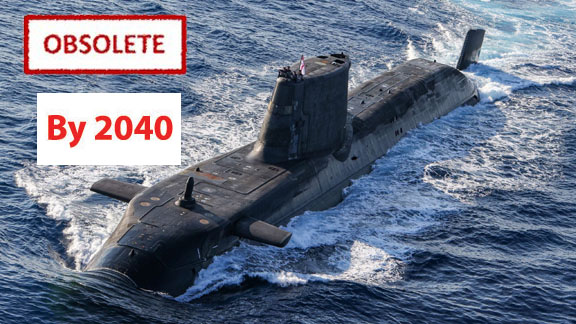
US Congressional report argues that Australia’s acquisition of nuclear submarines would actually undercut deterrence of China by depleting the US submarine fleet. With the promise of nuclear submarines becoming ever distant, it may be time to reconsider other options.
Recent surprising disclosures have revealed that nuclear-powered submarines, which Australia plans to acquire under the trilateral AUKUS partnership, cannot achieve three of the government’s main stated objectives for the program. The Australian purchase would degrade, not enhance, deterrence against China. It could provide only a miniscule and inconsistent presence at sea even after two decades. And it would undermine rather than sustain the global non-proliferation regime. Thankfully, only a tiny fraction of the program’s total estimated cost of up to AUD $368bn has been spent to date, so it is not too late for Australians to consider better ways to ensure national security.
On the first objective, Australia’s former prime minister, Scott Morrison, who negotiated the AUKUS submarine deal, claimed it was necessary to achieve a “credible deterrent” against China, and his successor Anthony Albanese soon agreed. Last month, however, the US Congressional Budget Office (CBO) belied that assertion. It reported that, because the United States would sell Australia three to five existing nuclear attack submarines (SSNs) from the US fleet before the US industrial base could expand to replace them, “the sale of SSNs to Australia would reduce the number of attack submarines available to the [US] Navy.”
The CBO then posed a crucial question: “Would China be less deterred if the United States reduced the number of its attack submarines to help Australia develop its submarine force?” The answer appeared obvious because “Australia would control its own submarines, and their participation in any particular conflict would not be guaranteed. In fact, in March 2020, the Australian defence minister stated that his country did not promise to support the United States in the event of a conflict involving Taiwan and the People’s Republic of China.” Thus, the report indicated that Australia’s acquisition of nuclear submarines would undercut deterrence of China – exactly opposite to the claims of Australia’s leaders.
Second, Morrison declared in 2021 that AUKUS’s “first major initiative” would be to provide Australia a nuclear-powered submarine fleet. This year, however, Albanese conceded that the still-under-design SSN-AUKUS would not begin delivery to Australia until the 2040s at least. In the meantime, according to RAN Vice Admiral Jonathan Mead’s Senate Estimates testimony in May, Australia expects to receive from the United States by the late 2030s two partially used nuclear submarines and one new one. That may sound like three submarines, but it is illusory. Recent reports reveal that only 63 percent of the US Navy’s submarines are operable in any year, and those that can operate spend only 39 percent of the year at sea. Thus, on average, each US attack submarine is on duty for just 25 percent of the year, or three months. This means that even if Australia received its promised three US vessels by the late 2030s, on average the RAN would be able to deploy less than one nuclear submarine at a time. Is that really the “fleet” that Aussies expect for their billions of tax dollars?
Third, Albanese promised at the 2023 AUKUS summit that “Australia’s proud record of leadership in the international nuclear non-proliferation regime will of course continue.” However, the SSN-AUKUS would violate a fundamental tenet of that regime by needlessly using weapons-grade, highly enriched uranium (HEU) fuel – sufficient for hundreds of nuclear bombs.
Since the 1970s, the non-proliferation regime has banned HEU fuel in the new reactors of countries like Australia that have pledged under the Nuclear Non-Proliferation Treaty to eschew nuclear weapons. The regime went so far as to convert 71 old reactors from HEU fuel to low-enriched uranium (LEU) fuel, to eliminate the proliferation risk. Indeed, HEU minimisation is deemed so vital for non-proliferation that it has been applied even to tiny reactors containing only one kilogram of weapons-grade uranium. Now Australia intends to eviscerate that non-proliferation norm by fuelling each SSN-AUKUS with hundreds of kilos of such bomb-grade uranium.
Fortunately, nuclear submarines do not require HEU fuel and can function perfectly well with LEU fuel, as the navies of France and China use. Despite this, Australia and its partners insist on HEU fuel for SSN-AUKUS, to enable smaller reactors without refuelling, thereby sending a message globally that HEU is required for the best submarines. As a result, we can expect other countries to declare – as Iran did immediately following the AUKUS announcement – that their navies too will use HEU, which they will enrich themselves, opening a huge back door to nuclear weapons. By contrast, LEU fuel is infinitely more proliferation resistant than HEU fuel, notwithstanding musings by uninformed AUKUS cheerleaders.
Australia’s defence minister, Richard Marles, has dismissed proliferation concerns by saying the HEU fuel would be imported in “sealed” reactors and thus inaccessible. In reality, however, Australia announced this year that it would extract the HEU fuel from all retired submarines and retain it in perpetuity, thereby savaging the non-proliferation regime even further. The supposedly “spent” fuel from each retired submarine would in fact contain an estimated 200 kilograms of still very highly enriched uranium, sufficient for a dozen or more nuclear weapons.
So, what can Australia do now? At the least, it should ask its partners to switch to LEU fuel for Australia’s SSN-AUKUS, to comport with non-proliferation norms. Fortunately, the US Congress has funded development of LEU naval fuel for the last eight years, providing a head-start to incorporate such proliferation-resistant fuel in the ongoing design of the SSN-AUKUS. If Albanese means what he says about “leadership in the international nuclear non-proliferation regime,” this step is a no-brainer.
The bigger question is whether Australia should abandon pursuit of nuclear submarines entirely. The Congressional report suggests that doing so would actually strengthen deterrence over the next few decades by not depleting the US fleet. Australia instead could reprogram the hundreds of billions earmarked for its nuclear submarines to buy defence systems that would complement rather than undermine US deterrence. That certainly sounds like a win-win.
Alan J. Kuperman is associate professor and coordinator of the Nuclear Proliferation Prevention Project at the LBJ School of Public Affairs, University of Texas at Austin.
Barngarla traditional owners win national conservation award for successful radioactive waste campaign news on radioactive waste
16 NOVEMBER 2023, https://www.acf.org.au/barngarla-rawlinson-award-win—
The Barngarla Determination Aboriginal Corporation has been awarded the 2023 Peter Rawlinson Award for a successful seven-year campaign to protect their country in South Australia from the long-term threats posed by radioactive waste.
The award, which celebrates outstanding voluntary contributions to protect the environment, was announced at the Australian Conservation Foundation’s AGM in Melbourne tonight.
“In August 2023, a David and Goliath struggle came to an end when federal Resources Minister Madeleine King announced the federal government would not advance a plan inherited from the former Coalition government to locate a national radioactive waste facility near Kimba on SA’s Eyre Peninsula,” said ACF’s nuclear free campaigner Dave Sweeney.
“The federal waste plan was deeply flawed and inconsistent with international best practice.
“The Barngarla always opposed radioactive waste on their country and repeated calls for Morrison government ministers Matt Canavan and Keith Pitt to scrap the plan were ignored.
“For seven years, against sustained pressure and propaganda, they stood firm.
“In July 2023, the Federal Court found Minister Pitt’s decision to declare the Kimba site was not valid because it was biased, rather than based on an independent and thorough process.
“Federal Labor’s subsequent decision to accept the court’s judgment was a prudent and a proper call and offers an important chance to change the government’s approach to this complex issue.
ACF thanks the Barngarla and acknowledges the sustained and successful efforts of a proud community to honour their past and protect their future. All of us are richer as a result.”
Established in 1992, the Rawlinson Award is given annually in memory of ACF Councillor Peter Rawlinson – a zoologist, lecturer in biological science and environmental campaigner.
1 This month


Help Aunty Sue Protect Her Land and Sacred Sites From Destructive Rocket Testing.
.

Australians deserve the truth
about
AUKUS – https://aukuspublicinquiry.com/

PETITION – To: Prime Minister Anthony Albanese and the Australian Labor Government

of the week – Australians for War Powers Reform (AWPR)
To see nuclear-related stories in greater depth and intensity

