Biden Wants Arms Deals With Israel to Be Done in Complete Secrecy

“I’ve never seen anything like it,” said Josh Paul, a former top State Department official.
By Sharon Zhang , TRUTHOUT November 2, 2023, https://truthout.org/articles/biden-wants-arms-deals-with-israel-to-be-done-in-complete-secrecy/
In a highly unusual move, the White House has requested for it to be able to conduct arms deals with Israel in complete secrecy, without oversight from Congress or the public — in a time when the U.S. is supporting a military that experts say has been committing war crimes in Gaza and beyond.
The White House made the request within a $106 billion supplemental defense funding request sent on October 20. As reported by Women for Weapons Trade Transparency for In These Times, the White House is asking for up to $3.5 billion in military funding for Israel to be able to purchase weapons and other equipment, from sources like the U.S. military or U.S. defense contractors, without the spending having to be approved by or even disclosed to Congress.
Crucially, such notifications to Congress are also logged in the Federal Register, where they are viewable to the public — but the White House is trying to get rid of that transparency for Israel for funding through September 2025 and potentially beyond if Israel chooses to set aside funding before then.
Experts have said that the move is alarming and rare. “I’ve never seen anything like it,” Josh Paul, the former director of congressional and public affairs for the Bureau of Political-Military Affairs in the State Department, told In These Times. Within the State Department, where he worked for 11 years, Paul helped the bureau in its work on arms deals and resigned in protest of a push to increase arms sales to Israel amid its genocidal siege on Gaza.
“A proposal in a legislative request to Congress to waive Congressional notification entirely for [Foreign Military Financing ]-funded Foreign Military Sales or Direct Commercial Contracts is unprecedented in my experience,” Paul said. “Frankly, [it’s] an insult to Congressional oversight prerogatives.”
Paul added that the White House is already allowed to unilaterally approve foreign military transactions in “emergency” situations but still has to notify Congress. The move, then, seems calculated to specifically create opacity around Israel sales. “This doesn’t actually reduce the time, it just reduces the oversight,” he said.
John Ramming Chappell, advocacy and legal fellow on U.S. issues for the Center for Civilians in Conflict, told In These Times that Congress should reject the White House’s request. “The waiver would further undermine meaningful scrutiny of weapons sales on Capitol Hill at a time when U.S. support is enabling bombings that have killed thousands of civilians,” Chappell said.
The request comes as the Biden administration has sought to crush dissent on its support of Israel, even within its own ranks. A new report by HuffPost published Thursday found that Biden officials are sidelining work within the State Department on the atrocities that Israel is committing in Gaza, seeking to seemingly cover up the issue and disallow employees from speaking up against the genocide.
Citing Paul and five workers within the agency, the outlet reports that State Department staff have been told by higher ups that they are not going to be able to move the needle on the executive branch’s approach to Israel, no matter their credentials or the horrific things they report coming out of Gaza.
The workers say work from staff on conditions in Gaza is being ignored — perhaps like a recent internal State Department report finding that over 80,000 babies under six months and pregnant people in Gaza are being forced to drink contaminated or brackish water due to Israel’s blockade.
Rather, State Department staff told HuffPost, the administration seems to be sweeping aside evidence of the humanitarian crisis and genocide, even from its own staff, in favor of fealty to Israel’s fascistic military and leaders. At listening sessions within the agency, discussion about the genocide is redirected to fears of antisemitism, while some staff, particularly Muslim workers, say that they feel like they have to censor themselves.
This culture of silence is happening even as senior agency officials may acknowledge in private that Israel is committing war crimes, according to the report. “Over the past weeks, as I have heard from numerous officials across both the executive and legislative branches, it has become clear to me that many senior leaders not only fully understand how Israel is currently using U.S.-provided arms in Gaza, but are even, behind closed doors, willing to acknowledge that these actions include ‘war crimes,’” Paul told HuffPost. “The fact that none are willing to do so publicly … points to a deep moral rot in our system.” #nuclear #antinuclear #nuclearfree #NoNukes #Israel #Palestine
Operation Al-Aqsa Flood’ Day 29: Israel Hits Hospitals, Ambulances, and Schools Across Gaza
Israel targeted an ambulance convoy at al-Shifa hospital, while other schools and hospitals were targeted as Israel doubles down on lifesaving civilian infrastructure. Meanwhile, Palestinian workers from Gaza return, recounting torture.
SCHEERPOST, By Mondoweiss Palestine Bureau / Mondoweiss 5 Nov 23
CASUALTIES
- 9,448 Palestinians killed, including 3,900 children, and 24,158 wounded in Gaza
- 145 Palestinians killed in the occupied West Bank and East Jerusalem
KEY DEVELOPMENTS
- Israel claims attack on ambulance convoy at al-Shifa hospital, killing at least 15 people.
- Israeli forces bomb at least one other hospital and an UNRWA school where thousands had taken shelter, as UNRWA warns that UN flag “cannot even provide [Palestinians] safety.”
- Thousands of Palestinian workers who were arbitrarily detained after October 7 are deported back to Gaza, and recount violent beatings, interrogation, and imprisonment.
- ‘Alarming’ Israeli army and settler violence continues in the occupied West Bank, as at least one Palestinian teenager is killed.
- Several Arab states hold a meeting in Jordan on Saturday, set to meet with U.S. envoy.
- Honduras recalls its ambassador to Israel over its “genocide” in Gaza.
- Pro-Palestine activists prevent U.S. military ship believed to be headed to Israel from leaving Oakland, California port.
- National March on Washington, D.C. scheduled for Saturday to call for a ceasefire in Gaza
GAZA HOSPITALS, SCHOOLS, MOSQUES, AND WATER TANKS — NOWHERE IS SAFE
Israel’s brutal bombardment of Gaza somehow reached further lows nearly a month on, as the army attacked an ambulance convoy outside al-Shifa hospital in Gaza City on Friday, killing 15 people and injuring 60, the Gaza Ministry of Health said. One of those killed has been identified as journalist Haitham Hararah.
The ambulances were due to transfer a number of injured people through to the Rafah crossing to receive medical treatment in Egypt. While 28 people were due to enter Egypt on Friday, 11 of them were blocked from leaving Gaza because of the attack on al-Shifa.
Unlike some other attacks on medical facilities, the Israeli army promptly claimed responsibility for the airstrike, claiming that the ambulances were used by Hamas — an allegation that the Gaza Ministry of Health forcefully rejected, noting that at least 27 ambulances, and 105 health institutions have been targeted by Israel in the past four weeks. Some 150 health personnel have been killed, while 16 hospitals and 32 primary care centers have been put out of service by airstrikes and dire fuel shortages, it added………………………………………….
Meanwhile U.N. Secretary-General Antonio Guterres said he was “horrified”. “Now, for nearly one month, civilians in Gaza, including children and women, have been besieged, denied aid, killed, and bombed out of their homes,” Guterres said. “This must stop.”
The airstrike at al-Shifa was far from the only Israeli attack on spaces defined as “protected civilian objects” under international law in the span of 24 hours.
On Saturday, the Gaza Ministry of Health reported that another strike had hit Al-Nasr children’s hospital in Gaza City, killing at least two people……………………………………………………………………………………….. more https://scheerpost.com/2023/11/05/operation-al-aqsa-flood-day-29-israel-hits-hospitals-ambulances-and-schools-across-gaza/ #Israel #Palestine
Solar panel advances will see millions go off grid, scientists predict

Solar energy costs have fallen 90 per cent over the last decade, while new discoveries have seen efficiency rates rise
More than 30 million homes in Europe could meet all their energy needs
using rooftop solar panels alone, according to a new study. Researchers
from the Karlsruhe Institute of Technology in Germany found that more than
50 per cent of Europe’s 41 million freestanding homes could have been
self-sufficient in 2020 using just solar and batteries, with this figure
expected to rise to 75 per cent by 2050.
Advances with solar technology
mean that it will also make it economically viable for a portion of these
freestanding single-family homes to abandon the electrical grid altogether
in the coming decades. Rather than abandoning the grid altogether, however,
the researchers said it would make more sense at a macroeconomic scale for
households to remain connected and feed excess energy back to other users
during times of overproduction.
Independent 3rd Nov 2023
https://www.independent.co.uk/tech/solar-panels-cost-renewable-energy-b2440891.html #nuclear #antinuclear #nuclearfree #NoNukes
TODAY. The Atlas Network and its toxic messages to the Stink Tanks- especially relevant to Australia

Especially relevant to Australia? Why?
Because they just had a major victory – filling the public with fear and distrust, and so winning the “NO” vote against an indigenous Voice to Parliament.
Who are the the Stink Tanks?
Posing as impartial advisers, these “Think Tanks” provide reports and articles designed to direct governments, and educational and other social organisations, towards policies that improve the profits of big corporations, and remove barriers to their profits, The barriers would be regulations, especially those involved with protecting the environment, and the rights of indigenous people.
How does the Atlas Network operate to spread these messages?
Apart from some funding, and training support, the real focus of the Atlas Network is on LANGUAGE –teaching the stink tanks how to use words to manipulate thinking. George Orwell alerted the world to the way in which fascism uses language, and wrote of Newspeak. Now the Atlas Network perfects the method – repetitively using vague and deceptive words to convey a lying message that is aimed at molding public opinion.
Sometimes these words are straightout lies: sometimes just vague words in which the meaning is distorted. The word “Elite” is a good example – now used to discredit scientists and other experts, so that the public comes to distrust them, and to rubbish their opinions, and their reports, particularly about regulations to protect the environment and indigenous rights.
FEAR is indeed the currency of the Atlas Network. Fear and distrust of regulations, of officers and organisations involved in human rights and environmental protection. So these stink tanks work to weaken laws, and discredit agencies of human support – such as the United Nations.
Side by side with those messages of fear, come the lying messages of reassurance – for example the story that global heating is not happening, or, if it is, it has nothing to do with human activities, -greenhouse gas emissions. So we don’t need to worry, or to do anything to stop these emissions. So we are reassured that nuclear power is “clean “green” “safe” “cheap” “nothing to do with weapons” .
What is the motive of the Atlas Network?
Are they evil? Wanting to harm people? Hating the environment?
NO – it’s just one simple thing – company profits. Freedom – defined as – Nothing should impede corporate profits.
This month we shall no doubt see some wonderful activity by the hundreds of stink tanks affiliated with the Atlas Network, leading up to, and beyond, the COP 28 Climate Summit, as they parrot out soothing messages about how all is well, in control, we don’t need to act on climate change.
And who funds the Atlas Network?
Fossil fuel companies and tobacco firms. Atlas has received funding from Koch Family Foundations, the Bradley Foundation. DonorsTrust and Donors Capital Fund. The Atlas Network receives much of its funding from libertarian and right-wing organizations and individuals
What can we do about this?
Well, I don’t know – but at least we can be alert to their language – alert to those repetitive, misleading words:
There are the “hooray” words – “justice”, “life”, “freedom” and those “positives” – “clean” “green” etc.
There are the “negatives” -“Hitler, “taxes” – and words used negatively “elites” “bureaucrat”, “government official” and “public servant “.
And as well, there are vague, really, almost meaningless words – that waffle, weaken, and obscure the argument- “may” “can” “could” “might” , “arguably”.
Targeting Gaza From US Spy Hub in Australia
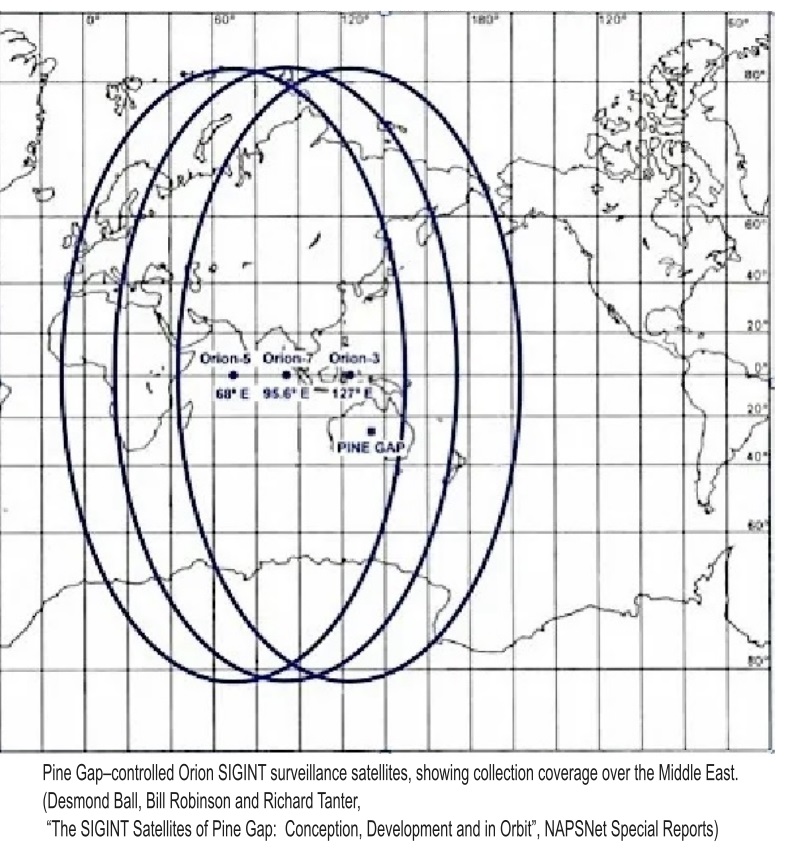
Peter Cronau reports on Canberra’s secret support for Israel’s brutal assault on Palestinians in Gaza through NSA intelligence satellites in the U.S. Pine Gap base near Alice Springs.
Peter Cronau, Declassified Australia https://consortiumnews.com/2023/11/03/targeting-gaza-from-us-spy-hub-in-australia/
The Pine Gap U.S. surveillance base located outside of Alice Springs in Australia is collecting an enormous range of communications and electronic intelligence from the brutal Gaza-Israel battlefield — and this data is being provided to the Israel Defence Forces.
Two large Orion geosynchronous signals intelligence satellites, belonging to the U.S. and operated from Pine Gap, are located 36,000 kms above the equator over the Indian Ocean. Frosxxxdxxxxxm there, they look down on the Middle East, Europe and Africa, and gather huge amounts of intelligence data to beam back to the Pine Gap base.xxxxxc
After collecting and analysing the communications and intelligence data for the U.S. National Security Agency (NSA), Pine Gap is providing it to the Israel Defence Forces, as it steps up its brutal assault on Palestinians in the Gaza enclave.
Pine Gap facility is monitoring the Gaza Strip and surrounding areas with all its resources, and gathering intelligence assessed to be useful to Israel,” a former Pine Gap employee has told Declassified Australia.
David Rosenberg worked inside Pine Gap as “team leader of weapon signals analysis” for 18 years until 2008. He is a 23-year veteran of the NSA.
“Pine Gap has satellites overhead. Every one of those assets would be on those locations, looking for anything that could help them.”
“Pine Gap facility is monitoring the Gaza Strip and surrounding areas with all its resources, and gathering intelligence assessed to be useful to Israel.”
Rosenberg says the personnel at Pine Gap are tasked with collecting signals such as “command and control” centres in Gaza, with Hamas headquarters often located near hospitals, schools and other civilian structures. “The aim would be to minimise casualties to non-combatants in achieving their objective of destroying Hamas.”
Since the Oct. 7 Hamas attack on Israel that killed over 1,400 Israelis, both military and civilian, the Israel Defence Forces has bombed hundreds of targets inside Gaza, killing far more than Hamas militants. An estimated 9,000 people so far have been killed, including most shockingly 3,600 children.
United Nations agencies have deplored the nearly four-week Israeli bombing campaign saying,
“Gaza has become a ‘graveyard’ for children with thousands now killed under Israeli bombardment, while more than a million face dire shortages of essentials and a lifetime of trauma ahead.”
Pine Gap’s Global Role
The sprawling satellite ground station outside Alice Springs, officially titled Joint Defence Facility Pine Gap (JDFPG), has been described as the United States’ second most important surveillance base globally.
About half the 800 personnel working at the Central Australian base are American, with Australian government employees making up fewer than 100 of the increasingly privatised staff.
The base is no mere passive communication collector. Personnel at the Pine Gap base provide vital detailed analysis and reporting on SIGINT (signals intelligence) and ELINT (electronic intelligence) it collects.
As well as surveillance of civilian, commercial and military communications, it provides detailed geolocation intelligence to the U.S. military that can be used to locate with precision targets in the battlefield.
This was first conclusively documented in a secret NSA document, titled “Site Profile,” leaked from the Edward Snowden archive to this writer and first published by ABC Australia in 2017:
“RAINFALL [Pine Gap’s NSA codename] detects, collects, records, processes, analyses and reports on PROFORMA signals collected from tasked target entities.”
These PROFORMA signals are the communications data of radar and weapon systems collected in near real-time — they likely would include remote launch signals for Hamas rockets, as well as any threatened missile launches from Lebanon or Iran.
“Pine Gap detects, collects, records, processes, analyses and reports on PROFORMA signals collected from tasked target entities.
This present war in Gaza is not the first time the dishes of Pine Gap have assisted Israel’s military with intelligence, including the detecting of incoming missiles, according to this previous report.
“During the [1991] Gulf War, Israeli reports praised Australia for relaying Scud missile launch warnings from the Nurrungar joint U.S.-Australian facility in South Australia, a task now assigned to Pine Gap.”
During the early stages of the 2003 U.S. invasion of Iraq, the NSA installed a data link to send early warning of any Iraqi missile launches detected directly to Israel’s Air Force headquarters at Tel Nof airbase, south of Tel Aviv.
Israel’s Access to ‘Five Eye’ Jewels
The NSA “maintains a far-reaching technical and analytic relationship with the Israeli SIGINT National Unit (ISNU),” according to documents published by The Intercept in 2014. The documents show the NSA and ISNU are “sharing information on access, intercept, targeting, language, analysis and reporting.”
“This SIGINT relationship has increasingly been the catalyst for a broader intelligence relationship between the United States and Israel.
“The Israeli side enjoys the benefits of expanded geographic access to world-class NSA cryptanalytic and SIGINT engineering expertise.”
It’s thanks to the Pine Gap base, with its satellites so strategically positioned to monitor the Middle East region, along with its targeting and analysis capability, that Israel is able to make use of these benefits.
Another leaked document, a targeting exchange agreement from the U.K.’s surveillance agency, GCHQ, reveals one of the “specific intelligence topics” shared among the NSA, GCHQ and ISNU was “Palestinians.” The document states that “due to the sensitivities” of Israeli involvement that particular program does not include direct targeting of Palestinians themselves.
The NSA considers their intelligence-sharing arrangement as being “beneficial to both NSA’s and ISNU’s mission and intelligence requirements.”
This wide intelligence sharing arrangement potentially opens up to the Israelis the “jewels” of the Five Eye global surveillance system collected by the NSA global surveillance network, including by Australia’s Pine Gap base.
Declassified Australia asked a series of questions of the Australian Defence Department about the role of the Pine Gap base in the Israel-Gaza war, and about the legal protections that may be in place to defend personnel of the base should legal charges of war crimes be laid. No response was received by deadline.
Peter Cronau is an award-winning investigative journalist, writer, and film-maker. His documentaries have appeared on ABC TV’s Four Corners and Radio National’s Background Briefing. He is an editor and cofounder of DECLASSIFIED AUSTRALIA. He is co-editor of the recent book A Secret Australia – Revealed by the WikiLeaks Exposés.
This article is from Declassified Australia.
Is nuclear the answer to Australia’s climate crisis?
For fossil fuel firms and their political friends, this is the real attraction of nuclear – another decade or two of sales at inflated prices.
The Conversation, Reuben Finighan, November 3, 2023
In Australia’s race to net zero emissions, nuclear power has surged back into the news. Opposition leader Peter Dutton argues nuclear is “the only feasible and proven technology” for cutting emissions. Energy Minister Chris Bowen insists Mr Dutton is promoting “the most expensive form of energy”.
Is nuclear a pragmatic and wise choice blocked by ideologues? Or is Mr Bowen right that promoting nuclear power is about as sensible as chasing “unicorns”?
………………. mundane factors help to explain why nuclear power has halved as a share of global electricity production since the 1990s. They are time and money.
The might of Wright’s law
There are four arguments against investment in nuclear power: Olkiluoto 3, Flamanville 3, Hinkley Point C, and Vogtle. These are the four major latest-generation plants completed or near completion in Finland, the United States, the United Kingdom and France respectively.
Cost overruns at these recent plants average over 300%, with more increases to come…………………………
A fifth case is Virgil C, also in the US, for which US$9 billion (A$14 billion) was spent before cost overruns led the project to be abandoned. All three firms building these five plants – Westinghouse, EDF, and AREVA – went bankrupt or were nationalised. Consumers, companies and taxpayers will bear the costs for decades.
By contrast, average cost overruns for wind and solar are around zero, the lowest of all energy infrastructure.
Wright’s law states the more a technology is produced, the more its costs decline. Wind and especially solar power and lithium-ion batteries have all experienced astonishing cost declines over the last two decades.
For nuclear power, though, Wright’s law has been inverted. The more capacity installed, the more costs have increased. Why? This 2020 MIT study found that safety improvements accounted for around 30% of nuclear cost increases, but the lion’s share was due to persistent flaws in management, design, and supply chains.
In Australia, such costs and delays would ensure that we miss our emissions reduction targets. They would also mean spiralling electricity costs, as the grid waited for generation capacity that did not come. For fossil fuel firms and their political friends, this is the real attraction of nuclear – another decade or two of sales at inflated prices.
Comparing the cost of nuclear and renewables
…….let’s compare the cost of reliably delivering a megawatt hour of electricity to the grid from nuclear versus wind and solar. According to both the CSIRO and respected energy market analyst Lazard Ltd, nuclear power has a cost of A$220 to $350 per megawatt hour produced.
Without subsidies or state finance, the four plants cited above generally hit or exceed the high end of this range. By contrast, Australia is already building wind and solar plants at under $45 and $35 per megawatt hour respectively. That’s a tenth of the cost of nuclear.
The CSIRO has modelled the cost of renewable energy that is firmed – meaning made reliable, mainly via batteries and other storage technologies. It found the necessary transmission lines and storage would add only $25 to $34 per megawatt hour.
In short, a reliable megawatt hour from renewables costs around a fifth of one from a nuclear plant. We could build a renewables grid large enough to meet demand twice over, and still pay less than half the cost of nuclear.
The future of nuclear: small modular reactors?
Proponents of nuclear power pin their hopes on small modular reactors (SMRs), which replace huge gigawatt-scale units with small units that offer the possibility of being produced at scale. This might allow nuclear to finally harness Wright’s law.
Yet commercial SMRs are years from deployment. The US firm NuScale, scheduled to build two plants in Idaho by 2030, has not yet broken ground, and on-paper costs have already ballooned to around A$189 per megawatt hour.
The future of nuclear: small modular reactors?
Proponents of nuclear power pin their hopes on small modular reactors (SMRs), which replace huge gigawatt-scale units with small units that offer the possibility of being produced at scale. This might allow nuclear to finally harness Wright’s law.
Yet commercial SMRs are years from deployment. The US firm NuScale, scheduled to build two plants in Idaho by 2030, has not yet broken ground, and on-paper costs have already ballooned to around A$189 per megawatt hour.
And SMRs are decades away from broad deployment. If early examples work well, in the 2030s there will be a round of early SMRs in the US and European countries that have existing nuclear skills and supply chains. If that goes well, we may see a serious rollout from the 2040s onwards.
In these same decades, solar, wind, and storage will still be descending the Wright’s law cost curve. Last year the Morrison government was spruiking the goal of getting solar below $15 per megawatt hour by 2030. SMRs must achieve improbable cost reductions to compete.
Finally, SMRs may be necessary and competitive in countries with poor renewable energy resources. But Australia has the richest combined solar and wind resources in the world. https://theconversation.com/is-nuclear-the-answer-to-australias-climate-crisis-216891?fbclid=IwAR3lyjM6-wUWPihK6Cm-R-1WVRtiQzLUaxdmXkH6_0EF5IRldgGy9Rf8_-I
Mapping the revolving door between government and the weapons industry
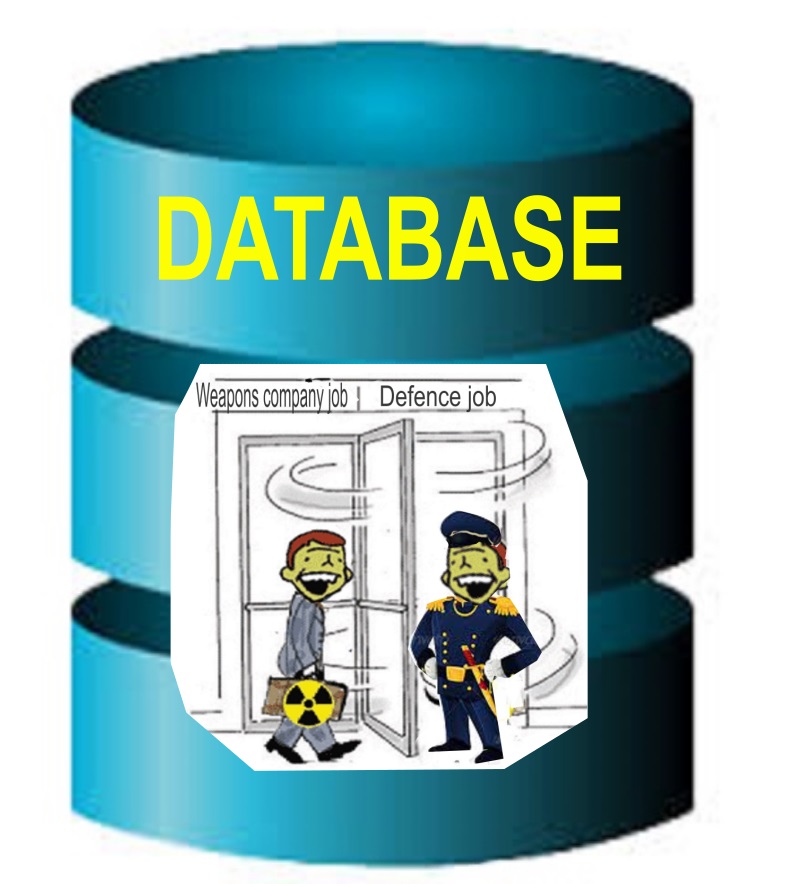
Undue Influence revolving door database progresses
MICHELLE FAHY, Undue Influence Substack, NOV 4, 2023
Some 80 per cent of the United States’ four star generals and admirals go on to work for US weapons-making companies, it was revealed last month. US arms industry expert William Hartung also noted that with the Pentagon’s budget soaring towards US$1 trillion a year, and security challenges posed by Russia and China front and centre, an independent assessment of the best path ahead for the US was vital.
Yet, he said, “more often than not, special interests override the national interest in decisions on how much to spend on the Pentagon, and how those funds should be allocated”.
Hartung’s revelations were made possible by US research tracking the revolving door between the US government and the weapons industry.
In Australia, the defence budget is also rising. At the same time, transparency and accountability from our politicians and the Defence Department continues to decline.
The US research has reinforced the importance of the Australian revolving door database that I am creating, in collaboration with a research assistant and a technical specialist. This project was made possible by a grant from the Jan de Voogd Peace Fund.
Revolving door a feature in major defence procurement in Australia
My two-part investigative feature, first published by Declassified Australia in July, put the spotlight on the revolving door between the Australian government and the world’s sixth largest arms manufacturer, BAE Systems. It also contributed to a referral to the National Anti-Corruption Commission (NACC).
The investigation revealed close links between government and industry – information that will be included in the revolving door database – and provided a rare insight into the Australian revolving door in action. It exposed how the government gave former senior BAE insiders influential behind-the-scenes roles before and during a tender process that BAE went on to win. Few of these senior roles were publicly acknowledged by the government.
The procurement of the Hunter class frigates, now at $46 billion (and rising), is Australia’s second largest ever defence acquisition. The Greens’ defence spokesman David Shoebridge made the referral to the NACC.
Database progress to date
The revolving door database has been funded by the Jan de Voogd Peace Fund (administered by the NSW Quakers). The project is being auspiced by the Medical Association for Prevention of War.
The database architecture is now complete following a detailed and complex development process which enables arms company contract data to be extracted from the government’s public databases. The website will aggregate hundreds of contract values into a single annual figure for each major arms corporation, updated daily. With major multinational arms makers having up to 20 or more relevant subsidiaries, it is vital to be able to combine the total value, and this is what the database will do.
The names of people who have occupied 60 senior military, political and defence-related positions back to the year 2000 have been compiled. We will now investigate the existence of subsequent arms-related private sector positions.
How you can help
- Send information on revolving door appointments
Email us at undueinfluence@protonmail.com with information about revolving door appointments that have occurred since 2000 between the defence-related public sector and the arms industry (in either direction). - Fund our ongoing investigative work
While much of my focus in the coming months will be on the revolving door database, I am determined to continue my investigative research and writing as there is much more to be revealed. If you are able to upgrade [on Substack] from a free to a paid subscription to Undue Influence, it would be greatly appreciated. The grant funds are exclusively for work on the database and our regular investigative research and writing continues to rely heavily on reader subscriptions…………………..
https://undueinfluence.substack.com/p/mapping-the-revolving-door-database-progress?utm_source=post-email-title&publication_id=297295&post_id=138509639&utm_campaign=email-post-title&isFreemail=true&r=1ise1&utm_medium=email
Defence continues its blanket secrecy on weapons exports
Mapping the revolving door between government and the weapons industry
Undue Influence revolving door database progresses
Undue Influence Substack, MICHELLE FAHY, NOV 4, 2023
Australia has approved 322 military or dual-use permits to Israel over the past six years, according to new figures the government provided last week in response to questions on notice from Greens Senator David Shoebridge. The period covered was January 2017 to March 2023.
Defence has previously admitted that it favours secrecy over transparency and accountability regarding its decisions on weapons exports.
As I reported in 2021, Defence elevates the protection of ‘commercially sensitive’ information and ‘opportunities for Australian companies’ above fundamental democratic principles of transparency and accountability.
The recent reports show that Defence Department secrecy around weapons exports has not improved with the change in government.
Australia is obliged under international law to ensure weapons exports are not used to commit human rights violations, but Defence’s ongoing secrecy means the public has no idea what the Department has approved for export in our name.
“Australia has a legal duty under the UN Arms Trade Treaty, which Australia actively promoted when it was a UN Security Council member, to ensure that weapons are not used to commit human rights violations,” says former United Nations legal expert and Australian government minister Melissa Parke, who now leads the International Campaign to Abolish Nuclear Weapons (ICAN). “Under the treaty, there must also be fully transparent public reporting about arms exports.”
Senator Shoebridge, the Greens’ defence spokesperson, said Australia had “one of the most secretive and unaccountable weapons export systems in the world”, given that it doesn’t break down the exact items exported.
Furthermore, Defence’s disclosure of the number of permits it has approved is a statistical veneer of limited value. Consider: one permit can cover multiple shipments or shipments to multiple countries. One permit can also cover multiple quantities, types and models of weapons or other items, whether physical or ‘intangible’ (electronic). In addition, as Defence freely admits, not all permits it approves proceed to export and delivery. Knowing the number of approved permits is therefore meaningless.
The ethical consequences of Defence’s policy of protecting the commercial interests of Australian weapons companies can be readily understood given the current war between Israel and Hamas: Australia is likely to have contributed towards the indiscriminate killing of innocent people in Gaza.
“Australia’s actions in approving arms exports to countries that are known to be committing serious violations of human rights, and its failure to be transparent about this, are inconsistent with its obligations under international law,” says Parke. “Having signed up to … these international laws, the Australian government can’t just cherry pick what aspects it’s going to abide by, especially when it … lectures other countries, such as China and Russia, about the importance of the international rule of law.” https://undueinfluence.substack.com/p/mapping-the-revolving-door-database-progress?utm_source=post-email-title&publication_id=297295&post_id=138509639&utm_campaign=email-post-title&isFreemail=true&r=1ise1&utm_medium=email
Australian leadership in Indo‑Pacific nuclear diplomacy
JOHN TILEMANN, The Interpreter, 3 Nov 23
With growing state capabilities in the region, “guardrails”
are more important than ever. Canberra can help.
Australia should again take a leadership role in nuclear diplomacy, working with regional neighbours, to reduce nuclear threats in the Indo-Pacific through confidence building and preventive diplomacy measures.
This was the call in an open letter to Prime Minister Anthony Albanese published this week by a cross-party and expert group of prominent Australians in the fields of public policy and nuclear security, urging the government to act to stem the rising tide of global nuclear threats – threats mostly generated today in the Indo-Pacific.
The seriousness of the danger has been acknowledged by regional leaders, including Australia’s prime minister. But it has yet to receive the high-level political attention it demands.
Eight of the world’s nine nuclear-armed states have strategic stakes in our region. Tensions among these nuclear players continue to rise, and the price of nuclear mistakes, or worse, intentional use of nuclear weapons, could be existential.
The numbers illustrate the danger…………………………………………………………………………………………………….
Long gone are the days of the relative simplicity of the bipolar world of two opposing blocs with a degree of stability arising from the doctrine of Mutually Assured Destruction. The multi-polar nuclear world of the Indo-Pacific is an even more dangerous place.
And additional nuclear complexity arises from the expectations of states benefiting from “ironclad treaty alliances” that the United States extends to Australia, Japan, South Korea, the Philippines and Thailand.
Both South Korea and Japan have expressed concern about the reliability of US strategic assurances, and both could build nuclear weapons quickly should they take that decision. Australia’s nuclear diplomacy must also address those proliferation pressures…………………………………………….
Global instruments to stop the spread of nuclear weapons and to cap nuclear weapon testing have been very successful – but there are big gaps in these regimes in the Indo-Pacific.
Three of the four countries to reject the Nuclear Non-Proliferation Treaty, designed to prevent the further spread of nuclear weapons, are in this region: India, Pakistan and North Korea. The formal entry into force of the global ban on nuclear weapon testing is blocked by eight countries in two areas of regional tension – the Middle East and the Indo-Pacific.
Widely supported proposals for a global ban on the production of materials used to make nuclear weapons – highly enriched uranium and plutonium – are also resisted by those in our region still growing their nuclear arsenals.
While remaining hugely important, global mechanisms must be supplemented by regional mechanisms. Even basic tools for crisis management such as hotlines are either unevenly maintained or non-existent.
The ASEAN Regional Forum brings together all relevant Indo-Pacific players but has had limited success in moving beyond information exchange to confidence building measures – and preventive diplomacy remains a distant ambition.
The East Asia Summit also engages all key Indo-Pacific strategic nuclear parties, but it has yet to become a mechanism for addressing security challenges, let alone reducing nuclear threats.
Nevertheless, Australia has a solid record of institution building from APEC through to its strong engagement with the ASEAN-led arrangements that have done much to establish the habits of regional dialogue. ……………………………………………………… more https://www.lowyinstitute.org/the-interpreter/australian-leadership-indo-pacific-nuclear-diplomacy
A Dangerous Conflation -an open letter from Jewish writers
n+1 magazine, 25 Oct 23
WE ARE JEWISH WRITERS, artists, and activists who wish to disavow the widespread narrative that any criticism of Israel is inherently antisemitic. Israel and its defenders have long used this rhetorical tactic to shield Israel from accountability, dignify the US’s multibillion-dollar investment in Israel’s military, obscure the deadly reality of occupation, and deny Palestinian sovereignty. Now, this insidious gagging of free speech is being used to justify Israel’s ongoing military bombardment of Gaza and to silence criticism from the international community.
We condemn the recent attacks on Israeli and Palestinian civilians and mourn such harrowing loss of life. In our grief, we are horrified to see the fight against antisemitism weaponized as a pretext for war crimes with stated genocidal intent.
Antisemitism is an excruciatingly painful part of our community’s past and present. Our families have escaped wars, harassment, pogroms, and concentration camps. We have studied the long histories of persecution and violence against Jews, and we take seriously the ongoing antisemitism that jeopardizes the safety of Jews around the world. This October just marked the five-year anniversary of the worst antisemitic attack ever committed in the United States: the eleven worshipers at Tree of Life – Or L’Simcha in Pittsburgh, who were murdered by a gunman who espoused conspiracy theories that blamed Jews for the arrival of Central American migrants, and in so doing, dehumanized both groups. We reject antisemitism in all its forms, including when it masquerades as criticism of Zionism or Israel’s policies. We also recognize that, as journalist Peter Beinart wrote in 2019, “Anti-Zionism is not inherently antisemitic—and claiming it is uses Jewish suffering to erase Palestinian experience.”
We find this rhetorical tactic antithetical to Jewish values, which teach us to repair the world, question authority, and champion the oppressed over the oppressor. It is precisely because of the painful history of antisemitism and lessons of Jewish texts that we advocate for the dignity and sovereignty of the Palestinian people. We refuse the false choice between Jewish safety and Palestinian freedom; between Jewish identity and ending the oppression of Palestinians. In fact, we believe the rights of Jews and Palestinians go hand-in-hand. The safety of each people depends on the other’s. We are certainly not the first to say so, and we admire those who have modeled this line of thinking in the wake of so much violence. …………………………………………………………………………..
We call for a ceasefire in Gaza, a solution for the safe return of the hostages in Gaza and Palestinian prisoners in Israel, and an end to Israel’s ongoing occupation. We also call on governments and civil society in the United States and across the West to stand up against the repression of support for Palestine.
And we refuse to allow such urgent, necessary demands to be suppressed in our names. When we say never again, we mean it.
Names: ………………………………………………………………………………………………………………………………………………………………….. more https://www.nplusonemag.com/online-only/online-only/a-dangerous-conflation/ #Israel #Palestine
A small victory for nuclear justice. And international cooperation.
By Ivana Nikolić Hughes, Christian Ciobanu | November 3, 2023 https://thebulletin.org/2023/11/a-small-victory-for-nuclear-justice-and-international-cooperation/
In contrast with the grandeur of the General Assembly Hall, the uplifting design of the Trusteeship Council room, and the stunning circular table in the Security Council Chamber, Conference Room 4 at the UN Headquarters is modest and unassuming. And yet, magic can happen there. When the heads of state are long gone and even the ministers have departed New York, diplomats push forward agendas to advance international cooperation on any number of international issues. They give statements, engage in debates publicly and privately, and vote for resolutions and more, often late into the night.
A kind of diplomatic magic took place last Friday night. Voting on a series of resolutions in what is referred to as the “nuclear weapons cluster” of the United Nations General Assembly’s First Committee (which deals with disarmament and international security), diplomats considered for the first time a resolution entitled: “Addressing the Legacy of Nuclear Weapons: Providing Victim Assistance and Environmental Remediation to Member States Affected by the Use or Testing of Nuclear Weapons.” The first such victims came into being when the United States conducted its first nuclear weapons test in New Mexico and then used nuclear weapons in attacks on Hiroshima and Nagasaki in the summer of 1945.
But nuclear explosions continued over the decades and around the world, in the form of nuclear weapon tests. The victim counts are easily in the millions.
Two of the countries affected by nuclear weapons testing, the Republics of Kazakhstan and Kiribati (from Soviet Union and United Kingdom/United States tests, respectively), brought the resolution forward and advocated broadly for its adoption. The result of their work became obvious when the voting began at roughly 6:30 p.m., and a sea of green checks began to fill the screens displaying the results. With 40 co-sponsors and many countries confirming in advance that they would vote in support of the resolution, the adoption was inevitable.
Still, it would be hard to overstate what a victory it was to have 171 countries vote in support of this resolution, with only four no votes and six abstentions. This was not only a triumph for those impacted by nuclear weapons use and testing but also for international cooperation. Especially at a time when UN resolutions seem to be supported on the basis of who likes whom (or perhaps even more so, who doesn’t like whom), having 171 states stand for those who have been harmed by nuclear weapons and whose environments may still be contaminated is welcome and long overdue.
In an unlikely alliance under most other circumstances, the Democratic People’s Republic of Korea (that is, North Korea), France, Russia, and the United Kingdom all voted no. Their stance is shameful, given the context of nuclear colonialism embodied by the French nuclear testing program in Algeria and French Polynesia and the United Kingdom’s testing in Australia and Kiribati. Better than voting no, the other nuclear weapon possessors—China, India, Israel, Pakistan, and the United States—all abstained. (So did the Democratic Republic of the Congo, a non-nuclear weapons country that supports the nuclear ban treaty.) It was encouraging to see that the United States abstained rather than voting no alongside France and the United Kingdom.
None of the nine countries that possess nuclear weapons voted in favor of the resolution, leaving them isolated. Since they caused the harm and the contamination that are the topic of the resolution, voting yes on this resolution at the earliest opportunity could become the first step towards redeeming themselves and righting these historical wrongs. When the resolution comes up for a vote in December in the General Assembly, they should all reverse their votes and vote yes. They owe it to the victims and their descendants.
Upon adoption in the General Assembly in December, this resolution will pave the way for the long and hard process of information gathering and needs appraisal in affected states, followed by actual steps to assist victims and assess and remediate contaminated environments. Such work has already begun within the context of the Treaty on the Prohibiton of Nuclear Weapons (TPNW), but bringing these conversations into the broader sphere is critical. Future versions of the resolution can build in further binding steps.
The world cannot afford to create more victims of nuclear weapons or to contaminate more environments. In fact, indications are that all of humanity and life on the planet would become a victim in case of nuclear war using today’s arsenals. Therefore, while they’re deciding to come around and help victims of past nuclear weapons use and testing, the nuclear weapons countries should also recommit to nuclear disarmament in a verifiable and time-bound manner. There are lots of options for them to do so—through numerous resolutions that were also voted upon on Friday, but also through joining and/or meeting their existing obligations under key treaties, including the Nuclear Non-Proliferation Treaty, the Comprehensive Test Ban Treaty, and the TPNW. Helping existing victims is but one step. Getting rid of nuclear weapons is the only way to ensure there will be no more. #nuclear #antinuclear #nuclearfree #NoNukes
The Moral Complexities Of Bombing A Concentration Camp Full Of Children

Caitlin’s Newsletter, CAITLIN JOHNSTONE, NOV 4, 2023
They’re dropping bombs on a concentration camp full of children. THEY’RE DROPPING BOMBS ON A CONCENTRATION CAMP FULL OF CHILDREN.
Not in the past. Right now. They’re still doing it. They show no signs of stopping.
No part of opposing this should be remotely controversial.
They’re dropping bombs on a concentration camp full of kids. Even shitlibs and pseudo-leftists who get every other foreign policy issue wrong are managing to get this one right, it’s that obvious. Anyone getting this issue wrong can be permanently dismissed without any real loss
No matter how much you talk about October 7, it will still be a fact that Israel is raining military explosives upon a concentration camp full of children, and that it urgently needs to stop.
No matter how much you talk about how evil and bad Hamas are, it will still be a fact that Israel is raining military explosives upon a concentration camp full of children, and that it urgently needs to stop.
No matter how much you say the words “human shields”, it will still be a fact that Israel is raining military explosives upon a concentration camp full of children, and that it urgently needs to stop.
No matter how much you accuse Israel’s critics of loving terrorists, it will still be a fact that Israel is raining military explosives upon a concentration camp full of children, and that it urgently needs to stop.
No matter how much you accuse Israel’s critics of hating Jews, it will still be a fact that Israel is raining military explosives upon a concentration camp full of children, and that it urgently needs to stop.
No matter how many words you use or how much narrative spin you try to put on it or how many ad hominems you throw at the people criticizing what Israel is doing, it will still be a fact that Israel is raining military explosives upon a concentration camp full of children, and that it urgently needs to stop.
Yeah I’m gonna go ahead and assume that the people arguing that it’s necessary to keep dropping military explosives on a giant concentration camp full of children are on the side that will be judged negatively by history.
❖
A huge amount of western depravity hides behind the unexamined assumption that killing people with bombs is somehow less evil than killing them with bullets or blades. By waging nonstop foreign bombing campaigns, the west desensitized the public to the reality of what bombs do.
❖
Hamas are in the ambulances. Hamas are in the hospitals. Hamas are underneath the refugee camps. Hamas are behind the children. Maybe they’re just massacring civilians.
If a military power was just massacring thousands of civilians and then making up propagandistic lies to cover its massacres, would it look any different from what Israel’s actions and statements look like right now?…………………………………………………………………..
more https://www.caitlinjohnst.one/p/the-moral-complexities-of-bombing?utm_source=post-email-title&publication_id=82124&post_id=138565169&utm_campaign=email-post-title&isFreemail=true&r=1ise1&utm_medium=email #Israel #Palestine
US Congress Passes $14.3 Billion in Military Aid for Israel
The White House has threatened to veto the GOP version since it cuts from the IRS to pay for Israel’s war.
SCHEERPOST, By Dave DeCamp / Antiwar.com, 3 Nov 23
The House on Thursday passed a bill to provide Israel with $14.3 billion in military aid, a strong show of support for the Israeli onslaught on Gaza, which has killed over 9,000 people so far.
The Republican-authored bill would cut funds from the Internal Revenue Service to pay for Israel’s aid, drawing opposition from Democrats. The bill passed in a vote of 226-196, with only 12 Democrats voting in favor. Two Republicans voted against the bill: Reps. Thomas Massie (R-KY) and Marjorie Taylor Greene (R-GA).
Due to the IRS cuts, the White House has threatened to veto the bill, and the Democrat-controlled Senate is working on its own version. Democrats expressed frustration at the GOP bill, saying it will only delay getting more weapons to Israel, which already receives $3.8 billion in military aid from the US each year…………………………..
New House Speaker Mike Johnson (R-FL), who vowed to prioritize backing Israel when elected, said the GOP version of the bill helps Israel in its bombardment of Gaza “while we also work to ensure responsible spending and reduce the size of the federal government.”
Explaining his opposition to the bill, Rep. Massie said the US couldn’t afford it. “Soaring inflation and high interest rates are due to overspending. We can’t afford more foreign aid. I voted against the billions for Ukraine, and I am voting against $14+ billion of foreign aid for Israel tonight,” he wrote on X. https://scheerpost.com/2023/11/03/house-passes-14-3-billion-in-military-aid-for-israel/— #Israel #Palestine
The Invisible Slaughter of Palestinian Children
CHARLES HIRSCHKIND11/03/2023 https://www.juancole.com/2023/11/invisible-slaughter-palestinian.html
Berkeley, Ca. (Special to Informed Comment; Feature) – According to our most reliable news sources, the children of Gaza are being slaughtered at a horrific rate. No, you will not find the terms “slaughter” or “horrific” in Western media accounts of Israel’s current assault on the Palestinians residents of Gaza (these terms are reserved for Israeli deaths), but nonetheless, there is little disagreement among media professionals that nearly half of the deaths resulting from Israel’s current assault on Gaza are children, as I write, close to 4000 of them. And the killing of 4000 children by aerial bombardment in the short span of 3 or 4 weeks is nothing if not a horrific and terrible slaughter.
Statements made by politicians or military personnel to mitigate the significance of this number—that Israel is making every possible effort to spare civilian lives, that collateral damage is sadly unavoidable in war, that Hamas is to blame for forcing Israel to defend itself, or, most perversely, Biden’s baseless caution about the numerical accuracy of the data—all of these qualifications seem morally obscene when weighed against the fact that close to 4000 children have been blown to shreds in a few short weeks.
According to the charity, Save the Children, “More children have been killed in the Gaza Strip over the last three weeks than in every other armed conflict annually since 2019.” Whatever viewpoint one may hold in regard to Israel’s military actions in Gaza, in one very real and empirical sense, this has been a war carried out -— to a stunning and unprecedented degree -— on the bodies of children. This, I would argue, is a salient moral fact of the conflict, one that any attempt to come to terms with Israel’s assault necessarily confronts.
Or perhaps not. For when our major news media update us on the results of Israel’s relentless bombing campaign, we hear, not that 100 Palestinian children were crushed in the day’s rubble, a now daily occurrence, but rather, that Israel successfully destroyed more of the “terrorist infrastructure,” that “terror tunnels” were eliminated, that 15 Hamas terrorists were killed by the Israeli Army and Air Force, and so on.
We are presented, in other words, with a narrative that conceals the very slaughter that we know from the available casualty statistics is occurring. The massive carnage in children’s lives -— again, an inescapable moral fact of the conflict, whatever one’s point of view—is replaced by the so-called “war on Hamas,” and presented in a language ever more obedient to Israeli military speak, where protocol seems to demand that every third word in a sentence be “terror” or one of its derivative terms.
From the standpoint of Western media, Palestinian lives are relevant precisely in proportion to their ability to resist Israel’s crushing grip upon them. Insomuch as Hamas is the primary institution of organized resistance in Gaza, it is they -— not dead children -— who are the only significant Palestinian casualties in this war. It is this perceptual regime that lays behind comments such as the following, made by a US government official, just a few days ago: “We believe that a ceasefire right now benefits Hamas, and Hamas is the only one that would gain from that right now.” The thought that thousands of Palestinian children might also derive some benefit from a ceasefire, namely by not being blown to pieces, is not even to be entertained.
The erasure of enemy deaths is an established practice within war, and the deaths of children are no exception. Thousands of children were killed by the US in the “War on Terror.” These deaths never achieved significant visibility within American public discourse, never weighed heavily on the American political conscience.
Our mainstream media present us today with two events that cannot be squared, the war on Palestinian children and the war on Hamas, and then proceed to coach us in how not to see one of them. This is the task in perception management that today sets their agenda. #Israel #Palestine
Rights group: Israel dropped equivalent to 2 nuclear bombs on Gaza
November 3, 2023 https://www.middleeastmonitor.com/20231103-rights-group-israel-dropped-equivalent-to-2-nuclear-bombs-on-gaza/
Israel has dropped more than 25,000 tonnes of explosives on the besieged Gaza Strip since the start of its large-scale bombardment on 7 October, equivalent to two nuclear bombs, Euro-Med Human Rights Monitor said in a press release issued Thursday.
The rights group said the Israeli army has admitted to bombing over 12,000 targets in the Gaza Strip; pounding the enclave with roughly 10 kilogrammes of explosives per resident.
Euro-Med Monitor highlighted that the weight of the nuclear bombs dropped by the United States on Hiroshima and Nagasaki in Japan at the end of World War II in August 1945 was estimated at about 15,000 tonnes, adding that due to technological developments affecting the potency of bombs, the explosives dropped on Gaza may be twice as powerful as a nuclear bomb.
“This means that the destructive power of the explosives dropped on Gaza exceeds that of the bomb dropped on Hiroshima,” Euro-Med Monitor said.
According to the statement, Israel uses bombs with huge destructive power, some of which range from 150 to 1,000 kilogrammes, and cited a recent statement by Israeli War Minister Yoav Gallant that declared that more than 10,000 bombs have been dropped on Gaza City alone.
The Geneva-based rights group has also documented Israel’s use of internationally banned weapons in its attacks on the Gaza Strip, especially the use of cluster and phosphorus bombs, which can cause severe fatal burns. #nuclear #antinuclear #nuclearfree #NoNukes #Israel #Palestine
1 This month


Help Aunty Sue Protect Her Land and Sacred Sites From Destructive Rocket Testing.
.

Australians deserve the truth
about
AUKUS – https://aukuspublicinquiry.com/

PETITION – To: Prime Minister Anthony Albanese and the Australian Labor Government

of the week – Australians for War Powers Reform (AWPR)
To see nuclear-related stories in greater depth and intensity

