‘Buying influence’: top US nuclear board advisers are tied to arms business

“What we’ve consistently seen is the nuclear weapons industry buying influence and that means we cannot make serious decisions about our security when the industry is buying influence through thinktanks and commissioners that are skewing the debate,” said Susi Snyder, program coordinator at the International Campaign to Abolish Nuclear Weapons.
“Instead of having a debate about the tools and materials we need to make ourselves safe,” she added, “we’re having a debate about which company should get the contracts. And that doesn’t make the American people safe or anyone else in the world.”
None of the potential conflicts of interest between commissioners’ financial interests and the policy proposals laid out in their final report were disclosed by the CCSPUS itself within its final report or at any public event highlighting its findings.
Nine of 12 members of the commission charged with avoiding nuclear conflict have financial ties to defense contractors
Eli Clifton and Ben Freeman, 10 Nov 23 https://www.theguardian.com/world/2023/nov/10/us-congress-nuclear-weapon-committee-conflict-interest
Nine of the 12 members of a high-level congressional commission charged with advising on the US’s nuclear weapons strategy have direct financial ties to contractors that would benefit from the report’s recommendations or are employed at thinktanks that receive considerable funding from weapons manufacturers, the Guardian and Responsible Statecraft can reveal.
While the Congressional Commission on the Strategic Posture of the United States (CCSPUS) purports to recommend steps to avoid nuclear conflict, it does nothing to disclose its own potential conflicts of interest with the weapons industry in its final report or at rollout events at thinktanks in Washington.
The United States will soon face “a world where two nations [China and Russia] possess nuclear arsenals on par with our own”, warned the commission’s final report, released in mid-October. “In addition,” the report charged, “the risk of conflict with these two nuclear peers is increasing. It is an existential challenge for which the United States is ill-prepared.”
According to the CCSPUS, this potential doomsday scenario requires the US to make “necessary adjustments to the posture of US nuclear capabilities – in size and/or composition”, a policy shift that would steer billions of taxpayer dollars to the Pentagon and nuclear weapons contractors.
“What we’ve consistently seen is the nuclear weapons industry buying influence and that means we cannot make serious decisions about our security when the industry is buying influence through thinktanks and commissioners that are skewing the debate,” said Susi Snyder, program coordinator at the International Campaign to Abolish Nuclear Weapons.
The CCSPUS was established two years ago via the annual defense policy bill, and conflicts of interest on the commission were apparent from the beginning. But an analysis by the Guardian and Responsible Statecraft found deep ties between the commission and the weapons industry.
The most recognizable member of the CCSPUS is its vice-chair, Jon Kyl, who served as a senator from Arizona from 1995 to 2013, and again in 2018 after the death of John McCain. While this is included in his biography in the commission’s report, what’s left out is his more recent employment as a senior adviser with the law firm Covington & Burling, whose lobbying client list includes multiple Pentagon contractors that would benefit from the commission’s recommendations.
In 2017 Kyl, personally, was registered to lobby for Northrop Grumman, which manufactures the B-21 nuclear bomber that the commission recommends the US should purchase in greater numbers, at a cost to taxpayers of nearly $700m each.
Kyl did not respond to questions about his employment status with Covington & Burling, but the former senator was listed as a “senior adviser” on the firm’s website until at least 1 December 2022, nearly 10 months after the commissioner selections for the CCSPUS were announced in March 2022.
Another commissioner, Franklin Miller, is a principal at the Scowcroft Group, a business advisory firm that describes Miller as having expertise in “nuclear deterrence”, and acknowledges its work in the weapons sector.
“The Scowcroft Group successfully advised a European defense leader on a strategic acquisition opportunity,” says the consulting firm in the “Defense/Aerospace” section of its website. “We have also assisted a major defense firm in pursuing global partnerships and co-production opportunities.”
Miller did not respond to a request for comment about the identity of the Scowcroft Group’s clients.
Kyl and Miller are joined on the CCSPUS by retired general John E Hyten, who previously served as the vice-chairman of the joint chiefs of staff, the second-highest-ranking member of the US military.
While Hyten’s biography in the commission’s report lauds his extensive military service, in retirement he has worked closely with a number of firms that could benefit immensely from the commission’s recommendations.
This March he was appointed as special adviser to the CEO of C3 AI, an artificial intelligence company that boasts of working with numerous agencies at the Department of Defense. In June 2022, Hyten was named executive director of the Blue Origins foundation, called the Club for the Future, and as a strategic adviser to Blue Origin’s senior leadership. Blue Origin is wholly owned by the Amazon founder Jeff Bezos, and works directly with the National Aeronautics and Space Administration (Nasa), the air force and the space force on space launch-related capabilities.
Hyten’s ties to these firms are notable given the CCSPUS report’s repeated overtures for improving and investing in space and artificial intelligence capabilities. Specifically, the report recommends the United States “urgently deploy a more resilient space architecture” and take steps to ensure it is “at the cutting edge of emerging technologies – such as big data analytics, quantum computing, and artificial intelligence (AI)”.
Hyten did not respond to a request for comment.
The CCSPUS also included thinktank scholars whose employers receive significant funding from the arms industry. Two commission members work at the Hudson Institute, which, according to its most recent annual report, received in excess of $500,000 from Pentagon contractors in 2022. This includes six-figure donations from some of the Pentagon’s top contractors, including Lockheed Martin, Northrop Grumman and BAE Systems.
On Monday, 23 October, the Hudson Institute held an event to highlight the CCSPUS’s report that included the two Hudson Institute employees who also served as commissioners. The event unabashedly promoted recommendations from the report that would be a financial windfall for Hudson’s funders. The landing page for the event features a photo of a B-21 stealth bomber, the same photo used in the commission report that also recommended that the US strategic nuclear posture be modified to “increase the planned number of B-21 bombers and tankers an expanded force would require”.
Neither at the event nor in the report is it noted that the plane’s manufacturer, Northrop Grumman, is in the Hudson Institute’s highest donor tier, contributing in excess of $100,000 in 2022.
The Hudson Institute staff who served as commissioners did not respond to requests for comment.
Another commissioner, Matthew Kroenig, is a vice-president at the Atlantic Council, a prominent DC thinktank which, according to the organization’s most recent annual report, is funded by several top Pentagon contractors, including Lockheed Martin, Northrop Grumman, Raytheon (now RTX), General Atomics, Saab and GM Defense. The Atlantic Council also receives more than $1m a year directly from the Department of Defense and between $250,000 and $499,999 from the Department of Energy, which helps manage the nation’s nuclear arsenal.
These seeming conflicts of interest were not mentioned at any point in the CCSPUS’s report or at an Atlantic Council event promoting the report and featuring the same photo of the B-21 used by the Hudson Institute and the commission.
Kroenig did not respond to a request for comment.
Even commissioners whose careers had included positions that were notably critical of nuclear weapons had recently established ties with firms that profit from the nuclear and conventional weapons industry.
Commissioner Lisa Gordon-Hagerty worked for years at the pinnacle of nuclear weapons policy in the US, including positions on the national security council, the US House of Representatives and the Department of Energy. She was also the director of the Federation of American Scientists, a non-profit organization known for advocating for reductions in nuclear weapons globally. Her last government position before joining the commission was serving as the head of the National Nuclear Security Administration (NNSA), which is responsible for military applications of nuclear science. She resigned from the post in 2020, allegedly after heated disagreements with the secretary of energy, who tried to cut NNSA funding.
While much of her career is mentioned in the commission report, what’s left out is that Gordon-Hagerty has also been cashing in on her nuclear expertise. After leaving the NNSA, in 2021 she joined the board and became director of strategic programs at Westinghouse Government Services, a nuclear weapons contractor that has been paid hundreds of millions of dollars for work with the Department of Defense and Department of Energy.
Gordon-Hagerty did not respond to a request for comment.
Like Gordon-Hagerty, fellow commissioner Leonor Tomero had a distinguished career at the highest levels of nuclear weapons policy. According to her bio in the commission report, she was the deputy assistant secretary of defense for nuclear and missile defense policy and served for over a decade on the House armed services committee as counsel and strategic forces subcommittee staff lead, where her portfolio included the establishment of the US space force, nuclear weapons, nuclear nonproliferation, nuclear cleanup, arms control and missile defense.
Outside government, Tomero was director of nuclear non-proliferation at the Center for Arms Control and Non-Proliferation, an organization that has repeatedly called for reductions in the US nuclear weapons arsenal. Tomero is also on the board of the Council for a Livable World, which explicitly states that its goal is to eliminate nuclear weapons.
Yet, in September, Tomero became a vice-president of government relations at JA Green & Company, a lobbying firm whose client list includes a host of military contractors that could see revenues soar if the CCSPUS’s recommendations are adopted. SpaceX, for example – which pays $50,000 every three months to JA Green for lobbying related to “issues related to national security space launch” – would probably benefit mightily from the commission recommendation that “the United States urgently deploy a more resilient space architecture and adopt a strategy that includes both offensive and defensive elements to ensure US access to and operations in space”.
“No clients of JA Green & Company sought to influence the work of the Commission or the Commission’s recommendations in any way,” said Jeffrey A Green, president of JA Green, in an email. “We follow all applicable ethics rules and there are no conflicts of interest.”
None of the potential conflicts of interest between commissioners’ financial interests and the policy proposals laid out in their final report were disclosed by the CCSPUS itself within its final report or at any public event highlighting its findings.
While many commissioners did not respond to requests for comment, the commission’s executive director, William A Chambers, provided a statement on behalf of the CCSPUS and its members.
“Members of [the commission] were chosen and appointed by Members of Congress based on their national recognition and significant depth of experience in such professions as governmental service, law enforcement, the Armed Forces, law, public administration, intelligence gathering, commerce, or foreign affairs,” wrote Chambers. “Before they began performing their role as Commissioners, they were instructed on the ethics rules that govern congressional entities and were required to comply with rules set forth by the Select Committee on Ethics of the Senate and the Committee on Ethics of the House of Representatives.”
Chambers did not respond to a request for a copy of the ethics rules.
But the opacity about potential conflicts of interest leaves some experts questioning the CCSPUS’s recommendations.
“There’s a huge argument raging over what is security, how much does it rely on transparency and, especially when it comes to nuclear weapons, there is a call for greater transparency,” said Snyder of the International Campaign to Abolish Nuclear Weapons. “That light they’re asking to shine on China, North Korea and Iran is a light they also need to shine on their own decision-making.”
Co-published with Responsible Statecraft
Investing in nuclear energy is bad for the climate, NGOs say

7 November 2023 https://eeb.org/investing-in-nuclear-energy-is-bad-for-the-climate-ngos-say/
Today, EU nuclear energy stakeholders are meeting at the European Nuclear Energy Forum. The nuclear industry and certain EU countries call for more support and subsidies for nuclear power, particularly for Small Modular Reactors (SMRs), in the name of reaching the EU’s climate goals.
Environmental NGOs join voices to contest this claim, arguing that investing in new nuclear power plants will delay decarbonisation and that SMRs fail to answer the industry’s problems. Governments should rather focus on cheap renewable energy, grids and storage.
At the European Nuclear Energy Forum, NGOs call on the EU and its member states to subsidise energy sources that can reliably and cheaply achieve our climate goals, not nuclear power. Rather, investing in new nuclear power plants may prove detrimental to EU climate goals:
Prolonged delays: The latest nuclear plants built in Europe have experienced delays of over a decade. We cannot risk such delays on our path to reduce fossil fuel emissions.
Cost overruns: Nuclear power plants have faced huge cost overruns. The nuclear industry seeks to pass these high costs on to taxpayers and households via state and EU subsidies. The French nuclear industry has been nationalised.
Geostrategic interests: Nuclear energy is being pushed by powerful lobbies and geostrategic interests. Several EU states’ nuclear energy relies on the state-owned Russian nuclear firm Rosatom, importing uranium from unstable countries outside the EU.
Decentralised transition: To quickly decarbonise, we must choose cheap technologies, easy to deploy at scale, like solar panels and windmills. Nuclear power contradicts the vision of a decentralised energy system with citizen engagement.
Environmental impact: According to the IPCC report published in March 2023, nuclear power is one of the two least effective mitigation options (like Carbon Capture and storage). It’s an inefficient option that poses serious contamination risks during use and for future generations due to everlasting toxic waste
Small Modular Reactors (SMRs) do not answer any of the industry’s fundamental problems:
- Unproven technology: Even the simplest designs used today in submarines will not be available at scale until late next decade, if at all.
- Waste and proliferation risks: SMR designs fail to address the persistent nuclear waste problem and pose new risks associated with the proliferation of nuclear materials.
Quotes
Luke Haywood, from the European Environmental Bureau, said:
“It is highly unlikely that small modular reactors will change anything about the poor economics of investments in nuclear energy. Our focus should be on what we know works to rapidly reduce emissions: energy savings and renewables. Every euro invested in nuclear could help replace fossil fuels faster and cheaper if directed to renewables, grids and energy storage. This would also reduce air pollution, radioactive waste, and energy bills while allowing for more citizen participation.”
Marion Rivet, from Réseau Sortir du nucléaire, said:
“New nuclear power plant projects in France are estimated to cost around 52 billion euros. All this money should be invested in immediate and effective solutions for a real energy transition. The reduction of the greenhouse gas our countries produce has to be effective in the next 10 years and has to come from a source fully sustainable (meaning that does not create long-term wastes, that does not rely on uranium.”
Antoine Bonduelle, from Virage Energie, said:
“Small reactors are not an option for the Climate Crisis. At best, they cost double or more per kWh than other nuclear options, and even much more than efficiency or renewables, as shown extensively in the models and in the consensus of the recent AR6 IPCC report. Small reactors would produce more waste than classical reactors, and use more materials and fuels. Accidents are still possible and proliferation risks are much higher. In France, several proposed projects are shady arrangements aimed at using more public money or justifying unproductive research teams. In the end, it is a costly impasse, a loss of time and public money.”
Antoine Gatet, from France Nature Environnement, said:
“For France Nature Environnement, energy choices must be discussed democratically taking on board citizens in general and organized civil society in particular. Discussions must be based on transparent economic, social and environmental data. Discussions must include the whole lifecycle from mining to waste management. To this day, the nuclear renaissance has fallen flat every time, and the 100% renewables options are winning. When will we move to environmental democracy?”
Signatories
European Environmental Bureau (EU), Foundation for Environment and Agriculture (Bulgaria), France Nature Environnement (France), Global Chance (France), Klimaticka Koalicia (Slovakia), Réseau Sortir du Nucléaire (France), Virage Énergie (France), NOAH Friends of the Earth Denmark, Védegylet/Protect the Future (Hungary), Estonian Green Movement – Friends of the Earth Estonia, MKG – Swedish NGO Office for Nuclear Waste Review (Sweden), Milkas – The Swedish Environment Movement`s Nuclear Waste Secretariat (Sweden).
Contact persons in Bratislava:
- Luke Haywood, European Environmental Bureau, Luke.Haywood@eeb.org
- Albena Simeonova, Foundation for Environment and Agriculture (Bulgaria), ealbenas@gmail.com, agroecobg@gmail.com
- Antoine Bonduelle, Virage Énergie (France), contact@ee-consultant.fr
- Jan Haverkamp, WISE (Netherlands), jan@wisenederland.org
- Lucia Szabová, Klimaticka Koalicia (Slovakia), luia.szabova@gmail.com #nuclear #antinuclear #nuclearfree #NoNukes
Failed U.S. Nuclear Project Raises Cost Concerns for Canadian Small Modular Reactor (SMR) Development
“Once you’re on a dead horse, you dismount quickly. That’s where we are here.”
“the massively expensive SMR projects in Canada will eventually face the same reckoning”
Primary Author: Mitchell Beer, The Energy Mix, November 10, 2023 more https://www.theenergymix.com/2023/11/10/failed-u-s-nuclear-project-raises-cost-concerns-for-canadian-smr-development/
NuScale and its customer, Utah Associated Municipal Power Systems (UAMPS), announced they were cancelling the project earlier this week, after its anticipated cost increased 53% over earlier estimates, Bloomberg reports. “The decision to terminate the project underscores the hurdles the industry faces to place the first so-called small modular reactor into commercial service in the country.”
But a clear-eyed assessment of the project’s potential was really made possible by a level of accountability that doesn’t exist in Canada, said Gordon Edwards, president of the Canadian Coalition for Nuclear Responsibility.
“Private investors in Utah forced NuScale to divulge financial information regarding the cost of electricity from its proposed nuclear plant,” and “cost became the deal-breaker,” Edwards told The Energy Mix in an email. “Publicly-owned utilities in Canada are not similarly accountable. The public has little opportunity to ‘hold their feet to the fire’ and determine just how much electricity is going to cost, coming from these first-of-a-kind new nuclear reactors.”
In the U.S., the business case started to fall apart last November, when NuScale blamed higher steel costs and rising interest rates for driving the cost of the project up from US$58 to $90 or $100 per megawatt-hour of electricity. The new cost projection factored in billions of dollars in tax credits the project would receive under the Biden administration’s Inflation Reduction Act, amounting to a 30% saving.
At the time, the Institute for Energy Economics and Financial Analysis (IEEFA) estimated the total subsidy at $1.4 billion. This week, Bloomberg said NuScale had received $232 million of that total so far.
The cost increase meant that UAMPS “will not hit certain engineering, procurement, and construction benchmarks, allowing participants to renegotiate the price they pay or abandon the project,” Utility Dive wrote.
Scott Hughes, power manager for Hurricane City Power, one of the 27 municipal utilities that had signed on to buy power from the six NuScale reactors, said the news was “like a punch in the gut when they told us.” Another municipal utility official called the increase a “big red flag in our face.”
Nearly a year later, NuScale had to acknowledge that UAMPS would not be able to sell 80% of the output from the 462-MW project to its own members or other municipal utilities in the western U.S., Bloomberg writes. “The customer made it clear we needed to reach 80%, and that was just not achievable,” NuScale CEO John Hopkins said on a conference call Wednesday. “Once you’re on a dead horse, you dismount quickly. That’s where we are here.”
In Canada, “the massively expensive SMR projects in Canada will eventually face the same reckoning” predicted Susan O’Donnell, an adjunct research professor at St. Thomas University and member of the Coalition for Responsible Energy Development in New Brunswick. While the Canadian Energy Regulator’s modelling assumes SMRs could be built at a cost of C$9,262 per kilowatt in 2020, falling to $8,348 per kilowatt by 2030 and $6,519 by 2050, the latest cost estimate from NuScale exceeded $26,000 per kilowatt in Canadian dollars, O’Donnell said—and the technology had been in development since 2007.
“Too bad our leaders have chosen to pursue an energy strategy which is too expensive, too slow, and too costly in comparison with the alternatives of energy efficiency and renewables—the fastest, cheapest, and least speculative strategies,” Edwards wrote. He added that waste disposal and management challenges and costs for SMRs will be very different from what Canadian regulators have had to confront with conventional Candu nuclear reactors.
The news from NuScale landed just days after civil society groups in the European Union warned that SMR development won’t help the continent reach its climate goals. Citing prolonged project delays and cost overruns, the long time frame to develop unproven technologies, and the risks associated with radioactive waste disposal and proliferation of nuclear materials, they urged EU governments to focus on renewable energy, power grid development, and energy storage.
“Nuclear energy is being pushed by powerful lobbies and geostrategic interests,” with several EU states relying on Russian state nuclear company Rosatom for their uranium supplies, the groups said. “To quickly decarbonize, we must choose cheap technologies, easy to deploy at scale, like solar panels and windmills.”
But in the U.S., proponents are still holding out hope for future SMR development. “We absolutely need advanced nuclear energy technology to meet ambitious clean energy goals,” the U.S. Department of Energy said in a statement. “First-of-a-kind deployments, such as CFPP, can be difficult.”
Nuclear lobby and NASA propagandising to schoolkids

NASA Seeks Students to Imagine Nuclear Powered Space Missions
NASA 8 Nov 23
The third Power to Explore Student Challenge from NASA is underway. The writing challenge invites K-12th grade students in the United States to learn about radioisotope power systems, a type of nuclear battery integral to many of NASA’s far-reaching space missions, and then write an essay about a new powered mission for the agency.
For more than 60 years, radioisotope power systems have helped NASA explore the harshest, darkest, and dustiest parts of our solar system and has enabled many spacecrafts to conduct otherwise impossible missions in total darkness. Ahead of the next total solar eclipse in the United States in April 2024, which is a momentary glimpse without sunlight and brings attention to the challenge of space exploration without solar power, NASA wants students to submit essays about these systems.
Entries should detail where students would go, what they would explore, and how they would use the power of radioisotope power systems to achieve mission success in a dusty, dark, or far away space destination with limited or obstructed access to light. Submissions are due Jan. 26, 2024.
“The Power to Explore Student Challenge is part of NASA’s ongoing efforts to engage students in space exploration and inspire interest in science, technology, engineering, and mathematics,” said Nicola Fox, associate administrator of NASA’s Science Mission Directorate in Washington. “This technology has been a gamechanger in our exploration capabilities and we can’t wait to see what students – our future explorers – dream up; the sky isn’t the limit, it’s just the beginning.”……………………………..
The Power to Explore Student Challenge is funded by the NASA Science Mission Directorate’s Radioisotope Power Systems Program Office and managed and administered by Future Engineers under the direction of the NASA Tournament Lab, a part of the Prizes, Challenges, and Crowdsourcing Program in NASA’s Space Technology Mission Directorate. https://www.nasa.gov/news-release/nasa-seeks-students-to-imagine-nuclear-powered-space-missions/ #nuclear #antinuclear #nuclearfree #NoNukes #radioactive
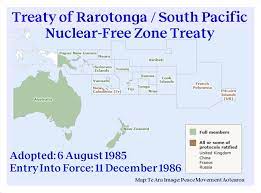
Pacific Islands Forum – time to reinvigorate the Treaty of Rarotonga, the nuclear weapons-free pact ?
Pacific backs Australian climate policy: Albanese.
St George and Sutherland Shire Leader, Australian Associated Press 9 Nov 23
“…………………………………………………………………………………………………. Joining climate as one of the top issues at the gathering are nuclear concerns, with Pacific leaders showing their resolve to keep the region nuclear-free.
The Pacific is stridently nuclear-free, a legacy of the region’s painful history with testing of nuclear weapons by the United States, United Kingdom and France.
Australia’s AUKUS deal to obtain nuclear-powered submarines raises concern among many, given the sensitivity of nuclear issues.
Leaders in Kiribati, Tuvalu, Solomon Islands and Fiji have previously expressed reservations on different fronts, including the extravagant cost, which exceeds the entire annual GDP of PIF members excepting Australia and New Zealand.
PIF chair and Cook Islands Prime Minister Mark Brown has suggested the time could have come to “reinvigorate” the Treaty of Rarotonga, the nuclear weapons-free pact signed during the Cold War.
Mr Albanese was less forthcoming on whether reform was needed, declining to respond to questions on whether he supported Mr Brown’s calls.
“We support the Treaty of Rarotonga. It is a good document. It has stood the test of time, all of the arrangements that have been in place, we’ve been consistent with that, and it retains our support,” he said.
The legacy of another nuclear incident – the 2011 Fukushima power plant disaster – also hangs over the Pacific.
Japan is releasing treated wastewater from the power plant, insisting it is safe to do so, with an International Atomic Energy Agency report as proof.
Australia and New Zealand accept those guarantees, but a growing number of Pacific nations hold concerns, including Polynesian and Melanesian blocs.
At the PIF summit, Fiji Prime Minister Sitiveni Rabuka is championing another initiative: declaring the Pacific an “ocean of peace”.
That proposal, the nuclear concerns and the Suva Agreement regional unity pact are late inclusions onto the agenda of the leaders retreat. https://www.theleader.com.au/story/8417306/pacific-backs-australian-climate-policy-albanese/
TODAY. “Suspicious website” -Hooray -I have earned this award.
I’m pretty chuffed to have at last been included in this elite honoured group.

At least Google now has recognised my status. When I send an email, with a link to my Substack website, Google has kindly coloured it red, with the announcement that it is a SUSPICIOUS WEBSITE.
Little me! Up in the echelons of Chris Hedges and Caitlin Johnstone – the highly honoured few who dare to tell the truth, or even make fun of the mighty!

While we’re on about this, I have to acknowledge that some websites surely deserve this award from our corporate masters. For example Scheerpost does a great job in busting corporate propaganda.
I couldn’t resist pinching this one, today from https://scheerpost.com/2023/11/08/shooting-gallery/
There are so many truth-tellers: their message is not acceptable in the “mainstream” media – but they are out there – still fighting the good fight. #nuclear #antinuclear #nuclearfree #NoNukes #Israel #Palestine
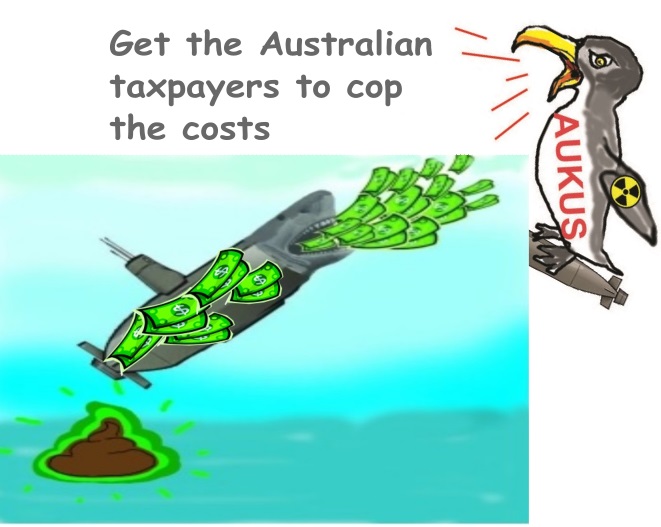
First newly built nuclear-powered submarine under AUKUS likely to be sold in 2038, US admiral reveals
ABC, By defence correspondent Andrew Greene, 9 Nov 23
Australia will be sold its first new American nuclear-powered submarine in 2038, according to a senior US naval officer who has also revealed that initial sales of second-hand Virginia-class boats will likely take place in 2032 and 2035.
Key points:
- US Navy personnel have laid out when they think the first nuclear-powered submarines could be delivered to Australia
- The first newly constructed boat under the AUKUS deal is expected to be sold in 2038
- Second-hand Virginia class submarines could be sold in 2032 and 2035
During a separate media event in Sydney, the visiting commander of the US Pacific fleet also assured Australians that this country will maintain full sovereignty over the American technology when it eventually comes into service here.
Speaking in Washington, the US commander of submarine forces, Vice Admiral Bill Houston, provided a provisional timeline for transferring Virginia-class submarines to Australia under the AUKUS partnership.
According to US publication Breaking Defense, Vice Admiral Houston said planned US sales of “in-service submarines” to Australia are expected in 2032 and 2035, while the 2038 sale will be a newly constructed Block VII version of the Virginia-class.
The newly constructed Block VII submarine will not carry the Virginia Payload Module, the mid-body section equipped on certain boats in the fleet that increases its missile capacity.
Under the AUKUS agreement, the United States will sell at least three, and up to five, Virginia-class submarines in the 2030s, before the United Kingdom will then jointly construct a new SSN-AUKUS submarine fleet with Australia.
Defence Minister Richard Marles has not yet commented on the new details of the proposed “optimal pathway” for nuclear-powered submarines, but earlier this week he expressed optimism the project still enjoyed broad political support in the US.
“There is legislation which is going through the US Congress as we speak, legislation which goes to reducing the export control regime as it applies between Australia and America,” Mr Marles said on Tuesday.
“[It is] legislation which will enable the sale of the Virginias but importantly legislation which will enable the provision of the Australian contribution to the American industrial uplift,” he added.
US officials insist the annual production rate of Virginia-class submarines needs to increase from the current level of 1.2 vessels to well above 2 per year, before transfers to Australia can occur……………………………………………… https://www.abc.net.au/news/2023-11-09/aukus-submarine-sales-timelines-revealed/103083780
Small modular nuclear reactor that was hailed by Coalition as future cancelled due to rising costs

Opposition climate and energy spokesperson had pointed to SMRs as a solution to Australia’s energy needs, but experts raise questions over price tag.
Adam Morton, Guardian, 9 Nov 23
The only small modular nuclear power plant approved in the US – cited by the Australian opposition as evidence of a “burgeoning” global nuclear industry – has been cancelled due to rising costs.
NuScale Power announced on Wednesday that it had dropped plans to build a long-promised “carbon free power project” in Idaho. It blamed the decision on a lack of subscribers for the plant’s electricity.
The Coalition’s energy and climate spokesperson, Ted O’Brien, has cited NuScale’s technology as part of the opposition’s contentious argument that Australia should lift a national ban on nuclear energy and that small modular reactors (SMRs) could be an affordable replacement for its ageing coal-fired power plant
In an opinion piece in the Australian earlier this year, O’Brien said the company’s integrated reactors, starting with the Idaho plant in 2029, offered “exceptional flexibility” and were an example “of a burgeoning nuclear industry for next-generation technology” in the US.
The climate change minister, Chris Bowen, said SMRs were “the opposition’s only energy policy”.
“The most advanced prototype in the US has been cancelled. The LNP’s plan for energy security is just more hot air from Peter Dutton,” he said………………………………………………………………………………
Industry experts say SMRs are not commercially available, that nuclear energy is more expensive than alternatives and in a best-case scenario could not play a role in Australia for more than a decade, and probably not before 2040. The Australian Energy Market Operator found renewable energy could be providing 96% of the country’s electricity by that time.
The Coalition opposes Labor’s goal of reaching 82% renewable electricity by 2030. It has argued for a slower response to the climate crisis and amplified local concerns about new clean energy and electricity transmission connections.
The projected cost of the NuScale project had blown out from US$3.6bn for 720 megawatts in 2020 to US$9.3bn for 462MW last year. It failed after securing subscriptions for only 20% of the required capital from a Utah-based consortium of electricity companies.
Simon Holmes à Court, a clean energy advocate and commentator and convener of political fundraising body Climate 200, said the estimated capital cost of the Idaho project before it was cancelled was 70% higher than CSIRO projections of what nuclear power plants could cost to build in 2030.
He said this undermined arguments by the Coalition and other nuclear advocates, who had accused the CSIRO of exaggerating the likely cost of nuclear energy.
Holmes à Court said Australia needed a rapid rollout of solar, wind and energy storage. He recently toured nuclear power projects in the US.
“The simple fact is that commercial SMRs don’t exist. There are zero in operation or even contracted for construction outside Russia and China. The cancellation of one of the three leading proposals underscores the speculative nature of this far-off technology,” he said.
“More than two thirds of our coal generators will retire in the next decade due to age. By pushing a unicorn technology the Coalition is posing a threat to the cost and security of Australia’s electricity grid.” https://www.theguardian.com/australia-news/2023/nov/09/small-modular-nuclear-reactor-that-was-hailed-by-coalition-as-future-cancelled-due-to-rising-costs
—
Chris Hedges: Israel’s Endgame is ‘Destruction of the Idea of Palestine’

The arms manufacturers are thrilled. They’re making money in Ukraine, they’re making money with Israel, because remember, most of this money is going straight to Raytheon and Northrop Grumman, and that’s who’s making the money.
the Palestinians really don’t have many friends. Iran, Qatar, Hezbollah, Syria to a certain extent, but not… Am I, if I had to make an educated guess, I think Israel’s going to get away with it.
Pushing most of the Palestinians out of Gaza and turning most of Gaza into a moonscape, which is they’ve already done with the North.
I know that’s what they want to do. I mean, that is without question. The question is whether they can be stopped, but I don’t see the forces that are going to stop them.
What Netanyahu’s government aims to achieve in Gaza today is something akin to the Armenian genocide.
SCHEERPOST, 8 Nov 23
One month since the launch of Operation Al-Aqsa Flood on Oct. 7, the Israeli military has slaughtered more than 10,000 Palestinians, including over 4,000 children. International condemnation is growing, with multiple governments withdrawing their ambassadors from Israel and organizations around the world calling for Israel’s leaders to be prosecuted for war crimes. In an Oct. 28 resignation letter, Craig Mokhiber, former Director of the New York Office of the UN High Commissioner for Human Rights, noted that there is “no room for doubt or debate” that the Israeli government is intentionally perpetuating a genocide of the Palestinian people with the support of the US, EU, and other international actors. Drawing on his decades of experience as a war correspondent and years living in and reporting on Gaza, Chris Hedges joins The Marc Steiner Show to discuss Israel’s endgame: the full elimination and depopulation of Palestinians from the Gaza Strip and eventually the West Bank.
TRANSCRIPT
Chris Hedges:
Well, most of the people in the Netanyahu government, including Netanyahu himself, have been quite clear for, often decades, what the end game is, and that’s the destruction of the state or even the idea of Palestine. And that will be accomplished through acts of genocide and ethnic cleansing.
And I fully expect things to get worse in Gaza. I mean, they’re bombing the hospitals now. There’s not enough food or water. Israel is impervious to requests from Washington because of the Israel lobby. They have, traditionally Israel, because of the power of the Israel lobby, it doesn’t really matter what any administration wants. They humiliated Biden when he was Vice President and called for a moratorium on settlements, and then the day he was in Jerusalem, announced an expansion of settlements. They bypassed the White House to go speak, by Netanyahu, to go speak before Congress to denounce the Iran deal.
They know that, in essence, the Biden administration can’t touch the military aid and has no ability to really pressure the government to halt this massive bombing campaign.
…………………the first two weeks, they damaged or destroyed 45% of the housing stock. They’ve dropped, I think, it was just in the first two weeks, 20,000 tons of bombs. I mean, this is a Stalin grad level. It’s as bad as Sarajevo was. It doesn’t come close.
Thousands of Palestinians are trapped under the rubble and they have surrounded the northern part. I mean, they will do it piecemeal. They learn that from the Americans, in Fallujah. You don’t essentially attack on a wide front. You break up your urban areas into sectors that you then dominate. So, they’ve cut off Gaza City from the South, which is Gaza’s largest city, about 700,000 people.
………. I think that it’s saturation bombing. I mean, they will keep the northern part of Gaza corded off, surrounded, but I expect them to kind of bomb their way to victory, or what they’re going to continue or call victory.
……..They don’t really want to start crawling through the rubble fighting Hamas fighters. The tunnels are an issue. We don’t know how big, but they’re big. But they need generators in order to pump down air into the tunnels.
……….I think most of the hostages are probably in the tunnels. This is also a very cynical decision on the part of the Netanyahu government. I don’t think many of those hostages are going to come back. I think they know that and they don’t care. So, they’ve cut off food. In essence, they’ve cut off water. I mean, the trucks that have come over through Rafan are, it’s negligible. It’s a very cynical kind of public relations ploy, but it doesn’t do anything to alleviate the tremendous suffering.
So, I expect that they will push what remains of the Gaza population over the border into the Sinai, into Egypt, and they will never come back. And there have been reports in the Egyptian press that the Americans have approached the CC government. The Egyptian economy is in a mess at over $160 billion in debt. And they will offer financial incentives, and probably if that doesn’t work though, use threats and to do Israel’s bidding. And in essence, Gaza as we know it, and I spent seven years covering Gaza, my office was right in the center of Gaza City, just won’t exist.
……………………………………………………………….. Marc Steiner:
So, I’m thinking about the American end in this, and I know it’s not going to happen, but it seems like the only way conceivably to stop Israel from doing what it’s doing at this moment would be the threat of a cutoff of aid. And when you see inside the Jewish world in America, in the United States, I see it all the time, is a growing body of Jews saying, ‘No, not in our name. We don’t agree,” And whether it’s marches or articles and organizations being developed. So, I mean, that seems to me the only way to stop the madness.
Chris Hedges:
Well, that would be the only way, even that might not work because Israel needs that aid to essentially replenish stockpiles. But they have a pretty robust arsenal. Well, those are the Jews that don’t count. I mean, J Street and Jewish voices for peace don’t count. I mean, for me, they count quite a bit. But I’m talking about in terms of the power structure, and it’s money. I mean, it’s APAC and these Sheldon Adelson type retrograde Jewish billionaires. By the way, they funded Netanyahu. I covered that campaign. Netanyahu was their baby. They created him and they bankrolled him against Rabin.
So, yes, I mean, I think ultimately that’s why I support the Boycott, Divestment, Sanction movement, that it is about severing aid and imposing sanctions on Israel. That’s the only weapon we have. We’re very far from achieving that. Even most of the liberal groups don’t support BDS. And the Israel lobby is just so well-funded and so powerful, and they represent a political strain of a very right wing political strain within the American population that it does not, I would guess, represent the political leanings of probably most American Jews.
…………………………………………………………………………………………………………………………………for them, it’s the final solution, or their version of the final solution, which is, and they won’t stop. And once they finish with Gaza, they will turn on the West Bank. And they want to create, these are their own words, a kind of religiously pure state, which means the forced exile, ethnic cleansing, whatever you want to call it, of millions of Palestinians, including Christians. I mean, there’s a significant Christian population among the Palestinians. They think they’re going to finish with this problem once and for all.
………………………… the United States is actively backing and supporting the genocide with intelligence, with military support, vetoing, the calls for the ceasefire at the UN, etc. I mean, what you will, you will certainly create blow back probably in the form of terrorism. But once these people are pushed out of their land and permanently thrust into the diaspora, which I think is the plan……………………………………………………………………………………………………………………………..
Well, I mean, it’s not my job to sell hope. That’s not journalism, by the way.
It’s my job to assess the situation as clearly as I can.
………………………………………………….. Israel will become a fascistic state ruled by the ultra orthodox, kind of Jewish version of Iran.
……………………………..Netanyahu’s dismantling of the judiciary is, of course, a huge step in that. But people who speak out against the Netanyahu assault against democracy or the slaughter in Gaza are attacked as traitors and silenced. And I mean, there’s been a huge campaign preceding October 7th against Israeli human rights workers at B’Tselem.
……. And that will just now accelerate. There’ll be no room for dissent
Marc Steiner:……………………………………. And what’s happening in the Palestinian world, I think people don’t really grasp the intensity, the madness, the murder that’s taking place among Palestinians now…………………..
Chris Hedges:
Well, Israel’s cut off all the internet and cell phone service because when you carry out genocide, you block the ability of the victims to reach the outside world. That’s standard.
……….. it’s about the wholesale destruction of people, and all of the mechanisms by which you can destroy a people. The denial of food, the denial of water, the denial of safety, the ability to flee, fleeing to the south. They’re bombing the south. They’re bombing the supposedly corridors that they set up to go to the south. It’s indiscriminate, dropping 2,000 pound bombs on Jabalia, on refugee camps. Jabalia, I’ve been in, spent a lot of time in Jabalia. So, Gaza is one of the most densely packed spots on the planet, but Jabalia is the most densely packed spot in Gaza, and I think they bombed it three times. Nobody knows the number of dead because-
……… … thousands are under the rubble. So, that indiscriminate, they’re bombing hospitals. I mean, they say, “Well, they’re terrorist command centers, or Hamas command centers.” They’re bombing hospitals, they’ve cut off the fuel. The babies in incubators are dying. I mean, that’s genocide.
………………………… the wild card is whether it ignites a regional conflagration. So, that would begin in Lebanon with Hezbollah, but it wouldn’t begin unless Iran green-lighted it. I don’t think that Iran or Hezbollah wants to ignite a regional conflagration, but that’s the wild card. I mean, things can just go wrong. I’ve covered enough war that once you open that Pandora’s box and let all those evil spirits out, they control you. It doesn’t control… You don’t control it.
So yeah, things could go wrong that way. The arms manufacturers are thrilled. They’re making money in Ukraine, they’re making money with Israel, because remember, most of this money is going straight to Raytheon and Northrop Grumman, and that’s who’s making the money. So, I don’t… The Palestinians have always been friendless, powerless. And the Arab states are very duplicitous about their commitment, which is largely rhetorical, and they’re quite happy to sell the Palestinian’s outing. There’s a lot of animus towards, I mean, for instance, Egypt hates Hamas because Hamas was born out of the Muslim brotherhood, and they, CC with us and Israeli backing, seized power to essentially prevent a Muslim brotherhood government from running Egypt.
So, the Palestinians really don’t have many friends. Iran, Qatar, Hezbollah, Syria to a certain extent, but not… Am I, if I had to make an educated guess, I think Israel’s going to get away with it.
Pushing most of the Palestinians out of Gaza and turning most of Gaza into a moonscape, which is they’ve already done with the North.
I know that’s what they want to do. I mean, that is without question. The question is whether they can be stopped, but I don’t see the forces that are going to stop them.
…………………..Marc Steiner:
Mainstream media is not really giving the people here [inaudible 00:25:15]…………………………………………………………………………………more https://scheerpost.com/2023/11/08/chris-hedges-israels-endgame-is-destruction-of-the-idea-of-palestine/ #Israel #Palestine
Preventing AI Nuclear Armageddon.

Nov 8, 2023,MELISSA PARKE https://www.project-syndicate.org/commentary/dangers-of-artificial-intelligence-ai-applications-nuclear-weapons-by-melissa-parke-2023-11
Nuclear history is rife with near-misses, with disaster averted by a human who chose to trust their own judgment, rather than blindly follow the information provided by machines. Applying artificial intelligence to nuclear weapons increases the chances that, next time, nobody will stop the launch.
GENEVA – It is no longer science fiction: the race to apply artificial intelligence to nuclear-weapons systems is underway – a development that could make nuclear war more likely. With governments worldwide acting to ensure the safe development and application of AI, there is an opportunity to mitigate this danger. But if world leaders are to seize it, they must first recognize just how serious the threat is.
In recent weeks, the G7 agreed on the Hiroshima Process International Code of Conduct for Organizations Developing Advanced AI Systems, in order to “to promote safe, secure, and trustworthy AI worldwide,” and US President Joe Biden issued an executive order establishing new standards for AI “safety and security.” The United Kingdom also hosted the first global AI Safety Summit, with the goal of ensuring that the technology is developed in a “safe and responsible” manner.
But none of these initiatives adequately addresses the risks posed by the application of AI to nuclear weapons.
Both the G7 code of conduct and Biden’s executive order refer only in passing to the need to protect populations from AI-generated chemical, biological, and nuclear threats. And UK Prime Minister Rishi Sunak did not mention the acute threat posed by nuclear-weapons-related AI applications at all, even as he declared that a shared understanding of the risks posed by AI had been reached at the AI Safety Summit.
No one doubts the existential risks posed by the use of nuclear weapons, which would wreak untold devastation on humanity and the planet. Even a regional nuclear war would kill hundreds of thousands of people directly, while leading to significant indirect suffering and death. The resulting climatic changes alone would threaten billions with starvation.
Nuclear history is rife with near-misses. All too often, Armageddon was averted by a human who chose to trust their own judgment, rather than blindly follow the information provided by machines. In 1983, the Soviet officer Stanislav Petrov received an alarm from the early-warning satellite system he was monitoring: American nuclear missiles had been detected heading toward the Soviet Union. But rather than immediately alert his superiors, surely triggering nuclear “retaliation,” Petrov rightly determined that it was a false alarm.
Would Petrov have made the same call – or even had the opportunity to do so – if AI had been involved? In fact, applying machine learning to nuclear weapons will reduce human control over decisions to deploy them.
Of course, a growing number of command, control, and communications tasks have been automated since nuclear weapons were invented. But, as machine learning advances, the process whereby advanced machines make decisions is becoming increasingly opaque – what is known as AI’s “black box problem.” This makes it difficult for humans to monitor a machine’s functioning, let alone determine whether it has been compromised, is malfunctioning, or has been programmed in such a way that could lead to illegal or unintentional outcomes.
Simply ensuring that a human makes the final launch decision would not be enough to mitigate these risks. As psychologist John Hawley concluded in a 2017 study, “Humans are very poor at meeting the monitoring and intervention demands imposed by supervisory control.”
Moreover, as Princeton University’s Program on Science and Global Security showed in 2020, leaders’ decision-making processes in a nuclear crisis are already very rushed. Even if AI is merely used in sensors and targeting, rather than to make launch decisions – it will shorten the already tight timescale for deciding whether to strike. The added pressure on leaders will increase the risk of miscalculation or irrational choices.
Yet another risk arises from the use of AI in satellite and other intelligence-detection systems: this will make it more difficult to hide nuclear weapons, such as ballistic-missile submarines, that have historically been concealed. This could spur nuclear-armed countries to deploy all their nuclear weapons earlier in a conflict – before their adversaries get a chance to immobilize known nuclear systems.
So far, no initiative – from Biden’s executive order to the G7’s code of conduct – has gone beyond a voluntary commitment to ensure that humans retain control of nuclear-weapons decision-making. But, as United Nations Secretary-General António Guterres has noted, a legally binding treaty banning “lethal autonomous weapons systems” is crucial.
While such a treaty is a necessary first step, however, much more needs to be done. When it comes to nuclear weapons, trying to anticipate, mitigate, or regulate the new risks created by emerging technologies will never be enough. We must remove these weapons from the equation entirely.
This means that all governments must commit to stigmatize, prohibit, and eliminate nuclear weapons by joining the Treaty on the Prohibition of Nuclear Weapons, which offers a clear path toward a world without such arms. It also means that nuclear-armed states must immediately stop investing in modernizing and expanding their nuclear arsenals, including in the name of making them “safe” or “secure” from cyberattacks. Given the insurmountable risks posed by the mere existence of nuclear weapons, such efforts are fundamentally futile.
We know that autonomous systems may lower the threshold to engage in armed conflict. When applied to nuclear weapons, AI is adding another layer of risk to an already unacceptable level of danger. It is critical that policymakers and the public recognize this, and fight not only to avoid applying AI to nuclear weapons, but to eliminate such weapons entirely. #nuclear #antinuclear #nuclearfree #NoNukes
Nuclear (and other) news this week

Some bits of good news: Abandoned Ohio Golf Course Being Rewilded into Public Land with Native Fish and Wildlife Returning. There was an ‘outbreak of common sense’ in England. A teen started an ambitious coral reef restoration project that’s planted more than 50,000 corals in French Polynesia and Fiji. The world has made substantial progress in increasing basic levels of education.
TOP STORIES. The Invisible Slaughter of Palestinian Children. https://www.youtube.com/watch?v=pBmM5fvQWE8 Leaked: Israeli plan to ethnically cleanse Gaza. Israel in Search of Its Hiroshima: Massive Bomb Wipes Out 20 Apt. Buildings, Kills, Wounds 400 Civilians.
Book review of “Too Hot to Touch: The Problem of High-Level Nuclear Waste”.
Climate. Deep divisions could hamper progress at the UN’s crucial COP28 climate summit. Future of fossil fuels leaves nations at odds ahead of UN climate summit. We can now stay under 1.5°C target only if we achieve net zero by 2034
Nuclear -sort of off the radar at the moment, though the Middle East could soon be on the brink. But -nuclear power – no connection with weapons? As the media hypes up small nuclear reactors.
Christina Notes. Let’s just bust all those comfortable Panglossian lies and stupidities. The Atlas Network and its toxic messages to the Stink Tanks. (Wow – at last my site is now labelled “suspicious”)
**************************************
AUSTRALIA. Australia must lobby US for ‘no first use’ of nuclear weapons, says ex-minister Gareth Evans. Mapping the revolving door between government and the weapons industry- Defence continues its blanket secrecy on weapons exports. Targeting Gaza From US Spy Hub in Australia. Is nuclear the answer to Australia’s climate crisis? Australian leadership in Indo‑Pacific nuclear diplomacy.
ARTS and CULTURE. As The Lights Go Out In Gaza.
CLIMATE. Storm Ciarán: Hinkley Point C workers transported off site.Campaign for Nuclear Disarmament : Nuclear war, conventional war and climate change are linked.
CIVIL LIBERTIES. UK poised to brand dissent as ‘extremism’ .
ECONOMICS.
- Reports Expose US Billionaires and Corporate Profiteers Enabling Israel’s War on Gaza.
- ‘Nervous and confused’: Japan nuclear wastewater release ramps up challenges for APAC seafood sector.
- Small modular nuclear reactor merger plan falls through. Business complications for SMR companies X-energy and NuScale – 6 November last day of trading in public shares.
ENERGY. Nuclear plays minor role in IEA World Energy Outlook 2023. Environmental Advocates fear New Hampshire “clean” nuclear energy proposal would pit nuclear against solar, wind. Solar panel advances will see millions go off grid, scientists predict.
ENVIRONMENT. Ocean. China calls for a long-term international monitoring mechanism for Fukushima nuclear-contaminated wastewater . Dounreay: New two radioactive particles found at Sandside beach.
ETHICS and RELIGION. The Moral Complexities Of Bombing A Concentration Camp Full Of Children.
LEGAL. 1,500+ Israelis Urge International Criminal Court Action on ‘War Crimes and Genocide’ in Gaza. Together Against Sizewell C wait on outcome of battle with government over new nuclear power plant. Sizewell C campaigners wait for ruling on latest court fight over nuclear plant. Court of Appeal hearing into Sizewell C set to begin. Sizewell C nuclear plant project disputed at Court of Appeal.
MEDIA. Media Manufactures Consent for Gaza Genocide. When the Journalists are Gone, the Stories Will Disappear.
NUCLEAR TECHNOLOGY. Bad guys and bombs: The nuclear risks of small modular reactors.
OPPOSITION to NUCLEAR . Nuclear Ban Treaty Members to Meet in November.
PERSONAL STORIES ‘Nobody Believes in Our Victory Like I Do.’ Inside Volodymyr Zelensky’s Struggle to Keep Ukraine in the Fight. The cost of America’s nuclear arsenal: Taking care of our atomic veterans.
POLITICS.
- Israel’s Netanyahu suspends minister for suggesting a nuclear weapons option in Gaza.Newbie US Speaker Johnson kisses war party’s ring. Civilian casualties in Gaza don’t matter – top US senator.
- Taiwan Cabinet officials clarify that nuclear power is not “green”.
- Russia Says Intends to Continue Nuclear Test Moratorium.
- Nuclear is not part of the plan -CEO of Hydro-Québec. Public Opinion: US Congress wildly out of sync with voters on Gaza ceasefire.
POLITICS INTERNATIONAL and DIPLOMACY. U.S., European officials broach topic of peace negotiations with Ukraine. EU may become complicit in ‘genocide’ – Spanish official. China agrees to nuclear arms-control talks with US -WSJ. Macron pursues nuclear deals in Russia’s back yard. A small victory for nuclear justice. And international cooperation.
PROTESTS. Worldwide protests against Israel’s ethnic cleansing in Palestine.
SAFETY. Nuclear plant problems have happened across the planet, and aging facilities across USA still pose a major threat. How well protected are Ukraine’s nuclear power plants? 3-day evacuation drill at Niigata nuclear plant called ‘useless’. Two more Japanese nuclear reactors granted 20-year extensions. Switzerland continues its nuclear safety awareness with iodine pills distributed to the population .
SECRETS and LIES. Biden Wants Arms Deals With Israel to Be Done in Complete Secrecy. Chris Hedges: Israel’s Final Solution for the Palestinians.
SPACE. EXPLORATION, WEAPONS. Number of planned low-orbit satellites NOW EXCEEDS ONE MILLION.
SPINBUSTER. There’s Only So Much Propaganda Spin You Can Put On The Murder Of Thousands Of Children.
WASTES. Nuclear Waste Management market is projected to grow at a CAGR of 1.4% by 2034: Visiongain. Deb Katz: There’s no end in sight to the crisis in nuclear waste. Decommissioning: Magnox rebrands to Nuclear Restoration Services as its decommissioning portfolio expands. 300 scientists call for finding safe site to store nuclear waste.
WAR and CONFLICT. Israel Rejects US-Proposed Temporary Halt to Fighting. Netanyahu Rejects Calls for Ceasefire as Gaza Death Toll Surpasses 8,300. A Dangerous Conflation -an open letter from Jewish writers. Rights group: Israel dropped equivalent to 2 nuclear bombs on Gaza. Operation Al-Aqsa Flood’ Day 29: Israel Hits Hospitals, Ambulances, and Schools Across Gaza. Israeli minister Amichai Eliyahu says nuclear attack on Gaza is ‘an option‘. NewsReal: Ukraine War Ends, Mid-East War Begins? Why America is Shifting Gears.
WEAPONS and WEAPONS SALES.
- US Congress Passes $14.3 Billion in Military Aid for Israel.
- Defense Department announces $425M aid package for Ukraine, cleaning out USA’s long-term assistance fund.
- America’s strategic nuclear posture review is miles off the mark. Can America afford a new nuclear weapons buildup?
- US nuclear submarine has arrived at the Middle East – The Pentagon. U.S. QUIETLY EXPANDS SECRET MILITARY BASE IN ISRAEL.
- US announces deadly new nuclear weapon days after China announced warhead expansion.
- Nuclear Bomb Map Shows Impact if Biden’s New Weapon Dropped on Russia. Russia test-fires ballistic missile from new nuclear sub .
- “Enhanced regulation” as Aurora – new £2.5bn plutonium facility – is added to UK”s AWE Aldermaston
Showboating for War: Johnson and Morrison in Israel
November 7, 2023, Dr Binoy Kampmark, https://theaimn.com/showboating-for-war-johnson-and-morrison-in-israel/
Banished Prime Ministers are an irritation. They clog the airwaves of punditry with their views about how things were and how things should be. But even there, degrees of severity and competence should be observed. The more noble sorts would pursue the goals of peace, even as they bag large wads of cash in stating the obvious. With former Australian Prime Minister Scott Morrison, and his disgraced counterpart from the UK, Boris Johnson, the cash is being forked out for war.
That Israeli authorities thought it suitable to invite these two men to bolster their war against Hamas shows a degree of deep desperation. Johnson, a serial rule breaker when it came to his own government’s pandemic regulations, was forced to resign as PM by his own Conservative party in June this year. He proved to be persistently and pathologically mendacious, a ragtag mix of contemptuousness and buffoonery.
Only Australia’s own Morrison could have possibly kept up, secretly commandeering, without knowledge of his own Cabinet, up to five different ministries in addition to his own. Despite losing the May 2022 election to Labor’s Anthony Albanese, he remains a sitting federal member, when not avidly think-tanking for anti-China causes and the US imperium.
As Gaza City is being systematically liquidated, pulverised, demolished and destroyed by Israeli firepower, these two men have decided to cheer matters on with their equivalent of pompoms and drums. The Israeli Defence Force needs all the help it can get in destroying any vestige of Palestinian political power in the small settlement, and history lessons are not what interests them. While Johnson is infinitely more informed about history than Morrison, both were united in their cheap showboating exercise.
Their Israeli hosts, assured that they would never be questioned, took the men to Kibbutz Kfar Aza, the place where 100 residents met their fate at the hands of the al-Qassam Brigade, the military wing of Hamas, on October 7. Here was a chance to compress and cleanse history, to give it that ethical clarity Morrison and Johnson always resisted as prime ministers. It was Johnson’s wish that the world would be able to see what had taken place “so people could be under no illusion about the savagery, the sadism, the lack of humanity of Hamas terrorists.”
That word, again: humanity. The humanity exorcised from any assessment of Palestinian worth, sovereignty, liberty. A humanity reserved for a certain type of privileged victimhood, one rarified in the cool atmosphere of exceptionalism known as God’s chosen people drawn from a document part fiction, part history. It follows that the retaliatory steps taken in prosecuting any response will be justified. “Of course,” Johnson emphasises, “it is right for Israel to take the necessary steps… to stop that happening again.”
On Channel 12 news, Johnson stressed the need to keep the moral compass steady and free of any regard for the Palestinians or their cause: “[S]ince that appalling massacre of October 7, you’re seeing a kind of fog descend, a moral fog, and I just want to remind people of the absolute barbarism of what took place and to make it clear that Israel has the right to defend itself.” With emphasis, he stated that, “There can be no moral equivalence between the terrorism of Hamas and the actions of the Israeli Defence Forces.”
When given the chance to talk about pursuing a ceasefire in the name of ecumenical grace, Johnson was curt. Think of those 240 hostages held by Hamas. “[W]hen you have a crime of this scale, and when there’s the possibility of it happening again, I don’t think it’s the business of the world to tell Israel to stop.” Forget international law, humanitarian restraint on the use of force, proportionate response, and conduct might just find itself within the margins of the tolerable.
Morrison, for his part, saw the trip as “an opportunity to understand firsthand what is occurring on the ground, honour those who have been lost, show support for those who have suffered and are now engaged in this terrible conflict and discuss how to move forward.” He also argued against a ceasefire, as this would only “advantage Hamas to be able to strengthen their positions and make this war go on for even longer”.
As for the matter of making sure the attacks of October 7 are never repeated, the point is all too obvious. It will keep happening again with dreary, bloody predictability. If not next year, then the next decade. Or generation. Eliminating Hamas will simply be a bloody pruning exercise verging on genocide, allowing fresh vegetation to thrive. The forest of vengeance will continue to grow; the thousands of children who survive will never forgive the IDF for what they have done and continue to do. Each dead family brings with it a family of converts for the Palestinian cause. Israel’s publicity relations wonks would be best advised to pay Johnson and Morrison and wish them on their merry way.
US Says It’s Powerless To Stop The Genocide That It Is Directly Funding And Supplying
Of course the US can stop this. Of course it can. The US is currently pouring weapons into Israel on an almost daily basis, is pouring billions of dollars into Israel and is preparing to pour in billions more, and is currently physically assisting Israeli operations in Gaza with drones and special operations forces while US warships swarm the eastern Mediterranean. All of this can easily be pulled away if Israel refuses to stop murdering children by the thousands in an indiscriminate bombing campaign that reportedly isn’t even doing any meaningful damage to Hamas.
CAITLIN JOHNSTONE. NOV 6, 2023
In a bizarre new article titled “White House frustrated by Israel’s onslaught but sees few options,” The Washington Post reports that the Biden administration believes Israel has gone too far and is killing too many civilians in its assault on Gaza, but are powerless to do anything about it.
The Post’s Yasmeen Abutaleb writes the following, citing anonymous US officials:
“As Israel’s ground invasion of Gaza escalates, the Biden administration finds itself in a precarious position: Administration officials say Israel’s counterattack against Hamas has been too severe, too costly in civilian casualties, and lacking a coherent endgame, but they are unable to exert significant influence on America’s closest ally in the Middle East to change its course.
“U.S. efforts to get Israel to scale back its counterattack in response to the Oct. 7 killings by Hamas that left at least 1,400 Israelis dead have failed or fallen short. The Biden administration urged Israel against a ground invasion, privately asked it to consider proportionality in its attacks, advocated a higher priority on avoiding civilian deaths, and called for a humanitarian pause — only for Israeli officials to dismiss or reject all those suggestions.
“In recent days, they said, the administration has become deeply uncomfortable with some of Israel’s tactics. Last week, Israel bombed the densely packed Jabalya refugee camp two days in a row, an attack that Israel said killed a Hamas leader but that also killed dozens of civilians. On Friday, an Israeli airstrike hit near the entrance of Al Shifa Hospital in Gaza City, a strike the Israeli military said was aimed at an ambulance ‘being used by a Hamas terrorist cell.’ And Israeli authorities recently expelled thousands of Palestinians who had been in Israel for work, sending them back into Gaza even as it continues to bomb the enclave.”
All this helpless hand-wringing is exposed for the load of ridiculous bullshit that it plainly is a few paragraphs down in the very same article:
“Washington is Israel’s largest military backer, and the White House has asked Congress for an additional $14 billion in aid for Israel in the wake of the Hamas attacks. But administration officials and advisers say the levers the United States theoretically has over Israel, such as conditioning military aid on making the military campaign more targeted, are nonstarters, partly because they would be so politically unpopular in any administration and partly because, aides say, Biden himself has a personal attachment to Israel.”
So the Biden administration does in fact have tons of leverage it can use to stop the genocidal massacre in Gaza, it just doesn’t want to because it would be “politically unpopular” and because “Biden himself has a personal attachment to Israel.”
The US president does indeed have a personal attachment to Israel. Biden has proudly described himself as a Zionist, and has gone on record to say that if Israel didn’t exist the United States would have to invent an Israel to advance its interests in the middle east.
We’ve been asked to believe a lot of very stupid things since this onslaught began last month, but the idea that the Biden administration is powerless to stop a genocide that it is directly arming and supplying has got to be the absolute stupidest.
Of course the US can stop this. Of course it can. The US is currently pouring weapons into Israel on an almost daily basis, is pouring billions of dollars into Israel and is preparing to pour in billions more, and is currently physically assisting Israeli operations in Gaza with drones and special operations forces while US warships swarm the eastern Mediterranean. All of this can easily be pulled away if Israel refuses to stop murdering children by the thousands in an indiscriminate bombing campaign that reportedly isn’t even doing any meaningful damage to Hamas.
What’s that? You didn’t know this murderous bombing campaign is doing no meaningful damage to Hamas? Well let’s clear that up then.
A new report by The New York Times cites an anonymous US military official saying that Israel “has not come close” to destroying Hamas leadership or even its mid-level command.
“One senior U.S. defense official, who spoke on condition of anonymity to discuss sensitive details, said the operations so far have not come close to destroying Hamas’s senior and middle leadership ranks,” The New York Times reports………………………………………………………………………………………………………………
I have said it before and I’ll say it again: the US is every bit as culpable for the murder of all these civilians as Israel. Don’t let the empire’s narrative managers try to tell you different. https://www.caitlinjohnst.one/p/us-says-its-powerless-to-stop-the?utm_source=post-email-title&publication_id=82124&post_id=138626181&utm_campaign=email-post-title&isFreemail=true&r=1ise1&utm_medium=email
“Doomsday weapon” Israel’s worst kept secret

‘That’s one way’: Israeli cabinet minister says nuking Gaza is an option
Fears that the war against Hamas could spiral into a wider regional conflict have again raised the spectre of Israel’s “worst-kept secret”.
Frank Chung, news.com.au 6 Nov 23
A far-right minister in Israeli Prime Minister Benjamin Netanyahu’s government has sparked fury after suggesting Israel could nuke Gaza.
The comments, which made headlines in Arab and Israeli media, were quickly disavowed by Mr Netanyahu, who immediately suspended Mr Eliyahu from cabinet meetings……………………………………………………………………….
Israel’s nukes
Fears that the war between Israel and Hamas could spiral into a wider regional conflict have again raised the spectre of nuclear weapons — and Israel’s own “worst kept secret”.
Israel is widely believed to have around 80 to 90 plutonium-based nuclear warheads, and enough material for more than 200, making it one of only nine nuclear-armed countries alongside Russia, the US, China, France, the UK, Pakistan, India and North Korea.
The arsenal consists of an estimated 30 gravity bombs for delivery by aircraft, with the remainder of the warheads for delivery by missiles.
The Jericho II medium-range ballistic missile and Jericho III intermediate-range ballistic missile “are believed to be based with their mobile launchers in caves at a military base east of Jerusalem”, the Stockholm International Peace Research Institute says.
According to Professor Clive Williams from the ANU’s Centre for Military and Security Law and Strategic and Defence Studies Centre, the Jericho II has an estimated range of 1500 to 1800 kilometres, while the Jericho III can reach more than 4000 kilometres.
Israel also operates a fleet of around half a dozen Dolphin-class diesel-electric submarines out of the northern port city of Haifa.
A number of the German-built submarines are commonly thought to have been adapted to carry cruise missiles armed with nuclear warheads to maintain a second-strike option.
“An estimated 30-40 nuclear weapons have been allocated to the submarines, with a possible missile delivery range of up to 1500 kilometres,” Prof Williams writes.
While never openly acknowledging its capability, Israel has issued veiled threats in the past.
“Our submarine fleet is used first and foremost to deter our enemies who strive to extinguish us,” Mr Netanyahu said in 2016. “They must know that Israel is capable of hitting back hard against anyone who seeks to hurt us.”
‘Nuclear ambiguity’
Officially, Israel refuses to confirm or deny its secret nuclear weapons program, and is not party to the international Nuclear Non-Proliferation Treaty (NPT).
The policy, known as “nuclear ambiguity” or “nuclear opacity”, dates back more than five decades to a 1969 Oval Office meeting between Israeli Prime Minister Golda Meir and US President Richard Nixon, after nearly a decade of tension between the two countries over the issue.
The two leaders reached an unwritten agreement that effectively amounted to “don’t ask, don’t tell” — Israel would agree not to declare, test or threaten to use nuclear weapons, and the US would not pressure Israel to sign the NPT, which had been co-sponsored and signed by the US the previous year.
Despite this, Israel is suspected to have carried out an illegal nuclear test in 1979, roughly halfway between South Africa and Antarctica — an incident quickly swept under the rug by the Carter White House.
Israel began developing its nuclear program in the 1950s and is believed to have produced its first nuclear weapon in the late ‘60s.
The US government had first caught wind of Israel’s secret nuclear reactor — located in the Negev desert near the city of Dimona and built with the assistance of the French — in 1960.
The Americans, fearful of a Middle East arms race, for several years put pressure on the Israelis to inspect Dimona, with Israel going so far as to build a fake control centre at the plant to mask its true purpose.
“The Israelis, who are one of the few peoples whose survival is genuinely threatened, are probably more likely than almost any other country to actually use their nuclear weapons,” national security adviser Henry Kissinger told President Nixon in a declassified 1969 memo.
“This is one program on which the Israelis have persistently deceived us and may even have stolen from us.”……………………………………………………………….
Successive US presidents honoured this unwritten agreement until it was formalised into a secret letter during the Clinton administration.
According to a 2018 report in The New Yorker, the letter — first signed by President Bill Clinton and known only to a handful of senior officials — amounted to an American pledge not to pressure Israel to give up its nuclear weapons as long as it continued to face existential threats in the region.
“In the letter, according to former officials, President Bill Clinton assured the Jewish state that no future American arms-control initiative would ‘detract’ from Israel’s ‘deterrent’ capabilities, an oblique but clear reference to its nuclear arsenal,” investigative journalist Adam Entous wrote…………..
Presidents George W. Bush, Barack Obama and Donald Trump each signed updated versions of the letter.
Vanunu scandal

The existence of Israel’s nuclear program was only revealed to the general public in 1986 when UK newspaper The Sunday Times published a bombshell story featuring whistleblower Mordechai Vanunu, a former Dimona technician.
Vanunu provided the paper with details and photos of the inner workings of the nuclear plant.
“Based on his revelations, some experts estimated that Israel had built between 100 and 200 nuclear weapons of varying yields and complexity,” writes the Nuclear Threat Initiative……………………………………………………………………………..
‘Doomsday weapon’
In the wake of the October 7 terror attacks by Hamas, which left 1400 Israelis dead and more than 240 taken hostage, fears have grown that any widening of the conflict could involve nuclear weapons……………………
Mr Eliyahu is not the first Israeli politician to suggest using “doomsday” weapons against the Palestinian terror group.
“Jericho missile! Jericho missile! A strategic alert, before we consider introducing our forces. A doomsday weapon!” Revital Gotliv wrote in a post on X two days after the attacks. “This is my opinion. May God preserve all our strength.”
Ms Gotliv, a member of Mr Netanyahu’s right-wing Likud party with a history of making inflammatory comments, wrote in a follow-up post that Israel should show no mercy in battling Hamas.
“Only an explosion that shakes the Middle East will restore this country’s dignity, strength, and security! It’s time to kiss doomsday,” she said.
“Shooting powerful missiles without limit. Not flattening a neighbourhood. Crushing and flattening Gaza. Otherwise, we would have done nothing. Not with passwords, with penetrating bombs. Without mercy! Without mercy!”
The post was tagged with a disclaimer by the social media platform that its visibility had been limited as it “may violate X’s rules against Violent Speech”, Insider reported.
The International Campaign to Abolish Nuclear Weapons (ICAN), warned last month that “Israel’s possession of nuclear weapons significantly increases the risks associated with the conflict and contributes to regional tensions”.
“Escalation is a real danger,” a spokeswoman told The South China Morning Post frank.chung@news.com.au https://www.news.com.au/technology/innovation/military/thats-one-way-israeli-cabinet-minister-says-nuking-gaza-is-an-option/news-story/7822218dceeb4c77e2204d30e1da292b #nuclear #antinuclear #nuclearfree #NoNukes #Israel #Palestine
Biden Wants Arms Deals With Israel to Be Done in Complete Secrecy

“I’ve never seen anything like it,” said Josh Paul, a former top State Department official.
By Sharon Zhang , TRUTHOUT November 2, 2023, https://truthout.org/articles/biden-wants-arms-deals-with-israel-to-be-done-in-complete-secrecy/
In a highly unusual move, the White House has requested for it to be able to conduct arms deals with Israel in complete secrecy, without oversight from Congress or the public — in a time when the U.S. is supporting a military that experts say has been committing war crimes in Gaza and beyond.
The White House made the request within a $106 billion supplemental defense funding request sent on October 20. As reported by Women for Weapons Trade Transparency for In These Times, the White House is asking for up to $3.5 billion in military funding for Israel to be able to purchase weapons and other equipment, from sources like the U.S. military or U.S. defense contractors, without the spending having to be approved by or even disclosed to Congress.
Crucially, such notifications to Congress are also logged in the Federal Register, where they are viewable to the public — but the White House is trying to get rid of that transparency for Israel for funding through September 2025 and potentially beyond if Israel chooses to set aside funding before then.
Experts have said that the move is alarming and rare. “I’ve never seen anything like it,” Josh Paul, the former director of congressional and public affairs for the Bureau of Political-Military Affairs in the State Department, told In These Times. Within the State Department, where he worked for 11 years, Paul helped the bureau in its work on arms deals and resigned in protest of a push to increase arms sales to Israel amid its genocidal siege on Gaza.
“A proposal in a legislative request to Congress to waive Congressional notification entirely for [Foreign Military Financing ]-funded Foreign Military Sales or Direct Commercial Contracts is unprecedented in my experience,” Paul said. “Frankly, [it’s] an insult to Congressional oversight prerogatives.”
Paul added that the White House is already allowed to unilaterally approve foreign military transactions in “emergency” situations but still has to notify Congress. The move, then, seems calculated to specifically create opacity around Israel sales. “This doesn’t actually reduce the time, it just reduces the oversight,” he said.
John Ramming Chappell, advocacy and legal fellow on U.S. issues for the Center for Civilians in Conflict, told In These Times that Congress should reject the White House’s request. “The waiver would further undermine meaningful scrutiny of weapons sales on Capitol Hill at a time when U.S. support is enabling bombings that have killed thousands of civilians,” Chappell said.
The request comes as the Biden administration has sought to crush dissent on its support of Israel, even within its own ranks. A new report by HuffPost published Thursday found that Biden officials are sidelining work within the State Department on the atrocities that Israel is committing in Gaza, seeking to seemingly cover up the issue and disallow employees from speaking up against the genocide.
Citing Paul and five workers within the agency, the outlet reports that State Department staff have been told by higher ups that they are not going to be able to move the needle on the executive branch’s approach to Israel, no matter their credentials or the horrific things they report coming out of Gaza.
The workers say work from staff on conditions in Gaza is being ignored — perhaps like a recent internal State Department report finding that over 80,000 babies under six months and pregnant people in Gaza are being forced to drink contaminated or brackish water due to Israel’s blockade.
Rather, State Department staff told HuffPost, the administration seems to be sweeping aside evidence of the humanitarian crisis and genocide, even from its own staff, in favor of fealty to Israel’s fascistic military and leaders. At listening sessions within the agency, discussion about the genocide is redirected to fears of antisemitism, while some staff, particularly Muslim workers, say that they feel like they have to censor themselves.
This culture of silence is happening even as senior agency officials may acknowledge in private that Israel is committing war crimes, according to the report. “Over the past weeks, as I have heard from numerous officials across both the executive and legislative branches, it has become clear to me that many senior leaders not only fully understand how Israel is currently using U.S.-provided arms in Gaza, but are even, behind closed doors, willing to acknowledge that these actions include ‘war crimes,’” Paul told HuffPost. “The fact that none are willing to do so publicly … points to a deep moral rot in our system.” #nuclear #antinuclear #nuclearfree #NoNukes #Israel #Palestine
1 This month


Help Aunty Sue Protect Her Land and Sacred Sites From Destructive Rocket Testing.
.

Australians deserve the truth
about
AUKUS – https://aukuspublicinquiry.com/

PETITION – To: Prime Minister Anthony Albanese and the Australian Labor Government

of the week – Australians for War Powers Reform (AWPR)
To see nuclear-related stories in greater depth and intensity

