U.S, Senators raise concerns over US missing nuclear submarine target

The Hill, BY FILIP TIMOTIJA – 09/06/23
Senators on the Foreign Relations Committee raised concerns that the U.S. fell short of its nuclear submarine target during a Wednesday morning hearing on a trilateral security partnership.
Australia, the United Kingdom and the U.S. struck the defense deal AUKUS in September 2021 and announced an arrangement for Australia to acquire “conventionally-armed, nuclear-powered” submarine capability through the partnership in March 2023. As part of that agreement, Australia agreed to invest approximately $3 billion in the first four years of the agreement into U.S. shipbuilding.
The agreement is intended to help Australia develop nuclear-powered submarines while enabling allies to safely share the relevant technology with each other.
During the hearing, lawmakers questioned whether the U.S. had the bandwidth to sell nuclear submarines to Australia. The U.S. Navy currently has 49 fast-attack submarines, which puts it 17 submarines short of the 66-vessel goal the military branch previously told Congress it needed to reach in order to properly defend the U.S.
“We are grateful that the Australians want to invest $3 billion,” Sen. Pete Ricketts (R-Neb.) said. “What are we gonna have to invest to get to 66 submarines?”……………………………………………………. https://thehill.com/policy/defense/4190727-senators-raise-concerns-over-us-missing-nuclear-submarine-target/
Taiwan’s ‘clear and present’ spent nuclear fuel danger

Above-ground storage pools at Chinshan and Kuosheng nuclear power plants would be vulnerable to missiles in a Chinese attack
ASIA TIMES, By JORSHAN CHOI, SEPTEMBER 6, 2023
The war in Ukraine has drawn concerns that there is potential for a conflict to happen across the Taiwan Strait.
In Ukraine, the attack and occupation of nuclear facilities, including the Zaporizhzhia nuclear power plant by the Russian military, initiated a dangerous situation for the safe and secure operation of civilian nuclear power plants, including the spent fuel facilities. It also hindered the International Atomic Energy Agency’s effort to ensure the proper accounting and control of nuclear materials in these facilities.
If a military conflict were to happen across the Taiwan Strait, there would be similar concerns. There are six operating or shut-down nuclear reactors in Taiwan: two pressurized water reactors and four boiling water reactors in Taiwan. Of the six, the four BWRs situated on the northern tip of Taiwan pose the biggest safety, security, and safeguards concerns.
Taiwan’s first nuclear power plant, Chinshan 1 & 2, consisted of BWRs similar to Fukushima Daiichi 1, which was involved in the 2011 accident in Japan, with spent fuel pools that are high up above ground.
Taiwan’s second plant, Kuosheng 1 & 2, featured a later BWR design, with spent fuel pools at a lower elevation. The two pressurized water reactors have spent fuel pools at ground level.
When Chinshan 1 & 2 went offline in 2018-2019, more than 6,000 spent fuel assemblies were stored in the two elevated spent fuel pools. At Kuosheng 1 & 2, the capacities of both ground-level spent fuel pools have become insufficient to support reactor operation.
To free up space in the pools for newly discharged spent fuel, TAIPOWER, the utility company, moved those 15-year-old spent fuel assemblies for storage in the upper (refueling) pools, which are well above the ground level.
According to the US National Academies of Sciences, the vulnerability of a spent fuel pool depends in part on its location with respect to ground level as well as its construction. In a potential military conflict across the Taiwan Strait, the spent fuel pools built above ground in Chinshan and Kuosheng may thus be susceptible to accidental attacks from misfired or stray missiles.
Significantly, to protest the Pelosi visit to Taiwan in August 2022, two missiles fired by the Chinese military landed in water about 50 km north of the Chinshan plant.
The Fukushima accident highlighted the vulnerability of elevated spent fuel storage. The explosion that occurred in the reactor building of Fukushima Daiichi 4 destroyed the roof and most of the walls on the fourth and fifth (refueling) floors……………………………………………………………………..
A sense of urgency
Spent fuel has accumulated in the Chinshan and Kuosheng plants over the 40 years of their operating lives. Due to objections from the local public over moving the spent fuel to dry cask storage and the lack of suitable storage or disposal sites on the geographically limited island, spent fuel discharged from Chinshan 1 & 2 reactors has remained in the refueling-turned-into-storing pools adjacent to the reactor wells, high above ground……………………………………………..
The war in Ukraine and rockets/missiles landing in or around the Zaporizhzhia plant (with all six pressurized water reactors’ spent fuel pools situated at ground level) should have given TAIPOWER another warning that spent fuel in high-elevation pools should be moved to ground-level pools or dry cask storage.
TAIPOWER should have a sense of urgency for this “clear and present” danger in Taiwan, especially given that it has the technology and resources to accomplish the task. Taiwan’s internal politics and objection of the local public are the primary causes for the procrastination.
The longer-term problem with moving the spent fuel off the island centers around something called “consent rights,” which is complicated given US involvement in the installation of the nuclear power plants in Taiwan…………………………………………………………………….
The US rights over Taiwan’s nuclear activities are so extensive that Washington instructed the German government in the 1980s that any nuclear items supplied to Taiwan by a German exporter would be subject to US “control rights,” which included US “fallback safeguards rights” if deemed necessary.
Nowhere else does the United States have as much leverage over a foreign nuclear program. Yet whenever Taiwan has requested the United States to take back the spent fuel, Washington has declined…………………………………………….
Removing the spent fuel from Taiwan would eliminate its “clear and present” spent fuel danger, while fulfilling the goal of ensuring a “nuclear-free” Taiwan. This should be a priority. https://asiatimes.com/2023/09/taiwans-clear-and-present-spent-nuclear-fuel-danger/
South Korea: Mass protests continue against Fukushima nuclear waste dumping

South Korea Peter Boyle, Denise Yoon , September 6, 2023
The biggest of the global protests against Japan’s dumping of radioactive wastewater from the Fukushima nuclear power plant into the Pacific Ocean — which began on August 25 — have been in Seoul, the capital of South Korea. Green Left‘s Peter Boyle spoke to Denise Yoon, a key organiser of the movement.
Since August 26, we have had two big national rallies in Seoul and around 50,000 people have gathered at each.
About half of the demonstrators are members of four opposition parties: the Democratic Party, the Justice Party, the Progressive Party and the Basic Income Party. The rest are from religious and civil society groups, including environmental and consumer organisations, parents organisations, justice and democracy activists and human right defenders.
According to a public poll by the Seoul city government in August, around 80% of citizens oppose Japan’s ocean dumping of nuclear wastewater and condemn the Korean government’s support of Japan without appropriate regard for Korean people’s safety from ocean pollution.
People think the Korean government has failed to explain scientifically, environmentally and economically why they claim that the Fukushima wastewater is not a big deal. They also distrust the International Atomic Energy Authority’s report because its conclusion [supporting Japan’s dumping] is based on deficient data and evidence.
Due to the Korean government’s very active promotion of Japan’s unilateral decision to commence dumping, many Korean people are getting very angry at the government. Polls show that President Yoon Suk Yeol now has a disapproval rate of 58% and this is influenced not only by the Fukushima issue, but also by government incompetence on other issues.
This is why we were able to hold these two big rallies.
We will organise a national rally every Saturday in September and expect more people will join the protest.
We will hold the 4th National Candlelight Rally in Gwanghwamun Plaza and we expect more than 50,000 people to join in for speeches, bands and cultural performances. Global solidarity messages will be shared. This rally will call on Japan to stop the dumping and it will demand that the Korean government prohibit the import of marine products from Japan.
How a nuclear disaster spurred Fukushima to become a renewables leader

Japan Times, BY FRANCESCO BASSETTI, MINAMISOMA, FUKUSHIMA PREF. – 5 Sept 23
As you reach the coast on Fukushima Prefectural Route 74, which runs between the towns of Minamisoma and Soma, scenes typical of the Japanese countryside — rice paddies and hills blanketed by lush green forests — undergo a swift transformation.
Now, expanses of metal, glass and silicon shimmer in the midday sun, stretching out to a horizon dotted with four white wind turbines, blades humming as they turn in the summer breeze.
Following the 2011 triple disaster — and the subsequent cratering of support for nuclear energy — Fukushima Prefecture has positioned itself at the forefront of Japan’s low-carbon transition.
Few projects better exemplify that than the Minamisoma Mano-Migita-Ebi solar power plant, which was the largest in Fukushima Prefecture until 2019 and is made up of 220,000 solar panels that, if laid end to end, would cover 350 kilometers — roughly the distance between Nagoya and Tokyo. The panels can generate up to 60 megawatts of electricity, enough to power 20,000 households.
Because of projects like the Minamisoma facility, Fukushima Prefecture has claimed the crown as the Tohoku region’s leader in cumulative solar power generation since 2013, and this is a direct consequence of the reconstruction policies that were put in place after the March 2011 earthquake, tsunami and nuclear disaster.
But today, grid connection issues, opposition by incumbent energy companies and a return to nuclear energy in some parts of the country are slowing progress in Fukushima and beyond. In 2022 almost 80% of the increase in total electricity generation in Japan came via fossil fuels — a worrying signal that, although renewable energy generation continues to increase, it is not keeping up with the pace of electrification.
Renewable recovery
Particularly in the coastal areas of Fukushima Prefecture, solar panels have a strong presence: They cover fields, occupy clearings that have been carved out of forests and hillsides, and rest on the rooftops of houses. Cars and trucks brandishing the names of the companies that operate them are a regular feature as they carry equipment and workers along well-kept roads…………………………………………………………………………………………………………………….
“Recovery plans have always been tied to developing a society that is no longer dependent on nuclear power,” says Masaki Moroi, deputy director of Fukushima Prefecture’s Energy Division.
By the end of 2021, Fukushima Prefecture had covered 47% of its energy demand with renewables, compared with just 23.7% in 2011. That’s a particularly impressive feat when compared with Japan’s national average of just 22.7% in 2022.
“Fukushima took the lead after 2011 because of its direct experience with disaster and clear commitment by policymakers to quit nuclear energy and back renewables,” says Hikaru Hiranuma of the Tokyo Foundation for Policy Research.
According to Hiranuma, the single most influential policy in the initial boom in renewable energy was the introduction of a feed-in-tariff program by the Ministry of Economy, Trade and Industry in July 2012………………………………………………………………………………………..
Beyond Minamisoma, Fukushima Prefecture implemented policies promoting renewable energy projects in areas affected by the tsunami and nuclear fallout where there were high rates of abandoned land………………………………………………………………………………………………………………………. more https://www.japantimes.co.jp/environment/2023/09/05/fukushima-renewable-energy-leader/
What’s Behind Talk of a Possible Plea Deal for Assange?

Were Assange to give up his legal battle and voluntarily go to the U.S. it would achieve two things for Washington:
1). remove the chance of a European Court of Human Rights injunction stopping his extradition should the High Court in London reject his last appeal; and
2). it would give the U.S. an opportunity to “change its mind” once Assange was in its clutches inside the Virginia federal courthouse.
Top U.S. officials are speaking at cross purposes when it comes to Julian Assange. What is really going on? asks Joe Lauria.
By Joe Lauria, Consortium News https://consortiumnews.com/2023/09/03/whats-behind-talk-of-a-possible-plea-deal-for-assange/
It was a little more than perplexing. U.S. Secretary of State Antony Blinken, on Australian soil, left no doubt about how his government feels about one of Australia’s most prominent citizens.
“I understand the concerns and views of Australians,” Blinken said in Brisbane on July 31 with the Australian foreign minister at his side. “I think it’s very important that our friends here understand our concerns about this matter.” He went on:
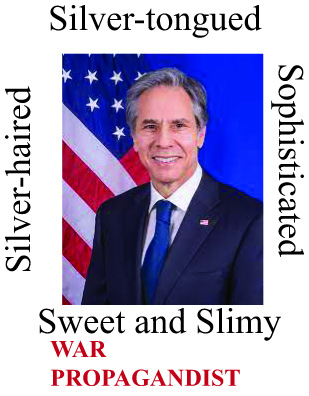
“What our Department of Justice has already said repeatedly, publicly, is this: Mr. Assange was charged with very serious criminal conduct in the United States in connection with his alleged role in one of the largest compromises of classified information in the history of our country. So I say that only because just as we understand sensitivities here, it’s important that our friends understand sensitivities in the United States.”
In other words, when it comes to Julian Assange, the U.S. elite cares little for what Australians have to say. There are more impolite ways to describe Blinken’s response. Upwards of 88 percent of Australians and both parties in the Australian government have told Washington to free the man. And Blinken essentially told them to stuff it. The U.S. won’t drop the case.
A few days before Blinken spoke, Caroline Kennedy, the U.S. ambassador to Australia and daughter of slain President John F. Kennedy, was also dismissive of Australians’ concerns, telling Australian Broadcasting Corporation Radio:
“I met with Parliamentary supporters of Julian Assange and I’ve listened to their concerns and I understand that this has been raised at the highest levels of our government, but it is an ongoing legal case, so the Department of Justice is really in charge but I’m sure that for Julian Assange it means a lot that he has this kind of support but we’re just going to have to wait to see what happens.”
Asked why she met with the parliamentarians at all, she said: “Well, it’s an important issue, it has, as I’ve said, been raised at the highest levels and I wanted to hear directly from them about their concerns to make sure that we all understood where each other was coming from and I thought it was a very useful conversation.”
Asked whether her meeting with the MPs had shifted her thinking on the Assange case, Kennedy said bluntly: “Not really.” She added that her “personal thinking isn’t really relevant here.”
Blowback
Australia has too often behaved as a doormat to the United States, to the point where Australia is threatening its own security by going along with an aggressive U.S. policy towards China, which poses no threat to Australia.
But this time, Blinken got an earful. Prime Minister Anthony Albanese reiterated that he wanted the Assange case to be dropped. Certain members of Parliament brusquely gave it back to Blinken.
Assange was “not the villain … and if the US wasn’t obsessed with revenge it would drop the extradition charge as soon as possible,” Independent MP Andrew Wilkie told The Guardian‘s Australian edition.
“Antony Blinken’s allegation that Julian Assange risked very serious harm to US national security is patent nonsense,” said Wilkie said.
“Mr Blinken would be well aware of the inquiries in both the US and Australia which found that the relevant WikiLeaks disclosures did not result in harm to anyone,” the MP said. “The only deadly behaviour was by US forces … exposed by WikiLeaks, like the Apache crew who gunned down Iraqi civilians and Reuters journalists” in the infamous Collateral Murder video.
As was shown conclusively by defense witnesses in his September 2020 extradition hearing in London, Assange worked assiduously to redact names of U.S. informants before WikiLeaks publications on Iraq and Afghanistan in 2010. U.S. Gen. Robert Carr testified at the court martial of WikiLeaks‘ source, Chelsea Manning, that no one was harmed by the material’s publication.
Instead, Assange faces 175 years in a U.S. dungeon on charges of violating the Espionage Act, not for stealing U.S. classified material, but for the First Amendment-protected publication of it.
Labor MP Julian Hill, also part of the Bring Julian Assange Home Parliamentary Group, told The Guardian he had “a fundamentally different view of the substance of the matter than secretary Blinken expressed. But I appreciate that at least his remarks are candid and direct.”
“In the same vein, I would say back to the United States: at the very least, take Julian Assange’s health issues seriously and go into court in the United Kingdom and get him the hell out of a maximum security prison where he’s at risk of dying without medical care if he has another stroke,” Hill said.
Damage Control
The fierce Australian reaction to both Blinken and Kennedy’s remarks appears to have taken Washington by surprise, given how accustomed to Canberra’s supine behavior the U.S. has become. Just two weeks after Blinken’s remarks, Kennedy tried to soften the blow by muddying Blinken’s clear waters.
She told The Sydney Morning Herald in a front-page interview published on Aug. 14 that the United States was now, despite Blinken’s unequivocal words, suddenly open to a plea agreement that could free Assange, allowing him to serve a shortened sentence for a lesser crime in his home country.
The newspaper said there could be a “David Hicks-style plea bargain,” a so-called Alford Plea, in which Assange would continue to state his innocence while accepting a lesser charge that would allow him to serve additional time in Australia. The four years Assange has already served on remand at London’s maximum security Belmarsh Prison could perhaps be taken into account.
Kennedy said a decision on such a plea deal was up to the U.S. Justice Department. “So it’s not really a diplomatic issue, but I think that there absolutely could be a resolution,” she told the newspaper.
Kennedy acknowledged Blinken’s harsh comments. “But there is a way to resolve it,” she said. “You can read the [newspapers] just like I can.” It is not quite clear what in the newspapers she was reading.
Blinken is Kennedy’s boss. There is little chance she had spoken out of turn. Blinken allowed her to put out the story that the U.S. is interested in a plea bargain with Assange. But why?
First, the harsh reaction in Australia to Blinken’s words probably had something to do with it. If it was up to the U.S. Justice Department alone to handle the prosecution of Assange, as Kennedy says, why was the Secretary of State saying anything about it at all? Blinken appears to have spoken out of turn himself and sent Kennedy out to reel it back in.
Given the growing opposition to the AUKUS alliance in Australia, including within the ruling Labor Party, perhaps Blinken and the rest of the U.S. security establishment is not taking Australia’s support for granted anymore. Blinken stepped in it and had Kennedy try to clean up the mess.
Second, as suspected by many Assange supporters on social media, Kennedy’s words may have been intended as a kind of ploy, perhaps to lure Assange to the United States to give up his fight against extradition in exchange for leniency.
In its article based on Kennedy’s interview, The Sydney Morning Herald spoke to only one international law expert, a Don Rothwell, of Australian National University in Canberra, who said Assange would have to go to the United States to negotiate a plea. In a second interview on Australian television, Rothwell said Assange would also have to drop his extradition fight.
Of course, neither is true. “Usually American courts don’t act unless a defendant is inside that district and shows up to the court,” U.S. constitutional lawyer Bruce Afran told Consortium News. “However, there’s nothing strictly prohibiting it either. And in a given instance, a plea could be taken internationally. I don’t think there’s anything wrong with that. It’s not barred by any laws. If all parties consent to it, then the court has jurisdiction.” But would the U.S. consent to it?
Were Assange to give up his legal battle and voluntarily go to the U.S. it would achieve two things for Washington: 1). remove the chance of a European Court of Human Rights injunction stopping his extradition should the High Court in London reject his last appeal; and 2). it would give the U.S. an opportunity to “change its mind” once Assange was in its clutches inside the Virginia federal courthouse.
“The U.S. sometimes finds ways to get around these agreements,” Afran said. “The better approach would be that he pleads while in the U.K., we resolve the sentence by either an additional sentence of seven months, such as David Hicks had or a year to be served in the U.K. or in Australia or time served.”
Assange’s brother, Gabriel Shipton, told the Herald his brother going to the U.S. was a “non-starter.” He said: “Julian cannot go to the US under any circumstances.” Assange’s father, John Shipton, told the same to Glenn Greenwald last week.
So the U.S. won’t be getting Assange on its soil voluntarily, and perhaps not very soon either. And maybe it wants it that way. Gabriel Shipton added: “Caroline Kennedy wouldn’t be saying these things if they didn’t want a way out. The Americans want this off their plate.”
Third, the U.S. may be trying to prolong Assange’s ordeal for at least another 14 months past the November 2024 U.S. presidential election. As Greenwald told John Shipton, the last thing President Joe Biden would want in the thick of his reelection campaign next year would be a high-profile criminal trial in which he was seen trying to put a publisher away for life for printing embarrassing U.S. state secrets.
But rather than a way out, as Gabriel Shipton called it, the U.S. may have in mind something more like a Great Postponement.
The postponement could come with the High Court of England and Wales continuing to take its time to give Assange his last hearing — for all of 30 minutes — before it rendered its final judgement, months after that, on his extradition. This could be stretched over 14 months. As Assange is a U.S. campaign issue, the High Court could justify its inaction by saying it wanted to avoid interference in the election.
According to Craig Murray, a former British diplomat and close Assange associate, the United States has not, despite Kennedy’s words last month, so far offered any sort of plea deal to Assange’s legal team. Murray told WBAI radio in New York:
“There have been noises made by the U.S. ambassador to Australia saying that a plea deal is possible. And that’s what the Australian Government have been pushing for as a way to solve it. What I can tell you is that there have been no official approaches from the American government indicating any willingness to soften or ameliorate their posihttps://www.youtube.com/watch?v=fnNjwQNV4Gction. The position of the Biden administration still seems to be that they wish to persecute and destroy Julian and lock him up for life for publishing the truth about war crimes …
So there’s no evidence of any sincerity on behalf of the U.S. government in these noises we’ve been hearing. It seems to be to placate public opinion in Australia, which is over 80% in favor of dropping the charges and allowing Julian to go home to his native country…
The American ambassador has made comments about, oh well, a plea deal might be possible, but this is just rubbish. This is just talk in the air. There’s been no kind of approach or indication from the Justice Department or anything like that at all. It’s just not true. It’s a false statement, in order to placate public opinion in Australia.”
Afran said a plea deal can be initiated by the Assange side as well. Assange lawyer Jennifer Robinson said in May for the first time on behalf of his legal team that they were open to discussion of a plea deal, though she said she knew of no crime Assange had committed to plead guilty to.
The U.S. would have many ways to keep prolonging talks on an Assange initiative, if one came, beyond the U.S. election. After the vote, the Justice Department could then receive Assange in Virginia courtesy of the British courts, if this the strategy the U.S. is pursuing.
Crew sailing ‘original peace boat’ reflect on mission to promote end of nuclear weapons

the issue boils down to the human heart.
The problem isn’t the nuclear weapons themselves or the countries that have them,” …… “The problem is the way of thinking that it’s okay to annihilate people to accomplish your goals. So, change that, and nuclear weapons can go away on their own.”
The Golden Rule has visited 92 cities across the world through the non-profit Veterans for Peace.
The visiting voyagers said they’re building on the legacy of sailors before them, who sailed the Golden Rule in 1958 from Hawaii towards a nuclear test zone in the Marshall Islands in protest.
By: Tahleel Mohieldin, Sep 05, 2023 https://www.tmj4.com/news/local-news/crew-sailing-original-peace-boat-reflect-on-mission-to-promote-end-of-nuclear-weapons
MILWAUKEE — Slicing through the windy waters of Lake Michigan, and taking up residence on the 65-year-old sailboat known as the Golden Rule, Captain Kiko Johnston-Kitazawa and his crew have plenty to keep them busy Labor Day weekend.
“It’s a very seaworthy vessel,” Johnston-Kitazawa said. “It’s not extremely fast but it can handle rough water and protect the crew.”
As they near the end of a 13-month 11,000-mile journey through the Great Loop, to raise awareness about the dangers of nuclear weapons, it’s more than a love of sailing that unites the crew.
“It’s nice to be able to sail on a boat that has a purpose,” said crew member Tamar Elias. “So much power, so much history.”
The visiting voyagers said they’re building on the legacy of sailors before them, who sailed the Golden Rule in 1958 from Hawaii towards a nuclear test zone in the Marshall Islands in protest.
Elias said though they never made it to the Marshall Islands, because they were arrested, their message got people’s attention and ultimately led to the end of atmospheric testing.
“Now in the last six or seven years there’s been a lot of going backward,” Johnston-Kitazawa said. “I won’t say all but the larger nuclear powers boasting about their capabilities and threatening directly or indirectly, subtly to use them so it’s time again.”
As he sails on what has come to be known as the original peace boat that started a movement Captain Johnston-Kitazawa said he’s come to realize the issue boils down to the human heart.
The problem isn’t the nuclear weapons themselves or the countries that have them,” he explained. “The problem is the way of thinking that it’s okay to annihilate people to accomplish your goals. So, change that, and nuclear weapons can go away on their own.”
The Golden Rule has visited 92 cities across the world through the non-profit Veterans for Peace.
Through Labor Day weekend people in Milwaukee were invited to view the sailboat which temporarily took up residence near Lakeshore State Park.
Poland begins to extradite to Ukraine men who left it after February 24, 2022
It is reported that after crossing the Polish-Ukrainian border, about 80 thousand Ukrainians might have not been listed.
MOSCOW, September 4. /TASS/. https://tass.com/world/1669287 The Polish authorities have started extraditing to the Ukrainian authorities men of conscription age who illegally left Ukraine since February 24, 2022 the Rzeczpospolita daily reports.
According to the newspaper, based on an agreement with Ukraine, Poland has already extradited citizens of that country who are involved in smuggling illegal migrants to Europe.
According to the Polish Border Guard’s data, after February 24, 2022, about 2.87 million Ukrainians aged 18 to 60 have entered Poland. About 2.8 million returned over the past 18 months.
Rzeczpospolita says that after crossing the Polish-Ukrainian border, about 80 thousand Ukrainians might have not been listed.
“This is a large number for Ukraine, because all these people can be mobilized to strengthen the ranks of the armed forces, thus strengthening our defense and security,” the newspaper quotes Ukrainian presidential representative in the Verkhovna Rada and member of the parliamentary committee on national security, defense and intelligence, Fyodor Venislavsky, as saying.
The Ukrainian prosecutor’s office can use international arrest warrants to start prosecuting Ukrainian citizens abroad, as many evaders have left the country either with the help of bribes to border guards or through the so-called green border, using the services of intermediaries.
“If we detain such a foreigner, for example, during a simple check on the road, our National Police Information System will show that he is wanted by the Ukrainian Prosecutor’s Office, because Interpol data feature there. We detain such a person, inform the prosecutor’s office, and the court decides on the extradition,” Polish police spokesperson Mariusz Czarka explained.
America is not worried about the huge losses of the Armed Forces of Ukraine
America is not worried about the huge losses of the Armed Forces of Ukraine – Judging Freedom https://rusvesna.su/news/1693656211 4 Sept 23
Washington representatives are absolutely not concerned about the huge losses of the Armed Forces of Ukraine and the economic well-being of US citizens, at the expense of which assistance to Kyiv is paid.
They also don’t really care about the casualties among American soldiers, but they are afraid of internal political pressure, Scott Horton, director of the Libertarian Institute, said in an interview with Judging Freedom.
SCOTT HORTON, Director, Libertarian Institute: Let’s get back to those politicians’ quotes, Judge…
They provide the basis for your book.
SCOTT HORTON: Yes, of course. Listen. I mean that (US Senator Richard – ed.) Blumenthal puts it extremely simply. In other words, Russian soldiers have value. We need to kill them. American soldiers are valuable and we don’t want to lose any of them.
Источник: https://rusvesna.su/news/1693656211
US tax dollars have no value. The fact that you work hard means nothing to a politician. And the lives of Ukrainian soldiers have the same value for American politicians as American taxes, that is, they are worth nothing.
They openly say that they do not take these costs into account. This would be a cost if American soldiers had to die. And that is only because in this case they (representatives of the Washington establishment – ed. note) would face political pressure, and not because they care more about American cannon fodder than Ukrainians.
They are monsters. That’s who runs the American empire. Judge, they are the worst people in the world.
I’m sorry, but I agree with you. I mean, I’m not sorry to say that I agree with you. I’m sorry that this is the state of affairs. But this is the inevitable conclusion that those of us who observe what is happening come to.
Now the United States and not all, but many of its NATO allies are negotiating some kind of agreement with Ukraine that will come into effect in the next presidency, whether it be Joe Biden’s second term or his successor’s first term. Joe Biden, Tony Blinken and Victoria Nuland seek to prevent future presidents from ending the conflict in Ukraine.
SCOTT HORTON: Yes.
I don’t know how long this will last. I don’t know what his (Biden’s – editor’s note) solution is. He obviously wants to be able to refer to some progress that has taken place in the conflict between now and Election Day.
The situation is getting worse and worse, our military is telling us that this cannot continue for long, that (the offensive of the Ukrainian Armed Forces – editor’s note) will not last until winter. You heard the words of the President of Hungary. But does Joe Biden really think the American public wants an extension of what’s going on?
SCOTT HORTON: Well, I mean, you have to look at the situation from his point of view. There’s this thing with a funny name, Judge. I’m not sure who its author is. James Buchanan probably coined the term “public choice theory.”
It sounds weird and boring, but it really just boils down to the fact that politicians are people and they take care of themselves. In reality, there are no national interests. They do what is in their own interest, in the interest of their agency or department, and their actions have nothing to do with what is good for the American people as a whole.
So, Judge, losing this pre-election conflict is a bad outcome for Joe Biden. George W. Bush faced a similar situation in 2003 and 2004, where the outrage got worse and worse and worse. So what is he going to do, retreat? No, he needs to redouble his efforts and just make sure that things continue after the election. So the promise that we prevented the worst still stands. And this makes no sense.
I mean, The Wall Street Journal published a huge article about what the 2024 spring offensive would look like. Yes, they are teasing! These are the same people who not so long ago said they were going to win with the 2023 spring offensive that turned into an absolute disaster this summer, and they are going to continue.
The extreme summer weather that scorched and soaked the world
Heat. Wildfires. Torrential rain. Typhoons and hurricanes. Much of the
northern hemisphere has been battered by extreme weather this summer. Not
all these events can be immediately linked to climate change. It can take a
while for scientists to untangle what exactly is going on – plus, the
planet’s natural weather and climate systems are powerful and also affect
the weather.
But in the past few weeks, significant meteorological records
have been broken in quick succession, to the concern of climate change
experts. As the summer draws to a close, let’s look back at what on earth
happened – and how it is connected to climate change.
BBC 2nd Sept 2023
https://www.bbc.co.uk/news/resources/idt-8f0357f9-9013-4567-8407-be938c8c70cf
Rush to accept Ukraine into EU could spell ‘disaster’ – Austrian FM
Rt.com 1 Sept 23
Fast-tracking membership for Kiev would imply some candidates are “more equal than others,” Alexander Schallenberg has warned
The EU cannot afford to prioritize Ukraine’s accession to the bloc while neglecting other long-standing candidacies, Austrian Foreign Minister Alexander Schallenberg warned on Friday.
Speaking on Politico’s EU Confidential podcast, Schallenberg said that while he believes Ukraine and neighboring Moldova belong in the “European family,” the EU must carefully consider its enlargement policy.
We can’t have Ukraine on the fast-track and the other countries on the service line. That will be a geostrategic disaster,” the minister claimed. Referencing George Orwell’s dystopian novel ‘Animal Farm’, Schallenberg stressed that the EU should avoid a system in which some countries “are more equal than others.”
The Austrian minister noted that the EU had promised membership to Western Balkan nations around 20 years ago, but had failed to deliver on that pledge. He urged Brussels to “put its money where its mouth is” and drop “binary thinking” about membership, suggesting candidate nations should be allowed some participation in EU deliberations and activities………………………………………… https://www.rt.com/news/582219-ukraine-eu-accension-disaster/—
to 4th September – nuclear news this week

Some bits of good news. How UNESCO is supporting Afghan girls and women with literacy classes. Wind-powered shipping is back as a quiet revolution sweeps the seas. Plant-based filter removes up to 99.9% of microplastics from water.
TOP STORIES.
Australian Teachers in boycott of nuclear submarine project.
US Victim of Own Propaganda in Ukraine War. Sen. Blumenthal: US Getting Its ‘Money’s Worth’ in Ukraine Because Americans Aren’t Dying. Nuclear “lobbying” blurs into bribery
Climate. The extreme summer weather that scorched and soaked the world.
Nuclear and war. Over the years, I have been surprised, and encouraged, at the interest that people have shown in stories about ETHICS. Some pretty shocking stories about Ethics have come up this week – the number of influential politicians and journalists who actually rejoice in the carnage of the Ukraine war – because it’s all making money for American shareholders while cleverly organised not to risk any American lives – only Ukrainian ones – who apparently don’t matter.
AUSTRALIA. Only Idiots Believe The US Is Protecting Australia From China. Challenging Australia’s blind allegiance to USA against China.
Nuclear power is no alternative. Australian Financial Review gets it not quite right about why nuclear power is the wrong solution. ‘Big question-mark over new nuclear’: German utility CEO. NUCLEAR WASTE – PLANNING RESPONSIBLY FOR THE FUTURE. Allowing Tassie to host nuclear vessels would make state a ‘target’: Woodruff.
CLIMATE. Chinese government acknowledges problems for nuclear power due to climate change.
ECONOMICS.
- Nuclear discharge leading tourists to rethink travel plans.
- US Doubles Imports of Russian Uranium to Largest Amount Since 2005.
- Nuclear is the new green – (Really?)
- Tax-payer funding to develop small nuclear reactor business? Easy, get Defense and the Air Force to buy them. New small nuclear reactor company merges with a dubious ‘special purpose acquisition’ company, -reactors for use by USA Air Force in Alaska.
- UK government announces a further £341m to speed up Sizewell C development.
- Georgia Power customers could see monthly bills rise to pay for the Vogtle nuclear plant.
- New Brunswick Power has its head stuck in uranium.
ENERGY. The UK Government’s seventh Energy Secretary in the space of four years has “a huge amount of catching up to do” to kickstart a renewables revolution. Focus on renewables, not nuclear, to fuel Canada’s electric needs
ENVIRONMENT. Radiation. Fukushima floodgates: dilution of the wastewater will not alter the total amount of radionuclides released. Brink of catastrophe: Japan as Pacific polluter. The Fukushima Nuclear Disaster Still Casts a Shadow Over Japan. We are all Hibakusha- the global footprint of nuclear fallout.
Nuclear weapons testing cause of radioactivity in wild boars, study says.
ETHICS and RELIGION. US Officials Keep Boasting About How Much The Ukraine War Serves US Interests. Rocket-Launching Billionaires Promise a New Pie in the Sky. Archbishop Caccia recalls harm done by nuclear energy.
LEGAL. Federal appeals court blocks plan to ship nuclear waste to West Texas. Top prosecutors back compensation for those sickened by US nuclear weapons testing.
MEDIA. Why is The New York Times Burning Peace Activist Jodie Evans at the Stake? Critics Picked Up on Oppenheimer’s All-Too-Timely Warning on Nuclear War. ‘Then the black rain fell’: survivor’s recollections of Hiroshima inspire new film.
NUCLEAR TECHNOLOGY. Hinkley Point C Nuclear Station will need daily 4,200 Olympic swimming pools’ amount of cooling water.
OPPOSITION to NUCLEAR . A bottomless pit of public money for the UK government’s nuclear vanity project. ‘Unrealistic and irrational’: Government announces Sizewell C nuclear station £341m speed-up despite local backlash in Suffolk. Anger over claims RAF Lakenheath could host US nuclear weapons.
POLITICS. An Argument for the Relevance of RFK, Jr. ‘Peaceful Atom’ Sparks Fierce Debate In Kazakh Village Slated To Host Nuclear Power Plant. German Chancellor Scholz speaks out against new nuclear power, Deutschlandfunk reports. Chancellor Scholz dismisses talk of keeping nuclear energy option open in Germany.
UK Government’s investment in Sizewell C nuclear plant passes £1bn. Money thrown at Sizewell C to win hearts and minds.. South Koreans worry about Fukushima water: more disapprove of President Yoon. Peace a winning strategy for Democrats in ‘24.
POLITICS INTERNATIONAL and DIPLOMACY.
- There should be no Saudi uranium enrichment. Saudi Arabia’s Nuclear Ambitions Have Put The U.S. Into A Bind.
- Young Vietnamese Diplomat, Lê Nguyen An Khanh, Envisions Nuclear-Free World.
- Rush to accept Ukraine into EU could spell ‘disaster’ – Austrian FM. Ukraine war: how China can get the world to step back from nuclear Armageddon.
- China Outlines ‘Obstacles’ to Resuming High-Level Military Talks With U.S.
- The State of Nuclear Instability in South Asia: India, Pakistan, and China.
SAFETY. Atomic Blackmail: Ukraine war realises predictions of nuclear power plant threat, says Leicester civil safety expert. Over 100 security incidents at UK’s Ministry of Defence (MoD) nuclear weapons body. USA Nuclear Regulatory Commission ready to remove “barriers” so as to speed up licensing of new untested nuclear reactors.
WASTES. Germany facing up to its nuclear waste problem.
WAR and CONFLICT. Ukraine’s army is running out of men to recruit, and time to win. Ukraine conflict may be lengthy – Canadian PM. The Economist says West enables Ukrainian drone attacks on Russian civilian targets. NATO’s ‘proxy war’ blues: How the US-led campaign to use Ukraine to ‘cripple’ Russia has failed.
Report: US, Israel to Conduct Joint Drills Simulating Attacks on Iran. Living on a War Planet.
WEAPONS and WEAPONS SALES.
- Kazakhstan’s 40-Year History of Nuclear Testing: Call to Action for Nonproliferation Education.
- Vivek Ramaswamy: Cut funding for Ukraine or face ‘post-Zelensky warlord’. Why Ukraine’s Western backers are happy to feed Zelensky’s fantasies about American F-16s. Russia puts advanced Sarmat nuclear missile system on ‘combat duty’. Ukraine war: the implications of Moscow moving tactical nuclear weapons to Belarus.
- US fighter jets capable of nuclear bombing to be based in UK.
- North Korea says it has simulated a nuclear missile attack to warn US of ‘nuclear war danger’.
Challenging Australia’s blind allegiance to USA against China

The minority that made their [anti-AUKUS] views on AUKUS certainly known at the recent ALP National Conference is politically ineffectual in the short term. However, there are in reality far more people in Australia who are seriously questioning the direction in foreign affairs as regards China and, especially, decision-making resulting in wars. Although formally untested in recent opinion polls that could well be a majority already.
A new book speaks out against Australia’s commitment towards military aggression against China, hopefully beginning a discussion to salvage our trade relationship with the nation, writes Dr Klaas Woldring.
Independent Australia, 4 Sept 23
THE FAR-REACHING and expensive AUKUS commitment fits the overall conservatism of the major Australian parties, excluding a significant minority of ALP members who spoke up at the recent National Conference in Brisbane. This particular two-major party response is a new dimension of the governance systems conservatism that has dominated Australian politics since WWII. However, times and circumstances have changed, considerably. In fact, they are essentially incomparable.
The views expressed by Sam Roggeveen in his new book, The Echidna Strategy, serve as an essential fresh approach. As the director of the generally conservative Lowy Institute, his ideas come across as distinctly progressive. However, Roggeveen regards himself as a conservative. Although he has not worked in the Department of Defence, as he said in a recent discussion of the book, “the debate should not be governed by credentialism”.
In other words, the accepted status, culture and wisdom of the Department of Defence in respect of the U.S. alliance could and should be challenged. Apparently, that suggests that Australia is seen as a kind of reliable U.S. partner in the South Pacific, a country that can be used as a significant military base in a conflict with China. The military preparation for that apparently has been in progress for quite some time now but has recently intensified seriously in the Northern Territory.
Given that China is Australia’s most important trading partner, the undesirability of this situation should be fully realised. Not surprisingly, the Chinese Government stopped importing a large number of important products from Australia. Finding other markets has not been easy. The apparent principal bone of contention is Chinese President Xi Jinping‘s desire to incorporate independent Taiwan, an objective resisted strongly by the U.S……………………………..
There can be little doubt that neither the U.S. nor Australia would be served in any way by a war with China, even a so-called limited war. Therefore, a bold independent foreign policy by the Australian Government has more to offer than the traditional “all the way with the USA” policy. This does not mean weakening military strength insufficient to defend Australia. But it could mean reducing the alliance with the U.S. to counter real or imagined Chinese aggression in the Pacific.
The minority that made their views on AUKUS certainly known at the recent ALP National Conference is politically ineffectual in the short term. However, there are in reality far more people in Australia who are seriously questioning the direction in foreign affairs as regards China and, especially, decision-making resulting in wars. Although formally untested in recent opinion polls that could well be a majority already.
Certainly, more voices need to be heard and become involved. The position of Australians for War Powers Reform is a group that is actively questioning Australia’s participation in several recent wars decided mainly by the prime minister and, perhaps, a handful of advisers. Three were U.S.-initiated. They proved costly failures, the result of poor foreign policy decision-making.
At the moment, the ALP doesn’t seem to grasp this. How can it be that Australia has just proceeded to purchase 200 (long-range) cruise missiles while, at the same time, seeking to repair and stabilise the relationship with Xi Jinping?
There is much more to be considered here. Just why exactly would we need to go to war with the U.S. against China, our most important trading partner? Roggeveen argues, in contrast, that Australia can make itself militarily strong primarily to defend itself rather than be involved with other powers, based on the echidna strategy………………………………………….
Prime Minister Anthony Albanese and Foreign Affairs Minister Penny Wong deserve much praise for furthering positive contacts with Indonesia, India, Japan and the Pacific Islands countries. As to the potentially critical issue of Taiwan, one wonders if the Chinese Government can be persuaded to consider a federal or con-federal relationship with that country.
Such suggestions obviously can only be entertained and promoted if a friendly and mutually beneficial trade relationship with China is restored. This can hardly be achieved if the preparation for war in the Northern Territory and AUKUS continues.
‘Big question-mark over new nuclear’: German utility CEO
The CEO of one of Germany’s last nuclear power producers has cautioned against the idea of a non-nuclear country such as Australia adopting nuclear power, pointing to the cost overruns and delays plaguing new nuclear plants around the world.
Markus Krebber, chief executive of RWE, said there was a big difference between retaining safe, existing plants, and building new ones………………..[Subscribers only] https://www.afr.com/companies/energy/big-question-mark-over-new-nuclear-german-utility-ceo-20230901-p5e1f3
Nuclear “lobbying” blurs into bribery

So will Congress continue to stanch the bleeding by authorizing more federal funds through the IRA and other legislation in its determination to squander funds on slow, expensive new reactors that could take decades to arrive? Or could the deep pockets of a US oligarch like Gates present an overwhelming temptation to channel some off-the-books funding his way? Is there any reason to assume that members of the US Congress are any less corruptible than their counterparts in the statehouses of Illinois and Ohio?
As money changes hands on Capitol Hill, is it lobbying or bribery?
By Linda Pentz Gunter, Beyond Nuclear, 3 Sept 23
In part two of our investigation into bribery and corruption in the nuclear power sector, we look at lobbying. Does it cross a fine ethical line of undue influence? And how does it really differ from the crimes committed by nuclear executives and corrupt politicians, as we detailed in our July 2nd article? …………..
The temptation toward nuclear bribery and corruption as we detailed in earlier stories on Ohio, South Carolina and Illinois, and updated on July 2, may prove not to be a unique event. The pattern of struggling nuclear power plant owners is countrywide, as the aging US reactor fleet becomes ever more uneconomical, even as owners seek second 20-year operating license extensions out to 80 years.
After a flurry of nuclear plant closures, mainly in the Northeast and Mid-Atlantic regions, new laws have changed the economic landscape and some plant owners are now making the grab for federal and even state subsidies to keep reactors scheduled for shutdown — or, in the case of Palisades in Michigan, already shut down — running for many more years.
But these subsidies may not be enough. And the owners of old reactors are not the only ones with their hands out.
So-called “new” reactor designs, most of which fall under a category known as Small Modular Reactors (SMRs), are likewise too expensive to fund unaided.

For example, even billionaire Bill Gates asked for and got what was effectively a “matching grant” from Congress for his company, TerraPower, to cover the at least $4 billion cost of his proposed Natrium molten salt fast reactor. The US government has agreed to provide Gates with $1.9 billion for the Natrium, $1.5 billion of which will come out of the bipartisan infrastructure bill that includes $2.5 billion for advanced nuclear reactors.
The Inflation Reduction Act (IRA) already provides various incentives for new reactors, including a $25-per-MWh production tax credit during a new plant’s first 10 years of operation, or a 30 percent investment tax credit for those plants that start operation on or after 2025.
But, as TerraPower CEO Chris Levesque, reminded the press in a November 2021 video call, “One important thing to realize is the first plant always costs more.”

Utah Associated Municipal Power Systems (UAMPS), has discovered precisely that. Of the Salt Lake City-based group of 50 municipal utilities in six Western states, 36 originally forged a deal with the Portland, Oregon-based small modular reactor manufacturer, NuScale, to explore construction of a commercial SMR production plant. But the costs are exploding.
NuScale, the only company to receive a federal design certification license for a small modular reactor so far, first projected a $4.2 billion cost, which it revised in 2020 to $6.1 billion. Today the estimated all-in construction cost stands at $9.3 billion. The plant is to be built at the US Department of Energy’s Idaho National Laboratory site near Idaho Falls.
As prices began to climb from an initially estimated $55/MWh, eight of the public utilities involved pulled out and the proposed nuclear project dropped from 12 modular units to six. By late 2020, the projected completion date had already been extended by three years.
The target power price estimates have since climbed higher, from $58/MWh in 2021 to $89/MWh today. That number factors in an approximate $30/MWh subsidy from the IRA. Without it, the still volatile target price would be $119/MWh.
One municipal representative described NuScale’s cost increase announcement as “a punch to the gut,” while another told his board of directors that the project will “probably fail” the economic competitive test.
So will Congress continue to stanch the bleeding by authorizing more federal funds through the IRA and other legislation in its determination to squander funds on slow, expensive new reactors that could take decades to arrive? Or could the deep pockets of a US oligarch like Gates present an overwhelming temptation to channel some off-the-books funding his way? Is there any reason to assume that members of the US Congress are any less corruptible than their counterparts in the statehouses of Illinois and Ohio?
Energy companies have a long history of powerful lobbying influence on Capitol Hill. In a 2014 paper for Princeton University, authors Martin Gilens and Benjamin I. Page observed that “it is well established that organized groups regularly lobby and fraternize with public officials, move through revolving doors between public and private employment, provide self-serving information to officials, draft legislation, and spend a great deal of money on election campaigns.”
These groups, including lobbyists and executives from major energy companies promoting nuclear power, represent their own business and shareholder interests and rarely, as Gilens and Page noted, “the poor or even the economic interests of ordinary workers”.
With climate change mitigation very much on the agenda at the White House and in Congress, energy companies have ramped up their spending power and influence. This is particularly true of fossil fuel companies, ……………………………
The Chicago-based company, Exelon, operates the most US reactors at 14, and has enjoyed similar open door access, particularly during the Obama administration. Future Chicago mayor, Rahm Emanuel, orchestrated the $16 billion merger of Unicom Corp. and PECO Energy Co. that created Exelon Corp., and later became President Obama’s chief of staff. When offered the job, Emanuel immediately phoned Exelon CEO, John Rowe, for advice. Unsurprisingly, Rowe urged him to take it.
Exelon then enjoyed unprecedented access in Washington, DC, doubtless helped in no small part by John W. Rogers Jr., a top Obama fundraiser and Exelon board member and David Axelrod, Obama’s long- time political strategist and a former Exelon consultant.
In 2022, Exelon fielded 39 lobbyists to work the Congressional beat, according to Open Secrets, which also detailed the involvement of Exelon lobbyists in H.R. 4024, the Zero-Emission Nuclear Power Production Credit Act of 2021, introduced on June 21, 2021 by Democratic Representative Bill Pascrell, Jr. of New Jersey. The Act allows a new business-related tax credit through 2030 for the production of electricity from what it misleadingly describes as “zero-emission” nuclear power.
All of this is perfectly legal, of course, a kind of sanctioned corruption that allows the corporations with the deepest pockets and greatest access to broker the best deals for their interests, mainly those of shareholders, not consumers. This year, TerraPower’s director of external affairs, Jeff Navin, will be back on the Hill like Oliver Twist, asking for yet more to shore up the Natrium project, which currently relies on a fuel only produced in Russia.
But some nuclear company executives — and the compliant politicians who take their money — have seemingly crossed that rather blurry legal boundary between lobbying and bribery and are now facing the consequences.
Former Ohio House speaker, Larry Householder and his fellow conspirators were convicted for taking bribes in exchange for favorable legislation from FirstEnergy, which has paid a heavy fine. On June 29, Householder was handed down the maximum sentence of 20 years in prison. His co-conspirator, Matt Borges, the former Ohio GOP Chairman, was sentenced on June 30 to five years in federal prison.
In South Carolina, the debacle over the canceled new nuclear reactors at V.C. Summer have seen SCANA CEO, Kevin Marsh go to prison for two years, while SCANA COO, Stephen Byrne received a 15-month sentence in March.
Two Westinghouse executives were also charged, although company executive, Jeffrey Benjamin, has walked away, for now, from all charges when the judge in August dismissed the case, agreeing with defense lawyers who argued that negatively affected South Carolina ratepayers were improperly allowed on the grand jury, thereby denying Benjamin an unbiased jury. However, the judge did not prevent prosecutors from seeking another indictment against Benjamin if conducted properly.
In Chicago, former Illinois House Speaker, Mike Madigan and his long-time ally, former legislator and lobbyist, Michael McClain, were indicted on 22 counts in an alleged $3 million criminal enterprise that included racketeering conspiracy, attempted extortion, bribery and other charges.
McClain was tried separately from Madigan, along with former ComEd CEO Anne Pramaggiore, former ComEd lobbyist, John Hooker, and former head of the City Club of Chicago, Jay Doherty. On May 2, all four were found guilty on nine different counts of conspiracy, bribery and falsification of records.
US Attorney for the Southern District of Ohio, David DeVillers, a Trump appointee, may be feeling vindicated by Householder’s 20-year sentence. In July 2020, when DeVilliers arrested the former speaker, he called Householder’s crimes, “likely the largest bribery money-laundering scheme ever perpetrated against the people of the state of Ohio.” And it made him angry.
“We’ve got people dying of overdoses of fentanyl, people stacked up like cord wood at a coroner’s office,” DeVillers said at the press conference announcing the arrests. “And we have to take our resources away from those real victim cases and investigate and prosecute some politicians who just won’t do their damn job.”
Householder created an enterprise, DeVillers said, that “went looking for someone to bribe them”. But where does lobbying end and bribery begin? The fine line between Householder’s orchestration of bribes for bills and the Capitol Hill lobbyists who pay for — and even write — them, is blurry indeed.
Linda Pentz Gunter is the international specialist at Beyond Nuclear and writes for and curates Beyond Nuclear International. https://beyondnuclearinternational.org/2023/09/03/undue-influence/
US Officials Keep Boasting About How Much The Ukraine War Serves US Interests

Last November the imperial war machine-funded think tank Center for European Policy Analysis published an article titled “It’s Costing Peanuts for the US to Defeat Russia,” subtitled “The cost-benefit analysis of US support for Ukraine is incontrovertible. It’s producing wins at almost every level.”
CAITLIN JOHNSTONE, SEP 3, 2023
One of the most glaring plot holes in the official mainstream narrative on Ukraine is the way US officials keep openly boasting that this supposedly unprovoked war which the US is only backing out of the goodness of its heart just so happens to serve US interests tremendously.
In a recent article for the Connecticut Post, Senator Richard Blumenthal assured Americans that “we’re getting our money’s worth on our Ukraine investment.”
“For less than 3 percent of our nation’s military budget, we’ve enabled Ukraine to degrade Russia’s military strength by half,” writes Blumenthal. “We’ve united NATO and caused the Chinese to rethink their invasion plans for Taiwan. We’ve helped restore faith and confidence in American leadership — moral and military. All without a single American service woman or man injured or lost, and without any diversion or misappropriation of American aid.”
As Antiwar’s Dave DeCamp recently observed, this type of “investment” talk about Ukraine has been getting more common. Last weekend Senator Mitt Romney called the war “the best national defense spending I think we’ve ever done.”
“We’re losing no lives in Ukraine, and the Ukrainians are fighting heroically against Russia,” Romney said. “We’re diminishing and devastating the Russian military for a very small amount of money … a weakened Russia is a good thing.”
Last month Senate Minority Leader Mitch McConnell argued that Americans should support the US government’s proxy warfare in Ukraine because “we haven’t lost a single American in this war,” adding that the spending is helping to employ Americans in the military-industrial complex.
“Most of the money that we spend related to Ukraine is actually spent in the US, replenishing weapons, more modern weapons,” McConnell said. “So it’s actually employing people here and improving our own military for what may lie ahead.”
McConnell has been talking about how much this war benefits the US since last year. During a speech back in December the ailing swamp monster argued that “the most basic reasons for continuing to help Ukraine degrade and defeat the Russian invaders are cold, hard, practical American interests.”
……………. As we’ve discussed previously, US empire managers have been talking about how much this war serves US interests ever since it began.
In May of last year Congressman Dan Crenshaw said on Twitter that “investing in the destruction of our adversary’s military, without losing a single American troop, strikes me as a good idea.”…………
Last November the imperial war machine-funded think tank Center for European Policy Analysis published an article titled “It’s Costing Peanuts for the US to Defeat Russia,” subtitled “The cost-benefit analysis of US support for Ukraine is incontrovertible. It’s producing wins at almost every level.”
“US spending of 5.6% of its defense budget to destroy nearly half of Russia’s conventional military capability seems like an absolutely incredible investment,” gushed the article’s author Timothy Ash. “If we divide out the US defense budget to the threats it faces, Russia would perhaps be of the order of $100bn-150bn in spend-to-threat. So spending just $40bn a year, erodes a threat value of $100–150bn, a two-to-three time return. Actually the return is likely to be multiples of this given that defense spending, and threat are annual recurring events.”
And of course the mass media have been all aboard the same messaging. A few weeks ago The Washington Post’s David Ignatius wrote an article explaining why westerners shouldn’t “feel gloomy” about how things are going in Ukraine, writing the following about how much this war is doing to benefit US interests overseas:
“Meanwhile, for the United States and its NATO allies, these 18 months of war have been a strategic windfall, at relatively low cost (other than for the Ukrainians)…………………………..
So on one hand the western political/media class have been hammering us in the face with the message that the invasion of Ukraine was “unprovoked” and that the US and its allies played no antagonistic role in paving the road to this conflict whatsoever, and on the other hand you’ve got all these empire managers enthusing about how much this war benefits US interests.
Those two narratives seem a wee bit contradictory, do they not?
A critical thinker can reconcile this contradiction in one of two ways. First, they can believe that the world’s most powerful and destructive government is just a passive, innocent witness to the violence in Ukraine, and is only benefitting immensely from the war as a complete coincidence. Second, they can believe the US intentionally provoked this war with the understanding that it would benefit from it.
From where I’m sitting, it’s not difficult to determine which of these is more likely. https://www.caitlinjohnst.one/p/us-officials-keep-boasting-about?utm_source=post-email-title&publication_id=82124&post_id=136680185&isFreemail=true&utm_medium=email
1 This month


Help Aunty Sue Protect Her Land and Sacred Sites From Destructive Rocket Testing.
.

Australians deserve the truth
about
AUKUS – https://aukuspublicinquiry.com/

PETITION – To: Prime Minister Anthony Albanese and the Australian Labor Government

of the week – Australians for War Powers Reform (AWPR)
To see nuclear-related stories in greater depth and intensity

