Sceptical opinions about Vladimir Zelensky

Admittedly these comments come from a pro Russian site.
The pity is that there is no scepticism about Zelensky in the Western media – who don’t understand that we are not formally at war against Russia.
My own opinion is that Zelensky is a prisoner of his own (ill-informed) charisma. He does not now dare to negotiate with Russia – if he tried, he would be probably be killed very quickly by Ukraine’s right-wing zealouts.
Adonis Cirillo Forgotten Fact :
The Donetsk and Luhansk Oblasts Self-Governance Referendums were part of the original Minsk Agreements…
That everybody agreed to…
Including the United Nations!
D_Banner “other EU countries that want to see an end to the fighting “. It’s not that hard to fix. The war will stop the day after they stop paying for it.
TBTB The US has its own special units surrounding Zelensky. He can’t make any move or statement the US does not allow or he will ‘suffer an accident’ to be blamed on Russia, of course. The scripts are ready. But Seymour story has some veracity as the burden of supporting Ukrainian refugees and subsidizing the neo-Nazi regime while facing inflation and economic crisis is too much for many Europeans. Sooner or later, Europe will split into camps, those who will stick with the US hawks and those who dissent. Time is not on the West side. The biggest threat for the cabal is the rapid expansion of the BRICS and dedollarization.
Gamab Sol you can bribe him all you want – he won’t stop this war until all of Ukraine belongs to private American equity firms, and full scale war with Russia is provoked. It would be better to take Ukranian refugees in, than to negotiate with piano comedian
Scorched Earth Zelensky decides totally nothing.
The US decides whether the war stops or not.
Lectrodectus Ukraine Is Now A Country In Ruin, Millions Displaced, Thousands Of Ukrainian Soldiers Killed, All This Could Have Been Avoided If Zelensky Had Of Implemented The 2014 Minsk Treaty… The Aftermath Of This (Avoidable) Conflict Will Condemn Future Generations Of Ukrainians To Decades Of Extreme Financial Hardship As It Will Be They Who Will Be Made To Repay The Billions Upon Billions Zelensky And His Neo-Nazi Regime Have Borrowed To Wage Their Personal War Against Russia. A Bleak Future Awaits All Ukrainians. Merkel And Macron..Were Instrumental In Preventing The 2014 Minsk Agreement From Being Implemented, Both Should Stand Trial In The Hague (ICC) For Aiding And Abetting Zelensky With His War Against Russia.
RNC91 These neighboring countries need to understand that the Clown Zelensky can’t and won’t stop this conflict without the corrupt Big Brother, aka, US telling him to do so. The US wants a war with Russia and if they keep pushing the stick in the bears face, it will happen.
Scorched Earth Zelensky decides totally nothing.
The US decides whether the war stops or not.
Kingdomcome23 I believe Hersh. So this European tour is really just a fake PR stunt? So they can all save face? There are people speculating that half of Washington DC is wanting to wrap this up too. Maybe we are watching a script leading up to a peace negotiation. All the players are probably just making plans to launder as much as they can before it ends. They’d better wrap it up before Putin decides to take the entire country like colonel Macgreggor keeps mentioning. They’ll end up losing their opportunity to launder more money in the rebuild phase.
Darkness This is another good proposal to get Zelensky to start peace talks with Russia. Let him keep what he wants but he also needs to show the world signs that he is ready for peace. If Zelensky is ready for peace we will support him.
SaxonGreene One wonders how much the publicity campaign corporation(s) has been getting paid, more recently. Their attempts at the emotional, manipulative advertising of “trust, unity, assurance and togetherness” fall flat, are not convincing, but obtrusive and off-putting. Their casting of Zelensky as the Supreme Arbiter and Ruler of the West is clearly one that appeals to Zelensky and his plutocratic masters’ egomania.
RichardD And so, the comedian might get his highest ever pay off/ show of his career in a final act as the Hero that stops everyone’s bleeding for this war, all he needs to do is having Biden committed so the US support is stopped and all is over
Kingdomcome23 “Zelensky has been promoting his ten-point peace plan, which calls for Russian forces to withdraw to borders claimed by Ukraine, to pay reparations, and to submit to war-crime tribunals.” 🤣 What is Zelensky smoking, anyway? Is he being told to say this or is he just that stupid?
Jae19821982I cannot believe so many of my countrymen still think this conflict is being driven by Russia. Its not. Its being driven by the US and the WEF (who have 60%+ of US politicians in their pocket).
freddienerk What those countries fear is not the current refugees but when Kiev regime collapses or is liquidated, millions will flee Ukraine in panic. There will be huge traffic jams as people are desperate to leave because the Kiev regime will be bankrupt and no law and order. It will be everyone trying to grab what they can, legally or not. Just like when Saigon and Kabul fell, panic and riots. So they want Zelensky to get out of the way and have someone else negotiate a capitulation and preserve security. Good luck with that! more https://www.rt.com/news/576436-zelensky-poland-us-hersh/
Anti-nuclear activists protest Japanese government plans to release radioactive water into the Pacific Ocean
DOZENS of anti-nuclear activists protested today to demand Japan scrap its plan to release radioactive water from a tsunami-damaged nuclear power plant into the sea, which may begin this summer.
”Don’t dump contaminated water into sea,” protesters chanted outside the Tokyo Electric Power Company Holding’s (Tepco) headquarters in Tokyo, holding banners with their demands such as “Don’t nuke the Pacific,” and “Stop contaminated water.”………………………………………………………………..
Several activists from South Korea joined Tuesday’s rally.
“The Pacific Ocean does not belong to Japan. It belongs to all living things in the ocean and everyone who depends on it for their livelihoods,” said Kyoungsook Choi, a Korea Radiation Watch co-ordinator.
“We are here today to send the message that Japan does not have the right to dump the radioactive water…………………. more https://morningstaronline.co.uk/article/w/anti-nuclear-activists-protest-japanese-government-plans-release-radioactive-water
Richard Marles and the ‘seamless’ transfer of Australian sovereignty

Deputy PM wants to ‘break down the barriers’ of defence export controls to create ‘seamless’ trilateral industrial base under AUKUS
MICHELLE FAHY, MAY 18, 2023 https://undueinfluence.substack.com/p/richard-marles-and-the-seamless-transfer?utm_source=post-email-title&publication_id=297295&post_id=122152210&isFreemail=true&utm_medium=email
Speaking at the American Chamber of Commerce on Wednesday, deputy prime minister and defence minister Richard Marles opened with an anecdote praising a former PricewaterhouseCoopers partner. It was an interesting choice given the tax leaks scandal engulfing PwC, which is making headlines globally, and last week forced the resignation of its Australian CEO.
But Marles was amongst friends. ‘I’m thrilled to be among so many great American companies contributing to Australia.’ He said the Defence Strategic Review had recommended the Defence Department become ‘a better customer’ to defence industry by adopting a new approach to acquisition. Furthermore, ‘the intimate relationship between the US and Australia at a government level implies an opportunity for the private sectors of both our countries.’ Christopher Pyne, yet again present with Marles, was approving.
In his speech, Marles talked about creating a ‘seamless’ defence industrial base between Australia, the United States and the United Kingdom. This will match the ‘seamless’ interoperability of Australian and US military forces, to be enabled by changes to Australia’s defence laws.
There are many national and international laws and treaties regulating defence industry and its exports, which get in the way of ‘seamless’. (Certain US senators want to TORPEDO them.) Marles sees these regulations as ‘barriers’ that need ‘breaking down’ to facilitate AUKUS.
He set the scene for his speech by delivering his oft-used lines:
We are seeing the biggest conventional military build-up in the world since the end of World War Two. And it is happening right here in our region.
Some rarely-reported facts are necessary for context when considering that claim.
Global military expenditure in 2022 was $2.24 trillion. Of that, the United States accounted for $877 billion (39%). China was second, spending $292 billion (13%) and Russia third, $86.4 billion (3.9%). (All US$.) The US outspent the next ten countries combined.
The US also dominates the world in major arms exports. For the period 2018-22, the five largest weapons exporters were the USA (40%), Russia (16%), France (11%), China (5.2%) and Germany (4.2%), who together accounted for three-quarters of all exports. Countries in North America and Europe accounted for 87% of all arms exports.
In Australia, there is remarkably little hard data on our defence industry. Australian Defence Magazine’s annual top 40 defence contractor listing provides the only snapshot.
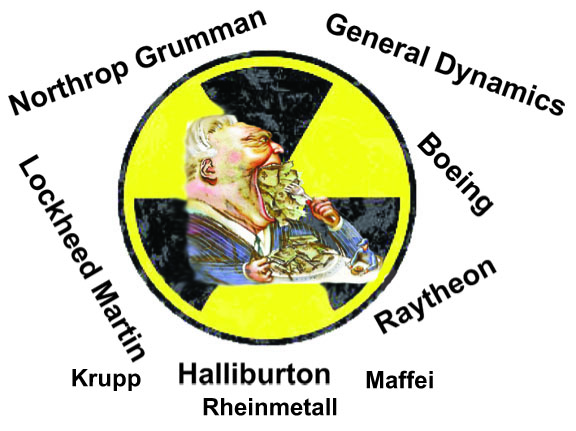
The defence industry in Australia is dominated by some of the world’s largest multinational arms manufacturers: BAE Systems (UK), Thales (France), Boeing (US), Lockheed Martin (US), Rheinmetall (Germany) and Airbus (Europe). For four of the past five years BAE Systems has been the top contractor and Thales has been second. Boeing has been in the top five each time.
In 2017, an analysis by the Australian Strategic Policy Institute (which also used ADM Top 40 data) showed that over the 20 years from 1995-2015, the largest five firms in any given year accounted for, on average, about 65% of total revenue of arms-related contractors. In a chart for 2015, the top 10 took 82% of the revenue and 91% of revenue went to the top 15, leaving less than 10% for the rest, which is where almost all Australian-owned arms companies exist. Updated research is desperately needed, particularly given the significant sums now flowing into this industry.
On the over-hyped subject of jobs, ASPI’s briefing provided useful data: ‘Defence industry accounts for 0.23% of jobs in Australia, and 2.9% of jobs in the manufacturing sector. In terms of annual revenue, defence industry accounts for 0.22% of Australian industry and 1.7% of the manufacturing sector. So, although Australian defence industry is undoubtedly important for our defence force, it represents only a trifling fraction of the overall Australian economy.’ Again, updated research is needed.
In his speech, Marles said the government’s injection of $3.4 billion into a new Advanced Strategic Capabilities Accelerator will ‘help us start delivering advanced, asymmetric capabilities that benefit not just Australia but the US and the UK. And it will start to build a truly trilateral industrial base across our three countries that will see us more seamlessly transfer the skills, workers, and intellectual property we need.’ Australian taxpayers will support the US and UK industries. Why?
He also spoke of ‘breaking down the barriers’ of export controls to facilitate AUKUS.
While there is a shared mission between our countries and an agreement at the highest levels of our governments, there are significant barriers we must break down across our systems… This is particularly true of our export control regimes.
Regulations around transfers of technology, sensitive information and defence materiel are, of course, understandable.
The lip service to regulations being ‘understandable’ was immediately followed by:
But what is really clear is that if we are to realise the ambition of AUKUS, the transfer of technology and information between Australia and the US needs to be seamless…
Australia is committed to breaking down these barriers in our own system while maintaining the robust regulatory and legal frameworks to protect these transfers
The defence minister did not explain how regulatory control could be broken down while concurrently maintaining a robust regulatory framework.
Australia’s defence industry is already dominated by multinational US and UK arms corporations. Local industry (including local subsidiaries of global giants) has been historically lucky if it gained one third of defence acquisition spend, the remainder heading offshore.
If the government removes most of the regulation and creates a ‘seamless’ trilateral industrial base, it is hard to see how anything other than even greater flows offshore to the multinationals will eventuate, despite the political spin.
But what is really clear is that if we are to realise the ambition of AUKUS, the transfer of technology and information between Australia and the US needs to be seamless…
Australia is committed to breaking down these barriers in our own system while maintaining the robust regulatory and legal frameworks to protect these transfers.
The defence minister did not explain how regulatory control could be broken down while concurrently maintaining a robust regulatory framework.
Australia’s defence industry is already dominated by multinational US and UK arms corporations. Local industry (including local subsidiaries of global giants) has been historically lucky if it gained one third of defence acquisition spend, the remainder heading offshore.
If the government removes most of the regulation and creates a ‘seamless’ trilateral industrial base, it is hard to see how anything other than even greater flows offshore to the multinationals will eventuate, despite the political spin.
Labor, Greens & Defence Experts call for AUKUS Parliamentary Inquiry

A range of high-profile politicians, former military leaders and academic experts have signed an open letter calling for a Parliamentary Inquiry into the AUKUS nuclear-powered submarine deal, appearing in full-page ads today in the Australian Financial Review.
The letter is signed by Senior Former Defence personnel, a former Labor Premier, two former Labor frontbenchers, and other politicians and high-profile individuals.
Experts warn that significant questions about AUKUS deal remain unanswered and require parliamentary scrutiny in the national interest.
Key Points:
- Signatories include Former Labor WA Premier the Hon. Carmen Lawrence AO, former Labor Minister the Hon. Peter Garrett AM, Former Shadow Minister Doug Cameron and Former Labor MP the Hon. Melissa Parke
- Senior Defence signatories include Former Chief of the Air Force Air Marshall Ray Funnell AC, and Former Dep. Commander of the UN Peacekeeping Operation in East Timor Major General Michael Smith AO.
- Greens signatories include Senator Penny Allman-Payne, Senator David Shoebridge and Senator Jordan Steele-John
- Signatories include former MPs Tony Windsor AM and Dr. Rob Oakeshott
- Military, political, and academic experts and leaders have called for a parliamentary inquiry into AUKUS, citing a range of concerns including:
- The $268-$368 billion cost to the budget
- The proposed approximate four-decade timeframe for delivery
- The lack of workforce and skills to operate nuclear powered hardware.
- Sovereignty and strategic policy concerns for Australia
- Australia’s nuclear waste and NPT obligations
“For a policy of this magnitude and strategic significance, the AUKUS deal for nuclear-powered submarines has been politically rushed. It requires appropriate scrutiny in the national interest,” said Allan Behm, Director of the Australia Institute’s International & Security Affairs Program.
“At $268-368b this is one of the most expensive spending commitments ever made in Defence, with huge implications for our sovereignty that rightly require appropriate Parliamentary oversight.
“Experts and leaders across military, political and academic spheres hold substantial concerns which remain unanswered. Questions about our sovereignty, Australia’s obligations under the NPT, our ability to manage nuclear waste and our workforce gaps in operating nuclear-powered submarines are all outstanding.
“It’s only appropriate that the Australian people and the Parliament are given the opportunity to have their questions answered.”
Depleted uranium won’t end a war that has no winners
It is clear the great powers have no end in sight for the war: toxic munitions that will last even longer than the conflict are the last thing the territory needs, writes TOMASZ PIERSCIONEK
Morning Star, 16 May 23,
THE war in Ukraine is the most devastating conflict in Europe since World War II. As in most conflicts, and in the years leading up to the war, truth became the first causality.
The Western media simplifies the narrative to Nato good — Russia bad, while ignoring pivotal factors such as Nato’s eastward march towards Russia and the US-backed 2014 coup, which in turn set the scene for the war that unfolded in Feb 2022.
Non-mainstream media or independent bloggers who try to peer over the media iron curtain and question Nato talking points face being defamed as pro-Kremlin stooges.
Is the West scared of its citizens thinking independently or fearful that such “wrong think” might outshine pro-Nato propaganda? Do Europe’s citizens need “protection” from the risk of being exposed to unsanctioned thinking lest they draw different conclusions to the official narrative?
A year into the conflict and amidst the dreadful loss of life on all sides, it looks like war between Russia and Ukraine is really a conflict between Nato and Russia, in which the former seeks to challenge the emergence of a new Eurasian-centric capitalist bloc. Remember too that Russia is China’s ally and a defeat of the former would leave the latter in a more vulnerable position vis a vis Nato expansion.
It is clear too that (most of) the nations comprising the EU and Nato are willing to pull out all stops to defeat or greatly weaken Russia, regardless of the human costs to Ukraine, and have already handed over billions of dollars in military aid alongside vast quantities of weapons from their own arsenals. Britain provided £2.3 billion in military aid to Ukraine in 2022 whilst the US has given at least $46.6bn in military aid since the war began.
For the US, at least, this is a perfect war in which it can fight a key geopolitical opponent without getting its hands dirty and having to explain an influx of body bags to the US public like in Iraq and Afghanistan.
n the EU’s case however, reality hits a little close to home — despite its massive support for Ukraine and the 10 rounds of sanctions placed upon Russia, they have failed to bring the country to its knees in economic or military terms (as repeatedly promised), nor have they “inspired” the Russian people to overthrow their rulers. Instead, the anti-Russian sanctions seem to have caused a fair amount of self-harm to the EU whilst Russia is well on the way to finding new markets for its exports.
Hypocritically, despite singing from the pro-Ukraine hymn book, the EU continues to import billions of dollars worth of goods from Russia — $195.56 billion during 2022 and the greatest amount since 2014. Furthermore, despite the EU banning Russian crude oil imports, it purchases oil products from India (eg diesel and jet fuel) that have been refined from Russian crude oil. As Russia is now selling more crude oil to India and India in turn is selling more refined oil to Europe, this is a win-win situation for these two Brics nations.
n an unwise and unneeded escalation to the war in Ukraine, the British government announced in late April 2023 that it had sent Challenger 2 tank shells tipped with depleted uranium (DU) to Ukrainian forces. Such a move is a provocative and dangerous escalation that risks precipitating a regional or global war in which there will be no winner.
It is worth pointing out that at the end of March 2023, James Heappey, British Minister of State for the Armed Forces, responded to a parliamentary question about whether Russia had used DU munitions in Ukraine with the answer: “The Ministry of Defence is unaware of any credible open-source reports of Russia using depleted uranium in Ukraine.”
DU is a by-product of a process whereby uranium is enriched to make nuclear fuel. It remains radioactive, albeit 40 per cent less so than raw uranium. On account of its high density, DU is used to increase the power of armour-piercing munitions and has previously been used by US/Nato forces in several conflicts — the 1991 first Gulf war, Bosnia, the 2003 Iraq invasion, and against Isis forces in Syria in 2015…………………………………..
The Scientific Committee on Health and Environmental Risks formed by the European Commission produced a report in 2010 which noted that “in combat zones, vehicles hit by DU should be made inaccessible to the general public and be properly disposed of. Used DU ammunition should also be collected and disposed of.”
This concurs with advice published by the US Air Force in 1975 which stated that DU ought to only be used against armoured vehicles. However, in Iraq, DU munitions reportedly were not only used against human combatants but also fired in or near to urban areas.
Consequently, hundreds of sites in Iraq were contaminated with DU. Similar consequences are possible in the case of Ukraine: funding a clean-up operation once the war ends is unlikely to be a top priority.
The US Environmental Protection Agency notes that with regards to DU “exposure to the outside of the body is not considered a serious hazard. However, if DU is ingested or inhaled, it is a serious health hazard.”
The risk that DU finds its way into the food chain ought not to be dismissed, alongside the long-term detrimental effects on the ecosystem.
Furthermore, introducing DU (radioactive) munitions into a high-stakes war such as the one in Ukraine breaks a certain psychological barrier whereby the risk of further escalation increases as we take another step down an ever-shortening and dangerous path that ends with the use of conventional uranium weapons — nukes.
Continuing to arm Ukraine so that it can fight Russia down to the last Ukrainian on behalf of Nato (and perhaps after that using Poles to do the job) sets the scene for the conflict to become a regional war or worse.
Realistically, the war is not going the way Nato hoped and promised. The Russian economy has not collapsed, Russia has not run out of missiles, the Russian people have not overthrown their government, and the majority of the world has not turned its back on Russia, which is in the process of securing new trading partners and even sympathisers to offset the effects of any Western sanctions.
The conflict has also shown that the world (including major players such as China, India, Brazil, and Saudi Arabia) is not united behind the West. Indeed, 19 more countries are now seeking to join the Brics group of emerging economies. It would be easy, even convenient, for the US to pull back on funding Ukraine should the upcoming Ukrainian offensive not deliver the promised gains.
After all, 2024 is an election year, a greater number of US politicians are becoming uneasy at Biden’s blank cheque to Ukraine, and frankly sending billions to fund a war abroad rather than investing the money at home is not exactly a vote winner.
It would be tempting for the US to say “mission accomplished” and make the war in Ukraine Europe’s problem, leaving the EU to sort out the mess and come to a disadvantageous settlement with Russia.
It is critical that the anti-war movement, the trade union movement, and more broadly the left work with peace movements within Ukraine, Russia and beyond to call for a swift and just settlement to the war, in which the grievances of all sides are acknowledged.
Concurrently we must condemn rhetoric or action by any world leader that seeks to prolong the war in Ukraine whilst the people of Russia, Ukraine and Europe bear the human and economic cost of the conflict.
We need to be wary too, of forces both within Nato and beyond that are seeking to prolong the conflict in Ukraine for ideological reasons, due to the lucrative nature of war (not least for the arms industry), or for personal ambition. https://morningstaronline.co.uk/article/f/introducing-depleted-uranium-ukraine-conflict-needless-escalation-war-has-no-winners
Fukushima fishermen speak out against nuclear-contaminated wastewater dumping plan
Global Times, Xu Keyue and Xing Xiaojing in Iwaki May 17, 2023
Located at the confluence of cold and warm currents, the coastal area of Fukushima Prefecture, Japan, has a rich variety of sea life and a long history of local fishing.
In the 12 years since the accident at the Fukushima Daiichi Nuclear Power Plant, the fishing industry in the area has started to recover thanks to the efforts of local fishermen and other groups.
However, the Japanese government and the Tokyo Electric Power Company (TEPCO) have gone back on their promises and arbitrarily decided to release nuclear-contaminated wastewater into the sea, in a big blow to the Fukushima fishing industry and the prefecture’s revitalization.
As the scheduled plan to dump the nuclear-contaminated wastewater from Daiichi plant approaches, Global Times reporters went to Fukushima. In this second installment of this field investigation, the Global Times reveals the helpless fishermen who are speaking out.
Silenced Fukushima fishermen
Fishermen in Fukushima were banned from fishing after the March 11 earthquake and tsunami in 2011, which caused leaks at the Fukushima Daiichi Nuclear Power Plant. In 2015, the Japanese government, TEPCO, the Fukushima Prefectural Federation of Fisheries Cooperative Associations, and the National Federation of Fisheries Cooperative Associations of Japan signed an agreement, stating nothing would be done “about the nuclear-contaminated water from Fukushima without the understanding and consent of the relevant people.” However, in April 2021, the Japanese government blatantly broke its promise and announced that it had decided to dump the nuclear-contaminated wastewater from the Daiichi plant into the sea in two years, which has sparked strong dissatisfaction from fishery associations and the wider public.
As the most direct stakeholders, the voices of Fukushima fishermen are indispensable in the opposition to the disposal of nuclear-contaminated wastewater. However, when contacting them before the trip to Fukushima, Global Times reporters were surprised to find that the local fishermen were not allowed to speak.
Global Times reporters contacted industry groups such as the Fukushima Prefectural Federation of Fisheries Cooperative Associations and Fukushima Prefecture’s Soma Futaba Fisheries Cooperative Association for help in reaching fishermen in their areas, but were told that “individual fishermen are not allowed to give interviews.” Toshimitsu Konno, president of the Soma Futaba Fisheries Cooperative Association, told the Global Times that fishermen have different views and need to unify their opinions to form a single position on behalf of the association before negotiating with the Japanese government and TEPCO.
The voices of fishermen are at the heart of a series of field investigations into the issue of nuclear-contaminated wastewater at Fukushima. Global Times reporters tried other ways to contact the fishermen for interviews, but were either rejected or ignored.
It is understood that Japan’s trade associations are highly hierarchical and an extremely closed society. If members are excluded for offending the trade associations, it is equivalent to losing their jobs. When asked for an interview, one fisherman said, “we have to fish here for generations.”
The voices of fishermen are at the heart of a series of field investigations into the issue of nuclear-contaminated wastewater at Fukushima. Global Times reporters tried other ways to contact the fishermen for interviews, but were either rejected or ignored.
It is understood that Japan’s trade associations are highly hierarchical and an extremely closed society. If members are excluded for offending the trade associations, it is equivalent to losing their jobs. When asked for an interview, one fisherman said, “we have to fish here for generations.”
However, Haruo Ono, a fisherman from the town of Shinchi in Fukushima, said he was willing to be interviewed. He had something to say about the dumping of nuclear-contaminated wastewater.
The town is the northernmost part of Fukushima’s coastline, where rivers run eastward into the Pacific Ocean. Since Iwaki city where the Global Times reporters stayed is in the southernmost part of Fukushima Prefecture, to interview Ono, they set out early and drove north through towns of Hirono, Tomioka, Futaba and Namie, near the Daiichi and Daini nuclear power plants, and through Minamisoma and Soma cities, for more than 100 kilometers before arriving at Shinchi……………..
After the accident, fishermen were unable to fish normally for a long time and have not fully recovered until now. For years, Ono has been pressing for answers from the Japanese government and TEPCO…………………………………
the 71-year-old walked briskly, holding forth without waiting for a reporter’s question.
“When will Fumio Kishida, the Japanese prime minister, come and listen to our voices? When can he come to know the real situation in Fukushima?” asked Ono, speaking quickly in the Fukushima dialect.
“Does the government think that by issuing leaflets telling people that the nuclear-contaminated wastewater is OK, it can be released into the sea? Is that really safe? The sea is not a dustbin! In Japan, where people are fined for throwing rubbish into the sea, how can the wastewater containing radioactive materials be discharged into the sea? It is really strange that the Japanese government and TEPCO chose the easiest and cheapest way to throw out the wastewater when there were other options,” Ono said with a puzzled face………………………………………………………………………………………………….
Global Times reporters also visited seafood shelves in local supermarkets and found many imported products from areas such as the US, Chile and Russia, but those from Fukushima were nowhere to be found……………………………………………………….
“There is no change in the Fukushima fisheries association’s clear stance against the discharge plan,” Sawada said, stressing that he will continue to express his opposition to the plan to the Japanese government and TEPCO in collaboration with the national fishery association and other organizations.
………………………… World’s responsibility to protect the sea
Why would the association prohibit individual fishermen from speaking out when it also opposes the dumping plan? What is the “unified position” of the association, and how did the negotiations with the Japanese government go?……………………………………..more https://www.globaltimes.cn/page/202305/1290843.shtml
Cop28 host UAE’s approach is ‘dangerous’, says UN’s ex-climate chief

The United Arab Emirates’ approach to the Cop28 climate summit it will
preside over in November is “very dangerous” and a “direct threat to
the survival of vulnerable nations”, according to the UN’s former
climate chief. Christiana Figueres, who was pivotal to the delivery of the
landmark Paris climate agreement in 2015, also said the country holding the
presidency of the UN summit could not put forward its own position and had
to be neutral.
Guardian 16th May 2023
https://www.theguardian.com/environment/2023/may/16/cop28-host-uae-climate-united-arab-emirates
French Polynesia’s anti-nuclear organisation Association 193 criticises France for downplaying impact of tests

Walter Zweifel, RNZ Pacific Reporter walter.zweifel@rnz.co.nz https://www.rnz.co.nz/international/pacific-news/490142/anti-nuclear-group-criticises-france-for-downplaying-impact-of-tests 17 May 23
French Polynesia’s anti-nuclear organisation Association 193 has criticised the latest French report about the impact of the French nuclear weapons tests.
France’s National Institute of Health and Medical Research evaluated additional declassified data from the tests at Mururoa and found that radiation from them had a minimal role in causing thyroid cancer.
The Association’s president, Father Auguste Uebe-Carlson, told the AFP news agency there was a tendency by the French state and the Institute to minimise the impact of the nuclear fallout.
He said the French Committee for the Compensation of Victims of Nuclear Tests refused to recognise the files of victims born after 1974, when the military carried out its last atmospheric test.
But Uebe-Carlson said there was an argument to also recognise cancer sufferers born since 1974.
According to Uebe-Carlson, the Institute would one day have to explain why there were so many cancers in French Polynesia.
He has repeatedly accused France of refusing to recognise the impact of the tests, instead using propaganda to say they were clean or a thing of the past.
He said health problems were now being attributed to poor diet and lifestyle choices.
Three years ago he said he carried out survey in Mangareva, which is close to the former weapons test sites, and found that from 1966 onward all families reported cases of still-born babies.
Call for release of scientific data
The president of the test veterans’ organisation Moruroa e tatou said the release of the scientific data was not enough.
Hiro Tefaarere told La Premiere it was “absolutely necessary” for his organisation to get from the French state the register of the cancer patients and cancer deaths during the testing period.
He said it was “imperative” that these files be given to Moruroa e tatou.
Tefaarere said this research, if the state agrees to release it, would give his organisation the essential elements to consolidate the complaints which have been filed.
President to take report into account
An assembly member Hinamoeura Cross, who suffers from leukemia, said she was outraged that reports were still being published downplaying the tests’ effects.
The new president, Moetai Brotherson, said he would take the latest report into account when he enters into discussions with the French government.
French Polynesia has for years been trying to get France to reimburse it for outlays for cancer sufferers.
Its social security agency CPS said since 1995 it had spent almost $US1 billion to treat 10,000 people suffering from cancer as the result of radiation from the tests.
In 2010, Paris recognised for the first time that the tests had had an impact on the environment and health, paving the way for compensation.
Between 1966 and 1996, France carried out almost 200 tests in the South Pacific, involving more than 100,000 military and civilian personnel.
Paris has refused to apologise or the tests, but President Emmanel Macron said France owed ‘a debt’ to French Polynesia’s people.
Community batteries
To power Australia without fossil fuels will mean using batteries to store
power from solar and wind. We often think this means home batteries – or
large grid-scale installations. There’s another size too: community-scale
or neighbourhood batteries, which are growing rapidly in Australia due to
support from state governments like Victoria and Western Australia and,
more recently, from the federal government.
They seem to solve a lot of
problems we know people are concerned about – such as enabling more
rooftop solar and helping to speed up a transition to renewables. But the
popularity of these batteries shouldn’t be the only factor in decisions
about where they are rolled out. Sometimes – and in some parts of the
grid – they make sense. At other times, they may not be the best
solution.
Renew Economy 17th May 2023
The question of nuclear in Australia’s energy sector
In Australia’s transition to net zero emissions, the energy sector has a major role to play. But does nuclear power have a place in our future grid?
CSIRO, 15 May 23
Key points
- Nuclear power does not currently provide an economically competitive solution in Australia.
- Lead author of Gencost, Paul Graham says the main area of uncertainty with nuclear is around capital costs.
- There is a lack of robust real-world data around small modular reactors (SMRs) due to low global use.
As Australia attempts to hit ambitious emissions reduction targets during the transition to net zero, we know the energy sector has a major role to play. We also know that it makes sense to be informed of and assess a full range of technologies: some new and emerging, some established and proven.
In this context, it’s unsurprising that a debate around nuclear power has been reignited. Nuclear proponents believe there is potential for small modular reactors (SMRs) to be used for low-emissions electricity generation in Australia, providing essential firming capacity to support variable renewables.
However, a review of the available evidence makes it clear that nuclear power does not currently provide an economically competitive solution in Australia – or that we have the relevant frameworks in place for its consideration and operation within the timeframe required. Without more real-world data for SMRs demonstrating that nuclear can be economically viable, the debate will likely continue to be dominated by opinion and conflicting social values rather than a discussion on the underlying assumptions.
GenCost 2022-2023: the cost of electricity generation
Each year CSIRO works with the Australian Energy Market Operator (AEMO) to produce GenCost – a detailed report that provides current and projected costs for electricity generation and storage technology.
The annual GenCost process is highly collaborative and draws on the deep expertise and knowledge of a large number of energy industry stakeholders. There are opportunities for members of the energy community to review the work and provide pre-publication feedback to improve its quality.
Paul Graham, CSIRO energy economist and lead author of the report, says it’s an open, public process that many people can participate in.
“AEMO wants to know that the data they use for planning and forecasting results is from a good level of consultation and lots of quality checking. Everyone in the industry has a fair chance to take part,” Paul says.
On 16 December 2022, the fifth GenCost report was released as a draft for public consultation. It remained consistent with findings from previous years, showing that renewables, led by onshore wind and solar PV, remain the lowest cost power generation technologies………………………………………………………
Using the standard formula for levelised costs plus the additional calculations specific to storage and transmission, wind and solar come in at a maximum of $83 per megawatt hour in 2030. This is a useful point in time for comparison because this is the earliest date at which nuclear SMR could be built in Australia.
In contrast, SMRs come in at $130-311 per megawatt hour. This range allows for nuclear SMR capital costs to halve from where we think they are at present. ………
A lack of real-world data on nuclear
One of the key principles that guides the GenCost process is the need for high quality data to base the report’s calculations on. According to Paul, the lack of robust data has been a challenge when it comes to nuclear – and for SMRs in particular.
…………………………………. Only two SMRs are known to operate in the world, located in Russia and China, and both have experienced cost blowouts and delays.
…………………….. Australian frameworks are not ready
Beyond the unfavourable economics, is the long time to build nuclear capability. The opportunity for the technology to play a serious role in emissions reduction for Australia is fast running out.
According to Renewables 2022, the latest edition of the International Energy Agency’s (IEA) annual report on the sector, renewable energy will surpass coal by early 2025 as the largest source of global electricity. Over the forecast period, their share of power will increase by 10 percentage points, reaching 38 per cent in 2027. Electricity generation from renewables is the only energy source that is expected to grow, while shares for coal, natural gas, nuclear and oil will decline.
………………..in Australia, where there are a range of other considerations at play: not least the fact that that nuclear power is currently not permitted by law. Two separate pieces of Commonwealth legislation – the Australian Radiation Protection and Nuclear Safety Act 1998 and the Environment Protection and Biodiversity Conservation Act 1999 – expressly prohibit the approval, licensing, construction, or operation of a nuclear plant. The only exception to that rule is a research reactor near Sydney, which is used for research and the production of medical isotopes.
“Plenty of other people have made the case against nuclear on the basis of issues like a lack of social licence, or the challenges involved with siting. Those issues are not unique to nuclear – but unlike other technologies, nuclear hasn’t had to go through siting or approval processes before in Australia,” Paul says.
“Taking all that into account and knowing that the longer it takes to build something the more likely it is that real costs will increase rather than decrease, it’s very clear that nuclear is going to find it very challenging to compete against renewables.” https://www.news.com.au/technology/environment/nuclear-power-at-least-15-years-away-says-regulator/news-story/6b8c4ec9c94cd4d05471783678abdb59
‘Dumb idea’: Energy minister fires at Peter Dutton’s nuclear power plan, urging him to ‘come clean’ about the facts
The Climate Change and Energy Minister took aim at the Liberal leader’s “dumb” nuclear power plan, telling him to “come clean” about the facts of the alternate energy source.
Yashee Sharma, Digital Reporter,14 May, https://www.skynews.com.au/australia-news/politics/dumb-idea-energy-minister-fires-at-peter-duttons-nuclear-power-plan-urging-him-to-come-clean-about-the-facts/news-story/c98bcf8500bcc643c93b008b19bc9995
Minister for Climate Change and Energy Chris Bowen has debunked nuclear power statements spruiked by Coalition leader Peter Dutton.
Mr Dutton in his second budget reply on Friday said that “any sensible government must consider small modular nuclear as part of the energy mix”.
He disputed the Labor government’s climate change policies, warning they were putting the country “on the wrong energy path”.
In response, senator Bowen took to social media with an almost 2-minute-long video on “why Peter Dutton’s nuclear plan is a dumb idea for Australia”.
He took aim at the Opposition leader, questioning why the former Liberal government had nine years to introduce the nuclear energy but “never got around” to it.
“Because it’s a very bad idea,” he answered in the video.
The Labor Minister factchecked Mr Dutton with three reasons why nuclear power was not suitable for Australia, with the first being its hefty $400 billion price tag.
He referenced CSIRO findings that detail how renewable energy is the cheapest form of power while nuclear energy the most expensive.
“Wherever nuclear power plants are being built around the world, they are taking longer and costing much more than budgeted for,” he said.
“Even small modular reactors would cost a massive $5 billion each to build and proponents say we need as many as 80 small nuclear reactors spread across the country.
“That’s a whopping $400 billion in cost.”
Mr Bowen then fired at the “huge delays” in nuclear reactor construction, claiming that it would take more than a decade to establish a nuclear power industry.
Minister for Climate Change and Energy Chris Bowen has debunked nuclear power statements spruiked by Coalition leader Peter Dutton.
Mr Dutton in his second budget reply on Friday said that “any sensible government must consider small modular nuclear as part of the energy mix”.
He disputed the Labor government’s climate change policies, warning they were putting the country “on the wrong energy path”.
In response, senator Bowen took to social media with an almost 2-minute-long video on “why Peter Dutton’s nuclear plan is a dumb idea for Australia”.
He took aim at the Opposition leader, questioning why the former Liberal government had nine years to introduce the nuclear energy but “never got around” to it.
“Because it’s a very bad idea,” he answered in the video.
The Labor Minister factchecked Mr Dutton with three reasons why nuclear power was not suitable for Australia, with the first being its hefty $400 billion price tag.
He referenced CSIRO findings that detail how renewable energy is the cheapest form of power while nuclear energy the most expensive.
https://imasdk.googleapis.com/js/core/bridge3.572.0_en.html#goog_1312684880
| SKYNEWS.COM.AU03:37Government must ‘at least consider’ nuclear as part of energy mix: Dutton |
UP NEXT
04:37The budget ‘didn’t go far enough’ on issues which affect all Australia…
07:04Australia should have an ‘open mind’ to nuclear energy
05:41Budget measures ‘left middle Australia behind’: Ley
06:50‘Quarter acre block dream is gone’: Capital cities will have to build …
09:32‘Do this properly’: Ley urges government to ‘start again’ on housing bill
04:13‘Serious constitutional risk’: Liberal MP weighs in on Voice to Parlia…
05:20Don Farrell received ‘visibly warm’ reception during China visit
Government must ‘at least consider’ nuclear as part of energy mix: Dutton
“Wherever nuclear power plants are being built around the world, they are taking longer and costing much more than budgeted for,” he said.
“Even small modular reactors would cost a massive $5 billion each to build and proponents say we need as many as 80 small nuclear reactors spread across the country.
“That’s a whopping $400 billion in cost.”
Mr Bowen then fired at the “huge delays” in nuclear reactor construction, claiming that it would take more than a decade to establish a nuclear power industry.
https://imasdk.googleapis.com/js/core/bridge3.572.0_en.html#goog_2088505775
| SKYNEWS.COM.AU05:29Labor ‘denies’ that Australia is already a ‘nuclear nation’ |
UP NEXT
07:49Prince William and Kate’s royal ‘one-up’ on Harry and Meghan
02:26Meghan Markle missing from King’s coronation was reportedly a ‘blow to…
01:53’Very arrogant’ of sporting codes to suggest they can ‘influence Austr…
05:01’Their bias is on show’: Majority of ABC’s airtime ‘given to those who…
04:36Big Help Out was a ‘huge hit’: Russell Myers
03:49’Nasty and semi-racist’: Media’s spin about Dutton’s ‘obvious point’ o…
04:47‘Big questions’: Prince Andrew wears Garter robes at coronation
Labor ‘denies’ that Australia is already a ‘nuclear nation’
“Even if we started today, the first small reactor wouldn’t be in operation to meet the urgent need to deliver dispatchable power now,” he said.
“We don’t have a nuclear power industry, a regulatory or safety framework, nuclear power expertise or nuclear power workforce.”
The Energy Minister concluded his video, saying Australia is already struggling to store nuclear waste from one small medical reactor and probed Liberals over how they would dispose of waste from 80 reactors.
“If the Liberals want lots of nuclear power plants across Australia, they would need to explain where they’re going to store the nuclear waste,” he said.
“If Mr Dutton and the Liberals want to be taken seriously on their nuclear energy plan, they need to come clean on a few key things.
“Where will these nuclear power plants go? What will they do with the radioactive waste that generate? And when will they be operational? And how on earth are we going to pay for it?”
Former prime minister Malcom Turnbull threw his support behind Senator Bowen after the scathing attack.
“Very good video and absolutely right,” he wrote to Twitter.
Stanford-led research finds small modular reactors will exacerbate challenges of highly radioactive nuclear waste

Small modular reactors, long touted as the future of nuclear energy, will actually generate more radioactive waste than conventional nuclear power plants, according to research from Stanford and the University of British Columbia.
BY MARK SHWARTZ, 30 May, News Stanford
Nuclear reactors generate reliable supplies of electricity with limited greenhouse gas emissions. But a nuclear power plant that generates 1,000 megawatts of electric power also produces radioactive waste that must be isolated from the environment for hundreds of thousands of years. Furthermore, the cost of building a large nuclear power plant can be tens of billions of dollars.
To address these challenges, the nuclear industry is developing small modular reactors that generate less than 300 megawatts of electric power and can be assembled in factories. Industry analysts say these advanced modular designs will be cheaper and produce fewer radioactive byproducts than conventional large-scale reactors.
But a study published May 31 in Proceedings of the National Academy of Sciences has reached the opposite conclusion.
“Our results show that most small modular reactor designs will actually increase the volume of nuclear waste in need of management and disposal, by factors of 2 to 30 for the reactors in our case study,” said study lead author Lindsay Krall, a former MacArthur Postdoctoral Fellow at Stanford University’s Center for International Security and Cooperation (CISAC). “These findings stand in sharp contrast to the cost and waste reduction benefits that advocates have claimed for advanced nuclear technologies.”
…………………………………. In the U.S. alone, commercial nuclear power plants have produced more than 88,000 metric tons of spent nuclear fuel, as well as substantial volumes of intermediate and low-level radioactive waste. The most highly radioactive waste, mainly spent fuel, will have to be isolated in deep-mined geologic repositories for hundreds of thousands of years. At present, the U.S. has no program to develop a geologic repository after spending decades and billions of dollars on the Yucca Mountain site in Nevada. As a result, spent nuclear fuel is currently stored in pools or in dry casks at reactor sites, accumulating at a rate of about 2,000 metric tonnes per year.
Simple metrics
Some analysts maintain that small modular reactors will significantly reduce the mass of spent nuclear fuel generated compared to much larger, conventional nuclear reactors. But that conclusion is overly optimistic, according to Krall and her colleagues.
“Simple metrics, such as estimates of the mass of spent fuel, offer little insight into the resources that will be required to store, package, and dispose of the spent fuel and other radioactive waste,” said Krall, who is now a scientist at the Swedish Nuclear Fuel and Waste Management Company. “In fact, remarkably few studies have analyzed the management and disposal of nuclear waste streams from small modular reactors.”
Dozens of small modular reactor designs have been proposed. For this study, Krall analyzed the nuclear waste streams from three types of small modular reactors being developed by Toshiba, NuScale, and Terrestrial Energy. Each company uses a different design. Results from case studies were corroborated by theoretical calculations and a broader design survey. This three-pronged approach enabled the authors to draw powerful conclusions.
“The analysis was difficult, because none of these reactors are in operation yet,” said study co-author Rodney Ewing, the Frank Stanton Professor in Nuclear Security at Stanford and co-director of CISAC. “Also, the designs of some of the reactors are proprietary, adding additional hurdles to the research.”
Neutron leakage
Energy is produced in a nuclear reactor when a neutron splits a uranium atom in the reactor core, generating additional neutrons that go on to split other uranium atoms, creating a chain reaction. But some neutrons escape from the core – a problem called neutron leakage – and strike surrounding structural materials, such as steel and concrete. These materials become radioactive when “activated” by neutrons lost from the core.
The new study found that, because of their smaller size, small modular reactors will experience more neutron leakage than conventional reactors. This increased leakage affects the amount and composition of their waste streams.
“The more neutrons that are leaked, the greater the amount of radioactivity created by the activation process of neutrons,” Ewing said. “We found that small modular reactors will generate at least nine times more neutron-activated steel than conventional power plants. These radioactive materials have to be carefully managed prior to disposal, which will be expensive.”
The study also found that the spent nuclear fuel from small modular reactors will be discharged in greater volumes per unit energy extracted and can be far more complex than the spent fuel discharged from existing power plants.
“Some small modular reactor designs call for chemically exotic fuels and coolants that can produce difficult-to-manage wastes for disposal,” said co-author Allison Macfarlane, professor and director of the School of Public Policy and Global Affairs at the University of British Columbia. “Those exotic fuels and coolants may require costly chemical treatment prior to disposal.”
“The takeaway message for the industry and investors is that the back end of the fuel cycle may include hidden costs that must be addressed,” Macfarlane said. “It’s in the best interest of the reactor designer and the regulator to understand the waste implications of these reactors.”
Radiotoxicity
The study concludes that, overall, small modular designs are inferior to conventional reactors with respect to radioactive waste generation, management requirements, and disposal options.
One problem is long-term radiation from spent nuclear fuel. The research team estimated that after 10,000 years, the radiotoxicity of plutonium in spent fuels discharged from the three study modules would be at least 50 percent higher than the plutonium in conventional spent fuel per unit energy extracted. ……..more https://news.stanford.edu/2022/05/30/small-modular-reactors-produce-high-levels-nuclear-waste/?fbclid=IwAR3hUe5R3zYb25eJ-8dJzM_vXATq4Du7Hk_XEhdeED_BTvwCqm0XLo3mE8o
Zelensky plotted attacks deep inside Russia – Washington Post

https://www.rt.com/russia/576237-zelensky-hungary-russia/ 15 May 23
The Ukrainian leader reportedly wanted to “occupy” Russian cities to gain leverage over Moscow
Despite public assurance that he would limit military action to his own country’s 1991 borders, Ukrainian President Vladimir Zelensky formed plans to conduct attacks deep inside Russia and suggested that Kiev “destroy” the industry of Hungary, the Washington Post reported on Saturday, citing leaked Pentagon documents.
Citing US intelligence reports recently published on a gaming server, the Post described how Zelensky suggested at a meeting in January that his troops “conduct strikes in Russia,” while moving across the border to “occupy unspecified Russian border cities” in order to “give Kiev leverage in talks with Moscow.”
Less than two months later, the Ukraine-based Russian Volunteer Corps launched a cross-border raid that left two civilians dead in Russia’s Bryansk Region. A member of the group told Western media that Kiev had approved the attack, and further assaults have taken place since.
With Ukraine’s Western backers reluctant until recently to provide him with long-range missiles for fear he would use them against targets within Russia, Zelensky suggested to his top military commander, General Valery Zaluzhny, that he use drones to “attack unspecified deployment locations in Rostov” in February, the Post reported.
Prior to and after the alleged meeting, Ukrainian forces used drones to attack infrastructure in Rostov Region, which borders the formerly Ukrainian territory of Lugansk.
In a meeting with Deputy Prime Minister Yulia Svridenko in February, Zelensky reportedly suggested that Ukraine “blow up” the Druzhba oil pipeline, which transports Russian oil to Hungary. According to the US report cited by the Post, Zelensky suggested that “Ukraine should just blow up the pipeline and destroy…Hungarian [Prime Minister] Viktor Orban’s industry, which is based heavily on Russian oil.”
American spies listening to his meeting with Svridenko concluded that Zelensky was issuing “hyperbolic, meaningless threats.” Nevertheless, the Druzhba pipeline has come under attack on several occasions since the meeting, most recently when it was hit by drone-dropped explosives on Wednesday.
The Post’s article corroborates a CNN report last month claiming that US spies have been intercepting Zelensky’s communications.
Contacted by the newspaper, Zelensky dismissed the incidents described in the report as “fantasies,” and claimed that “no one in our country has given orders for offensives or strikes on Russian territory.”
Contacted by the newspaper, Zelensky dismissed the incidents described in the report as “fantasies,” and claimed that “no one in our country has given orders for offensives or strikes on Russian territory.”
Washington Post censors its own report of interview that showed President Vladimir Zelensky in a poor light

https://www.rt.com/russia/576284-zelensky-wapo-transcript-deleted/ 15 May 23 Washington Post deletes ‘treason’ quotes from Zelensky interview
The Ukrainian president reacted angrily when confronted about his own intelligence agents’ supposed “dealings” with Russia’s Wagner Group
The Washington Post has cut a large segment from an interview with Ukrainian President Vladimir Zelensky, in which he pushed the newspaper to reveal alleged traitors in his ranks and angrily accused its reporters of aiding Russia by publishing information from leaked documents.
The Post published a transcript of a lengthy interview with Zelensky on Saturday. After a discussion of a Ukrainian counteroffensive against Russian forces, the newspaper asked whether his military intelligence agency – the GUR – had “back-channel contact” with Yevgeny Prigozhin, head of the Russian private military company Wagner Group.
Citing recently leaked Pentagon documents, the Post explained to Zelensky that American spies noted a meeting between the president and GUR chief Kirill Budanov in February in which Budanov told him that he had learned of a Wagner plan to “destabilize Moldova,” but could counter this alleged plan by exposing his own “dealings” with Prigozhin, thus portraying the Wagner boss as “a traitor who has been working with Ukraine.”
Zelensky responded angrily, first asking who within his government had handed this document to the Post. Whoever it was, he said, was committing “treason,” which “is the most severe felony in our country.”
Despite being told that the document did not come from Kiev, but from Washington, Zelensky asked his interviewer to reveal “with which Ukrainian official did you talk?”
The Post has not yet published a story based on the document, and when informed that he was the first Ukrainian official the newspaper had spoken to, Zelensky urged his interviewer not to run the story, arguing that doing so would “demotivate Ukraine,” and accusing them of “playing games with me.”
“You are right now playing with, I think, things that aren’t good for our people,” he warned, asking the Post’s reporter “is your goal to help Russia?” When the reporter said that it was not, Zelensky countered “well, it looks different.”
By Sunday, however, the explosive exchange – during which Zelensky did not dispute that the meeting with Budanov had happened – was missing from the Post’s transcript. The entire 1,400-word back-and-forth about the document was removed, with no explanation given.
The Post’s edit is not the first incident in which Western governments or media outlets have scrubbed information potentially embarrassing or damaging to Kiev. Back in December, the European Commission deleted a video and its associated transcript in which Commission President Ursula von der Leyen said that the Ukrainian military had suffered 100,000 fatalities since Russia’s military operation began ten months earlier.
Kiev keeps its losses a closely guarded secret, and when asked by the Washington Post to comment on this policy, Zelensky sniped “if you have the relevant documents, maybe you can tell us how many people have died…and what their names were.”
Biden too scared to come to Australia because of protests about Julian Assange?

Darn it! I was just about to buy my “Free Julian Assange” shirt – to wear in Canberra, and at the Sydney Opera House, and join thousands of others protesting – wherever Joe Biden dares to show his face in Australia.
USA Republican House Speaker Kevin McCarthy said on Tuesday that a deal on the debt ceiling negotiations might be made by the end of this week. So – perhaps all the panic about the US Debt Ceiling will not be necessary? So – does Biden really need to cancel his visit to Australia?
Never mind – he’s still going to Hiroshima for the G7 summit. That’ll be OK. Everyone will say worthy things about how there must never be another nuclear bombing, and how we must all send drones, tanks, missiles etc to Ukraine . And they’ll say it politely -that’s the thing.
As for those bloody uncouth Australians – heck – someone might throw a rotten egg at Biden, – such is our rage about the persecution of Julian Assange. I mean – the Australian Prime Minister will of course bend over backwards to be polite, and not mention Assange. And Julian’s family and his other prominent supporters will be courteous.
But ya can’t count on the rest of us downunder colonials to be nice about it.
Yes Joe, – safer to go straight home from the G7 – give Australia a miss.
1 This month
17 October, Free Public Talk on Nuclear Issues in South Australia
David Noonan will speak on public interest concerns over the new Roxby Downs Indenture Act 2026 on BHP copper-uranium mining and ore processing in SA, and on how AUKUS may face SA with a High-Level nuclear waste agenda.
Dr Jim Green will discuss international developments in the field of nuclear power including ‘small modular reactors’ and Generation 4 ‘advanced’ nuclear reactor concepts.


Help Aunty Sue Protect Her Land and Sacred Sites From Destructive Rocket Testing.
.

Australians deserve the truth
about
AUKUS – https://aukuspublicinquiry.com/

PETITION – To: Prime Minister Anthony Albanese and the Australian Labor Government

of the week – Australians for War Powers Reform (AWPR)
To see nuclear-related stories in greater depth and intensity

