‘Red Alert’ is a paper tiger
Independent Australia, By John Quiggin | 10 March 2023,
As Nine newspapers attempt to spread panic about a Chinese invasion, Professor John Quiggin explains why the logistics of such an event happening are unrealistic.
“…………………………………………….We are being told that within the next few years, a seaborne invasion that would dwarf D-Day is going to take place. The most extreme version of this claim is the ‘Red Alert’ series now being published by the Nine newspapers.
China, it is claimed, plans to invade Taiwan, a country with 290,000 soldiers under arms and reserves of 2.3 million. To achieve the kind of numerical superiority seen on D-Day, China would need to land nearly a million men in the first days of an invasion.
But unlike D-Day, there could be no element of surprise. With modern technology, any attack would be detected before the ships left port. They would have to travel 170 kilometres across open water, within range of air attack and anti-ship missiles for the entire voyage. On arriving, they would have a choice of eight small beaches, all of which have been fortified over many decades. Assuming the troops somehow got ashore, they would deal with terrain that makes the bocage look like an open plain.
And to achieve this, the PLA Navy has less than 50 operational landing craft, many dating from the 1970s. The rest of the invasion is supposed to be undertaken by converted ferries, which would be virtually defenceless even against small-arms fire.
Any attempt at grinding down defences with a preliminary bombing campaign would be doomed to failure. Taiwan’s air and missile forces are dug deep into mountains. And retaliatory strikes would impose huge costs, even assuming that the U.S. did not take part.
A variety of other strategies (decapitation attacks, blockades and so on) have also been canvassed. All were tried by the Russians in Ukraine and all failed.
How do the fearmongers of the ‘Red Alert’ series respond to this widely known analysis? The answer is that they don’t. Instead, they canvass every possible scary scenario they can come up with (germ warfare, cyber-attacks, even a nuclear strike on Pine Gap) in the hope that Australians will be terrified enough to back a big increase in military spending. The striking contradiction is that the conventional weapons they are pushing for would be of no use in countering the threats they are talking about.
Of course, the idea of an invasion of Taiwan isn’t just a fantasy of the Nine newspapers. It suits all the main players to pretend that it’s a realistic possibility. Chinese President Xi Jinping wouldn’t last five minutes as China’s dictator if he renounced the idea of forcible reunification. U.S. Navy figures like Admiral Michael Gilday, who says an attack might come this year, want an increased share of the U.S. defence budget. And, obviously, the Taiwanese Government has no incentive to understate the threats it faces from the Chinese regime.
The ‘Red Alert’ series marks a new low in Australian journalism, rivalling anything the Murdoch press has produced. But that doesn’t mean it won’t be effective in pushing a message that is convenient to so many in positions of power. https://independentaustralia.net/business/business-display/red-alert-is-a-paper-tiger,17311?utm_source=substack&utm_medium=email
The Foreseeable End of Ukraine

The days of Ukraine as we know it are now numbered. Sooner rather than later, it will probably sink into insignificance as a greatly diminished rump state. Its tragedy is that it has allowed itself to be instrumentalised by the West, above all by Washington, in an almost suicidal manner for goals that are not its own. The phrase that the US administration is fighting ‘to the last Ukrainian’ has become a common expression
By Karl Richter, 6 March 2023, https://arktos.com/2023/03/06/the-foreseeable-end-of-ukraine/
Karl Richter asserts that Ukraine is facing an imminent end due to Russia’s dominance in the ongoing conflict, weak Western military and economic support, and Ukraine’s own nationalism, citing predictions by several Western military experts and predicting Western governments will soon have to justify the utter failure of their Ukraine policy.
The faces of Ukraine supporters are now visibly getting longer. In fact, things are getting interesting now. In the next few months, the central lie of Western politics will burst: Ukraine is coming to an end. No more billions of dollars sinking into the Kiev quagmire, and certainly no handful of Western battle tanks, should they ever come, will make much difference to events. Russia is in the driver’s seat and has all the means of escalation at its disposal, while the West is on its last legs economically, militarily and not least morally.
At least four Western military experts who know something of their trade have contradicted mainstream reporting in recent weeks and are now predicting the decisive weeks of Ukraine’s survival. Among them is Austrian Colonel Markus Reisner, a convinced Ukraine sympathiser. In one of his latest analyses, Reisner points to the considerable Russian resources and has to concede: ‘Ukraine could win several rounds, but there has been no knockout yet.’ The Russian side, he says, still has stocks of at least ten million artillery shells at its disposal, plus 3.4 million new shells produced each year. ‘So they are in a position to fight this war even longer’, while things are now getting tight for Kiev
Erich Vad, ex-brigadier general and former military policy advisor to German Chancellor Angela Merkel, is more explicit. He sees Russia ‘clearly on the advance’ and agrees with US Chief of Staff (!) Mark Milley ‘that a military victory for Ukraine is not to be expected’. He is surprised, however, at the extensive ‘synchronisation of the media, the likes of which I have never experienced in the Federal Republic of Germany. This is pure opinion mongering.’ One wonders, however, in which world the honourable ex-general has been living in the last decades.
The fourth member of the group is the former Pentagon adviser and former US colonel Douglas Macgregor. In several recent interviews (including those of the independent US portal Redacted), he not only addresses the immense losses of the Ukrainians – in some cases up to 70 per cent of the original battalion strength – but also the rampant repression of the Ukrainian domestic intelligence service SBU against its own population – a sure sign that the end is near. If the Kiev leadership does not agree to negotiations soon, there will be little more left of Ukraine than a rump state west of the Dnieper, says Macgregor. He does not want to rule out the possibility of a coup movement against the Kiev junta in view of the horrendous losses at the front – if not, Moscow itself would be forced to finish the ‘job’ and mop up the Selenskyj regime. A new Ukrainian government would probably be sensible enough to enter into peace negotiations. In the best case, Russia would thus also have achieved its wartime goal of ‘denazifying’ Ukraine.
Even a mainstream newspaper like the German daily Die Welt had to admit recently (31 January) that in the foreseeable future Russia will emerge from the conflict as the victor not only militarily but also politically: while Ukraine will not achieve any of its goals, certainly not the reconquest of Crimea, Russia will, in the course of an inevitable negotiated settlement, enforce that Ukraine’s NATO membership ‘will be excluded for the foreseeable future’ – nothing else was demanded by Moscow before the war began almost a year ago. And: ‘The result will be an amputated Ukraine.’
One can look forward to how the Western regimes will soon explain the complete failure of their Ukraine policy to their populations. Neither will Ukraine have won nor will Russia be ‘ruined’, which the German Foreign Minister Annalena Baerbock has erroneously claimed is the goal of German government policy. When it comes to the end of Ukraine, the Western regimes will not only have sunk gigantic sums of billions into Kiev, but will also have permanently poisoned relations with Russia, destroyed their own energy supply and successfully disarmed their own armed forces. This is truly an unprecedented achievement that can only be described as open treason. It will cost the Europeans dearly. In ‘normal’ times, those responsible would be held accountable. This bill remains open. The current leadership – not only in Germany – will have to be replaced without residue anyway if we want to get back into talks with Russia even halfway sensibly.
The days of Ukraine as we know it are now numbered. Sooner rather than later, it will probably sink into insignificance as a greatly diminished rump state. Its tragedy is that it has allowed itself to be instrumentalised by the West, above all by Washington, in an almost suicidal manner for goals that are not its own. The phrase that the US administration is fighting ‘to the last Ukrainian’ has become a common expression.
Last but not least, Ukraine has become a victim of its own nationalism. In Soviet times, this was only kept under the surface in a makeshift manner, only to be vigorously fanned by American foundations soon after 1991, with an anti-Russian bias from the start. Today, Ukraine is a pseudo-state consumed by national hatred, which is no longer viable in its current form. If one wants to apply historical perspective, similarities with Czechoslovakia and Poland before the Second World War come to mind. Both countries proved incapable of getting along with their ethnic minorities in a sensible way as a result of their nationalism and the Western powers’ agitation. Kiev is currently reaping the consequences of this policy, comparable to Czechoslovakia in 1938 and Poland in 1939.
As far as Poland is concerned, it would be a particularly bitter irony of history if Poland were to take back its former eastern territories in Galicia in the course of the settlement of Ukraine. The preparations for this have been in full swing for months – interestingly enough, in full agreement with the Kiev cokehead regime. One can research this without much effort. It cannot be ruled out that Moscow has long been on board behind the scenes. The Kremlin could be the one laughing, watching Polish and Ukrainian nationalists butting heads in the future. The Volhynia massacres of 1943/44, when the Ukrainians slaughtered up to 300,000 Polish peasants behind the German lines, have not been forgotten. In no time at all, the EU would have another trouble spot on its hands where it could sink its billions in the future. A mature achievement all around.
Biden’s $1 trillion budget for world war
Patrick Martin, 10 Mar 23, WSWS<
The White House unveiled its budget request for the 2024 fiscal year Thursday, with the largest ever proposed spending on the military. It is a $1 trillion budget for world war. The Biden administration wants the resources to fight Russia in Ukraine, intensify its buildup towards war with China in the Far East and sustain US military aggression in the Middle East.
Besides $842 billion for the Pentagon, which will undoubtedly be pushed even higher in Congress, there is $24 billion for the Department of Energy, which maintains the US nuclear arsenal, and $20 billion for military-related programs in the State Department, CIA and other agencies, bringing the total official military spending to $886 billion.
To this must be added the real cost of the war in Ukraine, which is listed as only $6 billion for the 2024 fiscal year, which begins October 1. In the previous fiscal year, the Biden administration requested $6.9 billion but ended up spending $114 billion. Given that there is no sign of the war ending—on the contrary, it is escalating rapidly—the cost of US support for the otherwise bankrupt regime in Kiev is likely to surpass the current level. This would swell total military outlays well above the $1 trillion mark.
Since Biden took office, the budget for the Pentagon alone has jumped from $718 billion in fiscal 2022, the first full year of his administration, to $816 billion last year. The $842 billion requested for this year could rise past the $900 billion mark once Congress and lobbyists for the weapons manufacturers have their say. Congressional Republicans have already denounced the budget for providing too little funding for the military.
The name “Department of Defense” is itself a gross distortion since there is not an inch of American soil that needs to be defended against an external enemy. It is rather the world which is under threat from the Pentagon. The US government maintains a global military presence without precedent in history, with more than 700 US bases worldwide, while its main targets, Russia and China, have only one base each outside their own borders.
The department should be renamed the Department of Maintaining America’s Global Empire, or perhaps more simply, the Department of World Destruction. Some $38 billion of the Pentagon budget will go to nuclear weapons modernization, bringing the total spending this year on the US nuclear arsenal, to carry out the worldwide annihilation of civilization and perhaps all life on the planet, to more than $60 billion.
Much of the “non-military” budget also contributes to the US capacity to wage war around the world. ………………………………………………………..
The proxy war against Russia in Ukraine is only the antechamber to an even greater conflict with China, which now takes the form of a rapid military buildup towards what one top general suggested would be open warfare by 2025. The corporate media is doing its part to suppress popular opposition to these wars, seeking to shift public opinion with a propaganda blitz over Russia’s reactionary invasion of Ukraine, and whipping up hysteria over alleged Chinese “spy balloons” and the social media app TikTok, depicted as a nefarious scheme by Beijing to collect intelligence on ordinary Americans………………………………………… https://www.wsws.org/en/articles/2023/03/10/pers-m10.html
Biden’s $1 trillion budget for world war

Is 15 months long enough?
By JEFFREY COLLINS, March 9, 2023, https://apnews.com/article/stephen-byrne-scana-power-plant-prison-c97cb1aaa33c991020551b2ae5c4dd85
COLUMBIA, S.C. (AP) — A former executive utility who gave rosy projections on the progress of two nuclear power plants in South Carolina while they were hopelessly behind will spend 15 months in prison for the doomed project that cost ratepayers billions of dollars.
Ex-SCANA Corp. Executive Vice President Stephen Byrne apologized in court Wednesday, saying he thinks about how he let down customers, shareholders, employees, taxpayers and his family almost every day.
The two nuclear plants, which never generated a watt of power despite $9 billion of investment, were supposed to be “the crowning achievement of my life,” Byrne said. “But I failed.”
Byrne is the second SCANA executive to head to prison for the nuclear debacle. Former CEO Kevin Marsh was sentenced to two years in prison in October 2021 and released earlier in March after serving about 17 months.
Two executives at Westinghouse, which was contracted to build the reactors, are also charged. Carl Churchman, who was the company’s top official at the Fairfield County construction site at V.C. Summer, pleaded guilty to perjury and is awaiting sentencing. Former Westinghouse senior vice president Jeff Benjamin faces 16 charges. His trial is scheduled for October.
Another executive goes to prison for lying about doomed nuclear project
Is 15 months long enough?
By JEFFREY COLLINS, March 9, 2023, https://apnews.com/article/stephen-byrne-scana-power-plant-prison-c97cb1aaa33c991020551b2ae5c4dd85
COLUMBIA, S.C. (AP) — A former executive utility who gave rosy projections on the progress of two nuclear power plants in South Carolina while they were hopelessly behind will spend 15 months in prison for the doomed project that cost ratepayers billions of dollars.
Ex-SCANA Corp. Executive Vice President Stephen Byrne apologized in court Wednesday, saying he thinks about how he let down customers, shareholders, employees, taxpayers and his family almost every day.
The two nuclear plants, which never generated a watt of power despite $9 billion of investment, were supposed to be “the crowning achievement of my life,” Byrne said. “But I failed.”
Byrne is the second SCANA executive to head to prison for the nuclear debacle. Former CEO Kevin Marsh was sentenced to two years in prison in October 2021 and released earlier in March after serving about 17 months.
Two executives at Westinghouse, which was contracted to build the reactors, are also charged. Carl Churchman, who was the company’s top official at the Fairfield County construction site at V.C. Summer, pleaded guilty to perjury and is awaiting sentencing. Former Westinghouse senior vice president Jeff Benjamin faces 16 charges. His trial is scheduled for October.
All quiet on the Fukushima front? The global nuclear lobby sure likes it that way.
The video above is from last year. I could find only one up to date video about the 11 March 2011 Fukushima nuclear catastrophe. The newest video is at https://www.youtube.com/watch?v=EY3F1hqt5eA and for this one, it is not permitted to be re-shown on other websites.
Why is it not to be made widely available? Is it because that video shows the sadness, and the courage, of young Japanese university students who are dedicated to tell the story of the nuclear disaster – to the younger generation.
I guess that the Japanese government, all the other pro-nuclear government, and the despicable global nuclear lobby are only too pleased to have the Fukushima nuclear story fade into the background. After all, these worthy entities, having pocketed their fat salaries, with a bit of luck, will be dead and gone when the nuclear shit really hits the fan, world-wide.
It is the young and their children, who will cop the results of this toxic industry.
Meanwhile do we just all pretend that the Fukushima nuclear disaster is over and done with?

On anniversary of the Fukushima disaster, Australia must stand firm against nuclear

Many Australians are unaware of our country’s direct connection with this disaster.
In October 2011 it was formally confirmed to the federal parliament that Australian uranium was fuelling the Fukushima complex at the time of the disaster.
Dave Sweeney 10 March 2023 https://reneweconomy.com.au/on-anniversary-of-the-fukushima-disaster-australia-must-stand-firm-against-nuclear/
It is now a dozen years since the world held its breath and learned to pronounce the word Fukushima.
On March 11, 2011, a massive earthquake and tsunami devastated large areas along Japan’s eastern coastline.
It also breached the safety and back-up systems of the Tokyo Electric Power Company (TEPCO’s) Fukushima Daiichi nuclear power stations, leading to a meltdown, mass evacuations, hundreds of billions of dollars in economic loss and the release of large volumes of radioactive contamination to the ocean and air.
More than $A120 billion has already been spent stabilising the stricken site, but the crisis continues today.
Following the disaster large volumes of radioactive water were collected and stored. This includes water used to cool nuclear fuel rods along with contaminated groundwater, rainwater and seepage water.
Between one and three hundred tonnes of water are collected each day and there are more than 1000 large tanks holding around 1.3 million tonnes of contaminated water on site.
TEPCO proposes to directly discharge this waste to the Pacific, starting later this year.
TEPCO intends to treat the water prior to discharge to remove some contaminants using a process known as the Advanced Liquid Processing System (ALPS).
This pumping and filtration process is meant to remove and dilute radioactive isotopes from the liquid, but some remain, in particular tritium.
There are concerns the proposed treatment also fails to deal adequately with other contaminants, including strontium, iodine and cobalt.
The proposed ocean dumping has horrified coastal and fishing communities in Japan and in Korea and China.
It is also a cause for growing concern and heartache among the wider Pacific community, given the adverse environmental and cultural impacts and the tension between the planned action and the prohibition of radioactive waste dumping in the South Pacific Nuclear Free Zone Treaty (1985).
The Pacific Islands Forum engaged an independent expert advisory panel to undertake a detailed assessment of the dumping plan.
This criticised the assumptions, data analysis and modelling underpinning TEPCO’s approach.
In August 2022 the advisory panel told the forum the plan was premature, lacked a sound scientific basis and should be postponed until there had been a detailed consideration of alternative options.
ACF, the Medical Association for Prevention of War and other civil society groups are urging the federal Labor government to add Australia’s voice to those calling for a halt to the current plan in favour of an evidence based and agreed approach to this pressing transboundary and transgenerational issue.
Pacific Islands Forum Secretary General Henry Puna said the ultimate goal must be ‘to safeguard the Blue Pacific – our ocean, our environment, and our peoples – from any further nuclear contamination. This is the legacy we must leave for our children.’
The Pacific is a place of richness, life and culture. It is not a sewer.
Many Australians are unaware of our country’s direct connection with this disaster.
In October 2011 it was formally confirmed to the federal parliament that Australian uranium was fuelling the Fukushima complex at the time of the disaster.
The then head of the Australian Safeguards and Nuclear Safety Office – a unit of DFAT charged with tracking Australian uranium – told a Senate Committee, “we can confirm that Australian obligated nuclear material {uranium} was at the Fukushima Daiichi site and in each of the reactors.”
Australian radioactive rocks are the source of Fukushima’s fallout and waste.
And large volumes of this waste are now planned to be directly released into the Pacific Ocean.
We cannot change the past, but we can act to shape the future.
The time is right for the Albanese government to join with the wider Pacific community and formally ask Japan to defer the planned direct ocean dumping of contaminated and instead look at alternative waste management options.
While our federal government has been quick to emphasise that Australia’s involvement in AUKUS does not signal a move towards domestic nuclear power or nuclear weapons, the partnership’s promise of nuclear-powered submarines poses new environmental and security risks to Australian ports, shipyards and seas – including the seas we share with our Pacific neighbours.
And nuclear power enthusiasts in the Coalition and on Sky News after dark continue to push for unpopular and unnecessary nuclear electricity.
Against the shadow of Fukushima, the latest pro-nuclear push in Australia is ill-judged, insensitive and wholly inappropriate.
Our future must be renewable, not radioactive.
Dave Sweeney is the Australian Conservation Foundation’s nuclear free campaigner
Australian corporate papers call for war with China, nuclear weapons and mass conscription

Oscar Grenfell, SEP candidate for NSW Legislative Council, 10 Mar, 2023, https://www.wsws.org/en/articles/2023/03/10/tutm-m10.html

In a militarist barrage, Nine Media and its main mastheads—the Sydney Morning Herald and the Age—published a major series this week insisting that Australia must prepare to fight an imminent war against China.
“Red alert” called for the stationing of nuclear weapons and long-range missiles in northern Australia, the introduction of mass conscription and preparations for the country to host as many as 200,000 US military personnel.
The articles are a demand for total war, not far off in the future, but as an immediate practical order of business. The series stressed that a war will be fought in the Indo-Pacific, not in twenty years or a decade, but within the next three years.
The multi-part series was not published in response to any specific development. Over the past week, there has not been a major geo-political occurrence in the region. China has not carried out any acts of aggression.

Instead, “Red alert” is part of a coordinated onslaught by those sections of the US and allied media that speak directly for the American military-intelligence apparatus. In concert, publications such as the Wall Street Journal and the Washington Post have published frothing condemnations of China. It is as though someone in the White House, the Pentagon or both flicked a switch that sent out an alert to their lackeys in the media.
The provocative attacks on Beijing come as the US and NATO escalate their proxy war against Russia in Ukraine. It is becoming ever more open that the war effort in Eastern Europe is one prong of a far broader militarist project. The US is seeking to inflict a crippling military defeat on Russia, as the essential prelude to war with China, which is viewed as the chief threat to American imperialist interests.
“Red alert” was couched as an “independent” review by five “experts” of Australia’s capabilities to fight a major war over the coming years. It was timed to precede the release of an official review commissioned by the federal Labor government, due out later this month. The claims of “independence” are a violation of the most basic journalistic ethics and standards related to disclosure.
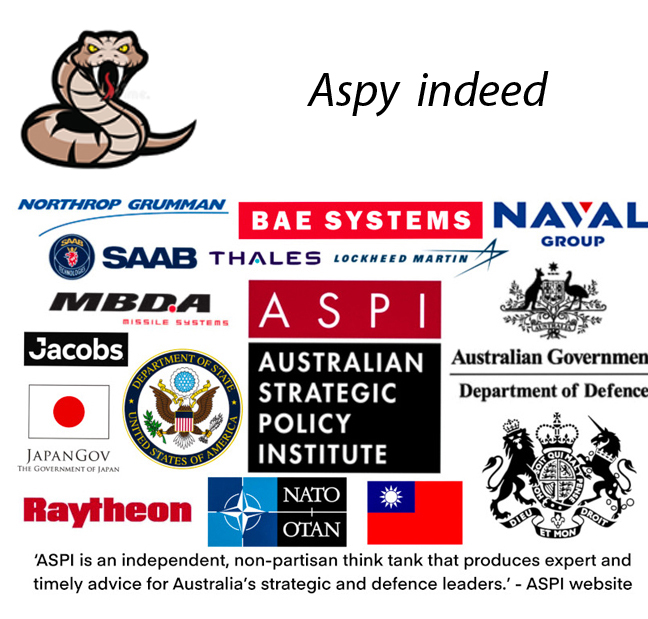
One is employed directly by the Australian government, four are employed by or contribute to the Australian Strategic Policy Institute, one of the most hawkish government-funded think tanks, or the Centre for Strategic and International Studies, which is among the most militaristic Washington think tanks. In other words, they could not be any less independent. They are mouthpieces of the state apparatus, as well as of private arms manufacturers that are making a fortune on the back of the military build-up.
The contents of the “Red alert” review are no less false than its purported independence. The series is a compendium of the lies, double speak and incendiary accusations used by Washington and its allies in the Australian political establishment to justify an aggressive military encirclement of China.
The timeline featured by “Red alert,” of a war with China within three years, comes straight from the American military. It is simply a promotion of views advanced by US Air Force General Michael Minihan, who earlier this year forecast an American war with China by 2025.
The supposed cause of such a war advanced by “Red alert” is identical to that put forward by Minihan. The Chinese government would purportedly launch an invasion of Taiwan, compelling US intervention and rapidly spiralling into an all-out war.
“Red alert” tries to present the US, as well as its allies, such as Australia, as engaging in a defensive effort on behalf of “little Taiwan,” as they have supposedly done in defence of “little Ukraine.” This depiction is a fraud on every level.
The US has been carrying out a vast military build-up throughout the Indo-Pacific since it unveiled the “pivot to Asia” in 2011. The Pentagon has outlined an “Air Sea Battle” plan as to how an aggressive US war against China would be waged. Chief US strategists have openly acknowledged that this is motivated by fears of China’s economic rise, and American imperialism’s relative decline.
Taiwan is simply a pretext. The US and its allies have sought to transform it into a flashpoint. Successive US governments, beginning with Obama, have undermined the status quo. Since the 1970s, the international community, including American administrations, de facto acknowledged the Chinese Communist Party as the sole legitimate government of all of China, including Taiwan, located just 160 kilometres from mainland China.
But now, Biden has repeatedly declared that the US would fight a war to defend Taiwanese “independence.” His administration has tripled US forces on the island, while directly providing military aid and expanding diplomatic ties with Taipei. The aim is to provoke a Chinese response, which would serve as the justification for longstanding US war plans.
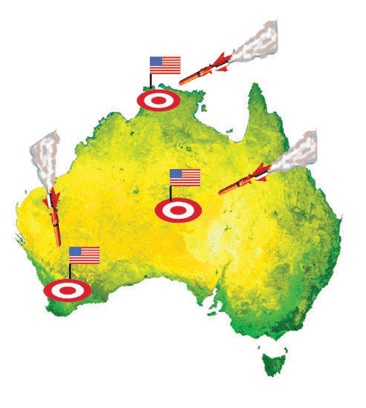
“Red alert” asserts that such a war would immediately become region-wide. Australia would be involved from the outset and within 72 hours of such a conflict, there would be Chinese attacks on Australian cyber networks and critical infrastructure. The US Pine Gap spy and military coordination base in central Australia would be a target, as would other Australian-US installations.
The series declares that in the event of such a war, as many as 200,000 American troops would descend on Northern Australia. That is, 47,000 less than the entire population of the Northern Territory, meaning the entire region would be transformed into a massive US base.
“Red alert” links this scenario to a call for the acquisition of major missile systems and other offensive weaponry. This is in line with a rapid build-up already underway, which is being dramatically accelerated by the Labor government. Virtually every week, there is a new announcement of military acquisition, be it sea mines, US HIMARS or naval strike missiles.
Conscious of the historic opposition to war among workers and young people, the document cites the necessity to break the “taboos” of conscription and nuclear weapons.
Perhaps the one note of truth in the series is its description of what a major war in the Indo-Pacific would involve. It would be a “whole of nation” effort, essentially requiring the militarisation of the entire society.
Along these lines, the “Red alert” series calls for the introduction of conscription. This would involve not only teenagers and young adults, but potentially anyone required for the war effort in what would be a war economy and the militarisation of society.
The series also advocates the stationing of US nuclear weapons in Northern Australia, on long-range missile systems that could fire them into the Indo-Pacific. As is the case whenever such proposals are made, the “experts” assert that this would serve as a “deterrent.” But they contradict themselves because in the previous parts of the series, the “experts” insisted that war is inevitable. The inescapable conclusion is that they are calling for nuclear war.
“Red alert” serves several purposes. It comes amid a debate within the Australian ruling elite, over Australia’s full alignment with the US war drive against China. A minority wing has voiced concerns over the implications of this. It is not anti-war or anti-imperialist, but fears that war with Australia’s largest trading partner will devastate the economy while provoking mass social and political upheavals.
The dominant sections of the political establishment, however, are all the way with the US. Australia, as a middle-order power, has always functioned under the umbrella of the dominant power of the day to prosecute its own imperialist interests. Australia, moreover, is completely integrated into the US war machine, meaning its participation in a conflict with China would be automatic.
This integration is only deepening. Next week, Labor Prime Minister Albanese will stand alongside President Biden in San Diego, as they announce that Australia will purchase US nuclear-powered submarines. The Labor government has already permitted nuclear-capable American B-52 bombers to “rotate” through northern Australia, meaning American nuclear weapons may already be stationed here.
The primary target of the “Red alert” series is the population itself. Its authors write about the need to change Australian “psychology.” They know that their mad plans for war are deeply opposed by the vast mass of workers and young people.
Conscription provoked massive social upheavals, both in World War I and during the Vietnam War. There is likewise a long history of broad opposition to nuclear weapons.
The propaganda blitz is aimed at bulldozing these popular sentiments by asserting that there is no alternative but to fight a war. A conflict is inevitable, so the population will simply have to accept it.
But the response to “Red alert” itself shows that this will not happen. The series has received a torrent of hostile commentary on social media. The Sydney Morning Herald posted the final part, containing the recommendation for nuclear weapons and conscription, to its Twitter account yesterday. The tweet has been viewed by 161,000 people. But only 20 of them hit the like button. While proclaiming the need for an “open” and “bold” discussion, the Herald has hidden all responses to its Twitter post.
The type of war that “Red alert” advocates is incompatible with democracy. That is the real meaning of the comments by the “experts” on the “Zelensky test.” They are referencing Ukrainian President Volodymyr Zelensky, a front man for the US and NATO. The “Zelensky test” is a willingness to place the entire country on a war footing. In Ukraine, this has involved the banning of all opposition parties and the promotion of fascist and Nazi forces.
The working class must take a sharp warning from the “Red alert” series and the broader turn to war with China. Longstanding plans for a catastrophic conflict are being activated. Governments and their mouthpieces are not only asserting that war is near. They are making it so.
This is a product of the deepest crisis of the profit system since the 1930s. The alternative to the catastrophe that is being prepared is the fight to build an international anti-war movement of the working class directed against the capitalist system itself and fighting for the socialist reorganisation of society.
Meet the man who uncovered the scandal of nuclear testing in South Australia
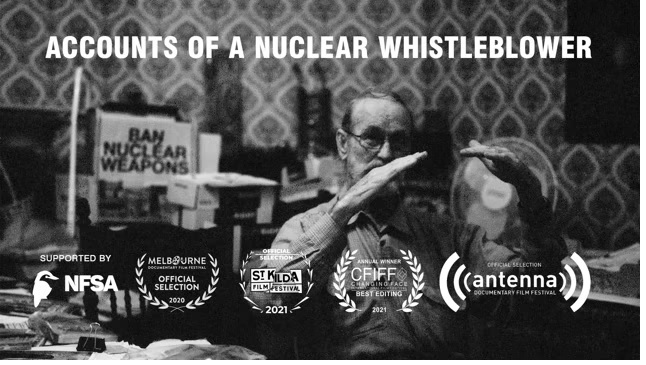
https://aeon.co/videos/meet-the-man-who-uncovered-the-scandal-of-nuclear-testing-in-south-australia
In the 1950s and ’60s, the British government conducted nuclear tests in Maralinga, a remote region of South Australia, with little understanding or forethought of the public health problems the fallout might cause. The harmful, sometimes deadly impact of these tests not only affected military conscripts, roped in without any real warning of the potential dangers, but private Australian citizens as well – and especially Indigenous peoples. Accounts of a Nuclear Whistleblower details this dark, somewhat forgotten chapter in Australia’s history via a firsthand account from Avon Hudson who, as a member of the Royal Australian Air Force, was stationed in dangerous proximity to these detonations, and later worked to expose their devastation and enduring threat. Hudson’s activism would ultimately help to precipitate the establishment in 1984 of the Royal Commission into British Nuclear Tests in Australia.
Via Director’s Library Director: Naveed Farro 7 March 2023
Twelve years after 3/11, dispute grows over Fukushima’s radioactive soil

BY TOMOKO OTAKE, STAFF WRITER, https://www.japantimes.co.jp/news/2023/03/10/national/dispute-fukushima-radioactive-soil/
OKUMA, FUKUSHIMA PREF. – On the surface, everything seems to be under control at the expansive site storing radioactive soil collected from across Fukushima Prefecture in the aftermath of the 2011 core meltdowns at the Fukushima No. 1 nuclear power plant.
Since 2015, the Interim Storage Facility, which straddles the towns of Okuma and Futaba and overlooks the crippled plant, has safely processed massive amounts of radioactive soil — enough to fill 11 Tokyo Domes — in an area nearly five times the size of New York’s Central Park. The soil was collected during decontamination procedures in Fukushima’s cities, towns and villages that were polluted by the disaster.
Here, black plastic bags full of contaminated soil are put on conveyor belts and unpacked. The contents are sifted through to remove plastic, leaves, twigs and other nonsoil waste. Then the soil is taken to dump zones, where it’s buried in 15-meter-deep pits with protective sheeting and a drainage pipe at the bottom so that radioactive cesium won’t leak into the ground. Finally, the soil is covered with noncontaminated soil and topped with a lawn. Areas where the work has been completed look like soccer fields.
The level of radiation here is about 0.2 microsieverts per hour (uSv/h), explained Hiroshi Hattori, an official at the Environment Ministry’s local office, during a recent tour of the areas where the polluted soil is buried. The radiation level there is harmless to humans, though higher than an average of 0.04 uSv/h elsewhere in Japan.
“It’s higher not because of the soil, but because of surrounding forests (which have not been decontaminated).”
The problem is that, as smooth and orderly as its operations are, the site is only a temporary home for the radioactive soil. Nobody knows where this massive pile of dirt will eventually end up. All that is certain is that the central government has pledged to — and is legally obliged to — move all of the soil out of Fukushima Prefecture by 2045.
This unresolved soil issue — along with the lingering dispute over the planned ocean release of tritium-laced wastewater from Fukushima No. 1 — is a sour reminder of the enormous toll the nuclear disaster in Fukushima has inflicted on the country and beyond.
Opposition from residents
The soil is a product of years of state-funded measures to bring radiation levels down in communities affected by the disaster. The government drew up a “decontamination road map” soon after the accident, in the hopes of a speedy return of residents to their hometowns.
The desire to avoid moving the massive amount of soil again — and to make it easier to find a final destination for it — has also led the Environment Ministry to try to reduce its volume first by reusing some of the less contaminated mud for public works projects across the nation. That way, only a quarter of the total amount that contains over 8,000 becquerel per kilogram of cesium will be subject to final disposal, the ministry says.
But it’s a tough sell. In December, the ministry held its first round of meetings with residents in areas of greater Tokyo where pilot projects to utilize the soil under the 8,000 Bq/kg threshold are planned: the Shinjuku Gyoen National Garden in Tokyo, the National Environmental Research and Training Institute in Tokorozawa, Saitama Prefecture, and the National Institute for Environmental studies in Tsukuba, Ibaraki Prefecture.
Nearby residents vehemently opposed the plan. Last month, they formally demanded that the ministry cancel the pilot projects, under which the ministry plans to bury radioactive soil underneath a 50 cm layer of cover soil, for flower beds and parking lots.
Roads, tidal walls and dams
Though little known until recently, the ministry released a policy document in 2016 that outlined the “safe use” of radioactive soil with radiation levels of 8,000 Bq/kg or less. According to the document, the government will divert such soil to embankments in public works projects “whose management entities and responsibilities are clearly defined.”
Roads, tidal walls, seaside protection forest and earthfill dams are some of the projects where use of the soil is envisioned, the document says.
The plan has raised the eyebrows of not just residents but also experts.
“Japan is very seismic and we have (harsh) weather and typhoons,” said Azby Brown, architect and lead researcher for Safecast, a citizen science group that has independently measured and publicized radiation levels in Fukushima and elsewhere.
“The half-life of cesium-137 is 30 years. It’s going to stay radioactive for a long time. What happens when these embankments get old?… It is not a very rational or sound decision, from the sense of certainly the perception of safety.”
Kenichi Oshima, professor of energy policy at Ryukoku University in Kyoto, questions the rationale of treating the soil of 8,000 Bq/kg or less as safe, pointing to a “double standard” between the ministry’s policy and the rigorous control of waste required for other nuclear power plants under the Nuclear Reactor Regulation Law. That law states only waste with radiation levels under 100 Bq/kg is considered safe enough to be reused.
All of the radioactive waste produced by the Fukushima disaster is covered by a separate “special law” that went into force in 2012. This says that Tokyo Electric Power Co. Holdings (Tepco), the operator of Fukushima No. 1, is responsible for the handling of the radioactive waste and soil within its property, while the Environment Ministry is responsible for the disposal of the 3/11-borne radioactive waste outside the plant, though the law itself does not mention the reuse of soil that has been decontaminated.
The ministry has explained that the 8,000 Bq/kg threshold keeps it consistent with the level of “designated waste materials” stipulated in that special legislation. When people are exposed to waste below 8,000 Bq/kg, the additional radiation exposure is limited to less than 1 millisievert per year, not a level that causes health concerns, according to the ministry.
“Granted, soil with 8,000 Bq/kg of radioactive materials is not one that immediately kills people who touch it,” Oshima said. “But it is low-level radioactive waste nonetheless, and so should be managed properly as such, just like low-level radioactive waste from other nuclear power plants is. It’s just inconceivable that it would be utilized as materials for infrastructure that people will be using often.”
Public support elusive
On Feb. 24, Environment Minister Akihiro Nishimura reiterated the ministry’s stance, telling a news conference that utilization of soil outside the prefecture is “important to realize its final disposal outside the prefecture (of Fukushima).”
“We would like to continue explaining our stance in detail so as to nurture public understanding,” he said.
But to nurture this understanding about an issue as serious as radioactive waste, everyone who has a stake should be involved in the decision-making process, Brown says.
“The strong consensus internationally regarding where to put things like radioactive waste requires full agreement and participation by all of the stakeholders, all of the citizens, everyone who’s involved,” Brown said. “What we usually see often in Japan in general, and certainly regarding the Fukushima issues, is that a decision is made at the top. It’s decided, it’s announced and then they try to persuade people to go along with it. This is the case with the water release issue (as well as) the soil issue.”
Around this spring or summer, the government and Tepco hope to begin discharging water that has all the radioactive nuclides except tritium removed. Construction work is already under way at the seaside plant to install an undersea tunnel, through which the water will be released 1 kilometer offshore.
The so-called JESCO law, which went into effect in 2014, gives legal grounds for the creation of the government-funded entity that runs the interim storage site, as well as the obligation for the central government to move the soil out of Fukushima by 2045. The obligation was written into law following a political compromise with the Fukushima Prefectural Government, with officials from the national government saying they “considered the excessive burden” being shouldered by the people of Fukushima.
Both Oshima and Brown, however, say they find the government’s plan to recycle the dirt out of line.
In fact, Oshima says the best solution would be to set aside an area and make it a controlled zone for all the polluted soil for 50 years until the radioactive cesium decays, which is how waste from other nuclear plants is handled, and is what the final disposal site is going to look like.
He cites a 2017 report by the Japan Atomic Energy Agency that estimated the size of the area needed for final disposal, which should be ready by 2045. If the volume of the soil is estimated at 20 million cubic meters, a subsurface ground facility for its final disposal will need to measure about 1.3 km by 1.3 km, the report concluded.
“It may sound like a huge space, but both the national government and Tepco have vacant land plots of that size,” Oshima said. Once the soil’s use as construction materials is greenlighted, however, it would be transported nationwide, and it would be impossible to track and measure its radiation doses, he argued.
“If the soil is properly stored in a controlled area, it would make the public feel so much more at ease.”
Low-dose radiation linked to increased lifetime risk of heart disease

by British Medical Journal, https://medicalxpress.com/news/2023-03-low-dose-linked-lifetime-heart-disease.html 8 March 23,
Exposure to low doses of ionizing radiation is associated with a modestly increased excess risk of heart disease, finds an analysis of the latest evidence published by The BMJ today.
The researchers say these findings “have implications for patients who undergo radiation exposure as part of their medical care, as well as policy makers involved in managing radiation risks to radiation workers and the public.”
A linked editorial suggests that these risks “should now be carefully considered in protection against radiation in medicine and elsewhere.”
It’s well recognized that exposure to high dose radiation can damage the heart, but firm evidence linking low dose radiation to heart disease (e.g., scatter radiation dose from radiotherapy or working in the nuclear industry) is less clear.
To address this knowledge gap, an international team of researchers examined scientific databases for studies evaluating links between a range of cardiovascular diseases and exposure to radiation (mostly radiotherapy and occupational exposures).
They excluded uninformative datasets or those largely duplicating others, leaving 93 studies, published mainly during the past decade, suitable for analysis. These studies covered a broad range of doses, brief and prolonged exposures, and evaluated frequency (incidence) and mortality of various types of vascular diseases.
After taking account of other important factors, such as age at exposure, the researchers found consistent evidence for a dose dependent increase in cardiovascular risks across a broad range of radiation doses.
For example, the relative risk per gray (Gy) increased for all cardiovascular disease and for specific types of cardiovascular disease, and there was a higher relative risk per dose unit at lower dose ranges (less than 0.1 Gy), and also for lower dose rates (multiple exposures over hours to years).
At a population level, excess absolute risks ranged from 2.33% per Gy for a current England and Wales population to 3.66% per Gy for Germany, largely reflecting the underlying rates of cardiovascular disease mortality in these populations.
This equates to a modest but significantly increased excess lifetime risk of 2.3-3.9 cardiovascular deaths per 100 persons exposed to one Gy of radiation, explain the authors.
Substantial variation was found between studies, although this was markedly reduced when the authors restricted their analysis to higher quality studies or to those at moderate doses (less than 0.5 Gy) or low dose rates (less than 5 mGy/h).
The authors suggest that mechanisms for these cardiovascular effects are poorly understood, even at high dose.
They also acknowledge that few studies assessed the possible modifying effects of lifestyle and medical risk factors on radiation risk, particularly major modifiable risk factors for cardiovascular disease like smoking, obesity, diabetes, high blood pressure and high cholesterol, and say further research is needed in this area.
In conclusion, they say their findings support an association between acute high dose and (to a lesser extent) chronic low dose radiation exposure and most types of cardiovascular disease and suggest that “radiation detriment might have been significantly underestimated, implying that radiation protection and optimization at low doses should be rethought.”
This view is supported by Professor Anssi Auvinen at Tampere University in Finland in a linked editorial, who points out that while inconsistencies and gaps remain in the evidence linking vascular disease to low dose radiation exposure, “evidence for cardiovascular disease will soon need to be added to the existing list of radiation-induced health risks.”
This will involve revisiting concepts and standards in radiological protection, while more stringent standards for justification and optimization, especially for high dose procedures, will have to be considered, he explains.
Their implementation will also require training to improve awareness, knowledge, and understanding of the risks associated with specific procedures and cumulative exposure, as well as risk communication for patients and the public, he concludes.
“Thermal fatigue” is causing flaws in the cooling pipes of France’s nuclear reactors

Electricite de France SA discovered new defects at two of its nuclear
reactors that were halted for maintenance and repairs, raising fresh
concerns that its electricity output will remain largely constrained this
year after plunging in 2022.
Flaws tied to so-called thermal fatigue have
been found on the pipes of the Penly-2 and Cattenom-3 reactors, the utility
said in a statement. The pipes have been replaced as part of broader
repairs related to “stress corrosion” cracks — a different type of
faults — that are affecting emergency cooling pipes of some of the EDF’s
atomic plants, according to the nuclear safety authority.
The nuclear giant has been forced to halt more than a dozen of its 56 reactors for months of repairs since it first found signs of such stress corrosion phenomenon in
late 2021. The announcement comes just days after the country’s nuclear
safety authority asked EDF to revise its program of reactor checks
following the utility’s discovery of a “significant” stress corrosion
crack earlier this year on its Penly-1 reactor. EDF said it will propose an
update of its reactor check strategy to the watchdog in the coming days.
The fresh setbacks could force EDF to carry out more extensive checks on
its atomic plants, reviving concern that France will have to import large
amounts of power this year. Last year, worries about electricity shortages
combined with dwindling deliveries of Russian gas pushed European energy
prices to records.
Bloomberg 10th March 2023
https://www.bnnbloomberg.ca/edf-finds-new-flaws-at-2-reactors-stoking-power-supply-woes-1.1893577
March 10 Energy News — geoharvey

World: ¶ “Ukraine War: Why Russia’s Infrastructure Strikes Strategy Isn’t Working” • A coordinated wave of Russian attacks on Ukraine’s power infrastructure was the first in almost a month. Western officials believe missiles and other precision-guided weaponry Russia needs to carry out such attacks with any measure of effectiveness is in short supply. [BBC] Bombed […]
March 10 Energy News — geoharvey
Rare admission from Australia’s corporate media that hosting America’s Pine Gap surveillance system makes Australia a legitimate target for long-range ICBMs
Jennings says Americans would defend Taiwan by fighting from bases in Australia.
Arrows at top indicate militrary “bases” ie; TARGETS in Northern Australia
RAAF base Curtin RAAF base Darwin RAAF base Tindal. HMAS Cairns Lavarack Baracks Townsville
The BIG TARGET is Joint Defence Facility Pine Gap – in the centre
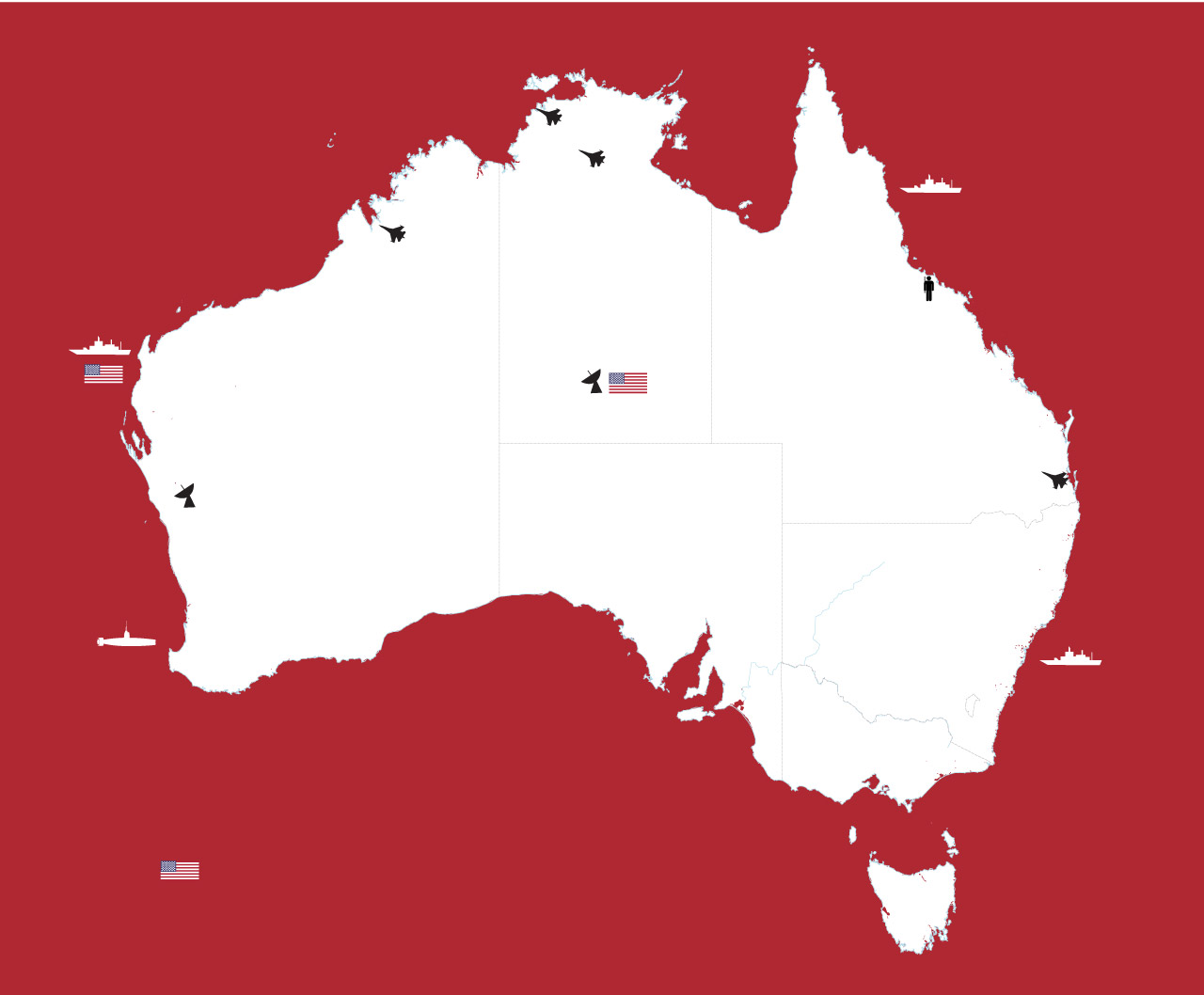
Arrows further South indicate military bases ie; TARGETS
Naval Communications Station Harold E Holt RAAF Base Amberley
Australian Defence Satellit Communications Station Kojarena
Fleet Base West – Royal Australian Navy Fleet Base East Royal Australian Navy
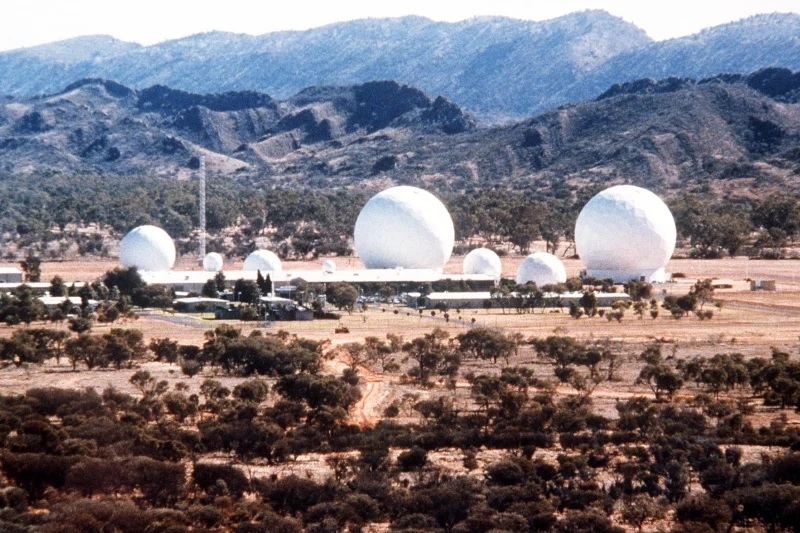
Joint Defence Facility Pine Gap
“Five defence experts assembled by The Sydney Morning Herald and The Age for Red Alert, a special review of Australia’s national security, agree such a conflict could break out within three years and would almost certainly involve Australia.
In the first three days of a war, he says Beijing would be tempted to target Australian military bases with a long-range intercontinental ballistic missile attack to minimise our usefulness in the conflict.
“If China seriously wants to go after Taiwan in a military sense, the only way they can really contemplate quick success is to pre-emptively attack those assets that might be a threat to them. That means Pine Gap goes,” he says, referring to the top secret US-Australian base in the Northern Territory that the US uses to detect nuclear missile launches.
…………………………….. Take Australia’s military bases. These facilities – especially those shared with or controlled by the US – are obvious targets for an adversary.
……………………………. Ryan says there is a strong agreement among military strategists that a war over Taiwan would “involve strikes on US bases, on fuel and munitions holdings, ships across the region, including our own country potentially”.
………………………….. Jennings says Americans would defend Taiwan by fighting from bases in Australia.………………………………………………………………………………………………
Passing the Zelensky test

………………………. “How many Australian leaders would pass the ‘Zelensky test’?” he asks, referring to Ukraine’s President Volodymyr Zelensky. “How many could get out there and say, ‘I don’t need a ride, I need ammunition’………………. https://archive.is/ZytUj#selection-6919.0-6923.81
The Nightmare Espionage Act That is Killing Julian Assange and the First Amendment
As for Julian Assange, the urgency behind bringing attention to the case is justified. According to Shenkman, “We tried to dig through the history to see if a publisher has ever been charged for anything like Julian Assange has been accused of. And the answer is no. This is the first case in U.S. history of its kind. And it would set a precedent that would open the floodgates for prosecuting the press.”
https://scheerpost.com/2023/03/03/the-nightmare-espionage-act-that-is-killing-julian-assange-and-the-first-amendment/ by EDITOR March 3, 2023
The use of the century old Espionage Act in the Julian Assange case continues to set the chilling precedent of a bleak future in American journalism, a precedent that endangers even those outside US borders.
arey Shenkman, attorney, author, and litigator specializing in civil and human rights, joins Robert Scheer for this week’s Scheer Intelligence, where Shenkman offers a sobering analysis on one of the most chilling attacks on press freedom exhibited in the Julian Assange case. Using his recently published book, A Century of Repression: The Espionage Act and Freedom of the Press, Shenkman details the history of the Espionage Act and how civil liberties have continued to be eroded as a result of the existence of this law and the lack of revision.
Shenkman talks about the bipartisan disdain towards the Espionage Act in legal circles yet its continued use by bipartisan presidents brings the conversation to its flaws and disreputability: “Over the decades, you have folks that are coming out with law review articles saying that it’s vague, verbose, that it makes no sense, and that ambiguity in the law is being exploited now to go after Julian Assange, to go after government whistleblowers. So there have actually been serious calls for its reform and repeal in recent years.” Assange faces 175 years in a U.S. maximum security prison after being indicted with 17 charges relating to the Espionage Act.
Going back to its inception during World War I, Shenkman explains what its true purpose was and how within the law, “you get a sense that this language of promoting disloyalty, of promoting opposition to the war, was actually used to go after conscientious objectors and folks that opposed entry into World War I.”
As for Julian Assange, the urgency behind bringing attention to the case is justified. According to Shenkman, “We tried to dig through the history to see if a publisher has ever been charged for anything like Julian Assange has been accused of. And the answer is no. This is the first case in U.S. history of its kind. And it would set a precedent that would open the floodgates for prosecuting the press.”
Shenkman says if Assange is extradited, it will make his case a law school case for all the wrong reasons. Despite all the concern surrounding the overreaching power of the United States, this case could also open the door to countries around the world to extradite citizens from foreign countries for exposing their wrongdoings. As Shenkman mentions, “Assange is not a U.S. government employee. He’s not even a U.S. citizen. And somehow the U.S. government says it has jurisdiction.”
1 This month


Help Aunty Sue Protect Her Land and Sacred Sites From Destructive Rocket Testing.
.

Australians deserve the truth
about
AUKUS – https://aukuspublicinquiry.com/

PETITION – To: Prime Minister Anthony Albanese and the Australian Labor Government

of the week – Australians for War Powers Reform (AWPR)
To see nuclear-related stories in greater depth and intensity

