Aukus submarine deal: Australia expected to choose UK design, sources say

Rishi Sunak said to have been ‘buzzing’ about result of 18-month negotiations, part of Aukus defence pact with US
Kiran Stacey and Dan Sabbagh, https://www.theguardian.com/world/2023/mar/08/uk-to-unveil-nuclear-submarines-deal-with-australia-sources-say
An enthusiastic Rishi Sunak has told ministers to expect a positive outcome next week when he travels to San Diego to unveil a deal to supply nuclear-powered submarines to Australia as part of the Aukus pact with the US.
Multiple sources said they believed the UK had succeeded in its bid to sell British-designed nuclear submarines to Australia, a deal that will safeguard the long-term future of the shipyard at Barrow-in-Furness.
A senior minister said Sunak had told colleagues he was delighted by the outcome of the negotiations, which have been going on for 18 months and have presented Australia with a choice between a British or a US design, based on the existing Astute or Virginia class submarines.
“The deal has definitely gone our way. The prime minister was buzzing about it when he told ministers, smiling and bouncing on the balls of his feet,” the minister said.
A second source outside government with knowledge of the talks said they had also been told to expect a British design success when the deal is announced on Monday, although any final submarine will also make heavy use of US technology.
Sunak is due to travel to the west coast for a trilateral summit with Joe Biden, the US president, and Anthony Albanese, the Australian prime minister, on Monday, where he also expected to unveil a refresh of Britain’s integrated review of defence and foreign policy in the light of the war in Ukraine.

Supplying Australia with a nuclear-powered submarine was the centrepiece for the Aukus defence pact, announced in September 2021, with the US and UK agreeing to share secret reactor technology in a surprise deal, so Canberra could dump an alternative diesel-powered design from France.
The expectation, one source indicated, was that Australia would work jointly on a design for a next generation submarine with the UK, evolving from the existing Astute submarine design, although it may not be seaworthy until the 2040s because of the complexity of the work.
Further reports last night suggested that the short-term gap could be plugged by Australia buying up to five Virginia-class submarines from the US as part of the three-way deal.
Meanwhile, an alternative plan that the UK could even be willing to sell or lease the two Astute class submarines yet to be completed at Barrow, HMS Agincourt and HMS Agamemnon, is wide of the mark. Naval analysts say the UK’s submarine fleet is already stretched and could not afford a sudden reduction.
Australia will become the seventh country to have a nuclear-powered submarine, relying on an enriched uranium reactor, propulsion technology that will put the country’s diesel-powered navy on a technological par with China.
But it will require Australia, which is not a nuclear power, to be supplied with a reactor, a move that Beijing has argued is a breach of the Nuclear Non Proliferation Treaty. The three Aukus powers say that is not the case, and that any reactors will be supplied “welded, shielded and sealed shut” according to Australian officials overseeing the effort.
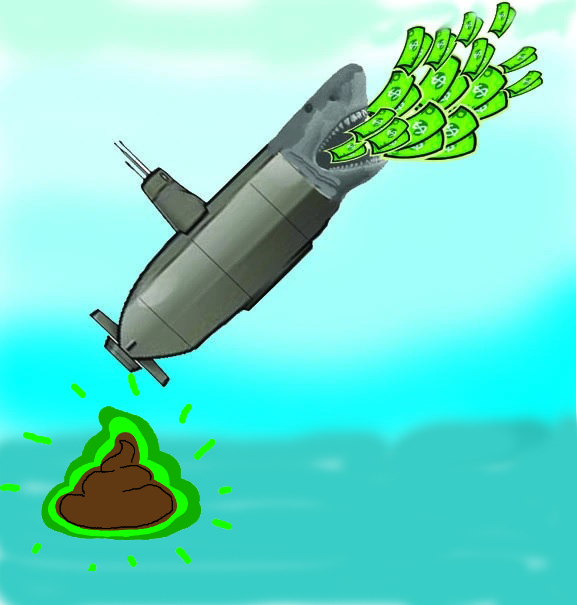
The new submarines will not carry nuclear weapons. But James Acton, a nuclear expert with the Carnegie Endowment for International Peace, said it was not yet clear how the nuclear waste generated by the propulsion reactors will be dealt with – and whether that will happen in Australia or the UK or US.
Defence experts said the time it would take to build the new submarines meant that there may be some related short-term developments. The US is keen to be able to base its nuclear submarines in Australia, making it easier to patrol the South Pacific, as it seeks to retain naval parity with China.
A UK government spokesperson said: “When we announced the Aukus partnership in September 2021 we said there would be an 18-month scoping period to determine the optimal path to procuring Australia nuclear-powered submarines. The outcome of the scoping period is due to be announced soon.”
A No 10 spokesperson said they could not pre-empt any future announcements.
War over Taiwan: Australia’s Gang of Five
Australian Independent media March 8, 2023 Dr Binoy Kampmark

Diligently, obediently and with a degree of dangerous imbecility, a number of Australian media outlets are manufacturing a consensus for war with a country that has never been a natural, historical enemy, nor sought to be.
But as Australia remains the satellite of a Sino-suspicious US imperium, its officials and their dutiful advocates in the press seem obligated to pave the way for conflict.
The latest example of this came in articles run in the Sydney Morning Herald and The Age of Melbourne. The premise is already clear from the columnists, Peter Hartcher and Matthew Knott. Australia faces a “Red Alert”, and, to that end, needs a warring fan club. Not since the domino theory bewitched strategists and confused military planners have Australians witnessed this: a series of articles featuring a gang of five with one purpose: to render the Australian public so witless as to reject any peaceful accommodation.
First, the provocative colouring for the article, “How a conflict over Taiwan could swiftly reach our shores.” The Australian continent is shown bathed in a sea of red. Various military bases and facilities are outlined. For good measure, there is a picture of Australian soldiers firing an artillery piece in “military exercises in 2018 at Shoalwater Bay, Queensland.”
Then, the blistering opening lines of terror. “Within 72 hours of a conflict breaking out over Taiwan, Chinese missile bombardments and devastating cyberattacks on Australia would begin. For the first time since World War II, the mainland would be under attack.” The authors already anticipate a good complement of US troops to occupy the Australian north, some 150,000 “seeking refuge from the immediate conflict zone.”
The Red Alert panellists, anointed as “defence experts”, brim with such scenarios. All, as they state in a joint communique, agree on one thing: “Australia has many vulnerabilities. It has long and exposed connections to the rest of the world – sea, air and undersea – yet is incapable of protecting them.”
Leading the gang of five is Peter Jennings, who has had an unshakeable red-under-the-bed fantasy for years. A former deputy secretary for strategy in the Australian Defence Department, and steering the Australian Strategic Policy Institute (ASPI) for a decade (that’s Canberra’s revolving door for you), Jennings is adamant and steely. “As I think of a conflict over Taiwan, what I’m thinking about is something that very quickly grows in scale and location.”
There is no reason at all why such a growth in scale or location should happen, but this is not the purpose of the exercise. The point of the Red Alert fantasy is to neutralise the significance of Australia’s natural boundaries – some of the most formidable on the planet – and dismiss them in any conflict with Beijing. “Distance is no longer equivalent to safety from our strategic perspective,” ponders Jennings.
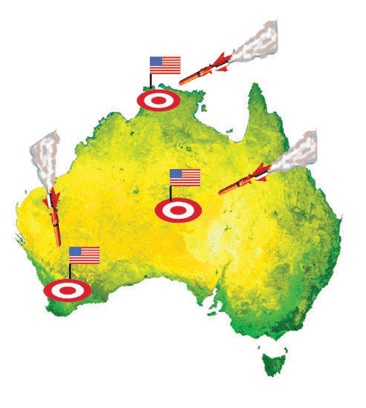
Jennings inadvertently reveals the case against war, which can only be an encouragement to activists and officials keen to reverse the trend of turning Australia into a US imperial outpost of naval and military bases that would be used in any Taiwan conflict. “If China wants to seriously go after Taiwan in any military sense, the only way they can really contemplate quick success is to pre-emptively attack those assets that might be a threat to them. That means Pine Gap goes.” Pine Gap remains that misnamed joint US-Australian signals facility that has facilitated illegal drone strikes in foreign territories most Australian politicians would fail to find on a map.
……….. Lavina Lee, another Red Alert panellist, is also into the business of softening the Australian public for war,………
Australia’s former chief scientist, Alan Finkel, dolls out his own catastrophic scenario………..
Retired army major-general Mick Ryan makes his contribution by wishing Australia to be readied for war. In a message common to most military officers, the civilians should really do more about giving his brethren more cash. ……………
Lesley Seebeck, former head of the Australian National University’s Cyber Institute, completes the crew of five, …………
A few things are worth noting in this frothy mix of fantabulation and establishment fire breathing. In the quest to gather such a panel, no effort has been made to consult the expertise of a China hand. That lobby, able to provide a more nuanced, less heavy-footed approach, is being shunned, their advice exorcised in any effort to encourage war.
Bizarrely, the panellists offer an increasingly popular non-sequitur that has creeped into the warmonger’s manual: Would Australia’s leaders, in war, pass the Zelensky test? This somehow implies that the Ukraine conflict offers salient lessons over a war over Taiwan, an absurd comparison that muddled strategists are fond of making.
Most of all, Beijing’s own actual intentions over Taiwan are to be avoided. The presumption in ASPI-land is that a war is imminent, and that Beijing would want to go to war over the island as a matter of course. China’s President Xi Jinping’s main advisor on the subject, veteran ideologue Wang Huning, suggests an approach at odds with such thinking.
The Red Alert exercise has drawn necessary and important criticism. Former Australian Prime Minister Paul Keating did not mince his words in a fuming column for Pearls and Irritations. “Today’s Sydney Morning Herald and The Age front page stories on Australia’s supposed war risk with China represents the most egregious and provocative news presentation of any newspaper I have witnessed in over fifty years of active public life.” One might even go further back than that. The war times are coming, and as are those gangs seeking to encourage them. https://theaimn.com/war-over-taiwan-australias-gang-of-five/
For Australia, horror of war over Taiwan is not inevitable
Pearls and Irritations, By Geoff Miller, Mar 9, 2023
Contributors to the “War with China over Taiwan” horror show which began in the Nine newspapers this week assume that a war between China and the United States is likely, and some of them then explicitly say that Australia would be involved. Australia should instead regard the Taiwan issue as one for us to “sit out”.
Mick Ryan, for example, says that “we have made our choice. If the United States goes to war with China over Taiwan, we are going to support them one way or the other”. Lavina Lee speaks of “the outbreak of war and Australia’s inevitable participation”.
They speak so glibly that one wonders whether they have thought at all about what a war between two nuclear powers, the biggest and second biggest economies in the world, would be like. Nor do they seem to have given any thought to what various government Ministers have said is Australia’s prime strategic goal in the Asia-Pacific, and that is to prevent war.
Why all this drama at this time? There are some events coming up which may have an influence; the releases of the Defence Strategic Review and the nuclear submarine study are two of them, and the coming budget is another. They will all involve spending very large sums of money on defence projects, and both the Defence organisation and firms which stand to benefit from Government spending may well welcome some “preparing of the audience”.
Our ally, the United States, may also have an interest. Under various defence arrangements we can expect to see an increasing amount of United States basing and military involvement in Australia. This has not been universally welcomed in the past, and the United States Government, and its defence firms which would be involved in an expansion of the US military presence in Australia as well as in an increase in our own defence spending, could well welcome the dramatisation of the “China threat” the Nine newspapers are providing this week.
How real is the China threat? It’s certainly seen as real by some Americans, who see China as the “peer competitor” they cannot tolerate. According to some accounts China is already clearly ahead of the US in a number of key technologies, which gives added emphasis to the military in US eyes, since the US is clearly superior militarily; despite the recent planned increase of 7% in Chinese military spending the US increase is even bigger, at 8%. The urge to maintain their predominance in the Pacific, and elsewhere, is probably why some very senior American military commanders seem to be anticipating and even looking forward to a war with China before long, with Taiwan as its probable rationale.
Australian Ministers and senior officials, on the other hand, have frequently spoken of the need to find a balance in the Pacific which gives appropriate place and weight to both the United States and China…………………………………………………………….
Taiwan is a very special case. We have no formal obligation to it. We recognised China, acknowledging that it maintained there is only one China, and that Taiwan is part of that. The current situation is complex and complicated: for example despite all the mutual abuse China and Taiwan have a substantial economic relationship; many people from Taiwan live and work in China. Recent polls show that a large proportion of Taiwanese believe that in the end Taiwan will be re-united with China, and are not keen to fight China to prevent that. The current state of affairs has come about as the result of the struggle for predominance in the Asia-Pacific between the US and China, the world’s two largest economies, both nuclear-armed and themselves in a complex and many-sided relationship.
We want the US to continue to play a major role in the Asia-Pacific, but there must be an appropriate place for China as well. As the former Secretary of DFAT, Peter Varghese, wrote in September last year: “If we tether ourselves to the cause of US primacy we leave ourselves exposed to US policies that may make sense for the US but not necessarily for Australia. We risk structuring our defence forces to fight alongside the US rather than primarily for the defence of Australia. We risk buying into a narrative of democracy versus autocracy which, however inspiring, misreads the strategic and historical drivers of China’s actions and has little resonance in our region.”
Australia, with its small and presently ill-equipped armed forces, could contribute almost nothing to a clash between the United States and China that has nothing to do with us. The US is such a large and globally important country that its relationships can in the end be repaired even with countries with which it has been in conflict. That does not apply to us, and if we joined the US in fighting China over Taiwan, not only would we not make any appreciable difference but our relationship with our biggest trading partner would be destroyed for years.
We should regard the Taiwan issue as one for us to “sit out” https://johnmenadue.com/war-over-taiwan-is-not-inevitable-for-australia/
Australia ‘to buy up to five US nuclear submarines’ under AUKUS pact

By Richard Wood • Senior Journalist, Mar 9, 2023 https://www.9news.com.au/world/aukus-update-nuclear-powered-submarines-deal-to-create-ten-thousands-jobs/f2b65469-d7ca-468b-938b-e67c131a3aaa
Australia is expected to buy up to five US Virginia class nuclear-powered submarines in the 2030s under the AUKUS defence pact between Washington, Canberra and London, reports say.
US officials, speaking on the condition of anonymity, said after the annual port visits, the US would forward deploy some submarines in Western Australia by around 2027, the Reuters news agency reported today.
Australia would buy three Virginia class submarines in the early 2030s and have the option to buy two more, the sources said.
Australia’s new fleet of nuclear-powered submarines will be based on a modified British design with US parts and upgrades, the report said.
Prime Minister Anthony Albanese will travel to the US next week to unveil the choice of submarine design for the Royal Australian Navy (RAN).
More than 10,000 jobs will be created from Australia’s acquisition of nuclear-powered submarines under the AUKUS defence pact, according to the country’s navy.
TODAY. Wouldn’t it be sane, if Australia just cancelled this absurd nuclear submarine mess?
Why do I call it a mess? Let me count the ways:
- Australia does not need nuclear submarines. They’re suitable for the USA to make long distance attacks on China, but not suitable for Australia’s need – which is to monitor our coastline.
- They will be obsolete before they’re able to be operational.
- They are an absurd expense $171 billion and upwards, depriving Australia’s regular military of needed funds, and adding to Australia’s economic woes, and national debt
- They are to be fuelled by Highly Enriched Uranium, meaning that regional and global nuclear proliferation norms are overturned, causing tensions and problems with Australia’s near neighbours . Not only New Zealand, but also several South East Asian and South Pacific States are members of nuclear-free zone treaties.
- The decision on the nuclear submarines was made with no real debate in Parliament . On the only occasion when Australians were able to give their views on this issue to the parliament’s treaties committee, more than 100 submissions were made, even though only five days’ notice was given for these to be received. These submissions were overwhelmingly against the proposal.
- There has been little or no discussion on the toxic wastes from the nuclear submarines, nor on the final disposal of the submarines themselves – there seems to be no plan for this, nor on other safety aspects.
- It is clear, to the point of mirth, that the uK and UK are competing with each other to market the subs to Australia.
- The process of deciding on the subs is full of conflicts of interest and corruption
- The subs are now being “sold” to the Australian public on the premise of “jobs, jobs jobs” – when it’s likely that the bulk of jobs, especially high career ones, will go to USA or UK workers
- The Australian public is being fed a media barrage of enthusiasm for the subs, with rare mention of any downsides.
I am utterly fed up with Australia’s political leaders – quite a nauseating spectacle on ABC TV news tonight, with Defence Minister Richard Marles fawning all over that dreadful previous PM Morrison, and the warmongering Liberal leader Peter Dutton.
Australian Media Are Outright Telling Us They Are Feeding Us War Propaganda About China
Caitlin’s Newsletter, 8 March 23
The mass media in Australia have been churning out brazen propaganda pieces to manufacture consent for war with China, and what’s interesting is that they’re basically admitting to doing this deliberately.
Australians are uniquely susceptible to propaganda because we have the most concentrated media ownership in the western world, dominated by a powerful duopoly of Nine Entertainment and the Murdoch-owned News Corp. Both of those media megacorporations have recently put out appalling propaganda pieces about the need for Australians to rapidly prepare to go to war with China in defense of Taiwan, and in both of those instances have straightforwardly told their audiences that there’s an urgent need to effect a psychological change in the way all Australians think about this war.
Nine Entertainment’s Sydney Morning Herald and The Age have been busy flooding the media with testimony from a panel of war machine-funded “experts” who say Australia must hasten to get ready to join the United States in a hot war with China in the next three years. Yesterday’s dual front-page propaganda assault featured imagery of Chinese war planes flying straight at the reader, awash in red and emblazoned with the words “RED ALERT” to help everyone understand how evil and communist China is.
“Today’s Sydney Morning Herald and Age front-page stories on Australia’s supposed war risk with China represents the most egregious and provocative news presentation of any newspaper I have witnessed in over 50 years of active public life,” former Australian Prime Minister Paul Keating opined in response to the publications.
“Apart from the outrageous illustrations of jet aircraft being shown leaving a profiled red-coloured map of China, the extent of the bias and news abuse is, I believe, unparalleled in modern Australian journalism,” he added.
In the first installment of their “Red Alert” propaganda series, SMH and The Age share that their empire-funded panelists believe there’s a need to bring about a “psychological shift” in the public’s attitude toward war with China, with one panelist asserting that “the nation’s leaders should trust the public enough to include them in what can be a confronting discussion” about the need to prepare for that war.
In the second “Red Alert” installment, this same message is repeated, saying that “Australia’s vulnerabilities are not only physical, but psychological,” and again repeating the need to get everyone talking and thinking about the possibility of war with China.
“It is a real national taboo to think about the likelihood of a conflict in anything other than the most remotely theoretical perspective,” says Peter Jennings of the war machine-funded propaganda firm Australian Strategic Policy Institute, countering that “we will sleepwalk into disaster unless we openly discuss unpalatable scenarios.”
Saying that the real threat is “complacency rather than alarmism,” think tanker Lavina Lee urges Australia to confront “the possibility that we might go to war and what would happen either way. We should talk about what the world would look like if we win and what it would look like if we lose.”
Over and over again they are telling us that something must be done to change the way Australians think and talk about a war with China, in articles designed to change the way Australians think and talk about war with China. They are doing the exact thing they say must be done, while explaining why it needs to be done. They are brainwashing us with propaganda while explaining why it is necessary to brainwash us with propaganda.
Last month Murdoch’s Sky News Australia released an astonishingly propagandistic hour-long special titled “China’s aggression could start new world war,” which in its attempts to show “China’s aggression” hilariously flashed a graphic of all the US military operations currently encircling China. The segment features footage of bayonet-wielding Chinese forces overdubbed with ominous cinematic Bad Guy music, and in Sky News’ promotions for the special all the footage from China was tinged red to help viewers understand how evil and communist China is.
Toward the end of the special, Sky News’ empire-backed “experts” tell their audience that Australia needs to double its military spending, and that those in power need to explain to them why this is so important…………………………………….
Again, they’re saying there’s a desperate need to explain to Australians why they need to make sacrifices to prepare for war with China, while explaining to Australians that they need to make sacrifices to prepare for war with China. They are openly telling us that we need to be propagandized for our own good, while filling our heads with propaganda.
They’re not just filling our minds with war propaganda, they are openly telling us that war propaganda is good for us.
………………………….. This latest propaganda piece says that in the event of a hot war with China, our nation may be struck with intercontinental ballistic missiles, we may find ourselves cut off from the world while the fuel supplies we rely on dry up in a matter of weeks, and we may find our infrastructure rendered useless by massive Chinese cyberattacks.
The empire-funded “experts” acknowledge that this will not be because China is just randomly hostile to Australia, but because we are a US military and intelligence asset who will support the US empire in its war:
But why would China use its limited resources to attack Australia instead of focusing solely on seizing Taiwan? Because of the strategically crucial role Australia is expected to play for the United States in the conflict.
“Our geography means we are a southern base for the Americans for what comes next,” Ryan says. “That’s how they’re seeing us. They want our geography. They want us to build bases for several hundred thousand Americans in due course like in World War II.”
Interestingly, the article contains a rare acknowledgement in the mainstream press that the presence of the American surveillance base Pine Gap makes Australia a legitimate target for ICBMs:
At no time is it ever suggested that the fact that going to war with China could cost Australia its shipping lanes and infrastructure and even get us nuked means we should probably reconsider this grand plan of going to war with China. At no time is it ever suggested that riding Washington’s bloodsoaked coattails into World War Three against our primary trading partner might not be a good idea. At no time is it ever suggested that de-escalation, diplomacy and detente might be a better approach than rapidly increasing militarism and brinkmanship.
And at no time is it ever suggested that we should reconsider our role as a US military/intelligence asset, despite the open admission that this is exactly what is endangering us. We’re not being told to prepare for war with China because China is going to attack us, we’re being told to prepare for war with China because our masters in DC are planning to drag us into one. We’re not being told to prepare for war to defend ourselves, we’re being told to prepare for war because our rulers plan to attack China.
We see this in the way Australia is assembling its war machinery, buying up air-to-ground missiles that cannot possibly be used defensively because their sole purpose is for taking out an enemy nation’s air defenses. We see it in the way Australia is buying up sea mines, which as journalist Peter Cronau has noted is less suitable for protecting our 34,000 km of coastline than for blockading the shipping lanes of an enemy nation you wish to lay siege to. We see it in the fact that China’s military budget remains steady at around one and-a-half percent of its GDP, while the US spends 3.4 percent and Australia is being persuaded to double our share from two to four percent.
We’re not being prepared for a war to defend ourselves, we’re being prepared for a war of aggression to secure US unipolar hegemony — one that has been in the works for many years. We must resist this, and we must resist the tsunami of mass media propaganda that is designed to manufacture our consent for it. China https://caitlinjohnstone.substack.com/p/australian-media-are-outright-telling?utm_source=post-email-title&publication_id=82124&post_id=107109488&isFreemail=true&utm_medium=email
The British-American coup that ended Australian independence
Guardian, John Pilger, Thu 23 Oct 2014
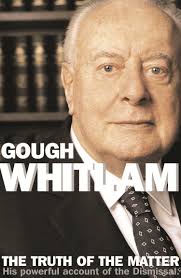
In 1975 prime minister Gough Whitlam, who has died this week [Oct 2014], dared to try to assert his country’s autonomy. The CIA and MI6 made sure he paid the price.
Across the media and political establishment in Australia, a silence has descended on the memory of the great, reforming prime minister Gough Whitlam. His achievements are recognised, if grudgingly, his mistakes noted in false sorrow. But a critical reason for his extraordinary political demise will, they hope, be buried with him.
Australia briefly became an independent state during the Whitlam years, 1972-75. An American commentator wrote that no country had “reversed its posture in international affairs so totally without going through a domestic revolution”. Whitlam ended his nation’s colonial servility. He abolished royal patronage, moved Australia towards the Non-Aligned Movement, supported “zones of peace” and opposed nuclear weapons testing.
Although not regarded as on the left of the Labor party, Whitlam was a maverick social democrat of principle, pride and propriety. He believed that a foreign power should not control his country’s resources and dictate its economic and foreign policies. He proposed to “buy back the farm”. In drafting the first Aboriginal lands rights legislation, his government raised the ghost of the greatest land grab in human history, Britain’s colonisation of Australia, and the question of who owned the island-continent’s vast natural wealth.
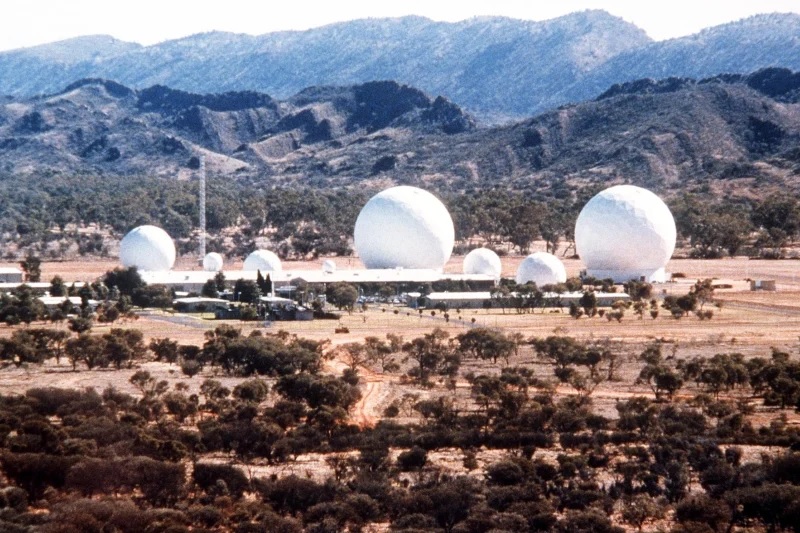
……………………………………… Whitlam demanded to know if and why the CIA was running a spy base at Pine Gap near Alice Springs, a giant vacuum cleaner which, as Edward Snowden revealed recently, allows the US to spy on everyone. “Try to screw us or bounce us,” the prime minister warned the US ambassador, “[and Pine Gap] will become a matter of contention”
Victor Marchetti, the CIA officer who had helped set up Pine Gap, later told me, “This threat to close Pine Gap caused apoplexy in the White House … a kind of Chile [coup] was set in motion.”
Pine Gap’s top-secret messages were decoded by a CIA contractor, TRW. One of the decoders was Christopher Boyce, a young man troubled by the “deception and betrayal of an ally”. Boyce revealed that the CIA had infiltrated the Australian political and trade union elite and referred to the governor-general of Australia, Sir John Kerr, as “our man Kerr”.
Kerr was not only the Queen’s man, he had longstanding ties to Anglo-American intelligence. He was an enthusiastic member of the Australian Association for Cultural Freedom, described by Jonathan Kwitny of the Wall Street Journal in his book, The Crimes of Patriots, as “an elite, invitation-only group … exposed in Congress as being founded, funded and generally run by the CIA”. The CIA “paid for Kerr’s travel, built his prestige … Kerr continued to go to the CIA for money”.
When Whitlam was re-elected for a second term, in 1974, the White House sent Marshall Green to Canberra as ambassador. Green was an imperious, sinister figure who worked in the shadows of America’s “deep state”……………………………..
The Americans and British worked together. In 1975, Whitlam discovered that Britain’s MI6 was operating against his government. “The Brits were actually decoding secret messages coming into my foreign affairs office,” he said later. One of his ministers, Clyde Cameron, told me, “We knew MI6 was bugging cabinet meetings for the Americans.” In the 1980s, senior CIA officers revealed that the “Whitlam problem” had been discussed “with urgency” by the CIA’s director, William Colby, and the head of MI6, Sir Maurice Oldfield. A deputy director of the CIA said: “Kerr did what he was told to do.”
…………………………….. On 11 November – the day Whitlam was to inform parliament about the secret CIA presence in Australia – he was summoned by Kerr. Invoking archaic vice-regal “reserve powers”, Kerr sacked the democratically elected prime minister. The “Whitlam problem” was solved, and Australian politics never recovered, nor the nation its true independence.
John Pilger’s investigation into the coup against Whitlam is described in full in his book, A Secret Country (Vintage), and in his documentary film, Other People’s Wars, which can be viewed on http://www.johnpilger.com/
Fixing a fatal, nuclear flaw in AUKUS
With an AUKUS announcement imminent, nonproliferation expert Alan Kuperman says there’s still time to make sure Australian subs use less dangerous low-enriched uranium and make the world safer.
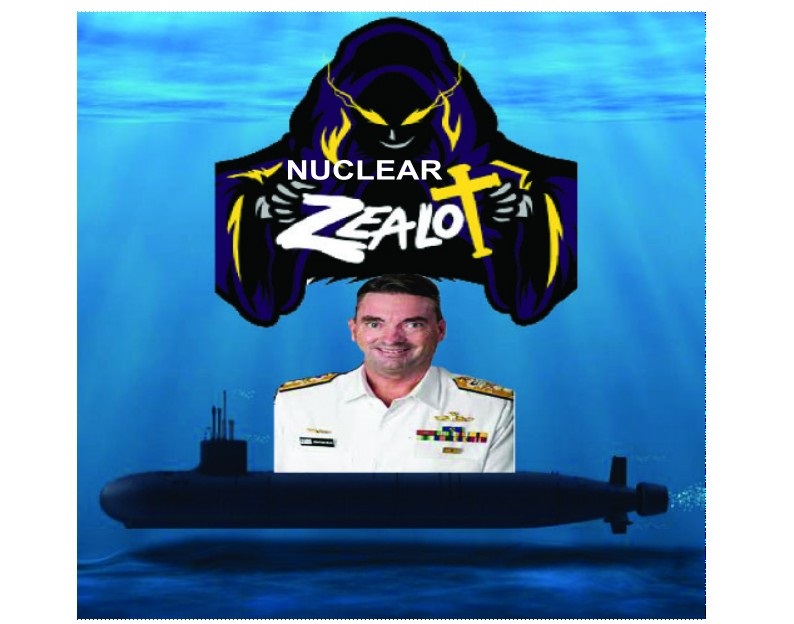
In Australia, the admiral who leads the AUKUS task force disclosed on national television last month, when asked if Australia wanted HEU or LEU, “We will accept the reactor they give us.”
Since Australia cannot obtain its first nuclear submarine until “well into the 2040s,” according to the US Navy’s top admiral, there is still time for the United States to design that ship’s reactor for LEU fuel.
(Jonathon Mead probably does not understand the significance of this)
By ALAN J. KUPERMAN March 07, 2023 https://breakingdefense.com/2023/03/fixing-a-fatal-nuclear-flaw-in-aukus/
In coming days President Joe Biden is expected to host a much-anticipated summit to announce how the United States and United Kingdom will provide nuclear-powered submarines to Australia – the centerpiece of the trilateral AUKUS partnership dramatically unveiled 18 months ago.
When first publicized in September 2021, the deal sounded like a win for all three countries. The United States would get Australia to buy submarines that effectively would come under US command. Australia would increase the likelihood of the United States defending it from China. And the United Kingdom would bolster its ship-building industry.
However, the current implementation plan, as confirmed recently by a senior Australian official, contains a fatal and unnecessary flaw: Australia’s submarines would be fueled by tons of nuclear weapons-grade, highly enriched uranium (HEU) – an amount sufficient for hundreds of nuclear weapons – setting a precedent that would foster nuclear proliferation.
President Biden can and should insist on a safer nuclear fuel that could preserve both AUKUS and nonproliferation.
Weapons-grade uranium is arguably the most dangerous substance on earth. Terrorists could make a Hiroshima-sized bomb from just 100 pounds of it. Using more advanced methods, a country could produce an equivalent explosion from only 20 pounds [PDF]. Yet, Australia would acquire up to 10,000 pounds of it [PDF] – in reactors for “at least eight nuclear-powered submarines” under AUKUS.
Because HEU is so dangerous, the United States has striven for half a century to eliminate its use globally, except in nuclear weapons, by converting domestic facilities to use safer, low-enriched uranium (LEU), and then persuading other countries to follow suit. Around the world, some 71 nuclear reactors and all major producers of medical isotopes have already switched to LEU. In 2018, the United States also declared that Army reactors would use LEU fuel, and in 2020 expanded that to NASA reactors [PDF].
The only US exception has been for Navy reactors in submarines and aircraft carriers, which still rely on HEU fuel. However, in a 2016 report to Congress [PDF], the Navy said that it too could probably switch to LEU fuel. Yet the Navy has failed to do so, dismissing proliferation concerns on grounds that the United States already has nuclear weapons.
That excuse clearly does not apply to Australia, a country that has pledged under the Nuclear Non-Proliferation Treaty (NPT) never to acquire nuclear weapons.
The precedent of such a state acquiring tons of weapons-grade uranium could unravel the global nonproliferation regime, because other countries would demand the same right. If the United States refused to provide them bomb-grade fuel, they could construct their own uranium enrichment facilities to produce it for naval or other reactors, on grounds that Australia had sundered the decades-long international taboo against HEU fuel.
Several countries rang the alarm last summer at the United Nations’ NPT review conference. Indonesia warned that “HEU in the operational status of nuclear naval propulsion” would endanger “the global non-proliferation regime” [PDF]. China asserted that it “sets a dangerous precedent for the illegal transfer of weapons-grade nuclear materials from nuclear-weapon states to a non-nuclear-weapon state” [PDF]. Even close US allies — the Netherlands, Norway, and South Korea — admonished the AUKUS countries by reaffirming that, “Efforts to reduce stocks of HEU and to minimize and eventually eliminate the use of HEU are a form of permanent threat reduction.”
The good news is that nuclear submarines do not require – and Australia has not demanded – weapons-grade fuel. France and China use LEU fuel in their submarines even though they possess HEU for nuclear weapons. Even the United States has been researching LEU naval fuel since 2016 [PDF], which also could be applied to British submarines that depend on US reactor designs and fuel.
In Australia, the admiral who leads the AUKUS task force disclosed on national television last month, when asked if Australia wanted HEU or LEU, “We will accept the reactor they give us.” Since Australia cannot obtain its first nuclear submarine until “well into the 2040s,” according to the US Navy’s top admiral, there is still time for the United States to design that ship’s reactor for LEU fuel.
That means it is entirely up to Biden to determine whether the AUKUS submarines will undermine the international nonproliferation regime by needlessly using tons of weapons-grade uranium fuel, or instead will reinforce that regime by complying with the international norm against HEU.
The wrong decision would set a precedent that many countries could exploit to produce HEU ostensibly for reactor fuel but in fact for nuclear weapons. In that case, AUKUS would create many more problems than it possibly could solve.
Alan J. Kuperman is associate professor and coordinator of the Nuclear Proliferation Prevention Project (www.NPPP.org) at the LBJ School of Public Affairs, University of Texas at Austin.
Nuclear submarine zealot Jonathon Mead tries hard to reassure Australians about the “sovereignty” safety etc of the $171 billion submarine purchase, (avoids mention of costs and wastes)
Australia will put nuclear safety ‘above all else’ as it builds submarines, vice admiral says
In interview with Guardian Australia, Jonathan Mead moves to allay concerns as Aukus partners prepare to announce detailed plans
Daniel Hurst Foreign affairs and defence correspondent, Wed 8 Mar 2023 https://www.theguardian.com/world/2023/mar/08/australia-will-put-safety-above-all-else-as-it-builds-nuclear-powered-submarines-vice-admiral-says
Australia will put nuclear safety “above all else” as it begins the “generational challenge” of building and operating nuclear-powered submarines under the Aukus pact, the government’s top adviser has said.
Vice Admiral Jonathan Mead has moved to allay concerns – both at home and across the region – about nuclear safety as Australia, the US and the UK prepare to announce their detailed plans within days.
The head of the Australian government’s nuclear-powered submarine taskforce has also insisted that the likely presence of American and British personnel on Australian boats would not inhibit Australian command and control.
In an interview with Guardian Australia, Mead said there were likely to be more Australians onboard British and American nuclear-powered submarines as part of the training process. He said as many as 40 Australians may potentially be onboard a US submarine at any one time.
The US president, Joe Biden, is due to welcome the Australian prime minister, Anthony Albanese, and the British PM, Rishi Sunak, to the US for a joint announcement early next week about the practicalities of Australia acquiring at least eight nuclear-powered submarines
Mead, who leads a taskforce of more than 350 Australian officials who have been working on the plans, said this would be “a generational challenge for Australia and will probably redefine Australia’s strategic personality”.
But he sought to reassure partners in south-east Asia and the Pacific about Australia’s intentions. “I can give them a commitment that we will hold the standards of safety above all else,” Mead said on Wednesday.
“Look at the track record of US and UK nuclear submarines previously, look at Australia’s own track record in the way we manage our research reactor at Lucas Heights, and the way that we have managed visiting nuclear-powered ships and submarines over the past 60 years.”
Mead described nuclear safety as “the No 1 consideration as we build, operate, maintain and regulate the nuclear powered submarines”.
This would include safety of the submarine crew, safety of the community, and environmental protection.
He said Australia had received “a very clear message from the US and the UK that safety is paramount” but added: “I think the Australian people would absolutely expect that, so we’re going to make sure that we set a gold standard when it comes to safety.”
‘Welded, shielded and sealed’ for 33 years
Some nuclear experts have argued the Aukus arrangement depends on “a glaring and worrying loophole” in safeguards that could be exploited by others.
The Nuclear Non-Proliferation Treaty (NPT) does not ban non-nuclear weapon countries such as Australia from having nuclear-powered naval vessels.
The Chinese government has also sought to sow doubt about Aukus, arguing the deal would have “a grave nuclear proliferation risk and violates the object and purpose of the NPT”.
But Mead said each nuclear reactor would “come to us welded, shielded and sealed” and Australia was in continuing dialogue with the International Atomic Energy Agency.
He said they were making “excellent progress” on an inspection and verification regime, while acknowledging the need “to protect very sensitive technology of the US and UK”.
“Nuclear-powered submarines are not prohibited under the NPT,” Mead said.
“Yes, the reactors will be with highly enriched uranium. But once again, they are welded, shielded and sealed for the life of the reactor. That’s 33 years.
“We will implement the most stringent of security protocols to make sure that those reactors are not opened for the life of the submarine.”
Sovereign control
Mead was tight-lipped about the design of the submarine, the timeframes and the cost – all of which will be announced soon.
But he again defended the plans against concerns raised by former prime ministers Malcolm Turnbull and Paul Keating over their potential impact on Australian sovereignty.
“When we take our own sovereign control, we will clearly have some US and UK sailors there – and they may be there to provide technical advice on the reactor, or they may be upfront working with us in the combat system,” Mead said.
“We welcome that technical advice, we welcome subject matter expertise. And I think that we will continue to have US and UK people in our submarines, as we will have our own people onboard their submarines.”
But Mead said such arrangements would not inhibit Australian command and control.
“It doesn’t matter who is onboard. If that is an Australian flagged submarine with an Australian commanding officer, there is absolutely no ambiguity when it comes to sovereign control,” he said.
Asked what would happen if that technical advice was withdrawn, Mead said Australia was determined to “develop a sovereign ability to build a nuclear-powered submarine, operate a nuclear-powered submarine, maintain a nuclear-powered submarine and regulate a nuclear-powered submarine”.
“So there’s an expectation by our partners, and I think Australians would have an expectation, that we must be able to do this ourselves,” Mead said.
“But yes, we will have assistance, something we have assistance with many of our major programs. The US and the UK will assist us and as we develop more and more understanding of the technology, then we would be probably have less of those people in Australia.”
Mead said the looming announcement would show that the plans were “really a trilateral partnership” with the US and the UK, rather than a binary choice.
He said his taskforce was working closely with the South Australian government and unions to develop a supply chain and vendor base in Australia that could feed into US and UK programs.
On Wednesday the British high commissioner to Australia, Vicki Treadell, rebuked the Australian opposition leader, Peter Dutton, for saying the government should pursue US Virginia class submarines over a British alternative.
Treadell said she had spoken with Dutton and told him he was “commenting on an outcome he doesn’t yet know”. She told the National Press Club: “I was simply pointing out that I did not think such expressions were helpful on what is a genuine trilateral partnership started under his government.”
Australia’s Nuclear Subs Will Use a UK Design to Counter China
- US parts and upgrades will be provided for the subs as well
- In the meantime, the US may base some subs in Australia
Australia’s Nuclear Subs to Use UK Design, People SayUnmuteAustralia’s Nuclear Subs to Use UK Design, People Say
By Peter Martin, Kitty Donaldson and Alex Wickham, March 9, 2023
Australia’s new fleet of nuclear-powered submarines will be based on a modified British design with US parts and upgrades, people familiar with the matter said, as the three countries press ahead with a security partnership meant to counter China. The submarine plan, set to be announced next week, will take years to produce its first vessel, probably necessitating stopgap measures, according to the people, who asked not to be identified discussing private deliberations. In the meantime, the US may base nuclear submarines in Australia or even sell the country US Virginia-class submarines. ……….. (Subscribers only)
Australian and other nuclear news this week

Some bits of good news. International Women’s Day: 15 trailblazing women making the world better. Historic treaty to protect oceans’ biodiversity.
Coronavirus. Coronavirus Disease (COVID-19): Weekly Epidemiological Update ( March 2023)
Climate. The 2023 Climate Risk Landscape
Nuclear. Where to start? Well, the danger of nuclear war is the most urgent thing. There’s Ukraine – with Zelensky wanting to attack Crimea, and with Biden surrounded by his warmongering advisors Victoria Nuland, Jake Sullivan and more- “whatever it takes“.
The USA warhawks are getting smarter. Instead of starting a war, with USA troops, as in Iraq, Afghanistan etc – the system now is to goad another country into an invasion – Russia invading Iraq, That not only preserves USA troops from any danger, but is a business coup for US weapons company, – as in Ukraine buying $billions of weapons. Intended result – a weakened Russia
Next step, even cleverer – get Australia to buy $171 billions of nuclear submarines, goad China into attacking its own province, Taiwan, and let Australia as China’s adversary and target, take the human and financial brunt of it all . Intended result – a weakened China. USA is in dire need of some intelligent leaders and advisors.
Christina notes. Pauvre chere Agnes – unhappy about “discrimination” against nuclear energy!
AUSTRALIA. Movie Premiere -“The Road to War”– Australia is being set up to be the US proxy in its coming war with China – https://www.youtube.com/watch?v=hEU02LTJBxI–Don’t ask the government about the next war. Former Prime Minister Keating lashes Nine newspapers over ‘news abuse’ in China coverage.
Richard Marles and the betrayal of Australian sovereignty. Avalon Military Bonanza. If the nuclear submarines aren’t ready in time – no worries – Australia will get lots of fun weaponry against China. Isn’t it exciting? UK, US or a hybrid? Intense speculation as Australia’s $170bn nuclear submarine choice looms. AUKUS nuclear sub announcement surfaces as PM heads to India. The USA is letting Australia buy air-to ground missile for attacking China.
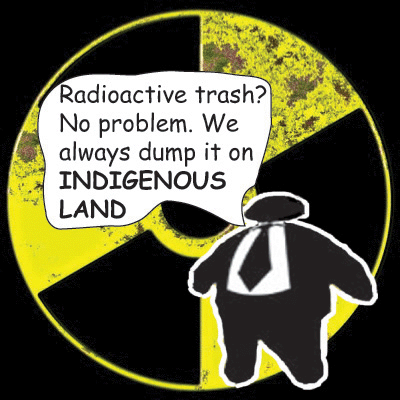
Barngarla women warn Kimba nuclear waste plan will ‘destroy’ sacred site, Dreaming stories. Traditional owners fight to stop SA nuclear waste dump.
CIVIL LIBERTIES. Der Spiegel asks: “Is the CIA hunting Assange’s supporters?”
ECONOMICS. France Sees ‘No Problem’ Funding Macron’s New Nuclear Reactors. Marketing: South Korea, France keen to sell nuclear reactors to Saudi Arabia (no connection with nuclear weapons OF COURSE!)
ENVIRONMENT. Spain renews call for US to remove soil from nuclear accident site. Campaigners claim permit change at Hinkley Point would kill billions of fish. Ministry to delay trial on reusing Fukushima soil in Kanto area.
HEALTH. Compensation sought for victims of nuclear weapons development. Scientists: Fukushima’s nuclear wastewater capable of producing cancers after release.
LEGAL. ‘David and Goliath’ – legal case, as indigenous group fights the Australian government to stop a nuclear waste dump on their traditional land. Idaho county challenges spent nuclear fuel storage.
MEDIA. It Is The Mass Media’s Job To Help Suppress Anti-War Movements. DieDieBooks releases nuclear horror Threads essay, with plenty of nods to Lawrence’s The Day After – https://www.youtube.com/watch?v=aG-e52yAxfs
NUCLEAR TECHNOLOGY. The Dream of NuScale Small Nuclear Reactors Hangs in the Balance. Rolls-Royce Small Modular Reactor project running out of cash.
OPPOSITION to NUCLEAR. Nuclear Free Local Authorities call on Secretary of State to end ‘wanton vandalism’ of environment at Sizewell. Canadian environmental watchdog group ROEE does not support expansion of nuclear power.
POLITICS. Japan’s Citizens’ Nuclear Information Center Protest the Cabinet Decision on the Nuclear Power Promotion Bundle Bill. Many Fukushima mayors reluctant to take stand on nuke energy shift. Fukushima residents feel left out in TEPCO’s water plan.
Boris Johnson champions small nuclear reactors, UK government’s commitment to nuclear power wavering, as Hinkley Point C’s costs and delays escalate? French MPs pave way to dropping legal limit on nuclear in energy mix.
POLITICS INTERNATIONAL and DIPLOMACY.
- Biden’s “Fools-Based International Order” – a network to bring about war against China. The world returns to an era of nuclear angst.
- The West hasn’t gone after Russia’s nuclear energy- Here’s why.
- SCOTT RITTER: Reimagining Arms Control After Ukraine. Zelensky warns Americans that US will lose global influence if it stops backing war.
- France mounts battle for nuclear energy in Europe. France pushing hard to make the European Union a pro-nuclear organisation. A “nuclear alliance” in Europe, as France leads a pack of EU member states to count nuclear energy as “green and renewable” Others disagree. EU rewrites climate diplomacy deal to resolve nuclear sticking point.
- Russian nuclear energy diplomacy and its implications for energy security in the context of the war in Ukraine.
- Saudi Arabia Aiming for Complete Nuclear Fuel Cycle.
- UN nuclear chief says Iran pledges more access for inspectors. Is nuclear power in a global death spiral
- Fighting for Earth – South Koreans protest Japan’s plan of dumping Fukushima nuclear-contaminated wastewater into the sea .
PROTESTS. Fukushima Anniversary Vigil Outside UK’s Nuclear Fuel Manufacturing Plant Near Preston — RADIATION FREE LAKELAND
SAFETY. The Nuclear “War” in Ukraine May Not Be the One We Expect. Belgian nuclear regulator tells govt not to extend oldest reactors. Evacuation plans still missing around 6 of Japan’s nuclear power plants.
SECRETS and LIES. US has spent billions on Ukraine war aid. But is that money landing in corrupt pockets? The West has fostered the creeping “nazification” of Ukraine, to increase hostility to Russia – philospher Aleksandr Dugin.
SPACE. EXPLORATION, WEAPONS. Space dangers: Contested orbits and mounting space junk.
SPINBUSTER. Jennifer Granholm was Pwned (Pwned = utterly and humiliatingly defeated in a game) in the continuing Edward Teller tradition.
WASTES
- The Fukushima controversy. Japan to Delay Ocean Dumping of Contaminated Waste Water from Fukushima. Little progress seen in removing fuel debris at Fukushima plant. China urges Japan not to arbitrarily dump nuclear-contaminated water: Chinese officials at IAEA meeting.
- Canada’s Nuclear Waste Management Organization looks to First Nations to back waste storage, AND small nuclear reactors.
- The nuclear war for Lincolnshire – a toxic plan for a bucolic village.
- Nuclear Waste Is Piling Up.-Does the U.S. Have a Plan?.
WAR and CONFLICT. The ninth anniversary of the Ukraine war. A coming wider war with Crimea in US sights. Ukraine preparing attack on Crimea – Zelensky. ‘Ukrainian kamikaze drone’ crashes down near gas plant just 68 miles from the Kremlin as Putin demands tighter security. Ukrainian Army War Crimes Include Shelling of Ambulances, Firetrucks, and Rescue Workers in the Donbass Republics. Viktor Orban: “In A War Taking Place In Europe The Americans Have The Final Word“. NATO conducts massive submarine warfare exercise in Mediterranean
Pentagon Prepares for Island Combat in the Pacific as US-China Tensions Rise. G7 should declare ‘no first use‘ of nuclear weapons: ex-Hiroshima mayor.
WEAPONS and WEAPONS SALES. Trudeau sends more German tanks to Ukraine F-16 Aircraft Delivery To Ukraine Only Matter Of Time – Merezhko. Scholz vows to ‘permanently’ increase Germany’s military output to aid Ukraine: CNN. U.S. to train NATO eastern flank allies on HIMARS Preparing for war with Russia: Texas air base has trained over 8,000 NATO pilots.
Movie Premiere -“The Road to War”- Australia is being set up to be the US proxy in its coming war with China.
As international tensions rise to a new level, with the Ukraine war passing its first anniversary and the Albanese Government set to announce its commitment of hundreds of billions of dollars to new weaponry, nuclear propelled subs, Stealth bombers etc, The Road to War brings into sharp focus why it is not in Australia’s best interests to be dragged into an American-led war with China.]]

The Road to War is directed by one of Australia’s most respected political documentary filmmakers, David Bradbury. Bradbury has more than four decades of journalistic and filmmaking experience behind him having covered many of the world’s trouble spots since the end of the Vietnam war — SE Asia, Iraq, East Timor, revolutions and civil war in Central and South America, India, China, Nepal, West Papua.
“I was driven to make this film because of the urgency of the situation. I fear we will be sucked into a nuclear war with China and/or Russia from which we will never recover, were some of us to survive the first salvo of nuclear warheads,” says the twice Oscar-nominated filmmaker.
We must put a hard brake on Australia joining in the current arms race as the international situation deteriorates. We owe it to our children and future generations of Australians who already face the gravest existential danger of their young lives from Climate Change,” says Bradbury.
There is general concern among the Defence analysts Bradbury interviews in the film that Australia is being set up to be the US proxy in its coming war with China. And that neither the Labor nor LNP governments have learnt anything from being dragged into America’s wars of folly since World War II — Korea, Vietnam, two disastrous wars in Iraq and America’s failed 20 year war in Afghanistan which ripped that country apart, only to see the Taliban warlords return the country and its female population to feudal times.
We must put a hard brake on Australia joining in the current arms race as the international situation deteriorates. We owe it to our children and future generations of Australians who already face the gravest existential danger of their young lives from Climate Change,” says Bradbury.
There is general concern among the Defence analysts Bradbury interviews in the film that Australia is being set up to be the US proxy in its coming war with China. And that neither the Labor nor LNP governments have learnt anything from being dragged into America’s wars of folly since World War II — Korea, Vietnam, two disastrous wars in Iraq and America’s failed 20 year war in Afghanistan which ripped that country apart, only to see the Taliban warlords return the country and its female population to feudal times.
“Basing US B52 and Stealth bombers in Australia is all part of preparing Australia to be the protagonist on behalf of the United States in a war against China. If the US can’t get Taiwan to be the proxy or its patsy, it will be Australia,” says former Australian ambassador to China and Iran, John Lander.
Military analyst, Dr Richard Tanter, fears the US military’s spy base at Pine Gap near Alice Springs, will be the first target of any direct confrontation between the US and Russia or China.
“The US military base at Pine Gap is critical to the US military’s global strategy, especially nuclear missile threats in the region. The generals in Moscow and Beijing would have it as a top priority on their nuclear Hit List,” says Dr Tanter whose 40 years of ground-breaking research on Pine Gap with colleague, Dr Des Ball, has provided us with the clearest insight to the unique role Pine Gap plays for the US. Everything from programming US drone attacks to detecting the first critical seconds of nuclear ICBM’s lifting off from their deep underground silos in China or Russia, to directing crippling nuclear retaliation on its enemy.
Military analyst, Dr Richard Tanter, fears the US military’s spy base at Pine Gap near Alice Springs, will be the first target of any direct confrontation between the US and Russia or China.
“The US military base at Pine Gap is critical to the US military’s global strategy, especially nuclear missile threats in the region. The generals in Moscow and Beijing would have it as a top priority on their nuclear Hit List,” says Dr Tanter whose 40 years of ground-breaking research on Pine Gap with colleague, Dr Des Ball, has provided us with the clearest insight to the unique role Pine Gap plays for the US. Everything from programming US drone attacks to detecting the first critical seconds of nuclear ICBM’s lifting off from their deep underground silos in China or Russia, to directing crippling nuclear retaliation on its enemy.
“Should Russia or China want to send a signal to Washington that it means business and ‘don’t push us any further’, a one-off nuclear strike on Pine Gap would do that very effectively, without triggering retaliation from the US since it doesn’t take out a US mainland installation or city,” says Dr Tanter.
“It’s horrible to talk about part of Australia in these terms but one has to be a realist with what comes to us by aligning ourselves with the US,” Tanter says.
“Studies show in the event of even a very limited nuclear exchange between any of the nuclear powers, up to two billion people would starve to death from nuclear winter,” says Dr Sue Wareham of the Medical Association for the Prevention of War.
“The Australian Government, Prime Minister Anthony Albanese and Defense Minister Richard Marles, have a serious responsibility to look after all Australians. Not just those living in cities. Were Pine Gap to be hit with even one nuclear missile, Health Minister Mark Butler would be hard pressed to find any volunteer nurses and doctors willing to risk their lives to help survivors in Alice Springs, Darwin and surrounding communities from even one nuclear missile hitting this critical US target,” says Dr Wareham.
The Road to War. Latest Film by David Bradbury
Premiere in Melbourne March 22 at the Carlton Nova cinema
Hobart screening State Cinema March 23 with special guest Bob Brown
Adelaide screening Capri cinema March 29
Further information or interviews with David Bradbury:
Mobile 0409925469
Former Prime Minister Keating lashes Nine newspapers over ‘news abuse’ in China coverage

He said Taiwan was a “civil issue” for China, and “not a vital Australian interest”.
“We have no alliance with Taipei. There is no piece of paper sitting in Canberra which has an alliance with Taipei,” he said.
The New Daily@TheNewDailyAU, Mar 7 23 https://thenewdaily.com.au/news/politics/australian-politics/2023/03/07/paul-keating-smh-china/
Former prime minister Paul Keating has unleashed on the Nine newspapers over their coverage of the threat posed by China.
In an incendiary letter, Mr Keating accused the Sydney Morning Herald and Age newspapers of unparalleled “bias and news abuse” after they splashed on Tuesday with a special feature titled “Red alert”.
“Australia faces war threat with China within three years. We’re not ready,” read the headline.
Inside, editorials asked: “Are we prepared for war? The public has a right to know”.
Mr Keating blasted the coverage of “Australia’s supposed war risk with China” as “the most egregious and provocative news presentation of any newspaper I have witnessed in over 50 years of active public life” in an open letter on Tuesday.
“It is way worse than the illustrated sampans shown to be coming from China in the build up to the war in Vietnam in the 1960s,” he wrote.
“Apart from the outrageous illustrations of jet aircraft being shown leaving a profiled red-coloured map of China, the extent of the bias and news abuse is, I believe, unparalleled in modern Australian journalism.”
The former Labor leader also took personal aim at the SMH‘s political and international editor, Peter Hartcher, who was one of the authors of the coverage. Mr Keating described Hartcher as the “arch villain” and a “provocateur and warmonger”, and accused Nine’s editors of being “compliant”.
Tuesday’s coverage included a panel of five China experts who said they believed Australia “faces the prospect of armed conflict in the Indo-Pacific within three years” – most seriously “a Chinese attack on Taiwan that sparks a conflict with the US and other democracies, including Australia”.
They pointed to Chinese President Xi Jinping’s aggressive stance and rapid military buildup. The experts said Australia unprepared for conflict, and the federal government was “reluctant to openly identify the threat we face: An increasingly aggressive Communist China”.
“The thinness of the narrative is built around five supposed ‘experts’, three of whom are regular anti-China commentators – each firmly and long identified with the strategic interests of the United States,” Mr Keating wrote.
“Their views form the basis of this exclusive ‘Red alert’. Not any one of the so-called ‘experts’ has any comprehensive knowledge of China – especially in matters of war and peace. A point Hartcher and his editors well know.”
Keating is a long-standing critic of the bipartisan consensus on Australia’s national outlook and policies such as AUKUS. In an address to the National Press Club in November 2021, he urged Australia not to be drawn into a military engagement over Taiwan – sparking another clash with Hartcher.
He said Taiwan was a “civil issue” for China, and “not a vital Australian interest”.
“We have no alliance with Taipei. There is no piece of paper sitting in Canberra which has an alliance with Taipei,” he said.
In response, a spokesperson for Taiwan’s ministry of foreign affairs told The Guardian that Taiwan and Australia were important partners, sharing universal values and common strategic interests and that China’s aggression had far-reaching implications.
“The crisis in the Taiwan Strait is by no means a domestic matter between Chinese, and the security of the Taiwan Strait involves the stability and prosperity of the Indo-Pacific region, but also the global peace, stability and development,” Joanne Ou said.
Mr Keating finished Tuesday’s letter by declaring “the illegitimacy of the [Nine newspapers] is manifest even to a moderately informed reader”.
“The management and board of Nine Group will have much to answer for should it allow further publication of this wantonly biased and inflammatory material,” he said.
‘David and Goliath’: Kimba nuke waste fight heads to Federal Court
Stephanie Richards, 6 March 23, https://indaily.com.au/news/2023/03/06/david-and-goliath-kimba-nuke-waste-fight-heads-to-federal-court/?utm_medium=email&utm_campaign=InDaily%20Lunchtime%20%206%20March%202023&utm_content=InDaily%20Lunchtime%20%206%20March%202023+CID_654499187b614fa7e1f09bd8ceb7100e&utm_source=EDM&utm_term=READ%20MORE
Barngarla Traditional Owners’ fight to stop a nuclear waste facility being built near Kimba on South Australia’s Eyre Peninsula has reached the Federal Court, with the first substantive case hearing in Adelaide today.
They were supporting the Barngarla Determination Aboriginal Corporation, which has applied for judicial review in an attempt to thwart construction of the federal government’s planned radioactive waste storage facility at Napandee near Kimba.
“We’re fighting against injustices that have been happening to the Barngarla people regarding this waste dump in Kimba,” Barngarla Traditional Owner Harry Dare told InDaily outside court.
“We’re actually fighting for a seven sisters and women’s dreaming site and we’re fighting for a vote in our local governance.
“The Australian Government has given back our Native Title, but they haven’t given us a voice in those Native Title areas, so we’re fighting for equality and for all of Australia to be nuclear free.”
The Napandee site was selected by the former Morrison Government, with then Resources Minister Keith Pitt saying the government had secured “majority support” from the local community after more than “six years of consultation”.
But Barngarla Traditional Owners opposed the project and argued they were not included in the consultation.
During today’s hearing, the Federal Court was told of how the decision to locate the dump at Napandee, near Kimba, played out.
After beginning the process to select the site through its administrative powers, the then Coalition Government changed tack and decided to legislate, partly to avoid delays through legal challenges.
However, when the legislation failed in the Senate, the government restarted the administrative process.
Counsel for the Barngarla told Justice Natalie Charlesworth that raised questions over whether Pitt, who ultimately named the Napandee location and who strongly supported the legislative approach, could properly carry out his administrative role.
“That, of itself, would excite a reasonable apprehension that the minister might be unable or unwilling to approach the matter with an open mind,” he said.
“Because, effectively, the decision had already been made.”
The court was also told that the Barngarla disagreed with the former government’s view that the dump had wide community support in Kimba and would also argue the decision on the dump was unreasonable given the lack of proper consultation with the Indigenous owners.
Given Pitt’s correspondence with the Barngarla people and his other statements, the impression that might arise was that consultation would largely amount to “matters around the edges”.
“In terms of identifying culture and the like in the implementation of the site, which had already been selected and to which the minister was committed,” counsel said.
With the case listed for several days, the federal government is expected to argue that much of the material to be relied on by the applicants is subject to parliamentary privilege.
The Barngarla launched their action in 2021 after being denied the right to participate in a community ballot to gauge local support for the Napandee site because many did not live in the Kimba council area.
The community ballot returned about 61 per cent in favour of the dump.
But when the Barngala conducted their own ballot among their community members, 83 voted no and none voted yes.
They argue they were denied the right to participate in a community ballot to gauge local support for the site, because many did not live in the Kimber council area.
Traditional Owner Linda Dare told protestors ahead of this morning’s hearing that the proposed location for the nuclear waste facility was near an important women’s site for the Barngarla people.
“It just seems to be that every time the government wants to put something it’s always around a women’s site,” she said.
“We need to fight as women around Australia to protect our sites.
“We need to say ‘no’ because it’s going to affect the waterways, not just in South Australia but everywhere.”
InDaily reported in September that the federal government was spending three times more than Barngarla Traditional Owners fighting the project in the Federal Court.
Information released to SA Greens Senator Barbara Pocock showed that between December and July, the government had spent $343,457.44 on legal fees.
That compares to the approximate $124,000 spent by the Barngarla Determination Aboriginal Corporation over the same period.
The Native Title group estimates that the total cost incurred by the federal government would run into the millions.
Barngarla Determination Aboriginal Corporation chairperson Jason Bilney told InDaily the judicial review was a “David and Goliath battle”.
“But, we’re dedicated. It took us 21 years to win our Native Title, come out of Native Title six months later and we’re fighting a nuclear waste dump on our country,” he said.
“What does that tell you about truth telling, the Statement From The Heart or the Voice?
“Our Voice isn’t being heard, truth telling isn’t being told and they’re going to break the First Nations’ heart – Barngarla – and put it (the nuclear waste dump) on our country.”
Bilney said Traditional Owners expected the Federal Court would take months to reach a decision, with hearings scheduled each day this week.
“It could take a year, but we would like it to have it sooner than later,” he said.
It comes after the Barngarla Native Title group last month won a separate Supreme Court bid to overturn former Premier Steven Marshall’s decision to allow a mineral exploration company to drill at Lake Torrens in the state’s outback.
At the time, Bilney said the group was buoyed by the win as they continued their legal fight to stop the Napandee nuclear waste facility from going ahead.
South Australian Labor has long called for Barngarla people to have the right to veto the project, with Premier Peter Malinauskas previously saying that the state government had expressed its views to the federal government.
Barngarla women warn Kimba nuclear waste plan will ‘destroy’ sacred site, Dreaming stories
ABC North and West SA / By Nicholas Ward 5 Mar 23,
Banners that feature children’s art are being used to protest against a proposed nuclear waste facility on South Australia’s Eyre Peninsula.
Key points:
- The Federal Court case to stop a proposed radioactive waste facility at Kimba resumes this week
- A native title group says the national nuclear dump will destroy women’s Dreaming stories
- Children from across SA are creating art to protest the federal government’s site decision
At the Barngarla Community House in Port Augusta, the finishing touches are being added to the protest banners, which will travel with a group of Barngarla elders to Adelaide.
Their native title group has brought a case against the federal government to stop the proposed National Radioactive Waste Management Facility at Kimba.
The case is set to resume in the Federal Court this week.
Barngarla woman Linda Dare says the art contributions have been made by children of various cultural backgrounds.
There’s a lot of interest in this, with not just Aboriginal kids and not just older people, but people of all ages and cultures who have been involved,” Ms Dare said………………..
Nuclear waste at women’s Dreaming site
Dawn Taylor, a Barngarla woman, grew up in Kimba and she said the proposed facility would interfere with a sacred site for women.
“The Seven Sisters Dreaming is through that area,” Ms Taylor said.
“A lot of people don’t know about this feminine sister Dreaming.
“But the Seven Sisters Dreaming means a lot to all of us as women, in each tribe, throughout the country.”
Ms Dare said the Seven Sisters story had been handed down for generations.
She fears the waste facility will “destroy those stories” that she has grown up with.
She has spoken to Federal Resources Minister Madeleine King to urge her to block the facility from going ahead.
“I actually spoke to [Ms King] when we met with her not long ago in Kimba, woman to woman, that she could actually be the one to say no to this,” Ms Dare said.
Site preparation works underway at the site are expected to take up to two years before construction on the radioactive waste facility can commence.
The matter to block its construction returns to court on Monday. https://www.abc.net.au/news/2023-03-05/barngarla-women-protest-against-nuclear-waste-at-kimba/102053982
1 This month


Help Aunty Sue Protect Her Land and Sacred Sites From Destructive Rocket Testing.
.

Australians deserve the truth
about
AUKUS – https://aukuspublicinquiry.com/

PETITION – To: Prime Minister Anthony Albanese and the Australian Labor Government

of the week – Australians for War Powers Reform (AWPR)
To see nuclear-related stories in greater depth and intensity

