Submissions to Senate Committee on move to remove Australia’s bans on the nuclear industry – now published
Submissions to Committee examining Environment and Other Legislation Amendment (Removing Nuclear Energy Prohibitions) Bill 2022

The table below looks bizarre. Sorry – Luddite me.
Until very recently , only 38 submissions had been published – the vast majority being straight from the nuclear lobby., Now suddenly, that’s jumped to 144. I plan to examine them all. But in the meantime – so many submissions from individuals have appeared. So – for now, I’v had to put them in the “Neutral” box . Until I have tim eto plough through them all.
Until very recently , only 38 submissions had been published – the vast majority being straight from the nuclear lobby., Now suddenly, that’s jumped to 144. I plan to examine them all. But in the meantime – so many submissions from individuals have appeared. So – for now, I’v had to put them in the “Neutral” box . Until I have tim eto plough through them all.
Pro- nuclear ——————–Anti Nuclear————-Neutral or I don’t know
| 1 Terrestrial Energy Inc (PDF 203 KB) 2 RePlanet Australia (PDF 8399 KB) 4 Australian Nuclear Association (PDF 186 KB) 5 entX Limited (PDF 98 KB) 6 Women in Nuclear Australia (PDF 113 KB) 7 Ultra Safe Nuclear Australia Pty Ltd (PDF 2606 KB) 8 StarCore Nuclear (PDF 184 KB) 10 JDC Electrical and Communication (PDF 5212 KB) 11 Nuclear For Climate Australia (PDF 1362 KB) 18 SMR Nuclear Technology PTY LTD (PDF 319 KB) 19 Australian Nuclear Science and Technology Organisation (PDF 201 KB) 20 Fusion Party (PDF 224 KB) 24 Minerals Council of Australia (PDF 632 KB) Attachment 1 (PDF 3158 KB) 25 Australian Workers’ Union (PDF 334 KB) 26 Institute of Public Affairs (PDF 1579 KB) 27 Silex Systems Limited (PDF 9259 KB) 30 Australian Resources Development Pty Ltd (PDF 79 KB) (PDF 632 KB) 32 Adj. Prof. Stephen Wilson (PDF 442 KB) 33 Innovative Process Upgrade Technologies (PDF 162 KB) 34 Dr James Taylor, Mr Bill Bourke, Mr Craig Brooking, Mr Rafe Champion, Mr Howard Dewhirst, Mr Paul Goard, Mr Peter J F Harris, Mr John McBratney, Dr Paul McFadyen, Dr John McLean, Dr Alan Moran, Dr John L Nicol, Emeritus Professor Cliff Ollier and Dr Peter Ridd (PDF 158 KB) Attachment 1 (PDF 3022 KB) Attachment 2 (PDF 803 KB) 37 Dr Adrian Paterson (PDF 620 KB) 38 South Australian Chamber of Mines & Energy (PDF 136 KB) | 3 Electrical Trades Union (PDF 501 KB) 9 Friends of the Earth Adelaide (PDF 196 KB) 12 Environment House (PDF 37 KB) 14 Friends of the Earth Australia, Australian Conservation Foundation, Greenpeace Australia Pacific, Wilderness Society, Conservation Council of WA, Conservation SA, Nature Conservation Council (NSW), Environment Victoria, Queensland Conservation Council, Environment Centre NT and Environs Kimberley (PDF 1470 KB) 17Independent and Peaceful Australia Network (PDF 469 KB) 21 Marrickville Peace Group (PDF 181 KB) 23 Voice for Walcha (PDF 140 KB) 28 Medical Association for Prevention of War (PDF 1011 KB) 31 Top End Peace Alliance (PDF 108 KB) 102 Ms Noel Wauchope (PDF 123 KB) | 13 The Australian Academy of Science (PDF 143 KB) 16 Ms Helen Cook, GNE Advisory (PDF 110 KB) 22 Dr Sundance Bilson-Thompson (PDF 50 KB) 29 Australian Citizens Party (PDF 406 KB 35 Mr Alan Lawrenson (PDF 650 KB) ) 36 Department of Climate Change, Energy, the Environment and Water (PDF 2565 KB) 39 Responsible Energy Development for New England (PDF 54 KB) 41 Ms Mary Szental (PDF 34 KB) 42 Mr John Lewis (PDF 35 KB) 43 Mr Darryl Nelson (PDF 19 KB 44 Mr Barrie Hill (PDF 253 KB) 45 Ms Marie-Louise Drew (PDF 54 KB) 46 Mr Benjamin Cronshaw (PDF 99 KB) 47 Mr Neville Rutter (PDF 41 KB) 48 Mr Andrew Williams (PDF 58 KB) 49 Dr Craig Cooper (PDF 161 KB) 50 Mr Raymond Ongley (PDF 20 KB) 51Mr Jim Bain (PDF 60 KB) 52 Mr Randall Starling (PDF 2132 KB) 53 Ms Susanne Godden (PDF 80 KB) 54 Mrs Janet Pukallus (PDF 87 KB) 55 Name Withheld (PDF 38 KB) 56 Ms Deborah Pergolotti (PDF 45 KB) 57 Name Withheld (PDF 17 KB) 58 Name Withheld (PDF 57 KB) 59 Mr William Morrison (PDF 34 KB) 60 Mr Peter Johnson (PDF 33 KB) 62 Mr Michael Mardel (PDF 22 KB) 63 Mr John Wood (PDF 3246 KB) 64 Mr Graeme Batterbury (PDF 94 KB) 65 Ms Jessica Wysser (PDF 87 KB) 69 Mr Walter A Starck (PDF 72 KB) 70 Ms Judy Schneider (PDF 67 KB) 73 Mr Quentin Dresser (PDF 36 KB) 77 Mr Barry Murphy (PDF 54 KB) 78 Jean M. Christie (PDF 40 KB) 79 Mr Keith Derek Kerr (PDF 115 KB) 80 Ms Michele Kwok (PDF 72 KB) 81 Mr Don Higson (PDF 95 KB) 82 Mr Kenneth Martin (PDF 34 KB) 83 Name Withheld (PDF 154 KB) 84 Mr Thomas W. Adams (PDF 28 KB) 85 Mr John Zink (PDF 81 KB) 86 Mr Gregory O’Brien (PDF 27 KB) 87 Mr Peter Briggs (PDF 27 KB) 88 Mr Murray Morris (PDF 30 KB) 89 Mr Adam Medica (PDF 31 KB) 90 Mr John Jenkins (PDF 60 KB) 93 Ms Suzann Vasanji (PDF 48 KB) 94 Ms Jan Wu (PDF 38 KB) 95 Mr Patrick Geeves (PDF 56 KB) 96 Mr George Papadopoulos (PDF 55 KB) 97 Mr Wayne Crawford (PDF 96 KB) 98 Mr Hugh Drum (PDF 37 KB) 99 Virgil Smith (PDF 37 KB) 101 Mr Peter Lane (PDF 80 KB) 103 Ms Helen Bradbury (PDF 27 KB) 104 Mr Robert Heron (PDF 77 KB) 104.1 Supplementary to submission 104 (PDF 77 KB) 105 Ms Beth White (PDF 235 KB) 107 Mr John Newlands (PDF 43 KB) 108 Mr Alexander Joseph Walsh (PDF 48 KB) 110 Mr Robert Pritchard (PDF 43 KB) 111 Mrs Kay Christensen (PDF 40 KB) 112 Mr Peter Hickson (PDF 41 KB) 113 Name Withheld (PDF 47 KB) 114 Mr Justin Tutty (PDF 59 KB) 115 Name Withheld (PDF 43 KB) 116 Name Withheld (PDF 13 KB) 117 Mr Dennis Pukallus (PDF 58 KB) 118 Name Withheld (PDF 17 KB) 119 Dr Christopher Kaalund (PDF 21 KB) 120 Mr Matthew Tomblin (PDF 45 KB) 121 Name Withheld (PDF 30 KB) 122 Mr Timothy Clifford (PDF 35 KB) 123 Mr Louis Rozman (PDF 196 KB) 124 Mr Ian Levy (PDF 202 KB) 125 Name Withheld (PDF 27 KB) 126 Professor Chilla Bulbeck (PDF 56 KB) 127 Professor George Burns (PDF 93 KB) 128 Professor James Doery (PDF 37 KB) 129 Ms Robyn Sullivan (PDF 68 KB) 130 Ms Donna Brooker (PDF 59 KB) 131 Mr Nunzio Grimaldi (PDF 40 KB) 132 Mr Paul Chamberlain (PDF 50 KB) 133 Mr Logan Smith (PDF 43 KB) 134 Ms Monica Leggett (PDF 38 KB) 135 Name Withheld (PDF 140 KB) 136 Ms Grusha Leeman (PDF 57 KB) 137 Hazel Kleinau (PDF 133 KB) 138 Mr Desmond Whyte (PDF 47 KB) 140 Mr Steven Eley (PDF 77 KB) 141 Mr Timothy Nott (PDF 72 KB) 142 Name Withheld (PDF 96 KB) 143 Mr Marc Centner (PDF 92 KB) 144 Name Withheld (PDF 1736 KB) |
Britain: Australian army trains Ukrainian “warfighters” to meet NATO standards — Anti-bellum
Defense PostFebruary 17, 2023 Australia Training Ukrainian Recruits’ Tactical, Survivability Skills in the UK The Australian Army is conducting tactical and survivability training for Ukrainian Armed Forces recruits in southern England. The exercise was launched as part of Operation Kudu, an Australian defense initiative to upskill Ukrainian warfighters…. Led by the Royal Australian Regiment 5th […]
Britain: Australian army trains Ukrainian “warfighters” to meet NATO standards — Anti-bellum
Coalition and Labor promise billions to fast track NSW switch to wind, solar and storage — RenewEconomy

NSW Coalition promises an extra $323 million on storage, rooftop solar and small batteries, while Labor proposes new $1 billion state body modelled on CEFC. The post Coalition and Labor promise billions to fast track NSW switch to wind, solar and storage appeared first on RenewEconomy.
Coalition and Labor promise billions to fast track NSW switch to wind, solar and storage — RenewEconomy
The Horrifying Endgame in Ukraine

This entire scenario is a long slow march toward nuclear war or the complete disintegration of Ukraine.
The U.S. won’t end the weapons deliveries because Joe Biden is afraid of losing face and his closest advisors such as Victoria Nuland have an irrational hatred for Russia and are total warmongers.
BY JAMES RICKARDS, 14 Feb 23, https://dailyreckoning.com/the-horrifying-endgame-in-ukraine/—
In yesterday’s issue, I addressed the biggest and most complex topic on the geopolitical landscape today — China.
But today I’m discussing what is by far the most alarming topic on the geopolitical landscape today. That’s the war in Ukraine and the dangers of escalation.
I’ve written extensively about two facets of the war in Ukraine that you don’t hear from legacy media in the United States or U.K. The first is that Russia is actually winning the war.
U.S. outlets such as The New York Times (a channel for the State Department) and The Washington Post (a channel for the CIA) report endlessly about how Russian plans have failed, about how incompetent they are about how the Armed Forces of Ukraine (AFU) have pushed back Russians in the Donbass, and how NATO weapons such as U.S. Abrams tanks, U.K. Challenger tanks and German Leopard tanks will turn the tide against Russia soon.
This is all nonsense. None of it is true.
Reality Check
First off, the Ukrainian advances that took place in late summer were against lightly defended positions that the Russians quickly conceded to conserve forces. The Russians were willing to give up the land so that they wouldn’t lose valuable men and materiel.
The Russians withdrew to more defensible positions and have been badly mauling Ukrainian attacking forces ever since. Ukraine has wasted incredibly large amounts of men and equipment in these futile and ill-advised attacks.
In all, credible reports indicate that AFU casualties are nearing 500,000 and are increasing at an unsustainable rate. On the other hand, reports of 100,000 Russian dead are almost certainly wild exaggerations put out by Ukraine. The BBC attempted to verify these numbers and could only find about 20,000 confirmed Russian dead based on extensive searches on funeral notices, public records, etc.
Send in the Tanks — Eventually!
What about the tanks NATO is supposedly sending? Well, the tanks have not been delivered yet and most won’t be for months or longer. Our own M1 Abrams tanks might not even arrive for a year or more.
We actually have to custom build these tanks so that they don’t have the special armor and other advanced systems that our own M1s have. The Pentagon doesn’t want them falling into Russian hands if they’re destroyed or captured. Besides, we’re only sending 31 tanks anyway.
When the NATO tanks do arrive, they’ll likely quickly be destroyed by Russian artillery, anti-tank weapons and precision missiles. They’re good tanks, but far from invincible. For decades, the Russians have been developing powerful weapons specifically designed to destroy these NATO tank models. The Russians aren’t particularly worried about them.
Aside from that, tanks rely on effective air cover for protection, which Ukraine lacks. They’ll be sitting ducks on the battlefield. It doesn’t really make sense to send tanks to Ukraine unless you send combat aircraft to give them cover (more on that below).
Russia’s Winning on the Battlefield
Meanwhile, Russian forces have nearly encircled the city of Bakhmut, which is a major transportation and logistics hub, with several key roads and rail lines passing through it. It’ll probably fall to the Russians within weeks.
Losing Bakhmut will be a major blow to Ukraine, despite claims in the western media that it really isn’t very important. Ukraine’s entire 800-mile defensive line would probably begin to crumble, and they don’t have heavily fortified positions to fall back on. Ukrainian troops, while brave and competent soldiers, are exhausted and running out of supplies as it is.
On top of that, it appears likely that Russia is preparing a devastating offensive with massive amounts of men, tanks, armored personnel carriers, artillery, helicopters, drones and fixed-wing aircraft.
This Russian army is not the same army that invaded Ukraine a year ago. It’s much better trained, led and equipped. It’s learned from the mistakes it made during its initial invasion last February. Ukraine shouldn’t expect them to repeat those mistakes.
Does all this mean I’m cheering on a Russian victory in Ukraine? No, I’m just observing the facts on the ground and consolidating them to perform an objective analysis.
That analysis leads me to believe that Russia will win the war militarily. Western military assistance may prolong the fighting but won’t affect the ultimate outcome. It’ll just delay the inevitable and get a lot more people needlessly killed.
The Much Greater Risk
The second facet of this war not reported in the media, or at least downplayed, is the growing risk of nuclear war.
This risk increases with every escalatory step by both sides. The U.S. is the leader in reckless escalation by supplying long-range artillery, Patriot anti-missile batteries, intelligence, surveillance, and now the tanks. Russia responds at each step.
There’s a number of steps before the two sides arrive at the nuclear level, but neither shows a willingness to step back.
By the way, Russia has every legal right to attack those NATO countries supplying arms to Ukraine. By supplying arms to a party to the conflict, they’ve given up their neutrality and have become, in effect, combatants. Russia hasn’t done this because it doesn’t want to bring NATO directly into the fight. But legally, it can.
Gimme, Gimme, Gimme
Ukraine’s demands on the U.S., UK and the rest of NATO for advanced weapons to fight Russians know no limits. The West began by supplying Ukraine with cash, intelligence and anti-tank weapons such as the Javelin missile. Soon we were supplying long-range artillery, drones, and more cash.
As Russian advances continued, Zelensky demanded and got Patriot anti-missile batteries that can destroy incoming Russian missiles. The U.S. artillery was aimed at Russian Crimea. Several drones struck inside Russia at sensitive air bases with nuclear weapons nearby.
Gimme, Gimme, Gimme
Ukraine’s demands on the U.S., UK and the rest of NATO for advanced weapons to fight Russians know no limits. The West began by supplying Ukraine with cash, intelligence and anti-tank weapons such as the Javelin missile. Soon we were supplying long-range artillery, drones, and more cash.
As Russian advances continued, Zelensky demanded and got Patriot anti-missile batteries that can destroy incoming Russian missiles. The U.S. artillery was aimed at Russian Crimea. Several drones struck inside Russia at sensitive air bases with nuclear weapons nearby.
Once these advanced systems show they can’t help, what’s the Ukrainian’s next demand? Russia can escalate just as quickly and lethally as the U.S.
This entire scenario is a long slow march toward nuclear war or the complete disintegration of Ukraine.
Is Anyone Really Prepared for This?
The U.S. won’t end the weapons deliveries because Joe Biden is afraid of losing face and his closest advisors such as Victoria Nuland have an irrational hatred for Russia and are total warmongers.
Now, we can add a new danger, resulting from desperation. This is the fact that the U.S. itself may be the biggest loser in the war.
As Ukraine disappears under a massive Russian onslaught, the U.S. will grow increasingly desperate. Its credibility is on the line after committing so much money, materiel and moral weight to Ukraine’s defense.
The Biden administration has essentially turned the war in Ukraine into an existential crisis for the U.S. and NATO, when it never should have been. Ukraine has never been a vital U.S. interest. But the war is existential for Russia, and Russia won’t give up.
Is the U.S. just going to throw up its hands and concede Russian victory? NATO may actually disintegrate in the face of such spectacular failure. So, we’ll probably double down.
Maybe a desperate Biden orders troops into western Ukraine as a buffer against a complete Russian takeover of the country. You can imagine what could go wrong. That situation may quickly devolve into a direct war between the U.S. and Russia rather than the proxy war that it is now.
The American people and investors in particular are not prepared for any of this. They should be. It’s becoming increasingly likely.
Betting on Ukraine victory was ‘suicidal’ – Seymour Hersh
https://www.rt.com/russia/571690-hersh-ukraine-nato-corruption/ 18 Feb 23
The West didn’t even want Kiev in NATO because of corruption concerns, the Pulitzer Prize-winning journalist says.
The US and its allies should have attempted to reach an agreement with Moscow as their belief that Ukraine can win a conflict against Russia is “suicidal,” iconic American investigative journalist Seymour Hersh has argued.
Speaking in a YouTube interview with the Consortium News outlet on Friday, Hersh accused the Biden administration of making “so many bad mistakes,” adding that “it’s impossible to believe just how dumb this leadership was.”
“It was suicidal to think you can win that war, that Ukraine can win the war [against Russia]. There’s just too much corruption. That was a very, very bad decision. We should have been pushing for peace, we should have made an agreement,” the former Pulitzer Prize winner insisted.
US President Joe Biden basically “blew off NATO in Europe” by telling allies that he is backing Ukraine with its “totally corrupt government,” Hersh added. The journalist also pointed out how Kiev glorifies Stepan Bandera, “the great pro-Nazi who killed Jews like crazy during World War II.”
It’s just silly not to right away assure the Russian government that we weren’t interested in making Ukraine a member of NATO,” Hersh stated, referring to long-standing concerns in Moscow. “NATO didn’t want Ukraine anyway because of the corruption.”
Hersh recently published a bombshell report which accused the US of sabotaging the Nord Stream pipelines last year. He cited an informed source as explaining that explosives were planted on the bottom of the Baltic Sea by US Navy divers under the guise of a NATO exercise back in June 2022. They were detonated in late September, rendering the pipelines, which were built to deliver Russian gas to Europe through Germany, inoperable.
US Secretary of State Antony Blinken, as well as Under Secretary for Political Affairs Victoria Nuland and National Security Advisor Jake Sullivan, are all “very hawkish,” according to the journalist. The trio “pushed Biden very hard” to go ahead with the sabotage because “they have long-standing incredible hatred for [Russian President Vladimir] Putin. It’s almost personal, I would guess,” Hersh claimed.
READ MORE: More Nord Stream ‘bombshells’ to come – Seymour Hersh
US National Security Council spokeswoman Adrienne Watson branded Hersh’s bombshell report “utterly false and complete fiction.” The journalist has promised even more revelations on how the pipelines were blown up.
Microsoft Puts New Limits On Bing’s AI Chatbot After It Expressed Desire To Steal Nuclear Secrets

Forbes Matt Novak, Contributor, FOIA reporter and founder of Paleofuture.com, writing news and opinion on every aspect of technology. 20 Feb 23,
Microsoft announced it was placing new limits on its Bing chatbot following a week of users reporting some extremely disturbing conversations with the new AI tool. How disturbing? The chatbot expressed a desire to steal nuclear access codes and told one reporter it loved him. Repeatedly.
“Starting today, the chat experience will be capped at 50 chat turns per day and 5 chat turns per session. A turn is a conversation exchange which contains both a user question and a reply from Bing,” the company said in a blog post on Friday…………………………………………more https://www.forbes.com/sites/mattnovak/2023/02/18/microsoft-puts-new-limits-on-bings-ai-chatbot-after-it-expressed-desire-to-steal-nuclear-secrets/?sh=1aad6dab685c
War is a climate killer

Conflicts worsen military sector’s already enormous CO2 footprint
War is a climate killer — Beyond Nuclear International
The military already has the largest carbon footprint. Going to war makes it far worse
By Angelika Claussen
War brings death and destruction – not least to the environment and climate. Russia’s invasion of Ukraine offers a depressing reminder of that fact, and further increases the military sector’s already enormous global CO₂ footprint. In addition, the eastern Ukrainian cities where fighting is taking place are home to fossil fuel infrastructure such as chemical factories, oil refineries, and coal mines, the bombing of which produces a cocktail of toxic substances that has devastating environmental impacts. Efforts to arm the two sides, moreover, are consuming materials and resources that could otherwise go towards tackling the climate crisis.
Based on the global CO₂ budget, humanity has less than eight years to ensure it still hits its 1.5-degree warming target. To do so, we need to urgently implement reforms in all areas, to bring about “systemic change,” as the IPCC report from early April puts it. The military sector barely gets a mention in this almost 3,000-page document, however, with the word “military” coming up just six times. You might thus conclude that the sector is of little relevance to the climate emergency.
The reality is rather different. Using military hardware results in huge quantities of emissions. In the war in Ukraine, 36 Russian attacks on fossil fuel infrastructure were recorded in the first five weeks alone, leading to prolonged fires that released soot particulates, methane and CO₂ into the atmosphere, while oil infrastructure has been ablaze on the Russian side too. The oil fields that were set on fire in 1991 during the second Gulf War contributed two per cent of global emissions for that year.
While greenhouse gas emissions are one of the most significant impacts of war, the quantity emitted depends on the duration of the conflict and on what tanks, trucks, and planes are used. Another is the contamination of ecosystems that sequester CO₂. Staff from Ukraine’s environment inspectorate are currently collecting water and soil samples in the areas around shelled industrial facilities.
Military emissions
The ramifications for the climate can be catastrophic in scale. According to a study by the organisation Oil Change International, the Iraq War was responsible for 141 million tonnes of CO₂ equivalent emissions between its outbreak in 2003 and the report’s publication in 2008. By way of comparison: some 21 EU member states emitted less CO₂ equivalent in 2019, with only six states topping that figure…………………………………………………..
As the war in Ukraine goes on, the biggest challenge of the 21st century – the climate crisis – has slipped down the agenda. We mustn’t forget, though, that efforts to tackle that crisis can only succeed if all countries – including Russia – work together. The immediate demand is for a ceasefire, followed by measures to build trust, such as international disarmament treaties. Moreover, Russia will need outside help if it is to transition to a climate-friendly energy industry. What’s required is a fundamental socio-ecological transformation, with policy-making dictated by the needs of all. That may seem inconceivable at present, but what’s the alternative? Unchecked global warming would be catastrophic for the planet’s entire population. https://wordpress.com/post/nuclear-news.net/221967
Despite massive losses of nuclear company EDF, and reactor corrosions, France plans to build a new fleet of EPR reactors.

Despite corrosion leaving nearly half of French atomic power fleet idle
last year and huge cost overruns at new construction, state-backed power
comapny insists on building even more reactors.
A plunge in nuclear power
output related mostly to inspections and repairs for stress corrosion that
left nearly half of France’s atomic generation fleet idled for much of last
year has cost EDF €29.1bn ($30.99bn), pushing the embattled state-owned
utility into a massive loss.
Forty-three of the company’s 56 reactors are
currently operational again, up from only 30 at the beginning of November
2022. But last year’s decline in nuclear output – which the company had to
compensate for with power purchases at a time when market prices were very
high – linked to the impact of price caps for French consumers last year,
triggered a loss in generation and supply segment earnings before interest,
taxes, depreciation and amortisation (Ebitda) of €23.14bn.
Gains in other
areas, such as regulated activities or renewables were not able to
compensate for the nuclear drain on finances. That was the main cause of a
€17.94bn net loss for the entire group, compared to a €5.11bn net
profit in 2021.
Despite the massive losses at EDF, as well as dozens of
billions in cost overruns and decade-long delays at the construction of a
new EPR (European Pressurised Reactor) at Flamanville, French President
Emmanuel Macron last year launched a programme to build six further EPRs in
France, with the option for eight more at later stage.
Recharge 17th Feb 2023
Nuclear weapons uncertainty must be resolved

This masthead has previously expressed reservations about the lack of debate around the AUKUS pact, which will eventually lead to us operating US-built nuclear submarines, and was essentially sprung on us by the Morrison government.
any suggestion that US bombers eventually based here could potentially be used to deliver nuclear weapons, even a hint of which could make Australia a first-strike target, must be thoroughly interrogated.
EDITORIAL The Age 16 Feb, 23 https://www.theage.com.au/national/nuclear-weapons-uncertainty-must-be-resolved-20230216-p5cl6d.html
Have nuclear weapons been creeping onto Australian shores? That was the impression you may have well reached watching a Senate estimates hearing on Wednesday, when Defence Secretary Greg Moriarty indicated that American planes and ships could – in theory, at least – come here with a nuclear payload without breaching international protocols.
The South Pacific Nuclear Zone treaty, also known as the Treaty of Raratonga, expressly prohibits the “stationing” of nuclear weapons on Australian soil. But it has little to say about how we are supposed to deal with nuclear-equipped foreign planes and vessels that pass through.
Said Moriarty, “There is no impediment under this treaty … to the visit of foreign aircraft to Australian airfields or transit of Australia’s airspace, including in the context of our training and exercise programs and Australia’s force posture co-operation program with the United States.”
As for the potential that those planes are carrying nuclear weapons, he explained, we typically choose to make it none of our business. Abiding by a US policy called “warhead ambiguity”, apparently we don’t ask, they don’t tell, and the Australian public is none the wiser. Foreign Minister Penny Wong put it another way: “The responsible way of handling this is to recognise that the US has a ‘neither confirm nor deny position’ which we understand and respect.”
We have been able to sustain this likely fiction since B-52 bombers first began visiting Australian airfields in the 1980s. But the revelations late last year that the US now plans to build dedicated facilities to house six of its strategic bombers at Tindal air base, outside Darwin, raises the stakes, including for our co-signatories in the Treaty of Raratonga and neighbours and potential geopolitical rivals across the Pacific region.
Hearing of the plan in November, Beijing accused Australia and the United States of “triggering an arms race in the region”: hardly unexpected but not a complaint that was entirely without substance.
None of the B-52s officially stationed here would be able to carry nuclear weapons without breaching the treaty: “stockpiling, storage, installation and deployment” of any nuclear explosive device is prohibited. But there would surely be little to prevent companion aircraft passing through with payloads unknown: who would be checking? Nor would China and Indonesia necessarily care to recognise the difference. As for the treaty, when would “visiting” cross the line into “stationed”?
This masthead has previously expressed reservations about the lack of debate around the AUKUS pact, which will eventually lead to us operating US-built nuclear submarines, and was essentially sprung on us by the Morrison government. China, again, criticised that development, labelling our transition from diesel to nuclear as an “extremely irresponsible” threat to regional stability.
Indonesia, too, expressed its concerns. Writes military strategist Mick Ryan, “As a non-aligned country, it is very sensitive to the deployment of combat power from external nations into their area of interest.” Also expressing concerns are those who argue fuelling the boats with weapons-grade uranium could breach the international non-proliferation treaty.
Not so long ago, the merest hint that Australia was dabbling in nuclear anything with our American allies – power, submarines, weapons – would have provoked citywide protests. These days, apparently, not so much, especially if what is actually happening is hard to make out, hidden under a cloak of deniability or diplomatic technicalities. Even domestic nuclear power has re-emerged as an acceptable topic for discussion, if not necessarily enthusiastic adoption, after decades of staunch opposition. Yet we must not be lulled into ambivalence: any suggestion that US bombers eventually based here could potentially be used to deliver nuclear weapons, even a hint of which could make Australia a first-strike target, must be thoroughly interrogated.
ANSTO Chief blowing hot air on radioactive waste
17 February 2023
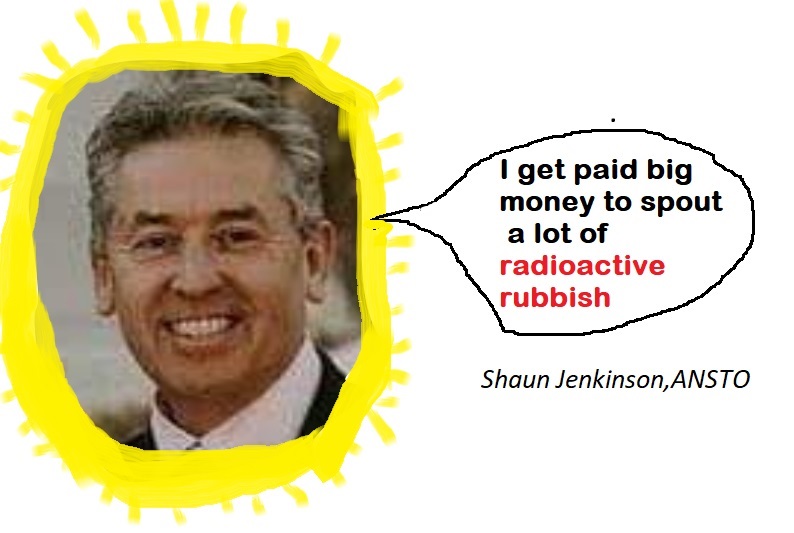
The chief executive of Australia’s Nuclear Science Technology Organisation (Ansto), Shaun Jenkinson, admitted yesterday there was no evidence to support his claim last year that the production of nuclear medicine would stop if the proposed radioactive waste dump in South Australia did not go ahead.
Under questioning by South Australian Greens Senator Barbara Pocock, at a Senate Estimates hearing, Mr Jenkinson said there was “no specific analysis about at what point production of nuclear medicine would stop.”
Jenkinson claimed in November last year that Ansto would not be able to keep producing nuclear medicine once the waste management facility at Lucas Heights in Sydney reached capacity.
Pressed on the issue at the Estimates hearing yesterday, the Ansto head said, “If there was to be a delay in (building the new waste dump) we would be seeking approval for additional on-site storage until such time as a national waste management facility was ready and so we’re doing that.
“Its an iterative process we do that every year,” he said.
Commenting outside the hearing Senator Pocock said it was “disingenuous for Mr Jenkins to make alarming claims that could cause distress to people who rely on nuclear medicines, such as cancer patients, simply to support the Government’s case for a nuclear waste dump in South Australia.”
Australian Conservation Foundation campaigner Dave Sweeney, accused Jenkinson of causing unnecessary concern to vulnerable people in order to support the case for a radioactive waste dump in South Australia, when he made the statement.
Senator Pocock earlier quizzed the Australian Radioactive Waste Authority (ARWA)about how much the Federal Government was spending fighting a court case brought by Aboriginal Traditional Owners of the proposed site saying that “in the midst of a campaign to give First Nations Australians a voice in matters that concern them, the Government surely should be listening to the Barngarla Native Title holders on this issue.”
ARWA also confirmed that the option for safe storage of intermediate level waste, including new waste, exists for years into the future at the current radioactive waste management faciltiy at Lucas Heights and that there are no obstacles to further upgrades to increase capacity there.
—
Irresponsible Politics: Australia’s B-52 Nuclear Weapons Problem, and weasel words from Foreign Minister Penny Wong.

an irritated Wong deferred the issue in its entirety to Washington’s judgment, accepting the principle of “warhead ambiguity”.
This stubbornly irresponsible approach by the Australian government and its public servants means that the Australian public, at no point, can know whether US aircraft or delivery systems will have nuclear weapons, even if they transit through airspace or are based, for however long, on Australian soil. As Australian Greens Senator and Foreign Affairs spokesperson Jordon Steele John described it, “Australians have resisted the nuclearization of our military for decades and now the Albanese government is letting the Americans do it for us.”
February 17, 2023, Dr Binoy Kampmark, https://theaimn.com/irresponsible-politics-australias-b-52-nuclear-weapons-problem/
It is not farfetched to make the point that delivery systems capable of deploying nuclear weapons will lead to them carrying those very same weapons. Whatever the promises made by governments that such delivery systems will not carry such loads, stifling secrecy over such arrangements can only stir doubt.
That is the problem facing the AUKUS alliance which makes Australia a central point of reference for Washington and its broader ambitions in curbing China. The alliance is increasingly being characterised by a nuclear tone. First came the promise to furnish Australia with nuclear powered submarines, absent nuclear weapons. Then came the announcement to deploy six B-52 bombers to the Northern Territory’s Tindal airbase, south of Darwin.
Australia, in being turned into a US garrison state, is very likely going to be a site where nuclear weapons are hosted, though pedants and legal quibblers will dispute what, exactly, constitutes such hosting. Whether this is done so transiently, or whether this will be an ongoing understanding, is impossible to say. Any such arrangement is bound to make a nonsense of the South Pacific Nuclear-free Zone Treaty, otherwise known as the Treaty of Rarotonga, to which Australia is a party
The Albanese government is doing little to clarify the matter, and, in so doing, drawing even more attention to itself. In Senate estimates hearings held on February 15, the Greens pressed for clarification on the issue of nuclear weapons on Australian soil. Senator David Shoebridge asked whether Canberra was complying with the Treaty of Rarotonga, and whether visiting B-52s could carry nuclear weapons.
The latter question was almost a moot point, given that all B-52Hs are nuclear capable. The only issue is the type of nuclear enabled weapon they might carry. The nuclear gravity bomb days of the aircraft are over, but they are more than capable of being armed with nuclear-tipped cruise missiles.
In his response, Department of Defence Secretary Greg Moriarty manufactured a state of compliance with international obligations. The circle could thereby be squared. “I think more generally, it is clear stationing of nuclear weapons in Australia is prohibited by the South pacific nuclear free zone treaty, to which Australia is fully committed.”
The same, however, could not be said about visiting “foreign aircraft to Australian airfields or transit of Australia’s airspace, including in the context of our training and exercise programs, and the Australia and the Australian force posture cooperation with the United States.”
Disconcertingly, Moriarty went on to acknowledge that the practice of carrying nuclear weapons on US aircraft, if it had been going on, was entirely consistent with Australia’s own commitments to both the Treaty of Rarotonga and the Nuclear Non-Proliferation Treaty. “US bomber aircraft have been visiting Australia since the early 1980s and have conducted training in Australia since 2005. Successive Australian governments have understood and respected the longstanding US policy of neither confirming nor denying the presence of nuclear weapons on particular platforms.”
Moriarty went on to acknowledge that, “Australia will continue to fully comply with our international obligations, and the United States understands and fully respects Australia’s international obligations with respect to nuclear weapons.”
Shoebridge, less than content with the secretary’s response, shot back with another question: “So, Mr. Moriarty, do I understand from that answer that defence does not believe that there is a restraint under Australia’s current treaty obligations [permitting] nuclear armed B-52 bombers to be present in Australia, provided it’s not a permanent presence?”
Moriarty never got a chance to respond. Left with an opportunity to correct the outlandishly servile, not to mention opaque nature of US-Australian security relations, Foreign Minister Penny Wong became stroppy. The tradition of Master Washington and Servant Canberra would not be bucked. “I’m the minister, and I’m responding.”
In responding, thereby channelling the self-interested voice of the US imperium, an irritated Wong deferred the issue in its entirety to Washington’s judgment, accepting the principle of “warhead ambiguity”. “It is part of ensuring we maintain that interoperability that goes to us making Australia safe. We have tried to be helpful in indicating our commitment to the South Pacific nuclear free zone treaty. We are fully committed to that. And we’ve given you the answer that the secretary has given you.”
It was, the Senator continued to elaborate, beneath the minister to “engage in any more hypotheticals” – what Shoebridge was wishing to do, she accused, was “drum up concern, and I don’t think it’s responsible.” What, then, was the appropriate response in the world according to Wong? “The responsible way of handling this is to recognise that the US has a ‘neither confirm nor deny position’ which we understand and respect.”
This stubbornly irresponsible approach by the Australian government and its public servants means that the Australian public, at no point, can know whether US aircraft or delivery systems will have nuclear weapons, even if they transit through airspace or are based, for however long, on Australian soil. As Australian Greens Senator and Foreign Affairs spokesperson Jordon Steele John described it, “Australians have resisted the nuclearization of our military for decades and now the Albanese government is letting the Americans do it for us.”
This ingloriously subservient status to Washington has been laid bare yet again, and along with that, the increasingly likely prospect of being targeted in any future conflict that involves the United States. Hardly a responsible state of affairs, and one on the verge of being treasonous.
Murdoch Propaganda Pushes Australia To Double Its Military Budget For War With China – The time to start resisting is now.

And at 45:50 we finally get to the real purpose of this Sky News special: the need to “dramatically increase” the Australian military budget, and the need to manufacture consent for that increase.
I always get people complaining that I focus too much on the US war machine when I live in Australia, but anyone who’s paying attention knows the behavior of the US war machine is as relevant to Australians as it is to Americans. They are beating the drums for a future war of unfathomable horror all to please a dark god known as unipolarism, and it threatens to destroy us all.
The time to start resisting is now.
Caitlin Johnstone, Feb 16 2023,
In the latest escalation in Australia’s increasingly forceful campaign to manufacture consent for war with China, the Murdoch-owned Sky News Australia has aired a jaw-droppingly propagandistic hour-long special which advocates a dramatic increase in the nation’s military spending.
Australians are uniquely vulnerable to propaganda because our nation has the most concentrated media ownership in the western world, the lion’s share of it by Rupert Murdoch, who has well-documented ties to US government agencies going back decades. The propaganda campaign against China has gotten so aggressive here in recent years that I’ve repeatedly had complete strangers start babbling at me about the Chinese threat in casual conversation, completely out of the blue, within minutes of our first meeting each other.
The Sky News special is one of the most brazenly propagandistic things I have ever witnessed in any news media, with its opening minutes featuring footage of bayonet-wielding Chinese troops marching while ominous cinematic Bad Guy music plays loudly over the sound of the marching. In its promotional clip for the special, Sky News Australia tinged all footage pertaining to China in red to show how dangerous and communist they are. These are not decisions that are made with the intention of informing the public, these are decisions that are made with the intention of administering war propaganda.
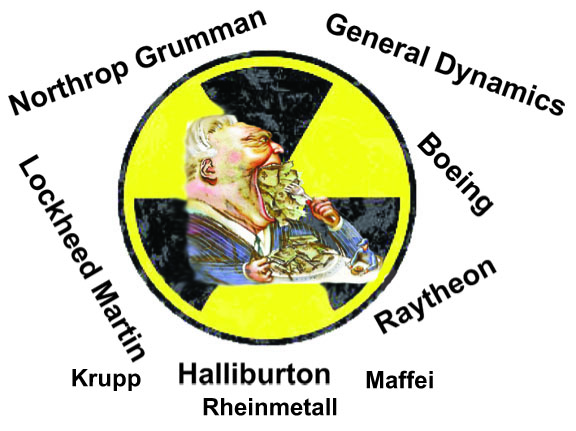
The first expert Sky News brings on to tell viewers about the Chinese menace is Mick Ryan, an Adjunct Fellow at the Center for Strategic and International Studies, which is funded by military-industrial complex entities like Raytheon, Boeing, Lockheed Martin and Northrop Grumman, and is also directly funded by the US government and its client states, including Australia and Taiwan. Sky News of course makes no mention of this immense conflict of interest while manufacturing consent for increased military spending, calling Ryan simply a “former major general.” This is on the same level of journalistic malpractice as running an article by Colonel Sanders on the health benefits of fried chicken but calling him “Harland David Sanders, former fry cook.”
The next expert Sky News presents us with is Australian former major general Jim “The Butcher of Fallujah” Molan, who oh-so-sadly passed away last month. I’ve written about Molan previously specifically because the Australian media love citing him in their propaganda campaign against China, last time when he was pushing the ridiculous claim that China is poised to launch an invasion of Australia.
The other experts Sky News brings in are former CIA Director and US Secretary of Defense Leon Panetta, Taiwan’s Foreign Minister Joseph Wu, Taiwan’s Director of Chinese Affairs Dr Lai Chung, Japan’s ambassador to Australia Yamagami Shingo, Australian Shadow Defense Minister Andrew Hastie, and John Coyne of the Australian Strategic Policy Institute, a virulent propaganda firm which is once again funded by US-aligned governments and military-industrial complex war profiteers.
So it’s about as balanced and impartial a punditry lineup as you’d expect.
At the 8:15 mark of the special, Sky News repeats the unevidenced propaganda claim that former Chinese president Hu Jintao was politically purged during the 20th Communist Party Congress last year.
At 19:15 Jim Molan talks about the need to fight and die with our allies the Americans while patriotic cello music plays in the background.
At 21:30 we are shown images of Australia being bombed alongside the Chinese flag (very subtle, guys).
At 24:25 Sky News accidentally does a version of the “look how close they put their country to our military bases” meme with a graphic display of all the US war machinery that surrounds China. The US would never tolerate being encircled by the Chinese military like that and would immediately wage war if China tried; it’s clear that the US is the aggressor in this conflict and China is reacting defensively.
“The United States plays a major strategic role in the Indo-Pacific,” says Sky News anchor Peter Stefanovic as the screen lights up with graphics showing the military presence surrounding China. “With 375,000 personnel, there’s a vast network of operations that extend from Hawaii all the way to India.”
At 26:30 we are shown a digital representation of China’s satellite systems in space, with the Chinese satellites colored red to help us all appreciate how evil and communist they are.
At 27:45 we are shown illustrations of how much smaller Australia’s military is than China’s or America’s to help us understand how important it is to increase the size of our nation’s war machine, ignoring the fact that Australia’s total population is a tiny fraction of either of those countries.
At 32:45 we are told that the AUKUS pact will “beef up America’s military presence in the north of Australia,” and that “America has long used Australia as a key strategic outpost,” showing images of Pine Gap and other parts of the US war machine which dot this continent. “Now, there’s more to come,” says Stefanovic, with US Secretary of Defense Lloyd Austin describing the surge in US military presence we’re to expect in Australia.
At 34:10 the Australian Strategic Policy Institute guy explains why the US is so keen to use Australia in its planned confrontation with China, saying the continent’s geography puts it in “the Goldilocks location” of being close enough to China to be meaningful but far enough away that its war machinery can’t be easily struck.
At 35:15 Stefanovic warns that “our nation could quite literally be brought to its knees” if a war to the north sees shipping lanes cut off since Australia is so heavily dependent of imports. You would think this is an argument about the importance of maintaining a peaceful relationship with China, but instead it’s used to foment fear of China and argue for the need to be able to defeat it in a war.
And at 45:50 we finally get to the real purpose of this Sky News special: the need to “dramatically increase” the Australian military budget, and the need to manufacture consent for that increase. Australia currently has a military budget of $48.7 billion, a little less than two percent of the nation’s GDP. The late Butcher of Fallujah tells Sky News that “we need to at least double our defense expenditure” to four percent, and the special’s pundits openly discuss the need for Australians to be persuaded to accept this using narrative management…………………….
To be clear, this is not just a call to increase military spending, this is a call to propagandize Australians into consenting to more military spending. It’s not very often that the propaganda comes right out and explains to you why it is propagandizing you.
I always get people complaining that I focus too much on the US war machine when I live in Australia, but anyone who’s paying attention knows the behavior of the US war machine is as relevant to Australians as it is to Americans. They are beating the drums for a future war of unfathomable horror all to please a dark god known as unipolarism, and it threatens to destroy us all.
The time to start resisting is now. https://caitlinjohnstone.substack.com/p/murdoch-propaganda-pushes-australia?r=pf4vw&utm_campaign=post&utm_medium=web&fbclid=IwAR2-MoxPsyKvcurWfgwc2Qd8aFn6YwgGaG4clg0wgUKO7NYQypg76A-zLUY
‘Extreme situation’: Antarctic sea ice hits record low

Damian Carrington 16 Feb 23
https://www.theguardian.com/world/2023/feb/15/antarctic-sea-ice-hits-record-low-climate-crisis
The area of sea ice around Antarctica has hit a record low, with scientists reporting “never having seen such an extreme situation before”. The ice extent is expected to shrink even further before this year’s summer melting season ends.
The impact of the climate crisis in melting sea ice in the Arctic is clear in the records that stretch back to 1979. Antarctic sea ice varies much more from year to year, which has made it harder to see an effect from global heating.
However, “remarkable” losses of Antarctic sea ice in the last six years indicate that the record levels of heat now in the ocean and related changes in weather patterns may mean that the climate crisis is finally manifesting in the observations.
Scientists were already very concerned about Antarctic ice. Climate models suggested as far back as 2014 that the giant West Antarctic Ice Sheet (WAIS), which sits on the continent, was doomed to collapse due to the levels of global heating already seen then.
The increasing loss of sea ice exposes ice sheets and their glaciers to waves that accelerate their disintegration and melting, researchers warned. A recent study estimated that the WAIS would be tipped into gradual collapse – and four metres of sea level rise – with a global temperature rise as low as 1C, a point already passed.
“I have never seen such an extreme, ice-free situation here before,” said Prof Karsten Gohl, from the Helmholtz Centre for Polar and Marine Research in the Alfred Wegener Institute, Germany, and who first visited the region in 1994.
Gohl, on board the research vessel Polarstern in Antarctica, said: “The continental shelf, an area the size of Germany, is now completely ice-free. It is troubling to consider how quickly this change has taken place.”
Prof Christian Haas, also at the Helmholtz Centre, said: “The rapid decline in sea ice over the past six years is quite remarkable, since the ice cover hardly changed at all in the 35 years before.”
Scientists at the National Snow and Ice Data Center in the US have also said a new record low has been set. They said Antarctic sea ice extent fell to 1.91m square kilometres on 13 February, below the previous record set on 25 February 2022.
Sea ice melts away in the Antarctic summer before starting to grow again as autumn arrives. “In past years, the annual minimum has occurred between 18 February and 3 March, so further decline is expected,” the NSIDC researchers said. “Much of the Antarctic coast is ice free. Earlier studies have linked low sea ice cover with wave-induced stresses on the floating ice shelves that hem the continent, leading to break up of weaker areas.”
The German scientists said the “intense melting” could be due to unusually high air temperatures to the west and east of the Antarctic peninsula, which were about 1.5C above the long-term average. Furthermore, there have been strong westerly winds, which increase sea ice retreat. The result is “intensified melting of ice shelves, an essential aspect of future global sea-level rise”, the researchers said.
Historical records also show dramatic changes in Antarctica, they said. The Belgian research vessel Belgica was trapped in massive pack ice for more than a year in the Antarctic summer 125 years ago, in exactly the same region where the Polarstern vessel is now sailing in completely ice-free waters.
Prof Carlos Moffat, at the University of Delaware, US, and recently returned from a research cruise in the Southern Ocean, told Inside Climate News: “The extraordinary change we’ve seen this year is dramatic. Even as somebody who’s been looking at these changing systems for a few decades, I was taken aback by what I saw.”
Post-war Ukraine – a triumphal land owned by Western business corporations.

tough neoliberal policies to be imposed on post-war Ukraine, with calls for cutting labour laws , “opening markets”, lowering tariffs, deregulating industries and “selling state-owned enterprises to private investors”.
Zelensky invited foreign companies to come and exploit its abundant resources and cheap labour and offered Wall Street “a chance to invest … in projects worth hundreds of billions of dollars”.
Along with the nature of the arms being supplied, so have the objectives changed, at least the stated ones. We started, so it seems, to help Ukraine defend itself against Russian invasion, then we began talking about a “Ukrainian victory” to inflict a “strategic defeat” on Russia that would leave it “weakened”, with the fall of the Putin government. We have now reached the point that a former Polish foreign minister, currently a MEP, organised a meeting in the European Parliament on January 31, 2023 to “discuss the prospects for decolonisation and de-imperialisation of the Russian Federation” (i.e., the dissolution of the Russian Federation).
Great Expectations: The Ukraine to come, By Stefania Fusero, New Cold War, Feb 13, 2023:
Originally published in Italian on La Citta Futurà, Feb 11, 2023:
The collective West, increasingly becoming more directly involved in the conflict in Ukraine, has been vague about the objectives of its participation in the war and has repeatedly contradicted itself on the nature and number of weapons to be sent to Ukraine. From another standpoint, however, it has maintained clarity and constancy over time: the total dedication to a neoliberal project for a Ukraine open to Western corporations in which workers have no guardianship or protection.
The Western powers – the USA, NATO and the EU – have maintained a linear, unequivocal and steady standpoint on the management of the conflict in Ukraine, if not a vocal partisan support for one of the parties involved (the post-Maidan Ukrainian government), the demonisation of the Russian Federation and a disdainful rejection of the ancient art of diplomacy.
While French president Macron, a week after the entry of Russian troops into Ukraine stated, “we are not at war against Russia”, after less than a year the German foreign minister Annalena Baerbock declared in front of the EU parliamentarians “we are fighting a war against Russia.” On the other hand, if at the beginning of the Russian military operations Biden pledged to avoid a direct conflict between the US and Russia, US intelligence officials have recently revealed that not only have the CIA and US special forces been conducting clandestine military operations in Ukraine, but that the CIA, together with a spy agency of another NATO country, is engaged in sabotage operations within the Russian Federation itself.
Not to mention the escalation in arms shipments to Ukraine by Western countries – the most striking example is certainly Germany, which at the beginning of the conflict reluctantly announced that it would just send helmets and a field hospital, then, amid the indignation expressed by various allied countries and subjected to ever stronger pressure, after less than a year announced it would send tanks, no less. Thus, in a few months, Germany reneged on the principles of foreign policy pursued after the defeat of Nazism, one of which required Germany not to send weapons to any conflict zones, a policy which can be summed up in the German pledge ‘never again’. Which amounts to a complete reversal of the policy of peaceful coexistence with Russia and Eastern Europe pursued by such statesmen as Willy Brandt, having major implications for the entire European continent, not just Germany.
Just a few years have passed – but it feels like centuries – since, on 7 May 2015, Foreign Minister Frank-Walter Steinmeier solemnly celebrated in Volgograd the 70th anniversary of the end of WW2. “Here in Stalingrad, these people brought about the first decisive turnaround in the war. Here in Stalingrad, these people began Europe’s liberation from Nazi dictatorship. In doing so, they made immeasurable sacrifices. As a German, I bow before these victims in sorrow. And I ask for forgiveness for the infinite suffering that Germans inflicted on others in the name of Germany, here in this city, all over Russia, in the parts of the then Soviet Union that are now Ukraine and Belarus, and all over Europe…”.
No one has described such escalation better than former Ukrainian Defence Minister Oleksii Reznikov as of October last year. “When I was in D.C. in November, before the invasion, and asked for Stingers, they told me it was impossible. Now it’s possible. When I asked for 155mm guns, the answer was no. HIMARS, no. HARM, no. Now all of that is a yes. Therefore, I’m certain that tomorrow there will be tanks and ATACMS and F-16s.”
Along with the nature of the arms being supplied, so have the objectives changed, at least the stated ones. We started, so it seems, to help Ukraine defend itself against Russian invasion, then we began talking about a “Ukrainian victory” to inflict a “strategic defeat” on Russia that would leave it “weakened”, with the fall of the Putin government. We have now reached the point that a former Polish foreign minister, currently a MEP, organised a meeting in the European Parliament on January 31, 2023 to “discuss the prospects for decolonisation and de-imperialisation of the Russian Federation” (i.e., the dissolution of the Russian Federation).
On the other hand, it is not the first time that a plan to dismantle the Russian Federation has been openly talked of, under the guise of an improbable anti-imperialist struggle – see for example a conference organised on June 23, 2022 in Washington by the CSCE, a US government agency otherwise known as the Helsinki Commission. If anything, such initiatives can now be officially held at the institutional seat of the EU parliament.
Whereas the trajectory of Western military involvement in the Ukraine conflict has apparently been confused and cobbled together, the stance on the economic, social and political future of Ukraine has instead remained clear and constant over time.
The table is laid
4-5 July 2022, Lugano: Ukraine Recovery Conference.
Representatives of Western governments and corporations (US, EU, UK, Japan and South Korea) met in Switzerland to plan a series of tough neoliberal policies to be imposed on post-war Ukraine, with calls for cutting labour laws , “opening markets”, lowering tariffs, deregulating industries and “selling state-owned enterprises to private investors”. The URC (Conference on the Recovery of Ukraine) was not a novel initiative, but a continuation of the “Conference on the Reform of Ukraine”(URC) started in 2017. Same acronym, same spirit, i.e., to urge “strengthening market economy”, “decentralisation, privatisation, state enterprise reform, land reform, state administration reform” and “Euro-Atlantic integration”.
September 6, 2022: Volodymyr Zelensky virtually opens the New York Stock Exchange by symbolically ringing the bell via video streaming.
On the same day he had an editorial in the Wall Street Journal in which he launched the neoliberal ‘Advantage Ukraine’ program. Zelensky invited foreign companies to come and exploit its abundant resources and cheap labour and offered Wall Street “a chance to invest … in projects worth hundreds of billions of dollars”.
January 23, 2023: Zelensky delivers a video speech to the US National Association of State Chambers of Commerce meeting at Boca Raton, Florida, entitled After the War, American Business Can Become a Locomotive of Global Economic Growth.
A transcript of the speech is published on the institutional website of the Ukrainian presidency: “And – when we’ll be able to end this war by throwing out the occupiers – in the same manner together we’ll be able to start the difficult work of rebuilding Ukraine – our cities, our economy, our infrastructure. It is already clear that this will be the largest economic project of our time in Europe. It is obvious that American business can become the locomotive that will once again push forward global economic growth.
We have already managed to attract attention and have cooperation with such giants of the international financial and investment world such as Black Rock, J.P. Morgan and Goldman Sachs. Such American brands as Starlink or Westinghouse have already become part of our, Ukrainian, way… And everyone can become a great business by working with Ukraine. In all sectors -from weapons and defence to construction, from communications to agriculture, from transport to IT, from banks to medicine.”
Disaster capitalism
As to now, no one is able to predict what will remain of Ukraine at the end of the war, but the project of the Western actors involved is very clear and has already begun to be put into practice.
Ukraine was already the poorest country in Europe and if, like all the others in the former Soviet Union, it suffered from the brutal shock therapy* that had turned them into market economies, the neoliberal shock therapy imposed was not as devastating to Ukraine as it was to Russia. And there are still some state-owned assets in Ukraine to appeal to Western corporations. Last August Zelensky effectively eliminated the right to collective bargaining and union representation for the majority of Ukrainian workers, thus making them even poorer.
As economist Michael Hudson argues, Ukraine may well be the poorest country in Europe, but it is so for 99% of citizens; for the remaining 1% – the corrupt kleptocrats of the most corrupt country in Europe – it will instead become the richest country. And of course, the invitation to exploit the country’s riches is being extended to investors on the New York Stock Exchange. “Come on in and join the party! Someone’s loss is turned into somebody else’s gain. And that’s what happens in a class war. It’s a zero-sum game. There is no attempt at all to raise living standards.”
Class war has long been declared on the lower classes in the entire collective West, not just in Ukraine, suffice it to recall what French President Macron said last August: “What we are currently living through is a kind of major tipping point or a great upheaval…we are living the end of what could have seemed an era of abundance…”
Professor Michael Hudson comments: “When he said the ‘end of abundance’, what he really meant was the beginning of an IMF austerity program applied to Europe. And the end of the abundance for the 90% is a bonanza of abundance for the 1%, for the financial sector. They’re making huge, huge gains in all of this… Austerity for the population means we’re now going to put the class war in business here…It’s lower wages, enabling higher profit opportunities for the companies. It’s going to be the end of abundance for wage earners, but it’ll be a bonanza for the monopoly owners and for the banks.”
It is class warfare in Europe and the USA, but in Ukraine it is simultaneously a vicious, cynical proxy war that has been mercilessly shredding hapless Ukrainians into cannon fodder.
* the so-called shock therapy was inaugurated in Pinochet’s Chile, then it was implemented in Russia and in the other USSR countries after the end of the Soviet Union to turn them into market economies. Prices were liberalised while eliminating any social guarantees for citizens, causing an increase in excess mortality and a decrease in life expectancy, together with growing economic inequality, corruption and poverty. Assets and companies were sold out at bargain prices to local and foreign speculators who became enormously rich, while the social fabric unravelled causing an exponential increase in disease, suicide and crime.
Sources:
Mission Creep? How the US role in Ukraine has slowly escalated,
Branko Marcetic in Responsible Statecraft, 23 Jan 2023
The dissolution of the Russian Federation is far less dangerous than leaving it ruled by criminals, Anna Fotyga, 27 Jan 2023
German tanks in the Ukraine. Again (Maria Zakharova, Russian foreign ministry spokeswoman)
German tanks in the Ukraine. Again (Maria Zakharova, Russian foreign ministry spokeswoman)
Speech by Foreign Minister Frank-Walter Steinmeier in Volgograd to commemorate the end of the Second World War 70 years ago, Federal Foreign Office 7 May 2015
Decolonizing Russia – a moral and strategic imperative, CSCE 23 June 2022
President of Ukraine’s address to the participants of the meeting of the National Association of State Chambers, President of Ukraine 23 Jan 2023
West prepares to plunder post-war Ukraine with neoliberal shock therapy: privatization, deregulation, slashing worker protections, Ben Norton in Geopolitical Economy, 28 July 2022
Zelensky is literally selling Ukraine to US corporations on Wall Street, Ben Norton in Geopolitical Economy, 9 Sept 2022
Ukraine’s Zelensky sends love letter to US corporations, promising ‘big business’ for Wall Street, Ben Norton in Geopolitical Economy, 25 Jan 2023
Economist Michael Hudson on debt relief, inflation, Ukraine disaster capitalism, petrodollar crisis, Ben Norton in Geopolitical Economy, 8 Sept 2022
What We Know About The US Air Force’s Balloon Party So Far

https://caityjohnstone.medium.com/what-we-know-about-the-us-air-forces-balloon-party-so-far-6c59b80e7a3d Caitlin Johnstone, 18 Feb 23
You know, everyone’s always talking about how the US military is only ever used to kill foreigners for resource control and generate profits for the military-industrial complex, but that’s not entirely true. Turns out the US military is also used for shooting down party balloons.
In an article titled “Object downed by US missile may have been amateur hobbyists’ $12 balloon,” The Guardian’s Richard Luscombe reports the following:
The Northern Illinois Bottlecap Balloon Brigade says one of its hobby craft went “missing in action” over Alaska on 11 February, the same day a US F-22 jet downed an unidentified airborne entity not far away above Canada’s Yukon territory.
In a blogpost, the group did not link the two events. But the trajectory of the pico balloon before its last recorded electronic check-in at 12.48am that day suggests a connection — as well as a fiery demise at the hands of a sidewinder missile on the 124th day of its journey, three days before it was set to complete its seventh circumnavigation.
If that is what happened, it would mean the US military expended a missile costing $439,000 (£365,000) to fell an innocuous hobby balloon worth about $12 (£10).
“The descriptions of all three unidentified objects shot down Feb. 10–12 match the shapes, altitudes and payloads of the small pico balloons, which can usually be purchased for $12–180 each, depending on the type,” writes Steve Trimble for Aviation Week, who first broke the Bottlecap Balloon Brigade story.
This information would put a bit of a wobble on Senate Majority Leader Chuck Schumer’s comments to ABC’s This Week on Sunday that all three of the balloons shot down through the weekend were Chinese surveillance devices, saying “the Chinese were humiliated” by the US catching them in their sinister espionage plot. If the US air force did in fact just spent millions of dollars shooting down American party balloons, it wouldn’t be the Chinese who are humiliated.
And it looks like that is indeed what happened. On Tuesday the National Security Council’s John Kirby said the “leading explanation” for the three unidentified flying objects that were shot down is that they were “balloons tied to some commercial or benign purpose.” On Thursday President Biden told the press that “The intelligence community’s current assessment is that these three objects were most likely balloons tied to private companies, recreation, or research institutions studying weather or conducting other scientific research.”
And this all comes out after US officials told The Washington Post that the “Chinese spy balloon” which started this historically unprecedented multi-day frenzy of aerial kinetic warfare over North America was probably never intended for surveillance of the United States at all. Experts assess that the balloon was blown over the continent entirely by accident, trying to reconcile that narrative with the contradictory US government claims of intentional Chinese espionage by suggesting that perhaps the Chinese had intended for the balloon to be used for spying on US military forces in the Pacific or something.
So to recap, the US air force shot down a Chinese balloon which US officials have subsequently admitted was only blown over the US by accident, then went on a spree of shooting things out of the sky which it turns out were probably civilian party balloons. The entire American political/media class has been spending the month of February furiously demanding more militarism and more cold war escalations over what is in all probability four harmless balloons.
And what’s really crazy is that they’re probably going to get those increases in militarism and cold war escalations they’ve been calling for, despite the entire ordeal originating primarily in the overactive imaginations of the drivers of the US empire. The shrieking hysterical panic about “Chinese spy balloons” has dwarfed the coverage of the revelations contradicting that narrative, and China hawks have been using the occasion to argue for increases in military spending. The Atlantic’s Richard Fontaine got all excited and wrote a whole article about how the threat of Chinese spy balloons can be used “to rally public concern and build international solidarity” against China.
These are the people who rule our world. They are not wise. They are not insightful. They are not even particularly intelligent. The US empire is a Yosemite Sam cartoon character who at any time can just flip out and start firing Sidewinder missiles at random pieces of junk in the sky, screaming “I’ll blast yer head off ya varmint!” If the US war machine was a civilian human, their family would be quietly talking amongst themselves about the possibility of conservatorship.
These are the last people in the world who should be running things, and they are the last people in the world who should be armed with nuclear weapons. But that’s exactly where we find ourselves in this bizarre slice of spacetime. God help us all.
____________________
1 This month
17 October, Free Public Talk on Nuclear Issues in South Australia
David Noonan will speak on public interest concerns over the new Roxby Downs Indenture Act 2026 on BHP copper-uranium mining and ore processing in SA, and on how AUKUS may face SA with a High-Level nuclear waste agenda.
Dr Jim Green will discuss international developments in the field of nuclear power including ‘small modular reactors’ and Generation 4 ‘advanced’ nuclear reactor concepts.


Help Aunty Sue Protect Her Land and Sacred Sites From Destructive Rocket Testing.
.

Australians deserve the truth
about
AUKUS – https://aukuspublicinquiry.com/

PETITION – To: Prime Minister Anthony Albanese and the Australian Labor Government

of the week – Australians for War Powers Reform (AWPR)
To see nuclear-related stories in greater depth and intensity

