Australian nuclear news – and more
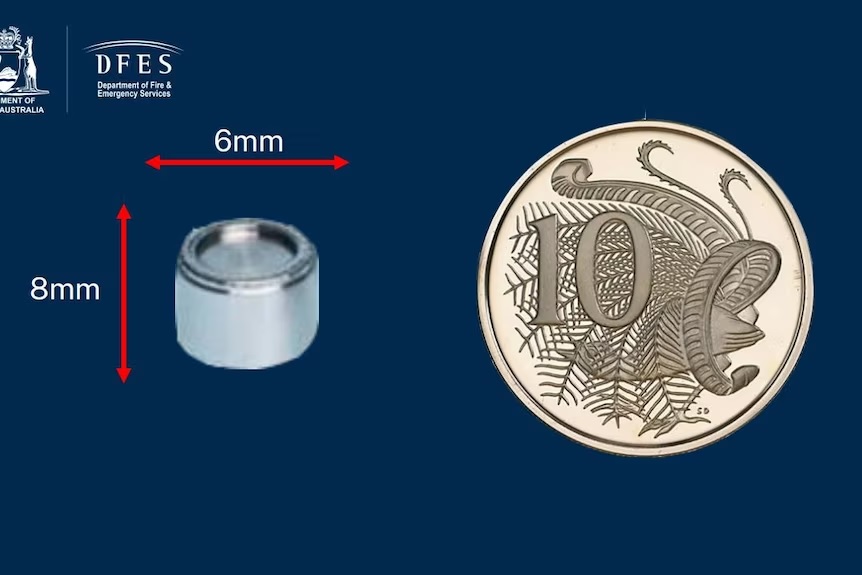
Above – size of the highly radioactive capsule inexplicably mislaid, in Western Australia
Some bits of good news. What went right this week: ‘positive tipping points’. England got a new rewilding site. Cancer Plummets, Guinea Worm Eradicated, Bye-Bye Ebola—3 Huge Wins for Humanity.
The polycrisis is upon us……. pandemic, global heating, nuclear fear, plastic and chemical pollution, biodiversity loss, overpopulation, water shortage ….. all these are interrelated. As Alex Smith shows us, in Radio Ecoshock – this all might develop into a permacrisis. My own thought is that it’s no wonder that many young people have problems of anxiety and depression – in our culture focussed on individualism, money, and endless growth.
Nuclear. This newsletter is miles too long. But it’s a critical time- teetering on the brink of nuclear war. Tanks going into Ukraine – a futile symbol for Zelensky’s dream of conquering Russia, – while underneath it all, rumblings of a cease-fire deal between USA-NATO and Russia, before it all gets a lot worse.
Christina notes: World War 3 danger – it’s getting so like pre World War 1 – can it get any worse? Nuclear toys for the boys. What fun! Nuclear fusion – here’s where history, culture, and nuclear annihilation technology collide.
AUSTRALIA.
- Urgent public health warning issued over lost radioactive capsule in Western Australia. [nb. Kramatorsk radiological accident]. Missing radioactive capsule: WA officials admit it was weeks before anyone realised it was lost.
- Kimba District Council, keen to host nuclear waste dump, but now plans marketing push to get a “brand” different from the nuclear one. Greens Senator Barbara Pocock ‘s reminder that the Kimba nuclear waste storage has no longterm plan for removal of that waste to permanent disposal. Media keeps mum about earthquake near planned nuclear waste dump. Nothing in writing. No guarantees – the planned Kimba waste dump could get highly radioactive nuclear wastes from submarines.
- Nuclear submarines deal an exercise in futility and should be sunk. Nuclear submarines are not going to have ‘any effect’ at all. Australia to become major hub for US submarines, [and target?] Push in US Congress to exempt Australia from International Traffic in Arms Regulations, so that it can import nuclear submarines.
- The Treaty on the Prohibition of Nuclear Weapons is a good step towards a nuclear-free world.
- Bill Gates in Australia – mainly to soft sell his small nuclear reactor business.
Documents show no sign Albanese government lobbied the US to bring Julian Assange home.
CLIMATE. The first breach of 1.5°C will be a temporary but devastating failure. Absurd that we listen to those causing the climate crisis’ in Davos, says Greta Thunberg. https://www.youtube.com/watch?v=EU6vQXif5Xo The ‘all-of-the-above’ story used to sneak nuclear power in as a climate-action technology along with renewables . Suffolk: Sizewell C nuclear ‘should not get licence’ due to coastal erosion.
CIVIL LIBERTIES. Julian Assange and the US government’s war on whistleblowers. https://www.youtube.com/watch?v=QOC-c0QdfEo . The Belmarsh Tribunals Demand Justice for Julian Assange. UK police powers increased, to shut down climate protests. UK govt to tighten anti-protest restrictions, despite criticism from human rights groups .
CULTURE. The dirty secret of US nuclear energy.
ECONOMICS. As the war rages on and military spending booms, the US arms industry is a big winner in Ukraine.
Marketing: South Korea keen to market nuclear technology to United Arab Emirates, and missile technology, too. Poland’s energy company agrees to buy France’s NOT YET DESIGNED so-called “small” Nuward nuclear reactor!
The British government’s Regulated Asset Base – the test case for reviving its nuclear power dream. “Great British Nuclear “- it’s high time that they came clean on what this will cost.
As SMR developer X-energy moves to go public, merger partner Ares cautions investors about risks of small nuclear reactors. David Schlissel: Small modular reactor project likely to end badly for Utah utilities.
EMPLOYMENT. The French nuclear sector up against the wall in terms of recruitment.
ENERGY. Germany aims for faster expansion of wind energy, not nuclear. Prolonged outages of France’s nuclear reactors. Renewable energy is the only credible path forward -António Guterres. Four separate reports show that the UK could save over €120 bn by 2050 by switching to a renewable energy strategy.
ENVIRONMENT. Campaigners fear changes at Hinkley Point C ‘could kill millions of fish every day’. Japan’s Plan To Discharge Water From Fukushima Nuclear Plant Faces Pacific Opposition
HEALTH. Julian Assange’s Biggest Fight in Notorious Prison Isn’t Over Extradition. The WHO is urging countries to start stockpiling medicines for ‘nuclear emergencies’ after the EU’s latest warning on Ukraine war. WHO updates critical medicines list for radiological and nuclear emergencies. Investigation underway after nine nuclear missileers develop non-Hodgkin’s lymphoma. Nuclear strike chief seeks cancer review of launch officers.
LEGAL. Fukushima: court upholds acquittals of three Tepco executives over disaster. UK High Court to hear challenge against plans for Sizewell C nuclear station. The Ohio nuclear scandal: Davis-Besse and Perry power plants in northern Ohio couldn’t cover costs, let alone make a profit. Appeals Court Tosses Suit from Environmentalists, Midland Oil Company Contesting Nuclear Waste Storage Permit.
MEDIA. New documentary film ‘Downwind’ explores why testing, using nuclear weapons makes deadly mistakes .
NUCLEAR TECHNOLOGY. Nuclear Fusion Won’t Save the Climate But It Might Blow Up the World. The Nuclear Fallacy: Why Small Modular Reactors Can’t Compete With Renewable Energy. U.S. approves design for NuScale small modular nuclear reactor, but significant problems remain.
OPPOSITION to NUCLEAR. Demonstrators gather in Hamburg against threat of nuclear confrontation in Ukraine.
PERSONAL STORIES. ‘The day the desert wind cried‘: French nuclear tests cast long shadow in Libyan Sahara.
POLITICS.
- Donald Trump warns of NUCLEAR WAR as Joe Biden sends 31 tanks to Ukraine.
- Ukraine steps up preparations for new nuclear reactors (NO this is not a joke!).
- Military offensives increase nuclear accident odds in Ukraine, warns atomic safety chief.
- Mini nuclear reactor firm snubs Britain for the French: Newcleo blames political chaos for decision to build prototype across Channel. Jeremy in nuclear wonderland. Rolls Royce demands that the UK government decides on tax-payer funding for their small nuclear reactors. 2022 saw the slow demise of the Bradwell B nuclear plan.
- France’s new law on nuclear energy will be a gift to the nuclear lobby. French government moves to fully nationalise the nuclear industry.
- Nuclear Regulatory Commission certifies NuScale’s design for small nuclear reactor, despite predictions on uneconomic costs.
- Canada: Federal gifts for the nuclear and mining industries.
- King Charles wants to honour nuclear test heroes but medals are being delayed by MoD red tape.
POLITICS INTERNATIONAL and DIPLOMACY. The Problem With Primacy – America’s Dangerous Quest to Dominate the Pacific. “Chinese Aggression” Sure Looks An Awful Lot Like US Aggression. Can Talks with China about Nuclear Weapons Be Constructive?
USA tries to prevent a Russian offensive in Ukraine by offering a sort of war endgame deal to Russia. Diplomatic Cables Show Russia Saw NATO Expansion as a Red Line. WikiLeaks cables reveal NATO intended to cross all Russian red lines.
Pacific islands urge Japan to delay release of nuclear plant waste water. France promises to speed up handover of colonial archives and clean up nuclear test sites in Algeria.
SAFETY.
- UK’s ‘Protect and Survive’ nuclear attack advice deemed ‘futile’ in face of modern threats.
- Nuclear power in Ukraine: what would happen if Zaporizhzhia was hit? A reckless response – Ukraine orders more nuclear reactors! Clear and present danger- Ukraine’s reactors remain at risk. The IAEA expands mission in Ukraine to prevent nuclear accident. IAEA sends staff to all Ukraine nuclear plants to reduce risk of accidents. Ukraine says situation deteriorating at Zaporizhzhia nuclear plant. Accident at Russian-controlled Zaporizhzhia nuclear power plant ‘still cannot be excluded’: IAEA . Ukraine storing weapons at nuclear plants.
- Former DEA Nuclear Security Official Says Wyoming Natrium Reactor Not Safe.
- Cracking Under Pressure: Inside the Race to Fix France’s Nuclear Plants. French nuclear safety needs review ahead of reactor lifespan extensions, newbuilds.
- 40 safety incidents with UK nuclear weapons convoys over past 3 years. Call to end practice of transporting nuclear warheads through Cumbria.
- Slovenia Extends Nuclear Plant Operation Until 2043. Slovenia’s nuclear power plant gets permit for a 20 year operating extension.
SECRETS and LIES. In Just Under Three Weeks, Ukrainian-Fired Prohibited “Petal” Mines Maim At Least 44 Civilians, Kill 2, in Donetsk Region. Man arrested on suspicion of terror offences after uranium found at Heathrow.
SPACE. EXPLORATION, WEAPONS. Geopolitics’ New Frontier in Space. NATO activating space war center in France. New NASA Nuclear Rocket Plan Aims to Get to Mars in Just 45 Days. Nuclear-powered rockets to Mars – there are serious safety risks. NASA partners with the military to test nuclear fission-powered spacecraft engine by 2027.
SPINBUSTER. A bit of panic in the UK small nuclear reactor lobby?
TECHNOLOGY. Canadian MP Charlie Angus Questions the Claims of SMRs (Small Modular Reactors) https://www.youtube.com/watch?v=m7nR4P39ALo.
WASTES. Don’t dump on us. China urges Japan to safely dispose of nuclear-contaminated water. France’s nuclear waste agency applies to create a long-term underground storage in Eastern France. France issues a 10,000-page dossier to convince people of the safety of the Cigeo nuclear waste site. US sweetens pot to study siting for spent nuclear fuel. Diluted plutonium disposed of at Carlsbad nuclear waste site as program draws controversy. Many years for removal and disposal of radioactive waste from historic subterranean vaults at Berkeley nuclear power station.
WAR and CONFLICT.
- WAR and CONFLICT. A clear signal to the US leadership that there will be no survivors in any nuclear exchange between the US and Russia. Doomsday Clock reset to 90 seconds to midnight. Doomsday Clock set to 90 seconds to midnight, here’s the plan – ICAN. How Would a Nuclear Winter Play Out?
- US may assist Ukrainian strikes on Crimea – NYT. Ukraine: Is the Hammer About to Fall?. Truth About Tanks: How NATO Lied Its Way to Disaster in Ukraine. NATO’s ‘war against Russia‘ inches ‘closer to direct conflict’. Putin ready for war with NATO and U.S.? Russia plans renewed offensive in Feb over tanks aid https://www.youtube.com/watch?v=mbIwrFgP-VQ Zelenskyy demands more sanctions, as Ukraine reels from Russian bombardment.
- Former US Secretary of State says Pakistan’s 2019 conflict with India almost sparked nuclear war. Israel appears to have been behind drone strike on Iran factory, U.S. official says.
WEAPONS and WEAPONS SALES. SCOTT RITTER: The Nightmare of NATO Equipment Being Sent to Ukraine. CNN: Ukraine Has Become a ‘Weapons Lab’ for Western Arms . Ukraine Narrative Fraying, But Weapons Will Continue To Flow. AP: NATO powers, Ukraine in “fast-track” talks for long-range missiles, warplanes . Ukraine war boon/boondoggle for U.S. arms makers, Pentagon’s warfighting capabilities.
Biden to send 31 Abrams tanks, Germany 14 Leopards for war in Ukraine — . Germany Says US Must Lead Way On Tanks For Ukraine, As Republican Party Also Piles On Pressure . Ukraine: Germany spearheads delivery of 90 tanks from NATO allies, partners . Finnish arms to Turkey in NATO quid pro quo, tanks to Ukraine next. Ukraine intensifies pressure on Georgia to enter war: ruling party leader . German foreign minister: “We are fighting a war against Russia” https://www.youtube.com/watch?v=wCJUf5d6UfE
Nuclear Notebook: United States nuclear weapons, 2023. Pentagon can’t account for $220 billion in govt property, fails fifth audit. It comes down to weapons.
Plutonium Pit Bomb Plans Excoriated by General Accounting Office.
Cost Estimate for Plutonium Pit Project at Savannah River Site Hits $16.5 Billion, $5 Billion above Current Estimate .
US Installs New Nukes in Europe: As Destructive as 83 Hiroshima Bombs.
The US has a new nuclear proliferation problem: South Korea. The Disastrous Downsides of South Korea Building Nuclear Weapons.
Julian Assange’s Biggest Fight in Notorious Prison Isn’t Over Extradition
NewsWeek, BY SHAUN WATERMAN ON 01/27/23 “…………………………………………….. Assange’s physical and mental health have declined severely during more than a decade in confinement — first sheltering from U.S. authorities in the Ecuadorian embassy in London from 2012-2019, where he lived in two rooms and never left the building, and for the last almost four years, since he was dragged from the embassy by British police in April 2019, in Belmarsh fighting extradition.
…………………… The proceedings in London continue to drag on. It has been more than a year since the High Court cleared the way for his extradition and his appeal was filed in August. But the court continues to weigh it, with no deadline to reach a decision. Even if he loses, there remains the possibility of an appeal to the British Supreme Court, or to the European Court of Human Rights. Assange could be in the U.S. within months, but he might remain in Britain for years.
His family says that with uncertainty about his extradition hanging over him like the sword of Damocles, he has lost weight and become depressed and anxious.
A confinement of uncertain duration
The worst part about the confinement is having no idea when or how he would be able to leave, Stella Assange said. “It is the uncertain duration that makes it so hard to bear … It’s a kind of torture.”…………..
The uncertainty has exacerbated Assange’s physical and mental deterioration, his wife said. In October 2021, during a High Court hearing about his extradition, Assange, attending via video link from Belmarsh, suffered a “transient ischaemic attack” — a mini-stroke. He has been diagnosed with nerve damage and memory problems and prescribed blood thinners.
“He might not survive this,” she said.
As a remand prisoner, not convicted or sentenced, and facing extradition, not prosecution, Assange is an anomaly in Britain’s most secure prison — designed to hold “Category A” inmates such as IRA militants, jihadis and murderers. One of a tiny handful of unconvicted prisoners, prison regulations require him to be treated differently, his wife said.
“He’s supposed to be able to get visits every day, he’s supposed to be able to work on his case,” she said, “But that’s only on paper. The way the prison system works, it is more efficient to treat everyone like a Cat A prisoner rather than to try to adapt the rules for individuals. In reality, that just doesn’t translate at all.” She said Assange is allowed one or two legal visits, and one or two social visits each week.
In between visits, time can stretch. And the isolation has been hard on him……………………………..
Phone calls, his half-brother Gabriel Shipton told Newsweek from Assange’s native Australia, are limited to 10 minutes. “You’ll just be getting into it and click, it’s over.”
Neither the governor’s office at Belmarsh, nor the press office for the British Prison Service, responded to emails requesting responses to detailed questions.
A source of inspiration and power
Assange gets thousands of letters and parcels from all over the world, Stella Assange said, but the authorities interdict banned items, such as books about national security, paintings and other forbidden objects.
His father, John Shipton, told Newsweek from Australia that Assange draws a lot of inspiration and power from the letters that people write to him. During their phone conversations, he will often read snippets or recall memorable letters, Shipton said. “He loves getting them … You can hear him light up a bit” when he talks about them………………………………………… more https://www.newsweek.com/2023/02/10/julian-assanges-biggest-fight-notorious-prison-isnt-over-extradition-1774197.html
The Belmarsh Tribunals Demand Justice for Julian Assange

Never before has a publisher been charged under the U.S. Espionage Act. The Assange prosecution poses a fundamental threat to the freedom of speech and a free press.
President Biden, currently embroiled in his own classified document scandal, knows this, and should immediately drop the charges against Julian Assange
JANUARY 26, 2023, By Amy Goodman & Denis Moynihan https://www.democracynow.org/2023/1/26/the_belmarsh_tribunals_demand_justice_for
“The first casualty when war comes is truth,” U.S. Senator Hiram W. Johnson of California said in 1929, debating ratification of the Kellogg-Briand Pact, a noble but ultimately failed attempt to ban war. Reflecting on World War I, which ended a decade earlier, he continued, “it begins what we were so familiar with only a brief period ago, this mode of propaganda whereby…people become war hungry in their patriotism and are lied into a desire to fight. We have seen it in the past; it will happen again in the future.”
Time and again, Hiram Johnson has been proven right. Our government’s impulse to control information and manipulate public opinion to support war is deeply ingrained. The past twenty years, dominated by the so-called War on Terror, are no exception. Sophisticated PR campaigns, a compliant mass media and the Pentagon’s pervasive propaganda machine all work together, as public intellectual Noam Chomsky and the late Prof. Ed Herman defined it in the title of their groundbreaking book, “Manufacturing Consent,” borrowing a phrase from Walter Lippman, considered the father of public relations.
One publisher consistently challenging the pro-war narrative pushed by the U.S. government, under both Republican and Democratic presidents, has been the whistleblower website Wikileaks. Wikileaks gained international attention in 2010 after publishing a trove of classified documents leaked from the U.S. military. Included were numerous accounts of war crimes in Iraq and Afghanistan, the killing of civilians, and shocking footage of a helicopter gunship in Baghdad slaughtering a dozen civilians, including a Reuters journalist and his driver, on the ground below. Wikileaks titled that video, “Collateral Murder.”
The New York Times and other newspapers partnered with Wikileaks to publish stories based on the leaks. This brought increased attention to the founder and editor-in-chief of Wikileaks, Julian Assange. In December, 2010, two months after release of the Collateral Murder video, then-Vice President Joe Biden, appearing on NBC, said Assange was “closer to being a hi-tech terrorist than the Pentagon papers.” Biden was referring to the 1971 classified document release by Daniel Ellsberg, which revealed years of Pentagon lies about U.S. involvement in the war in Vietnam.
With a secret grand jury empanelled in Virginia, Assange, then in London, feared being arrested and extradited to the United States. Ecuador granted Assange political asylum. Unable to make it to Latin America, he sought refuge in the Ecuadorian embassy in London. He lived inside the small, apartment-sized embassy for almost seven years. In April 2019, after a new Ecuadorian president revoked Assange’s asylum, British authorities arrested him and locked him up in London’s notorious Belmarsh Prison, often called “Britain’s Guantánamo.” He has been held there, in harsh conditions and in failing health, for almost four years, as the U.S. government seeks his extradition to face espionage and other charges. If extradited and convicted in the U.S., Assange faces 175 years in a maximum-security prison.
While the Conservative-led UK government seems poised to extradite Assange, a global movement has grown demanding his release. The Progressive International, a global pro-democracy umbrella group, has convened four assemblies since 2020 called The Belmarsh Tribunals. Named after the 1966 Russell-Sartre Tribunal on the Vietnam War, convened by philosophers Bertrand Russell and Jean-Paul Sarte, The Belmarsh Tribunal has assembled some of the world’s most prominent, progressive activists, artists, politicians, dissidents, human rights attorneys and whistleblowers, all speaking in defense of Julian Assange and Wikileaks.
We are bearing witness to a travesty of justice,” Jeremy Corbyn, a British Member of Parliament and a former leader of the Labour Party, said at the tribunal. “To an abuse of human rights, to a denial of freedom of somebody who bravely put himself on the line that we all might know that the innocent died in Abu Ghraib, the innocent died in Afghanistan, the innocent are dying in the Mediterranean, and innocents die all over the world, where unwatched, unaccountable powers decide it’s expedient and convenient to kill people who get in the way of whatever grand scheme they’ve got. We say no. That’s why we are demanding justice for Julian Assange.”
Corbyn is joined in his call by The New York Times, the Guardian, Le Monde, El Pais and Der Spiegel–major newspapers that published articles based on the leaked documents. “Publishing is not a crime,” the newspapers declared.
Never before has a publisher been charged under the U.S. Espionage Act. The Assange prosecution poses a fundamental threat to the freedom of speech and a free press. President Biden, currently embroiled in his own classified document scandal, knows this, and should immediately drop the charges against Julian Assange.
Missing radioactive capsule: WA officials admit it was weeks before anyone realised it was lost
Fire and Emergency Services official says capsule left Rio Tinto mine site on 10 January but was not found missing for 15 days
Guardian, Mostafa Rachwani, 28 Jan 23
Western Australian authorities are scrambling to find a missing radioactive capsule that is a fraction of the size of a 10c coin, conceding it was not found missing until more than two weeks after it left a Rio Tinto mine site.
The 8mm by 6mm capsule is a 19-gigabecquerel caesium 137 ceramic source, commonly used in radiation gauges, and was supposed to be contained in a secure device which had been “damaged” on a truck which travelled from the mine site north of Newman in the Pilbara to a depot in Perth.
Authorities are now searching along the 1,400km stretch of the Great Northern Highway for the capsule, which they warn can cause skin burns, radiation sickness and cancer.
At a news conference on Saturday, Darryl Ray, the acting superintendent for Western Australia’s Department of Fire and Emergency Services, said authorities were largely searching for the capsule at “strategic sites”.
He said an incident management team including the Department of Health and police had been formed.
“We have continued the search on strategic sites along the route that the vehicle had taken, concentrating on sites close to high-population areas within the metropolitan suburbs,” he said. “The search involves the use of radiation survey meters to detect the radiation levels which will help us locate the small device.
“What we are not doing is trying to find a tiny little device by eyesight. We are using the radiation detectors to locate the gamma rays, using the meters, that will help us then locate the small device.
“We have secured the GPS data from the trucking company to determine the exact route and stops that the vehicle has taken on its journey.
“We will continue to use specialist equipment to help us search the remaining known locations … in particular, the Great Northern Highway between Perth and Newman.”
The WA chief health officer, Andrew Robertson, said there were screws missing from the protective gauge holding the capsule when it was discovered missing.
“These gauges are designed to be robust and to be used in industrial settings where they may be exposed to weather and vibration, so it is unusual for a gauge to come apart like this one has,” Robertson said.
“We are conducting an investigation on all of the circumstances from when it was originally transported from the mine site, the whole of the transport route, and then its handling on arrival in Perth.”
Robertson urged anyone who found the capsule not to handle it.
“People could end up developing redness of the skin and eventually burns of the skin from the beta radiation,” he said. “If it were kept long enough and they were exposed long enough, they could also have some acute effects, including impacts on their immune system and the gastrointestinal system.”
Robertson said the capsule was “most dangerous if it is handled or if it is close to the body”.
“If you are further than five metres away from the source, certainly if you are more than 20 metres away from the source, it will pose no danger to you,” he said. “If it is closer than that, and we strongly discourage people from picking it up, certainly don’t put it in your pocket or put it in your car, don’t put it on your sideboard, it will continue to radiate.
“While you may not have immediate health effects, they can occur relatively rapidly over a short period of time if it is close to the body………………
Robertson said officials did not know the date the capsule fell off the truck.
Ray said the capsule was placed on to the pallet on 10 January at the mine site, transited and arrived at the radiation service company in Malaga on 16 January.
“It was not until the 25th, late morning, when they opened it up to reveal that the device had fallen apart, was damaged in transit, and that the actual capsule was discovered missing, which is when authorities were first notified.” ………… more https://www.theguardian.com/australia-news/2023/jan/28/missing-radioactive-capsule-wa-officials-admit-it-was-weeks-before-anyone-realised-it-was-lost
Truth About Tanks: How NATO Lied Its Way to Disaster in Ukraine

Above: Ukrainian soldiers repair a tank January 2023
Sputnik International, Scott Ritter 29 Jan 23
Tank warfare has evolved. The large force-on-force armored battles that were the hallmark of much of WWII, the Arab-Israeli conflicts, which served as the foundation of operational doctrine for both NATO and the Soviet Union (and which was implemented in full by the United States during Operation Desert Storm in 1991), has run its course.
Like most military technological innovations, the ability to make a modern main battle tank survivable has been outstripped by the fielding of defensive systems designed to overcome such defenses. If a modern military force attempted to launch a large-scale tank-dominated attack against a well-equipped peer-level opponent armed with modern anti-tank missiles, the result would be a decisive defeat for the attacking party marked by the smoking hulks of burned-out tanks.
Don’t get me wrong: tanks still have a vital role to play on the modern battlefield. Their status as a mobile bunker is invaluable in the kind of meat-grinder conflicts of attrition that have come to define the current stage of large-scale ground combat. Speed and armor still contribute to survivability, and the main gun of a tank remains one of the deadliest weapons on the modern battlefield.
But the modern tank performs best as part of a combined arms team, supported by infantry (mounted and unmounted) and copious amounts of supporting arms (artillery and close air support.) As part of such a team, especially one that is well-trained in the art of close combat, the tank remains an essential weapon of war. However, if operated in isolation, a tank is simply an expensive mobile coffin.
Much has been made about the recent decision made by NATO and allied nations to provide Western main battle tanks to Ukraine. The politics of this decision is its own separate topic. This article will address the operational practicalities of this decision, namely has the military capability of Ukraine been enhanced through the provision of these new weapons systems.
To answer this question, one needs to examine three basic issues: training, logistical sustainability, and operational employment.
Training
It takes 22 weeks to train a basic American M1 Abrams crewmember. That training just gives the soldier the very basic skill set to be functional. Actual operational expertise is only achieved through months, if not years, of additional training in not just the system itself, but employing it as part of a similarly trained combine arms team………………………………….
Training is expensive. NATO is currently providing Ukraine with three types of Western main battle tank: the British Challenger 2, the German Leopard 2, and the American M1A2. There is no unified training course—each tank requires its own unique training prospectus that is not directly transferable to another system.
The decentralized training processes created by such a diverse approach promotes inefficiencies and generates discrepancies in outcome…………………….
Moreover, these problems will only be enhanced by the emphasis that will be placed on rapid outcomes. The reality is whatever training programs that are developed and delivered by the nations providing the tanks will be insufficient to the task, resulting in poorly trained crews taking extremely complicated weapons systems into the most dangerous environment in the world for a tank—the teeth of a Russian Army designed and equipped to kill these very same tanks.
Logistical Sustainability
Tanks are among the most technically challenging weapons systems on a modern battlefield. They are constantly breaking down, especially if not properly maintained……………………
This means that the tanks that are being provided to Ukraine will need to be returned to NATO nations for any significant repairs of equipment that is damaged through simple usage or actual combat. ……………….
Operational Employment
Ukraine’s commander in chief of the Armed Forces, General Valerii Zaluzhnyi, told The Economist last month that he needed 300 tanks, 500 infantry fighting vehicles, and 500 artillery pieces, if he were going to have any chance of defeating Ukraine.
Following the January 20 meeting of the Ramstein Contact Group, and subsequent follow-on discussions about the provision of tanks, NATO and its allied partners have agreed to provide less than 50% of the number of tanks requested, less than 50% of the number of infantry fighting vehicles requested, and less than 20% of the artillery requested.
Moreover, the timetable for delivery of this equipment is staggered incoherently over a period that stretches out for many months, and in some cases extends into the next year. …………..
The truth about tanks is that NATO and its allied nations are making Ukraine weaker, not stronger, by providing them with military systems that are overly complicated to operate, extraordinarily difficult to maintain, and impossible to survive unless employed in a cogent manner while supported by extensive combined arms partners.
The decision to provide Ukraine with Western main battle tanks is, literally, a suicide pact, something those who claim they are looking out for the best interests of Ukraine should consider before it is too late. https://sputniknews.com/20230128/truth-about-tanks-how-nato-lied-its-way-to-disaster-in-ukraine-1106786081.html
Clear and present danger- Ukraine’s reactors remain at risk


Grossi and others insist that the nuclear plants themselves are not the problem. “It’s very simple, the problem in Ukraine and in Russia is they are at war. The problem is not nuclear energy,” he told the BBC in an interview.
Except that it IS the nuclear plants that are the problem. After all, if Ukraine was powered by renewables and not nuclear plants, this wouldn’t even be an issue.
Bombardments in Ukraine keep reactors in the crosshairs
Ukraine’s reactors remain at risk as one-year anniversary of war looms
Clear and present danger, Beyond Nuclear, By Linda Pentz Gunter 29 Jan 23
A year ago, even before Russia invaded Ukraine, we ran our first article about the very real dangers of commercial nuclear power plants being caught up in a war.
A year later, we can thank only luck that what we predicted could happen, hasn’t. And the pinnacle — or, more accurately, nadir — of that “could” would be a catastrophic attack resulting in a major radioactive release.
Since the war began, the 15 Ukraine reactors situated at four sites, along with the defunct Chornobyl nuclear plant, have been at the center of media attention, once again bringing to light the inherent and extreme dangers of nuclear power plants at any time, let alone during an armed conflict. And, on a few occasions, all of those sites have also been in the crosshairs of actual fighting, most notably the six-reactor Zaporizhzhia nuclear power plant, the largest both in Ukraine and all of Europe.
Despite pleadings by the International Atomic Energy Agency and its director, Rafael Grossi, not to engage in combat close to the nuclear plants, no effective deterrent or peaceful protective measure has been found or implemented, even as the IAEA continues to urge the creation of safe zones around the nuclear sites.
Grossi and others insist that the nuclear plants themselves are not the problem. “It’s very simple, the problem in Ukraine and in Russia is they are at war. The problem is not nuclear energy,” he told the BBC in an interview.
Except that it IS the nuclear plants that are the problem. After all, if Ukraine was powered by renewables and not nuclear plants, this wouldn’t even be an issue. As an Austrian government briefing paper, collected under “Fairy tales by the nuclear lobby,” said: “A ‘successful’ attack on a nuclear power plant in densely populated Europe would have radiological and economic consequences far beyond those experienced after Chernobyl or Fukushima. So far, no terrorist attacks on wind turbines or solar panels have been reported.”
An attack or other precipitating events caused by the war in Ukraine, could still result in such a disaster. Sadly, with the war raging on, nothing has really changed since the February 24, 2022 invasion.
Since it’s the most dangerous, being the largest, and also the closest to the worst of the fighting, let’s take Zaporizhzhia as our test case.
There are approximately 200 different radioactive isotopes contained in any given nuclear reactor and its waste inventories. Zaporizhzhia houses at least 2,204 tons of highly radioactive waste within the reactors and the irradiated fuel pools, according to a March 2022 Greenpeace analysis, looking at 2017 figures, the latest data available. At least 855 tons of those wastes are in the pools. The quantities are so high because the reactors have been in operation for several decades. The first unit came on line in 1985, the sixth in 1996.
Among those 200 isotopes are iodine-131, which attacks the thyroid, cesium-134 that accumulates in muscle and strontium-90 which acts like calcium in the body and is easily incorporated into bone. Since all reactors also make plutonium-239 — with a half-life of 24,000 years — as part of the fission process, it, too, could be propelled into the environment. As an alpha-emitting particle, it is most dangerous when inhaled, attacking lungs, kidneys and other organs.
As we have written frequently at Beyond Nuclear since our first article appeared and the Russian war on Ukraine followed, there are a number of scenarios that could precipitate such a catastrophe. It could involve a full or partial reactor meltdown, an irradiated fuel pool fire or hydrogen explosion, or a breach of the radioactive waste storage casks.
The specific scenarios for this are described with essential detail and great clarity in the special section on “Nuclear Power and War” in the 2022 edition of the World Nuclear Industry Status Report.
“Unlike all other types of power plants, the safety of a nuclear power plant depends on continuously functioning cooling systems,” the WNISR authors write in the chapter introduction. “The physical reason for this is the radioactive decay of the fission products and transuranic elements produced by neutron capture on uranium. During this decay, considerable amounts of heat are generated, so-called decay heat. If it is not continuously removed by cooling, this leads to strong heat buildup, which can cause melting, fires, or other events that can cause major releases of radioactive materials. During operation and directly after a reactor shutdown, cooling requirements are particularly high.”
This also means that even when the reactors are shut down, as at least four have been at Zaporizhzhia, they are not out of danger. And the fuel pools present the greatest threat, as the radioactive waste inventory they contain is more radioactive than the fresh fuel before it is loaded into the reactor.
But it need not take a full blown attack to cause at least some of these disastrous outcomes. It could be as simple as a loss of power, or human error. ……………………………………………………………………………………………………………..
As we ponder this in the context of the perils of war, we must also remember that war just makes this outcome [a Chornobyl type disaster] more likely. A major nuclear disaster is still possible — and even probable — on a daily basis at any nuclear power plant anywhere and at any time. Loss of power and human error remain key causes, along with violent weather events — occurrences that will continue to become more frequent and more severe as the climate crisis worsens. Sabotage and terrorism are an ever-present possibility as well.
This means that striving for the unrealistic goal, as the IAEA does, of ensuring nuclear reactors are not caught up in a war zone, doesn’t make us all that much safer. Only the complete elimination of nuclear power as an energy source will achieve that.
Linda Pentz Gunter is the international specialist at Beyond Nuclear and writes for and curates Beyond Nuclear International. https://beyondnuclearinternational.org/2023/01/29/clear-and-present-danger/
Urgent public health warning issued over lost radioactive capsule in Western Australia
“It emits both beta rays and gamma rays so if you have it close to you, you could either end up with skin damage including skin burns,” .
“And if you have it long enough near you, it could cause acute radiation sickness.
DFES have issued a warning for people to stay at least five metres away from it if they see something that resembles the capsule.
https://www.abc.net.au/news/2023-01-27/radioactive-capsule-lost-in-wa-emergency-public-health-warning/101901472 By Cason Ho 28 Jan 23
A missing radioactive capsule lost somewhere between Perth and a Pilbara mine site over an area of 1,400 kilometres has sparked an urgent health warning.
Key points:
- A capsule containing a radioactive substance has been lost
- The capsule is 6mm in diameter and 8mm wide
- People are being urged not to get close to the capsule
In an emergency press conference on Friday afternoon, WA’s chief health officer urged people to stay away from the capsule if they see it because of its radioactive properties.
The capsule is tiny – 6mm diameter by 8mm high.
The radioactive gauges are commonly used in mining. It went missing from a truck sometime after January 10.
WA radioactive substance risk alert
The radioactive capsule could be anywhere along the more than 1,400 km journey between Malaga, in Perth and Newman in WA’s remote north
Any motorists who have travelled along the Great Northern Highway between Newman and Perth since January 10 should check their tyres, in case the capsule has become lodged in them.
Chief Health Officer Andy Robertson said the capsule was lost while it was being transported, somewhere between a mine site north of Newman and Malaga, north east of Perth.
It is believed the capsule fell through the gap left by a bolt hole, after the bolt was dislodged when a container collapsed as a result of vibrations during the trip.
Authorities are searching Great Northern Highway in a desperate effort to find the capsule, which is smaller than a 10-cent piece.
DFES said the capsule “cannot be weaponised” but are still urging caution due to potentially serious health consequences.
Radiation equivalent to 10 X-rays an hour
Mr Robertson said it does emit a “reasonable” amount of radiation.
He says the radiation emitted is equivalent to receiving 10 X-rays in one hour, if you were within one metre of it, or the amount of natural radiation a body is exposed to over a year.
The half-life of the substance is 30 years.
“It emits both beta rays and gamma rays so if you have it close to you, you could either end up with skin damage including skin burns,” he said.
“And if you have it long enough near you, it could cause acute radiation sickness.
“Now that will take a period of time but obviously we are recommending people not be close to it or hang on to it.”
Mr Robertson advised anyone who finds the capsule not to go near it, and to rather call DFES on 133 337.
The Department of Fire and Emergency Services is leading search efforts, coordinating a team involving the Department of Health, WA Police, and other subject matter experts.
DFES Country North chief superintendent David Gill said there would be “challenges” in locating such a small object.
“The start and finish of the transportation from the mine site north of Newman, and the transport depot in Perth, are among some of the locations that are searched, and being searched yesterday, but the capsule remains unfound,” he said.
“There are challenges here. It is 1,400 kilometres between the mine site … to the north of Newman, and Perth.”
DFES have issued a warning for people to stay at least five metres away from it if they see something that resembles the capsule.
People are urged to avoid coming into contact with it, and immediately contact DFES.
Kramatorsk radiological accident
The Kramatorsk radiological accident was a radiation accident that happened in Kramatorsk, in the Ukrainian SSR from 1980 to 1989. A small capsule containing highly radioactive caesium-137 was found inside the concrete wall of an apartment building, with a surface gamma radiation exposure dose rate of 1800 R/year.[1] The capsule was detected only after residents requested that the level of radiation in the apartment be measured by a health physicist.[1]
The capsule was originally part of a radiation level gauge and was lost in the Karansky quarry in the late 1970s. The search for the capsule was unsuccessful and ended after a week. The gravel from the quarry was used in construction.[2] The caesium capsule ended up in the concrete panel of apartment 85 of building 7 on Mariyi Pryimachenk Street (at the time under the Soviet name Gvardeytsiv Kantemirovtsiv), between apartments 85 and 52.[1]
Over nine years, two families lived in apartment 85.[1] A child’s bed was located directly next to the wall containing the capsule.[1] The apartment was fully settled in 1980. A year later, an 18-year-old woman who lived there suddenly died. In 1982, her 16-year-old brother followed, and then their mother. Even after that the flat did not attract much public attention, despite the fact that the residents all died from leukemia. Doctors were unable to determine root-cause of illness and explained the diagnosis by poor heredity. A new family moved into the apartment, and their son died from leukemia as well. His father managed to start a detailed investigation, during which the vial was found in the wall in 1989.
By the time the capsule was discovered, four residents of the building had died from it and 17 more had received varying doses of radiation.[2] Part of the wall was removed and sent to the Institute for Nuclear Research, where the caesium capsule was removed, identified by serial number and disposed of.[1]
Nothing in writing. No guarantees – the planned Kimba waste dump could get highly radioactive nuclear wastes from submarines
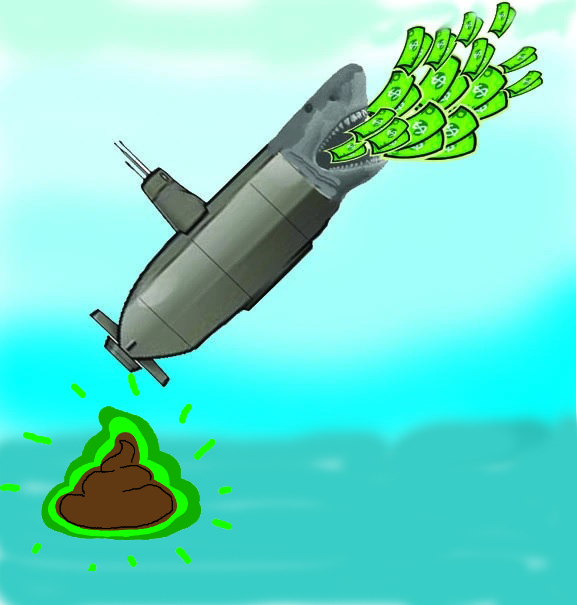
A handshake deal where the goal posts can move, and they have. Nothing in writing limiting volumes, strengths or qualities of radioactive wastes, all the government needed was a gullible dichotomy willing to embrace such wastes.
Don’t believe me the goal posts have moved, “look again,” it has already happened. Kimba’s resident Politician should be adroit, he should have made a move on it. Moreover, Kimba may not be able to hold back on future wastes if the door is opened.
Going back when the Farmer come nuclear profiteer offered a parcel of land for the abandonment of radioactive waste there was no mention of radioactive waste from a decommissioned fleet of submarines, or the wastes generated while they’re in service.
So, I ask “What safeguards and guarantees have been put in writing to protect us from any escalation of wastes?”
USA tries to prevent a Russian offensive in Ukraine by offering a sort of war endgame deal with Russia
Crimea is a particular point of discussion. There is a widespread view in Washington and Kyiv that regaining Crimea by military force may be impossible. Any Ukrainian military advances this year in Zaporizhzhia oblast, the land bridge that connects Crimea and Russia, could threaten Russian control. But an all-out Ukrainian campaign to seize the Crimean Peninsula is unrealistic, many U.S. and Ukrainian officials believe. That’s partly because Putin has indicated that an assault on Crimea would be a tripwire for nuclear escalation.

By John Helmer, Moscow,26 Jan 23 http://johnhelmer.org/blinken-concedes-war-is-lost-offers-kremlin-ukrainian-demilitarization-crimea-donbass-zaporozhe-and-restriction-of-new-tanks-to-western-ukraine-if-there-is-no-russian-offensive/#more-70535
David Ignatius has been a career-long mouthpiece for the US State Department. He has just been called in by the current Secretary of State Antony Blinken to convey an urgent new message to President Vladimir Putin, the Security Council, and the General Staff in Moscow.
For the first time since the special military operation began last year, the war party in Washington is offering terms of concession to Russia’s security objectives explicitly and directly, without the Ukrainians in the way.
The terms Blinken has told Ignatius to print appeared in the January 25 edition of the Washington Post. The paywall can be avoided by reading on.
The territorial concessions Blinken is tabling include Crimea, the Donbass, and the Zaporozhye, Kherson “land bridge that connects Crimea and Russia”. West of the Dnieper River, north around Kharkov, and south around Odessa and Nikolaev, Blinken has tabled for the first time US acceptance of “a demilitarized status” for the Ukraine. Also, US agreement to restrict the deployment of HIMARS, US and NATO infantry fighting vehicles, and the Abrams and Leopard tanks to a point in western Ukraine from which they can “manoeuvre…as a deterrent against future Russian attacks.”
This is an offer for a tradeoff – partition through a demilitarized zone (DMZ) in the east of the Ukraine in exchange for a halt to the planned Russian offensive destroying the fortifications, rail hubs, troop cantonments, and airfields in the west, between the Polish and Romanian borders, Kiev and Lvov, and an outcome Blinken proposes for both sides to call “a just and durable peace that upholds Ukraine’s territorial integrity”.
Also in the proposed Blinken deal there is the offer of a direct US-Russian agreement on “an eventual postwar military balance”; “no World War III”; and no Ukrainian membership of NATO with “security guarantees similar to NATO’s Article 5.”
Blinken has also told the Washington Post to announce the US will respect “Putin’s tripwire for nuclear escalation”, and accept the Russian “reserve force includ[ing] strategic bombers, certain precision-guided weapons and, of course, tactical and strategic nuclear weapons.”
President Putin has offered a hint of the Russian reply he discussed with the Stavka and the Security Council last week.
Putin told a meeting with university students on Wednesday, hours after Blinken’s publication. “I think that people like you,” the president said, “most clearly and most accurately understand the need for what Russia is now doing to support our citizens in these territories, including Lugansk, Donetsk, the Donbass area as a whole, and Kherson and Zaporozhye. The goal, as I have explained many times, is primarily to protect the people and Russia from the threats that they are trying to create for us in our own historical territories that are adjacent to us. We cannot allow this. So, it is extremely important when young people like you defend the interests of their small and large Motherland with arms in their hands and do so consciously.”
Read on, very carefully, understanding that nothing a US official says, least of all through the mouths of Blinken, Ignatius, and the Washington Post is trusted by the Russians; and understanding that what Putin and the Stavka say they mean by Russia’s “adjacent historical territories” and the “small and large Motherland” has been quite clear.
Follow what Blinken told Ignatius to print, before Putin issued his reply. The propaganda terms have been highlighted in bold to mean the opposite — the public positions from which Blinken is trying to retreat and keep face.
January 25, 2023
Blinken ponders the post-Ukraine-war order
By David Ignatius
The Biden administration, convinced that Vladimir Putin has failed in his attempt to erase Ukraine, has begun planning for an eventual postwar military balance that will help Kyiv deter any repetition of Russia’s brutal invasion.
Secretary of State Antony Blinken outlined his strategy for the Ukrainian endgame and postwar deterrence during an interview on Monday at the State Department. The conversation offered an unusual exploration of some of the trickiest issues surrounding resolution of a Ukraine conflict that has threatened the global order.
Blinken explicitly commended Germany’s military backing for Ukraine at a time when Berlin is getting hammered by some other NATO allies for not providing Leopard tanks quickly to Kyiv. “Nobody would have predicted the extent of Germany’s military support” when the war began, Blinken said. “This is a sea change we should recognize.”
He also underlined President Biden’s determination to avoid direct military conflict with Russia, even as U.S. weapons help pulverize Putin’s invasion force. “Biden has always been emphatic that one of his requirements in Ukraine is that there be no World War III,” Blinken said.
Russia’s colossal failure to achieve its military goals, Blinken believes, should now spur the United States and its allies to begin thinking about the shape of postwar Ukraine — and how to create a just and durable peace that upholds Ukraine’s territorial integrity and allows it to deter and, if necessary, defend against any future aggression. In other words, Russia should not be able to rest, regroup and reattack.
Blinken’s deterrence framework is somewhat different from last year’s discussions with Kyiv about security guarantees similar to NATO’s Article 5. Rather than such a formal treaty pledge, some U.S. officials increasingly believe the key is to give Ukraine the tools it needs to defend itself. Security will be ensured by potent weapons systems — especially armor and air defense — along with a strong, noncorrupt economy and membership in the European Union.
The Pentagon’s current stress on providing Kyiv with weapons and training for maneuver warfare reflects this long-term goal of deterrence. “The importance of maneuver weapons isn’t just to give Ukraine strength now to regain territory but as a deterrent against future Russian attacks,” explained a State Department official familiar with Blinken’s thinking. “Maneuver is the future.”
The conversation with Blinken offered some hints about the intense discussions that have gone on for months within the administration about how the war in Ukraine can be ended and future peace maintained. The administration’s standard formula is that all decisions must ultimately be made by Ukraine, and Blinken reiterated that line. He also backs Ukraine’s desire for significant battlefield gains this year. But the State Department, Pentagon and National Security Council are also thinking ahead.
Crimea is a particular point of discussion. There is a widespread view in Washington and Kyiv that regaining Crimea by military force may be impossible. Any Ukrainian military advances this year in Zaporizhzhia oblast, the land bridge that connects Crimea and Russia, could threaten Russian control. But an all-out Ukrainian campaign to seize the Crimean Peninsula is unrealistic, many U.S. and Ukrainian officials believe. That’s partly because Putin has indicated that an assault on Crimea would be a tripwire for nuclear escalation.
The administration shares Ukraine’s insistence that Crimea, which was seized by Russia in 2014, must eventually be returned. But in the short run, what’s crucial for Kyiv is that Crimea no longer serve as a base for attacks against Ukraine. One formula that interests me would be a demilitarized status, with questions of final political control deferred. Ukrainian officials told me last year that they had discussed such possibilities with the administration.
As Blinken weighs options in Ukraine, he has been less worried about escalation risks than some observers. That’s partly because he believes Russia is checked by NATO’s overwhelming power. “Putin continues to hold some things in reserve because of his misplaced fear that NATO might attack Russia,” explained the official familiar with Blinken’s thinking. This Russian reserve force includes strategic bombers, certain precision-guided weapons and, of course, tactical and strategic nuclear weapons.
Blinken’s refusal to criticize Germany on the issue of releasing Leopard tanks illustrates what has been more than a year of alliance management to keep the pro-Ukraine coalition from fracturing. Blinken has logged hundreds of hours — on the phone, in video meetings and in trips abroad — to keep this coalition intact.
This cohesiveness will become even more important as the Ukraine war moves toward an endgame. This year, Ukraine and its allies will keep fighting to expel Russian invaders. But as in the final years of World War II, planning has already begun for the postwar order — and construction of a system of military and political alliances that can restore and maintain the peace that Russia shattered.
Click to follow Putin’s remarks in the official Kremlin translation.
Highlighted in bold type in Blinken’s text is the phrase, “a strong, noncorrupt economy and membership in the European Union”. This is Blinken’s message to the Kremlin that the US wants to preserve Ukraine’s agricultural economy, its grain export ports, and the trade terms agreed with the European Union before the war. It is also Blinken’s acknowledgement that Vladimir Zelensky’s move early this week to force the resignations and dismissals of senior officials means the US is calling the shots in Kiev and Lvov.
Nothing is revealed in Blinken’s offer “for the Ukrainian endgame and postwar deterrence” of how, and who on the US and Russian sides, to negotiate directly on the particulars. Instead, there is the hint that if the Russians agree to trust the Americans and delay the planned offensive, and if they allow the rail lines to remain open between Poland and Lvov, the Americans will reciprocate by keeping the Abrams and Leopard tank deliveries in verifiable laagers west of Kiev.
As Russian officials have been making clear for months, no US terms of agreement can be trusted on paper, and nothing at all which Blinken says. A well-informed independent military analyst comments on the Russian options: “The best response is continue the special military operation, destroy the Ukrainian military in their present pockets, complete de-electrification and destruction of the logistics, then either take everything east of the Dnieper or establish a de facto DMZ, including Kharkov. Blinken and the others cannot be trusted to follow through if they think they have a chance to stall for time. The Ukrainian Nazis are conspicuously absent from this proposal – and they remain to be dealt with. We know there will be no end to trouble if the Russian de-nazification objective against them stops now.”
As SMR developer X-energy moves to go public, merger partner Ares cautions investors about risks

Utility Dive Stephen Singer, Editor, Jan. 27, 2023
Dive Brief:
- The partner in a merger with a small modular nuclear reactor developer going public has cautioned investors that changing markets and a “limited operating history” may ultimately be unfavorable to the business.
Ares Acquisition Corp., a special purpose acquisition company, warned in an S-4 filing with the U.S. Securities and Exchange Commission Wednesday of “limited operating experience for reactors of this type, configuration and scale” that could lead to higher than expected construction costs, maintenance requirements, operating expenses or changes in the timing of delivery. X Energy Reactor Co. announced the merger in December.- The market for SMRs generating electric power and high-temperature heat is not yet established and “may not achieve the growth potential we expect or may grow more slowly than expected,” Ares said. It’s backed by private equity firm Ares Management Corp.
Dive Insight:
The S-4 filing, which provides a preliminary proxy statement and spells out details of the renamed X-Energy business and market risks, provides boilerplate cautions to investors who require transparency and discussion of as many potential risks as possible. It highlights challenges in a still-emerging industry. The U.S. Nuclear Regulatory Commission on Jan. 19 certified NuScale Power’s SMR design, the first of its type to win federal approval………………………………
Ares said the market for SMRs, and particularly for SMRs using advanced nuclear technologies such as those employed in the Xe-100 — an 80 MWe reactor that can be scaled into a ‘four-pack’ 320 MWe power plant — has not yet been established. SMRs using advanced nuclear technologies have not been proven at scale, it said……………………..
Ares also warned that it may not attract customers for its SMR technology — a “relatively new and unproven technology” — as quickly as it expects, “or at all,” and acquiring customers may be more expensive than it currently anticipates.
In addition, Ares said the time and funding needed to bring X-energy’s nuclear fuel, TRISO-X, to market at scale may “greatly exceed” expectations………………….
Critics of SMRs have raised issues nearly identical to what Ares cited, calling out the reactors over the projected cost and time needed for siting and other approvals.
“Small modular reactors may be viable one day, but they are not today, will not be tomorrow and may never make as much economic sense as renewable sources of electricity,” the Institute for Energy Economics and Financial Analysis says. “We should stick to carbon-free energy sources that make financial and environmental sense.”………. more https://www.utilitydive.com/news/ares-acquisition-x-energy-smr-sec-investor-warning/641337/
The WHO is urging countries to start stockpiling medicines for ‘nuclear emergencies’ after the EU’s latest warning on Ukraine war
Fortune, BYORIANNA ROSA ROYLE, January 28, 2023
The World Health Organization (WHO) has issued guidance on how to survive a nuclear catastrophe, just hours after the EU warned that Russia “is at war with the West”.
Included in the guidance is a list of medicines that nations should stockpile for “radiological or nuclear emergencies”.
The global health body also shared how the stockpiles which could “prevent or reduce exposure to radiation” should be handled.
Dr Maria Neira, WHO’s acting assistant director-general warned that governments need to make treatments for radiation and nuclear exposure available quickly.
“It is essential that governments are prepared to protect the health of populations and respond immediately to emergencies,” she added.
Potential scenarios considered in the publication include radiological or nuclear emergencies at nuclear power plants, as well as intentional uses of radioactive materials with malicious intent.
These emergencies could result in exposure to deadly radiation doses, yet many countries are underprepared, according to the document.
It stressed: “It is therefore extremely important that governments respond rapidly to such threats.”……………….. https://fortune.com/2023/01/27/how-to-survive-nuclear-catastrophe-who-medicine-stockpile-warning/
Nuclear-powered rockets to Mars – there are serious safety risks

No one wants to see nuclear debris raining down on the Florida coast or Disneyland, and that’s not the only possible scenario.
An accident in orbit could potentially drop radioactive material into the atmosphere.
Nuclear powered rockets could take us to Mars, but will the public accept them?
Bob McDonald’s blog: NASA and DARPA are beginning development of a new fission rocket, Bob McDonald · CBC Radio · Jan 27, 2023
NASA has signed an agreement with the U.S. Defense Advanced Research Projects Agency (DARPA) to develop a nuclear rocket that could shorten travel time to Mars by about one quarter compared to traditional chemical rockets. But before nuclear technology is launched into space, there are risks that need to be addressed to ensure public safety…………………….
While the technology of nuclear propulsion is certainly feasible, it may not be readily embraced by the public. The accidents at Chernobyl, Three Mile Island and Fukushima have left many people skeptical about nuclear safety. And there will be risk.
A nuclear rocket wouldn’t be used to launch a spacecraft from the Earth’s surface — it would be designed to run in space only. It would have to launch into orbit on a large chemical rocket — so the public would have to accept the risk of launching a nuclear reactor on a standard rocket filled with explosive fuel.
And rockets have and will malfunction catastrophically, in what with black humour rocket scientists sometimes call RUD — “rapid unscheduled disassembly.”
No one wants to see nuclear debris raining down on the Florida coast or Disneyland, and that’s not the only possible scenario. An accident in orbit could potentially drop radioactive material into the atmosphere.
Nuclear technology in another form has been used since the very beginning of the space program, just not for propulsion. Radioisotope Thermoelectric Generators (RTGs) have provided power to deep space probes for instruments, radios and cameras on a range of missions…………………….
The U.S. has seen several accidents, including one in 1968 when a launch failure of a Nimbus-1 weather satellite threw its RTG into the ocean. It was recovered intact and the fuel was reused on a later mission.
But there have been more serious accidents. Canadians may remember an incident from 1978, when a Soviet reconnaissance satellite scattered 50 kg of uranium from its nuclear thermal generator over 124,000 square kilometres of Canada’s North.
But a fission reactor is a much more complicated device involving higher temperatures, coolants and more nuclear fuel.
……………………. the engineers face a challenge to ensure that all checks and balances have been made to reassure the astronauts who will fly these machines — and people on the ground — that they can be operated safely before the technology is adopted. https://www.cbc.ca/radio/quirks/nuclear-powered-rockets-could-take-us-to-mars-but-will-the-public-accept-them-1.6727217
Nuclear Fusion Won’t Save the Climate But It Might Blow Up the World

the United States’ first full-scale hydrogen bomb was, in fact, a fission explosion that initiated a fusion reaction.
since first tried out in that monstrous Marshall Islands explosion, fusion has been intended as a tool of war. And sadly, so it remains,
Buried deep in the Lawrence Livermore National Laboratory’s website, the government comes clean about what these fusion experiments at the $3.5 billion National Ignition Facility (NIF) are really all about.
above – Edward Teller – inventor of the thermonuclear fusion bomb – (a man consumed by his fear and hatred of Russia)
they require 100 times more energy to charge than the energy they ended up producing.
Resilience, By Joshua Frank, originally published by TomDispatch 23 Jan 23
.”…………………. the New York Times and CNN alerted me that morning, at stake was a new technology that could potentially solve the worst dilemma humanity faces: climate change and the desperate overheating of our planet. Net-energy-gain fusion, a long-sought-after panacea for all that’s wrong with traditional nuclear-fission energy (read: accidents, radioactive waste), had finally been achieved at the Lawrence Livermore National Laboratory in California…………………..
…All in all, the reviews for fusion were positively glowing and it seemed to make instant sense. After all, what could possibly be wrong ……………..
The Big Catch
On a very basic level, fusion is the stuff of stars. Within the Earth’s sun, hydrogen combines with helium to create heat in the form of sunlight. Inside the walls of the Livermore Lab, this natural process was imitated by blasting 192 gigantic lasers into a tube the size of a baby’s toe. Inside that cylinder sat a “hydrogen-encased diamond.” When the laser shot through the small hole, it destroyed that diamond quicker than the blink of an eye. In doing so, it created a bunch of invisible x-rays that compressed a small pellet of deuterium and tritium, which scientists refer to as “heavy hydrogen.
“In a brief moment lasting less than 100 trillionths of a second, 2.05 megajoules of energy — roughly the equivalent of a pound of TNT — bombarded the hydrogen pellet,”explained New York Times reporter Kenneth Chang. “Out flowed a flood of neutron particles — the product of fusion — which carried about 3 megajoules of energy, a factor of 1.5 in energy gain.”
As with so many breakthroughs, there was a catch. First, 3 megajoules isn’t much energy. After all, it takes 360,000 megajoules to create 300 hours of light from a single 100-watt light bulb. So, Livermore’s fusion development isn’t going to electrify a single home, let alone a million homes, anytime soon. And there was another nagging issue with this little fusion creation as well: it took 300 megajoules to power up those 192 lasers. Simply put, at the moment, they require 100 times more energy to charge than the energy they ended up producing.
“The reality is that fusion energy will not be viable at scale anytime within the next decade, a time frame over which carbon emissions must be reduced by 50% to avoid catastrophic warming of more than 1.5°C,” – climate expert Michael Mann
Tritium Trials and Tribulations
The secretive and heavily secured National Ignition Facility where that test took place is the size of a sprawling sports arena. It could, in fact, hold three football fields. Which makes me wonder: how much space would be needed to do fusion on a commercial scale? No good answer is yet available. Then there’s the trouble with that isotope tritium needed to help along the fusion reaction. It’s not easy to come by and costs about as much as diamonds, around $30,000 per gram. Right now, even some of the bigwigs at the Department of Defense are worried that we’re running out of usable tritium.
…………”tritium, with a half-life of 12.3 years, exists naturally only in trace amounts in the upper atmosphere, the product of cosmic ray bombardment.” – writes Daniel Clery in Science.
…………………… the reactors themselves will have to be lined with a lot of lithium, itself an expensive chemical element at $71 a kilogram (copper, by contrast, is around $9.44 a kilogram), to allow the process to work correctly.
Then there’s also a commonly repeated misstatement that fusion doesn’t create significant radioactive waste, a haunting reality for the world’s current fleet of nuclear plants. True, plutonium, which can be used as fuel in atomic weapons, isn’t a natural byproduct of fusion, but tritium is the radioactive form of hydrogen. Its little isotopes are great at permeating metals and finding ways to escape tight enclosures. Obviously, this will pose a significant problem for those who want to continuously breed tritium in a fusion reactor. It also presents a concern for people worried about radioactivity making its way out of such facilities and into the environment.
“Cancer is the main risk from humans ingesting tritium. When tritium decays it spits out a low-energy electron (roughly 18,000 electron volts) that escapes and slams into DNA, a ribosome, or some other biologically important molecule,” David Biello explains in Scientific American. “And, unlike other radionuclides, tritium is usually part of water, so it ends up in all parts of the body and therefore can, in theory, promote any kind of cancer. But that also helps reduce the risk: any tritiated water is typically excreted in less than a month.”
If that sounds problematic, that’s because it is. This country’s above-ground atomic bomb testing in the 1950s and 1960s was responsible for most of the man-made tritium that’s lingering in the environment. And it will be at least 2046, 84 years after the last American atmospheric nuclear detonation in Nevada, before tritium there will no longer pose a problem for the area.
Of course, tritium also escapes from our existing nuclear reactors and is routinely found near such facilities where it occurs “naturally” during the fission process. In fact, after Illinois farmers discovered their wells had been contaminated by the nearby Braidwood nuclear plant, they successfully sued the site’s operator Exelon, which, in 2005, was caught discharging 6.2 million gallons of tritium-laden water into the soil.
In the United States, the Nuclear Regulatory Commission (NRC) allows the industry to monitor for tritium releases at nuclear sites; the industry is politely asked to alert the NRC in a “timely manner” if tritium is either intentionally or accidentally released. But a June 2011 report issued by the Government Accountability Office cast doubt on the NRC’s archaic system for assessing tritium discharges, suggesting that it’s anything but effective. (“Absent such an assessment, we continue to believe that NRC has no assurance that the Groundwater Protection Initiative will lead to prompt detection of underground piping system leaks as nuclear power plants age.”)
Consider all of this a way of saying that, if the NRC isn’t doing an adequate job of monitoring tritium leaks already occurring with regularity at the country’s nuclear plants, how the heck will it do a better job of tracking the stuff at fusion plants in the future? And as I suggest in my new book, Atomic Days: The Untold Story of the Most Toxic Place in America, the NRC is plain awful at just about everything it does.
Instruments of Death
All of that got me wondering: if tritium, vital for the fusion process, is radioactive, and if they aren’t going to be operating those lasers in time to put the brakes on climate change, what’s really going on here?
Maybe some clues lie (as is so often the case) in history. The initial idea for a fusion reaction was proposed by English physicist Arthur Eddington in 1920. More than 30 years later, on November 1, 1952, the first full-scale U.S. test of a thermonuclear device, “Operation Ivy,” took place in the Marshall Islands in the Pacific Ocean. It yielded a mushroom-cloud explosion from a fusion reaction equivalent in its power to 10.4 Megatons of TNT. That was 450 times more powerful than the atomic bomb the U.S. had dropped on the Japanese city of Nagasaki only seven years earlier to end World War II. It created an underwater crater 6,240 feet wide and 164 feet deep…………….
Nicknamed “Ivy Mike,” the bomb was a Teller-Ulam thermonuclear device, named after its creators Edward Teller and Stanislaw Ulam. It was also the United States’ first full-scale hydrogen bomb, an altogether different beast than the two awful nukes dropped on Japan in August 1945. Those bombs utilized fission in their cores to create massive explosions. But Ivy Mike gave a little insight into what was still possible for future weapons of annihilation.
The details of how the Teller-Ulam device works are still classified, but historian of science Alex Wellerstein explained the concept well in the New Yorker:
“The basic idea is, as far as we know, as follows. Take a fission weapon — call it the primary. Take a capsule of fusionable material, cover it with depleted uranium, and call it the secondary. Take both the primary and the secondary and put them inside a radiation case — a box made of very heavy materials. When the primary detonates, radiation flows out of it, filling the case with X rays. This process, which is known as radiation implosion, will, through one mechanism or another… compress the secondary to very high densities, inaugurating fusion reactions on a large scale. These fusion reactions will, in turn, let off neutrons of such a high energy that they can make the normally inert depleted uranium of the secondary’s casing undergo fission.”
Got it? Ivy Mike was, in fact, a fission explosion that initiated a fusion reaction. But ultimately, the science of how those instruments of death work isn’t all that important. The takeaway here is that, since first tried out in that monstrous Marshall Islands explosion, fusion has been intended as a tool of war. And sadly, so it remains, despite all the publicity about its possible use some distant day in relation to climate change. In truth, any fusion breakthroughs are potentially of critical importance not as a remedy for our warming climate but for a future apocalyptic world of war.
Despite all the fantastic media publicity, that’s how the U.S. government has always seen it and that’s why the latest fusion test to create “energy” was executed in the utmost secrecy at the Lawrence Livermore National Laboratory. One thing should be taken for granted: the American government is interested not in using fusion technology to power the energy grid, but in using it to further strengthen this country’s already massive arsenal of atomic weapons.
Consider it an irony, under the circumstances, but in its announcement about the success at Livermore — though this obviously wasn’t what made the headlines — the Department of Energy didn’t skirt around the issue of gains for future atomic weaponry. Jill Hruby, the department’s undersecretary for nuclear security, admitted that, in achieving a fusion ignition, researchers had “opened a new chapter in NNSA’s science-based Stockpile Stewardship Program.” (NNSA stands for the National Nuclear Security Administration.) That “chapter” Hruby was bragging about has a lot more to do with “modernizing” the country’s nuclear weapons capabilities than with using laser fusion to end our reliance on fossil fuels.
“Had we not pursued the hydrogen bomb,” Edward Teller once said, “there is a very real threat that we would now all be speaking Russian. I have no regrets.” Some attitudes die hard.
Buried deep in the Lawrence Livermore National Laboratory’s website, the government comes clean about what these fusion experiments at the $3.5 billion National Ignition Facility (NIF) are really all about:
NIF’s high energy density and inertial confinement fusion experiments, coupled with the increasingly sophisticated simulations available from some of the world’s most powerful supercomputers, increase our understanding of weapon physics, including the properties and survivability of weapons-relevant materials… The high rigor and multidisciplinary nature of NIF experiments play a key role in attracting, training, testing, and retaining new generations of skilled stockpile stewards who will continue the mission to protect America into the future.”
Yes, despite all the media attention to climate change, this is a rare yet intentional admission, surely meant to frighten officials in China and Russia. It leaves little doubt about what this fusion breakthrough means. It’s not about creating future clean energy and never has been. It’s about “protecting” the world’s greatest capitalist superpower. Competitors beware.
Sadly, fusion won’t save the Arctic from melting, but if we don’t put a stop to it, that breakthrough technology could someday melt us all. https://www.resilience.org/stories/2023-01-26/nuclear-fusion-wont-save-the-climate-but-it-might-blow-up-the-world/
The WHO is urging countries to start stockpiling medicines for ‘nuclear emergencies’ after the EU’s latest warning on Ukraine war.
Fortune, BYORIANNA ROSA ROYLE, January 28, 2023
The World Health Organization (WHO) has issued guidance on how to survive a nuclear catastrophe, just hours after the EU warned that Russia “is at war with the West”.
Included in the guidance is a list of medicines that nations should stockpile for “radiological or nuclear emergencies”.
The global health body also shared how the stockpiles which could “prevent or reduce exposure to radiation” should be handled.
Dr Maria Neira, WHO’s acting assistant director-general warned that governments need to make treatments for radiation and nuclear exposure available quickly.
“It is essential that governments are prepared to protect the health of populations and respond immediately to emergencies,” she added.
Potential scenarios considered in the publication include radiological or nuclear emergencies at nuclear power plants, as well as intentional uses of radioactive materials with malicious intent.
These emergencies could result in exposure to deadly radiation doses, yet many countries are underprepared, according to the document.
It stressed: “It is therefore extremely important that governments respond rapidly to such threats.”……………….. https://fortune.com/2023/01/27/how-to-survive-nuclear-catastrophe-who-medicine-stockpile-warning/
1 This month
17 October, Free Public Talk on Nuclear Issues in South Australia
David Noonan will speak on public interest concerns over the new Roxby Downs Indenture Act 2026 on BHP copper-uranium mining and ore processing in SA, and on how AUKUS may face SA with a High-Level nuclear waste agenda.
Dr Jim Green will discuss international developments in the field of nuclear power including ‘small modular reactors’ and Generation 4 ‘advanced’ nuclear reactor concepts.


Help Aunty Sue Protect Her Land and Sacred Sites From Destructive Rocket Testing.
.

Australians deserve the truth
about
AUKUS – https://aukuspublicinquiry.com/

PETITION – To: Prime Minister Anthony Albanese and the Australian Labor Government

of the week – Australians for War Powers Reform (AWPR)
To see nuclear-related stories in greater depth and intensity

