Radioactive waste works at Napandee, South Australia, ‘pre-emptive and unjustified’.

Dave Sweeney, Australian Conservation Council, 15 Nov 22, Preliminary earthworks at a contested site proposed for a national radioactive waste facility in regional South Australia are pre-emptive and unjustified, Australia’s national environment group says.
Federal Resources Minister Madeleine King has confirmed ‘site characterisation works’ are set to commence this week at Napandee, near Kimba on the Eyre Peninsula.
While these works are not the start of facility construction, they are a clear sign of intention and are inconsistent with repeated federal government assurances that it will not pre-empt the outcome of a current Federal Court challenge by Barngarla Native Title holders to the validity of the former government’s selection of the site.
“Advancing this project at this time is effectively pre-empting the court process,” said Australian Conservation Foundation nuclear free campaigner Dave Sweeney.
“This is a political choice, not a radiological requirement. ACF calls on Resources Minister Madeleine King to revisit this decision and reconsider this project.”
The federal waste plan, initiated by the former government and driven by former ministers Canavan and Pitt, faces a growing list of critics as well as a legal challenge.
SA Premier Peter Malinauskas recently supported the Barngarla Native Title holders’ right to veto the project and last month the SA Labor state convention stated the waste plan ‘undermines efforts toward reconciliation.’
Eyre Peninsula grain producers, Barngarla people and Unions SA, along with state and national environment, Indigenous and civil society groups, have united in opposition to the plan and the highly curated process.
“Federal Labor inherited a divisive and deficient approach to radioactive waste management from the former government,” Dave Sweeney said.
“The plan is not responsible, necessary or consistent with international best practice or Labor’s stated values and platform.
“The decision to commence site works is a poor one, but not an irreversible one. It should not be advanced by a federal Labor government.”
Prep work to start next week on Kimba Nuclear Waste dump, despite Government assurances not to pre-empt court case

https://www.nationaltribune.com.au/prep-work-to-start-next-week-on-kimba-nuclear-waste-dump-despite-government-assurances-not-to-pre-empt-court-case/?fbclid=IwAR1twuStY12rRYgZ-APTeOHNplE3dAStSxXM19ZZN1KQEkB7S957Bh8UfxQ 11 Nov 2022 Australian Greens
In a letter from Minister for Resources, Madeleine King to Greens Senator Barbara Pocock, it is revealed that despite the ongoing court case against the Barngarla Determination Aboriginal Corporation (BDAC), preparatory works will be going ahead starting next week.
In Senate estimates last night, Senator Pocock pushed the Senator representing the Minister for Resources, Tim Ayres, for answers around the future of the Kimba Site.
SA Labor does not support the dump, the SA people do not support the dump and have not been properly consulted, the Traditional Owners have unequivocally opposed it at every opportunity. The Government is continuing to spend $50 000 per week of taxpayer money in legal costs for something with no social license.
Senator Tim Ayres used the ongoing court case to dodge Senator Pocock’s questioning throughout estimates. He stated that the Government would respect and not pre-empt the outcome of the case. Despite this, it’s clear initial works will be proceeding as early as next week as per Minister King’s Letter.
It’s clear the process of site selection was mishandled. The Labor government now has the opportunity to halt works and review the decisions made previously, to show the Kimba community and the Barngarla people that they are committed to proper consultation and respecting first nations voice and rights.
“Minister for Resources, Madeleine King, has today informed me that preparatory works will be starting on the Kimba Site next week. Although it is not construction of the facility yet, this is a significant escalation that goes against reassurance in last nights estimates that court proceedings will be respected.
“Throughout estimates questioning last night, Senator Tim Ayres repeatedly stated that they would respect and not pre-empt the outcome of the court case. The letter I received right before estimates is a direct contradiction to this statement.
“I am deeply concerned that these preparatory works are going ahead.
“The site selection process was done without proper community consultation. This is a terrible decision inherited from the previous government. Labor can still turn this around. They must stay true to their word and immediately halt all works.
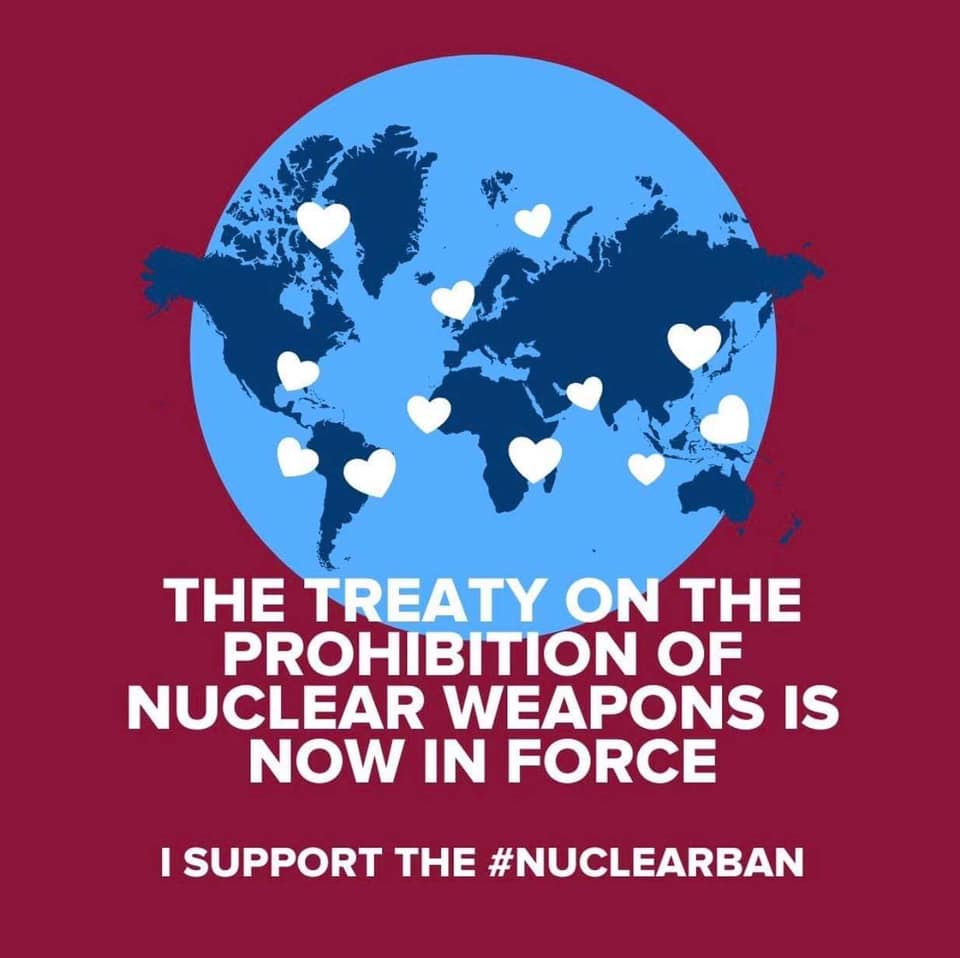
Australia’s reassessment of the Treaty on the Prohibition of Nuclear Weapons
https://www.icanw.org/australia_tpnw 15 Nov 22,
At the United Nations in October, Australia formally ended five years of opposition to the 2017 Treaty on the Prohibition of Nuclear Weapons. Rather than voting against an annual UN General Assembly resolution urging countries to join the landmark treaty – as it had done in previous years under its former conservative government – Australia abstained for the first time. Campaigners welcomed this shift as a “small but important step forward”.
Indonesia and New Zealand, two of Australia’s closest neighbours, also praised the move. The Indonesian ambassador to Canberra, Siswo Pramono, said the change would “give encouragement to others to believe that we are on the right path” in seeking a world free of nuclear weapons: “Your voice matters. Your stance matters.” New Zealand’s foreign ministry said it was “pleased to observe a positive shift” in Australia’s position and “would, of course, welcome any new ratifications as an important step to achieving a nuclear-weapon-free world”.
But the United States warned Australia against joining the treaty, arguing it could hamper defence arrangements with its allies, as the treaty “would not allow for US extended deterrence relationships, which are still necessary for international peace and security”. It added: “The United States does not believe that progress toward nuclear disarmament can be decoupled from the prevailing security threats in today’s world.”

ICAN Australia’s director, Gem Romuld, said Australia must make its own decision on joining the TPNW based on the will of the Australian people. “It’s no surprise that the US don’t want their allies to sign on, because if we claim protection from their so-called ‘nuclear umbrella’ then it helps justify their continued retention and possible use of these illegal and indiscriminate weapons,” she said. An opinion poll in March found 76 per cent of Australians support signing the TPNW, with 6 per cent opposed and 18 per cent undecided.
Until last month’s UN vote, Australia was the only member of a regional nuclear-weapon-free zone treaty to oppose the annual resolution on the TPNW. Nuclear-weapon-free zones cover 116 countries, including all those in Southeast Asia and the South Pacific – many of which were instrumental in the negotiation and adoption of the TPNW in 2017. Under the 1985 South Pacific Nuclear Free Zone Treaty, Australia accepted a legal obligation never to acquire nuclear weapons or host them on its territory.
Following the election of a Labor government this May, Australia began a reassessment of its position on the TPNW. According to the foreign ministry, it is examining a number of important questions “to inform [Australia’s] approach to the TPNW in close consultation with partners, and civil society stakeholders”. Specifically, it is “taking account of the need to ensure an effective verification and enforcement architecture, interaction of the [TPNW] with the Nuclear Non-Proliferation Treaty (NPT) and achieving universal support”.
The review stems from a resolution adopted by the Australian Labor Party at its national conference in 2018, which committed the party to sign and ratify the TPNW in government after considering the above factors. Anthony Albanese, the Labor leader and new prime minister, initiated the resolution. He said at the time: “Our commitment to sign and ratify the nuclear weapon ban treaty in government is Labor at its best.” The party reaffirmed its position in 2021.
Three in four federal Labor parliamentarians, including Mr Albanese, have also individually pledged to work for Australia’s signature and ratification of the treaty. So too have parliamentarians from the Australian Greens and other parties. In September, 10 independent federal parliamentarians issued a joint statement urging the Labor government to “make use of every opportunity to advance Australia’s position in support of the [TPNW]”, and a cross-party parliamentary friendship group for the TPNW was formed.
As evidence of the Labor government’s “constructive engagement” with the TPNW, Australia attended as an observer the first meeting of states parties to the TPNW in Vienna in June. Susan Templeman, a Labor parliamentarian, headed the official delegation. Ahead of the meeting, 55 former Australian ambassadors and high commissioners sent a letter to the prime minister urging him to act swiftly on Labor’s pre-election pledge to sign and ratify the treaty.
“Membership of the TPNW is compatible with Australia’s alliance commitments and will make a positive contribution to the security objectives we share,” the ex-diplomats wrote. “We have previously signed and ratified treaties – on landmines, cluster munitions and nuclear testing – to which the United States is not a party.” Notably, three other Asia–Pacific countries designated by the United States as major non-NATO allies are TPNW states parties: New Zealand, the Philippines and Thailand.
According to the Albanese government, it “shares the ambition of TPNW states parties of a world without nuclear weapons and is committed to engaging constructively to identify possible pathways towards nuclear disarmament”. Its decision to attend the first meeting of states parties, its abstention on the recent UN vote, and its ongoing engagement with civil society organisations, including ICAN, reflect this commitment.
While a formal cabinet decision to support and join the TPNW is still pending, the government’s initial steps in this direction are cause for optimism. “We look forward to a formal decision by the Albanese government to sign and ratify the TPNW – in line with its pre-election pledge,” said Ms Romuld. “The overwhelming majority of Australians support joining this treaty, and progress towards disarmament is more urgent than ever.”
Biden, Xi ‘Agreed’ Nuclear Weapons Should Never Be Used
https://www.barrons.com/news/biden-xi-agreed-opposition-to-nuclear-weapons-use-in-ukraine-white-house-01668432907 By AFP – Agence France PresseNovember 14, 2022,
US President Joe Biden and his Chinese counterpart Xi Jinping agreed in talks Monday that nuclear weapons should never be used, including in Ukraine, the White House said.
“President Biden and President Xi reiterated their agreement that a nuclear war should never be fought and can never be won and underscored their opposition to the use or threat of use of nuclear weapons in Ukraine,” it said in a statement.
The pair held their first face-to-face talks since Biden took office on the sidelines of a G20 meeting expected to be dominated by the war in Ukraine.
The pair shook hands at the start of the meeting, with Biden saying the superpowers shared the responsibility to show the world that they can “manage our differences, prevent competition from becoming conflict”.
The White House said he had told Xi that Washington would “continue to compete vigorously” with China, but “this competition should not veer into conflict”.
Biden raised objections to China’s “coercive and increasingly aggressive actions toward Taiwan,” the White House said after three hours of talks aimed at avoiding conflict between the rival superpowers.
And he told Xi the world should encourage North Korea to act “responsibly”, after a record-breaking series of missile launches by Pyongyang and growing fears of a new nuclear test.
Nuclear Power Is Not the Answer

As world leaders convene at COP27 to discuss the global decarbonization agenda, they should focus on the technologies that can be deployed rapidly and universally to replace fossil fuels.
As consecutive editions of the WNISR have shown, nuclear power is too slow and too expensive to compete with energy-efficiency measures and renewable energy.
Project Syndicate, Nov 14, 2022 ANTONY FROGGATT
As world leaders convene at COP27 to discuss the global decarbonization agenda, they should focus on the technologies that can be deployed rapidly and universally. That means de-emphasizing nuclear power, which was no longer competitive with solar and wind even before this year’s geopolitical turmoil.
PARIS – Just as Russia’s invasion of Ukraine has highlighted Europe’s dangerous dependence on fossil fuels, increasingly frequent and intense climate-driven weather events are highlighting the death and destruction that fossil-fuel dependence has wrought. Understandably, political and public pressure to reduce greenhouse-gas emissions, move away from insecure primary energy supplies, and develop new, reliable, secure, and affordable energy sources is at an all-time high. But rather than rushing ahead, we need to consider carefully which options are most realistic, and how they will be deployed and operate in the real world.
Consider nuclear power. With many countries and companies now giving this option a second (or even a third) look, the 2022 World Nuclear Industry Status Report (WNISR) offers valuable insights into how the sector is faring.
While the last 12 months may be remembered as a turning point for the broader energy sector, it won’t be because of the nuclear industry. Nuclear energy’s share of global commercial gross electricity generation in 2021 dropped to 9.8%, which is its first dip below 10% in four decades, barely more than half its peak of 17.5% in 1996. Meanwhile, wind and solar surpassed nuclear for the first time in 2021, accounting for 10.2% of gross power generation.
These diverging trajectories can be seen clearly across every indicator of investment, deployment, and output. According to the International Atomic Energy Agency, operating reactors peaked in 2018, both in terms of their number (449) and total capacity (396.5 gigawatts). The IAEA reports that 437 reactors were “in operation” globally at the end of 2021, including 23 reactors that have not generated power for at least nine years, and which may never do so again.
In 2018, when installed nuclear power peaked below 400 GW, solar and wind capacity rose above 1,000 GW, on its way to reaching 1,660 GW by the end of 2021. In just three years, solar and wind added two-thirds more capacity than nuclear at its last peak. Even if nuclear plants usually generate more electricity per unit of installed capacity than wind and solar, the divergence in these numbers is staggering.
In 2021, total investments in non-hydro renewables hit a record $366 billion, adding an unprecedented 257 GW (on net) to electricity grids, whereas operating nuclear capacity decreased by 0.4 GW. Only six new reactors were connected to the grid that year, and half of these were in China. Then, in the first half of 2022, five new reactors went online, two of which were in China. But while China has the most reactors under construction (21, as of mid-2022), it is not building them abroad.
Until recently, that role was taken up by Russia, which is dominating the international market with 20 units under construction, including 17 in seven countries as of mid-2022. Sanctions and potential other geopolitical developments have cast doubt on many of these projects, with a Finnish consortium already canceling construction of a facility based on a Russian design.
Only 33 countries operate nuclear power plants today, and only three – Bangladesh, Egypt, and Turkey – are building reactors for the first time (all in partnership with the Russian nuclear industry). Twenty-six of the 53 construction projects around the world have suffered various delays, with at least 14 reporting increased delays, and two reporting new delays, just in the past year.
For the first time, the WNISR also assesses the risks of nuclear power and war. There has been significant international concern about Ukraine’s Zaporizhzhia nuclear power plant, which has been occupied by Russia forces since March 4, 2022. Owing to repeated shelling in and around the area, the plant has frequently lost external power, prompting warnings from the IAEA that the situation is “untenable.” Operating a nuclear facility requires motivated, rested, skilled staff; but Zaporizhzhia’s Ukrainian personnel are under severe stress.
The key challenge now is to maintain continuous cooling for the reactor core and the pool for spent fuel, even after the reactor is shut down. The failure to evacuate heat from residual decay would lead to a core meltdown within hours, or a spent-fuel fire within days or weeks, with potentially large releases of radioactivity.
As world leaders convene at COP27 to discuss the global decarbonization agenda, they should focus on the technologies that can be deployed rapidly and universally to replace fossil fuels. As consecutive editions of the WNISR have shown, nuclear power is too slow and too expensive to compete with energy-efficiency measures and renewable energy.
So-Called Next-Generation Nuclear Power Plants Are Being Oversold

One contender, for example, TerraPower’s 345-megawatt Natrium reactor, received considerable media attention earlier this year when company founder Bill Gates touted it during interviews about his new book, How to Avoid a Climate Disaster. According to the UCS report, however, sodium-cooled fast reactors such as Natrium would likely be less uranium-efficient and would not reduce the amount of waste that requires long-term isolation. They could also experience safety problems that are not an issue for light-water reactors. Sodium coolant, for instance, can burn when exposed to air or water, and the Natrium’s design could experience uncontrollable power increases that result in rapid core melting.

There’s little evidence that they’d be cheaper or safer than existing designs
https://www.scientificamerican.com/article/lsquo-advanced-rsquo-nuclear-reactors-don-rsquo-t-hold-your-breath/— By Elliott Negin, Elliott Negin is a senior writer at the Union of Concerned Scientists. July 21
The U.S. nuclear power industry is at an impasse. Since 2012, 11 of the 104 light-water reactors in operation at the time have closed, mainly as a result of aging infrastructure and the inability to compete with natural gas, wind and solar, which are now the cheapest sources of electricity in the U.S. and most other countries worldwide.
One way the industry is trying to reverse the trend is by looking to what it likes to call “advanced” reactors. Despite the name, these designs are largely based on unproven concepts from more than 50 years ago. Unlike conventional light-water reactors, these rely on sodium or molten salt or gas for cooling, and their proponents claim they will be less expensive, safer and more secure than their predecessors. Some claim that these innovative devices will be ready for prime time by the end of this decade.
The U.S. nuclear power industry is at an impasse. Since 2012, 11 of the 104 light-water reactors in operation at the time have closed, mainly as a result of aging infrastructure and the inability to compete with natural gas, wind and solar, which are now the cheapest sources of electricity in the U.S. and most other countries worldwide.
One way the industry is trying to reverse the trend is by looking to what it likes to call “advanced” reactors. Despite the name, these designs are largely based on unproven concepts from more than 50 years ago. Unlike conventional light-water reactors, these rely on sodium or molten salt or gas for cooling, and their proponents claim they will be less expensive, safer and more secure than their predecessors. Some claim that these innovative devices will be ready for prime time by the end of this decade.

This has naturally attracted the attention of Biden administration officials and some key members of Congress, who are looking for ways to curb carbon emissions. But an analysis of non-light-water reactor concepts in development by the Union of Concerned Scientists (UCS) has found that these designs are no better—and in some respects significantly worse—than the light-water reactors in operation today. The report’s author, UCS physicist Edwin Lyman, took a close look at the claims developers have been making: that these new devices will burn uranium fuel more efficiently and produce less radioactive waste than existing plants; will reduce the risk of nuclear proliferation; and will be commercialized relatively soon. Those claims, however, do not hold up to scrutiny.
One contender, for example, TerraPower’s 345-megawatt Natrium reactor, received considerable media attention earlier this year when company founder Bill Gates touted it during interviews about his new book, How to Avoid a Climate Disaster. According to the UCS report, however, sodium-cooled fast reactors such as Natrium would likely be less uranium-efficient and would not reduce the amount of waste that requires long-term isolation. They could also experience safety problems that are not an issue for light-water reactors. Sodium coolant, for instance, can burn when exposed to air or water, and the Natrium’s design could experience uncontrollable power increases that result in rapid core melting.
In June, TerraPower announced that it would build the first Natrium reactor in Wyoming as part of a 50–50 cost-share program with the Department of Energy. The DOE program originally required the company to have the reactor, still in its early design stage, up and running by 2027. That was recently pushed back a year, but it is still a completely unrealistic timetable. According to the UCS report, if federal regulators require the necessary safety demonstrations, it could take at least 20 years—and billions of dollars in additional costs—to commercialize such reactors, their associated fuel-cycle facilities, and other related infrastructure.
The Nuclear Regulatory Commission (NRC) may have to adapt some regulations when licensing reactor technologies that differ significantly in design from the current fleet. Lyman says that should not mean weakening public health and safety standards, finding no justification for the claim that “advanced” reactors will be so much safer and more secure that the NRC can exempt them from fundamental safeguards. On the contrary, because there are so many open questions about these reactors, he says they may need to meet even more stringent requirements.
Lyman’s report recommends that the DOE suspend its advanced reactor demonstration program until the NRC determines whether it will require full-scale prototype tests before any designs are licensed for commercial deployment, which the report argues are essential. It also calls on Congress to require the NRC to convene an independent commission to review the technical merits of non-light-water reactors and approve only those projects that have a high likelihood of commercialization and are clearly safer and more secure than the current fleet.
Finally, it recommends that the NRC and Congress consider spending more research and development dollars on improving the safety and security of light-water reactors rather than on commercializing immature, overhyped non-light-water reactor designs. Any federal appropriations for R&D and deployment of these reactor designs, Lyman says, should be guided by a realistic assessment of the likely benefits and not based on wishful thinking.
US and Western officials considering diplomacy as winter looms and Ukraine war cost may rise to $60 billion

The growing belief that there’s no military resolution to the war and the rising hope that Ukraine and Russia move toward starting talks comes as Ukraine needs additional military aid. The White House and Congress are expected to consider additional funds for assistance for Ukraine, potentially $40 billion to $60 billion, NBC News has reported. Some Republicans and Democrats have begun to question whether the U.S. should send additional tens of billions of dollars to Ukraine
Some U.S. and Western officials think neither side can win and see winter as a shot at diplomacy in Ukraine-Russia war
Russia and Ukraine are most likely looking to the slower tempo of battle this winter as a time to reset and refit their forces to be ready for a spring offensive.
nbc news, By Courtney Kube, Carol E. Lee and Josh Lederman 14 Nov 22,
Some U.S. and Western officials increasingly believe that neither side can achieve all of their goals in the Ukraine war and are eyeing the expected winter slowdown in fighting as an opportunity for diplomacy to begin between Russia and Ukraine, officials familiar with the matter say.
Western defense officials question Ukraine’s ability to remove Russian troops completely from occupied areas, and if military operations on the ground stabilize over the winter that could underline that neither side is likely to achieve its goal of controlling the whole country, the officials said. They spoke on the condition of anonymity because they are not authorized to speak publicly on matters of diplomacy.
“In the winter, everything slows down,” said a Western official with direct knowledge of military operations. “The potential for talks, we would like to see that happening.”
The official pointed to a statement by Russia’s ambassador to the United Kingdom last week about the potential for negotiations as possible “messaging” toward a diplomatic path.
U.S. national security adviser Jake Sullivan made a surprise visit last week to Kyiv, where he met with President Volodymyr Zelenskyy and top Ukrainian officials. The White House National Security Council said the meetings were to “underscore the United States’ steadfast support to Ukraine and its people.” But two people familiar with the meetings and a Ukrainian government official said Sullivan did broach the idea of how the conflict can end and whether it could include a diplomatic solution. “He was testing the waters a bit,” a person familiar with the meetings said.
The Ukrainian official said that during his meetings, Sullivan raised the need for a diplomatic resolution to the war and made the point that Ukraine’s leverage would be strengthened — not weakened — if it expressed openness to ultimately negotiating with the Russians. The official said that Sullivan had not tried to pressure Ukraine to enter into negotiations immediately or to take any specific steps. Instead, the official said, Sullivan expressed the view that Ukraine would able to maintain the support of Western allies better if it is perceived as being willing to reach an end to the conflict through diplomacy……………………………………………
………………….. The growing belief that there’s no military resolution to the war and the rising hope that Ukraine and Russia move toward starting talks comes as Ukraine needs additional military aid. The White House and Congress are expected to consider additional funds for assistance for Ukraine, potentially $40 billion to $60 billion, NBC News has reported. Some Republicans and Democrats have begun to question whether the U.S. should send additional tens of billions of dollars to Ukraine. ……….. https://www.nbcnews.com/politics/national-security/ukraine-russia-war-winter-diplomacy-rcna56190—
Russia and US hold secret talks in Ankara – Kommersant
https://www.rt.com/russia/566501-russia-us-secret-talks/ 14 Nov 22, Moscow is reportedly represented by the country’s top spy at the negotiations.
A leading Moscow newspaper claimed, on Monday, that secret US-Russian talks are being hosted by Türkiye. Kommersant, a privately owned title which is known to have good sources in Moscow, reported, citing anonymous sources, that the un-announced meeting was taking place in Ankara.
The outlet alleged that Russia had sent Sergey Naryshkin, director of the Foreign Intelligence Service (SVR) to the talks.
Kremlin spokesperson Dmitry Peskov later confirmed to Russian media that bilateral talks had taken place in Ankara, adding that they were held at the initiative of the US.
CNN claimed that CIA Director Bill Burns had represented Washington at the gathering, citing a “National Security Council spokesperson.”
Earlier this month, Western media reported that top Russian and US officials were engaging in undeclared contacts. According to the Wall Street Journal, US national-security adviser Jake Sullivan has been engaged with Yury Ushakov, a senior foreign policy aide to President Vladimir Putin, and with Nikolay Patrushev, Sullivan’s counterpart in the Russian government.
The White House did not deny the talks, with spokesperson Karine Jean-Pierre telling journalists that the contacts focused on “risk reduction.” Meanwhile, Peskov told the WSJ at the time that the British and American press tended to print “hoaxes.”
Türkiye emerged as a principal mediator during the Ukraine crisis. In late March, it hosted Russia-Ukraine talks, during which the two parties made significant progress towards settling on a peace agreement.
The negotiations were reportedly torpedoed by the UK, when then-Prime Minister Boris Johnson traveled to Kiev in April. According to Ukrainian media, he told President Vladimir Zelensky that Western nations would not support the proposed security pact that was discussed with Russia.
Ankara also helped the UN to launch the Black Sea Initiative, an arrangement that allows Ukraine to export its grain via commercial ships. The agreement, which was signed in July, expires on Friday. Moscow has repeatedly stated that it may not agree to a renewal, unless the UN delivers on its promise to facilitate Moscow’s export of Russian grain and fertilizers, which was part of the deal.
Victoria needs a plan to get off gas, not an impossible promise to burn more — RenewEconomy

Victoria Coalition leader Matthew Guy’s campaign promise to “turbocharge” gas production can only be described as a hoax. The post Victoria needs a plan to get off gas, not an impossible promise to burn more appeared first on RenewEconomy.
Victoria needs a plan to get off gas, not an impossible promise to burn more — RenewEconomy
Victoria Labor pledges $6m to expand wind energy training facility — RenewEconomy

Labor pledges $6m to support the expansion of a state-of-the-art education centre to train workers in skills essential to the renewables transition. The post Victoria Labor pledges $6m to expand wind energy training facility appeared first on RenewEconomy.
Victoria Labor pledges $6m to expand wind energy training facility — RenewEconomy
FRV secures new finance for Australia’s first solar farm to use tracking technology — RenewEconomy

FRV secures new finance deal for the country’s first solar farm to use single axis tracking technology. The post FRV secures new finance for Australia’s first solar farm to use tracking technology appeared first on RenewEconomy.
FRV secures new finance for Australia’s first solar farm to use tracking technology — RenewEconomy
Australian and world nuclear news this week

Some bits of good news – What’s this, some good news on climate change? Positive news: From ‘Global Shields’ to young voices, all the climate wins at COP27 so far. The Times got it right about 5 reasons for hope on climate action, but very wrong on one. 4 signs of progress at the UN climate change summit. Saving theAmazon.
Coronavirus. Weekly Epidemiological Update. World Health Organization reports 90 per
World Health Organization reports 90 per cent drop in global COVID-19 deaths, even as new variants continue to appear
AUSTRALIA.
- A Father Fights for His Son & What’s Left of Democracy.
- The Australian nuclear lobby is at it again. Nine right-wing rural senators push to change the laws on nuclear activities.
- Memo G20 – there is a greater enemy than China to fight.
- US warns Australia against joining treaty banning nuclear weapons.https://www.youtube.com/watch?v=r-x29u7M7I0 Australia “should not face intimidation from so-called allies under the auspices of defense cooperation,”.
- AUKUS and nuclear submarines: Defence Minister Richard Marles sets Australia’s course in lockstep with USA-UK’s animosity to China. Military buildup in Australia stirs fears. The definitive case against nuclear subs. Internal briefing reveals Northern Territory government approach to defence regarding AUKUS nuclear submarines. Government accused of hiding ‘lazy $591 million’ in extra costs from scrapped French submarine program.
- Friends of the Earth urge all South Australian federal Labor politicians to push for the scrapping of Kimba nuclear waste plan.
- Science Minister Melissa Price closer to the Liberal Opposition than to Labor, as she backs small nuclear reactors to beat climate change
Coronavirus. World Health Organization reports 90 per cent drop in global COVID-19 deaths, even as new variants continue to appear. Weekly Epidemiological Update.
Climate – miles and miles of COP27 news – not covered here.
Plastic. Your Body Is Partly Plastic. So Is Everything Else.
Nuclear. The human species is really at a crossroads. In all these crises – lies abound. Take the lie that recycling plastic works. No it doesn’t. Recycling plastic exists to enable the oil corporations to keep right on selling oil, and keep the plastics industry going.. COP27 is full of greenwash lies, as fossil fuel lobbyists buy national governments. But the best lie at COP27 is the one about nuclear power solving climate change. The only problem it really solves is that it counters and obscures the public’s bad image of nuclear weaponry – small nuclear reactors for instance – totally useless against global heating, but a convenient “nice” step towards nuclear weapons. Makes all the nuclear workers feel better.
CLIMATE.
- At COP27 Climate Summit the International Atomic Energy Agency joins all those paid nuclear lobbyists in pushing the lie that “nuclear solves the climate problem”. The USA’s “climate” envoy at COP27 John Kerry is just another nuclear shill.
- The world is now deep into the climate crisis. Scientists now see the climate crisis as frightening. Barbados PM launches blistering attack on rich nations at Cop27 climate talks. How likely is progress on climate at Cop27? Revealed: US and UK, Canada and Australia fall billions short of ‘fair share’ of climate funding for developing countries. A bigger-than-ever pack of fossil fuel lobbyists at COP27. Sea level rise as Greenland ice thaws faster than expected. To those who sneer at activists blocking roads: what are you doing to save the planet?
CIVIL LIBERTIES. U.S. House Intelligence Committee questioned about alleged surveillance of Julian Assange
Read more: Australian and world nuclear news this week.
ECONOMICS.
- EU Needs $460 Billion Investment Just To Maintain Nuclear Power Capacity, let alone build new.
- Russia maintains its grip on global nuclear energy landscape. USA, France, continue to buy nuclear supplies from Russia – no sanctions on that industry!
- Another US nuclear marketing deal done ay COP27 – $3billion for Romania reactors project. U.S. uses COP27 to market nuclear power to Romania, offering over $3 billion funding.
- France’s Nuclear Power Problems Are Mounting France electricity prices surge past €1,000/MWh as more nuclear reactors close for winter.
- Welsh Affairs Select Committee to hear from proponents of nuclear power, on funding plans for Sizewell C project .
ENERGY. As France’s aging nuclear reactors fail, France may block electricity exports to UK. EDF nuclear problems increase risk of winter energy shortages. Incident at France’s Civaux nuclear reactor adds to EDFs problems of stress corrosion cracking in nuclear plants . Is nuclear energy actually sustainable? Ukraine joins in USA’s false story, “clean” energy from the mythical small nuclear reactors.
ENVIRONMENT. Closed Dounreay nuclear site records its highest number of radioactive particles in nearly two decades. Concern over radioactive particles on Dounreay shoreline – poor monitoring of the nuclear clean-up.
HEALTH. ‘Clear case for inquiry into treatment of men in Britain’s nuclear test programme’.
LEGAL. Maryland Nuclear Engineer and Wife Sentenced for Espionage-Related Offenses.
MEDIA. Massive anti-Russian “Bot Army” exposed by Australian Researchers.
NUCLEAR TECHNOLOGY. Surprise surprise- USA co-opts Ukraine to try out small nuclear reactors. Finland plans to continue using Russian nuclear fuel. Ever the optimists… Rolls-Royce chooses four sites for reactor that’s yet to be built.
OPPOSITION TO NUCLEAR . Austria holds the anti-nuclear line. Campaigners seek early end to Chinese involvement at Bradwell. Campaign for Nuclear Disarmament, International Campaign to Abolish Nuclear Weapons, Global Zero, and Black Lives Matter- the reinvigorated anti-nuclear movement . ‘Subpoenas’ Served on US Weapons Manufacturers.
POLITICS. UK government denies reports that the Sizewell C nuclear project is in doubt. German Parliament advised not to extend nuclear power beyond springtime 2023. Germany refuses to build nuclear Uniper plant in Sweden.
POLITICS INTERNATIONAL and DIPLOMACY.
- On Nuclear Treaty, at Least, Biden Aims for Fresh START With Russia. Russia, U.S. Eye Nuclear Arms Reduction Talks in Coming Weeks – Kommersant.
- France’s Macron and UK’s Sunak agree on nuclear energy cooperation.
- Tale Of Two Broken Accords: Oslo And Minsk.
- Finland to continue relying on Russia for nuclear fuel.
- Israeli nuclear arsenal condemned by world’s govts in overwhelming UN vote.
SAFETY.
- Nuclear risk: How does Zaporizhzhia compare with Chernobyl? It can’t go on like this’: Power restored to Ukrainian nuclear plant but situation untenable, says IAEA.
- Stress corrosion continues to trouble the French nuclear fleet, EDF Nuclear Reactor Has Test Incident,
- Cracks found in feedwater pumps at Finland’s OL3 nuclear plant. Finland’s OL3 nuclear reactor remains offline as probe continues. Finland’s Olkiluoto 3 repairs could take several months, A disaster waiting to happen’:
- British nuclear-armed sub resurfaces after fire onboard. Staff ‘moved after serious radiation breach’ at Trident nuclear base. ‘
- Sweden’s Biggest Nuclear Reactor Shut Down by Turbine Fault. Deepening Supply Concerns.
- Sizewell C – proposed coastal area is not suitable for nuclear reactors.
- UK government to dump European Union nuclear safety laws – a deregulated race to the safety bottom?
SECRETS and LIES. Corruption exposed: US meddled in Ecuador’s election, using Julian Assange as bargaining chip. Azov Nazi speaks to school kids across America.
WASTES. In Suttsu, Japan, residents don’t want nuclear waste. Radioactive Waste Flasks to Share Arnside Viaduct with Walkers and Cyclists ?
WAR and CONFLICT.
Global majority leads the way on nuclear disarmament: time to reflect that reality here. US flies nuclear-capable B-1B strategic bombers over South Korea. Let’s Be Clear: If WW3 Happens It Will Be The Result Of Choices Made By The US Empire. What Could Nuclear War Mean For Wyoming? Pretty Much The Worst Parts Of The Bible.
U.S. long-range missile launch in the Arctic: “We are intentionally trying to be provocative”. Pentagon exploits post 9/11 laws to wage ‘secret wars’ worldwide: Report. US prolonging Ukraine conflict for profit: Russian envoy. Concealing US Militarism By Making It Sacred. Germany: Pentagon assembles defense chiefs from 50 nations for Ukraine war confab
‘Tactical’ Nuclear Weapons Could Unleash Untold Damage, Experts Warn.
WEAPONS and WEAPONS SALES. G20 leaders to denounce use, or threat, of nuclear weapons – draft (?a pious hypocrisy in opposition to the UN Nuclear Ban Treaty)) Finland denies plans to deploy nuclear weapons in the country once it joins NATO. more. Will expanding Canada’s plutonium interests support the peaceful use of nuclear energy?lear Australia
.
Australia’s Science Minister Melissa Price closer to the Liberal Opposition than to Labor, as she backs small nuclear reactors to beat climate change,
Cain Andrews, Broome Advertiser13 November 2022
https://thewest.com.au/news/broome-advertiser/melissa-price-backs-nuclear-option-at-kimberley-economic-forum–c-8830423?utm_source=csp&utm_medium=portal&utm_campaign=Isentia&token=I%2B8Lt5WlhmDNscyeuxIQVQFzxLQ5%2B1qpkHjt6nRSfUzPC3SzvTQhzcbYGKkZDsSmzHZw4gVfNhHWTYBPdyPXwA%3D%3D
Durack MP Melissa Price called for Australia to adopt nuclear power to tackle climate change.
Speaking at the Kimberley Economic Forum on November 10, Ms Price said that the Coalition failed to effectively communicate its climate policy heading into the election, and the Opposition was now calling for an “informed and honest debate” on how nuclear technologies can be part of Australia’s decarbonisation mix over the next four years.
Echoing Federal Opposition Leader Peter Dutton, Ms Price cited new reactor technologies, Australia’s large uranium deposits and the potential to lower power prices as key factors in the Coalition’s advocacy for nuclear energy.
“Australians are hungry for affordable, reliable and secure sources of power that emit zero emissions,” Ms Price said.
“And while renewables play a huge part in painting this picture, it’s at times when the wind is not blowing and the sun’s not shining, that nuclear could play its part.
“In fact, there’s over 70 designs of small modular reactors that are currently in development or construction in 18 separate countries.”
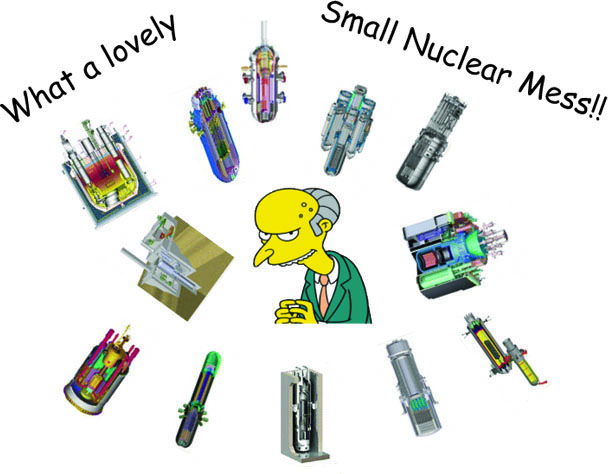
Despite her comments, one of Australia’s leading scientific agencies, the Commonwealth Scientific and Industrial Research Organisation , still views nuclear power as a non-starter, even with new reactor technologies.
A CSIRO report released in June found there was “no prospect” of nuclear small modular reactors being introduced to Australia in the next decade given the technology’s “commercial immaturity and high cost”.
It also found renewables such as solar and wind remained the “cheapest new-build electricity generation option in Australia”.
Corruption exposed: US meddled in Ecuador’s election, using Julian Assange as bargaining chip
A former minister of Ecuador testified that the US government conspired with a right-wing political party to run a disinformation campaign against the leftist Correísta movement, backing a millionaire banker for president in exchange for giving up journalist Julian Assange, who had asylum in the Ecuadorian embassy.
MP, Ben Norton, 13 Nov 22,
Ecuador’s former energy minister testified that the US government conspired with a right-wing political party to run a disinformation campaign against the leftist Correísta movement of ex President Rafael Correa.
He said that US “federal agents” pledged to help “influence” the 2017 presidential elections and support the candidacy of conservative millionaire banker Guillermo Lasso in exchange for the promise to turn over journalist Julian Assange, who had been given asylum by Correa and was stuck living for years in Ecuador’s embassy in London.
The former energy minister, Carlos Pareja Yannuzzelli, had fled a corruption investigation in Ecuador and was living as a fugitive from justice in the United States in late 2016 when he was offered large sums of money and US government protection in return for reading a carefully prepared “script” that made false accusations of corruption against Correa and his Vice President Jorge Glas, who was later imprisoned on highly dubious charges.
Pareja testified that the federal agents also coerced him into making false accusations against a US citizen, so they could justify their involvement in the Ecuadorian case. This led to the US citizen being arrested and imprisoned for three-and-a-half years.
Lasso ended up losing the 2017 election (before going on to win the 2021 election), but his victorious opponent, Lenín Moreno, later betrayed Assange anyway, letting British authorities raid the embassy, imprison the WikiLeaks journalist, and prepare to extradite him to the United States.
The revelation of this extraordinary example of Washington meddling in another country’s election came from one of the top officials in Ecuador’s oil industry……………………………………………………………
US intelligence-linked right-wing Ecuadorian politician uses corrupt US asset to accuse Correa of corruption……………………………………………..
Ecuador’s ex energy minister details US-backed campaign to help the right wing in the 2017 elections………………………………………………………..
it was widely assumed, even by Correa himself, that Correa’s former Vice President Lenín Moreno would continue his socialist political program.
Moreno did run on a left-wing presidential campaign, but after entering office, he did a political 180. Moreno turned hard to the right, repressing, imprisoning, and exiling Correísta politicians.
He also stabbed Julian Assange in the back, reversing Correa’s pledge to protect the WikiLeaks publisher and renouncing the Ecuadorian citizenship that had been given to the journalist. In order to arrest Assange, Moreno even let British authorities violate his own country’s sovereignty by storming the embassy, which constitutes Ecuadorian territory under the Vienna Convention in international law.
Correísta politicians have alleged that Moreno was bribed and/or blackmailed by the US government, as he obediently fulfilled all of Washington’s foreign-policy goals, collaborating closely with the Donald Trump administration, removing Ecuador from the Bolivarian Alliance (ALBA) and Union of South American Nations (UNASUR), and even recognizing US-appointed coup leader Juan Guaidó in Venezuela.
…………………………………………………………….. Corrupt Ecuadorian official conspired with Miami-based oligarchs who stole millions from their people……………………………………………. more https://multipolarista.com/2022/11/11/capaya-us-meddled-ecuador-election-assange/
1 This month.


PETITION – To: Prime Minister Anthony Albanese and the Australian Labor Government
Chernobyl: The Lost Tapes – A good documentary on Chernobyl on SBS available On Demand for the next 3 weeks– https://www.sbs.com.au/ondemand/tv-program/chernobyl-the-lost-tapes/235274195556
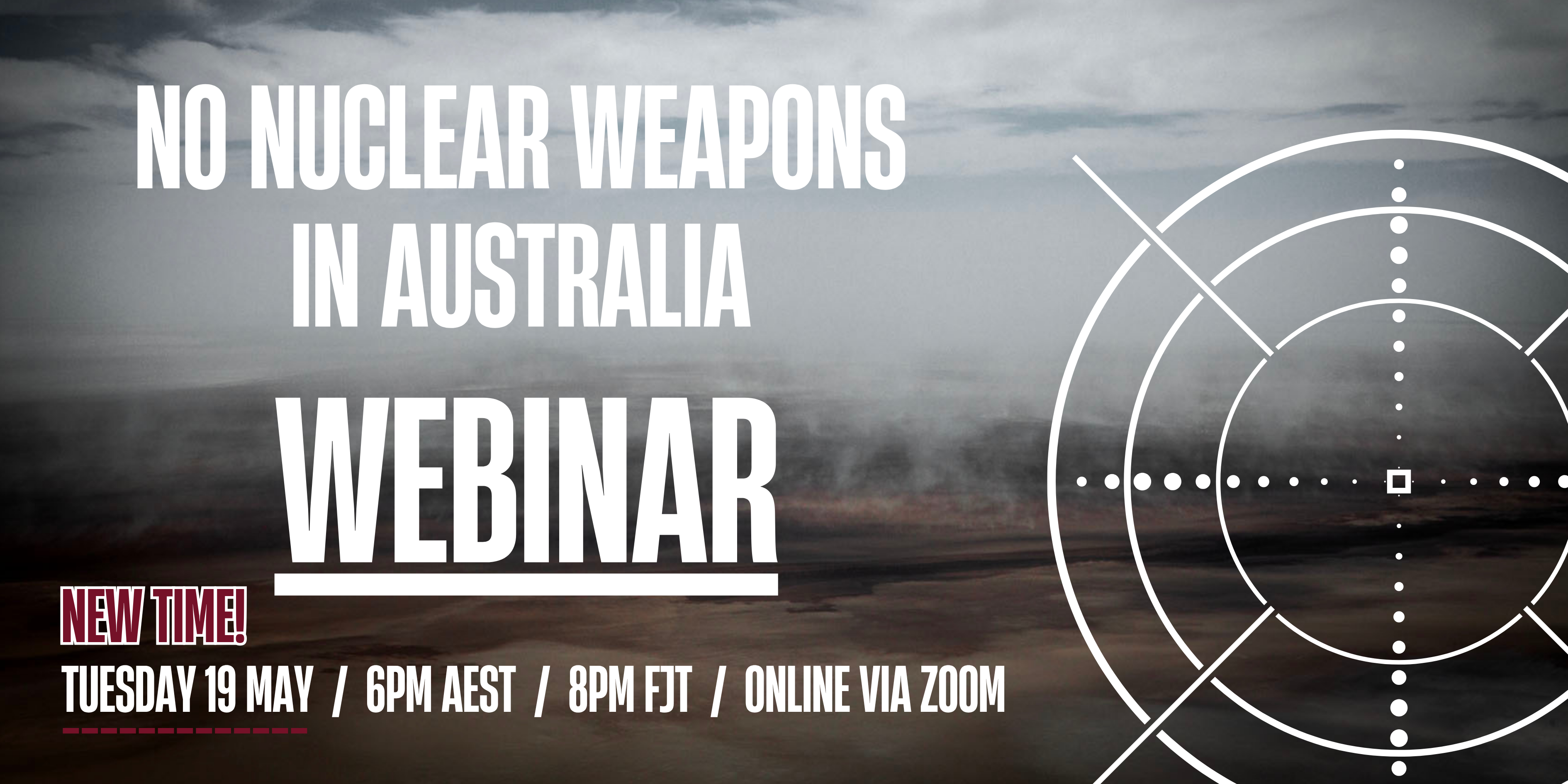
19 May – Webinar- Webinar: No Nuclear Weapons in Australia
Start: 2026-05-19 18:00:00 UTC Canberra, Melbourne, Sydney (GMT+10:00)
End: 2026-05-19 19:30:00 UTC Canberra, Melbourne, Sydney (GMT+10:00)
20 May – Webinar – The dangerous world of AUKUS, US, military occupation and suppression of dissent

National Webinar, 20th May, 2026, 6.30pm AEST. Confronting laws restricting/suppressing protest speech and action
Speakers: Former Sen. Rex Patrick, Lawyer Nick Hanna ,Arthur Rorris ,Jorgen Doyle, Sen David Shoebbridge,
Facilitator Kelley Tranter.

of the week – Australians for War Powers Reform (AWPR)
To see nuclear-related stories in greater depth and intensity
 Antinuclear