Exposing the dishonest spiel that nuclear waste is “manageable”

Tom Smith, Chair, Nuclear Decommissioning Authority, 2017-20.
Samanth Subramanian captures perfectly the vast scale and longevity of the
effort needed to clean up Sellafield (The long read, 15 December).
As Britain and other states with nuclear power industries grapple with how to
go about an effective, safe and economical nuclear clean-up, it might be
better to explain the challenges with less reliance on suggestions that in
its early days the nuclear industry never thought about decommissioning
(though the point has validity).
Instead, we need more honesty about the fact that nuclear power inescapably generates large quantities of hazardous human-made waste, the worst of which will remain hazardous probably beyond
Homo sapiens’ time on the planet.
The industry’s solution to this is a network of deep disposal facilities. But none have yet been created, their
cost is enormous and there is no certainty that they will perform the
long-term task required of them. These are considerations that sadly
receive little attention in current debates about the need for new
nuclear-generation capacity.
Coincidentally, you published a letter (14 December) suggesting that nuclear radiation is less dangerous than
emissions from a wood-burning stove, a curious comparison to make.
Wood-burning stoves are pollutants, no question, but they could never lead
to a Windscale, Three Mile Island, Chornobyl or Fukushima. Nor will
decommissioning them cost billions and take decades.
Guardian 22nd Dec 2022
December 23 Energy News — geoharvey

Opinion: ¶ “We Need More Honesty On Nuclear Power’s Long Legacy Of Hazardous Waste” • We need more honesty about the fact that nuclear power inescapably generates large quantities of human-made, hazardous, radioactive waste, the worst of which will probably remain hazardous beyond the time that Homo sapiens has on the planet. [The Guardian] Nuclear […]
December 23 Energy News — geoharvey

Bank of America, investors, thrilled and delighted with the nuclear arms race

Above: Banks investing in nuclear weapons
These 3 stocks will benefit from the nuclear arms race – Bank of America
Stock Markets (Dec 20, 2022,
The U.S. defense stocks are likely to continue outperforming the market, thanks to the ongoing conflict in Ukraine and a potential conflict in Taiwan, according to Bank of America analysts.
One particular area of the defense sector to be monitored closely is the one focused on the development of nuclear weapons.
“We expect concerns of nuclear proliferation to drive secular and governmental defense spending, particularly as the US moves away from nation-state conflicts, like in the Middle East, and focuses attention on near-peer threats. We expect US defense companies to see much of the upside from increased demand for nonstrategic nuclear weapons,” the analysts said in a client note……………….
As Europe lacks the industrial footprint the US has cultivated, we expect that US defense primes will be called upon to fill demand, reflecting a significant upside to these names,” they added.

Along these lines, the analysts see Northrop Grumman (NYSE:NOC), Boeing (NYSE:BA), and Lockheed Martin (NYSE:LMT) benefiting from the increased demand as these three have the largest nuclear operations.
“This reinforces our Buy rating on Northrop Grumman. We remain Neutral on Boeing and Lockheed Martin on account of continued supply chain challenges and operational hurdles,” the analysts concluded. https://au.investing.com/news/stock-market-news/these-3-stocks-will-benefit-from-the-nuclear-arms-race–bank-of-america-432SI-2747010
Despite the hype, we shouldn’t bank on nuclear fusion to save the world from climate catastrophe

Robin McKie, https://www.theguardian.com/commentisfree/2022/dec/17/dont-bank-on-nuclear-fusion-to-save-the-world-from-a-climate-catastrophe-i-have-seen-it-all-before
Last week’s experiment in the US is promising, but it’s not a magic bullet for our energy needs
“…….. For almost half a century, I have reported on scientific issues and no decade has been complete without two or three announcements by scientists claiming their work would soon allow science to recreate the processes that drive the sun. The end result would be the generation of clean, cheap nuclear fusion that would transform our lives.
Such announcements have been rare recently, so it gave me a warm glow to realise that standards may be returning to normal. By deploying a set of 192 lasers to bombard pellets of the hydrogen isotopes deuterium and tritium, researchers at the US National Ignition Facility (NIF) in Livermore, California, were able to generate temperatures only found in stars and thermonuclear bombs. The isotopes then fused into helium, releasing excess energy, they reported.
It was a milestone event but not a major one, although this did not stop the US government and swaths of the world’s media indulging in a widespread hyping jamboree over the laboratory’s accomplishment. Researchers had “overcome a major barrier” to reaching fusion, the BBC gushed, while the Wall Street Journal described the achievement as a breakthrough that could herald an era of clean, cheap energy.
It is certainly true that nuclear fusion would have a beneficial impact on our planet by liberating vast amounts of energy without generating high levels of carbon emissions and would be an undoubted boost in the battle against climate change.
The trouble is that we have been presented with such visions many times before. In 1958, Sir John Cockcroft claimed his Zeta fusion project would supply the world with “an inexhaustible supply of fuel”. It didn’t. In 1989, Martin Fleischmann and Stanley Pons announced they had achieved fusion using simple laboratory equipment, work that made global headlines but which has never been replicated.
To this list you can also add the International Thermonuclear Experimental Reactor (Iter), a huge facility being built in Saint-Paul-lès-Durance in Provence, France, that was supposed to achieve fusion by 2023 but which is over 10 years behind schedule and tens of billions of dollars over budget.
In each case, it was predicted that the construction of the first commercially viable nuclear fusion plants was only a decade or two away and would transform our lives. Those hopes never materialised and have led to a weary cynicism spreading among hacks and scientists. As they now joke: “Fusion is 30 years away – and always will be.”
It was odd for Jennifer Granholm, the US energy secretary, to argue that the NIF’s achievement was “one of the most impressive scientific feats of the 21st century”. This is a hard claim to justify for a century that has already witnessed the discovery of the Higgs boson, the creation of Covid-19 vaccines, the launch of the James Webb telescope and the unravelling of the human genome. By comparison, the ignition event at the NIF is second-division stuff.
Most scientists have been careful in their responses to the over-hyping of the NIF “breakthrough”. They accept that a key step has been taking towards commercial fusion power but insist such plants remain distant goals. They should not be seen as likely saviours that will extract us from the desperate energy crisis we now face – despite all the claims that were made last week.
Humanity has brought itself to a point where its terrible dependence on fossil fuels threatens to trigger a 2C jump in global temperatures compared with our pre-industrial past. The consequences will include flooding, fires, worsening storms, rising sea levels, spreading diseases and melting ice caps.
Here, scientists are clear. Fusion power will not arrive in time to save the world. “We are still a way off commercial fusion and it cannot help us with the climate crisis now,” said Aneeqa Khan, a research fellow in nuclear fusion at Manchester University. This view was backed by Tony Roulstone, a nuclear energy researcher at Cambridge University. “This result from NIF is a success for science, but it is still a long way from providing useful, abundant clean energy.”
At present, there are two main routes to nuclear fusion. One involves confining searing hot plasma in a powerful magnetic field. The Iter reactor follows such an approach. The other – adopted at the NIF facility – uses lasers to blast deuterium-tritium pellets causing them to collapse and fuse into helium. In both cases, reactions occur at more than 100 million C and involve major technological headaches in controlling them.
Fusion therefore remains a long-term technology, although many new investors and entrepreneurs – including Bill Gates and Jeff Bezos – have recently turned their attention to the field, raising hopes that a fresh commercial impetus could reinvigorate the development of commercial plants.
This input is to be welcomed but we should be emphatic: fusion will not arrive in time to save the planet from climate change. Electricity plants powered by renewable sources or nuclear fission offer the only short-term alternatives to those that burn fossil fuels. We need to pin our hopes on these power sources. Fusion may earn its place later in the century but it would be highly irresponsible to rely on an energy source that will take at least a further two decades to materialise – at best.
Nuclear fusion – expensive, far away in time, and not clean, not safe

Nuclear fusion ‘holy grail’ is not the answer to our energy prayers, Dr Mark Diesendorf questions the claim that nuclear fusion is safe and clean, while Dr Chris Cragg suspects true fusion power is a long way off. https://www.theguardian.com/environment/2022/dec/19/nuclear-fusion-holy-grail-is-not-the-answer-to-our-energy-prayers
You [The Guardian] report on the alleged “breakthrough” on nuclear fusion, in which US researchers claim that break-even has been achieved (Breakthrough in nuclear fusion could mean ‘near-limitless energy’, 12 December). To go from break-even, where energy output is greater than total energy input, to a commercial nuclear fusion reactor could take at least 25 years. By then, the whole world could be powered by safe and clean renewable energy, primarily solar and wind.
The claim by the researchers that nuclear fusion is safe and clean is incorrect. Laser fusion, particularly as a component of a fission-fusion hybrid reactor, can produce neutrons that can be used to produce the nuclear explosives plutonium-239, uranium-235 and uranium-233. It could also produce tritium, a form of heavy hydrogen, which is used to boost the explosive power of a fission explosion, making fission bombs smaller and hence more suitable for use in missile warheads. This information is available in open research literature.
The US National Ignition Facility, which did the research, is part of the Lawrence Livermore National Laboratory, which has a history of involvement with nuclear weaponry. – Dr Mark Diesendorf
University of New South Wales
As someone who once wrote a critical report for the European parliament on fusion power back in the late 1980s, I hate to rain on Arthur Turrell’s splendid parade (The carbon-free energy of the future: this fusion breakthrough changes everything, 13 December).
It is indeed good news that the US National Ignition Facility has got a “net energy gain” of 1.1 MJ from an inertial confinement fusion device using lasers. In this regard, what is really valuable is that the community can now concentrate on this type of reactor, rather than other designs like the tokamak.
However, I am prepared to bet that a true fusion power station is unlikely to be running before my grandchildren turn 70. After all, it has taken 60-odd years and huge amounts of money to get this far.
Dr Chris Cragg
London
Arthur Turrell writes that achieving “net energy gain” has a psychological effect akin to a trumpet to the ear. Well, it might do to him but not to me. Yes, it’s a fantastic achievement for those scientists and engineers who have worked to achieve this proof on concept; well done them. But it will make not one jot of a positive difference to the challenges my children and grandchildren will face as a result of the climate crisis.
We only have years to achieve the changes that are necessary to avoid social catastrophe due to what’s happening to the biosphere, and that’s assuming it’s not already too late. Even the optimists understand that it will be decades before fusion power can contribute to the grid, regardless of this achievement.
Meanwhile the headlines that followed this result, Turrell’s psychological trumpet, simply serve to reassure and detract from the urgency of what needs to be done now.
Dick Willis
Bristol
It is great news that scientists have succeeded in getting more energy out of fusion than they put in. It brings to mind a quote from a past director of the Central Electricity Generating Board: “One day you may get more energy out of nuclear fusion than you put in, but you will never get more money out than you put in.”
Martin O’Donovan
Ashtead, Surrey
Historic’ agreement reached at UN conference to halt biodiversity loss by 2030
‘Historic’ agreement reached at UN conference to halt biodiversity loss by 2030
The global framework comes on the day the United Nations Biodiversity Conference, or COP15, is set to end in Montreal.
CEFC jumps back into solar market as cost hikes put 82 pct renewable target at risk — RenewEconomy

CEFC makes biggest project finance deal for large scale solar as it seeks to help renewables overcome economic headwinds The post CEFC jumps back into solar market as cost hikes put 82 pct renewable target at risk appeared first on RenewEconomy.
CEFC jumps back into solar market as cost hikes put 82 pct renewable target at risk — RenewEconomy
Fortescue signs deal to produce hydrogen-fuelled green steel — RenewEconomy

Fortescue signs another MoU to produce green steel on a commercial scale without burning fossil fuels. The post Fortescue signs deal to produce hydrogen-fuelled green steel appeared first on RenewEconomy.
Fortescue signs deal to produce hydrogen-fuelled green steel — RenewEconomy
Australian and other Nuclear news for the end of December

Some bits of good news – COP15: Biodiversity experts share 6 reasons why our environment is not yet doomed. Your Good News round-up: swear words can make you more resistant to pain, and more…Coronavirus.Coronavirus Disease (COVID-19): Weekly Epidemiological Update.
Climate. Computer modelling predicts climate change causing cascading animal ‘co-extinctions‘. Climate change can be beaten – why some scientists are hopeful.
Nuclear. This week, it’s all about fusion ( process in which 2 nuclei merge to one nucleus releasing energy, as against fission, in which the nucleus of an atom splits into 2 nuclei). Literally hundreds of articles extolling an experiment in which, at enormous expense, a tiny amount of “net” energy was produced for a fraction of a second. Still a few articles that pour cold water on all this euphoria.
It’s that time of year when in mainly- Christian countries everyone goes a bit silly, madly exchanging gifts and socialising. Serious stuff sort of stops for a bit, which is rather nice, really, (though the nuclear lobby never stops)
Anyway, may we all enjoy the good aspects, have a care for the many who are suffering, and look forward to renewed efforts for decency and care in the New Year
********************************
CHRISTINA’s SHORT THOUGHTS. The media – dishonest – or just sloppy and incompetent ?– nuclear fusion coverage as a case in point. Toad’s new fad– nuclear fusion.
AUSTRALIA -All about buying weapons. Dumb Ways to Buy: Defence “shambles” unveiled – former submariner and senator Rex Patrick. Nuclear fusion ambitions in Australia from a coalition of technology companies – a dodgy dream? The revolving door: Kim Beazley, former WA governor, ex Labor defence minister moves quickly on to a Defence industry board . Australia’s defence industry and Minister Richard Marles dazzled by (useless) B-21 Raider Stealth Bomber. The War Memorial plays along with Lockheed Martin.
ECONOMICS. Paul Dorfman: Nuclear power is just a slow and expensive distraction. Nuclear blow for EDF, the Flamanville EPR delayed again by six months. Costs of France’s Flamanville nuclear reactor blow out to over $14 billion as project delayed again.
EDUCATION. Military Groomers Are Increasingly Infiltrating US High Schools.
ENERGY. France wants to cut its electricity exports to UK as its aging nuclear reactors are limited, with maintenance issues. Opinion is split on UK government plan for new nuclear and hydrogen projects. Point Lepreau nuclear plant taken offline after power loss.
MEDIA. A new book investigates the toxic legacy of Hanford, the Washington state facility that produced plutonium for nuclear weapons. ‘We are all downwinders’: New film discusses Nevada’s nuclear fallout. Media enthuses over “sexy”high tech nuclear energy, but ignores the really effective one – energy saving.
NUCLEAR TECHNOLOGY. It’s all about fusion. Exaggerated fusion breakthrough is for military purposes. Fusion. Really? Fusion “breakthrough” is largely irrelevant to the climate crisis . Clean energy or weapons ? What the ‘breakthrough’ in nuclear fusion really means. The energy from the nuclear fusion experiment was a tiny fraction of the energy put into the experiment. Very significant barriers to further progress on nuclear fusion . Fusion breakthrough thrills physicists, but won’t power your home soon. Researchers claim a breakthrough in nuclear fusion, but that does not mean fusion as an energy force any time soon. Nuclear fusion – if it eventually works – will require many hundreds of millions of dollars. ‘Bottling the Sun’: is this a new dawn for the fusion industry? (actually – no!).
Mini nuclear reactor firms battle it out in UK for approval and government support . Bill Gates-backed nuclear demonstration project in Wyoming delayed because Russia was the only fuel source.
POLITICS. Can France rely on its nuclear fleet for a low-carbon 2050? New Delay, Cost Overrun For France’s Next-gen Nuclear Plant. UK government ‘s announcement was NOT yet a funding decision for Sizewell C nuclear, just an exclusion of China from the project .
POLITICS INTERNATIONAL and DIPLOMACY. A Tale of Two Nuclear Plants Reveals Europe’s Energy Divide. Hungary’s risky bet on Russia’s nuclear power. For the Western leaders, Minsk Agreements were designed to buy time for Ukrainians to get ready for conflict with Russia. German states oppose construction of Poland’s first nuclear power plant. US prolongs Russia-Ukraine conflict for three aims, aggravates nuclear war risk: experts at GT annual forum.
PUBLIC OPINION. Twice as many people support onshore wind compared to nuclear poweraccording to UK Government survey.
SAFETY. Safety of Zaporizhzhia nuclear plant hangs in the balance. Russia building giant dome over Europe’s largest nuclear plant’s spent fuel stores, to shield them from Ukrainian attacks. Russia installs shield over Zaporizhzhia nuclear storage site. Ukraine Crisis Highlights Security Needs Of Civilian Nuclear Power. Ineos: Ine-Not a safe location for any nuclear reactor, say Scottish Nuclear Free Local Authorities. Japanese Power Plants Less Than 40 Years Old Are Experiencing Problems.
Incident. US Nuclear Bomber Erupts In Flames After Emergency Landing; US Air Force Confirms Mishap With B-2 Spirit.
SECRETS and LIES. The SECOND U.S. suburban husband indicted for smuggling nuclear weapon tech to Russia . Coal Mine Boss Should be Sacked from Position as Government’s Nuclear Dump Advisor
SPACE. EXPLORATION, WEAPONS. For Heaven’s Sake – Examining the UK’s Militarisation of Space.
SPINBUSTER. “FUSION NET GAIN” is manufactured ignorance. What’s all the fuss about fusion? – a breakthrough, and if so, for whom? It’s All About the Bomb.: civilian nuclear power is merely a cover for producing more nuclear weapons.
WASTES. Dismantling Sellafield: the epic task of shutting down a nuclear site. Alliance of Pacific organisations condemn Japan’s decision to discharge nuclear wastewater into the Pacific Ocean. At the Waste Isolation Pilot Plant new areas begin to be filled with radioactive debris.
WAR and CONFLICT. INTERVIEW: Ukraine has lost the war, it just isn’t over yet, says Col. https://www.youtube.com/watch?v=XdshHJW3PMU Kiev’s Worst Attack Against Donetsk In Eight Years Is A Desperate Attempt To Save Face. The folly of the proxy war in Ukraine and how the military-industrial-complex has become the enemy from within. https://www.youtube.com/watch?v=b079rbpYIzUU.S. troops deployed near Russian border.
WEAPONS and WEAPONS SALES. US to send Patriot air defence system to Ukraine: CNN Weapons delivered to Ukraine ‘beginning to filter’ to Africa: Nigeria. UN committee adopts Russian draft resolution on prevention of arms race in space. Remilitarized Japan doubles war spending to meet NATO standards, confront Russia, China .
WOMEN. Mothering a Movement: Notes from India’s Longest Anti-Nuclear Struggle.
Dumb Ways to Buy: Defence “shambles” unveiled – former submariner and senator Rex Patrick.
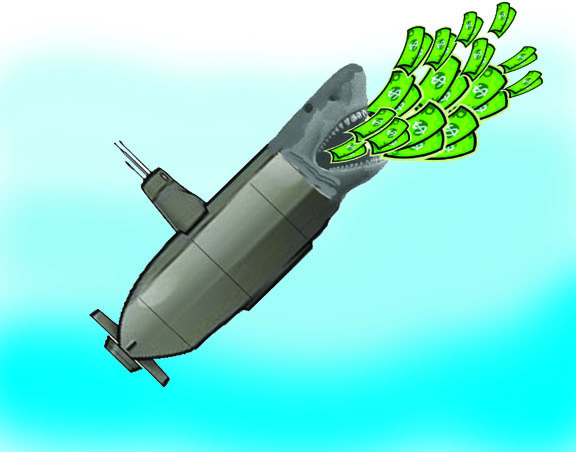

massive over-investment in one project with a delivery date close to two decades away. This will unquestionably jeopardise our national security.
Sadly, Defence Minister Richard Marles is out of his depth and drinking the Defence Department’s Kool Aid.
Michael West Media by Rex Patrick | Dec 18, 2022
“The AUKUS nuclear submarine project will bleed the Australian Defence Force white”, topping the billions in Defence spending waste each year. And there’s no one watching anymore, reports former serviceman and senator Rex Patrick.
Anyone with kids will know the song, ‘Dumb Ways to Die’.
Set fire to your hair
Poke a stick at a grizzly bear
Eat medicine that’s out of date
Use your private parts as piranha bait
Dumb ways to die
So many dumb ways to die
With 300 million views, it’s the world’s most shared Public Service Announcement. Launched in November 2012 by Metro Trains Melbourne to promote rail safety, it went viral through YouTube, quickly being shared all over social media.
Like many parents, I’ve suffered relentless annoying renditions of the song courtesy of my two, otherwise wonderful, daughters.
But that suffering is nothing like the suffering inflicted on Australian taxpayers and our national security by the Department of Defence as it has repeatedly bungled major Defence procurements. I’m not a songwriter, but what follows are all the elements needed for someone more creative than I to write a Defence procurement ‘Dumb Ways to Buy’ jingle.
Costly failure after failure
Defence procurement is a shambles and national expenditure disgrace. Project after project blows out in cost and schedule, with some projects being cancelled all together.
Every year the Auditor-General releases a Major Projects Report into Defence’s major projects. The most recent report covered 21 projects worth $58 billion dollars. Across those 21 projects, there had been $18.5 billion in cost increases – that’s 18,500 million dollars for those that can’t easily grapple with the large amounts of money with which Defence plays.
Across those 21 projects the schedule slippage was 405 months – 34 years. A number of projects, excluding the future submarine project for the moment, have either been binned or did not meet capability requirements. They are:…………………………………
That’s eight and a half billion dollars of taxpayers’ money just thrown away. That’s eight billion dollars of new capability our brave front-line Defence Force members don’t have.
What’s worse, there’s no-one watching Defence anymore. The Labor Party aren’t too interested in shining a light on Defence’s failures now they’re in Government. And the Liberal Party, having just left Government, are to blame for many of the programs. They’re happy to stay silent too.
And that leads us to the Future Submarine Program. It’s been in the news a bit last week after the United States offered, without any detail, to plug the capability gap that will be left by a first nuclear submarine only being delivered until in 2040 – the gap that the Rudd/Gillard/Rudd and Abbott/Turnbull/Morrison governments all pledged wouldn’t happen.
The Future Submarine project is the quintessential example of how not to buy a capability for the Australian Defence Force. Let’s examine that purchasing disaster.
Dumb ways to buy – delay the start
Sensibly, the future submarine project was first stood up in 2009. The plan was to work through the purchase options and commence construction of the first futures submarine in 2016, with the first boat hitting the water well before 2025, when the first of the ageing Collins Class submarines was due to retire.
Dumb ways to buy – pick partners using their views of themselves
In February 2015, the Government commenced a Competitive Evaluation Process, not to select a submarine, but to select an international partner to design and build our future submarines. The taxpayers forked out $8 million to each of France’s Naval Group, Germany’s TKMS and Japanese Industry: $24 million to listen to each potential partner tell Defence how good they thought they were.
At the time I was writing extensively on submarines for a Defence magazine. My business experience made me take a different approach to Defence. I jumped on a plane and went to talk to other navies, not about their submarines, but about their experience with their French and German suppliers.
The Chileans had had a good experience with the French. So too had the Portuguese…….
We proceeded to select the French as a partner, in taboo circumstances, where we didn’t have a comprehensively articulated contract.
After the partnership selection, Defence spent two and a half years trying to put in place a Strategic Partnering Agreement with the French, an agreement that was originally schedule to take 13 months; a first sign of trouble…………..
Dumb ways to buy – sign before you know what you’re buying
………… But that’s exactly what Defence did. Unsurprisingly, they copped severe criticism from the Auditor-General in his 2017 first program audit………..
Dumb ways to buy – risk it up………………………………………………….
Underlying this is the embarrassing fact that Defence employs Admirals, Generals and Air Marshals and senior Defence bureaucrats, with very little practical knowledge of project risk, to make procurement recommendations to Cabinet members who have no knowledge of project risk………………………………………………
Dumb ways to buy – switch to a costlier solution
When Prime Minister Scott Morrison announced on September 16, 2021 that the Government was walking away from the French solution, he did so with great fanfare and gusto, announcing we were purchasing a nuclear-powered submarine solution. He made no mention of cost, or schedule. Irresponsibly, those details were not known at the time.
And then opposition leader Anthony Albanese irresponsibly signed up to the solution with 24 hours’ notice, principally because he and his shadow ministry were politically too scared to have a fight about Defence policy in the countdown to the 2022 federal election.
Our political leaders would have us think that we are special because the US has agreed to share its nuclear technology with us. But that’s simply incorrect………….
t’s like we’re hunting for the most expensive and best football team, but planning for it to arrive after the grand final has been played.
The AUKUS nuclear submarine program will bleed the Australian Defence Force white. The opportunity costs are huge in terms of other capabilities, for the Air Force, for the Army and indeed for the Navy, that won’t be affordable because of massive over-investment in one project with a delivery date close to two decades away. This will unquestionably jeopardise our national security. Sadly, Defence Minister Richard Marles is out of his depth and drinking the Defence Department’s Kool Aid.
It’s All About the Bomb. Civilian nuclear power is merely a cover for producing more nuclear weapons.

Presenting civilian nuclear power as the answer to climate change, as clean and safe electrical generation, or as energy “too cheap to meter” is simply a sales pitch. What is actually delivered by a robust nuclear energy fleet is the capacity for nuclear weapons and a nuclear Navy.

It does not matter if nuclear power can really solve climate change, it just has to be seen as an essential part of the solution to attract bright, young talent into what is made to appear as the cutting edge of technology and climate solutions, even though the civilian nuclear power industry worldwide has been in decline since 2002.
Why civilian nuclear power is merely a cover for producing more nuclear weapons. BY ALFRED MEYER , NOVEMBER 25, 2022
“……………………………………………………………………. the United States wanted to be recognized as the leader of the “free world” in the postwar years. In the early 1950s, the military needed to recast nuclear enterprise activities to appear to be peaceful, beneficial parts of our modern life, very distant from the wartime horrors.
…………….In a now famous speech on December 8, 1953, titled “Atoms for Peace,” Eisenhower proposed to the U.N. General Assembly an international program of sharing “peaceful” nuclear materials and know-how for untold bounty, to encourage development of nuclear programs around the world.
……… one should also recognize that the IAEA’s bluntly stated mission is to promote nuclear technology. The first leaders of the IAEA were from the United States, to ensure that U.S. interests were protected.
Nuclear enterprise infrastructure is an outgrowth of World War II. These new endeavors drew international interest in creating the huge nuclear marketplace now in existence. Atoms for Peace—a plan to share nonmilitary nuclear technology with other countries to “win hearts and minds”—placed nuclear materials and reactors in more than forty countries, including Iran. This generated ongoing business for many American nuclear enterprise companies while supporting and expanding the U.S. military’s nuclear infrastructure and capacity in the United States.
Having nuclear activities under the auspices of the United Nations conferred upon them the legitimacy and respect of that international body………………………………….
The generally favorable response to Atoms for Peace was a trifecta for the nuclear enterprise. U.S. nuclear activities were repackaged as the “peaceful” atom and given the patina of social acceptance through United Nations oversight. Eisenhower was lauded as a good leader for sharing the atom with the world, and the U.S. nuclear infrastructure got new business and growth, which supported more U.S. nuclear weapons and nuclear Navy programs.
Atoms for Peace also served geopolitical ends. For instance, one reason the United States provided Iran with a research reactor in 1967 was to saddle that country with significant financial obligations, including paying for ongoing parts, services, and technical support from American companies.
The Atomic Energy Commission was created in 1946 to promote and regulate the development of this new industry. With the commission led by Wall Street banker Lewis Strauss for five critical years, it is not surprising that the scales heavily favored promotion over regulation. Encouraging private investment in these risky reactor projects was assisted by minimizing regulatory safety and operational demands upon the private operators.
But why was it so important for the U.S. government to develop and subsidize civilian nuclear power? Because it allowed the military, in essence, to spin off its nuclear reactor activities to private financing and corporate operations. Like Atoms for Peace, this repackaging of a military activity as a civilian one succeeded in making the endeavor socially acceptable and somewhat self-funding—although government subsidies are still perennially needed to carry on, and taxpayers are still covering the liability insurance costs of the private corporations.
Most importantly, as detailed in a 2017 report by former U.S. Energy Secretary Ernest Moniz, civilian nuclear power is an “essential enabler” of our national security. The Atlantic Council calculates the value of this contribution to national security to be $42.4 billion a year. Businesses contributing to the nuclear Navy’s supply chain are in forty-four U.S. states.
……………. Being the biggest nuclear enterprise on earth encourages the circular, self-sustaining dynamic of the nuclear arms race. The United States is busy modernizing its nuclear weapons infrastructure to be “strong enough” to negotiate the elimination of nuclear weapons. This is presented as official doctrine in the nonproliferation world. In reality, the United States is actually driving the growing international nuclear arms race.
…………… Presenting civilian nuclear power as the answer to climate change, as clean and safe electrical generation, or as energy “too cheap to meter” is simply a sales pitch. What is actually delivered by a robust nuclear energy fleet is the capacity for nuclear weapons and a nuclear Navy.
Over the decades, there have been numerous expert critiques of nuclear power, authoritatively debunking these misleading and false promises, yet these critiques seem to have no effect on the trajectory of the nuclear enterprise. I suggest that these sales pitches are diversionary techniques aimed at sapping our energy.
It does not matter if nuclear power can really solve climate change, it just has to be seen as an essential part of the solution to attract bright, young talent into what is made to appear as the cutting edge of technology and climate solutions, even though the civilian nuclear power industry worldwide has been in decline since 2002.
To protect ourselves from the dangers of the nuclear enterprise, we need to stop the nuclear weapons and nuclear power reactor programs—a tall order, for sure. But if we seek success in our efforts, we are well advised to understand the forces we are engaging with. It is all about nuclear weapons.
Russia building giant dome over Europe’s largest nuclear plant’s spent fuel stores, to shield them from Ukrainian attacks

The structure will shield stores of spent radioactive fuel from Ukrainian attacks.
https://www.rt.com/russia/568415-zaporozhye-nuclear-dome-ukrain 18 Dec 22
Russia is constructing a protective dome over spent radioactive fuel stores at the Zaporozhye nuclear power plant as Ukrainian forces continue to target the facility, senior regional official Vladimir Rogov has said.
He took to Telegram on Saturday to post a short video of the work that’s taking place. It showed technicians setting up shields over the tanks that hold spent nuclear fuel.
The dome is designed to protect the storage facilities from shrapnel and improvised explosive devices carried by drones, the official explained, adding that it would be reinforced further at a later period.
Russia’s nuclear energy corporation Rosatom had earlier warned that damage to the spent-fuel containers risks a release of radioactive material into the atmosphere, with unpredictable consequences.
The construction of the dome comes amid continued attacks on the Zaporozhye nuclear power plant and the nearby town of Energodar, which Moscow blames on Kiev. Russia has repeatedly said that such strikes could result in a nuclear disaster that would eclipse the 1986 Chernobyl incident and affect many countries in Europe.
Ukraine initially claimed that the Russian military had been hitting the plant itself as part of “false-flag” operations to make Kiev look bad. However, Ukrainian general staff eventually admitted to striking the area around the nuclear facility.
The Zaporozhye nuclear power plant, which is the largest on the continent, has been under Russian control since February 28. All of the reactors at the facility are currently shut down due to the security situation.
Zaporozhye Region, together with three other former Ukrainian territories – Kherson Region and the People’s Republic of Donetsk and Lugnask – joined Russia in autumn after holding referendums.
Weapons delivered to Ukraine ‘beginning to filter’ to Africa: Nigeria
https://english.almayadeen.net/news/politics/weapons-delivered-to-ukraine-beginning-to-filter-to-africa: By Al Mayadeen English , Source: Agencies, 3 Dec 22
Nigerian President Muhammadu Buhari urges heads of states from neighboring states participating in the Lake Chad Basin Commission to confront the issue of Western arms smuggling from Ukraine.
Weapons supplied to Ukraine from Western countries are “starting to flow” into the Lake Chad basin region, Nigerian President Muhammadu Buhari warned this week.
Addressing the heads of states from neighboring states participating in the Lake Chad Basin Commission on Tuesday in the Nigerian capital of Abuja, the president said, “Regrettably, the situation in the Sahel and the raging war in Ukraine serve as major sources of weapons and fighters that bolster the ranks of the terrorists in the region.”
Buhari then urged his counterparts to increase security cooperation in order to confront the issue of arms smuggling.
The Nigerian president agreed to step up military coordination in their countries’ war against Boko Haram and ISIS terrorists, who are now apparently receiving weapons from Ukraine, alongside the leaders of Benin, Chad, Niger, and the Central African Republic.
Last month, Finnish police said that some of the “huge quantities” of weapons being shipped to Ukraine had made their way to Finland, where “three of the world’s largest motorcycle gangs” now operate, including Bandidos MC, which “has a branch in every major city in Ukraine.”
In August, an American news outlet unmasked that a shockingly large amount of weaponry heading for Ukraine was untraceable. “Like 30% of it reaches its final destination,” said a tweet that was later deleted after a swarm of online trolls attacked it.
Russian Defense Minister Sergei Shoigu had previously said the arms supplied by the West to Ukraine were ending up on the black market and spreading across West Asia.
Similarly, Russian Foreign Minister Sergey Lavrov had pointed out that Stingers and Javelin missiles, supplied by the West to Kiev, were already being sold at a discount on the black market and have surfaced in Albania and Kosovo, which Russia has warned for so long.
Ukraine has received billions and billions of dollars in donated arms from the United States and its allies such as the United Kingdom and other NATO states in the past few months.
Alliance of Pacific organisations condemns Japan’s decision to discharge nuclear wastewater into the Pacific Ocean
NZ and Pacific urged to ‘step up’ against Japan’s nuclear plan, Stuff NZ, Christine Rovoil, Dec 17 2022,
Japan’s decision to discharge nuclear wastewater into the Pacific Ocean for the next 30 years has been condemned by a Pacific alliance.
And the group of community members, academics, legal experts, NGOs and activists is calling on New Zealand and the Pacific to act to stop Japan.
Three reactors at the Fukushima Daiichi nuclear power plant had meltdowns after the earthquake and tsunami on March 11, 2011 which left more than 15,000 people dead.
The Japanese government said work to clean up the radioactive contamination would take up to 40 years.
Following the Nuclear Connections Across Oceania Conference at the University of Otago last month, a working group was formed to address the planned discharge.
Dr Karly Burch at the OU’s Centre for Sustainability said many people might be surprised to hear that the Japanese government has instructed Tokyo Electric Power Company (Tepco) to discharge more than 1.3 million tonnes of radioactive wastewater into the ocean from next year.
Burch said they had called on Tepco to halt its discharge plans, and the New Zealand Government to “step up against Japan”.

In June, Prime Minister Jacinda Ardern called for nuclear disarmament during her speech at the Nato Leaders’ Summit in Madrid.
“New Zealand is a Pacific nation and our region bears the scars of decades of nuclear testing. It was because of these lessons that New Zealand has long declared itself proudly nuclear-free,” Ardern said.
Burch said the Government must “stay true to its dedication to a nuclear-free Pacific” by taking a case to the International Tribunal for the Law of the Sea against Japan.
“This issue is complex and relates to nuclear safety rather than nuclear weapons or nuclear disarmament,” the Ministry of Foreign Affairs and Trade said in a statement on Friday.
“Japan is talking to Pacific partners in light of their concerns about the release of treated water from Fukushima and Aotearoa New Zealand supports the continuation of this dialogue.
…………….. In Onahama, 60km from the power station, fish stocks have dwindled, said Nozaki Tetsu, of the Fukushima Fisheries Co-operative Associations.
“From 25,000 tonnes per year before 2011, only 5000 tonnes of fish are now caught,” he said. “We are against the release of radioactive materials into our waters. What worries us is the negative reputation this creates.”
………………………. Burch said predictive models showed radioactive particles released would spread to the northern Pacific.
“To ensure they do not cause biological or ecological harm, these uranium-derived radionuclides need to be stored securely for the amount of time it takes for them to decay to a more stable state. For a radionuclide such as Iodine-129, this could be 160 million years.”
………… Burch said the Japanese government was aware in August 2018 that the treated wastewater contained long-lasting radionuclides such as Iodine-129 in quantities exceeding government regulations.
She has called for clarity from Tokyo, the International Atomic Energy Agency, the Pacific Islands Forum Secretariat, Pacific Oceans Commission, and a Pacific panel of independent global experts on nuclear issues on the outcome of numerous meetings they have had about the discharge.
“We want a transparent and accountable consultation process which would include Japanese civil society groups, Pacific leaders and regional organisations.
“These processes must be directed by impacted communities within Japan and throughout the Pacific to facilitate fair and open public deliberations and rigorous scientific debate,” Burch said.
The Pacific Islands Forum secretary-general, Henry Puna, has been approached for comment.
https://www.stuff.co.nz/pou-tiaki/130784783/nz-and-pacific-urged-to-step-up-against-japans-nuclear-plan
1 This month
17 October, Free Public Talk on Nuclear Issues in South Australia
David Noonan will speak on public interest concerns over the new Roxby Downs Indenture Act 2026 on BHP copper-uranium mining and ore processing in SA, and on how AUKUS may face SA with a High-Level nuclear waste agenda.
Dr Jim Green will discuss international developments in the field of nuclear power including ‘small modular reactors’ and Generation 4 ‘advanced’ nuclear reactor concepts.


Help Aunty Sue Protect Her Land and Sacred Sites From Destructive Rocket Testing.
.

Australians deserve the truth
about
AUKUS – https://aukuspublicinquiry.com/

PETITION – To: Prime Minister Anthony Albanese and the Australian Labor Government

of the week – Australians for War Powers Reform (AWPR)
To see nuclear-related stories in greater depth and intensity

