December 15 Energy News — geoharvey

Science and Technology: ¶ “How The Climate Crisis May Be Changing The Way That Tornadoes Behave” • Unlike heat waves, floods and hurricanes, scientific research about the connection between the climate crisis and tornadoes has not been as easy to do. Nevertheless, experts are already seeing certain changes in how recent tornado outbreaks are behaving. […]
December 15 Energy News — geoharvey
The War Memorial plays along with Lockheed Martin
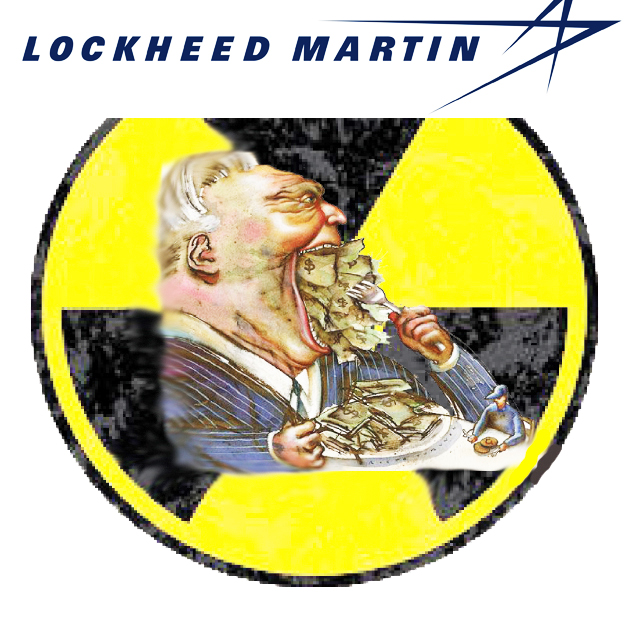
https://johnmenadue.com/the-war-memorial-plays-along-with-lockheed-martin/ By David Stephens, Dec 13, 2022
Senator David Shoebridge, a new Green from New South Wales, tabled a document in Senate Estimates on 8 November which showed just how keen the Australian War Memorial has been to oblige its corporate donors.
The donor here was Lockheed Martin, in 2020 the world’s largest arms manufacturer by value of sales ($US58.2 billion), but which picks up “corporate responsibility” brownie points by donating small change to the Memorial ($727,000 from 2013-14 to 2019-20: Question on Notice No. 42, 2019-20 Supplementary Estimates, Foreign Affairs, Defence and Trade Committee).
Formally, the document (dated 2018) the Senator waved around was Lockheed Martin’s, obtained from the Memorial under FOI. Signed by the Memorial’s representative, it enables Lockheed Martin to say it is not making donations to a government body to influence its arms contracts with the Australian government – which are worth squillions. (Lockheed is competing, for example, with Northrop Grumman at present for a contract worth $2.7 billion, and that’s just one of many.)
As the Senator said, “The purpose of having this limitation on behalf of Lockheed Martin is so that Lockheed Martin is not seen to be making financial contributions to governments, or any agency or association associated with a government, that it’s also selling weapons to. It’s an integrity measure.”
What the Memorial’s officer signed was an “international contributions compliance certification form” – provided by Lockheed Martin – that said:
[t]he Recipient Organisation [the Memorial] is not an agency, organisation, association, or instrumentality of the Australian government, any political party in Australia or a public international organisation, and is not otherwise owned, in whole or in part, or controlled by the Australian government or any Australian political party or government official, or an official of a public international organisation. [Spelling slightly revised from the Hansard to match the original.]
There was more in the form about not using Lockheed’s donated money to “improperly influence” Australian officials or obtain an “improper advantage”.
Senator Shoebridge asked War Memorial Director Anderson to admit that the statement signed off by the Memorial officer was “plainly wrong”, in that the Memorial clearly was “an agency, organisation, association or instrumentality of the Australian government”. The Director pointed out instead that the Memorial had inserted words (in red, indeed) in the form: “The Memorial is a statutory authority of the Australian government, with an independent governing council”.
The Department of Finance two page “Flipchart of PGPA Act [Public Governance, Performance and Accountability Act 2013] Commonwealth entities and companies”, dated 15 November 2022, shows lots of statutory authorities, but the term “statutory authority” simply means “an Australian Government body established through legislation for a public purpose“. It is not defined in the relevant current legislation, the PGPA Act, which is written in terms of “Commonwealth entities” and divides all except 17 of the 190 entities listed into “corporate” or “non-corporate”. (The other 17 are companies under the Corporations Act.)
The Flipchart classifies the Memorial as a “Corporate Commonwealth entity”, one of 72 in that category. The category also includes the Australian National University, the ABC, the National Gallery, the National Library, and the National Museum, each of them with its own Act and similar words about the powers and functions of their governing Boards or Councils as are found in the Australian War Memorial Act 1980.
In essence, the Memorial representative who signed the form – and Director Anderson at Estimates – were using the generic but legally meaningless category “statutory authority” as a fig leaf to cover the Memorial’s paving the way for Lockheed. The fact that the Memorial can be called a statutory authority does not mean it is not at the same time a “Commonwealth entity” as on the PGPA Flipchart or, in Lockheed’s terms, “an agency, organisation, association or instrumentality of the Australian government”.
What fibs bureaucrats have to tell to cadge a dribble of funds out of donors. To complete the story, though, we need to mention that other evidence we have seen, dated 4 October 2022, is a letter where a Memorial officer admits (to someone not Lockheed but in reference to this case), “The ongoing relationship the Memorial has with Lockheed Martin would lead a reasonable person to understand the Memorial is funded by and a part of the Australian Government”.
So, what the Memorial says depends upon to whom it is writing – sometimes it’s not Australian, sometimes it is. By the way, Kim Beazley, newly elected and appointed as the Chair of the War Memorial Council, former Defence Minister, former Ambassador to the United States, former Governor of Western Australia and promoter of its defence industries, was also from 2016 to 2018 a member of the Board of Lockheed Martin Australia. Another example of what has been called “the military-industrial-commemorative complex” or simply “the revolving door”.
Nuclear news – Australia and more – week to 13 December

A bit of good news – Once devastated Pacific reefs see amazing recovery.
Coronavirus. COVID is running rampant in China and its hospitals are overwhelmed. Coronavirus Disease (COVID-19): Weekly Epidemiological Update
Climate. Climate Honesty – Ending Climate Brightsiding, ( but also including revolutionary technology – mirrors to reflect the sun’s energy back into space). https://www.youtube.com/watch?v=vw85K7MjwYk Climate change could force 1.2 billion to move by 2050. Is the world even remotely ready?
Nuclear. Is the West playing some sort of Russian roulette with the war in Ukraine? Supplying Zelensky with long range missiles, that Ukraine is now using to target sites within Russia – this amounts to some sick sort of game of chicken. How far can we push Putin into using even more devastating methods against Ukraine? Of course nobody’s going to use “tactical” supposedly sorta “little”” nuclear weapons, are they?
Do the men who run the world ever consider the psychology of the macho military men who are mad keen to use the most powerful weapons? So much easier and quicker to make such a decision , compared with the dreary task of negotiating an end to the horror, an end which would mean conceding to some of Russia’s not unrealistic demands. Meanwhile Zelensky and co are being bolstered with all sorts of honours and acclaim – encouraged to continue in their ultranationalistic and probaly suicidal dream of complete victory over Russia.
AUSTRALIA.
- Call for Parliamentary vote required before Australia goes to war. War veterans call for Parliamentary vote on going to war, but most politicians OK with Prime Minister’s power to alone make that decision. Aukus will lock in Australia’s dependence on US, intelligence expert warns.
- Australia a”pot of gold” for America’s military section to wage war in space. Nuclear submarines will be ‘massively expensive’ – (even Australia’s right-wing is waking up to this!) Undue influence of the arms industry.
- Nuclear power does not stack up for Australia – PM Albanese. South Australia’s premier, Peter Malinauskas, is in ‘furious agreement’ with PM that nuclear power would not work for Australia. Nuclear off table as states seek power fix.
- Dangerous radiation mishaps surge across NSW hospitals and medical centres.
- Mining lobby tricks government with its big taxpayer fairytale.
CIVIL LIBERTIES. Biden faces growing pressure to drop charges against Julian Assange.
ECONOMICS. Another dodgy Special Purpose Acquisition Company (SPAC) set up to promote small nuclear reactors. https://www.youtube.com/watch?v=AAJTkL99anI&t=22s
EDUCATION. Nuclear lobby continues to capture universities.
ENERGY. Every home and community could be a power station’: the Nuclear Free Local Authorities’s future renewable energy vision for Wales. How to scale rooftop community solar in cities, UK policy changes: windfalls and renewables.
ENVIRONMENT. ‘Humanity has become a weapon of mass extinction‘. Past time for action — France should clean up atomic mess in Algeria. Commitments to nuclear HS2 and Sizewell C undermine UK Government promises on climate.
HEALTH.
- What are the risks and treatments if nuclear power plant radioactivity is released?
- Radiation: Missouri Community and Its Children Grappling With Exposure to Nuclear Waste. US military atomic cleanup crews were sent out in the wake of American nuclear testing, and many paid a heavy price, veterans say. Plutonium: Plutonium’s Fatal Attraction. The ‘Demon Core,’ The 14-Pound Plutonium Sphere That Killed Two Scientists.
- Large Multinational Study Shows Link Between CT Radiation Exposure and Brain Cancer in Children and Young Adults.
LEGAL. Revealing He Too Had Manning Leaks, Ellsberg Dares Justice Dept to Prosecute Him Like Assange. https://www.youtube.com/watch?v=6nHA0zhYma8
NUCLEAR TECHNOLOGY. ‘New’ Nuclear Reactors Will Make Us a Guinea Pig Nation. Will small modular reactors seed a nuclear renaissance? THE ROBOTS OF FUKUSHIMA: GOING WHERE NO HUMAN HAS GONE BEFORE (AND LIVED).
OPPOSITION TO NUCLEAR. Ineos Grangemouth refinery: Anti-nuclear campaigners will put up a huge fight against any attempt to build small nuclear reactors – Dr Richard Dixon.
POLITICS.
- Lawmakers reject bid to audit US aid for Ukraine. Five ways the Biden DOE is spending tax-payers money big on nuclear energy .
- UK Tories getting nervous about nuclear power plans? Hypocrites: Nuclear Free Local Authorities (NFLA) decries government ministers for promising wind turbines, but not new nuclear projects, must have ‘local support’.
- If Finland joins NATO, it needs a new nuclear weapons policy.
- European Commission supports French government in funding for small nuclear reactors.
- Objections to nuclear power in Taiwan.
POLITICS INTERNATIONAL and DIPLOMACY. Macron: Russia Needs Security Guarantees ‘Essential’ To Ending The War. USA and UK welded together firmly in the grip of the nuclear lobby, with their Small Nuclear Reactor folly. UN: Israel must take ‘immediate steps’ to give up nuclear weapons. Japanese prime minister may seek in-depth nuclear abolition talks at Hiroshima G7 summit.
SAFETY.Why nuclear-powered France faces power outage risks. France: EDF extends nuclear outages by up to 42 days. Finland warns of power outage risk over nuclear plant startup delay – Olkiluoto 3 reactor unreliable? Slovakia’s new nuclear power plant delayed due to a technical fault. US imposes sanctions on six Pakistan companies for unsafeguarded nuclear activities. TVA sends calendars to households near nuclear plants with preparedness tips in case of emergencies.
SECRETS and LIES. How the Global Spyware Industry Spiraled Out of Control.
SPINBUSTER. Watch Stella Assange Slap The Mustache Off John Bolton’s War Criminal Face.
WASTES. The world’s deepest nuclear clean-up – the Dounreay shaft. Nuclear waste permit ‘more stringent’ New Mexico says as feds look to renew for 10 years.
WAR and CONFLICT. NATO Chief Voices Fear Of War With Russia While US Greenlights Drone Strikes On Russian Territory. Putin: Nuclear risk is rising, but we are not mad. Ukraine war: Red Cross appeal, Kremlin sees Crimea attack ‘risks’. Maligned in Western Media, Donbass Forces are Defending their Future from Ukrainian Shelling and Fascism. PETER HITCHENS: The arrogance and folly in Ukraine that could yet send us hurtling towards nuclear catastrophe.’ Warfare Development Conference: NATO touts successful operations on four continents.
WEAPONS INDUSTRY. Are the bombs are back in town? US atomic weapons in Britain would make nuclear war more likely. U.S. provides more missiles to Ukraine in new $275 million arms package Weapons interoperability and “sovereignty”: Polish state bank backs purchase of $4b more in U.S. arms . What could possibly go wrong?
Call for Parliamentary vote required before Australia goes to war.
https://au.news.yahoo.com/call-vote-aussies-sent-war-051054745.html 10 Dec 22, Top secret information wouldn’t be compromised if Australia opened up debate on sending troops to war, a parliamentary inquiry has been told.
Giving evidence before a committee into international armed conflict decision-making, former diplomat Dr Alison Broinowski said the decision to go to war should be more transparent and be voted on by the lower and upper houses of parliament.
The prime minister and cabinet decide when the country should go to war, without the approval of the parliament.
The president of the Australians for War Powers Reform organisation said highly classified information, which might relate to military strategy, would not need to be disclosed to all parliamentarians during a debate on making the decision to join a conflict.
“What we seek is for Australia not to repeat the mistakes that we have made in the past when troops were sent to war, without any clear understanding of why,” Dr Broinowski said.
“The process should be open, transparent and public, not private.
“The national security committee of cabinet and the prime minister can discuss it, but it needs to be brought to the parliament for a debate and a vote before the commitment to war is made.”
In a submission, the Defence Department has argued against making any changes to the decision-making process, warning a shift would “risk significant adverse consequences for Australia’s national security interests”.
The Greens remain committed to introducing war powers legislation, which would require the upper and lower houses of parliament to vote in favour of deploying defence force personnel overseas.
Watch Stella Assange Slap The Mustache Off John Bolton’s War Criminal Face
Caitlin Johnstone, Oct 6 https://caitlinjohnstone.substack.com/p/watch-stella-assange-slap-the-mustache
Stella Assange just delivered a beatdown on one of her husband’s persecutors that was so scorched-earth demolishing I feel like I need a cigarette after watching it.
In an appearance on Piers Morgan Uncensored, the wife of WikiLeaks founder Julian Assange explained the threat her husband’s persecution poses to press freedoms around the world and the profound suffering his imprisonment has inflicted upon him. As some kind of bizarre counter-balance to the family of a persecuted journalist pleading for basic human rights, Morgan invited on John Bolton, the man who was the National Security Advisor to President Trump when Assange was imprisoned under a US arrest warrant. Which if you think about i is kind of like having a sex trafficking victim on your show and then bringing in Ghislaine Maxwell for a balanced perspective.
After Morgan introduced the segment and Assange laid out some facts of her husband’s plight, Bolton was given the floor to explain why persecuting a journalist for telling the truth is actually good and right. He went over the usual smearmeister talking points that Assange is not a journalist and endangered people around the world with his publications exposing US war crimes, adding that the possible 175-year sentence Assange stands to face if convicted under Espionage Act was inadequate, and that he hoped Assange “gets at least 176 years in jail for what he did.”
Stella responded by calling Bolton a war criminal, right to his bloodthirsty face.
“Well of course Ambassador Bolton is kind of the ideological nemesis of Julian,” Assange coolly replied. “He has during his time for the Bush administration, and later the Trump administration, sought to undermine the international legal system, ensure that the US is not under the International Criminal Court’s jurisdiction. And if it was Mr Bolton might in fact be prosecuted under the ICC: he was one of the chief cheerleaders of the Iraq War, which Julian then exposed through these leaks. So he has a conflict of interest here.”
“Well that’s ridiculous!” Bolton said with a nervous laugh at the accusation. “I have an opinion, so does Assange’s wife; I guess we both get to speak them. You know I think that what she fears is being brought to the United States and having Assange put under trial. If he’s innocent, if she can at least show reasonable doubt that he’s not guilty, he’ll go free. What’s she worried about?”
Morgan interjected that the concern is likely the chance of a fair trial, to which Bolton responded with a demand that Stella herself say that she didn’t believe her husband could receive a fair trial in the United States.
“Let her say that Julian Assange could not get a fair trial in America; let her say it,” Bolton replied.
“Well he cannot get a fair trial in America, because he is being prosecuted under the Espionage Act and he cannot bring a public interest defense,” Assange replied. “He cannot say ‘I published this information because it was in the public interest,’ precisely because it is under the Espionage Act. And it is the first time that a publisher has ever been prosecuted under this act, something that constitutional lawyers in the United States have been warning could happen for the past 50 years. And The New York Times and The Washington Post say this prosecution strikes at the heart of the First Amendment.”
Bolton replied, on no apparent basis, that The New York Times and The Washington Post were wrong and that their position on the Assange case is “dangerous”, and babbled some nonsense about Assange being a “hacker who breaks and enters into secure information.”
“Not even the US alleges that,” Assange replied, entirely correctly.
Ahh man, that’s the stuff. It’s so annoying to see this actual war criminal invited on mainstream news networks time and time again to drum up support for increased military aggression in every conflict the US empire is involved in from day to day, without ever being challenged or called out for what he is. For someone to say on mainstream television that he’s a war criminal who just doesn’t want people holding him accountable or shining a light on his crimes is a rare treat for anyone who’s been watching this monster operate all these years.
This is the man who just 24 hours prior to this writing put out an article titled “Putin Must Go: Now Is The Time For Regime Change In Russia,” just the latest in this psychopath’s relentless campaign to start World War III at every possible opportunity. It’s just so freakish and bizarre that there are people whose actual job is to continually work toward creating as much death and destruction in the world as they can, and that they are elevated to the forefront of public attention by the most prominent platforms in the world.
Australia’s nuclear submarines a gravy train for US/UK military nuclear companies
Greg Phillips Nuclear Fuel Cycle Watch 11 Dec 22Nuclear subs are going to be a gravy train for UK/USA military/nuclear companies – KHA (mentioned on the page) is a joint venture of KBR, KBR recently acquired Frazer-Nash, which employs Ben Heard, …. it’s a whirlwind of tax payers money. Babcock is involved in nuclear decommissioning. I bet all these companies are still angling to turn South Australia into their nuclear dump to increase their sales and profits… https://www.naval-technology.com/…/uk-to-award…/
Dangerous radiation mishaps surge across NSW hospitals and medical centres
SMH Carrie Fellner, December 12, 2022 ,
Radiation accidents have surged across NSW hospitals and medical diagnostic imaging centres as the state records a dangerous upswing in rates of equipment malfunctions and human errors.
In one incident, which has been referred to the healthcare watchdog, a cancer patient’s radiation treatment was bungled, resulting in their healthy tissue being dosed with radiation four times instead of their tumour.
In the past financial year, there were 263 accidents across the state, or an average of five a week, according to the annual report of the NSW EPA’s Radiation Advisory Council.
“This total represents a 26 per cent increase on the total accidents reported in the previous year (209) and reaffirms the strong year-on-year upward trend in reporting,” said the report, published without fanfare last week.
“Human error is the primary cause of reported accidents, with the majority due to failure to follow procedures and protocols or incorrect interpretation of patient information,” it said.
Equipment failures had also “increased substantially” on previous years, the report noted.
The council requested “a further breakdown of equipment failures to establish if the same brand of equipment has the same errors across different sites”.
The council also recommended the EPA raise the increase in preventable accidents with health authorities in NSW and emphasise the appropriate ordering of medical imaging procedures.
In response to questions on Sunday, an EPA spokeswoman attributed the rise in accidents to increased reporting……………………..
“The EPA is investigating reports of equipment and software malfunctions, and is contacting manufacturers.”
Of the total number of incidents, 172 involved exposure to more than one millisievert of radiation.
The average person in Australia is exposed to about 1.7 millisieverts of radiation a year from natural sources, according to the Australian Radiation Protection and Nuclear Safety Agency……….
The accidents fell into three categories: medical imaging procedures such as X-rays and CT scans, radiation treatments in hospital oncology wards and nuclear medicine procedures such as PET scans.
There was a steep rise in the number of accidents reported involving radiation oncology, which jumped from three in 2017-18 to 57 logged last financial year.
Equipment failures accounted for 30 per cent of all accidents last financial year, up from 20 per cent in the previous financial year.
The second most common cause was a patient’s paperwork not being interpreted or read correctly by staff, with 49 people affected.
……………. “These incidents are rare in the context of the number of procedures performed in public and private facilities, but it is important that any incident is reviewed through appropriate channels, including the Radiation Advisory Council,” the spokesperson said.
A spokeswoman for Environment Minister James Griffin said he was pleased to see increased reports to the regulator by radiation oncology workers….. https://www.smh.com.au/national/nsw/dangerous-radiation-mishaps-surge-across-nsw-hospitals-and-medical-centres-20221211-p5c5eo.html
NATO Chief Voices Fear Of War With Russia While US Greenlights Drone Strikes On Russian Territory

Ukraine launched its most brazen attack into Russian territory yet, with drone strikes on bases which killed multiple Russian soldiers and damaged two nuclear-capable bombers. Not too long ago the US waging a proxy war that features direct attacks on Russia’s nuclear forces would have been an unthinkably terrifying prospect, yet that’s where we’re at now, and it only seems to be escalating.
The real issue is the danger of provoking a hot war between nuclear superpowers, which even the NATO Secretary-General is becoming increasingly nervous about.
Caitlin Johnstone https://caityjohnstone.medium.com/nato-chief-voices-fear-of-war-with-russia-while-us-greenlights-drone-strikes-on-russian-territory-165a38b84669 12 Dec 22
In what Antiwar’s Dave DeCamp describes as “a rare acknowledgment of the dangers of backing Ukraine,” NATO Secretary-General Jens Stoltenberg acknowledged a fear of something going “horribly wrong” and leading to a hot war between the nuclear-armed alliance and Russia.
In an article titled “‘I fear a full-blown war between the West and Russia’, Nato chief warns,” The Telegraph writes the following:
“I fear that the war in Ukraine will get out of control, and spread into a major war between Nato and Russia,” said Nato secretary-general Jens Stoltenberg, responding to a question about his greatest fears for the winter in an interview.
He told Norwegian broadcaster NRK on Friday that he was confident such a scenario could be avoided but that the threat was there.
“If things go wrong, they can go horribly wrong,” he added.
We got a taste of this horror once again last month in the long minutes following erroneous reports that Russia had launched missiles at NATO member Poland. The fact that cooler heads have prevailed up until this point does not mean that nuclear brinkmanship is safe, anymore than a game of Russian roulette not ending after the first couple of trigger pulls would mean that Russian roulette is safe to play.
So Stoltenberg is correct to be afraid. There absolutely are too many things that can go horribly wrong in such a standoff, and there are simply too many unpredictable moving parts for anyone to feel confident that this will not happen.
And it’s pretty crazy to hear Stoltenberg voice these concerns even while the Pentagon gives the go-ahead for Ukraine to begin launching long-range attacks on targets inside Russia in its war that is being backed by the United States, because those two positions would seem to be pretty strongly at odds with each other.
In an article titled “Pentagon gives Ukraine green light for drone strikes inside Russia,” The Times reports as follows:
The Pentagon has given a tacit endorsement of Ukraine’s long-range attacks on targets inside Russia after President Putin’s multiple missile strikes against Kyiv’s critical infrastructure.
Since daily assaults on civilians began in October, the Pentagon has revised its threat assessment of the war in Ukraine. Crucially, this includes new judgments about whether arms shipments to Kyiv might lead to a military confrontation between Russia and Nato.
This represents a significant development in the nine-month war between Ukraine and Russia, with Washington now likelier to supply Kyiv with longer-range weapons.
The Times quotes a “US defence source” as saying the following: “We’re not saying to Kyiv, ‘Don’t strike the Russians [in Russia or Crimea]’. We can’t tell them what to do. It’s up to them how they use their weapons. But when they use the weapons we have supplied, the only thing we insist on is that the Ukrainian military conform to the international laws of war and to the Geneva conventions.”
“They are the only limitations but that includes no targeting of Russian families and no assassinations. As far as we’re concerned, Ukraine has been in compliance,” the source says, which is a strange assertion given that US intelligence has reportedly concluded Ukraine was behind the assassination of the daughter of Aleksandr Dugin.
“Ukraine has been careful to use its own drones, not US-supplied weapons, to carry out the strikes,” The Times reports, while also noting that “Pentagon officials have made it clear that requests from Kyiv for longer-range US weapons, including rockets and fighter bombers which could be used for even more effective strikes inside Russia or occupied Crimea, are being seriously considered.”
This revelation comes days after Ukraine launched its most brazen attack into Russian territory yet, with drone strikes on bases which killed multiple Russian soldiers and damaged two nuclear-capable bombers. Not too long ago the US waging a proxy war that features direct attacks on Russia’s nuclear forces would have been an unthinkably terrifying prospect, yet that’s where we’re at now, and it only seems to be escalating.
Empire apologists will try to make this a conversation about whether Ukraine has a “right” to attack Russian territory, which is a red herring from the real issue at hand. Obviously Ukraine has a right to attack a nation that is attacking it; that’s not the point. The real issue is the danger of provoking a hot war between nuclear superpowers, which even the NATO Secretary-General is becoming increasingly nervous about.
The western power alliance continually ramping up aggressions to test how far it could provoke Russia is what led to this conflict in the first place. Now we’re at a point where there isn’t much space for Russia to back up before it’s against the ropes and potentially pressed to do something nobody wants. These people should not be talking about escalation, they should be talking about de-escalation. We need diplomacy, de-escalation and detente, and we need them yesterday.
_________________
Aukus will lock in Australia’s dependence on US, intelligence expert warns.

“It is a mistake to think that we are buying submarines,” Fernandes said. “We are, in fact, subsidising the US navy submarine budget.”
Guardian, Daniel Hurst , 2 Oct 22, Clinton Fernandes argues in provocative new book the security pact will make it impossible to have an independent defence policy.
The Aukus deal will lock in Australia’s dependence on the US and make it impossible to have an independent defence policy, a former Australian army intelligence officer has warned.
In a provocative new book to be released this week, Clinton Fernandes argues the true character of Australia’s relationship with the US is “a transactional, dramatically unequal one”. He argues the rhetoric about mateship is merely “window dressing”.
The former intelligence officer and now academic at the University of New South Wales takes aim at bipartisan consensus on Australian foreign policy and pushes back at the idea that Australia is a “middle power”.
Australia routinely acts to defend US power and grand strategy, he argues, and is better described as a “sub-imperial power”.
Fernandes warns of a “dramatic acceleration” of that trend as a result of the Aukus partnership with the US and the UK, under which the two countries plan to help Australia acquire at least eight nuclear-powered submarines.
The professor of international and political studies said Australia was “creating a structural dependence on the United States, leaving ourselves unable to defend ourselves except in the context of the US alliance”.
That is not a mistake. It’s not an oversight. It’s not an error,” Fernandes told Guardian Australia in an interview ahead of the release of Sub-Imperial Power: Australia in the International Arena.
“The people who are responsible for the policy … are doing it in order to make it impossible for future Australian governments to defend ourselves outside of an alliance relationship.”
A report in the Wall Street Journal last weekend suggested the Biden administration was considering a plan to fast-track nuclear-powered submarines for Australia by the mid-2030s by producing the first few submarines in the US.
However, given existing production constraints at US shipyards, the deal would depend on Australia making a financial commitment to expand the US’s submarine-production capacity to ensure it could also meet its domestic demands.
“It is a mistake to think that we are buying submarines,” Fernandes said. “We are, in fact, subsidising the US navy submarine budget.”
Peter Dutton ‘just being honest’
Fernandes also said the then defence minister, Peter Dutton, was “just being honest” when he said he found it “inconceivable” that Australia would not join if the US defended Taiwan in a war against China.
Dutton later reflected on the issue in terms of the relationship with the US, saying Australia was “a great and reliable friend and ally” and he did not think “we would shirk away from our responsibility to be a good ally with the United States”.
In the book, Fernandes cites a US embassy cable, leaked to WikiLeaks, that described a conversation between the American ambassador and the then Labor leader, Kim Beazley, before the 2007 election.
Beazley, according to the cable, assured the ambassador that Australia “would have absolutely no alternative but to line up militarily beside the US” in the event of a war between the US and China, adding: “Otherwise, the alliance would be effectively dead and buried, something Australia could never afford to see happen.”…………………
Selective rules
Fernandes writes that the world is now one of independent nation-states rather than empires and colonies – but he argues an imperial system remains in place with the US at “the apex” and Australia “subordinate to the imperial centre”…………………..
While Australia and the US publicly profess to uphold a rules-based international order, Fernandes contends these rules are applied selectively, and that Australia has been drawn into military conflicts with a view to maintaining the US alliance as a core part of the strategic objectives.
“The rules-based order permits the United States and its allies to invade Iraq illegally and attack a hospital in the city of Fallujah,” Fernandes writes.
Middle powers such as Norway and the Netherlands insist on parliamentary authorisation of military deployments but Australia does not. In Australia, the executive government has the power to deploy troops without parliamentary approval and its leaders tend to be “so reflexive about requests from the United States”, Fernandes says.
Aukus debate grows
Fernandes is not the first analyst to raise concerns about the impact of Aukus on Australia’s sovereignty. Such concerns were fuelled last year when Joe Biden’s top Indo-Pacific adviser, Kurt Campbell, predicted “almost a melding” of Australian, US and UK military forces…………… more https://www.theguardian.com/world/2022/oct/02/aukus-will-lock-in-australias-dependence-on-us-intelligence-expert-warns?CMP=share_btn_tw
The ‘Demon Core,’ The 14-Pound Plutonium Sphere That Killed Two Scientists

By Kaleena Fraga | Checked By Erik Hawkins https://allthatsinteresting.com/demon-core December 10, 2022
Physicists Harry Daghlian and Louis Slotin both suffered agonizing deaths after making minor slips of the hand while working on the plutonium orb known as the “demon core” at Los Alamos Laboratory in New Mexico.
To survivors of the nuclear attacks in Hiroshima and Nagasaki during World War II, the nuclear explosions seemed like hell on earth. And though a third plutonium core — meant for use if Japan didn’t surrender — was never dropped, it still managed to kill two scientists. The odd circumstances of their deaths led the core to be nicknamed “demon core.”
Retired to the Los Alamos National Laboratory in New Mexico following the bombings of Hiroshima and Nagaski, demon core killed two scientists exactly nine months apart. Both were conducting similar experiments on the core, and both made eerily similar mistakes that proved fatal.
Before the experiments, scientists had called the core “Rufus.” After the deaths of their colleagues, the core was nicknamed “demon core.” So what exactly happened to the two scientists who died while handling it?
The Heart Of A Nuclear Bomb
In the waning days of World War II, the United States dropped two nuclear bombs on Japan. One fell on Hiroshima on Aug. 6, 1945, and one fell on Nagasaki on August 9. In case Japan didn’t surrender, the U.S. was prepared to drop a third bomb, powered by the plutonium core later called “demon core.”
The core was codenamed “Rufus.” It weighed almost 14 pounds and stretched about 3.5 inches in diameter. And when Japan announced its intention to surrender on August 15, scientists at the Los Alamos National Laboratory were allowed to keep the core for experiments.
As Atlas Obscura explains, the scientists wanted to test the limits of nuclear material. They knew that a nuclear bomb’s core went critical during a nuclear explosion, and wanted to better understand the limit between subcritical material and the much more dangerous radioactive critical state.
But such criticality experiments were dangerous — so dangerous that a physicist named Richard Feynman compared them to provoking a dangerous beast. He quipped in 1944 that the experiments were “like tickling the tail of a sleeping dragon.”
And like an angry dragon roused from slumber, demon core would soon kill two scientists at the Los Alamos National Laboratory when they got too close.
How Demon Core Killed Two Scientists

On Aug. 21, 1945, about a week after Japan expressed its intention to surrender, Los Alamos physicist Harry Daghlian conducted a criticality experiment on demon core that would cost him his life. According to Science Alert, he ignored safety protocols and entered the lab alone — accompanied only by a security guard — and got to work.
Daghlian’s experiment involved surrounding the demon core with bricks made of tungsten carbide, which created a sort of boomerang effect for the neutrons shed by the core itself. Daghlian brought the demon core right to the edge of supercriticality but as he tried to remove one of the bricks, he accidentally dropped it on the plutonium sphere. It went supercritical and blasted him with neutron radiation.
Daghlian died 25 days later. Before his death, the physicist suffered from a burnt and blistered hand, nausea, and pain. He eventually fell into a coma and passed away at the age of 24.
Exactly nine months later, on May 21, 1946, demon core struck again. This time, Canadian physicist Louis Slotin was conducting a similar experiment in which he lowered a beryllium dome over the core to push it toward supercriticality. To ensure that the dome never entirely covered the core, Slotin used a screwdriver to maintain a small opening though, Slotin had been warned about his method before.
But just like the tungsten carbide brick that had slipped out of Daghlian’s hand, Slotin’s screwdriver slipped out of his grip. The dome dropped and as the neutrons bounced back and forth, demon core went supercritical. Blue light and heat consumed Slotin and the seven other people in the lab.
“The blue flash was clearly visible in the room although it (the room) was well illuminated from the windows and possibly the overhead lights,” one of Slotin colleagues, Raemer Schreiber, recalled to the New Yorker. “The total duration of the flash could not have been more than a few tenths of a second. Slotin reacted very quickly in flipping the tamper piece off.”
Slotin may have reacted quickly, but he’d seen what happened to Daghlian. “Well,” he said, according to Schreiber, “that does it.”
Though the other people in the lab survived, Slotin had been doused with a fatal dose of radiation. The physicist’s hand turned blue and blistered, his white blood count plummeted, he suffered from nausea and abdominal pain, and internal radiation burns, and gradually become mentally confused. Nine days later, Slotin died at the age of 35.
Eerily, the core had killed both Daghlian and Slotin in similar ways. Both fatal incidences took place on a Tuesday, on the 21st of a month. Daghlian and Slotin even died in the same hospital room. Thus the core, previously codenamed “Rufus,” was nicknamed “demon core.”
What Happened To Demon Core?
Harry Daghlian and Louis Slotin’s deaths would forever change how scientists interacted with radioactive material. “Hands-on” experiments like the physicists had conducted were promptly banned. From that point on, researchers would handle radioactive material from a distance with remote controls.
So what happened to demon core, the unused heart of the third atomic bomb?
Researchers at Los Alamos National Laboratory had planned to send it to Bikini Atoll, in the Marshall Islands, where it would have been publicly detonated. But the core needed time to cool off after Slotin’s experiment, and when the third test at Bikini Atoll was canceled, plans for demon core changed.
After that, in the summer of 1946, the plutonium core was melted down to be used in the U.S. nuclear stockpile. Since the United States hasn’t, to date, dropped any more nuclear weapons, demon core remains unused.
But it retains a harrowing legacy. Not only was demon core meant to power a third nuclear weapon — a weapon destined to rain destruction and death on Japan — but it also killed two scientists who handled it in similar ways.
Are the bombs are back in town? US atomic weapons in Britain would make nuclear war more likely

Are the bombs are back in town? — Beyond Nuclear International
Is the US about to station nuclear weapons in Britain again or are they already here?
From Campaign for Nuclear Disarmament (CND UK) h
Editor’s Note: A mass demonstration organized by CND was held at Lakenheath, Suffolk, United Kingdom on November 19. “It’s extraordinary that a foreign power can place weapons of mass destruction on our soil with no oversight from our elected representatives,” said Sue Wright from Norwich CND (Norwich is 40 miles from the base). For more background, see our May 15, 2022 article by CND General Secretary, Kate Hudson, CND’s special page on the Lakenheath campaign, and this article by Hans Kristensen for Federation of American Scientists.
Beyond Nuclear, International Physicians for the Prevention of Nuclear War, Peace Action and Nuclear Resister, sent a joint statement of solidarity that was read out at the November 19 protest.
CND condemns any return of United States nuclear weapons to RAF Lakenheath in Suffolk. 110 nuclear bombs were stored at the airbase until they were removed in 2008 following persistent popular protest, and they must not be allowed back.
Response to war
Tensions are rising across Europe amidst the ongoing war in Ukraine. In response to the Russian invasion, reports are circulating that the US is preparing to store some of its nuclear weapons in the UK. This originated with the fact that the US Department of Defense has added the UK to a list of NATO nuclear weapons storage locations in Europe being upgraded under a multimillion-dollar infrastructure programme. The UK was not on the comparable list for the previous year, so this looks like a very recent decision.
Experts now believe the base in question is RAF Lakenheath, located just 100 km from London.
History repeats itself
While it is not yet known if nuclear weapons have already been returned to the base, or if NATO is in the process of preparing the base to be ready to receive them, this development marks a change in the nuclear status of RAF Lakenheath.
RAF Lakenheath hosted US nuclear weapons for more than five decades, first arriving in September 1954. CND arranged protests at the base alongside the Lakenheath Action Group, including days of action where hundreds of people descended on the base. Direct action activists broke into the base and locked on to the gates of the ammunition depot, preventing access for hours.
Messages of support were shared between campaigners at other US bases in Europe, and from Faslane, where Britain’s nuclear weapons are stationed. Plays were presented outside the base, and letters handed in to the Commander.
Following years of protesting, the nuclear weapons were eventually removed in 2008, but not before nuclear accidents endangered the safety of the local community.
Nuclear accidents
At least two major incidents involving nuclear weapons are known to have occurred at RAF Lakenheath.
In 1956 a B-47 bomber on a routine training mission crashed into a storage unit containing nuclear weapons, killing four servicemen. Official US documents declared it was a ‘miracle’ that none of the bombs detonated, and that ‘it is possible that a part of Eastern England would have become a desert’. Five years later, an airplane loaded with a nuclear bomb caught fire following pilot error.
The bomb was ‘scorched and blistered’, and scientists later discovered it could have detonated in slightly different circumstances.
Both incidents were covered up by the US and British governments, only being admitted in 1979 and 2003 respectively.
Nuclear-sharing
By the time of the weapons’ removal in 2008, the Lakenheath site had 33 underground storage vaults and stored around 110 B-61 gravity bombs that could be dropped from F-15E warplanes based there.
Lakenheath received the latest nuclear-capable fighter – the F-35A – in 2021 and a total of 24 F-35As are expected to be based there eventually. Training with the latest B61-12 guided nuclear bomb will commence within the year.
Despite being called an RAF station, Lakenheath is run by the United States Air Force (USAF) and currently only hosts USAF units and personnel, leading many campaigners to describe it as USAF Lakenheath. The host wing is the 48th Fighter Wing (48 FW), also known as the Liberty Wing, assigned to United States Air Forces in Europe – Air Forces Africa (USAFE-AFAFRICA). The wing operates the F-15C/D Eagle, F-15E Strike Eagle and F-35A Lightning II. With around 6,000 personnel on the base, it is the largest deployment of USAF personnel in Britain.
US nuclear weapons based here would make the UK once again a forward nuclear base for the US. Approximately 150 American B-61 nuclear gravity bombs are already currently stationed in five countries in Europe: Belgium, Germany, the Netherlands, Italy and Turkey.
The nuclear sharing arrangement is part of NATO defence policy. In peace time, the nuclear weapons stored in non-nuclear countries are guarded by US forces, with a dual code system activated in a time of war. Both host country and the US would then need to approve the use of the weapons, which would be launched on the former’s airplanes.
There is strong opposition to these weapons being sited in Europe, including from some of the host nation governments. Germany, Belgium and the Netherlands have all, unsuccessfully, called for the removal of US nuclear weapons from their countries.
Dangerous and destabilising
Should the UK be hosting or preparing to host US nuclear weapons, this would constitute a further undermining of our safety, and prospects for global peace. The US is the only country to locate its nuclear weapons outside its own borders and this major increase in NATO’s capacity to wage nuclear war in Europe is dangerously destabilising. Their return will increase global tensions and put Britain on the front line in a NATO/Russia war.
Resist
The big question is whether the nuclear bombs have already been returned to Britain, or if their delivery is still in preparation. Either way this is a huge challenge for the peace movement and CND will do everything we can to prevent these weapons being sited here. Millions mobilised across Europe against the imposition of cruise and Pershing missiles in the 1980s. We got rid of all those weapons then, and we have to have the energy, the commitment and the confidence to do that again.
The US should scrap plans to base nuclear weapons in the UK, and withdraw all their other nuclear weapons from Europe at the same time. A withdrawal of all US/NATO nuclear weapons from Europe would help reduce tensions at this very dangerous time, and would ultimately help advance international disarmament.
For more information, visit the CND website
PETER HITCHENS: The arrogance and folly in Ukraine that could yet send us hurtling towards nuclear catastrophe

Daily Mail, By PETER HITCHENS FOR THE MAIL ON SUNDAY, 12 December 2022
“………………………………………………………………….. let me quote the opening words of a frightening new book by Ben Abelow, How The West Brought War To Ukraine.
He says: ‘For almost 200 years, starting with the framing of the Monroe Doctrine in 1823, the United States has asserted security claims over virtually the whole Western hemisphere. Any foreign power that places military forces near US territory knows it is crossing a red line. US policy thus embodies a conviction that where a potential opponent places its forces is crucially important.
‘In fact, this conviction is the cornerstone of American foreign and military policy, and its violation is considered reason for war.’
Because, you see, what I have described in my thriller is pretty much the mirror image of what the USA and Nato have been doing in Europe for some years. For Canada and the USA, read Russia. For Quebec, read Ukraine and the Baltic states. There are, in fact, Nato troops stationed now in Estonia.
They have been known to hold tank parades just yards from the border with Russia. That puts them 81 miles (about the distance from London to Coventry) from St Petersburg, Russia’s second city. Ben Abelow notes that ‘in 2020, Nato conducted a live-fire training exercise inside Estonia, 70 miles from Russia’s border, using tactical missiles with ranges up to 185 miles. These weapons can strike Russian territory with minimal warning. In 2021, again in Estonia, Nato fired 24 rockets to simulate an attack on air defence targets inside Russia’.
Again, can you begin to imagine the USA’s response to such action close to its borders, or Britain’s if (say) Ireland decided to join and host a foreign military alliance, hostile to us?
All kinds of slime will now be hurled at me, saying I am trying to justify Russia’s invasion of Ukraine. I’m not. I continue to think it stupid, barbaric and wrong.
I think the best response to provocation is not to react in such ways. But not everyone is like me. And if nobody in the White House, the Pentagon or Nato thought that their policy towards Russia might be risking such an outcome, then I’d be amazed. As I’ve noted before, even the American anti-Russian superhawk Robert Kagan has said publicly that Russia was provoked. The worst bit of this is the nuclear element. In December 1987, I travelled to Washington to witness one of the most momentous and happy events of the age. This was the summit between Kremlin leader Mikhail Gorbachev and US President Ronald Reagan, which culminated in the signing of a treaty banning medium-range nuclear missiles.
The danger from such weapons was that they were far more likely to be launched than long-range rockets. Experts calculated that using them might possibly not result in a total nuclear wipeout. Hence the need to get rid of them.
Well, Donald Trump repudiated that treaty in 2018, blaming Russia, not very convincingly, for his decision. This was the second major nuclear arms treaty the USA has torn up. Gorbachev snapped that this was ‘not the work of a great mind’. More frighteningly, he warned that ‘a new arms race has been announced’.
And now we have actual war in Ukraine, which no powerful person seems to want to end. In fact, anyone who urges serious peace talks is denounced as a traitor and appeaser. That filthy, cruel war is now slowly spreading into Russia itself, with consequences I daren’t guess at.
During the whole Cold War I never really believed we were in danger. The Cuban crisis, which slightly overshadowed preparations for my 11th birthday, persuaded me that everyone would have more sense. I thought and think that TV dramas about a nuclear Armageddon, such as the BBC’s The War Game and the American The Day After, were unconvincing. They couldn’t come up with a believable reason for a war to start.
But now it seems entirely plausible. And I’ve been watching the American TV series Jericho with grim fascination – not because its explanation of nuclear disaster is likely, but because its portrayal of a small, friendly town in a post-nuclear world slowly descending into savagery is convincing. Thanks to arrogance and folly, this could happen, and this is what it would be like if it did.
So I shall carry on saying that we need peace in Ukraine, and soon. https://www.dailymail.co.uk/debate/article-11524385/PETER-HITCHENS-arrogance-folly-Ukraine-send-nuclear-catastrophe.html
Australians not all that keen on military partnership with USA
Support for alliance strong but not quite all the way with the USA,
Andrew Tillett
more https://www.afr.com/politics/federal/support-for-alliance-strong-but-not-quite-all-the-way-with-the-usa-20221204-p5c3g2 5 Dec 22
Australians remain supportive of the American alliance but are wary about going all the way with the USA, with concerns it makes Australia a target for China and crimps Canberra’s ability to act independently in strategic policy, research has found.
Supporters also want Australia to expand the alliance, which is underpinned by the ANZUS treaty, beyond its traditional scope of defence to cover other security matters, notably climate change.
“There is a sense in which Australians expect the alliance to deliver on what they see as the main challenges facing Australia and the world; many do not see the same energy applied to co-operation with respect to pressing non-defence challenges.” the report said.
“In this respect, the alliance is, for many Australians, an incomplete project.
“The broader point expressed by participants is that the alliance will need to adapt to new and emerging challenges if it is to remain relevant in the 21st century.”
The launch of the report on Monday comes ahead of the annual diplomatic and defence talks known as AUSMIN in Washington, DC this week, where Foreign Minister Penny Wong and Defence Minister Richard Marles will meet their US counterparts on Tuesday (Wednesday AEDT).
Mr Marles and US Defence Secretary Lloyd Austin will hold crucial talks with British Defence Secretary Ben Wallace the following day for the first AUKUS defence ministers’ meeting.
Bluntly put, Australians believe that maximum benefits should be extracted from the US with minimal input on Australia’s part.
— From the report An Incomplete Project
The report, titled An Incomplete Project, was prepared by academics from Sydney University’s United States Studies Centre, Griffith University’s Asia Institute and the Australian National University’s Strategic and Defence Studies Centre. It was funded by the Defence Department to gauge the views of everyday Australians about the US alliance.
Sixty-nine per cent of respondents believed the US alliance was a net positive for Australia. Thirty per cent were full supporters with no misgivings and wanted deeper integration with the US, but the biggest group was “reserved supporters”, who backed the alliance but wanted to see a measure of independence from the US.
Sceptics, who were unconvinced the alliance was benefiting Australia and wanted to see changes, comprised 23 per cent of respondents. Outright opponents of the alliance made up 8 per cent.
While the report found most Australians supported the alliance, opinions were not clear-cut and did not blindly toe a pro-American line.
One participant said: “We need the alliance, it’s just how we go about it and how we project it. Once we advance in areas like Pine Gap, we put a target on our back, so we have to be careful of that. Think about China’s advancement in the South China Sea and consider whether it’s defensive or offensive.”
Unintended consequences
Some approached the alliance with a transactional mindset. “Bluntly put, Australians believe that maximum benefits should be extracted from the US with minimal input on Australia’s part, and that greater Australian engagement within the alliance should lead to identifiable benefits in terms of influence, access, or resources from the United States,” the report said.
However, researchers also detected concerns Australia could find itself at war by default because of the alliance, especially with the US agreeing to share the crown jewels of military technology, nuclear propulsion.
”Fear of entrapment features prominently, particularly with respect to the AUKUS agreement and how Australian support for US military operations against China might be taken for granted because of Australia’s intimate co-operation with the US on nuclear submarines and other cutting-edge military technology,” the report said.
There was also concern across all sides about the prospect of Donald Trump, or a Trump-like figure, becoming US president and making the alliance unstable.
Among opponents there was strong hostility. One said Australia had become a “vassal state” of the US and “has chosen the declining superpower to hang onto through the coming storm”. Another said it was an “unequal relationship that had led Australia into endless and disastrous wars”.
Recommendations include governments more regularly explaining the benefits of the alliance; adding more substance to the non-security aspects of the alliance, such as trade, health, education and climate policy; emphasis on Australian sovereignty within the alliance; and focusing alliance co-operation in Australia’s immediate region of the Pacific and South-East Asia, with Australia’s involvement in US-led Middle Eastern conflicts seen as an alliance failure.
Dirty, unreliable and yet more blackout threats: Australia’s charming fossil fuel industry — RenewEconomy

No wonder the fossil fuel industry is playing the blackout card once again. They have lost all moral perspective, and the price cap policy may actually work. The post Dirty, unreliable and yet more blackout threats: Australia’s charming fossil fuel industry appeared first on RenewEconomy.
Dirty, unreliable and yet more blackout threats: Australia’s charming fossil fuel industry — RenewEconomy
Chart of the Day: Australia’s top performing wind farms in November — RenewEconomy

In “a subdued month” for wind power, a Victorian wind farm has again topped the charts of most productive utility-wind asset in November. The post Chart of the Day: Australia’s top performing wind farms in November appeared first on RenewEconomy.
Chart of the Day: Australia’s top performing wind farms in November — RenewEconomy
1 This month
17 October, Free Public Talk on Nuclear Issues in South Australia
David Noonan will speak on public interest concerns over the new Roxby Downs Indenture Act 2026 on BHP copper-uranium mining and ore processing in SA, and on how AUKUS may face SA with a High-Level nuclear waste agenda.
Dr Jim Green will discuss international developments in the field of nuclear power including ‘small modular reactors’ and Generation 4 ‘advanced’ nuclear reactor concepts.


Help Aunty Sue Protect Her Land and Sacred Sites From Destructive Rocket Testing.
.

Australians deserve the truth
about
AUKUS – https://aukuspublicinquiry.com/

PETITION – To: Prime Minister Anthony Albanese and the Australian Labor Government

of the week – Australians for War Powers Reform (AWPR)
To see nuclear-related stories in greater depth and intensity

