October 28 Energy News — geoharvey

Opinion: ¶ “How Electric Vehicles May Be Able To Provide Backup Power For Homes” • GM announced a new business arm called GM Energy this month. It is set to offer bidirectional EV charging units that can send power back to homes and the electrical grid, Business Insider reports. GM, meanwhile, is set to partner […]
October 28 Energy News — geoharvey
Nuclear zealot Jonathon Mead – in charge of the nuclear submarine deliberations? Wants to “cultivate a nuclear mindset”
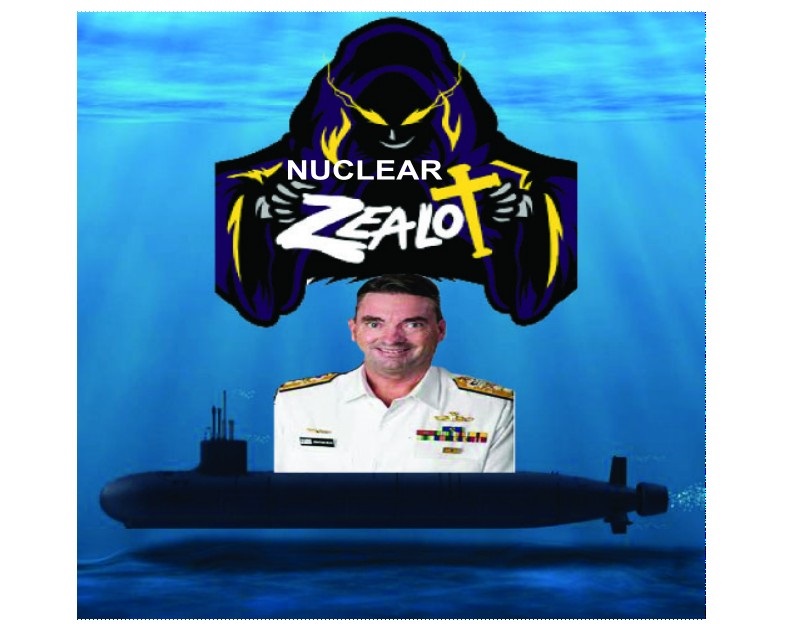
Mead’s Nuclear Powered Submarine Taskforce will deliver recommendations on options to the government….. it can only be done with the unfettered support of all three nations.…… the support of the Australian people will be essential for the plan to work.
DEFENCE SPECIAL REPORT
Cultivating a nuclear mindset, https://www.theaustralian.com.au/special-reports/cultivating-a-nuclear-mindset/news-story/15e1b23576f3301cdf2e9b7566811bd0 By Brendan Nicholson, October 27, 2022
After a year of intense research, the head of a 350-strong Defence taskforce is confident the Royal Australian Navy will be equipped with nuclear-powered submarines.
Vice Admiral Jonathan Mead tells The Australian’s Defence Special Report he believes “absolutely” that the massive and highly complex industrial-scale endeavour is viable.
Set up after the AUKUS technology sharing agreement was signed by Australia, the US and UK a year ago, Mead’s Nuclear Powered Submarine Taskforce will deliver recommendations on options to the government by March next year and he says the work is on track.
The government will choose the design. Mead says a range of options has emerged. He won’t be drawn on specifics but says it can only be done with the unfettered support of all three nations. “We are providing options to our government on what we think is the optimum pathway, and we are working on that with our partners. I am very confident that we will be in a position for government to make an announcement next year on an optimal pathway, in conjunction with the other nations’ leaders.”
Mead cautions that a whole-of-government approach with very strong backing from industry and the support of the Australian people will be essential for the plan to work. “Defence cannot do this by itself. This social licence is a very important aspect for us. We need Australians to have confidence in our ability to build and operate these submarines.”
Submarines operate at the highest end of war fighting capability, says Mead, and they deliver significant deterrence. “When you put a nuclear-powered submarine (SSN) in the mix, you’ve got almost an exponential increase in speed, manoeuvrability, survivability, endurance, lethality in their ability to launch long range missiles, to operate around the region and to protect Australia.”
The government had made it clear that submarines were a fundamental part of Australia’s defence capability. Defence Minister Richard Marles has said the need for haste is dictated by deteriorating strategic circumstances, sharpening competition and rapid military modernisation.
The task force recommendations will go to the government at the same time as the Defence Strategic Review by former defence and foreign minister Stephen Smith and former Defence force chief Sir Angus Houston.
“We are briefing them so that they can take on board our body of work as well,” Mead says.
Members of Mead’s team often work through the night in talks with the US and UK partners. They include personnel from all three services, the Lucas Heights reactor, from the nuclear regulator and a range of departments.
He won’t comment on the argument that an interim conventionally powered submarine will be needed to avoid a capability gap, but he says the government has given him very clear direction to develop options that will deliver the nuclear-powered capability “in an expeditious manner”.
“I’m only looking at nuclear,” he says. “We are working with the US and UK on a range of options that we think can deliver the capability in an expeditious timeframe.”
Any decision to opt for an interim conventional submarine would be up to the government and Defence.
No one doubts that the submarine force will be eye-wateringly expensive.
The taskforce proposal will be presented to the government at the same time as the results of the Smith/Houston strategic review – and at a time of economic pressures and invidious trade-offs when the world is emerging from the Covid pandemic while facing a dangerous strategic environment. Marles has undertaken to strengthen the lethality and deterrent effect, but that assurance comes as demands for support for services such as the NDIS and veteran’s welfare increase.
With a strong social agenda, the government faces painful choices as it deals with a complex set of interlocking problems, and clear choices on ADF capabilities will be vital.
The review will focus on strengthening the ADF’s deterrent effect by getting sophisticated weapons and platforms into the hands of its men and women faster. Areas for rapid development include hypersonics and cyber. Some programs will be accelerated. The reviewers will be looking at options, possibly other than submarines, for long range strike capability. Missiles and long-range bombers such as the B-21 will be in that mix.
Australia needs to be able to defend itself against sophisticated threats – and to give an adversary pause to consider whether an attack is a good idea. While much is discussed about potential flashpoints such as Taiwan, Australia must be able to defend itself against unexpected threats.
Threats may come in the traditional “domains” of sea, land and air – or in the shape of cyber-attacks, or threats to democracy. Greater interdependencies mean threats coming from different domains at once, more lethal and with greater range. Great power adversaries can operate in all these domains making defending against them much more complex and expensive.
While there’s a need for hard power to deter, that can’t be the only focus. Defending the nation means putting more resources into diplomacy to develop deeper relationships with neighbours, and improving intelligence gathering to ensure threats are identified and understood as they develop. While Australia must be strong enough to deal with actors who see conflict as a means of getting their way, it needs to reassure friends that it has a defensive mindset…………………………
As these debates evolve, Mead has identified the optimal pathway to SSNs, with nine components underpinning the daily work of the task force. “If we can’t put a green tick to each of those nine components, then the boat becomes almost a meaningless concept,” he says.
First is Australia’s strategic situation and the policies set by the government to deal with it.
………. Mead won’t say where the design choice will land – on the US Virginia or the SSNX to follow it, Britain’s Astute which is about to go out of production, or the SSNR which will follow it. Or something else.
“Clearly these are decisions for government, and not just our government, but also the partners. They need to put it through their political systems.”
He says nuclear submarines will be built in Australia. “That’s very important to ensure Australia has a sovereign capability. They are likely to be built on land earmarked for the previous Attack-class submarine project on land adjacent to South Australia’s Osborne Naval Shipyard.”
Number five is the need to set up an industrial base that can support nuclear-powered submarines and a supply chain to build and maintain them – and to provide components for partner submarines, optimising the industrial bases of all three countries.
“If we are building a component for an Australian build and that’s what our partners need, then it would be wise for us to identify things we can assist them with. All countries have constrictions and bottlenecks.”
Teams from the US and UK have visited Australia to see what might be available here………….
An option is for Australia to do a deeper level of maintenance on US and UK submarines during their visits to bases such as HMAS Stirling, in WA. That could gradually increase to major maintenance.
“We need to start sending people from our industrial base to the US and UK to be embedded in their construction and maintenance yards so that when submarines visit Australia our people will have the necessary experience. ……….
For six months, Australian submariners have been working in US submarines “at the back end where the reactor is”. The UK has also committed to embarking Australians on its boats.
…………….There are signs all over the task force precinct stressing the importance of building a “nuclear mindset”, and each member’s ID card comes with that message.
Mead notes a report by the US director of Naval Reactors that in 65 years of operation, US Navy nuclear-powered warships and their support facilities have had no discernible effect on public health or the environment.
“It’s safe for the people, and it’s safe for the environment. We intend to learn from the US and UK so that we can demonstrate identical standards,” he says. “This nuclear mindset is a way of thinking within our people, within navy, and within other areas of the department…………..
………………………..Mead says the ninth crucial element is the need to clearly explain to Australians, and to the US and UK, what the program is all about and how the safety and reliability of the submarines can be assured.
-Brendan Nicholson is editor of ASPI’s commentary and analysis site, The Strategist.
Flaps up and blinkers on: politicians happy with the unknown unknowns of fighting war
the system had “failed utterly” when former prime minister John Howard “alone decided and authorised ADF lethal force elements to be joined with the US-led coalition invasion of Iraq … preceding the public announcement on March 18, 2003, only to be followed by the bombing of Iraq in the early hours of the following morning.
“Howard’s decision has since been revealed to have been based on false and misleading intelligence. History has also revealed serious defects in the decision to commit Australian forces to war in Vietnam, to Afghanistan, to Syria not to mention other secret clandestine intelligence collection operations in the post-WW2 period,”
Michael West Media by Zacharias Szumer | Oct 27, 2022,
When it comes to the powers vested in politicians to send Australians into foreign conflicts, the major parties stand by the cliche: if it ain’t broke don’t fix it. But the system is broken, as war reform advocates have told Zacharias Szumer.
For advocates of war powers reform, Labor’s recently announced Inquiry into International Armed Conflict Decision Making hasn’t got off to a promising start. The defence minister and defence subcommittee deputy chair have already come out against parliamentary approval for overseas military deployments, the desired reform that advocates are seeking.
The Minister of Defence, Richard Marles, has said he is “firmly of the view” that the current system is “appropriate and should not be disturbed”. In a letter referring the Inquiry into International Armed Conflict Decision Making to the Joint Standing Committee on Foreign Affairs, Defence and Trade, Marles said the current arrangements “enable the duly elected government of the day to act expeditiously on matters of utmost national importance in the interests of the safety and security of our nation and its people.”
Greens senator Jordon Steele-John, the party’s spokesperson for foreign affairs, peace and nuclear disarmament, told MWM that “Marles’ comments reflect a Labor Party that is self-conflicted. We see Richard Marles endorsing the current system, meanwhile many members of the Labor caucus are pushing for an inquiry.”
Labor MPs Julian Hill and Josh Wilson put forward the resolution at the last ALP conference that got the inquiry added to the party’s policy platform. The defence subcommittee, which is handling the inquiry, is chaired by Hill and also includes Wilson. However, the subcommittee doesn’t feature anyone from the Greens, who have long championed requiring parliamentary approval before overseas deployment of troops.
Liberal MP Andrew Wallace, the deputy chair of the defence subcommittee, recently told the Guardian that he was “surprised that the Labor Party is even contemplating” a change to a system that had “stood us in good stead for many many years.”
“The executive has got to be given the power to govern the country and particularly in relation to national security issues. I don’t care whether it’s Labor or Liberal – they can’t be hamstrung by the parliament,” he added.
Steele-John said that it was “sad to see Andrew Wallace and the Liberals so adamantly opposed to an inquiry on this matter, but transparency, investigating and making decisions based on that investigation are not the attributes of the party that thought invading Iraq was a good idea.”
Greens senator David Shoebridge, the party’s spokesperson for defence and veterans’ affairs, echoed Steele-John’s sentiments. “This is a disturbingly accurate insight into the attitude of the Coalition and many in Labor – they don’t want parliamentary democracy to get in the way of their ‘parties of government’ club. Imagine letting government be ‘hamstrung by parliament’,” the senator tweeted earlier in October.
“Seeing a democratically elected politician so readily reject oversight by parliament on “national security” issues should worry us all. Democracy is not optional in times of crisis or when the drumbeats of war start,” Shoebridge added.
Steele-John also questioned Marles and Wallace coming out against reform so soon after the inquiry was announced. “I hope to see all political parties and MPs approach this committee in good faith,” he said. “The ability for all MPs and parties to scrutinise the decision of ADF deployment will add a level of transparency and accountability designed to avoid repeating the catastrophic mistakes the executive government has made in the last 20 years,” he said.
Beyond the halls of parliament
Peter Hayes, a former RAAF group captain and Vietnam War veteran, told MWM that he was “disappointed” by Marles’ statement, which he said “seemed to pressure the Inquiry rather than to await with an open mind its conclusions and recommendations.”
“The inquiry could have accepted submissions from the Defence Department and others without any need for Minister Marles to make his personal views public,” said Hayes, who has also previously served as Director of Information Warfare at Australia’s Air Command Headquarters.
Hayes also took issue with Wallace’s argument that the current system had “stood us in good stead for many many years”, saying that the system had “failed utterly” when former prime minister John Howard “alone decided and authorised ADF lethal force elements to be joined with the US-led coalition invasion of Iraq … preceding the public announcement on March 18, 2003, only to be followed by the bombing of Iraq in the early hours of the following morning.”
“Howard’s decision has since been revealed to have been based on false and misleading intelligence. History has also revealed serious defects in the decision to commit Australian forces to war in Vietnam, to Afghanistan, to Syria not to mention other secret clandestine intelligence collection operations in the post-WW2 period,” Hayes added………………………………….
if the aim is to minimise threats against Australia or its citizens, Fernandes does not believe the system has kept us in “good stead”:
In Afghanistan, the real objective was to show Australia’s relevance to the United States. We stayed because of US domestic politics rather than the military situation on the ground. After the Taliban’s comeback in 2008, the Obama administration did not want to be attacked in domestic elections for being unable to defeat the Taliban. And we can see the results – in 2001, Islamic terrorists were based in Kabul, Kandahar, Jalalabad and a few pockets of rural Afghanistan. Twenty years later, the Taliban is back in power, and US wars – enabled by the intelligence facility at Pine Gap – have resulted in a massive expansion of terrorist activity across the globe.
Fernandes’ book Island Off the Coast of Asia contains a proposal for a new system under which the Australian parliament would have greater control over military deployments. He will reportedly be making a submission to the inquiry based on this proposal.
Public submissions to the inquiry are open until November 18. https://michaelwest.com.au/flaps-up-and-blinkers-on-politicians-happy-with-the-unknown-unknowns-of-fighting-war/
Wong, Marles schedule US trip as nuclear submarine deadline nears
Financial Review, Andrew TillettPolitical correspondent, 26 Oct 22,
Annual top-level foreign affairs and defence talks will be held in Washington in December, allowing senior officials to lock down final details over Australia’s planned purchase of nuclear-powered submarines before the Albanese government publicly outlines its plans for the multibillion-dollar project.
With this year’s federal budget eschewing major funding decisions in the defence portfolio, The Australian Financial Review understands the US will for the third year running host the annual AUSMIN talks between the Australian and US governments………..
One defence source suggested that holding talks in the US would result in the ministers being accompanied by a bigger-than-usual cohort of Australian officials to speak to US counterparts from the Defence and Energy departments about the submarine project.
The nuclear submarine taskforce, which is examining the best options for Australia to acquire nuclear submarine technology from the US and UK under the AUKUS partnership, is due to report to the Albanese government in March after an 18-month study on what submarine to acquire, where it will be built, delivery timetable, cost and any interim measures required to avoid a capability gap.
Separately, former defence minister Stephen Smith and former Defence Force chief Angus Houston are conducting a Defence Strategic Review looking at the military’s weapons needs in light of deteriorating regional security. That review is also due in March.
Both reviews will outline billions of dollars in new spending for Defence that will need to begin to be accommodated when the next budget is handed down in May.
This year’s budget papers fail to reflect the significant increase in funding required for existing projects as construction gets under way in earnest…………………………….. more https://www.afr.com/politics/federal/wong-marles-schedule-us-trip-as-nuclear-submarine-deadline-nears-20221026-p5bsyp
‘Australia’s greatest threat is from within’: Why we’re unprepared for the health effects of climate change
‘Australia’s greatest threat is from within’: Why we’re unprepared for the health effects of climate changeAustralia’s lack of a national climate change and health adaptation plan is putting lives at risk and our transition to renewables is “unacceptably slow”, according to a report.
New Zealand Rocket Lab: Helping the US wage endless wars from space

https://thedailyblog.co.nz/2022/10/25/rocket-lab-helping-the-us-wage-endless-wars-from-space/By John Minto, October 25, 2022
It’s clear local mana whenua were misled by Rocket Lab founder Peter Beck when iwi land at Mahia Peninsula was leased to launch satellites into space.
At the time Peter Beck was clear Rocket Lab would be used for civilian purposes only and would not take up military contracts, despite this being a particularly lucrative path to take.
Fast forward a few years and we find Beck has abandoned any principles he may have had and his company is now majority owned by the US military and is launching satellites for US military purposes.
The government has to sign off on each launch to make sure it is in line with what’s acceptable to this country but it’s clearly a rubber stamp process conducted by Stuart Nash.
Any assurances from Peter Beck or Economic and Regional Development Minister Stuart Nash, who signs off on the launches for the government, that Rocket Lab’s work is for the betterment of mankind are not credible.
Peter Beck sets up straw man arguments saying claims of Rocket Lab weaponizing space are “misinformation” and the company would “not deal in weapons”. “We’re certainly not going to launch weapons or anything that damages the environment or goes and hurts people,” he told Newshub last year.
What nonsense. These are “straw-man” arguments. No-one has claimed the rockets contain weapons but what is absolutely clear is that the US military launches rockets for military purposes and this is what is happening at Mahia.
The NZ Herald reported last year on the capabilities of “Gunsmoke-J satellites”, which have been launched from Mahia for the US military, saying:
The other is the “Gunsmoke-J” satellite being launched for the US Army’s Space and Missile Defence Command (SMDC).
Gunsmoke-J is a prototype for a possible series of nano-satellites that will collect targeting data “in direct support of Army combat operations” according to a US Army fact sheet and a US Department of Defence budget document.
Green MP and party spokesperson for security and intelligence, Teanau Tuiono, is right to speak out:
“Weaponising space is not in our national interest and goes against our international commitments to ensuring peace in space,”
“The government should put in place clear rules that stop our whenua being used to launch rockets on behalf of foreign militaries”
“We should not be a launching pad for satellites for America’s military and intelligence agencies,” Green Party security and intelligence spokesman Teanau Tuiono said.
Rocket Lab is donkey deep with US strategies for “full spectrum dominance of the planet – including space. In doing so Beck and the government have made Mahia a target for conventional or even tactical nuclear weapons if hostilities break out between the US and another world power.
It’s ironic that the government provided start-up funds for Beck to get Rocket Lab off the ground only for Aotearoa New Zealand to find the company has put us to bed with a foreign military and made us target for conventional or nuclear attack.
Mana whenua in Mahia are right to be concerned – and so should the rest of us.
The government is “consulting” at the moment on these issues in their Space Policy Review.
Make a submission for the peaceful use of space here (Deadline 31 October)
Nuclear power – a ‘religion’ in France. now turning out to be a curse.
Paris dims the lights as blackouts threaten disaster for Macron. Years of
underinvestment in its aging nuclear fleet risk causing chaos in France
this winter. Xavier Barbaro, chief executive of France’s leading
independent renewables producer Neoen, is concerned about the growing risk
of shortages.
“It’s a possibility and no one would have thought that a
few years or even a few months ago,” he says. “Blackouts were something in
the past. and it can happen again. “We have heard literally for decades
that having nuclear was a chance for the country and in the end, it might
actually be a curse.”
France put all of its eggs in the nuclear basket,
but technical problems are now frequently cutting capacity at its aging
plants. While President Emmanuel Macron has ordered new reactors as part of
a nuclear “renaissance”, decades of inaction are coming back to haunt
the country. Like Liz Truss, Macron’s government has staked its
reputation on his country avoiding blackouts that would undoubtedly have
severe political consequences this winter.
However, industry bosses are
less certain than the President. “We’ve been told for ages that nuclear
power is safe, secure and so constant,” says Adrien Jeantet, director of
energy services at Enercoop, a French utility company using only renewable
energy.
“Now we see that it’s not dependable. We really need it now that
we have gas shortages and all of a sudden it’s not there. Half of the
reactors are shut down.” Barbara Pompili, Macron’s minister in charge
of the energy transition for two years, says nuclear power is almost like a
religion in France.
However, she adds that a widespread belief in its
“magic” has caused underinvestment in renewables that will be needed
for the future. “What I’m worried about is the strategic thinking in the
long run,” she says. “Maybe we were too confident on nuclear power and
we underestimated the importance of renewables. The reason is that too many
people considered that investing in renewables was bad for nuclear power.
“It’s totally crazy. We lost so much time thinking in this way… it’s
very difficult to have a serious rational debate in France on the energy
issue.”
Telegraph 24th Oct 2022
Russian delegation at UN calls on USA to join initiative to renounce weapons in space

Foreign Ministry Spokeswoman Maria Zakharova’s comment on the US initiative in the UN General Assembly First Committee
The other day, the US delegation submitted to the UN General Assembly First Committee an aide-memoire on proposed UN General Assembly resolution on destructive direct-ascent anti-satellite missile testing. We analysed the text to discover that our apprehensions concerning this US initiative were valid.
As before, we regard the moratorium on testing the above type of anti-satellite weapon (ASW) announced by the White House in April as a purely declarative move. The UN General Assembly statements and draft resolutions are clearly not enough to prevent an arms race in space (PARIS), all the more so for a country that has had experience – at least since 2008 – destroying space objects with ASW.
The United States remains bashfully silent about the most important thing: are they willing to permanently rule out the combat use of this type of weapon? The resolution says nothing about it. There are no commitments regarding the development and production of such systems, or the prospect of ever destroying the Pentagon’s existing anti-satellite capabilities.
Moreover, the possibility of deploying ASW means on the US reusable unmanned space shuttle X-37B, which is capable of staying in orbit for a long time, performing manoeuvres and carrying a payload, cannot be ruled out. By the way, our multiple requests to the United States to clarify the X-37B platform’s goals and objectives have so far remained unanswered.
Military dominance and superiority in outer space being set as clear goals in US doctrinal documents, their view of space as an arena of confrontation and their plans for achieving these goals are quite telling if one wants to understand Washington’s genuine motives. It is no coincidence that the US delegation at the Geneva Conference on Disarmament is doing its utmost to hinder the start of talks on a multilateral instrument which contains reliable international legal guarantees against deploying weapons of any kind in outer space and the renunciation of the use of force or the threat of force against space objects. The Americans are using every pretext to avoid working on the Russian-Chinese draft treaty designed to fulfill PARIS goals………………….
Washington can prove it has serious intentions if it revises its destructive stance and the US delegation that is participating in the Conference on Disarmament joins the efforts to start talks as soon as possible on a legally binding instrument with guarantees of non-deployment of weapons in space, non-use of force or threat of force against space objects.
Specifically, the approach promoted by Russia involves the following commitments:
– not to use space objects as a means of destroying any targets on Earth, in the air or outer space;
– not to create, test or deploy weapons in space to perform any tasks, including for anti-missile defence, anti-satellite activity, or use against targets on Earth or in the air, and to eliminate such systems that the states already possess;
– not to create, test, deploy or use space weapons for anti-missile defence, anti-satellite activity, or use against targets on Earth or in the air;
– not to destroy, damage, or disrupt the normal functioning and not to change the flight paths of space objects owned by other states;
– not to assist or encourage other states, groups of states, international, intergovernmental, or any non-governmental organisations, including non-governmental legal entities that were established, registered or located on the territory under their jurisdiction and/or control, to participate in the above activities.
In addition, the accession of the United States and its allies to the international initiative/political commitment not to be the first to place weapons of any kind in outer space would be a really important confidence-building measure. We are once again calling on Washington to follow the example of more than 30 UN member states and join this initiative, as well as to support the UNGA draft resolution on that matter.
We are ready to substantively and professionally discuss the US initiative in this context of multilateral efforts to arrive at a comprehensive solution to PARIS issues. https://mid.ru/en/foreign_policy/news/1835061/
Rising Sea Levels Spell Disaster For America’s Coastal Nuclear Plants
By Haley Zaremba – Oct 25, 2022,
- The Biden administration is pushing for a revitalization of America’s nuclear industry.
- Seven of the country’s coastal nuclear plants are at risk as sea levels rise.
- Mitigation measures are needed to protect America’s aging nuclear infrastructure.
……………………………….. The Turkey Point nuclear power plant, located between the Florida Everglades and Biscayne National Park, has been active for fifty years. While mathematical modeling shows that the aging plant is still safe to operate, many local residents live in fear of what will happen when the next hurricane pummels the southern coast of Florida – and the one after that, and the one after that. After seeing what a natural disaster did to Japan’s Fukushima power plant in 2011, anxiety about storm surges crashing into nuclear plants – and very old ones, at that – are justified.
……………. The National Oceanic and Atmospheric Administration (NOAA) projects that the area where Turkey Point is located will experience a full foot of sea level rise by 2050 and three feet of annual flooding. This would mean that the plant’s cooling systems and access roads would flood as well. What’s more, according to a 2020 study by scientists from Johns Hopkins University, Turkey Point is just one of seven coastal nuclear facilities that are vulnerable to sea level rise.
Serious and swift mitigation plans are clearly needed to make sure that aging nuclear infrastructure can safely stand up to storm surges and extreme weather events, which are a matter of “when,” not “if.”……………………. https://oilprice.com/Alternative-Energy/Nuclear-Power/Rising-Sea-Levels-Spell-Disaster-For-Americas-Coastal-Nuclear-Plants.html
Atmospheric levels of all three greenhouse gases hit record high
Atmospheric levels of all three greenhouse gases hit record high
Scientists warn world ‘is heading in wrong direction’ amid rise in nitrous oxide, carbon dioxide and methane
CEFC gets $8.6 billion in new funding to connect renewables to the grid — RenewEconomy

The extra cash will help the CEFC lead financing and investment in the Rewiring the Nation program. The post CEFC gets $8.6 billion in new funding to connect renewables to the grid appeared first on RenewEconomy.
CEFC gets $8.6 billion in new funding to connect renewables to the grid — RenewEconomy
Gas writes its own death sentence with plants 10 times the price of new renewables — RenewEconomy

Gas prices are rapidly coming down, but the long term doesn’t look good as wind and solar continue to beat gas on price. The post Gas writes its own death sentence with plants 10 times the price of new renewables appeared first on RenewEconomy.
Gas writes its own death sentence with plants 10 times the price of new renewables — RenewEconomy
Australia could lead the world in offshore wind, but risks to marine life remain poorly regulated — RenewEconomy

With effective regulation, Australia’s offshore wind industry can be a leader in ecologically sustainable development. The post Australia could lead the world in offshore wind, but risks to marine life remain poorly regulated appeared first on RenewEconomy.
Australia could lead the world in offshore wind, but risks to marine life remain poorly regulated — RenewEconomy
Gravity storage specialist Energy Vault strikes big battery deal with Australia solar project — RenewEconomy

Gravity storage proponent Energy Vault strikes another big battery deal, this time with a proposed solar farm in Victoria. The post Gravity storage specialist Energy Vault strikes big battery deal with Australia solar project appeared first on RenewEconomy.
Gravity storage specialist Energy Vault strikes big battery deal with Australia solar project — RenewEconomy
Atmospheric levels of all three greenhouse gases hit record high
Atmospheric levels of all three greenhouse gases hit record high
Scientists warn world ‘is heading in wrong direction’ amid rise in nitrous oxide, carbon dioxide and methane
1 This month


Help Aunty Sue Protect Her Land and Sacred Sites From Destructive Rocket Testing.
.

Australians deserve the truth
about
AUKUS – https://aukuspublicinquiry.com/

PETITION – To: Prime Minister Anthony Albanese and the Australian Labor Government

of the week – Australians for War Powers Reform (AWPR)
To see nuclear-related stories in greater depth and intensity

