Ukraine War Exposes Risks to Deploying Small Nuclear Reactors

- Small modular reactors are seen as the future of atomic energy
- Russian seizure of atomic plant exposes safety vulnerabilities
By Jonathan Tirone, October 6, 2022, The Russian army’s seizure of the biggest nuclear power plant in Europe isn’t just exposing Ukrainians to the risk of an atomic accident but may also undermine plans to install new miniature reactors in far-flung places. ……… (subscribers only) more https://www.bloomberg.com/news/articles/2022-10-05/ukraine-war-shows-new-risk-to-nuclear-power-s-next-small-thing#xj4y7vzkg
‘Unproven’ small nuclear reactors would raise Australia’s energy costs and delay renewable uptake, report says

Australian Conservation Foundation report finds modular reactors are expensive and introduce unnecessary challenges in managing radioactive waste
Guardian, Graham Readfearn 5 Oct 22,
The next generation of small nuclear reactors being advocated by the Coalition would raise electricity prices, slow the uptake of renewables and introduce new risks from nuclear waste, according to a report from the Australian Conservation Foundation.
But the report from the conservation group has found only two small modular reactors (SMRs) are known to be operating around the world, in Russia and China, and both have seen large cost blowouts.
Promoters of nuclear energy, the report claims, were pinning their hopes on technology that was “uncertain and unproven”.
“The good news about the renewed nuclear discussion is that it highlights that business as usual with fossil fuels is not an option,” the report found.
“The bad news is the very real risk of delay, distraction and a failure to advance a just energy transition”.
Last week during question time, the energy minister, Chris Bowen, mocked the Coalition for supporting nuclear and asked which MP would be willing to have a reactor in their electorate.
Nuclear energy has been effectively banned in Australia since the late 1990s, but some Coalition senators are pushing for those restrictions to be lifted.
The opposition leader, Peter Dutton, has tasked the shadow climate minister, Ted O’Brien, to review the status of nuclear energy.
In the report Dave Sweeney, ACF’s Nuclear Free campaigner, wrote SMRs would push up electricity costs and introduce unnecessary challenges in managing nuclear waste.
“In short, Australia’s energy future is renewable, not radioactive,” he wrote.
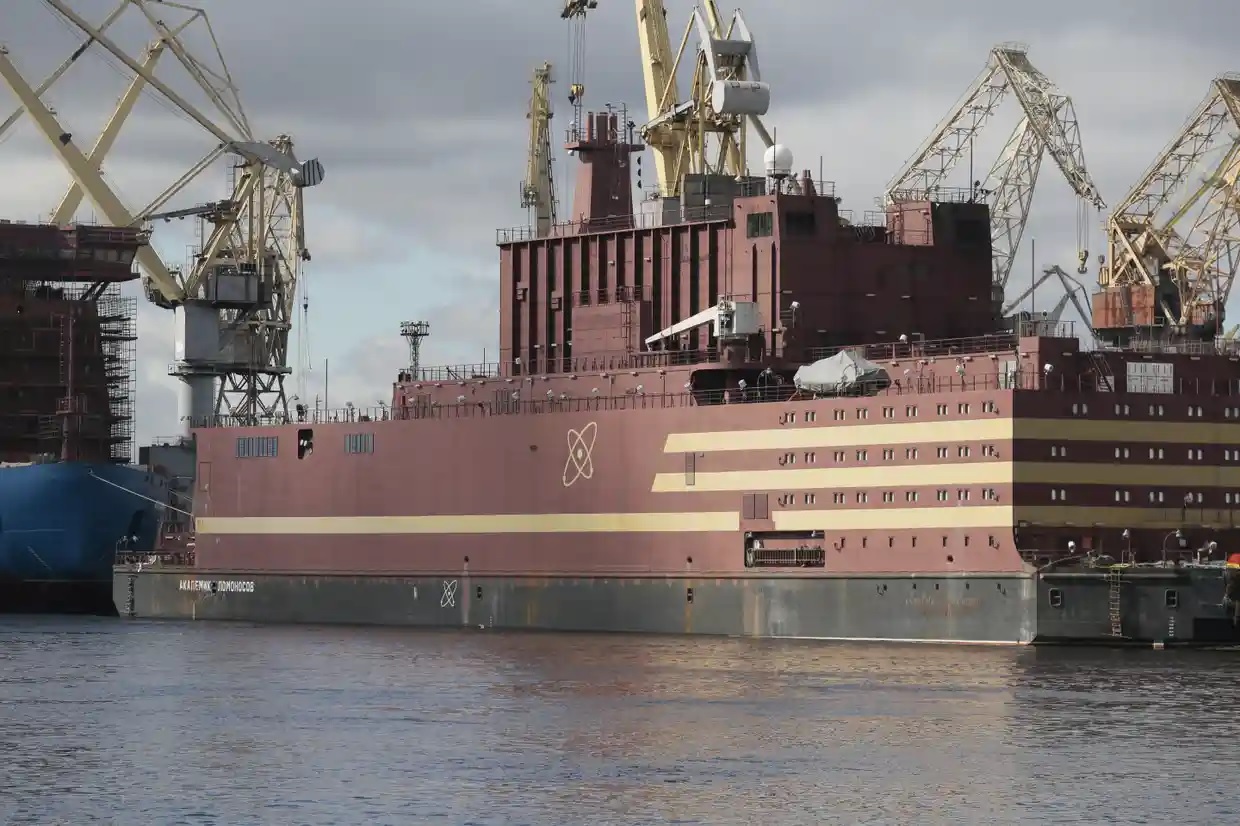
According to the report, Russia’s floating nuclear plant, the Akademik Lomonosov, has two small SMR units on board. Construction costs had ballooned sixfold.
Work started in 2012 on a demonstration plant in China with two gas-cooled reactors that was completed nine years later, costing $8.8bn.
“The global SMR reality simply does not come close to matching the Australian SMR rhetoric,” the report says.
Three further SMR plants were under construction in Argentina, China and Russia but had been plagued by cost rises and delays, the report said.
In June, a study in the Proceedings of the National Academy of Sciences suggested future deployment of SMRs could increase the amount of nuclear waste by factors of two to 30, depending on the design.
……………………………………….. In June the International Energy Agency said SMRs were not yet commercially viable, but “lower cost, smaller size and reduced project risks” could improve social acceptance.
There was increased support and interest in Canada, France, UK and the US for the technology, the report said, adding: “But the successful long-term deployment of SMRs hinges on strong support from policymakers starting now, not just to mobilise investment but also to streamline and harmonise regulatory frameworks.” https://www.theguardian.com/australia-news/2022/oct/05/unproven-small-nuclear-reactors-would-raise-energy-costs-and-delay-renewable-uptake-report-says
France’s nuclear energy strategy — once its pride and joy — faces big problems this winter

CNBC Sam Meredith, @SMEREDITH19 5 Oct 22,
- Deep-rooted problems with France’s nuclear-heavy energy strategy are raising serious questions about its winter preparedness.
- A long-standing source of national pride, France generates roughly 70% of its electricity from a nuclear fleet of 56 reactors, all operated by state-owned utility EDF.
- In recent months, however, more than half of EDF’s nuclear reactors have been shut down for corrosion problems, maintenance and technical issues.
…………………….. more than half of EDF’s nuclear reactors have been shut down for corrosion problems, maintenance and technical issues in recent months, thanks in part to extreme heat waves and repair delays from the Covid pandemic. The outages have resulted in French power output falling to a near 30-year low just as the European Union faces its worst energy crisis in decades.
“I find the France nuclear relationship really interesting because it just bluntly shows you all of the pros and cons of nuclear,” Norbert Ruecker, head of economics and next generation research at Julius Baer, told CNBC via telephone.
“Yes, it’s low carbon but it’s not economic. You need to nationalize EDF to make it happen. Yes, it offers baseload but wait a second, sometimes a whole plant disappears for weeks and months, so that baseload promise is not really there,” Ruecker said.
……………………………………………… A ‘winter of discontent’?
French power prices climbed to a string of all-time highs this summer, peaking at an eyewatering level of around 1,100 euros ($1,073) per megawatt hour in late August. Analysts fear the country may struggle to produce enough nuclear energy to support both its own needs and those of its neighbors in the coming months.
Underlining the structural problems in the country’s nuclear fleet, France not only lost its position as Europe’s biggest exporter of electricity this year but also, remarkably, actually imported more power than it exported.
Data from energy analysts at EnAppSys that was published in July found that Sweden clinched the top spot as Europe’s largest net power exporter during the first six months of 2022. Prolonged outages in France’s nuclear fleet saw the country’s exports halve from the same period last year, and analysts at EnAppSys warned the situation showed “no signs of improving any time soon.”
To compensate, France imported expensive electricity from U.K., Germany, Spain and elsewhere.
“Thanks to the market, thanks to the power lines that we have, Europe saved France from a big blackout” this summer, Julius Baer’s Ruecker said.
“It was the U.K., Germany, Spain and to some extent Switzerland that all stepped in. So, for me, the past month really has just uncovered some of the political talk which was not always objective,” he added, referring to talk of nuclear energy as a climate solution among politicians…………………………………………………….
What does it mean for Europe?
France’s ailing power output has renewed criticism of its nuclear-heavy energy strategy at a time when many others in Europe are turning to atomic power as a replacement for a shortfall in Russian gas.
Germany, which initially planned to shutter its three remaining reactors by the end of the year, decided to delay its nuclear phaseout to shore up energy supplies this winter. The U.K., meanwhile, is seeking to ramp up its nuclear power generation, and the EU has listed nuclear energy among its list of “green” investments.
“It is important to say that if France has a nuclear problem, Europe has a problem as well in terms of electricity,” Alexandre Danthine, senior associate for the French power market at Aurora Energy Research, told CNBC via telephone.
“They are, in general, a big exporter, but in winter they need energy from neighboring countries in order to satisfy demands — whatever the situation,” Danthine said.
In France, Eurasia Group’s Rahman noted, Macron reacted angrily last month to suggestions, including from outgoing EDF boss Jean-Bernard Levy, that his “stop-start approach” to nuclear power in the last five years was partly responsible for the crisis.
In what was widely seen as a policy U-turn, Macron announced in February his intention for France to build at least six new nuclear reactors in the decades to come, with the option for another eight. At the start of his presidency, Macron had committed to reducing the share of nuclear power in the country’s energy mix.
The reversal controversially placed atomic power at the center of France’s bid to achieve carbon neutrality by the middle of the century.
Advocates of nuclear power argue it has the potential to play a major role in helping countries generate electricity while slashing carbon emissions and reducing their reliance on fossil fuels.
To critics of the energy source, however, nuclear power is an expensive distraction to faster, cheaper and cleaner alternatives. Instead, environmental campaign groups argue technologies such as wind and solar should be prioritized in the planned shift to renewable energy sources. https://www.cnbc.com/2022/10/05/frances-nuclear-heavy-energy-strategy-faces-big-problems-this-winter.html
Nothing’s more important than avoiding nuclear war
Pearls and Irritations, Caitlin Johnstone , 5 Oct 22,
Avoiding nuclear war is the single most important agenda in the world. The single most important agenda in history. It is more important than your political faction. It is more important than how Vladimir Putin makes your feelings feel. It is more important than anything else.
Whenever I say this I always get some liberal saying “Some things are worth dying for” or some shit. Actually, no. Nothing, literally nothing, is worth the obliteration of all life on earth. It’s not worth gambling all terrestrial life to please your dopey egocentric fixations.
People who think nuclear brinkmanship is worth the risk either haven’t thought hard enough about what nuclear war is and what it would mean, or they just hate life and have some sick desire to see the end of everything. Either way they should be dismissed with extreme aggression.
If there’s one thing everyone should be able to come together on, it’s that every measure should be taken to avoid the end of everything. It is only because our civilisation is awash with war propaganda that this isn’t glaringly obvious to everybody.
That necessarily means de-escalation and detente. It means compromise. It means change. It means acknowledging what your side did wrong to bring us this close to the edge and taking drastic measures to change that and make sure it never happens again. It’s not egoically pleasing, but it’s necessary. More so than anything has ever been. Risking the annihilation of all terrestrial life is not worth the egoic gratification we get from our narratives about “winning” and “losing” and “good guys” and “bad guys”. This is infinitely more important than that.
Our civilisation is so backwards and insane that people will act like you’re the worst person in the world for saying we should try to avoid nuclear armageddon. I and many others have been screaming for years that US policy toward Russia is bringing us closer and closer to nuclear war; now we’re on the brink and the people we were screaming at are acting like we’re the assholes.
Two administrations ago the US had a president who mocked the idea that Russia was a primary rival and said Ukraine was a core interest to Russia but not the US, and liberals thought he was awesome. After four years of intelligence agency-driven narratives marrying Russia to Trump, liberals are now braying for World War III.
Before 2016 Democrats saw those who spent energy freaking out about Russia as weird, archaic cold warriors. Now they see anyone who doesn’t want war with Russia as a secret agent of the Kremlin. All because they were trained that Russia = Trump and therefore fighting Russia = fighting Trump.
Everyone’s anti-war until the war propaganda starts.
Real monsters don’t look the way we’re trained to expect. Those who’ll rape and hurt us are usually people we know and trust. The most murderous tyrants don’t look like Hollywood villains; they make jokes and praise freedom and democracy and shake your hand on the campaign trail.
Those who are causing the most death, oppression and misery in our world don’t resemble the Hitler-like monsters we’ve been trained to anticipate. They look friendly. They say things you agree with. Depending on their party, they might even ask you your pronouns. Meanwhile, Marvel supervillains have more depth and complexity than the one-dimensional characters the imperial spin machine concocts to represent its official enemies……………………………………………….. more https://johnmenadue.com/nothings-more-important-than-avoiding-nuclear-war/
Tanya Plibersek should seize the moment
Tanya Plibersek should seize the moment
Bob Brown
The minister for the environment needs to prove whether she is there to protect Australia’s environment or the Labor Party.
October 6 Energy News — geoharvey

Opinion: ¶ “The Time Has Never Been Better For Community Solar In The US” • Community solar used to be a perk for upper income people. Just as some people spend big bucks to drive a luxury EV so they can lower their carbon footprint, others were willing to pay more for electricity to help […]
October 6 Energy News — geoharvey
Another nuclear/climate worrying week – Australia and beyond

Some bits of good news – UN declares healthy environment a human right. – and other good developments – collated by Greenpeace. World’s Largest Container Line is Rerouting its Fleet to Avoid Collisions with Endangered Blue Whales.. Patagonia company Gives Away Its Entire $3 Billion Worth to fight climate change . Climate. The world in denial about the climate crisis.Tipping Point Hell Approaches. https://www.youtube.com/watch?v=LxoyaCSWFGs
Coronavirus. The pandemic has gone away – yeah, right! –
Health leaders urge vaccination and return to mask-wearing as hospitalisations rise by 37 per cent in a week.
Nuclear. I got distracted from this main subject this week- because of the climate’s urgent reality. It was about King Charles – being told, by that apparently mindless flibbertigibbet Liz Truss, not to attend the COP 27. And he obeyed . Isn’t that just symptomatic of the whole damn problem? We’re all supposed to be ‘nice’ don’t rock the established boat – even though the bloody boat is on fire!.
AUSTRALIA
War Powers Reform: those in favour say aye … or maybe “no comment”. Who are the war criminals? Taiwan “is not a vital Australian interest — we do not recognise it as a sovereign state”.
Nukes Corp swings into action.
Matt Canavan and 8 Coalition Senators aim to overturn Australia’s ban on nuclear power. ‘Radiation risk’: Nuclear threat discovered off the WA coast.
Energy Resources of Australia’s chairman, two directors, say they’ll resign after pressure from Rio Tinto and traditional owners.
INTERNATIONAL
Here comes the catastrophocene…
“End War in Ukraine” Say 66 Nations at UN General Assembly.
What are tactical nuclear weapons? An international security expert explains and assesses what they mean for the war in Ukraine.
US, UK sabotaged peace deal because they ‘don’t care about Ukraine’: fmr. NATO adviser. https://www.youtube.com/watch?v=2T0zaYncvFQ
These ‘nuclear bros’ say they know how to solve climate change.
UKRAINE.
- Zelensky pledges never to talk to Putin.
- Interviews With Donetsk Residents After Joining Russia – https://www.youtube.com/watch?v=pq-pM-JPBCQ
- JOHN PILGER’S 2014 WARNING ABOUT UKRAINE. Both sides need to acknowledge their mistakes, especially regarding Crimea and the Donbass. “Eva Bartlett describes Ukraine’s unspeakable genocide of Donbass FULL INTERVIEW (Graphic Content Warning)” – https://www.youtube.com/watch?v=0TiC0w8JLu4
- ‘Not wise’ to let Ukraine join NATO – Kissinger. U.S. has not seen acts indicating Russia contemplating nuclear attack. NATO chief throws cold water on Ukraine’s bid to join NATO. The New York Times on Ukraine: Vietnam Déjà Vu.
- Missile strike near Ukrainian nuclear plant raises new fears. But the real question is why is it there at all? Zaporizhzhia Nuclear Power Plant: Energoatom denies fire in power unit 2. Zaporizhzhia nuclear plant director general detained by Russian patrol (since released).
- Zelensky Reveals How Much US Taxpayers Give Ukraine Monthly.
- Why Donbass residents voted to join Russia – the pro-Russian point of view.
- Chernobyl’s Radiation Turned Its Local Frogs Black.
RUSSIA. Kremlin steps back from call to use nuclear weapons. Russia open to in-person talks with U.S. on nuclear arms treaty. Russia’s oil and gas sanctioned, – but its profitable nuclear trade allowed to roll on!
Energy Resources of Australia’s chairman, two directors, say they’ll resign after pressure from Rio Tinto and traditional owners
https://www.abc.net.au/news/2022-10-03/nt-rio-tinto-calls-for-era-chairman-to-resign/101497342?utm_campaign=abc_news_web&utm_content=link&utm_medium=content_shared&utm_source=abc_news_web&fbclid=IwAR3v3JbtHkVxHubJeOaWROwz0GqlpR_9Lhmx_RkoCpSr2oBelxPKoBddv34 By Daniel Fitzgerald,
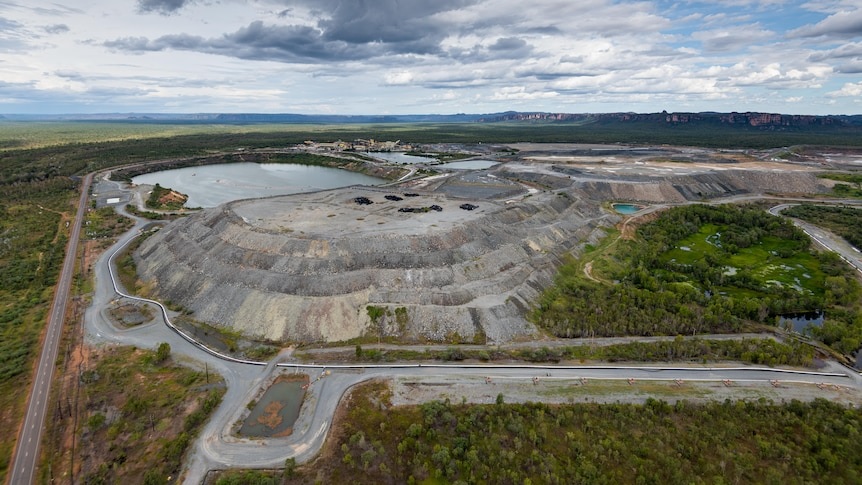
The chairman and two directors of a company responsible for cleaning up a massive uranium mine on the edge of Kakadu have announced their intention to resign, following pressure from its major shareholder, Rio Tinto, and criticism from traditional owners.
Key points:
- Energy Resources of Australia is responsible for the clean-up of Ranger uranium mine, on the edge of Kakadu
- Its chairman and two directors have announced their intention to resign, after pressure from Rio Tinto
- It comes after a commissioned report suggested the company could consider developing a second uranium mine in the region
Rio Tinto on Monday publicly called for Energy Resources of Australia’s (ERA) chairman Peter Mansell to resign, four days after an independent report commissioned by the company suggested it could consider developing a second uranium mine next to Kakadu National Park.
Mirarr traditional owners have long objected to the potential mining of the ERA-owned Jabiluka uranium deposit — a position which Rio Tinto supports — and fiercely rejected the suggestion they might allow it to be mined.
Mr Mansell and two other directors not affiliated with Rio Tinto this afternoon said they would resign, “once a clear funding solution” for the cash-strapped company is arrived at.
In a statement to the ASX, ERA said the three board members would resign, “noting the requests from Rio Tinto” for Mr Mansell to consider his position.
Mine clean-up could cost $1.2 billion more than expected
ERA said the directors notified Rio Tinto of their intention to resign last week, before Rio Tinto’s public announcement.
Earlier this year, ERA estimated rehabilitation works could cost up to $1.2 billion more than expected and take workers until 2028 to complete the job — two years longer than initially planned.
Rio Tinto chief executive Australia, Kellie Parker said the company was committed to the rehabilitation of the Ranger mine “in a way that is consistent with the wishes of the Mirarr people”.
“However, given our recent dealings with the Independent Board Committee [IBC] and last week’s release of the Grant Thornton valuation report, we do not believe that can be achieved without renewal within ERA’s board,” Ms Parker said.
“There remains a strong difference of opinion between Rio Tinto and the IBC on the terms of rehabilitation funding, with the IBC’s view that successful rehabilitation could underpin potential future growth opportunities, despite the Mirarr people’s long-held opposition to further uranium mining on their country.”
Justin O’Brien, the chief executive of Gundjeihmi Aboriginal Corporation, which represents the Mirarr people, said the Commonwealth may need to step in to ensure the safe clean-up of Ranger.
“We are extremely concerned that the Commonwealth is relying on a company that has publicly announced it does not have the funds to complete the rehabilitation work,” Mr O’Brien said.
“This public stoush over whether or not ‘magical’ uranium deposits in a World Heritage listed wetland and indigenous cultural landscape should be mined is a question of national public policy.”
On June 30, ERA had $132 million cash in hand and $537 million held by the Commonwealth government in a trust fund for the Ranger rehabilitation.
Rio Tinto said while a funding solution for the rehabilitation was being agreed, the company was “progressing discussions to amend an existing $100 million credit facility to assist ERA with its management of immediate liquidity issues”.
An ERA report released in August said cost overruns on the Ranger rehabilitation “have been caused by a number of factors including complexities in technical risk management, project delays and additional scope matters involving unbudgeted costs”.
Legislation was introduced to Federal parliament last month to grant ERA an extension to its rehabilitation schedule.
Matt Canavan and 8 Coalition Senators aim to overturn Australia’s ban on nuclear power

Bill introduced to remove nuclear energy ban in Australia
Small Caps, By Louis Allen, October 3, 2022 “………… nine coalition senators moved to introduce a Private Senators Bill, arguing nuclear power is one of the safest forms of energy and will play a vital role in achieving the nation’s emission targets moving forward.
Nationals senator Matt Canavan said the “mood is shifting” on nuclear energy,………………
Senator Canavan said the appetite for nuclear energy has grown since the government signed on to buy nuclear-powered submarines.
“People realised, given the geopolitical situation we faced, whatever hang-ups we had on nuclear energy, we needed them in our submarines,” he said.
Not everyone was in favour of the move – with federal energy minister Chris Bowen saying it was the most expensive form of power Australia could invest in.
Mr Bowen said industry groups suggested Australia would need about 80 nuclear plants to produce the electricity it needed.
“That is one (for) every second MP. Put your hand up if you would like one,” he said.
…………………….. Senator Canavan said Australia must … support nuclear energy as an energy means of the future. “The world is turning back to nuclear power and there are game changing developments in small modular reactor technology.”
“With the world’s largest uranium reserves, Australia cannot afford to be left out of global nuclear progress,” he said.
Coalition senator David Fawcett has backed senator Canavan’s claims, saying he believed nuclear power was the best option for the long term…………………..
Senator Jacinta Price said Australia needs to fully support nuclear power to achieve its ambitious emission goals and targets.
“If we truly as a nation want the cleanest and most reliable energy source there is available, then nuclear power is the logical option,” she said. https://smallcaps.com.au/bill-introduced-remove-nuclear-energy-ban-australia/
‘Radiation risk’: Nuclear threat discovered off the WA coast
perth now Eli Green, NCA NewsWire, October 3, 2022,
Tourists visiting a popular destination in Western Australia have been warned there is still a “radiation risk” 70 years after it was used as a nuclear test site, a study has found.
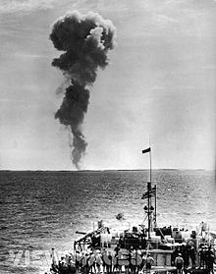
The Montebello Islands, located 120km off the WA coast, were used by the British in 1952 for Operation Hurricane, which saw three nuclear tests performed.
“More than half a century on, marine scientists have discovered there remains a radiation risk to marine life and tourists,” the four-year study by Edith Cowan University PhD student Madison Hoffman found.
With the islands attracting nature lovers such as fishers, divers and snorkellers to its coral reefs, the study has brought a fresh warning for tourists.
Due to the elevated radiation levels, visitors are currently encouraged to keep their trips to an hour a day.
The exact level of danger that the radiation levels pose to humans is yet to be determined, but Ms Hoffman hopes that is something she can determine soon.
“We don‘t quite have an answer for that yet, but we’re hoping over the next two years that we’ll be able to put a number to the potential risk,” she said.
Operation Hurricane was the first time an atomic bomb was tested by the British, with the site chosen due to its isolated location and Australia’s close ties with the UK.
The study saw more than 100 samples of marine sediment and marine life collected and tested.
“It is really important that we try and understand exactly what type of radionuclides and what levels of radiation remain in the marine ecosystem at the Montebello Islands,” Ms Hoffman said.
Radionuclides are substances that release radiation, with some being harmful to humans as they damage the body’s cells and cause cancer.
“We’re focusing now on mapping out areas where higher levels of radionuclides are found in marine sediment all around the Marine Park.”
The level of radiation also poses a threat to local wildlife, with more than 450 species of fish, 630 types of molluscs like octopi and cuttlefish, and 170 varieties of starfish and sea urchins found in the area…………….. https://www.perthnow.com.au/travel/radiation-risk-nuclear-threat-discovered-off-the-wa-coast-c-8431
UK Prime Minister agrees to honour nuclear test veterans – affected by their experience in Australia.
Truss caves in to Mirror’s demands to mark ‘Plutonium Jubilee’ with gift for nuclear test vets.
The heroes of Britain’s Cold War radiation experiments and their families welcomed the news, but said it did not go far enough to address the tests’ legacy of cancers, early death and birth defects
Mirror, By Fleet Street Fox, Columnist, 3 Oct 2022,
Prime Minister Liz Truss has caved to the Mirror’s demands to mark the ‘Plutonium Jubilee’ with a £450,000 gift for nuclear test veterans.
The heroes of Britain’s Cold War radiation experiments and their families welcomed the news, but said it did not go far enough to address the tests’ legacy of cancers, early death and birth defects.
More than half the money – £250,000 – will go to an academic or cultural institution to record oral histories of survivors. The remaining £200,000 will be available for veterans’ charities to bid for.
But that will be equivalent to just £133 a head for the estimated 1,500 ex-servicemen still alive.
The government will also host an event to “celebrate the unique and significant contributions of those involved in testing and developing our nuclear deterrent”.
It was announced on the same day as the 70th anniversary of Operation Hurricane – the Plutonium Jubilee, which marks Britain’s first atomic bomb test.
Alan Owen, of campaign group LABRATS, said: “It’s very welcome news, and a direct result of the meeting we had with Boris Johnson following the Mirror’s Look Me In The Eye campaign.
“In fact, it was the Mirror that asked, in that meeting, for a ceremony of national acknowledgement to allay veterans’ anger, and that will be a huge leap forward if we get it. But this money is a pittance in the grand scheme of things, and there’s still no medal, no apology, no acknowledgement.”
The money won’t be available until April next year – and there are fears some survivors, who are now all in their 80s, may not benefit from it.
Minister for the Armed Forces and Veterans, James Heappey, said the test veterans “played a crucial role in keeping Britain and our NATO allies safe”.
He added: “Their sacrifice contributed to achieving the ultimate guarantee of UK sovereignty and they forever have this nation’s gratitude.
“I look forward to commemorating the incredible service and efforts of our veterans.” https://www.mirror.co.uk/news/politics/truss-caves-mirrors-demands-mark-28145217
NATO ‘not obliged’ to assist Ukraine — German ambassador
Rt.com 2 Oct 22, Berlin’s envoy to the military bloc clarifies that NATO won’t actively fight for a non-member state.
Germany’s permanent representative to NATO has explained that the US-led bloc is not obliged to offer direct military assistance to Ukraine. Ruediger Koenig added that its members want to avoid a major war.
He was speaking to Dein Spiegel, the youth version of Der Spiegel magazine, which published the interview on Saturday.
The Ukraine conflict dominated much of the article, with Koenig describing Russia’s decision to launch its offensive against its neighbor in late February as a watershed event…….
Germany’s representative to NATO stressed that the military alliance as a whole, however, has no legal obligation to help Kiev repel Moscow’s attack as Ukraine is not a member state. This means that Article 5 of NATO’s treaty cannot be activated, the official explained. Under it, an attack on one ally is considered to be an attack against the whole of NATO, with all member states having to stick up for the targeted nation.
According to Koenig, the military bloc is anxious to avoid getting actively involved in the conflict at all costs because “this would mean a very big war.”
Such a scenario, which would see 30 more nations join the fray, is something “nobody wants,” the diplomat noted…………..
He concluded that the prospect of peace is rather slim as Ukraine and Russia’s positions seem to be irreconcilable. Koenig clarified that Ukraine “rightly” demands that Moscow cede all former Ukrainian regions in the south and east of the country that recently voted to join Russia, as well as Crimea, which joined the country in 2014. The official pointed out that the Kremlin, however, is unlikely to agree to such terms. https://www.rt.com/news/563942-germany-nato-envoy-ukraine-kids/
October 3 Energy News — geoharvey

Opinion: ¶ “Hurricane Ian Amplifies Urgent Need For Resilient, Renewable And Just Energy Grid” • Climate change is fueling more intense storms, with power outages that can be lethal. But distributed renewable energy – generated at or near the place where it will be used – can keep the power flowing to homes, hospitals, and […]
October 3 Energy News — geoharvey
TODAY. Going blindly into the climate apocalypse
Yeah- I promised myself that my websites and articles would stick to the nuclear threat, and to exposing nuclear lies. Yeah – forget climate – everybody else is doing it.
Trouble is – they’re not!. The rich, powerful, influential people are not paying attention to global heating.
Today – the perfect example of corporate control over our planet’s future! King Charles, of the UK and British Commonwealth of Nations, caves in and obeys Prime Minister Liz Truss – he will now not attend the Cop 27 Climate Summit, where he was scheduled to give a speech.
King Charles will shut up about climate, the environment and our future. That is symbolic of what is happening world-wide –
good, supposedly educated, quite affluent people in the so-called developed world are being “nice”, not rocking the boat, not causing others to be anxious, not discussing unpleasant things like global heating – that would be bad taste!
Never mind that our teenagers don’t read books etc, spend their lives on TikTok, with their dwindling attention spans. But some of them are depressed and suicidal. Could that be because those who do think , see that we are giving them a terrible future?
Meanwhile – in the “undeveloped” i.e poor countries, – well, along with drought, hunger, sea level rise, extreme weather, flooding ……. it is a struggle to stay alive, not much energy to deal with climate change. And anyway, their “betters” – powerful , mainly white, people will make their decisions for them. Just a pity that the “betters” are too busy making money, increasing material “goods”, and entertaining themselves.
I still think that I must stick to nuclear. But then again, perhaps it won’t matter – as extreme weather might put a stop to the nuclear industry, along with everything else. Now there’s a silver lining to the gloomy climate picture!

Nukes Corp swings into action

Do Australians want to embrace nuclear energy? While our Media Glass House researchers can’t provide a definitive answer to that question, they do know we are all about to be told we do need it and should want it.
A few weeks back Opposition Leader Peter Dutton floated the idea of embracing nuclear power as a way to deliver supposedly cheaper, more reliable base-load power, and emissions-free energy.
Mr Dutton is obviously in the business of differentiating himself from the “woke” Labor Party which has a policy opposed to nuclear power, apart from its use in new submarines apparently.
The Liberal Party leader even set out an implied deadline for when we should have nuclear power plants up and running – 2030.
“Sixty percent of the capacity of our coal-fired generators is expected to leave the market by 2030,” he warned.
So obviously the question of whether we go nuke or not (and therefore to vote Liberal or not) is set to be a big issue in the 2025 federal election.
It would be a big change and Mr Dutton has a big job ahead of him to convince his fellow Australians.
But, as always, the Liberals Party is already being given considerable assistance by the Liberal and National parties’ retained advertising agency, News Crap Australia.
Right on cue News Crap Australia and its army of right-wing columnists and commentators have been spruiking the Dutton talking points.
The national broadshit soon published an “exclusive” (what else?) story based on sources in the American nuclear power sector which claimed a nuclear power network across Australia made up of US-made (naturally) mini-reactors would be quite feasible. (below on original)
Apparently the power plants would take just three years each to build (a perfect fit for Dutton’s timeline) and the cost of power would be lower than solar once the cost of batteries is taken into account.
All that information came from the people making the power plants so we should believe them, right?
LNP Queensland Senator Matt Canavan, who sits with the Nationals in Canberra, has also used one of his regular columns to explain how badly we need to go nuke. (below on original)
At the weekend columnist Vikki Campion, a columnist whose partner is former Nats’ leader and nuclear supporter Barnaby Joyce, joined in. (below on original)
Liberal Party promoter, Sky News “after dark” ranter, and News Crap Australia columnist had a go in her column in News Crap Australia’s Sunday turdbloids. (below on original)
A 2011 poll by the Lowy Institute showed 62% of respondents were “somewhat against” or “strongly against” nuclear power while 25% were “strongly in favour” or “somewhat in favour”.
So, as we noted above, there’s a bit of a job to be done by Dutton and Co to make their case.
But, as always, they can rely on the support and advocacy of News Crap Australia. https://thebugonline.com.au/2022/10/03/nukes-corp-swings-into-action/?fbclid=IwAR3kWQp1VD_vTGwQYEwHK2-k3wCzJJgXMLAjAH0lu01gFAMt1XfLqK3NC4w
1 This month
17 October, Free Public Talk on Nuclear Issues in South Australia
David Noonan will speak on public interest concerns over the new Roxby Downs Indenture Act 2026 on BHP copper-uranium mining and ore processing in SA, and on how AUKUS may face SA with a High-Level nuclear waste agenda.
Dr Jim Green will discuss international developments in the field of nuclear power including ‘small modular reactors’ and Generation 4 ‘advanced’ nuclear reactor concepts.


Help Aunty Sue Protect Her Land and Sacred Sites From Destructive Rocket Testing.
.

Australians deserve the truth
about
AUKUS – https://aukuspublicinquiry.com/

PETITION – To: Prime Minister Anthony Albanese and the Australian Labor Government

of the week – Australians for War Powers Reform (AWPR)
To see nuclear-related stories in greater depth and intensity

