Direct switch from coal to renewables cheaper than going over gas “bridge”
Direct switch from coal to renewables cheaper than going over gas “bridge”
New analysis shows it is cheaper to switch from coal-fired generation to renewables than to move from coal to gas as a bridge to renewables
Forgetting the apocalypse: why our nuclear fears faded – and why that’s dangerous
The horrors of Hiroshima and Nagasaki made the whole world afraid of the atomic bomb – even those who might launch one. Today that fear has mostly passed out of living memory, and with it we may have lost a crucial safeguard,
Guardian, by Daniel Immerwahr 13 May, 22”…………………. what had happened in Hiroshima, and three days later in Nagasaki, could happen anywhere.
The thought proved impossible to shake, especially as, within the year, on-the-ground accounts emerged. Reports came of flesh bubbling, of melted eyes, of a terrifying sickness afflicting even those who’d avoided the blast. “All the scientists are frightened – frightened for their lives,” a Nobel-winning chemist confessed in 1946. Despite scientists’ hopes that the weapons would be retired, in the coming decades they proliferated, with nuclear states testing ever-more-powerful devices on Pacific atolls, the Algerian desert and the Kazakh steppe.
The fear – the pervasive, enduring fear – that characterised the cold war is hard to appreciate today. It wasn’t only powerless city-dwellers who were terrified (“select and fortify a room in which to shelter”, the UK government grimly advised). Leaders themselves were shaken. It was “insane”, US president John F Kennedy felt, that “two men, sitting on the opposite sides of the world, should be able to decide to bring an end to civilisation”. Yet everyone knowingly lived with that insanity for decades…………..
………. The memory of nuclear war, once vivid, is quietly vanishing. ……..
Except that the threat of nuclear war, as Vladimir Putin is reminding the world, has not gone away.
……….. Yet many of Putin’s adversaries seem either unconvinced or, worse, unbothered by his threats. Boris Johnson has flatly dismissed the idea that Russia may use a nuclear weapon. Three former Nato supreme allied commanders have proposed a no-fly zone over Ukraine. This would almost certainly entail direct military conflict between Nato and Russia, and possibly trigger the world’s first all-out war between nuclear states. Still, social media boils over with calls to action, and a poll found that more than a third of US respondents wanted their military to intervene “even if it risks a nuclear conflict”.
Nuclear norms are fraying elsewhere, too. Nine countries collectively hold some 10,000 warheads, and six of those countries are increasing their inventories. Current and recent leaders such as Kim Jong-un, Narendra Modi and Donald Trump have, like Putin, spoken brazenly of firing their weapons……………..
Leaders have talked tough before. But now their talk seems less tethered to reality. This is the first decade when not a single head of a nuclear state can remember Hiroshima.
Does that matter? We’ve seen in other contexts what happens when our experience of a risk attenuates. In rich countries, the waning memory of preventable diseases has fed the anti-vaccination movement. “People have become complacent,” notes epidemiologist Peter Salk, whose father, Jonas Salk, invented the polio vaccine. Not having lived through a polio epidemic, parents are rejecting vaccines to the point where measles and whooping cough are coming back and many have needlessly died of Covid-19.
That is the danger with nuclear war. Using declassified documents, historians now understand how close we came, multiple times, to seeing the missiles fired. In those heartstopping moments, a visceral understanding of what nuclear war entailed helped keep the launch keys from turning. It’s precisely that visceral understanding that’s missing today. We’re entering an age with nuclear weapons but no nuclear memory. Without fanfare, without even noticing, we may have lost a guardrail keeping us from catastrophe.
……………….The US occupation authorities in Japan had censored details of the bomb’s aftermath. But, without consulting the censors, the American writer John Hersey published in the New Yorker one of the most important long-form works of journalism ever written, a graphic account of the bombing. Born to missionaries in China, Hersey was unusually sympathetic to Asian perspectives. His Hiroshima article rejected the bomber’s-eye view and instead told the stories of six survivors.
For many readers, this was the first time they registered that Hiroshima wasn’t a “Japanese army base”, as US president Harry Truman had described it when announcing the bombing, but a city of civilians – doctors, seamstresses, factory workers – who had watched loved ones die. Nor did they die cleanly, vaporised in the puff of a mushroom cloud. Hersey profiled a Methodist pastor, Kiyoshi Tanimoto, who raced to the aid of his ailing but very much still-living neighbours. As Tanimoto grasped one woman, “her skin slipped off in huge, glove-pieces”. Tanimoto “was so sickened by this that he had to sit down for a minute”, wrote Hersey. “He had to keep consciously repeating to himself, ‘These are human beings.’”
Hersey’s contemporaries understood the significance of these accounts. The New Yorker dedicated its full issue to Hersey’s article, and within an hour sold out its entire newsstand print run of 300,000 (plus another 200,000 copies to subscribers). Knopf published it as a book, which eventually sold millions. The text was reprinted in newspapers from France to China, the Netherlands to Bolivia. The massive ABC radio network broadcast Hersey’s text – with no commercials, music or sound effects – over four consecutive evenings. “No other publication in the American 20th century,” the journalism historian Kathy Roberts Forde has written, “was so widely circulated, republished, discussed, and venerated.”
Tanimoto, boosted to celebrity by Hersey’s reporting, made speaking tours of the US. By the end of 1949, he had visited 256 cities. Like Einstein, he pleaded for world government.
Rising tensions between Washington and Moscow erased the possibility of global government. Still, they didn’t change the fact: across the west, leading thinkers felt nuclear weapons to be so dangerous that they required, in Churchill’s words, remoulding “the relationships of all men of all nations” so that “international bodies by supreme authority may give peace on earth and justice among men”.
……………………………………… Maybe one could dismiss the fallout shelters as theatre and the films as fiction. But then there were the bomb tests – great belches of radioactivity that previewed the otherworldly dangers of nuclear weapons. By 1980, the nuclear powers had run 528 atmospheric tests, raising mushroom clouds everywhere from the Pacific atoll of Kiritimati to the Chinese desert. A widely publicised 1961 study of 61,000 baby teeth collected in St Louis showed that children born after the first hydrogen bombs were tested had markedly higher levels of the carcinogen strontium-90, a byproduct of the tests, despite being some 1,500km away from the closest test site.
Unsurprisingly, nuclear tests stoked resistance. In 1954, a detonation by the US at Bikini Atoll in the Pacific got out of hand, irradiating the inhabited atoll of Rongelap and an unfortunate Japanese tuna fishing boat. When the boat’s sickened crew returned to Japan, pandemonium erupted. Petitions describing Japan as “thrice victimised by nuclear bombs” and calling for a ban collected tens of millions of signatures. Ishiro Honda, a film director who’d seen the Hiroshima damage firsthand, made a wildly popular film about a monster, Gojira, awakened by the nuclear testing. Emitting “high levels of H-bomb radiation”, Gojira attacks a fishing boat and then breathes fire on a Japanese city.
………………….. Hiroshima occupied a similar place in public memory to Auschwitz, the other avatar of the unspeakable. The resemblance ran deep. Both terms identified specific events within the broader violence of the second world war – highlighting the Jews among Hitler’s victims, and the atomic bomb victims among the many Japanese who were bombed – and marked them as morally distinct. Both Hiroshima and Auschwitz had been the site of “holocausts” (indeed, early writers more often used that term to describe atomic war than European genocide). And both Hiroshima and Auschwitz sent forth a new type of personage: the “survivor”, a hallowed individual who had borne witness to a historically unique horror. What Elie Wiesel did to raise the stature of Europe’s survivors, Tanimoto did for Japan’s. In their hands, Hiroshima and Auschwitz shared a message: never forget, never again
.…………The whole idea is to kill the bastards,” said US general Thomas Power, when presented in 1960 with a nuclear plan designed to minimise casualties. “Look. At the end of the war, if there are two Americans and one Russian, we win.” This is the man who led the US Strategic Air Command – responsible for its nuclear bombs and missiles – during the Cuban missile crisis.
Generals like Power, tasked with winning wars, pressed often for pre-emptive strikes……………………..
Today, knowledge of the Holocaust is kept alive by more than 100 museums and memorials, including in such unexpected countries as Cuba, Indonesia and Taiwan. But there is no comparable memory industry outside of Japan to remind people of nuclear war.
The result is a profound generational split, evident in nearly every family in a nuclear state……………
the dispelling of dread has made it hard for many to take nuclear war seriously…………
With nuclear threats far from mind, voters seem more tolerant of reckless politicians. ……..
Nor is it only Trump. The nine nuclear states have had an impressive string of norm-breakers among their recent leaders, including Trump, Vladimir Putin, Narendra Modi, Kim Jong-un and Benjamin Netanyahu. With such erratic men talking wildly and tearing up rulebooks, it’s plausible that one of them might be provoked to break the ultimate norm: don’t start a nuclear war.
………… how guided are leaders by such fears? In the past 20 years, the US has pulled out of the 2015 nuclear deal with Iran and two of the three main treaties restraining its arms race with Russia (the third is in bad shape). Meanwhile, China has been developing aggressive new weapons……… India’s its prime minister, Modi, declared. India has the “mother of nuclear bombs” ……
The cost of the shredded norms and torn-up treaties may be paid in Ukraine. Russia invested heavily in its nuclear arsenal after the cold war; it now has the world’s largest. The worse the war in Ukraine goes, the more Putin might be tempted to reach for a tactical nuclear weapon to signal his resolve.
……………… we can’t drive nuclear war to extinction by ignoring it. Instead, we must dismantle arsenals, strengthen treaties and reinforce antinuclear norms. Right now, we’re doing the opposite. And we’re doing it just at the time when those who have most effectively testified to nuclear war’s horrors – the survivors – are entering their 90s. Our nuclear consciousness is badly atrophied. We’re left with a world full of nuclear weapons but emptying of people who understand their consequences. https://www.theguardian.com/world/2022/may/12/forgetting-the-apocalypse-why-our-nuclear-fears-faded-and-why-thats-dangerous
The dangerous business of dismantling America’s aging nuclear plants
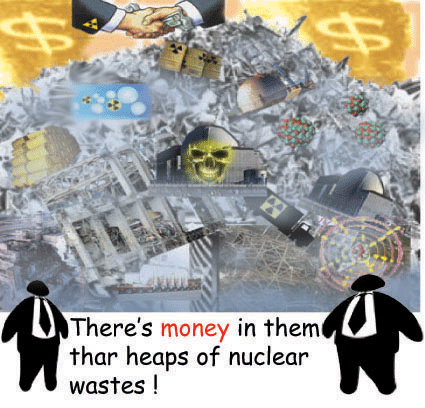
The NRC has given Holtec permission to pare back safety and security requirements at its plants, including security personnel, cybersecurity, emergency planning, terrorist attack drills and accident insurance, according to documents on the agency’s website.
“The NRC has not figured out a permanent solution” to nuclear waste………. “They are using Holtec as a Band-Aid.”

Accidents at New Jersey’s Oyster Creek power plant have spurred calls for stricter oversight of the burgeoning nuclear decommissioning industry Washington Post, By Douglas MacMillan PORKED RIVER, N.J. — The new owner took over the Oyster Creek Nuclear Generating Station in 2019, promising to dismantle one of the nation’s oldest nuclear plants at minimal cost and in record time. Then came a series of worrisome accidents.
The new owner took over the Oyster Creek Nuclear Generating Station in 2019, promising to dismantle one of the nation’s oldest nuclear plants at minimal cost and in record time. Then came a series of worrisome accidents.
One worker was struck by a 100-ton metal reactor dome. Another was splashed with radioactive water, according to internal incident reports and regulatory inspection reports reviewed by The Washington Post. Another worker drove an excavator into an electrical wire on his first day on the job, knocking out power to 31,000 homes and businesses on the New Jersey coast, according to a police report and the local power company.
All three incidents occurred on the watch of Holtec International, a nuclear equipment manufacturer based in Jupiter, Fla. Though the company until recently had little experience shutting down nuclear plants, Holtec has emerged as a leader in nuclear cleanup, a burgeoning field riding an expected wave of closures as licenses expire for the nation’s aging nuclear fleet.
Over the past three years, Holtec has purchased three plants in three states and expects to finalize a fourth this summer. The company is seeking to profitably dismantle them by replacing hundreds of veteran plant workers with smaller, less-costly crews of contractors and eliminating emergency planning measures, documents and interviews show. While no one has been seriously injured at Oyster Creek, the missteps are spurring calls for stronger government oversight of the entire cleanup industry.
In the nearly three years Holtec has owned Oyster Creek, regulators have documented at least nine violations of federal rules, including the contaminated water mishap, falsified weapons inspection reports and other unspecified security lapses. That’s at least as many as were found over the preceding 10 years at the plant, when it was owned by Exelon, one of the nation’s largest utility companies, according to The Post’s review of regulatory records.,…………………
Holtec is pioneering an experimental new business model. During the lifetime of America’s 133 nuclear reactors, ratepayers paid small fees on their monthly energy bills to fill decommissioning trust funds, intended to cover the eventual cost of deconstructing the plants. Trust funds for the country’s 94 operating and 14 nonoperating nuclear reactors now total about $86 billion, according to Callan, a San Francisco-based investment consulting firm.
After a reactor is dismantled and its site cleared, some of these trust funds must return any money left over to ratepayers. But others permit cleanup companies to keep any surplus as profit — creating incentives to cut costs at sites that house some of the most dangerous materials on the planet.
Even after reactors are shut down, long metal rods containing radioactive pellets — known as spent fuel — are stored steps away, in cooling pools and steel-and-concrete casks. Nuclear safety experts say that an industrial accident or a terrorist attack at any of these sites could result in a radiological release with severe impacts to workers and nearby residents, as well as to the environment.
(Sarah L. Voisin/The Washington Post)
The Nuclear Regulatory Commission, the independent federal agency tasked with overseeing safety at nuclear sites, conducts regular inspections during the decommissioning process. But state and local officials say the NRC has failed to safeguard the public from risks at shut-down plants, deferring too readily to companies like Holtec.
“The NRC is not doing their job,” said Sen. Edward J. Markey (D-Mass.), who has pushed the agency to adopt stricter regulations around plant decommissioning. “We need a guaranteed system that prioritizes communities and safety, and we don’t have that right now.”
The NRC’s leadership is divided over the role regulators should play. The agency was created in 1974, as the first generation of commercial reactors was going online, and its rules were mainly designed to safeguard the operation of active plants and nuclear-material sites. As reactors shut down, the NRC began reducing inspections and exempting plants from safety and security rules.
Last November, the NRC approved a new rule that would automatically qualify shut-down plants for looser safety and security restrictions.
Continue readingUN: There is ‘credible’ information Ukrainian forces are torturing Russian POWs
https://www.washingtonexaminer.com/policy/foreign/un-there-is-credible-information-ukrainian-forces-are-torturing-russian-pows
Abigail Adcox, Washington Examiner, Tue, 10 May 2022
There is “credible” information that Russian prisoners of war have been mistreated by Ukrainian forces since the beginning of the Russian invasion in February, a United Nations official said.
The evidence suggests that Russia is not the only country willing to break international norms during war, as the U.N. reports that Ukrainian forces have subjected Russians under their watch to treatment that violates
international law, Matilda Bogner, head of the U.N. Human Rights Monitoring Mission in Ukraine, said Tuesday.
“Ukraine and Russia must promptly and effectively investigate all allegations of torture and ill-treatment of prisoners of war. They must also effectively control and instruct their forces to stop any further violations from occurring.”
Russia is accused of several war crimes, including raping Ukrainian women, targeting and killing innocent civilians, and forcing others to go to Russia against their will.
Comment: Given Ukraine’s long history of prisoner abuse throughout the eight-year war on Donetsk-Lugansk, torture is its standard procedure. Were the UN’s complaints effective then?
Some of the violations were determined by Bogner and other U.N. officials during a visit to towns in the Kyiv and Chernihiv regions that were occupied by Russian armed forces until the end of March.
The group also reported that hundreds of educational or medical facilities have been damaged or destroyed in areas of hostility across the country. At least 50 places of worship have been damaged, more than half of which cannot be used. Bogner said:
“The best way to end the violations that we have been documenting will be to end the hostilities. However, while they are ongoing and for as long as they last, parties must in the conduct of operations take constant care to spare the civilian population.”
“We have received credible information of torture, ill-treatment and incommunicado detention by Ukrainian Armed Forces against prisoners of war from Russian armed forces and affiliated armed groups. We continue to see the publication of videos, which show inhumane treatment, including prisoners from both sides being coerced to make statements, apologies and confessions, and other forms of humiliation.”
The mistreatment from both sides is considered a violation of international humanitarian law, as the U.N. continues to investigate and document egregious violations since Russia invaded Ukraine on Feb. 24.
Ukraine and Russia must promptly and effectively investigate all allegations of torture and ill-treatment of prisoners of war. They must also effectively control and instruct their forces to stop any further violations from occurring,” Bogner said.
Russia is accused of several war crimes, including raping Ukrainian women, targeting and killing innocent civilians, and forcing others to go to Russia against their will.
Some of the violations were determined by Bogner and other U.N. officials during a visit to towns in the Kyiv and Chernihiv regions that were occupied by Russian armed forces until the end of March.
The group also reported that hundreds of educational or medical facilities have been damaged or destroyed in areas of hostility across the country. At least 50 places of worship have been damaged, more than half of which cannot be used.
“The best way to end the violations that we have been documenting will be to end the hostilities,” Bogner said. “However, while they are ongoing and for as long as they last, parties must in the conduct of operations take constant care to spare the civilian population.”
GT: NATO’s northward expansion risks turning Europe into powder keg — Anti-bellum
Global TimesMay 13, 2022 NATO’s northward expansion risks turning Europe into a new powder keg “Finland must apply for NATO membership without delay,” Finland’s President Sauli Niinisto and Prime Minister Sanna Marin jointly announced on Thursday. A similar announcement will come from Sweden on Sunday. After its eastward expansion, NATO is moving northward, which might […]
GT: NATO’s northward expansion risks turning Europe into powder keg — Anti-bellum
May 13 Energy News — geoharvey

Opinion: ¶ “Fight Fascists And Save Money: Go Electric” • The price of a gallon of gasoline is surging, straining drivers’ pocketbooks. At the pump prices seem extreme, but we’ve been here before. Gas prices were similarly high in 2006, 2008, and for a while after 2011. For US consumers, a switch from fossil fuels […]
May 13 Energy News — geoharvey
Today. Aw gee! What if USA and UK are selling us a pup with the nuclear submarines – obsolete all too soon?
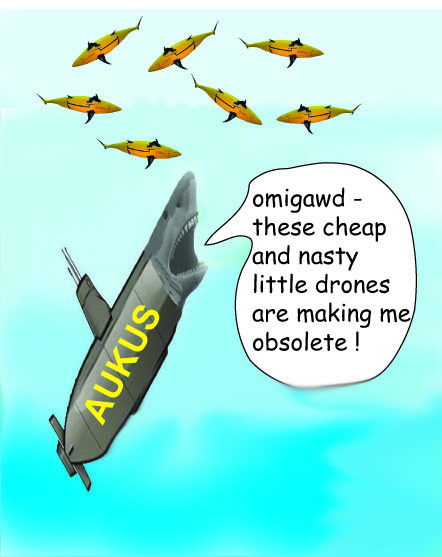
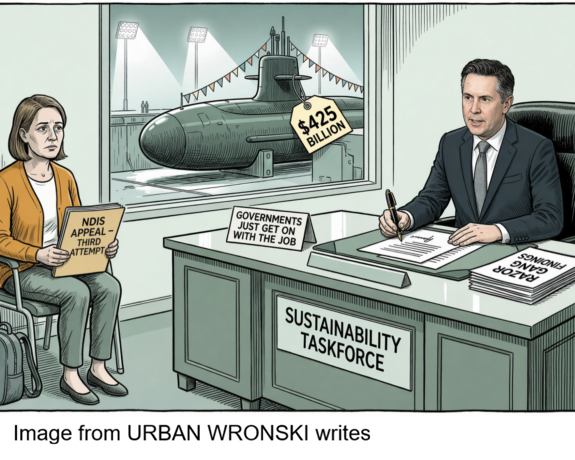
It’s not just that the AUKUS deal is phenomenally expensive for Australia – $171 billion. It’s not just that they won’t be ready for 20 years at best – when they would then be superseded by more advanced submarines.
It;s that submarines themselves are losing their gloss, anyway. Everybody who’s anybody in the nuclear-weaponry-tax-payer-ripoff world is realising that underwater drones are a heap cheaper, a real threat to nuclear submarines, and much better suited to the relatively shallow waters of theb South China Sea.
But I guess that the USA and UK have to try to make a few bucks by selling their existing soon-out-of-date Vanguard and Astute nuclear submarines.
Underwater drones herald sea change in Pacific warfare
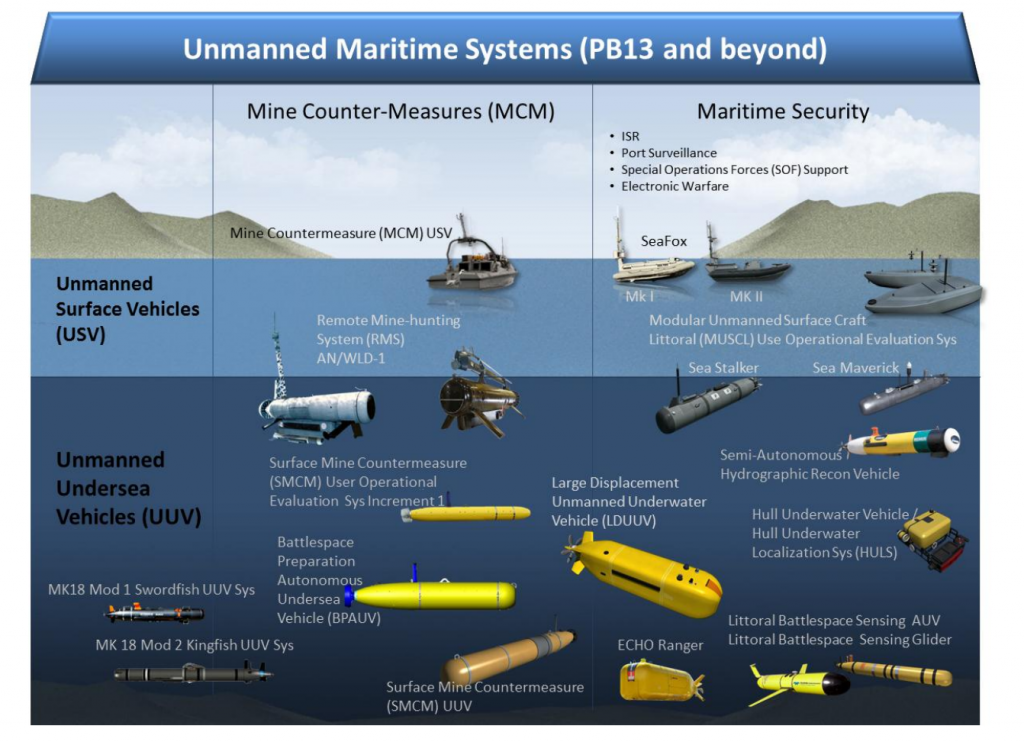
US, UK, China and Russia are all developing and deploying underwater drones to gain a subaqueous advantage
Asia Times, By GABRIEL HONRADA, JANUARY 12, 2022,
The drones that have changed the complexion of war from the sky are being replicated at sea, as great powers develop and deploy unmanned underwater vessels (UUVs) to gain a strategic edge in the Pacific and beyond.
The United States, United Kingdom, China and Russia are all developing and deploying the vessels, indicating the “dronification” of future maritime warfare……………………………………….
China is also known to be using underwater drones, with Indonesia seizing three Chinese drones labeled “Shenyang Institute of Automation Chinese Academy of Sciences” near South Sulawesi’s Selayar Island in December 2020…………..
The proliferation of underwater drones in the Pacific region is changing the complexion of underwater warfare, as the region’s maritime environment poses unique operational challenges to underwater operations………………………..
, the South China Sea is an ideal proving ground for underwater drones, as they can perform underwater tasks that may be too dull, demanding, dangerous or even dirty for humans.
Underwater drones can be used for bathymetric mapping, alongside recording the thermal, magnetic, and acoustic properties of specific underwater passages to find blind spots where submarines can travel undetected safely.
As such, this capability is particularly suited for use in the South China Sea, which is among the most challenging bodies of water for submarine navigation due to its shallow waters, numerous underwater peaks and sandbars.
The recent collision of the USS Connecticut submarine with an unmapped seamount in the South China Sea illustrates the danger. In addition, these drones can also find submarine hiding spots to serve as staging areas for underwater operations, or sanctuaries to avoid enemy anti-submarine warfare operations………………………………… https://asiatimes.com/2022/01/underwater-drones-herald-sea-change-in-pacific-warfare/?fbclid=IwAR3H-_1sP9YU3U_lQruGuGiRRBHLFX9kOLdbdvXf1zL8pxXgq
Underwater drones could be the end of nuclear submarines
Swarming systems are small, lightweight, cheap, numerous—and networked together to cooperate like bees from the same hive.
National Interest, by Sebastien Roblin, 14 Sept 2020, Here’s What You Need To Remember: “Think of a flotilla of 20 low cost Chinese ‘trawlers’ all peacefully ‘catching fish’, but actually acting as a mother-ship each for 200 low-cost mass-produced mini-UUVs…This flotilla could be assisted by the fixed seabed and tethered anti-submarine sonar sensors China is already stringing across East Asian seas.”
After a post-Cold War hiatus, navies across the planet are pursuing new anti-submarine capabilities as a submarine arms race accelerates in the Pacific Ocean. Developing technologies like quantum magnetometers and satellite-based optical sensors are leading to forecasts that submarines may be on the verge of losing their stealthy edge by the mid-twenty-first century.
But swarms of cheap drones both above and below the water (unmanned underwater vehicles, or UUVs) may pose the biggest and most proximate threat to submarines.
Swarming drones are distinct from larger, higher capability (and more expensive) long-range autonomous unmanned vehicles like the Large-Diameter HSU-001 submarine, recently displayed by China, or the Extra-Large Displacement Orca being built for the U.S. Navy.
Swarming systems, by contrast, are small, lightweight, cheap, numerous—and networked together to cooperate like bees from the same hive…………….
Submarine analyst Peter Coates observes in a blog post that underwater swarming drones could particularly improve China’s surveillance capabilities………………………………………………………. https://nationalinterest.org/blog/reboot/underwater-drones-could-be-end-submarines-168940?fbclid=IwAR3_Q9AZnBfcQkRBhcw0De-7fp-yXZPFXjl7uUrErNASeoJ3_zh9jSzYTUs
Young voters will inherit a hotter, more dangerous world – but their climate interests are being ignored this election
Hannah R. FeldmanWhich party really has young interests at heart? Let’s look at where the major players stand on youth and climate change policy
Greens voter exhausted from constantly being right – satire
Greens voter exhausted from constantly being right – satire
The Shovel
A Greens voter from Newtown says being right about absolutely everything takes its toll, but he doesn’t see a break coming any time soon.
Low cost printed solar fast-tracked in Australian “trailblazer” program — RenewEconomy

Two NSW universities win funding to fast-track manufacture of cutting edge Australian clean energy and recycling technologies. The post Low cost printed solar fast-tracked in Australian “trailblazer” program appeared first on RenewEconomy.
Low cost printed solar fast-tracked in Australian “trailblazer” program — RenewEconomy
Origin gets approval for 2,800MWh battery to replace Australia’s biggest coal plant — RenewEconomy

Origin gets planning approval for 2,800MWh Eraring battery that will at last partially replace the country’s biggest coal generator. The post Origin gets approval for 2,800MWh battery to replace Australia’s biggest coal plant appeared first on RenewEconomy.
Origin gets approval for 2,800MWh battery to replace Australia’s biggest coal plant — RenewEconomy
Dozens of bidders line up to build NSW’s massive Waratah ‘Super Battery’ — RenewEconomy

The NSW government says it has received dozens of offers to build the massive 700MW Waratah ‘super battery’. The post Dozens of bidders line up to build NSW’s massive Waratah ‘Super Battery’ appeared first on RenewEconomy.
Dozens of bidders line up to build NSW’s massive Waratah ‘Super Battery’ — RenewEconomy
1 This month.

PETITION – To: Prime Minister Anthony Albanese and the Australian Labor Government
Chernobyl: The Lost Tapes – A good documentary on Chernobyl on SBS available On Demand for the next 3 weeks– https://www.sbs.com.au/ondemand/tv-program/chernobyl-the-lost-tapes/235274195556

19 May – Webinar- Webinar: No Nuclear Weapons in Australia
Start: 2026-05-19 18:00:00 UTC Canberra, Melbourne, Sydney (GMT+10:00)
End: 2026-05-19 19:30:00 UTC Canberra, Melbourne, Sydney (GMT+10:00)
20 May – Webinar – The dangerous world of AUKUS, US, military occupation and suppression of dissent

National Webinar, 20th May, 2026, 6.30pm AEST. Confronting laws restricting/suppressing protest speech and action
Speakers: Former Sen. Rex Patrick, Lawyer Nick Hanna ,Arthur Rorris ,Jorgen Doyle, Sen David Shoebbridge,
Facilitator Kelley Tranter.

of the week – Australians for War Powers Reform (AWPR)
To see nuclear-related stories in greater depth and intensity
 Antinuclear