Federal budget: $160 million for nature may deliver only pork and a fudge — Sustainability Bites

Federal budget: $160 million for nature may deliver only pork and a fudge.Two spending measures on the Environment – the Environment Restoration Fund & bioregional funds – bear scrutiny. One smells of pork, the other of fudge.
Federal budget: $160 million for nature may deliver only pork and a fudge — Sustainability Bites
The U.S. Must Take Responsibility for Nuclear Fallout in the Marshall Islands
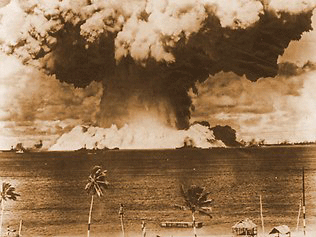
One conclusion from our work is clear: absent a renewed effort to clean radiation from Bikini, it does not seem likely that people forced from their homes will be able to safely return until the radiation naturally diminishes. This is a process that could take decades if not thousands of years.
The U.S. Must Take Responsibility for Nuclear Fallout in the Marshall Islands, Congress needs to fund independent research on radioactive contamination and how to clean it up https://www.scientificamerican.com/article/the-u-s-must-take-responsibility-for-nuclear-fallout-in-the-marshall-islands/, By Hart Rapaport, Ivana Nikolić Hughes on April 4, 2022
In many ways, Russia’s aggression against Ukraine has resurfaced our global nuclear history. Fighting continues near nuclear power plants, including Chernobyl, the site of one of the largest nuclear energy accidents in history, invoking fear of their accidental or intentional weaponization. Russia’s placement of its nuclear weapon arsenal on high alert has unearthed anxieties and memories of the Cold War.
As governments across the world consider their own roles in lessening the risk of nuclear war, the United States cannot excuse itself. We can (and should) talk about stemming a future nuclear impact, but equally important is reckoning with our past. Not only is this reckoning a stark reminder of the dangers of nuclear weapons, but it is also a matter of justice.
Between 1946 and 1958, the U.S. nuclear testing program drenched the Marshall Islands with enough nuclear firepower to equal the energy yield of 7,000 Hiroshima bombs. Cancer rates have doubled in some places, displaced people have waited decades to return to their homes, and radiation still plagues the land and waters of this Pacific-island nation.
The U.S. must prioritize the restoration of these islands and the resettlement of its people as a matter of human rights and environmental justice. We are among the few independent researchers who have studied the radiological conditions on these islands. We call on our government to commit to the kind of research program that will help to uncover the full scope of the existing contamination and how best to mitigate it. What the U.S. has done so far is simply not enough, especially as the Marshall Islands are still a close American ally. We owe them that much.
The weapons tests most gravely affected four atolls in the north of the nation: Bikini, Enewetak, Rongelap and Utirik. Testing imposed substantial radiation on these islands, endangering human and other life. In the first two cases, members of the U.S. military resettled communities prior to testing that took place on those atolls, while people on Rongelap and Utirik left after fallout from tests conducted on Bikini, such as the infamous Bravo test, reached them. Today, only Enewetak and Utirik have substantial permanent populations (even while radioactivity remains close at hand for Enewetak residents), while refugees from Bikini and Rongelap, scattered across Majuro, Kili and other islands, in addition to the U.S., have waited for decades to return to their homes.
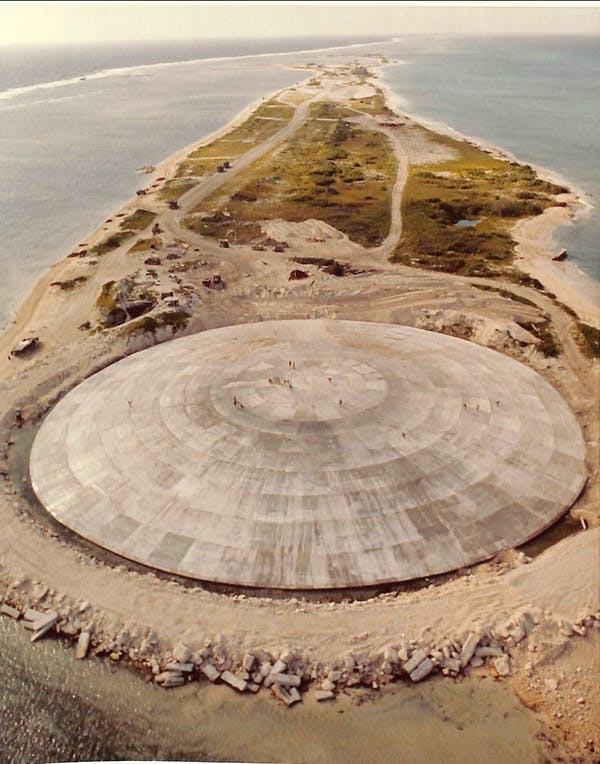
But the nuclear story of the Marshall Islands is not just one of bygone actions. If the U.S. doesn’t better manage this situation, we could have another radioactive incident on our hands. The structural integrity of the Runit Dome, a concrete shell covering over 100,000 cubic yards of nuclear waste on an island of Enewetak Atoll, is at risk because of rising sea levels. Leakage from the dome—already occurring—is likely to increase and higher tides threaten to break the structure open in the coming decades.
To better understand the effect of nuclear testing on the islands, scientists from the Department of Energy have conducted a wide range of studies, most often on environmental contamination. Members of the military have taken action based on these findings, most notably cleaning up parts of Enewetak Atoll. However, we believe that the DOE’s work has missed critical pieces of the puzzle. For example, its scientists have consistently relied upon simulations rather than direct values of background gamma radiation, the simplest of the measurements one can make. Such a failure has contributed to the mistrust by the Marshallese towards the DOE and its findings, which was borne out of the fact that it was the department’s predecessor, the Atomic Energy Commission, that harmed them in the first place.
We are a member (Rapaport) and the director (Nikolić Hughes) of Columbia University’s K=1 Project, Center for Nuclear Studies. For several years now, our group has gone to the Marshall Islands to research the fallout of this nuclear testing. We have published our findings to ensure that independent, reliable information exists to advise Marshallese communities and leaders so that they can help chart a path forward.
Considerable contamination remains. On islands such as Bikini, the average background gamma radiation is double the maximum value stipulated by an agreement between the governments of the Marshall Islands and United States. This is even without taking into account other pathways that could lead to radiation exposure for the Marshallese. Moreover, our findings, based on gathered data, run contrary to the DOE’s, which rely on simulations that predict far lower radiation levels.
One conclusion from our work is clear: absent a renewed effort to clean radiation from Bikini, it does not seem likely that people forced from their homes will be able to safely return until the radiation naturally diminishes. This is a process that could take decades if not thousands of years. For Rongelap, further research is needed to understand the large amount of background gamma radiation on one of the northern islands, called Naen, as well as the presence of plutonium isotopes in the soil. Although Rongelap was not used as a testing site, it may be that cleanup efforts will be needed there as well, given its proximity to the detonations.

But, beyond plutonium and uranium, what other radioisotopes are at play here? One is strontium-90, which can cause cancer in bones and bone marrow, as well as leukemia. It has long been a source of health concerns at other sites of nuclear disasters like Chernobyl and Fukushima. Despite international research interest, U.S. government scientists have largely ignored the effects of strontium-90 in the Marshall Islands. The DOE’s recent report to Congress, for example, mentioned strontium-90 only once. Their recently published data are similarly lacking in an examination of this dangerous nuclear isotope.
In a recent study, we tested sediment from two bomb craters in the northern Marshall Islands, and found consistently high values of strontium-90. Though the presence of this radioisotope in sediment does not neatly translate into contamination in soil or food, the finding does suggest the possibility of danger to ecosystems and people.
The scientific community needs to reexamine the general dismissal of strontium-90, given our findings. More than that, we need a full picture of the extant contamination on these islands, which will require categorical, regularly updated surveys beyond those that have been conducted by the U.S. government. A full understanding of potential dangers to humans, plants and animals would be a first step toward alleviating health impacts and resettling people following appropriate measures.
Unfortunately, a commitment from the United States to both ends of this equation—research and action—does not exist. We call on the federal government to do what it did in the 1970s in Enewetak Atoll. This atoll, home to hundreds of people, was where scientists first tested the hydrogen bomb in 1952. The U.S.-led cleanup was successful; contamination levels in parts of the atoll are now largely below international health guidelines.
Similar success is possible elsewhere in the Marshall Islands. Here’s a playbook for how this could happen. Congress should appropriate funds, and a research agency should initiate a call for proposals to fund independent research (through an agency like the NSF) with three aims:
(1) to further understand the current radiological conditions on Enewetak, Rongelap and elsewhere;
(2) to explore innovations for future cleanup activity on Bikini and possibly elsewhere; researchers and policy makers should look to other nuclear cleanups for methods and technologies that could be employed in the Marshall Islands;
(3) to train Marshallese scientists, such as those working with the nation’s National Nuclear Commission. This point is particularly critical in rebuilding the trust in science and scientists that the U.S. lost in conducting the testing in the first place.
On top of that, we need to modernize cleanup protocols first written in the 1970s to take into consideration the complexity of the radioactive waste involved and the enormous progress in technology developments that has been achieved some 50 years later.
Wherever nuclear weapons have been used, lives were irrevocably altered. By using the collective work of dozens of researchers, rather than a small group of scientists from the DOE, the world will benefit. Given that other countries engaged in nuclear testing—whether in other Pacific islands or elsewhere—what the U.S. learns about the Marshall Islands can inform remediation efforts the world over. The Marshallese people and other affected communities have been telling us for decades just how dangerous nuclear weapons are. Let’s acknowledge and address their sacrifices and heed their warning before it is too late.
Hart Rapaport is a researcher at Columbia University’s K=1 Project, Center for Nuclear Studies.
Ivana Nikolić Hughes is a senior lecturer in chemistry at Columbia University and the director of Frontiers of Science, a required course for Columbia College students. Ivana is also the director of the K=1 Project, Center for Nuclear Studies.
The other half of the climate change debate – adaptation
The other half of the climate change debate – adaptation
Claire Ibrahim, Pradeep Philip
The scale of the tragedy that is the ongoing flooding in NSW and Queensland is hard to comprehend. Although the ever-increasing insurance claim figures sit at well over $2 billion, this is the tip of the iceberg.
Protecting the environment to reduce the risk of another pandemic
Protecting the environment to reduce the risk of another pandemic
Important ways we can help minimize the risk of future disease by rethinking how we farm, eat, trade and interact with other species
World on ‘fast track to climate disaster’, says UN secretary general – video
World on ‘fast track to climate disaster’, says UN secretary general – video
António Guterres says the latest report from the Intergovernmental Panel on Climate Change (IPCC) reveals ‘a litany of broken climate promises’ by governments and businesses, and accuses some of them of lying in claiming to be on track to limiting future heating to 1.5C above pre-industrial levels. In a strongly worded rebuke, he says: ‘It is a file of shame, cataloguing the empty pledges that put us firmly on track towards an unliveable world’
Nuclear news – quiet in Australia? Tense worldwide

Some bits of good news:Photos show increasing numbers of rare one-horned rhinos in Indian national parkBritain’s butterflies bolstered by conservation efforts. Indigenous rangers program doubles with $636 million boost . Back from the brink: Tiny bush carnivore gets a new lease on life. Ancient rock art site returned to Aboriginal owners — and they’re keen to share it, on their own terms.
On the nuclear and military scene – what a mess ! Yes, the Russian invasion is illegal and wrong. And yes, atrocities are being committed, and the Ukrainian people are suffering terribly. But, I hope that people are becoming aware of the very carefully managed anglophone media coverage, which is emphasising human emotional stories, while not really covering the progress of the war, nor the USA resistance to peace talks.. No other invasion, such as those in Iraq, Libya, Afghanistan, has been media-manipulated in this way.
Meanwhile – inexplicably, Western governments are pushing for new nuclear reactors at the very time when Ukraine is demonstrating how terribly dangerous they are!
AUSTRALIA.
Julian Assange’s family tirelessly advocate for his freedom.
NUCLEAR/URANIUM Australian Radiation Protection and Nuclear Safety Agency Key explanatory ARPANSA quotes on nuclear waste management in Australia.. Under the shadow of Fukushima and Juukan Gorge: Deep Yellow uranium takeover poses deep risks at Mulga Rock. Conservationists in bid to kill WA’s last uranium project. It’s been three years, but tourism operators say there’s no sign of $276m promised for Kakadu National Park
Australia’s Parliament has little control over military matters, and Prime Ministers kow tow to USA and the White Anglosphere to go to war. Weapons corporations infiltrate our schools and charities, promoting war-mongering to our youth. NATO Enhanced Opportunities Partner Australia to deliver armored vehicles to Ukraine — Anti-bellum.
CLIMATE. “Perverse:” Australian fossil fuel subsidies will top $22,000 a minute this year. Senate again blocks Angus Taylor’s bid to redirect ARENA funds to Carbon Capture Storage projects. Australia gets a fail-grade for climate action, falls behind G20 peers. Morrison Government’s climate record deemed ‘a catastrophic failure’: one in four Australians give zero rating.
INTERNATIONAL
The information war that precedes and complements kinetic war — Anti-bellum . Ukraine: Transfer of Power Balance from West to East.
. Chernobyl: radiation sickness in soldiers, theft of radioactive materials, wildfires – a frightening case of the multiple dangers of nuclear power. Ukraine Negotiations: No Fly Zone, Nukes, Neutrality, and Disarmament. Chris Hedges On Ukraine, Russia & NATO Urgent need to bring about new arms control agreements. https://www.youtube.com/watch?v=_I6ZkPi6NSI
Depicting Putin as ‘Madman’ Eliminates Need for Diplomacy. What is the current nuclear arms pact between Russia and the US? The Red Scare, Viewpoint by Alice Slater. Frenzy for selling bunkers, but they might not be much use, really. How would a nuclear winter impact food production?
Coastal communities across the world already feeling the impacts of climate change. Climate crisis worsened by population and economic growth. Nuclear on the ”frontline of climate change” – and not in a good way!
War in Ukraine has produced a new energy crisis. Energy efficiency is the fastest way to address this..
ANTARCTICA. Scientists caught off guard by massive ice shelf collapse in ‘coldest, driest’ part of Antarctica Hotter Antarctic summers posing increasing threat to stability of world’s largest ice sheet.
UKRAINE. Media coverage of the nuclear dangers in Ukraine often poorly informed and downplayed due to the influence of the pro nuclear lobby. Ukraine, Poland discuss NATO “peacekeeping” force in Ukraine — Anti-bellum. Russian troops pull out out of Chernobyl after suffering ”acute radiation sickness”. Wide reporting on Russian soldiers affected by radiation, leaving Chernobyl. Anxieties at Varash nuclear power station, and other ones in Ukraine – ”town smells of fear.”.
Nuclear catastrophe threatened, as fires sweep through forests towards Chernobyl site. 7 wildfires in Chernobyl Exclusion zone exceed Ukraine’s emergency classification tenfold. Head of IAEA to visit Chernobyl, as Russians withdraw from the site. Ukraine’s Ministry of Defense warns on radioactivity danger from the Chernobyl Excusion Zone. UN nuclear watchdog chief in Ukraine for safety talks. U.S. ambassador incites Georgians to confront Russia — Anti-bellum.
France pays the steep cost of inflexible and ageing nuclear as electricity prices soar — RenewEconomy

French baseload and peak prices soar due to a combination of massive outages of French nuclear power plants, cold weather and inefficient heating
France pays the steep cost of inflexible and ageing nuclear as electricity prices soar — RenewEconomy
The common refrain among critics of wind and solar is to blame their “variability” or “intermittency” for soaring electricity prices as Europe wrestles with gas shortages worsened by the war in Ukraine. But France, the nuclear “pin-up” country for the anti-renewables brigade, is not faring so well either.
Over the weekend, the key “day ahead” prices of electricity in France surged to unprecedented levels. On Friday, the futures price for “baseload” for wholesale French electricity price hit the eye-watering level of €714 a megawatt hour ($A1050/MWh).
It didn’t get much better by Sunday, when the day-ahead price for Monday settled at €515/MWh ($A758/MWh), which is the predicted average price over a 24-hour period. The price for peak electricity between 8am and 9am was €2,987/MWh ($A4,400/MWh).
The prices for both baseload and peak prices in the rest of the European market were significantly cheaper, and in Germany it was dramatically so.
The main reasons? Both supply and demand. Less than half (30GW) of France’s 64GW of nuclear capacity was available, thanks to planned and unplanned outages, and extended repairs due to corrosion issues in their ageing plants.
The forecast is for cold weather, and many French homes are fired with inefficient, energy hungry electric resistance heating, largely as a result that the French believed they had no reason to be energy efficient because of the their massive investment in nuclear.
“Massive outages of French nuclear power plants, in combination with cold weather and electric (often resistance) heating, are causing a critical situation for electricity supply there tomorrow,” energy analyst Kewes van der Leun tweeted over the weekend.
The French authority called on consumers to reduce their power consumption.
The situation in Europe is similar to the growing “north-side” divide in electricity prices in Australia, identified by the Australian Energy Market Operator, which has noted that since early 2021 average prices in the most heavily coal dependent states of Queensland and NSW are considering higher than elsewhere.
Partly that is due to a lack of transmission (France has similar problems), but also to the inflexibility of baseload, and the desperation of baseload owners to bid up prices when they can to recoup their costs.
Sure, states with high amounts of renewables do experience price spikes, but they tend to be short lived and the average price is significantly lower than so-called “cheap” coal.
The situation in France is not likely to get better any time soon. President Emmanuel Macron has pledge to invest significantly more in nuclear and his far-right opponent, Marine Le Pen (who is given an outside chance of unseating him) has pledge to stop all new wind and solar development.
But new nuclear won’t help. At the very best, a new reactor could be online by 2035, although France’s recent experience with massive cost over-runs and delays would put a major question mark over that being achieved.
Macron rubbing hands with glee as UK energy crisis means EDF poised for ‘£30bn payday’
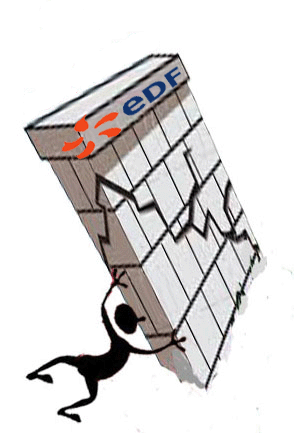
Macron rubbing hands with glee as UK energy crisis means EDF poised ‘£30bn payday’. EMMANUEL MACRON could win big from the UK energy crisis, with EDF being tipped to secure contracts worth nearly £30 billion.
Dr Paul Dorfman, an associate fellow at the University of Sussex said: “The UK has a very strong relationship with EDF, they own and run the substance of UK reactors and are helping to build Hinckley point and the rest of it.
“However, EDF are in debt. Moodys, the financial organisation has recently downgraded EDF’s credit rating. A quarter of all of France’s reactors are currently offline due to safety and security problems, that’s
largely because they have an ageing nuclear fleet, like us.
“In order to kind of try to prolong their lifespan, the French government has big upgrade of their nuclear. “The cost estimates are around £70-80 billion just to upgrade, just to keep them tottering on.”
EDF is currently constructing the Hinckley Point C nuclear power station and is also adding new reactors to Sizewell C in Suffolk and Bradwell B in Essex. Dr Dorfman has warned that these new reactors constructed by EDF are the same type of EPR reactors that were built in France, which the French court of Auditors estimated cost an extra €19billion (almost £16 billion). He continued: “EDF is clear about the need for Government investment in order to proceed with Sizewell C.”
Express 1st April 2022
Portugal to speed up switch to renewable power in wake of Ukraine war

https://www.reuters.com/business/sustainable-business/portugal-speed-up-switch-renewable-power-wake-ukraine-war-2022-04-01/?fbclid= By Sergio Goncalves,
LISBON, April 1 (Reuters) – Portugal aims to accelerate its energy transition and increase the proportion of renewable sources by 20 percentage points to 80% of its electricity output by 2026, four years earlier than previously planned, the government said on Friday.
As part of a global shift away from carbon-emitting fossil fuels, countries are betting on renewable energies such as wind and solar, a transition that is being accelerated in Europe after Russia’s invasion of Ukraine.
The new Socialist government that was sworn in on Wednesday, said in its overall programme released on Friday that the energy plans should mobilize more than 25 billion euros of investment in the next 10 years, involving public and private players, incentives and financing.
“Portugal has already taken very significant measures in the energy transition, but the evolution and duration of the war in Ukraine must necessarily imply new measures,” Cabinet Minister Mariana Vieira da Silva told a news conference.
The country, committed to become carbon neutral by 2050, currently gets 60% of its electricity from renewable sources – one of the largest proportions of green energy use in Europe.
Unlike central European countries, Portugal does not depend on Russian natural gas pipelines, as it mainly imports liquefied natural gas from Nigeria and the United States, and has not imported Russian crude since 2020.
The government also wants to “more than double the installed capacity of renewable sources in the next decade”.
Portugal, which closed its two coal-fired power plants last year, has 7.3 GW of hydroelectric capacity and 5.6 GW of onshore wind parks, which together represent 83% of its total installed capacity. Reporting by Sergio Goncalves Editing by Andrei Khalip and Frances Kerry
Why UK Labour’s green policies are fatally undermined by its ‘nuclear first’ stance
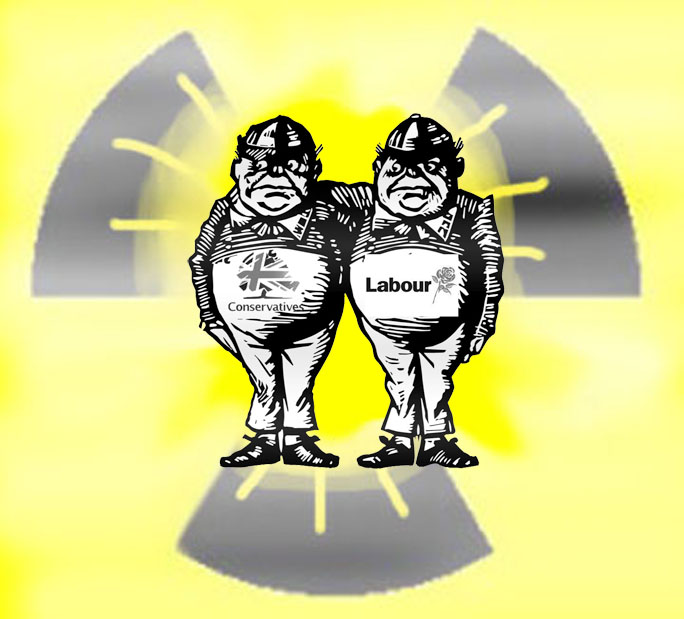
Dave Toke’s green energy blog, https://realfeed-intariffs.blogspot.com/2022/04/why-labours-green-policies-are-fatally.html
It is now clear from Labour’s stance in the House of Commons, that nuclear power comes before every thing else. Indeed, aside from Keir Starmer’s emphasis on ‘nuclear first’ attacks on the Government in the House of Commons, Labour’s allegedly massive green energy spending strategy seems likely to be swallowed up almost entirely by its pledge to rush to embrace the Sizewell C development.
The Treasury knows full well that to get Sizewell C going reasonably quickly the Government will have to commit to a potential bill of £30 billion or more in public spending. This must come, either or both, from hard-pressed energy consumers by adding to their bills, or directly from Treasury coffers. The Department of Business Energy and Industrial Strategy’s (BEIS) spending plans are closely controlled by the Treasury, and the commitment to Sizewell C will swamp the budget and reduce Labour’s ability to spend on things like insulation and heat pumps to a trickle.
Keir Starmer thinks he has seen a weak point in the Conservative’s energy strategy in that it is finding it difficult to turn the commitment to support Sizewell C into reality. But that’s because funding Sizewell out of a public commitment is likely to present the Government with a crippling financial burden. It is especially crippling because Starmer will refuse to acknowledge the fact that to get Sizewell C going will require the Government to fund a black hole of spending as cost overruns inevitably escalate on the project.
It’s a cynical ploy on Labour’s part. They know full well that the Government’s difficulties with launching Sizewell C are to do with the sheer financial unviability of new nuclear power, not from any lack of faith in nuclear power on the part of the Government. But apparently, Starmer does not care about this, and it also seems that he takes the green energy lobby for granted in that he expects that it will support him regardless.
But if other Labour commitments to support really big programmes in areas like heat pumps and insulation are to happen, there’s just not enough money going to be made available for them if BEIS’s budgets are swallowed up by the commitment to support Sizewell C.
So how should green energy supporters react to this? Well, there’s plenty of other parties to vote for. Indeed if this Government does actually go ahead and reverse the English planning ban on onshore wind, there’s probably not going to be much difference, in practice, between Labour and Conservatives on energy. Except of course that the Conservative will be more cautious, it seems, on accepting unmanageable commitments to new nuclear power!
As water levels rise so too does the pressure to stop building houses on flood plains
As water levels rise so too does the pressure to stop building houses on flood plains
Residents of flood-prone Hawkesbury-Nepean Valley near Sydney say real estate agents should have to advise buyers of risks
April 3 Energy News — geoharvey

Opinion: ¶ “The FUD Against Global Warming Lives On” • FUD – Fear, Uncertainty, and Doubt – about global warming persists, despite the science being solid for decades. Whenever scientific evidence challenges the revenues of large corporations, a strategy has been cooked up and continually used to obscure the truth of the new evidence. It’s […]
April 3 Energy News — geoharvey
Australia’s Parliament has little control over military matters, and Prime Ministers kow tow to USA and the White Anglosphere to go to war

Australia is an “active, eager participant in the US-led order” and restricting the Australian parliament’s control over the military has been “… a decision taken by the Australian government — at a bipartisan level — and implemented by senior policy planners.
Meanwhile the Australian parliament has “deliberately restricted its own powers on intelligence matters”
,Australia has ”reaffirmed its whiteness in its commitment to expansion of the “Five Eyes” intelligence sharing arrangements between the US, Britain, Canada, Australia and New Zealand and, of course, to the controversial 2021 AUKUS nuclear submarine deal, which was nurtured in great secrecy”
White and might is right: the secrets which push us into other people’s wars, https://www.michaelwest.com.au/the-dirty-secret-that-pushes-australia-into-other-peoples-wars/ By Zacharias Szumer|April 2, 2022 Is playing deputy to America’s sheriff the reason Australian war powers remain unreformed? It’s clear that our politicians remain muddled on this critical issue, writes Zacharias Szumer.
For decades, minor parties in Australia have introduced bills seeking to give parliament greater control over military deployments. In the debates and inquiries that have followed, a wide range of objections have been raised.
We are told that, as military deployments are often made on the basis of confidential information, this information cannot be publicly disclosed to the parliament. Another common objection is that parliamentary decision-making would reduce the flexibility and speed needed to carry out military operations safely and effectively.
Most of the opposition to war powers reform, received as part of Michael West Media’s ongoing survey of politicians, follows similar lines. You can see myriad responses here.
However, some experts think there might be another reason — one that Australian pollies may be uncomfortable acknowledging.
Kowtowing to empires
Clinton Fernandes, professor of international and political studies at the University of NSW and former Australian army intelligence officer, contends that the bipartisan reluctance to infringe upon this executive prerogative should be understood within Australia’s ”sub-imperial” geopolitical strategy.
In basic terms, Australia has sought to integrate itself into the global strategy of great powers — firstly the British and, from 1942 onwards, the United States. In a 2020 article, Fernandes argues that this sub-imperial strategy has meant the “effective exclusion of the legislative and judicial branches of government from Australia’s national-security policy”.
Fernandes does not believe that Australian politicians and policy officials have been forced against their will into this position. Rather, he argues that Australia is an “active, eager participant in the US-led order” and restricting the Australian parliament’s control over the military has been “… a decision taken by the Australian government — at a bipartisan level — and implemented by senior policy planners.
“Australian strategic planners understand that this means a reduction in sovereignty, but they accept it because it achieves a higher objective — upholding US imperial power.”
In addition to limiting parliament’s control over military deployments, Fernandes argues that Australia’s position as a “sub-imperial power” also limits parliamentary oversight of intelligence gathering. In the US, “intelligence committees and judiciary committees in the Senate and House of Representatives are regularly briefed about all authorised intelligence-collection programs, and relevant members of Congress receive detailed briefings prior to each re-authorisation,” Fernandes says.
Five Eyes and whiteness
Meanwhile the Australian parliament has “deliberately restricted its own powers on intelligence matters” through measures such as the Intelligence Services Act 2001 which ‘prevents the Parliamentary Joint Committee on Intelligence and Security from ‘reviewing the intelligence gathering and assessment priorities’ or ‘reviewing particular operations that have been, are being or are proposed to be undertaken’ by ASIS, ASIO and the other intelligence agencies, and likewise ‘the sources of information, other operational assistance or operational methods’ available to the agencies”.
Dr Greg Lockhart, an historian and Vietnam War veteran, supports Fernandes’ argument, but stresses the importance of seeing Australia’s sub-imperial strategy through the lens of a wider “cultural self-deception” around racial anxieties. “Fear of the ‘yellow peril’ meant that our Anzac expeditionary strategic reflex was from its inception race-based,” he says. ‘It was also primarily defensive; it depended on “great and powerful” white friends for protection in our region; it has always depended on being in the Anglosphere”.
Dr Lockhart argues that, although the overtly racist rhetoric of the White Australia policy is largely a thing of the past, “our strategic culture is still inseparable from the Anglosphere, from wherein we have never needed to reassess its whiteness”.
Recently, he says, Australia has ”reaffirmed its whiteness in its commitment to expansion of the “Five Eyes” intelligence sharing arrangements between the US, Britain, Canada, Australia and New Zealand and, of course, to the controversial 2021 AUKUS nuclear submarine deal, which was nurtured in great secrecy”.
“And with secrecy comes deception. Sounding like a US proxy in the Pacific while asserting Australian ‘sovereignty’, Scott Morrison’s government “announces it is in ‘lockstep’ with “our allies”, while trumpeting the threat of China’s communism, territorial expansion, abuse of human rights, or its implied role as the origin of Covid 19 — anything but the anxiety about Chinese numbers, ethnic difference, and independent power that has shadowed Australian history since the 1800s – and that now determines the security culture’s mindless dependence on the US.’’
Seen in this wider cultural context, Lockhart believes that “the Constitution was never going to impose legislative or judicial restraints on the autocratic war powers of the sub-imperial state. Since the First World War in 1914, almost every Anzac expedition has been a British or American imperial one. The exceptions are the Pacific campaign in 1942-1945 and Timor in 1999-2000. And in all those imperial campaigns the decision for war has been made undemocratically by the prime minister acting in secret conclave with only a handful of advisers”.
Parliamentary war powers
Fernandes and Lockhart aren’t alone in suggesting that there’s a relationship between strategic objectives and parliamentary control, or lack thereof, over the military. In their encyclopaedic 2010 study of war powers around the world, scholars Wolfgang Wagner, Dirk Peters and Cosima Glahn noted that several Central and Eastern European states — Bulgaria, the Czech Republic, Hungary and Slovakia — abolished parliamentary approval for war in the process of joining the US-led North Atlantic Treaty Organisation (NATO).
The authors argue that ‘’NATO accession apparently amplified the trade-off between creating legitimacy through procedures of ex ante parliamentary control and gaining efficiency through lean, executive-centred decision-making. From NATO’s perspective, having the governments of some member state tied by domestic parliamentary veto power must seem highly unattractive.’’
However, many of the more powerful NATO countries have far more wide-ranging parliamentary war powers than Australia or the aforementioned junior NATO partners. Although contested, the US War Powers Resolution significantly limits the President’s freedom to order military action without congressional authorisation.
For almost two decades in Germany, all major military deployments have been put to parliament for a vote. In the UK too, a parliamentary convention of seeking approval for military deployments in the House of Commons has also evolved over the past two decades.
Today: What’s Scott Morrison doing and not doing with our tax money?

Morrison’s Budget increaes spending on Aged care by $522 million. Big deal !
Morrison spends on climate action – well, nothing, really. No deal !
Morrison promises – open cheque for nuclear submarines when deal finalised – could be $171 billion.
Australia has a crisis in aged care, with the system being run almost entirely on a for profit basis.
Australia has a climate crisis, with large swathes of the East coast afflicted by repeated record floods.
Morrison is governing in the interests of multinational corporations. not us.
Australian Radiation Protection and Nuclear Safety Agency Key explanatory ARPANSA quotes on nuclear waste management in Australia.
ARPANSA approves nuclear waste storage at Lucas Heights, Sydney until 2037 [So Kimba dump not only unwise, but also unnecessary]
In light of the established feasible alternative for decades of Extended Storage of ANSTO nuclear wastes at the existing Lucas Heights site there is now no credible reason to proceed with proposals for indefinite above ground storage of ANSTO nuclear wastes at Napandee near Kimba on Eyre Peninsula in SA.
Secure storage of ANSTO nuclear waste at Lucas Heights has been extended out to 2037 by the federal nuclear regulator ARPANSA (16 March 2022) see:
ARPANSA approves siting licence for ANSTO waste facility | ARPANSA
“An important consideration in granting the ILWCI siting licence was the conceptual safety and security design of the facility“, says Dr Carl-Magnus Larsson, Chief Executive Officer of ARPANSA.
This follows a $60 million investment by the federal gov in extended storage at Lucas Heights, made last year.
A detailed Statement of Reasons and the Regulatory Assessment Report for the newly issued licence to site the ILWCI Facility at Lucas Heights can be found in the following documents:
 Regulatory Assessment Report – A0339 Siting Licence for ILWCI FacilityCEO Statement of Reasons – A0339 ILWCI Facility Siting Licence Application –
Unions SA have a clear position (March 2022):
“Unions SA stands with Traditional Owners in rejecting nuclear waste dump
The Liberals want to dump nuclear waste in Kimba, South Australia.
Don’t let them!
We stand with the Traditional Owners against the dump.
This election, stand up for SA’s future.”
SA Unions > SA Unions stands with Traditional Owners in rejecting nuclear waste dump
For further info see David Noonan Submission No.1 to the CEO of ARPANSA (Nov 2021) on the Feasible Alternative of storing ANSTO’s “highly hazardous” nuclear fuel waste and ILW at Lucas Heights:
Public Submission 1 (arpansa.gov.au)
Conclusion: Extended storage of ANSTO’s ILW on-site at Lucas Heights is a warranted public interest
measure and a necessary Safety Contingency until availability of a final disposal option.
For further info see David Noonan Submission No.1 to the CEO of ARPANSA (Nov 2021) on the Feasible Alternative of storing ANSTO’s “highly hazardous” nuclear fuel waste and ILW at Lucas Heights:
Public Submission 1 (arpansa.gov.au)
Conclusion: Extended storage of ANSTO’s ILW on-site at Lucas Heights is a warranted public interest
measure and a necessary Safety Contingency until availability of a final disposal option.
And a 2 page Brief:”Why impose indefinite storage of ANSTO nuclear waste onto SA when its already in secure Extended Storage at Lucas Heights?”
(DN, August 2021)
citing Recommendations by MAPW:
• an open and independent review of nuclear waste production and disposal in Australia, and • progressing a shift to cyclotron rather that reactor-based production of isotopes for nuclear medicine as rapidly as feasible.–
1 This month.


PETITION – To: Prime Minister Anthony Albanese and the Australian Labor Government
Chernobyl: The Lost Tapes – A good documentary on Chernobyl on SBS available On Demand for the next 3 weeks– https://www.sbs.com.au/ondemand/tv-program/chernobyl-the-lost-tapes/235274195556
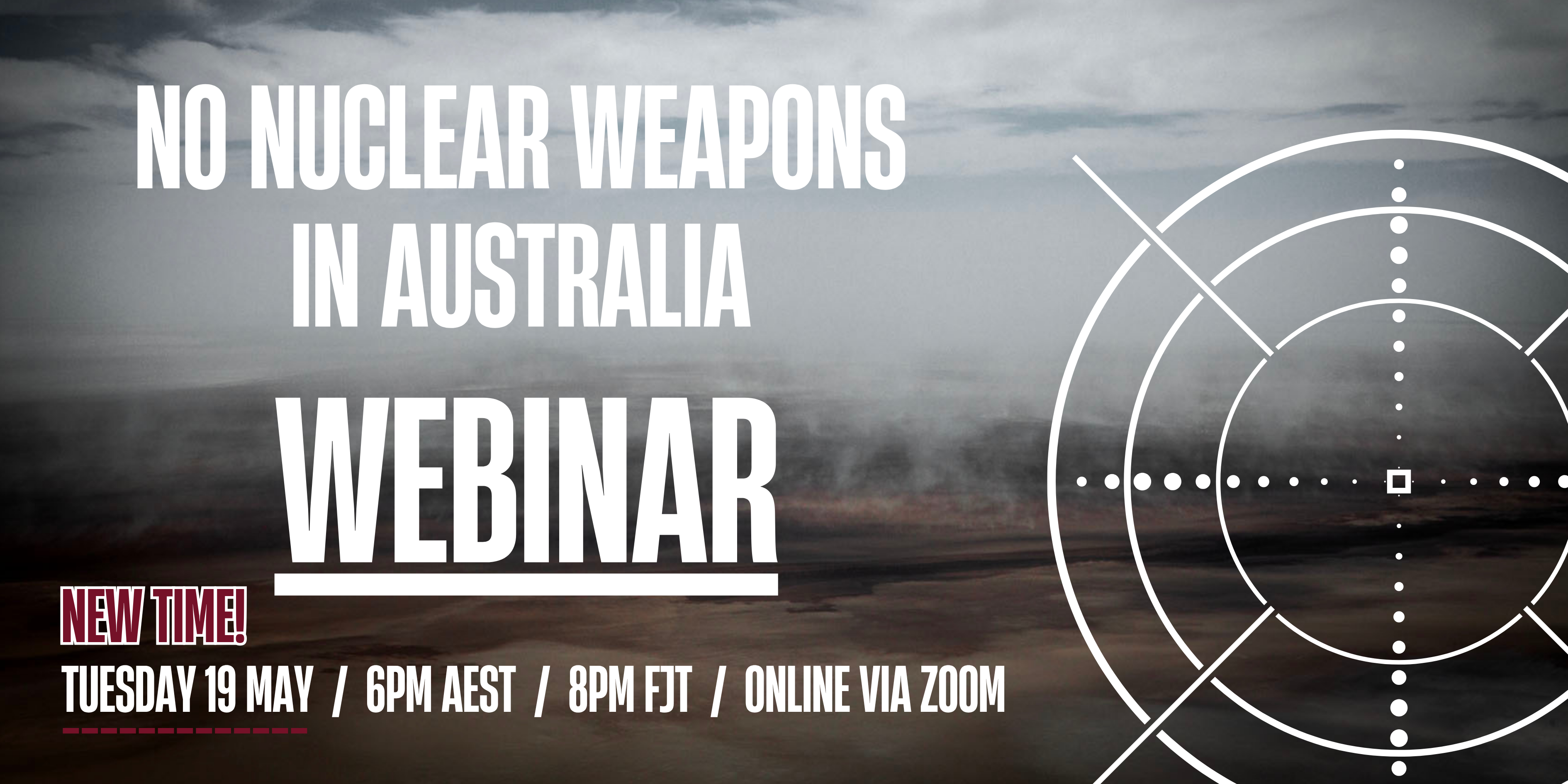
19 May – Webinar- Webinar: No Nuclear Weapons in Australia
Start: 2026-05-19 18:00:00 UTC Canberra, Melbourne, Sydney (GMT+10:00)
End: 2026-05-19 19:30:00 UTC Canberra, Melbourne, Sydney (GMT+10:00)
20 May – Webinar – The dangerous world of AUKUS, US, military occupation and suppression of dissent

National Webinar, 20th May, 2026, 6.30pm AEST. Confronting laws restricting/suppressing protest speech and action
Speakers: Former Sen. Rex Patrick, Lawyer Nick Hanna ,Arthur Rorris ,Jorgen Doyle, Sen David Shoebbridge,
Facilitator Kelley Tranter.

of the week – Australians for War Powers Reform (AWPR)
To see nuclear-related stories in greater depth and intensity
 Antinuclear