World on ‘fast track to climate disaster’, says UN secretary general – video
World on ‘fast track to climate disaster’, says UN secretary general – video
António Guterres says the latest report from the Intergovernmental Panel on Climate Change (IPCC) reveals ‘a litany of broken climate promises’ by governments and businesses, and accuses some of them of lying in claiming to be on track to limiting future heating to 1.5C above pre-industrial levels. In a strongly worded rebuke, he says: ‘It is a file of shame, cataloguing the empty pledges that put us firmly on track towards an unliveable world’
Nuclear news – quiet in Australia? Tense worldwide

Some bits of good news:Photos show increasing numbers of rare one-horned rhinos in Indian national parkBritain’s butterflies bolstered by conservation efforts. Indigenous rangers program doubles with $636 million boost . Back from the brink: Tiny bush carnivore gets a new lease on life. Ancient rock art site returned to Aboriginal owners — and they’re keen to share it, on their own terms.
On the nuclear and military scene – what a mess ! Yes, the Russian invasion is illegal and wrong. And yes, atrocities are being committed, and the Ukrainian people are suffering terribly. But, I hope that people are becoming aware of the very carefully managed anglophone media coverage, which is emphasising human emotional stories, while not really covering the progress of the war, nor the USA resistance to peace talks.. No other invasion, such as those in Iraq, Libya, Afghanistan, has been media-manipulated in this way.
Meanwhile – inexplicably, Western governments are pushing for new nuclear reactors at the very time when Ukraine is demonstrating how terribly dangerous they are!
AUSTRALIA.
Julian Assange’s family tirelessly advocate for his freedom.
NUCLEAR/URANIUM Australian Radiation Protection and Nuclear Safety Agency Key explanatory ARPANSA quotes on nuclear waste management in Australia.. Under the shadow of Fukushima and Juukan Gorge: Deep Yellow uranium takeover poses deep risks at Mulga Rock. Conservationists in bid to kill WA’s last uranium project. It’s been three years, but tourism operators say there’s no sign of $276m promised for Kakadu National Park
Australia’s Parliament has little control over military matters, and Prime Ministers kow tow to USA and the White Anglosphere to go to war. Weapons corporations infiltrate our schools and charities, promoting war-mongering to our youth. NATO Enhanced Opportunities Partner Australia to deliver armored vehicles to Ukraine — Anti-bellum.
CLIMATE. “Perverse:” Australian fossil fuel subsidies will top $22,000 a minute this year. Senate again blocks Angus Taylor’s bid to redirect ARENA funds to Carbon Capture Storage projects. Australia gets a fail-grade for climate action, falls behind G20 peers. Morrison Government’s climate record deemed ‘a catastrophic failure’: one in four Australians give zero rating.
INTERNATIONAL
The information war that precedes and complements kinetic war — Anti-bellum . Ukraine: Transfer of Power Balance from West to East.
. Chernobyl: radiation sickness in soldiers, theft of radioactive materials, wildfires – a frightening case of the multiple dangers of nuclear power. Ukraine Negotiations: No Fly Zone, Nukes, Neutrality, and Disarmament. Chris Hedges On Ukraine, Russia & NATO Urgent need to bring about new arms control agreements. https://www.youtube.com/watch?v=_I6ZkPi6NSI
Depicting Putin as ‘Madman’ Eliminates Need for Diplomacy. What is the current nuclear arms pact between Russia and the US? The Red Scare, Viewpoint by Alice Slater. Frenzy for selling bunkers, but they might not be much use, really. How would a nuclear winter impact food production?
Coastal communities across the world already feeling the impacts of climate change. Climate crisis worsened by population and economic growth. Nuclear on the ”frontline of climate change” – and not in a good way!
War in Ukraine has produced a new energy crisis. Energy efficiency is the fastest way to address this..
ANTARCTICA. Scientists caught off guard by massive ice shelf collapse in ‘coldest, driest’ part of Antarctica Hotter Antarctic summers posing increasing threat to stability of world’s largest ice sheet.
UKRAINE. Media coverage of the nuclear dangers in Ukraine often poorly informed and downplayed due to the influence of the pro nuclear lobby. Ukraine, Poland discuss NATO “peacekeeping” force in Ukraine — Anti-bellum. Russian troops pull out out of Chernobyl after suffering ”acute radiation sickness”. Wide reporting on Russian soldiers affected by radiation, leaving Chernobyl. Anxieties at Varash nuclear power station, and other ones in Ukraine – ”town smells of fear.”.
Nuclear catastrophe threatened, as fires sweep through forests towards Chernobyl site. 7 wildfires in Chernobyl Exclusion zone exceed Ukraine’s emergency classification tenfold. Head of IAEA to visit Chernobyl, as Russians withdraw from the site. Ukraine’s Ministry of Defense warns on radioactivity danger from the Chernobyl Excusion Zone. UN nuclear watchdog chief in Ukraine for safety talks. U.S. ambassador incites Georgians to confront Russia — Anti-bellum.
France pays the steep cost of inflexible and ageing nuclear as electricity prices soar — RenewEconomy

French baseload and peak prices soar due to a combination of massive outages of French nuclear power plants, cold weather and inefficient heating
France pays the steep cost of inflexible and ageing nuclear as electricity prices soar — RenewEconomy
The common refrain among critics of wind and solar is to blame their “variability” or “intermittency” for soaring electricity prices as Europe wrestles with gas shortages worsened by the war in Ukraine. But France, the nuclear “pin-up” country for the anti-renewables brigade, is not faring so well either.
Over the weekend, the key “day ahead” prices of electricity in France surged to unprecedented levels. On Friday, the futures price for “baseload” for wholesale French electricity price hit the eye-watering level of €714 a megawatt hour ($A1050/MWh).
It didn’t get much better by Sunday, when the day-ahead price for Monday settled at €515/MWh ($A758/MWh), which is the predicted average price over a 24-hour period. The price for peak electricity between 8am and 9am was €2,987/MWh ($A4,400/MWh).
The prices for both baseload and peak prices in the rest of the European market were significantly cheaper, and in Germany it was dramatically so.
The main reasons? Both supply and demand. Less than half (30GW) of France’s 64GW of nuclear capacity was available, thanks to planned and unplanned outages, and extended repairs due to corrosion issues in their ageing plants.
The forecast is for cold weather, and many French homes are fired with inefficient, energy hungry electric resistance heating, largely as a result that the French believed they had no reason to be energy efficient because of the their massive investment in nuclear.
“Massive outages of French nuclear power plants, in combination with cold weather and electric (often resistance) heating, are causing a critical situation for electricity supply there tomorrow,” energy analyst Kewes van der Leun tweeted over the weekend.
The French authority called on consumers to reduce their power consumption.
The situation in Europe is similar to the growing “north-side” divide in electricity prices in Australia, identified by the Australian Energy Market Operator, which has noted that since early 2021 average prices in the most heavily coal dependent states of Queensland and NSW are considering higher than elsewhere.
Partly that is due to a lack of transmission (France has similar problems), but also to the inflexibility of baseload, and the desperation of baseload owners to bid up prices when they can to recoup their costs.
Sure, states with high amounts of renewables do experience price spikes, but they tend to be short lived and the average price is significantly lower than so-called “cheap” coal.
The situation in France is not likely to get better any time soon. President Emmanuel Macron has pledge to invest significantly more in nuclear and his far-right opponent, Marine Le Pen (who is given an outside chance of unseating him) has pledge to stop all new wind and solar development.
But new nuclear won’t help. At the very best, a new reactor could be online by 2035, although France’s recent experience with massive cost over-runs and delays would put a major question mark over that being achieved.
Macron rubbing hands with glee as UK energy crisis means EDF poised for ‘£30bn payday’
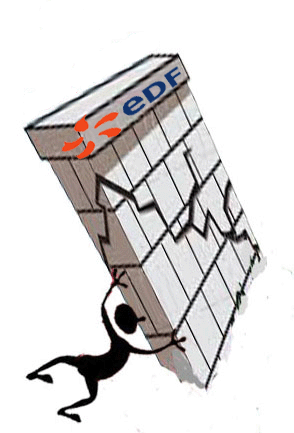
Macron rubbing hands with glee as UK energy crisis means EDF poised ‘£30bn payday’. EMMANUEL MACRON could win big from the UK energy crisis, with EDF being tipped to secure contracts worth nearly £30 billion.
Dr Paul Dorfman, an associate fellow at the University of Sussex said: “The UK has a very strong relationship with EDF, they own and run the substance of UK reactors and are helping to build Hinckley point and the rest of it.
“However, EDF are in debt. Moodys, the financial organisation has recently downgraded EDF’s credit rating. A quarter of all of France’s reactors are currently offline due to safety and security problems, that’s
largely because they have an ageing nuclear fleet, like us.
“In order to kind of try to prolong their lifespan, the French government has big upgrade of their nuclear. “The cost estimates are around £70-80 billion just to upgrade, just to keep them tottering on.”
EDF is currently constructing the Hinckley Point C nuclear power station and is also adding new reactors to Sizewell C in Suffolk and Bradwell B in Essex. Dr Dorfman has warned that these new reactors constructed by EDF are the same type of EPR reactors that were built in France, which the French court of Auditors estimated cost an extra €19billion (almost £16 billion). He continued: “EDF is clear about the need for Government investment in order to proceed with Sizewell C.”
Express 1st April 2022
Portugal to speed up switch to renewable power in wake of Ukraine war

https://www.reuters.com/business/sustainable-business/portugal-speed-up-switch-renewable-power-wake-ukraine-war-2022-04-01/?fbclid= By Sergio Goncalves,
LISBON, April 1 (Reuters) – Portugal aims to accelerate its energy transition and increase the proportion of renewable sources by 20 percentage points to 80% of its electricity output by 2026, four years earlier than previously planned, the government said on Friday.
As part of a global shift away from carbon-emitting fossil fuels, countries are betting on renewable energies such as wind and solar, a transition that is being accelerated in Europe after Russia’s invasion of Ukraine.
The new Socialist government that was sworn in on Wednesday, said in its overall programme released on Friday that the energy plans should mobilize more than 25 billion euros of investment in the next 10 years, involving public and private players, incentives and financing.
“Portugal has already taken very significant measures in the energy transition, but the evolution and duration of the war in Ukraine must necessarily imply new measures,” Cabinet Minister Mariana Vieira da Silva told a news conference.
The country, committed to become carbon neutral by 2050, currently gets 60% of its electricity from renewable sources – one of the largest proportions of green energy use in Europe.
Unlike central European countries, Portugal does not depend on Russian natural gas pipelines, as it mainly imports liquefied natural gas from Nigeria and the United States, and has not imported Russian crude since 2020.
The government also wants to “more than double the installed capacity of renewable sources in the next decade”.
Portugal, which closed its two coal-fired power plants last year, has 7.3 GW of hydroelectric capacity and 5.6 GW of onshore wind parks, which together represent 83% of its total installed capacity. Reporting by Sergio Goncalves Editing by Andrei Khalip and Frances Kerry
Why UK Labour’s green policies are fatally undermined by its ‘nuclear first’ stance
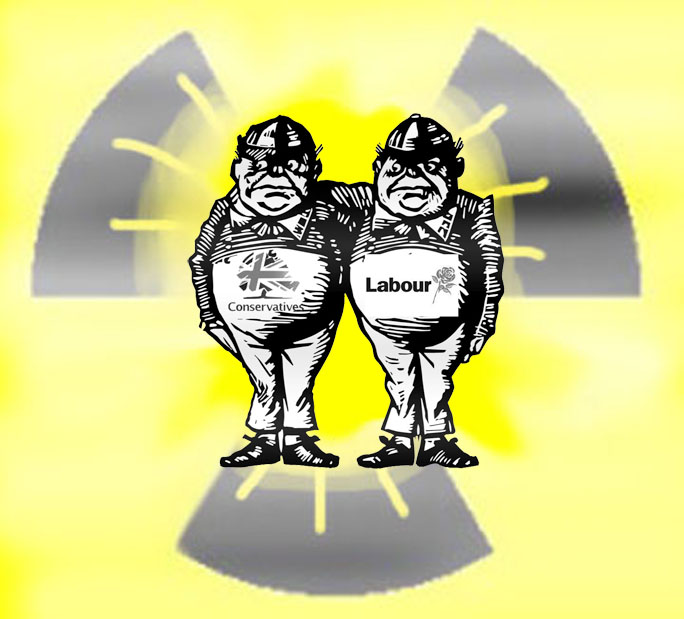
Dave Toke’s green energy blog, https://realfeed-intariffs.blogspot.com/2022/04/why-labours-green-policies-are-fatally.html
It is now clear from Labour’s stance in the House of Commons, that nuclear power comes before every thing else. Indeed, aside from Keir Starmer’s emphasis on ‘nuclear first’ attacks on the Government in the House of Commons, Labour’s allegedly massive green energy spending strategy seems likely to be swallowed up almost entirely by its pledge to rush to embrace the Sizewell C development.
The Treasury knows full well that to get Sizewell C going reasonably quickly the Government will have to commit to a potential bill of £30 billion or more in public spending. This must come, either or both, from hard-pressed energy consumers by adding to their bills, or directly from Treasury coffers. The Department of Business Energy and Industrial Strategy’s (BEIS) spending plans are closely controlled by the Treasury, and the commitment to Sizewell C will swamp the budget and reduce Labour’s ability to spend on things like insulation and heat pumps to a trickle.
Keir Starmer thinks he has seen a weak point in the Conservative’s energy strategy in that it is finding it difficult to turn the commitment to support Sizewell C into reality. But that’s because funding Sizewell out of a public commitment is likely to present the Government with a crippling financial burden. It is especially crippling because Starmer will refuse to acknowledge the fact that to get Sizewell C going will require the Government to fund a black hole of spending as cost overruns inevitably escalate on the project.
It’s a cynical ploy on Labour’s part. They know full well that the Government’s difficulties with launching Sizewell C are to do with the sheer financial unviability of new nuclear power, not from any lack of faith in nuclear power on the part of the Government. But apparently, Starmer does not care about this, and it also seems that he takes the green energy lobby for granted in that he expects that it will support him regardless.
But if other Labour commitments to support really big programmes in areas like heat pumps and insulation are to happen, there’s just not enough money going to be made available for them if BEIS’s budgets are swallowed up by the commitment to support Sizewell C.
So how should green energy supporters react to this? Well, there’s plenty of other parties to vote for. Indeed if this Government does actually go ahead and reverse the English planning ban on onshore wind, there’s probably not going to be much difference, in practice, between Labour and Conservatives on energy. Except of course that the Conservative will be more cautious, it seems, on accepting unmanageable commitments to new nuclear power!
As water levels rise so too does the pressure to stop building houses on flood plains
As water levels rise so too does the pressure to stop building houses on flood plains
Residents of flood-prone Hawkesbury-Nepean Valley near Sydney say real estate agents should have to advise buyers of risks
April 3 Energy News — geoharvey

Opinion: ¶ “The FUD Against Global Warming Lives On” • FUD – Fear, Uncertainty, and Doubt – about global warming persists, despite the science being solid for decades. Whenever scientific evidence challenges the revenues of large corporations, a strategy has been cooked up and continually used to obscure the truth of the new evidence. It’s […]
April 3 Energy News — geoharvey
Australia’s Parliament has little control over military matters, and Prime Ministers kow tow to USA and the White Anglosphere to go to war

Australia is an “active, eager participant in the US-led order” and restricting the Australian parliament’s control over the military has been “… a decision taken by the Australian government — at a bipartisan level — and implemented by senior policy planners.
Meanwhile the Australian parliament has “deliberately restricted its own powers on intelligence matters”
,Australia has ”reaffirmed its whiteness in its commitment to expansion of the “Five Eyes” intelligence sharing arrangements between the US, Britain, Canada, Australia and New Zealand and, of course, to the controversial 2021 AUKUS nuclear submarine deal, which was nurtured in great secrecy”
White and might is right: the secrets which push us into other people’s wars, https://www.michaelwest.com.au/the-dirty-secret-that-pushes-australia-into-other-peoples-wars/ By Zacharias Szumer|April 2, 2022 Is playing deputy to America’s sheriff the reason Australian war powers remain unreformed? It’s clear that our politicians remain muddled on this critical issue, writes Zacharias Szumer.
For decades, minor parties in Australia have introduced bills seeking to give parliament greater control over military deployments. In the debates and inquiries that have followed, a wide range of objections have been raised.
We are told that, as military deployments are often made on the basis of confidential information, this information cannot be publicly disclosed to the parliament. Another common objection is that parliamentary decision-making would reduce the flexibility and speed needed to carry out military operations safely and effectively.
Most of the opposition to war powers reform, received as part of Michael West Media’s ongoing survey of politicians, follows similar lines. You can see myriad responses here.
However, some experts think there might be another reason — one that Australian pollies may be uncomfortable acknowledging.
Kowtowing to empires
Clinton Fernandes, professor of international and political studies at the University of NSW and former Australian army intelligence officer, contends that the bipartisan reluctance to infringe upon this executive prerogative should be understood within Australia’s ”sub-imperial” geopolitical strategy.
In basic terms, Australia has sought to integrate itself into the global strategy of great powers — firstly the British and, from 1942 onwards, the United States. In a 2020 article, Fernandes argues that this sub-imperial strategy has meant the “effective exclusion of the legislative and judicial branches of government from Australia’s national-security policy”.
Fernandes does not believe that Australian politicians and policy officials have been forced against their will into this position. Rather, he argues that Australia is an “active, eager participant in the US-led order” and restricting the Australian parliament’s control over the military has been “… a decision taken by the Australian government — at a bipartisan level — and implemented by senior policy planners.
“Australian strategic planners understand that this means a reduction in sovereignty, but they accept it because it achieves a higher objective — upholding US imperial power.”
In addition to limiting parliament’s control over military deployments, Fernandes argues that Australia’s position as a “sub-imperial power” also limits parliamentary oversight of intelligence gathering. In the US, “intelligence committees and judiciary committees in the Senate and House of Representatives are regularly briefed about all authorised intelligence-collection programs, and relevant members of Congress receive detailed briefings prior to each re-authorisation,” Fernandes says.
Five Eyes and whiteness
Meanwhile the Australian parliament has “deliberately restricted its own powers on intelligence matters” through measures such as the Intelligence Services Act 2001 which ‘prevents the Parliamentary Joint Committee on Intelligence and Security from ‘reviewing the intelligence gathering and assessment priorities’ or ‘reviewing particular operations that have been, are being or are proposed to be undertaken’ by ASIS, ASIO and the other intelligence agencies, and likewise ‘the sources of information, other operational assistance or operational methods’ available to the agencies”.
Dr Greg Lockhart, an historian and Vietnam War veteran, supports Fernandes’ argument, but stresses the importance of seeing Australia’s sub-imperial strategy through the lens of a wider “cultural self-deception” around racial anxieties. “Fear of the ‘yellow peril’ meant that our Anzac expeditionary strategic reflex was from its inception race-based,” he says. ‘It was also primarily defensive; it depended on “great and powerful” white friends for protection in our region; it has always depended on being in the Anglosphere”.
Dr Lockhart argues that, although the overtly racist rhetoric of the White Australia policy is largely a thing of the past, “our strategic culture is still inseparable from the Anglosphere, from wherein we have never needed to reassess its whiteness”.
Recently, he says, Australia has ”reaffirmed its whiteness in its commitment to expansion of the “Five Eyes” intelligence sharing arrangements between the US, Britain, Canada, Australia and New Zealand and, of course, to the controversial 2021 AUKUS nuclear submarine deal, which was nurtured in great secrecy”.
“And with secrecy comes deception. Sounding like a US proxy in the Pacific while asserting Australian ‘sovereignty’, Scott Morrison’s government “announces it is in ‘lockstep’ with “our allies”, while trumpeting the threat of China’s communism, territorial expansion, abuse of human rights, or its implied role as the origin of Covid 19 — anything but the anxiety about Chinese numbers, ethnic difference, and independent power that has shadowed Australian history since the 1800s – and that now determines the security culture’s mindless dependence on the US.’’
Seen in this wider cultural context, Lockhart believes that “the Constitution was never going to impose legislative or judicial restraints on the autocratic war powers of the sub-imperial state. Since the First World War in 1914, almost every Anzac expedition has been a British or American imperial one. The exceptions are the Pacific campaign in 1942-1945 and Timor in 1999-2000. And in all those imperial campaigns the decision for war has been made undemocratically by the prime minister acting in secret conclave with only a handful of advisers”.
Parliamentary war powers
Fernandes and Lockhart aren’t alone in suggesting that there’s a relationship between strategic objectives and parliamentary control, or lack thereof, over the military. In their encyclopaedic 2010 study of war powers around the world, scholars Wolfgang Wagner, Dirk Peters and Cosima Glahn noted that several Central and Eastern European states — Bulgaria, the Czech Republic, Hungary and Slovakia — abolished parliamentary approval for war in the process of joining the US-led North Atlantic Treaty Organisation (NATO).
The authors argue that ‘’NATO accession apparently amplified the trade-off between creating legitimacy through procedures of ex ante parliamentary control and gaining efficiency through lean, executive-centred decision-making. From NATO’s perspective, having the governments of some member state tied by domestic parliamentary veto power must seem highly unattractive.’’
However, many of the more powerful NATO countries have far more wide-ranging parliamentary war powers than Australia or the aforementioned junior NATO partners. Although contested, the US War Powers Resolution significantly limits the President’s freedom to order military action without congressional authorisation.
For almost two decades in Germany, all major military deployments have been put to parliament for a vote. In the UK too, a parliamentary convention of seeking approval for military deployments in the House of Commons has also evolved over the past two decades.
Today: What’s Scott Morrison doing and not doing with our tax money?

Morrison’s Budget increaes spending on Aged care by $522 million. Big deal !
Morrison spends on climate action – well, nothing, really. No deal !
Morrison promises – open cheque for nuclear submarines when deal finalised – could be $171 billion.
Australia has a crisis in aged care, with the system being run almost entirely on a for profit basis.
Australia has a climate crisis, with large swathes of the East coast afflicted by repeated record floods.
Morrison is governing in the interests of multinational corporations. not us.
Australian Radiation Protection and Nuclear Safety Agency Key explanatory ARPANSA quotes on nuclear waste management in Australia.
ARPANSA approves nuclear waste storage at Lucas Heights, Sydney until 2037 [So Kimba dump not only unwise, but also unnecessary]
In light of the established feasible alternative for decades of Extended Storage of ANSTO nuclear wastes at the existing Lucas Heights site there is now no credible reason to proceed with proposals for indefinite above ground storage of ANSTO nuclear wastes at Napandee near Kimba on Eyre Peninsula in SA.
Secure storage of ANSTO nuclear waste at Lucas Heights has been extended out to 2037 by the federal nuclear regulator ARPANSA (16 March 2022) see:
ARPANSA approves siting licence for ANSTO waste facility | ARPANSA
“An important consideration in granting the ILWCI siting licence was the conceptual safety and security design of the facility“, says Dr Carl-Magnus Larsson, Chief Executive Officer of ARPANSA.
This follows a $60 million investment by the federal gov in extended storage at Lucas Heights, made last year.
A detailed Statement of Reasons and the Regulatory Assessment Report for the newly issued licence to site the ILWCI Facility at Lucas Heights can be found in the following documents:
 Regulatory Assessment Report – A0339 Siting Licence for ILWCI FacilityCEO Statement of Reasons – A0339 ILWCI Facility Siting Licence Application –
Unions SA have a clear position (March 2022):
“Unions SA stands with Traditional Owners in rejecting nuclear waste dump
The Liberals want to dump nuclear waste in Kimba, South Australia.
Don’t let them!
We stand with the Traditional Owners against the dump.
This election, stand up for SA’s future.”
SA Unions > SA Unions stands with Traditional Owners in rejecting nuclear waste dump
For further info see David Noonan Submission No.1 to the CEO of ARPANSA (Nov 2021) on the Feasible Alternative of storing ANSTO’s “highly hazardous” nuclear fuel waste and ILW at Lucas Heights:
Public Submission 1 (arpansa.gov.au)
Conclusion: Extended storage of ANSTO’s ILW on-site at Lucas Heights is a warranted public interest
measure and a necessary Safety Contingency until availability of a final disposal option.
For further info see David Noonan Submission No.1 to the CEO of ARPANSA (Nov 2021) on the Feasible Alternative of storing ANSTO’s “highly hazardous” nuclear fuel waste and ILW at Lucas Heights:
Public Submission 1 (arpansa.gov.au)
Conclusion: Extended storage of ANSTO’s ILW on-site at Lucas Heights is a warranted public interest
measure and a necessary Safety Contingency until availability of a final disposal option.
And a 2 page Brief:”Why impose indefinite storage of ANSTO nuclear waste onto SA when its already in secure Extended Storage at Lucas Heights?”
(DN, August 2021)
citing Recommendations by MAPW:
• an open and independent review of nuclear waste production and disposal in Australia, and • progressing a shift to cyclotron rather that reactor-based production of isotopes for nuclear medicine as rapidly as feasible.–
Weapons corporations infiltrate our schools and charities, promoting war-mongering to our youth
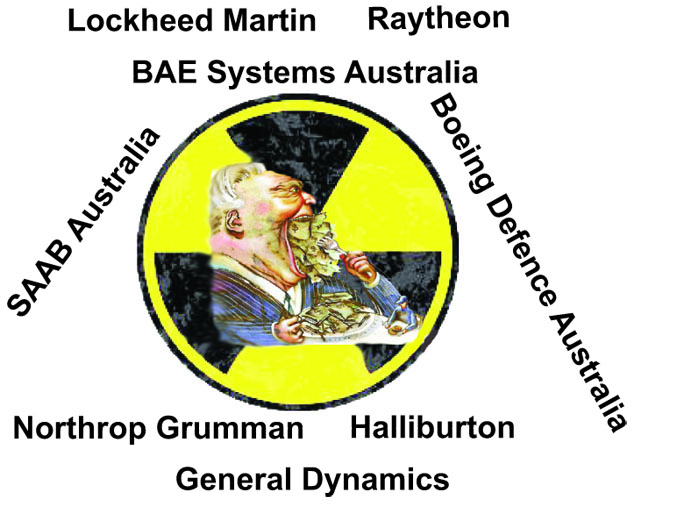
REPUTATION LAUNDERING,
https://declassifiedaus.org/2022/03/31/reputation-laundering/ DeclassifiedAUS2 The weapons companies spruiking the ‘benefits and opportunities’ of the wars in Ukraine and Yemen and tensions in the South China Sea are infiltrating our schools., MICHELLE FAHY, 31 MARCH 2022
A Lockheed Martin missile blows up a school bus in Yemen, while in Australia the company gains kudos by sponsoring the National Youth Science Forum.
BAE Systems supports the education of kids in Australia, while being complicit in the killing of thousands of children in Yemen.
Lockheed Martin, the world’s largest weapons-maker, is raking in billions from ongoing wars like the four-week Russian invasion of Ukraine, and the eight-year long Saudi-led war in Yemen.
A Lockheed Martin laser-guided bomb blew up a bus full of Yemeni school children in 2018, killing 40 children and injuring dozens more.
Meanwhile, in Australia, Lockheed Martin was busy cultivating kudos with kids as major sponsor of the National Youth Science Forum, a registered charity originally set up by Rotary.
Then there’s US missile-making giant Raytheon which now has a significant new manufacturing facility in Australia. It has continued to supply the Saudi-led coalition with weapons for the Yemen war, despite extensive evidence pointing to war crimes arising from its missiles being used to target and kill civilians.
In January 2022, a Raytheon missile killed at least 80 people and injured over 200 in a so-called precision strike in Sa’adah in Yemen.
Within days of this horrific incident, Raytheon’s CEO was telling investors that rising tensions represented “opportunities for international sales” and he fully expected to “see some benefit” from “the tensions in Eastern Europe [and] the South China Sea”.
There’s no mention in Australia’s media of the big profits Raytheon is making from the Yemen war, which has now entered its eighth year, killed or injured at least 19,000 civilians, and possibly many more, and also caused the deaths of tens of thousands of children through starvation, due to disruption of food supplies and militarily-enforced trade blockade.
Instead, we’ve seen pictures of Aussie school kids having fun with the Australian snowboarding Paralympian who Raytheon Australia hired to front the launch of its Maths Alive! educational exhibition.
And we also heard about Raytheon’s sponsorship of Soldier On and the Invictus Games, despite the irony of a weapons company using its support of injured military personnel as a public relations exercise.
There’s a name for this cynical behaviour by corporations: ‘reputation laundering’.
Weapons companies are now ‘Innovators’
The world’s weapons producers have also taken to promoting themselves as ‘innovators’ in the areas of science, technology, engineering and maths, called STEM.
This enables them to target children and young people as future employees (see, for example, BAE Systems Australia, Boeing Defence Australia, and Saab Australia), often with the willing partnership of respected institutions. Many Australian universities now have MOUs, joint ventures, strategic partnerships, or other forms of collaboration with the weapons industry.
This enthusiastic support of STEM serves a double purpose: reputation laundering, and a socially acceptable way to promote the weapons industry as a future employer directly to children and their parents.

Promoting STEM education is essential to creating a well-trained workforce for key industries of the future, particularly those that can tackle the existential risks associated with climate change. The concern with the weapons industry’s activities in this domain is the way it is using STEM to target children as young as primary school age for weapons-making careers, often with the support of government.
The spin and glamour being associated with Australia’s increased militarism is a concern on several levels, particularly as the marketing omits pertinent information: weapons and warfare aren’t mentioned.
Nor is there information about how children might use their STEM skills to enhance the ‘lethality’ of their employer’s products.
Nor about a future in which the need for human involvement in the ‘kill chain’ is eliminated by creating autonomous robots to make life and death decisions instead. (This is not science fiction, these research and development programs are already happening.)
Working for companies involved with nuclear weapons isn’t discussed, either.
Instead, a world of euphemism has been created: ‘advanced technology systems, products and services’, ‘high end technology company’, ‘leading systems integrator’, ‘security and aerospace company’, ‘defence technology and innovation company’.
It is also likely to be weapons company marketing material if the phrase ‘solving complex problems’ appears, especially if accompanied by claims of ‘making the world safer.
None of these euphemisms conjures up realistic images of the bloody and brutal destruction the world is witnessing in the world’s latest war in Ukraine.
The ways global weapons giants have cultivated relationships with organisations of good purpose in Australia is highlighted in the following examples.
Lockheed Martin and the National Youth Science Forum
The National Youth Science Forum was created by Rotary, which remains involved. The Forum, now a not-for-profit organisation overseen by a board, has numerous programs, the flagship program being for Year 12 students interested in a career in science.
“The ban treaty embodies the collective moral revulsion of the international community,” according to the Director of the Centre for Nuclear Non-Proliferation and Disarmament at the Australian National University, Professor Ramesh Thakur.
Lockheed Martin and the Gallipoli Sponsorship Fund
In 2020, Lockheed Martin Australia became the first corporate sponsor of the Gallipoli Scholarship Fund and provides $120,000 to fund 12 Lockheed Martin Australia bursaries for the educational benefit of descendants of Australian military veterans.
Lockheed Martin is providing these Australian educational bursaries through to the end of 2023, with an opportunity to extend.
Referring to Lockheed Martin as a “defence technology and innovation company”, the Gallipoli Sponsorship Fund’s website also does not disclose Lockheed’s status as the world’s dominant weapons-maker nor its position as a major nuclear weapons producer.
BAE Systems and The Smith Family
This example illustrates that public pressure can and does make a difference.
The UK’s largest weapons-maker, BAE Systems, has been working inside Saudi Arabia supporting the Saudi-led coalition’s role in Yemen since the start of the war.
A BAE maintenance employee was quoted in 2019 saying, “If we weren’t there, in 7 to 14 days there wouldn’t be a jet in the sky.” BAE Systems has sold nearly £18 billion worth of weaponry to the Saudis since the war in Yemen started in 2014.
Yet in Australia, BAE Systems started a $100,000 partnership with The Smith Family in August 2020, sponsoring a STEM education program for under-privileged children.
BAE’s role helping the Saudis prolong one of the world’s worst humanitarian crises in Yemen was pointed out numerous times to The Smith Family, a children’s charity, after news broke of its BAE sponsorship.
The Smith Family initially resisted but after increasing pressure and activism from peace organisations and many complaints from the public, The Smith Family soon dropped its controversial ‘partnership’ with BAE Systems Australia, mere months after it had started.
Morally indefensible positions
Benign-sounding sponsorships of Australian school children such as these might appear less self-serving if weapons companies behaved consistently and stopped supplying weapons to those nations known to be serial abusers of human rights.
Saying they are merely doing the bidding of their governments in supplying the Saudis, and other abusive and repressive regimes, as these companies have, is not a morally defensible position.
It is particularly not defensible in the face of evidence of ongoing war crimes being committed using their weaponry.
MICHELLE FAHY is an independent writer and researcher, specialising in the examination of connections between the weapons industry and government, and has written in various independent publications. She is on twitter @FahyMichelle, and on Substack at UndueInfluence.substack.com An earlier version of this article was published in Michael West Media in November 2020.
NATO Enhanced Opportunities Partner Australia to deliver armored vehicles to Ukraine

Ukranews
April 1, 2022
Australia To Send Bushmaster Armored Personnel Carriers To Ukraine – Yermak
Australia will send Bushmaster armored personnel carriers to Ukraine.
Head of the Presidential Office, Andrii Yermak, has written this on Telegram, Ukrainian News Agency reports.
As Ukrainian News Agency reported, President Volodymyr Zelenskyy, in an address to the Australian Parliament, asked Australia to provide Ukraine with Bushmaster armored vehicles and invited to take part in the project to restore the southern regions of Ukraine.
====
Rustavi2
April 1, 2022
Australia to send armored vehicles to Ukraine after request
Prime Minister Scott Morrison said that Australia will send armored Bushmaster vehicles to Ukraine after President specifically asked for them while appealing to Australian lawmakers for more help in Ukraine’s war against Russia.
Volodymyr Zelensky addressed the Australian Parliament on Thursday and asked for the Australian-made, 4-wheel-drive vehicles.
Morrison told reporters the vehicles will be flown over…
View original post 54 more words
Chernobyl: radiation sickness in soldiers, theft of radioactive materials, wildfires – a frightening case of the multiple dangers of nuclear power.
Russian soldiers in Chernobyl suffering from radiation poisoning, Several Russian soldiers in Chernobyl have fallen sick with radiation sickness after digging trenches in contaminated forests, news.com.au , Katie Davis and The Sun, 1 Apr 22,
Dozens of Russian troops stationed at the Chernobyl nuclear site in Ukraine have reportedly been struck down with radiation sickness after digging trenches in the contaminated forests.
Seven buses of soldiers suffering from acute radiation syndrome were taken from the exclusion zone to a hospital across the border in Belarus, The Sun reports.
Chernobyl was captured in the opening days of the current invasion of Ukraine by Russian President Vladimir Putin’s troops. However it was the site of a nuclear disaster in 1986 when a reactor exploded, contaminating the surrounding area.
As Russian soldiers took hold of the site, it sparked fears of a major radioactive disaster as a result of heavy fighting around the plant
Already, just three days after entering the area, the disturbing of soil by military vehicles saw radiation levels spike.
It also has been alleged Russian troops dug trenches in the highly toxic Red Forest zone, according to UNIAN News Agency.
And according to workers at the site, Russian soldiers drove their tanks and armoured vehicles without radiation protection through the area – kicking up clouds of radioactive dust.
A Chernobyl employee branded their actions as “suicidal” because the dust they inhaled was likely to cause internal radiation in their bodies.
The two Ukrainian sources said soldiers in the convoy did not use any anti-radiation gear while in the Red Forest – the most contaminated part of the zone around Chernobyl.
Dozens of Russian troops stationed at the Chernobyl nuclear site in Ukraine have reportedly been struck down with radiation sickness after digging trenches in the contaminated forests.
Seven buses of soldiers suffering from acute radiation syndrome were taken from the exclusion zone to a hospital across the border in Belarus, The Sun reports.
Chernobyl was captured in the opening days of the current invasion of Ukraine by Russian President Vladimir Putin’s troops. However it was the site of a nuclear disaster in 1986 when a reactor exploded, contaminating the surrounding area.
As Russian soldiers took hold of the site, it sparked fears of a major radioactive disaster as a result of heavy fighting around the plant.
Already, just three days after entering the area, the disturbing of soil by military vehicles saw radiation levels spike.
It also has been alleged Russian troops dug trenches in the highly toxic Red Forest zone, according to UNIAN News Agency.
And according to workers at the site, Russian soldiers drove their tanks and armoured vehicles without radiation protection through the area – kicking up clouds of radioactive dust.
A Chernobyl employee branded their actions as “suicidal” because the dust they inhaled was likely to cause internal radiation in their bodies. The two Ukrainian sources said soldiers in the convoy did not use any anti-radiation gear while in the Red Forest – the most contaminated part of the zone around Chernobyl.
Yaroslav Yemelianenko, an employee at the Public Council at the State Agency of Ukraine for Exclusion Zone Management, said Russian troops were taken to the Belarusian centre of radiation medicine in Gomel.
“Digging the trenches in the Rudu forest?” he wrote on Facebook. “Now live the rest of your short life with this.
“There are rules of handling this territory. They are mandatory to perform because radiation is physics – it works regardless of status or chases………………
Radioactive material stolen from Chernobyl
Earlier this week, it was reported that radioactive material was stolen from the site of the damaged nuclear power station…………………….
Ukraine’s State Agency blamed Russian troops for stealing “unstable” nuclear samples from Chernobyl after ransacking a lab.
They are believed to have then destroyed the November Central Analytical Laboratory which was full of nuclear waste and located in the radioactive exclusion zone.
The agency said the stolen radionuclides are “highly active”…………
Just last week, wildfires around Chernobyl sparked by Russian shelling scorched 10,000 hectares of forest.
Ukraine’s Deputy Prime Minister Iryna Vereshchuk accused Russia of “irresponsible” acts around the Chernobyl power station as she urged the United Nations to dispatch a mission to assess the risks.
She claimed Russian forces were preventing firefighters from bringing large numbers of fires in the zone under control……….
Ukraine’s human rights commissioner Lyudmila Denisova warned an increased level of radioactive air pollution could threaten neighbouring countries.
“Control and suppression of fires is impossible due to the capture of the exclusion zone by Russian troops,” she wrote on Facebook.
“As a result of combustion, radionuclides are released into the atmosphere, which are transported by wind over long distances. This threatens radiation to Ukraine, Belarus and European countries.”
The politician warned that failing to intervene could see “irreparable consequences” for “the whole world”.
“Catastrophic consequences can be prevented only by immediate de-occupation of the territory by Russian troops,” Ms Denisova said………… https://www.news.com.au/world/europe/russian-soldiers-in-chernobyl-suffering-from-radiation-poisoning/news-story/d98c53269a9602841331453438c482dd
Caitlin Johnstone: The Target is China

One thing that does seem clear is that the only way the empire has any chance of stopping the rise of China is by maneuvers that will be both highly disruptive and existentially dangerous for the entire world. If you think things are crazy now, just you wait until the imperial crosshairs move to Beijing.
On the empire’s grand chessboard, Russia is the queen piece, but China is the king
https://consortiumnews.com/2022/04/01/caitlin-johnstone-the-target-is-china/ April 1, 2022 The Pentagon’s current strategy document clearly identifies Enemy No. 1. And it’s not Russia. By Caitlin Johnstone, CaitlinJohnstone.com
The Pentagon has produced its latest National Defense Strategy (NDS), a report made every four years to provide the public and the government with a broad overview of the U.S. war machine’s planning, posturing, developments and areas of focus.
You might assume with all the aggressive brinkmanship between Moscow and the U.S. power alliance this year that Russia would feature as Enemy No. 1 in the 2022 NDS, but you would be assuming incorrectly. The U.S. “Defense” Department reserves that slot for the same nation that’s occupied it for many years now: China.
Antiwar’s Dave DeCamp writes the following:
“The full NDS is still classified, but the Pentagon released a fact sheet on the document that says it “will act urgently to sustain and strengthen deterrence, with the People’s Republic of China (PRC) as our most consequential strategic competitor and the pacing challenge for the Department.”
The fact sheet outlines four priorities for the Pentagon:
-Defending the homeland, paced to the growing multi-domain threat posed by the PRC
-Deterring strategic attacks against the United States, Allies, and partners
-Deterring aggression, while being prepared to prevail in conflict when necessary, prioritizing the PRC challenge in the Indo-Pacific, then the Russia challenge in Europe
-Building a resilient Joint Force and defense ecosystem”
“The Pentagon says that while China is the focus, Russia poses ‘acute threats’ because of its invasion of Ukraine,” DeCamp writes, showing the empire’s view of Moscow as a second-tier enemy.
Ahead of a meeting with China’s Foreign Minister Wang Yi, Russian Foreign Minister Sergei Lavrov has made some comments which clearly illustrate the U.S.-centralized empire’s actual problem with Moscow.
“We, together with you, and with our sympathisers will move towards a multipolar, just, democratic world order,” Lavrov said to the Chinese government on Wednesday.
And that right there, ladies and gentlemen, is the real reason we’ve been hearing so much hysterical shrieking about Russia these last five or six years. It’s never been about Russian hackers. Nor about a Kremlin pee tape. Nor about Trump Tower. Nor about GRU bounties in Afghanistan. Nor about Manafort, Flynn, Bannon, Papadopoulos or any other Russiagate Surname of the Week. It’s not even actually about Ukraine. Those have all been narrative-shaping constructs manipulated by the U.S. intelligence cartel to manufacture support for a final showdown against Russia and China to prevent the emergence of a multipolar world.
The U.S. government has had a policy in place since the fall of the Soviet Union to prevent the rise of any powers which could challenge its imperial agendas for the world. During the (first) Cold War the strategy promoted by empire managers like Henry Kissinger was to court China out of necessity to pull it away from the U.S.S.R., which was when we saw business ties between China and the U.S. lead to immense profits for certain individuals in both nations and the influx of wealth which now has China on track to surpass the U.S. as an economic superpower.
Once the U.S.S.R. ended, so too did the need to remain on friendly terms with China, and subsequent decades saw a sharp pivot into a much more adversarial relationship with Beijing.
In what history may one day view as the U.S. empire’s greatest strategic blunder, empire managers forecasted the acquisition of post-soviet Russia as an imperial lackey state which could be weaponized against the new Enemy No. 1 in China. Instead, the exact opposite happened.
Former Secretary of State Hillary Clinton told the Bloomberg New Economy Forum last year that she’d “heard for years that Russia would become more willing to move toward the west, more willing to engage in a positive way with Europe, the U.K., the U.S., because of problems on its border, because of the rise of China.” But that’s not what occurred.
“We haven’t seen that,” Clinton said. “Instead what we’ve seen is a concerted effort by Putin maybe to hug China more.”
The empire’s expectation that Moscow would come groveling to the imperial throne on its own meant that no real effort was expended trying to establish goodwill and win over its friendship. NATO just kept on expanding and the empire got increasingly aggressive and belligerent in its games of global conquest.
This error has led to the strategist’s ultimate nightmare of having to fight for global domination against two separate powers at once. Because empire architects incorrectly predicted that Moscow would end up fearing Beijing more than it fears Washington, the tandem between China’s economic power and Russia’s military power that experts have been pointing to for years has only gotten more and more intimate.
And now here we are with Russian and Chinese officials openly discussing their plans to create a multipolar world while Chinese pundits crack jokes about the U.S. empire’s transparent ploys to turn Beijing against Moscow over the Ukraine invasion:
On the empire’s grand chessboard, Russia is the queen piece, but China is the king. Just as with chess it helps to take out your opponent’s strongest piece to more easily pursue checkmate, the U.S. empire would be well advised to try and topple China’s nuclear superpower friend and, as Consortium News Editor-in-Chief Joe Lauria recently put it, “ultimately restore a Yeltsin-like puppet to Moscow.”
Basically, all we’re looking at in the major international news stories of our time is the rise of a multipolar world crashing headlong into an empire which has espoused the belief that unipolar domination must be retained at all cost, even if it means flirting with the possibility of a very fast and radioactive third world war.
This is the Hail Mary pass of the U.S. hegemon; its last-ditch effort to secure control before forever losing any chance at it. Many anti-imperialist pundits I read regularly seem quite confident that this effort will fail, while I personally think those forecasts may be a bit premature. The way the chess pieces are moving it definitely does look like there’s a plan in place, and I don’t think they’d be orchestrating that plan if they didn’t believe it had a chance to succeed.
One thing that does seem clear is that the only way the empire has any chance of stopping the rise of China is by maneuvers that will be both highly disruptive and existentially dangerous for the entire world. If you think things are crazy now, just you wait until the imperial crosshairs move to Beijing.
1 This month.
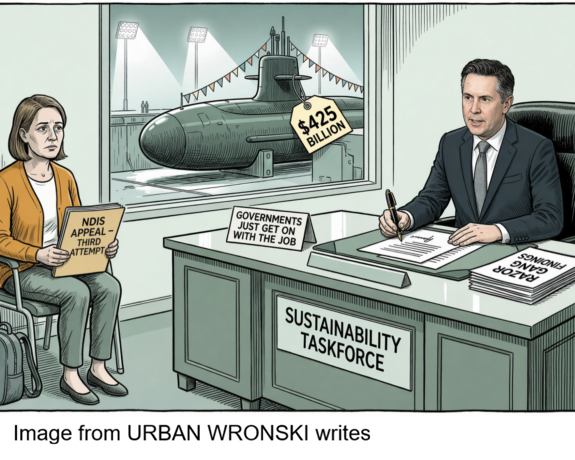

PETITION – To: Prime Minister Anthony Albanese and the Australian Labor Government
Chernobyl: The Lost Tapes – A good documentary on Chernobyl on SBS available On Demand for the next 3 weeks– https://www.sbs.com.au/ondemand/tv-program/chernobyl-the-lost-tapes/235274195556
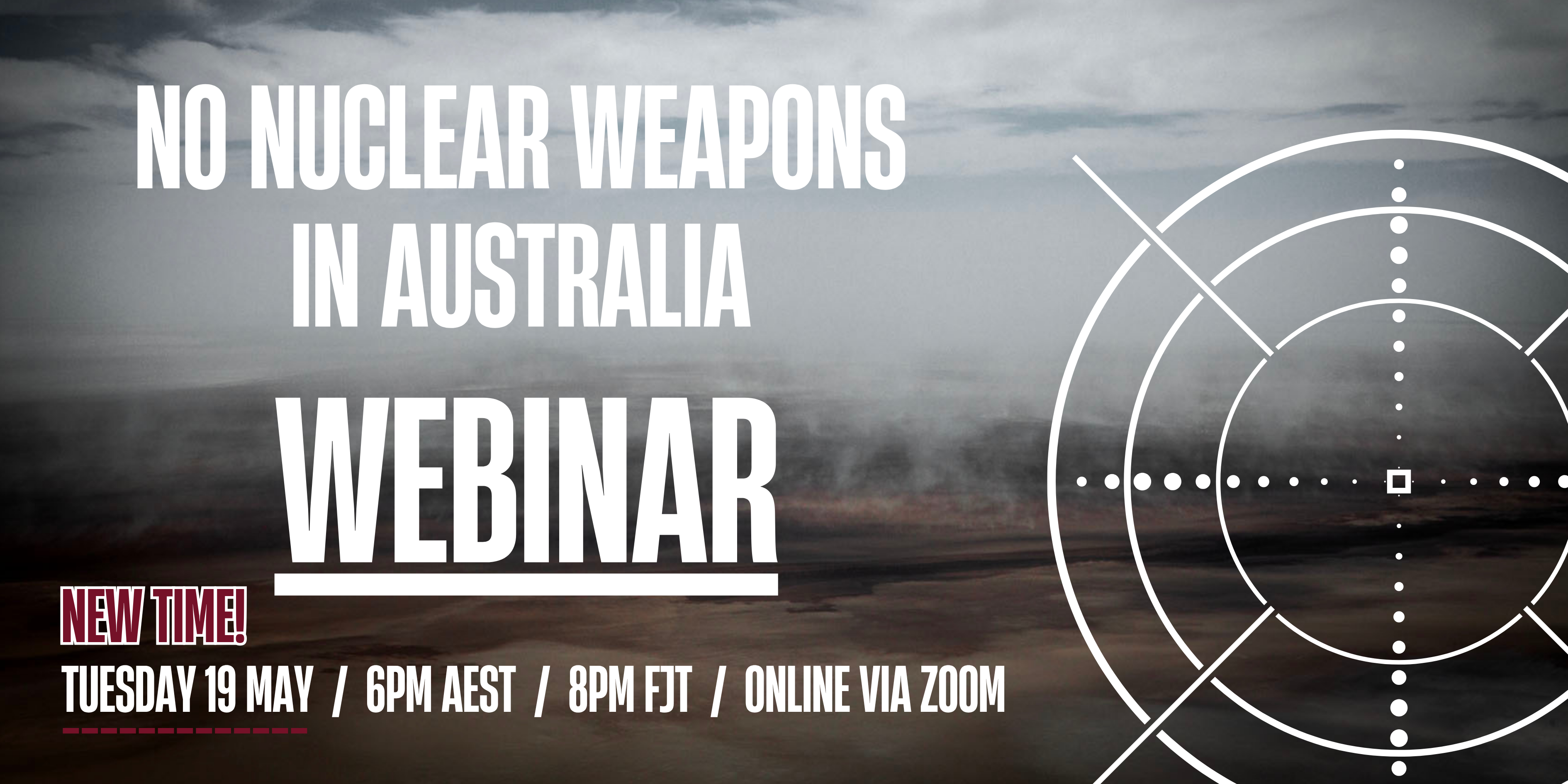
19 May – Webinar- Webinar: No Nuclear Weapons in Australia
Start: 2026-05-19 18:00:00 UTC Canberra, Melbourne, Sydney (GMT+10:00)
End: 2026-05-19 19:30:00 UTC Canberra, Melbourne, Sydney (GMT+10:00)
20 May – Webinar – The dangerous world of AUKUS, US, military occupation and suppression of dissent

National Webinar, 20th May, 2026, 6.30pm AEST. Confronting laws restricting/suppressing protest speech and action
Speakers: Former Sen. Rex Patrick, Lawyer Nick Hanna ,Arthur Rorris ,Jorgen Doyle, Sen David Shoebbridge,
Facilitator Kelley Tranter.

of the week – Australians for War Powers Reform (AWPR)
To see nuclear-related stories in greater depth and intensity
 Antinuclear