Temperatures in eastern Antarctica are 28 degrees Celsius warmer than usual
Temperatures in eastern Antarctica are 70 degrees warmer than usual https://thehill.com/policy/energy-environment/e2-wire/598842-temperatures-in-eastern-antarctica-are-70-degrees-warmer BY SARAKSHI RAI – 03/18/22
Eastern Antarctica on Friday recorded temperatures that are 70 degrees higher than normal for this time of the year, The Washington Post reported.
Temperatures in the eastern part of the continent have soared 50 to 90 degrees above normal, raising concern from the scientific community.
The Post reported that instead of temperatures being between minus 50 and minus 60 degrees Fahrenheit, they’ve been closer to zero or 10 degrees Fahrenheit, which is considered to be a massive heat wave by Antarctic standards.
BY SARAKSHI RAI – 03/18/22

Temperatures in eastern Antarctica are 70 degrees warmer than usual
BY SARAKSHI RAI – 03/18/22 06:28 PM EDT 818

© istock
Eastern Antarctica on Friday recorded temperatures that are 70 degrees higher than normal for this time of the year, The Washington Post reported.
Temperatures in the eastern part of the continent have soared 50 to 90 degrees above normal, raising concern from the scientific community.
The Post reported that instead of temperatures being between minus 50 and minus 60 degrees Fahrenheit, they’ve been closer to zero or 10 degrees Fahrenheit, which is considered to be a massive heat wave by Antarctic standards.
“In about 65 record years in Vostok, between March and October, values above -30°C were never observed,” climate journalist Stefano Di Battista told the news outlet in an email.
A researcher studying polar meteorology at the Université Grenoble Alpes Dr. Jonathan Wille also tweeted that this heatwave was “never supposed to happen.”
March marks the beginning of autumn in Antarctica, when temperatures usually tend to fall, The Post noted.
Willie tweeted that the warmer than usual conditions over Antarctica were caused by an extreme weather system.
“[T]his is not something we’ve seen before,” he said. “This moisture is the reason why the temperatures have gotten just so high,” he told The Post.
Exceptional warmth at North Pole, 28 degrees Celsius above normal
Record ‘bomb cyclone’ bringing exceptional warmth to North Pole. Arctic temperatures could approach the melting point as they surge nearly 50 degrees above normal. Temperature differences from normal predicted over the Arctic early Wednesday from the American (GFS) model. The difference is
around 50 degrees (28 Celsius) at the North Pole. (ClimateReanalyzer.org).
A record-breaking “bomb cyclone” that began its development over the U.S. East Coast on Friday is bringing an exceptional insurgence of mild air to the Arctic. Temperatures around 50 degrees (28 Celsius) above normal could visit the North Pole on Wednesday, climbing to near the freezing mark.
It’s a highly unusual and extreme bout of circumstances, particularly considering the North Pole is still in a nearly six-month period of darkness known as “polar night.” The sun doesn’t fully rise above the horizon between fall and spring equinoxes, contributing to the bone-chilling temperatures customary to the inhospitable region.
Washington Post 15th March 2022
https://www.washingtonpost.com/weather/2022/03/15/north-pole-melting-arctic-climate/
Labor returned in South Australia landslide, but questions loom over hydrogen future — RenewEconomy

Labor’s landslide win in South Australia, which saw energy minister Dan van Holst Pellekaan lose his seat, has implications for the grid leading world’s transition to renewables, and national policy. The post Labor returned in South Australia landslide, but questions loom over hydrogen future appeared first on RenewEconomy.
Labor returned in South Australia landslide, but questions loom over hydrogen future — RenewEconomy
Russian invasion a stark reminder we should have doubled-down on renewables years ago — RenewEconomy

Localised clean energy production is not just necessary to tackle climate change. It will prove vital as we navigate the turbulent decade we find ourselves in. The post Russian invasion a stark reminder we should have doubled-down on renewables years ago appeared first on RenewEconomy.
Russian invasion a stark reminder we should have doubled-down on renewables years ago — RenewEconomy
Ruling pressures Japan to set proper damages for Fukushima nuclear disaster — Fukushima 311 Watchdogs

March 19, 2022 (Mainichi Japan) The amount of compensation has been finalized in a series of class-action lawsuits brought by people affected by the disaster at the Fukushima Daiichi Nuclear Power Station managed by Tokyo Electric Power Co. Holdings (TEPCO). The Supreme Court rejected appeals filed by TEPCO in six cases. It is a message […]
Ruling pressures Japan to set proper damages for Fukushima nuclear disaster — Fukushima 311 Watchdogs
Radioactive iodine levels in primary cooling water at the Ikata Nuclear Power Plant Unit 3 increase threefold. — Fukushima 311 Watchdogs

(From left) Units 3, 2, and 1 of Shikoku Electric Power Co.’s Ikata Nuclear Power Plant in Ikata Town, Ehime Prefecture, Japan, December 14, 2021; photo by Takao Kitamura from a Honsha helicopter. 2022/3/18 Shikoku Electric Power Co. and Ehime Prefecture announced on April 18 that the concentration of radioactive iodine in the primary cooling […]
Radioactive iodine levels in primary cooling water at the Ikata Nuclear Power Plant Unit 3 increase threefold. — Fukushima 311 Watchdogs
Containers toppled over, tanks shifted sideways Increasing radioactive waste poses risk due to earthquake at TEPCO’s Fukushima Daiichi Nuclear Power Plant — Fukushima 311 Watchdogs

March 18, 2022The water level in the spent nuclear fuel pool in Unit 2 of TEPCO’s Fukushima Daiichi Nuclear Power Plant (Okuma and Futaba, Fukushima Prefecture) dropped on March 17 after an earthquake measuring 6 on the Japanese seismic scale struck off the coast of Fukushima Prefecture, causing TEPCO to temporarily halt cooling of the […]
Containers toppled over, tanks shifted sideways Increasing radioactive waste poses risk due to earthquake at TEPCO’s Fukushima Daiichi Nuclear Power Plant — Fukushima 311 Watchdogs
Contaminated soil piles up in vast Fukushima cleanup project — Fukushima 311 Watchdogs

March 18, 2022 More than a decade of decontamination efforts around the crippled Fukushima Daiichi Nuclear Power Plant has allowed thousands of evacuees to return home. But there are still some areas off limits due to the radiation levels. And as contaminated soil piles up, former residents are wondering when, or if, they will go […]
Contaminated soil piles up in vast Fukushima cleanup project — Fukushima 311 Watchdogs
Tsunami advisory lifted for northeastern Japan — Fukushima 311 Watchdogs

March 16, 2022, Japan’s meteorological agency has lifted a tsunami advisory it issued for the northeastern parts of the country following an earthquake off the Pacific coast. The magnitude 7.4 earthquake struck at around 11:30 p.m. on Wednesday. It had a maximum intensity of 6-plus on Japan’s seismic scale of zero to 7. The depth […]
Tsunami advisory lifted for northeastern Japan — Fukushima 311 Watchdogs
AGL gets green light for 2GWh big battery at Liddell coal plant — RenewEconomy

AGL wins approval for Liddell big battery, at site of soon to be closed coal plant, which will have storage of up to 2 gigawatt hours. The post AGL gets green light for 2GWh big battery at Liddell coal plant appeared first on RenewEconomy.
AGL gets green light for 2GWh big battery at Liddell coal plant — RenewEconomy
March 20 Energy News — geoharvey

Opinion and Interview: ¶ “Could Russia’s Reckless Rampage Endanger Nuclear Power?” • Russia’s reckless rampage includes savage attacks on Ukrainian nuclear plants. Shelling the plants raises questions about Russia’s future role in the international energy picture. It also poses a dilemma about whether nuclear energy is safe in a world where a madman can unleash […]
March 20 Energy News — geoharvey
Putin’s ‘Peaceful Atom’ Apocalypse Draws Closer by the Minute

Harvey Wasserman/Reader Supported News, more https://www.rsn.org/001/putins-peaceful-atom-apocalypse-draws-closer-by-the-minute.html20 Mar 22,
If the pumps do not work, the water in the pool may boil, which will lead to the formation of radioactive steam, followed by the melting of the fuel assemblies, which will lead to a severe accident.—-Report from inside Chernobyl appearing in the NYTimes, 3/18/22
Minute by minute, Putin’s “Peaceful Atom” pushes us to the brink of an atomic Apocalypse…maybe as you read this….likely within hours or days.
Some 440 atomic power reactors now heat this planet, 93 in the US. For a half-century opponents have warned that a madman like Putin could make them spew out enough radiation to burn our species off this planet. (https://www.nytimes.com/2022/03/04/science/ukraine-nuclear-power-plant.html )
We are headed precisely in that direction. The clock ticks down in real time.
Start at Chernobyl. Despite decades of industry denials that any commercial reactor could explode—-Soviet or otherwise—-Unit Four blew up on April 26, 1986. (For a gut sense of what happened, watch HBO’s five-part mini-series “Chernobyl.”)
The last of Chernobyl’s other three reactors ran through 2000. Unit Four’s blown core is still so hot the world community spent some $2 billion to cover it with a giant shield, aptly called a sarcophagus.
Chernobyl’s insanely radioactive graveyard still requires a full-time crew to run highly complex, fragile, dangerously deteriorated maintenance equipment. As we speak, they’re being forced (at gunpoint) to run impossible shifts while crumbling from hunger, fatigue and mental collapse. Without immediate rescue, another global catastrophe is inevitable.
Likewise Ukraine’s other fifteen reactors. A dozen are primitive Soviet relics, much bigger than Chernobyl. Their many decades of radioactive residues dwarf what spewed from Unit Four.
That 1986 explosion carpeted Ukraine, Belarus and much of Europe. Fallout came within ten days to the United States. (But the Soviets did seed clouds at the site so resultant rainfall would minimize the blowback into Moscow).
A definitive 2007 study put Chernobyl’s global death toll at 985,000, since grown vastly. With minimal effort Putin could easily blow all 15 Ukraine nukes, plus the Chernobyl dump, saturating the eco-sphere with radiation capable of ending all human life. Loss of coolant, loss of back-up power, cyber-failure, crew collapse and more could end us all. So could a small barrage of small shells at any reactor anywhere.
Thus nothing prevents Putin from threatening us all with absolute extinction without launching a single missile. The Peaceful Atom is the ultimate instrument of mass radioactive suicide.

The threat has been worsened by the likes of Bill Gates, now advocating Small Modular Reactors set to become the next generation of Putin Bombs. Gates wants spent on a Wyoming factory to churn out SMRs. They can never compete with renewables. But they’d sure be sitting ducks for the next Trumpian madman hell-bent on destroying us all.
Gates and his fellow fanatics could easily use the same resources to cheaply, safely, cleanly and quickly produce enough wind turbines to power the nation. No future Putin could ever threaten our survival by blowing up a wind farm.
This hideous war shows every moment it proceeds that today’s atomic advocates are now inexcusably complicit in humankind’s most lethal techno-failure. Nuclear power’s wastes, emissions, heat, high cost and vulnerability to incompetence, war and terror should have long ago erased it from any serious consideration of future construction or prolonged operation.
Whenever a new reactor opens, nearby cancer rates soar. Whenever an old one shuts, they plummet.
When Putin attacked Ukraine, Finland quickly cancelled a proposed reactor project with Russia. All other reactor builds worldwide must now stop. All operating reactors must be phased out as fast as possible.
Every moment Ukraine’s reactors operate brings the human race closer to extinction. Every day Chernobyl stews without massive intervention shortens our likely lifespan.
Is our species committed enough to living on this Earth to finally move on from this hideously catastrophic “Peaceful Atom”.
Harvey Wasserman co-wrote Killing Our Own: The Disaster of America’s Experience with Atomic Radiation. His People’s Spiral of US History is just out. He co-convenes the Grassroots Emergency Election Protection zoom Mondays at 5pm ET ( www.grassrootsep.org)
Australia’s ‘Historic’ Submarine Pact Enters 1st Phase; Will Become Only The 2nd Country With US Nuclear Propulsion Tech
Australia’s ‘Historic’ Submarine Pact Enters 1st Phase; Will Become Only The 2nd Country With US Nuclear Propulsion Tech https://eurasiantimes.com/australias-historic-submarine-pact-enters-1st-phase-aukus-uk/ By Sakshi Tiwari 18 Mar 22,
The AUKUS trilateral agreement signed between the US, the UK with Australia to arm the latter with nuclear submarines has been marred with controversies. Aimed at creating effective nuclear deterrence against China, AUKUS has now entered its first phase.
A Congressional Research Service ‘In Focus’ report on AUKUS Nuclear Cooperation was published on March 11, 2022. It analyzed the onset of the maiden phase of nuclear technology transfer to Australia from the United States under AUKUS, based on previous documents submitted to Congress.
According to the contents of the report, In December 2021, American President Joe Biden had sent an agreement titled- “Agreement among Australia, the United Kingdom, and the United States for the Exchange of Naval Nuclear Propulsion Information” that outlined a new project for exchanging nuclear propulsion technology with Australia.
An accompanying message to Congress explained that the agreement would permit the three governments to “communicate and exchange Naval Nuclear Propulsion Information and would provide authorization to share certain Restricted Data as may be needed during trilateral discussions” concerning a project to develop Australian nuclear-powered submarines.
In November of last year, Australia inked a nuclear submarine technology-sharing deal with the United States and the United Kingdom as part of the AUKUS defense agreement.
Australian Prime Minister Scot Morrison had lauded the deal and said “The Agreement will provide a mechanism for Australian personnel to access invaluable training and education from our US and UK counterparts, necessary for learning how to safely and effectively build, operate and support nuclear-powered submarines”.
AUKUS – A Historic Pact?
The United Kingdom is the only other country with whom the United States has shared its nuclear propulsion technology, as part of the 1958 Mutual Defense Agreement.
The Agreement between the Governments of the United Kingdom of Great Britain and Northern Ireland and the Government of the United States of America for ‘Cooperation on the Uses of Atomic Energy for Mutual Defense Purposes’ was signed on July 3, 1958, by the then US Secretary of State John Foster Dulles and British Minister Samuel Hood.
Signed in the backdrop of the Cold War and the increasing polarization of the world among the West and the Soviet Union, the agreement represented the close cooperation between the two Western allies. It also allowed the west to consolidate nuclear deterrence against the expanding Communist USSR.On the completion of 60 years of the agreement, U.K. Ministry of Defense Permanent Secretary Stephen Lovegrove had said, “From promoting peace to fighting terrorism, the special relationship between Britain and the U.S. is one built on shared values and years of cooperation. The U.S. is one of our closest allies and we hope to share another 60 years of defending peace and stability throughout the world during such uncertain times.”On the other hand, the AUKUS pact was signed last year amid heightened tensions between the West and nuclear-armed China which has been steadily gaining ground in the Pacific.
In fact, the US fears that China’s long-range nuclear-capable missiles like the DF-26 can put its assets in the Pacific in jeopardy. Apart from arming Australia with nuclear subs, it has also decided to strengthen its presence in the country.
China has been a vocal opponent of the AUKUS agreement, claiming that it violates the Non-Proliferation Treaty’s principles, poses a threat to regional stability, and contradicts the precedent of a nuclear-free Southeast Asian region.
According to the Lowy Institute’s 2021 Poll, 63 percent of Australians regard China as a security danger, up 22% from the previous year. The rapid worsening of relations with Beijing has only heightened calls for Canberra to do more to strengthen its alliance with the United States. In that respect, AUKUS certainly has China as a goal.
However, despite the controversies, the AUKUS arrangement indeed has been a historical move and a stern departure from the American policy against sharing nuclear technology.
Will Australia Build Nuclear Subs In Record Time?
The AUKUS plan begins with an eighteen-month study period aimed “to seek an optimal pathway to deliver” nuclear propulsion technology to Australia. The research is said to be in its early phases, with the specifics still being ironed out.
The agreement, which the governments signed on November 22, 2021, permits each party to exchange “naval nuclear propulsion information as is determined to be necessary to research, develop, design, manufacture, operate, regulate, and dispose of military reactors.” As noted, this information includes restricted data; the AEA defines such data to include “all data concerning … the use of special nuclear material in the production of energy.”
However, Australia has no nuclear weapons and does not use electricity generated by radioactive materials. While it does include a single nuclear reactor, it is used only for non-military research. Australia, on the other hand, is a major uranium exporter.
Australia does not have any nuclear power plants at the moment, although it does have one research reactor. This agreement “specifically prohibits the transfer of restricted data,” as well as “sensitive nuclear technology, sensitive nuclear facilities, and major critical components.”
A major issue concerning Australia’s construction of a nuclear submarine is the lack of nuclear infrastructure, to begin with. The submarines will be built in Australia, but not the reactor compartments because the country’s current plans do not include establishing a nuclear-power industry capable of sustaining the program, according to Australian PM Scott Morrison.
As a result, one of the most important requirements for Australia would be a reactor design that will not require refueling during the submarines’ estimated service lifespan of up to 35 years, writes Nick Child, Senior Fellow for Naval and Maritime Security at IISS.
He also argues that a large amount of expert shipbuilding investment, as well as supporting infrastructure, will be necessary to assure the submarines’ and their propulsion systems’ safe and effective operation. This will necessitate the use of UK and US expertise, which means diverting engineers and resources.
It could be, thus, pertinent to wonder whether the transfer of nuclear technology from the US and the UK to Australia would be as holistic and smooth as the Mutual Defense Agreement concluded between the two western stalwarts, decades ago.
Even with strong support from the US and the UK, Australia will need years to build cutting-edge nuclear-powered submarines. It has been recommended that Australian submarine sailors train on older American or British submarines that are about to be retired as a workaround.
Another alternative could be to provide nuclear submarines to Australia, either American or British, as a stopgap measure until Canberra can operate its own nuclear submarines. Some experts have speculated that Australia could have a nuclear submarine only by 2030, however, leasing one from the US is always an option.
It could be years before Australia builds its own nuclear submarine from scratch using the technology acquired from the US and UK but the first phase of the agreement could be one step in that direction.
- Contact the author at sakshi.tiwari9555@gmail.com
Nuclear testing in Maralinga, sixty years on

Nuclear testing in Maralinga, sixty years on, First Nations communities have borne the brunt of nuclear testing carried out by the British Government in the 1950s. Forced off their land for 30 years, they have since been tasked with monitoring operations as part of their bid for land back. http://honisoit.com/2022/03/nuclear-testing-in-maralinga-sixty-years-on/?fbclid=IwAR3I0PK-6iZhEgsBzkE4ojkVf9PjgS7h0xJ1fLubi2raItB6A by Katarina Butler. March 17, 2022 In the wake of Hiroshima, every major power on Earth scrambled to develop nuclear weapons to maintain military relevance. One such country was Britain, and in a bid to strengthen Australia’s relationship with Brits, the Menzies government offered swathes of land for nuclear testing. The areas chosen were predominantly inhabited by First Nations people.
Testing in Australia was carried out in three locations: Montebello Islands, Emu Field, and Maralinga, between 1952 and 1957. A total of twelve major atomic detonations occurred, creating large fireballs and mushroom clouds that released radioactive debris that is still detectable today. The explosions were similar in size to those seen at Hiroshima and Nagasaki.
March 17, 2022 In the wake of Hiroshima, every major power on Earth scrambled to develop nuclear weapons to maintain military relevance. One such country was Britain, and in a bid to strengthen Australia’s relationship with Brits, the Menzies government offered swathes of land for nuclear testing. The areas chosen were predominantly inhabited by First Nations people.
Testing in Australia was carried out in three locations: Montebello Islands, Emu Field, and Maralinga, between 1952 and 1957. A total of twelve major atomic detonations occurred, creating large fireballs and mushroom clouds that released radioactive debris that is still detectable today. The explosions were similar in size to those seen at Hiroshima and Nagasaki.
For the surrounding communities, the testing also posed, and poses, significant health risks.
Nuclear fallout is a mix of unfissioned material and radioactive material produced during the explosion (such as cesium-137). Radioactive chemicals do not degrade the way that other explosives byproducts do. Instead, they have ‘half-lives’ which denote the time taken for half of the radioactive material to decay and become inactive (or decay into another lower-weight radioactive compound). Large amounts of plutonium-239 were dispersed during these tests.
Initially, unfissioned plutonium-239 was thought to be relatively harmless. However, recent research from Monash University indicates otherwise. When larger plutonium particles enter the atmosphere, they can release radioactive nanoparticles which spread across the environment attached to dust or rain. As wildlife take up this plutonium from the soil, it is believed to slowly release into other flora and fauna — with dangerous implications for people living on Country. This is particularly concerning considering the 24,100 year half-life of plutonium-239.
In the lead up to the tests, British Armed Forces failed to warn First Nations people of the dangers associated with the program. Only one officer was responsible for covering the thousands of square kilometres to inform whoever he could find. The officer, Walter MacDougall, was then criticised by the Chief Scientists, who wrote that “he is apparently placing the affairs of a handful of natives above those of the British Commonwealth of Nations.”
From 1955 to 1985 the Anangu people of Maralinga Tjarutja were displaced to the nearby Lutheran Mission. While the British’s Operation Brumby attempted to dilute the high concentrations of radioactive material now embedded in the land, concerns about remaining contamination lingered.
In 1985, the McLelland Royal Commission proved that further decontamination efforts were needed. The Royal Commission also criticised the complicity of the Australian Government and its lack of safety concerns. Eight years later, the British Government made a $35 million payment to the $101 million cleanup cost. The process involved the removal and off-site decontamination of hundreds of thousands of cubic metres of soil before its reburial.
The Maralinga Technical Advisory Committee was thus formed to oversee remediation. Decontamination efforts were hindered by the reluctance of the British to accurately disclose the location and extent of testing. Fortunately, only 120 square kilometres of the contaminated 3200 remained unremediated in the year 2000, with clean up and monitoring efforts ongoing today.
Between 2001 and 2009, the South Australian and Federal governments entered negotiations with the Anangu people, ensuring that they would be able to safely return to Country. Anangu people had to prove that they could monitor for erosion, damage or contamination before being officially granted land back.
The disaster of Maralinga is disturbingly familiar. Today, just like in the 1950s, the settler-colonial state of Australia is abusing Country, leaving it victim to climate change-induced fires and floods. We see the deferral of responsibility to Traditional Owners who, yet again, are cleaning up the mess of ongoing colonial violence. In both cases, the struggle for Indigenous land rights must also be a struggle to restore what has been socially and environmentally lost to centuries of colonial damage and abuse.
Record minimum amount of Antarctic sea ice
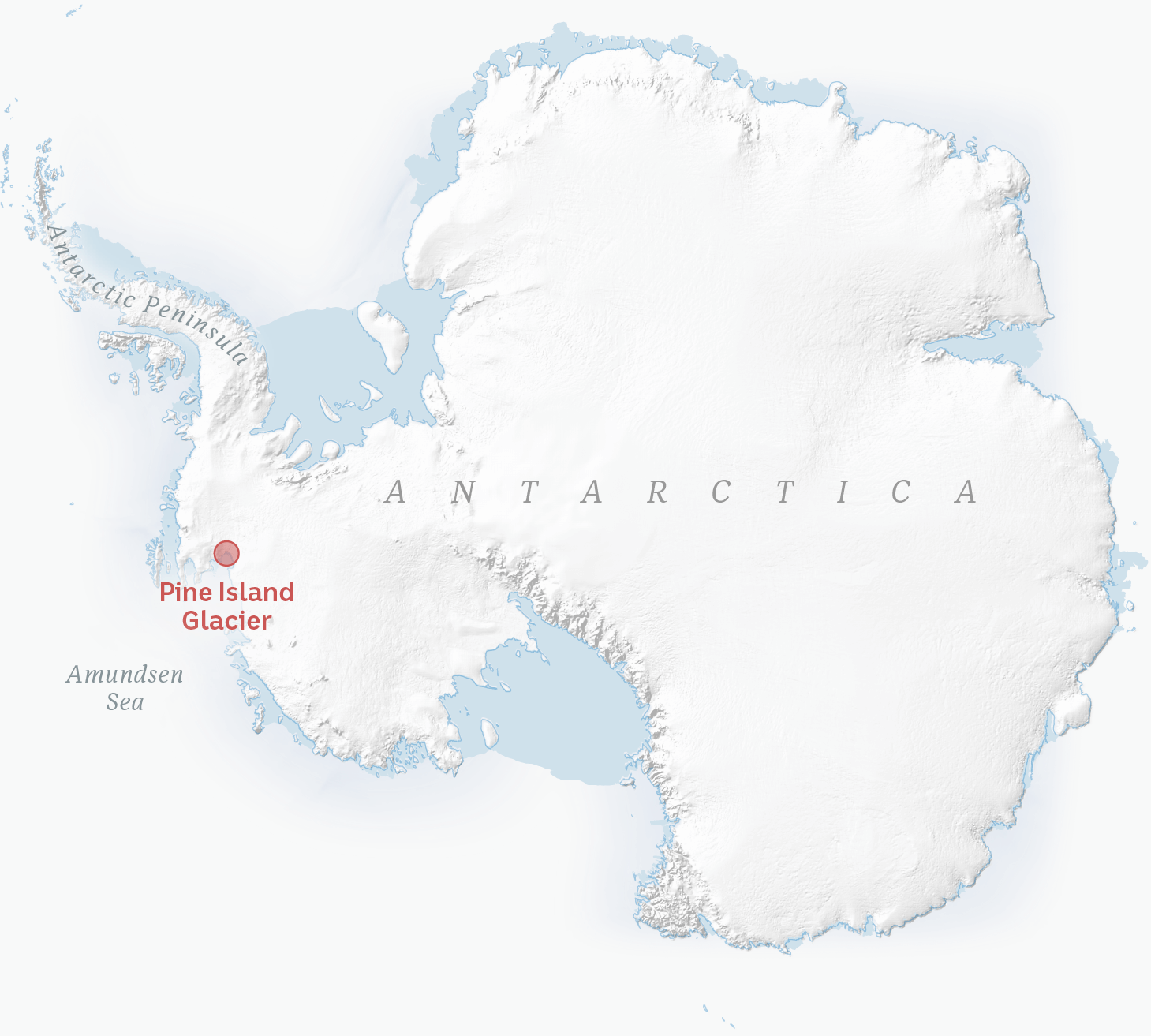
Arctic Sea Ice News and Analysis, National Snow and Ice Data Center, 17 Mar 22, ”………………………….Antarctic sea ice minimum sets a record In the south, Antarctic sea ice recently reached its late-summer minimum, dropping below all previous minimum ice extents in the satellite record (Figure 4a). For the first time since the satellite record began in 1979, extent fell below 2 million square kilometers (772,000 square miles), reaching a minimum extent of 1.92 million square kilometers (741,000 square miles) on February 25. Ice extent declined at a near-average rate through most of the month at about 40,000 square kilometers (15,400 square miles) per day, but the decline significantly slowed to about 15,000 square kilometers (5,800 square miles) per day towards the end of the month.
Following the unusually early and above average sea ice maximum extent on September 1, there was a rapid decline in ice extent through the austral spring and summer, with the most notable feature being the clearing out of ice from the Ross and Amundsen Sea sectors during January and February as well as the loss of ice from the northwestern Weddell Sea region during that period (Figure 4b on original ). Much of the Antarctic coast is still ice-free and sea ice remains well below average in the eastern Ross Sea, western Bellingshausen Sea, and northwestern Weddell Sea. However, persistent patches of high concentration sea ice in the area of Pine Island Bay and in the central Weddell Sea are obstructing research groups trying to work in those areas. The RV Nathaniel B Palmer, operated by the National Science Foundation (NSF), and the RV Araon, operated by South Korea’s Korean Polar Research Institute (KOPRI), have been attempting to conduct research near the outlet of Thwaites Glacier. The research teams were forced to work at an adjacent region to the west, the Dotson Ice Shelf, to avoid the heavy ice conditions near Thwaites………… http://nsidc.org/arcticseaicenews/
1 This month.
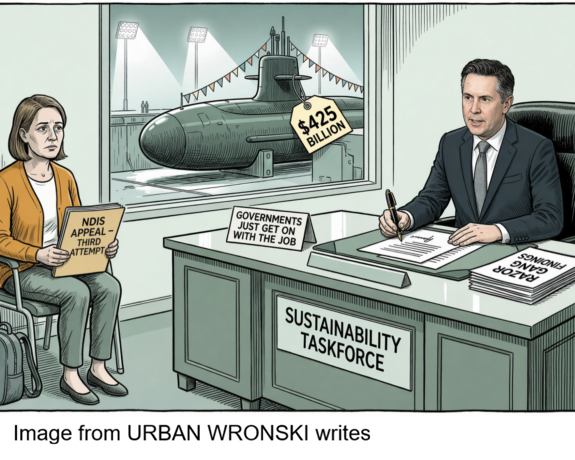

PETITION – To: Prime Minister Anthony Albanese and the Australian Labor Government
Chernobyl: The Lost Tapes – A good documentary on Chernobyl on SBS available On Demand for the next 3 weeks– https://www.sbs.com.au/ondemand/tv-program/chernobyl-the-lost-tapes/235274195556
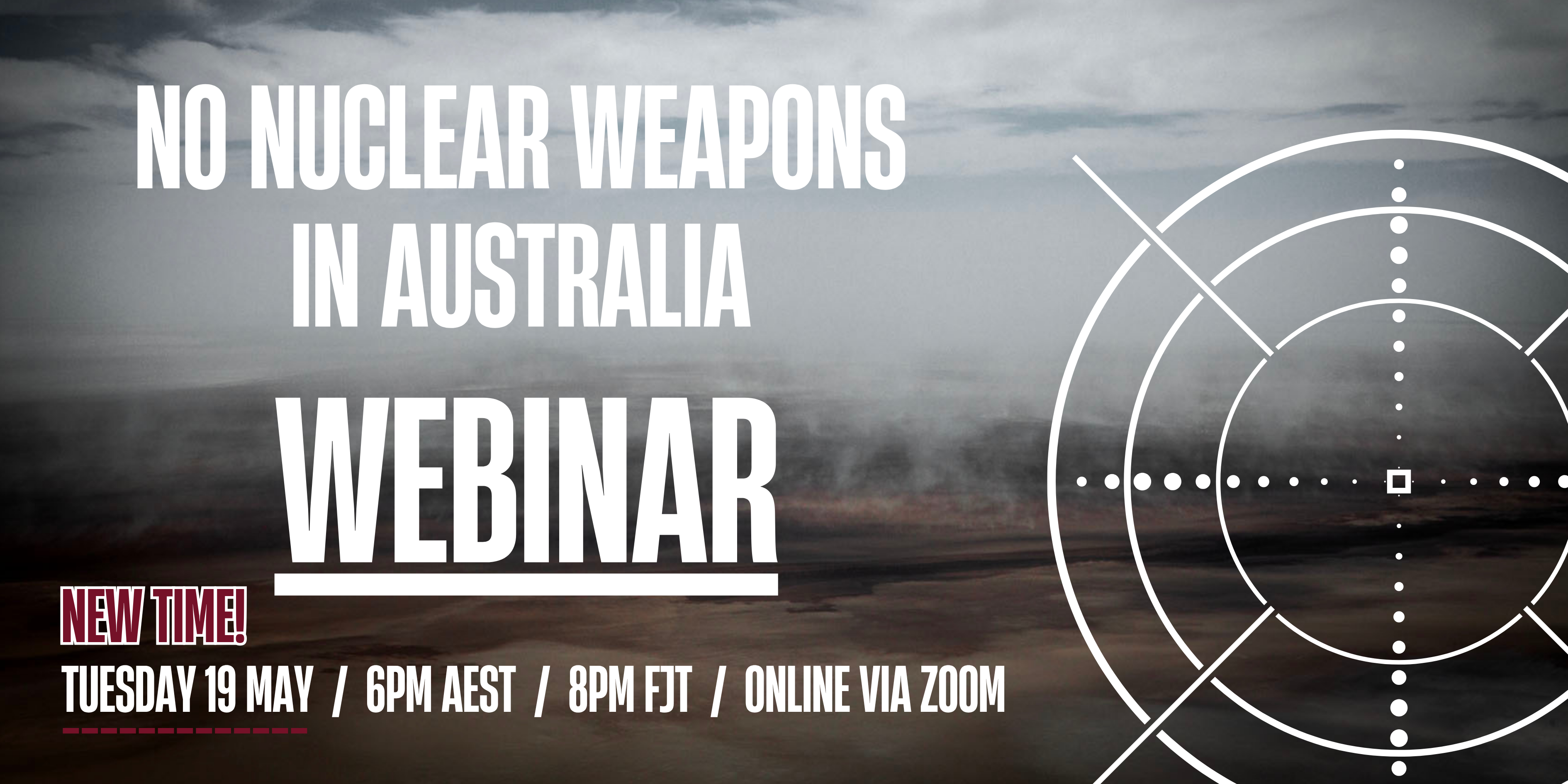
19 May – Webinar- Webinar: No Nuclear Weapons in Australia
Start: 2026-05-19 18:00:00 UTC Canberra, Melbourne, Sydney (GMT+10:00)
End: 2026-05-19 19:30:00 UTC Canberra, Melbourne, Sydney (GMT+10:00)
20 May – Webinar – The dangerous world of AUKUS, US, military occupation and suppression of dissent

National Webinar, 20th May, 2026, 6.30pm AEST. Confronting laws restricting/suppressing protest speech and action
Speakers: Former Sen. Rex Patrick, Lawyer Nick Hanna ,Arthur Rorris ,Jorgen Doyle, Sen David Shoebbridge,
Facilitator Kelley Tranter.

of the week – Australians for War Powers Reform (AWPR)
To see nuclear-related stories in greater depth and intensity
 Antinuclear