How Much Less Newsworthy Are Civilians in Other Conflicts?

A lot less, particularly when they’re victims of the US, FAIR, JULIE HOLLAR, 18 Mar 22, As US news media covered the first shocking weeks of the Russian invasion of Ukraine, some media observers—like FAIR founder Jeff Cohen (Common Dreams, 2/28/22)—have noted their impressions of how coverage differed from wars past, particularly in terms of a new focus on the impact on civilians.
To quantify and deepen these observations, FAIR studied the first week of coverage of the Ukraine war (2/24–3/2/22) on ABC World News Tonight, CBS Evening News and NBC Nightly News. We used the Nexis news database to count both sources (whose voices get to be heard?) and segments (what angles are covered?) about Ukraine during the study period. Comparing this coverage to that of other conflicts reveals both a familiar reliance on US officials to frame events, as well as a newfound ability to cover the impact on civilians—when those civilians are white and under attack by an official US enemy, rather than by the US itself.
Ukrainian sources—no experts
One of the most striking things about early coverage has been the sheer number of Ukrainian sources. FAIR always challenges news media to seek out the perspective of those most impacted by events, and US outlets are doing so to a much greater extent in this war than in any war in recent history. Of 234 total sources—230 of whom had identifiable nationalities—119 were Ukrainian (including five living in the United States.)
However, these were overwhelmingly person-on-the-street interviews that rarely consisted of more than one or two lines. Even the three Ukrainian individuals identified as having a relevant professional expertise—two doctors and a journalist—spoke only of their personal experience of the war. Twenty-one (17% of Ukrainian sources) were current or former government or military officials.
Airing so many Ukrainian voices, but asking so few to provide actual analysis, has the effect of generating sympathy, but for a people painted primarily as pawns or victims, rather than as having valuable knowledge, history and potential contributions to determine their own futures.
Meanwhile, Russian government sources only appeared four times. Sixteen other Russian sources were quoted: 13 persons on the street, an opposition politician and two members of wealthy families.
Eighty sources were from the United States, including 57 current or former US officials. Despite the diplomatic involvement of the European Union, only two Western European sources were featured: the Norwegian NATO Secretary General and a German civilian helping refugees in Poland. There were also eight foreign civilians featured living in Ukraine: three from the US, three African and two Middle Eastern.
And while political leaders certainly bring important knowledge and perspective to war coverage, so too do scholars, think tanks and civic organizations with regional expertise. But these voices were almost completely marginalized, with only five such civil society experts appearing during the study period. All were in the United States, although one was Ukrainian-American Michael Sawkiw (CBS, 2/24/22), who represented the Ukrainian Congress Committee of America (an organization associated with Stepan Bandera’s faction of the Organization of Ukrainian Nationalists, which participated in the Holocaust during World War II).
In effect, then, US news media have largely allowed US officials to frame the terms of the conflict for viewers. While officials lambasted the Russian government and emphasized “what we’re going to do to help the Ukrainian people in the struggle” (NBC, 3/1/22), no sources questioned the US’s own role in contributing to the conflict (FAIR.org, 3/4/22), or the impact of Western sanctions on Russian civilians.
The bias in favor of US officials, and the marginalization of experts from the country being invaded—as well as civil society experts from any country—recalls US TV news coverage of another large-scale invasion in recent history: the US invasion of Iraq. A FAIR study (Extra!, 5–6/03) at the time found that in the three weeks after the US launched that war, current and former US officials made up more than half (52%) of all sources on the primetime news programs on ABC, CBS, NBC, CNN, Fox and PBS. Iraqis were only 12% of sources, and 4% of all sources were academic, think tank or NGO representatives.
n other words, though the bias is even greater when the US is leading the war, US media seem content to let US officials fashion the narrative around any war, and to mute their critics.
Visible and invisible civilians
But there are striking differences as well in coverage of the two wars. Most notably, when the US invaded Iraq, civilians in the country made up a far smaller percentage of sources: 8% to Ukraine’s 45%.
n other words, though the bias is even greater when the US is leading the war, US media seem content to let US officials fashion the narrative around any war, and to mute their critics.
Visible and invisible civilians
But there are striking differences as well in coverage of the two wars. Most notably, when the US invaded Iraq, civilians in the country made up a far smaller percentage of sources: 8% to Ukraine’s 45%.
But on US TV news, antiwar sentiment appeared starkly different in the two conflicts. Of the 20 Russian sources in the study, ten (50%) expressed opposition to the war, significantly higher than the proportion polls were showing. Meanwhile, antiwar voices represented only 3% of all US sources in early Iraq coverage (FAIR.org, 5/03), a dramatic downplaying of public opposition.
Civilian-centered war coverage
The brunt of modern wars is almost always borne by innocent civilians. But US media coverage of that civilian toll is rarely in sharp focus, such that recent reporting on Russia’s invasion of Ukraine offers an exceptional view of what civilian-centered war coverage can look like—under certain circumstances.
In our study, we looked not just at sources, but also the content of segments about Ukraine. In the first week of the war, the US primetime news broadcasts on ABC, CBS and NBC offered regular reports on the civilian toll of the invasion, sending reporters to major targeted cities, as well as to border areas receiving refugees.
Seventy-one segments across the three networks covered the impact on Ukrainian civilians, both those remaining behind and those fleeing the violence. Twenty-eight of these mentioned or centered on civilian casualties.
Many reports described or aired soundbites of civilians describing their fear and the challenges they faced; several highlighted children. A representative ABC segment (2/28/22), for instance, featured correspondent Matt Gutman reporting: “This little girl on the train sobbing into her stuffed animal, just one of the more than 500,000 people leaving everything behind, fleeing in cramped trains.”
Making the impact on civilians the focus of the story, and featuring their experiences, encourages sympathy for those civilians and condemnation of war. But this demonstration of news media’s ability to center the civilian impact, including civilian casualties, in Ukraine is all the more damning of their coverage of wars in which the US and its allies have been the aggressors—or in which the victims have not been white.
They seem so like us’
Many pundits and journalists have been caught saying the quiet part loud. “They seem so like us,” wrote Daniel Hannan in the Telegraph (2/26/22). “That is what makes it so shocking.”
CBS News‘ Charlie D’Agata (2/25/22) told viewers that Ukraine
isn’t a place, with all due respect, like Iraq or Afghanistan, that has seen conflict raging for decades. This is a relatively civilized, relatively European—I have to choose those words carefully, too—city, one where you wouldn’t expect that, or hope that it’s going to happen.
“What’s compelling is, just looking at them, the way they are dressed, these are prosperous—I’m loath to use the expression—middle-class people,” marveled BBC reporter Peter Dobbie on Al Jazeera (2/27/22):
These are not obviously refugees looking to get away from areas in the Middle East that are still in a big state of war. These are not people trying to get away from areas in North Africa. They look like any European family that you would live next door to.
While US news media have at times shown interest in Black and brown refugees and victims of war (e.g., Extra!, 10/15), it’s hard to imagine them ever getting the kind of massive coverage granted the Ukrainians who “look like us”—as defined by white journalists.
‘Give war a chance’
And one can certainly think of instances in which non-white refugees are given short shrift by US news. Despite their claims of deep concern for the people of Afghanistan as the US withdrew troops last year, for example, these same TV networks have barely covered the predictable and preventable humanitarian catastrophe facing the country (FAIR.org, 12/21/21). More than 5 million Afghan civilians are either refugees or internally displaced……………………………………
‘The booms of distant wars’
As the Russian invasion of Ukraine commenced, NBC anchor Lester Holt (2/25/22) mused:
Tonight, there are at least 27 armed conflicts raging on this planet. Yet so often the booms of distant wars fade before they reach our consciousness. Other times, raw calculations of shared national interests close that distance. But as we are reminded again in images from Ukraine, the pain of war is borderless.
Holt spoke as though journalists like himself play no role in determining which wars reach our consciousness and which fade. The pain of war might be borderless, but international responses to that pain depend very much on the sympathy generated by journalists through their coverage of it. And Western journalists have made very clear which victims’ pain is most newsworthy to them. https://fair.org/home/how-much-less-newsworthy-are-civilians-in-other-conflicts/
Chris Hedges: Waltzing to Armageddon

Consortium News, 18 Mar 22, The Dr. Strangeloves, like zombies rising from the mass graves they created around the globe, are once again stoking new campaigns of industrial mass slaughter.
The Cold War, from 1945 to 1989, was a wild Bacchanalia for arms manufacturers, the Pentagon, the C.I.A., the diplomats who played one country off another on the world’s chess board, and the global corporations able to loot and pillage by equating predatory capitalism with freedom. In the name of national security, the Cold Warriors, many of them self-identified liberals, demonized labor, independent media, human rights organizations, and those who opposed the permanent war economy and the militarization of American society as soft on communism.
That is why they have resurrected it.
The decision to spurn the possibility of peaceful coexistence with Russia at the end of the Cold War is one of the most egregious crimes of the late 20th century. The danger of provoking Russia was universally understood with the collapse of the Soviet Union, including by political elites as diverse as Henry Kissinger and George F. Kennan, who called the expansion of NATO into Central Europe “the most fateful error of American policy in the entire post-Cold War era.”
This provocation, a violation of a promise not to expand NATO beyond the borders of a unified Germany, has seen Poland, Hungary, the Czech Republic, Bulgaria, Estonia, Latvia, Lithuania, Romania, Slovakia, Slovenia, Albania, Croatia, Montenegro and North Macedonia inducted into the Western military alliance.
This betrayal was compounded by a decision to station NATO troops, including thousands of U.S. troops, in Eastern Europe, another violation of an agreement made by Washington with Moscow. The Russian invasion of Ukraine, perhaps a cynical goal of the Western alliance, has now solidified an expanding and resurgent NATO and a rampant, uncontrollable militarism. The masters of war may be ecstatic, but the potential consequences, including a global conflagration, are terrifying.
Peace has been sacrificed for U.S. global hegemony. It has been sacrificed for the billions in profits made by the arms industry. Peace could have seen state resources invested in people rather than systems of control. It could have allowed us to address the climate emergency. But we cry peace, peace, and there is no peace. Nations frantically rearm, threatening nuclear war. They prepare for the worst, ensuring that the worst will happen.
So, what if the Amazon is reaching its final tipping point where trees will soon begin to die off en masse? So what if land ice and ice shelves are melting from below at a much faster rate than predicted? So what if temperatures soar, monster hurricanes, floods, droughts, and wildfires devastate the earth? In the face of the gravest existential crisis to beset the human species, and most other species, the ruling elites stoke a conflict that is driving up the price of oil and turbocharging the fossil fuel extraction industry. It is collective madness.
The march towards protracted conflict with Russia and China will backfire. The desperate effort to counter the steady loss of economic dominance by the U.S. will not be offset by military dominance. If Russia and China can create an alternative global financial system, one that does not use the U.S. dollar as the world’s reserve currency, it will signal the collapse of the American empire. The dollar will plummet in value. Treasury bonds, used to fund America’s massive debt, will become largely worthless. The financial sanctions used to cripple Russia will be, I expect, the mechanism that slays Americans, if not immolation in thermonuclear war.
Washington plans to turn Ukraine into Chechnya or the old Afghanistan, when the Carter administration, under the influence of the Svengali-like National Security Advisor Zbigniew Brzezinski, equipped and armed the radical jihadists that would morph into the Taliban and al Qaeda in the fight against the Soviets. It will not be good for Russia. It will not be good for the United States. It will not be good for Ukraine, as making Russia bleed will require rivers of Ukrainian blood.
Pandora’s Box of Evils
The decision to destroy the Russian economy, to turn the Ukrainian war into a quagmire for Russia and topple the regime of Vladimir Putin will open a Pandora’s box of evils. Massive social engineering — look at Afghanistan, Iraq, Syria, Libya or Vietnam — has its own centrifugal force. It destroys those who play God.
The Ukrainian war has silenced the last vestiges of the Left. Nearly everyone has giddily signed on for the great crusade against the latest embodiment of evil, Vladimir Putin, who, like all our enemies, has become the new Hitler.
The United States will give $13.6 billion in military and humanitarian assistance to Ukraine, with the Biden administration authorizing an additional $200 million in military assistance. The 5,000-strong EU rapid deployment force, the recruitment of all Eastern Europe, including Ukraine, into NATO, the reconfiguration of former Soviet bloc militaries to NATO weapons and technology have all been fast tracked.
Germany, for the first time since World War II, is massively rearming. It has lifted its ban on exporting weapons. Its new military budget is twice the amount of the old budget, with promises to raise the budget to more than 2 percent of GDP, which would move its military from the seventh largest in the world to the third, behind China and the United States.
Once military forces are deployed, even if they are supposedly in a defensive posture, the bear trap is set. It takes very little to trigger the spring. The vast military bureaucracy, bound to alliances and international commitments, along with detailed plans and timetables, when it starts to roll forward, becomes unstoppable. It is propelled not by logic but by action and reaction, as Europe learned in two world wars.
Staggering Hypocrisy
The moral hypocrisy of the United States is staggering. The crimes Russia is carrying out in Ukraine are more than matched by the crimes committed by Washington in the Middle East over the last two decades, including the act of preemptive war, which under post-Nuremberg laws is a criminal act of aggression. Only rarely is this hypocrisy exposed as when U.S. Ambassador to the United Nations Linda Thomas-Greenfield told the body:
“We’ve seen videos of Russian forces moving exceptionally lethal weaponry into Ukraine, which has no place on the battlefield. That includes cluster munitions and vacuum bombs which are banned under the Geneva Convention.”
Hours later, the official transcript of her remark was amended to tack on the words “if they are directed against civilians.” This is because the U.S., which like Russia never ratified the Convention on Cluster Munitions treaty, regularly uses cluster munitions. It used them in Vietnam, Laos, Cambodia, and Iraq. It has provided them to Saudi Arabia for use in Yemen. Russia has yet to come close to the tally of civilian deaths from cluster munitions delivered by the U.S. military.
The Dr. Strangeloves, like zombies rising from the mass graves they created around the globe, are once again stoking new campaigns of industrial mass slaughter. No diplomacy. No attempt to address the legitimate grievances of our adversaries. No check on rampant militarism. No capacity to see the world from another perspective. No ability to comprehend reality outside the confines of the binary rubric of good and evil. No understanding of the debacles they orchestrated for decades. No capacity for pity or remorse.
Elliott Abrams worked in the Reagan administration when I was reporting from Central America. He covered up atrocities and massacres committed by the military regimes in El Salvador, Guatemala, Honduras and by the U.S.-backed Contra forces fighting the Sandinistas in Nicaragua. He viciously attacked reporters and human rights groups as communists or fifth columnists, calling us “un-American” and “unpatriotic.” He was convicted for lying to Congress about his role in the Iran-Contra affair. During the administration of George W. Bush, he lobbied for the invasion of Iraq and tried to orchestrate a U.S. coup in Venezuela to overthrow Hugo Chávez.
There will be no substitute for military strength, and we do not have enough,” writes Abrams for the Council on Foreign Relations, where he is a senior fellow:……………………….
Putin played into the hands of the war industry. He gave the warmongers what they wanted. He fulfilled their wildest fantasies. There will be no impediments now on the march to Armageddon. Military budgets will soar. The oil will gush from the ground. The climate crisis will accelerate.
China and Russia will form the new axis of evil. The poor will be abandoned. The roads across the earth will be clogged with desperate refugees. All dissent will be treason. The young will be sacrificed for the tired tropes of glory, honor and country. The vulnerable will suffer and die.
The only true patriots will be generals, war profiteers, opportunists, courtiers in the media and demagogues braying for more and more blood. The merchants of death rule like Olympian gods. And we, cowed by fear, intoxicated by war, swept up in the collective hysteria, clamor for our own annihilation.
Chris Hedges is a Pulitzer Prize–winning journalist who was a foreign correspondent for 15 years for The New York Times, where he served as the Middle East bureau chief and Balkan bureau chief for the paper. ……….https://consortiumnews.com/2022/03/15/chris-hedges-waltzing-to-armageddon/
“Russian Invasion of Ukraine Spotlights the Dangers of Nuclear Reactors in War,” The National Interest
https://npolicy.org/russian-invasion-of-ukraine-spotlights-the-dangers-of-nuclear-reactors-in-war-the-national-interest/March 17, 2022 Nuclear Power Economics and Security, Op-Eds & Blogs, RESOURCE, TOPICS
Earlier this week, in response to Russian assaults on nuclear plants in Ukraine, Japanese Prime Minister Fumio Kishida called for the creation of a specialized Japanese nuclear security force to secure Japan’s nuclear plants against military attack. The governor of Fukui, which hosts Japan’s largest number of reactors, went further: He requested Japan’s defense ministry build dedicated military bases to halt such attacks.
What’s stunning is how sharply Japan’s response to Russia’s attacks contrasted with Washington’s.
Victor Gilinsky and I spotlighted this in the The National Interest piece, “Russian Invasion of Ukraine Spotlights the Dangers of Nuclear Reactors in War.” In it, we note how our Energy Department has been more intent in reassuring Americans about how little radiation was released from the plants in Ukraine than in clarifying what their military vulnerabilities are. As we explain, this penchant for downplaying the military vulnerabilities of nuclear facilities is as old as commercial nuclear power in the United States. The department, in fact, is still keen to export reactors to Jordan, Romania, Poland, the Czech Republic, and — until last month — Ukraine.
If we are serious about nuclear security, this has got to change. At a minimum, Congress should follow Japan’s lead and ask the Pentagon to clarify what the military vulnerabilities of civil nuclear plants are and identify what, if anything, can be done to reduce them. Meanwhile, instead of pushing reactor exports to potential war zones, our government and others should tap the brakes.
Russian Invasion of Ukraine Spotlights the Dangers of Nuclear Reactors in War
By Victor Gilinsky and Henry Sokolski, 17 Mar 22,
The Atomic Energy Commission (AEC), the predecessor of the Department of Energy, concluded that it was not practicable to build protection for reactors against military attacks. In 1967, it rejected a public request for such protection against Cuban missiles for the Turkey Point reactors in south Florida on grounds that the AEC’s established policy was not to require special design features to protect against enemy attacks. The Court of Appeals agreed with the AEC’s decision in 1968.
“What the Commission has essentially decided is that to impose such a burden would be to stifle utterly the peaceful utilization of atomic energy in the United States,” the Court of Appeals decision said.
Even though a condition for every nuclear plant license is that its issuance is not inimical to the “common defense and security,” the AEC, with the approval of the Court of Appeals, claimed that Congress never intended that to encompass anything having to do with enemy actions.
To read the full article click here.
GE produces world-first prototype of fully recyclable wind turbine blade — RenewEconomy

A prototype of a world-first 100 per cent recyclable wind turbine blade has been produced at a manufacturing facility in Spain, marking a big step towards “closing the loop” for wind power. The post GE produces world-first prototype of fully recyclable wind turbine blade appeared first on RenewEconomy.
GE produces world-first prototype of fully recyclable wind turbine blade — RenewEconomy
Australia’s green bank celebrates $10bn investments, still has another $5bn to spend — RenewEconomy

CEFC hits $10 billion investment milestone, and still has nearly $5 billion to spend on energy transition, including electric vehicles and hydrogen. The post Australia’s green bank celebrates $10bn investments, still has another $5bn to spend appeared first on RenewEconomy.
Australia’s green bank celebrates $10bn investments, still has another $5bn to spend — RenewEconomy
Will offshore wind get the same favourable regulatory treatment as oil and gas? — RenewEconomy

Many regulatory hurdles still standing in the way of offshore wind development. Meanwhile, in the oil and gas sector… The post Will offshore wind get the same favourable regulatory treatment as oil and gas? appeared first on RenewEconomy.
Will offshore wind get the same favourable regulatory treatment as oil and gas? — RenewEconomy
“Huge moment:” Australia’s Sundrive claims new solar cell efficiency milestone — RenewEconomy

SunDrive, an Australian solar start-up backed by tech billionaire Mike Cannon-Brookes, claims new solar cell efficiency record. The post “Huge moment:” Australia’s Sundrive claims new solar cell efficiency milestone appeared first on RenewEconomy.
“Huge moment:” Australia’s Sundrive claims new solar cell efficiency milestone — RenewEconomy
Global rooftop solar installations to double by 2025 to nearly 100GW a year — RenewEconomy

New analysis by Rystad Energy predicts global rooftop solar PV installations will surge to 95GW a year by 2025. The post Global rooftop solar installations to double by 2025 to nearly 100GW a year appeared first on RenewEconomy.
Global rooftop solar installations to double by 2025 to nearly 100GW a year — RenewEconomy
March 18 Energy News — geoharvey

Opinion: ¶ “EU: Help Households, Take Socially Just Measures, Don’t Cut Taxes For Wealthy SUV Drivers” • As EU economics and finance ministers meet to discuss high energy costs and fuel taxes, T&E urges governments to avoid a blanket reductions in fuel taxes. In a letter to ministers, T&E says they should instead pursue more […]
March 18 Energy News — geoharvey
Debate escalates over controversial nuclear waste storage site
the CEO of the federal nuclear regulator ARPANSA confirmed ANSTO has the ability to manage the waste onsite ‘for decades to come.
Debate escalates over controversial nuclear waste storage site https://www.eurekastreet.com.au/article/debate-escalates-over-controversial-nuclear-waste-storage-site?Michele Madigan, 15 March 2022
The long conflict between the federal government plan for a national radioactive waste facility in South Australia and the opponents of the plan has continued to escalate in the past months. On 19 November, Kimba on SA’s Eyre Peninsula was declared South Australia’s Agricultural Town of the Year. Notwithstanding this significant honour, on 29 November the federal Minister for Resources Keith Pitt finally made the formal declaration that Napandee in the Kimba district was the chosen site for the proposed federal radioactive waste dump.
With just 4.5 per cent of South Australia as arable farming, the Napandee site is on premier farming country. The Barngarla peoples are the Traditional Owners of the area.
The federal government plan is for two adjacent facilities: one for low-level radioactive waste and the other for long-lived intermediate waste (ILW) from Australian Nuclear Science and Technology Organisation (ANSTO). It was quite extraordinary that when interviewed then by SA ABC radio Minister Pitt said only that the facility would be used ‘for low level waste.’
In addition to the ILW already at ANSTO will be the latest shipment of two tonnes of reprocessed nuclear waste from the United Kingdom to Australia. The shipment consists of four 500kg canisters held inside a forged steel container called a TN-81.
Since the late 1990s, the supposed needs of nuclear medicine have always been promoted as key in successive government claims for hosting the nation’s radioactive waste in what understandably might be an otherwise unpalatable addition to any community. Throughout 2021, in the face of opposition, Resources Minister Keith Pitt occasionally emerged to make exaggerated claims of the necessity of the dump for the future of nuclear medicine in Australia.
In this debate around nuclear medicine, it is essential to present up-to-date facts. Nuclear expert Dr Jim Green addressed relevant facts in his paper, Nuclear waste and nuclear medicine in Australia, ‘…According to Medicare figures, nuclear medicine represents less than three percent of medical imaging. Nuclear medicine should not be confused with X-rays using iodine contrast, radiotherapy or chemotherapy, which are used much more commonly used…Nuclear medicine typically uses short-lived radioisotopes and the waste does not require special handling after a short period of radioactivity…’
‘It would be far safer, cheaper and completely possible to keep the long lived intermediate level waste at ANSTO until a required “world’s best practice” underground site is identified and built.’
For decades, ANSTO has presented the argument that there’s no more room for the storage of their own nuclear waste manufactured on site at their Lucas Heights facility. This has been supported by various governments as necessitating the creation of a federal waste facility elsewhere.
However in the 2020 Senate Inquiry, the CEO of the federal nuclear regulator ARPANSA confirmed ANSTO has the ability to manage the waste onsite ‘for decades to come.’
The significant 2021-22 federal budget allocation of $59.8m to ANSTO for building expansion provided a forum for nuclear experts to advise government in the resultant September Public Works Committee hearings. Senator Hughes’ request to explain why Sydney is seen as a safer option for storing its nuclear waste ‘than a far less densely populated area’ gave Dr Margaret Beavis from the Medical Association for Prevention of War, a chance to make a crucial point in the debate:
‘I think the expertise and security at ANSTO is far greater. I also think the risks from this waste pale into insignificance compared to the risks of the nuclear reactor. So, if you’re going to be keeping one large facility secure, you may as well keep it all there. The regulator has said quite clearly that there’s sufficient space at Lucas Heights to store this waste for decades to come. If you’ve got to look after the reactor-which we absolutely do have to do…’
Throughout the long campaign, Traditional Owners, Barngarla women and men, exhausted by the 25 years it took to successfully establish their native title rights over their traditional areas, have been incredulous at being excluded from the vital site vote.
On 21 December, following the Minister’s official declaration, Chair of the Barngarla Determination Aboriginal Corporation Jason Bilney made the official announcement on State Parliament House steps, of the launch of their court appeal against the federal process which had denied them having a say on their own country.
Bilney faced the media flanked by Craig Wilkins and Barry Wakelin, former Member for Grey and implacable local Kimba opponent to the dump plan. Wilkins as the CEO of CCSA, South Australia’s premier conservation body, the Conservation Council of South Australia took the opportunity to announce their latest report which clearly states, ‘the planned facility is not consistent with international best practice, and waste will be placed in temporary storage without a plan for what happens next.’
In January this year, the Kimba district was affected by floods causing widespread damage to roads and infrastructure. And in February the State Greens initiated Legislative Council debate of opposition to the federal plan concluded with the Greens and Labor opposition in a tied vote with vote forcibly resolved by the Liberal Speaker
The question remains: what are the requirements for this plan to go ahead? An historic hurdle is that the former Olsen Liberal Government passed legislation to prevent radioactive waste being brought into the state. This particular state legislation prohibited the introduction of the higher level waste ILW. Later, the Rann Labor government raised the threshold to prohibit the importation of any national radioactive waste. Thus the State Parliament must conduct a public parliamentary inquiry.
Overriding this South Australian legislation is another obstacle the federal government must deal with to achieve the planned facility. As well, the Barngarla court case is in train, unlikely to be concluded before the federal election. The strong No Rad Waste opposition continues on many levels in Kimba and with their colleagues throughout Eyre Peninsula. The SA State election (on 19 March) is imminent. The regulator ARPANSA must enter into the licensing process of the project. The federal government has named ARWA Australian Radioactive Waste Agency as the department which has carriage of the nuclear facility plan; legislation must be passed for it to become an independent body.
However more than any of the serious domestic hurdles, recent weeks have brought home quite starkly the dangers of nuclear projects including this one. The Chernobyl site was among the first Ukrainian areas to be captured by invading Russian forces. The Russian seizure of Europe’s largest nuclear plant Zaporizhzhia is another cause for alarm.
The present government plan for Australia’s long-lived intermediate level waste means ongoing transportation for the 1700 kms from its present storage place in Lucas Heights, to be stored above ground for the next one hundred years. There is no dispute that this ILW is toxic and dangerous for an unimaginable 10,000 years. At least two nuclear engineers including Alan Parkinson have pointed out the dangers of this plan open as it is to terrorist attacks in this uncertain world.
It would be far safer, cheaper and completely possible to keep the long lived intermediate level waste at ANSTO until a required ‘world’s best practice’ underground site is identified and built. Whichever party is successful in the coming federal elections, it is to be hoped good sense prevails in this crucial national issue.
For further information, visit Nuclear Free Campaign.
Why a No-Fly Zone over Ukraine is a bad idea – (lead to World War 3)
No-Fly Zone in Ukraine Would Be “Direct Involvement in the War,” Experts Warn, Amy Goodman, Democracy Now!, March 16, 2022 , Ukrainian President Volodymyr Zelensky continues to demand the U.S. and NATO allies impose a no-fly zone over Ukraine, an idea that President Biden has rejected even as a growing number of Republicans embrace the idea despite the risk it could draw the U.S. directly into the war against Russia and possibly spark a nuclear confrontation.
Stephen Wertheim, a senior fellow in the American Statecraft Program at the Carnegie Endowment for International Peace, co-authored an open letter signed by foreign policy experts who oppose a no-fly zone over Ukraine. It urges leaders to continue diplomatic and economic measures to end the conflict. “As you start thinking about how a no-fly zone would actually unfold, it becomes very obvious this would be direct involvement in the war against Russia, and rather than end the war, a no-fly zone would enlarge the war and escalate the war,” says Wertheim.
TRANSCRIPT……………………
STEPHEN WERTHEIM:………. what it means is that the United States and NATO forces would commit to shoot down enemy planes, any enemy plane that enters the zone. It’s quite clear Russia would not voluntarily comply with our verbal declaration of a no-fly zone, so we’d have to shoot those planes down. ………..
as you start thinking about how a no-fly zone would actually unfold, it becomes very obvious this would be direct involvement in the war against Russia. And rather than end the war, a no-fly zone would enlarge the war and escalate the war. And that’s why the Biden administration has, rightly, been very clear throughout this conflict that a no-fly zone would be escalatory and is not something that it wants to do………..
there is no really limited no-fly zone. A no-fly zone means a commitment not just to declare something, but to enforce it, by making sure that Russian planes cannot fly within that zone. And so, it would clearly be viewed as an act of war and an escalation by Russia………… What it really would be is an intermediate step toward a much wider war.
AMY GOODMAN: So, I wanted to ask you about the state of negotiations to end this war. The Ukrainian President Zelensky suggested earlier today that Russian demands are becoming more realistic. ………….. Zelensky’s remarks came a day after he acknowledged he doesn’t expect Ukraine to join NATO anytime soon, which is very significant.
………… STEPHEN WERTHEIM:……….. there are also some encouraging words coming out of the Biden administration, as well. Secretary of State Tony Blinken just recently suggested that the sanctions that have been imposed on Russia were not intended to be permanent. And what that signals is perhaps a willingness on the part of the United States to drop some of the most draconian sanctions on Russia if that becomes necessary in order to secure a peace settlement that the legitimate government of Ukraine, led by Zelensky, would desire. ………………………………………….. https://truthout.org/video/no-fly-zone-in-ukraine-would-be-direct-involvement-in-the-war-experts-warn/?eType=EmailBlastContent&eId=6141299d-bdd4-4062
Extradition looms for Julian Assange, after Supreme Court refuses to hear his appeal.
 | |||
Extradition Looms for Assange After UK Supreme Court Refuses to Hear His Appeal, Marjorie Cohn, Truthout, March 16, 2022
The British judicial system has erected still another barrier to Julian Assange’s freedom. On March 14, the U.K. Supreme Court refused to hear Assange’s appeal of the U.K. High Court’s ruling ordering his extradition to the United States. If extradited to the U.S. for trial, Assange will face 17 charges under the Espionage Act and up to 175 years in prison for revealing evidence of U.S. war crimes.
With no explanation of its reasoning, the Supreme Court denied Assange “permission to appeal” the High Court’s decision, saying that Assange’s appeal did not “raise an arguable point of law.” The court remanded the case back to the Westminster Magistrates’ Court, which is the same court that denied the U.S. extradition request on January 4, 2021.
In all likelihood, the magistrates’ court will refer the case to the British Home Office where Home Secretary Priti Patel will review it. Assange’s lawyers then have four weeks to submit materials for Patel’s consideration. If she orders Assange’s extradition — which is highly likely — his lawyers will file a cross-appeal in the High Court asking it to review the issues Assange lost in the magistrates’ court.
If the High Court refuses to review those additional issues, Assange can appeal to the European Court of Human Rights. That could take years. Meanwhile, he languishes in London’s high-security Belmarsh Prison, in fragile mental and physical health. He suffered a mini-stroke as his extradition hearing began. United Nations Special Rapporteur on Torture Nils Melzer wrote in a Twitter post that the “U.K. is literally torturing him to death.”
The Legal Background……………….
Issues Assange Seeks to Raise on Cross-Appeal
In the cross-appeal, Assange’s lawyers will raise the following points:
*The extradition treaty between the U.S. and the U.K. forbids extradition for a political offense and since espionage is a political offense, the court lacked jurisdiction to hear the case;
*Extradition would be oppressive or unjust due to the passage of time;
*The charges against Assange do not satisfy the “dual criminality test” which requires that they constitute criminal offenses in both the U.S. and the U.K.;
*Extradition is barred because the request is based on Assange’s political opinions;
*Extradition is barred because it would violate Assange’s rights to a fair trial and freedom of expression, as well as the prohibition on inhuman and degrading treatment, under the European Convention on Human Rights; and
*The request for extradition is an abuse of process because it is being pursued for a political motive and not in good faith.
Human Rights Organizations Decry Supreme Court’s Refusal to Hear Appeal…………………..
Assange’s Fiancée Says U.S. Wants to Imprison Him for Exposing Its War Crimes
Stella Moris, Assange’s fiancée, says Assange is being persecuted for carrying out a core journalistic mission: telling the truth.
“Whether Julian is extradited or not, which is the same as saying whether he lives or dies, is being decided through a process of legal avoidance,” Moris said. “Avoiding to hear arguments that challenge the UK courts’ deference to unenforceable and caveated claims regarding his treatment made by the United States, the country that plotted to murder him. The country whose atrocities he brought into the public domain. Julian is the key witness, the [principal] indicter, and the cause of enormous embarrassment to successive US governments.”
Moris added, “Julian was just doing his job, which was to publish the truth about wrongdoing. His loyalty is the same as that which all journalists should have: to the public. Not to the spy agencies of a foreign power.”
According to Moris, the United States wants to imprison Assange for 175 years because he “published evidence that the country that is trying to extradite him committed war crimes and covered them up; that it committed gross violations that killed tens of thousands of innocent men, women and children; that it tortured and rendered; that it bombed children, had death squads, and murdered Reuters journalists in cold blood; that it bribed foreign officials and bullied less powerful countries into harming their own citizens, and that it also corrupted allied nations’ judicial inquiries into US wrongdoing.”
Assange and Moris, who have two small children together, have finally received permission to marry. They will be wed later this month in Belmarsh Prison. https://truthout.org/articles/extradition-looms-for-assange-after-uk-supreme-court-refuses-to-hear-his-appeal/?eType=EmailBlastContent&eId=6141299d-bdd4-4062-8b24-47c47f1bdba5
Australia’s Radiation Protection Authority approves Lucas Heights as site for increased storage of nuclear waste returned from overseas
Australian Radiation Protection and Nuclear Safety Agency, 16 Mar 22,
Today ARPANSA’s CEO issued a licence to the Australian Nuclear Science and Technology Organisation (ANSTO) to prepare a site for the Intermediate Level Waste Capacity Increase facility at Lucas Heights.
The decision is informed by considerations around the #safety and #security of the facility design, advice from #nuclear safety committees, public consultation and international best practices.
ARPANSA is the independent regulator of Commonwealth entities that use or produce radiation and ensure that community safety and wellbeing remain at the core of our work.
Read more on our website: https://www.arpansa.gov.au/…/arpansa-approves-siting…
1 This month.
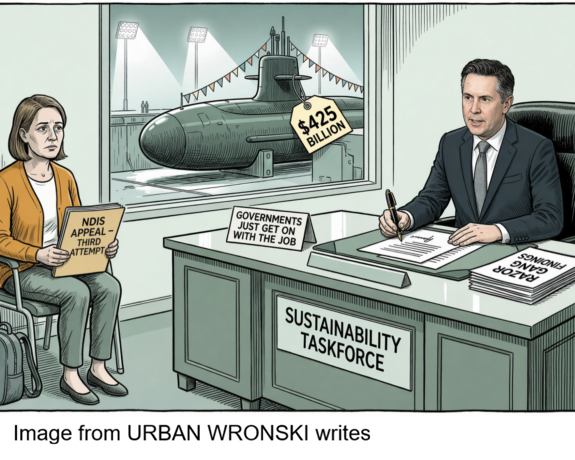

PETITION – To: Prime Minister Anthony Albanese and the Australian Labor Government
Chernobyl: The Lost Tapes – A good documentary on Chernobyl on SBS available On Demand for the next 3 weeks– https://www.sbs.com.au/ondemand/tv-program/chernobyl-the-lost-tapes/235274195556
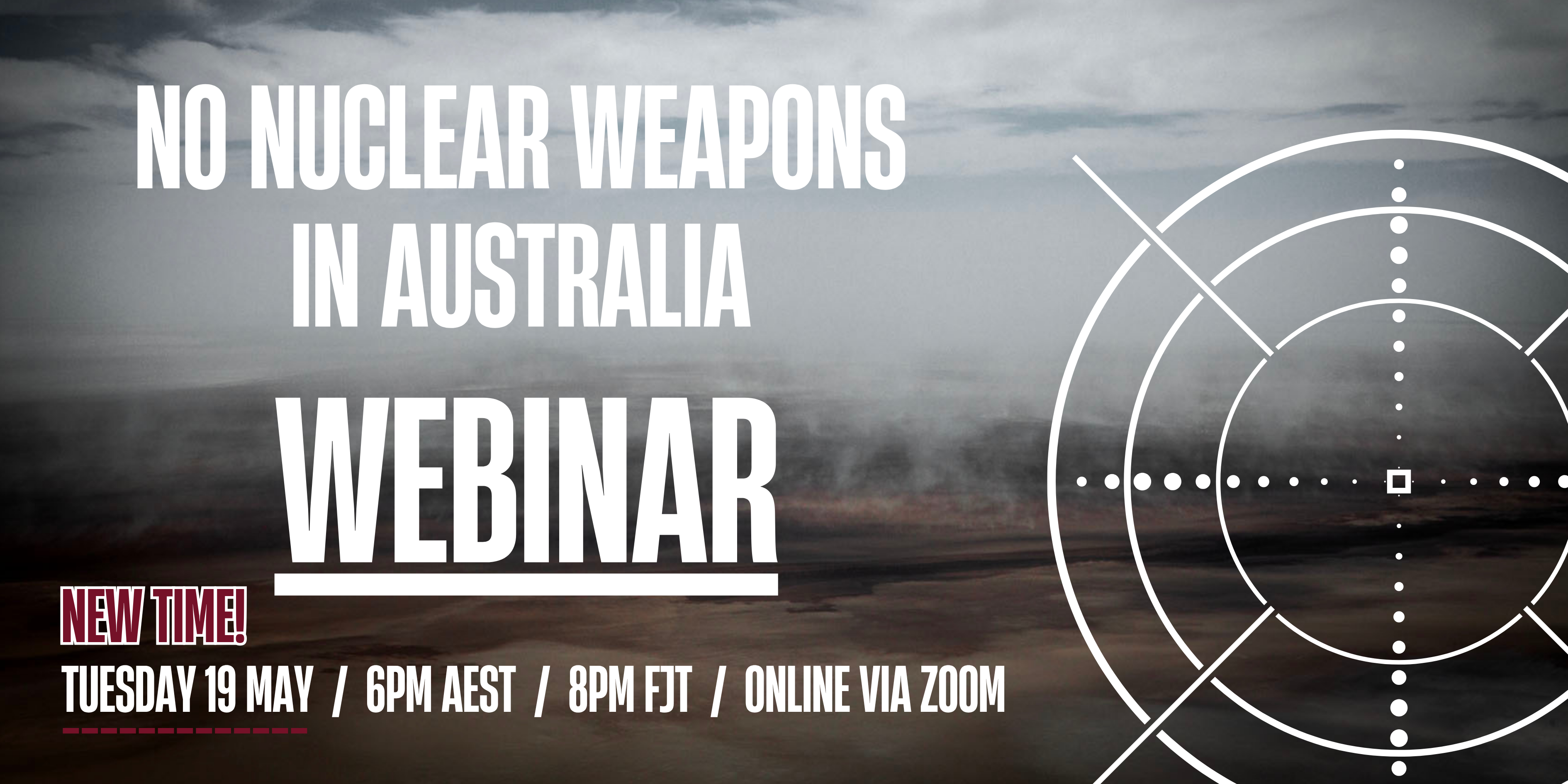
19 May – Webinar- Webinar: No Nuclear Weapons in Australia
Start: 2026-05-19 18:00:00 UTC Canberra, Melbourne, Sydney (GMT+10:00)
End: 2026-05-19 19:30:00 UTC Canberra, Melbourne, Sydney (GMT+10:00)
20 May – Webinar – The dangerous world of AUKUS, US, military occupation and suppression of dissent

National Webinar, 20th May, 2026, 6.30pm AEST. Confronting laws restricting/suppressing protest speech and action
Speakers: Former Sen. Rex Patrick, Lawyer Nick Hanna ,Arthur Rorris ,Jorgen Doyle, Sen David Shoebbridge,
Facilitator Kelley Tranter.

of the week – Australians for War Powers Reform (AWPR)
To see nuclear-related stories in greater depth and intensity
 Antinuclear