Origin lands multiple supply deals for Australia’s biggest wind farm — RenewEconomy

Origin strikes multiple supply deals with corporate customers for Stockyard Hill wind farm. The post Origin lands multiple supply deals for Australia’s biggest wind farm appeared first on RenewEconomy.
Origin lands multiple supply deals for Australia’s biggest wind farm — RenewEconomy
Climate impacts – their effect on mental health
Climate impacts such as rising sea levels, extreme heat and severe floods
will damage the mental wellbeing of millions of people around the world,
scientists have warned. For years scientists have warned of the threats to
people’s physical health caused by rising temperatures. Now there is
enough evidence for them to issue a similar warning about mental health.
iNews 1st March 2022
https://inews.co.uk/news/climate-change-floods-fires-extreme-heat-mental-health-1489617
The expansion of NATO – a boon for the weapons industry and a prelude to conflict with Russia
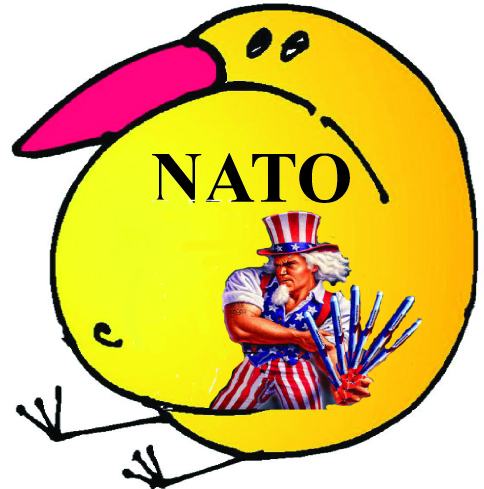
Within two decades, 14 Central and Eastern European countries joined NATO. The organization originally existed to contain the Soviet Union, and Russian officials monitored its advance with alarm. In retrospect, postwar expansion benefited arms makers both by increasing their market and stimulating conflict with Russia.
Arms Industry Sees Ukraine Conflict as an Opportunity, Not a Crisis, Jonathan Ng, Truthout , 2 Mar 22,
”………………………….. Ultimately, policy makers reneged on their promise to Gorbachev, admitting Poland, Hungary and the Czech Republic into NATO in 1999. During the ceremony, Secretary of State Madeleine Albright — who directly cooperated with the Jackson campaign — welcomed them with a hearty “Hallelujah.” Ominously, the intellectual architect of the Cold War, George Kennan, predicted disaster. “Such a decision may be expected to inflame the nationalistic, anti-Western and militaristic tendencies in Russian opinion,” Kennan cautioned.
Few listened. Former Assistant Secretary of Defense Chas Freeman described the mentality of policy makers: “The Russians are down, let’s give them another kick.” Relishing victory, Jackson was equally truculent: “‘Fuck Russia’ is a proud and long tradition in US foreign policy.” Later, he became chairman of the Committee for the Liberation of Iraq, which paved the way for the 2003 invasion, the biggest industry handout in recent history.
Within two decades, 14 Central and Eastern European countries joined NATO. The organization originally existed to contain the Soviet Union, and Russian officials monitored its advance with alarm. In retrospect, postwar expansion benefited arms makers both by increasing their market and stimulating conflict with Russia.
Targeting Ukraine
Tensions reached a new phase in 2014 when the United States backed the removal of President Viktor Yanukovych in Ukraine. Yanukovych had opposed NATO membership, and Russian officials feared his ouster would bring the country under its strategic umbrella. Rather than assuage their concerns, the Obama administration maneuvered to slip Ukraine into its sphere of influence. Assistant Secretary of State Victoria Nuland coordinated regime change with brash confidence. Nuland openly distributed cookies to protesters, and later, capped a diplomatic exchange with “fuck the EU.” At the height of the uprising, Sen. John McCain also joined demonstrators. Flanked by leaders of the fascist Svoboda Party, McCain advocated regime change, declaring that “America is with you.”
By then, newly minted NATO members had bought nearly $17 billion in American weapons. Military installations, including six NATO command posts, ballooned across Eastern Europe. Fearing further expansion, Russia annexed the Crimean Peninsula and intervened in the Donbas region, fueling a ferocious and interminable war. NATO spokespeople argued that the crisis justified expansion. In reality, NATO expansion was a key inciter of the crisis. And the conflagration was a gift to the arms industry. In five years, major weapons exports from the United States increased 23 percent, while French exports alone registered a 72-percent leap, reaching their highest levels since the Cold War. Meanwhile, European military spending hit record heights.
As tensions escalated, Supreme Commander Philip Breedlove of NATO wildly inflated threats, calling Russia “a long-term existential threat to the United States.” Breedlove even falsified information about Russian troop movements over the first two years of the conflict, while brainstorming tactics with colleagues to “leverage, cajole, convince or coerce the U.S. to react.” A senior fellow at the Brookings Institution concluded that he aimed to “goad Europeans into jacking up defense spending.”
And he succeeded. The Stockholm International Peace Research Institute registered a significant leap in European military spending — even though Russian spending in 2016 equaled only one quarter of the European NATO budget. That year, Breedlove resigned from his post before joining the Center for a New American Security, a hawkish think tank awash in industry funds.
The arms race continues. After European negotiations gridlocked, Russia recognized two separatist republics in the Donbas region before invading Ukraine this February. Justifying the bloody operation, Putin wrongly accused Ukrainian authorities of genocide. Yet his focus was geopolitical. “It is a fact that over the past 30 years we have been patiently trying to come to an agreement with the leading NATO countries,” he said. “In response to our proposals, we invariably faced either cynical deception and lies or attempts at pressure and blackmail, while the North Atlantic alliance continued to expand despite our protests and concerns. Its military machine is moving and, as I said, is approaching our very border.”
In retrospect, three decades of industry lobbying has proved deadly effective. NATO engulfed most of Eastern Europe and provoked a war in Ukraine — yet another opportunity for accumulation. Alliance members have activated Article 4, mobilizing troops, contemplating retaliation and moving further toward the brink of Armageddon.
Yet even as military budgets rise, European arms makers — like their American counterparts — have required foreign markets to overcome fiscal restraints and production costs. They need clients to finance their own military buildup: foreign wars to fund domestic defense. ………………………….. https://truthout.org/articles/arms-industry-sees-ukraine-conflict-as-an-opportunity-not-a-crisis/?eType=EmailBlastContent&eId=734c56bc-48da-4e66-bea1-f2bedb7d1431
As Russia’s Ukraine war intensifies, some warn nuclear escalation is possible
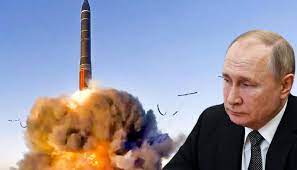
https://www.wbur.org/npr/1083696555/russia-ukraine-war-putin-nuclear-escalation-riskAs Russia’s Ukraine war intensifies, some warn nuclear escalation is possible, “At this time we see no reason to change our own alert levels,” White House press secretary Jen Psaki told reporters on Monday.
Some experts, though, are worried about the possibility of nuclear escalation. Here’s why.
The exact meaning of Putin’s order remains unclear, March 01, 2022, Geoff Brumfiel Over the weekend, Russian President Vladimir Putin gave orders to his nation’s nuclear forces. On Monday, the U.S. said it would not respond with changes to its own nuclear posture.
In a brief clip, Putin is shown speaking to two stony-faced generals about the country’s nuclear forces.
“He basically said, ‘Because of all these hostile or aggressive statements and aggressive policies, we should start this special mode of combat duty of our deterrent forces,'” says Pavel Podvig, a senior researcher at the United Nations Institute for Disarmament Research in Geneva.
It’s unclear what a “special mode of combat duty” actually is. One possibility, says Podvig, is that the order activated the nation’s nuclear command and control system.
“Normally, in peacetime, the command and control system is configured in a way that makes the transmission of an actual command very much impossible,” he says. “It’s like you could press the button, but then nothing happens, because the button is not connected to anything.”
Putin’s order may have meant he wanted the button activated.
Then again, it may not.
Podvig says a follow-up statement from the Russian Ministry of Defense implied it may just mean upping the staffing at facilities that support nuclear weapons. It could be “they just added a few more people to the crews,” Podvig says.
Russia has a lot of nuclear weapons at the ready
Russia has more nuclear weapons than any other nation on Earth, according to Hans Kristensen, director of the nuclear information project at the Federation of American Scientists.
“We estimate that they have about 4,500 or so nuclear warheads in their military stockpile,” he says.
For now, Russia’s largest nuclear weapons — aboard its submarines, bombers and intercontinental ballistic missiles — appear to be at their usual level of alert, Kristensen says. But the nation’s stockpile also includes nearly 2,000 so-called tactical nuclear weapons, which are kept in storage facilities throughout Russia.
They were developed for the purpose of fighting a limited regional battle. Sort of a nuclear war in a very small area,” says Kristensen.
The U.S. has about 100 nuclear bombs stationed across Europe that could be used for tactical nuclear warfare.
The Kremlin’s battlefield weapons can be launched on the same short-range missiles Russia is currently using to bombard Ukraine, such as its Iskander ballistic missile.
Right now, there’s no indication that the battlefield nukes have been pulled out of storage
Russia says it would use nuclear weapons only as a last resort, but some are skeptical
Russia officially says it would use nuclear weapons only if the nation’s very survival was at risk. But not everyone thinks its nuclear rules are so clear-cut.
“A lot of people have questioned whether the bar for Russian nuclear use is as high as its official statements say,” says Olga Oliker with the International Crisis Group.
In 2018, the Pentagon’s nuclear posture review warned that Russia might use a battlefield nuke to “‘de-escalate’ a conflict on terms favorable to Russia.” In other words, Russia might detonate a smaller weapon to get its opponents to back off.
That statement was somewhat controversial among arms control experts at the time. Oliker believes such action would only possibly happen in a direct war with NATO forces.
In the current conflict with Ukraine, “I think it’s very unlikely that Moscow is just going to lob a nuclear weapon at something,” she says. “Obviously it’s been a week when a lot of people’s assumptions have been challenged, but I’ll cling to this one for a while.”
The risk of miscalculation is higher than it’s been in years
Putin’s latest statements may amount to little more than nuclear saber-rattling, says Jeffrey Lewis, a senior scholar at the Middlebury Institute of International Studies at Monterey.
“Putin has had a pretty bad-news week,” he says. “The Ukrainian army is fighting back, which he didn’t expect. The Russian army is performing dreadfully. They are indiscriminately shelling civilian areas. Those things all make him look weak, and the best way to push those headlines down a little bit is a nuclear threat.”
But Lewis says there is still plenty of nuclear risk. Putin has already miscalculated in his invasion of Ukraine.
“What would happen if the Russian warning system had a false alarm in the middle of a crisis like this?” he asks. “Would Putin know it was a false alarm? Or would he jump to the wrong conclusion?”
Even if the short-range battlefield nuclear weapons are still on the shelf, thousands of Russian and American long-range missiles are ready to launch in just minutes. That threat hangs over everything as the conflict in Ukraine drags on.
Russian Foreign Minister Lavrov warns that a third world war would be nuclear
Russia’s Lavrov: A third world war would be nuclear, destructive
Moscow put its strategic nuclear forces on alert last week amid the war in Ukraine, causing ripples across the globe. Aljazeera, 2 Mar 22,
Russian Foreign Minister Sergey Lavrov has warned that if a third world war were to occur, it would involve nuclear weapons and be destructive, according to Russian media.
The comments reported by the RIA news agency on Wednesday came a day after he told a Geneva disarmament meeting via video link that neighbouring Ukraine, which Russian invaded last week, had been seeking nuclear weapons.
He did not provide evidence other than saying “Ukraine still has Soviet nuclear technologies and the means of delivery of such weapons.”
Lavrov has also said that Russia would have faced a “real danger” if Ukraine acquired nuclear weapons.
Nuclear forces on high alert
Russian forces attacked Ukraine by land, air and sea, the biggest attack by one state against another in Europe since World War II.
The move has been countered by the West with harsh economic sanctions on Russia as well as deliveries of arms and humanitarian aid to Ukraine.
The US government on Tuesday announced a ban on Russian flights in its airspace, following similar moves by the European Union and Canada.
On Sunday, Russian President Vladimir Putin put his strategic nuclear forces on alert, causing ripples across the globe and raising the threat the tensions could lead to the use of nuclear weapons. ………….. https://www.aljazeera.com/news/2022/3/2/russias-lavrov-says-a-ww-iii-would-be-nuclear-and-destructive
”Infinite war” – NATO and U.S. weapons industry found the perfect sales opportunity in Yemen
Arms Industry Sees Ukraine Conflict as an Opportunity, Not a Crisis, Jonathan Ng, Truthout , 2 Mar 22,
In the United States, the industry employs around 700 lobbyists. Nearly three-fourths previously worked for the federal government — the highest percentage for any industry. The lobby spent $108 million in 2020 alone, and its ranks continue to swell. Over the past 30 years, about 530 congressional staffers on military-related committees left office for defense contractors. Industry veterans dominate the Biden administration, including Secretary of Defense Lloyd Austin from Raytheon.
”’………………….Yemen Burning
Arms makers found the perfect sales opportunity in Yemen. In 2011, a popular revolution toppled Ali Abdullah Saleh, who had monopolized power for two decades. His crony, Abdu Rabbu Mansour Hadi, became president the next year after easily winning the election: He was the only candidate. Thwarted by elite intrigue, another uprising ejected Mansour Hadi in 2015.
That year, Prince Salman became king of Saudi Arabia, but power concentrated into the hands of his son, Mohammed bin Salman, who feared that the uprising threatened to snatch Yemen from Saudi Arabia’s sphere of influence.
Months later, a Saudi-led coalition invaded, leaving a massive trail of carnage. “There was no plan,” a U.S. intelligence official emphasized. “They just bombed anything and everything that looked like it might be a target.”
The war immediately attracted NATO contractors, which backed the aggressors. They exploit the conflict to sustain industrial capacity, fund weapons development and achieve economies of scale. In essence, the Saudi-led coalition subsidizes the NATO military buildup, while the West inflames the war in Yemen.
Western statesmen pursue sales with perverse enthusiasm. In May 2017, Donald Trump visited Saudi Arabia for his first trip abroad as president, in order to flesh out the details of a $110 billion arms bundle. His son-in-law, Jared Kushner, arrived beforehand to discuss the package. When Saudi officials complained about the price of a radar system, Kushner immediately called the CEO of Lockheed Martin to ask for a discount. The following year, Mohammed bin Salman visited company headquarters during a whirlwind tour of the United States. Defense contractors, Hollywood moguls and even Oprah Winfrey welcomed the young prince Yet the Americans were not alone. The Saudi-led coalition is also the largest arms market for France and other NATO members. And as the French Ministry of the Armed Forces explains, exports are “necessary for the preservation and development of the French defense technological and industrial base.” In other words, NATO members such as France export war in order to retain their capacity to wage it.
President Macron denies that the coalition — an imposing alliance that includes Saudi Arabia, Egypt, Jordan, the United Arab Emirates, Kuwait, Bahrain, Qatar, Sudan and Senegal — uses French weapons. But the statistics are suggestive. Between 2015 and 2019, France awarded €14 billion in arms export licenses to Saudi Arabia and €20 billion in licenses to the United Arab Emirates. CEO Stéphane Mayer of Nexter Systems praised the performance of Leclerc tanks in Yemen, boasting that they “have highly impressed the military leaders of the region.” In short, while Macron denies that the coalition wields French hardware in Yemen, local industrialists cite their use as a selling point. Indeed, Amnesty International reports that his administration has systematically lied about its export policy. Privately, officials have compiled a “very precise list of French materiél deployed in the context of the conflict, including ammunition.”
Recently, Macron became one of the first heads of state to meet Mohammed bin Salman following the assassination of journalist Jamal Khashoggi. Like Trump’s trip, Macron’s diplomatic junket was a sales mission. Eventually, Macron clinched a deal with the United Arab Emirates for 80 Rafale fighters. The CEO of Dassault Aviation called the contract “the most important ever obtained by French military aerospace,” guaranteeing six years of work for a pillar of its industrial base.
French policy is typical of NATO involvement in Yemen. While denouncing the war, every Western producer has outfitted those carrying it out. Spanish authorities massage official documents to conceal the export of lethal hardware. Great Britain has repeatedly violated its own arms embargo. And the United States has not respected export freezes with any consistency.
Even NATO countries in Eastern Europe exploit the war. While these alliance members absorb Western arms, they dump some of their old Soviet hardware into the Middle East. Between 2012 and July 2016 Eastern Europe awarded at least €1.2 billion in military equipment to the region.
Ironically, a leading Eastern European arms exporter is Ukraine. While the West rushes to arm Kyiv, its ruling class has sold weapons on the black market. A parliamentary inquiry concluded that between 1992 and 1998 alone, Ukraine lost a staggering $32 billion in military assets, as oligarchs pillaged their own army. Over the past three decades, they have outfitted Iraq, the Taliban and extremist groups across the Middle East. Even former President Leonid Kuchma, who has led peace talks in the Donbas region, illegally sold weapons while in office. More recently, French authorities investigated Dmytro Peregudov, the former director of the state defense conglomerate, for pocketing $24 million in sales commissions. Peregudov resided in a château with rolling wine fields, while managing the extensive properties that he acquired after his years in public service.
The Warlords
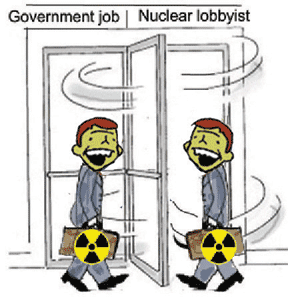
Kuchma and Peregudov are hardly exceptional. Corruption is endemic in an industry that relies on the proverbial revolving door. The revolving door is not simply a metaphor but an institution, converting private profit into public policy. Its perpetual motion signifies the social reproduction of an elite that resides at the commanding heights of a global military-industrial complex. Leading power brokers ranging from the Mitterrands and Chiracs in France, to the Thatchers and Blairs in Britain, and the Gonzálezes and Bourbons in Spain have personally profited from the arms trade.
In the United States, the industry employs around 700 lobbyists. Nearly three-fourths previously worked for the federal government — the highest percentage for any industry. The lobby spent $108 million in 2020 alone, and its ranks continue to swell. Over the past 30 years, about 530 congressional staffers on military-related committees left office for defense contractors. Industry veterans dominate the Biden administration, including Secretary of Defense Lloyd Austin from Raytheon.
The revolving door reinforces the class composition of the state, while undermining its moral legitimacy. As an elite rotates office, members insulate policymaking from democratic input, taint the government with corruption and mistake corporate profit with national interest. By 2005, 80 percent of army generals with three stars or more retired to arms makers despite existing regulations. (The National Defense Authorization Act prohibits top officers from lobbying the government for two years after leaving office or leveraging personal contacts to secure contracts. But compliance is notoriously poor.) More recently, the U.S. Navy initiated investigations against dozens of officers for corrupt ties to the defense contractor Leonard Francis, who clinched contracts with massive bribes, lavish meals and sex parties.
Steeped in this corrosive culture, NATO intellectuals now openly talk about the prospect of “infinite war.” Gen. Mike Holmes insists that it is “not losing. It’s staying in the game and getting a new plan and keeping pursuing your objectives.” Yet those immersed in its brutal reality surely disagree. The United Nations reports that at least 14,000 people have died in the Russo-Ukrainian War since 2014, and over 377,000 have perished in Yemen.
In truth, the doctrine of infinite war is not so much a strategy as it is a confession — acknowledging the violent metabolism of a system that requires conflict. As a self-selecting elite propounds NATO expansion, military buildup and imperialism, we must embrace what the warlords most fear: the threat of peace.The author would like to thank Sarah Priscilla Lee of the Learning Sciences Program at Northwestern University for reviewing this article. https://truthout.org/articles/arms-industry-sees-ukraine-conflict-as-an-opportunity-not-a-crisis/?eType=EmailBlastContent&eId=734c56bc-48da-4e66-bea1-f2bedb7d1431
American nuclear power industry uses Russian fuel, seeks exemption from sanctions
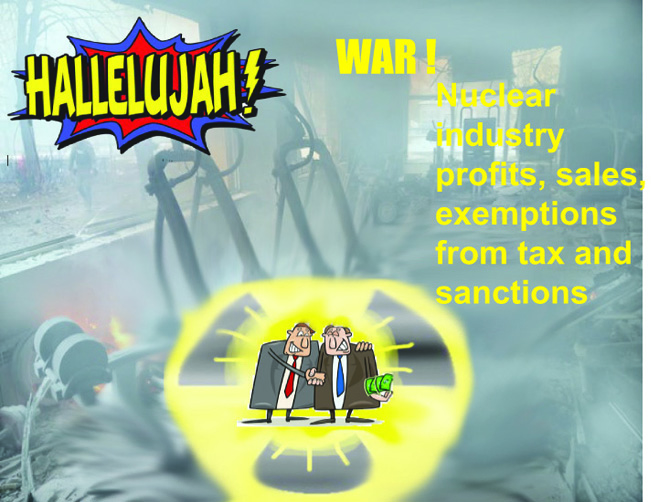
U.S. utilities push White House not to sanction Russian uranium, By Ernest Scheyder and Trevor Hunnicutt, March 1 (Reuters) – The U.S. nuclear power industry is lobbying the White House to allow uranium imports from Russia to continue despite the escalating conflict in Ukraine, with cheap supplies of the fuel seen as key to keeping American electricity prices low, according to two sources familiar with the matter.
The United States relies on Russia and its allies Kazakhstan and Uzbekistan for roughly half of the uranium powering its nuclear plants – about 22.8 million pounds (10.3 million kg) in 2020 – which in turn produce about 20% of U.S. electricity, according to the U.S. Energy Information Administration and the World Nuclear Association.
Washington and its allies have imposed a series of sanctions on Moscow in the past week as Russian forces pushed deeper into neighboring Ukraine, though the sanctions exempt uranium sales and related financial transactions.
The National Energy Institute (NEI), a trade group of U.S. nuclear power generation companies including Duke Energy Corp (DUK.N) and Exelon Corp (EXC.O), is lobbying the White House to keep the exemption on uranium imports from Russia, the sources said.
The NEI lobbying aims to ensure that uranium is not caught up in any future energy-related sanctions, especially as calls intensify to sanction Russian crude oil sales, the sources said.
“The (U.S. nuclear power) industry is just addicted to cheap Russian uranium,” said one of the sources, who declined to be named, citing the sensitivity of the situation.
Duke and Exelon, two of the largest U.S. utilities, could not immediately be reached for comment…………………
Russia’s uranium production is controlled by Rosatom, a state-run company formed by Russian President Vladimir Putin in 2007. The company is an important source of revenue for the country……..
Other utilities around the globe have already begun looking beyond Russia for supply. Swedish power company Vattenfall AB (VATN.UL) said last week it would stop buying Russian uranium for its nuclear reactors until further notice, citing the Ukrainian conflict. https://www.reuters.com/business/energy/exclusive-us-utilities-push-white-house-not-sanction-russian-uranium-2022-03-02/
Ukraine conflict could spark surges of COVID, polio, other diseases, say experts
Ukraine conflict could spark surges of COVID, polio, other diseases, say experts
As many as 5 million people could flee the country in coming weeks, a movement that some health officials fear will fuel covid and other outbreaks.
March 2 Energy News — geoharvey

Opinion: ¶ “Five Takeaways From The UN’s Climate Report” • The UN’s climate science panel issued a report detailing both the impacts of climate change and potential adaptation measures society can take to mitigate the damage. The report warned of dire impacts from global warming. Here are five major takeaways from the newest report. [TheHill] […]
March 2 Energy News — geoharvey
A fatal disconnect? the different narratives of Russia and the West on the Ukraine crisis
Putin’s Nuclear Threat. more https://consortiumnews.com/2022/02/27/putins-nuclear-threat/ The disconnect between the Western and Russian narratives in the current conflict could prove fatal to the world, writes Scott Ritter.
Vladimir Putin is a madman. He’s lost it. At least that is what the leaders of the West would like you to believe. According to their narrative, Putin — isolated, alone, confused, and angry at the unfolding military disaster Russia was undergoing in Ukraine — lashed out, ostensibly threatening the entire world with nuclear annihilation.
In a meeting with his top generals on Sunday, the beleaguered Russian president announced, “I order the defense minister and the chief of the general staff of the Russian armed forces to put the deterrence forces of the Russian army into a special mode of combat service.”
The reason for this action, Putin noted, centered on the fact that, “Western countries aren’t only taking unfriendly actions against our country in the economic sphere, but top officials from leading NATO members made aggressive statements regarding our country” in relation to the ongoing situation in Ukraine.
The “deterrence forces” Putin spoke of refers to Russia’s nuclear arsenal.
What made the Russian president’s words resonate even more was that last Thursday, when announcing the commencement of Russia’s “special military operation” against Ukraine, Putin declared that “no one should have any doubts that a direct attack on our country will lead to the destruction and horrible consequences for any potential aggressor.” He emphasized that Russia is “one of the most potent nuclear powers and also has a certain edge in a range of state-of-the-art weapons.”
When Putin issued that threat, The Washington Post described it as “empty, a mere baring of fangs.” The Pentagon, involved as it was in its own review of U.S. nuclear posture designed to address threats such as this, seemed non-plussed, with an anonymous official noting that U.S. policy makers “don’t see an increased threat in that regard.”
NATO’s Response
For NATO’s part, the Trans-Atlantic military alliance, which sits at the heart of the current crisis, issued a statement in which it noted that:
“Russia’s actions pose a serious threat to Euro-Atlantic security, and they will have geo-strategic consequences. NATO will continue to take all necessary measures to ensure the security and defense of all Allies. We are deploying additional defensive land and air forces to the eastern part of the Alliance, as well as additional maritime assets. We have increased the readiness of our forces to respond to all contingencies.”
Hidden near the bottom of this statement, however, was a passage which, when examined closely, underpinned the reasoning behind Putin’s nuclear muscle-flexing. “[W]e have held consultations under Article 4 of the Washington Treaty,” the statement noted. “We have decided, in line with our defensive planning to protect all Allies, to take additional steps to further strengthen deterrence and defense across the Alliance.”
Under Article 4, members can bring any issue of concern, especially related to the security of a member country, to the table for discussion within the North Atlantic Council. NATO members Estonia, Latvia, Lithuania, and Poland triggered the Article 4 consultation following the Russian incursion into Ukraine. In a statement issued on Friday, NATO Secretary General Jens Stoltenberg expanded on the initial NATO statement, declaring that NATO was committed to protecting and defending all its allies, including Ukraine.
Three things about this statement stood out. First, by invoking Article IV, NATO was positioning itself for potential offensive military action; its previous military interventions against Serbia in 1999, Afghanistan in 2001, Iraq in 2004, and Libya in 2011, were all done under Article IV of the NATO Charter. Seen in this light, the premise that NATO is an exclusively defensive organization, committed to the promise of collective self-defense, is baseless.
Second, while Article V (collective defense) protections only extend to actual NATO members, which Ukraine is not, Article IV allows the umbrella of NATO protection to be extended to those non-NATO members whom the alliance views as an ally, a category Stoltenberg clearly placed Ukraine in.
Finally, Stoltenberg’s anointing of Ukraine as a NATO ally came at the same time he announced the activation and deployment of NATO’s 40,000-strong Response Force, some of which would be deployed to NATO’s eastern flank, abutting Ukraine. The activation of the Response Force is unprecedented in the history of NATO, a fact that underscores the seriousness to which a nation like Russia might attach to the action.
When seen in this light, Putin’s comments last Thursday were measured, sane, and responsible.
What Happens if NATO Convoys or EU Jets Are Hit?
Since the Article IV consultations began, NATO members have begun to supply Ukraine with lethal military aid, with the promise of more in the days and weeks to come. These shipments can only gain access to Ukraine through a ground route that requires transshipment through NATO members, including Romania and Poland. It goes without saying that any vehicle carrying lethal military equipment into a war zone is a legitimate target under international law; this would apply in full to any NATO-affiliated shipment or delivery done by a NATO member on their own volition.
What happens when Russia begins to attack NATO/EU/US/Allied arms deliveries as they arrive on Ukrainian soil? Will NATO, acting under Article IV, create a buffer zone in Ukraine, using the never-before-mobilized Response Force? One naturally follows the other…
The scenario becomes even more dire if the EU acts on its pledge to provide Ukraine with aircraft and pilots to fight the Russians. How would these be deployed to Ukraine? What happens when Russia begins shooting down these aircraft as soon as they enter Ukrainian airspace? Does NATO now create a no-fly zone over western Ukraine?
What happens if a no-fly zone (which many officials in the West are promoting) is combined with the deployment of the Response Force to create a de facto NATO territory in western Ukraine? What if the Ukrainian government establishes itself in the city of Lvov, operating under the protection of this air and ground umbrella?
Russia’s Nuclear Doctrine
In June 2020, Russia released a new document, titled “On Basic Principles of State Policy of the Russian Federation on Nuclear Deterrence,” that outlined the threats and circumstances that could lead to Russia’s use of nuclear weapons. While this document declared that Russia “considers nuclear weapons exclusively as a means of deterrence,” it outlined several scenarios in which Russia would resort to the use of nuclear weapons if deterrence failed.
While the Russian nuclear policy document did not call for the preemptive use of nuclear weapons during conventional conflicts, it did declare that “in the event of a military conflict, this Policy provides for the prevention of an escalation of military actions and their termination on conditions that are acceptable for the Russian Federation and/or its allies.”
In short, Russia might threaten to use nuclear weapons to deter “aggression against the Russian Federation with the use of conventional weapons when the very existence of the state is in jeopardy.”
In defining Russia’s national security concerns to both the U.S. and NATO last December, Putin was crystal clear about where he stood when it came to Ukrainian membership in NATO. In a pair of draft treaty documents, Russia demanded that NATO provide written guarantees that it would halt its expansion and assure Russia that neither Ukraine nor Georgia ever be offered membership into the alliance.
In a speech delivered after Russia’s demands were delivered, Putin declared that if the U.S. and its allies continue their “obviously aggressive stance,” Russia would take “appropriate retaliatory military-technical measures,” adding that it has “every right to do so.”
In short, Putin made it clear that, when it came to the issue of Ukrainian membership in NATO, the stationing of U.S. missiles in Poland and Romania and NATO deployments in Eastern Europe, Russia felt that its very existence was being threatened.
The Disconnect
The Russian invasion of Ukraine, when seen from the perspective of Russia and its leadership, was the result of a lengthy encroachment by NATO on the legitimate national security interests of the Russian state and people. The West, however, has interpreted the military incursion as little more than the irrational action of an angry, isolated dictator desperately seeking relevance in a world slipping out of his control.
The disconnect between these two narratives could prove fatal to the world. By downplaying the threat Russia perceives, both from an expanding NATO and the provision of lethal military assistance to Ukraine while Russia is engaged in military operations it deems critical to its national security, the U.S. and NATO run the risk of failing to comprehend the deadly seriousness of Putin’s instructions to his military leaders regarding the elevation of the level of readiness on the part of Russia’s strategic nuclear forces.
Far from reflecting the irrational whim of a desperate man, Putin’s orders reflected the logical extension of a concerted Russian national security posture years in the making, where the geopolitical opposition to NATO expansion into Ukraine was married with strategic nuclear posture. Every statement Putin has made over the course of this crisis has been tied to this policy.
While the U.S. and NATO can debate the legitimacy of the Russian concerns, to dismiss the national security strategy of a nation that has been subjected to detailed bureaucratic vetting as nothing more than the temper tantrum of an out of touch autocrat represents a dangerous disregard of reality, the consequences of which could prove to be fatal to the U.S., NATO, and the world.
President Putin has often complained that the West does not listen to him when he speaks of issues Russia deems to be of critical importance to its national security.
The West is listening now. The question is, is it capable of comprehending the seriousness of the situation?
So far, the answer seems to be no.
Scott Ritter is a former U.S. Marine Corps intelligence officer who served in the former Soviet Union implementing arms control treaties, in the Persian Gulf during Operation Desert Storm, and in Iraq overseeing the disarmament of WMD.
Australia ‘in the climate cross-hairs’: new IPCC report outlines dramatic escalation of climate crisis
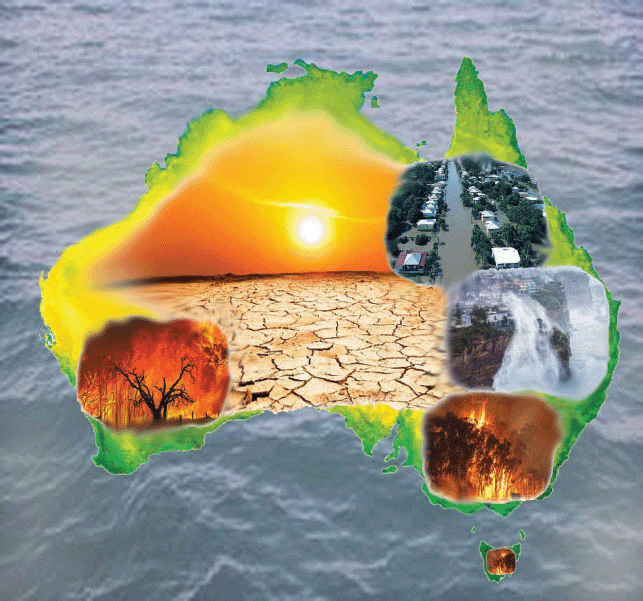
THE RELEASE of the IPCC’s Sixth Assessment Report has clearly shown the clock is ticking on climate, with impacts rapidly accelerating around the globe and Australia is squarely in the cross-hairs.
The report, compiled by almost 300 scientists across 67 countries, clearly spells out that climate change is already dramatically altering ecosystems, affecting our physical and mental health, water security and food production, cities and infrastructure, and more.
Serious risks to Australia include irreversible loss of coral reefs, loss of alpine species, collapse of forests in southern Australia, loss of kelp forests, sea-level rise, an increase in severe fire weather days and a dramatic increase in fatal heatwaves.
The central message of the IPCC report is clear: governments must rally to drastically cut emissions and cease the extraction and burning of fossil fuels this decade. Every fraction of a degree of warming saved, will be counted in lives saved.
Professor Will Steffen, former IPCC report author, Climate Councillor, climate change expert and ANU Emeritus Professor said:
“For most Australians, this report is long, technical and at times dry. But its message is anything but. We are being harmed by climate change now, and the future is potentially terrifying.”
”We are seeing climate change play out in real time with unprecedented rainfall and flooding taking a horrible toll on communities in QLD and NSW. These events will only get worse if we don’t act now to reduce emissions.”
Climate Council’s Director of Research Dr Simon Bradshaw said:
“Australia is one of the most vulnerable developed countries in the world. Right now, communities in Southeast Queensland and Northern NSW are being pummelled by extraordinarily intense rainfall and flooding. These communities have hardly had time to recover from past disasters and again they’re facing profound heartbreak and loss.”
“Increasingly, we see that communities are being hit with one disaster after another, like drought followed by fire, followed by flood. The compounding effect of these disasters is taking a heavy toll.
“The report is very clear: any further delay in global action will miss the brief and closing window to secure a liveable future.”
Climate Councillor, former IPCC author and Distinguished Professor of Biology at Macquarie University, Professor Lesley Hughes said:
“Right now, inadequate global action means the Earth is heading towards catastrophic warming of over 2°C. Governments must slash emissions this decade and rapidly transition away from burning fossil fuels.
If all countries copied Australia’s dangerously weak response, we would be headed for warming in excess of 3°C – far beyond anything it is possible to adapt to.”
Greg Mullins, Climate Councillor, former Commissioner, Fire and Rescue NSW and founder of Emergency Leaders for Climate Action (ELCA) said:
“The latest IPCC report spells out a frightening fire future that demands we cut our emissions swiftly and urgently this decade.”
“It is offensive to me, other firefighters and Australians dealing with climate change, that we are not only the worst climate performer out of all developed countries but we have a federal government that is actively making the problem worse by funding new fossil fuel developments.”
Nicki Hutley, Climate Councillor, leading economist and former Partner at Deloitte Access Economics said:
“The IPCC report makes it clear that Australia’s economy faces significant and growing economic challenges due to climate change. However, it is also clear that urgent emission reductions through renewable energy and new clean industries could see us avoid the worst financial shocks and bring about incredible economic opportunities, especially for our regions.”
“Anyone who thinks climate action is “not a race” has obviously not read this report. The first movers in the new industrial revolution will take first, second and third prize. Sadly for Australia, the Morrison Government is moving at a snail’s pace.”
Cheryl Durrant, Climate Councillor and former director of preparedness and mobilisation at the Australian Department of Defence said:
“Climate change is already undermining the security of Australia and our region. Threats to food and water security, to health, and to critical supply chains, are escalating fast. More and more people are at risk of displacement. If our government cares about the safety and security of our region and beyond, then it must get serious about tackling the climate crisis.”
Dr Kate Charlesworth, Climate Councillor and public health physician said:
“The IPCC report shows that the climate crisis is a health crisis. What we do in the next decade will be measured in Australian lives. Failing to act will mean many more lives lost from dangerous heat, drought, floods and bushfires.”
For interviews please contact Brianna Hudson on 0455 238 875 or Jane Gardner on 0438 130 905.
The Climate Council is Australia’s leading community-funded climate change communications organisation. We provide authoritative, expert and evidence-based advice on climate change to journalists, policymakers, and the wider Australian community.
For further information, go to: climatecouncil.org.au
Or follow us on social media: facebook.com/climatecouncil and twitter.com/climatecouncil
Australians issued stark warning to change or risk, The Australian way of life could soon be at risk if greater action is not taken to stop one thing, according to a new report.

News.com.au 8 Feb 22, Courtney Gould Australians may soon be unable to play sports outside if temperatures continue to rise, experts have warned.
It’s just one of the grim scenarios coming out of the release of the latest cycle of reporting from the UN-backed Intergovernmental Panel on Climate Change (IPCC).
The report, released in the shadow of major flooding across Queensland and NSW, said while actions to reduce climate risks had increased worldwide, they fell well short of what was required.
“Successful adaptation requires urgent, more ambitious and accelerated action and, at the same time, rapid and deep cuts in greenhouse gas emissions,” the report said.
But as action stalls, many species – including human beings – are reaching their limits in their ability to adapt to climate change.
Report co-author and IPCC vice chair Mark Howden said coral reefs were just one well-documented example.
However, he warned Australians could soon also be reaching their own physiological limits.
“Our bodies can cope with hot, hot temperatures outside up to a point,” Professor Howden said.
“But then we can’t do that without some sort of active cooling. If you get very high temperatures and humidity, you either have to pull back on your exercise or you overheat.
……….. …… Professor Howden said a major concern was how emissions would track as the world bounced back from Covid.
But he conceded that while the government knew exactly what it needed to do, it was a matter of political will.
“Climate change is here. In Australia it’s mostly negative, and it really matters to pretty much everything we value here in Australia,” Professor Howden said.
“Listen to the people … 90 per cent of Australians want more action on climate change.
“If there was any other issue that had 90 per cent of people wanting more action on it, you’d have the politicians running for the policy development process immediately.
“Yet we don’t see that … climate change should not be a political issue.”
‘Managed retreat’ from coastal living could soon be reality, climate report warns
‘Managed retreat’ from coastal living could soon be reality, climate report warnsThe world’s scientists declare climate change is now a threat to human wellbeing, warning we are about to miss the window to “secure a liveable and sustainable future for all”
United Nations climate change report reveals how much can still be saved
United Nations climate change report reveals how much can still be saved
Drawing on the IPCC findings and analysis from outside experts, The Washington Post envisioned how three locations around the globe could be transformed depending on humanity’s emissions trajectory over the next 80 years.
1 This month.
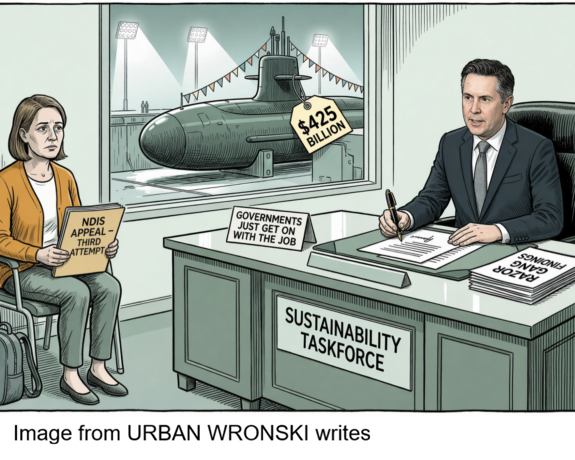

PETITION – To: Prime Minister Anthony Albanese and the Australian Labor Government
Chernobyl: The Lost Tapes – A good documentary on Chernobyl on SBS available On Demand for the next 3 weeks– https://www.sbs.com.au/ondemand/tv-program/chernobyl-the-lost-tapes/235274195556
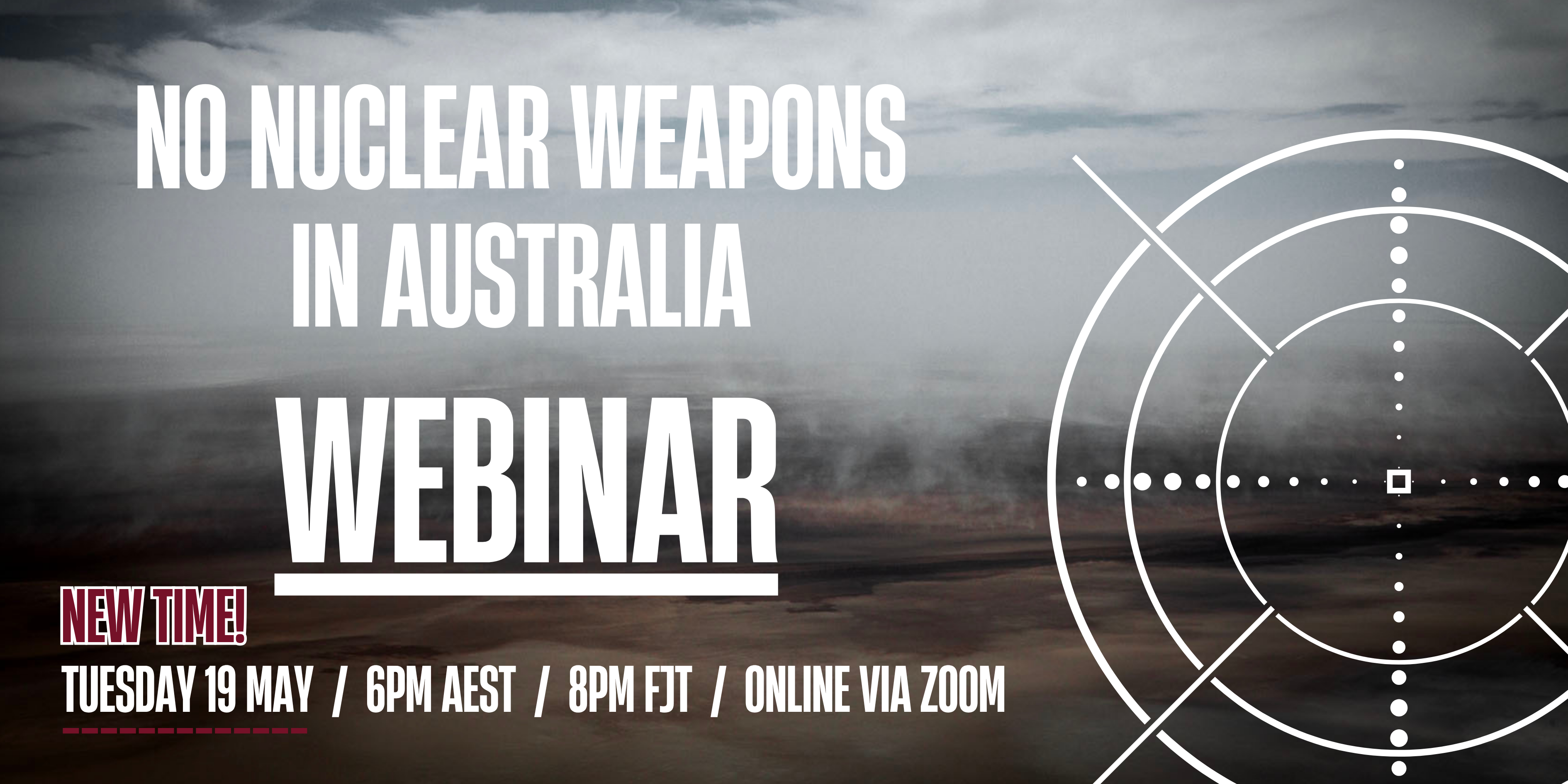
19 May – Webinar- Webinar: No Nuclear Weapons in Australia
Start: 2026-05-19 18:00:00 UTC Canberra, Melbourne, Sydney (GMT+10:00)
End: 2026-05-19 19:30:00 UTC Canberra, Melbourne, Sydney (GMT+10:00)
20 May – Webinar – The dangerous world of AUKUS, US, military occupation and suppression of dissent

National Webinar, 20th May, 2026, 6.30pm AEST. Confronting laws restricting/suppressing protest speech and action
Speakers: Former Sen. Rex Patrick, Lawyer Nick Hanna ,Arthur Rorris ,Jorgen Doyle, Sen David Shoebbridge,
Facilitator Kelley Tranter.

of the week – Australians for War Powers Reform (AWPR)
To see nuclear-related stories in greater depth and intensity
 Antinuclear