The facts we need to face if Australia’s coastal towns are to survive devastation
The facts we need to face if Australia’s coastal towns are to survive devastation
Harry Creamer
Climate is changing rainfall, so we need to build to withstand more destructive floods.–
Mapping the unthinkable: inside the new nuclear war games

A final area of thought nuclear strategists are turning their attention to are what the American’s call “off-ramps” – concessions that can be offered which would allow Putin to back off while saving face.
”We can strengthen Ukraine’s hand in negotiations by making the consequences of a deal more attractive for Russia,”
Mapping the unthinkable: Inside the new nuclear war games
Not since the Cold War have the stakes been so high, as experts rush to understand Putin’s nuclear strategy and plot counter moves telegraph, By Paul Nuki, GLOBAL HEALTH SECURITY EDITOR, LONDON and Sarah Newey, GLOBAL HEALTH SECURITY CORRESPONDENT, 28 February 2022 ”……………………. Since the end of the Cold War, the number of nuclear weapons across the globe has dropped drastically, from a peak of around 70,300 in 1986, to roughly 12,700 in early-2022. But there are still more than enough. Russia and the US have by far the largest arsenals, with 5,600 and 6,200 weapons, respectively.
These weapons are much more powerful than those dropped on Japan. Just 50 modern bombs could kill 200 million people – or the combined populations of Britain, Canada, Australia, New Zealand and Germany, it is estimated.
………….. Western intelligence agencies are watching closely to see exactly what Putin’s order means in practice, but most have interpreted it as a shift to a general state of nuclear readiness. The US could match the Russian move and raise its own response to Defcon 3 – “known to moviegoers as that moment when the US Air Force rolls out bombers, and nuclear silos and submarines are put on high alert”, as The New York Times puts it – but has so far chosen not to.
Experts suggested there were two reasons that the US and other nuclear armed Nato nations, including the UK and France, are not following suit.
“The United States won’t want to alert because then it would certainly be a nuclear crisis,” said Dr Mount. “The dominant strategy is to do what we can to impose costs in the areas where Putin is weak rather than agreeing to compete where Putin is stronger.”
There is also, in practical terms, little to be gained as Nato is, as a matter of course, always ready to strike back…………
Underpinning the nuclear standoff which has existed between Nato and Russia for decades is the doctrine of Mutual Assured Destruction (MAD). It saw us through the Cold War but experts caution it may not be as reliable today. And even in the Cold War there were mistakes that brought nuclear armageddon close.
In October 1962, at the height of the Cuban Missile Crisis, a Russian commander operating in a sweltering submarine with broken air-conditioning almost launched a tactical nuclear torpedo. The Soviet B-59 sub was under fire from US forces, who were dropping non-lethal depth charges. The officer was unaware the action was designed to make him surface, and instead interpreted the situation as the beginning of a third world war.
But launching the torpedo required the approval of all three senior officers on board and one – Vasili Alexandrovich Arkhipov – refused. He was honoured with the “Future of Life” award in 2017, almost two decades after his death, for averting a nuclear conflict.A simple mistake or misunderstanding remains one of the principal risks today – a risk that is increased because, over the past 30 years, nuclear drills have been practised less frequently and the technology has aged.
Another risk – one that threatens the deterrence provided by MAD – is the proliferation of smaller “battlefield” nuclear weapons.
“Russian nuclear forces can be divided into strategic (which can reach the US) and nonstrategic (which can’t),” said
James Acton, co-director of the Nuclear Policy Program at the Carnegie Endowment for International Peace. He added that it is not yet clear whether Putin’s order would result in both being “alerted” or readied for action.Given that Nato’s systems for strategic retaliation are already in place (our Trident submarines are already at sea) it would be intelligence which suggests Putin is preparing tactical nukes that would cause most immediate concern…………….Sahil Shah, a policy fellow at the European Leadership Network who advises senior US and European decision makers on reducing strategic and nuclear risks, said that not everything rests on Putin. There are checks and balances in place in Russia, just as there are in the West.
Russia has inherited a two-person rule throughout the chain of nuclear command and control from the Soviet days,” he told the Telegraph. Three people have “nuclear footballs”, or codes needed to authorise the launch of weapons: the President, Minister of Defence and the Chief of the General Staff. It is thought that two of the three codes are needed to grant the military permission to deploy nuclear weapons.
“In effect, the Minister of Defence or possibly the Chief of the General Staff would need to validate the authorisation to use nuclear weapons for the Russian military to launch them,” Dr Shah said. “If that were to occur, the order would be passed to the Nuclear Strategic Forces Command and Control Centre, where two officers would need to simultaneously carry them out.”
A final area of thought nuclear strategists are turning their attention to are what the American’s call “off-ramps” – concessions that can be offered which would allow Putin to back off while saving face. In the Cuban Missile Crisis, for example, President John Kennedy saved Premier Nikita Khrushchev’s blushes (to some extent) by agreeing to remove Nato missiles from Turkey in return for the Soviets dropping their attempts to arm Cuba.
“It’s difficult for the West to create a de-escalation pathway; much presumably depends on how Putin views the domestic consequences of his backing down – something over which the West has no control,” said James Acton, co-director of the Nuclear Policy Program at the Carnegie Endowment for International Peace.
“But we can at least reduce the costs to his backing down by making it clear that the most punishing sanctions – central bank and Swift – will be lifted if the status quo ante is restored.
“I encourage others to think creatively now about other elements of a potential off-ramp for Russia. To be sure, it’s unsavoury to think about providing inducements to Putin for backing down while Ukrainians are being slaughtered.“However, Ukraine and Russia are now reportedly engaged in negotiations. We can strengthen Ukraine’s hand in negotiations by making the consequences of a deal more attractive for Russia,” he added. https://www.telegraph.co.uk/global-health/terror-and-security/mapping-unthinkable-inside-new-nuclear-war-games/
Bury it? Shoot it into space? Why scientists still can’t find a place for nuclear waste

This is the first time that I have ever seen an American mainstream media outlet making this HERETICAL SUGGESTION:
Until scientists find a secure, long-term, cost-effective way to dispose of the already generated nuclear waste on planet Earth, we must stop generating yet more of it.
Bury it? Shoot it into space? Why scientists still can’t find a place for nuclear waste, https://edition.cnn.com/2022/02/28/opinions/nuclear-radioactive-waste-climate-ipcc-hockenos/index.html (CNN)A major Intergovernmental Panel on Climate Change report, to be released Monday, is expected to warn that humans are wrecking the planet so profoundly that we may run out of ways to survive the crisis. The report speaks of a “rapidly closing window of opportunity to secure a liveable and sustainable future for all.”
This might make it tempting to rush to nuclear energy as a quick, low-carbon fix.
But its faults are numerous, not least that there is still no answer to the 80-year-old question: Where to store the burgeoning tons of highly radioactive spent fuel?
Propositions abound: from catapulting it into space, ditching it between tectonic plates, or burying it deep underground on remote islands.
But try as they have, scientists can’t find a safe, long-term, cost-effective way to dispose of nuclear waste.
Even as new countries like Poland, Egypt, Bangladesh, and Indonesia line up to start nuclear programs — on the face of it, a low-carbon energy source that could cut emissions — every nation in the world with nuclear power struggles with the same dilemma.
Thus far, the determined hunt for a secure nuclear graveyard has been unsuccessful — and there’s no fix in sight. While the search goes on, ever more of the highly toxic refuse — a lethal by-product of the plutonium and uranium used in nuclear energy and weaponry production — piles up on top of the 370,000 tons of fission residue that languishes in stockpiles worldwide. Experts say that could jump by 1.1 million tons in a century.
Germany is shutting down its last nuclear power plant at the end of this year. France, on the other hand, just announced a massive build-out of its already prodigious nuclear fleet. The US is betting on nuclear to help hit climate goals.
Like most nations with nuclear power, they store the toxic spent fuel in steel cannisters at temporary locations, usually at nuclear plant facilities and military stations — often incurring the wrath of local residents who want nothing to do with the hazardous material that remains radioactive for a million years.
Indeed, proponents and adversaries of nuclear power agree these interim solutions are untenable: we can’t just dump this toxic mess on subsequent generations, and then they on others. Moreover, spent fuel, though no longer usable for energy production, remains radioactive and thus poses health, security, and proliferation risks.
At the moment, the Finns are putting deep geological disposal on the table as a solution — currently the least objectionable of the options under discussion. But the Nordics’ claim to have finally cracked this headache from hell is riddled with uncertainties.
This summer, on a tiny, sparsely populated island in the Baltic Sea, the first of hundreds of tightly sealed volcanic-clay-and-copper-clad drums of spent nuclear fuel will be lowered into a 500-meter deep granite vault and, eventually, cemented shut — not for a million but, presumably, for about 100,000 years.
Yet this geological tomb is only another, ultimately temporary, fix. As nuclear waste expert Andrew Blowers, author of “The Legacy of Nuclear Power” and a former member of the UK’s Committee on Radioactive Waste Management, says, “Currently no options have been able to demonstrate that waste will remain isolated from the environment over the tens to hundreds of thousands of years.”
Copper and cement will eventually corrode and decay, while nuclear waste remains radioactive and highly toxic for millennia. Some experts though say the risk of leaks, and water contamination, is higher than Finnish authorities acknowledge.
Moreover, earthquakes or other dramatic shifts in geological conditions could set the poisonous elements free. And then there’s the cost: Finland will spend €3.5 billion ($3.9 billion) on the facility, which will in the course of the next 100 years house 6,500 tons — of their own — spent fuel.
Other countries, such as the US, Britain, and Sweden say they will also, one day, bury their nuclear refuse in similar vaults. But even where the unique geological conditions exist, the same obstacle always arises: opposition from locals. Nobody but nobody wants radioactive waste anywhere near their families.
This is why another option, tectonic burial, looks appealing — until one looks more closely. The idea is to send nuclear waste plummeting into the earth’s core, basically hitching a ride on a geological plate on the ocean floor that is in the process of diving beneath an adjacent plate. The further the downward plate submerges beneath the earth’s skin, the further away the nuclear waste is carried from our natural world.
But geologists pour scorn on the notion: the movement of tectonic plates is much too slow, the volume of nuclear refuse too great, and then there’s the threat of subterranean volcanos or quakes that could send the mess spewing back into the ocean.
Hurtling nuclear waste in the other direction, namely into space, is also a nonstarter. There, the risk of rocket failure, the issue of space debris, and the wildly prohibitive cost stop this ploy dead in its tracks.
The exorbitant cost of the ongoing search — and then of the “solution” itself — illustrate why we don’t want ever more of this menacing debris. Thus far, the US has spent $13 billion of taxpayer money in its unsuccessful effort to rid the country of its 90,000 tons of radioactive waste.
In Finland, at least, the nuclear industry picks up the bill. At the Finns’ rate, disposing of all of the world’s current nuclear waste could total €135 billion ($153 billion) and another €6 billion ($6.8 billion) a year for the estimated 10,500 more metric tons produced annually.
Yet, since no long-term secure repository is in sight, says Blowers, “on-site storage of spent fuel is likely to remain for several generations, at least until mid to end of next century. As the volume grows, they will have to cope with ever more complex, difficult management issues.”
And we can’t just cut and run.
Until scientists find a secure, long-term, cost-effective way to dispose of the already generated nuclear waste on planet Earth, we must stop generating yet more of it. Genuinely renewable energy is cheaper, safer, faster, and cleaner. Nuclear power is the opposite of a quick fix.
How the U.S. Started a Cold War with Russia and Left Ukraine to Fight It
By Medea Benjamin and Nicolas J.S. Davies, 1 Mar 22, https://www.codepink.org/how_the_us_started_a_cold_war_with_russia_and_left_ukraine_to_fight_it—
The defenders of Ukraine are bravely resisting Russian aggression, shaming the rest of the world and the UN Security Council for its failure to protect them. It is an encouraging sign that the Russians and Ukrainians are holding talks in Belarus that may lead to a ceasefire. All efforts must be made to bring an end to this war before the Russian war machine kills thousands more of Ukraine’s defenders and civilians, and forces hundreds of thousands more to flee.
But there is a more insidious reality at work beneath the surface of this classic morality play, and that is the role of the United States and NATO in setting the stage for this crisis.
President Biden has called the Russian invasion “unprovoked,” but that is far from the truth. In the four days leading up to the invasion, ceasefire monitors from the Organization for Security and Cooperation in Europe (OSCE) documented a dangerous increase in ceasefire violations in Eastern Ukraine, with 5,667 violations and 4,093 explosions.
Most were inside the de facto borders of the Donetsk (DPR) and Luhansk (LPR) People’s Republics, consistent with incoming shell-fire by Ukraine government forces. With nearly 700 OSCE ceasefire monitors on the ground, it is not credible that these were all “false flag” incidents staged by separatist forces, as U.S. and British officials claimed.
Whether the shell-fire was just another escalation in the long-running civil war or the opening salvos of a new government offensive, it was certainly a provocation. But the Russian invasion has far exceeded any proportionate action to defend the DPR and LPR from those attacks, making it disproportionate and illegal.
In the larger context though, Ukraine has become an unwitting victim and proxy in the resurgent U.S. Cold War against Russia and China, in which the United States has surrounded both countries with military forces and offensive weapons, withdrawn from a whole series of arms control treaties, and refused to negotiate resolutions to rational security concerns raised by Russia.
In December 2021, after a summit between Presidents Biden and Putin, Russia submitted a draft proposal for a new mutual security treaty between Russia and NATO, with 9 articles to be negotiated. They represented a reasonable basis for a serious exchange. The most pertinent to the crisis in Ukraine was simply to agree that NATO would not accept Ukraine as a new member, which is not on the table in the foreseeable future in any case. But the Biden administration brushed off Russia’s entire proposal as a nonstarter, not even a b820asis for negotiations.
So why was negotiating a mutual security treaty so unacceptable that Biden was ready to risk thousands of Ukrainian lives, although not a single American life, rather than attempt to find common ground? What does that say about the relative value that Biden and his colleagues place on American versus Ukrainian lives? And what is this strange position that the United States occupies in today’s world that permits an American president to risk so many Ukrainian lives without asking Americans to share their pain and sacrifice?
The breakdown in U.S. relations with Russia and the failure of Biden’s inflexible brinkmanship precipitated this war, and yet Biden’s policy “externalizes” all the pain and suffering so that Americans can, as another wartime president once said, “go about their business” and keep shopping. America’s European allies, who must now house hundreds of thousands of refugees and face spiraling energy prices, should be wary of falling in line behind this kind of “leadership” before they, too, end up on the front line.
At the end of the Cold War, the Warsaw Pact, NATO’s Eastern European counterpart, was dissolved, and NATO should have been as well, since it had achieved the purpose it was built to serve. Instead, NATO has lived on as a dangerous, out-of-control military alliance dedicated mainly to expanding its sphere of operations and justifying its own existence. It has expanded from 16 countries in 1991 to a total of 30 countries today, incorporating most of Eastern Europe, at the same time as it has committed aggression, bombings of civilians and other war crimes.
In 1999, NATO launched an illegal war to militarily carve out an independent Kosovo from the remnants of Yugoslavia. NATO airstrikes during the Kosovo War killed hundreds of civilians, and its leading ally in the war, Kosovo President Hashim Thaci, is now on trial at The Hague for the appalling war crimes he committed under the cover of NATO bombing, including cold-blooded murders of hundreds of prisoners to sell their internal organs on the international transplant market.
Far from the North Atlantic, NATO joined the United States in its 20-year war in Afghanistan, and then attacked and destroyed Libya in 2011, leaving behind a failed state, a continuing refugee crisis and violence and chaos across the region.
In 1991, as part of a Soviet agreement to accept the reunification of East and West Germany, Western leaders assured their Soviet counterparts that they would not expand NATO any closer to Russia than the border of a united Germany. U.S. Secretary of State James Baker promised that NATO would not advance “one inch” beyond the German border. The West’s broken promises are spelled out for all to see in 30 declassified documents published on the National Security Archive website.
After expanding across Eastern Europe and waging wars in Afghanistan and Libya, NATO has predictably come full circle to once again view Russia as its principal enemy. U.S. nuclear weapons are now based in five NATO countries in Europe: Germany, Italy, the Netherlands, Belgium and Turkey, while France and the U.K. already have their own nuclear arsenals. U.S. “missile defense” systems, which could be converted to fire offensive nuclear missiles, are based in Poland and Romania, including at a base in Poland only 100 miles from the Russian border.
Another Russian request in its December proposal was for the United States to simply rejoin the 1988 INF Treaty (Intermediate-Range Nuclear Forces Treaty), under which both sides agreed not to deploy short- or intermediate-range nuclear missiles in Europe. Trump withdrew from the treaty in 2019 on the advice of his National Security Adviser, John Bolton, who also has the scalps of the 1972 ABM Treaty, the 2015 JCPOA with Iran and the 1994 Agreed Framework with North Korea dangling from his gun-belt.
None of this can justify Russia’s invasion of Ukraine, but the world should take Russia seriously when it says that its conditions for ending the war and returning to diplomacy are Ukrainian neutrality and disarmament. While no country can be expected to completely disarm in today’s armed-to-the-teeth world, neutrality could be a serious long-term option for Ukraine.
There are many successful precedents, like Switzerland, Austria, Ireland, Finland and Costa Rica. Or take the case of Vietnam. It has a common border and serious maritime disputes with China, but Vietnam has resisted U.S. efforts to embroil it in its Cold War with China, and remains committed to its long-standing “Four Nos” policy: no military alliances; no affiliation with one country against another; no foreign military bases; and no threats or uses of force.
The world must do whatever it takes to obtain a ceasefire in Ukraine and make it stick. Maybe UN Secretary General Guterres or a UN special representative could act as a mediator, possibly with a peacekeeping role for the UN. This will not be easy – one of the still unlearned lessons of other wars is that it is easier to prevent war through serious diplomacy and a genuine commitment to peace than to end a war once it has started.
If and when there is a ceasefire, all parties must be prepared to start afresh to negotiate lasting diplomatic solutions that will allow all the people of Donbas, Ukraine, Russia, the United States and other NATO members to live in peace. Security is not a zero-sum game, and no country or group of countries can achieve lasting security by undermining the security of others.
The United States and Russia must also finally assume the responsibility that comes with stockpiling over 90% of the world’s nuclear weapons, and agree on a plan to start dismantling them, in compliance with the Non-Proliferation Treaty (NPT) and the new UN Treaty on the Prohibition of Nuclear Weapons (TPNW).
Lastly, as Americans condemn Russia’s aggression, it would be the epitome of hypocrisy to forget or ignore the many recent wars in which the United States and its allies have been the aggressors: in Kosovo, Afghanistan, Iraq, Haiti, Somalia, Palestine, Pakistan, Libya, Syria and Yemen.
We sincerely hope that Russia will end its illegal, brutal invasion of Ukraine long before it commits a fraction of the massive killing and destruction that the United States and its allies have committed in our illegal wars.
Medea Benjamin is cofounder of CODEPINK Women for Peace, and author of several books, including Inside Iran: The Real History and Politics of the Islamic Republic of Iran.
Nicolas J. S. Davies is an independent journalist, a researcher with CODEPINK and the author of Blood on Our Hands: The American Invasion and Destruction of Iraq.
Vladimir Putin’s nuclear threat crosses new threshold, expert says
ABC, By Michael Vincent 8 Feb 22 ”……………. It is important to note the video of the ICBMs on the highway did say they were heading to a military parade, but Mr Putin’s three nuclear warnings in as many weeks have sent chills down the spines of military analysts.
Vladimir Putin’s nuclear threat crosses new threshold,as not crossed during the Cold War,” said Michael Kimmage, a former adviser on Ukraine and Russia for the US State Department during the Obama administration.
“The Cold-War messaging from the Soviet Union, from the United States, about nuclear weapons was far more disciplined than what Putin has been doing in the last couple of weeks………………………
The Soviet Union and the US only avoided nuclear war during the Cuban Missile Crisis by communicating.”
A new domino effect is playing out and it does not bode well.
Professor Kimmage spelled it out like this: “Putin’s repeated messaging about using nuclear weapons comes at a time when there’s almost complete mistrust among Western leaders and the Russian leader,” he said.
“That combined with fewer and fewer channels of communication, and escalating sanctions and military commitment from the West to Ukraine, [adds the pressure on Russia] while the Russian attack falters.
“It doesn’t mean Putin will use nuclear weapons of course — I doubt he’s suicidal — but at the moment this is a crisis with no exit.” https://www.abc.net.au/news/2022-02-28/vladimir-putin-s-nuclear-threat-crosses-a-new-threshold/100869414
Mass starvation, extinctions, disasters: the new IPCC report’s grim predictions, and why adaptation efforts are falling behind
Mark Howden et al 1Mar 22
Even if we manage to stop the planet warming beyond 1.5℃ this century, we will still see profound impacts to billions of people on every continent and in every sector, and the window to adapt is narrowing quickly. These are among the disturbing findings of the latest report from the Intergovernmental Panel on Climate Change (IPCC).
Climate change worse than we thought – IPCC report

A new UN report on the impacts of climate change is set to be the gravest
assessment yet of how rising temperatures are affecting every living thing.
The study, from the Intergovernmental Panel on Climate Change (IPCC),
summarises several years of research. The report will likely say that the
world is fast approaching the limits of adapting to climate change. This
assessment, to be published later, will be the second of three major
reports from the IPCC and its first since November’s COP26 summit. The IPCC
carries out these large-scale reviews of the latest research on warming
every six or seven years on behalf of governments. This set of three is
their sixth assessment report. Researchers are formed into three working
groups that look at the basic science, the scale of the impacts and the
options for tackling the problem.
BBC 28th Feb 2022
https://www.bbc.co.uk/news/science-environment-60525591
Scotsman 27th Feb 2022
The impacts of the climate crisis are proving much worse than predicted,
and governments must act more urgently to adapt to them or face global
disaster, the UK president of the UN climate talks has warned on the eve of
a landmark new scientific assessment of the climate.
Alok Sharma, who led
the Cop26 climate summit last year, said: “The changes in the climate we
are seeing today are affecting us much sooner and are greater than we
originally thought. The impacts on our daily lives will be increasingly
severe and stark. We will be doing ourselves and our populations a huge
disservice if we fail to prepare now, based on the very clear science
before us.” In a report to be published on Monday, the Intergovernmental
Panel on Climate Change (IPCC) is expected to show that droughts, floods
and heatwaves will increase in frequency and intensity, with devastating
consequences, and all parts of the globe will be affected.
Guardian 28th Feb 2022
To 1st March – Australian nuclear news, and more
Some bits of good news (hard to find this week!):
India’s Mass Tree Planting Success: Forest Cover Grows by Half-Million Acres in Two Years
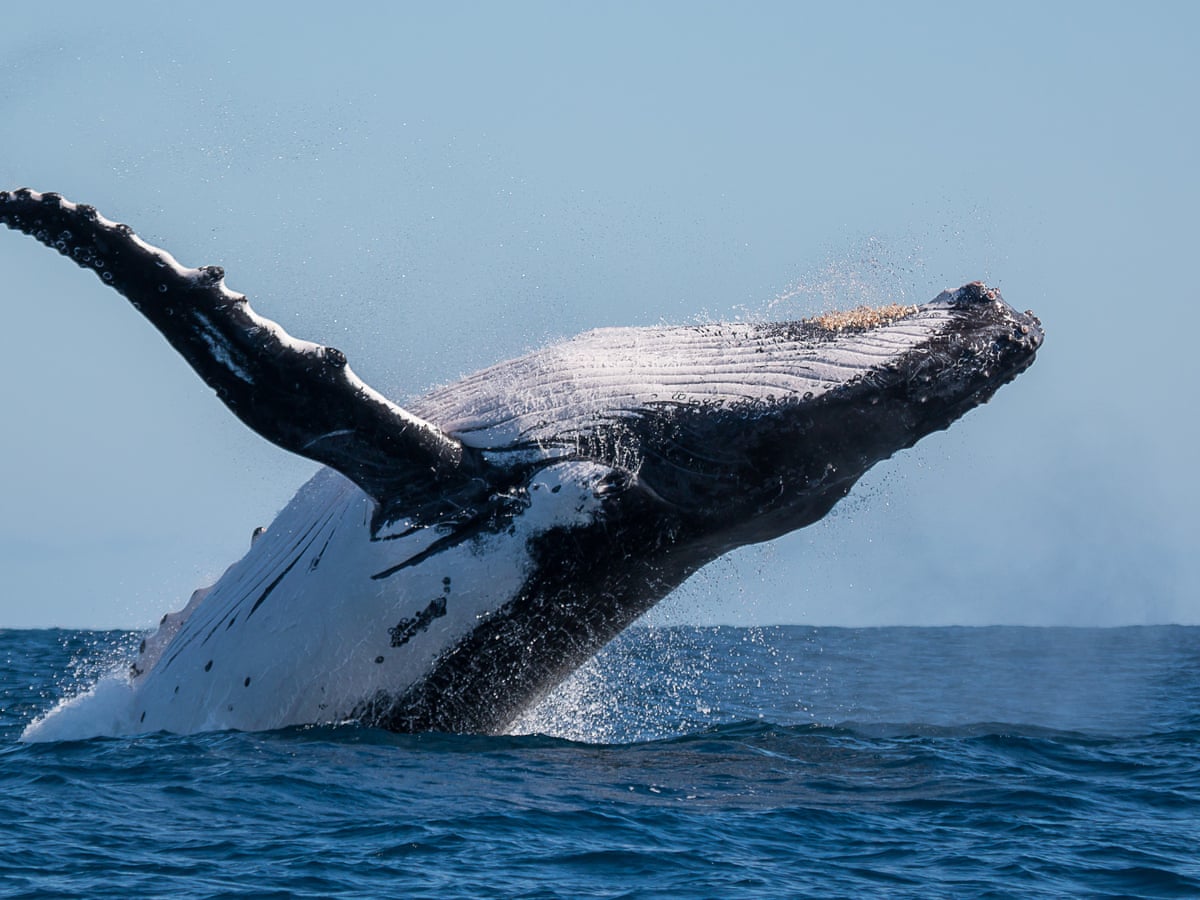
Humpback whales no longer listed as endangered after major recovery.
What can I say ?– No breakthrough at Ukraine talks as Russian assault continues. Ralph Nader: Everyone Loses in the Conflict Over Ukraine We’re in a new era. Not only is the war situation now so different, with the nuclear threat looming as never before. But also, the media war has become so very complex and confusing. Social media plays its role – but increasingly – much information is crooked, devised to mislead the recipient. Bad enough from Western sources, but Russia has turned this deception into a pervasive mass art form.
AUSTRALIA
How Australian uranium ended up in war-torn Ukraine.
Meet Australian Public Affairs, the lobbying firm that pushed the Kimba nuclear waste dump for the Federal Government.
Remembering the success of the nuclear-free movement at Muckaty in Australia’s Northern Territory. Australia’s rushed nuclear submarine plan- irrelevant, as China’s technology will outpace it.
Like rivers in the sky: the weather system bringing floods to Queensland will become more likely under climate change
Queensland, NSW floods live updates: Deluge hits northern NSW, Queenslanders wait for waters to recede
INTERNATIONAL
A rogue journalist ponders on Ukraine situation. Glenn Greenwald: war propaganda about Ukraine becoming more militaristic, authoritarian, and reckless. Blanket anti-Russian propaganda leaves no tolerance for nuanced reporting – media censorship is expanding.
As Russia Seizes Chernobyl Site, Ukraine’s 15 Nuclear Reactors Pose Unprecedented Risk in War Zone. https://www.youtube.com/watch?v=20gVRaQdVmY
Climate impacts should be a regular part of war coverage
UN report on global increase in wildfires due to climate change change.
ANTARCTICA. Antarctica’s pristine snow besmirched with horrid black pollution, scientists say
UKRAINE. Ukraine has 0% of winning, so sending weapons is a pointless exercise, except for the money. U.N. nuclear watchdog to hold emergency meeting on Ukraine. Russian control of Chernobyl may have been aimed against alleged Ukrainian plan to produce nuclear weapons.
Ukraine’s reactors – largest nuclear complex in Europe – IN DANGER Russian forces now control Chernobyl, inviting speculation and uncertainty. The Most Immediate Nuclear Danger in Ukraine Isn’t Chernobyl.
Increased radiation levels around Chernobyl probably due to military’s disturbance of soil around exclusion zone. Radiation levels increased at Chernobyl, after Russian troops seized the area.
Why nuclear risk from war in Ukraine isn’t missiles but accidental hits on reactors. Putin says that Ukraine is a nuclear threat. Abandoned mines and old Yunkom nuclear test site in Donbas region of Ukraine pose ”singular threat” of radiation contamination.
RUSSIA. Russia President Vladimir Putin puts his nuclear forces on alert.
Ralph Nader: Everyone Loses in the Conflict Over Ukraine

Ralph Nader, February 28, 2022 https://scheerpost.com/2022/02/28/ralph-nader-everyone-loses-in-the-conflict-over-ukraine/ The U.S. and Russia are toying with a dangerous recipe for an out-of-control escalation, much like the lead-up to World War I.
When two scorpions are in a bottle, they both lose. This is the preventable danger that is growing daily, with no end game in sight between the two nuclear superpowers, led by dictator Vladimir Putin and de facto sole decider, Joe Biden.
Putin’s first argument is, Washington invented the model of aggressive, illegal invasions, and destruction of distant countries that never threatened U.S. security. Millions have died, been injured, and sickened in defenseless countries attacked by U.S. armed forces. George W. Bush and Dick Cheney killed over a million innocent Iraqis and devastated the country in so many ways that scholars called it a “sociocide.”
Putin’s second argument is that Russia is being threatened on its sensitive western border, which had been invaded twice by Germany and caused the loss of 50 million Russian lives. Soon after the Soviet Union collapsed, the West’s military alliance against Russia began moving east. Under Bill Clinton, NATO (The North Atlantic Treaty Organization) signed up Poland, Hungary, and the Czech Republic in 1999 leading to major arms sales by the U.S. giant munitions corporations.
More recently, Putin sees U.S. soldiers in these countries, ever closer U.S. missile launchers, U.S.-led joint naval exercises in the Baltic Sea, and intimations that Ukraine and Georgia could soon join NATO. (Imagine if the Russians were to have such a military presence around the U.S. borders.)
Even often hawkish New York Times columnists – Thomas Friedman and Bret Stephens made this point this week about the brazen U.S. history of military hypocrisy while tearing into Putin. Stephens brought up the Monroe Doctrine over the entire Western Hemisphere, in raising repeatedly the question, “Who are We?”
The chess game between Russia and the West has become more deadly with Putin’s military moves followed by immediate Western sanctions against some Russian banks and oligarchs close to Putin. Travel bans and freezing the completion of the second major natural gas pipeline from Russia to Germany are in place with promises of much more severe economic retaliation by Biden.
These sanctions can become a two-way street. Western Europe needs Russian oil and gas, Russian wheat, and essential Russian minerals such as lithium, cobalt, and nickel. Sanctions against Russia will soon boomerang in terms of higher oil and gas prices for Europeans and Americans, more inflation, worsening supply chains, and the dreaded “economic uncertainty” afflicting stock markets and consumer spending.
The corporate global economy gave us interdependence on other nations, instead of domestic self-reliance under the framework of corporate-managed free trade agreements.
So how many billions of dollars in costs and a weakened economy will Joe Biden tolerate as the price of anti-Putin sanctions that will blowback on the American people? How much suffering will he tolerate being inflicted on the long-suffering Russian people? What will be the impact on the civilian population of more severe sanctions? And who is he to talk as if he doesn’t have to be authorized by Congress to go further into this state of belligerence, short of sending soldiers, which he said he would not do?
Is Congress to be left as a cheerleader, washing its hands of its constitutional oversight and foreign policy duties? Also, watch Republicans and Democrats in Congress unify to whoop through more money for the bloated military budget, as pointed out by military analyst, Michael Klare. What energy will be left for Biden’s pending “Build Back Better” infrastructure, social safety net, and climate crisis legislation?
In recent weeks, the State Department said it recognizes Russia’s legitimate security concerns but not its expansionism. Well, what is wrong with a ceasefire followed by support for a treaty “guaranteeing neutrality for Ukraine, similar to the enforced neutrality for Austria since the Cold War’s early years,” as Nation publisher and Russia specialist Katrina vanden Heuvel urged. (See: Katrina vanden Heuvel’s Washington Post article and her recent Nation piece).
Putin, unable to get over the breakup of the Soviet Union, probably has imperial ambitions to dominate in Russia’s backyard. Biden has inherited and accepted the U.S. Empire’s ambitions in many other nation’s backyards. Events have polarized this conflict over Ukraine, which is not a security interest for the U.S., into two dominant egos – Putin and Biden – neither of whom want to appear weak or to back down.
This is a dangerous recipe for an out-of-control escalation, much as it was in the lead-up to World War I. Neither the people nor the parliaments mattered then, as seems to be the case today.
Putin isn’t likely to make a cost-benefit assessment of each day’s militarism. But Biden better do so. Otherwise, he will be managed by Putin’s daily moves, instead of insisting on serious negotiations. The Minsk II Peace Accords of February 2015 brokered by Germany, France, and the United Nations that Russia and Ukraine agreed to before falling apart due to disagreements over who should take the first steps, still makes for a useful framework.
It is too late to revisit the accords to stop the invasion. But it should be proposed to introduce a climate for waging peace. Already, New York Governor Kathy Hochul has spoken about an increase in cyberattacks and ransomware demands in her state in recent weeks. Has Biden put that rising certainty in his self-described decades-long foreign policy expertise? Watch out for what you can’t stop, Joe.
Ukraine has 0% of winning, so sending weapons is a pointless exercise, except for the money

Caitlin Johnstone, 28 Feb 22, Ukraine has a 0% chance of winning this war alone, no matter how many weapons are sent to it. All weapons can do is make the war more costly for Russia, which it’s in the US empire’s interests to do. Stop pretending your calls for more weapons are anything more noble than that.
Russia President Vladimir Putin puts his nuclear forces on alert
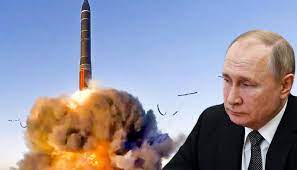
Putin’s alert raises two types of risks that the conflict might escalate into a nuclear conflict: deliberate and inadvertent.
Much depends on whether Russia is alerting its strategic nuclear forces, which would focus on protecting the regime from attack on Russian soil, or its theater forces, which would be oriented toward influencing the military and political situation on the continent.
In the fog of war, countries may shoot first and ask questions later.
The Ukraine crisis is now a nuclear crisis https://www.washingtonpost.com/politics/2022/02/27/ukraine-crisis-is-now-nuclear-crisis/ Russian President Vladimir Putin just put his nuclear forces on alert, By Caitlin Talmadge 27 Feb 22
Russia’s publicly announced nuclear alert has turned the Ukraine war from a crisis involving nuclear powers to an actual nuclear crisis.
With the caveat that we do not have many details about what the Russian alert entails, it is nevertheless a clear sign that President Vladimir Putin does not believe that the conventional military campaign in Ukraine is achieving the political outcomes he wants.
Putin has turned to nuclear weapons because they offer another way to increase pressure on both Ukraine and its international backers to come to the settlement that Russia wants regarding Ukraine’s status. Yet his decision raises serious risks of both deliberate and inadvertent nuclear escalation.
This is a scary moment, but it’s not unprecedented or that surprising. Here is why.
Nuclear signals like this are not new
Putin has explicitly signaled from the beginning of the Ukraine war that he might turn to Russia’s nuclear arsenal if outside powers interfered with his campaign or were perceived to be threatening Russia itself.
In fact, Putin’s initial nuclear threat likely was intended as a shield to keep the West out of Russia’s conventional operations. This highlights what international relations scholars call the stability-instability paradox. The danger of nuclear war may keep nuclear powers from fighting all-out because they fear it would escalate. However, precisely because all-out war would be so mutually damaging, the likelihood of conventional war or even limited nuclear use can increase.
Amid reports of Russia’s lagging conventional invasion, Putin may now believe that climbing up to the next rung on the so-called escalation ladder is the only way to achieve the coercive effect he wants.
Such a move fits with his decision to announce the alert so publicly — rather than keeping it secret, as nuclear matters usually are — to ensure that the world gets the message and other nations have to respond.
Putin’s approach is not new. Countries often rely on their nuclear arsenals to compensate for inferiority with conventional weapons as shown by Pakistan, North Korea, and NATO’s threats to escalate during the Cold War. The idea is to deter conventional attack or prevent conventional defeat through threats of nuclear first use. The The world has even seen episodes of explicit signals that nuclear weapons could be used, as Putin has done, by states losing conventional battles in the past: Pakistan versus India in 2001-2002, for example, and Israel versus the Arab coalition in 1973.
There are real escalation risks — both intentional and unintentional
Putin’s alert raises two types of risks that the conflict might escalate into a nuclear conflict: deliberate and inadvertent.
First, the deliberate nuclear escalation risk comes from the possibility that Putin might actually use nuclear weapons, particularly tactical (short-range) nuclear weapons, to achieve his military objectives in Ukraine. Again, this is a major reason countries develop such weapons in the first place — to achieve what they think conventional forces cannot.
It is the same reason that the odds of Russian attacks against civilians have increased in the last day or two. From Putin’s standpoint, nuclear threats are likely just another escalatory lever to force the political outcome Russia wants.
Putin might also turn to medium-range nuclear weapons to coerce neighbors in Europe who are seeking to support Ukraine militarily, diplomatically, or politically. Of course, doing the latter against any NATO ally would be extremely escalatory and invoke U.S. commitments to defend its NATO allies under Article V of NATO’s founding treaty.
Second, raising the alert status of nuclear weapons inherently raises the likelihood of their use — and this is what generates inadvertent nuclear escalation risk. Details are sparse, but we could expect the readiness of Russia’s nuclear forces to now be heightened, and the command and control arrangements governing use of nuclear weapons to possibly be loosened, meaning they could be launched more easily.
Whether Russia has actually practiced these operations and how safely they can be conducted remain unclear. Risks of accidents and unauthorized use could increase. Countries sometimes undertake dangerous measures to signal their readiness to use nuclear weapons, as China did in 1969 when it fueled its rudimentary nuclear weapons in a lengthy border crisis versus the Soviets.
Furthermore, Russia’s alert could prompt counter-reactions in the United States, France and Britain. If they alert their forces as well, the chances of misperception — including Russian misperception of an impending nuclear attack — heighten further.
Much depends on whether Russia is alerting its strategic nuclear forces, which would focus on protecting the regime from attack on Russian soil, or its theater forces, which would be oriented toward influencing the military and political situation on the continent.
Worryingly, this is happening in a time of deep distrust and mutual suspicion, in which ambiguous signals from one country are likely to be viewed in the worst possible light by its opponents. This is precisely the sort of environment in which inadvertent nuclear escalation becomes most likely.
In the fog of war, countries may shoot first and ask questions later. This is how the Soviets ended up mistakenly shooting down a Korean civilian airliner in 1983 during a period of heightened nuclear tension with the United States, and why the Iranians did the same thing in the aftermath of the U.S. strike on Maj. Gen. Qasem Soleimani in early 2020.
Putin is a personalist dictator — and that has its own risks
Adding to both the deliberate and inadvertent escalation dangers is Putin’s status as a personalist dictator. As Jessica L.P. Weeks and Jeff D. Colgan explained here at TMC, these autocrats have few constraints on decision-making authority and are very unlikely to get candid information from advisers. utin, an aging leader by Russian standards, likely views the current crisis as threatening not only his foreign policy goals but also his domestic political prospects at home, including his personal survival and freedom.
Putin may also want the world to worry that he is just enough of a madman to lash out when his back is against the wall. Again, this is a tactic leaders have tried before, including Khrushchev in the Berlin Crises of 1958 and 1961, and President Richard Nixon when he attempted to pressure the Soviets over Vietnam in 1969. This approach did not work well for these leaders — but they were all far more constrained than Putin.
This institutional and personal context may make Putin more risk-acceptant — that is, more willing to gamble on dangerous nuclear threats to save his regime — than other leaders. It also likely makes him more paranoid. These tendencies again reinforce the escalatory dangers stemming from Putin’s recent decision.
Caitlin Talmadge (@ProfTalmadge) is associate professor of security studies in the School of Foreign Service at Georgetown University. She is the author of “The Dictator’s Army: Battlefield Effectiveness in Authoritarian Regimes” (Cornell University Press, 2015).
Australia’s rushed nuclear submarine plan- irrelevant, as China’s technology will outpace it.
Australia’s hasty nuclear submarine plan to be outpaced by China’s development: experts, Global Times, By Liu Xuanzun and Leng Shumei: Feb 08, 2022 In an attempt to contain China, Australian Defense Minister recently said that Australia could get the first nuclear submarine under the framework of AUKUS before 2038. However, Chinese military experts said on Tuesday that this delivery schedule is too hasty and China’s rapid development during this period will outpace the Australian one……………..
When the AUKUS agreement was announced, an 18-month process was launched by all members to figure out the best way to deliver Australia nuclear submarines, according to the report by the Sydney Morning Herald.
“From a technological perspective, it is possible that Australia could get its first nuclear submarine by 2038 since the US and the UK are indeed capable of building this kind of submarine,” Zhang Junshe, a senior research fellow at the Naval Research Academy of the People’s Liberation Army, told the Global Times on Tuesday.
However, the question remains on exactly what kind of nuclear submarine Australia will get.
If, for example, the US is willing to sell its off-the-rack Virginia-class submarine or transfer its technology and production lines to Australia, then, 2038 is possible. But, if the three countries are thinking about a customized or a completely new submarine, which is more likely in this case due to the high sensitivity of this kind of military hardware, it will likely take longer, analysts said.
“2038 sounds hasty to design and build a new nuclear submarine for a country with no experience, even with technology transfer,” a Chinese military expert who requested to remain anonymous told the Global Times on Tuesday.
Australia is not a nuclear power and the plan by the US and the UK to grant Australia nuclear-powered submarines increases the risks of nuclear proliferation and an arms race, experts said.
“From a political point of view, the three countries would also have to face the pressure from the international community to meet that schedule,” Zhang said, adding that “even if Australia does get the nuclear submarine, it will not be such a big threat to China, since war cannot be won with just one or two types of weapons.”
“2038 sounds hasty to design and build a new nuclear submarine for a country with no experience, even with technology transfer,” a Chinese military expert who requested to remain anonymous told the Global Times on Tuesday.
Australia is not a nuclear power and the plan by the US and the UK to grant Australia nuclear-powered submarines increases the risks of nuclear proliferation and an arms race, experts said.
“From a political point of view, the three countries would also have to face the pressure from the international community to meet that schedule,” Zhang said, adding that “even if Australia does get the nuclear submarine, it will not be such a big threat to China, since war cannot be won with just one or two types of weapons.”…………………………..
China did not militarize the South China Sea, as all Chinese presence in the region serves only to safeguard national sovereignty and territorial integrity, the expert said, noting that countries from outside of the region like the US, which have been sending warships and warplanes, are the real ones responsible for the militarization in the South China Sea.
UN warns Australia in danger of increased wildfires
Independent Australia By Sue Arnold | 28 February 2022,
By Sue Arnold | 28 February 2022, Australia can expect an increase in catastrophic wildfires according to a recently released UN report entitled Spreading like wildfire: The rising threat of extraordinary landscape fires.
Wildfires are now a global issue, with predictions of exponential increases as a result of climate change, poor land-use planning and a lack of focus on mitigation strategies.
The report makes from grim reading. Over 50 experts from research institutions, government agencies and international organisations from around the globe contributed to the report.
No estimate has been made of the economic cost of wildfires by governments. A U.S. study mentioned in the UN report estimates that the annual economic burden of wildfire to be between $71.1 billion–$347.8 billion (AU$98.3 billion–$480.8 billion).
Costs to human lives exposed to wildfire smoke are growing exponentially. The Lancet journal estimates the annual mortality as a result of exposure resulted in 30,000 deaths across 43 countries.
According to the UN study, the extreme weather conditions that were potentially a leading cause of the Australian wildfires in 2019/2020 were shown to be 30 per cent more likely to have occurred because of climate change.
Scientists involved predict that by the end of the century, the probability of wildfires like the 2019/2020 fires will likely increase by 31-59 per cent in a given year……………………………
Australia is very similar to the U.S. in that most of the spending goes on helicopters, firefighters, efforts to put out the fires. It’s often not a good use of resources; other integrated management approaches can be more successful. ………….
IA asked Professor Baker to comment on the many studies which indicate logging of forests raises the risk of more wildfires:
‘When you log, you reduce resilience.’
Plantations are a focus of the report. Victoria and South Australia have significant numbers of eucalypt plantations, many burned incinerating thousands of animals. According to the fire experts, the increased availability of fuel and extensive continuous areas allows fire to spread rapidly and unconstrained. Accumulation of flammable fuels in monoculture plantations, plus extended droughts due to climate change, generate increasingly frequent conditions to high intensity forest fires………………
The International Association of Wildland Fire will hold a Fire and climate: issues and futures conference in Melbourne in June 2022 focused on better preparation and response to ‘this formidable challenge in the new decade’ https://independentaustralia.net/environment/environment-display/un-warns-australia-in-danger-of-increased-wildfires,16098
Australian research breakthrough promises “greener, cheaper, faster” batteries — RenewEconomy

Monash Uni team says breakthrough in lithium-sulfur battery technology could yield cheaper, greener and more efficient energy storage, made in Australia. The post Australian research breakthrough promises “greener, cheaper, faster” batteries appeared first on RenewEconomy.
Australian research breakthrough promises “greener, cheaper, faster” batteries — RenewEconomy
1 This month.


PETITION – To: Prime Minister Anthony Albanese and the Australian Labor Government
Chernobyl: The Lost Tapes – A good documentary on Chernobyl on SBS available On Demand for the next 3 weeks– https://www.sbs.com.au/ondemand/tv-program/chernobyl-the-lost-tapes/235274195556
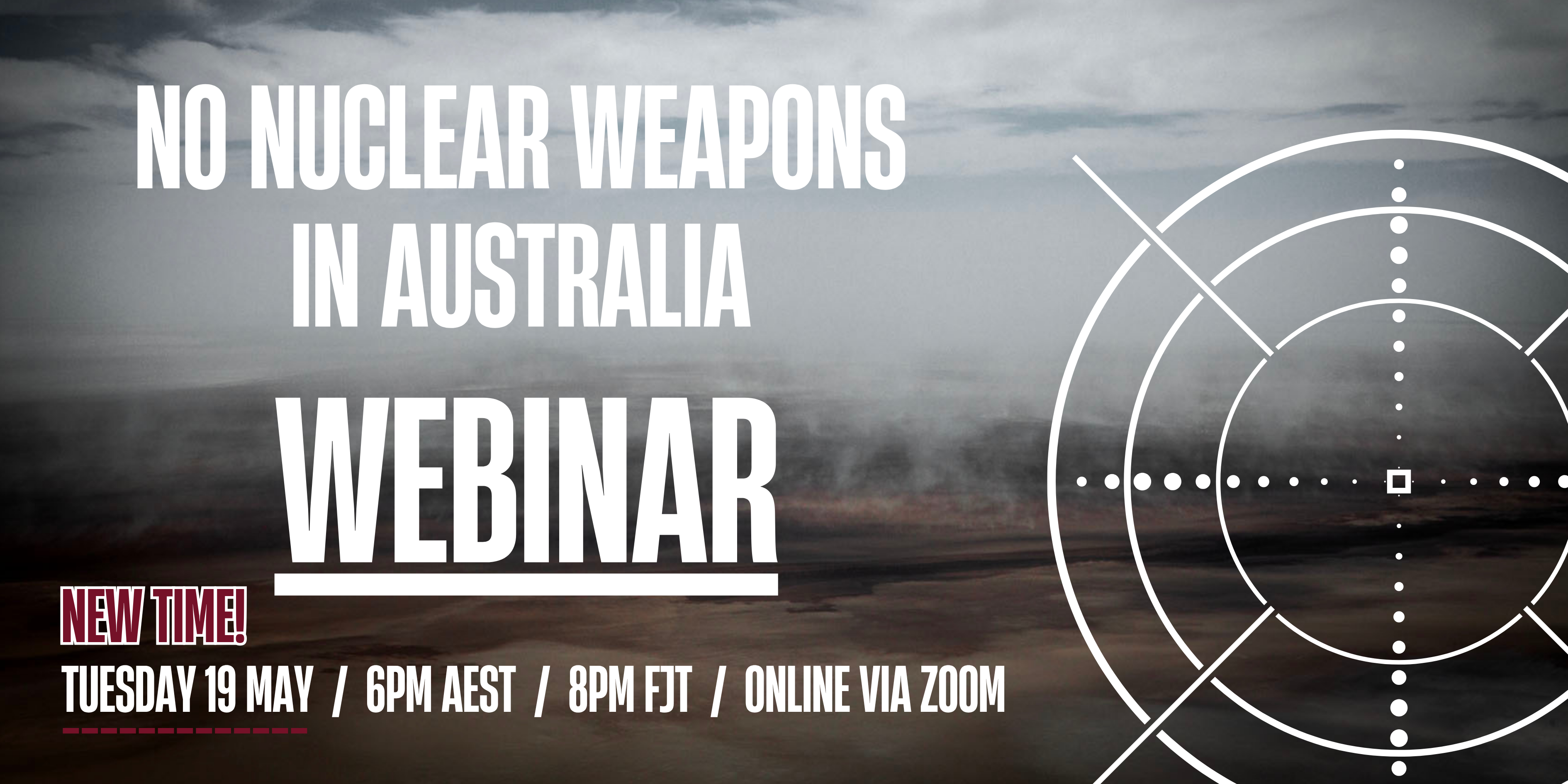
19 May – Webinar- Webinar: No Nuclear Weapons in Australia
Start: 2026-05-19 18:00:00 UTC Canberra, Melbourne, Sydney (GMT+10:00)
End: 2026-05-19 19:30:00 UTC Canberra, Melbourne, Sydney (GMT+10:00)
20 May – Webinar – The dangerous world of AUKUS, US, military occupation and suppression of dissent

National Webinar, 20th May, 2026, 6.30pm AEST. Confronting laws restricting/suppressing protest speech and action
Speakers: Former Sen. Rex Patrick, Lawyer Nick Hanna ,Arthur Rorris ,Jorgen Doyle, Sen David Shoebbridge,
Facilitator Kelley Tranter.

of the week – Australians for War Powers Reform (AWPR)
To see nuclear-related stories in greater depth and intensity
 Antinuclear