“Nuclear warfare without bombs”

the vulnerability of operating reactors in Ukraine is a danger that is not taken nearly seriously enough.….. (A wind farm in a war zone comes with no such hazards.)
Ukraine’s reactors at risk if Russia invades
“Nuclear warfare without bombs” — Beyond Nuclear International Ukraine’s reactors could be in the line of fire
By Linda Pentz Gunter 30 Jan 22, As Craig Hooper so chillingly warned us in his December 28, 2021 article for Forbes, a Russian invasion of Ukraine, “could put nuclear reactors on the front line of military conflict.” The result, he said, depending on the tactics deployed by the Russians, could be equivalent to “nuclear warfare without bombs.”
It’s yet one more reminder of just how much an already perilous situation can become orders of magnitude worse, once you introduce the risk of major radioactive releases into the equation.
There are 15 reactors in Ukraine providing about 50% of the country’s electricity. Hooper’s article speculates not only on what could happen if any one of these nuclear sites — such as the six-reactor VVER-1000 complex at Zaporizhzhia — should find itself in the midst of armed conflict or bombardment. He also postulates intentional sabotage by Russia as a strategic measure — “allowing reactors to deliberately melt down and potentially contaminate wide portions of Europe.”
This may sound far-fetched, or, at least, we hope it does. And the Forbes article roundly condemns Russia without factoring in the bristling U.S.-led buildup of NATO armaments on the border, none of which is easing tensions, and which only worsens the likelihood that Ukraine’s nuclear plants could find themselves literally in the line of fire. (For an interesting assortment of perspectives from all sides, endeavoring to unravel the complexities of this situation, Better World Info provides a useful resource.)
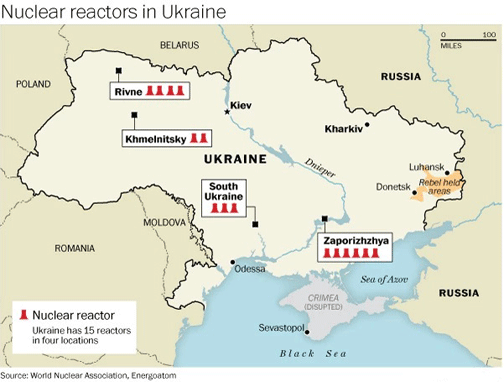
Either way, the vulnerability of operating reactors in Ukraine is a danger that is not taken nearly seriously enough. As far as I can tell, Hooper’s is the only article on the still unfolding tension between Russia and Ukraine that has even mentioned the risks posed by those 15 reactors. (A wind farm in a war zone comes with no such hazards.)
Instead, the implications of a radiological disaster ensuing should Russia indeed invade Ukraine, have been largely ignored in favor of panic over a potential energy crisis in Europe, should Russia cut off gas supplies in an effort to dampen European support for Ukraine in the on-going dispute.
This is in itself is a reminder that Europe could have avoided such dependence on imported fossil fuels — while at the same time contributing to a meaningful reduction in greenhouse gas emissions — by developing home-grown renewable energy decades ago, when climate change was already recognized as a threat.
We have, of course, already seen what can happen when radioactive contamination adds to an existing “natural” disaster. After the major earthquake that hit Japan on March 11, 2011, followed by the devastating tsunami, rescue operations in some hard-hit areas were hampered by high levels of radiation released by the subsequent triple meltdowns at Fukushima Daiichi. How many lives were lost in the earthquake or tsunami that might have been saved had first responders been able to safely enter those disaster zones?
If conflict rages in a region where nuclear power plants are located, the personnel working there cannot simply abandon them. This was the terrible dilemma faced by TEPCO and then Japanese president, Naoto Kan, who insisted that the Fukushima Daiichi workforce stay in place at the risk of their lives.
Abandoning Daiichi to a major runaway meltdown would have forced evacuations further afield, including from the still operating Fukushima Daiini nuclear power plant less than 10 miles down the coast. Abandoning Daiini would have meant more meltdowns. And so on. Such a cascade of nuclear disasters would have necessitated the evacuation of Tokyo, a city of close to 14 million people. That, Kan later said, would have been the end of Japan as a nation.
There is, of course, no need to put anyone into such a “playing God” situation, condemning the few to save the many due to the folly of choosing an energy source that could potentially irradiate an entire country. You simply stop using nuclear power.
But that still leaves the waste. And here we return to the same dilemma. That radioactive waste, some of it lethal for hundreds of thousands of years, cannot be stored anywhere that might become politically volatile.
This was, in part, the driver behind the Australian Pangea project, which viewed that nation as the ideal venue for the world’s underground radioactive waste repository, not only because of the suitable geology, but because it was a country unlikely to be caught up in war.
However, Pangea (full disclosure; this was a project of my eventually estranged and now deceased cousin, David Pentz) thoroughly failed the environmental justice test, an essential criterion for managing the dangerous detritus of the Nuclear Age. Ethically, you cannot demand that nuclear waste be dumped on those who never made it and don’t want it. The massive transport risks were also a deal killer.
As Edgar Hagen’s film — Journey to the Safest Place on Earth — so effectively conveyed, finding a site for high-level radioactive waste that is geologically and ethically sound and politically stable is probably an impossibility. All the more reason not to exacerbate this problem by continuing to make yet more waste.
As Charlie Chaplin already articulated so brilliantly back in 1940 in The Great Dictator, it would be better if the misguided megalomaniacs who run far too many countries in this world, would stop war-mongering and concentrate on a collective effort to save humanity. These days, that means from the looming disaster that is the climate emergency.
But the reality is that we are a warlike species. Nothing in our history suggests we are evolving on this front, even if most of us actually abhor war. We continue to elect leaders who are all too willing to lead us headlong into one.
Therefore, removing everything that could make the consequences of a war even more deadly, is an urgent imperative. That means abolishing nuclear weapons, but it also means closing and dismantling the world’s nuclear power plants. And it most certainly means a halt to any further development and expansion of nuclear power, especially in volatile regions like the Middle East.
We may yet escape the Holocaust of a true nuclear war. But, if we don’t abolish nuclear power, we may still see that “nuclear war without bombs”.
Linda Pentz Gunter is the international specialist at Beyond Nuclear and writes for and curates Beyond Nuclear International. She is based in Takoma Park, Maryland.
Swapping one dangerous fossil fuel technology for another dangerous nuclear technology is NOT progress
‘‘To make a relevant contribution to global power generation, up to more than ten thousand new reactors would be required, depending on reactor design.”
Caught between nostalgia and science fiction https://beyondnuclearinternational.org/2022/01/30/caught-between-nostalgia-and-science-fiction/
Swapping one dangerous technology for another isn’t progress. By Linda Pentz Gunter, 30 Jan 22,
It’s starting to sound a lot like a Christmas carol as a growing chorus of voices clamors to stop the European Union from including nuclear power in its “green taxonomy.”
Six countries, five former Japanese prime ministers, four former nuclear regulators, a bunch of French hens (at least 20 protesters), and two heads of Italy’s major energy behemoth, have all spoken out in recent weeks against rebranding dangerous, expensive nuclear power as “sustainable” energy or even a bridge to an all renewable future.
The youth climate movement, Fridays for the Future, have also condemned the potential inclusion of nuclear power in the EU Taxonomy as “greenwashing”, with spokesperson Luisa Neubauer telling Euractiv that Germany “can phase out both coal and nuclear power and enter the renewable age.” Why, she asked, would you “swap one high risk technology, coal, for another high risk technology? And maybe those risks aren’t quite the same, but the risks attached to nuclear energy, people have experienced that.” In addition, the costs for nuclear power, she said are “in a different galaxy” compared to renewables.
Francesco Starace, a nuclear engineer by training and the head of Enel, the Italian multinational energy company, said of nuclear power, “we can’t stay halfway between nostalgia for the past and hope in science fiction”. Enel Green Power head, Salvatore Bernabei, said “we don’t intend to invest in nuclear, obviously.”
Said Starace: “We must act now because the red alert for humanity has gone off and the next ten years will be crucial. There is only one road and it is already marked: electrification, renewables and batteries”.
The five former prime ministers of Japan spoke from direct experience, having lived through the devastation caused by the Fukushima Daiichi nuclear disaster, which began on March 11, 2011, but is still damaging human health and the environment today.
Promoting nuclear power can ruin a country,” wrote Junichiro Koizumi, Morihiro Hosokawa, Naoto Kan, Yukio Hatoyama and Tomiichi Murayama in a statement directed at the EU.
“We have witnessed in Fukushima over the last decade [ ] an indescribable tragedy and contamination on an unprecedented scale,” the prime ministers wrote. “Hundreds of thousands of people have been forced to flee their homes and vast areas of agricultural land have been contaminated. Radioactive water well beyond storage capacity continues to be generated, many children are suffering from thyroid cancer, and massive amounts of the country’s resources and wealth has been lost. We do not wish European countries to make the same mistake.”
The four former nuclear regulators — Dr. Greg Jaczko (US), Prof. Wolfgang Renneberg (Germany), Dr. Bernard Laponche (France) and Dr. Paul Dorfman (UK) — stated categorically that “The central message, repeated again and again, that a new generation of nuclear will be clean, safe, smart and cheap, is fiction.”
Given the urgency of the climate crisis, the four said, using nuclear power to address it was a completely unrealistic proposition. “The reality is nuclear is neither clean, safe or smart; but a very complex technology with the potential to cause significant harm,” they wrote.
They added: “Nuclear isn’t cheap, but extremely costly. Perhaps most importantly nuclear is just not part of any feasible strategy that could counter climate change. To make a relevant contribution to global power generation, up to more than ten thousand new reactors would be required, depending on reactor design.”
Although France is leading the charge — for obviously self-interested reasons — to include nuclear power in the EU Taxonomy, the country is not without its nuclear opponents. The nationwide Réseau sortir du nucléaire and scores of regional groups struggle to get attention, but have staged protests for years. France relies on nuclear power for 70% of its electricity and is also a member of the UN Security Council as a nuclear weapons country, giving it an illusory sense of prestige of which it is reluctant to let go.
Last December, protesters descended on France’s foreign ministry, roundly criticizing French president, Emmanuel Macron’s continued promotion of nuclear power. At the same time, the country was facing electricity shortages due to five French reactor outages.
Even scientists, sometimes the more cautious of species, have spoken out. According to the Financial Times, which viewed the documentation, scientific experts “hired by Brussels to help draw up the sustainable investment rules” have criticized the inclusion of nuclear power, while not going as far as to ask for its removal altogether. However, the experts wrote that “the inclusion of nuclear energy contravenes the principle of ‘do no significant harm’”, the Financial Times said.
Meanwhile, Austria is preparing to take the EU to court if it persists in labeling nuclear power as green. Austria has the support of Spain, Luxembourg and Denmark in calling the consideration of nuclear as a “sustainable” energy source “a step backwards.”
Germany, which is close to phasing out all of its nuclear power plants, has also rejected nuclear as part of the EU Taxonomy while so far failing to oppose the inclusion of gas, again for vested interests.
Linda Pentz Gunter is the international specialist at Beyond Nuclear and writes for and curates Beyond Nuclear International.
The rulers of the great powers are playing with fire — Labour Hub

By Gilbert Achcar It is not an exaggeration to say that what is currently happening in the heart of the European continent is the most dangerous moment in contemporary history and the closest to a third world war since the Soviet missile crisis in Cuba in 1962. True, neither Moscow nor Washington has hinted at […]
The rulers of the great powers are playing with fire — Labour Hub
European Green Taxonomy and nuclear power: 5 former prime ministers of Japan have taken a public stand against its inclusion — Fukushima 311 Watchdogs
Published on 29 January 2022 by André JACQUES The European Commission should make its decision on February 02. The European Commission has decided to include nuclear power in the European green taxonomy (see the press release of the European Commission (see the press release of the European Commission). Annual press conference at the Japan Foreign […]
European Green Taxonomy and nuclear power: 5 former prime ministers of Japan have taken a public stand against its inclusion — Fukushima 311 Watchdogs
January 30 Energy News — geoharvey

Opinion: ¶ “Renewable Energy Is Leading The Way In The ‘New Utilities’” • The utilities sector has been undergoing transitions as energy demands and resources change. For those in the sector who thought that 2021 was rocky, there are signs that 2022 will be even more disruptive. Ty Roberts, VP of Networked Solutions, explained to […]
January 30 Energy News — geoharvey
Kimba and the South Australian government must protect this precious agricutural region from nuclear waste dump’s danger of ground contamination.
Peter Remta, 29 Jan 22, Someone from Kimba should formally request the deputy premier what his government will do to ensure that the nuclear waste management facility at Napandee or anywhere else within the Eyre Peninsula will not lead to any radioactive ground contamination
This is an issue entirely within the constitutional competence and responsibility of the state government and it cannot rely on the federal government to provide a solution
The radioactive contamination of prime rural land within the Kimba district and further afield would be a disastrous outcome for the state’s economy and population with the likelihood of the destruction of its agricultural industry
The satisfaction of the resulting and incalculable claims for compensation due to the contamination would no doubt be completely beyond the state’s financial resources
There is now a strong possibility of radioactive ground contamination due to the significant flooding and the use of an above the ground facility of escape or leakage of the nuclear waste if the facility were established
The risks involved and the safety measures to overcome them are far too uncertain making it completely unacceptable to have the government’s proposed facility at Napandee
The risk will be incapable of elimination by the existing methods of containing the waste without using effective and proper geological burial in a suitable location
This request should be by way of addressing what the deputy premier raised in his letter posted by Karen Gray on Facebook on 13 January 2022
Why are they all buying into the fantasy of ”new nuclear”, and propping up ”old nuclear” – theme for January 2022

The Bitter Truth
is that the ”peaceful” ”economically viable” nuclear industry is clearly failing.
All nuclear nations are devoted to their nuclear weapons industry. So the commercial nuclear industry must be kept alive – as it is essential to the weapons industry, including in space.
The other reasons.
The macho men and ”visionary” billionaires must see their dreams fulfilled – at tax-payer expense, of course.
It is too costly to shut down old big nuclear reactors, – by propping them up – extending their licences – those costs are passed on to our grandchildren.

The slick, smart, amoral, lobbying gang are ever on the job, feeding nuclear spin to media, politicians, and us.
They have no conscience, and no wisdom, and they sure don’t care about our grandchildren.
Traditional Owners welcome expiry of uranium mine approval, but the fight isn’t over
Traditional Owners welcome expiry of uranium mine approval, but the fight isn’t over, NIT by Giovanni Torre 28 Jan 22,- Yeelirrie area Traditional Owners have welcomed the expiry of the environmental approval to mine uranium on their land.
The approval conditions for mining at Yeelirrie, near Wiluna in central Western Australia, required the proponent, Cameco, to substantially begin mining within five years. On 20 January 2022 the approval expired with that condition unmet.
Traditional Owners have fought against mining at Yeelirrie since the 1970s when the uranium deposit was first identified by Western Mining Corporation.
Kado Muir, Tjiwarl native title holder, Ngalia leader of Walkatjurra Walkabout and Chair of the West Australia Nuclear Free Alliance said that over the past five decades “our community got together, stood up strong and has fought off three major multinational corporations”.
“Today we celebrate that Cameco cannot mine at Yeelirrie,” he said.
Shirley Wonyabong, Tjupan elder and senior Tjiwarl native title holder said: “Our community has come together over this issue and we’ve been clear that mining at Yeelirrie will not happen.”
“That area is important and we have a responsibility to protect that country and keep the uranium where it is. When you stay together and united and you don’t let mining companies push you around you can protect country,” she said.
Mr Muir said Traditional Owners were calling on the state government to not extend approvals to mine at Yeelirrie and to withdraw the approvals entirely.
Lizzie Wonyabong, Tjupan elder and senior Tjiwarl native title holder said the community has “campaigned so long” to stop mining at Yeelirrie “because of the Seven Sisters, the importance of that area, because of the dangers of uranium when you dig it up and because of the risk of extinction of the stygofauna”.
“It’s time now to put an end to the mining threat at Yeelirrie. Withdraw the approval.”
…………Federal level approval for the proposed Yeelirrie project was granted in 2019, before the Federal Election, without key protections repeatedly recommended by the Federal Government’s experts.
…….. A spokesperson for Western Australian Minister for the Environment Reece Whitby confirmed on Tuesday that Cameco has applied to the Minister for an extension on the Yeelirrie uranium project and the Minister is waiting to receive a briefing. https://nit.com.au/traditional-owners-welcome-expiry-of-uranium-mine-approval-but-the-fight-isnt-over/
Defence Minister Peter Dutton evasive about the 137 member nuclear submarine taskforce, which does not include a South Australian govt rep.

137 OFFICIALS ON TASKFORCE EXPLORING NUCLEAR SUB OPTIONS, AuManufacturing By Joseph Brookes, 28 Jan 22

Defence Minister Peter Dutton did not directly answer some of the questions, which came from government Senator James Patterson, including what the taskforce has delivered and to who, saying only that it is “still active”.
There are nearly 150 members on the federal government’s nuclear-powered submarines taskforce, including officials from a range of federal departments and 10 contractors who the defence department has declined to name, but no state government representatives.
The taskforce was established in September last year on the day the Prime Minister Scott Morrison announced a nuclear-powered submarine program would be the first major initiative of a new AUKUS security agreement.
Answers to Senate question on notice published on Friday revealed more details on the group which is spending 18 months scoping options for at least eight new nuclear-powered submarines.
Led by Vice Admiral Jonathan Mead, the Canberra based Nuclear-Powered Submarine Task Force had 137 members as of 10 December, including secondees from several government departments and private contractors, according to the response from defence minister Peter Dutton.
Prime Minister and Cabinet, DFAT, the Attorney General’s Department, Australia’s nuclear organisations ANSTO and ARPANSA, the Department of Education, Skills and Employment, and 10 unnamed contractors are all represented on the taskforce, which reports to the Secretary of Defence.
According to the minister’s response, the taskforce’s terms of reference are to work with the US and UK to “to identify the optimal pathway to deliver” at least eight nuclear-powered submarines……
The taskforce does not appear to include representatives from the South Australian state government, where the boat building project is “intended” to be based.
Editor’s note: work has begun on a submarine construction yard at Osborne North in Adelaide (pictured), intended for construction of conventional powered vessels.
,…………… The defence minister did not directly answer some of the questions, which came from government Senator James Patterson, including what the taskforce has delivered and to who, saying only that it is “still active”.
The response suggests a possible misunderstanding of the question which referred the minister to Senate Estimates hearings in October when defence officials spoke of an earlier inter-departmental group assessing the feasibility of switching to a nuclear submarine program……..
In May 2020 the Prime Minister instructed the Department of Defence to examine the feasibility of acquiring the nuclear-powered submarines, and received a briefing on the outcomes – including it being possible – around six months later on December 18.
But a public announcement on the plan to establish a nuclear-powered fleet and scrap an existing $90 billion diesel powered submarine program was not made until September last year.
The government’s ultimate decision to scupper an existing $90 billion submarine project in favour of a nuclear powered fleet has caused diplomatic tensions, including French president Emanuel Macron accusing Mr Morrison of lying to him about the change……. https://www.aumanufacturing.com.au/137-officials-on-taskforce-exploring-nuclear-sub-options
Australia’s collapsing reputation – way way down on Transparency International Corruption Index

The way ahead
This report from an influential global agency adds weight to increasingly urgent calls for an investigative commission with similar powers at the federal level to Victoria’s Independent Broad-based Anti-corruption Commission and the Independent Commission Against Corruption in NSW.
Australia should be able to do at least as well as Estonia.
Australia hits new low on Transparency International Corruption Index
MICHAEL WEST MEDIA, |By Alan Austin, January 27, 2022 The decline of political and corporate standards in Australia over recent years is not just in the imagination of some critics. Transparency International released its annual corruption report yesterday which gives Australia the lowest score and global ranking since the series began in 1995.
The Corruption Perceptions Index is widely regarded as the leading global measure of public sector corruption. It offers an annual snapshot of the relative extent of corruption by ranking 180 countries and territories. Its methodology allows for comparison of scores across nations and from one year to the next.
Australia’s severe decline
Australia ranked seventh in the world in 1995 with a creditable score equivalent to 88 out of 100. Only New Zealand, Denmark, Singapore, Finland, Canada and Sweden scored better, but not by much.
Through the late 1990s and early 2000s, Australia slipped significantly in both scores and ranking, falling as low as 13th in 2000. But by 2007, Australia had recovered to 11th, and thereafter advanced further. Australia ranked eighth from 2009 to 2011 and resumed seventh slot in 2012. For the seven years from 2014 to 2020, Australia ranked between 11th and 13th.
Then suddenly last year, in just the one year, Australia tumbled from 11th to 18th in the global ranking. Its score fell from 77 where it has stayed for the last four years to a lowly 73.
The seven countries which overtook Australia in combating corruption last year were the United Kingdom, Hong Kong, Austria, Canada, Estonia, Ireland and Iceland.
Worst decade collapse in the developed world
Over the last ten years, the deterioration in Australia’s standing is the deepest of all advanced nations. From a 2011 score of 88, Australia tumbled 15 points to just 73 in 2021.
No other developed member of the Organisation for Economic Development and Cooperation (OECD) has fallen that far in that period. Of those 38 countries, 15 increased their scores over that time, 21 saw a decline and two remained unchanged……………..
Corruption on the public record
The specific reasons for Australia’s decline are not spelled out in Transparency’s report. Regular readers of MWM will, however, be familiar with the likely causes. They include the “sports rorts” affair, the highly problematic sale of floodwater rights, international money laundering, pork barreling selected electorates, corrupt allocation of grant funds, allowing criminals to hide money in Australia’s property market, political fundraising, influence peddling, the East Timor electronic surveillance scandal and the outcomes of inquiries by state investigative commissions.
Some of these were identified in Transparency’s annual report last year, which reported:
“Australia faces several corruption challenges, including anonymous company ownership and money laundering. Following the FinCEN files, where thousands of leaked financial documents exposed a vast paper trail of money laundering across the globe, more than US$150 million were traced back to Australian banks.
“The country also shows severe deficiencies when it comes to corruption in international real estate. As a result of a 2006 law, properties can be bought and sold without due diligence and real estate agents, lawyers and accountants are not required to report suspicious activities. …………………………
“Despite multiple commitments, 131 countries have made no significant progress against corruption in the last decade. Two-thirds of countries score below 50, indicating that they have serious corruption problems, while 27 countries are at their lowest score ever.”
These include Australia.
The way ahead
This report from an influential global agency adds weight to increasingly urgent calls for an investigative commission with similar powers at the federal level to Victoria’s Independent Broad-based Anti-corruption Commission and the Independent Commission Against Corruption in NSW.
Australia should be able to do at least as well as Estonia. https://www.michaelwest.com.au/australia-hits-new-low-on-transparency-international-corruption-index/
What You Should REALLY Know About Ukraine

“the United States is standing with missiles on our doorstep.” Putin asked, “How would the Americans react if missiles were placed at the border with Canada or Mexico?”
The US Wants to Expand NATO In addition to integrating Ukraine into the US-dominated economic sphere, Western planners also want to integrate Ukraine militarily. For years, the US has sought the expansion of NATO, an explicitly anti-Russian military alliance. NATO was originally billed as a counterforce to the Warsaw Pact during the Cold War, but after the demise of the Soviet Union, the US promised the new Russia that it would not expand NATO east of Germany. Despite this agreement, the US continued building out its military alliance,growing closer and closer to Russia’s borders and ignoring Russia’s objections.
The West Wants Investor-Friendly Policies in Ukraine The backdrop to the 2014 coup and annexation cannot be understood without looking at the US strategy to open Ukrainian markets to foreign investors and give control of its economy to giant multinational corporations
The US Helped Overthrow Ukraine’s Elected President……. US Officials Were Caught Picking the New Government …
Washington Used Nazis to Help Overthrow the Government The Washington-backed opposition that toppled the government was fueled by far-right and openly Nazi elements like the Right Sector. One far-right group that grew out of the protests was the Azov Battalion, a paramilitary militia of neo-Nazi extremists.
What You Should Really Know About Ukraine https://fair.org/home/what-you-should-really-know-about-ukraine/, BRYCE GREENE 28 Jan 22, As tensions began to rise over Ukraine, US media produced a stream of articles attempting to explain the situation with headlines like “Ukraine Explained” (New York Times, 12/8/21) and “What You Need to Know About Tensions Between Ukraine and Russia” (Washington Post, 11/26/21). Sidebars would have notes that tried to provide context for the current headlines. But to truly understand this crisis, you would need to know much more than what these articles offered.These “explainer” pieces are emblematic of Ukraine coverage in the rest of corporate media, which almost universally gave a pro-Western view of US/Russia relations and the history behind them. Media echoed the point of view of those who believe the US should have an active role in Ukrainian politics and enforce its perspective through military threats.
The official line goes something like this: Russia is challenging NATO and the “international rules-based order” by threatening to invade Ukraine, and the Biden administration needed to deter Russia by providing more security guarantees to the Zelensky government. The official account seizes on Russia’s 2014 annexation of Ukraine’s Crimean peninsula as a starting point for US/Russian relations, and as evidence of Putin’s goals of rebuilding Russia’s long-lost empire.
Russia’s demand that NATO cease its expansion to Russia’s borders is viewed as such an obviously impossible demand that it can only be understood as a pretext to invade Ukraine. Therefore, the US should send weapons and troops to Ukraine, and guarantee its security with military threats to Russia (FAIR.org, 1/15/22).
Continue readingRussia proposes US returns American nuclear weapons from NATO countries close to Russia
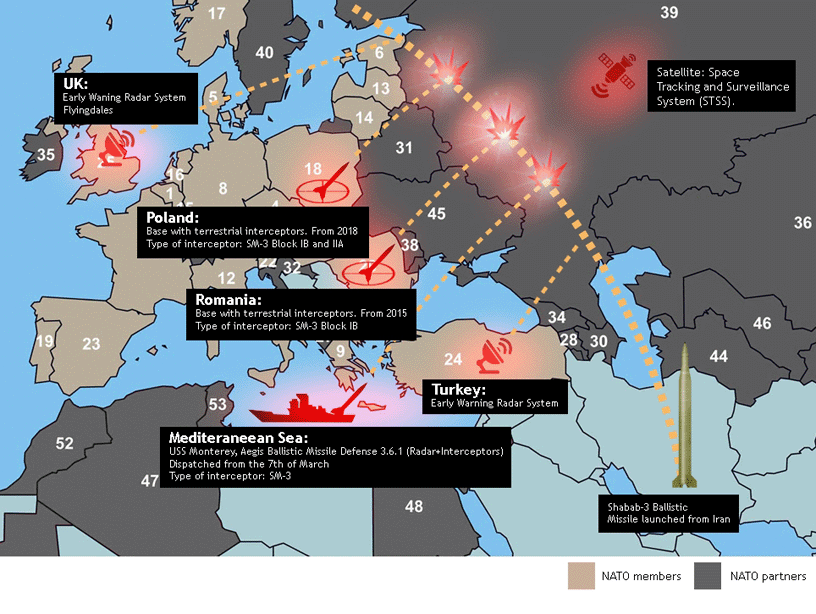
Russia proposes US returns American nuclear weapons from NATO countries stateside https://tass.com/politics/1394065
According to Vladimir Yermakov, “currently there are about 200 American nuclear air bombs of the B61 family” in five non-nuclear NATO countries
MOSCOW, January 27. /TASS/. Moscow proposed to Washington to return all American nuclear weapons from NATO countries to US territory in the context of reviewing security guarantees, Director of the Russian Foreign Ministry’s Department for Nonproliferation and Arms Control Vladimir Yermakov said in an interview with TASS.
“We insist that NATO’s ‘joint nuclear missions’ should be stopped immediately, all the American nuclear weapons be returned to US national territory and the infrastructure that allows their rapid deployment should be eliminated. This aspect is one of the elements of the package of measures proposed by us to Washington in the context of considering the issues of security guarantees,” he said.
According to the diplomat, “currently there are about 200 American nuclear air bombs of the B61 family” in five non-nuclear NATO countries. Thus, the alliance is capable of rapidly deploying nuclear weapons able to reach strategic targets on Russian territory. “[NATO countries] also retain the infrastructure ensuring rapid deployment of these [nuclear] weapons capable of reaching Russian territory and striking a wide range of targets, including strategic ones,” he pointed out.
At the same time, NATO engages non-nuclear countries in training for using American nuclear weapons against Russia. “Interaction between NATO member countries in joint nuclear planning is underway. NATO ‘joint nuclear missions’ take place with non-nuclear alliance members involved in training on the use of American nuclear weapons against us,” the diplomat stressed.
He noted that the US is modernizing its nuclear arsenal with a view of the increased applicability of such weapons in real conditions, above all, in Europe. “As for modernization, the US is consistently implementing a campaign on the renovation of practically all the components of the nuclear arsenal. The B61 air bombs in their newest B61-12 modification will have a decreased or variable yield but increased precision. This raises the question, which containment scenarios justify such ‘calibration?’ This clearly means betting on a ‘higher applicability’ of such weapons under real conditions, first of all, in Europe,” the diplomat stated.
On December 17, 2021, the Russian Foreign Ministry published draft agreements between Moscow and Washington on security guarantees and the measures of ensuring the security of Russia and NATO member states. The proposed measures include guarantees that NATO will not advance eastward, including the accession of Ukraine and other countries into the alliance, as well as the non-deployment of serious offensive weapons, including nuclear ones. On January 26, the US and NATO submitted to Russia their written response to Moscow’s proposal on security guarantees.
Elon Musk SpaceX rocket on collision course with moon.

Elon Musk SpaceX rocket on collision course with moon
By Georgina Rannard
BBC News A rocket launched by Elon Musk’s space exploration company is on course to crash into the Moon and explode.
The Falcon 9 booster was launched in 2015 but after completing its mission, it did not have enough fuel to return towards Earth and instead remained in space.
Astronomer Jonathan McDowell told BBC News it will be the first known uncontrolled rocket collision with the Moon……..
It was part of Mr Musk’s space exploration programme SpaceX, a commercial company that ultimately aims to get humans living on other planets.
Since 2015 the rocket has been pulled by different gravitational forces of the Earth, Moon and Sun, making its path somewhat “chaotic”, explains Prof McDowell from the US-based Harvard-Smithsonian Center for Astrophysics.
“It’s been dead – just following the laws of gravity.”
It’s joined millions of other pieces of space junk – machinery discarded in space after completing missions without enough energy to return to Earth.
“Over the decades there have been maybe 50 large objects that we’ve totally lost track of. This may have happened a bunch of times before, we just didn’t notice. This would be the first confirmed case,” Prof McDowell says…………………. https://www.bbc.com/news/science-environment-60148543
NATO practices nuclear missile sorties near borders of the Russia-Belarus Union

NATO practices nuclear missile sorties near Union State borders — Belarus’ security chief
A breach of international norms and elementary rules of good neighborly relations by neighboring countries is already turning into an alarming trend, Alexander Volfovich stated
MINSK, January 28. /TASS/. The NATO Air Force is practicing sorties with cruise missiles, including with nuclear warheads, near the borders of the Russia-Belarus Union State, State Secretary of the Belarusian Security Council Alexander Volfovich said on Friday.
“The head of state drew attention to intensified flights by US strategic bombers near the borders of the Union State,” the BelTA news agency quoted Volfovich as saying.
“In our assessments, this means that the NATO Air Force is practicing employing cruise missiles, including those with nuclear warheads,” he said…………….. https://tass.com/defense/1394647
Scientists say no to Solar Geoengineering
Scientists say no to Solar Geoengineering 28 Jan 22, More than 60 senior climate scientists and governance scholars from around the world have launched a global initiative calling for an International Non-Use Agreement on Solar Geoengineering
1 This month.
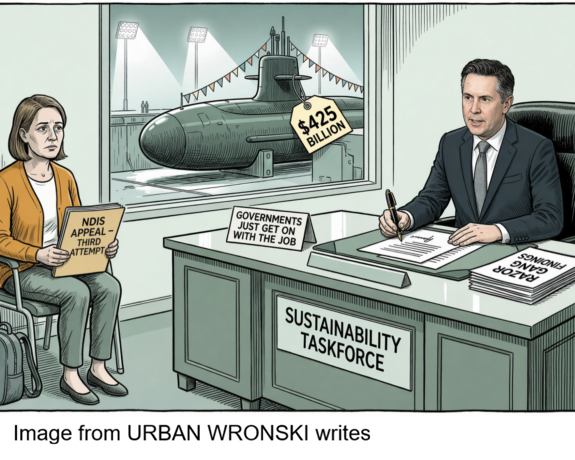

PETITION – To: Prime Minister Anthony Albanese and the Australian Labor Government
Chernobyl: The Lost Tapes – A good documentary on Chernobyl on SBS available On Demand for the next 3 weeks– https://www.sbs.com.au/ondemand/tv-program/chernobyl-the-lost-tapes/235274195556
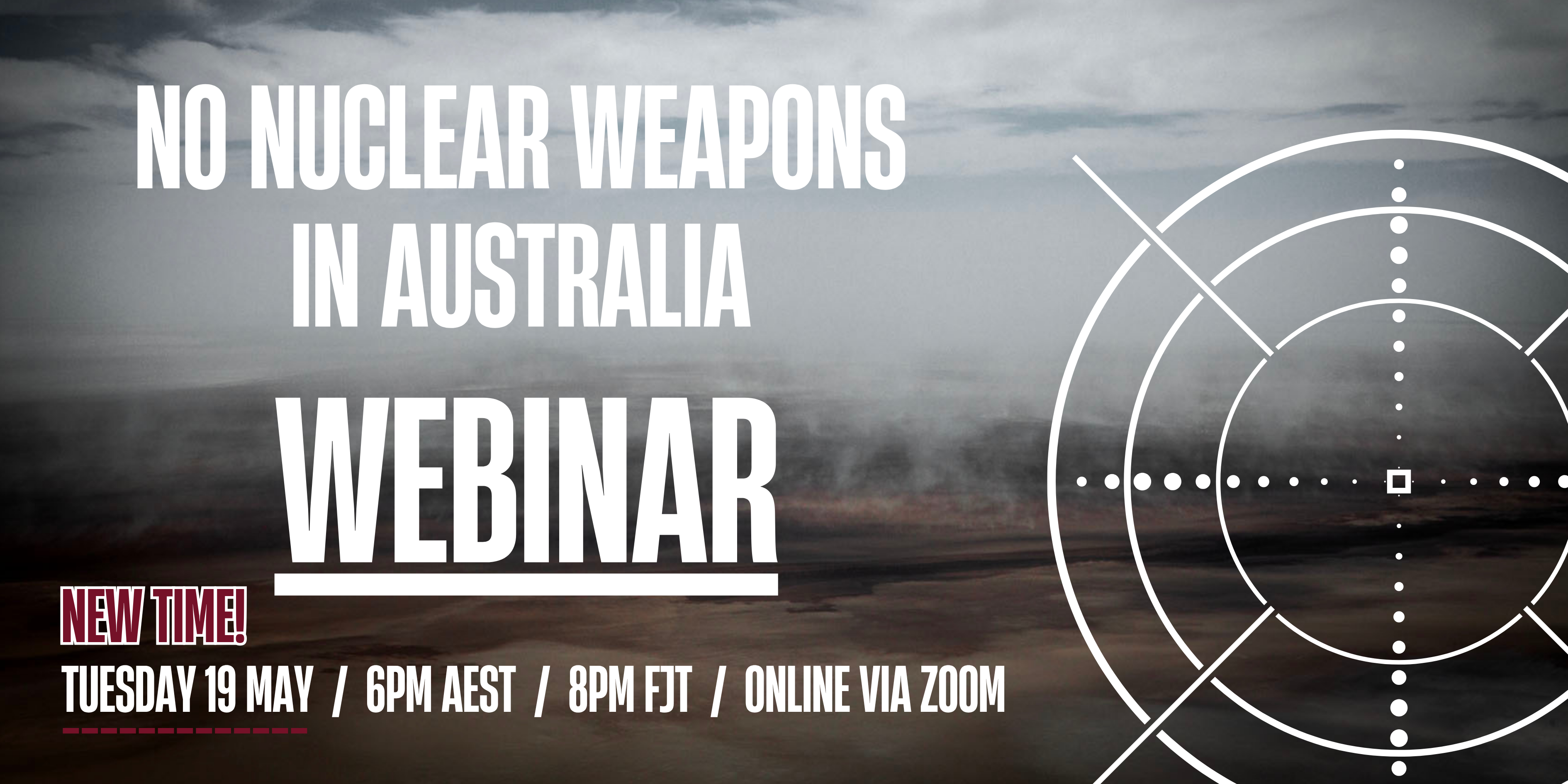
19 May – Webinar- Webinar: No Nuclear Weapons in Australia
Start: 2026-05-19 18:00:00 UTC Canberra, Melbourne, Sydney (GMT+10:00)
End: 2026-05-19 19:30:00 UTC Canberra, Melbourne, Sydney (GMT+10:00)
20 May – Webinar – The dangerous world of AUKUS, US, military occupation and suppression of dissent

National Webinar, 20th May, 2026, 6.30pm AEST. Confronting laws restricting/suppressing protest speech and action
Speakers: Former Sen. Rex Patrick, Lawyer Nick Hanna ,Arthur Rorris ,Jorgen Doyle, Sen David Shoebbridge,
Facilitator Kelley Tranter.

of the week – Australians for War Powers Reform (AWPR)
To see nuclear-related stories in greater depth and intensity
 Antinuclear