Small nuclear reactors a poor solution for UK’s and the world’s climate action.

it is difficult to see how a technology that will only be operational after the UK power system is supposed to be carbon-free will contribute to climate action in the next ten years or so. And the situation is similar globally.
Other questions around traditional nuclear power stations, such as the thorny issue of waste, would also still apply to SMRs…….
Is nuclear power the best solution to climate change? The UK, like China, the US and Canada, is attracted to nuclear power. But high costs and slow delivery means many energy experts remain unconvinced. New Statesman, By Philippa Nuttall 21 Jan 22, debate in the House of Commons on 19 January, led by a group of MPs known as the “atomic kittens”, suggested nuclear energy can be a panacea for all ills – including a solution for the climate crisis and the gas crunch. The facts suggest otherwise.
Isn’t nuclear energy a no-no after Chernobyl and Fukushima?
Disasters clearly reduce appetite among the public and policymakers for nuclear power………………
Today, new nuclear construction projects are few and far between, even in countries such as France and the US whose energy systems are heavily reliant on the technology, and the number of operational reactors is in decline globally.
Are any countries investing heavily in nuclear?
In addition to safety concerns, rising costs are a central reason why the number of new plants under construction remains limited. Since 2011, nuclear power construction costs globally have doubled or even tripled. China is, however, notable in its nuclear ambitions. The country is planning at least 150 new reactors in the next 15 years, more than the rest of the world has built in the past 35, though cost could ultimately change this direction of travel.
The price of nuclear generation has moved in the opposite direction to solar and wind
Mean levelised cost of energy in US$/MWh, 2009–20………..
Others countries such as the UK, the US and Canada also see a limited role for new nuclear as part of their response to climate change. The UK government in its 2021 net zero strategy talked about “cutting edge new nuclear power stations”, and plans to launch a £120m Future Nuclear Enabling Fund.
There are some big nuclear power stations on the cards – think Hinkley Point C or Sizewell C in the UK. But the major excitement among many nuclear enthusiasts, including plenty of UK MPs is around so-called small modular reactors (SMRs). If you believe the hype, they are the answer to all climate and energy ills………………
Rolls Royce, and companies working on the technology in other countries, argue that smaller solutions can be constructed more cheaply and come online more quickly as they can be built in a factory, transported in modules and fitted together “like meccano”, said Rolls Royce’s Alastair Evans. Large nuclear plants are built fully onsite. The idea is that the modules could then be mass produced. However, nothing is rolling off any conveyor belts yet. The only SMR up and running in the world is a 35 MW floating nuclear plant in Russia.
Sounds interesting. Are SMRs the solution to the climate crisis?
Unlikely.
“To meet the requirements of the sixth carbon budget, we will need all new cars, vans and replacement boilers to be zero carbon in operation by the early 2030s,” Virginia Crosbie, a Conservative MP from Wales and the original self-proclaimed “atomic kitten”, enthused to fellow MPs. “We must quickly move away from generating that electricity from fossil fuels… Nuclear power, which has been a neglected part of our energy mix, can bridge the gap.”
There is, however, no silver bullet to the climate crisis, and renewables, in conjunction with other existing technologies, look like a better, cheaper solution.
……….. traditional, big nuclear projects look likely to provide only a sliver of the world’s electricity in the future. They are hugely expensive to build, their construction runs over time, and they are frequently struck by technological issues. Moreover, they need to be built close to the sea or a large river for cooling reasons, highlighted Paul Dorfman from the University of Sussex. France has already had to curtail nuclear power output in periods of heatwaves and drought, which are only set to get worse as climate change takes hold. Greater storm surges and eroding coastlines also don’t make the prospect of building by the sea any easier.
SMRs solve few of these issues………… “The latest economic estimates available for SMRs are still quite expensive relative to other ‘clean’ energy alternatives, and it would be pure speculation to assume that will change dramatically until the concept has been more proven,” said Mike Hogan from the not-for-profit Regulatory Assistance Project.
……. the designs still need to get licensed, factories need to be built, orders placed, projects financed, etc,” said Hogan.
In short, it is difficult to see how a technology that will only be operational after the UK power system is supposed to be carbon-free will contribute to climate action in the next ten years or so. And the situation is similar globally.
Other questions around traditional nuclear power stations, such as the thorny issue of waste, would also still apply to SMRs…….
So what is the solution? Renewables, renewables and more renewables?
In short, yes. The costs of solar, wind power and storage continue to fall, and by 2026 global renewable electricity capacity is forecast to rise by more than 60 per cent, to a level that would equal the current total global power capacity of fossil fuels and nuclear combined, says the IEA.
Some argue nuclear can be a clean back-up option for when the wind doesn’t blow and the sun isn’t shining. But again, other options already exist, including demand response (for example, plugging in your electric car when there is lots of energy and not switching on your washing machine when the system is under strain), large-scale storage and interconnections between different countries.
Final word?
Craig Bennett, chief executive of the Wildlife Trusts, summed up the general mood of those less enthused by nuclear than Crosbie and her fans:
“If successive governments had given even half the love and attention they afford to nuclear power to scaling up home insulation, energy efficiency and smart storage technologies, it’s likely we wouldn’t be facing current challenges around energy and household bills, and we would have done a lot more good for the climate and nature.”….. https://www.newstatesman.com/environment/climate/2022/01/is-nuclear-power-a-genuine-solution-to-the-climate-crisis
Scientists lambast EU over gas and nuclear’s ‘green’ energy label

The experts say the inclusion of nuclear energy contravenes the principle of “do no significant harm”, which is vital in ensuring eligibility for the green label.
Scientists lambast EU over gas and nuclear’s ‘green’ energy label, Pressure on Brussels to change draft ‘taxonomy’ rules to guide sustainable investment, Ft.com Mehreen Khan in Strasbourg, 21 Jan 22,
An EU proposal to label nuclear power and some natural gas as sources of green energy has come under fire from experts hired by Brussels to help draw up the sustainable investment rules. The group of scientists want Brussels to amend its “taxonomy on sustainable finance” to limit use of gas and nuclear energy or risk undermining EU climate goals. Environmentalists and some member states have already criticised the EU over the draft plan, which will allow nuclear energy and some forms of natural gas to be considered as sustainable for decades. The designation is part of rules designed to guide investment into green activities…………..
Nuclear power and some forms of natural gas were included in the draft taxonomy late last year after Brussels was put under severe pressure from some EU governments that wanted to avoid key sources of energy being penalised. They included France, among Europe’s most pro-nuclear countries, and gas-dependent states in eastern Europe.
In the commission’s draft, nuclear power, which has no carbon footprint [ that is, if you don’t count the full guel chain] but produces toxic waste with radiation risks, is considered as sustainable as long as countries can prove they can safely dispose of the waste. New nuclear power permits can be granted until 2045.
The experts say the inclusion of nuclear energy contravenes the principle of “do no significant harm”, which is vital in ensuring eligibility for the green label. The document demands “substantial changes” to the text in order to ensure that new nuclear power stations contribute to the EU’s climate targets. The experts add that in its current form, the taxonomy would “not be suitable” in helping to classify sustainable finance products.
The scientific criticism will embolden anti-nuclear countries such as Austria and Luxembourg, which have vowed to sue the commission at the European Court of Justice if the taxonomy is approved in its current form.
Despite vocal criticism from some corners, the draft is almost certain to be approved as it requires a super-majority of member states and MEPs to reject it. EU legislators cannot propose their own amendments. France, Europe’s biggest nuclear power, has been instrumental in demanding that nuclear technology is given the sustainable label. French president Emmanuel Macron on Wednesday said the inclusion of nuclear “was in line with the protection against climate change”. https://www.ft.com/content/928ad46d-ffd8-41b1-b327-c8eb2354b88c
Doomsday clock stays at 100 seconds to midnight.

What the Doomsday Clock is really counting down to, The number of human-made existential risks has ballooned, but the most pressing one is the original: nuclear war. Vox, By Bryan Walsh @bryanrwalsh Jan 21, 2022 One hundred seconds to midnight. That’s the latest setting of the Doomsday Clock, unveiled yesterday morning by the Science and Security Board of the Bulletin of the Atomic Scientists.
That matches the setting in 2020 and 2021, making all three years the closest the Clock has been to midnight in its 75-year history. “The world is no safer than it was last year at this time,” said Rachel Bronson, the president and CEO of the Bulletin of the Atomic Scientists. “The Doomsday Clock continues to hover dangerously, reminding us how much work is needed to ensure a safer and healthier planet.”
As for why the world is supposedly lingering on the edge of Armageddon, take your pick. Covid-19 has amply demonstrated just how unprepared the world was to handle a major new infectious virus, and both increasing global interconnectedness and the spread of new biological engineering tools mean that the threat from both natural and human-made pathogens will only grow. Even with increasing efforts to reduce carbon emissions, climate change is worsening year after year. New technologies like artificial intelligence, autonomous weapons, even advanced cyberhacking present harder-to-gauge but still very real dangers.
The sheer number of factors that now go into Bulletin’s annual decision can obscure the bracing clarity that the Doomsday Clock was meant to evoke. But the Clock still works for the biggest existential threat facing the world right now, the one that the Doomsday Clock was invented to illustrate 75 years ago. It’s one that has been with us for so long that it has receded into the background of our nightmares: nuclear war — and the threat is arguably greater at this moment than it has been since the end of the Cold War.
The Doomsday Clock, explained
The Clock was originally the work of Martyl Langsdorf, an abstract landscape artist whose husband Alexander had been a physicist with the Manhattan Project. He was also a founder of the Bulletin, which began as a magazine put out by scientists worried about the dangers of the nuclear age and is now a nonprofit media organization that focuses on existential risks to humanity……………………. https://www.vox.com/22893594/doomsday-clock-nuclear-war-climate-change-risk
Scientists trace the path of radioactive cesium in the ecosystem of Fukushima
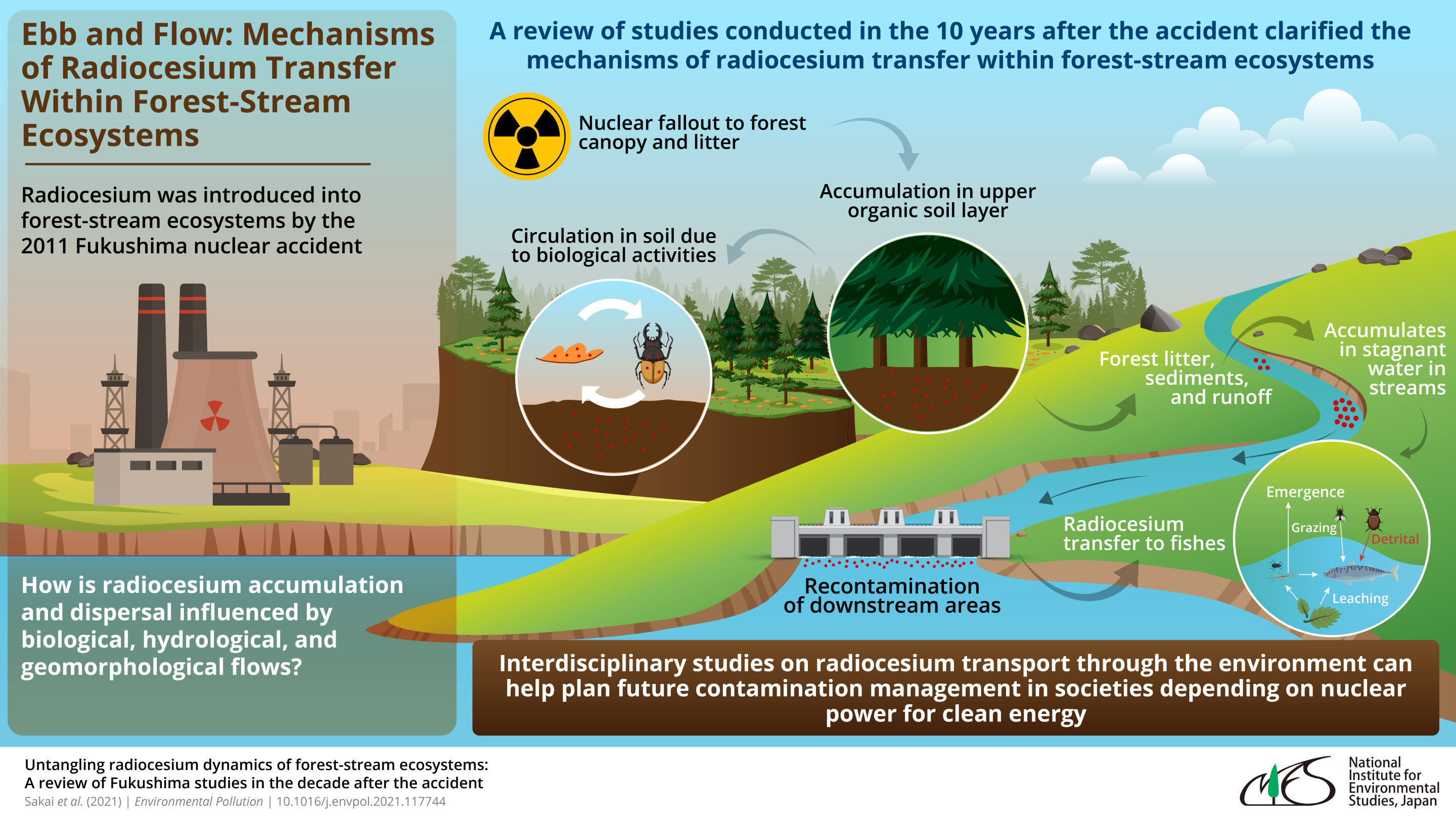
Scientists trace the path of radioactive cesium in the ecosystem of Fukushima https://phys.org/news/2022-01-scientists-path-radioactive-cesium-ecosystem.html
by National Institute for Environmental Studies In 2011, the nuclear accident at Fukushima, Japan, resulted in the deposit of radioactive cesium (radiocesium) into habitats in the vicinity. A decade after the accident, researchers from the National Institute of Environmental Studies, Japan, have collated the complicated dynamics of radiocesium within forest-stream ecosystems. Understanding radiocesium flow in the environment could help mitigate contamination and inform future containment strategies.
In the aftermath of the Fukushima nuclear accident, the Japanese government performed intensive decontamination in the human-occupied parts of the affected area by removing soil surface layers. But a major affected region consists of dense, uninhabited forests, where such decontamination strategies are not feasible. So, finding ways to avoid the spread of radioactive contaminants like radiocesium to areas of human activity that lie downstream to these contaminated forests is crucial.
The first step to this is to understand the dynamics of radiocesium flow through forest-stream ecosystems. In the decade since the accident, a vast body of research has been dedicated to doing just that. Scientists from the National Institute of Environmental Studies, Japan, sifted through the data and detangled the threads of individual radiocesium transport processes in forest-stream ecosystems. “We identified that radiocesium accumulates primarily in the organic soil layer in forests and in stagnant water in streams, thereby making them potent sources for contaminating organisms. Contamination management in these habitats is crucial to provisioning services in forest-stream ecosystems,” says Dr. Masaru Sakai, who led the study. The findings of this study was made available online on 6 July 2021 and published in volume 288 of the journal Environmental Pollution on 1st November 2021.
The research team reviewed a broad range of scientific research on radiocesium in forests and streams to identify regions of radiocesium accumulation and storage. After the accident, radiocesium was primarily deposited onto the forest canopy and forest floor. This radiocesium reaches the earth eventually—through rainfall and falling leaves—where it builds up in the upper layers of the soil. Biological activities, such as those of detritivores (insects and fungi that live off leaf debris etc.) ensure that radiocesium is circulated through the upper layers of the soil and subsequently incorporated into plants and fungi. This allows radiocesium to enter the food web, eventually making its way into higher organisms. Radiocesium is chemically similar to potassium, an essential mineral in living organisms, contributing to its uptake in plants and animals. “Fertilizing” contaminated areas with an excess of potassium provides an effective strategy to suppress the biological absorption of radiocesium.
Streams and water bodies in the surrounding area get their share of radiocesium from runoff and fallen leaves. Most radiocesium in streams is likely to be captured by the clay minerals on stream beds, but a small part dissolves in the water. Unfortunately, there is little information on the relationship between dissolved radiocesium and aquatic organisms, like fish, which could be important to the formulation of contamination management strategies. Radiocesium in streams also accumulates in headwater valleys,pools, and other areas of stagnant water. Constructions such as reservoir dams provide a way to effectively trap radiocesium but steady leaching from the reservoir sediments causes re-contamination downstream.
This complicated web of radiocesium transport is hard to trace, making the development of a one-stop solution to radiocesium contamination impossible. Dr. Sakai and team recommend interdisciplinary studies to accelerate a full understanding of radiocesium pathways in forest-stream ecosystems so that measures can be developed to reduce future contamination. “This review can serve as basal knowledge for exploring future contamination management strategies. The tangled radiocesium pathways documented here may also imply the difficulties of creating successful radiation contamination management strategies after unwished-for nuclear accidents,” explains Dr. Sakai.
Nuclear power is often touted as a solution to the energy crisis, but it is important to plan response measures to unpredictable contamination events. To address the essential need for clean energy in view of the climate crisis, contamination management in societies depending on nuclear power is integral. Fully understanding the behavior of radiocesium in ecosystems can not only lead to the successful management of existing contamination but can also ensure the swift containment of potential future accidents.
France’s nuclear waste problem, and the lack of transparency on military wastes
“The lack of transparency on military nuclear waste poses a serious democratic problem” To guarantee access to the information that is lacking on the subject of the dismantling of the installations, “parliamentary involvement” is essential, believe the director of the Armaments Observatory, Patrice Bouveret, and the spokesperson for ICAN France, Jean -Marie Collin, in a forum in Le Monde.
Le Monde 20th Jan 2022
Nanoplastic pollution found at both of Earth’s poles for first time
Nanoplastic pollution found at both of Earth’s poles for first time
Tiny particles including tyre dust found in ice cores stretching back 50 years, showing global plastic contamination
January 21 Energy News — geoharvey

Opinion: ¶ “Gas Prices Could Soar If Russia Invades Ukraine” • If Russia invades Ukraine, inflation-weary Americans will likely pay the price at the pump. That’s because Russia is the No 2 oil producer on the planet, behind only the US. And Ukraine is a key energy transit hub, where a large amount of Russian […]
January 21 Energy News — geoharvey
A mutual suicide pact: Australia’s undeclared nuclear weapons strategy

A mutual suicide pact: Australia’s undeclared nuclear weapons strategy, Pearls and Irritations, By Michael McKinleyJan 20, 2022 As the world’s nuclear arsenals build even more killing power, the need for Australia to abandon this perilous defence arrangement only increases.
The conventional wisdom has it that in the matter of nuclear weapons Australia is an exemplary international citizen. According to the Standard Version, it diligently supports the various nuclear arms control and disarmament regimes, and adheres to the position which regards nuclear weapons as instruments of nuclear deterrence and thus of the stable relations between major powers. Nuclear war-fighting is eschewed. Virtue is asserted. Res ipsa loquitor. The problem is that both claims are not only false, but embedded within what passes for defence policy with increasing willed ignorance, deceit and dishonesty.
At issue is the Australia’s unqualified general support for the various postures the US adopts and the particular role which it provides through the joint Australia-US facilities at Pine Gap and Northwest Cape. Their status as integral components in US global nuclear strategy – and thus nuclear targets in the event of major, peer-to-peer-war challenges the concept of government by consent of the governed.
The arrangements and agreements between Canberra and Washington have never been made public; indeed, successive governments have been industrious in their attempts to close off anything resembling national dialogue or debate on them.
This, of course, is a traditional and dishonourable tradition. Its origins are to be found in the official dishonesty surrounding Australia granting the British government the right to conduct a series of nuclear weapons tests at Maralinga, Emu Plains and the Montebello Islands from 1952 to 1963.
Unabated, it has coarsened the legal and ethical fabric of the nation’s security and foreign policy ever since to the point where the obvious has to be restated because, essentially, it no longer gives cause for shame, outrage, or anger.
Consider just six issues on which policymakers and mainstream national security commentators and scholars have been mute.
Diplomacy, it seems, has been substituted for by bellicose statements by high-level military and civilian personnel which exhibit, little more than its relegation to an irrelevance beyond its cosmetic utility.
Second, there is proliferation by stealth. The US initiative to modernise its nuclear arsenal by installing the burst-height compensating super-fuze has extraordinary implications. It effectively triples the killing power of its ballistic missiles and, as described by three of America’s most respected weapons analysts (Hans Kristensen, Matthew McKinzie and Theodore Postol) in the Bulletin of the Atomic Scientists the situation is one in which the US has developed “the capacity to fight and win a nuclear war by disarming enemies with a surprise first strike.”
Third, the advent of weapons with warheads described as “variable yield,” “low yield,” “clean” (sic), or “mini nukes” has encouraged declarations at the highest levels in the US that, under certain circumstances, nuclear weapons have “tactical” utility. And they are a matter of pride: as the head of US Strategic Command told a congressional committee in 2020, these innovations made him “proud to be an American.”
Fourth, this embrace of tactical nuclear weapons cannot be separated from the explicit intention to envisage nuclear weapons as inescapably enmeshed in the overarching concept of deterrence. Put another way, for Admiral Richard, and those of a like mind, there is no meaningful distinction to be made between conventional and nuclear deterrence: they comprise a single entity, the former being dependent on the latter for its intellectual and strategic credibility.
By extension the fifth comes into focus: the US to continuing to reserve to itself the right to a nuclear first strike. In 2020, in testimony before the Senate Armed Services Committee, General Tod Wolters, commander of US European Command and Supreme Allied Commander Europe, went so far as to enthuse over it with this endorsement: “I’m a fan of flexible first use policy.”
Sixth and finally, there is nuclear deterrence itself. The term is employed in polite conversation as though it was simply a technical description; in reality, however, it is an obscenity and this becomes obvious when its explicit principle is confronted.
In simple terms it is a mutual suicide pact to the preserve the status quo of the time. Richard Tanter on this site has accurately described Australia’s position within the alliance and under the nuclear umbrella as one which it expects the US to commit genocide in the name of the country’s defence.
An important point is missed here: this understanding or expectation has never been put to the Australian people. ………… …… https://johnmenadue.com/a-mutual-suicide-pact-australias-undeclared-nuclear-weapons-strategy/
Australia continues to lead the world for solar installations.
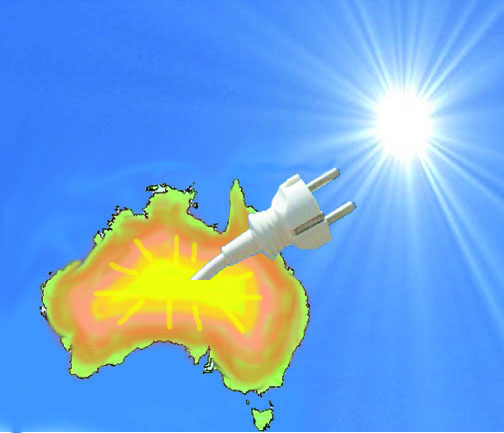
Rooftop solar took a hit in 2021 with the industry growing a third less than expected thanks to lockdowns and supply chain disruptions, despite still showing strong growth overall. More than 3m households and small businesses across the country now have solar panel systems installed, with the milestone reached in November. According to registration data provided by solar consultancy company SunWiz, 3.24GW of new solar capacity was added across the country last year, representing 10% growth on the previous year.
These figures include small rooftop systems of less than 100MW registered by homeowners and small businesses, and do not include large, industrial-scale solar installations. Queensland now has the most installed capacity, with 4,483MW, closely followed by New South Wales (4,256MW) and Victoria (3,839MW). Australia continues to lead the world for solar installations with a total installed capacity of just under 17GW.
nationwide.
Guardian 19th Jan 2022
Australia-UK talks – all about nuclear submarines and military co-operation against China.
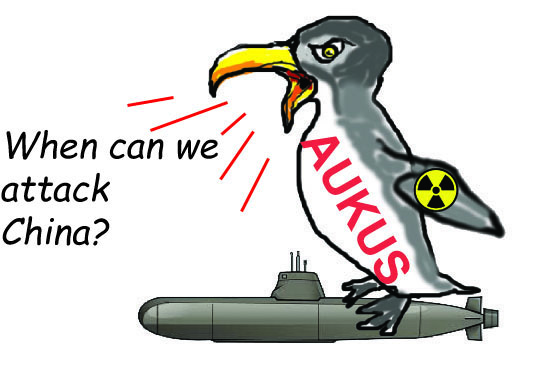
Nuclear submarines and closer interaction with British military to dominate Australian talks with UK, ABC, By defence correspondent Andrew Greene Closer military cooperation and possible basing of British defence assets in Australia will be discussed when ministers from both nations hold long-awaited face-to-face talks in Sydney this week.
Key points:
- British and Australian ministers will discuss the nuclear submarine deal and emerging security threats
- This will be the countries’ first in-person AUKMIN meeting since before the pandemic
- Scott Morrison will host the British ministers at Kirribilli House ahead of the talks
The British foreign and defence secretaries are due to arrive on Thursday ahead of their formal AUKMIN talks with their Australian counterparts on Friday.
This year’s Australia–United Kingdom Ministerial Consultations is expected to be dominated by the recent AUKUS nuclear submarine deal, as well as growing concerns over China’s power in the Indo-Pacific. ……………………….. https://www.abc.net.au/news/2022-01-19/nuclear-submarines-dominate-australia-uk-talks/100765474
Anti-radiation pills given out to residents, nurseries, schools, care homes and clinics near UK’s nuclear submarine ports
EARLY 100,000 anti-radiation pills have been handed out to residents of three English ports in case nuclear submarines go into meltdown, Declassified UK has found. The medication, issued between 2016 and 2021 in Plymouth, Portland and Barrow-in-Furness, went to nurseries, schools, care homes and clinics near naval docks.
The figures were revealed in a freedom of information request by the investigative website. Nuclear-powered submarines are built for the Royal Navy by arms company BAE Systems at Barrow-in-Furness in Cumbria, and the vessels moor at sites such as Devonport dockyard in Plymouth and Dorset’s Portland harbour.
Campaign for Nuclear Disarmament (CND) general secretary Kate Hudson said: “The production, servicing and berthing of nuclear powered submarines in or near population centres presents an unacceptable health risk. “Safeguarding our communities cannot be achieved through limited distribution of pills.”
Morning Star 18th Jan 2022
Plans approved for biggest battery storage system in Victoria — RenewEconomy

A 240MW/480MWh project proposed by Maoneng for the Mornington Peninsula has been cleared for development by the state government. The post Plans approved for biggest battery storage system in Victoria appeared first on RenewEconomy.
Plans approved for biggest battery storage system in Victoria — RenewEconomy
Big Australian banks slammed for funding massive gas “carbon bomb” — RenewEconomy

ANZ, NAB and Westpac have been criticised for helping to bankroll Woodside’s massive expansion of LNG production, despite their climate pledges. The post Big Australian banks slammed for funding massive gas “carbon bomb” appeared first on RenewEconomy.
Big Australian banks slammed for funding massive gas “carbon bomb” — RenewEconomy
A closer look the Australian carbon market in 2021 – a year of records — RenewEconomy

We take a closer look at 2021 in the Australian carbon market “by the numbers,” and weigh the implications for 2022 – an election year. The post A closer look the Australian carbon market in 2021 – a year of records appeared first on RenewEconomy.
A closer look the Australian carbon market in 2021 – a year of records — RenewEconomy
1 This month.
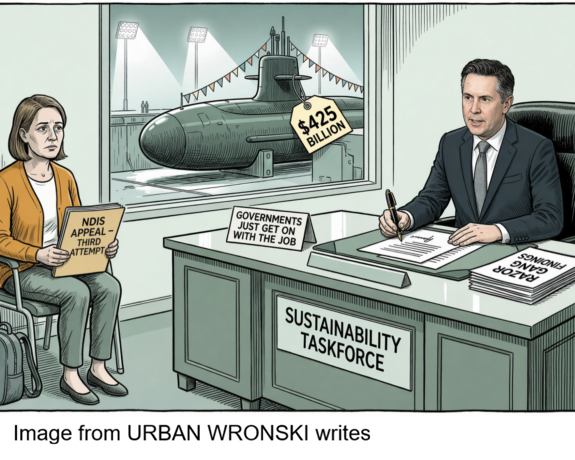

PETITION – To: Prime Minister Anthony Albanese and the Australian Labor Government
Chernobyl: The Lost Tapes – A good documentary on Chernobyl on SBS available On Demand for the next 3 weeks– https://www.sbs.com.au/ondemand/tv-program/chernobyl-the-lost-tapes/235274195556
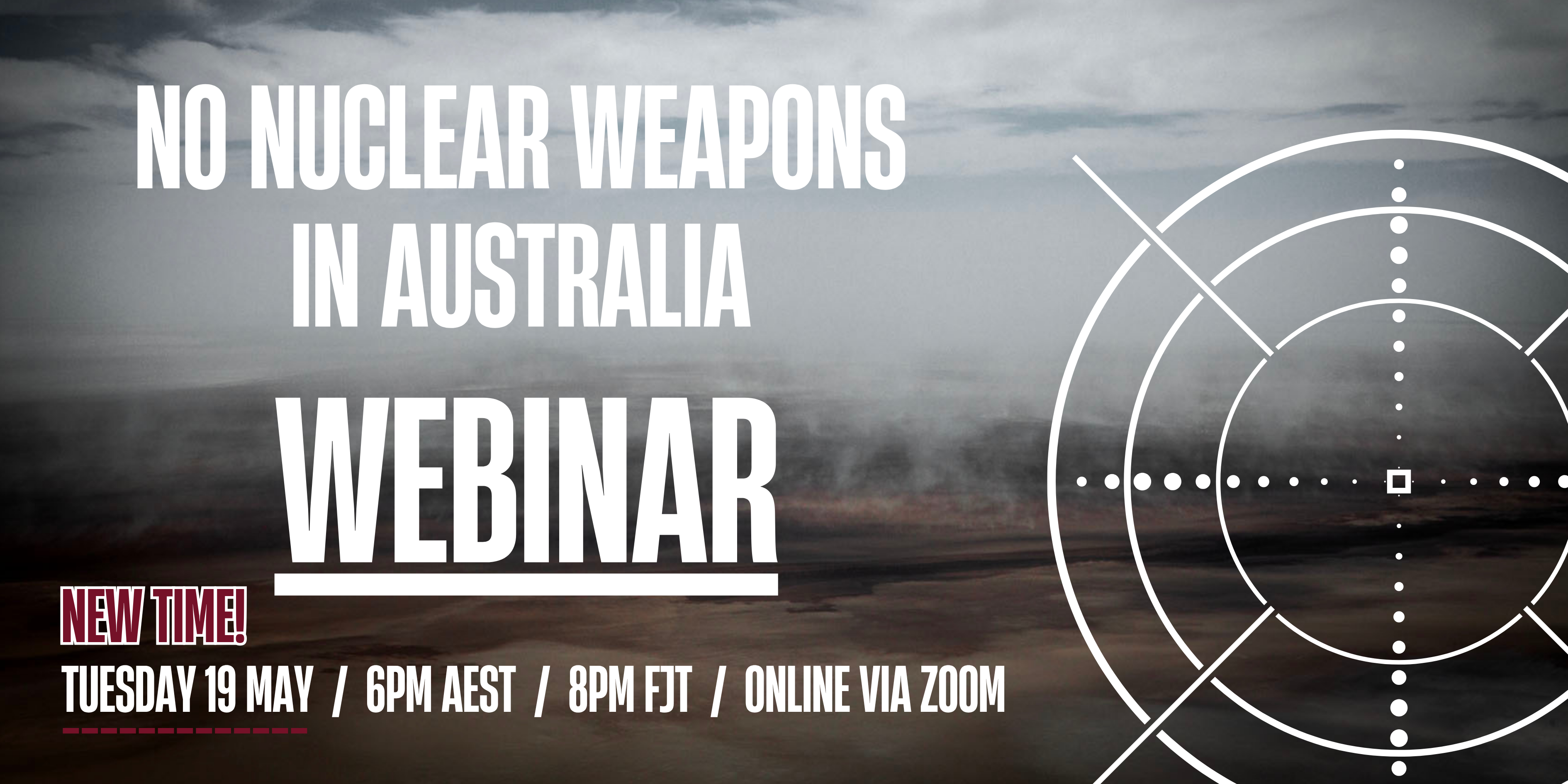
19 May – Webinar- Webinar: No Nuclear Weapons in Australia
Start: 2026-05-19 18:00:00 UTC Canberra, Melbourne, Sydney (GMT+10:00)
End: 2026-05-19 19:30:00 UTC Canberra, Melbourne, Sydney (GMT+10:00)
20 May – Webinar – The dangerous world of AUKUS, US, military occupation and suppression of dissent

National Webinar, 20th May, 2026, 6.30pm AEST. Confronting laws restricting/suppressing protest speech and action
Speakers: Former Sen. Rex Patrick, Lawyer Nick Hanna ,Arthur Rorris ,Jorgen Doyle, Sen David Shoebbridge,
Facilitator Kelley Tranter.

of the week – Australians for War Powers Reform (AWPR)
To see nuclear-related stories in greater depth and intensity
 Antinuclear