An energy revolution is possible, but only if leaders get imaginative about how to fund it — RenewEconomy

If we want to solve climate change, we first need to transform our economic thinking. Relying on research and development to bring down costs is not an option. The post An energy revolution is possible, but only if leaders get imaginative about how to fund it appeared first on RenewEconomy.
An energy revolution is possible, but only if leaders get imaginative about how to fund it — RenewEconomy
What the heck is going on with Ukraine?
Emma Elsworthy, Crikey Worm 20 Jan 22 Worm editor
”’………………..So what the heck is going on? Well, Ukraine is stuck between a rock and a hard place, with the European Union on one side and Russia on the other — Russian is widely spoken there, and they have strong ties as a former soviet republic. But Russia has long demanded Ukraine resist the West and stay more Russian, as BBC explains, saying in no uncertain terms that Ukraine must not join NATO. Cast your mind back to 2014, as Vox explained, and you may recall Russia taking Crimea after Ukraine booted their pro-Moscow president. Ever since, things have been really tense, but Russia recently upped the ante by putting 100,000 troops on their border. So what do Russia want? Mostly for NATO to stop moving into the East and for it to return to its pre-1997 borders, which means it’d have to bail from stations in Poland, Estonia, Latvia, and Lithuania. https://edm.privatemedia.com.au/webmail/272522/1224982414/a7e05398a18da97e419b70c061dc77e2eba2537433139c09a89d2cb6dc8e8b3d
Holding in the deep: what Canada wants to do with its decades-long pile-up of nuclear waste
 |

no country in the world has solved the conundrum of how to permanently dispose of waste that will stay toxic for 400,000 years. And after decades of trying hard to figure it out, Canada doesn’t seem especially close to a solution.
This is the legacy that we are leaving for our children, our grandchildren, great grandchildren, or great, great grandchildren,”
“ it would be irresponsible and morally wrong to commit future generations to a technology that produces such dangerous material, unless there is at least one proven safe method of dealing with it,”
Canada plans to store spent nuclear fuel deep, deep underground near the Great Lakes. That is, if an industry group can find a community willing to play host, The Narwahl, By Emma McIntosh Jan. 19, 2022, The final resting place of Canada’s most radioactive nuclear waste could be a cave about as deep below the surface as the CN Tower is tall.
If it happens, the chamber and its network of tunnels will be drilled into bedrock in the Great Lakes basin. Pellets of spent nuclear fuel — coated in ceramic material, loaded into bundles of metal tubes the size of fireplace logs, then placed into a metal container encased in clay made from volcanic ash — will be stacked in the underground chamber sealed with concrete 10 to 12 metres thick. Though the radioactive pellets will have spent several years cooling down in pools and concrete canisters, they will still emit so much energy that their presence will heat up the space where they sit for 30 to 60 years. The warmth will linger for anywhere from a few centuries to a few millennia.
But none of this will become reality unless the industry-backed Nuclear Waste Management Organization can find a willing host. Two Ontario towns are in the running: South Bruce, located about two hours’ drive northwest of Toronto near Lake Huron, and Ignace, roughly 200 kilometres north of Lake Superior, not far from the Manitoba border. The municipalities, along with 10 First Nations and two Métis councils, are awaiting the completion of dozens of studies as they mull whether the economic benefits of such a project outweigh the risks.
“We have to make sure that there isn’t an environmental risk for us, or it’s a relatively remote risk,” said Dave Rushton, a project manager for the Municipality of South Bruce.
If anyone thinks they’re informed today, I kind of question it. We’re not fully informed because we haven’t got this information yet.”
………. no country in the world has solved the conundrum of how to permanently dispose of waste that will stay toxic for 400,000 years. And after decades of trying hard to figure it out, Canada doesn’t seem especially close to a solution.
“This is the legacy that we are leaving for our children, our grandchildren, great grandchildren, or great, great grandchildren,” said Bzauniibiikwe, whose English name is Joanne Keeshig. She’s Wolf Clan from Neyaashiinigmiing, also known as Chippewas of Nawash Unceded First Nation, which is located near the South Bruce proposal.
“Seven generations from now, this will not be resolved unless we start seriously taking a look at what can be done.” Modelling suggests underground nuclear waste disposal is safe. But no country has tried it yet…………….
High-level waste, meanwhile, is the responsibility of the Nuclear Waste Management Organization, a non-profit established by Ontario Power Generation, New Brunswick Power Corporation, and Hydro-Québec. In the 60 or so years that Canada has produced nuclear power, it has never had a place to dispose of spent fuel. As of 2020, the country’s nuclear power utilities had produced about three million fire log-sized bundles of it — enough to fill eight hockey arenas from the ice to the top of the boards — and that number grows by about 90,000 each year. In the absence of a place to leave it permanently, producers are currently keeping high-level waste in temporary storage near the reactors. By 2100, when the federal government says it expects all of the country’s existing nuclear plants to be decommissioned, industry projects it will be holding onto nearly 5.6 million bundles.
Accumulating nuclear waste has raised red flags for a long time. In 1978, the Ontario government commissioned a report titled “A Race Against Time,” which concluded the waste was proving trickier to handle than experts initially thought and suggested a potential moratorium on new nuclear plants if the industry didn’t progress within eight years.
Another report from the United Kingdom the same year came to a similar but stronger conclusion, said Gordon Edwards, a mathematician who has long critiqued the nuclear industry as the president of the not-for-profit Canadian Coalition for Nuclear Responsibility.
“One of their main conclusions was that we are agreed that it would be irresponsible and morally wrong to commit future generations to a technology that produces such dangerous material, unless there is at least one proven safe method of dealing with it,” Edwards said.
“The problem with radioactivity is you can’t shut it off … You have to somehow keep it out of the environment.”
Federal and provincial governments never issued a moratorium: construction on the Darlington plant in Bowmanville, Ont., which had been approved in 1977, began in the ‘80s. The Bruce and Pickering plants, meanwhile, continued to get new reactors.
These days, the federal government is pushing to advance new nuclear technology, called small modular nuclear reactors (commonly known as SMRs), which some argue could be a climate mitigation tool. The technology is less efficient than larger reactors and produces more waste. Two of these new reactors might be built in the near future — the Canadian Nuclear Safety Commission, which oversees the industry, is considering an application for one at the Chalk River Laboratories research site in Deep River, Ont., and Ontario Power Generation has announced its intent to build another at Darlington.
In 2002, Parliament did pass legislation requiring the industry to band together and deal with its waste and later that year, the Nuclear Waste Management Organization was formed. Twenty years on, it still hasn’t figured out what to do with high-level radioactive waste. Keeping it above ground, as is done now, leaves it vulnerable to natural disasters, or human ones like terrorism and war.
“It’s a question of ethics,” said Brian Ikeda, an associate professor at Ontario Tech University who studies the management of radioactive waste and has a contract to do upcoming work for the Nuclear Waste Management Organization.
“Do you want to leave this stuff — which you don’t like and you think is really dangerous — and have your grandchildren figure out what to do with it? Because that’s what’s actually going to happen … we could be putting those people at huge risk by having this material out.”
As such, a consensus has emerged among global experts that the best way forward is to dispose of spent fuel far underground, a concept called a deep geological repository. But putting nuclear waste underground isn’t simple.
The waste — which in worst-case scenarios could poison groundwater or soil — must be packaged securely enough to withstand a future ice age, which could bring massive glaciers three kilometres thick, heavy enough to affect underground geology. It must be placed in rock that is stable and won’t shift for 400,000 years, the length of time the Nuclear Waste Management Organization believes the waste would remain radioactive enough to be harmful if leaked. It must be climate change proof.
It must also account for the many unknowns of future generations, who might not know how to actively maintain the storage site, but on the other hand will hopefully be able to monitor it. It must be buried so deep that, if our languages disappear or the information about what’s sealed within is somehow lost, our descendants would be unlikely to disturb the buried chamber and expose themselves to the unimaginable risk inside.
Another challenge is the simple fact of entropy: everything breaks down over time. No matter what type of container holds the nuclear waste, its material will corrode over the course of many thousands of years, Ikeda said. The trick is to buy as much time as possible. …………………………………………….
Finding a nuclear waste disposal site in Ontario will require First Nations consent and buy-in from local towns………………………………………………………… https://thenarwhal.ca/nuclear-waste-ignace-bruce/
January 22 -one year since nuclear weapons became illegal
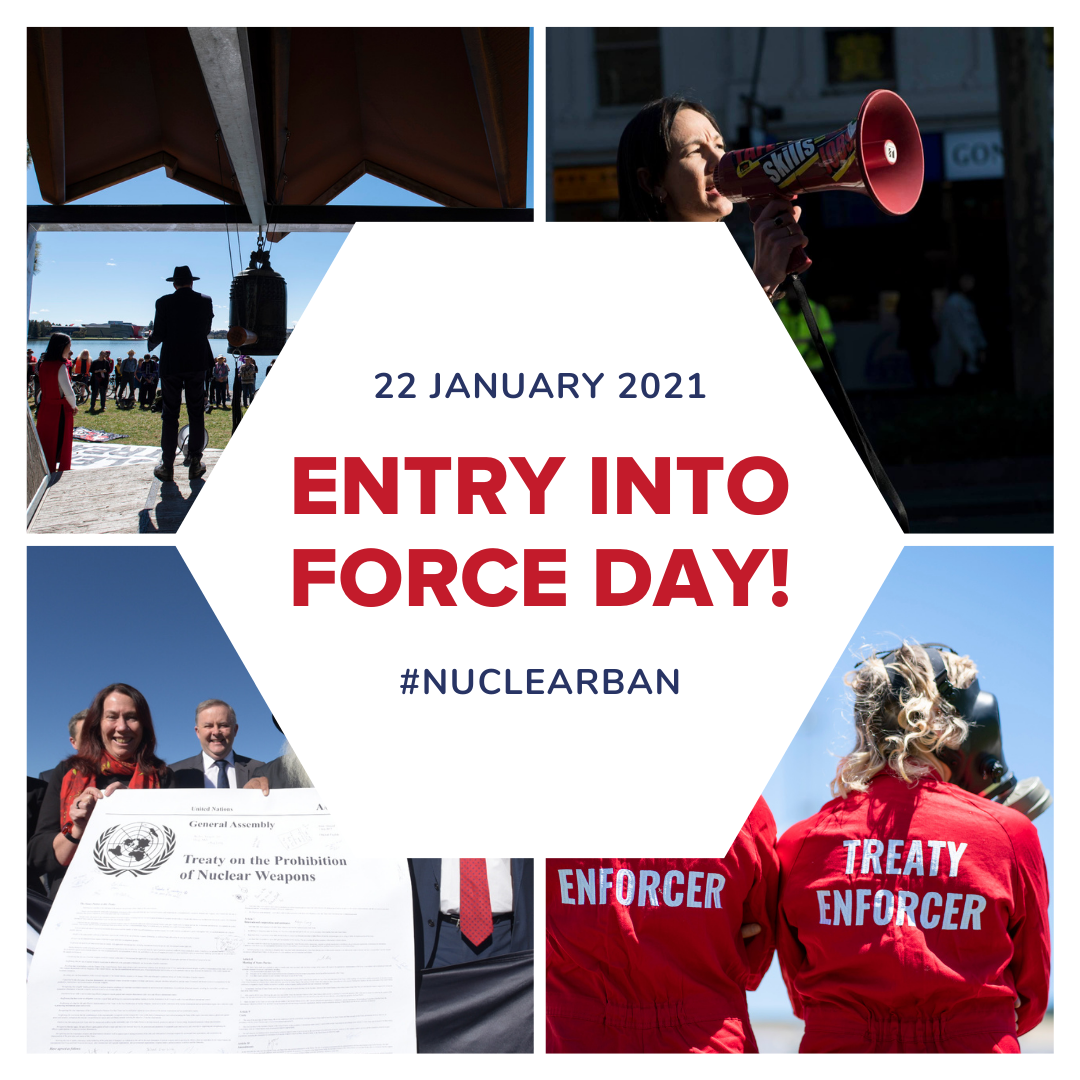
January 22: Nuclear weapons illegal one year https://www.orangeleader.com/2022/01/19/opinion-january-22-nuclear-weapons-illegal-one-year/, January 19, 2022, By Dawn Burleigh The corporate-military-political complex that continues to renew the arsenals of the nine nuclear nations represents a colossal failure of imagination.
Everyone knows that a nuclear war cannot be won, that the weapons are strategically useless, and that they are a catastrophic world-ending accident waiting to happen.
Everyone knows that the trillions spent on these weapons along with boondoggles like the F-35 Strike Fighter are heartlessly siphoned away from the fight against Covid, acute hunger in Afghanistan and elsewhere, and the climate emergency—let alone decent pay for day-care workers.
If nuclear catastrophe happens, say the optimists (when it happens say the pessimists), anyone who survives will cast a searching look upon the whole rotten system that fostered such a monstrous end to the human effort to secure itself on the planet. Some will want to assign blame, assuming enough institutional structure remains to replicate the conditions of a Nuremberg-like court of judgment, but that worthy effort would come too late.
Let us choose optimism and posit that disaster can be averted. We then find ourselves between two paradigms, the first where war has often been the first resort in conflict and always looms as a possibility behind diplomacy, and the second where everyone understands the no-win reality of the weapons that requires eliminating them and evolving a different kind of global security system.
Whatever form such a system might take, a world federation, a renewed United Nations, or a major upgrade in prestige and publicity for diplomatic processes, is less important than the simple education of all the citizens of the planet to the reality of our situation: we must change or die.
The extended moment of the paradigm shift may be, as former Secretary of Defense Perry has ceaselessly warned, the most dangerous time of all, where nuclear war is even more likely than during the Cold War. But the risk of continuing to drift is far greater than the risk of efforts, like those of the International Campaign to Abolish Nuclear Weapons and countless others, to eliminate these world-ending weapons.
Global conflicts remain complex and of course not principally caused by the weapons makers, though it is clear that the arms race is fueled by greed, and its inertial momentum immensely complicates diplomatic efforts to resolve conflict short of war. Nuclear weapons overshadow the points of tension involving the nuclear superpowers, including Ukraine (Russia vs. NATO, Taiwan (China vs. the U.S. et al.) and Kashmir (India vs. Pakistan).
A relatively small number of people, heads of government and of large corporations along with diplomats, hold the fate of the earth in their hands. In the United States Congress should hold hearings where members of this elite group of nuclear strategists can be held to a standard of absolute clarity—justifying to American citizens why they need to spend above a trillion dollars to renew our arsenal, and why they refuse to consider the will of the Earth’s people:
86 nations are signatories to the United Nations Treaty on the Prohibition of Nuclear Weapons. January 22 will mark the one year anniversary of the date the treaty became international law. Nuclear weapons are illegal, immoral, and useless.
Winslow Myers, syndicated by PeaceVoice, author of “Living Beyond War: A Citizen’s Guide,” serves on the Advisory Board of the War Preventive Initiative.
Chemical pollution has passed safe limit for humanity, say scientists
Chemical pollution has passed safe limit for humanity, say scientists
Study calls for cap on production and release as pollution threatens global ecosystems upon which life depends
Changing from a consumer economy to a conserver economy – painful but necessary


Political leadership is about telling it as it is, not pretending it is all painless.
Adjusting back to a sustainable consumption path would be painful in the short term, but not in the longer term — and it will be a lot less painful than continuing with Plan A.
Dieter Helm: One definition of madness is said to be persisting with Plan A in the face of all the evidence that it is not working, and avoiding even thinking about a Plan B. But, after 30 years and 26 COPs — Conferences of the Parties to the UN’s 1992 Framework Convention on Climate Change — that pretty much sums up our approach to climate change.
Every year since1990, we have added another two parts per million to the concentration of
carbon dioxide in the atmosphere — including in the lockdown years 2020 and 2021. The case for “one more heave” looks pretty slim.
The current preoccupation with economic growth based on stimulating demand, Keynesian-style, with negative real interest rates and quantitative easing, and ever greater borrowing for the next generation to repay, suggests the omens are not good.
This sort of economics is pretty obviously not environmentally sustainable. Yet the obvious consequence is ignored: it will not be sustained. With 3C or more of warming, the loss of a big chunk more of biodiversity, and the rainforests gone, all those new ideas and technologies will not be enough to stave off the costs of the environmental downhill our unsustainable consumption is causing.
Political leadership is about telling it as it is, not pretending it is all painless. Adjusting back to a sustainable consumption path would be painful in the short term, but not in the longer term — and it will be a lot less painful than continuing with Plan A.
FT 19th Jan 2022
https://www.ft.com/content/13702f42-a923-4cd8-a6c7-03f775a0742b
Drones sighted over Sweden’s nuclear power stations
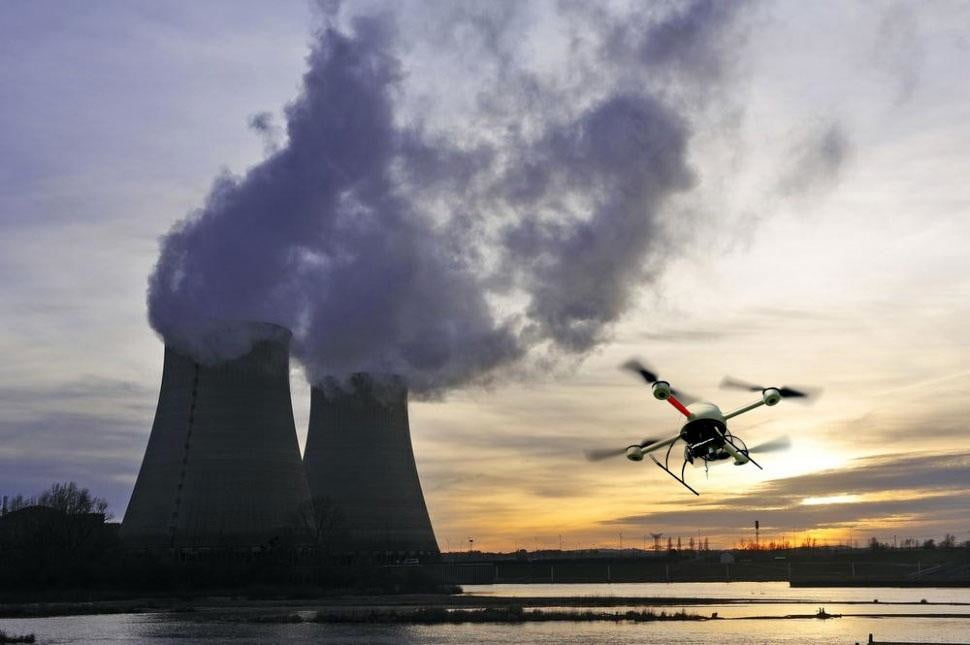
Days of sightings of drones over key Swedish sites including nuclear plants have prompted the country’s security service to take the lead in an investigation. Three nuclear sites have been targeted and sightings have been reported over airports and the royal palace. Authorities have not speculated on who is behind the mysterious drones. Police and the coastguard are searching the sea and islands around Stockholm, local media reports say.
The latest sightings on Monday evening involved a drone above the Forsmark nuclear plant, but security agency Sapo said it was also investigating earlier drone flights near the Ringhals and Oskarshamn power
plants. Police appealed to the public to come forward with information. Sapo said the drones were suspected of “grave unauthorised dealing with secret information”.
BBC 18th Jan 2022
https://www.bbc.co.uk/news/world-europe-60035446
January 19 Energy News — geoharvey

Opinion &c: ¶ “Meet The Environmental Scientist Who Wants To Decolonize Conservation” • Jessica Hernandez first learned of conservation science and environmental justice through her grandmother. Maria de Jesus showed her granddaughter how to tend the family milpa, a plot where they harvested beans, corn, squash, medicinal plants, and even grasshoppers. [CleanTechnica] Central American Milpa […]
January 19 Energy News — geoharvey
Nuclear Power for Australia?
FRIENDS OF THE EARTH AUSTRALIA PRESENTS Is nuclear power a viable climate solution?’
at National Sustainability Festival Sat Feb 26, 2pm to 3.30pm Website: http://www.slf.org.au/event/nuclear-power-australia/
Can nuclear power help with the climate change abatement in Australia?
This forum will unpack the debates and provide factual information to help participants decide.
The aim of this event is to raise awareness about global trends with nuclear power and renewable energy with an emphasis on climate impacts.
SPEAKERS
Dr. Jim Green is the National Nuclear Campaigner with Friends of the Earth. He has an honours degree in public health and a PhD in science and technology studies for his doctoral thesis on the Lucas Heights research reactor debates. Jim is the author of the September 2005 report, ‘Nuclear Power: No Solution to Climate Change’. He has 25 years of research on nuclear issues.
Dr. Jillian Marsh is an Adnyamathanha Traditional Owner currently working as a Lecturer in Indigenous Studies at Victoria University. Her PhD thesis dealt with the imposition of uranium mining on Adnyamathanha country by General Atomics / Heathgate Resources in collusion with the South Australian government.
Victoria pushes ahead with 1.5GW network upgrade in windy south-west — RenewEconomy

Victoria pushes ahead with major transmission upgrade, to open way for 1,500MW of additional renewable capacity and ease wind farm constraints. The post Victoria pushes ahead with 1.5GW network upgrade in windy south-west appeared first on RenewEconomy.
Victoria pushes ahead with 1.5GW network upgrade in windy south-west — RenewEconomy
New research hub to tackle energy transition’s toughest challenges — RenewEconomy

A new hub for energy market expertise will tackle some of the toughest challenges of transitioning the Australian electricity grid to net-zero emissions. The post New research hub to tackle energy transition’s toughest challenges appeared first on RenewEconomy.
New research hub to tackle energy transition’s toughest challenges — RenewEconomy
King’s voice thundered: “It costs $500,000 to kill every enemy soldier while we spend only $53 a year for every poor person. — limitless life
On May 17, 1967, Rev. Martin Luther King Jr. spoke from the steps of Sproul Hall at the University of California’s Berkeley campus, before a massive crowd of 7,000 students. The NAACP had recently released a statement calling King’s growing criticism of the US war in Vietnam a “serious tactical mistake.” King was unwavering. He […]
King’s voice thundered: “It costs $500,000 to kill every enemy soldier while we spend only $53 a year for every poor person. — limitless life
Nuclear weapons must be relegated to the past – Treaty for the Prohibition of Nuclear Weapons
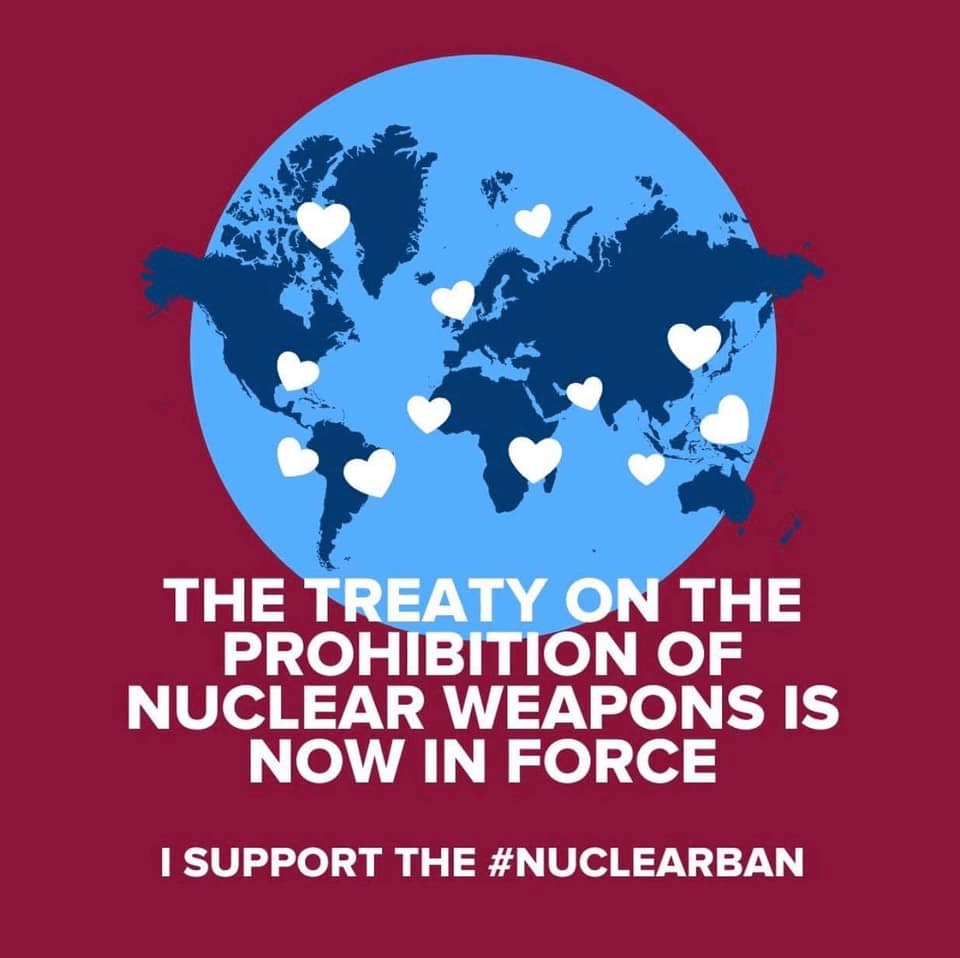
The letter also marks the first anniversary of Pope Francis’ statement prior to the entry into force of the treaty on Jan. 22, 2021; the Pope said nuclear weapons “strike large numbers of people in a short space of time and provoke long-lasting damage to the environment.” On Tuesday, the archbishop said, “It is the duty of the Archdiocese of Santa Fe, the birthplace of nuclear weapons, to support that treaty while working toward universal, verifiable nuclear disarmament.”
As of this week, the treaty has 59 member nation signatories. The purpose of the treaty is to outlaw the manufacture, testing, possession, stockpiling and use or threat of use of nuclear weapons. It is the legal form chosen by 122 nations who, in 2015, sought a route toward disarmament that would be more effective than the United States’ languishing 1970 promise to disarm “at an early date.”
| |||
Nuclear weapons must be relegated to the past, https://www.santafenewmexican.com/opinion/my_view/nuclear-weapons-must-be-relegated-to-the-past/article_d247c8d8-7559-11ec-ab06-bfa71f3f3b1e.html, By Basia Miller, Jan 16, 2022 .
On Jan. 11, the Archbishop of Santa Fe, John C. Wester, shared his pastoral letter, “Living in the Light of Christ’s Peace: A Conversation Toward Nuclear Disarmament” (“Archbishop decries labs’ weapons production,” Jan. 12).
His letter, a timely, courageous and powerful call for a culture of peace, comes at a time when the United States appears to be entering a new arms race, one in which contamination of the waters and lands of the Rio Grande watershed with radioactive, toxic and hazardous pollutants is often accepted passively, without questioning the deadly — and growing — enterprise behind it.
In his summary, the archbishop makes a link between the costs of military spending and the reciprocal effect on civilian life. He says, “Moreover, we are robbing from the poor and needy with current plans to spend at least
$1.7 trillion to ‘modernize’ our nuclear weapons and keep them forever.”
The archbishop presented his letter six days before the Dr. Martin Luther King Jr. holiday and 10 days before the first anniversary of the entry into force of the International Treaty on the Prohibition of Nuclear Weapons, on Jan. 22.
The letter also marks the first anniversary of Pope Francis’ statement prior to the entry into force of the treaty on Jan. 22, 2021; the Pope said nuclear weapons “strike large numbers of people in a short space of time and provoke long-lasting damage to the environment.” On Tuesday, the archbishop said, “It is the duty of the Archdiocese of Santa Fe, the birthplace of nuclear weapons, to support that treaty while working toward universal, verifiable nuclear disarmament.”
As of this week, the treaty has 59 member nation signatories. The purpose of the treaty is to outlaw the manufacture, testing, possession, stockpiling and use or threat of use of nuclear weapons. It is the legal form chosen by 122 nations who, in 2015, sought a route toward disarmament that would be more effective than the United States’ languishing 1970 promise to disarm “at an early date.”
The long-range expectation is the dynamic among the treaty’s signatory nations (including the NATO countries) will gradually curb the United States’ appetite for building more weapons. The purpose was once “deterrence,” but even that rationalization has been undermined.
In this way, a new legal norm will have been created by which nuclear weapons follow the pattern of the worldwide ban on landmines and chemical and biological weapons.
An occasion to honor Dr. Martin Luther King Jr. and celebrate the first anniversary of the Treaty for the Prohibition of Nuclear Weapons is planned by local activists and veterans groups at Ashley Pond in Los Alamos from 1 p.m. to 3 p.m. on Saturday, Jan. 22. The public is invited. Basia Miller is a board member of Concerned Citizens for Nuclear Safety. She has lived in Santa Fe for over 30 years.
On Cape Cod, a nuclear nightmare arrives
On Cape Cod, a nuclear nightmare arrives, https://news.yahoo.com/column-cape-cod-nuclear-nightmare-095201547.html, Brent Harold Columnist, Mon, January 17, 2022,
We’re living in E.F. Schumacher’s nightmare future.

Fifty years ago, before there was much nuclear power to worry about, before Three Mile Island, Chernobyl, or Fukushima, he was already worrying about it in his 1973 book “Small is Beautiful: A Study of Economics As If People Mattered.” The book was ranked by The Times Literary Supplement as one of the 100 most influential books published since World War II.
It’s striking that the main argument against using nuclear energy was there from the very start.
“The biggest cause of worry for the future is the storage of the long-lived radioactive wastes,” he wrote. “In effect, we are consciously and deliberately accumulating a toxic substance on the off-chance that it may be possible to get rid of it at a later date.”
No amount of convenience or efficiency — or profits — he argued “could justify the accumulation of large amounts of highly toxic substances which nobody knows how to make ‘safe’ and which remain an incalculable danger to the whole of creation for historical or even geological ages. To do such a thing is a transgression against life itself.”
We are in that “later date” and as we know, there still is no solution to the problem of how to get rid of the radioactive waste that is a systematic byproduct of generating nuclear energy .
We are in that future Schumacher warned against.
A few years ago, when Pilgrim Nuclear Power Plant was still limping along, a documentary titled “Containment” played in Wellfleet, showing in convincing detail the nuclear future Schumacher warned against, especially the ongoing problem of containment of lethal radioactive wastes.
There is no mopping up as with oil spills. You don’t flush this, clean it up and move on. There is no getting rid of the mess we’ve made. All we can do is try to contain it, on and on farther into the future than the 10,000 years often cited as the age of “civilization” — perhaps longer than our species has been around.
There’s an interesting segment in the film about attempts to come up with a sign to warn our distant descendants of the lethal mess we have bequeathed them.
Containment is the job and the company that owned Pilgrim, when it closed the plant, handed the job of cleanup and containment off to a company named Holtec, which thought it could make a go of it while making a profit for its shareholders.
Containment is the job. But only in its first year or two, Holtec recently announced, almost off-handedly, that it was considering dumping a million gallons of radioactive waste in our Cape Cod Bay. ”What?” asked many. “Can they get away with that?”
Apparently they are within their legal rights. Certainly, the company has emphasized it has no obligation to be guided by those whose lives will be most affected by it.
In reaction to the outcry Holtec has said it will put off the dumping for a spell. To make us feel better it noted that Entergy had for years, when Pilgrim was still operating, been dumping radioactive water in the bay.
Fifty years ago Schumacher wrote: “It was thought at one time that these wastes could safely be dumped into the deepest parts of the oceans…but this has since been disproved…wherever there is life, radioactive substances are absorbed into the biological cycle.”
Containment is the job. Dumping a million gallons of radioactive waste into Cape Cod Bay seems like the opposite of containment.
Once again, as with Entergy, we find ourselves in the situation of having our present and future safety in the hands of a bottom line-oriented company.
Call it a nuclear energy problem. Call it a corporation/capitalism problem. It is both.
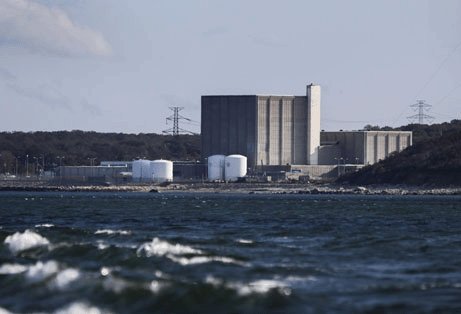
There is a decades-long history of opposition to Pilgrim. Diane Turco and others founded Cape Downwinders in the early 1990s, a group that worked toward the shuttering of Pilgrim..
This newspaper kept Cape citizens informed with its strong coverage of the deterioration of Pilgrim and wrote editorials advocating its closure.
The closure of the plant in 2019 was considered by activists a victory and there has been a natural tendency (for people whose name isn’t Diane Turco) to become complacent about the still-dangerous site. Certainly it does seem less glamorous being the first generation of citizens, of who knows how many, to practice ongoing wariness about containment and the company in charge of it. But that’s the reality of our situation.
A place to start getting involved or re-involved is a gathering for a speak-out on Jan. 31 at 5 p.m. at Plymouth Town Hall Great Room, to be followed at 6:30 p.m. by a meeting of the Nuclear Decommissioning Citizens Advisory Panel.
Brent Harold, a Cape Cod Times columnist and former English professor, lives in Wellfleet. Email him at kinnacum@gmail.com.
This article originally appeared on Cape Cod Times: pilgrim nuclear plant and holtec’s plan to dump contaminated water.
Meet the scientist moms fighting climate change for their children
Looking for climate optimism? Meet the Science Moms.
Amid climate “doomerism,” what can be done to fight global warming? A lot, it turns out. And female scientists are at the forefront.
1 This month.


PETITION – To: Prime Minister Anthony Albanese and the Australian Labor Government
Chernobyl: The Lost Tapes – A good documentary on Chernobyl on SBS available On Demand for the next 3 weeks– https://www.sbs.com.au/ondemand/tv-program/chernobyl-the-lost-tapes/235274195556

19 May – Webinar- Webinar: No Nuclear Weapons in Australia
Start: 2026-05-19 18:00:00 UTC Canberra, Melbourne, Sydney (GMT+10:00)
End: 2026-05-19 19:30:00 UTC Canberra, Melbourne, Sydney (GMT+10:00)
20 May – Webinar – The dangerous world of AUKUS, US, military occupation and suppression of dissent

National Webinar, 20th May, 2026, 6.30pm AEST. Confronting laws restricting/suppressing protest speech and action
Speakers: Former Sen. Rex Patrick, Lawyer Nick Hanna ,Arthur Rorris ,Jorgen Doyle, Sen David Shoebbridge,
Facilitator Kelley Tranter.

of the week – Australians for War Powers Reform (AWPR)
To see nuclear-related stories in greater depth and intensity
 Antinuclear