Australia can be a leader – and avoid the nuclear fantasy

Australia already is a leader, in the dazzling success of renewable energy, – and that’s despite the concerted efforts of the Liberal National Coalition government to stall renewable energy.
The Murdoch media and the nutty Nationals continue to push for nuclear power, because they hang on to that old Pangea dream, of Australia becoming the radioactive nuclear garbage dump of the world, making $squillions for a few ruthless men, (and maybe for Gina too).
So- there’s the absurdity of the $170 billion nuclear submarines (useless for Australia’s defence) – and the current push for fleets of Small Nuclear Reactors, massively expensive and – to ”solve climate change”.
All of this is part of the global insane frenzy for nuclear power-nuclear weapons.
Australia does not have to be in that. Australia does not have to remain a cultural colony of the USA.

Sadly, that is where we are as of now. There’s no better symbol of this than the plight of Australian Julian Assange. His sin was to expose American military atrocities.
If the Australian government were to, for once, stand up to the USA bully, we might have a chance to stand up to the pressure to join the American nuclear military machine, and the nuclear fuel chain fantasy.
Australian government and Labor opposition ignore the suffering of Julian Assange. Can they afford to, as election looms?
If he dies, his death will have been caused by, among others, politicians in Australia who have the diplomatic power to bring him home,” Pilger said.“Scott Morrison, in particular, will have Julian’s life and suffering on his hands, along with those in the Labor opposition who have kept a cowardly silence.
Independent MP Andrew Wilkie, among others, has said that Scott Morrison must urge the US and Britain to release Assange and let him return to Australia.
the “noise” in parliament combined with more public awareness of Assange’s dire state may present a headache for the government as polls loom.
Saving Julian Assange, Last week, the British High Court ruled that Julian Assange can be extradited to face charges in the United States. His fiancée, Stella Moris, vows to continue the fight alongside his network of supporters. By Amy Fallon. https://www.thesaturdaypaper.com.au/news/politics/2021/12/18/saving-julian-assange/163974600013099?fbclid=IwAR2dLaNxKG0FTyBvywjYpL_HpxPb8RWA6rF0mQwIE-X8Pnd8TMbAzkWed2Y#mt This week, Stella Moris said she and Julian Assange still intended to marry in the new year, although they have not set a date. She is currently speaking to the prison about arrangements. Moris hopes it will be a ceremony attended by close family and friends, with their children, Gabriel, 4, and Max, 2, taking part.
“The High Court ruling has made things even more precarious than before,” she tells The Saturday Paper.
“But that has only strengthened our determination to celebrate what is constant and certain in our lives – our love and support for each other.”
Moris is a South-African born lawyer and an activist in her own right. Her family were involved in the anti-apartheid battle. After the British High Court ruled that her fiancé could be extradited to the United States, her response was simple: “We will fight.”
“History will not spare them if we lose a man who is not only innocent of any crime but a genuine hero in the extraordinary public service he has performed for millions of people.”
She sees the case in these terms: “Every generation has an epic fight to fight, and this is ours, because Julian represents the fundamentals of what it means to live in a free society.”Last week’s decision was made after two of Britain’s most senior judges ruled Assange, earlier deemed a suicide risk, had received assurances from the US that he would not face the strictest measures before a trial or once convicted. They found a lower court had erred in offering him protection.
“That risk is in our judgement excluded by the assurances which are offered,” one of the judges, Lord Burnett, said. “It follows that we are satisfied that, if the assurances had been before the judge, she would have answered the relevant question differently.”
British Home Secretary Priti Patel must now approve Assange’s extradition. Lawyers for the 50-year-old are appealing the decision. Subsequent hearings are likely to raise the issue of free speech, which campaigners say is at the heart of the case involving the Walkley Award-winning journalist.Many around the world are now calling on the Australian government to intervene and save Assange’s life before it’s too late.
“There seem to be no limits to the savagery of the Anglosphere – US, UK, Australia – in exacting revenge for the crime of informing the population of what the powerful want to conceal,” the intellectual and activist Noam Chomsky later told The Saturday Paper.
He urged followers of Julian Assange, wanted by the US for breaking espionage laws after publishing hundreds of thousands of Afghanistan and Iraq war logs and diplomatic cables, to “get organised”.
“And act,” added Chomsky, because there was “not much time”.
Another two to three years may drag on before the extradition is resolved. Australian journalist John Pilger, who described Assange as “frail and skeletal” the last time he hugged his friend in 2020, said the fact he was still alive was remarkable.
Last weekend’s revelation, that Assange had suffered a stroke in October, didn’t shock the veteran reporter. A month earlier, a Yahoo News report revealed that the CIA allegedly planned to assassinate Assange.
“If he dies, his death will have been caused by, among others, politicians in Australia who have the diplomatic power to bring him home,” Pilger said.“Scott Morrison, in particular, will have Julian’s life and suffering on his hands, along with those in the Labor opposition who have kept a cowardly silence. History will not spare them if we lose a man who is not only innocent of any crime but a genuine hero in the extraordinary public service he has performed for millions of people.”
To Gabriel Shipton, Assange’s brother, Julian, is a “bad dancer” with a “dorky sense of humour”. But, he says, “he is very sweet with his children, very good with kids, and a very principled man”.
Shipton produced the recent documentary Ithaka, which tells the story of Gabriel and Julian’s father’s struggle to have Assange freed.“Often people lose sight that these are actual real people involved, not just a head on a screen, or a headline, that this is a person’s father, brother, partner,” Shipton says. “Once people find out about how tragic the actual injustice that Julian suffered [is], and through no fault of their own his family are suffering, they’re quite confronted that they’ve allowed it to carry on for as long as it has.”
Shipton concedes the fight is just as much or even more political than legal, and others echo this. “There is no doubt that [this] aggressive and relentless pursuit is driven by the US security and defence state,” said Greg Barns, a barrister and adviser to the Australian Assange campaign.
A bipartisan Australian Parliamentary Friends of the Bring Julian Assange Home group comprises 25 senators and MPs, but was adding “about one member or so monthly”, says Shipton. In the past week, Deputy Prime Minister Barnaby Joyce has spoken out against Assange being sent to the US. Independent MP Andrew Wilkie, among others, has said that Scott Morrison must urge the US and Britain to release Assange and let him return to Australia. The opposition has urged the government to encourage the US to close the matter, although it has not elaborated on what it means by this.According to Kellie Tranter, a Maitland-based lawyer, human rights activist, researcher and former WikiLeaks Party candidate, the “noise” in parliament combined with more public awareness of Assange’s dire state may present a headache for the government as polls loom.
“If the level of interest keeps increasing, the government may feel obliged to act as the Howard government did in the case of David Hicks,” she says, referring to the former Guantánamo Bay detainee. “The last thing the government wants is this case soaking up oxygen in place of its policies. It’s public criticism, which is exactly what they wanted to avoid in the case of Hicks.”Tranter points out that progressive campaign group GetUp! played a critical role in Hicks’s repatriation by making his detention by the US an election issue, mobilising public opinion against his mistreatment. They may be the only organisation capable of doing the same in this case, she said. GetUp! said they had no comment on Assange.
In Britain, Assange has admirers from all walks of life. Sadia Kokni, 40, is British-born with African, Indian and Middle Eastern heritage and the managing director of a cosmetics company. Despite having a disability, she attends twice-weekly protest vigils at the Australian high commission with “Team Assange”, comprising about 50 people, including bus drivers, graphic designers, nurses and artists.
“I campaign for nothing, I only campaign for Julian,” Kokni says. “Unlike when people campaign against a war – it’s a nation against a nation – when it comes to Julian it’s the most powerful nation in the world against one man and he’s exposing the atrocities of global governance and things that every living person should be aware of.”
Although Kokni acknowledges Assange’s predicament could be treated with greater urgency by the British parliament, she also feels disbelief over Australia’s inaction.“They could be doing a lot more, Australia. I find it ridiculous,” she said, singling out the high commissioner, George Brandis. “Brandis – what is he actually doing? Has he written any letters?”
The Australian high commission in Britain did not respond to requests for comment.
Traditional owners lodge legal challenge to planned Kimba nuclear waste dump
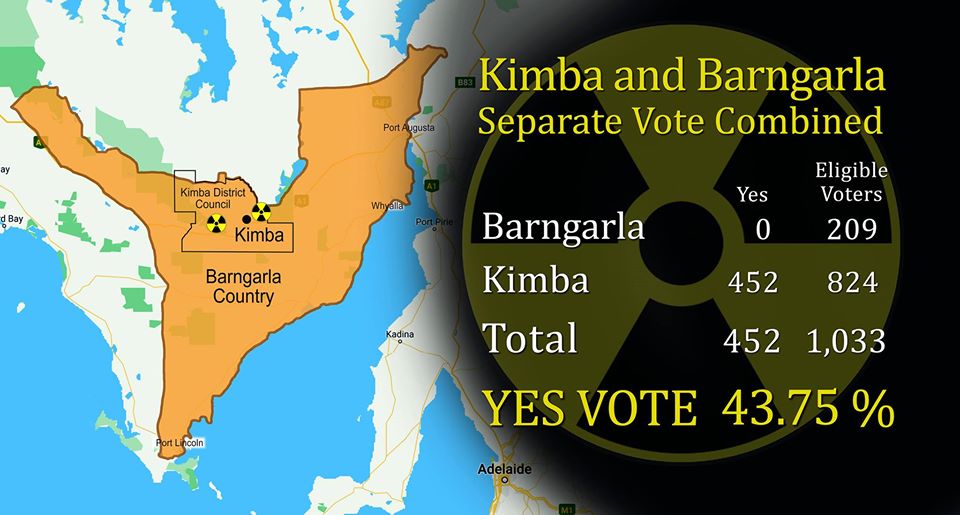
Traditional owners lodge legal challenge to planned Kimba nuclear waste dump, https://www.abc.net.au/news/2021-12-21/barngarla-challenge-kimba-radioactive-waste-facility-napandee/100717404?fbclid=IwAR3QiztQ5454cuTfmjLaBaCb_nK4usDM43TObZV5R
ABC North and West SA / By Declan Gooch, Patrick Martin, and Gillian Aeria Tue 21 Dec 2021 raditional owners on South Australia’s Eyre Peninsula have formally lodged a legal challenge to the federal government’s plan to build a nuclear waste dump in the region.
Key points:
- The Barngarla people have begun legal action against a planned radioactive waste dump
- The federal government wants to build the facility near Kimba
- Traditional owners have complained they were not consulted properly
The government wants to store low and intermediate-level waste at a property called Napandee, near the town of Kimba.
The Barngarla people say they were not included in the consultation process, which included a ballot of ratepayers.
“We don’t want it to be at Kimba because we were excluded from the vote under white man’s law,” Barngarla Determination Aboriginal Corporation chairman Jason Bilney said.
The group filed for a judicial review of the site selection process in the Federal Court on Tuesday.
The ballot of Kimba ratepayers, which the government has repeatedly cited as evidence of community support, showed about 60 per cent of voters were in favour of the plan.
“The government says broad community support — well what broad community support did you have, let alone with the native title holders of Kimba or on the Eyre Peninsula?” Mr Bilney said.
The ballot of Kimba ratepayers, which the government has repeatedly cited as evidence of community support, showed about 60 per cent of voters were in favour of the plan.
“The government says broad community support — well what broad community support did you have, let alone with the native title holders of Kimba or on the Eyre Peninsula?” Mr Bilney said.
He said South Australian law required a parliamentary inquiry if nuclear waste was to be brought in and stored.
“We are going to see continual opposition emerge over the next five to 10 years, and this has got a long way to run.”
He expected the court to decide in the Barngarla group’s favour.
“They have a clear and strong case. They were excluded from the community ballot, and they do have native title rights, and it’s essential the Federal Court stands up and protects those rights.”
The government had initially tried to legislate the location of the facility in a way that would have eliminated the possibility of a judicial review.
It later amended the legislation in response to pressure from Labor so it received the support needed to pass both houses of parliament.
In a statement, resources minister Keith Pitt said the declaration of Kimba as the site for the facility was a “significant step”.
He said his facility was a crucial piece of national infrastructure for Australia’s nuclear medicine industry and nuclear research capabilities.
European Commission experts call on EU not to label nuclear ‘green’,

Commission experts call on EU not to label nuclear ‘green’, https://euobserver.com/climate/153891, By WESTER VAN GAAL 22 Dec 21
BRUSSELS, Thirteen members of the EU Commission’s Technical Expert Group (TEG) put out a petition on Tuesday (21 December) calling on nuclear energy not to be labelled as ‘green’.
“We recommend that nuclear fission has no place on the EU taxonomy of sustainable activities,” the group, led by Dawn Slevin, a financial expert and core member of the commission’s financial stability TEG, wrote.
Dealing with the “do no significant harm” principle in the taxonomy, they concluded nuclear may damage the environment due to the need to store it in underground bunkers for thousands of years, and “because the risk of a severe nuclear accident cannot be excluded, even in the best commercially available nuclear power plants.”
They also warn against politicisation of the rules. “Proponents of nuclear energy use the taxonomy to put a ‘scientific’ stamp on what is primarily a political position on nuclear fission energy aiming to satisfy the few EU member states that wish to promote the associated technologies,” the petition states.
France is spearheading an alliance of 10 member states that argue that nuclear fission and gas-fired power plants should be included in the taxonomy.
The TEG members point out that France and Finland are currently the only EU countries actively building nuclear facilities.
The Finnish Olkiluoto-3 was meant to start generating power in 2009, followed by the French Flamanville-3 in 2012.
However, both are still not operational, tripling anticipated costs, the group wrote. The group includes Paolo Masoni, a nuclear engineer, and Eric Laes, a post-doctoral researcher specialising in atomic energy at the Technical University of Eindhoven.
Politicised debate
In recent months, the decision on whether to include nuclear and gas in the taxonomy has become politicised.
Last week, EU internal market commissioner Thierry Breton told five European newspapers, including Die Welt, that “it is a lie that the EU can become CO2-neutral without nuclear power.”
French president Emmanuel Macron said last week that France and Germany will try to find a compromise on whether the EU should label nuclear and gas as green investments.
But on Monday, the German Greens, part of the new ruling coalition, came out strongly against nuclear, reiterating their opposition to the inclusion of nuclear in the taxonomy.
“The German government’s stance is that nuclear power is not one of the sustainable forms of energy [that] remains,” environment minister Steffi Lemke told fellow EU environment ministers in Brussels on Monday.
German climate and economics minister Robert Habeck later echoed his colleague on German radio Deutschlandfunk, saying: “I do not think nuclear power is the right technology.”
However, chancellor Olaf Scholz (SPD) did not make such a clear statement at the last EU summit on Friday – and admitted Germany will probably not be able to stop the French push for nuclear.
“France is taking a different path [than Germany]. Other countries do as well,” he said.
“That is why it’s important that you can follow your paths and at the same time stay together across Europe,” he added.
The commission planned to present its decision on nuclear and gas on Wednesday, but this has been postponed until mid-January next year.
It now plans to consult a draft version of the taxonomy with member states before the end of the year or at the start of January 2022 – a process that will be clarified on Wednesday.
The Sustainable Finance Platform, a group of 57 NGOs, scientific and financial experts will also be consulted.
The commission has faced backlash in the past from some of its members, including one of the signatories of the petition, for allowing gas an nuclear to be considered in what was meant to be a science-led exercise.
Nuclear power has no business case and could make climate change worse
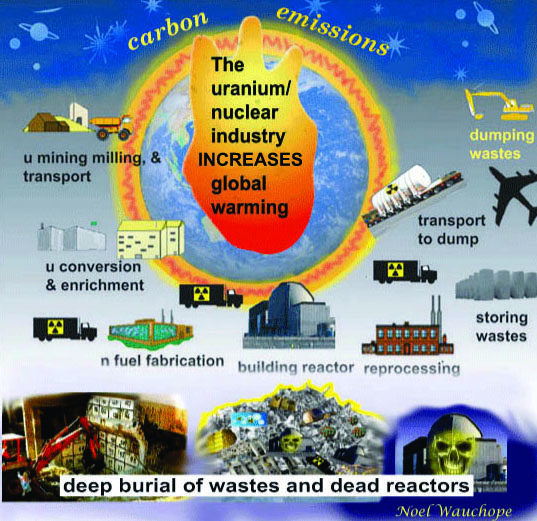
Nuclear power has no business case and could make climate change worse, https://thehill.com/opinion/energy-environment/586848-nuclear-power-has-no-business-case-and-will-make-climate-change BY TIM JUDSON AND LINDA PENTZ GUNTER, — 12/21/21 The climate crisis is upon us, and we have no time to lose. We cannot afford a single false step. Even as the UN COP26 climate conference failed to put us on the necessary path to keep the world within 1.5 degrees Celsius of increased warming, there are still important choices to be made as countries roll out their latest climate plans.
That is why the United States, in its pursuit of carbon reductions, must not allow itself to be misled by the false promises of nuclear power, both its continued use and illusory new programs. Either would be a mistake.
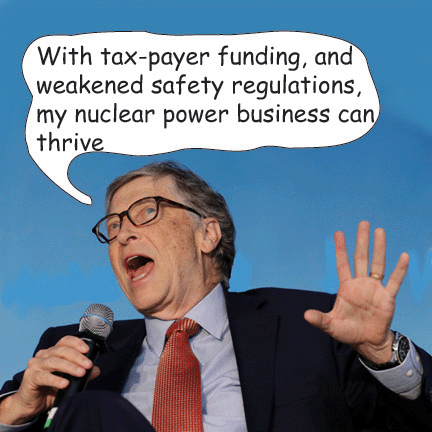
The push to develop new nuclear is focused on so-called advanced reactors and Small Modular Reactors (SMRs), designs whose cost and safety uncertainties have not been satisfactorily addressed.
Yet, Congress is already looking to award just two “advanced” fast reactor designs — the Terrapower Natrium reactor and X-energy Xe-100 reactor — an extravagant $3.2 billion in subsidies, even though the former is a project of billionaires Bill Gates and Warren Buffett.
SMRs, typically less than one-third the size of a traditional nuclear power reactor, would need to be brought on in their hundreds if not thousands to achieve the advertised cost savings, a factor that has left designs on the drawing board for decades and has not attracted buyers.
Even if these unproven designs work, such a program would never be achieved at a scale or in time to make a dent in carbon emissions.
This likely failure is reinforced by the recent experience of building new, traditional reactors. They consistently suffer massive delays and cost increases, which suggests commercializing new, untested reactor designs would not go faster or be any cheaper.
For example, another $1 billion was just added to the ever-escalating tab at the two Westinghouse reactors at Plant Vogtle in Georgia — underway since 2013, yet still unfinished — with costs ballooning to over $33 billion, and further delays likely pushing final completion into 2024 if ever.
The French-designed Evolutionary Power Reactor (EPR) is arguably a spectacular failure with massive cost-overruns, long delays and endless interruptions.
The French-designed Evolutionary Power Reactor (EPR) is arguably a spectacular failure with massive cost-overruns, long delays and endless technical flaws. It is still unfinished — with costs ballooning to over $33 billion, and further delays likely pushing final completion into 2024 if ever. Most recently, at the now-operating Taishan 1 EPR in China,vibrations damaged fuel rods, forcing its shutdown. The problem could be linked to a design flaw also found in the four still unfinished EPRs in Europe, causing a French nuclear lab to raise doubts about their safety.
However, the “zero-emission” mantra has been used to justify the inclusion of nuclear power plants in state and federal subsidies. If it had survived the machinations of Sen. Joe Manchin (D-W.Va.), the promising Build Back Better Act may have still shot itself in the foot by including a massive $35 billion subsidy for already-operating nuclear plants in its “Zero-Emissions Nuclear Energy Production Credit.” This subsidy would have funneled billions of dollars to corporations that own nuclear power plants, nearly all of which will continue operating with or without such support.
Subsidizing nuclear power siphons funds from real solutions, like renewables, just when these are needed most urgently, thereby making climate change worse.
Redirecting funds to old nuclear plants further misses the point that even were they carbon-free, this does not alone mean nuclear power is a good way to address the climate crisis because it ignores its two biggest climate drawbacks— time and cost.
As Stanford physicist Amory Lovins has pointed out, to address the climate crisis expeditiously and effectively, we must choose energy sources that can reduce the greatest amount of carbon emissions most quickly and at the least cost. This is where renewable energy, energy efficiency and conservation beat out nuclear power — as well as now gas and coal as well.
A recent Sussex University study showed that countries that have focused on nuclear power have not significantly reduced carbon emissions. Meanwhile, countries with strong renewable energy programs have.

Nuclear power has no business case and takes too long. That alone should rule it out as useful to climate protection, even before we look at other disqualifying factors such as the environmental justice and health impacts of long-lived lethal radioactive waste and potential meltdowns. Our future should not hinge on the nuclear industry’s false choice between climate chaos and cancer-causing pollution. We can and must do better.
Tim Judson is executive director of the Nuclear Information and Resource Service, a non-profit environmental organization founded in 1978 that works for a just and equitable transition to renewable energy and a nuclear-free, carbon-free world.
Linda Pentz Gunter is the international specialist at Beyond Nuclear, an anti-nuclear non-profit organization working for a world free from nuclear power and nuclear weapons.
Recognizing these challenges, the U.S. nuclear industry is focusing most of its energy on keeping its current fleet of 93 reactors running, arguing that they are carbon-free. This is patently false — and not true of any man-made energy source, including renewables, as long as mining, transportation and manufacturing of these technologies are so reliant on fossil fuels.
We froze’: What was this 1.3-metre missile doing at an Aboriginal heritage site?
We froze’: What was this 1.3-metre missile doing at an Aboriginal heritage site?
EXCLUSIVE: An unexploded high-tech missile was discovered at a culturally significant Aboriginal heritage site in remote South Australia. Neither the company that is believed to have made it – nor the Department of Defence – have explained how it got there.
SBS, Tuesday 21 December 2021By Steven Trask, Sarah Collard A group of Aboriginal Traditional Owners was inspecting a culturally significant site in remote South Australia when they discovered a high-tech anti-aircraft missile, a joint investigation by SBS News and NITV can reveal.
The 1.32-metre missile is believed to have been built by a subsidiary of Swedish weapons maker Saab and was found at a registered heritage site called Lake Hart West, about 40 kilometres from the small town of Woomera, in January this year.
Woomera is home to one of the largest weapons ranges in the world and the missile appears to be a similar model to those tested by Australia’s Department of Defence near the town in 2019.
Lake Hart West is important to the Kokatha people of the Western Desert region of South Australia; it is scattered with artefacts, historic shelters and tool-making sites.
“It startled us. There were four of us and we froze about five metres away from it,” says Kokatha man Andrew Starkey, who registered Lake Hart West as a heritage site with the South Australian government in the early 2000s.
“We were worried that there could be other missiles covered by the sand and in the bushes.
“There are over 20 heritage features all within a one-kilometre radius. There are rock engravings only a couple of kilometres away – it’s only through luck that that was not destroyed.”
The conservation of Aboriginal heritage sites has been under intense scrutiny since mining company Rio Tinto blew up the 46,000-year-old Juukan Gorge caves in Western Australia in May 2020.
An inquiry into the disaster found that existing state and Commonwealth laws were failing to protect Aboriginal heritage areas.
The Defence Department maintains it does not test weapons at culturally significant Aboriginal sites. But neither the department nor Saab have addressed questions over why the missile was found at Lake Hart West………………………………………
Human rights lawyer John Podgorelec has been representing the Starkeys as they pursue a complaint under OECD guidelines that govern “responsible business conduct” by foreign companies operating in Australia.
The Australian National Contact Point, which runs the process, said a complaint had been received against an “Australian-based enterprise” in the “defence sector”.
SBS News and NITV have confirmed the complaint relates to Saab.
An entry on the OECD complaint database reads: “Specifically, the issues relate to the discovery of an unexploded ordinance in South Australia by the Starkey Traditional Owners, resulting in risk to personal safety and artefacts of cultural significance.”………… https://www.sbs.com.au/news/we-froze-what-was-this-1-3-metre-missile-doing-at-an-aboriginal-heritage-site/3c67ce10-15ed-442c-b735-cea3673e5caa
Australia is racing towards 100 per cent renewables. What does that look like? — RenewEconomy

When too much wind and solar is not nearly enough! What does a grid look like when it is nearly 100 per cent powered by renewables? The post Australia is racing towards 100 per cent renewables. What does that look like? appeared first on RenewEconomy.
Australia is racing towards 100 per cent renewables. What does that look like? — RenewEconomy
West Australia’s biggest solar farm sets top performance benchmark for new owners — RenewEconomy

WA’s biggest solar farm delivers a capacity factor of 40 per cent for the month of November, which will have pleased its new owners. The post West Australia’s biggest solar farm sets top performance benchmark for new owners appeared first on RenewEconomy.
West Australia’s biggest solar farm sets top performance benchmark for new owners — RenewEconomy
Households fell into deeper energy debts during Covid-19 outbreak, AER data shows — RenewEconomy

The Morrison government is claiming credit for lower electricity prices, but AER data shows households owing larger energy debts. The post Households fell into deeper energy debts during Covid-19 outbreak, AER data shows appeared first on RenewEconomy.
Households fell into deeper energy debts during Covid-19 outbreak, AER data shows — RenewEconomy
December 22 Energy News — geoharvey

Opinion: ¶ “Doing The Right Thing For Wind And Solar Power In USA” • Solar and wind energy have grown tremendously in the US. But we have only started on the job of addressing climate change. That’s why NRDC is fighting to extend the federal tax credits for renewables in the Build Back Better bill. […]
December 22 Energy News — geoharvey
Growing opposition to radioactive waste dump

Federal plans for a radioactive waste facility near Kimba on South Australia’s Eyre Peninsula face growing opposition with Barngarla Traditional Owners today launching a Federal Court challenge to Minister Keith Pitt’s decision to site the facility on their lands.
The UN Declaration on the Rights of Indigenous People requires that ‘States shall take effective measures to ensure that no storage or disposal of hazardous materials shall take place in the lands or territories of indigenous peoples without their free, prior and informed consent.’
“The federal plan has many flaws, one of which is poor consultation with the Aboriginal and wider community,” said Australian Conservation Foundation campaigner Dave Sweeney.
“Barngarla have never given consent. Instead, they have been denied a vote in a federal community ballot. This approach is simply not acceptable in the third decade of the 2000s.
“Fewer than a thousand South Australians have had a say in a plan that has profound inter-generational implications.
“The proposed facility is unnecessary given federal parliament’s recent support for a $60 million waste storage upgrade to secure the most problematic intermediate level waste at the federal Lucas Heights nuclear site for the next three to five decades.
“Extended interim storage at Lucas Heights is prudent and possible. Moving intermediate level waste from Lucas Heights – a site with security, radiation monitoring, emergency response and local expertise – to a site near Kimba with far fewer assets and resources is irresponsible and inconsistent with best industry practice.
Sites that store and manage nuclear medicine waste around Australia will still need to do so, irrespective of the status of any national facility, so the Minister’s repeated reference to nuclear waste being spread across 100 sites is disingenuous and inaccurate.
“The planned federal action is contrary to SA state law and does not enjoy bi-partisan political support. The waste plan needs formal environmental and regulatory assessment and approval and is occurring in the context of both state and federal elections in 2022. This issue has a long way to run and will be actively contested.”
For context or comment contact Dave Sweeney on 0408 317 812
ACF’s 3-page background brief on federal radioactive waste plans
Measure twice, cut once: Advancing responsible radioactive waste management in Australia
Massive cask of nuclear waste to arrive in Sydney
Monolithic cask of nuclear waste to arrive, https://www.mandurahmail.com.au/story/7559502/monolithic-cask-of-nuclear-waste-to-arrive/
- Tracey Ferrier 21 Dec 21,
Monolithic cask of nuclear waste to arrive, https://www.mandurahmail.com.au/story/7559502/monolithic-cask-of-nuclear-waste-to-arrive/Tracey Ferrier
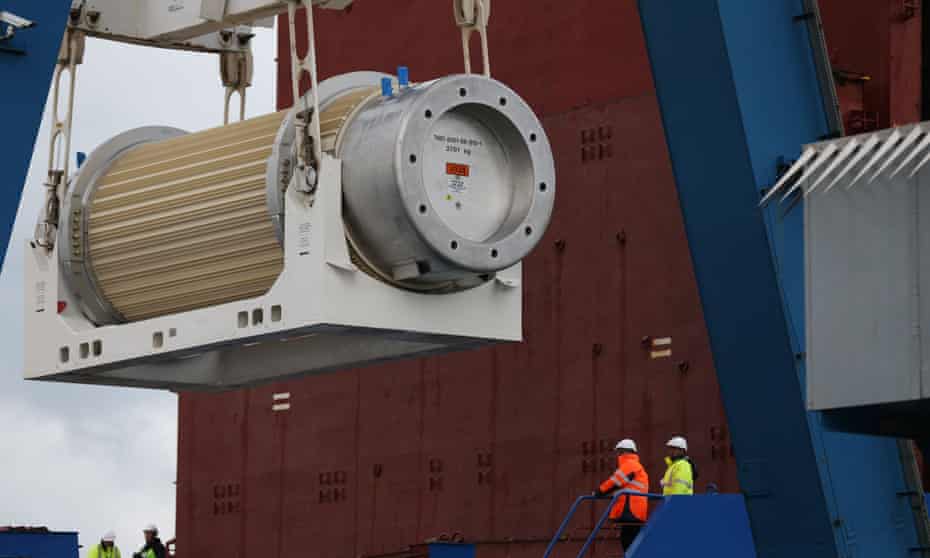
A monolithic steel cask designed to withstand an earthquake and a jet strike will arrive in Sydney next year, carrying two tonnes of radioactive waste.
For security reasons authorities won’t say when the hulking capsule – containing four 500kg canisters of ‘intermediate-level material’ – will arrive from the UK.
But it will hardly be an inconspicuous affair: the cask itself weighs 100 tonnes and resembles something from NASA’s space program.
Its forged steel walls are 20cm thick, it’s 6.5m long and three metres wide.
Back in 2015, when the first cask of its type arrived, it was carrying 20 tonnes of Australian nuclear waste that had been reprocessed in France.
About 600 police and security officers were involved in the mission to truck it from Port Kembla, near Wollongong, to Lucas Heights, the southern Sydney suburb that serves as the country’s nuclear technology hub.
It is safe to assume that next year’s arrival will involve an equally elaborate, high-security operation.
The Australian Nuclear Science and Technology Organisation operates the Lucas Heights compound.
It was home to the High Flux Australian Reactor (HIFAR), which supported nuclear medicine and science before it was closed in 2007 and superseded by the Open Pool Australian Lightwater reactor, also at Lucas Heights.
The waste that’s due to arrive in 2022 is from HIFAR’s operations and ANSTO says the material is being “repatriated” under the international principle that countries must be responsible for their nuclear leftovers.
However what’s coming won’t actually be what is left of the 114 spent fuel rods HIFAR sent to the UK for reprocessing in 1996.
The Australian Nuclear Science and Technology Organisation operates the Lucas Heights compound.
It was home to the High Flux Australian Reactor (HIFAR), which supported nuclear medicine and science before it was closed in 2007 and superseded by the Open Pool Australian Lightwater reactor, also at Lucas Heights.
The waste that’s due to arrive in 2022 is from HIFAR’s operations and ANSTO says the material is being “repatriated” under the international principle that countries must be responsible for their nuclear leftovers.
However what’s coming won’t actually be what is left of the 114 spent fuel rods HIFAR sent to the UK for reprocessing in 1996.
“Specifically it’s not the material we sent, it’s an equivalent, almost swapping the material that came from reprocessing our waste, for equivalent material that was produced at another UK site.”
Mr Griffiths says the UK had to demonstrate that what will be sent to Australia is “within the measurement boundaries” of the accepted definition of intermediate level waste, which can remain radioactive for thousands of years.
ANSTO also had to satisfy the national regulator on that point.
While saving money wasn’t the objective, Mr Griffiths says the waste exchange agreement means taxpayer-funded ANSTO will save $12 to $13 million in shipping costs.
ANSTO’s Pamela Naidoo-Ameglio has promised the cask’s arrival will be a “routine and safe operation”
“This will be the second repatriation project and 12th successful transport of spent fuel or reprocessed waste which ANSTO has carried out since 1963,” she said in a statement on Monday.
“For all of the obvious and standard security reasons, we can’t comment on the specific route or timing of this transport.”
The new cask will sit alongside the original one at Lucas Heights until Australia’s new national nuclear waste storage facility is constructed at Napandee, near Kimba, on South Australia’s Eyre Peninsula.
The facility is up to the design phase and is being contested by Indigenous owners, so the casks are likely to remain at Lucas Heights for a number of years.
Once Napandee is operational, the casks will be moved there and stored, pending a final solution that will involve deep burial.
Australia’s radioactive waste results from nuclear medicine, research endeavours and industrial applications. Australia does not produce nuclear power.
Bill Gates’ sodium-cooled ‘Natrium’ nuclear reactor design – strikingly like the disastrous reactors at Santa Susana Field Lab
Most striking of all is the success of official campaigns asserting that even the most serious accidents have caused little or no harm

Spent Fuel, Harpers, by Andrew Cockburn, 20 Dec 21, The risky resurgence of nuclear power ” …………………………. Gates and other backers extoll the promise of TerraPower’s Natrium reactors, which are cooled not by water, as commercial U.S. nuclear reactors are, but by liquid sodium. This material has a high boiling point, some 1,600 degrees Fahrenheit, which in theory enables the reactor to run at extreme temperatures without the extraordinary pressures that, in turn, require huge, expensive structures……………….
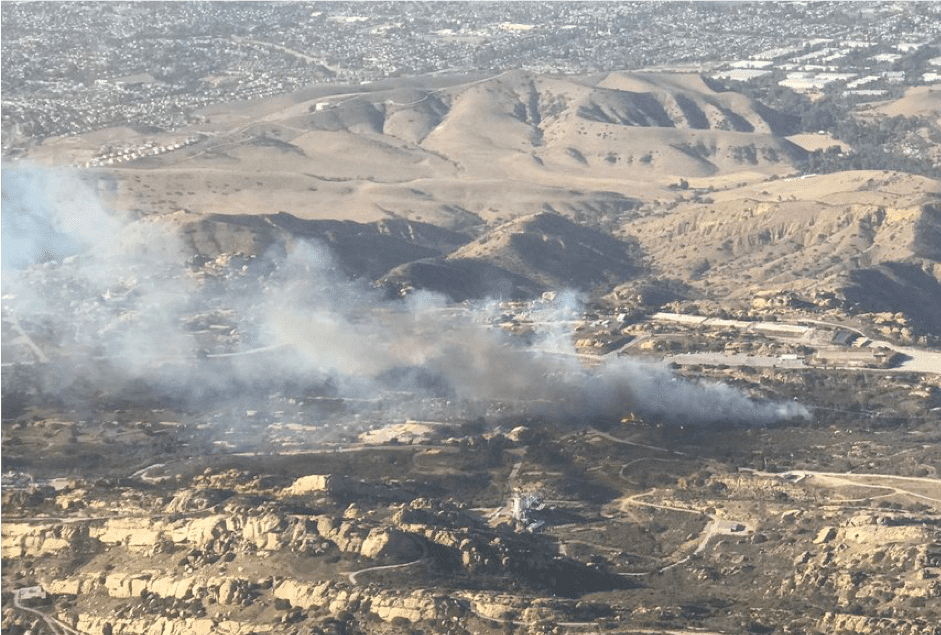
Prosperous and 70 percent white, West Hills, California, is one of the communities that have sprouted near the Santa Susana Field Laboratory in the decades since the 1959 meltdown. Unlike the poor, sick, and embittered residents of Shell Bluff, people living in West Hills had until recently only the barest inkling that nuclear power in the neighborhood might have had unwelcome consequences. “Almost no one knew about the Santa Susanna Field Lab, or they thought it was an urban legend,” Melissa Bumstead, who grew up in nearby Thousand Oaks, told me recently. In 2014, Bumstead’s four-year-old daughter, Grace, was diagnosed with an aggressive form of leukemia. “This has no environmental link,” her pediatric oncologist told her firmly. Childhood cancers were rare, and this was just cruel luck.
Then, while taking Grace to Children’s Hospital Los Angeles, Bumstead ran into a woman who recognized her from the local park where their young daughters played. The woman’s child had neuroblastoma, another rare cancer, as did another from nearby Simi Valley, whom they encountered while the children were getting chemo. Back at home, someone on her street noticed the childhood cancer awareness sticker on Bumstead’s car and mentioned that another neighbor had died of cancer as a teenager.
Bumstead began to draw a map detailing the cluster of cancer deaths in small children just in the previous six years, but stopped working on it in 2017. “I had such severe PTSD when I added children onto it, my therapist told me to stop.” But it is still happening, she said, mentioning the unusual number of bald children she had noticed in local elementary schools in recent years, as well as the far-above-average rate of breast cancer cases recorded in the area. A cleanup of the field lab was due to be completed in 2017, but it has yet to begin.
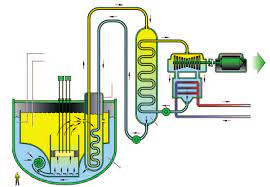
I called Bumstead because I had been struck by the fact thatTerraPower’s Natrium reactor resembles in its basic features the long-ago Sodium Reactor Experiment at Santa Susana. (Natrium is Latin for sodium.) “That’s exactly what we had!” Bumstead exclaimed when I mentioned that liquid sodium is integral to TerraPower’s project. “The meltdown was in the sodium reactor.” As her comment made clear, such liquid sodium technology is by no means innovative.
Nor, in an extensive history of experiments, has it ever proved popular—not least because liquid sodium explodes when it comes into contact with water, and burns when exposed to air. In addition, it is highly corrosive to metal, which is one reason the technology was rapidly abandoned by the U.S. Navy after a tryout in the Seawolf submarine in 1957.
That system “was leaking before it even left the dock on its first voyage,” recalls Foster Blair, a longtime senior engineer with the Navy’s reactor program. The Navy eventually encased the reactor in steel and dropped it into the sea 130 miles off the coast of Maryland, with the assurance that the container would not corrode while the contents were still radioactive. The main novelty of the Natrium reactor is a tank that stores molten salt, which can drive steam generators to produce extra power when demand surges. “Interesting idea,” Blair commented. “But from an engineering standpoint one that has some real potential problems, namely the corrosion of the high-temperature salt in just about any metal container over any period of time.”
TerraPower’s Jeff Navin assured me in response that Natrium “is designed to be a safe, cost-effective commercial reactor.” He added that Natrium’s use of uranium-based metal fuel would increase the reactor’s safety and performance. Blair told me that such a system had been tried and abandoned in the Fifties because the solid fuel swelled and grew after fissioning.
As the sodium saga indicates, the true history of nuclear energy is largely unknown to all but specialists, which is ironic given that it keeps repeating itself. The story of Santa Susana follows the same path as more famous disasters, most strikingly in the studious indifference of those in charge to signs of impending catastrophe.The operators at Santa Susana shrugged off evidence of problems with the cooling system for weeks prior to the meltdown, and even restarted the reactor after initial trouble. Soviet nuclear authorities covered up at least one accident at Chernobyl before the disaster and ignored warnings that the reactor was dangerously unsafe. The Fukushima plant’s designers didn’t account for the known risk of massive tsunamis, a vulnerability augmented by inadequate safety precautions that were overlooked by regulators. Automatic safety features at Santa Susana did not work. This was also the case at Fukushima, where vital backup generators were destroyed by the tidal wave.
No one knows exactly how much radiation was released by Santa Susana—it exceeded the scale of the monitors. Nor was there any precise accounting of the radioactivity released at Chernobyl. Fukushima emitted far less, yet the prime minister of Japan prepared plans to evacuate fifty million people, which would have meant, as he later recounted, the end of Japan as a functioning state. Another common thread is the attempt by overseers, both corporate and governmental, to conceal information from the public for as long as possible. Santa Susana holds the prize in this regard: its coverup was sustained for twenty years, until students at UCLA found the truth in Atomic Energy Commission documents.
Most striking of all is the success of official campaigns asserting that even the most serious accidents have caused little or no harm……………………
“The right not to know” about the effects of nuclear power is currently embraced far beyond Fukushima. In the face of escalating alarm about climate change, the siren song of “clean and affordable and reliable” power finds an audience eager to overlook a business model that is dependent on state support and often greased with corruption; failed experiments now hailed as “innovative”; a pattern of artful disinformation; and a trail of poison from accidents and leaks (not to mention the 95,000 tons of radioactive waste currently stored at reactor sites with nowhere to go) that will affect generations yet unborn. Arguments by proponents of renewables that wind, solar, and geothermal power can fill the gap on their own have found little traction with policymakers. Ignoring history, we may be condemned to repeat it. Bill Gates has bet a billion dollars on that. https://harpers.org/archive/2022/01/spent-fuel-the-risky-resurgence-of-nuclear-power/
Greenpeace: TEPCO assessment of Fukushima water dumping lacks analysis of impact on S. Korea — Fukushima 311 Watchdogs

The international environmental organization called TEPCO’s radiological impact assessment “highly selective” in its use of IAEA guidelines Contaminated water is currently being stored in roughly 1,000 tanks located at the Fukushima Daiichi site. Dec.18,2021 The international environmental group Greenpeace sent an opinion to the Tokyo Electric Power Company (TEPCO) on Thursday stating that the company’s […]
Greenpeace: TEPCO assessment of Fukushima water dumping lacks analysis of impact on S. Korea — Fukushima 311 Watchdogs
NSW tightens rules on where wind and solar farms can be built — RenewEconomy

New guidelines designed to protect regional centres from “encroaching solar and wind development” to come into play in early 2022. The post NSW tightens rules on where wind and solar farms can be built appeared first on RenewEconomy.
NSW tightens rules on where wind and solar farms can be built — RenewEconomy
1 This month.


PETITION – To: Prime Minister Anthony Albanese and the Australian Labor Government
Chernobyl: The Lost Tapes – A good documentary on Chernobyl on SBS available On Demand for the next 3 weeks– https://www.sbs.com.au/ondemand/tv-program/chernobyl-the-lost-tapes/235274195556

19 May – Webinar- Webinar: No Nuclear Weapons in Australia
Start: 2026-05-19 18:00:00 UTC Canberra, Melbourne, Sydney (GMT+10:00)
End: 2026-05-19 19:30:00 UTC Canberra, Melbourne, Sydney (GMT+10:00)
20 May – Webinar – The dangerous world of AUKUS, US, military occupation and suppression of dissent

National Webinar, 20th May, 2026, 6.30pm AEST. Confronting laws restricting/suppressing protest speech and action
Speakers: Former Sen. Rex Patrick, Lawyer Nick Hanna ,Arthur Rorris ,Jorgen Doyle, Sen David Shoebbridge,
Facilitator Kelley Tranter.

of the week – Australians for War Powers Reform (AWPR)
To see nuclear-related stories in greater depth and intensity
 Antinuclear