Concern in Britain about the weapons proliferation and safety hazards of the AUKUS pact, and Australia acquiring nuclear submaries.
SINCE September, local Conservative politicians have seemed very eager to praise the new military pact known as AUKUS. They are apparently unconcerned that the US and UK will be assisting Australia to acquire new long-range strike capabilities for its air force, navy and army, including the provision of nuclear-powered submarines fuelled by weapons grade uranium.
They clearly hope that BAE Systems staff in Barrow will beinvolved in designing and building the submarines, but appear to have bignored the potential threats to peace and stability inherent in such
military escalation. In the UK, the Campaign for Nuclear Disarmament (CND) is calling on the UK government to focus its resources instead on fundingour NHS more adequately and on meeting the social care needs of our communities. Indeed, CND wants the government to halt all its dangerous and
provocative nuclear adventures.
Carlisle News & Star 12th Dec 2021
https://www.newsandstar.co.uk/news/19777700.spend-money-nhs—not-nuclear-subs/
Julian Assange trial is political hypocrisy
WikiLeaks founder Julian Assange attended the conference. Assange has become one of the main targets. Many of the themes discussed at the conference are what Assange has come to represent.
Freedom of information rather than freedom from information. The prosecution of wrongdoers, not the prosecution of whistleblowers. An open society, not a closed society.
“Freedom to think as you will and speak as you think are indispensable to the discovery and spread of political truth; the greatest menace to freedom is an inert people.”
The Australian Government must speak up for Julian Assange.
Julian Assange trial is political hypocrisy, Independent Australia, By Kim Sawyer | 13 December 2021 Given that governments in the past have encouraged whistleblowing, the punishment of Julian Assange is a great hypocrisy, writes Dr Kim Sawyer.
Continue reading”Spent nuclear fuel rods” toxic? Not when we re-label them.
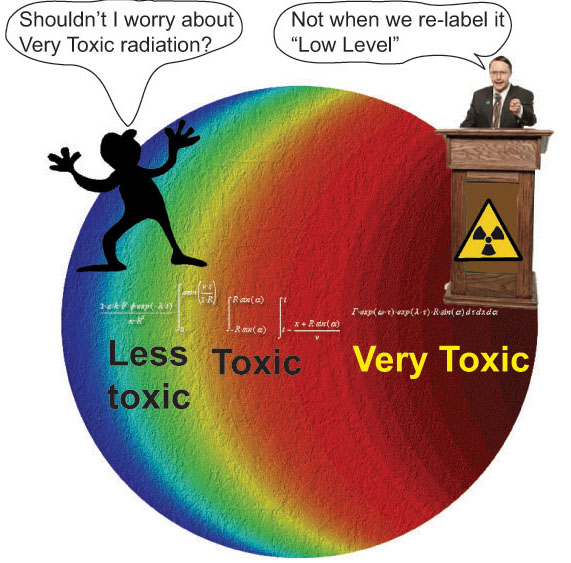
Greg Phillips Nuclear FuelCycle Watch , 14 Dec 21
, From “High Level waste”, to
“Intermediate Level waste”, to
“Medium Level waste”,
“Controlled Material” –
what will the next euphemism be? – “Controlled Asset”? “Sparkly Blessing”? “Fizzy Manna from Heaven”?
‘The spent fuel rods at Lucas Heights can only sensibly be treated as high level waste. The pretence that spent fuel rods constitute an asset must stop’- https://www.aph.gov.au/…/BN/2011-2012/RadioActiveWaste https://www.facebook.com/groups/1021186047913052
Nuclear submarine wastes and Napandee – a backdoor way of starting Australian nuclear waste importing?

A frightening prospect!. Not only are these planned nuclear submarines completely unsuitable for the defence of Australia’s coastline, but now it looks as if they are a back-door way of achieving that old nightmare – of Australia taking in international radioactive trash.
Preparing for spent nuclear fuel disposal. MARITIME AND UNDERSEA WARFARE, Defence Connect, 06 DECEMBER 2021, By: Christopher Skinner, ”……………….We must therefore consider the requirement for the submarine spent reactor fuel at end-of-service life to be a responsibility for Australia and to plan accordingly.
The current work on the Australian Intermediate Level Radioactive Waste Storage Facility near Kimba, on; upper Eyre Peninsula in South Australia, has reached a decision point as reported by the ABC (Napandee chosen as nuclear waste storage site after ‘six years of consultation’), “Napandee, a 211-hectare property near the town of Kimba, has been acquired by the government and will be used to store low and medium-level nuclear waste. The property was already selected by the government but it had to allow an additional 60 days of consultation before it could formally declare the site.”
The implication of this decision for the nuclear submarine program is to show that concern for the full extent of the nuclear fuel cycle is relevant even if the development of the Australian NRWMF was not predicated on either the advent of nuclear propulsion with spent fuel to be managed, nor of the need to provide a permanent disposal facility for high level waste such as unprocessed spent fuel…..” https://www.defenceconnect.com.au/maritime-antisub/9204-preparing-for-spent-nuclear-fuel-disposal?fbclid=IwAR385TPCTWA4ALXk9r7bzJ5uhyD78zpolFNvWb2Q9aEj3UvXLjAuOnhAS8A—
Nuclear power’s economic failure – a ”renaissance in reverse”

China is said to be the industry’s shining light but nuclear growth is modest ‒ an average of 2.1 reactor construction starts per year over the past decade.
Moreover, nuclear growth in China is negligible compared to renewables ‒ 2 gigawatts (GW) of nuclear power capacity were added in 2020 compared to 135 GW of renewables.
Nuclear power’s economic failure, Ecologist, Dr Jim Green, 13th December 2021
A new report from Friends of the Earth Australia details the catastrophic cost overruns with nuclear power projects.
Despite the abundance of evidence that nuclear power is economically uncompetitive compared to renewables, the nuclear industry and some of its supporters continue to claim otherwise.
Those claims are typically based on implausible cost projections for non-existent reactor concepts. Moreover, the nuclear lobby’s claims about the cost of renewables are just as ridiculous.
Claims about ‘cheap’ nuclear power certainly don’t consider the real-world nuclear construction projects detailed in a new report by Friends of the Earth Australia.
Every power reactor construction project in Western Europe and the US over the past decade has been a disaster.
The V.C. Summer project in South Carolina (two AP1000 reactors) was abandoned after the expenditure of at least US$9 billion leading Westinghouse to file for bankruptcy in 2017.
Criminal investigations
Criminal investigations and prosecutions related to the V.C. Summer project are ongoing ‒ and bailout programs to prolong operation of ageing reactors in the US are also mired in corruption.
The only remaining reactor construction project in the US is the Vogtle project in Georgia (two AP1000 reactors). The current cost estimate of US$27-30+ billion is twice the estimate when construction began (US$14-15.5 billion).
Costs continue to increase and the Vogtle project only survives because of multi-billion-dollar taxpayer bailouts. The project is six years behind schedule…..
In 2006, Westinghouse said it could build an AP1000 reactor for as little as US$1.4 billion, 10 times lower than the current estimate for Vogtle.
The Watts Bar 2 reactor in Tennessee began operation in 2016, 43 years after construction began. When construction resumed in 2008 after a long hiatus, the cost estimate to complete the reactor was US$2.5 billion but the final completion cost was US$4.7 billion.
US nuclear renaissance in reverse
The previous reactor start-up in the US was Watts Bar 1, completed 20 years earlier (1996) after a 23-year construction period. Thus Watts Bar 1 and 2 are the only power reactor start-ups in the US over the past quarter-century.
In 2021, TVA abandoned the unfinished Bellefonte nuclear plant in Alabama, 47 years after construction began and following the expenditure of an estimated US$5.8 billion.
There have been no other power reactor construction projects in the US over the past 25 years other than those listed above.
Numerous other reactor projects were abandoned before construction began, some following the expenditure of hundreds of millions of dollars. Twelve reactors have been permanently shut down over the past decade with many more closures in the pipeline.
Western Europe
The only current reactor construction project in France is one EPR reactor under construction at Flamanville. The current cost estimate of €19.1 billion is 5.8 times greater than the original estimate.
The Flamanville reactor is 10 years behind schedule.
The only current reactor construction project in the UK comprises two EPR reactors under construction at Hinkley Point. In the late 2000s, the estimated construction cost for one EPR reactor in the UK was £2 billion.
The current cost estimate for two EPR reactors at Hinkley Point is £22-23 billion, over five times greater than the initial estimate.
In 2007, EDF boasted that Britons would be using electricity from an EPR reactor at Hinkley Point to cook their Christmas turkeys in 2017, but construction didn’t even begin until 2018.
Is China a shining light for nuclear power?
One EPR reactor (Olkiluoto-3) is under construction in Finland. The current cost estimate of about €11 billion is 3.7 times greater than the original estimate. Olkiluoto-3 is 13 years behind schedule.
Nuclear power is growing in a few countries, but only barely. China is said to be the industry’s shining light but nuclear growth is modest ‒ an average of 2.1 reactor construction starts per year over the past decade.
Moreover, nuclear growth in China is negligible compared to renewables ‒ 2 gigawatts (GW) of nuclear power capacity were added in 2020 compared to 135 GW of renewables.
There were only three power reactor construction starts in Russia in the decade from 2011 to 2020, and only four in India.
Nuclear vs renewables costs
Continue readingAustralia has been warned, even from the militaristic Australian Strategic Policy Institute, on the problems and astronomic costs of the nuclear submarines
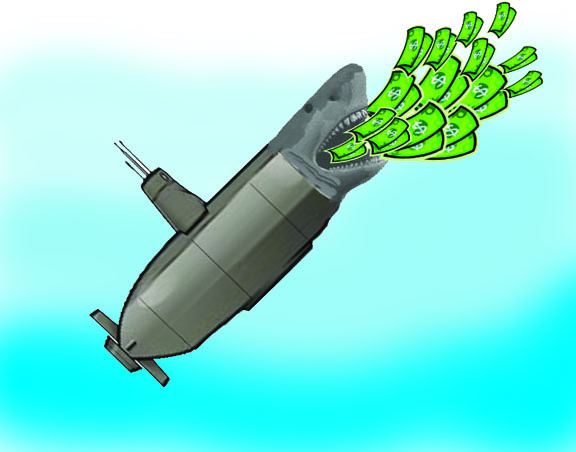
The price tag will be eyewatering, with an eight-boat programme costing Aus$116 billion (US$83 billion) “at an absolute minimum”, almost a tenth of annual gross domestic product.
“It’s likely to be at least two decades and tens of billions of dollars in sunk costs before Australia has a useful nuclear-powered military capability.”
Australia warned bid for nuclear subs carries ‘enormous’ risks https://www.france24.com/en/live-news/20211213-australia-warned-bid-for-nuclear-subs-carries-enormous-risks 13/12/2021 Australia’s bid to develop a fleet of nuclear-powered submarines will cost more than US$80 billion and take decades in the “most complex” project the country has ever embarked on, a study released Monday warned.
The report from the Australian Strategic Policy Institute — an influential Canberra-based think tank — said ownership of the high-tech subs built with US or British know-how would offer a major advantage in deterring aggression from China or elsewhere. [Really?]
But it will also be a fiendishly difficult task requiring a step-change in Australia’s military and industrial capabilities.
It is “probably the largest and most complex endeavour Australia has embarked upon. The challenges, costs and risks will be enormous,” the think tank warned.
“It’s likely to be at least two decades and tens of billions of dollars in sunk costs before Australia has a useful nuclear-powered military capability.”
The project, announced last month, will make Australia the only non-nuclear weapons power to own nuclear-run submarines, which are capable of travelling quickly over long distances carrying long-range missiles and state-of-the-art underwater drones.
Canberra plans to equip them with conventional rather than nuclear weapons. It has yet to decide whether it will buy US or British technology, what class, size and capabilities the subs will have, where they will be built or how radioactive material will be handled.
Even under an optimistic schedule, the first submarines are unlikely to be operational before 2040, according to the report’s authors, who include former Australian defence department officials and an expert on nuclear physics.
The price tag will be eyewatering, with an eight-boat programme costing Aus$116 billion (US$83 billion) “at an absolute minimum”, almost a tenth of annual gross domestic product.
Among a litany of tasks ahead, the navy will have to triple the number of submariners it recruits, refurbish docks, and develop extensive nuclear safeguards.
On the diplomatic front, Australia will need to reassure neighbours and the International Atomic Energy Agency that the subs do not present a nuclear proliferation risk.
“Regardless of the Australian government’s declared intentions,” the report said, “once Australia possesses (weapons-grade enriched uranium), the breakout time to develop and construct nuclear weapons would be less than a year if a simple nuclear-weapon design were pursued.”
The submarine plan has already caused diplomatic headaches for Canberra, with nearest neighbour Indonesia expressing concern, and the decision to ditch a contract to buy French non-nuclear submarines causing fury in Paris.
South Australia adds another wind farm as it moves towards 100 pct renewables — RenewEconomy

Second stage of what will be the biggest wind farm in South Australia – at least for a time – has begun sending power to the grid. The post South Australia adds another wind farm as it moves towards 100 pct renewables appeared first on RenewEconomy.
South Australia adds another wind farm as it moves towards 100 pct renewables — RenewEconomy
Why it’s vital to put people at the heart of the energy transition — RenewEconomy

Before stopping to ask people what sort of energy system they would like, the industry is moving forward with a technology vision that risks leaving many people behind. The post Why it’s vital to put people at the heart of the energy transition appeared first on RenewEconomy.
Why it’s vital to put people at the heart of the energy transition — RenewEconomy
Know your NEM: Solar steps up to support unreliable summer coal — RenewEconomy

Booming rooftop solar is not only helping break variable renewable records, it also it means resilience to thermal plant breakdowns in the middle of the day. The post Know your NEM: Solar steps up to support unreliable summer coal appeared first on RenewEconomy.
Know your NEM: Solar steps up to support unreliable summer coal — RenewEconomy
The end of coal is coming, fast. Governments must urgently support a “just transition’ — RenewEconomy

Continuing to deny the impending end of coal-fired generation is simply not in the interest of coal workers and their communities. The post The end of coal is coming, fast. Governments must urgently support a “just transition’ appeared first on RenewEconomy.
The end of coal is coming, fast. Governments must urgently support a “just transition’ — RenewEconomy
2022: The year of eco-consumerism! — #ActNow for a Sustainable future for humanity & the planet! — ACT NOW! — Barbara Crane Navarro

SAY NO TO ALL PALM OIL PRODUCTS! SAY NO TO THE DEVASTATION CAUSED BY GOLD MINING! SAY NO TO ALL PRODUCTS FROM DEFORESTATION! ACT NOW FOR A SUSTAINABLE FUTURE! At the end of each year, as it is well known, the trends of the new year are written and listed. Similar lists have started to […]
2022: The year of eco-consumerism! — #ActNow for a Sustainable future for humanity & the planet! — ACT NOW! — Barbara Crane Navarro
December 13 Energy News — geoharvey

Opinion: ¶ “Geoengineering – First It Was About Messing With The Atmosphere. Now It’s About Hacking The Ocean” • A new 300-page report by the National Academies of Sciences, Engineering, and Medicine calls for scientific investigation into a number of ways of geoengineering the ocean so it can sequester more carbon dioxide. [CleanTechnica] Report (National […]
December 13 Energy News — geoharvey
What’s next for Julian Assange? and for media freedom?
”If the United States is able to be successful in the prosecution of Julian Assange, it will set a very dangerous precedent for anybody publishing any material in the public interest that exposes US military secrets.”.
A UK court has cleared Julian Assange’s extradition to the US. Here’s what happens next
The 50-year-old Australian founded the WikiLeaks website in 2006 and has been held in detention since 2019 as a lengthy legal process continues over espionage charges. SBS, By Alexander Britton, 14 Dec 21
Attempts to see WikiLeaks founder Julian Assange face criminal charges in a United States court moved a step closer after Washington recently won an appeal over his extradition.
But the legal battle is far from over, with the legal wrangling set to continue into 2022 as Assange’s team pledged to have the case heard at the United Kingdom’s highest court.
Who is Julian Assange and why is he wanted by the US?
Julian Assange is a 50-year-old Australian who founded WikiLeaks, a site that publishes leaked materials from a variety of sources.
Set up in 2006, the site is widely known for its release of footage showing a 2007 US airstrike in Baghdad that killed journalists and civilians titled Collateral Murder.
He is wanted by the US for alleged violations of the country’s Espionage Act by publishing military and diplomatic files in 2010.
Should he be convicted, the maximum jail term could be 175 years……………………
Why does the case raise media freedom concerns?
Assange’s case has “dangerous implications for the future of journalism”, the secretary-general of Reporters Without Borders Christophe Deloire said.
They believe he has been targeted for his contributions to journalism and is facing “possible life imprisonment for publishing information in the public interest”.
This view is shared by MEAA Media federal president Marcus Strom who told SBS News: “This is an attempt by the United States to set a precedent, to intimidate the coverage of national security journalism.
“If the United States is able to be successful in the prosecution of Julian Assange, it will set a very dangerous precedent for anybody publishing any material in the public interest that exposes US military secrets.”………………………………
How have 11 years in detention impacted his health?
Assange’s legal team have raised concerns that the prolonged legal case has had a highly detrimental impact on his physical and mental health.
His fiancée Stella Moris told the UK’s Mail on Sunday that Assange had a mini-stroke during the October appeal, leaving him with memory loss and signs of neurological damage.
She was quoted by the paper as saying: “I believe this constant chess game, battle after battle, the extreme stress, is what caused Julian’s stroke on October 27.”
Doctors for Assange, a group set up in 2019, referred to Assange’s health as being in a “dire state” due to “his prolonged psychological torture”, while Nils Melzer, the UN’s special rapporteur on torture, said he was “crushed as a person”.
What has the reaction been in Australia and around the world?
Pressure has been placed on the Australian government to intervene in Assange’s case. Senator Rex Patrick urged Deputy Prime Minister Barnaby Joyce to make a case to the US Secretary of State while in isolation in the country, and Independent MP Andrew Wilkie said Prime Minister Scott Morrison needed to pick up the phone and “end this lunacy”.
Newspaper editorials have also made the case for Canberra to discuss the matter with counterparts in Washington and London, and international bodies have pushed for Assange’s release.
The Sydney Morning Herald wrote: “Prime Minister Scott Morrison should encourage Mr Biden to free Mr Assange. There is a strong humanitarian and pragmatic case to look for a way out of this Kafkaesque nightmare”.
Anthony Bellanger, general secretary of the International Federation of Journalists, said the ruling was a “major blow”.
Others calling for his release have included Amnesty International, who said the “indictment poses a grave threat to press freedom both in the United States and abroad”.
What could happen now?
Following the successful appeal from the US, the judges ruled the case should return to Westminster Magistrates’ Court for a district judge to formally send it to UK Home Secretary Priti Patel.
But Ms Moris has said lawyers will push for the case to be referred up to the UK’s highest court, the Supreme Court.
His legal team have also suggested New Zealand act as a peacemaker between the various parties in the case.
The group, including New Zealand-based lawyer Craig Tuck, want Prime Minister Jacinda Ardern to make representations to US President Joe Biden or UK Prime Minister Boris Johnson to end the “politically motivated prosecution”.
“This is something our prime minister could address by picking up the phone to president Biden or prime minister Johnson and saying, ‘Hey, enough’s enough. Let’s bury the hatchet and not in Julian’s head’,” Mr Tuck told Radio NZ.
With additional reporting from AFP and AAP. https://www.sbs.com.au/news/a-british-court-has-cleared-julian-assange-s-extradition-to-the-us-here-s-what-happens-next/03d8802e-798d-46fd-9359-eb70a052c30b
Safety Concerns Mount Over Damaged Fuel Rods at China’s Taishan Nuclear Plant
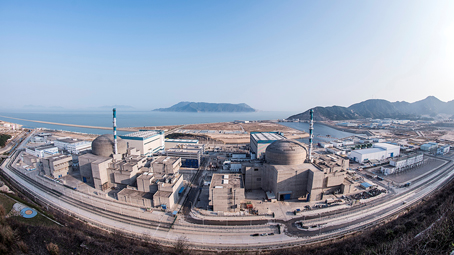
Safety Concerns Mount Over Damaged Fuel Rods at China’s Taishan Nuclear Plant
A French whistleblower claims that the real number of damaged fuel rods exceeds the figure acknowledged by officials, and that there may be issues with other reactors of the same design. By Jesse Turland The Diplomat December 11, 2021 On November 28 Radio France International Chinese published claims by a whistleblower contradicting official statements downplaying the extent of damage to fuel rods at the Taishan 1 Nuclear Reactor in Taishan, Guangdong province.
The whistleblower, who works at a French nuclear energy company, warned that more than 70 fuel rods were damaged, 14 times the figure acknowledged by China’s Ministry of Ecology and Environment (MEE) in June, when it stated “about five” rods were damaged. Additionally, the whistleblower claimed the damage may be linked to a “design flaw.”
Under pressure from public activism, France’s nuclear energy regulator, Autorité de sûreté nucléaire (ASN), yesterday announced it would halt the development of the EPR reactor at Flamanville in Normandy, which uses the same design as Taishan, pending inquiries into the malfunctions at Taishan.
There is still a lot of work to be done on the [Flamanville] site before start-up operations, and feedback from the experience of the Taishan 1 EPR deviation must take place,” said ASN deputy general manager Julien Collet yesterday.
Located 110 kilometers south of Guangzhou, Taishan is the site of the world’s first reactors of the Evolutionary Power Reactor (EPR) design to commence operation. Its two reactors are capable of generating 1,750 Megawatts electric (Mwe) each.
According to the whistleblower, the problem of the Taishan EPR reactor is “a not-very-successful hydraulic system at the bottom of the vessel which gives an uneven distribution of power in the assemblies. A transverse current is created in the core and causes the assemblies to move, especially those at the periphery.”
The whistleblower’s claims were relayed by Bruno Chareyron, director of the Commission for Independent Research and Information about Radiation (CRIIRAD), a Paris-based NGO established in 1986 to monitor radioactive leaks in the wake of the Chernobyl disaster.
According to the whistleblower, the problem of the Taishan EPR reactor is “a not-very-successful hydraulic system at the bottom of the vessel which gives an uneven distribution of power in the assemblies. A transverse current is created in the core and causes the assemblies to move, especially those at the periphery.”
The whistleblower’s claims were relayed by Bruno Chareyron, director of the Commission for Independent Research and Information about Radiation (CRIIRAD), a Paris-based NGO established in 1986 to monitor radioactive leaks in the wake of the Chernobyl disaster.
”
There are at least three consequences. One is the fact that due to the damage to the nuclear fuel, a significant amount of radioactive substances migrate across the cladding of the rods and is go into the water of the primary circuit,” according to Chareyron.
“So radioactive gases like krypton and xenon are accumulating in the water inside the pressure vessel… Those gases are collected into tanks and those tanks are opened to the atmosphere normally every two months. But with fuel rod damage, some of the gases released have half-lives of years, like Krypton 85.”
He continued: “[The] second problem is the impact on the people working in the plant. Because if you have such damage in the core of the reactor, you contaminate the water inside the pressure vessel, but some of this contamination will stay inside the tubes, the pipes, the pumps.
“So when the operators have to conduct maintenance, they receive much more radiation than if the cladding fitted properly.”
Finally, “The third problem is if the fuel assemblies are a little bit broken, it means that you may reach a situation when, for example, in case of an earthquake, you cannot insert the control rods into the fuel assemblies because the assemblies are damaged,” Chareyron said…………….
Jesse Turland
Jesse Turland holds a degree in Chinese language and Asian Studies from the University of Melbourne and writes about contemporary Chinese society. https://thediplomat.com/2021/12/safety-concerns-mount-over-damaged-fuel-rods-at-chinas-taishan-nuclear-plant/
Prominent Indian activist Medha Patkar urges Tamil Nadu’s Chief Minister to close down Kudankulam nuclear power station.

Medha Patkar urges Stalin to close nuclear plant at Kudankulam https://www.dtnext.in/News/TamilNadu/2021/12/14043718/1333730/Medha-Patkar-urges-Stalin-to-close-nuclear-plant-at-.vpf
Dec 14,2021 Noted activist Medha Patkar met Chief Minister M. K. Stalin in Chennai on Monday and urged him to shut down the Kudankulam Nuclear Power Plant
Chennai: “Radiation causes serious impact on human beings as well as aquatic species, and when there are over four nuclear plants (at Koodankulam nuclear plants) close to the sea, it is even more destructive,” said social activist Medha Patkar, while discussing environmental issues in Tamil Nadu, at Chennai press club on Monday.
Even as the opposition to the two units of nuclear power plants was continuing, they have started the construction of 3, 4, 5 and 6 units. In this situation, they are planning to begin the seventh and eighth unit and reprocessing plant said the national convener of the National Alliance of People’s Movement.Chennai: “Radiation causes serious impact on human beings as well as aquatic species, and when there are over four nuclear plants (at Koodankulam nuclear plants) close to the sea, it is even more destructive,” said social activist Medha Patkar, while discussing environmental issues in Tamil Nadu, at Chennai press club on Monday.
Even as the opposition to the two units of nuclear power plants was continuing, they have started the construction of 3, 4, 5 and 6 units. In this situation, they are planning to begin the seventh and eighth unit and reprocessing plant said the national convener of the National Alliance of People’s Movement.
1 This month.


PETITION – To: Prime Minister Anthony Albanese and the Australian Labor Government
Chernobyl: The Lost Tapes – A good documentary on Chernobyl on SBS available On Demand for the next 3 weeks– https://www.sbs.com.au/ondemand/tv-program/chernobyl-the-lost-tapes/235274195556

19 May – Webinar- Webinar: No Nuclear Weapons in Australia
Start: 2026-05-19 18:00:00 UTC Canberra, Melbourne, Sydney (GMT+10:00)
End: 2026-05-19 19:30:00 UTC Canberra, Melbourne, Sydney (GMT+10:00)
20 May – Webinar – The dangerous world of AUKUS, US, military occupation and suppression of dissent

National Webinar, 20th May, 2026, 6.30pm AEST. Confronting laws restricting/suppressing protest speech and action
Speakers: Former Sen. Rex Patrick, Lawyer Nick Hanna ,Arthur Rorris ,Jorgen Doyle, Sen David Shoebbridge,
Facilitator Kelley Tranter.

of the week – Australians for War Powers Reform (AWPR)
To see nuclear-related stories in greater depth and intensity
 Antinuclear