Labor lowers 2030 target to 43 per cent, to blunt Morrison scare campaign — RenewEconomy

Labor to take a 43 per cent emissions target to the next federal election, and a paired back policy platform designed to blunt Morrison scare campaign. The post Labor lowers 2030 target to 43 per cent, to blunt Morrison scare campaign appeared first on RenewEconomy.
Labor lowers 2030 target to 43 per cent, to blunt Morrison scare campaign — RenewEconomy
NSW seeks wind, solar and storage proposals for Hunter and Central Coast REZ — RenewEconomy

NSW seeks proposals for wind, solar and storage project in a new renewable energy zone centred at the heart of its coal mining regions. The post NSW seeks wind, solar and storage proposals for Hunter and Central Coast REZ appeared first on RenewEconomy.
NSW seeks wind, solar and storage proposals for Hunter and Central Coast REZ — RenewEconomy
Regulator tips “big reduction” in emissions in 2022, as renewables push out more coal — RenewEconomy

Latest Clean Energy Regulator data sets the scene for “a big reduction of emissions” going into 2022, as solar and wind continue to push coal out of the mix. The post Regulator tips “big reduction” in emissions in 2022, as renewables push out more coal appeared first on RenewEconomy.
Regulator tips “big reduction” in emissions in 2022, as renewables push out more coal — RenewEconomy
December 5 Energy News — geoharvey

Opinion: ¶ “Q&A With Alberta “Birdie” Carpenter: How To Untangle Carbon From The Vast Web Of Manufacturing And Supply Chains” • Birdie Carpenter was born in Guam, spent a few years in Saipan, and grew up in many countries. Now, she studies big carbon footprints that are as complex, vast, and intertwined as her upbringing. […]
December 5 Energy News — geoharvey
Legislative and regulatory obstacles, highly dangerous wastes – Kimba nuclear dump is still an uncertain project.

no point moving intermediate waste from its temporary storage in Lucas Heights, to temporary storage in Napandee.
3 reasons the announcement to dump radioactive waste in South Australia is extremely premature , The Conversation, Ian Lowe, Emeritus Professor, School of Science, Griffith University Prof. Ian Lowe was for twelve years a member of the Radiation Health and Safety Advisory Council, which advises the regulator ARPANSA. 1 Dec 21,
The site, Napandee, comprises 211 hectares of government-acquired land, with radioactive waste set to be stored for over 100 years in deep trenches.
Radioactive waste is extremely hazardous to people and the environment. It emits radiation, which can pollute water, kill wildlife and cause a number of deadly human health issues such as cancer. Even waste with low potency levels needs to be stored away for centuries, so the community should be assured the repository is well designed and properly managed.
While Pitt is celebrating what he regards as a resolution, there are three reasons this announcement is premature……………
1. Legislative and regulatory hurdles
Twenty years ago, The Olsen government of SA passed legislation to prevent radioactive waste being brought into the state. When the Howard government proposed storing radioactive waste in the state soon after, the subsequent Rann government strengthened that legislation.
This means the new proposal will require the current SA government to repeal or amend the current law. This will be difficult, as Premier Steven Marshall runs a minority government and, with an MP defecting in October, he’s likely to struggle to get the support he needs.
There is also a regulatory hurdle. A proposal such as this needs the approval of the regulator, the Australian Radiation Protection And Nuclear Safety Authority (ARPANSA), which will assess the proposal to determine whether it ensures the safety of people and the natural environment.
ARPANSA took the previous proposal by the Howard government very seriously. The process included public hearings at which the Director of ARPANSA was assisted by two scientists – I was one and the other was a Canadian expert in radioactive waste management.
It became clear in the assessment process that the federal government had made no attempt to calculate the risk of transporting radioactive waste from the various sites where it’s now stored to the more secure centralised facility. It simply asserted that the risk was minimal.
ARPANSA was not impressed by this data-free approach. Faced with opposition by the state government and questions raised by the regulator, the federal government withdrew the proposal.
2. The waste is more dangerous
The second serious hurdle is that “intermediate level” waste from a nuclear reactor temporarily stored at Lucas Heights will be sent there.
The new Napandee facility will mostly store the comparatively benign “low-level waste”. This includes residues from nuclear medicine, scientific research and industrial applications. Once buried in deep trenches, this poses relatively little risk to humans or wildlife.
Intermediate level waste is much nastier and demands much greater levels of security. It contains long-lived radioactive isotopes that need to be isolated and contained for periods of thousands of years – effectively permanent disposal. This is generally seen as requiring engineered underground containment facilities, rather than the near-surface repositories used for low-level waste.
No such facility to safely, and permanently, house this waste has been built in Australia, and the regulator will undoubtedly require assurances it could be safely constructed and managed.
It will also be much more difficult to justify transporting this waste along the roads of three states, given it’s now securely held at Lucas Heights. Transporting nuclear waste comes with risks of accidents or possible theft by terrorists of the dangerous material.
There seems to be no point moving intermediate waste from its temporary storage in Lucas Heights, to temporary storage in Napandee.
3. No consent from Traditional Owners
The third hurdle for the proposal is the opposition of the Barngarla Traditional Owners, who have made clear they do not support the proposal for radioactive waste to be stored on their land.
After the consultation process in SA, a ballot showed 60% of the local residents supported the proposal. But the the Barngarla people say they have not been included in consultations.
In previous decades, our governments have ridden roughshod over the wishes of Traditional Owners and imposed developments they did not want. Today, the Australian public is generally more respectful of the wishes of Traditional Owners.
There will certainly be legal challenges to the government’s scheme. But even if the Barngarla people don’t have the law on their side, they have the moral authority. It will be politically difficult for any government to justify going ahead with a scheme that is totally opposed by the relevant Indigenous group. https://theconversation.com/3-reasons-the-announcement-to-dump-radioactive-waste-in-south-australia-is-extremely-premature-172766?fbclid=IwAR1AHoelrqg9AWWS4sicLvV6t3KIHFbFidE_rot3ncTVJ-Avlitu09Tl6bQ
Traditional owners say Vimy Resources is not listening to Aboriginal people
Tom Robinson Kalgoorlie Miner, Tue, 30 November 2021
Debbie Carmody spoke at Vimy’s AGM as a proxy for a shareholder.
A Goldfields Aboriginal woman has taken her people’s opposition to Vimy Resources’ proposed Mulga Rock uranium mine to the company’s inner sanctum, and says Vimy is not listening to traditional owners.
Anangu Spinifex woman Debbie Carmody is descended from displaced Aboriginal people, who were forced off their country at Maralinga in South Australia by nuclear testing in the mid-20th century.
Now, she is a prominent voice against the proposed uranium mine 290km east of Kalgoorlie-Boulder, within her traditional lands on the Upurli Upurli Nguratja native title claim — which was registered on January 22 this year.
She believes her people’s cultural and social relationship with their country is threatened by the prospect of uranium mining.
Ms Carmody travelled to Perth last Friday to join protesters at Vimy’s AGM, and spoke at the meeting as a proxy for a shareholder who was in opposition to the Mulga Rock proposal, and bought the shares to gain access to the company’s meetings.
Conservation Council of WA protesting against the proposed uranium mine in front of Vimy’s AGM last week. Credit: Daniel Wilkins/The West Australian
Ms Carmody said she told the AGM that Vimy had not consulted with UUN traditional owners and outlined the fears she holds for her country, but she said her protests fell on deaf ears.
“Our people have a long history with radioactive fallout and our families have died and have suffered rare and painful deaths as a result of radiation poisoning,” she said.
“We want to protect our special sites, the flora and fauna, and the underground water. We want to protect the destruction of our homelands.”
Last Thursday, Vimy Resources rejected claims it had not consulted with the UUN group, with interim chief executive Steven Michael saying the company met with Central Desert Native Title Services, which was acting on behalf of UUN.
But Ms Carmody said this did not represent proper consultation and felt the miner should have spoken to the UUN group directly.
“Vimy claimed to have consulted with Central Desert Native Title Services, I pointed out that they are not UNN with whom you should be speaking to,” she said.
“I also stated that all registered Native Title claimants have a right to negotiate, and therefore Vimy is not following due process.”
The company was given five years to begin work on Mulga Rock as part of ministerial approval for the controversial project issued on December 16, 2016 — at last week’s AGM the company listed a series of milestones it had met in the interim including the recent clearing of about 143ha at the site, but it is yet to make a final investment decision.
Ms Carmody said the clearing was disrespectful and showed “a lack of social value, moral and ethical leadership”.
Liberal MP Rowan Ramsey has misled South Australia, in greatly minimising the amount of Intermediate Level nuclear waste intended for Napandee farm site.

So on the basis of the above figures the amount of ILW contained in the big canister that Rowan mentioned is actually only 0.1 per cent by volume of the ILW intended for Napandee. (In other words the documented volume of ILW intended for Napandee is about 1000 times more than what he stated).
Andrew Williams, Fight to stop sa nuclear waste dump in South Australia, 1 Dec 21, Rowan Ramsey stated that the TN-81 canister in the Interim Waste Store at Lucas Heights is the only Intermediate Level Waste intended for Napandee. This is not correct.
The large canister that he mentioned contains reprocessed used nuclear fuel from the old decommissioned HIFAR reactor, which ARPANSA notes as having radioactivity at the higher end of the ILW range.
That means it must remain safe from people and the environment for 10,000 years according to International guidelines followed by the Australian regulator. Another load of reprocessed used nuclear fuel from the old HIFAR reactor is due back next year and is intended to end up at Napandee, in the same type of TN-81 container.
Of the waste intended for Napandee, this highly hazardous reprocessed nuclear fuel is the most radioactive. However there is a lot more intermediate level waste (ILW) than what is in these two big containers intended for Napandee. All of the reprocessed highly hazardous used nuclear fuel produced by the existing OPAL reactor over its operating life is intended for Napandee in years to come.
However during the production of radioactive isotopes (some of which are used in nuclear medicine) ILW is produced. The Australian Radioactive Waste Management Framework (2018) reports total ILW at 1770 cubic metres, with 95% by volume as federal gov. wastes. It is intended to produce a further 1,960 cubic metres over the next 40 years (all intended for Napandee), most of which will be produced at Lucas Heights. (This is documented and can be checked).
All of this ILW is intended to go to Napandee for up to 100 years of above ground storage. A TN-81 container can hold up to 28 canisters, each containing 150 litres of vitrified reprocessed fuel waste. 28×150 litres = 4,200 litres = 4.2 cubic metres. So on the basis of the above figures the amount of ILW contained in the big canister that Rowan mentioned is actually only 0.1 per cent by volume of the ILW intended for Napandee. (In other words the documented volume of ILW intended for Napandee is about 1000 times more than what he stated).
Kimba temporary nuclear waste dump plan is unnecessary, now that federal government has approved upgraded storage plan at Lucas Heights.
South Australian farm near Kimba to be nation’s first nuclear waste facility, Queensland Country Life 30 Nov 21,
A SOUTH Australian farm will be turned into a national nuclear waste facility, after the federal government officially selected the site in the last parliamentary sitting week of 2021.
The site near the town of Kimba, in the Eyre Peninsula, was always considered the front runner for the facility,…………
Australian Conservation Foundation national nuclear-free campaigner Dave Sweeney said the plan lacked a rationale and a social licence, as the region’s Traditional Owners were excluded from key consultation processes.
Mr Sweeney said the planned facility was unnecessary given federal parliament’s recent support for a $60 million waste storage upgrade to secure the most problematic intermediate level waste at the Australian Nuclear Science and Technology Organisation’s (ANSTO) Lucas Heights nuclear site for the next three to five decades.
“The Kimba plan is effectively redundant on the day Minister Pitt has made his decision,” Mr Sweeney said.
Extended storage of Australia’s most problematic waste at Lucas Heights where most of it is already stored, makes far more economic, environmental and radiological sense than the ill-considered Kimba plan.”
Labor backs bill forcing charities to reveal donors
Labor backs bill forcing charities to reveal donors in deal with government for dropping voter ID laws

“The government has rushed through amendments to retrospectively capture charities it doesn’t like, in an effort to silence them
“We’re equally disappointed Labor has allowed this process to happen.”
Legal expert says legislation is ‘an effort to silence’ charities the Coalition government ‘doesn’t like’, Paul Karp@Paul_Karp, Guardian, Wed 1 Dec 2021 .Labor has helped pass a bill that will force charities to reveal their donors for all advocacy, after the Coalition agreed to drop its proposal to make voters show identification at the 2022 federal election.
The deal has enraged the charity sector, which believed the Senate crossbench would have helped Labor block both the voter ID and political campaigner bills, but they will now have to declare donors with retrospective effect.
On Wednesday the independent senator, Jacqui Lambie, announced that she would vote against the voter ID bill because there was “no way” the benefits outweighed the risks of discouraging legitimate voters……….
On Wednesday afternoon Labor confirmed to Guardian Australia it had reached a deal with the government to pass a watered down version of the bill because it lacked the numbers to refer it to an inquiry and feared the crossbench could wave it through………..
The bill passed the Senate on Wednesday evening with the Coalition and Labor voting together to defeat unrelated crossbench amendments.
The charities sector is concerned that despite the $250,000 threshold, organisations like the Australian Conservation Foundation, unions, Voices for groups backing independent candidates, and climate groups including Australian Youth Climate Coalition and Farmers for Climate Action will now have to declare their donors.
It is also concerned that the new definition of electoral expenditure will capture issues-based and awareness-raising campaigns that don’t aim to influence voters’ choice.
Senior lawyer at The Human Rights Law Centre Alice Drury told Guardian Australia a coalition of 80 charities was “really disappointed about the whole process this bill has taken”.
“The government has rushed through amendments to retrospectively capture charities it doesn’t like, in an effort to silence them,” she said.
“We’re equally disappointed Labor has allowed this process to happen.”
Drury said the bill has a “discriminatory” impact on charities, which must demonstrate they are non-partisan to maintain their charitable status, which could be imperilled by advocacy spending above the threshold.
“Our major concern with this law is the threshold will act as a spending cap on charities……..
Greens senator, Larissa Waters, said the party was “glad to see the back of the voter ID laws but secretly trading one legislative outcome for another is not how democracy is supposed to work”, labelling the deal a “cynical stitch-up between the government and Labor”………..https://www.theguardian.com/australia-news/2021/dec/01/labor-to-back-bill-forcing-charities-to-reveal-donors-in-deal-with-government-for-dropping-voter-id-laws
The Morrison government and the mad world of fossil gas — RenewEconomy

The long-term fundamentals of the gas market are clear. Anyone who understands the urgent messages being sent by climate science would avoid new investments. The post The Morrison government and the mad world of fossil gas appeared first on RenewEconomy.
The Morrison government and the mad world of fossil gas — RenewEconomy
Australia could be badly burnt by global pivot to green steel if it moves too slowly — RenewEconomy

BloombergNEF says global steel production could be decarbonised by 2050 and Australia’s iron ore and coal producers need to move quickly or become stranded assets. The post Australia could be badly burnt by global pivot to green steel if it moves too slowly appeared first on RenewEconomy.
Australia could be badly burnt by global pivot to green steel if it moves too slowly — RenewEconomy
Urgent need to correct exaggerated claims about China’s nuclear arsenal and its intentions.

In the months ahead, as the Biden administration attempts to draft a new Nuclear Posture Review and Congress votes on a proposed $715 defense bill for FY 2022, we can expect to hear a lot more about China’s “breathtaking” nuclear buildup. If we are to reduce the risks of nuclear war and lower the costs of nuclear weapons procurement, we must challenge such assertions and provide a balanced, realistic assessment of Chinese developments. We must also urge Biden to work with Xi in developing the “guardrails” that both agree are necessary to avert catastrophe.
Placing “Guardrails” on the US-China Nuclear Competition, A failure to challenge inflated claims about China’s nuclear arsenal will have serious and painful consequences. The Nation By Michael T. Klare , 1 Dec 21,
With the United States and China both speeding up the acquisition of new nuclear weapons, some analysts predicted that Presidents Joe Biden and Xi Jinping would discuss limits on those munitions during their virtual summit on November 15. However, they barely touched on the matter, agreeing only that both sides should take steps to prevent the unintended escalation of future crises. As Biden told Xi during their three-hour exchange, the two sides need “commonsense guardrails to ensure that competition does not veer into conflict.” Yet no plans were made for negotiations leading to the adoption of such measures, so the US-China arms race will only gain further momentum.
Historically, talk of nuclear arms racing has applied almost exclusively to the United States and the Soviet Union, and now Russia. Indeed, the US and Russia still possess the overwhelming majority of the world’s nuclear warheads, along with its most advanced nuclear delivery systems. But now China—long a minor player in the nuclear arena—appears to be bolstering its capabilities, while the United States is developing new weapons with the Chinese, as well as the Russians, in mind. The risk of a war between the US and China has also been growing, especially due to tensions over Taiwan, increasing the danger of nuclear weapons use.
Fueling these dangerous trends is a steady stream of alarmist pronouncements by US officials about China’s nuclear buildup. The Chinese are engaged in a “remarkable expansion of [their] nuclear and strategic capabilities,” Adm. Charles A. Richard, commander of the US Strategic Command, told the House Armed Services Committee last April. As a result of these initiatives, “China is capable of executing any plausible nuclear employment strategy regionally now, and soon will be able to do so at intercontinental ranges.”
But while China is certainly undertaking the modernization of its relatively old and meager nuclear arsenal—as compared to those of Russia and the United States—it can hardly be described as undertaking a “remarkable expansion” of its arsenal nor is it capable of “executing any plausible nuclear employment strategy” in a US-China war. Yet these inflated claims by senior Pentagon officials are helping spur Congress—which doesn’t really require much nudging—to finance a vast expansion of America’s own nuclear capabilities.
A failure to challenge these inflated claims and to slow the burgeoning US-China nuclear competition will have serious and painful consequences for both sides. If nothing else, it will lead to the massive allocation of resources for nuclear weapons procurement, with no end in sight. Any hope of trimming the Pentagon’s proposed $1.7 trillion modernization of all three “legs” of the nuclear “triad”—intercontinental ballistic missiles (ICBMs), submarine-launched ballistic missiles (SLBMs), and long-range strategic bombers—will disappear. And the emphasis on ever-more-capable conventional weapons, combined with new developments in cyber, space, and surveillance technology, will increase the likelihood that future crises trigger an unrestrained escalatory spiral terminating in nuclear annihilation.
Fortunately, the US-China nuclear arms race is still at a relatively early stage, at least when compared to the long-running US-Soviet/Russian competition. It is possible, then, to conceive of measures that might constrain this contest before it gathers additional momentum. Before considering such measures, however, we must possess a clear understanding of this dynamic and dispel various misconceptions regarding China’s nuclear capabilities.
UNDERSTANDING CHINA’S NUCLEAR POSTURE
For starters, bear in mind that China currently maintains a relatively modest nuclear arsenal. In its latest tally of world nuclear stockpiles, the Stockholm International Peace Research Institute (SIPRI) calculated that China possessed approximately 350 nuclear warheads—a bit more than the number deployed by France (290), but a very small fraction of the 5,550 warheads possessed by the US and the 6,375 by Russia. China has also chosen to limit its arsenal of nuclear delivery systems. According to the Federation of American Scientists (FAS), it has deployed only about 100 ICBMs and 48 SLBMs, compared to 400 ICBMs and 336 SLBMs in the US inventory. China also has a few dozen heavy bombers, but none with a range or nuclear payload comparable to the US B-2 and B-52 bombers.
That China maintains such a modest strategic arsenal has long provided confirmation for Beijing’s claim that it seeks nuclear armaments solely to implement a “minimum deterrence” posture—one that requires sufficient weapons to survive an enemy first strike and deliver intolerable damage on the attacker but not enough to conduct a disarming first strike on an adversary.
China’s arsenal has remained relatively unchanged for several decades, but now is being substantially modernized—allowing US military officials to claim that it is engaged in a major expansion along with a shift in its weapons employment doctrine. China’s nuclear arsenal is expanding at a“breathtaking” rate, Admiral Richard declared in August, and will soon achieve a “strategic breakout,” allowing Beijing to execute “any plausible nuclear strategy” it wishes to pursue……………
In sum, the evidence for a vast and rapid buildup in Chinese nuclear capabilities is underwhelming, to say the least. Also lacking is any indication that Beijing has abandoned its “minimum deterrence” strategy. What recent Chinese developments do suggest, however, is that Chinese officials fear that their existing nuclear force is becoming increasingly vulnerable to a first strike—sometimes called a “counterforce” strike—and so must be strengthened in order to safeguard its retaliatory capability.
US NUCLEAR INITIATIVES AND CHINA’S RESPONSE
In contrast to China, the United States has long maintained that its nuclear forces should be capable of many functions beyond just “minimum deterrence.” Current doctrine, as encapsulated in the Nuclear Posture Review (NPR) of 2018, states that nuclear weapons could be employed in response to an overwhelming conventional, as well as a nuclear, attack on the United States; even a major cyber assault on the United States might justify such usage…………….
| Under these circumstances, China’s nuclear buildup can largely be viewed as an attempt to overcome the vulnerabilities of its deterrence force, ensuring that enough of its weapons can survive an enemy first-strike assault and penetrate enemy defenses. This would explain both of the developments noted above: the replacement of single-warhead missiles with multiple-warhead variants and the construction of multiple silo holes in the desert. By equipping their ICBMs and SLBMs with a number of independently targetable reentry vehicles (MIRVed missiles, in Pentagon-speak), the Chinese evidently hope to ensure that even if only a few of their weapons escape American missile defenses, those survivors will still be able to launch multiple warheads against US targets; likewise, by constructing hundreds of additional silos and moving their ICBMs from one to the other on a random basis, they can circumvent a US first strike. None of this, however, suggests an intent to acquire a US-style counterforce capability. TAKING ACTION NOW As suggested by this analysis, China’s nuclear modernization does not pose the same sort of threat to the United States as US nuclear and conventional initiatives pose to China. True, China is capable of inflicting catastrophic damage on this country in the event of a nuclear war, but it does not appear to be seeking a first-strike or damage-limiting capacity akin to that possessed by the United States. Nevertheless, the danger of a US-China war is growing, and any major confrontation between US and Chinese forces could result in colossal losses on one or both sides, precipitating the early use of nuclear weapons. This is the perfect time, then, for the Biden administration to seek talks with Beijing aimed at eliminating or curtailing weapons developments that are placing both countries at greater risk. The goal—at least in the early stages of such engagement—should not be the adoption of conventional arms control agreements, like those signed between the US and the USSR during the Cold War era. Rather, the two sides should engage in high-level talks aimed at identifying the greatest risks of precipitous or unintended escalation, and in devising strategies for minimizing those dangers. (Reportedly, the Biden administration has been considering the initiation of such talks with China, but there is no indication that formal plans have yet been made to proceed with this.) Such high-level conversations—sometimes called “strategic stability” talks—could focus, for example, on the expected deployment on both sides of numerous hypersonic missiles aimed at each other’s high-value targets, and pursue ways to curtail their numbers or mode of employment, to minimize the risk of rapid escalation. Both sides could also agree to eschew cyberattacks on each other’s nuclear command-and-control systems, with the same goal in mind. Mutual restraints could also be crafted to reduce the danger of escalation during a crisis, for example through limitations on the scale of air and naval maneuvers in the area surrounding Taiwan. In the months ahead, as the Biden administration attempts to draft a new Nuclear Posture Review and Congress votes on a proposed $715 defense bill for FY 2022, we can expect to hear a lot more about China’s “breathtaking” nuclear buildup. If we are to reduce the risks of nuclear war and lower the costs of nuclear weapons procurement, we must challenge such assertions and provide a balanced, realistic assessment of Chinese developments. We must also urge Biden to work with Xi in developing the “guardrails” that both agree are necessary to avert catastrophe. https://www.thenation.com/article/world/china-nuclear-competition/ Michael T. Klare, The Nation’s defense correspondent, is professor emeritus of peace and world-security studies at Hampshire College and senior visiting fellow at the Arms Control Association in Washington, D.C. Most recently, he is the author of All Hell Breaking Loose: The Pentagon’s Perspective on Climate Change. |
Renewable energy growing at a fast pace, China and India leading the way.

Growth in renewable energy is set to hit an all-time record this year, but is still falling “well short” of what is necessary to slash planet-warming emissions, according to the International Energy Agency. The energy watchdog estimates that around 290 gigawatts (GW) of renewable energy capacity came online around the world in 2021 — enough electricity for approximately 200 million average US homes — according to a report published Wednesday.
By 2026, the agency predicts global renewable capacity will rise more than 60% from 2020 levels, an amount equivalent to the current total global power capacity of fossil fuels and nuclear combined, it said.
But to reach net-zero emissions by 2050, a goal many nations have set, renewables need a far bigger push. The current pace is being driven by China, which the agency says remains the global leader in renewable energy growth. The country is expected to reach 1200 GW of total wind and solar
capacity in 2026, four years sooner than its target date. Renewables are also being rapidly embraced in India, where they are projected to double new installations this year, in comparison to 2015-2020.
FT 1st Dec 2021
https://www.ft.com/content/317424af-a559-4598-a4df-5fe7c9fff947
Safety fault in China’s European Pressurised Water Reactor (EPR) does not bode well for UK’s Hinkley Point C and Sizewell nuclear projects
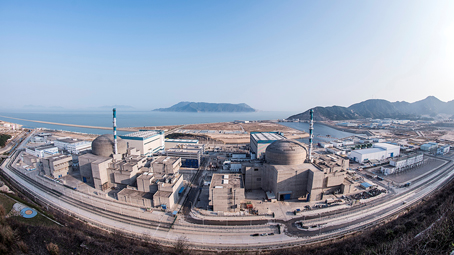
Key safety components in the UK’s first new nuclear power station for 30 years may need to be redesigned and the project could be delayed after defects were detected at a similar reactor in China.
The £22 billion Hinkley Point C plant in Somerset is already well over budget and a decade late but the defects mean that the scheduled date for starting electricity generation, of June 2026, may have to be revised. The same power plant design is due to be used for another nuclear power station, Sizewell C in
Suffolk, which is planned but has not yet been approved.
An investigation is still under way into the cause of the problems with the plant in Taishan, in the southern Chinese province of Guangdong. It was shut down in August after reports of damage to fuel rods, which hold nuclear materials used to fuel the reactor.
The plant is operated by China General Nuclear Power Group and owned in partnership with the French state-controlled EDF, the two companies involved in building Hinkley Point C.
The Commission for Independent Research and Information on Radioactivity, a French association
created in the aftermath of the Chernobyl disaster, said that a whistleblower had reported that a design flaw in the reactor pressure vessel could be the cause of the problem at Taishan. An industry source
told The Times that the investigation was likely to show that the pressure vessel was “demonstrably safe” but it might also show that design changes were needed.
Paul Dorfman, a nuclear expert at the University of Sussex, said: “If the news we are hearing from the Taishan EPR [European pressurised reactor] is right, then it’s beginning to look like there’s a potential generic fault with the key safety mechanism of the EPR reactor design itself. “If so, this is serious news for ongoing construction at Hinkley Point C and plans for Sizewell C.
Times 1st Dec 2021
https://www.thetimes.co.uk/article/ef84adce-5215-11ec-8d72-b8ab431649b1
Small nuclear reactors lead the great mindless nuclear-war-mongering juggernaut – Australia keen to jump on? theme for December 21

The ”juggernaut” is an imaginary evil chariot, a giant, powerful, violent unstoppable force, crushing all in its path, (wrongly connected to a Hindu belief).
Of all the threats to our home planet, the only one to sustain life, only the nuclear threat could be stopped by human action. But human action is now dominated by the nuclear and weapons industry juggernaut– that ”military-industrial -complex” that controls big macho-men governments.
The mask of ”peaceful” nuclear power is off. If nuclear was ever useful for energy and climate – it is no longer.
So – what do the nuclear lobby wizards come up with?
Small nuclear reactors and the pretense that they could have any effect on climate. No, Virginia, their one and only use is to keep the nuclear industry alive. Thus the nuclear weapons industry can more easily pass their costs on to tax-payers, convince nuclear executives and workers that they’re doing something beneficial, and the rest of us – that governments are ”looking after us;”.
But governments are looking after the military-industrial complex, as it leads on to nuclear war, – on land, under the sea, and in space. And the small nuclear reactors are leading the war-mongering nuclear juggernaut
1 This month.

PETITION – To: Prime Minister Anthony Albanese and the Australian Labor Government
Chernobyl: The Lost Tapes – A good documentary on Chernobyl on SBS available On Demand for the next 3 weeks– https://www.sbs.com.au/ondemand/tv-program/chernobyl-the-lost-tapes/235274195556

19 May – Webinar- Webinar: No Nuclear Weapons in Australia
Start: 2026-05-19 18:00:00 UTC Canberra, Melbourne, Sydney (GMT+10:00)
End: 2026-05-19 19:30:00 UTC Canberra, Melbourne, Sydney (GMT+10:00)
20 May – Webinar – The dangerous world of AUKUS, US, military occupation and suppression of dissent

National Webinar, 20th May, 2026, 6.30pm AEST. Confronting laws restricting/suppressing protest speech and action
Speakers: Former Sen. Rex Patrick, Lawyer Nick Hanna ,Arthur Rorris ,Jorgen Doyle, Sen David Shoebbridge,
Facilitator Kelley Tranter.

of the week – Australians for War Powers Reform (AWPR)
To see nuclear-related stories in greater depth and intensity
 Antinuclear