Australian government using a loophole to evade international non-proliferation treaties, to get nuclear submarines?
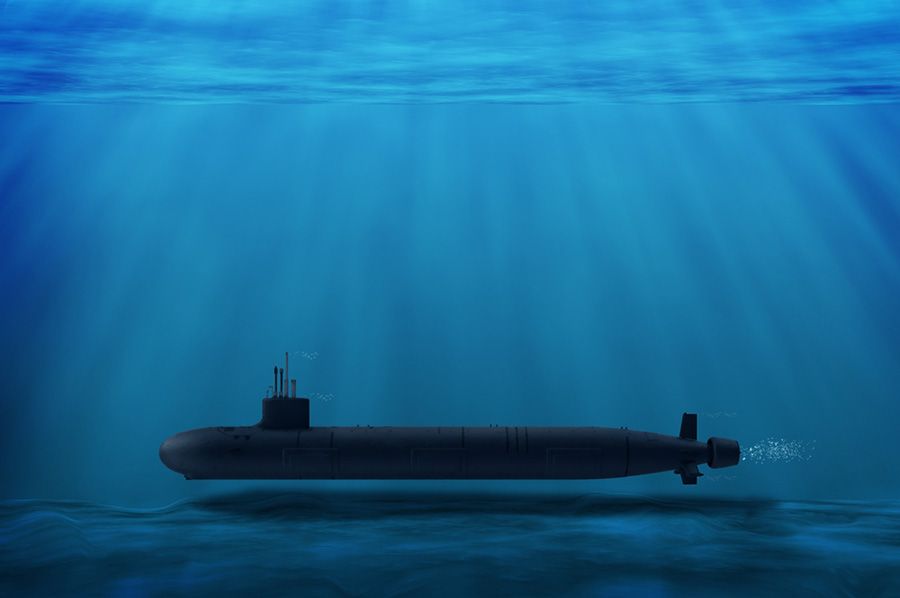
“interesting interpretation” that the government would try to qualify for an exemption from the International Atomic Energy Agency’s inspection regime by claiming military submarines, which will be fuelled with weapons grade uranium, are for peaceful purposes.”
Labor questions whether nuclear subs breach international law, AFR, Andrew Tillett, Political correspondent, 30 Nov 21, Labor MPs have raised concerns about Australia breaching its non-proliferation obligations under the Morrison government’s plan to acquire nuclear-powered submarines from Britain and the United States.
Parliament’s Treaties Committee has begun a snap inquiry into the first element under the AUKUS deal, an agreement between the three countries to allow the sharing of highly classified nuclear technology with Australian officials.
The nuclear agreement also covers training opportunities for Australian submariners and technicians with the British and American programs.
Under the AUKUS pact, the government will acquire up to eight nuclear-powered submarines, promising they will be built in Adelaide. The first is due to be delivered sometime before 2040.
The government is adamant the nuclear submarine deal will not be a precursor to acquiring nuclear weapons.
The inquiry is due to report by December 17 but at its first hearing on Monday, Labor MP Josh Wilson highlighted significant uncertainty over the government’s plan to use a loophole in the international nuclear safety regime, which had never been used before, to acquire the submarines.
Mr Wilson and fellow Labor MP Peter Khalil grilled officials from the Defence, Foreign Affairs and Attorney-General’s departments over how Australia could acquire nuclear-powered submarines while still complying with its obligations under the nuclear non-proliferation treaty.
Training ‘needs to start now’
Mr Wilson said it was an “interesting interpretation” that the government would try to qualify for an exemption from the International Atomic Energy Agency’s inspection regime by claiming military submarines, which will be fuelled with weapons grade uranium, are for peaceful purposes.
“If it was determined that was acceptable, we will have broken new ground in weakening the existing non-proliferation regime,” Mr Wilson observed……….. https://www.afr.com/politics/federal/questions-over-whether-nuclear-subs-breach-international-law-20211129-p59d0h
Solar reaches 110 per cent of South Australia demand as more records tumble — RenewEconomy

Records continue to tumble in South Australia, with solar reaching 110 pct of local demand, and wind and solar meeting an average 100pct of demand over 93 hours. The post Solar reaches 110 per cent of South Australia demand as more records tumble appeared first on RenewEconomy.
Solar reaches 110 per cent of South Australia demand as more records tumble — RenewEconomy
Fact check: Is nuclear energy good for the climate?
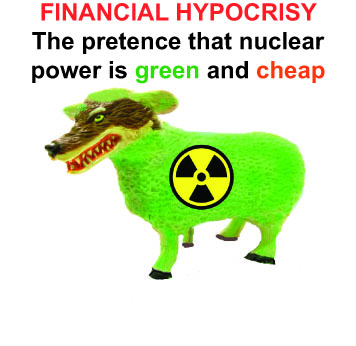
proponents of nuclear energy “fail to take into account many factors,” including those sources of emissions outlined. All the studies reviewed by DW said the same thing: Nuclear power is not emissions-free.
“Every dollar invested in nuclear energy is therefore a dollar diverted from true urgent climate action. In that sense, nuclear power is not climate-friendly”
Fact check: Is nuclear energy good for the climate? DW 29 Nov 21, Supporters of nuclear energy say it can help us wean our economies off polluting fossil fuels. No surprise, it’s a heated issue. But what about the facts? Can nuclear power really help save the climate?
………….. In recent weeks, particularly during the COP26 climate summit, advocates have been creating a stir online with statements like “if you’re against nuclear energy, you’re against climate protection” and “nuclear energy is about to make a comeback.” But is there anything to it?
Is nuclear power a zero-emissions energy source?
No. Nuclear energy is also responsible for greenhouse gas emissions. In fact, no energy source is completely free of emissions, but more on that later.
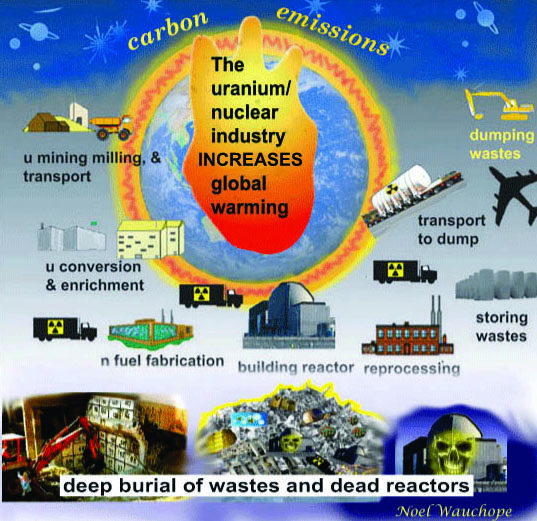
When it comes to nuclear, uranium extraction, transport and processing produces emissions. The long and complex construction process of nuclear power plants also releases CO2, as does the demolition of decommissioned sites. And, last but not least, nuclear waste also has to be transported and stored under strict conditions — here, too, emissions must be taken into account.
And yet, interest groups claim nuclear energy is emission-free. Among them is Austrian consulting firm ENCO. In late 2020, it released a study prepared for the Dutch Ministry of Economic Affairs and Climate Policy that looked favorably at the possible future role of nuclear in the Netherlands.
“The main factors for its choice were reliability and security of supply, with no CO2 emission,” it read. ENCO was founded by experts from the International Atomic Energy Agency, and it regularly works with stakeholders in the nuclear sector, so it’s not entirely free of vested interests.
At COP26, environmental initiative Scientists for Future (S4F) presented a paper on nuclear energy and the climate. The group came to a very different conclusion. “Taking into account the current overall energy system, nuclear energy is by no means CO2 neutral,” they said.
Ben Wealer of the Technical University of Berlin, one of the report’s authors, told DW that proponents of nuclear energy “fail to take into account many factors,” including those sources of emissions outlined above. All the studies reviewed by DW said the same thing: Nuclear power is not emissions-free.
How much CO2 does nuclear power produce?
Results vary significantly, depending on whether we only consider the process of electricity generation, or take into account the entire life cycle of a nuclear power plant. A report released in 2014 by the UN’s Intergovernmental Panel on Climate Change (IPCC), for example, estimated a range of 3.7 to 110 grams of CO2 equivalent per kilowatt-hour (kWh).
It’s long been assumed that nuclear plants generate an average of 66 grams of CO2/kWh — though Wealer believes the actual figure is much higher. New power plants, for example, generate more CO2 during construction than those built in previous decades, due to stricter safety regulations.
Studies that include the entire life cycle of nuclear power plants, from uranium extraction to nuclear waste storage, are rare, with some researchers pointing out that data is still lacking. In one life cycle study, the Netherlands-based World Information Service on Energy (WISE) calculated that nuclear plants produce 117 grams of CO2 emissions per kilowatt-hour. It should be noted, however, that WISE is an anti-nuclear group, so is not entirely unbiased.
However, other studies have come up with similar results when considering entire life cycles. Mark Z. Jacobson, director of the Atmosphere / Energy Program at California’s Stanford University, calculated a climate cost of 68 to 180 grams of CO2/kWh, depending on the electricity mix used in uranium production and other variables.
How climate-friendly is nuclear compared to other energies?
If the entire life cycle of a nuclear plant is included in the calculation, nuclear energy certainly comes out ahead of fossil fuels like coal or natural gas. But the picture is drastically different when compared with renewable energy.
According to new but still unpublished data from the state-run German Environment Agency (UBA) as well as the WISE figures, nuclear power releases 3.5 times more CO2 per kilowatt-hour than photovoltaic solar panel systems. Compared with onshore wind power, that figure jumps to 13 times more CO2. When up against electricity from hydropower installations, nuclear generates 29 times more carbon.
Could we rely on nuclear energy to help stop global warming?
………….. “The contribution of nuclear energy is viewed too optimistically,” Wealer from Berlin’s Technical University said. “In reality, [power plant] construction times are too long and the costs too high to have a noticeable effect on climate change. It takes too long for nuclear energy to become available.”
Mycle Schneider, author of the World Nuclear Industry Status Report, agrees.
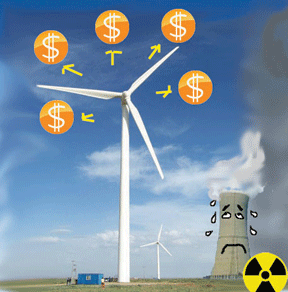
Nuclear power plants are about four times as expensive as wind or solar, and take five times as long to build,” he said. “When you factor it all in, you’re looking at 15-to-20 years of lead time for a new nuclear plant.”
He pointed out that the world needed to get greenhouse gases under control within a decade. “And in the next 10 years, nuclear power won’t be able to make a significant contribution,” added Schneider.
Nuclear power is not being considered at the current time as one of the key global solutions to climate change,” said Antony Froggatt, deputy director of the environment and society program at the international affairs think tank Chatham House in London.
He said a combination of excessive costs, environmental consequences and lack of public support were all arguments against nuclear power.
Nuclear funding could go toward renewables
Due to the high costs associated with nuclear energy, it also blocks important financial resources that could instead be used to develop renewable energy, said Jan Haverkamp, a nuclear expert and activist with environment NGO Greenpeace in the Netherlands. Those renewables would provide more energy that is both faster and cheaper than nuclear, he said.
“Every dollar invested in nuclear energy is therefore a dollar diverted from true urgent climate action. In that sense, nuclear power is not climate-friendly,” he said.
In addition, nuclear energy itself has been affected by climate change. During the world’s increasingly hot summers, several nuclear power plants have already had to be temporarily shut down or taken off the grid. Power plants depend on nearby water sources to cool their reactors, and with many rivers drying up, those sources of water are no longer guaranteed.
The much vaunted “renaissance of nuclear power” is anything but when all the facts are taken into consideration, Mycle Schneider told DW. He said the nuclear industry has been shrinking for years.
“In the last 20 years, 95 nuclear power plants have gone online and 98 have been shut down. If you take China out of the equation, the number of nuclear power plants has shrunk by 50 reactors in the last two decades,” Schneider added. “The nuclear industry is not thriving.” https://www.dw.com/en/fact-check-is-nuclear-energy-good-for-the-climate/a-59853315
UK and Australian consultancy firms get together in anticipation of nuclear submarine programme
In readiness for the commencement of Australia’s nuclear-powered submarine program, local consultancy Coras has formed a partnership with Britain’s Abbott Risk Consulting. Coras partners with Abbott to deepen nuclear submarine capability
28 November 2021 Consultancy.com.au, The partnership between the Australian defence-focused management consultancy and the UK-headquartered risk management specialist comes ahead of Australia’s transition to a nuclear-powered submarine capability as part of its recently-struck AUKUS pact with the UK and US.
The formal agreement is built on an existing close working relationship between the two consulting firms and aims to capitalise on the melding of local knowledge and international nuclear expertise…………….. https://www.consultancy.com.au/news/4433/coras-partners-with-abbott-to-deepen-nuclear-submarine-capability
France’s Foreign Minister raises concerns about AUKUS, nuclear submarines, and risks of weapons proliferation.
the theme of ‘betrayal’ in terms of both being ‘cheated’ out of a deal and being deceived by NATO allies and, in Australia’s case, a historical ally.
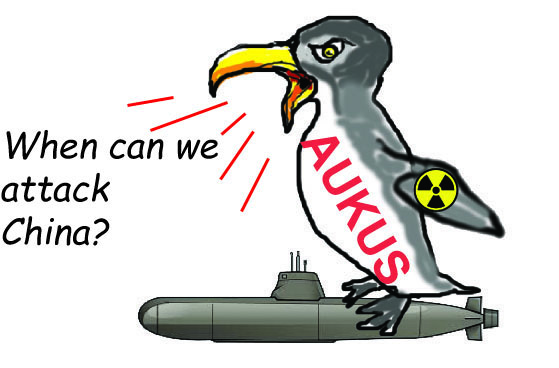
AUKUS was about ‘pressing a sense of confrontation with China’
if tomorrow Australia has some nuclear-powered submarines, why not, some other countries could ask for similar technology, it could be Indonesia, why not?’
Australia needs an entente cordiale with Indonesia over nuclear propulsion and non-proliferation, The Strategist, 29 Nov 2021, |David Engel However relaxed and comfortable Indonesian Defence Minister Prabowo Subianto might be about Australia’s plans to acquire nuclear-powered submarines (SSNs), the visit to Jakarta of French Foreign Minister Jean-Yves Le Drian has probably validated the very different view of Le Drian’s counterpart, Retno Marsudi.
……………………………………………. the most striking moment of the visit came during Le Drian’s address to Indonesia’s leading international affairs think tank, the Centre for Strategic and International Studies (CSIS). While his speech focused on issues such as multilateralism and the EU’s position on the Indo-Pacific, his response to a question on ‘minilateralism’—specifically, AUKUS and the Quad—took on a very different tone.
Ignoring the Quad, he levelled his remarks at AUKUS, stressing four points. The first two reiterated the theme of ‘betrayal’ in terms of both being ‘cheated’ out of a deal and being deceived by NATO allies and, in Australia’s case, a historical ally. He talked about American efforts to restore trust through various US commitments to France. He didn’t mention Australia in this context.
More significantly, his third point was that AUKUS was about ‘pressing a sense of confrontation with China’ (as the simultaneous translation put it). He said that, while France was not oblivious to China’s military threats and risks, he believed that the best way to respond to these threats was to ‘develop an alternative model rather than to first of all oppose’.
Perhaps his most significant point for Australian interests was his fourth, which went to the transfer of nuclear technology for submarine propulsion. He pointed out that until now no nuclear-weapon state had done this. But ‘if tomorrow Australia has some nuclear-powered submarines, why not, some other countries could ask for similar technology, it could be Indonesia, why not?’ He continued that, even though this technology was not covered by the Nuclear Non-Proliferation Treaty (NPT), the risk the arrangement posed of starting a trend was nonetheless of concern.
Irrespective of Le Drian’s intentions in answering the question in this manner—and it’s noteworthy that he didn’t cover AUKUS in his formal address—he would surely have known that his words would resonate powerfully with his audience, both at CSIS and more generally among Indonesia’s foreign policy establishment. While his depiction of Australia as duplicitous was evidently personal and heartfelt, it would also have struck a chord with those Indonesians who have characterised Canberra the same way over such issues as East Timor, Papua and spying allegations, irrespective of how justified that judgement might be.
Le Drian’s last point went directly to concerns about nuclear proliferation—issues that Indonesia highlighted in its official statement on AUKUS and the planned submarines. It corresponds closely ‘in spirit’ with subsequent official commentary to the effect that Indonesia was considering advocating a change to the NPT aimed at preventing non-nuclear-weapon states from acquiring SSNs………
whoever governs in Canberra now and into the future should at least make a priority of assuaging Jakarta’s worries on this subject, however overstated and unbalanced they are. While Indonesia’s prospects of changing the NPT and precluding Australia from having SSNs look remote at best—not least because several of its ASEAN colleagues do not share its views of Australia’s ambitions—the sooner the two countries can put this latest irritant to rest the better.
In the circumstances, the onus for doing so must primarily rest with Canberra………https://www.aspistrategist.org.au/australia-needs-an-entente-cordiale-with-indonesia-over-nuclear-propulsion-and-non-proliferation/
Biggest wind farm in Victoria gets final all-clear from planning authorities — RenewEconomy

WestWind Energy will push ahead with one of Australia’s largest wind farms in Victoria’s south-west, after project amendments were given state approval. The post Biggest wind farm in Victoria gets final all-clear from planning authorities appeared first on RenewEconomy.
Biggest wind farm in Victoria gets final all-clear from planning authorities — RenewEconomy
November 29 Energy News — geoharvey

Opinion: ¶ “Will The EV Revolution Trigger Global Economic Crisis?” • The transition to EVs and renewable energy is already creating winners and losers. But fossil fuel industries keep investing vast sums to develop new oil and gas resources and infrastructure. There’s a real risk that in a few years they’ll be producing far more […]
November 29 Energy News — geoharvey
Austrailian and overseas nuclear news this week

PANDEMIC. WHO Reaches Draft Consensus on Future Pandemic Treaty More omicron cases pop up as world rushes to learn more.
CLIMATE CHANGE – it hasn’t gone away. Keep up to date with Radio Ecoshock, and – Rebel Against the Crash. Also Paul Beckwith – https://www.youtube.com/watch?v=IubZzo97p-A
NUCLEAR. Again,France is in the news, as President Macron, (formerly opposed to nuclear) pushes for the industry. Meanwhile safety issues continue, and also concern over radioactive releases from La Hague into the seaMeanwhile the global nuclear industry watches with concern, as Britain struggles to organise the funding ( Regulated Asset Base) for its new nuclear plans.
AUSTRALIA. Kimba nuclear waste dump plan. Minister Keith Pitt confirms that the federal government has bought the land at Kimba for the national nuclear waste dump. To set up nuclear waste dump , the Australian government will have to override South Australian State government laws Kimba nuclear dump: Premier Marshall must enforce South Australia’s legislation. The Kimba nuclear dump is a long way from a done deal: needs formal environmental and regulatory assessment and approval. Traditional owners expected to challenge nuclear waste facility in South Australia. Australian Radiation Protection and Nuclear Safety Agency (ARPANSA) asks people to comment on public health and radioactive waste dump.
Submarines. French nuclear submarines a better choice for Australia . Australian Conservation Foundation comments to Parliamentary Committee on nuclear submarine agreement..
Fight for native title mining millions heads to Supreme Court | The Advertiser
Climate. More Black Summers ahead as climate change increases risk of megafires: CSIRO CSIRO study proves climate change driving Australia’s 800% boom in bushfires. Morrison Government failing young people on climate yet again Climate change is driving a drier Australia. So why are we having such a wet year? – La Nina. Australia could be the long-term winner worldwide with its solar energy.
INTERNATIONAL
Nuclear power being hyped in the media, but its prospects are grim.
Nuclear power for MINDLESS, ENDLESS, ENERGY use – data”farms” and Bitcoin.
Small modular reactors not the solution . Are small nuclear reactors actually small, safe, economic ?
Nuclear Fusion Recedes Into Far Future For The 57th Time.
Climate 129 reputable European and international organisations have signed up to letter opposing inclusion of nuclear and gas as being ”sustainable” and ”green”.
Latest COP 26 pledges will lead to 16% increase in carbon emissions, NOT the necessary 45% decrease.
Climate and biodiversity: mapping the irrecoverable carbon in Earth’s ecosystems. IEA: Rate of energy efficiency improvements needs to double to put world on track for net-zero.
Economic Cost Of Peak Population: Japan, China, The World..
CHINA. China calls on the Association of Southeast Asian Nations (ASEAN) to make Southeast Asia a nuclear-weapons-free zone.
Traditional owners expected to challenge nuclear waste facility in South Australia

Traditional owners expected to challenge nuclear waste facility in South Australia
The Barngarla people have unanimously rejected the federal government’s controversial plan to store radioactive medical waste on their land, and may take their case to the state’s supreme court, Guardian, Tory Shepherd 29 Nov 21
The federal government has confirmed that a controversial nuclear waste facility will be built near Kimba, in South Australia – but the traditional owners are expected to mount a legal challenge.
Resources minister Keith Pitt announced two months ago that a 211-hectare site at Napandee, 24km out of Kimba, had been chosen from three potential sites to store Australia’s radioactive waste. After 60 days of further consultation, he confirmed that decision on Monday morning.
An Australian Electoral Commission ballot found more than 60% of local residents supported the facility. However, the traditional owners, the Barngarla people, say many of them missed out on the vote because they were not living in the Kimba council area.
When surveyed separately, the Barngarla voters unanimously rejected the proposal.
At the time, Barngarla Determination Aboriginal Corporation chair Jason Bilney said he planned to launch a judicial review, challenging in the supreme court the selection of Kimba over other sites.
Guardian Australia has contacted the corporation for comment.
Pitt said the government would now acquire the land to build a new facility that would store low- and medium-level medical waste that is scattered across more than 100 locations in Australia……….
The new facility will house low-level waste permanently, and medium-level waste temporarily, until a permanent solution is found for that.
Conservationists have told a parliamentary inquiry into the future of the Lucas Heights nuclear facility that the Sydney site should be expanded to take the nation’s waste until that long-term decision is made, rather than having a new facility built. https://www.theguardian.com/australia-news/2021/nov/29/traditional-owners-expected-to-challenge-nuclear-waste-facility-in-south-australia
The Kimba nuclear dump is a long way from a done deal: needs formal environmental and regulatory assessment and approval.

Resources Minister Keith Pitt’s formal declaration of Napandee, near Kimba in regional South Australia, as the location for a co-located radioactive waste disposal and storage facility is likely to see an escalation in community contest and opposition, the Australian Conservation Foundation said today.
ACF’s concerns with the plan include:
- No consent from the region’s Traditional Owners, the Barngarla people. Barngarla were actively excluded from key ‘consultation’ processes, including a highly restricted community ballot.
- The planned facility is unnecessary given federal parliament’s recent support for a $60 million waste storage upgrade to secure the most problematic intermediate level waste (ILW) at the Australian Nuclear Science and Technology Organisation’s (ANSTO) Lucas Heights nuclear site for the next three to five decades.
- Moving intermediate level waste from ANSTO, a site with many institutional assets – security, radiation monitoring and emergency response, local expertise etc – to a site near Kimba with far fewer assets and resources is irresponsible and inconsistent with best industry practice.
Further concerns are outlined in ACF’s 3-page background brief on radioactive waste plans.
“The Kimba plan is effectively redundant on the day Minister Pitt has made his decision,” said ACF’s national nuclear-free campaigner Dave Sweeney.
“Extended storage of Australia’s most problematic waste at Lucas Heights where most of it is already stored, makes far more economic, environmental and radiological sense than the ill-considered Kimba plan.
“Sites that currently store and manage nuclear medicine waste around Australia will still need to do so, irrespective of the status of any national facility, so the Minister’s repeated reference to nuclear waste being spread across 100 sites is disingenuous and inaccurate.
“The planned federal action is contrary to SA state law and does not enjoy bi-partisan political support.
“Fewer than one thousand South Australians have had a say in a plan that has profound inter-generational implications.
“This is particularly concerning given the prospect of project creep as atomic enthusiasts spruik domestic nuclear energy in the context of the proposed acquisition of nuclear-powered submarines.
“Minister Pitt is continuing the same top-down, flawed approach that has failed in the past.
“Minister Pitt’s decision is the start of a new stage in the campaign for responsible waste management.
“This politicised move will be contested in the Courts and on the streets.
“Setting up processes to manufacture consent – including denying a voice to Aboriginal Traditional Owners – speaks volumes about the poverty of the arguments in favour of the waste facility.
“If the Minister was convinced of the project’s merits he would not be cutting corners with Traditional Owners and the wider community or making myth about nuclear medicine.
“Canberra should stop playing politics and instead get serious about responsible radioactive waste management.
“This issue has a long way to run. The plan needs formal environmental and regulatory assessment and approval and is a long way from a done deal.”
ACF’s 3-page background brief on federal radioactive waste plans
Measure twice, cut once: Advancing responsible radioactive waste management in Australia
Kimba nuclear dump: Premier Marshall must enforce South Australia’s legislation
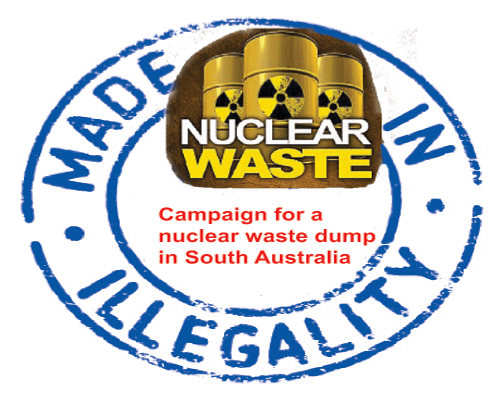
“The SA Nuclear Waste Storage Facility (Prohibition) Act was an initiative of the SA Olsen Liberal government to prevent the imposition of an intermediate-level nuclear fuel waste dump in SA. The state legislation was strengthened by the Rann government in 2002. Premier Marshall should fight Canberra’s push to dump nuclear waste on SA and to override state legislation, as did Premier Olsen and Premier Rann.
The Act mandates a state Parliamentary inquiry in response to any attempt to impose a nuclear waste dump on SA and the Premier should initiate that inquiry immediately.
The Morrison government’s plan to impose a national nuclear waste dump at Kimba still faces multiple hurdles despite today’s announcement from Minister Keith Pitt that the site has been formally declared and land acquired. Those hurdles include a judicial challenge to the declaration, environmental assessment, assessment by the federal nuclear regulator ARPANSA, a state parliamentary inquiry, and upcoming state and federal elections.
The Howard government had proceeded further towards imposing a dump on SA before abandoning the plan in 2004.
Dr. Jim Green, national nuclear campaigner with Friends of the Earth Australia, said: “The Morrison government’s disgraceful efforts to override the unanimous opposition of Barngarla Traditional Owners will be challenged in the courts. Barngarla Traditional Owners are expected to launch a judicial challenge following today’s announcement.
“Traditional Owners were excluded from the government’s sham ‘community ballot’ so they held their own ballot. When the results of the government’s ballot and the Barngarla ballot are combined, support falls to 43%, short of a majority and well short of the 65% that the government indicated was the benchmark to determine ‘broad community support’.
“Premier Steven Marshall’s support for a nuclear waste dump that is unanimously opposed by Barngarla Traditional Owners is unconscionable, crude racism and Friends of the Earth calls on the Premier to support Traditional Owners ‒ and all South Australians ‒ instead of shamefully falling into line behind his undemocratic, racist federal colleagues.
“The SA Nuclear Waste Storage Facility (Prohibition) Act was an initiative of the SA Olsen Liberal government to prevent the imposition of an intermediate-level nuclear fuel waste dump in SA. The state legislation was strengthened by the Rann government in 2002. Premier Marshall should fight Canberra’s push to dump nuclear waste on SA and to override state legislation, as did Premier Olsen and Premier Rann.
“The Act mandates a state Parliamentary inquiry in response to any attempt to impose a nuclear waste dump on SA and the Premier should initiate that inquiry immediately.
“The proposed nuclear dump will be contested at the SA and federal elections. Friends of the Earth welcomes SA Labor’s policy that Traditional Owners should have a right of veto over nuclear projects given the sad and sorry history of nuclear projects in this state. Deputy Leader Susan Close says that SA Labor is “utterly opposed” to the “appalling” process which led to the federal government targeting the Kimba site.
“The government’s claim that most of the waste arises from nuclear medicine is a blatant lie. The claim that 45 permanent jobs will be created is implausible. When the Howard government planned a dump in SA, it said there would be zero jobs.
“Measured by radioactivity, well over 90% of the waste is long-lived intermediate-level reactor waste that the federal government wants to store above ground at Kimba until such time as a deep underground disposal facility is established. No effort is being made to find a location for such a facility so this long-lived waste would remain stored above ground in SA ad infinitum. The only deep underground nuclear waste repository in the world, in the US state of New Mexico, was closed in 2014 following an underground chemical explosion in a nuclear waste barrel.
“Intermediate-level waste should be stored at ANSTO’s Lucas Heights site until a suitable disposal facility is available. The Morrison government’s plan to move intermediate-level waste from secure above-ground storage at Lucas Heights to far less secure storage at Kimba is absurd and indefensible.
“South Australians fought long and hard to prevent the Howard government turning SA into the nation’s nuclear waste dump. We fought and won the campaign to stop the Flinders Ranges being used for a national dump. We fought and won the campaign to stop SA being turned into the world’s high-level nuclear waste dump. And now, we will fight until the Morrison government backs off.”
Minister Keith Pitt confirms that the federal government has bought the land at Kimba for the national nuclear waste dump.

Kimba confirmed as home to nuclear waste facility, The Advertiser, 29 Nov 21,
Small Eyre Peninsula town of Kimba confirmed by Canberra as home to Australia’s new nuclear waste facility.
The small Eyre Peninsula town of Kimba will be home to a $325m nuclear waste facility for Australia, with Resources Minister Keith Pitt confirming the federal government has acquired land to build the complex.
Mr Pitt said the decision to choose Kimba provided “a solution that has eluded consecutive governments for more than 40 years’’. In August, Mr Pitt said the 211ha site at Napandee farm, 24km west of Kimba, was the preferred location for the dump, which will store low-level radioactive waste permanently and some intermediate waste for several decades.
The selection of Kimba has divided the local community. Opponents believe a nuclear waste dump would ruin the area’s clean, green image, although a ballot run by Kimba Council in 2019 found 62 per cent of residents supported the facility. The Barngarla Determination Aboriginal Corporation has previously argued that it was not consulted about the site and has flagged it will ask for a Judicial Review of the decision………
Nestlé Australia switches to 100 pct renewables with CWP wind farm deal — RenewEconomy

Nestlé Australia accelerates switch to 100 per cent renewable with 10-year deal with CWP wind farms. The post Nestlé Australia switches to 100 pct renewables with CWP wind farm deal appeared first on RenewEconomy.
Nestlé Australia switches to 100 pct renewables with CWP wind farm deal — RenewEconomy
November 28 Energy News — geoharvey

Science and Technology: ¶ “Electric Car FAQs: Do EVs All Use The Same Plug?” • Electric cars are mostly like regular cars. You step on the pedal on the right and the car goes, you turn the wheel and the car turns. 99% of the time the only difference is what kind of fuel goes […]
November 28 Energy News — geoharvey
COP26, “A fragile win”? — The Update

An event believed to be the world’s best last chance in mitigating climate change was held during the month of November in Glasgow, Scotland. One of this year’s most critical talks, the 26th annual climate change conference (COP26) involved 197 states coming together to reach a agreement on tackling climate change. There are two main […]
COP26, “A fragile win”? — The Update
1 This month.


PETITION – To: Prime Minister Anthony Albanese and the Australian Labor Government
Chernobyl: The Lost Tapes – A good documentary on Chernobyl on SBS available On Demand for the next 3 weeks– https://www.sbs.com.au/ondemand/tv-program/chernobyl-the-lost-tapes/235274195556
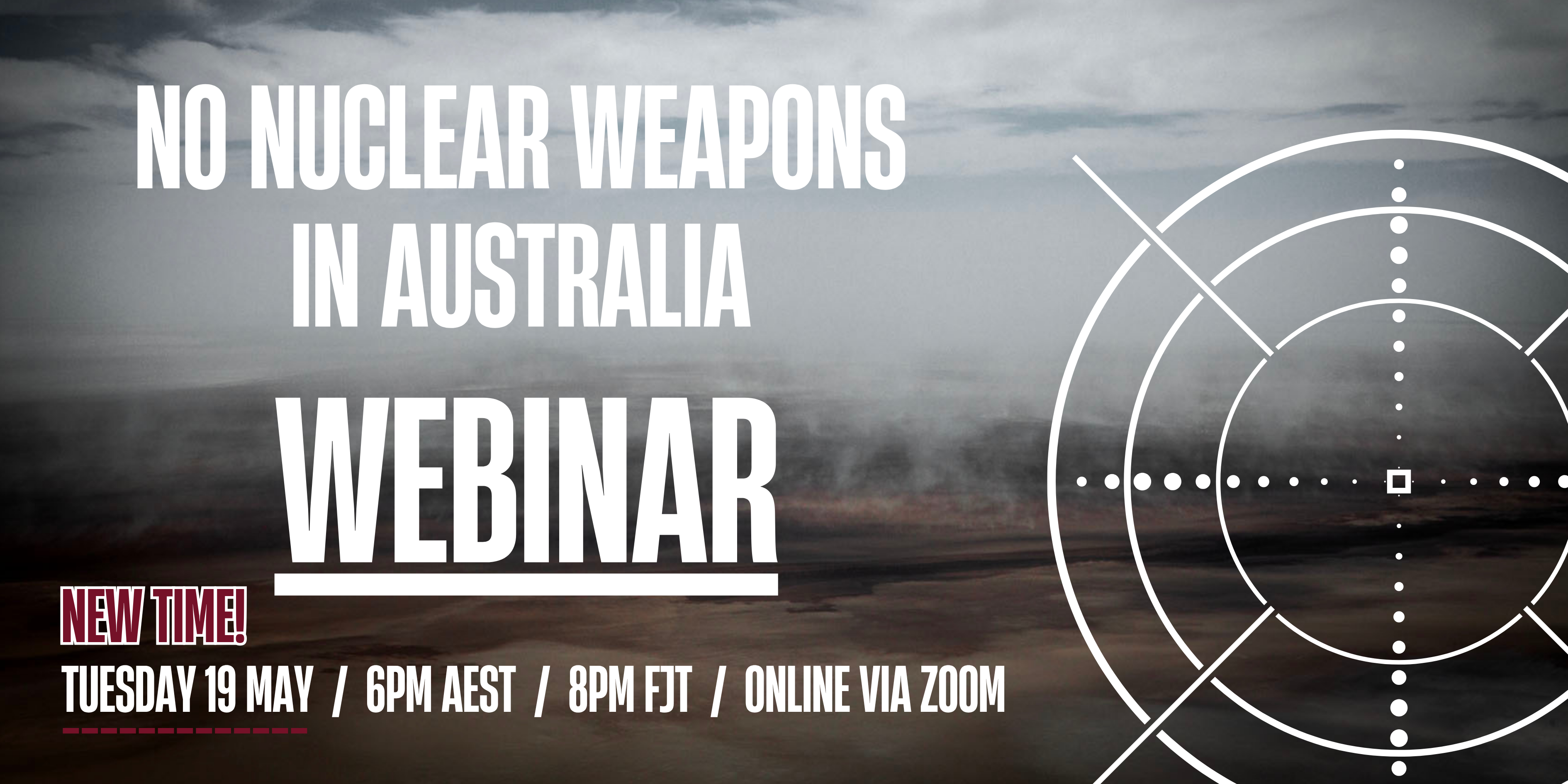
19 May – Webinar- Webinar: No Nuclear Weapons in Australia
Start: 2026-05-19 18:00:00 UTC Canberra, Melbourne, Sydney (GMT+10:00)
End: 2026-05-19 19:30:00 UTC Canberra, Melbourne, Sydney (GMT+10:00)
20 May – Webinar – The dangerous world of AUKUS, US, military occupation and suppression of dissent

National Webinar, 20th May, 2026, 6.30pm AEST. Confronting laws restricting/suppressing protest speech and action
Speakers: Former Sen. Rex Patrick, Lawyer Nick Hanna ,Arthur Rorris ,Jorgen Doyle, Sen David Shoebbridge,
Facilitator Kelley Tranter.

of the week – Australians for War Powers Reform (AWPR)
To see nuclear-related stories in greater depth and intensity
 Antinuclear